This lesson details the specific traffic rules governing bus lanes and cycle tracks within the Irish road network. Understanding these regulations is essential for Category B drivers to avoid common penalty points and ensure safe, predictable movement in urban traffic environments.
Lesson content overview
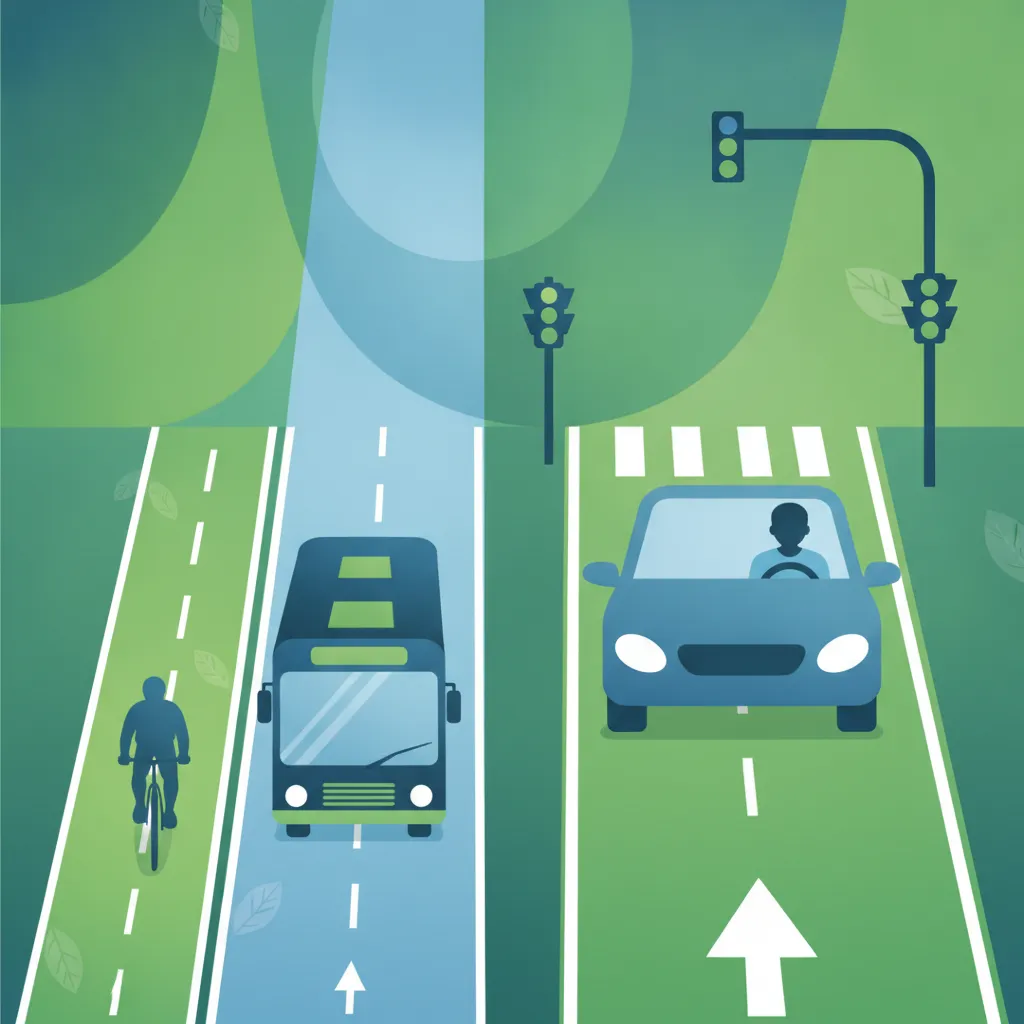
Efficient traffic flow in busy urban environments requires a delicate balance between public transit, active travel, and private motor vehicles. To manage congestion, reduce transit times, and protect vulnerable road users, road authorities design dedicated spaces such as bus lanes and cycle tracks.
For candidates preparing for the Category B Irish Driver Theory Test, mastering the regulations surrounding these dedicated lanes is essential. Misusing a bus lane or cycle track not only results in expensive traffic violations and penalty points but also compromises the safety of cyclists and the efficiency of public transport networks. This lesson explores the structural differences, operating hours, legal exceptions, and safe driving protocols required to navigate these specialized traffic corridors.
Urban transport networks rely on segregation to maintain efficiency. When buses—which can carry dozens of passengers—are caught in the same gridlock as single-occupancy private vehicles, public transport systems become unreliable. Similarly, without dedicated spaces, cyclists are exposed to significant safety hazards from heavy, fast-moving motor vehicles.
By allocating exclusive lanes to high-capacity public transport and active travellers, traffic planners can:
Understanding how to interact with these designated spaces is a fundamental skill for any driver operating under an Irish Category B passenger car licence.
A with-flow bus lane runs in the same direction as the general traffic flow on the adjoining road. These are the most common type of bus lane encountered by drivers in Irish towns and cities.
With-flow bus lanes are distinguished by specific road markings and signage:
Not all bus lanes operate 24 hours a day. The operational periods are displayed on an information plate accompanying the blue bus lane sign.
The specific times of day, usually aligned with morning and evening peak traffic periods (e.g., 07:00–10:00 and 16:00–19:00, Monday to Friday), during which only authorized vehicles may enter the designated lane.
The rules governing your behaviour change depending on whether the bus lane is active:
Always read the companion information plate carefully. If no specific hours are displayed on the sign, the bus lane is operational 24 hours a day, 7 days a week, and is permanently closed to general traffic.
When you need to turn left at an upcoming junction or access a driveway across an active with-flow bus lane, you must follow strict safety procedures. You are not permitted to simply veer across the solid white line.
Anticipate the Turn: Locate the junction early and check your mirrors (interior and left wing mirror) for oncoming buses, taxis, or cyclists traveling in the bus lane.
Identify the Broken White Line: As you approach the turning point, the solid white line of the bus lane will transition into a broken (dashed) white line. This indicates the designated zone where general traffic is permitted to cross.
Signal and Yield: Signal your intention to turn left. You must yield priority to any bus, taxi, or cyclist already traveling along the bus lane. Do not pull out in front of them or force them to slow down.
Merge and Turn: Once there is a safe gap, merge smoothly through the broken white line section and complete your turn immediately. Never use the bus lane as a prolonged deceleration lane.
A contra-flow bus lane is designed to allow buses to travel in the opposite direction to the general flow of traffic on a one-way street or dual carriageway. These lanes are highly specialized tools for navigating tight urban centres and routing public transit efficiently.
Unlike with-flow lanes, contra-flow bus lanes operate under much stricter legal definitions:
Driving alongside a contra-flow lane requires heightened situational awareness. Because buses are traveling in the opposite direction, passing close to your driver-side or passenger-side window, you must:
With the growth of active travel, cycle tracks have become an integral part of road design. For Category B drivers, understanding the distinction between different types of cycle tracks is critical to preventing accidents involving cyclists, who are among the most vulnerable road users.
A lane or path reserved specifically for pedal cycles (bicycles). These can be located within the main carriageway, alongside a footpath, or completely segregated from motorized traffic.
The legal obligations of a motorist depend entirely on the type of boundary marking separating the cycle track from the main road.
| Track Type | Boundary Line Marking | Motorist Restrictions | Practical Meaning |
|---|---|---|---|
| Mandatory Cycle Track | Solid White Line | Driving, parking, or idling inside the track is strictly prohibited during its hours of operation. | The lane is exclusively for cyclists. Motorists must not cross the solid line unless turning across it where permitted or accessing a driveway. |
| Advisory Cycle Track | Broken White Line | Motorists should not enter or drive in the lane unless it is safe and necessary to do so. | Motorists must keep out if possible but may enter briefly to allow oncoming traffic to pass, provided they yield to any cyclists. |
While the primary users of bus lanes are scheduled public buses, certain other vehicle types are legally permitted to use them under specific conditions.
In Ireland, the rules regarding taxi access to bus lanes are strictly defined and frequently appear on the Driver Theory Test:
A taxi must be fitted with an approved taximeter and roof sign, and the driver must hold a valid SPSV (Small Public Service Vehicle) licence to utilize permitted with-flow bus lanes. Private cars with temporary ride-sharing stickers do not qualify.
Emergency vehicles (Gardaí, Ambulance, and Fire Service) are permitted to use both with-flow and contra-flow bus lanes when responding to an emergency call.
Encroaching on bus lanes or cycle tracks during their operational hours is a serious moving violation in Ireland. Compliance is enforced through active Garda patrols, municipal traffic wardens, and increasingly, stationary traffic enforcement cameras.
Safe driving requires adapting to changing environmental conditions, which directly influence how you interact with bus lanes and cycle tracks.
If you cannot see the bus driver's mirrors, they cannot see you. Avoid lingering alongside large passenger vehicles.
To ensure you pass your driving theory test and operate safely on Irish roads, memorize these core principles:
To further develop your understanding of lane discipline and driver responsibilities in urban environments, explore the following resources.
To test your knowledge on bus lanes, cycle tracks, and priority rules, try the dedicated practice sets below.
Explore all units and lessons included in this driving theory course.
Lesson content overview
Explore all units and lessons included in this driving theory course.
Explore search topics learners often look for when studying Bus Lanes, Cycle Tracks, and Traffic Flow Management. These topics reflect common questions about road rules, driving situations, safety guidance, and lesson level theory preparation for learners in Ireland.
Browse additional driving theory lessons that cover connected traffic rules, road signs, and common driving situations related to this topic. Improve your understanding of how different rules interact across everyday traffic scenarios.
Learn the essential principles of lane management and correct vehicle positioning on Irish roads. This guide covers how to navigate lane markings, manage traffic flow, and correctly position your vehicle for safe overtaking and turning in different urban and motorway environments.

Irish driving theory demands that drivers keep to the left-hand side of the road unless overtaking or turning right. This lesson explains how to maintain consistent lane discipline on multi-lane roads, how to perform safe lane changes, and the dangers of drifting. You will learn the safety sequence of checking mirrors, checking blind spots, signalling, and smoothly executing a lane change without disrupting trailing traffic.

Large passenger vehicles must maintain consistent lane positioning to prevent side-swipe incidents and sustain smooth urban traffic patterns. This lesson covers standard lane selection rules, safe overtaking procedures, and how to use designated public transit corridors correctly. Drivers will learn the importance of checking mirrors continuously and planning lane changes well in advance.

This lesson explains how to choose the safest riding position within a traffic lane, considering the standard left-side driving rule in Ireland. It details the concept of dominant positioning to prevent other vehicles from crowding your space, while remaining visible to oncoming traffic. Riders will learn to adjust their track constantly to avoid road surface hazards, oil deposits, and wind currents.

This lesson explains the critical meanings of solid, broken, and continuous lines painted on Irish road surfaces. It defines the legal rules surrounding bus lanes, bicycle lanes, and yellow box junctions in urban settings. Riders will learn correct lane discipline to ensure their safety and maintain proper separation from surrounding traffic.

This lesson outlines the legal and safety requirements for maintaining proper lane discipline on multi-lane roads, roundabouts, and motorways in Ireland. It teaches drivers how to account for lane width, manage trailer off-tracking, and position the cab to prevent encroachment on neighboring lanes. Drivers will master safe lane-changing strategies, signaling protocols, and traffic merging techniques.
Motorways are designed for safe, high-speed travel, but require strict adherence to lane discipline and specific regulations. This lesson explains that the left lane is for normal driving, while middle and right lanes are strictly for overtaking slower traffic. You will learn how to identify motorway exits, use the hard shoulder during absolute emergencies, and understand the legal restrictions placed on learner permit holders.

Navigating multi-lane roundabouts requires precise lane selection, continuous scanning, and timely signaling. This lesson teaches you the 'clock rule' for determining which lane to enter, how to yield to traffic already on the roundabout from your right, and when to activate your left indicator to exit. Mastering these procedures minimizes lane-drift accidents and ensures a seamless flow of traffic on busy roundabouts.
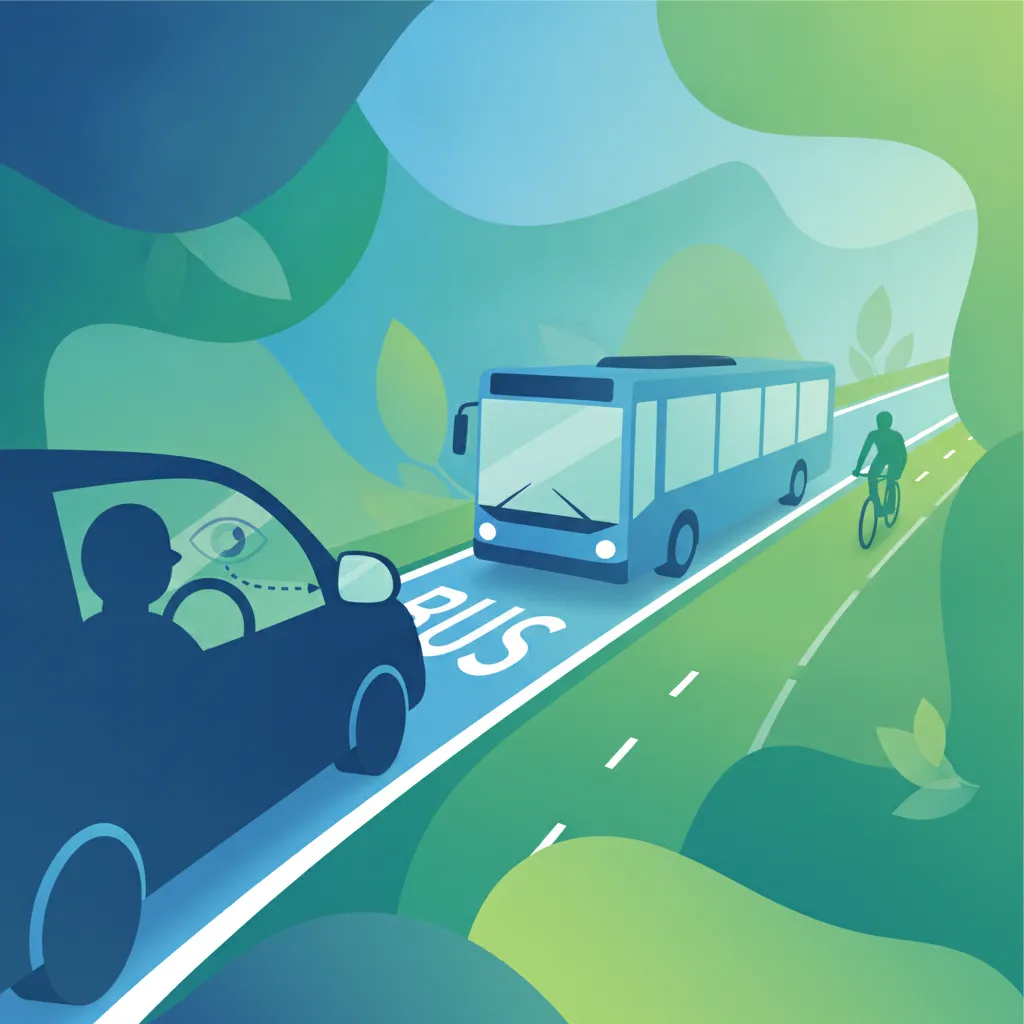
This lesson clarifies the legal regulations surrounding bus lanes and cycle lanes in Ireland, highlighting when motorcycles are permitted to enter them. It outlines how to cross these lanes safely when turning left, and how to scan for cyclists approaching from behind. Riders will learn to respect lane markings, observe signposted operational hours, and avoid blocking designated public transit lanes.
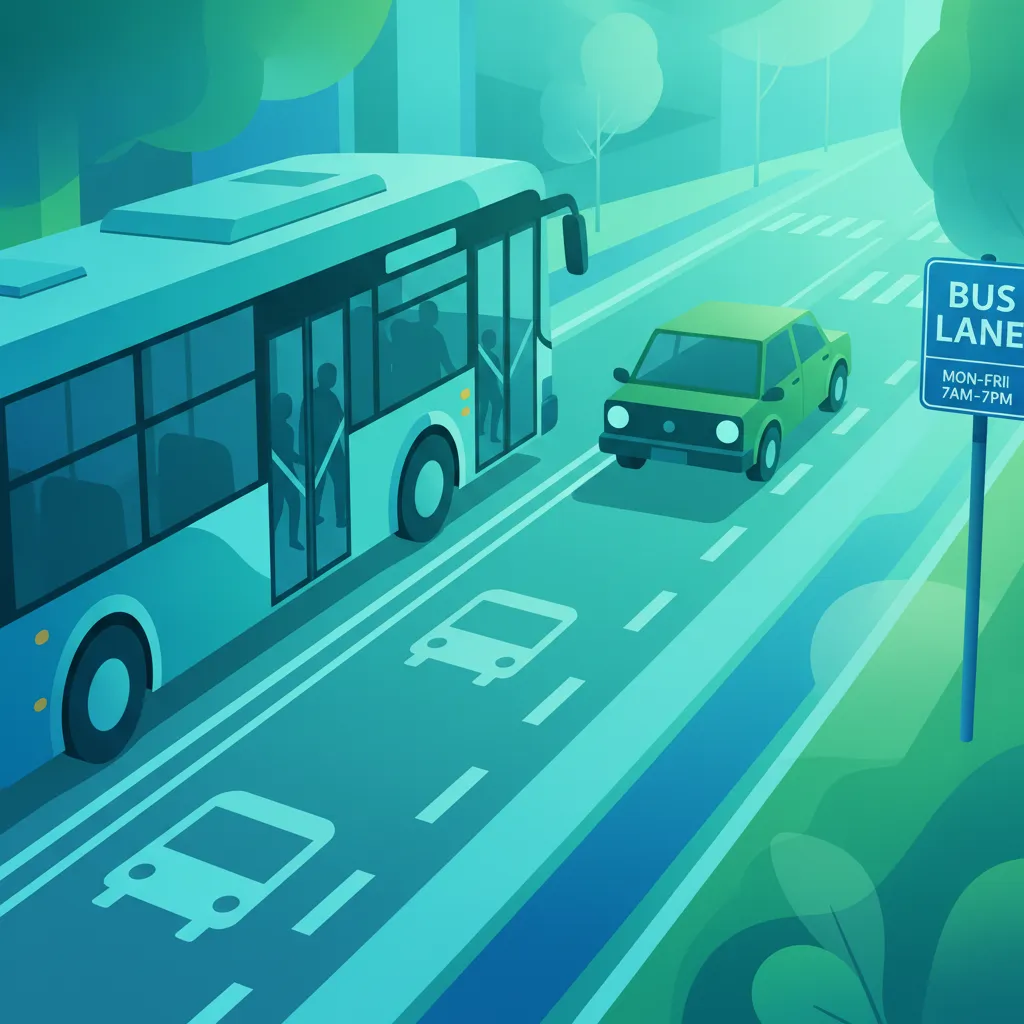
This lesson details the legal operations allowed within Irish bus lanes, including active hours, non-permitted traffic types, and exceptions. Drivers will learn safe approach trajectories for public transport stops, maintaining legal clearance, and navigating curbside hazards safely. The material highlights compliance with local bylaws to guarantee steady, uninterrupted traffic flow and passenger convenience.

The painted lines on the road surface act as continuous instructions to help drivers steer, position, and pass safely. This lesson explains the strict legal prohibitions of crossing solid white lines compared to broken lines, which indicate it is safe to cross if clear. You will also discover the purpose of coloured reflective road studs, known as cat's eyes, which improve safety during night driving and poor visibility.
Gain a thorough understanding of the rights and responsibilities when interacting with pedestrians and cyclists. This lesson explains how to identify hazard zones, anticipate the movements of vulnerable road users, and apply safe driving practices to prevent collisions in busy urban settings.

This lesson details how to approach zebra, pelican, and other pedestrian crossings safely, ensuring complete priority is given to walkers. It also covers the safe guidelines for overtaking cyclists and sharing lanes in busy urban centers without causing danger. Respecting these interactions is critical for maintaining overall safety and compliance with Irish road law.

Bus stops often intersect with designated bicycle lanes and busy walking pathways, creating high-risk conflict areas for drivers. This lesson trains drivers to check blind spots for oncoming cyclists before pulling into or exiting public stop bays. It emphasizes yielding right-of-way to passengers crossing the road, preventing collision risks in active urban transport hubs.

This lesson focuses on managing the interactions between commercial goods vehicles and non-motorized or lightweight commuters. It outlines defensive driving techniques to utilize when overtaking cyclists, navigating pedestrian crossings, or negotiating shared junctions in Irish cities. Drivers will examine common cyclist behaviors at roundabouts and understand how to maintain massive safety margins to protect lives.

This lesson covers the rules governing zebra, pelican, and toucan pedestrian crossings, focusing on driver obligations and rider safety. It details how to interact safely with cyclists, personal mobility devices, and pedestrians in busy urban sectors. Motorcyclists will learn to scan pavement edges, yield right-of-way, and maintain safe overtaking distances when passing slower road users.
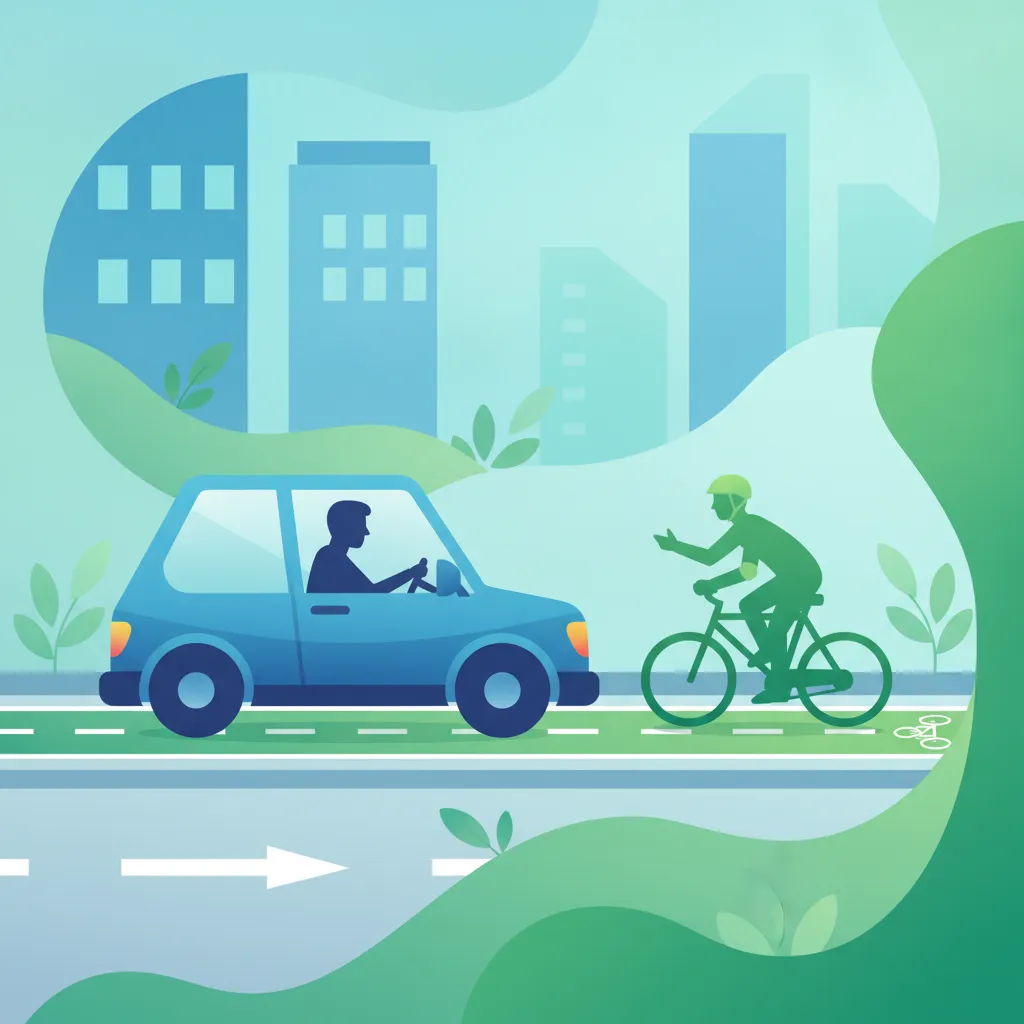
Cyclists share public roads under unique safety constraints, requiring drivers to keep wide clearances and anticipate sudden steering changes. This lesson covers the minimum safe passing distance of 1 to 1.5 metres, rules for driving near cycle tracks, and the danger of the 'dooring' hazard when parking. You will also learn to check your left-side blind spot before turning, preventing dangerous side-swipe collisions.

Safeguarding vulnerable road users requires more than simple obedience to traffic signs; it demands a defensive driving mindset. This lesson summarizes safe practices, including scanning far ahead in urban areas, keeping massive safety margins in wet weather, and executing thorough blind spot checks before reversing. By anticipating the unpredictable movements of others, you can prevent accidents and support a safe road culture.

Children, the elderly, and disabled individuals often require extra time and understanding when navigating road networks. This lesson outlines special safety hazards, such as children unexpectedly running into school zones, or senior citizens needing longer times to cross wide junctions. You will learn how to recognise visually impaired pedestrians by their white canes or guide dogs, and the absolute requirement to drive slowly and patiently.

Pedestrians are the most common vulnerable road users, and drivers must maintain constant vigilance to protect them. This lesson covers pedestrian priority, especially when you are turning into side roads or navigating busy urban centres. You will learn why you must yield to pedestrians already crossing, how to scan blind spots for hidden walkers, and the safety dangers of blocking footpaths or pedestrian zones with your car.

Motorcycles and bicycles are often hidden from view in the large blind spots of passenger buses and coaches during turns. This lesson covers safe lateral clearances when overtaking cyclists, recognizing advanced stop lines, and sharing narrow lanes. Drivers will understand how to signal clearly, giving riders enough room to navigate safely near busy public transit corridors.

Children often struggle to judge heavy vehicle speeds accurately, while elderly pedestrians may possess limited mobility or hearing impairments. This lesson addresses these unique risks, explaining how to adjust driving patterns in residential neighborhoods and near shopping districts. Drivers will learn to maintain a high safety margin, ensuring they can yield quickly to vulnerable road users.
Find clear answers to common questions learners have about Bus Lanes, Cycle Tracks, and Traffic Flow Management. Learn how the lesson is structured, which driving theory objectives it supports, and how it fits into the overall learning path of units and curriculum progression in Ireland. These explanations help you understand key concepts, lesson flow, and exam focused study goals.
You may enter a bus lane only to turn left at a junction or to enter a property, provided the bus lane is broken. If the line is continuous, you must not enter the lane unless directed to do so by a Garda or a traffic sign.
Not always. You must check the specific signage associated with the bus lane. Some lanes are operational 24/7, while others have specific operating hours displayed on signs. Outside of these hours, general traffic may be permitted to use the lane.
Yes, emergency vehicles such as Garda, fire, and ambulance services may use bus lanes when responding to emergencies. However, private Category B drivers must never assume they have the same priority.
You must never drive or park in a cycle track. They are designated for the exclusive use of pedal cyclists to ensure their safety. Crossing a cycle track is only permitted when entering or leaving a property.
Use the practice question search tool to pinpoint specific topics, road signs, or rules you need to master for your official Driver Theory Test. Refine your study strategy and ensure comprehensive preparation for all aspects of the Irish driving exam. Start your focused revision now and build confidence for your learner permit test.