This lesson details the critical actions you must take if you are involved in or encounter a road traffic collision in Ireland. It is a vital component of your Category B theory preparation, ensuring you understand your legal responsibilities and the practical steps to protect lives and manage an emergency scene effectively.
Lesson content overview
Arriving at or being involved in a road traffic collision is one of the most stressful situations a driver can experience. However, quick, structured, and rational action is crucial to protect lives, prevent secondary accidents, and ensure emergency services can reach the scene without delay.
As a driver preparing for the Category B passenger car theory test in Ireland, you are required to know not only how to prevent accidents, but also exactly what to do when they occur. Irish road traffic law mandates specific duties for drivers involved in or arriving at collisions, and being prepared can make the difference between life and death.
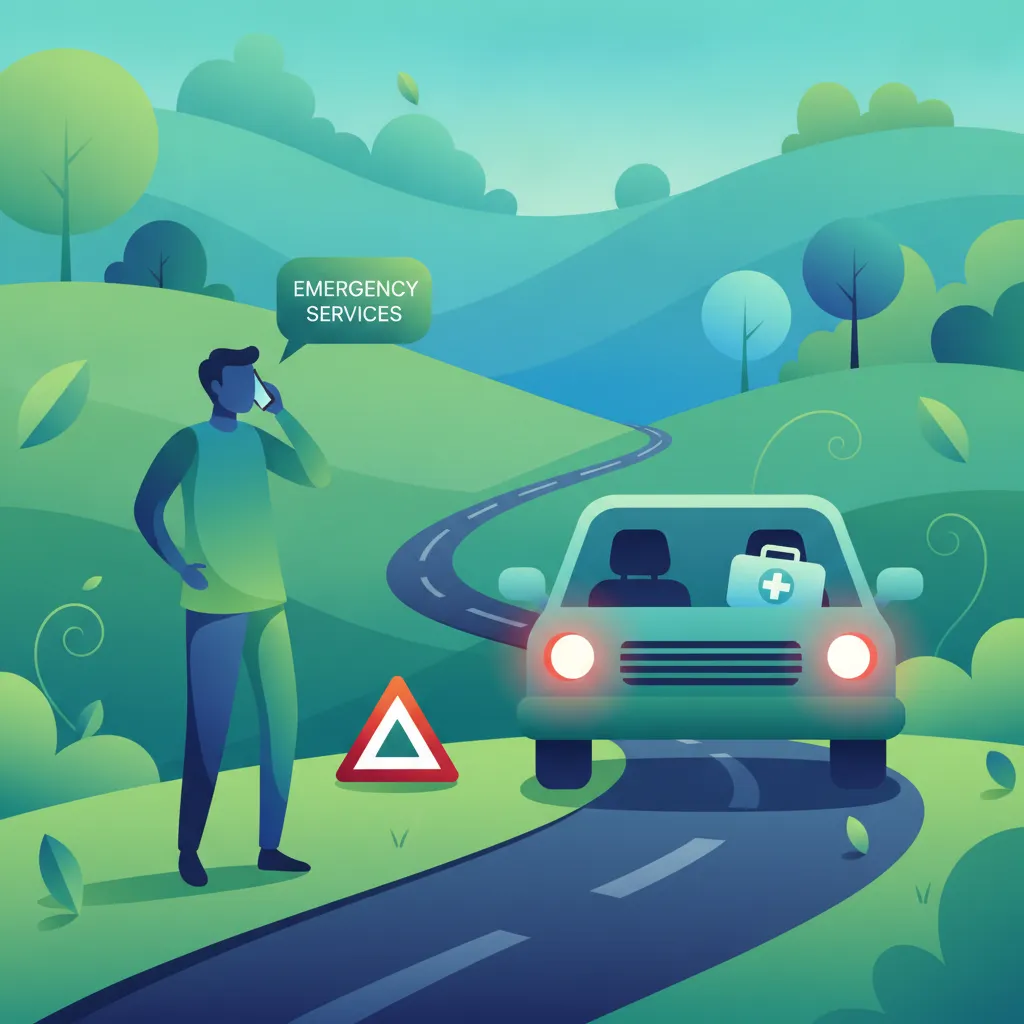
The moments immediately following a collision are the most dangerous. Oncoming traffic may not be aware of the obstruction, creating a high risk of a secondary, often more severe, pile-up. Securing the scene must always be your first priority, provided you do not put your own safety at risk.
Stop and Assess: If you are involved in a collision, you must stop your vehicle immediately. If you are a witness or first responder, park your vehicle in a safe position—ideally past the collision site or on the hard shoulder—to avoid blocking emergency access. Turn off your engine.
Activate Hazard Warning Lights: Immediately switch on your vehicle's hazard warning lights (all indicators flashing simultaneously). This is your primary tool for alerting other road users that a hazard lies ahead.
Don High-Visibility Clothing: Before stepping out of your vehicle, put on a high-visibility vest or jacket. This ensures you are visible to other drivers, particularly at night, in bad weather, or on high-speed roads.
Deploy a Warning Triangle: If it is safe to do so, place a reflective warning triangle on the road to warn oncoming traffic of the obstruction ahead.
Evacuate to Safety: Get all passengers out of the vehicles and move them behind the safety barrier, up an embankment, or well clear of the roadway and hard shoulder.
The reflective warning triangle is an essential safety tool. However, it must be placed at a distance that gives oncoming drivers adequate time to react and stop, based on the speed limit of the road.
Motorway Safety Exception: While a warning triangle is vital on standard roads, you must exercise extreme caution on motorways. If placing a warning triangle on a busy motorway puts you at risk of being struck by high-speed traffic, do not attempt to place it. Instead, focus on getting yourself and your passengers behind the safety barrier immediately.
In Ireland, the primary emergency telephone number is 112 (which works across all of Europe) or 999. Both numbers are free to call from any mobile phone or landline, even if your phone has no credit or is locked.
The single European emergency call number, dialled free of charge from fixed and mobile phones. In Ireland, it connects callers to the Emergency Call Answering Service (ECAS), which routes the call to the Gardaí, Ambulance, Fire, or Coast Guard services.
When you call 112, you must remain calm and be prepared to provide the operator with highly specific information. The speed of the rescue response depends directly on the accuracy of your details.
In Ireland, being involved in a road traffic collision carries strict legal obligations. Failing to adhere to these duties is a serious criminal offence, commonly referred to as "hit-and-run," which carries severe penalties, including heavy fines, penalty points, and potential imprisonment.
Duty to Stop: You must stop your vehicle immediately at the scene of the collision.
Duty to Assist: You must offer reasonable assistance to anyone who is injured.
Duty to Exchange Details: You must exchange your personal and vehicle details with other involved parties or any person who has reasonable grounds for requiring them (e.g., a witness or a Garda).
Duty to Report to the Gardaí: If a person is injured, or if property is damaged and the owner is not present, you must report the collision to the nearest Garda station as soon as possible.
When exchanging information at the scene, you must provide and collect the following:
While you do not need to be a qualified medical professional to pass your driver theory test, you must understand the basic, life-saving principles of first aid. In the critical minutes before emergency services arrive, your actions can save lives.
Never Move an Injured Person unless there is an immediate, life-threatening danger to them where they are (such as the vehicle catching fire, a risk of drowning, or an imminent structural collapse). Unnecessary movement can worsen spinal cord injuries, potentially causing permanent paralysis.
Similarly, never remove a motorcyclist’s helmet unless it is absolutely necessary to clear their airway or perform artificial respiration. Helmets support the neck and skull; removing them improperly can cause catastrophic spinal damage.
If you must attend to casualties, focus on the most critical threats to life first. Use the basic assessment sequence below:
[Assess for Danger] ──> [Check Responsiveness] ──> [Check Airway & Breathing] ──> [Control Bleeding]
Ensure the scene is safe for you to approach. Do not become a casualty yourself. Look out for oncoming traffic, leaking fuel, or unstable vehicles.
Gently shake the casualty’s shoulders and ask loudly, "Are you alright?"
Look, listen, and feel for normal breathing for no more than 10 seconds.
Heavy blood loss can lead to rapid shock and death. You must prioritize controlling external bleeding:
The appropriate response to an emergency can vary significantly depending on the road environment, weather conditions, and vehicle states.
In poor visibility, oncoming drivers have much less time to react to a collision scene.
Motorways carry high-speed traffic, making them exceptionally hazardous.
To ensure success in your Irish Driver Theory Test, memorize the following core facts and rules:
Explore all units and lessons included in this driving theory course.
Lesson content overview
Explore all units and lessons included in this driving theory course.
Explore search topics learners often look for when studying Emergency Procedures, Crash Response and First Aid Basics. These topics reflect common questions about road rules, driving situations, safety guidance, and lesson level theory preparation for learners in Ireland.
Browse additional driving theory lessons that cover connected traffic rules, road signs, and common driving situations related to this topic. Improve your understanding of how different rules interact across everyday traffic scenarios.
Understand the specific legal requirements for driving on Irish motorways including lane discipline, hard shoulder usage, and the correct procedures to follow during a breakdown. This guide explains how to manage high-speed traffic risks and ensures your safety during emergency situations on national dual carriageways and motorways.
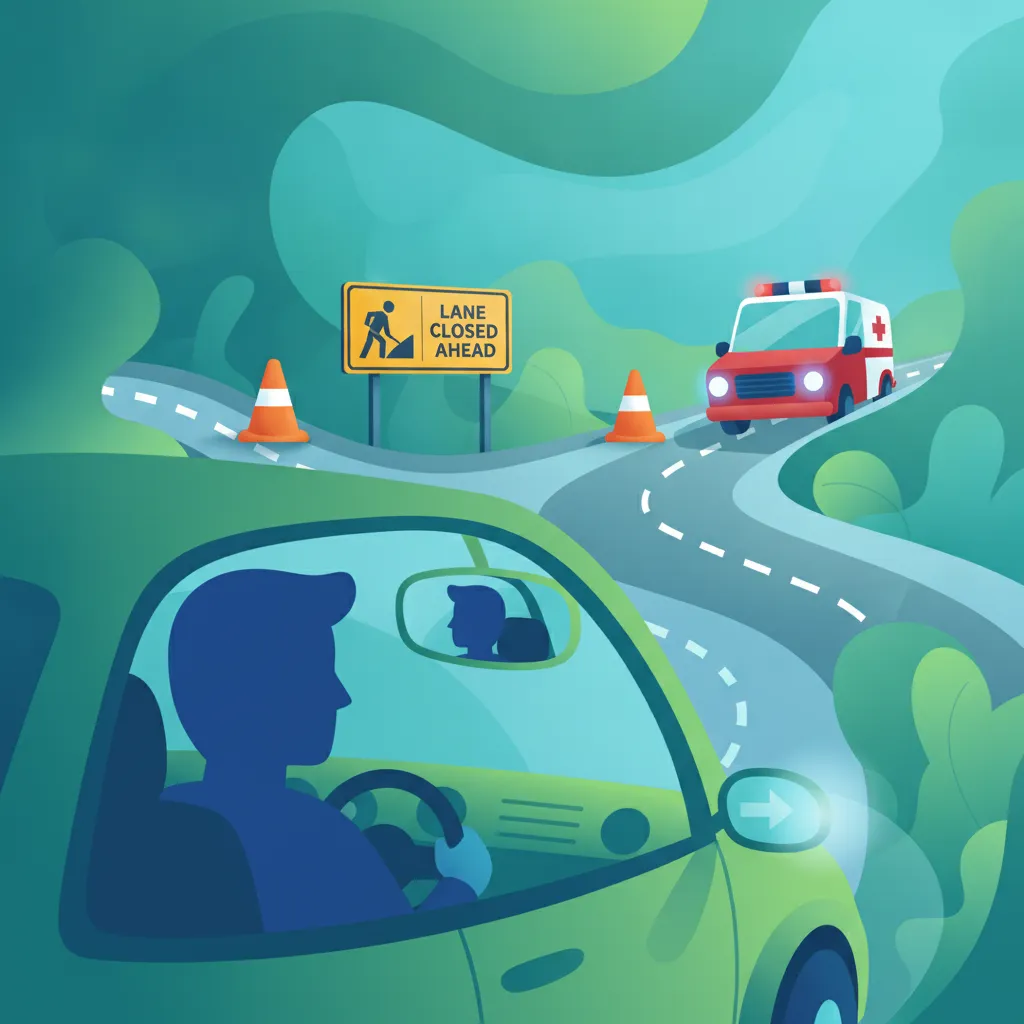
This lesson focuses on the defensive driving skills needed when encountering highway maintenance zones, narrow contraflows, and active roadside workers. It details the precise steps a driver must take when experiencing a major mechanical breakdown, including parking on the hard shoulder and deploying warning triangles. Drivers will learn standard emergency procedures to coordinate with vehicle rescue operations and safety personnel.
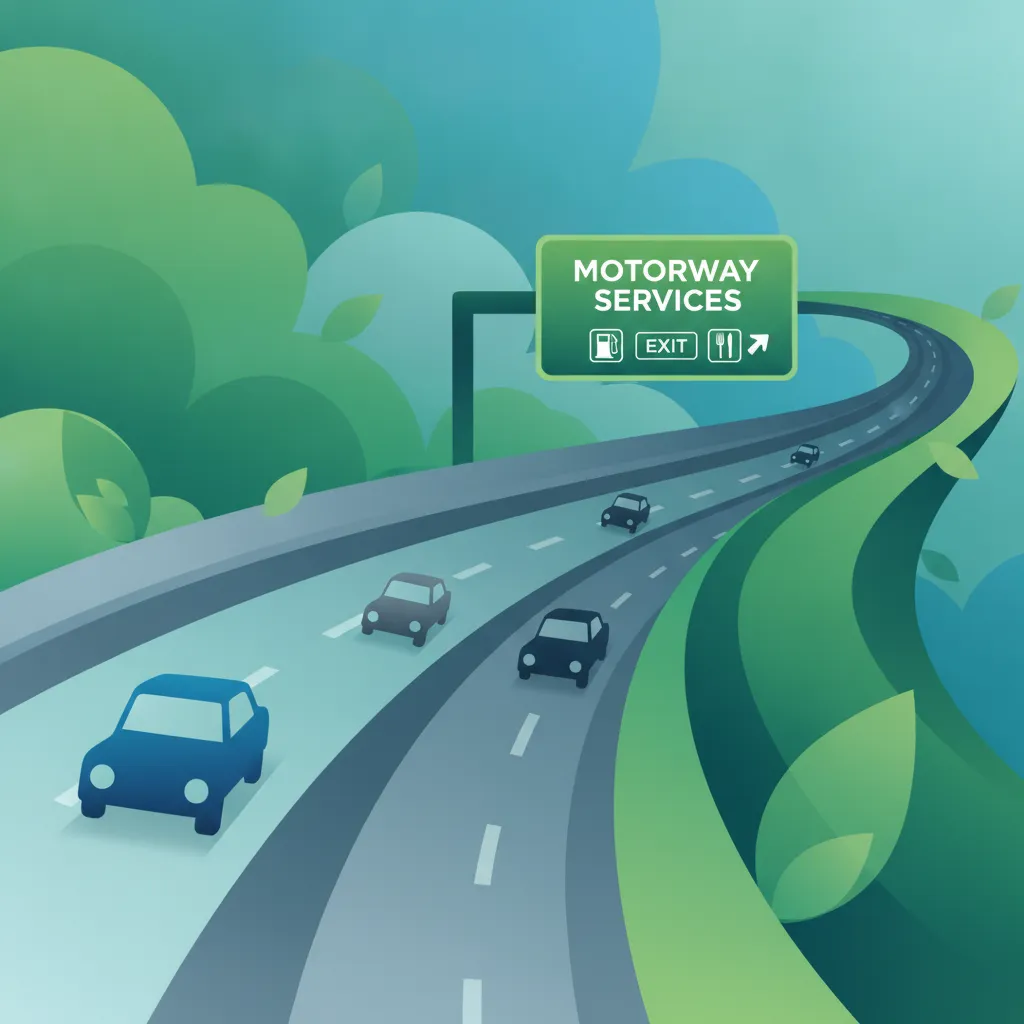
Motorways are designed for safe, high-speed travel, but require strict adherence to lane discipline and specific regulations. This lesson explains that the left lane is for normal driving, while middle and right lanes are strictly for overtaking slower traffic. You will learn how to identify motorway exits, use the hard shoulder during absolute emergencies, and understand the legal restrictions placed on learner permit holders.

This lesson outlines the rules and procedures for riding safely on dual carriageways and motorways in Ireland. It covers merging from slip roads, maintaining lane discipline, and executing high-speed overtaking manoeuvres in accordance with RSA standards. Motorcyclists will learn to anticipate turbulence from large commercial trucks and recognize the safety signs used on high-speed routes.

Motorway transport requires consistent forward planning, strict speed restriction compliance, and clear mirror checks before exiting lanes. This lesson details the rules of joining and leaving motorways, navigating toll plazas safely, and managing breakdowns on the hard shoulder. Drivers will learn to balance high-speed travel with passenger stability, ensuring a comfortable, secure ride.

Irish rural routes are often narrow, lacking central markings, and bordered by tall hedges that restrict forward visibility on sharp bends. This lesson teaches drivers how to negotiate blind curves, anticipate slow-moving agricultural machinery, and respond to wandering farm animals. Drivers will learn to regulate vehicle speed proactively, maintaining a safe stopping margin in rural areas.

This lesson explains the sequential steps for executing safe overtaking manoeuvres on single and dual-carriageway roads in Ireland. It focuses on assessing speed differentials, establishing clear lines of sight, and evaluating oncoming traffic before committing. Riders will learn the correct signaling routine, safe abort procedures, and how to return smoothly to their lane without cutting in.
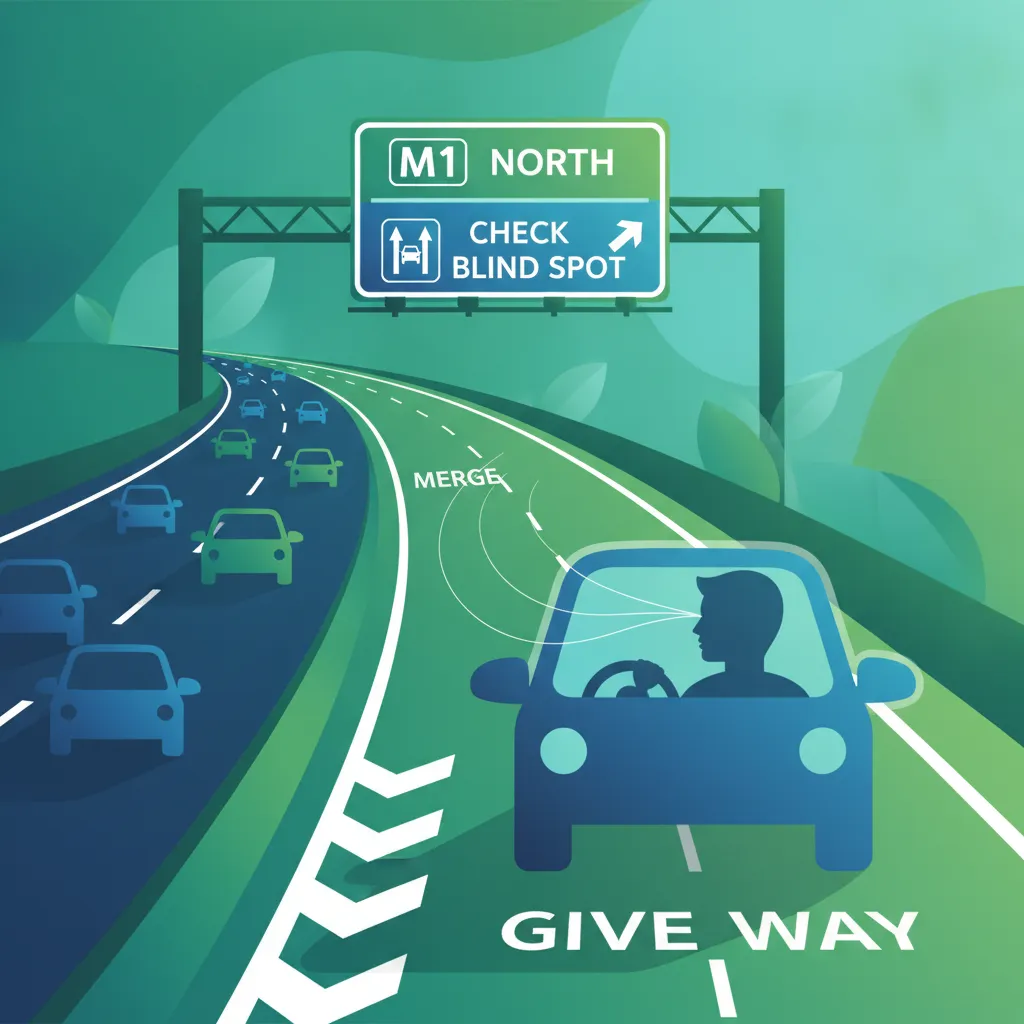
Merging onto dual carriageways or motorways requires matching your speed to the main traffic flow while on the acceleration slip road. This lesson teaches you how to select a suitable gap, signal your merge early, and check your right-side blind spot before joining the main carriageway. You will understand your legal duty to yield to existing traffic, and how to avoid stopping on the slip road unless absolutely necessary.
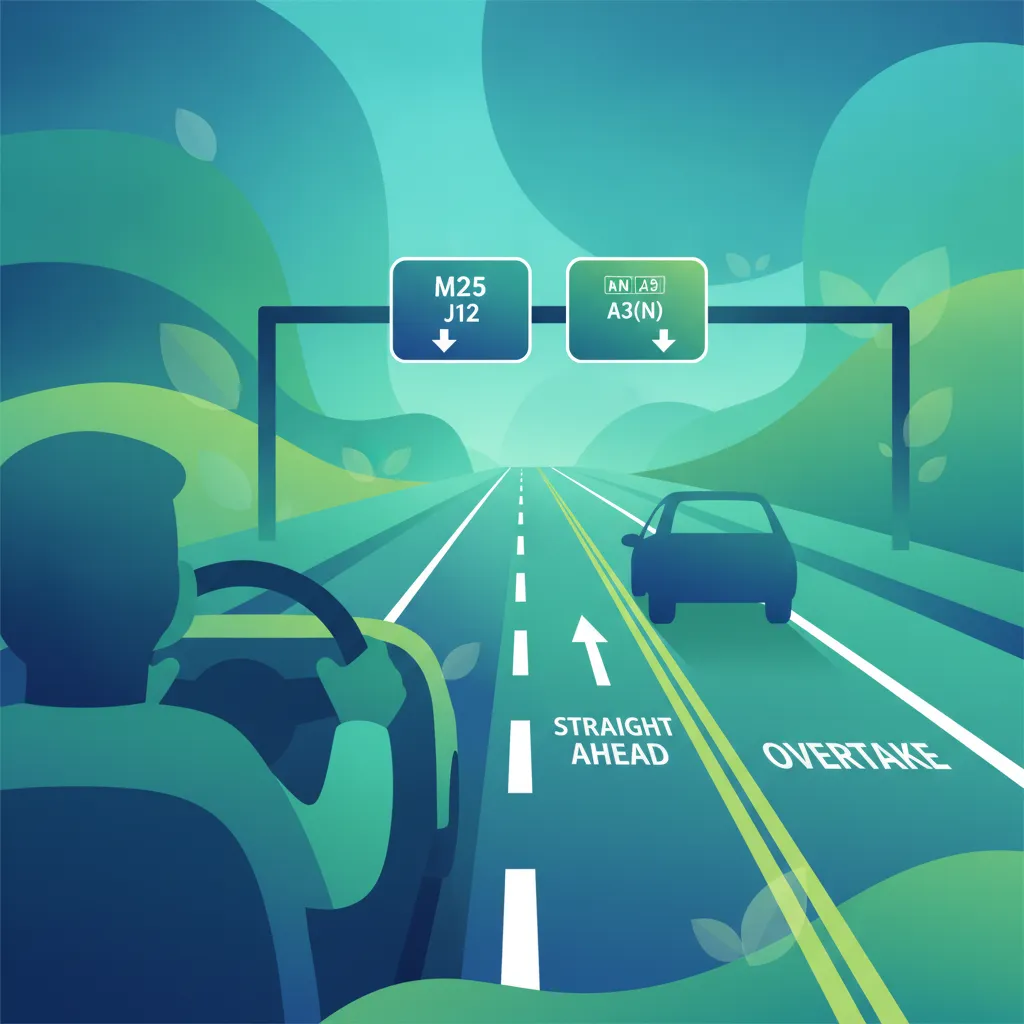
This lesson describes the legal regulations and driving conventions for operating heavy commercial vehicles on motorways and high-speed dual carriageways. It explains specific Irish motorway rules, including bans on heavy goods vehicles occupying the outer overtaking lanes. Drivers will learn to manage high-speed slip-road merging, maintain safe spacing buffers, and anticipate long-range changes in overall traffic flow.
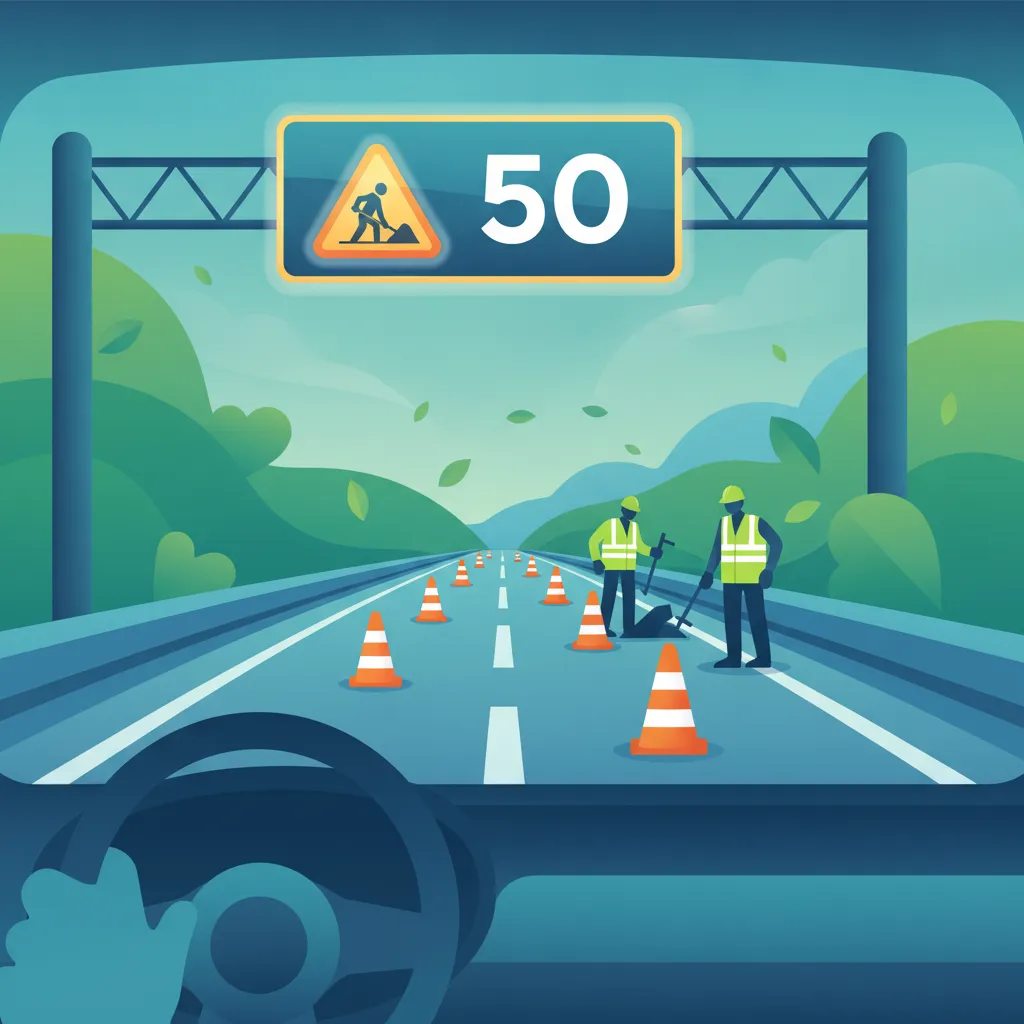
Variable Message Signs and roadwork indicators communicate temporary safety conditions, such as lane closures, heavy delays, or dynamic speed restrictions. This lesson teaches you how to interpret digital overhead gantries, temporary hazard cones, and specific detour layouts often encountered on Irish motorways and regional routes. Adhering to these real-time instructions protects both you and the vulnerable road crews working ahead.
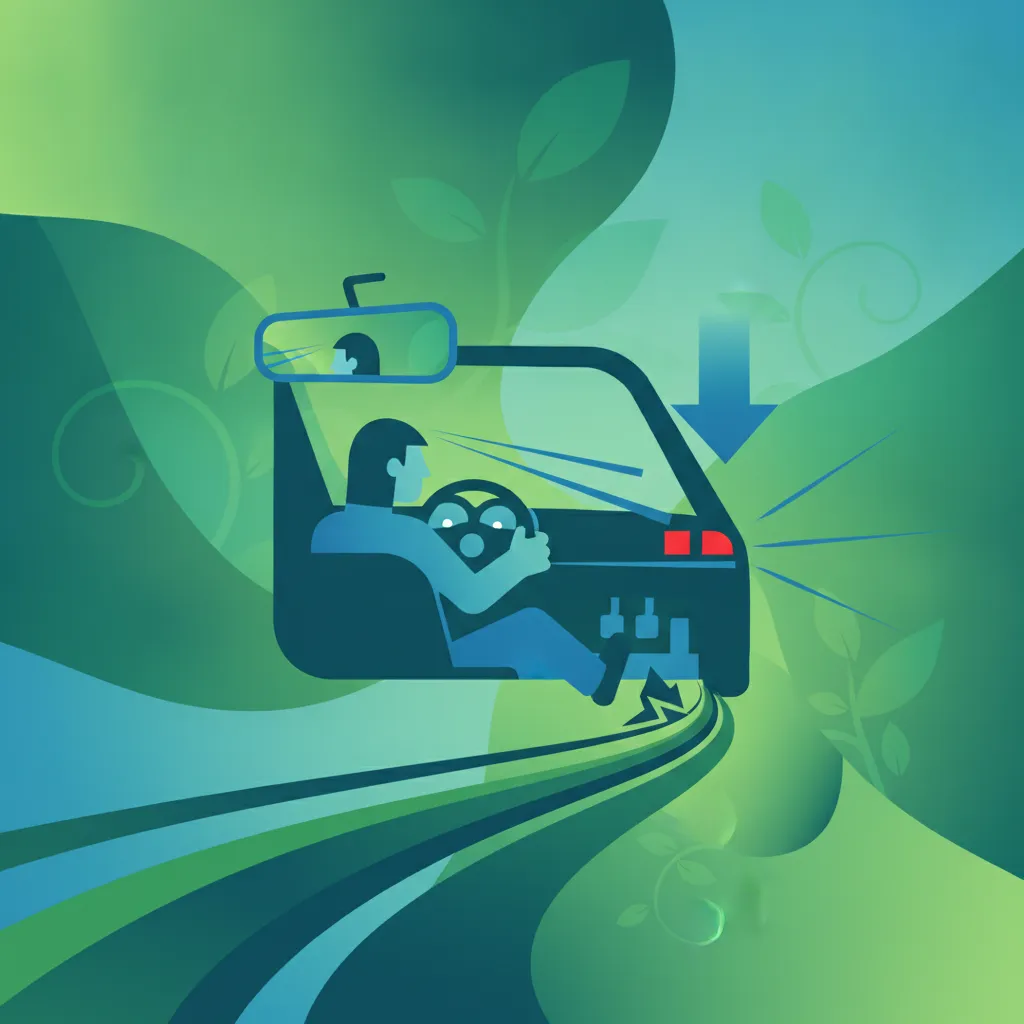
Defensive driving prepares you to react safely when facing unexpected mechanical failures or immediate road hazards. This lesson explains how to execute an emergency stop using Anti-lock Braking Systems (ABS) and how to recover from front and rear-wheel skids on slippery roads. You will learn the importance of remaining calm, avoiding panic-steering, and applying controlled evasive actions to prevent collisions.
Explore the mandatory legal duties required of Irish drivers, including reporting collisions to An Garda Síochána, exchanging insurance details, and understanding penalty points. This lesson clarifies your professional and personal responsibilities to help you maintain legal compliance and road safety standards as a learner permit holder.
This lesson defines the professional duties and high duty of care that drivers must maintain while operating commercial heavy vehicles. It details the legal responsibilities regarding ongoing vehicle fitness, safe cargo securement, and statutory load limits under Irish legislation. Drivers will learn the consequences of neglecting these safety standards under the Irish Road Traffic Act.

Learner drivers in Ireland must adhere to strict operational rules, including the compulsory display of red L-plates and driving under qualified supervision. This lesson outlines your specific duties as a learner, the legal definitions of an accompanying experienced driver, and the elevated safety margins you must maintain on the road. Failing to comply with these learner regulations carries serious legal penalties and delays your progression to a full driving licence.

This lesson delivers a detailed analysis of the legal and moral duty of care that passenger vehicle operators hold in Ireland. Drivers will learn to manage risk effectively, establishing a proactive safety culture that prioritizes vulnerable occupants and external road users. It covers practical methods for protecting passengers during transit, accelerating smoothly, and maneuvering safely in high-risk zones.
This lesson explains the foundational legal obligations of motorcyclists under Irish road traffic legislation and the official Rules of the Road. It covers mandatory compliance with speed limits, correct signalling protocols, and strict adherence to lane discipline and right-of-way laws. Riders will gain a comprehensive understanding of the legal consequences and safety risks associated with traffic violations.

Pedestrians are the most common vulnerable road users, and drivers must maintain constant vigilance to protect them. This lesson covers pedestrian priority, especially when you are turning into side roads or navigating busy urban centres. You will learn why you must yield to pedestrians already crossing, how to scan blind spots for hidden walkers, and the safety dangers of blocking footpaths or pedestrian zones with your car.
This lesson details the legal requirements for motorcycle insurance under Irish law, emphasizing the absolute necessity of holding valid third-party cover. It outlines the rider's responsibility to maintain their motorcycle in a completely roadworthy condition, focusing on critical safety components like tyres, brakes, and lights. Learners will examine how mechanical failures and non-compliance with maintenance standards compromise legal eligibility and safety.
This lesson reinforces the moral, ethical, and legal expectations of commercial drivers on the Irish public road network. It highlights the most frequent compliance violations, including weight infractions, speed, and incorrect logging, which result in heavy operator fines. By embracing a positive safety culture, professional drivers preserve their career standing, safeguard their licences, and protect all citizens.

Violating passenger transport laws can lead to severe operator penalties, heavy fines, and the immediate suspension of driving privileges. This lesson examines common operational infractions, including tachograph violations, overloading offences, and driving with defective tires. Drivers will understand their personal legal liabilities under Irish legislation, supporting long-term safety compliance.

This lesson outlines the vital actions required from a professional driver immediately following a collision on Irish roads. It details the correct protocols for contacting emergency services, assisting injured parties safely, and securing the accident scene to prevent secondary incidents. Additionally, the lesson explains the legal requirements for documenting the event, exchanging insurance details, and reporting to authorities.
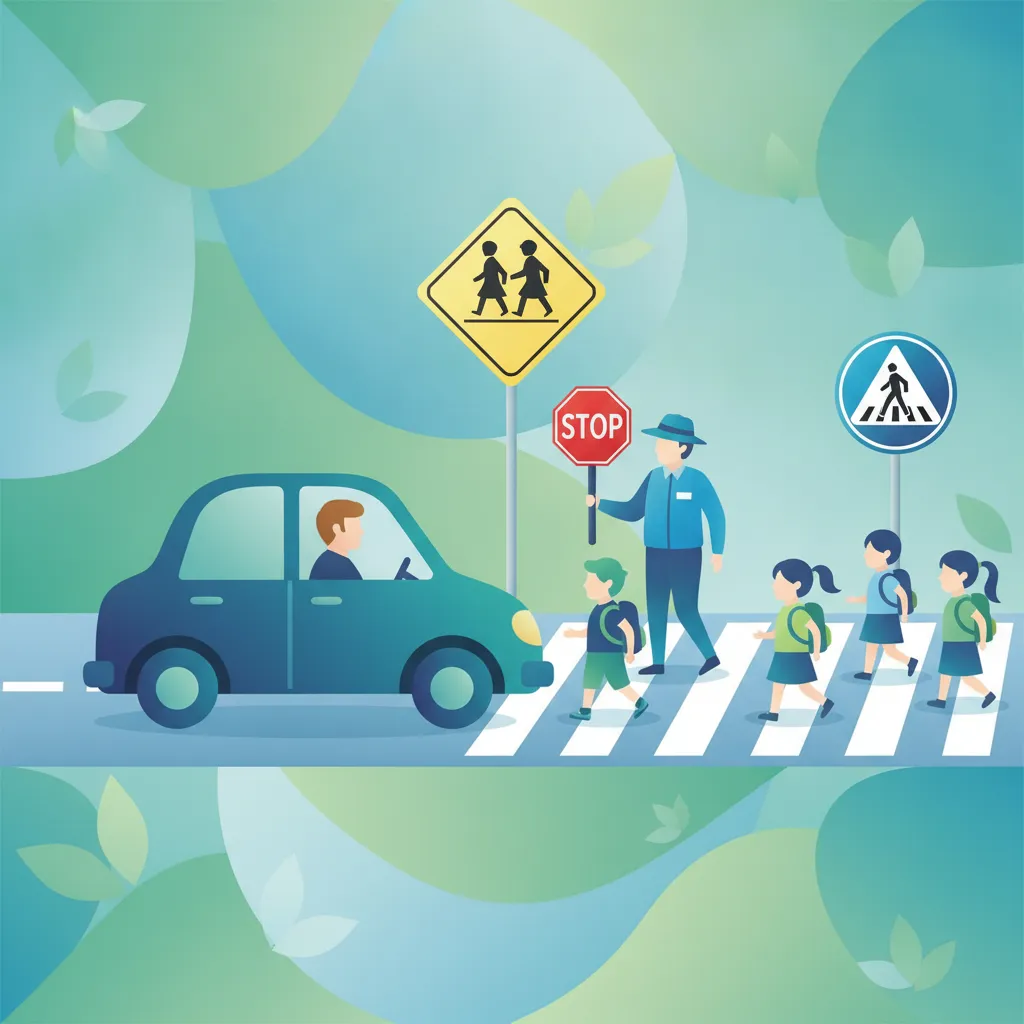
School zones and pedestrian crossings require high driver alertness and strict compliance with local speed limits in Ireland. This lesson details the legal rules of zebra and pelican crossings, explaining driver requirements when amber warning beacons are flashing. Drivers will study safety procedures for dropping off or picking up children, preventing common blind-spot accidents near schools.
Find clear answers to common questions learners have about Emergency Procedures, Crash Response and First Aid Basics. Learn how the lesson is structured, which driving theory objectives it supports, and how it fits into the overall learning path of units and curriculum progression in Ireland. These explanations help you understand key concepts, lesson flow, and exam focused study goals.
Your first priority is to ensure your own safety and that of other road users. Move your vehicle to a safe position, switch on your hazard warning lights, and ensure the scene is visible to other drivers before assessing the needs of the victims.
Yes, under Irish law, you must stop at the scene of an accident. You are also required to provide your name, address, insurance details, and vehicle registration number to anyone with reasonable grounds for requesting them.
No, you should not move an injured person unless they are in immediate danger, such as from fire or oncoming traffic. Moving a victim can cause further injury; it is safer to keep them warm and wait for professional emergency responders.
You should call 112 or 999 to reach the emergency services. Be prepared to provide your exact location, the nature of the emergency, and the number of vehicles or casualties involved.
Use the practice question search tool to pinpoint specific topics, road signs, or rules you need to master for your official Driver Theory Test. Refine your study strategy and ensure comprehensive preparation for all aspects of the Irish driving exam. Start your focused revision now and build confidence for your learner permit test.