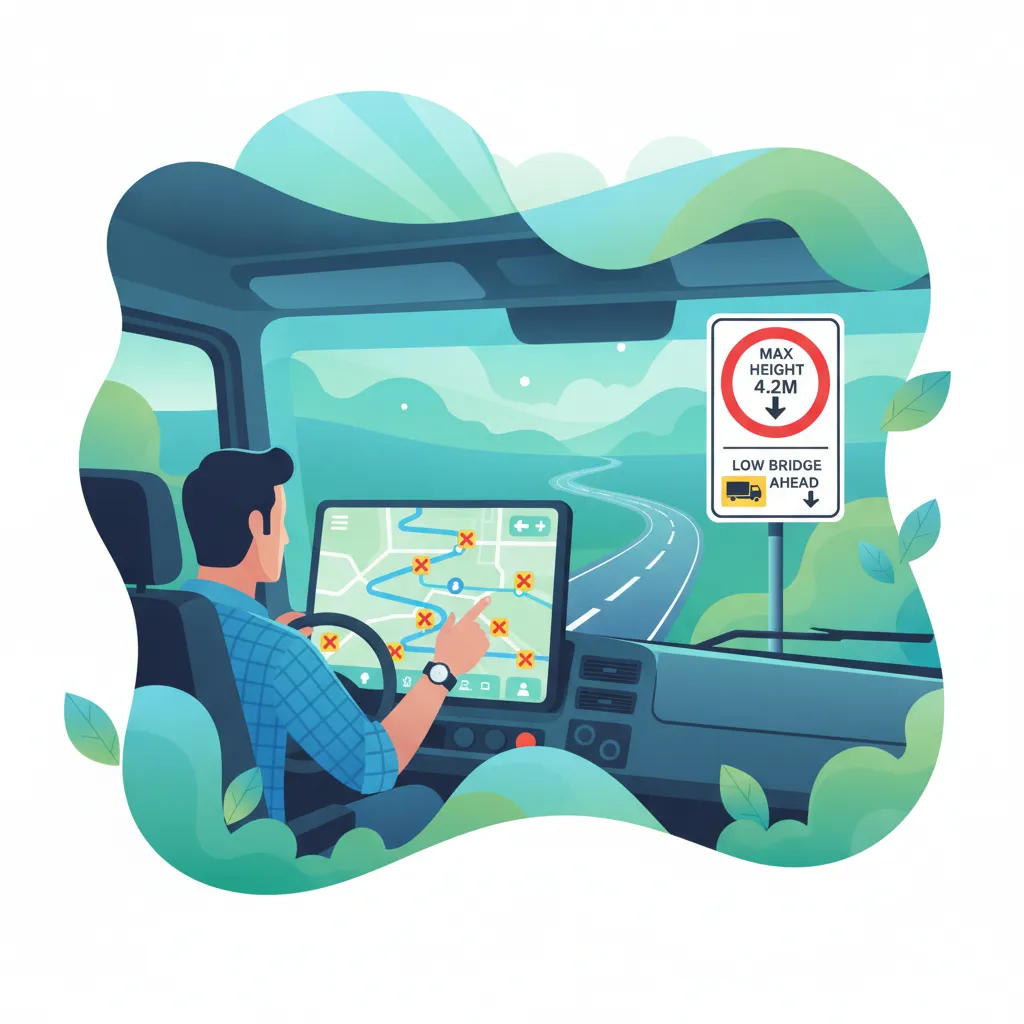
This lesson provides essential strategies for planning safe, compliant routes for heavy goods vehicles on Irish roads. You will learn to move beyond standard navigation tools to identify weight, height, and access restrictions that are critical for your Category C driving theory exam.
Lesson content overview
Operating a heavy goods vehicle (HGV) under a Category C licence in Ireland requires more than advanced handling skills; it demands systematic preparation before the engine even starts. A professional driver must treat route planning as a safety-critical procedure.
Unlike passenger cars, large commercial vehicles are physically constrained by the road infrastructure. Navigating an unplanned route risks structural collisions, traffic violations, and severe structural damage to public infrastructure. This lesson covers the core principles of mapping out safe, compliant, and efficient routes across the Irish road network.
Safe routing relies on risk mitigation. Drivers must ensure that the vehicle's physical dimensions and weight are fully compatible with every road, bridge, tunnel, and loading bay on the journey. This process requires a proactive approach, combining digital navigation tools with manual validation and physical road sign observation.
To achieve safe operations, every professional driver must commit to four core principles:
Before setting off, you must know your vehicle's exact measurements. This is not just the manufacturer's standard specification, but the actual, current physical state of the vehicle—commonly referred to as the "running height" or "dynamic height."
The maximum vertical height of a vehicle when in motion, accounting for load shifting, suspension pressure, tyre inflation, and temporary vertical movement caused by road unevenness or bumps.
Low bridges represent one of the most severe hazards for HGV drivers. In Ireland, bridges with a clearance of less than 4.65 metres (15 feet 3 inches) must be signed. However, you should never assume a bridge is safe just because your static height is marginally below the signed limit.
Arch Bridges: When navigating old stone arch bridges, the maximum clearance marked on the sign is only available in the centre of the arch. If your vehicle is forced to hug the side of the road due to oncoming traffic, the curved roof of the arch will be significantly lower, risking a catastrophic structural strike.
A common contributor to HGV routing incidents is the use of standard consumer GPS applications (such as standard Google Maps or Apple Maps). These consumer-grade platforms are programmed to find the fastest route for passenger cars and do not account for HGV restrictions.
Lack of Dimensional Awareness: Consumer apps do not know your vehicle's height, weight, width, or axle configurations, leading them to direct 32-tonne trucks down narrow rural roads or under low bridges.
Weight Limit Ignorance: They do not account for environmental weight limits (e.g., 3.5t structural or environmental limits on residential streets).
Inadequate Swept Path Calculation: Consumer routes may expect a large vehicle to make tight, right-angle turns that are physically impossible without mounting the footpath or striking street furniture.
Professional drivers must use a Specialized Truck Navigation System (STNS). These systems require you to input the exact parameters of your vehicle:
An STNS calculates routes that dynamically bypass low bridges, weight-restricted zones, and narrow residential streets. However, technology is never a replacement for professional vigilance. Drivers must constantly cross-reference GPS instructions with physical road signs and live road conditions.
Ireland's road network features a mix of modern motorways, primary national routes, and historic regional/local roads. National roads are generally designed to handle standard heavy vehicles, but regional roads (marked with an 'R') and local roads (marked with an 'L') often carry strict weight and size limits.
Understanding the difference between your total weight and your weight distribution is critical:
Always consult your weight ticket (weighbridge docket) and plan your route to avoid restricted bridges or weak road surfaces.
Navigating dense urban environments like Dublin, Cork, Limerick, or Galway requires careful consideration of delivery schedules and local traffic ordinances.
Many city councils implement specific heavy vehicle strategies to reduce congestion and emissions. The most prominent example is the Dublin City Council HGV Management Strategy.
Under these strategies, vehicles with 5 axles or more are restricted from entering specific city-centre cordons during designated hours (typically 07:00 to 19:00, seven days a week) unless they hold a valid transit or load/unload permit. Navigating these zones without a permit results in significant fines and penalty points on your professional driving record.
The final mile of any delivery route is often the most hazardous. The transition from major dual-carriageways to local industrial estates or tight commercial loading docks requires careful, advanced scouting.
A route that is safe under perfect summer conditions may become highly dangerous during poor weather or under different vehicle states.
A fully loaded HGV has a higher centre of gravity, increasing the risk of rollovers on tight roundabouts or sharp bends. Conversely, an empty (unladen) vehicle has less traction on its driving axles, making it more prone to jackknifing or wheel-spin on slippery inclines. Your route selection must adapt to these physical dynamics.
To ensure consistency and safety, follow this checklist before every commercial journey:
Measure and Confirm: Check the actual running height, width, overall length, and total weight of your vehicle (including the load).
Program the Navigation: Input your exact dimensions into a Specialized Truck Navigation System (STNS).
Cross-Reference with Maps: Verify the suggested route against official HGV maps or local authority cordon maps to ensure compliance with urban bans.
Identify Critical Hazards: Locate any low bridges, narrow streets, or weight-restricted zones along the route and plan specific detour options.
Check Live Travel Updates: Consult national traffic updates for roadworks, incidents, or emergency height restrictions.
Scout the Destination: Use satellite imagery or contact the site manager to confirm safe entry/exit lanes, turning areas, and loading bay configurations.
Why is proactive route planning so heavily emphasized in Irish road safety standards? The physical laws governing heavy vehicles mean that mistakes carry severe consequences:
Explore all units and lessons included in this driving theory course.
Lesson content overview
Explore all units and lessons included in this driving theory course.
Explore search topics learners often look for when studying Planning Safe Routes for Large Vehicles. These topics reflect common questions about road rules, driving situations, safety guidance, and lesson level theory preparation for learners in Ireland.
Browse additional driving theory lessons that cover connected traffic rules, road signs, and common driving situations related to this topic. Improve your understanding of how different rules interact across everyday traffic scenarios.
Understand the specific traffic regulations and hazards associated with heavy vehicle deliveries in busy urban environments. This lesson explains how to navigate city cordons, loading bay timing restrictions, and the complex interactions between large vehicles and vulnerable road users in Irish city centres.
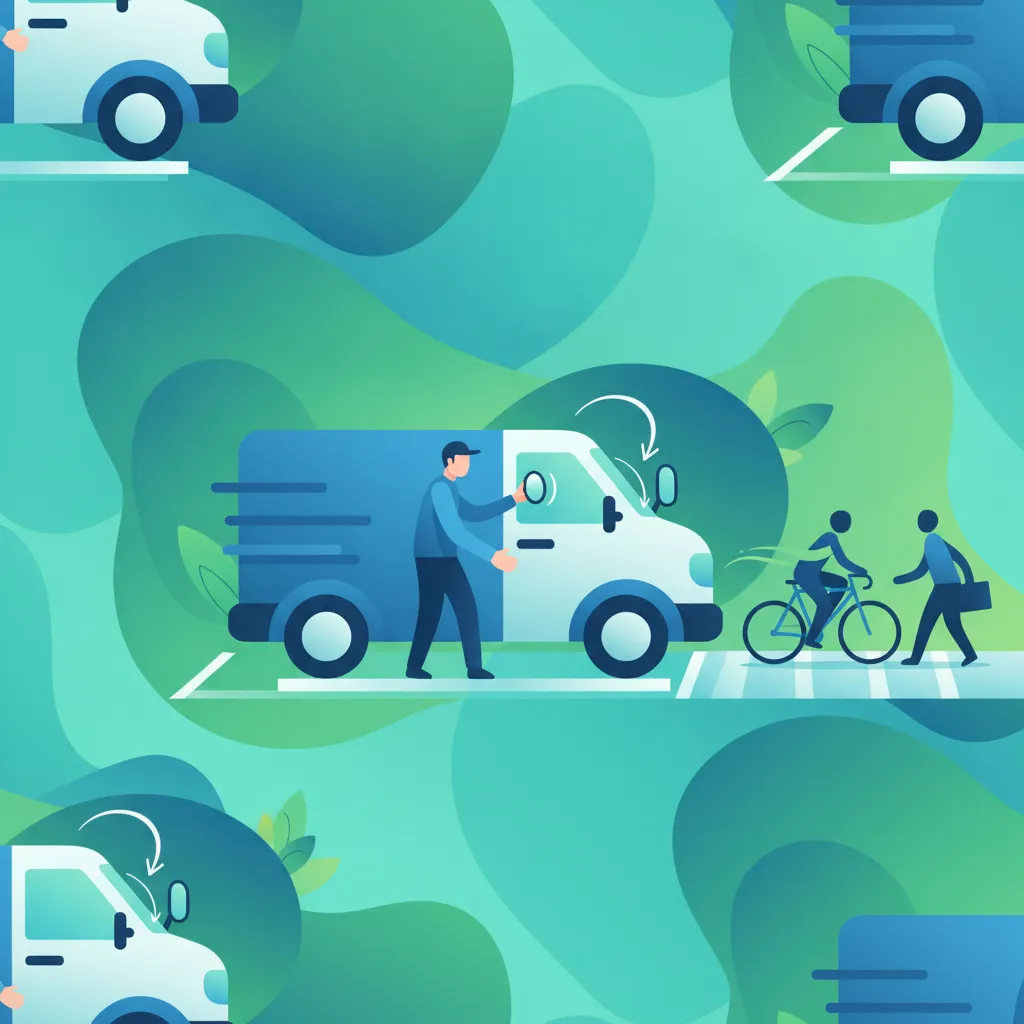
This lesson addresses the unique environmental and logistical challenges faced during delivery stops in commercial town and city centers. It covers the legal frameworks governing municipal loading zones, double-parking hazards, and temporary pedestrian-only street restrictions. Drivers will acquire practical skills for managing traffic build-up, utilizing visual spotters, and securing the vehicle while unloading cargo.

This lesson focuses on managing the interactions between commercial goods vehicles and non-motorized or lightweight commuters. It outlines defensive driving techniques to utilize when overtaking cyclists, navigating pedestrian crossings, or negotiating shared junctions in Irish cities. Drivers will examine common cyclist behaviors at roundabouts and understand how to maintain massive safety margins to protect lives.

Driving a coach through narrow urban streets or historic Irish town centers demands precise spatial judgment and low speed control. This lesson covers turning radii, rear tail-swing physics, and managing overhangs when navigating around tight, permanent obstacles. Drivers will learn to assess clearance gaps accurately, reducing damage risks to the vehicle exterior and public infrastructure.
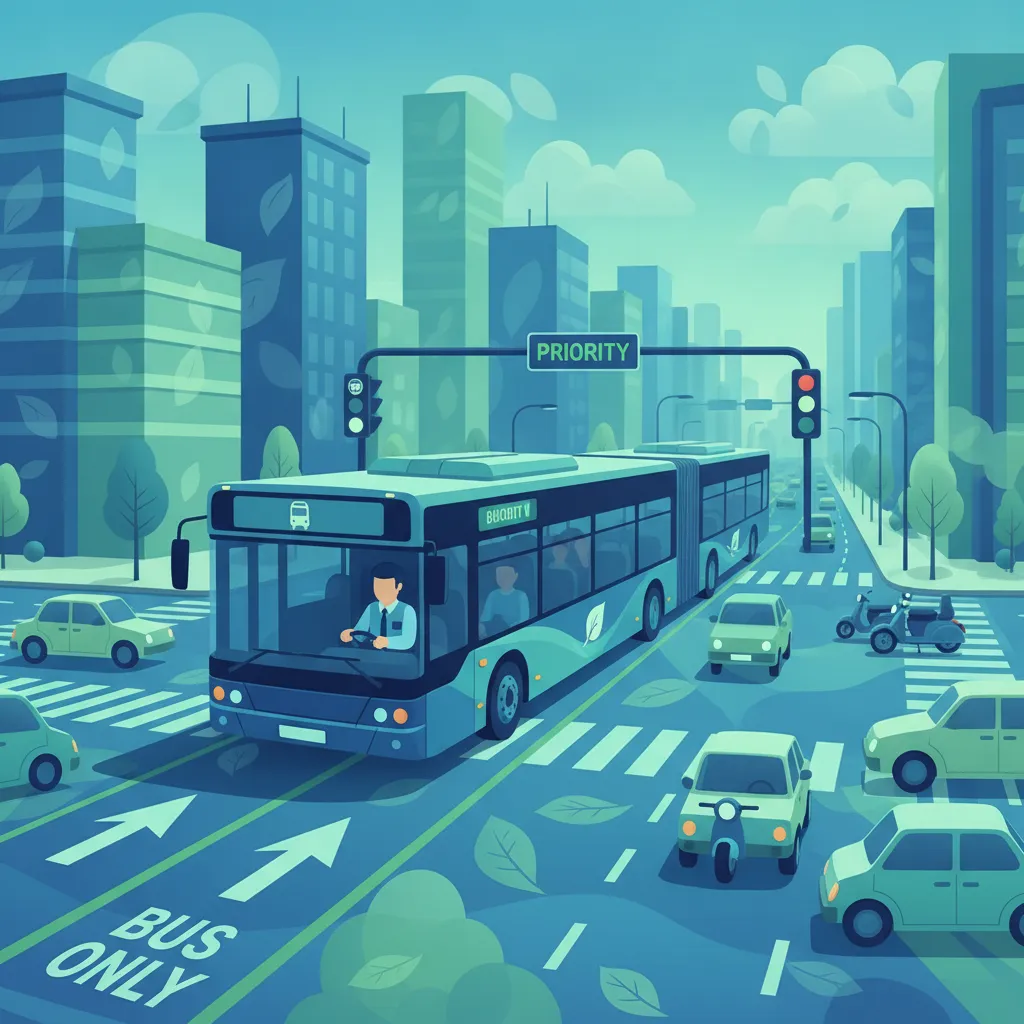
Driving large vehicles through dense city traffic requires outstanding lane discipline, spatial awareness, and consistent patience. This lesson teaches drivers how to utilize public bus corridors, manage tight yellow box intersections, and handle narrow city streets. It focuses on predicting traffic pattern shifts to maintain service timetables while minimizing fuel waste and driver stress.

This lesson addresses the mechanical dynamics of turning long-wheelbase and articulated commercial vehicles at intersections, junctions, and roundabouts. It covers the necessity of deep cornering lines, early mirror checks, and correct signaling to warn vulnerable road users of wide turn maneuvers. Drivers will learn how to minimize rear cut-in and ensure the entire vehicle clears urban obstacles safely.

This lesson explores the safe operation of heavy transport vehicles during severe meteorological hazards typical of the Irish climate. It teaches techniques for adjusting speed and doubling following distances to prevent loss of steering traction and control on waterlogged or icy roadways. Drivers will understand how to manage lateral aerodynamic forces from crosswinds on high-sided goods vehicles.

This lesson analyzes traffic flow characteristics in dense municipal areas and teaches safe riding methods for congested gridlock situations. It covers the maintenance of adequate safety cushions, scanning for opening car doors, and monitoring pedestrians stepping from between parked cars. Riders will learn to manage frequent stopping, constant clutch wear, and the stress of urban commuting.

This lesson explains the extensive blind spots of heavy goods vehicles, buses, and other large trucks on Irish roads. It teaches Category AM riders how to maintain safe following distances and position themselves where truck drivers can see them. Proper space cushion management is emphasized to protect riders from the wind turbulence of passing trucks.
This lesson describes the legal regulations and driving conventions for operating heavy commercial vehicles on motorways and high-speed dual carriageways. It explains specific Irish motorway rules, including bans on heavy goods vehicles occupying the outer overtaking lanes. Drivers will learn to manage high-speed slip-road merging, maintain safe spacing buffers, and anticipate long-range changes in overall traffic flow.

This lesson focuses on the physical mechanics of long-wheelbase and articulated vehicles when executing turns in restricted spaces. It explains concepts like swept path, rear overhang, and turning circles, which must be accounted for to prevent side-swiping collisions. Drivers will discover strategic route-planning techniques to avoid congested urban layouts and unsuitable rural corridors.
Learn the theory behind identifying and mitigating blind spots when operating rigid or articulated goods vehicles. This guide details safe turning practices, the importance of swept path awareness, and how to position your vehicle to reduce risks when interacting with pedestrians and cyclists on Irish roads.

This lesson explains the location, depth, and angle of the severe blind spots surrounding a standard heavy goods vehicle. It provides step-by-step guidance on setting up primary side mirrors, wide-angle lenses, and close-proximity front-view mirrors to eliminate blind areas. Drivers will learn systematic visual checking routines to ensure complete situational awareness before initiating any maneuver, lane shift, or turn.
This lesson explains the extensive blind spots of heavy goods vehicles, buses, and other large trucks on Irish roads. It teaches Category AM riders how to maintain safe following distances and position themselves where truck drivers can see them. Proper space cushion management is emphasized to protect riders from the wind turbulence of passing trucks.

The length of a commercial passenger vehicle creates a wide rear-wheel track offset, requiring drivers to swing wide during tight turns. This lesson teaches cornering mechanics, mirror adjustment guidelines, and how to check blind spots for cyclists on the inside lane. Drivers will master intersection control, preventing collisions with stationary street furniture or curbs.

This lesson provides a comprehensive guide to reversing large vehicles and backing trailer setups safely into loading docks and industrial bays. It analyzes the mechanical physics of trailer articulation, steering inputs, and how to utilize modern backup cameras, mirrors, and assistants. Drivers will examine critical safety protocols, including visual checks and slow-speed controls, to avoid collisions with fixed objects.
Reversing a large passenger vehicle is a high-risk maneuver that must be avoided whenever possible or performed with extreme caution. This lesson teaches correct mirror alignment, the use of rear cameras, and establishing clear hand signals with an external spotter. Drivers will study safety protocols for backing into passenger bays, ensuring all blind zones remain completely clear.
This lesson details the location of blind spots on passenger cars, commercial trucks, and buses, explaining how to avoid staying in these danger zones. It teaches the vital importance of the lifesaver glance or physical shoulder check before executing any lateral lane change or turn. Motorcyclists will learn how to monitor other drivers' mirrors to verify if their motorcycle is visible.
Irish rural roads are often narrow, winding, and bordered by high hedges, presenting unique hazards compared to urban streets. This lesson focuses on scanning for hidden hazards such as slow-moving farm machinery, mud on the road surface, and loose livestock. You will learn how to adjust your speed before entering blind bends, sound your horn at blind crests, and safely share the road with local agricultural traffic.
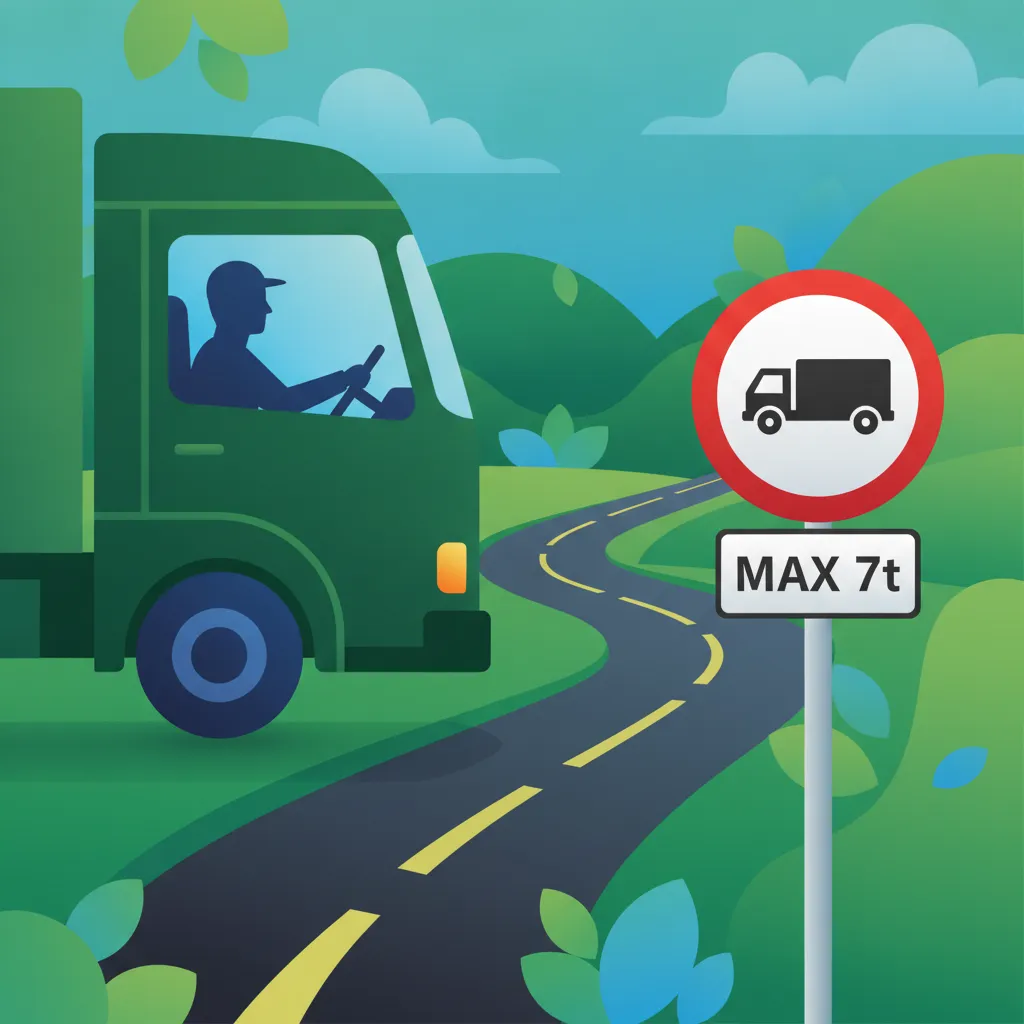
This lesson details the exact visual indicators, symbols, and text used on Irish traffic signs to communicate regulatory restrictions for heavy vehicles. It covers signs denoting height clearances, narrow bridges, and width-limited streets that require immediate driver diversion. By recognizing these specialized warnings early, professional drivers prevent costly structural collisions and traffic offences.

Motorcycles and bicycles are often hidden from view in the large blind spots of passenger buses and coaches during turns. This lesson covers safe lateral clearances when overtaking cyclists, recognizing advanced stop lines, and sharing narrow lanes. Drivers will understand how to signal clearly, giving riders enough room to navigate safely near busy public transit corridors.

Heavy vehicles require continuous visual scanning to identify small or slow-moving road users who may enter the path of travel. This lesson explores the typical behaviors of young children, elderly pedestrians, and visually impaired road users. Drivers will build strong hazard perception skills to anticipate sudden movements, ensuring they can brake safely and avoid serious accidents.
Find clear answers to common questions learners have about Planning Safe Routes for Large Vehicles. Learn how the lesson is structured, which driving theory objectives it supports, and how it fits into the overall learning path of units and curriculum progression in Ireland. These explanations help you understand key concepts, lesson flow, and exam focused study goals.
Standard GPS systems are designed for passenger cars and do not account for height, weight, or length restrictions. Relying on them can lead your heavy goods vehicle into narrow roads, low bridges, or weight-restricted zones, which is both dangerous and illegal.
Look for regulatory signs indicating maximum height, axle weight, or gross weight limits. These are usually circular signs with red borders. If you see a restriction sign, you must be prepared to follow an alternative route immediately.
Many commercial delivery zones have specific time-of-day access regulations. Always check local authority road signs and planned delivery schedules to ensure you are legally permitted to enter a zone during your required arrival time.
Yes, you may encounter questions regarding your responsibility to know your vehicle height and to heed warning signs for low bridges. You are expected to demonstrate proactive planning to avoid such hazards.
Use the practice question search tool to pinpoint specific topics, road signs, or rules you need to master for your official Driver Theory Test. Refine your study strategy and ensure comprehensive preparation for all aspects of the Irish driving exam. Start your focused revision now and build confidence for your learner permit test.