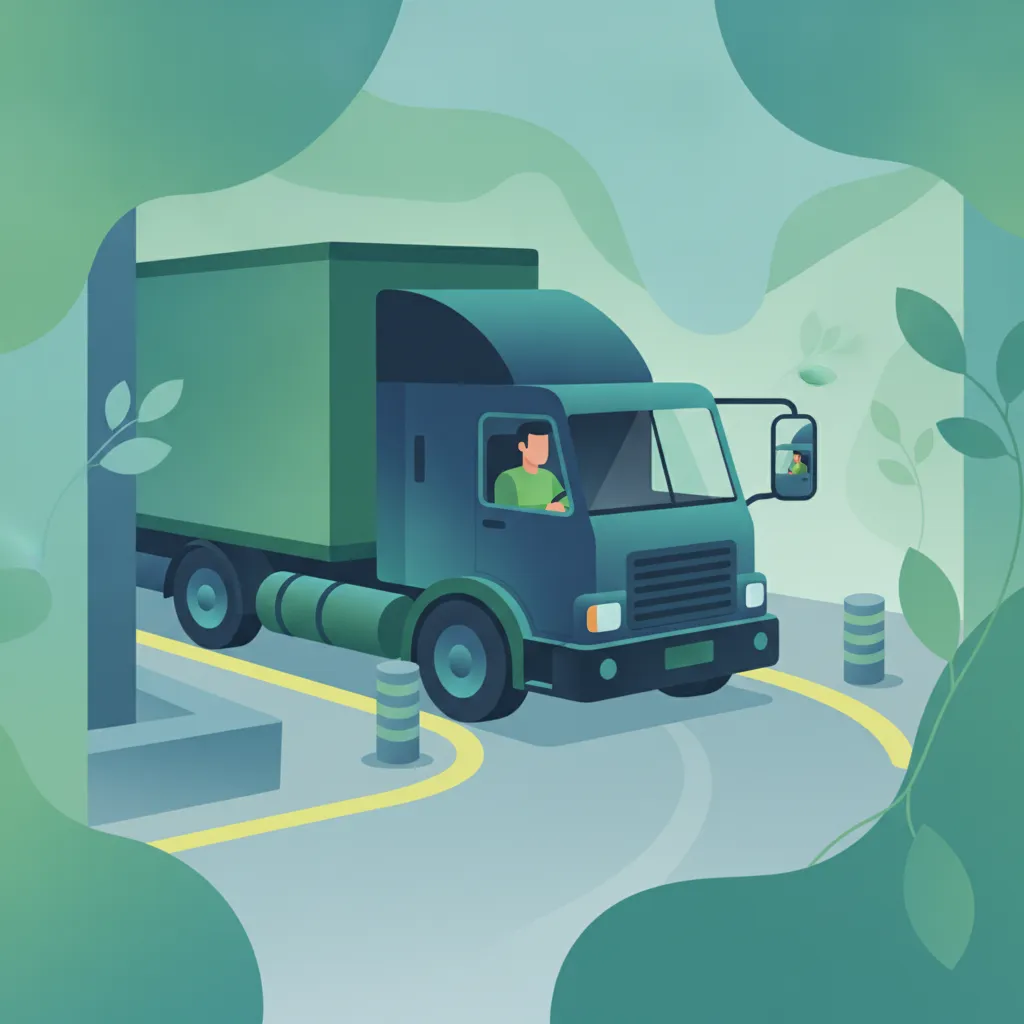
This lesson guides Category D drivers through the technical challenges of operating large passenger vehicles in constrained urban environments. You will learn to anticipate tail-swing and manage spatial clearance, ensuring you can safely navigate Ireland's narrow streets and busy terminal areas. This module builds upon your knowledge of vehicle dimensions and weight to enhance your professional driving precision.
Lesson content overview
Operating a large passenger vehicle, such as a coach, single-deck city bus, or double-deck bus, requires a level of spatial awareness and physical control far beyond that of a standard passenger car. In Ireland, bus drivers frequently navigate historic town centres, narrow regional roads, tight bus depots, and busy urban transit bays. Navigating these environments safely is a core component of the Irish Driver Theory Test Category D Passenger Vehicles curriculum.
Failing to manage the physical dimensions of a large passenger vehicle can result in collisions with public infrastructure, damage to other vehicles, and severe risks to passengers and vulnerable road users. This lesson delivers an in-depth exploration of turning geometry, vehicle physics, clearance management, and the legal protocols required to handle large vehicles in confined spaces.
To safely control a coach or bus in restricted areas, you must understand the basic laws of physics and vehicle geometry that govern how long, heavy, and wide vehicles move. Unlike smaller cars, the path taken by the rear wheels of a bus does not track the path taken by the front steering wheels.
The turning radius is the radius of the tightest circular turn a vehicle is capable of making. For Category D vehicles, this is highly dependent on the vehicle's wheelbase (the distance between the front and rear axles).
When a long vehicle turns, the rear wheels cut inward, following a shorter path than the front wheels. This phenomenon is known as off-tracking or low-side cut. When turning left or right around a tight corner, the driver must swing the front of the vehicle wide to prevent the rear wheels from mounting the kerb, striking street furniture, or colliding with waiting vehicles.
While the inner rear wheels cut inward during a turn, the bodywork behind the rear axle does the opposite: it sweeps outward in the direction opposite to the turn. This lateral movement is called tail swing.
The outward lateral sweep of a vehicle's rear bodywork beyond the path of the rear wheels when executing a turn.
If you turn the steering wheel sharply to the left, the rear right corner of your coach will swing out to the right. Depending on the distance between the rear axle and the back bumper, this swing can extend more than a metre into adjacent lanes or onto footpaths.
Tail Swing Hazard: Always check your mirrors before and during a turn to ensure your tail swing does not strike street signs, lamp posts, parked cars, or pedestrians standing close to the edge of the footpath.
The portion of the vehicle extending from the centre of the rear axle to the absolute rear bumper is the rear overhang. Managing this overhang is critical when reversing and turning in confined areas.
During reverse manoeuvres, the rear overhang acts as a lever; small adjustments at the steering wheel result in significant, rapid movements of the rear bumper. This makes precise low-speed control and accurate depth perception non-negotiable for Category D drivers.
Driving a large vehicle in medieval or historic Irish town centres—such as parts of Galway, Kilkenny, or Dublin—demands exceptional spatial judgment. Roads in these areas are often narrow, lined with parked cars, and bounded by historic stone walls or low-hanging shop signs.
Spatial judgment is the cognitive process of evaluating the physical space around your vehicle. It is split into two distinct categories:
When approaching a restricted space, you must systematically evaluate the available vertical, horizontal, and ground clearance.
Manoeuvring safely within a bus depot, parking bay, or narrow urban lane requires continuous, ultra-low-speed operation—typically under 5 km/h. At these speeds, smooth control prevents sudden jerkiness that can destabilise the vehicle or cause minor collisions to turn into severe structural impacts.
Select the Correct Gear: In a manual vehicle, select first gear or reverse. In an automatic vehicle, ensure the transmission is in the lowest forward gear range (if manual selection is available) or use light brake modulation to control creep.
Modulate the Clutch (Manual Transmissions): Use the friction point of the clutch to make minute adjustments in speed. Avoid riding the clutch excessively to prevent overheating, but use it to "inch" the vehicle forward or backward.
Use Gentle Brake and Throttle Inputs (Automatic Transmissions): Avoid stabbing at the accelerator or brake pedals. Apply progressive pressure to avoid jerky movements that can make spatial estimation difficult and alarm passengers.
Keep Wheels Moving Slowly While Steering: Try to avoid "dry steering" (turning the steering wheel while the vehicle is completely stationary), as this places immense stress on the steering linkage and tyres. Keep the vehicle moving at a crawl while turning the wheel.
Under Irish road traffic regulations, drivers of large passenger vehicles must adhere to specific statutory rules to protect themselves, their passengers, and the public when operating in restricted zones.
Reversing a large passenger vehicle is one of the most hazardous tasks a professional driver can perform. Due to the vehicle's design, massive blind spots exist directly behind the bus, extending several metres outwards.
Within closed environments like bus depots, terminals, or narrow loading areas, the legal maximum speed is heavily restricted to prevent accidents.
A professional Category D driver must adapt their driving techniques to shifting environmental circumstances. A manoeuvre that is straightforward on a dry, sunny afternoon can become highly hazardous under different conditions.
Urban confined spaces are rarely empty. You must expect to share tight streets with pedestrians, shoppers, and cyclists.
To pass your Category D Driver Theory Test and maintain a clean driving record, you must understand how to avoid common driver errors and how to handle real-world challenges.
Imagine you are driving a 12-metre coach in an Irish town centre and need to make a sharp left turn into a narrow street. The corner is tight, and cars are parked close to the junction on both sides.
You are preparing to park a double-deck bus into a designated maintenance or parking bay at the end of your shift. The bay is narrow, and there are other buses parked close by on either side.
Safely manoeuvring a large passenger vehicle in confined spaces requires patience, mechanical empathy, and an understanding of vehicle physics. By mastering turning paths, managing tail swing, and committing to using a spotter for reverses, you protect your passengers, your vehicle, and the public.
To deepen your preparation for the Category D passenger vehicle licence, proceed to study how these techniques apply to reversing and general road positioning.
Explore all units and lessons included in this driving theory course.
Lesson content overview
Explore all units and lessons included in this driving theory course.
Explore search topics learners often look for when studying Manoeuvring Large Vehicles in Confined Spaces. These topics reflect common questions about road rules, driving situations, safety guidance, and lesson level theory preparation for learners in Ireland.
Browse additional driving theory lessons that cover connected traffic rules, road signs, and common driving situations related to this topic. Improve your understanding of how different rules interact across everyday traffic scenarios.
Learn how to navigate dense Irish urban environments while managing bus lanes, bus stops, and interactions with other road users. This theory guide provides insights into effective route planning and maneuvering large passenger vehicles safely through historic town centers and busy metropolitan traffic zones.
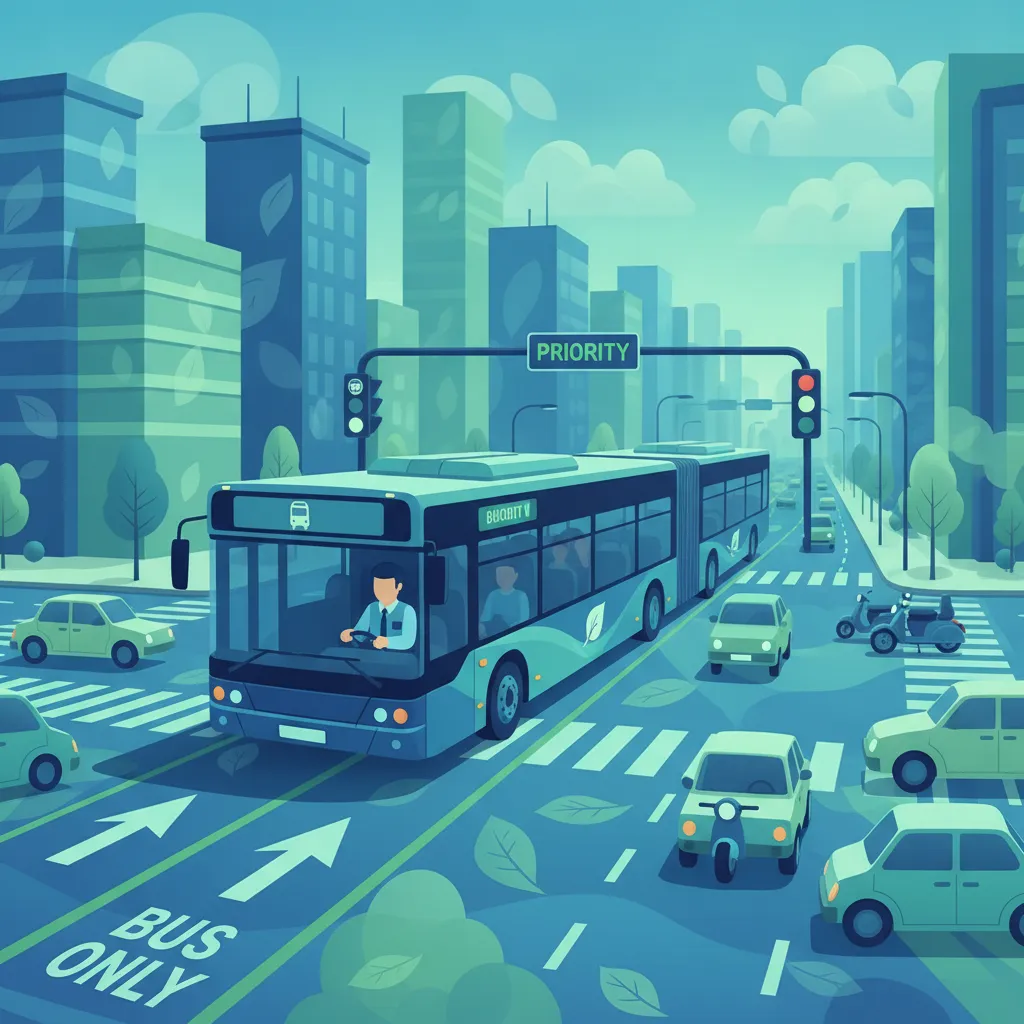
Driving large vehicles through dense city traffic requires outstanding lane discipline, spatial awareness, and consistent patience. This lesson teaches drivers how to utilize public bus corridors, manage tight yellow box intersections, and handle narrow city streets. It focuses on predicting traffic pattern shifts to maintain service timetables while minimizing fuel waste and driver stress.
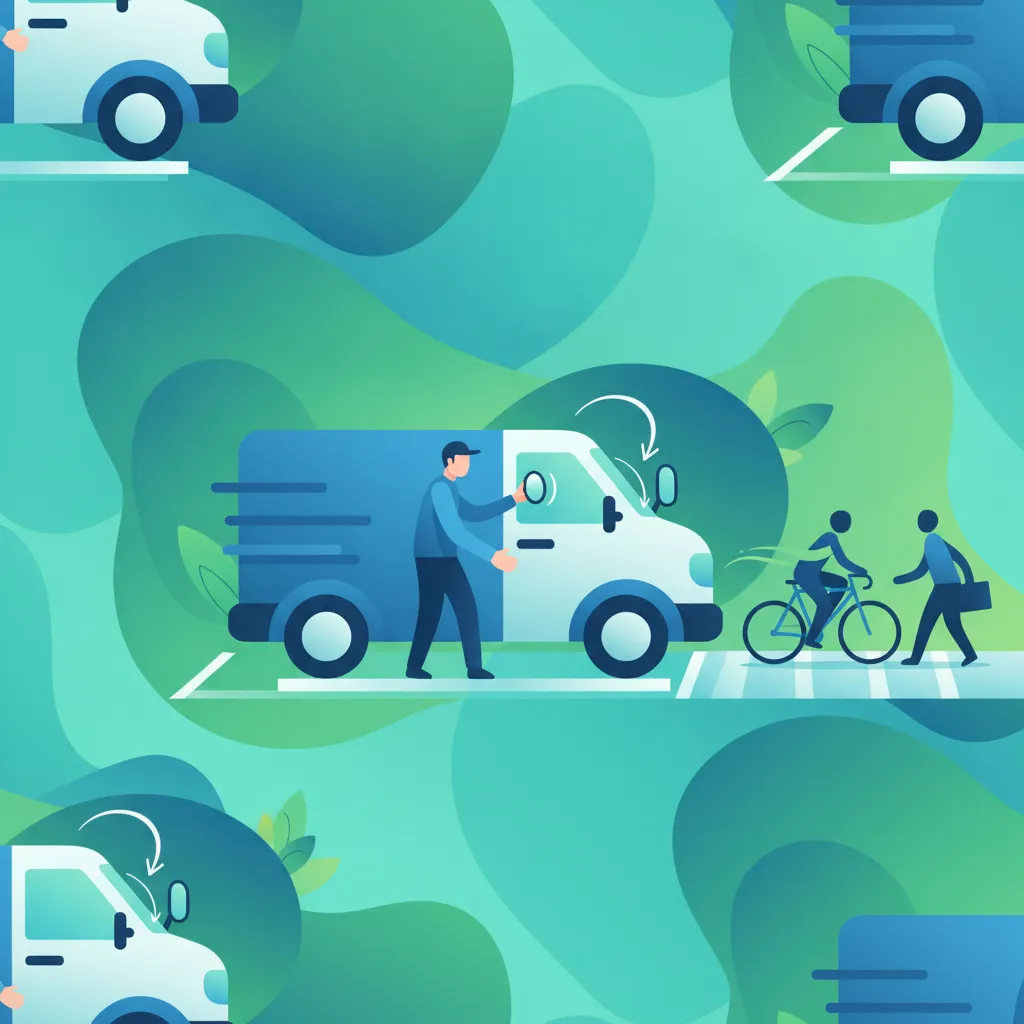
This lesson addresses the unique environmental and logistical challenges faced during delivery stops in commercial town and city centers. It covers the legal frameworks governing municipal loading zones, double-parking hazards, and temporary pedestrian-only street restrictions. Drivers will acquire practical skills for managing traffic build-up, utilizing visual spotters, and securing the vehicle while unloading cargo.
This lesson analyzes traffic flow characteristics in dense municipal areas and teaches safe riding methods for congested gridlock situations. It covers the maintenance of adequate safety cushions, scanning for opening car doors, and monitoring pedestrians stepping from between parked cars. Riders will learn to manage frequent stopping, constant clutch wear, and the stress of urban commuting.
This lesson focuses on managing the interactions between commercial goods vehicles and non-motorized or lightweight commuters. It outlines defensive driving techniques to utilize when overtaking cyclists, navigating pedestrian crossings, or negotiating shared junctions in Irish cities. Drivers will examine common cyclist behaviors at roundabouts and understand how to maintain massive safety margins to protect lives.
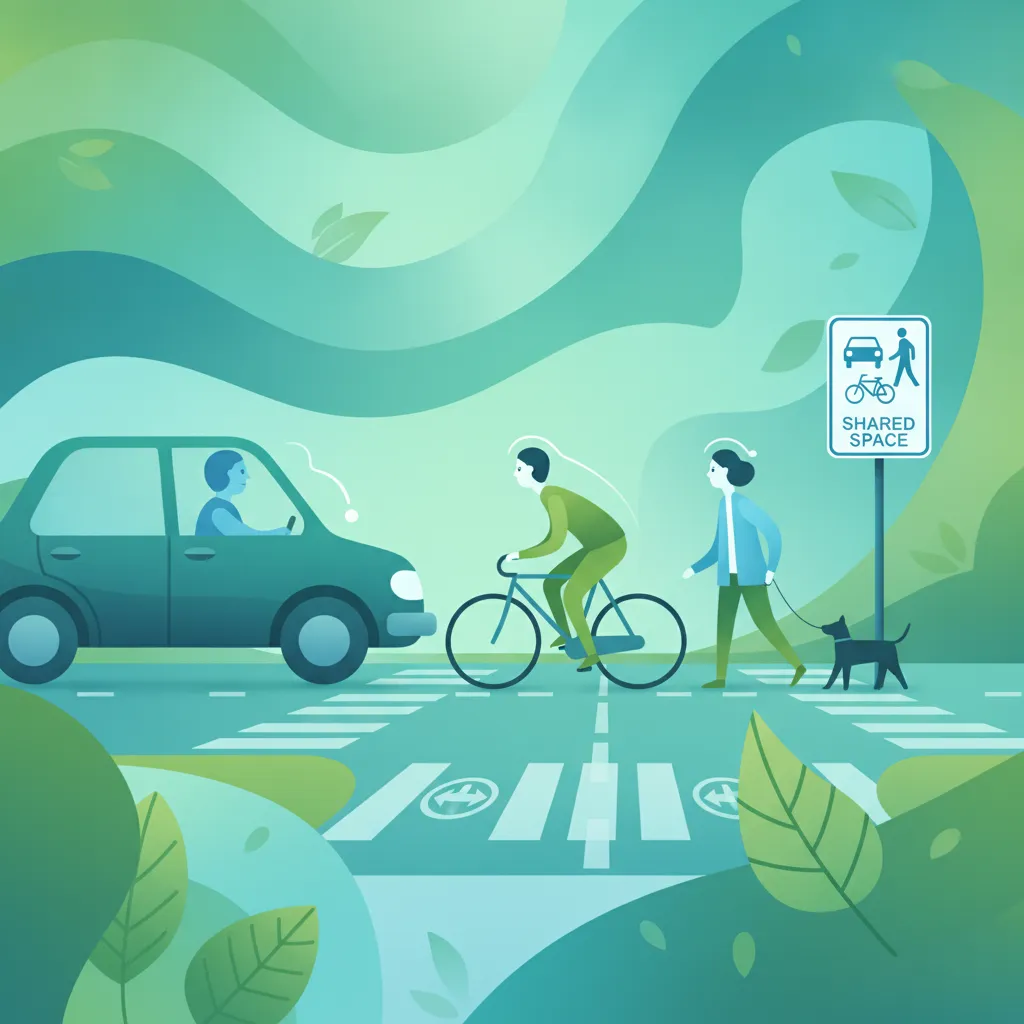
Shared public spaces rely heavily on road user cooperation, low speeds, and active visual communication rather than traditional traffic signals. This lesson teaches drivers how to navigate these open zones safely, yielding priority to pedestrians and integrated cyclists. Drivers will study how traffic calming designs alter vehicle trajectories, allowing safe, stress-free transit through modern city centers.

Bus terminals and central transport hubs are highly congested environments with dense pedestrian traffic and tight vehicle maneuver spaces. This lesson addresses terminal speed limits, reversing protocols, passenger queue management, and the coordination of scheduled departures. Drivers will learn how to navigate passenger platforms safely without causing service delays or compromising safety.
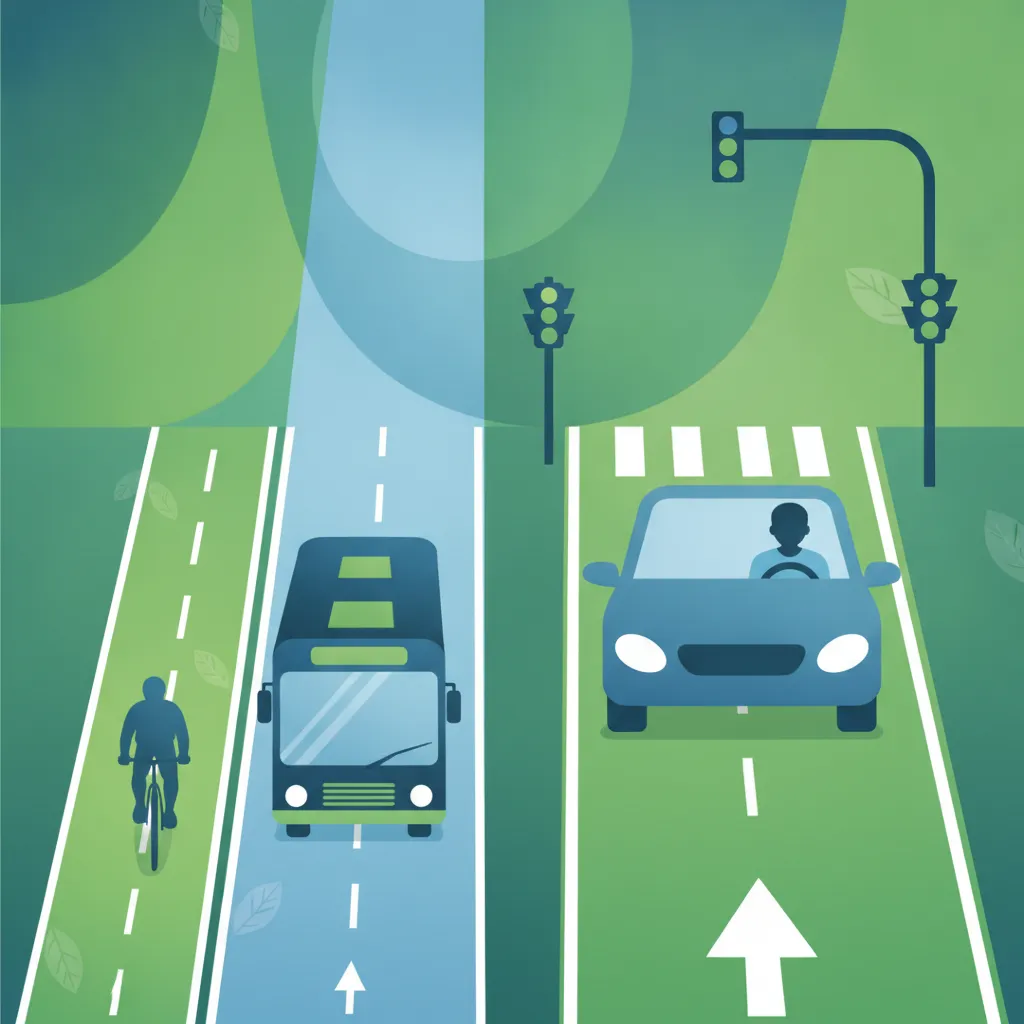
Bus lanes and cycle tracks are designed to encourage public transport and safe active travel in congested urban areas. This lesson explores the differences between with-flow and contra-flow bus lanes, detailing the restricted operating hours during which other vehicles are banned. You will understand when taxi drivers or emergency vehicles can use these lanes, and how to avoid costly traffic violations and safety risks.
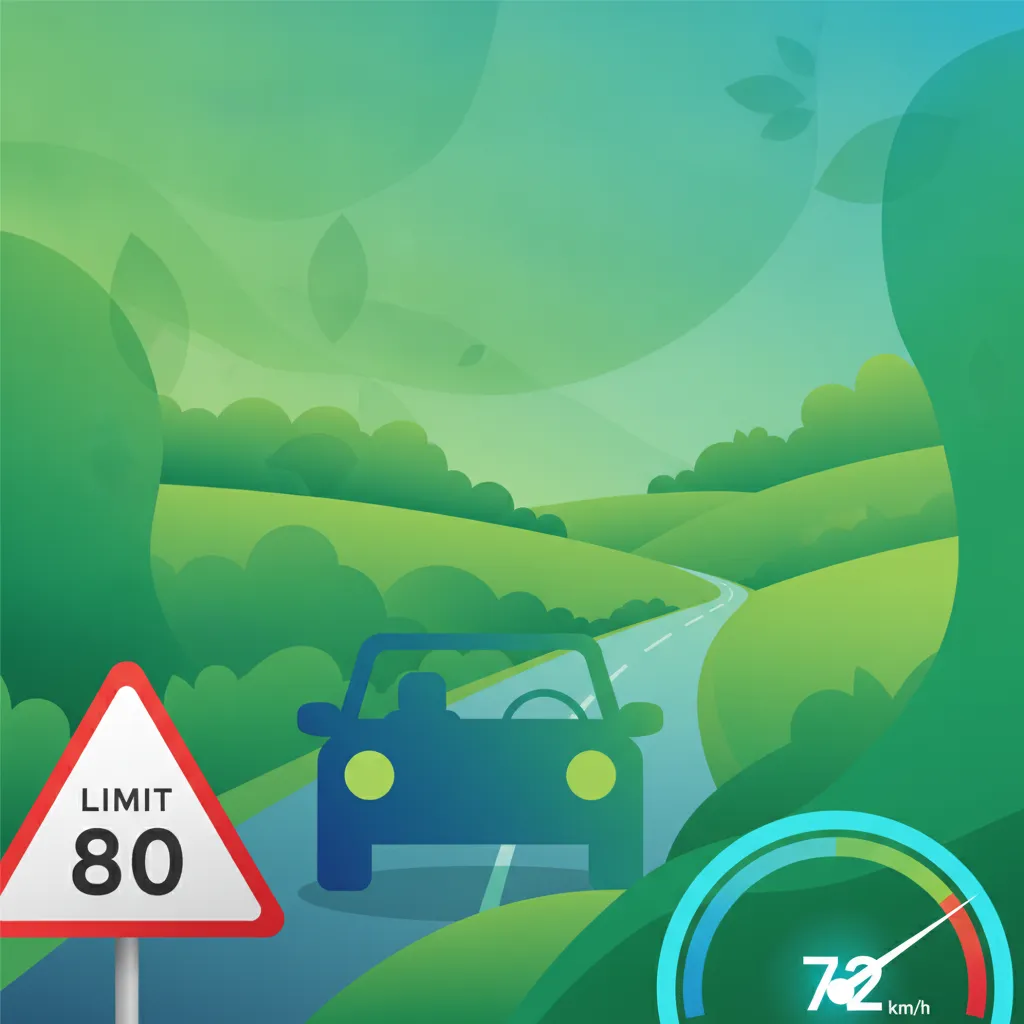
Speed management requires adjusting vehicle velocity to suit current weather, passenger load, and the specific limits of Irish roads. This lesson details speed restrictions for buses and minibuses on motorways, national routes, and built-up areas throughout Ireland. It highlights the driver obligation to prioritize passenger safety over schedule delays by maintaining appropriate speeds.

This lesson addresses the mechanical dynamics of turning long-wheelbase and articulated commercial vehicles at intersections, junctions, and roundabouts. It covers the necessity of deep cornering lines, early mirror checks, and correct signaling to warn vulnerable road users of wide turn maneuvers. Drivers will learn how to minimize rear cut-in and ensure the entire vehicle clears urban obstacles safely.
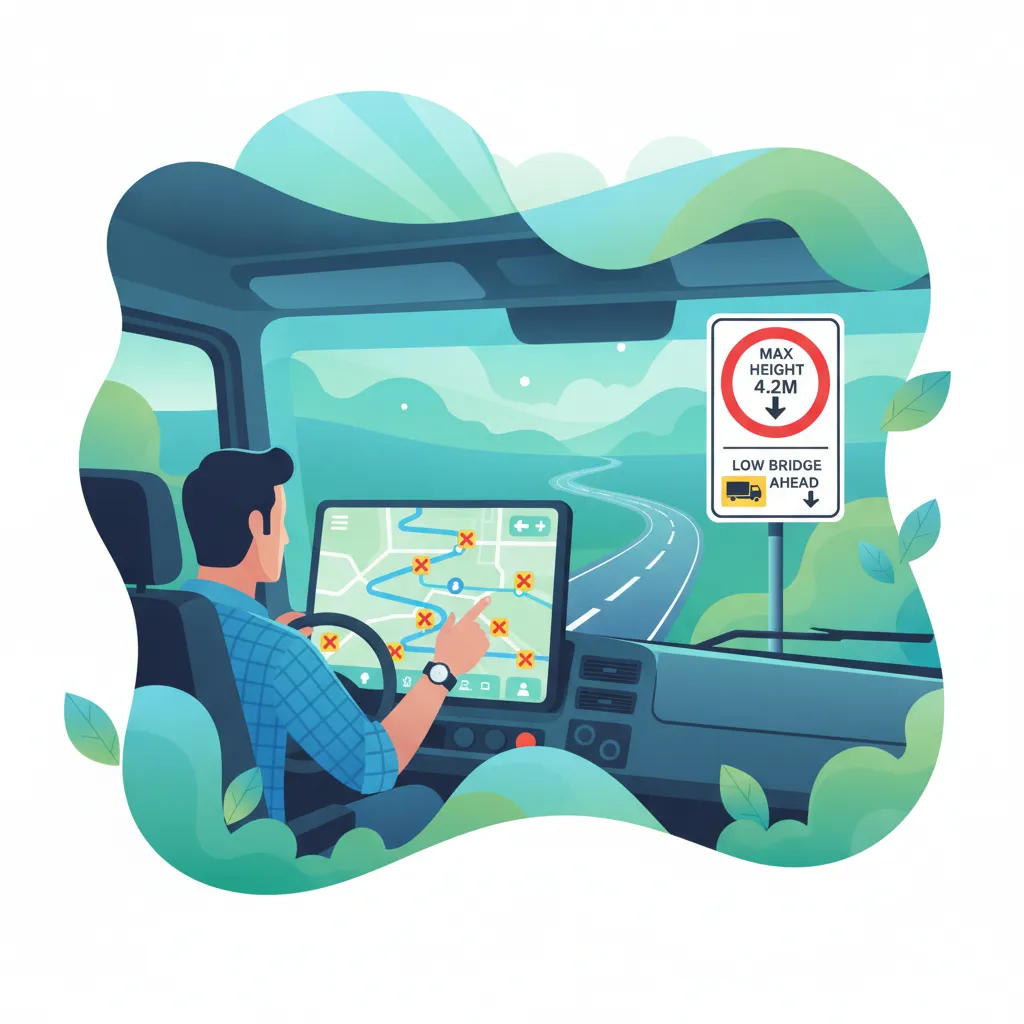
This lesson teaches professional drivers how to systematically map out travel routes that are compatible with heavy vehicle dimensions. It covers the limitations of consumer-grade GPS systems and emphasizes the use of specialized truck navigation systems that account for low bridges and load restrictions. Drivers will also learn to plan for congestion, access timing regulations, and proper entrance paths into commercial zones.
Understand the responsibilities of a professional driver when sharing space with pedestrians, cyclists, and vulnerable road users. This theory lesson explains how to anticipate hazards at school zones, pedestrian crossings, and near bus stops to ensure the safety of all road users in Ireland.
Heavy vehicles require continuous visual scanning to identify small or slow-moving road users who may enter the path of travel. This lesson explores the typical behaviors of young children, elderly pedestrians, and visually impaired road users. Drivers will build strong hazard perception skills to anticipate sudden movements, ensuring they can brake safely and avoid serious accidents.
Shared public spaces rely heavily on road user cooperation, low speeds, and active visual communication rather than traditional traffic signals. This lesson teaches drivers how to navigate these open zones safely, yielding priority to pedestrians and integrated cyclists. Drivers will study how traffic calming designs alter vehicle trajectories, allowing safe, stress-free transit through modern city centers.

Motorcycles and bicycles are often hidden from view in the large blind spots of passenger buses and coaches during turns. This lesson covers safe lateral clearances when overtaking cyclists, recognizing advanced stop lines, and sharing narrow lanes. Drivers will understand how to signal clearly, giving riders enough room to navigate safely near busy public transit corridors.
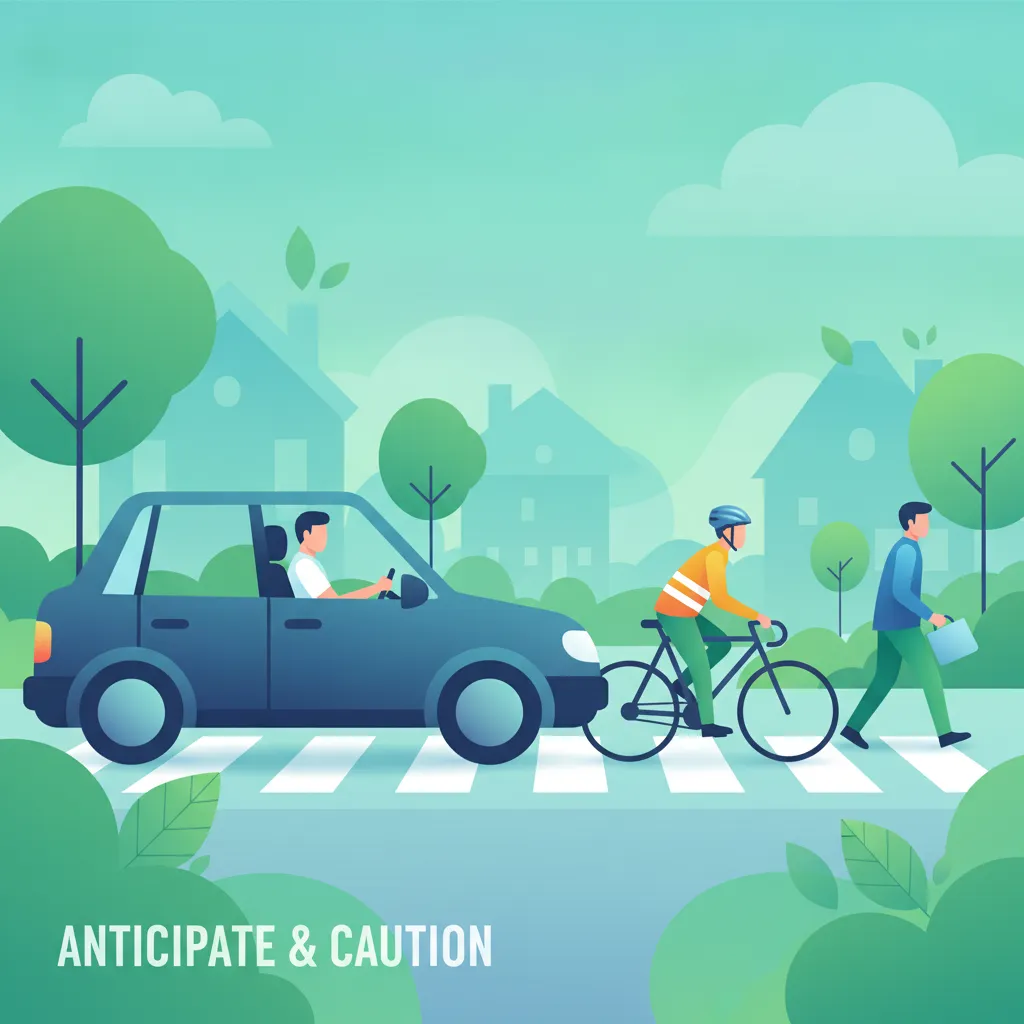
Safeguarding vulnerable road users requires more than simple obedience to traffic signs; it demands a defensive driving mindset. This lesson summarizes safe practices, including scanning far ahead in urban areas, keeping massive safety margins in wet weather, and executing thorough blind spot checks before reversing. By anticipating the unpredictable movements of others, you can prevent accidents and support a safe road culture.
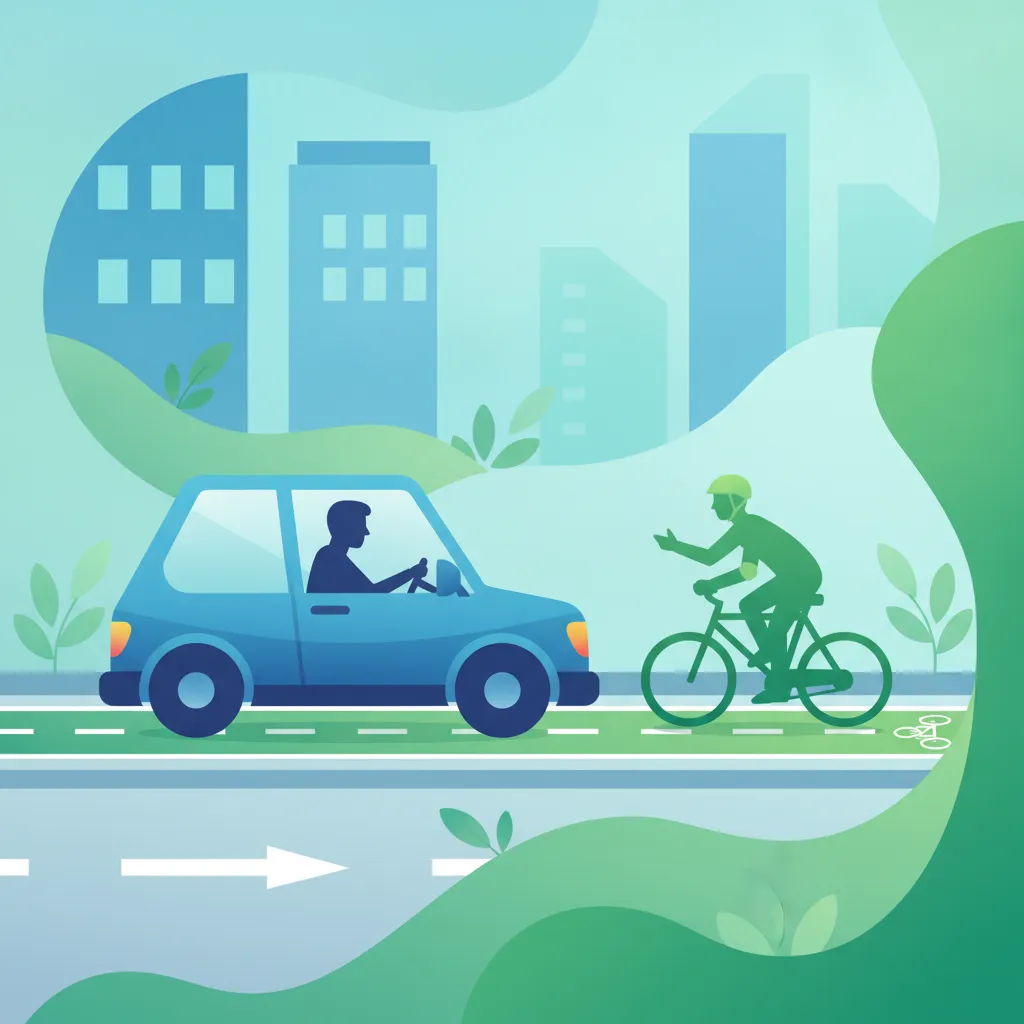
Cyclists share public roads under unique safety constraints, requiring drivers to keep wide clearances and anticipate sudden steering changes. This lesson covers the minimum safe passing distance of 1 to 1.5 metres, rules for driving near cycle tracks, and the danger of the 'dooring' hazard when parking. You will also learn to check your left-side blind spot before turning, preventing dangerous side-swipe collisions.
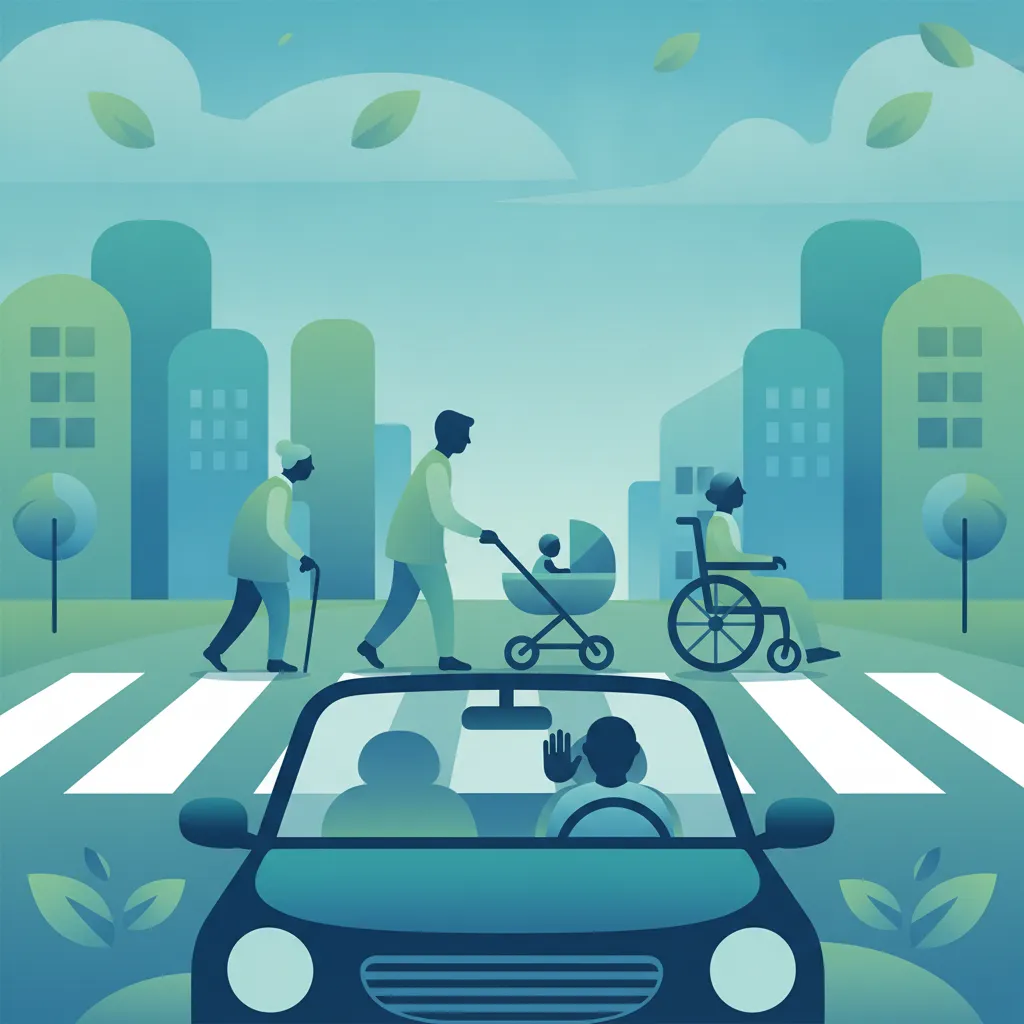
Children, the elderly, and disabled individuals often require extra time and understanding when navigating road networks. This lesson outlines special safety hazards, such as children unexpectedly running into school zones, or senior citizens needing longer times to cross wide junctions. You will learn how to recognise visually impaired pedestrians by their white canes or guide dogs, and the absolute requirement to drive slowly and patiently.
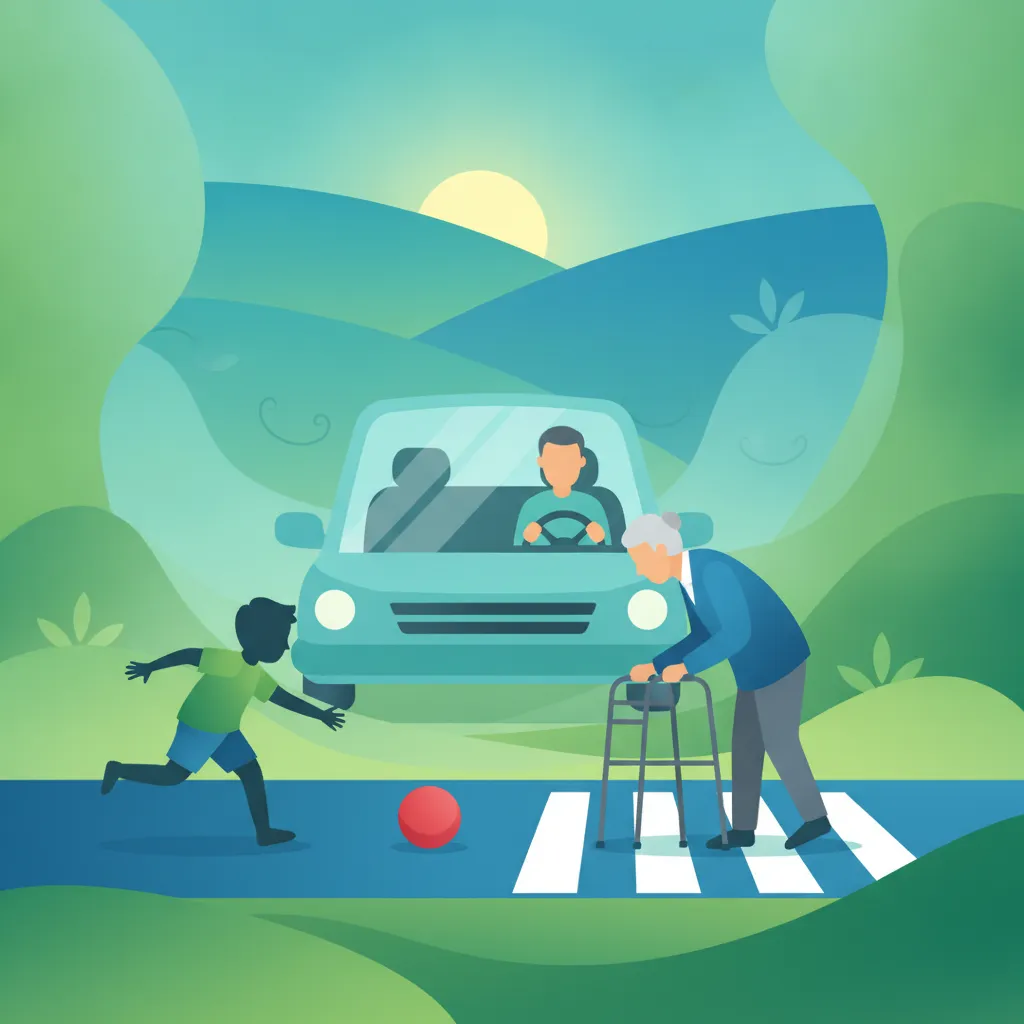
Children often struggle to judge heavy vehicle speeds accurately, while elderly pedestrians may possess limited mobility or hearing impairments. This lesson addresses these unique risks, explaining how to adjust driving patterns in residential neighborhoods and near shopping districts. Drivers will learn to maintain a high safety margin, ensuring they can yield quickly to vulnerable road users.

Bus stops often intersect with designated bicycle lanes and busy walking pathways, creating high-risk conflict areas for drivers. This lesson trains drivers to check blind spots for oncoming cyclists before pulling into or exiting public stop bays. It emphasizes yielding right-of-way to passengers crossing the road, preventing collision risks in active urban transport hubs.
This lesson focuses on managing the interactions between commercial goods vehicles and non-motorized or lightweight commuters. It outlines defensive driving techniques to utilize when overtaking cyclists, navigating pedestrian crossings, or negotiating shared junctions in Irish cities. Drivers will examine common cyclist behaviors at roundabouts and understand how to maintain massive safety margins to protect lives.
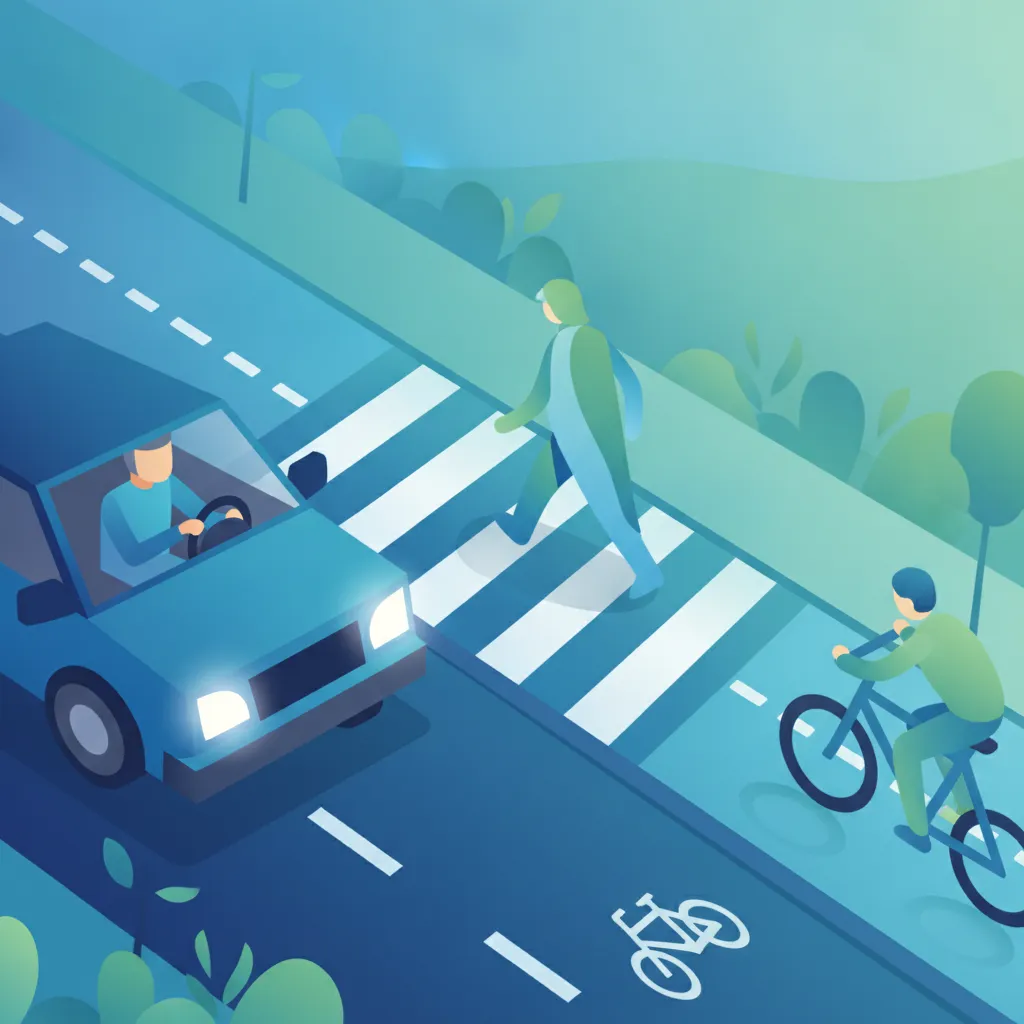
This lesson details how to approach zebra, pelican, and other pedestrian crossings safely, ensuring complete priority is given to walkers. It also covers the safe guidelines for overtaking cyclists and sharing lanes in busy urban centers without causing danger. Respecting these interactions is critical for maintaining overall safety and compliance with Irish road law.
Find clear answers to common questions learners have about Manoeuvring Large Vehicles in Confined Spaces. Learn how the lesson is structured, which driving theory objectives it supports, and how it fits into the overall learning path of units and curriculum progression in Ireland. These explanations help you understand key concepts, lesson flow, and exam focused study goals.
The biggest risk is the rear tail-swing, where the back of the bus swings in the opposite direction of the turn. This can strike pedestrians, other vehicles, or street furniture if the driver does not allow enough space.
Always use your mirrors effectively and perform a full visual scan before starting a manoeuvre. Practice estimating the space required for the overhang of your specific vehicle type and always maintain a slow, constant speed to ensure you have time to react.
Yes, both front and rear overhangs are significant on large passenger vehicles. When pulling into a stop, ensure you consider the swing of the vehicle to avoid hitting the kerb or any passengers waiting near the edge.
Yes, the theory test often covers how vehicle length and width affect your ability to manoeuvre. Understanding the 'swept path' of your vehicle is crucial for both the theory exam and the practical test.
Use the practice question search tool to pinpoint specific topics, road signs, or rules you need to master for your official Driver Theory Test. Refine your study strategy and ensure comprehensive preparation for all aspects of the Irish driving exam. Start your focused revision now and build confidence for your learner permit test.