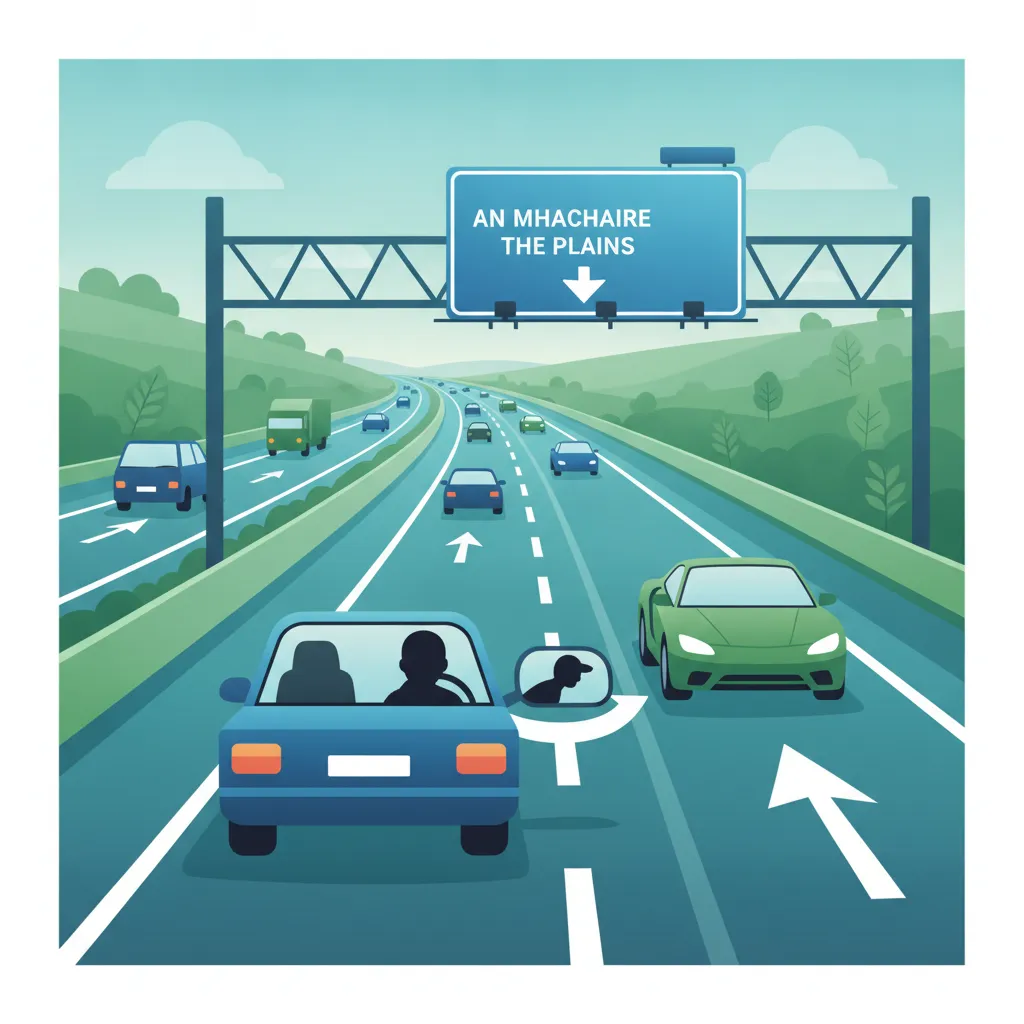
This lesson explores the technical requirements for safely merging and overtaking when driving heavy passenger vehicles. As part of our Category D curriculum, you will learn how to manage vehicle stability and blind spots during high-speed maneuvers on Irish roads.
Lesson content overview
Operating a heavy passenger vehicle, such as a bus or coach, demands a level of foresight and precision far exceeding that required for passenger cars. For professional drivers preparing for the Irish Driver Theory Test for Category D and D1 licences, mastering overtaking and merging is not merely a theoretical requirement—it is a core safety competency.
Because of their immense mass, length, and high centre of gravity, large passenger vehicles behave differently under acceleration, braking, and steering. This lesson details the exact legal requirements, physical principles, and practical techniques required to safely execute these manoeuvres on Irish national routes and motorways while prioritizing passenger comfort and vehicle stability.
In Irish road traffic law, "priority" or "right-of-way" represents the legal and customary precedence given to certain vehicles or lanes. For professional bus drivers, a fundamental principle applies: heavy vehicles generally yield to faster-moving traffic unless they are in a designated priority bus lane.
Size does not grant priority. A common and dangerous mistake is assuming that other drivers will yield simply because of a bus's physical presence. When preparing to merge or change lanes, you must not force your way into traffic or cause oncoming or adjacent vehicles to alter their speed or direction. You must give way to all vehicles already established in the lane you intend to enter.
Gap acceptance refers to a driver's assessment of whether a space between vehicles in traffic is large enough to complete a manoeuvre safely. For large, heavy passenger vehicles, the required gap is significantly larger than that for standard cars due to the vehicle's length and limited acceleration.
The critical decision-making process where a driver evaluates the speed, distance, and relative motion of oncoming or adjacent vehicles to determine if a safe spatial cushion exists to perform a manoeuvre.
Heavy vehicles require longer to accelerate to traffic speed. If you underestimate the distance or overestimate your bus’s acceleration capability, you risk pulling out into a gap that forces oncoming traffic to brake suddenly. This is highly dangerous and a major cause of rear-end collisions.
To maintain a safe distance, drivers should adapt the "two-second rule" used by lighter vehicles. For Category D passenger vehicles, this gap must be extended to at least four seconds in dry conditions, and even longer in wet or icy weather.
[Vehicle Ahead] -------- (4+ Second Gap for Buses) -------- [Your Bus/Coach]
When merging onto a high-speed motorway or national route, the gap must accommodate not only the length of your vehicle (which can be up to 15 metres or more for a tri-axle coach) but also a safe buffer zone behind and in front of you once you have established your position in the lane.
Signalling is your primary method of communicating your intentions to other road users. In a heavy passenger vehicle, signal timing must be planned and executed much earlier than in a passenger car.
On high-speed national roads and motorways, you should activate your indicators at least 100 to 200 metres before initiating a merge or lane change. This gives high-speed traffic behind you ample time to adjust their speed or move over to facilitate your manoeuvre.
A professional Category D driver must constantly manage the physical forces acting on the vehicle. Sudden steering inputs, harsh acceleration, or abrupt braking during overtaking and merging can have severe consequences for vehicle stability and passenger welfare.
Buses and coaches have a high centre of gravity, particularly double-deck passenger vehicles or coaches carrying heavy luggage in under-floor compartments.
When you steer a large vehicle to change lanes, a lateral force is generated that shifts the vehicle's weight to the opposite side. If the steering input is too sudden, this weight transfer can cause excessive body roll, compromise tyre grip, and in extreme cases, lead to a rollover.
       [ HIGH CENTRE OF GRAVITY ]
                 /   \
                /     \  <-- Lateral Force (Sway)
               /_______\
              [O]     [O] <-- Weight shifts outward during sudden steering
Furthermore, the heavy rear axle weight of a passenger vehicle impacts its braking stability and steering response. If the rear axle is heavily loaded, the vehicle's rear end may swing outward during sharp, high-speed lane changes.
Unlike car passengers, bus passengers may be standing (where permitted), moving to their seats, or carrying luggage. Abrupt lateral movements during overtaking can throw passengers from their seats or cause standing passengers to lose their balance and fall, resulting in serious injury.
The Road Safety Authority (RSA) emphasizes that driver conduct is directly linked to passenger comfort. Professional drivers must use progressive steering and gentle, consistent throttle application when changing lanes to ensure a smooth, stable ride.
Before commencing any journey, you must ensure that passenger seating is distributed as evenly as possible and that all heavy luggage is securely stowed in the lower luggage holds. An unevenly distributed load significantly worsens vehicle sway during overtaking or high-speed merging.
For vehicles equipped with air suspension systems, ensure the system is level and functioning correctly to counteract lateral roll during lane changes. Additionally, checking your vehicle’s windscreen washers and ensuring the drip water drum (wiper fluid reservoir) is full is essential for maintaining clear visibility through your mirrors and windscreen during complex manoeuvres.
Overtaking in a Category D vehicle is a complex manoeuvre that requires a massive clear stretch of road. Due to the limited power-to-weight ratio of buses, overtaking takes significantly longer and covers a much greater distance than in a passenger car.
Assess the Road Ahead: Ensure there is a massive gap in oncoming traffic and no upcoming hazards, such as junctions, pedestrian crossings, or bends.
Check Your Mirrors and Blind Spots: Large vehicles have significant blind spots (No-Zones) along both sides and directly behind. Check your main mirrors, wide-angle mirrors, and do a physical head check to ensure no faster vehicle is already overtaking you.
Signal Early: Activate your left indicator (for overtaking on the left, as per standard Irish road rules where applicable on multi-lane roads, or right indicator when passing on a single-carriageway national road).
Gently Increase Speed: Apply smooth, progressive throttle to build momentum before pulling out. Avoid flooring the accelerator, which can cause transmission jerking and passenger discomfort.
Execute the Pass: Move out smoothly. Ensure you maintain a wide lateral gap (at least 1.5 metres) between your bus and the vehicle you are passing.
Return Safely to the Lane: Do not cut back in too quickly. Because your vehicle is long, you must ensure you can see the front of the overtaken vehicle in your main rearview mirror before signaling and gently steering back into your original lane.
Under the Irish Rules of the Road, you must generally overtake on the right, ensuring a safe distance. However, there are specific situations where overtaking on the left is permitted:
You must never cross a solid white centre line to overtake, nor should you attempt to overtake near a hill, bend, or bridge where your view of oncoming traffic is restricted.
Merging a long, heavy passenger vehicle onto a high-speed motorway (such as the M50, M7, or M1) requires matching the speed of the motorway traffic within the limited length of the slip lane or acceleration lane.
The slip road is designed specifically for you to build speed. A common and highly dangerous mistake is entering the slip road and stopping at the end because you have failed to find a gap. This creates a severe collision risk for any vehicles behind you.
Instead, you must use the acceleration lane to match the speed of the vehicles in the first lane of the motorway.
Your approach to merging and overtaking must change dynamically based on weather, light, and road conditions.
In wet or icy conditions, your stopping distance is doubled or multiplied by ten, respectively. Consequently, your accepted gap size must be dramatically larger.
When overtaking cyclists, motorcyclists, or pedestrians on national roads, you must allow extra space. The wind displacement (aerodynamic slipstream) generated by a fast-moving bus can pull a cyclist off-balance. Always give cyclists a minimum of 1.5 metres of lateral space when overtaking, and do not pull back into the left lane until you are well clear of them.
Understanding the consequences of your driving inputs is key to passing the theory test and driving professionally:
Explore all units and lessons included in this driving theory course.
Lesson content overview
Explore all units and lessons included in this driving theory course.
Explore search topics learners often look for when studying Managing Overtaking and Merging Situations. These topics reflect common questions about road rules, driving situations, safety guidance, and lesson level theory preparation for learners in Ireland.
Browse additional driving theory lessons that cover connected traffic rules, road signs, and common driving situations related to this topic. Improve your understanding of how different rules interact across everyday traffic scenarios.
Learn the principles of safe lane positioning and complex manoeuvring for Category D vehicles. This theory guide covers blind spot management and the specific spatial requirements needed for turning and navigating narrow urban routes while maintaining professional driving standards according to Irish road safety regulations.
Large passenger vehicles must maintain consistent lane positioning to prevent side-swipe incidents and sustain smooth urban traffic patterns. This lesson covers standard lane selection rules, safe overtaking procedures, and how to use designated public transit corridors correctly. Drivers will learn the importance of checking mirrors continuously and planning lane changes well in advance.
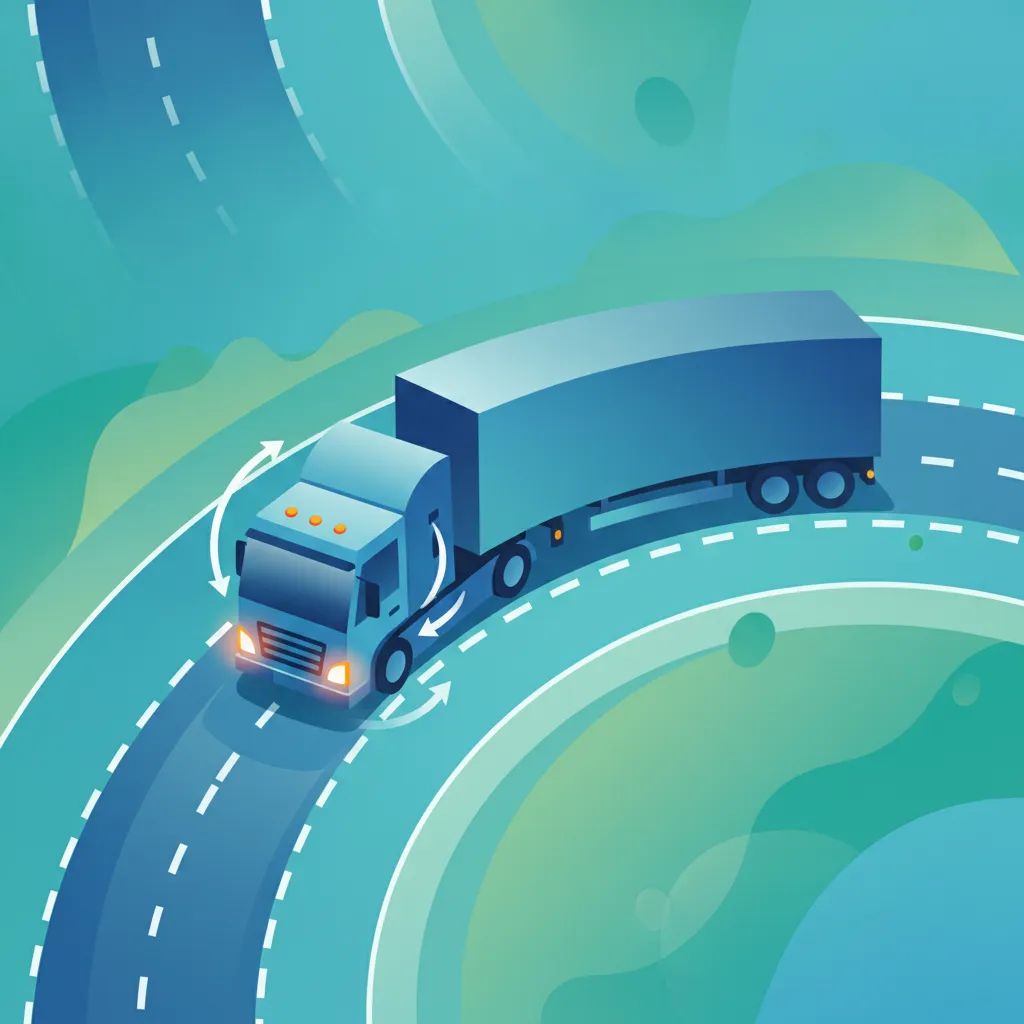
This lesson outlines the legal and safety requirements for maintaining proper lane discipline on multi-lane roads, roundabouts, and motorways in Ireland. It teaches drivers how to account for lane width, manage trailer off-tracking, and position the cab to prevent encroachment on neighboring lanes. Drivers will master safe lane-changing strategies, signaling protocols, and traffic merging techniques.
Driving a coach through narrow urban streets or historic Irish town centers demands precise spatial judgment and low speed control. This lesson covers turning radii, rear tail-swing physics, and managing overhangs when navigating around tight, permanent obstacles. Drivers will learn to assess clearance gaps accurately, reducing damage risks to the vehicle exterior and public infrastructure.

This lesson addresses the mechanical dynamics of turning long-wheelbase and articulated commercial vehicles at intersections, junctions, and roundabouts. It covers the necessity of deep cornering lines, early mirror checks, and correct signaling to warn vulnerable road users of wide turn maneuvers. Drivers will learn how to minimize rear cut-in and ensure the entire vehicle clears urban obstacles safely.
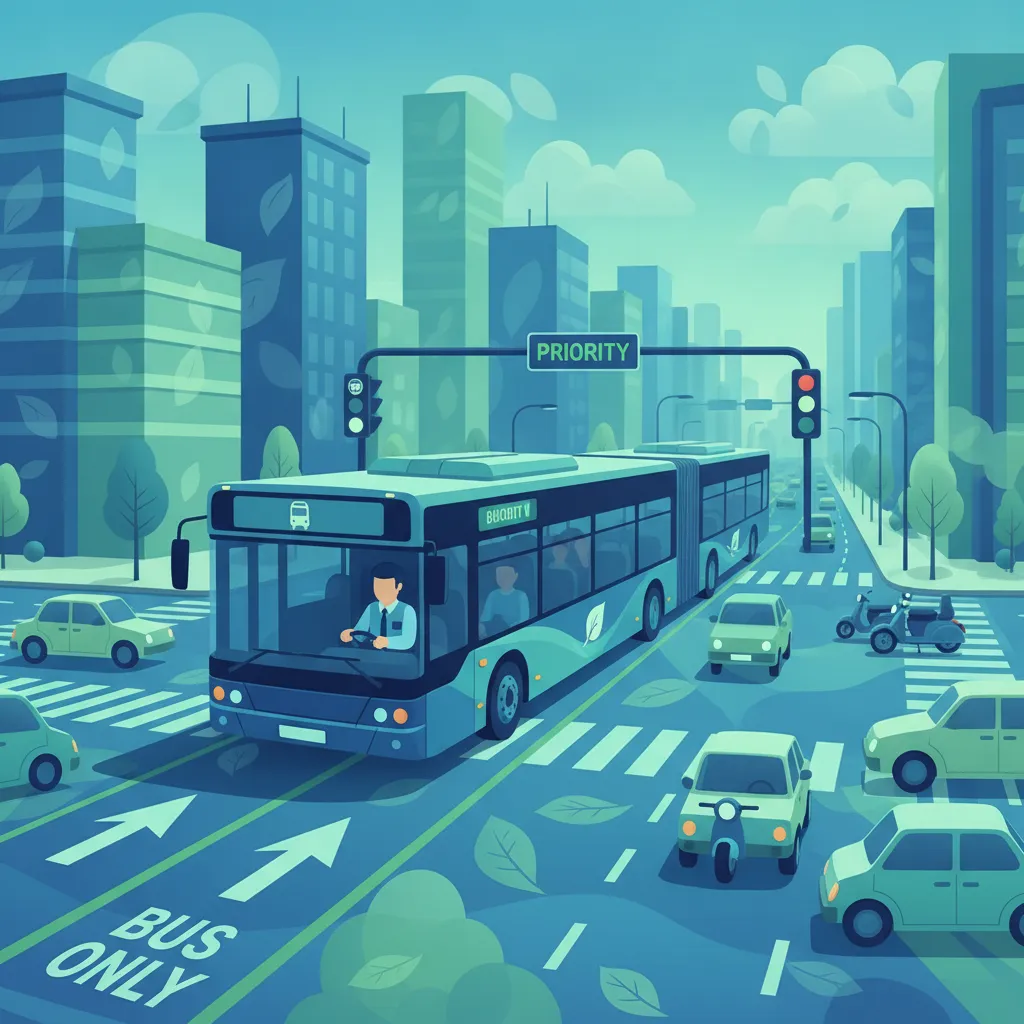
Driving large vehicles through dense city traffic requires outstanding lane discipline, spatial awareness, and consistent patience. This lesson teaches drivers how to utilize public bus corridors, manage tight yellow box intersections, and handle narrow city streets. It focuses on predicting traffic pattern shifts to maintain service timetables while minimizing fuel waste and driver stress.

Irish driving theory demands that drivers keep to the left-hand side of the road unless overtaking or turning right. This lesson explains how to maintain consistent lane discipline on multi-lane roads, how to perform safe lane changes, and the dangers of drifting. You will learn the safety sequence of checking mirrors, checking blind spots, signalling, and smoothly executing a lane change without disrupting trailing traffic.
This lesson addresses the unique environmental and logistical challenges faced during delivery stops in commercial town and city centers. It covers the legal frameworks governing municipal loading zones, double-parking hazards, and temporary pedestrian-only street restrictions. Drivers will acquire practical skills for managing traffic build-up, utilizing visual spotters, and securing the vehicle while unloading cargo.
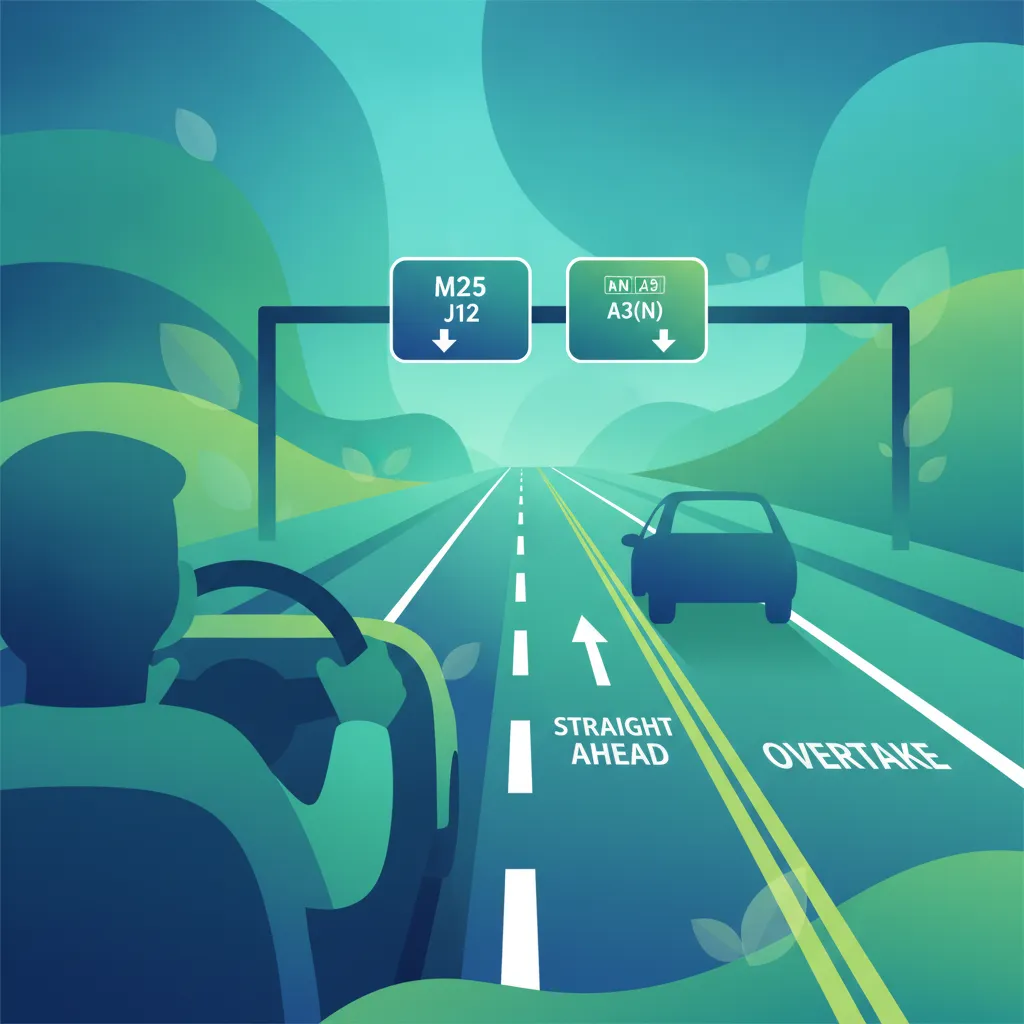
This lesson describes the legal regulations and driving conventions for operating heavy commercial vehicles on motorways and high-speed dual carriageways. It explains specific Irish motorway rules, including bans on heavy goods vehicles occupying the outer overtaking lanes. Drivers will learn to manage high-speed slip-road merging, maintain safe spacing buffers, and anticipate long-range changes in overall traffic flow.
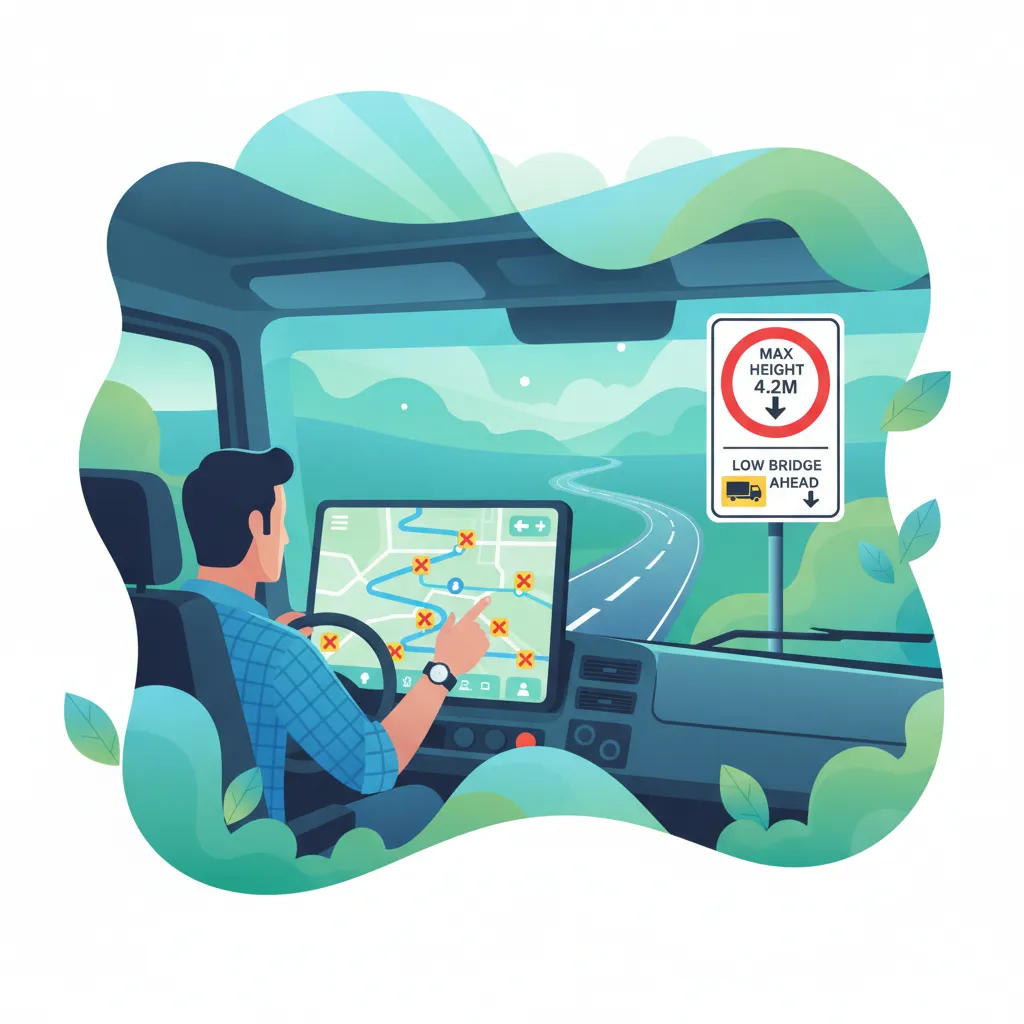
This lesson teaches professional drivers how to systematically map out travel routes that are compatible with heavy vehicle dimensions. It covers the limitations of consumer-grade GPS systems and emphasizes the use of specialized truck navigation systems that account for low bridges and load restrictions. Drivers will also learn to plan for congestion, access timing regulations, and proper entrance paths into commercial zones.

The length of a commercial passenger vehicle creates a wide rear-wheel track offset, requiring drivers to swing wide during tight turns. This lesson teaches cornering mechanics, mirror adjustment guidelines, and how to check blind spots for cyclists on the inside lane. Drivers will master intersection control, preventing collisions with stationary street furniture or curbs.
Understand the legal and safety responsibilities when driving heavy vehicles near cyclists, pedestrians, and motorcyclists. This lesson explains how to anticipate hazards, maintain safe lateral distances, and reduce the risks posed by your vehicle’s aerodynamic slipstream in diverse traffic environments throughout Ireland.

Motorcycles and bicycles are often hidden from view in the large blind spots of passenger buses and coaches during turns. This lesson covers safe lateral clearances when overtaking cyclists, recognizing advanced stop lines, and sharing narrow lanes. Drivers will understand how to signal clearly, giving riders enough room to navigate safely near busy public transit corridors.

This lesson focuses on managing the interactions between commercial goods vehicles and non-motorized or lightweight commuters. It outlines defensive driving techniques to utilize when overtaking cyclists, navigating pedestrian crossings, or negotiating shared junctions in Irish cities. Drivers will examine common cyclist behaviors at roundabouts and understand how to maintain massive safety margins to protect lives.

This lesson covers the rules governing zebra, pelican, and toucan pedestrian crossings, focusing on driver obligations and rider safety. It details how to interact safely with cyclists, personal mobility devices, and pedestrians in busy urban sectors. Motorcyclists will learn to scan pavement edges, yield right-of-way, and maintain safe overtaking distances when passing slower road users.
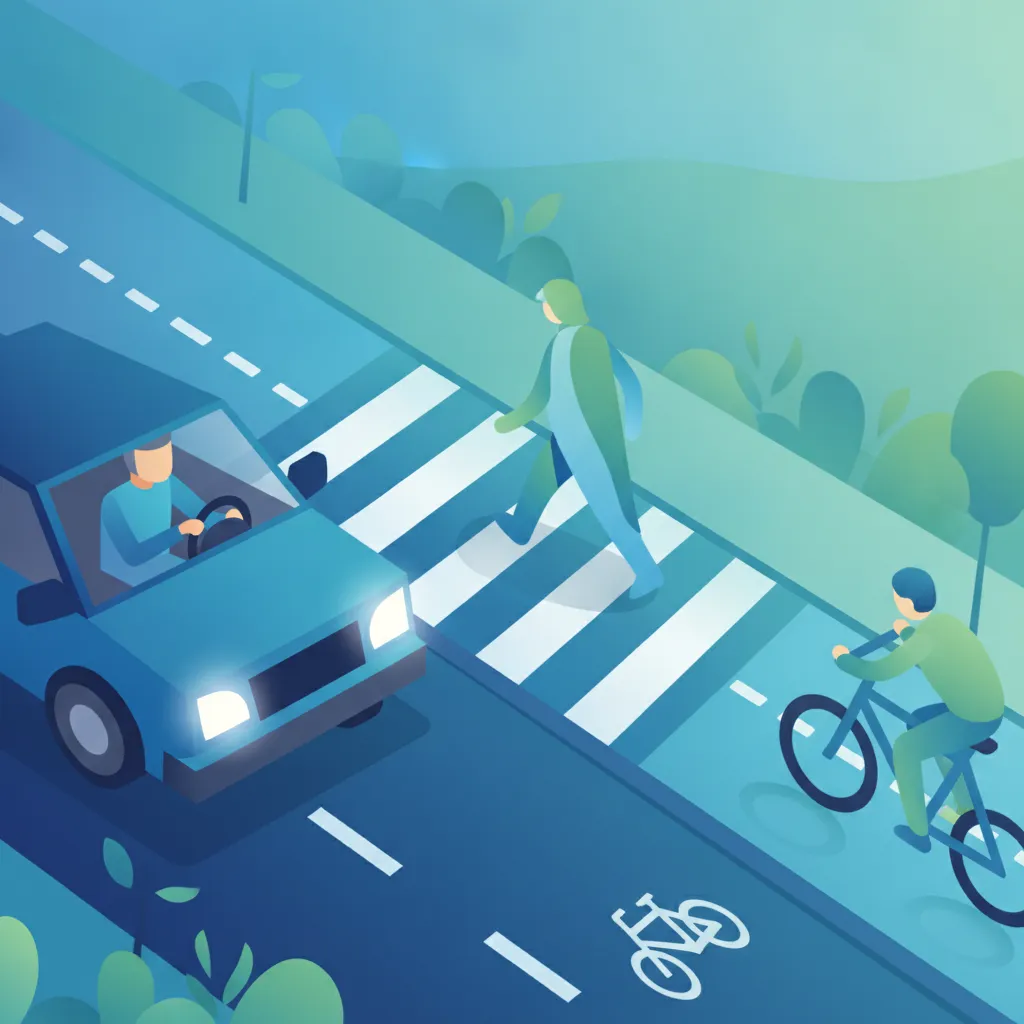
This lesson details how to approach zebra, pelican, and other pedestrian crossings safely, ensuring complete priority is given to walkers. It also covers the safe guidelines for overtaking cyclists and sharing lanes in busy urban centers without causing danger. Respecting these interactions is critical for maintaining overall safety and compliance with Irish road law.

Bus stops often intersect with designated bicycle lanes and busy walking pathways, creating high-risk conflict areas for drivers. This lesson trains drivers to check blind spots for oncoming cyclists before pulling into or exiting public stop bays. It emphasizes yielding right-of-way to passengers crossing the road, preventing collision risks in active urban transport hubs.
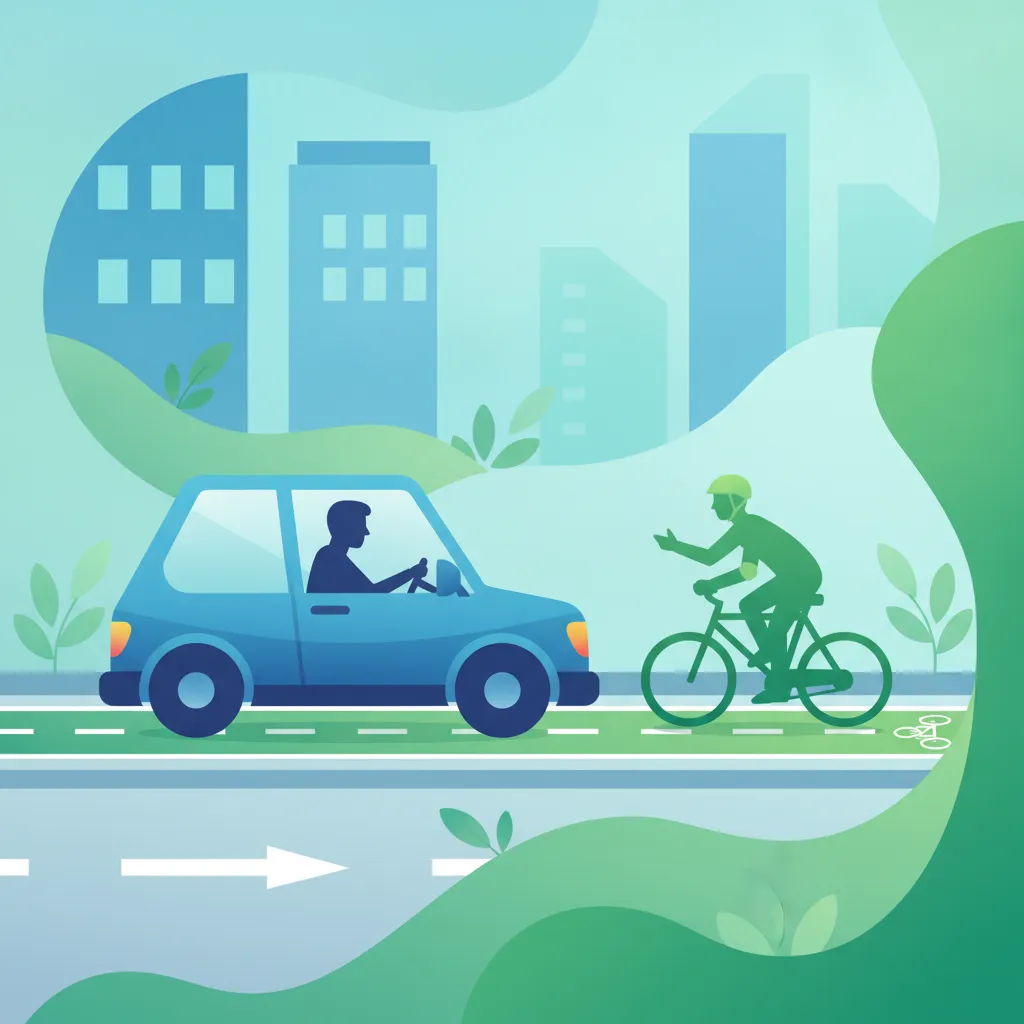
Cyclists share public roads under unique safety constraints, requiring drivers to keep wide clearances and anticipate sudden steering changes. This lesson covers the minimum safe passing distance of 1 to 1.5 metres, rules for driving near cycle tracks, and the danger of the 'dooring' hazard when parking. You will also learn to check your left-side blind spot before turning, preventing dangerous side-swipe collisions.

This lesson explains the extensive blind spots of heavy goods vehicles, buses, and other large trucks on Irish roads. It teaches Category AM riders how to maintain safe following distances and position themselves where truck drivers can see them. Proper space cushion management is emphasized to protect riders from the wind turbulence of passing trucks.
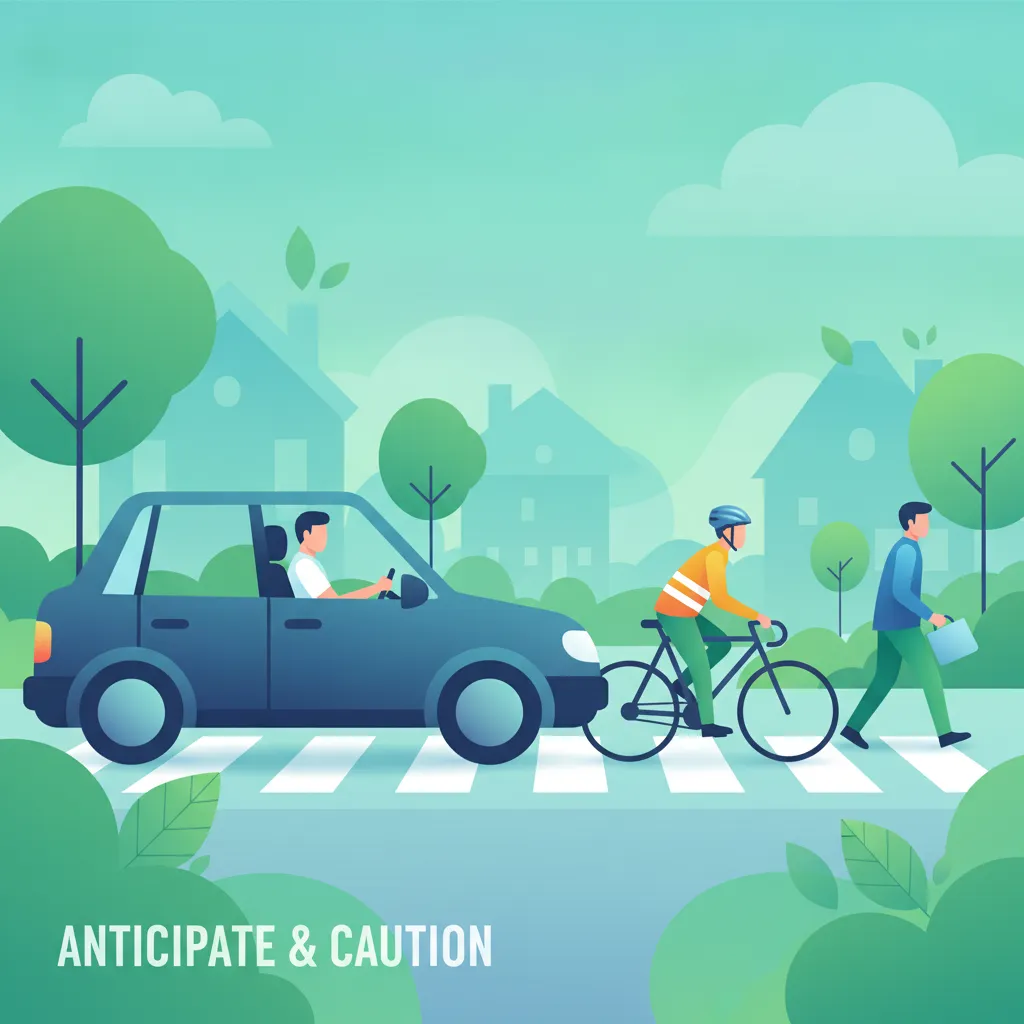
Safeguarding vulnerable road users requires more than simple obedience to traffic signs; it demands a defensive driving mindset. This lesson summarizes safe practices, including scanning far ahead in urban areas, keeping massive safety margins in wet weather, and executing thorough blind spot checks before reversing. By anticipating the unpredictable movements of others, you can prevent accidents and support a safe road culture.

Children, the elderly, and disabled individuals often require extra time and understanding when navigating road networks. This lesson outlines special safety hazards, such as children unexpectedly running into school zones, or senior citizens needing longer times to cross wide junctions. You will learn how to recognise visually impaired pedestrians by their white canes or guide dogs, and the absolute requirement to drive slowly and patiently.

Children often struggle to judge heavy vehicle speeds accurately, while elderly pedestrians may possess limited mobility or hearing impairments. This lesson addresses these unique risks, explaining how to adjust driving patterns in residential neighborhoods and near shopping districts. Drivers will learn to maintain a high safety margin, ensuring they can yield quickly to vulnerable road users.
Find clear answers to common questions learners have about Managing Overtaking and Merging Situations. Learn how the lesson is structured, which driving theory objectives it supports, and how it fits into the overall learning path of units and curriculum progression in Ireland. These explanations help you understand key concepts, lesson flow, and exam focused study goals.
Category D vehicles are significantly longer and heavier than standard cars, which means they have slower acceleration and longer stopping distances. You need to plan your merging maneuver much further in advance to reach traffic speed before the end of the slip lane.
Always account for your vehicle's massive blind spots. Ensure you have clear sight of the entire road ahead, verify your speed differential is sufficient to complete the maneuver quickly, and never attempt to overtake if it compromises the comfort or safety of your passengers.
A fully loaded passenger vehicle has a higher centre of gravity and increased momentum. Sudden steering inputs or lane changes can cause the vehicle to sway, making passengers uncomfortable and potentially unstable. Always use smooth, gradual steering movements.
Yes, you must adhere to the Rules of the Road, ensuring you have enough clear road space. As a professional driver, you must prioritize the safety of your passengers over saving time. Always assess if the maneuver is strictly necessary and safe to perform.
Use the practice question search tool to pinpoint specific topics, road signs, or rules you need to master for your official Driver Theory Test. Refine your study strategy and ensure comprehensive preparation for all aspects of the Irish driving exam. Start your focused revision now and build confidence for your learner permit test.