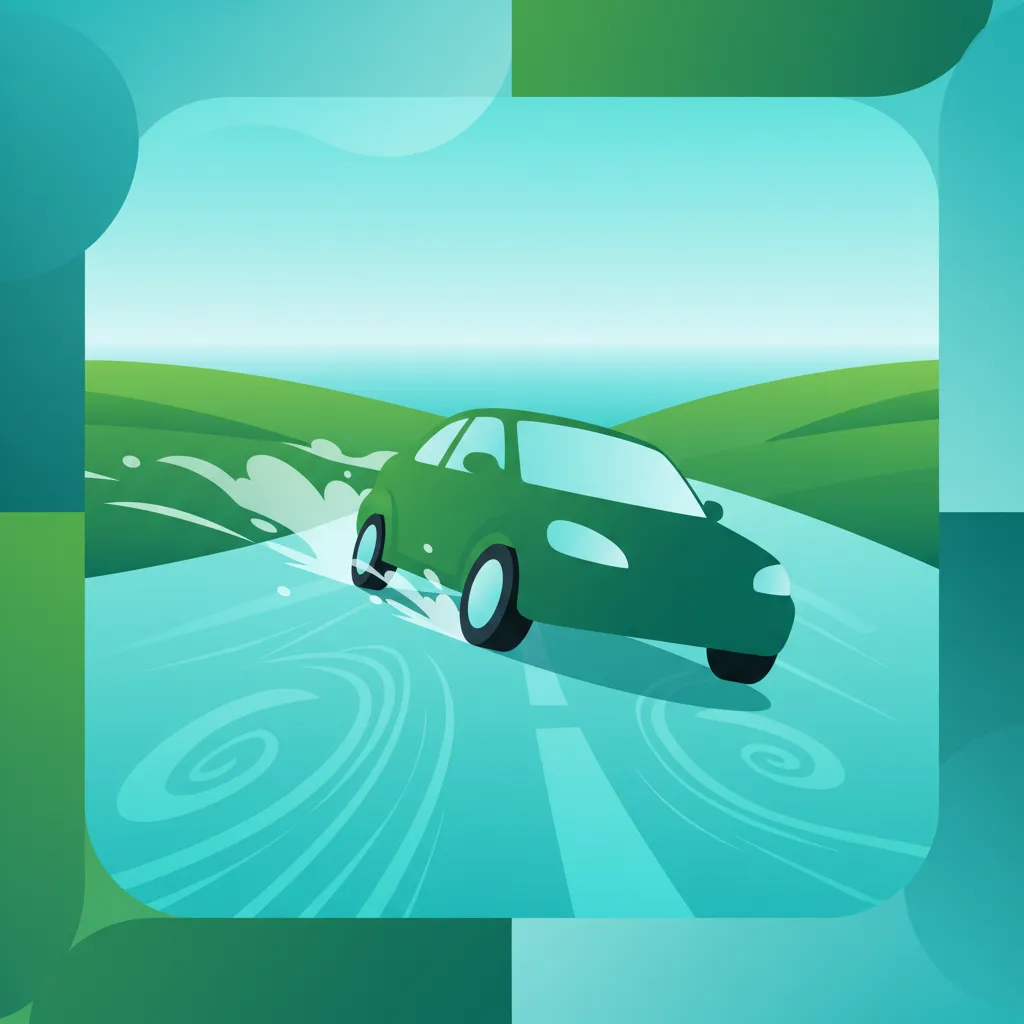
Slippery roads present one of the most significant challenges for drivers, particularly in Sweden's varied climate. This page explains how factors like ice, snow, heavy rain, and loose materials drastically reduce tire traction, making it harder to steer, brake, and accelerate safely. You will learn the critical adjustments needed to maintain vehicle control and prevent dangerous skids under low-grip conditions.
Theory topic content overview
Read the full theory topic guide for Slippery Roads & Traction with structured, easy-to-scan content built for learners in Sweden. This detailed section explains the exact rule, meaning, traffic context, comparison points, and exam logic behind this Swedish driving theory topic so you can study faster, understand the concept more clearly, and avoid common interpretation mistakes on the theory test.
Slippery roads refer to any road surface where the usual friction between vehicle tires and the pavement is significantly reduced. This reduction in friction is known as reduced traction or loss of grip. When traction is low, tires struggle to get the necessary purchase on the road to effectively accelerate, steer, or brake, leading to a higher risk of skidding and loss of vehicle control. In Sweden, the term "halka" (slipperiness) is commonly used to describe these hazardous conditions.
Understanding reduced traction is fundamental for safe driving, especially given Sweden's diverse climate, which often presents challenging road conditions. A firm grasp of how different factors contribute to slippery roads and how to adapt your driving is crucial for both road safety and success in the Swedish driving theory exam.
Driving on slippery roads is one of the most significant hazards drivers face, directly contributing to a substantial number of accidents, particularly during autumn and winter months in Sweden. The implications are severe:
Several factors can cause roads to become slippery, each affecting traction differently:
Ice is one of the most dangerous forms of slipperiness due to its often invisible nature.
Snow dramatically reduces friction, but its effect varies with its state:
Rain reduces friction by creating a layer of water between the tires and the road.
Any loose material on the road can act like ball bearings, reducing grip.
The key to safe driving on slippery roads is anticipation, smoothness, and reduced speed. Your driving technique must change fundamentally.
While both wet and icy roads reduce traction, their severity and the appropriate driving response differ:
Learners and even experienced drivers often make critical errors that exacerbate the dangers of reduced traction:
In Sweden, driving on slippery roads is not just about adapting; it's also about fulfilling legal requirements and understanding the local climate.
To drive safely on slippery roads in Sweden, adopt a mindset of constant vigilance and gentle control. Anticipate potential hazards, especially in areas prone to ice and standing water. Reduce your speed, increase your following distance, and execute all driving inputs—steering, braking, and acceleration—with utmost smoothness. Remember, the goal is to maintain continuous, gentle contact between your tires and the road, preventing any sudden action that could lead to a loss of the precious grip needed to stay safe.
Slippery roads in Sweden result from various conditions—ice, snow, rain, and loose materials—each reducing tire traction differently. The critical adaptation is reducing speed significantly while using extremely smooth inputs for all vehicle controls. Specific hazards like black ice and aquaplaning require particular responses: black ice demands constant vigilance in vulnerable areas, while aquaplaning requires steering straight and easing off the accelerator until tyres regain contact. Swedish law mandates approved winter tyres during winter conditions, and drivers must understand that technology like ABS assists but cannot overcome physics when grip is severely reduced.
A short set of high-value points that capture the most important ideas from this theory explanation.
Slippery roads reduce the friction between tires and road surface, making it harder to accelerate, steer, and brake effectively
Reducing speed is the single most important adjustment when driving on low-grip surfaces, as lower speeds give tires more time to find grip
All driving inputs—steering, braking, and acceleration—must be executed smoothly and gently to avoid skidding
Different slippery conditions require different awareness: black ice is invisible, first rain after dry spells creates a greasy film, and aquaplaning lifts tires entirely off the road
In Sweden, approved winter tyres are legally required from 1 December to 31 March when winter road conditions prevail
On ice, braking distance can be ten times longer than on dry asphalt
Black ice (svart is) forms on bridges, overpasses, and shaded areas where road surfaces freeze faster than surrounding pavement
During aquaplaning, steer straight and ease off the accelerator—do not brake suddenly
Higher gears on manual transmission reduce wheel torque, helping prevent spin when starting on snow or ice
The triangular warning sign showing a skidding car indicates areas prone to slipperiness and should trigger immediate speed reduction
Driving too fast for current conditions—this is the most common cause of loss of control on slippery roads
Using sudden or harsh inputs for steering, braking, or acceleration, which almost guarantee a skid on low-grip surfaces
Over-relying on ABS and ESP systems, which assist but cannot create traction where physics allow none
Failing to anticipate hazards by not scanning ahead for changes in road surface colour or texture indicating ice or water
Not using approved winter tyres when required by Swedish law or when conditions demand them
Start with a short, direct summary of Slippery Roads & Traction before reading the full explanation below.
Slippery roads occur when various conditions like ice, snow, or heavy rain reduce the friction between your tires and the road surface, leading to a loss of traction. This diminished grip makes it much harder to control your vehicle, increasing the risk of skidding during braking, acceleration, or turning. To drive safely on slippery roads in Sweden, drivers must reduce speed, increase following distance, and use extremely smooth, gentle inputs for steering, braking, and acceleration.
Review the most important terms, rule signals, and traffic concepts linked to Slippery Roads & Traction.
Explore related theory topic pages connected to Slippery Roads & Traction and continue with the next useful rule explanation.
See the common search queries learners use when trying to understand Slippery Roads & Traction in Sweden.

Dive deeper into specific theory topics, review detailed explanations of road rules, and reinforce your understanding of Swedish traffic regulations. Continue your preparation for the driving licence exam by exploring each core concept in detail.
Explore Driving Theory TopicsTheory topic content overview
A short set of high-value points that capture the most important ideas from this theory explanation.
Slippery roads reduce the friction between tires and road surface, making it harder to accelerate, steer, and brake effectively
Reducing speed is the single most important adjustment when driving on low-grip surfaces, as lower speeds give tires more time to find grip
All driving inputs—steering, braking, and acceleration—must be executed smoothly and gently to avoid skidding
Different slippery conditions require different awareness: black ice is invisible, first rain after dry spells creates a greasy film, and aquaplaning lifts tires entirely off the road
In Sweden, approved winter tyres are legally required from 1 December to 31 March when winter road conditions prevail
On ice, braking distance can be ten times longer than on dry asphalt
Black ice (svart is) forms on bridges, overpasses, and shaded areas where road surfaces freeze faster than surrounding pavement
During aquaplaning, steer straight and ease off the accelerator—do not brake suddenly
Higher gears on manual transmission reduce wheel torque, helping prevent spin when starting on snow or ice
The triangular warning sign showing a skidding car indicates areas prone to slipperiness and should trigger immediate speed reduction
Driving too fast for current conditions—this is the most common cause of loss of control on slippery roads
Using sudden or harsh inputs for steering, braking, or acceleration, which almost guarantee a skid on low-grip surfaces
Over-relying on ABS and ESP systems, which assist but cannot create traction where physics allow none
Failing to anticipate hazards by not scanning ahead for changes in road surface colour or texture indicating ice or water
Not using approved winter tyres when required by Swedish law or when conditions demand them
Start with a short, direct summary of Slippery Roads & Traction before reading the full explanation below.
Slippery roads occur when various conditions like ice, snow, or heavy rain reduce the friction between your tires and the road surface, leading to a loss of traction. This diminished grip makes it much harder to control your vehicle, increasing the risk of skidding during braking, acceleration, or turning. To drive safely on slippery roads in Sweden, drivers must reduce speed, increase following distance, and use extremely smooth, gentle inputs for steering, braking, and acceleration.
Review the most important terms, rule signals, and traffic concepts linked to Slippery Roads & Traction.
Explore related theory topic pages connected to Slippery Roads & Traction and continue with the next useful rule explanation.
See the common search queries learners use when trying to understand Slippery Roads & Traction in Sweden.
Dive deeper into specific theory topics, review detailed explanations of road rules, and reinforce your understanding of Swedish traffic regulations. Continue your preparation for the driving licence exam by exploring each core concept in detail.
Explore Driving Theory TopicsUse this exam-focused revision tip to understand how Slippery Roads & Traction is likely to appear in theory questions for learners in Sweden. This section helps you identify the most testable part of the rule, avoid common traps, and remember the concept more effectively during Swedish driving theory exam preparation.
In the Swedish driving theory exam, questions about slippery roads often focus on adapting your driving style. Remember that smooth inputs for steering, braking, and acceleration are essential, and abrupt actions are almost always the wrong answer. Pay close attention to questions involving speed reduction and increased following distances under various low-grip scenarios like ice or heavy rain.
Read direct answers to the most common learner questions about Slippery Roads & Traction in Sweden. This FAQ focuses on rule confusion, practical meaning, comparison with similar concepts, and the exact uncertainties that appear most often in Swedish driving theory revision and exam preparation.
Roads become slippery when substances like water, ice, snow, oil, or loose gravel reduce the friction between your tires and the road surface, leading to a loss of grip.
Higher speeds drastically reduce your ability to react and stop on slippery surfaces, making even minor steering adjustments risky. Always reduce your speed significantly.
Aquaplaning (or hydroplaning) occurs when a layer of water builds up between your tires and the road, causing a loss of steering and braking control. Good tire tread depth and reduced speed in heavy rain are key to prevention.
If your car skids, remain calm, gently ease off the accelerator, and steer gently in the direction you want the front of the car to go. Avoid sudden braking or sharp steering.
Yes, during specific periods (generally December 1 - March 31, but adjustable for actual winter conditions), winter tires are mandatory in Sweden when winter road conditions (ice, snow, slush, or frost) prevail.
Reduced traction significantly increases your braking distance because the tires have less grip to slow the vehicle. This means you need more time and space to stop safely on slippery roads.
Ensure your tires are in good condition with sufficient tread depth and are appropriate for the season (e.g., winter tires in Sweden). Also, check your lights, wipers, and fluid levels.
Black ice is a thin, transparent layer of ice that forms on the road surface, often invisible to the driver. It is extremely dangerous as it provides no warning and drastically reduces traction.
Refine your study plan by exploring practice sets on specific Swedish traffic rules, road signs, or driving situations. Use the search to quickly access relevant questions and focus your preparation for the official driving licence theory exam.