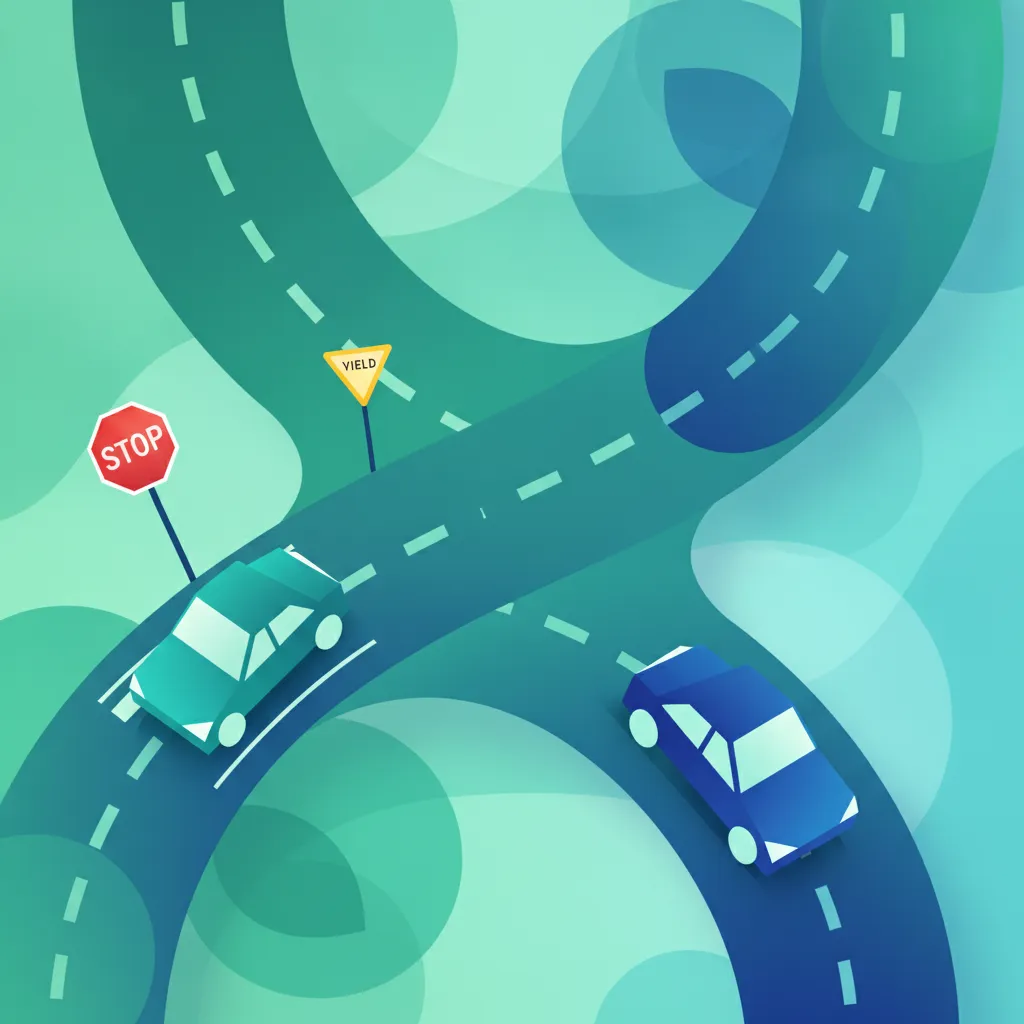
This lesson guides you through the complex rules of priority at intersections controlled by lights, stop signs, or yield markings. By mastering these regulations, you will improve your decision-making in the MTSK e-sınav and gain the confidence required for safe, everyday driving on Turkish roads.
Lesson content overview
Safe and efficient navigation of the road network relies heavily on how drivers behave at intersections. In Turkey, intersections are classified as either uncontrolled (kontrolsüz kavşaklar) or controlled (kontrollü kavşaklar).
This lesson covers Priority at Controlled Intersections under the Turkish Driving License Category B framework. Mastering these rules is essential not only for passing your official MTSK e-sınav (theory exam) but also for preventing hazardous situations on public roads.
An intersection is defined as "controlled" when traffic flow is regulated by a hierarchy of traffic control systems: traffic police officers, traffic lights, traffic signs, or road markings. Understanding how these controls interact ensures predictable driver behavior, reduces collision risks, and protects vulnerable road users.
When approaching any intersection in Turkey, you must instantly recognize which control method takes precedence. If multiple control elements are present simultaneously (for example, both a traffic signal and a traffic police officer), you must follow the official hierarchy of traffic control:
Traffic Police / Enforcement Officers (Trafik Polisi): The active directions and hand signals of a traffic officer override all other signals, signs, and road markings. If a light is green but an officer signals you to stop, you must stop immediately.
Traffic Signals and Lights (Işıklı Trafik İşaret Cihazları): In the absence of a traffic officer, electronic traffic lights dictate the right-of-way. They completely override permanent road signs and road markings.
Traffic Signs (Trafik Levhaları): If there is no traffic officer and the traffic lights are inactive (or flashing yellow), you must obey the physical priority signs, such as the Stop sign (Dur) or Yield sign (Yol Ver).
Road Markings (Yol Çizgileri): Lines painted on the asphalt (such as stop lines, pedestrian crossings, or directional arrows) define where you must stop or turn.
General Right-of-Way Rules (Genel Geçiş Hakkı Kuralları): If an intersection has none of the above controls, it is treated as an uncontrolled intersection, where default rules (like yielding to the vehicle on the right) apply.
MTSK Exam Alert: A very common exam question asks what to do if an intersection has both a functioning green light and a "Stop" sign. The correct answer is to proceed with caution because active traffic signals override static traffic signs.
Electronic traffic signals regulate traffic flow by allocating time slots to different directions. Failing to comply with traffic light phases is one of the leading causes of high-speed T-bone collisions.
During late-night hours or in low-traffic zones, traffic signals may switch to flashing modes. These have distinct legal meanings under Turkish Traffic Law (KTK):
At intersections where traffic volume does not justify electronic signals, or during power outages, right-of-way is governed by physical regulatory signs. The two most critical signs are the Stop sign and the Yield sign.
The Stop sign is a red octagonal sign. The unique eight-sided shape is designed so that drivers can identify it even from the back, or when the sign is covered in snow or dirt.
The Yield sign is an inverted white triangle with a red border. It indicates that you are on a minor or secondary road and are approaching a major (priority) road.
Vulnerable road users (yaya ve bisikletliler) must be protected at all intersections. Under Turkish Traffic Law, failing to yield to pedestrians at marked crossings carries severe administrative penalties and points deduction on your driving record.
At intersections equipped with pedestrian signals (yaya geçidi işaretleri), the rules are straightforward:
A critical rule of defensive driving concerns turning at intersections:
When turning right or left at an intersection, you must yield to any pedestrians who are crossing the road you are turning into, even if there is no specific pedestrian signal.
Where a dedicated bicycle path crossing exists at a controlled intersection:
Emergency vehicles equipped with active sirens and flashing warning lights have absolute priority at all intersections. This priority overrides all traffic lights, stop signs, yield signs, and general right-of-way rules.
If multiple emergency vehicles arrive at an intersection simultaneously, they must yield to each other in the following strict order of precedence:
Locate the vehicle: Determine which direction the siren and flashing lights are coming from. Do not panic or brake abruptly.
Clear the path: If you are stopped at a red light and an emergency vehicle is behind you, safely steer toward the sides of your lane (creating a corridor) if space permits. Never drive blindly into a busy intersection against a red light; proceed only enough to let the emergency vehicle pass.
Yield on Green: If you have a green light but hear an emergency vehicle approaching from the intersecting road, stop and wait. Do not enter the intersection even if your light is green.
Maintain distance: Once the emergency vehicle passes, do not tailgate or follow it closely through the cleared traffic.
Understanding where drivers fail most frequently can save your life. Avoid these common mistakes at controlled intersections:
Drivers often accelerate when they see an amber/yellow light, trying to squeeze through before it turns red. This is highly dangerous. You should only cross on yellow if you are already past the safe braking point. Accelerating to beat the light is a major cause of collisions with vehicles preparing to turn or cross.
Even if you have a green light, you are legally prohibited from entering an intersection if traffic congestion ahead will force your vehicle to stop in the middle of the junction. Blocking the intersection prevents crossing traffic from moving when their light turns green, leading to gridlock.
Many larger Turkish intersections use protective left-turn arrow signals.
The physical rules of driving change based on external environmental conditions. Adjust your approach to controlled intersections accordingly:
Navigating controlled intersections safely requires a disciplined application of the hierarchy of traffic control:
| Control Type | Driver Action Required | Legal Status |
|---|---|---|
| Traffic Police Officer | Follow manual signals exclusively, overriding lights and signs. | Mandatory |
| Solid Red Light | Come to a complete stop behind the stop line. | Mandatory |
| Flashing Red Light | Treat as a Stop sign: Stop fully, yield, proceed when safe. | Mandatory |
| Flashing Amber Light | Treat as a Yield sign: Slow down, yield to crossing traffic. | Mandatory |
| Stop Sign (TT-1) | Complete stop (0 km/h) before proceeding. | Mandatory |
| Yield Sign (TT-2) | Slow down; stop only if crossing traffic is present. | Mandatory |
| Active Emergency Vehicle | Clear the path immediately, overriding lights and signs. | Absolute Priority |
Explore all units and lessons included in this driving theory course.
Lesson content overview
Explore all units and lessons included in this driving theory course.
Explore search topics learners often look for when studying Priority at Controlled Intersections. These topics reflect common questions about road rules, driving situations, safety guidance, and lesson level theory preparation for learners in Turkey.
Browse additional driving theory lessons that cover connected traffic rules, road signs, and common driving situations related to this topic. Improve your understanding of how different rules interact across everyday traffic scenarios.
Understand the default right-of-way rules when no traffic lights, signs, or officers are present. Learn how to identify uncontrolled junctions and safely apply the priority principles required for Category B driving theory, including yielding to vehicles on the right and navigating local traffic conventions effectively.
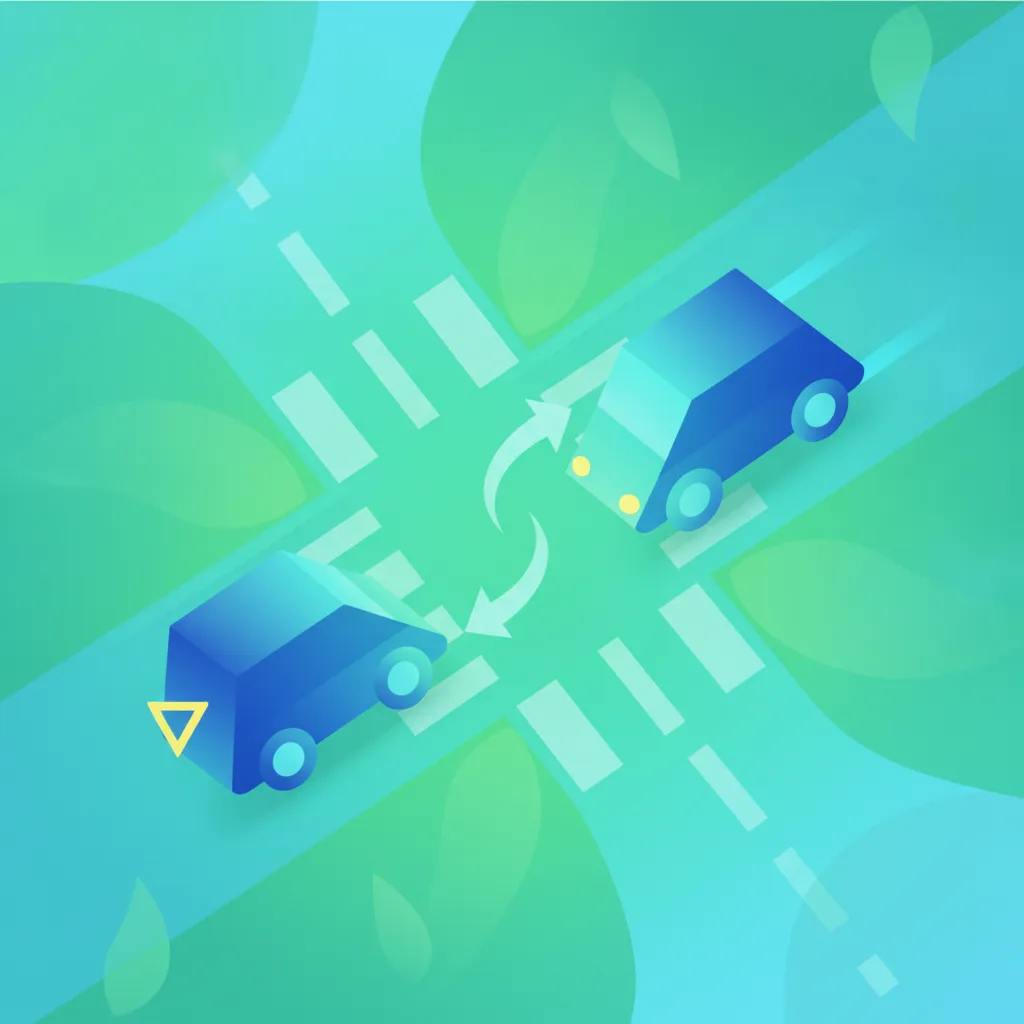
In this lesson, learners explore priority rules specific to uncontrolled intersections, where traffic signals or signs are absent. Topics include determining right-of-way based on vehicle classification, approach angle, and arrival sequence. The lesson emphasizes the importance of stopping, yielding, and assessing potential hazards before proceeding.
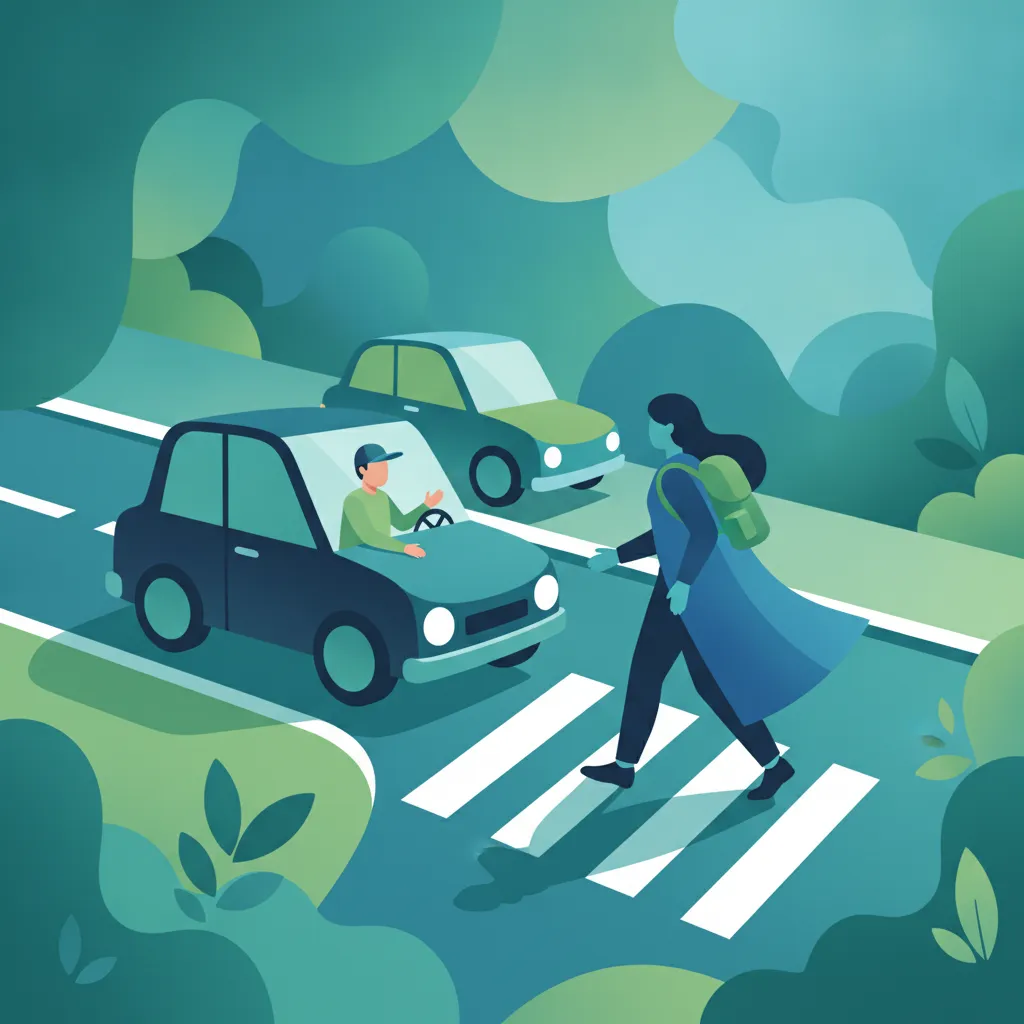
This lesson provides an overview of the general priority principles that dictate right-of-way on Turkish roads. Topics include the hierarchy of road users, such as pedestrians, cyclists, and emergency vehicles, and how these hierarchies apply at various intersections. Learners will understand the fundamental concepts of yielding, stopping, and proceeding, as well as the importance of clear decision-making.
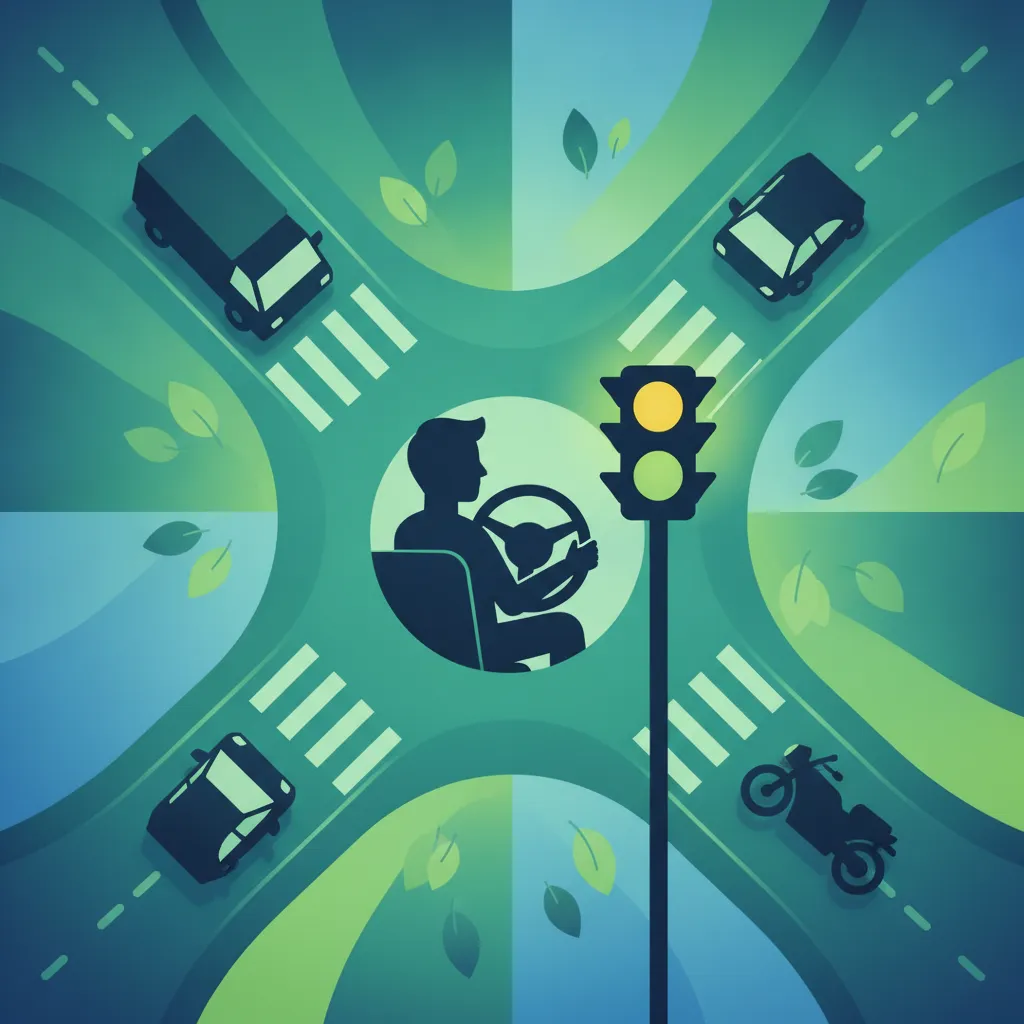
Correctly interpreting traffic signal sequences and priority rules is crucial for preventing devastating right-angle collisions at intersections. This lesson breaks down the phase progression of standard lights, the meanings of flashing amber or red indicators, and the hierarchy of traffic control when a police officer is directing vehicles. You will also master the basic legal default rules of right-of-way, such as yielding to vehicles coming from the right at uncontrolled junctions.
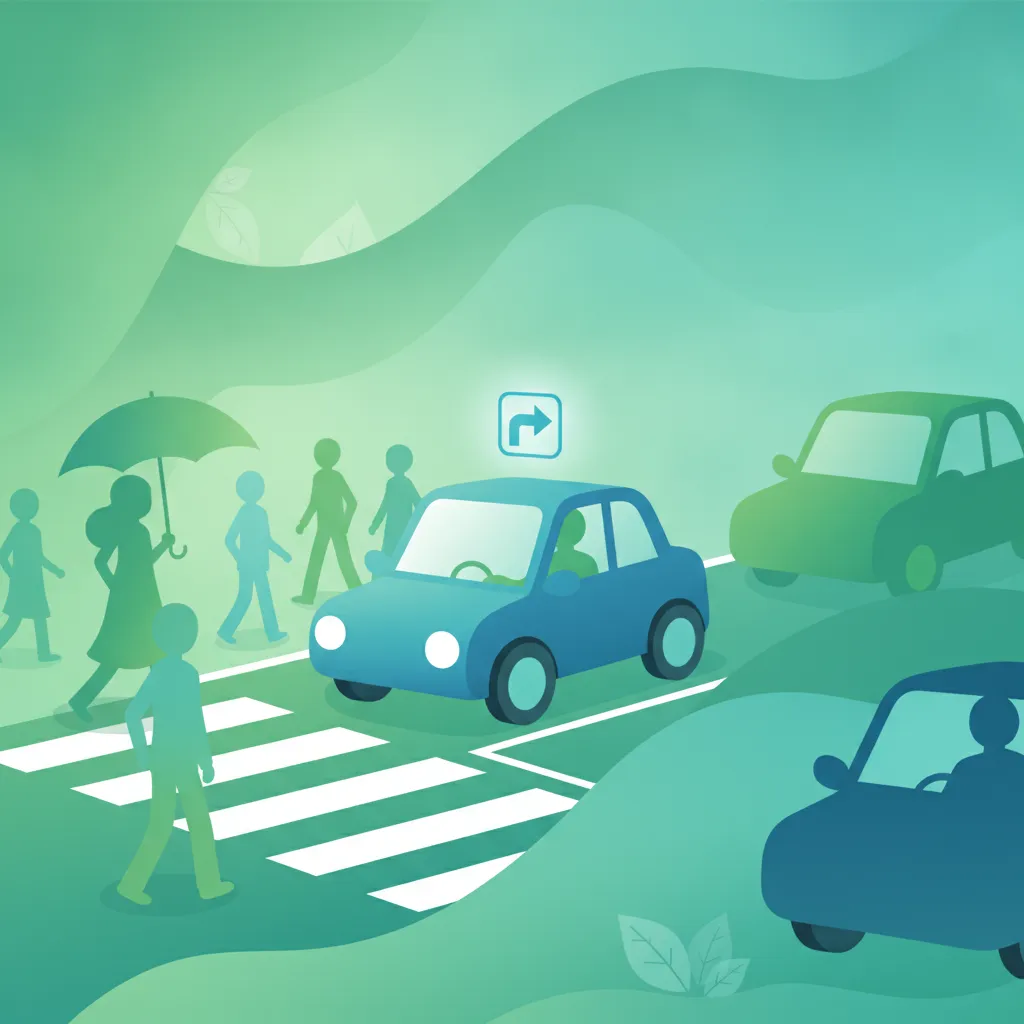
This lesson focuses on the safe interaction with other traffic participants at bus stops and traffic intersections. Learners will explore right-of-way rules, signal compliance, and techniques for maintaining safe distances while stopping and departing. Understanding these interactions is vital for preventing accidents in complex traffic environments.
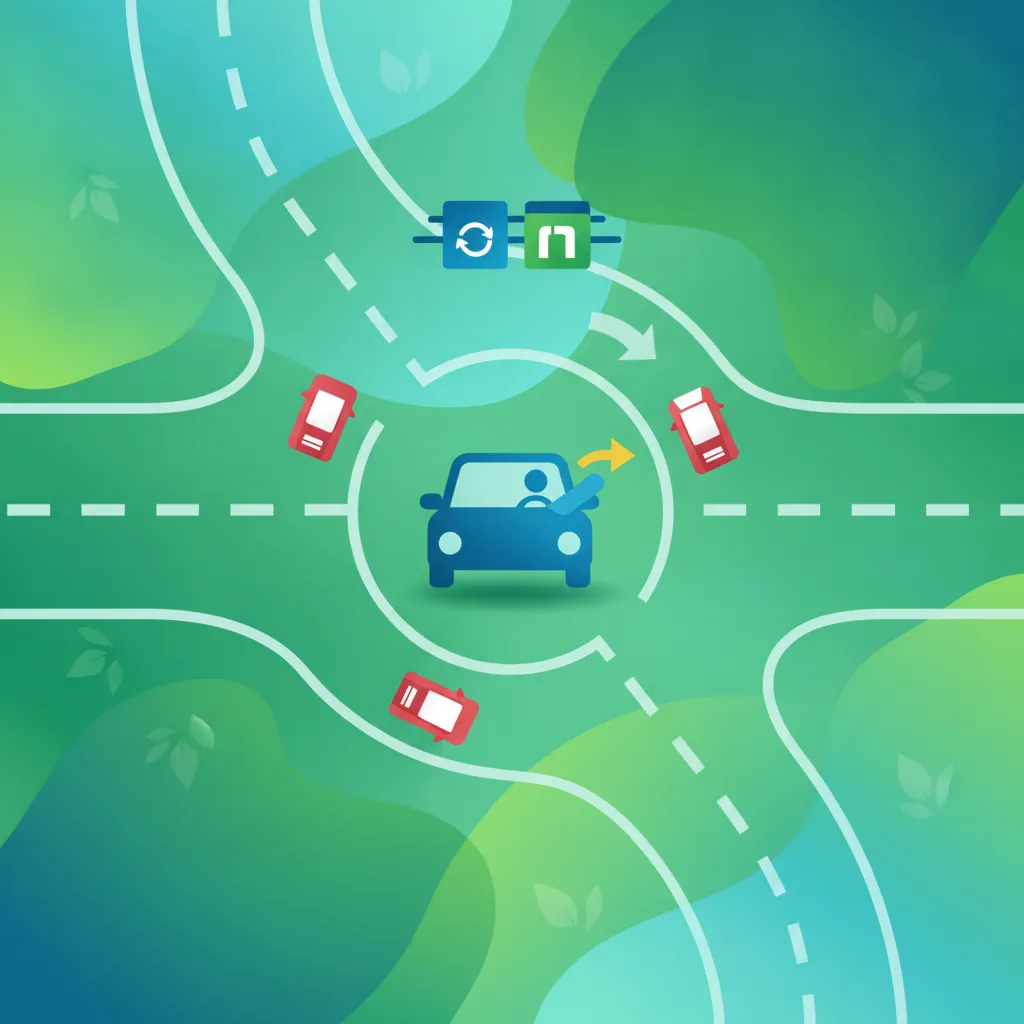
In this lesson, learners explore the specific priority rules and navigation techniques for roundabouts. Topics include yielding to traffic already in the roundabout, proper lane selection upon entry, and safe exit strategies. The lesson also addresses interactions with pedestrians and cyclists near roundabouts and the importance of maintaining appropriate speed.
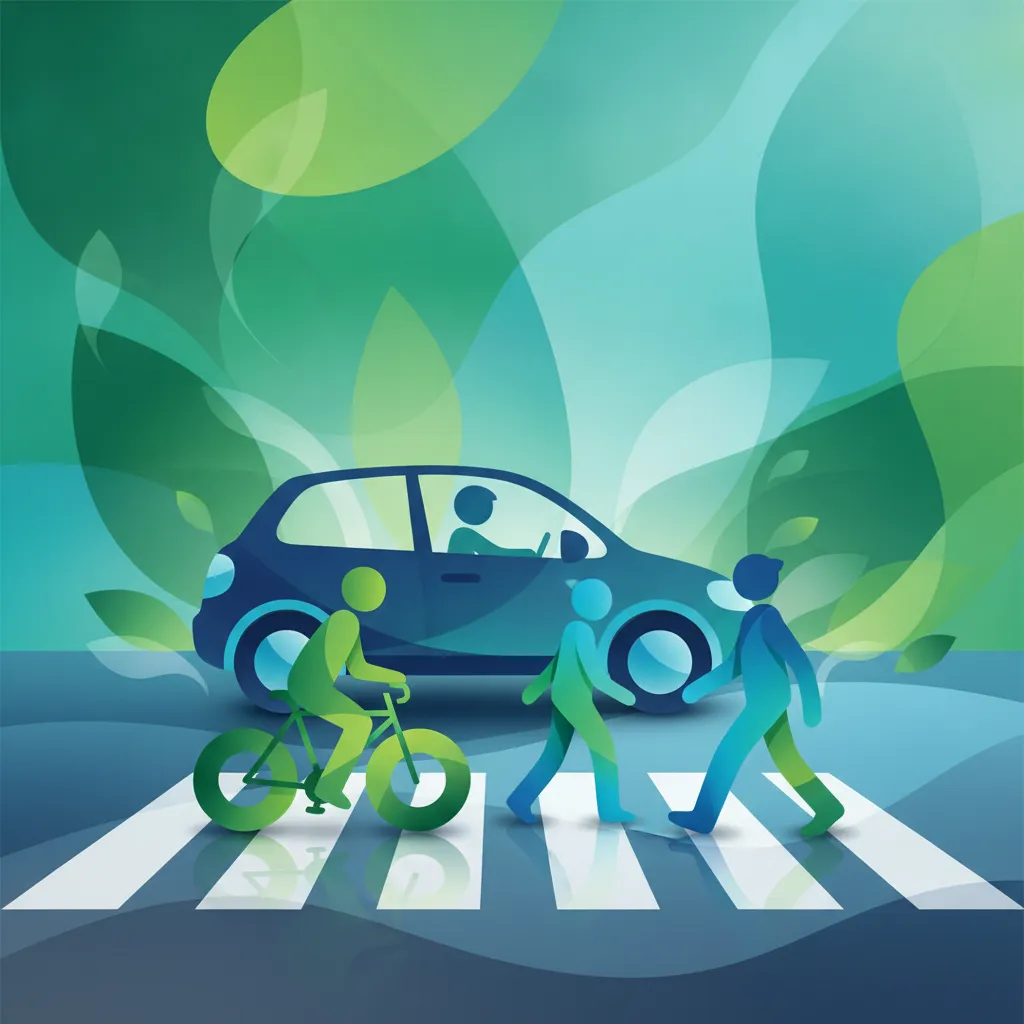
This lesson emphasizes the importance of yielding to pedestrians and cyclists at intersections, crosswalks, and designated lanes. Learners will understand the legal obligations to provide safe passage to vulnerable road users and the correct procedures for stopping and allowing them to cross. Real-world examples illustrate scenarios where failing to yield can lead to accidents.
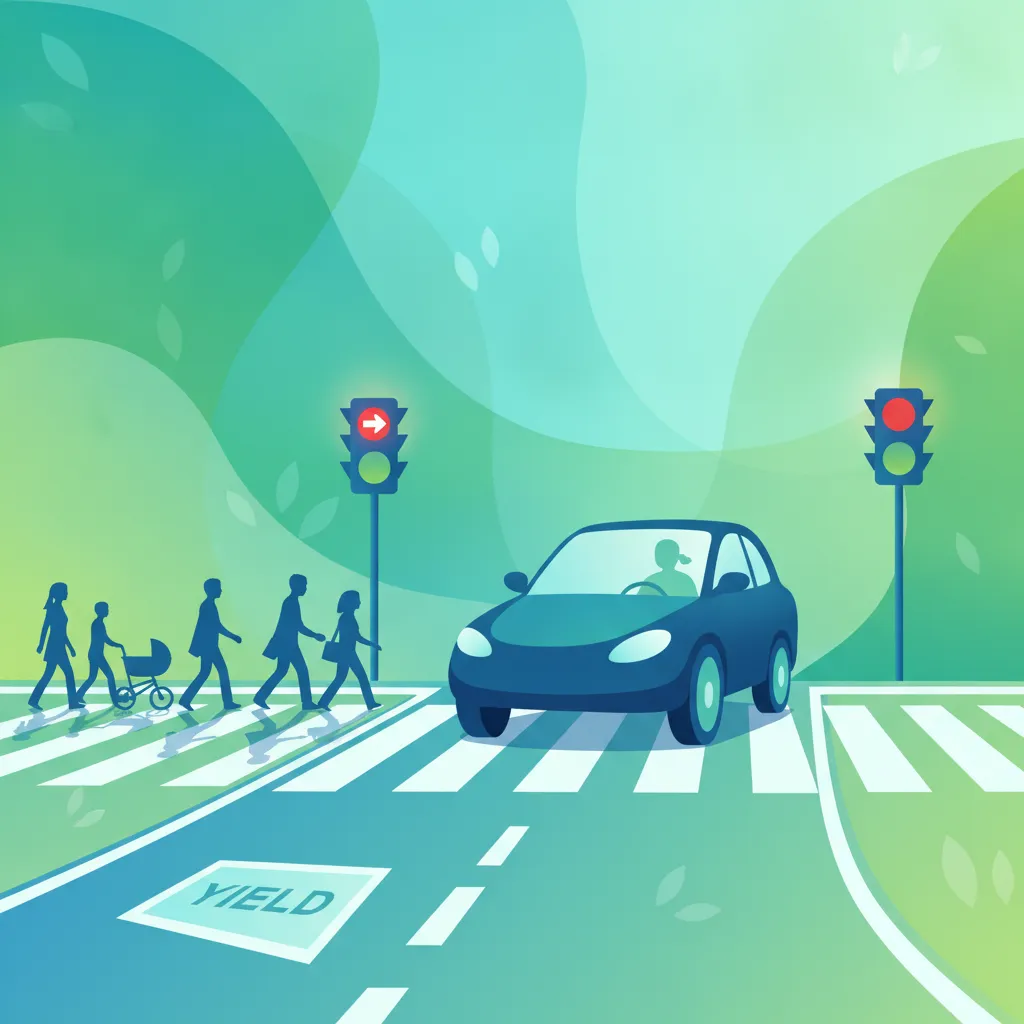
In this lesson, learners will master the skills required to safely navigate various types of intersections encountered in Turkish urban settings. The content covers interpreting traffic signals, understanding right-of-way rules, and executing proper lane positioning. Practical strategies for managing blind spots and ensuring visibility to other road users are emphasized. By the end of this session, participants will be equipped with safe crossing techniques.
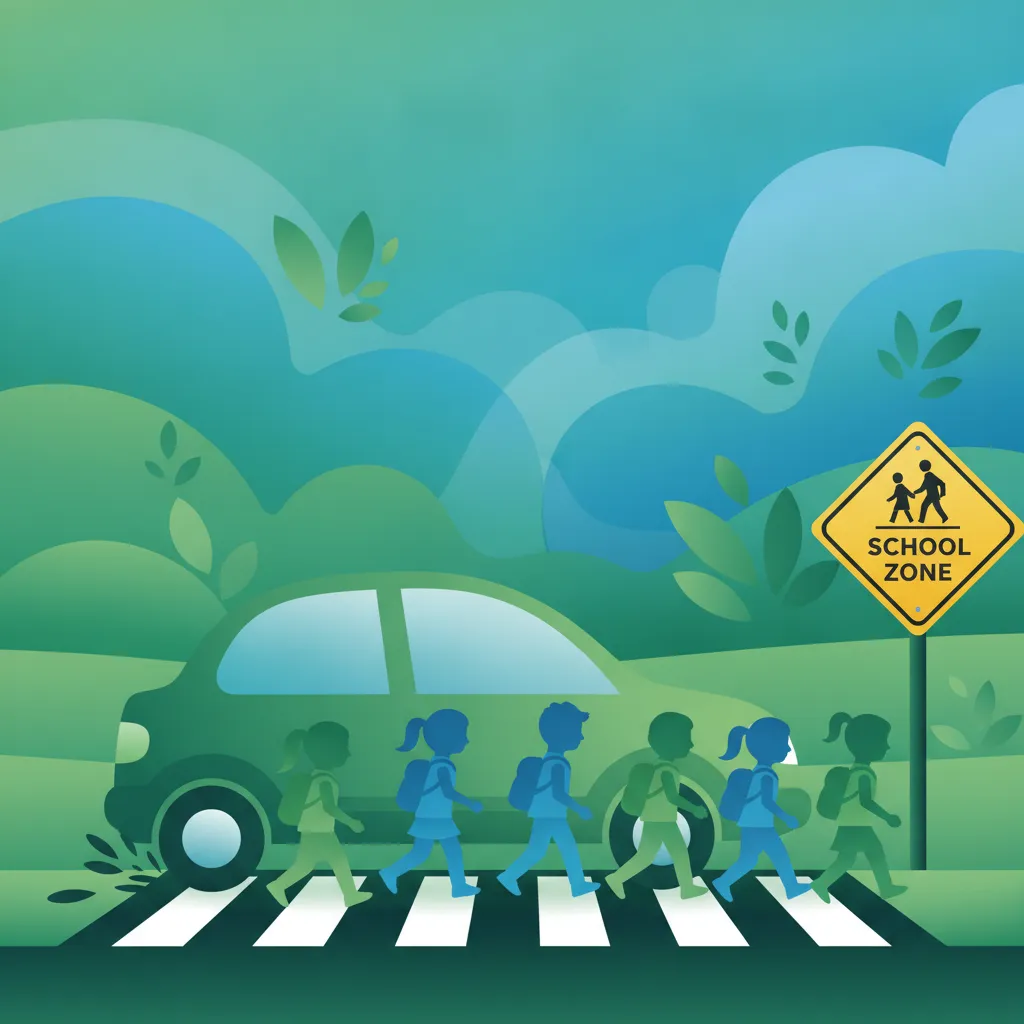
Protecting vulnerable road users is a core legal and ethical responsibility for all motorized vehicle operators in Turkey. This lesson covers the absolute requirement to yield to pedestrians at marked crosswalks, zebra crossings, and designated school zones. You will learn how to identify these zones early, reduce your speed proactively, and maintain heightened situational awareness for children or distracted pedestrians who may step onto the road unexpectedly.

This lesson focuses on pedestrian rights and safety measures to ensure their protection on Turkish roads. Topics include proper use of crosswalks, pedestrian signals, and yielding to pedestrians at intersections. The lesson also addresses specific considerations for vulnerable pedestrians such as children, the elderly, and the visually impaired. Real-world scenarios illustrate safe crossing practices.
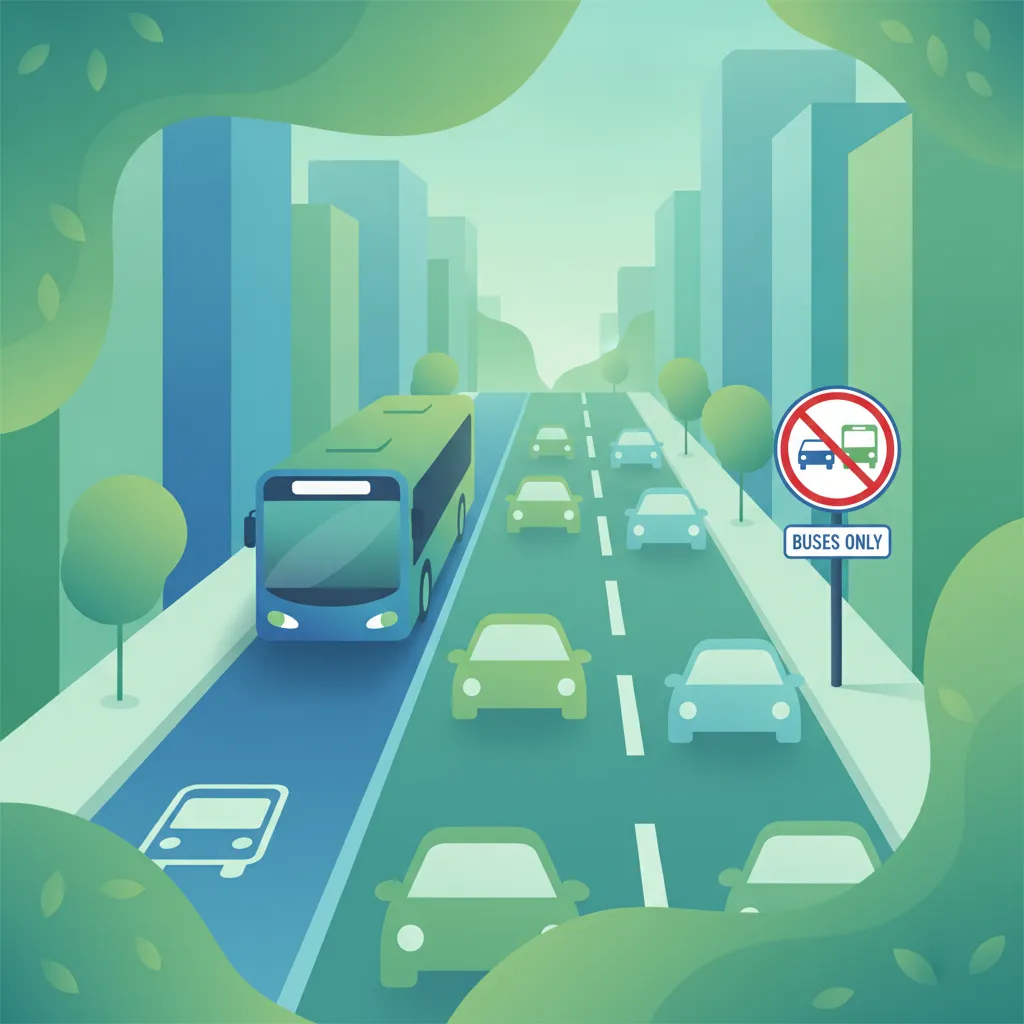
Learners will explore the specific regulations governing bus lanes, priority routes, and other legal restrictions applicable to passenger vehicles. The lesson covers the conditions under which buses may use dedicated lanes, how to navigate priority roadways, and the penalties associated with misuse. Understanding these rules is essential for efficient operation and avoiding violations in high-traffic areas.
Learn the correct procedures for approaching, entering, and exiting roundabouts safely. This explanation covers lane positioning, signaling requirements, and priority rules for circulating traffic as defined in the Turkish Highway Traffic Regulation for Category B drivers aiming to understand complex road geometry.
In this lesson, learners explore the specific priority rules and navigation techniques for roundabouts. Topics include yielding to traffic already in the roundabout, proper lane selection upon entry, and safe exit strategies. The lesson also addresses interactions with pedestrians and cyclists near roundabouts and the importance of maintaining appropriate speed.
This lesson examines lane division and proper lane usage on multi-lane roads and highways. Learners will understand the purpose of lane markings in guiding drivers to maintain appropriate lane discipline. Topics include correct lane selection for different vehicle types, overtaking procedures, and lane-changing techniques. Real-world examples illustrate the importance of respecting lane usage rules.
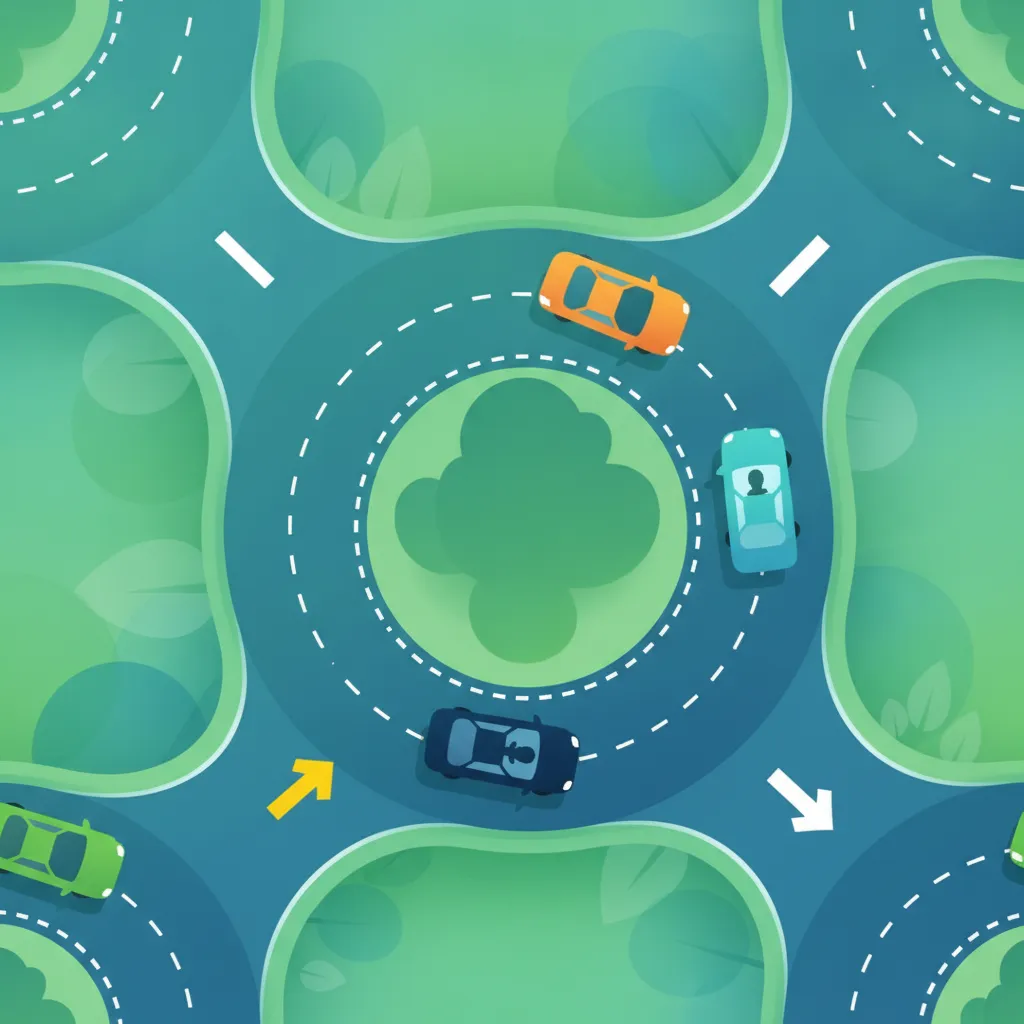
Roundabouts require a clear understanding of yield regulations and precise signaling to avoid conflicts with larger vehicles. This lesson details the legal requirements under Turkish road rules, which demand that entering vehicles yield to traffic already circulating inside the roundabout. You will learn how to select the appropriate lane upon entry, maintain a steady speed, signal your exit intentions clearly with your indicators, and remain alert to drivers who cut across lanes.
This lesson delves into the specific challenges and procedures associated with navigating roundabouts on a motorcycle. It outlines the importance of approaching at a safe speed, selecting the correct lane, and yielding to vehicles already within the roundabout. The content also covers the proper use of signals when exiting and emphasizes the need for heightened awareness of blind spots, especially when larger vehicles are present.
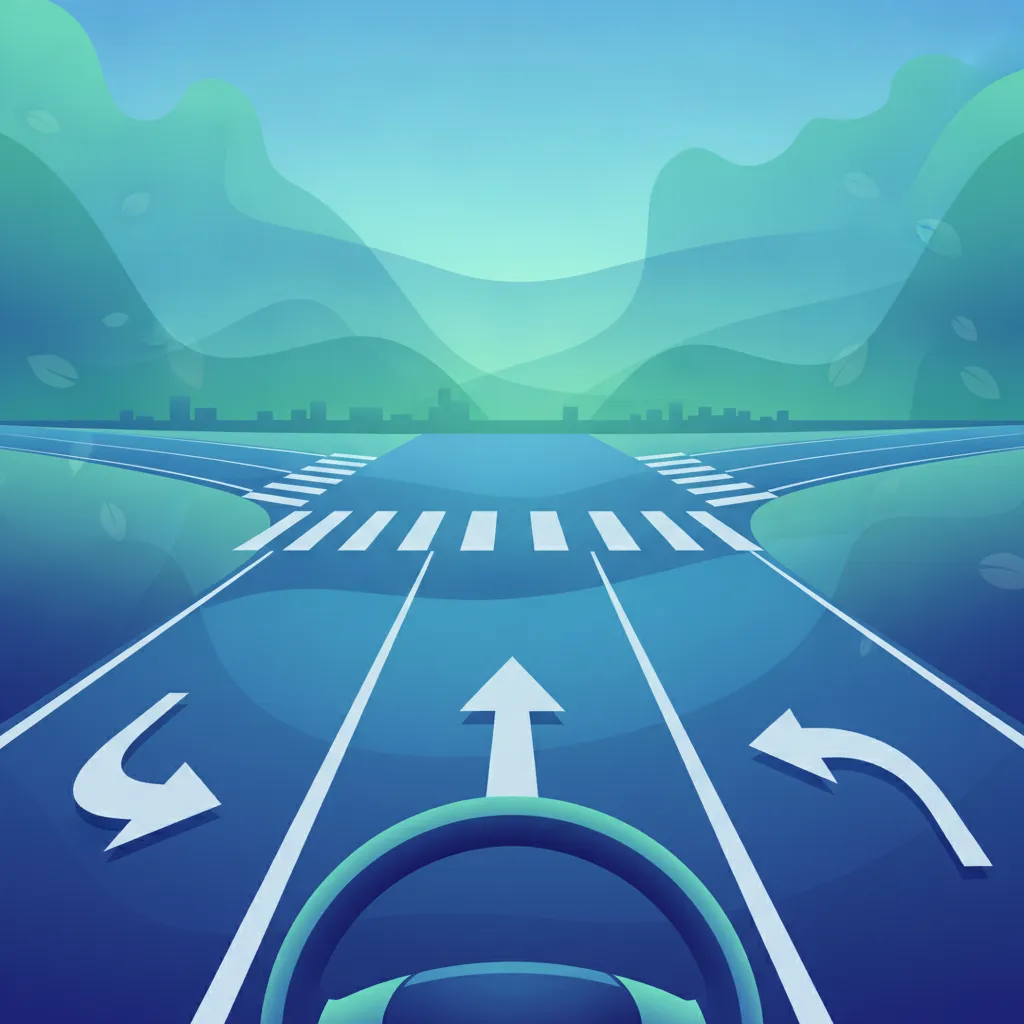
This lesson focuses on the role of directional arrows and guidance markings in indicating lane assignments and intended vehicle movements. Learners will learn to interpret turn arrows, lane-specific directions, and lane assignment at intersections and roadways. Real-world examples demonstrate how these markings aid drivers in navigating complex road networks, especially at junctions and roundabouts.

Road markings painted directly onto the asphalt provide continuous guidance and carry the same legal weight as vertical traffic signs. This lesson explains the differences between solid and broken longitudinal lines, channelizing arrows, and restricted zones like dedicated bus or bicycle paths. You will discover how to properly align your moped within your lane, execute lawful line changes, and respect painted buffer zones to prevent dangerous side-swipe accidents in dense traffic.
This lesson covers the various road surface markings that motorcyclists must be aware of, such as lane lines, turn arrows, and dedicated bike lanes. It explains how to interpret solid and broken lines, the meaning of specific arrows for turning or lane changes, and the significance of pedestrian crossing markings. Understanding these visual cues is essential for maintaining lane discipline and performing safe road maneuvers.
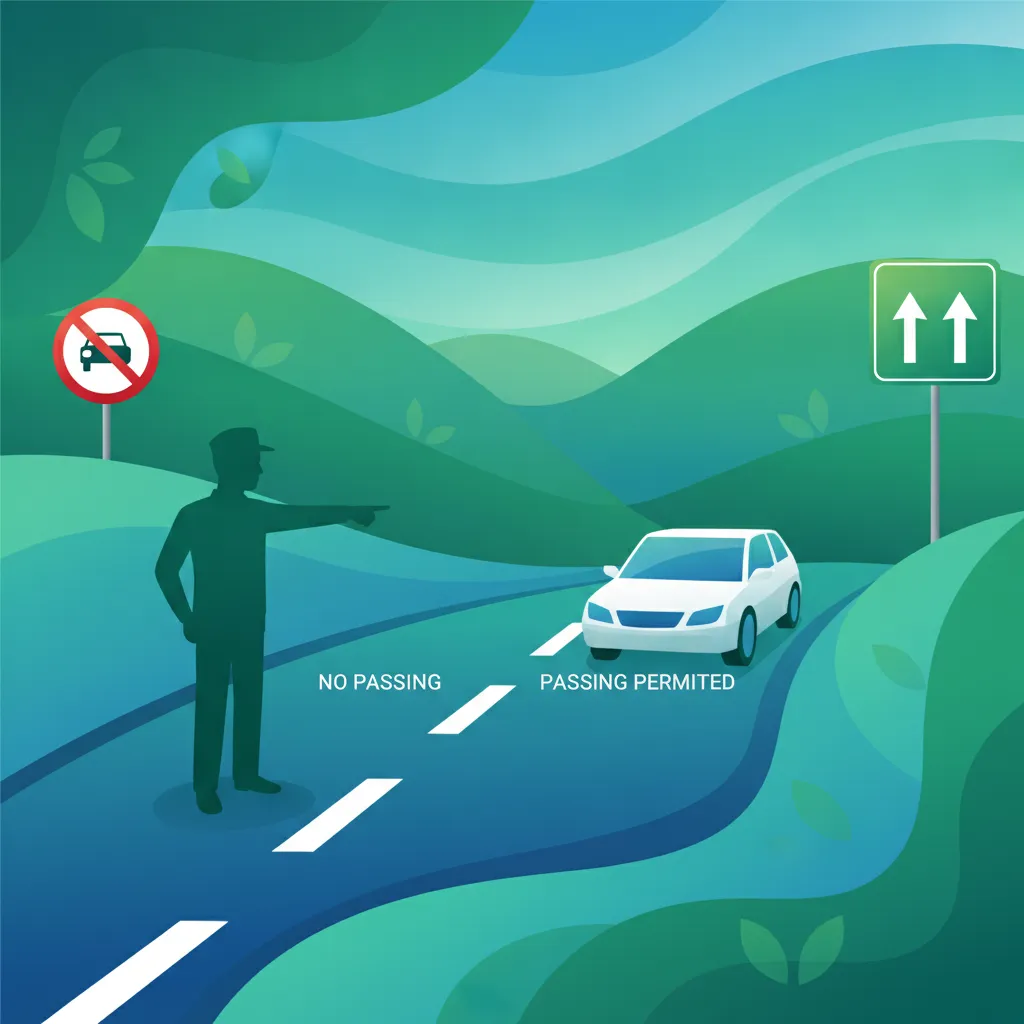
This lesson outlines the precise legal and safety procedures for overtaking slower vehicles on two-lane and multi-lane roads. It details when overtaking is strictly prohibited by signs or solid road lines, and how to calculate passing distances. Drivers will learn how to communicate their intentions using indicators and pass other vehicles safely.
This lesson details the techniques for merging onto busy expressways and executing safe lane changes in urban traffic conditions. It explains how to match the speed of highway traffic in the acceleration lane and select safe gaps for merging. Drivers will learn how to eliminate blind spots and signal early to maintain smooth traffic flow.
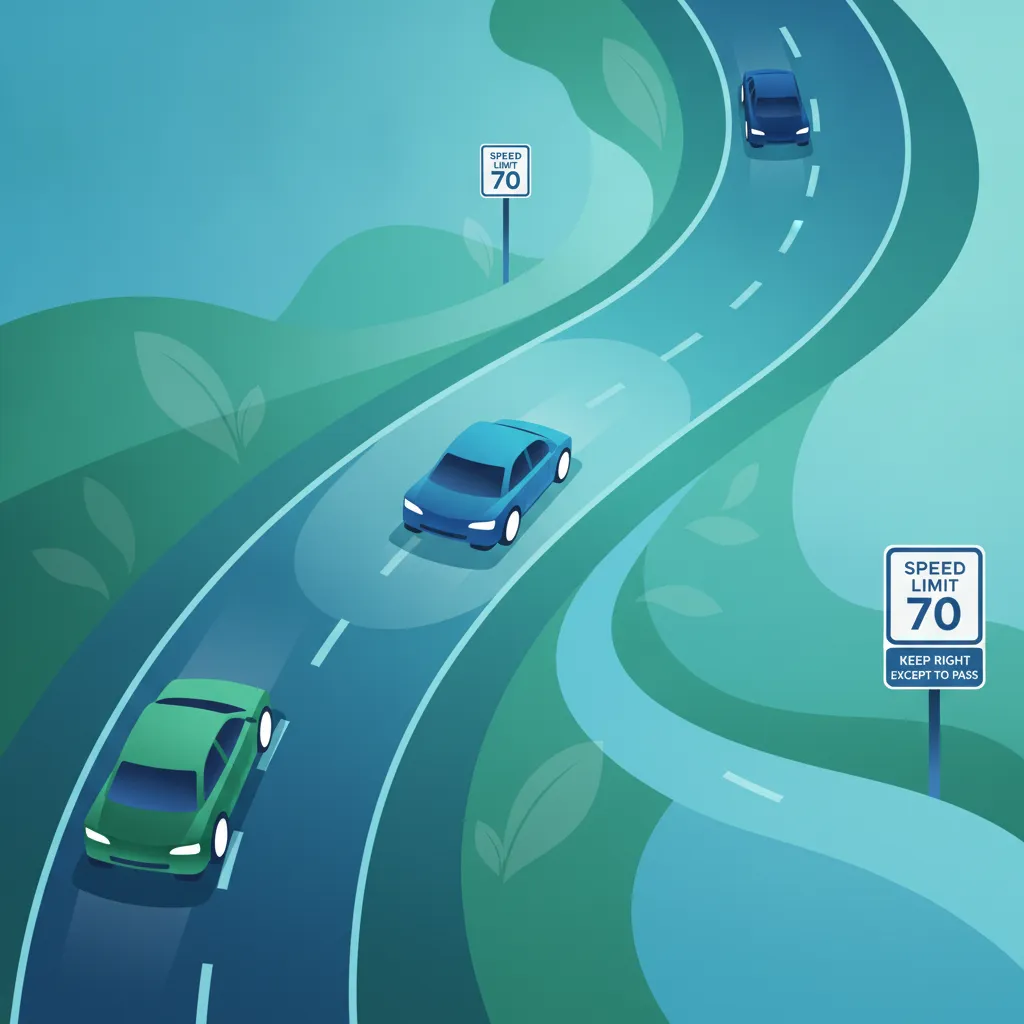
This lesson explains the specific rules, driving etiquette, and safety protocols for operating a vehicle on high-speed Turkish motorways. It covers correct lane usage, overtaking procedures, emergency lane restrictions, and how to maintain consistent high speeds safely. Drivers will learn to avoid dangerous tailgating and sudden lane changes.
Find clear answers to common questions learners have about Priority at Controlled Intersections. Learn how the lesson is structured, which driving theory objectives it supports, and how it fits into the overall learning path of units and curriculum progression in Turkey. These explanations help you understand key concepts, lesson flow, and exam focused study goals.
Yes, in the Turkish traffic hierarchy, traffic lights (if operational) override regulatory signs like stop or yield signs. You must always follow the signal unless directed otherwise by a traffic officer.
A flashing yellow light serves as a warning to proceed with caution. It indicates that you are approaching a dangerous intersection or one where the signals are not fully active, so you must observe priority rules as if it were an uncontrolled intersection.
Yes, emergency vehicles with active sirens and flashing lights have absolute priority at all intersections. You must clear the path safely, even if you have a green light, to allow them to pass.
You must bring your vehicle to a complete stop behind the stop line or at the junction point. Even if the road appears clear, you are legally required to stop fully before checking for traffic and proceeding when safe.
Use our comprehensive practice search to find exactly the Turkish driving theory questions you need to master. Whether reviewing specific road signs, traffic rules, or first aid scenarios, select your perfect practice set and boost your confidence for the official ehliyet sınavı.