This lesson explores the essential function of road markings and how they provide critical guidance for moped riders. You will learn to distinguish between line types, understand dedicated lane restrictions, and master lane positioning to navigate Turkish roads safely.

Lesson content overview
Road markings painted directly onto the asphalt serve as a continuous visual guide for all road users. In the context of the Turkish Driving Licence Theory for Category AM, understanding these markings is not just a requirement for passing your official MTSK e-sınav (electronic exam), but a critical survival skill for riding a moped or light motorized bicycle in complex urban traffic.
Under the Turkish Highway Traffic Regulation (Karayolları Trafik Yönetmeliği), horizontal markings painted on the road surface carry the exact same legal weight as vertical traffic signs. Ignoring a painted solid line carries the same penalty and safety risks as ignoring a physical "No Overtaking" sign. For moped riders, who occupy a vulnerable position in the road user hierarchy, strict lane discipline and a clear understanding of road markings are primary defense mechanisms against side-swipe collisions and intersection accidents.
In traffic management, the Equivalence Principle dictates that horizontal markings, traffic signs, traffic lights, and traffic police hand signals form a cohesive regulatory framework. Road markings are designed to provide continuous, real-time guidance directly within your field of vision, meaning you do not have to look away from the road to receive instruction.
The Legal Hierarchy of Traffic Instructions: If there is ever a temporary conflict in traffic directions, the legal hierarchy is:
While road markings are at the base of this hierarchy, they are fully binding in normal traffic conditions. Disobeying them constitutes a direct traffic violation, resulting in monetary fines, penalty points (ceza puanı), and potential liability in the event of an accident.
Longitudinal lines run parallel to the flow of traffic. They divide lanes, define road edges, and indicate where lane changes or overtaking maneuvers are legally permitted.
A solid white or yellow longitudinal line indicates a strict prohibition. It signals that the risk of changing lanes or overtaking is too high due to limited visibility, oncoming traffic patterns, or physical road hazards (such as curves, hills, or tunnel approaches).
A broken line indicates that lane changes, overtaking, and turning maneuvers are permitted, provided it is safe to do so.
When a solid line and a broken line are painted side-by-side, the rules of the line closest to your vehicle apply.
As you approach intersections, junctions, or roundabouts, you will find channelizing directional arrows (yönlendirici oklar) painted on the lane surfaces. These arrows dictate mandatory directions of travel for each lane.
Attempting to go straight from a dedicated turn lane (or vice versa) is a frequent cause of severe side-swipe and T-bone collisions at urban junctions. For example, if you ride a Category AM moped straight through an intersection while positioned in a dedicated right-turn lane, you will likely collide with a vehicle in the adjacent lane attempting to go straight or turn right correctly.
Turkish traffic law requires you to select your lane well in advance of the intersection. Once the dashed lane divider lines turn into solid white lines near the intersection, you are legally locked into your chosen lane and must follow the direction of its channelizing arrow.
Modern urban roads feature lanes dedicated to specific types of transport. Understanding which zones you are permitted to enter is a key part of your Category AM theory preparation.
Bus lanes are designated to speed up public transit in congested urban centers like Istanbul, Ankara, and Izmir. They are typically separated by a solid yellow or white line and marked with the word "BUS" or "OTOBÜS".
A bicycle lane is marked with painted bicycle icons and is designed for non-motorized bicycle traffic.
Buffer zones, hatched safety zones, and painted islands are designated areas on the pavement marked with diagonal white or yellow lines. They are designed to channel traffic safely, separate conflicting streams of vehicles, and provide a physical margin of safety.
While road markings provide vital regulatory information, they also present significant physical hazards that Category AM riders must manage actively.
Road markings are applied using thermoplastic paint or cold plastics. When dry, these materials offer reasonable traction. However, when wet, they lose their micro-texture and become highly slippery—resembling ice.
At night, road markings rely on retroreflective glass beads embedded in the paint to bounce light from your headlight back to your eyes.
To ensure you pass your theoretical exam and remain safe on the road, familiarize yourself with these common road marking violations and their consequences:
You are riding your moped on a rural two-lane road. Ahead of you is an agricultural tractor moving at 15 km/h. The road has a solid white line separating you from oncoming traffic.
You are approaching a busy signalized intersection in Izmir. You want to turn left. The road opens up into three lanes: the left lane has a left-pointing arrow, the middle has a straight arrow, and the right has a right-pointing arrow.
To reinforce your understanding of road guidance and prepare for the next steps in your Category AM theory course, explore these related modules.
This lesson covers the legal status and practical interpretation of road markings for Turkish AM licence theory, establishing that horizontal markings carry full legal authority equivalent to vertical signs. You will learn to distinguish between solid lines (absolute prohibition), broken lines (permitted when safe), and combination lines (rule of the nearest line applies), while understanding channelizing arrows that dictate mandatory lane directions at intersections. The lesson also clarifies restrictions on bus lanes and bicycle paths for mopeds, the no-entry rule for buffer zones, and physical hazards such as reduced traction on wet paint. Mastering these distinctions will prepare you for scenario-based questions in the MTSK e-sınav and help you maintain safe lane discipline on Turkish roads.
A short set of high-value points that capture the most important learning from this lesson.
Road markings carry the same legal authority as vertical traffic signs under the Equivalence Principle, and disobeying them results in fines and penalty points.
Solid continuous lines prohibit crossing, overtaking, and straddling at all times; only traffic police, lights, or signs can override them.
Broken dashed lines permit lane changes and overtaking only when safe, and you must always yield to traffic already in the target lane.
Combination lines follow the rule of the line closest to your vehicle: solid on your side means you must not cross.
Dedicated bus lanes and physically separated bicycle lanes are off-limits to Category AM mopeds unless explicitly signed otherwise.
Explore all units and lessons included in this driving theory course.
Legal hierarchy order: Traffic Police > Traffic Lights > Vertical Signs > Horizontal Markings.
When approaching intersections, once lane divider lines become solid near the junction, you are locked into your lane and must follow its channelizing arrow.
Wet road markings lose traction and become slippery—cross them at perpendicular angles without braking or leaning.
Buffer zones (taralı alan) are strictly no-entry areas designed to prevent side-impact collisions.
For combination lines, the rule closest to your vehicle always applies, regardless of conditions on the other side.
Assuming a moped's narrow profile allows it to legally squeeze past slow vehicles by crossing a solid line—this is illegal lane violation (şerit ihlali).
Attempting to go straight from a dedicated turn lane (or vice versa) at intersections, causing severe side-swipe or T-bone collisions.
Entering bus lanes to bypass traffic congestion, unaware that traffic cameras (EDS) in major cities actively monitor and fine violators.
Riding side-by-side with another moped in a single lane instead of maintaining single-file formation and safe following distance.
Failing to signal early enough before lane changes over broken lines, depriving other drivers of adequate reaction time.
Lesson content overview
A short set of high-value points that capture the most important learning from this lesson.
Road markings carry the same legal authority as vertical traffic signs under the Equivalence Principle, and disobeying them results in fines and penalty points.
Solid continuous lines prohibit crossing, overtaking, and straddling at all times; only traffic police, lights, or signs can override them.
Broken dashed lines permit lane changes and overtaking only when safe, and you must always yield to traffic already in the target lane.
Combination lines follow the rule of the line closest to your vehicle: solid on your side means you must not cross.
Dedicated bus lanes and physically separated bicycle lanes are off-limits to Category AM mopeds unless explicitly signed otherwise.
Explore all units and lessons included in this driving theory course.
Legal hierarchy order: Traffic Police > Traffic Lights > Vertical Signs > Horizontal Markings.
When approaching intersections, once lane divider lines become solid near the junction, you are locked into your lane and must follow its channelizing arrow.
Wet road markings lose traction and become slippery—cross them at perpendicular angles without braking or leaning.
Buffer zones (taralı alan) are strictly no-entry areas designed to prevent side-impact collisions.
For combination lines, the rule closest to your vehicle always applies, regardless of conditions on the other side.
Assuming a moped's narrow profile allows it to legally squeeze past slow vehicles by crossing a solid line—this is illegal lane violation (şerit ihlali).
Attempting to go straight from a dedicated turn lane (or vice versa) at intersections, causing severe side-swipe or T-bone collisions.
Entering bus lanes to bypass traffic congestion, unaware that traffic cameras (EDS) in major cities actively monitor and fine violators.
Riding side-by-side with another moped in a single lane instead of maintaining single-file formation and safe following distance.
Failing to signal early enough before lane changes over broken lines, depriving other drivers of adequate reaction time.
Explore search topics learners often look for when studying Road Markings and Lane Guidance. These topics reflect common questions about road rules, driving situations, safety guidance, and lesson level theory preparation for learners in Turkey.
Browse additional driving theory lessons that cover connected traffic rules, road signs, and common driving situations related to this topic. Improve your understanding of how different rules interact across everyday traffic scenarios.
Learn the legal requirements for approaching and crossing complex junctions safely. This guide explains correct lane positioning, right-of-way priority at roundabouts, and how to interpret signal lights when merging into urban traffic flows according to Turkish Highway Traffic Regulations.
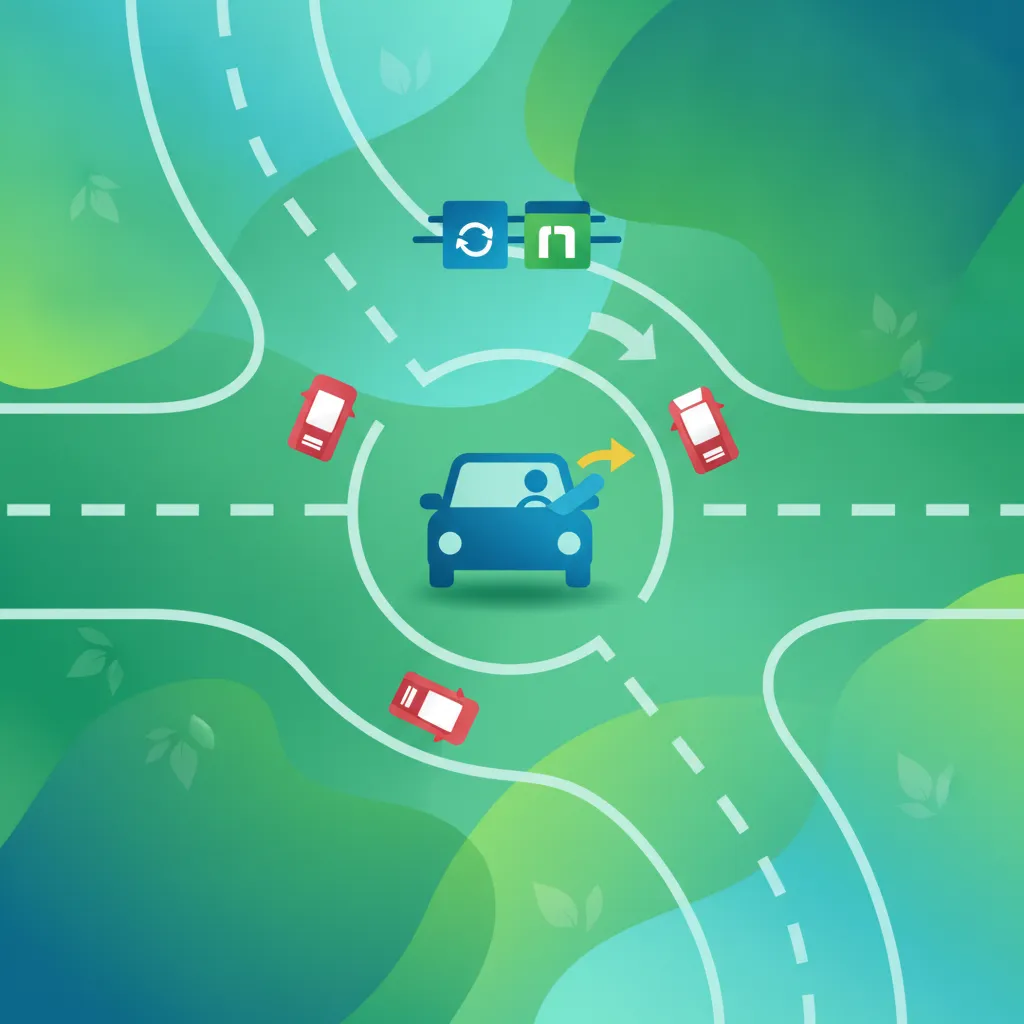
In this lesson, learners explore the specific priority rules and navigation techniques for roundabouts. Topics include yielding to traffic already in the roundabout, proper lane selection upon entry, and safe exit strategies. The lesson also addresses interactions with pedestrians and cyclists near roundabouts and the importance of maintaining appropriate speed.
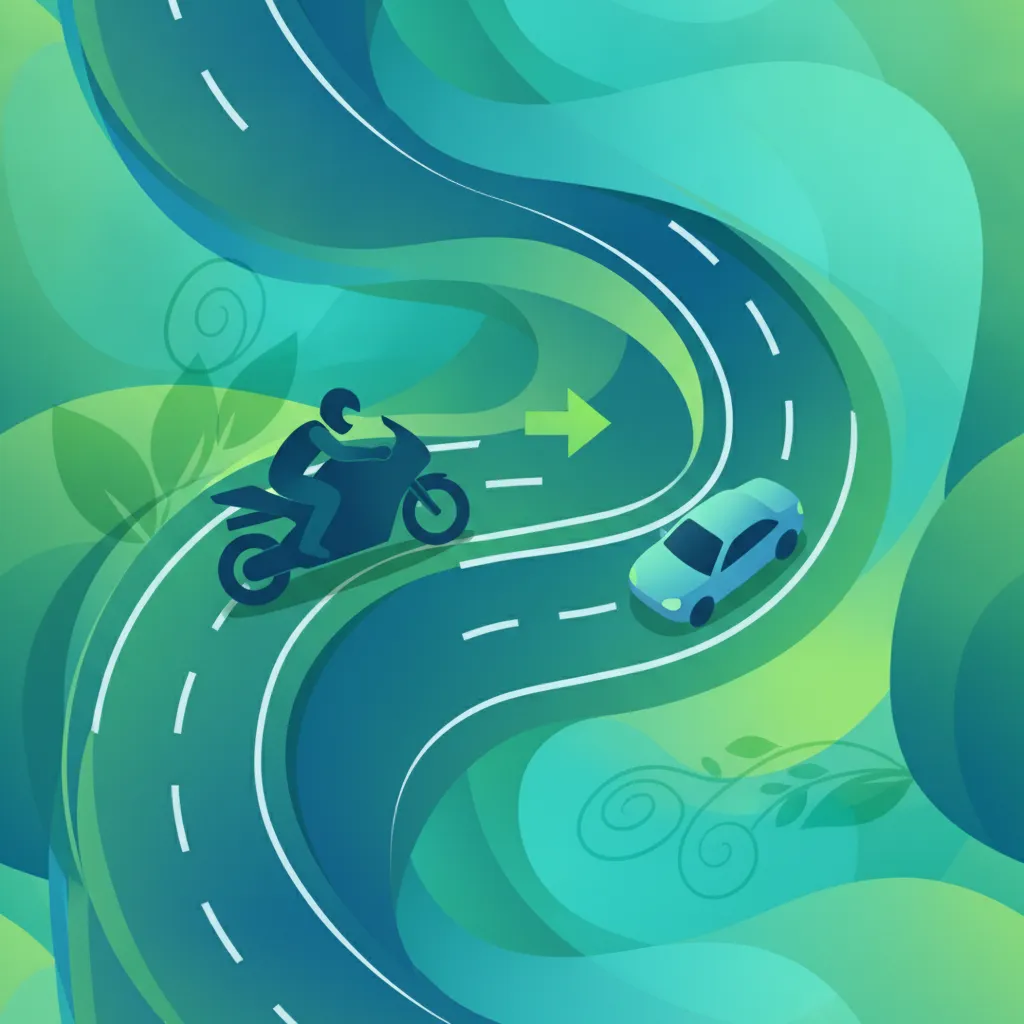
Roundabouts require a clear understanding of yield regulations and precise signaling to avoid conflicts with larger vehicles. This lesson details the legal requirements under Turkish road rules, which demand that entering vehicles yield to traffic already circulating inside the roundabout. You will learn how to select the appropriate lane upon entry, maintain a steady speed, signal your exit intentions clearly with your indicators, and remain alert to drivers who cut across lanes.
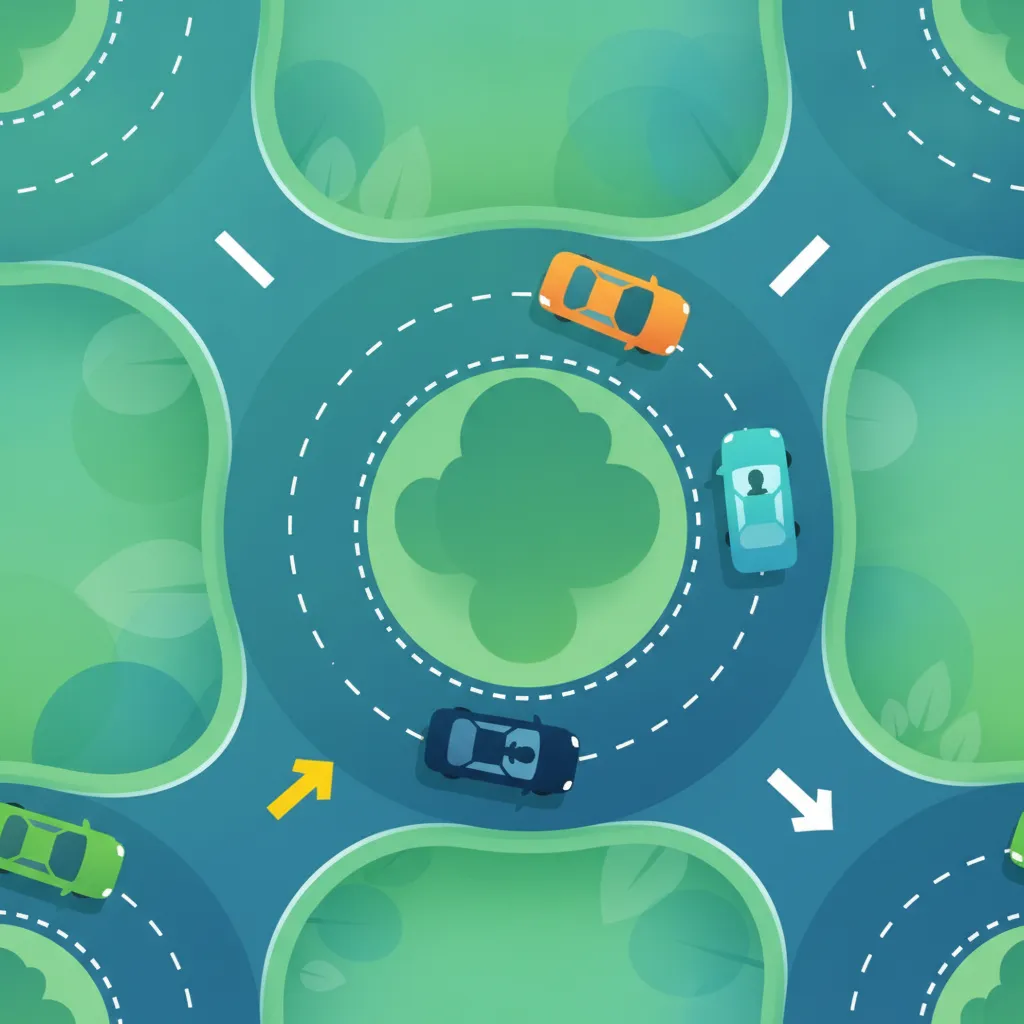
This lesson delves into the specific challenges and procedures associated with navigating roundabouts on a motorcycle. It outlines the importance of approaching at a safe speed, selecting the correct lane, and yielding to vehicles already within the roundabout. The content also covers the proper use of signals when exiting and emphasizes the need for heightened awareness of blind spots, especially when larger vehicles are present.
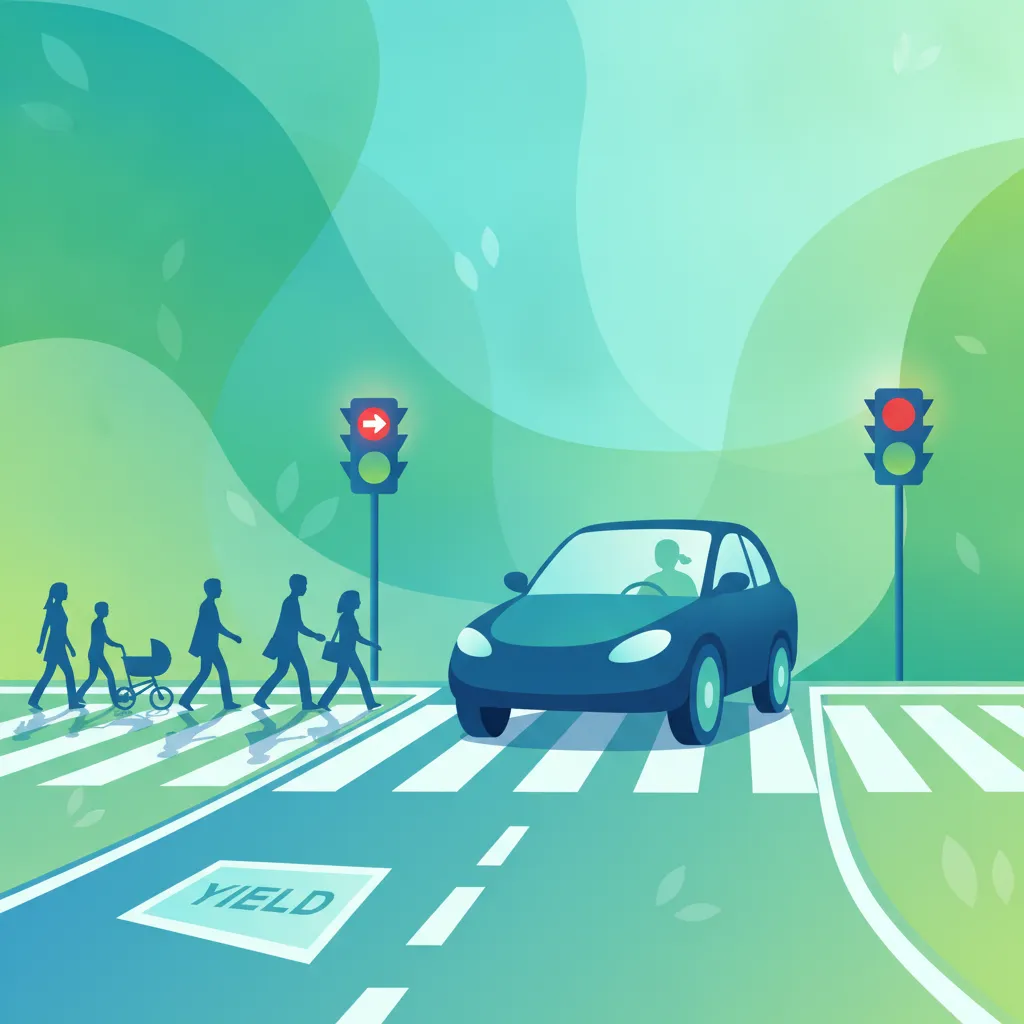
In this lesson, learners will master the skills required to safely navigate various types of intersections encountered in Turkish urban settings. The content covers interpreting traffic signals, understanding right-of-way rules, and executing proper lane positioning. Practical strategies for managing blind spots and ensuring visibility to other road users are emphasized. By the end of this session, participants will be equipped with safe crossing techniques.
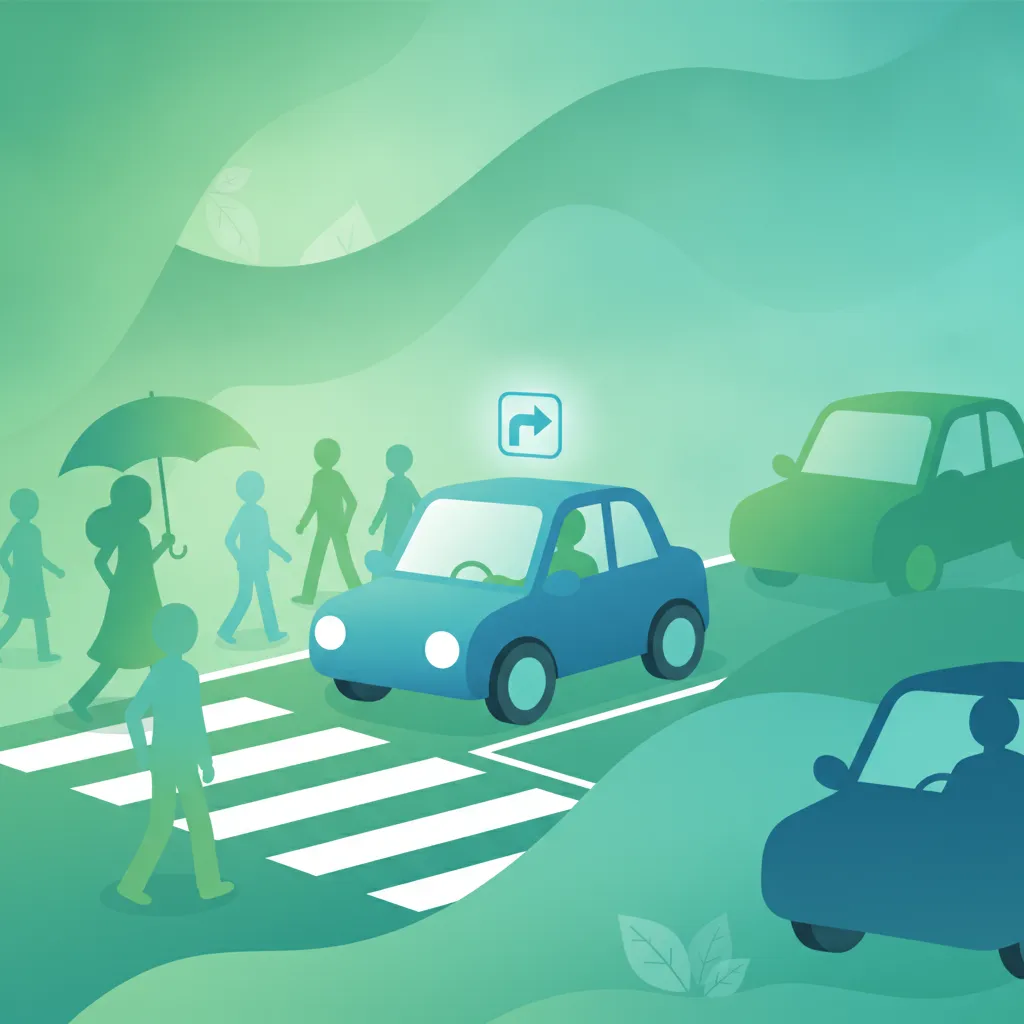
This lesson focuses on the safe interaction with other traffic participants at bus stops and traffic intersections. Learners will explore right-of-way rules, signal compliance, and techniques for maintaining safe distances while stopping and departing. Understanding these interactions is vital for preventing accidents in complex traffic environments.
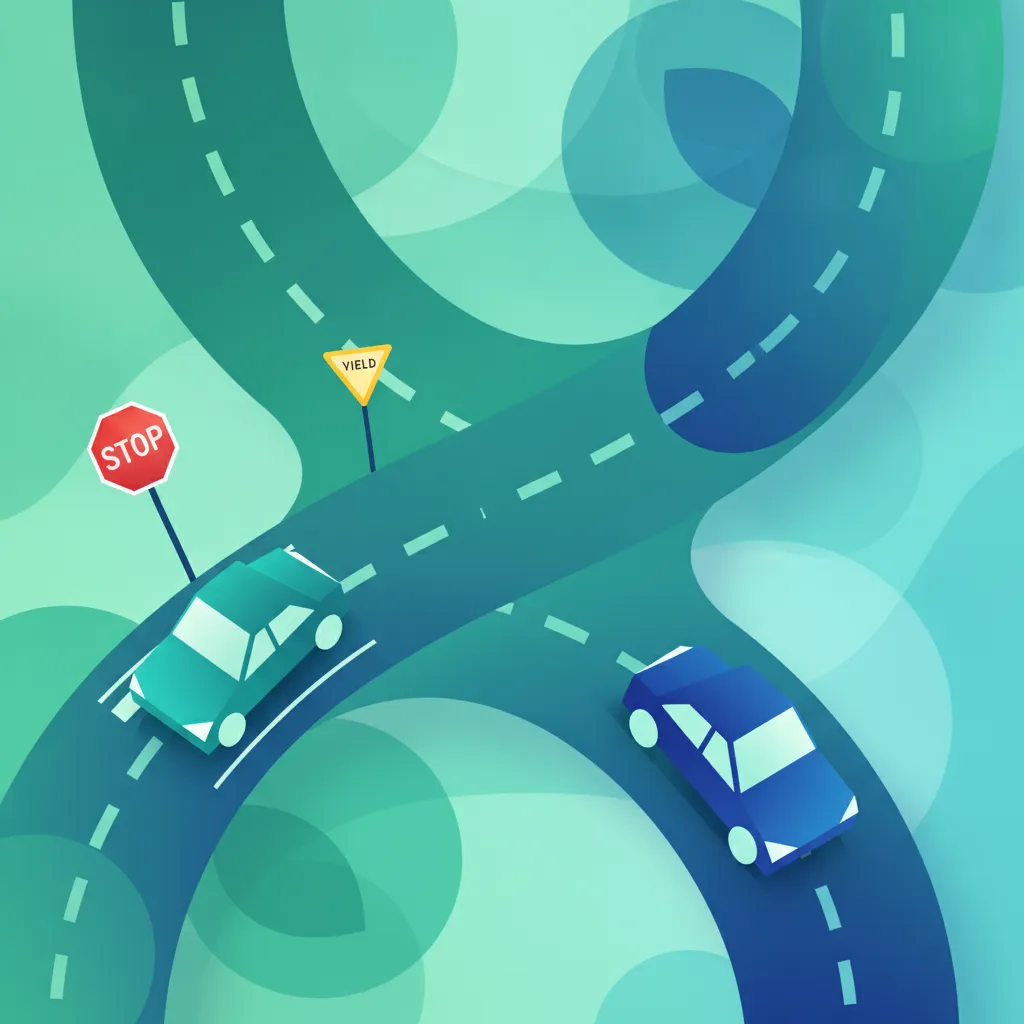
This lesson focuses on priority rules at controlled intersections equipped with traffic signals, stop signs, or yield signs. Learners will understand how to interpret traffic light phases, comply with stop and yield indications, and assess right-of-way at these intersections. The lesson also covers pedestrian and cyclist considerations, as well as emergency vehicle priority.
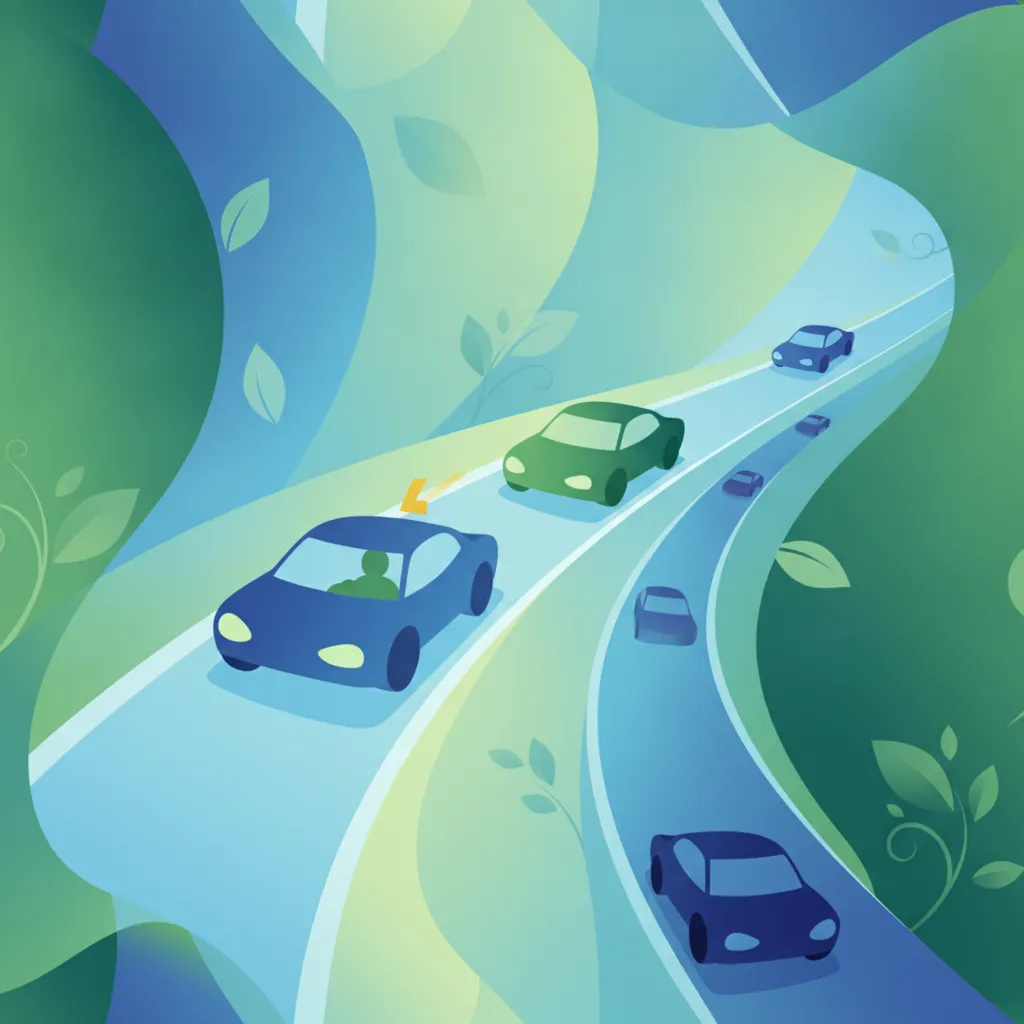
This lesson outlines the precise legal and safety procedures for overtaking slower vehicles on two-lane and multi-lane roads. It details when overtaking is strictly prohibited by signs or solid road lines, and how to calculate passing distances. Drivers will learn how to communicate their intentions using indicators and pass other vehicles safely.
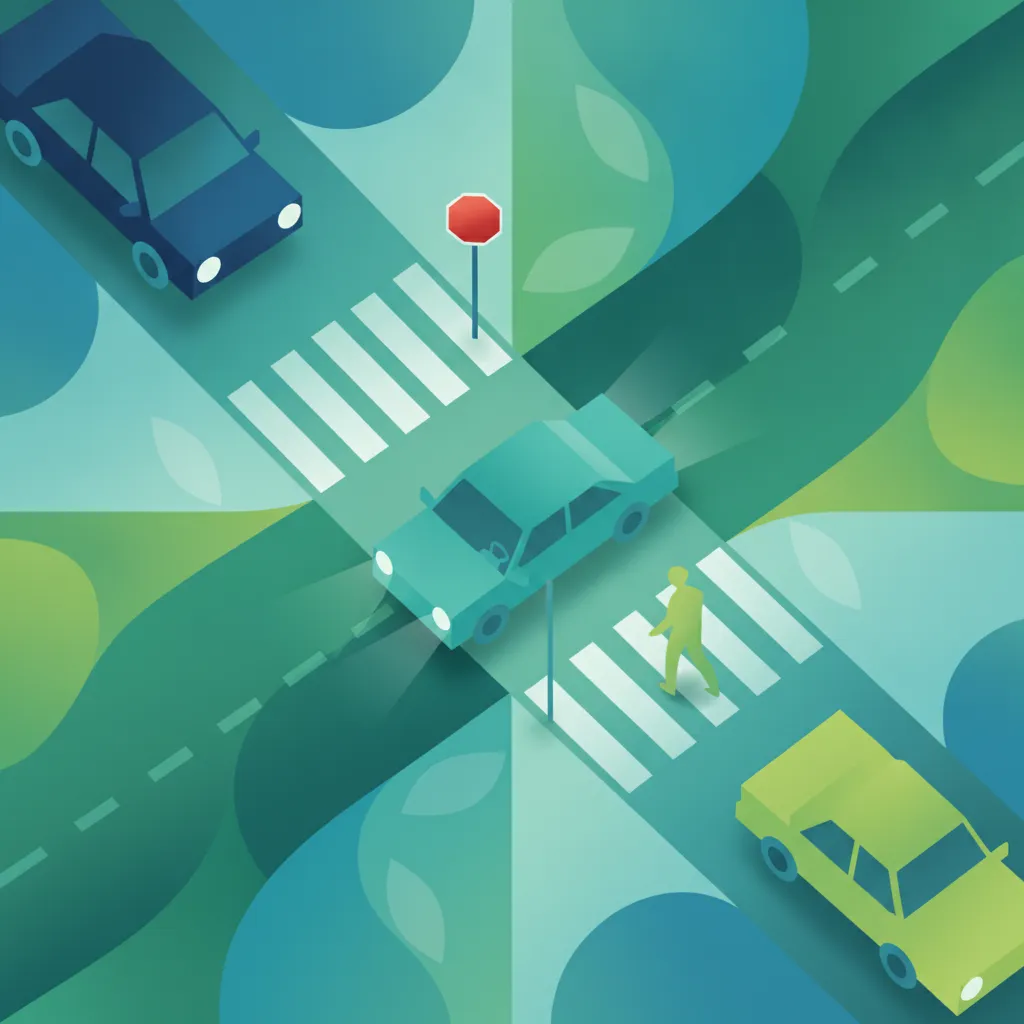
Intersections represent the highest-risk zones for moped riders due to crossing traffic paths and poor visibility. This lesson teaches you the structured approach method: slowing down, selecting the correct lane early, scanning in all directions, and yielding according to priority laws. You will learn safe techniques for executing left and right turns, maintaining stability, and continuously looking out for oncoming vehicles that might fail to yield or turn unexpectedly across your path.
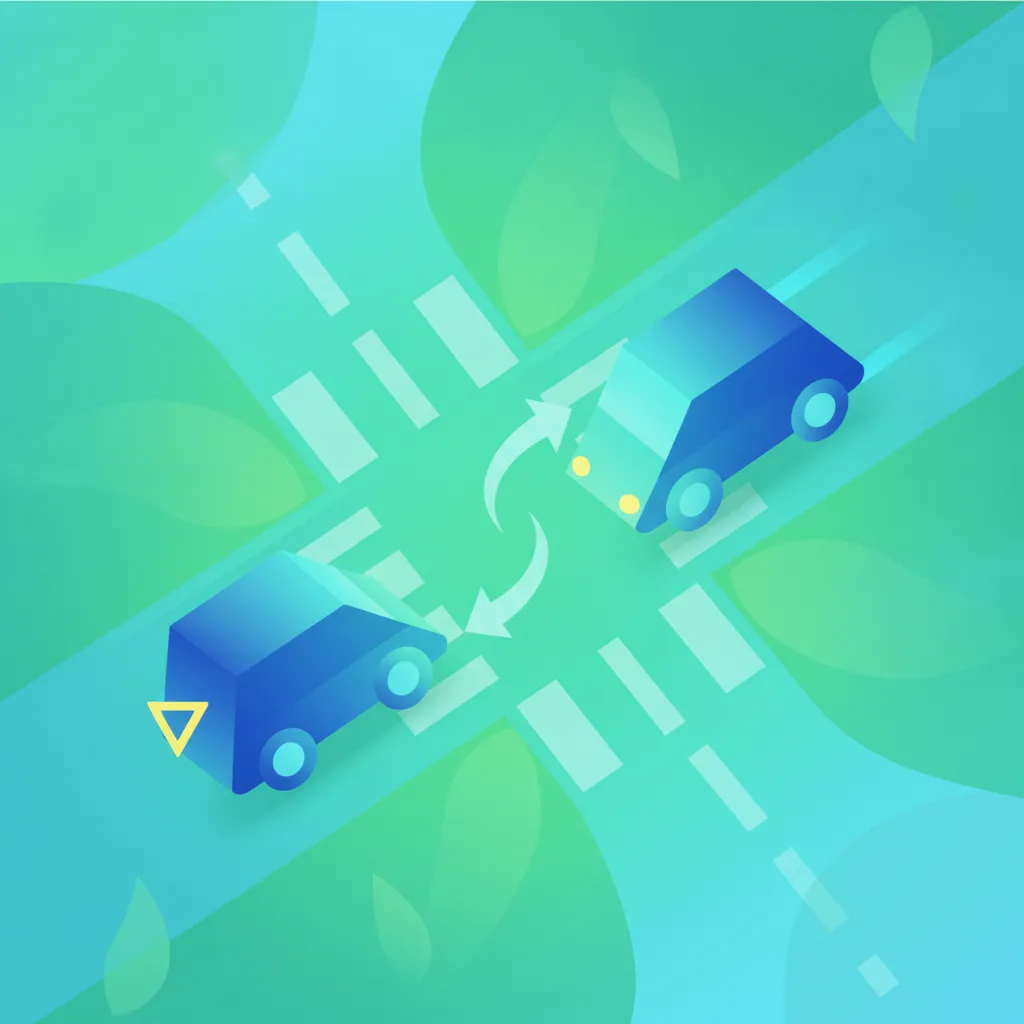
In this lesson, learners explore priority rules specific to uncontrolled intersections, where traffic signals or signs are absent. Topics include determining right-of-way based on vehicle classification, approach angle, and arrival sequence. The lesson emphasizes the importance of stopping, yielding, and assessing potential hazards before proceeding.
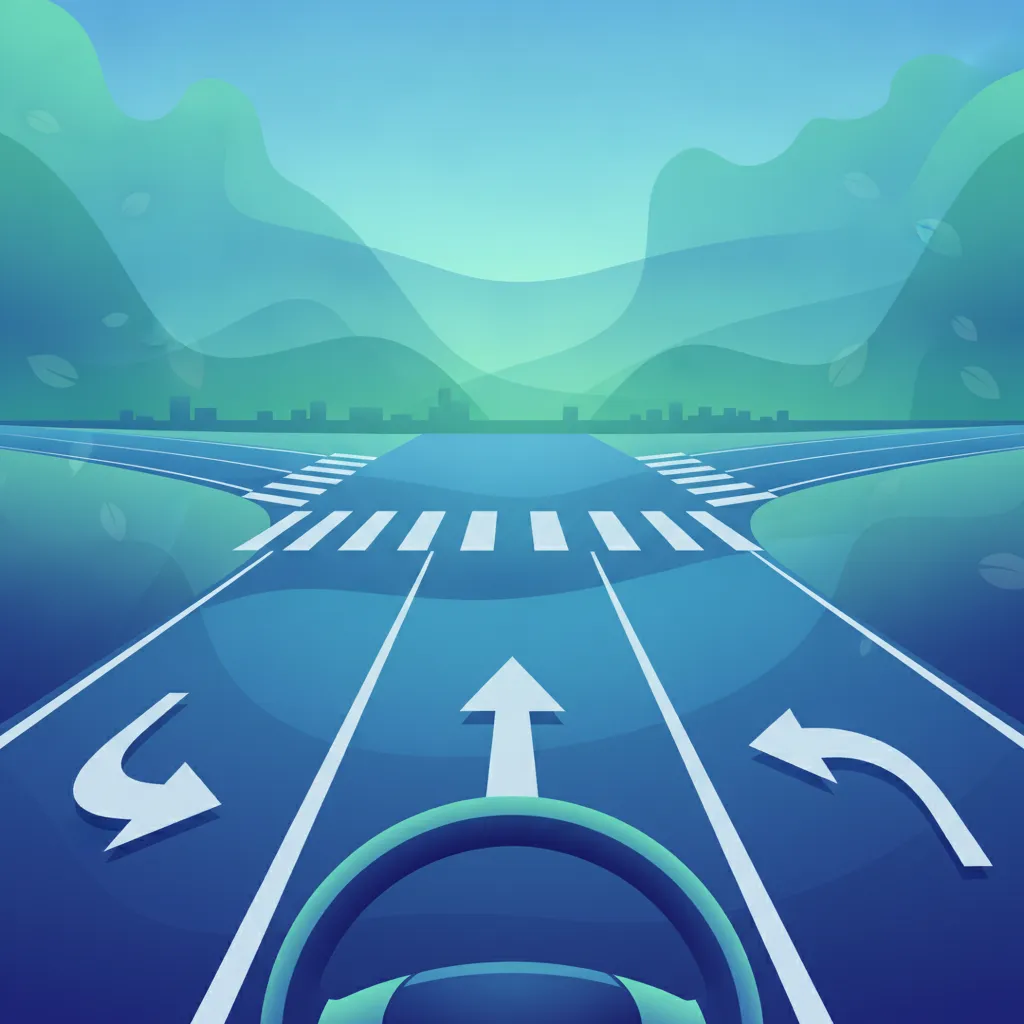
This lesson focuses on the role of directional arrows and guidance markings in indicating lane assignments and intended vehicle movements. Learners will learn to interpret turn arrows, lane-specific directions, and lane assignment at intersections and roadways. Real-world examples demonstrate how these markings aid drivers in navigating complex road networks, especially at junctions and roundabouts.
Understand how to identify and avoid common risks while operating a light vehicle in dense traffic. This module covers hazard anticipation, maintaining safe distance from larger vehicles, and riding strategies for adverse weather conditions to ensure your visibility and safety on the road.
Defensive riding is the practice of anticipating potential road conflicts and acting early to prevent accidents before they occur. This lesson teaches you how to systematically scan the road ahead for changing conditions, keep an adequate safety cushion around your moped, and pre-plan exit routes in tight spots. You will learn to assume you are invisible to other drivers and adapt your speed and road position proactively to protect yourself against sudden maneuvers.
Proper road positioning is your primary shield against being squeezed, sideswiped, or overlooked by larger motor vehicles in daily traffic. This lesson explains how to ride in the center or slightly off-center of your lane to prevent unsafe overtaking within the same lane. You will study how to identify the massive blind spots of buses and trucks, maintain appropriate following distances, and execute overtaking maneuvers with maximum safety margin and clear signal warning.
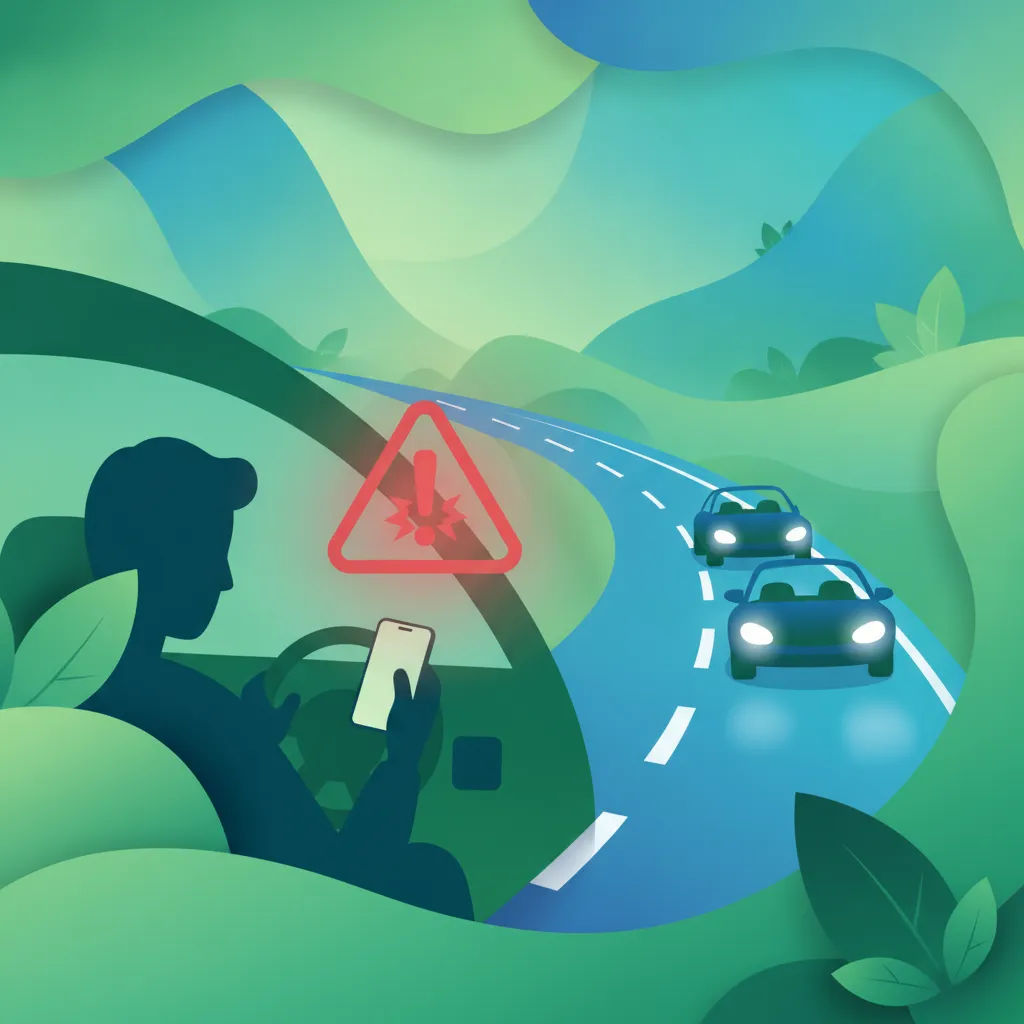
Human error and deliberate risk-taking represent the leading causes of traffic collisions among novice moped riders. This lesson analyzes the high dangers of using mobile phones while riding, weaving unsafely between lanes, and tailgating other motorists. It also covers the severe legal limits on alcohol and drug consumption under Turkish law, explaining how even minor impairments can drastically slower your hazard response times and lead to catastrophic accidents.
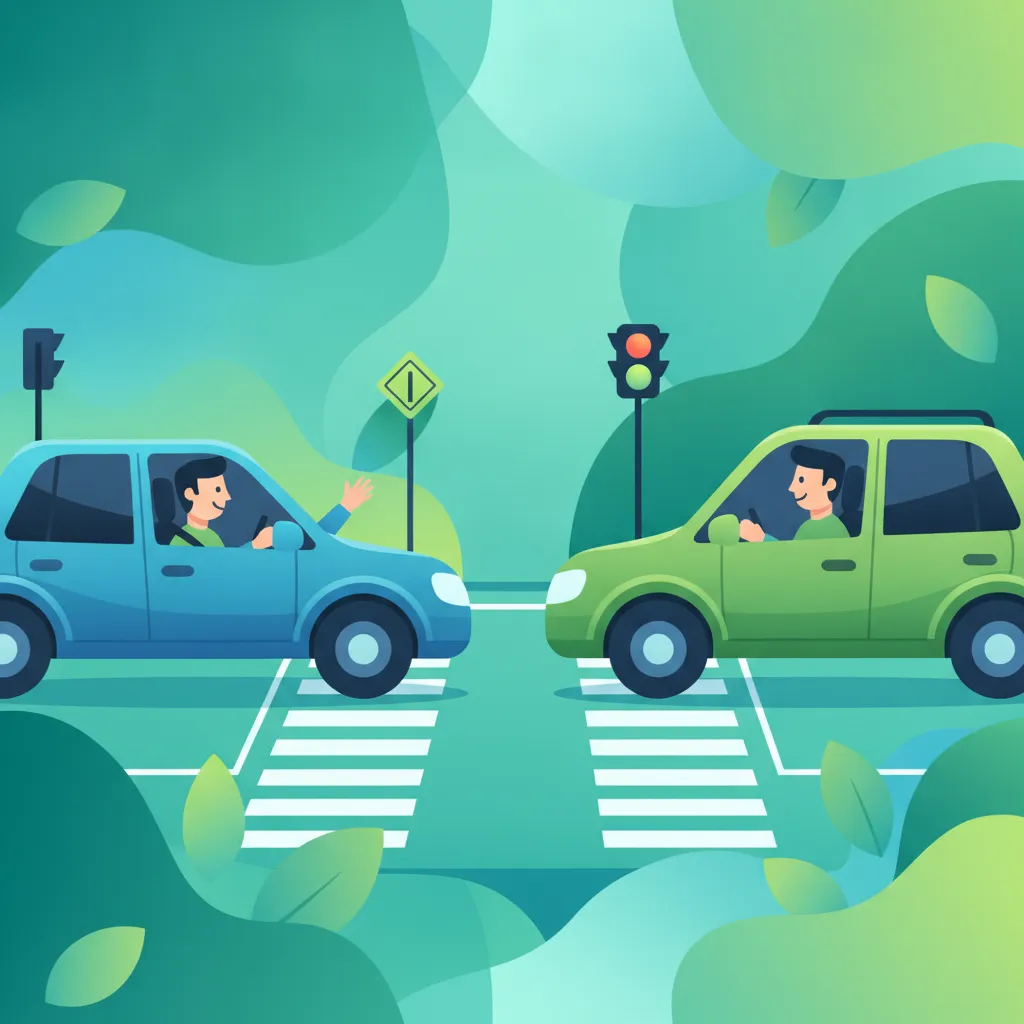
Riding an exposed lightweight vehicle in busy Turkish cities requires exceptional personal conduct, patience, and absolute control over your emotional reactions. This lesson discusses the psychological aspects of riding, teaching you how to avoid aggressive behaviors and stay calm under stressful traffic situations. It covers proper non-verbal communication, polite road sharing practices, and maintaining safe buffers from other motorists to establish a safe, predictable presence on any public street.
Low-speed riding maneuvers require precise coordination of throttle control, body balance, and subtle steering inputs to maintain vehicle stability. This lesson guides you through techniques for performing tight U-turns, navigating dense traffic queues, and parking your moped safely in designated urban areas. Additionally, you will learn to scan for immediate hazards, allowing you to execute steering corrections smoothly without risking tip-overs or collisions with low obstacles.
In this lesson, learners will discover the principles of defensive riding, focusing on hazard anticipation, maintaining safe distances, and practicing proactive avoidance techniques. It emphasizes developing a vigilant riding posture, constantly scanning the environment, and preparing to react to potential dangers from other road users, road conditions, or unexpected traffic events.
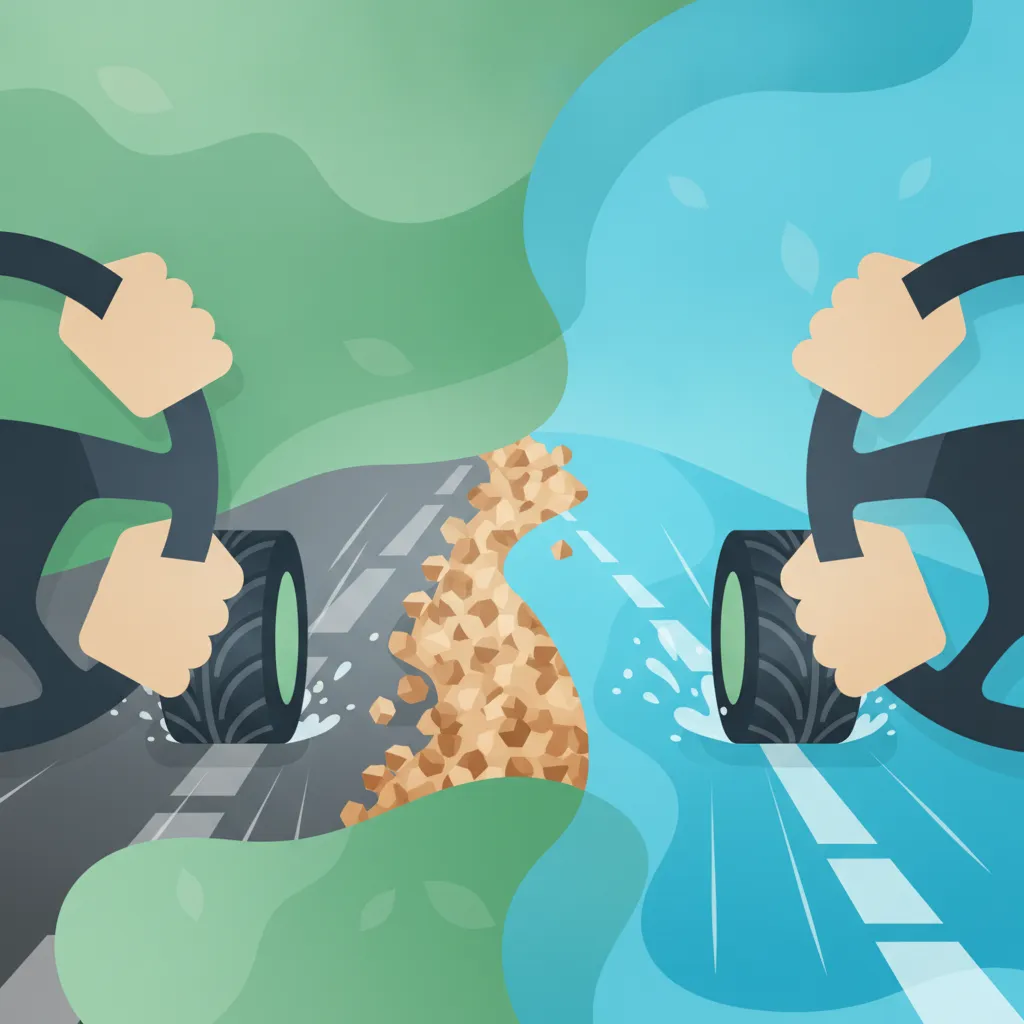
A moped's connection to the road is limited to two small tire contact patches, making tyre traction highly sensitive to surface changes. This lesson prepares you to recognize and negotiate hazardous road surfaces such as loose gravel, wet leaves, metal expansion joints, and painted lines. You will learn how to adjust your speed, maintain a vertical riding posture, and avoid sudden steering or braking inputs to prevent low-side falls when traction is severely reduced.
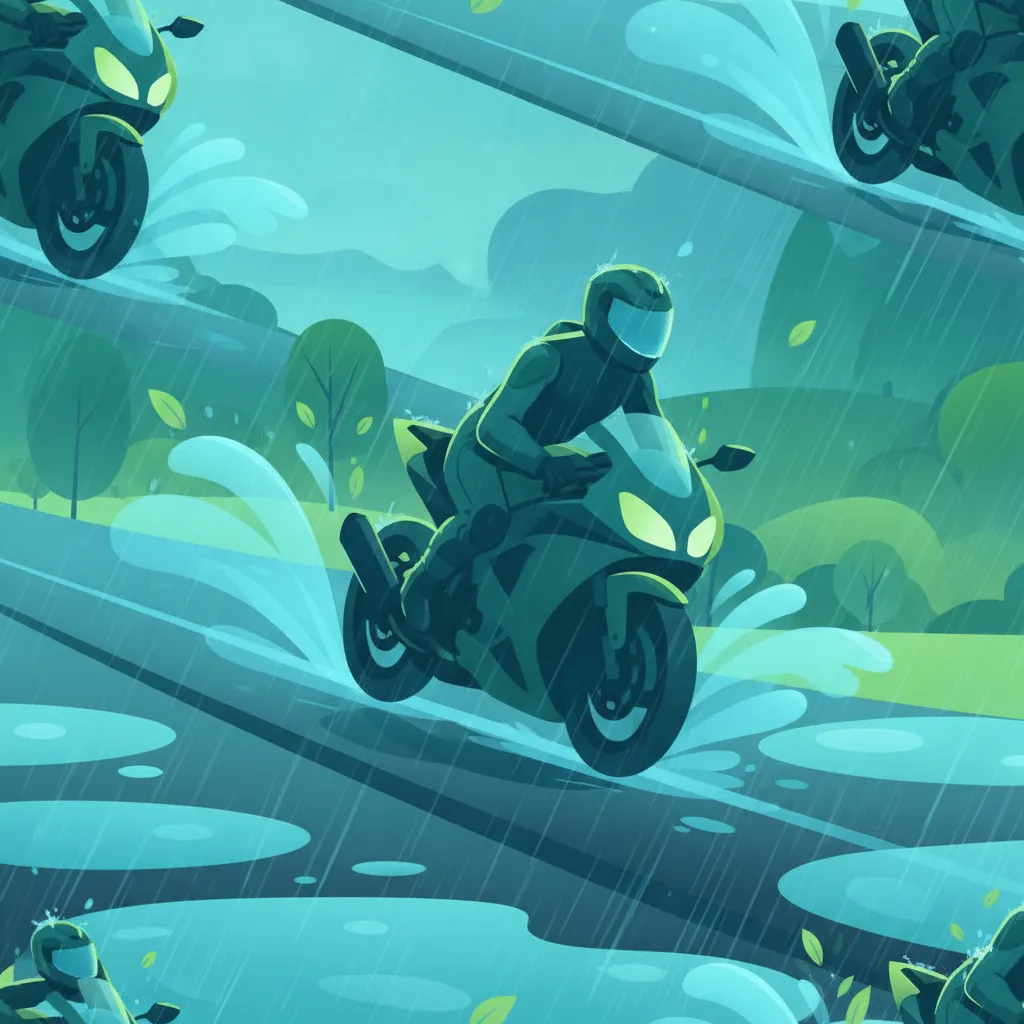
Riding in adverse weather presents significant challenges for open-vehicle operators, including reduced tire grip, obscured vision, and physical fatigue from wind or cold. This lesson covers safety techniques for navigating rainy conditions, avoiding the danger of hydroplaning, and managing strong crosswinds that can destabilize a lightweight moped. You will learn to adjust your speed, increase your following distance, and use high-visibility gear to ensure a safe journey under bad weather.
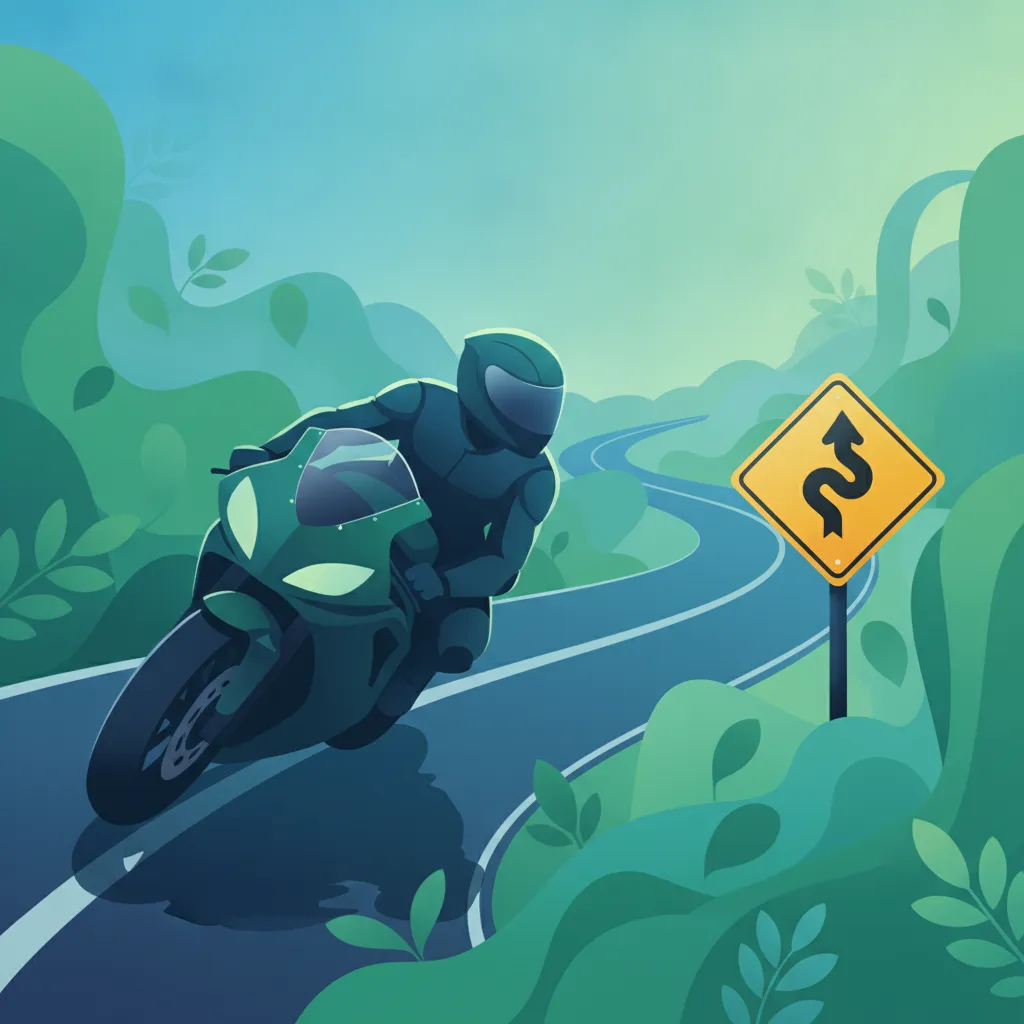
Warning signs alert road users to impending physical conditions, dangers, or layout alterations that require immediate driver attention and speed adjustment. This lesson focuses on indicators of sharp bends, narrowing paths, slippery road surfaces, upcoming pedestrian crosswalks, and school warning zones. You will study how to interpret these yellow-and-red triangular signs to safely modify your approach speed and gear your attention toward potential hazards unique to lightweight mopeds.
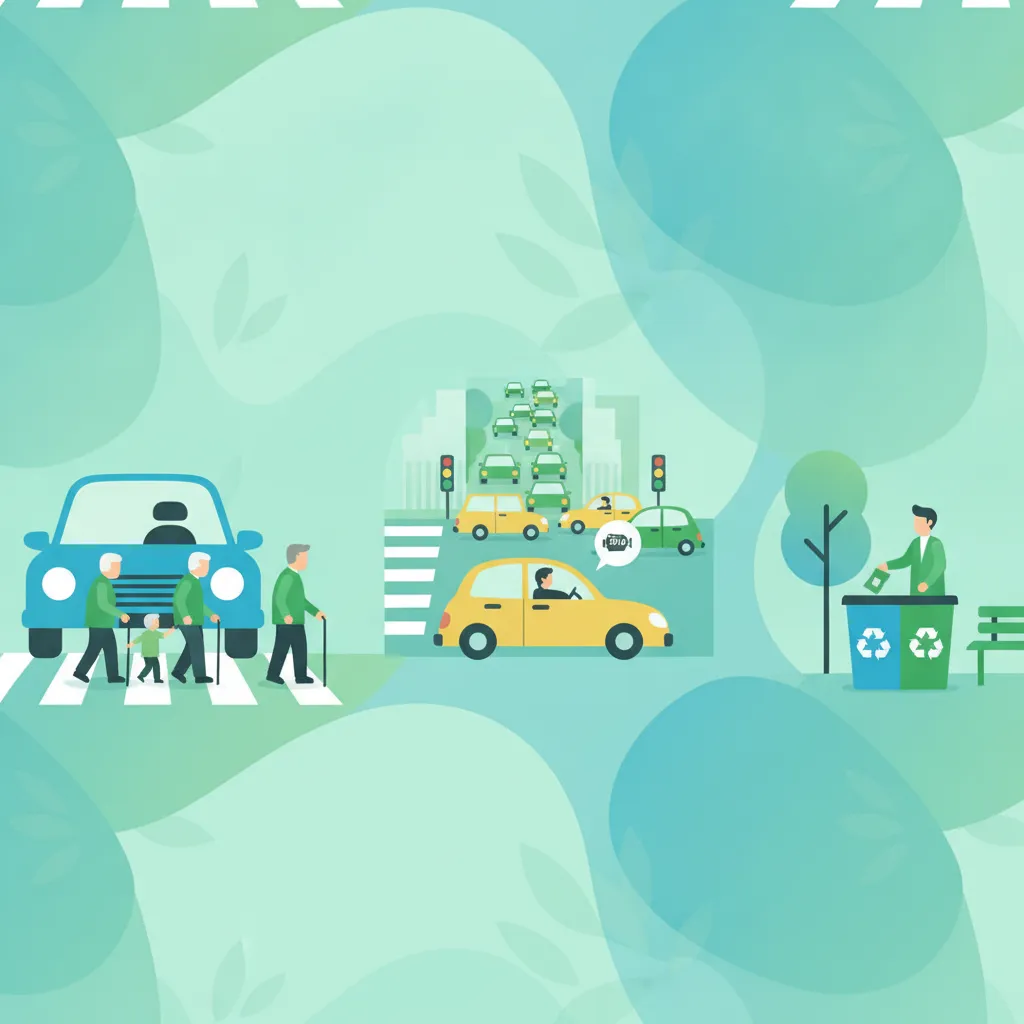
Operating a moped in highly populated Turkish urban areas requires a strong awareness of your environmental footprint and social impact. This lesson explains methods for reducing noise and exhaust emissions through timely vehicle maintenance and fuel-efficient riding techniques. You will also learn about the importance of protecting vulnerable road users like pedestrians, children, and cyclists, contributing to a cooperative, clean, and safe urban traffic ecosystem for everyone.
Find clear answers to common questions learners have about Road Markings and Lane Guidance. Learn how the lesson is structured, which driving theory objectives it supports, and how it fits into the overall learning path of units and curriculum progression in Turkey. These explanations help you understand key concepts, lesson flow, and exam focused study goals.
No, you must never cross or drive on a solid longitudinal line. They are used to separate lanes of traffic where overtaking or changing lanes is considered dangerous or prohibited by law.
These are dedicated zones. You must not drive in these lanes unless specific local signs indicate otherwise, as they are reserved for designated vehicle types to ensure traffic flow and safety.
Road markings guide your path. Always aim to keep your moped in the center of your designated lane to maximize visibility to other drivers and ensure you have sufficient clearance from lane boundaries.
Yes, the theory exam frequently includes visual questions where you must identify the correct action based on the road markings shown in the image, such as lane usage or priority at junctions.
Use our comprehensive practice search to find exactly the Turkish driving theory questions you need to master. Whether reviewing specific road signs, traffic rules, or first aid scenarios, select your perfect practice set and boost your confidence for the official ehliyet sınavı.