This lesson focuses on the specialized driving regulations and safety protocols for high-speed motorways in Turkey. You will learn the correct lane discipline and overtaking procedures required to navigate highways confidently and pass your MTSK e-sınav.
Lesson content overview
Operating a vehicle on high-speed Turkish motorways (known locally as Otoyol) demands a heightened level of alertness, precise vehicle control, and strict adherence to traffic etiquette. Because vehicles travel at significantly higher velocities on motorways compared to urban roads, the margin for error is dramatically reduced.
This lesson provides a comprehensive guide to safe highway driving, covering correct lane usage, overtaking protocols, safe following distances, emergency shoulder regulations, and the specific laws governing Turkish motorways. Mastering these principles is essential not only for passing the official Turkish Ministry of National Education (MTSK) e-sınav but also for developing lifelong defensive driving habits.
In Turkey, motorways are high-speed, multi-lane divided highways designed for rapid, long-distance transit. They are easily distinguished by green-colored directional signs, unlike the blue signs used for state roads (Devlet Yolları) and white signs for local roads.
Because motorways are designed for continuous, high-speed travel, they feature controlled access points (on-ramps and off-ramps) and eliminate at-grade intersections, traffic lights, and sharp curves. To maintain safety, all drivers must understand the specialized rules and behavioral etiquette required in this unique driving environment.
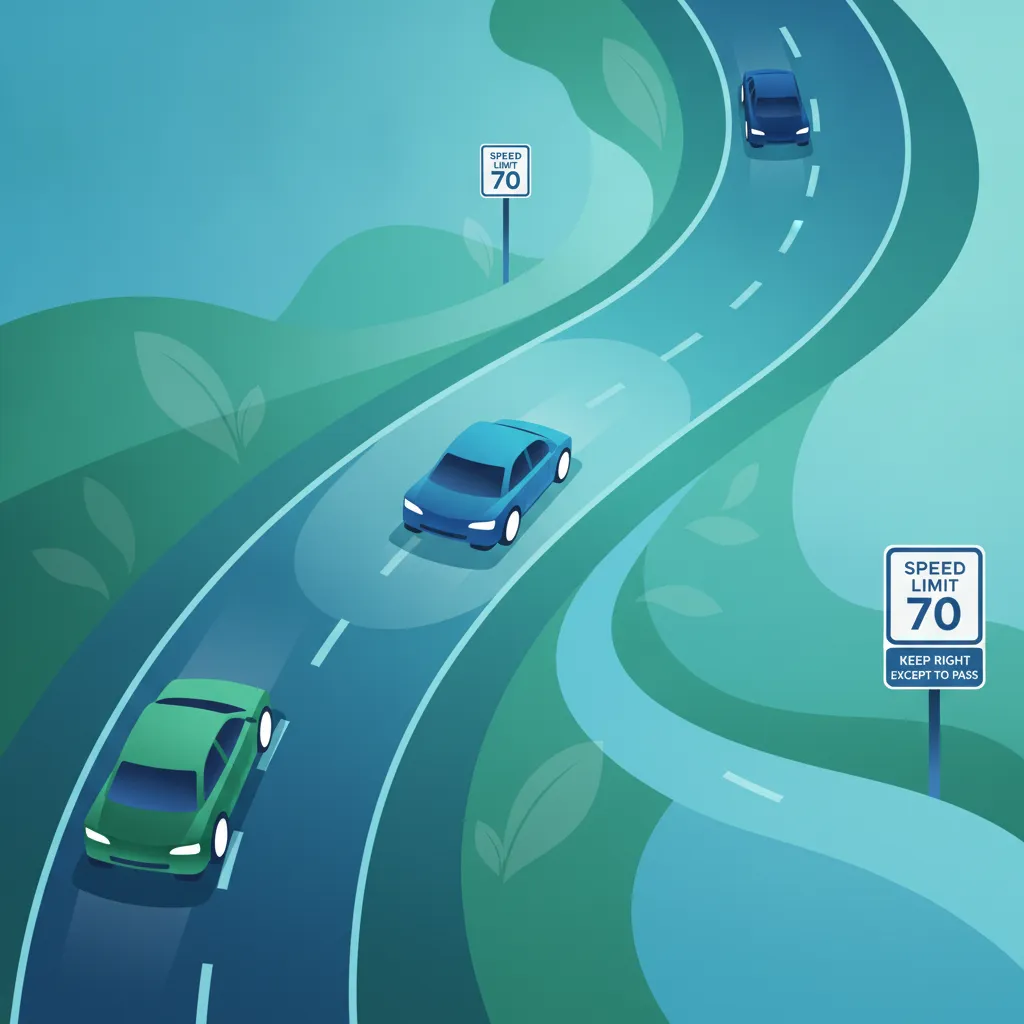
Proper lane discipline is the foundation of highway safety. It keeps traffic flowing smoothly, prevents congestion, and minimizes the need for sudden, dangerous maneuvers. Under Turkish Traffic Law (Karayolları Trafik Kanunu), traffic flows on the right side of the road, and lane usage is strictly regulated based on vehicle type and speed.
The far-right lane is reserved for slow-moving vehicles, heavy trucks (kamyon), buses (otobüs), and vehicles towing trailers. Passenger cars should use this lane when driving at lower speeds, when preparing to exit the motorway, or when traffic density requires the utilization of all lanes.
On motorways with three or more lanes in one direction, the middle lane is the primary travel lane for passenger cars driving at a steady, standard highway speed. Keeping to the middle lane allows slower vehicles to merge safely from the right and keeps the leftmost lane open for overtaking.
The leftmost lane is strictly reserved for overtaking slower vehicles. One of the most common and dangerous driving errors on Turkish motorways is continuous occupancy of the left lane.
Legal Notice: Continuous occupation of the leftmost lane (sol şerit ihlali) is illegal under Turkish traffic law and carries monetary fines and penalty points. Once you have completed an overtaking maneuver, you must safely return to the middle or right lane as soon as it is clear to do so.
Often, drivers in a hurry will tailgate or flash their high beams (selektör yapmak) excessively to force the vehicle in front out of the left lane. This practice is incredibly dangerous at high speeds. Defensive drivers should anticipate faster vehicles approaching from behind, complete their overtaking maneuver promptly, and signal to return to the right.
Overtaking on a high-speed motorway requires systematic planning, clear signaling, and precise execution. A single error during an overtake at 120 km/h can result in a catastrophic multi-vehicle collision.
Assess and Plan: Ensure there is a sufficient speed differential between your vehicle and the vehicle ahead. Look far ahead in the left lane to make sure no fast-moving vehicles are approaching from behind.
Check Mirrors and Blind Spots: Check your interior rearview mirror and your left exterior side mirror. Always perform a rapid shoulder check (kör nokta kontrolü) to verify that a vehicle is not hiding in your left-rear blind spot.
Signal Early: Activate your left turn signal at least 5 seconds before changing lanes. This alerts drivers behind and ahead of your intentions, giving them time to adjust their speed if necessary.
Manouevre Smoothly: Steer gently into the left lane. Avoid sudden, jerky steering inputs, which can destabilize your vehicle at high speeds. Accelerate within the legal limit to complete the pass quickly.
Confirm Clearance: Do not cut back into the right lane too early. Look in your interior rearview mirror; you should only return to the lane once you can see the entire front of the vehicle you just passed (including its headlights) in your mirror.
Return to the Lane: Activate your right turn signal, check your right side mirror, and transition smoothly back into the travel lane. Deactivate your turn signal once the maneuver is complete.
Under Turkish traffic regulations, overtaking a vehicle from its right side is strictly prohibited. If a slower vehicle is occupying the middle or left lane, you must not pass them on the right. This maneuver is highly unexpected by other drivers, who may decide to return to the right lane at the exact moment you attempt to pass them, resulting in a side-swipe collision.
At high speeds, the distance your vehicle travels during your reaction time is much longer than you might think. A safe following distance (takip mesafesi) provides the necessary buffer to react and stop if the vehicle in front brakes suddenly.
The safety gap maintained between your vehicle and the vehicle directly ahead. According to Turkish traffic laws, under normal conditions, this distance should be at least equal to half of your vehicle's speed in meters (e.g., at 120 km/h, the minimum following distance is 60 meters), or a minimum of a two-second time gap.
As your speed increases, the kinetic energy of your vehicle increases quadratically (). This means that doubling your speed from 60 km/h to 120 km/h does not double your stopping distance; it quadruples it.
To easily estimate a safe two-second following distance without measuring meters on the asphalt, use the local 88-89 method:
[Vehicle A] ---> 2 Seconds Gap (88-89 Method) ---> [Your Vehicle]
  (Passes Sign)                                    (Passes Sign 2 Seconds Later)
The two-second rule is the absolute minimum under dry, optimal conditions. You must increase this gap to three or four seconds (or more) under the following conditions:
The emergency lane, also known as the hard shoulder (emniyet şeridi), is the wide lane located on the far right edge of the motorway, separated from the travel lanes by a solid, continuous white line.
====================================================== (Median)
     [ Left Lane - Overtaking ]
------------------------------------------------------ (Dashed Line)
     [ Middle Lane - Standard Cruising ]
------------------------------------------------------ (Dashed Line)
     [ Right Lane - Slow Vehicles / Trucks ]
====================================================== (Solid White Line)
     [ EMNİYET ŞERİDİ (EMERGENCY LANE / SHOULDER) ]
====================================================== (Edge of Road)
The emergency lane is reserved strictly for life-and-death situations, vehicle breakdowns, and authorized emergency response vehicles (ambulances, fire engines, police, and road maintenance crews).
Using the emergency lane to bypass heavy traffic jams, park for non-emergency reasons (such as resting, looking at a map, or using a phone), or to overtake other vehicles on the right is a major traffic violation. Doing so blocks critical access for emergency services and risks high-speed rear-end collisions with stationary broken-down vehicles.
If your vehicle suffers a mechanical failure, a flat tire, or you experience a medical emergency that forces you to stop on the motorway, follow this safety protocol:
Signal and Pull Over: Activate your hazard warning lights (dörtlüler) immediately. Carefully steer your vehicle completely into the emergency lane, stopping as far to the right as possible, away from active traffic.
Apply the Handbrake and Turn Off Engine: Secure the vehicle so it cannot roll. Turn off the engine.
Deploy Warning Devices: In Turkey, you must place a reflective warning triangle (reflektör) behind your vehicle to alert oncoming drivers. On motorways, place the triangle at least 150 meters behind your vehicle. Ensure it is clearly visible.
Evacuate Passengers Safely: All occupants must exit the vehicle through the right-side doors (away from live traffic) and stand safely behind the steel crash barriers (otoyol bariyeri). Never let anyone stand between your car and the active traffic lanes.
Call for Assistance: Call the emergency services (dial 112 in Turkey) or the motorway emergency road assistance service to tow your vehicle to a safe location.
Maintaining a consistent, predictable speed is a fundamental component of highway safety. Large speed differentials between vehicles are one of the primary causes of highway collisions.
Speed limits on Turkish motorways vary depending on the type of vehicle you are operating and the specific design of the motorway. For standard Category B passenger cars, the general speed limit is 120 km/h. However, under recent regulations, certain modern toll motorways (such as the Kuzey Marmara Otoyolu, İstanbul-İzmir Otoyolu, and Ankara-Niğde Otoyolu) allow speed limits up to 130 km/h or 140 km/h, as clearly indicated by digital or physical speed signs.
To prevent dangerously slow-moving vehicles from obstructing traffic and creating rear-end hazards, motorways have a mandatory minimum speed limit. On Turkish motorways, the minimum speed limit for any vehicle is 40 km/h. Vehicles that cannot safely maintain this speed, such as agricultural tractors, are prohibited from entering the motorway entirely.
Avoid abrupt acceleration or braking. Frequent speed changes cause a "wave effect" that travels backward through traffic, resulting in congestion and sudden pile-ups. Utilize your vehicle's cruise control (hız sabitleyici) on long, open stretches to maintain a constant speed, improve fuel efficiency, and stay within legal limits.
High-speed highway driving becomes significantly more hazardous when environmental conditions deteriorate. Drivers must proactively adjust their habits to manage these risks.
When water accumulates on the motorway surface, tires can lose direct contact with the asphalt and slide on a thin film of water. This dangerous phenomenon is known as aquaplaning (suda kızaklama).
To prevent aquaplaning:
If you encounter dense fog on a Turkish motorway, you must reduce your speed immediately to match your stopping distance to your visible range.
Motorways are not always fully illuminated by streetlights, making proper headlight use essential.
To prepare for your Turkish driving license theory exam and ensure your safety on the road, review these common highway driving mistakes and their correct legal solutions.
Mastering highway etiquette is a vital responsibility for every Category B license holder in Turkey. By memorizing these core rules, you protect yourself, your passengers, and your fellow road users:
Explore all units and lessons included in this driving theory course.
Lesson content overview
Explore all units and lessons included in this driving theory course.
Explore search topics learners often look for when studying Highway Etiquette and Safety. These topics reflect common questions about road rules, driving situations, safety guidance, and lesson level theory preparation for learners in Turkey.
Browse additional driving theory lessons that cover connected traffic rules, road signs, and common driving situations related to this topic. Improve your understanding of how different rules interact across everyday traffic scenarios.
Learn the legal requirements for overtaking on Turkish motorways, including proper signaling techniques, blind spot management, and the rules prohibiting overtaking on the right. Understand how to perform safe lane changes while maintaining constant speed and flow in accordance with Turkish traffic legislation and defensive driving principles.
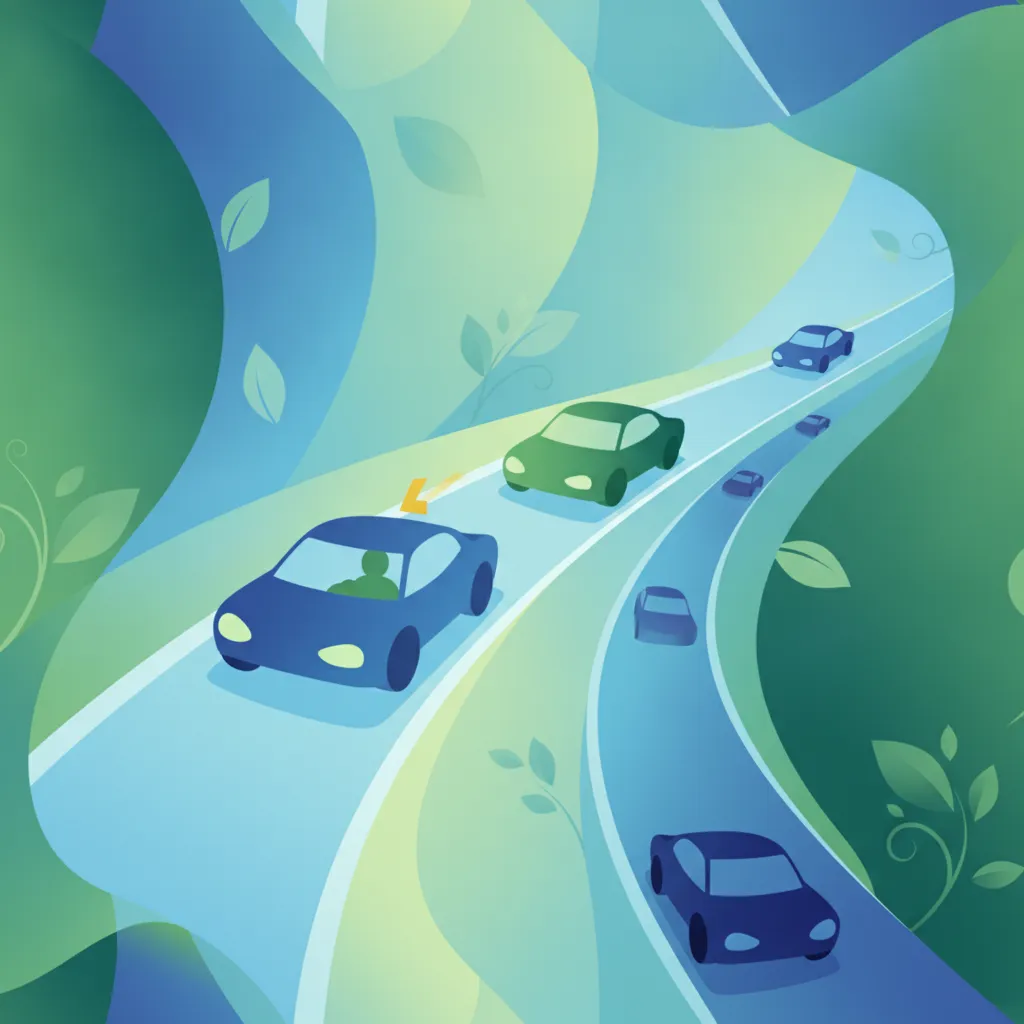
This lesson outlines the precise legal and safety procedures for overtaking slower vehicles on two-lane and multi-lane roads. It details when overtaking is strictly prohibited by signs or solid road lines, and how to calculate passing distances. Drivers will learn how to communicate their intentions using indicators and pass other vehicles safely.

In this lesson, learners will gain comprehensive knowledge of safe overtaking maneuvers during riding, emphasizing the importance of assessing traffic flow, checking blind spots, and signaling intentions. The content covers overtaking strategies on both straight roads and curves, considering visibility and speed differentials. By mastering these techniques, motorcyclists can execute overtaking safely.
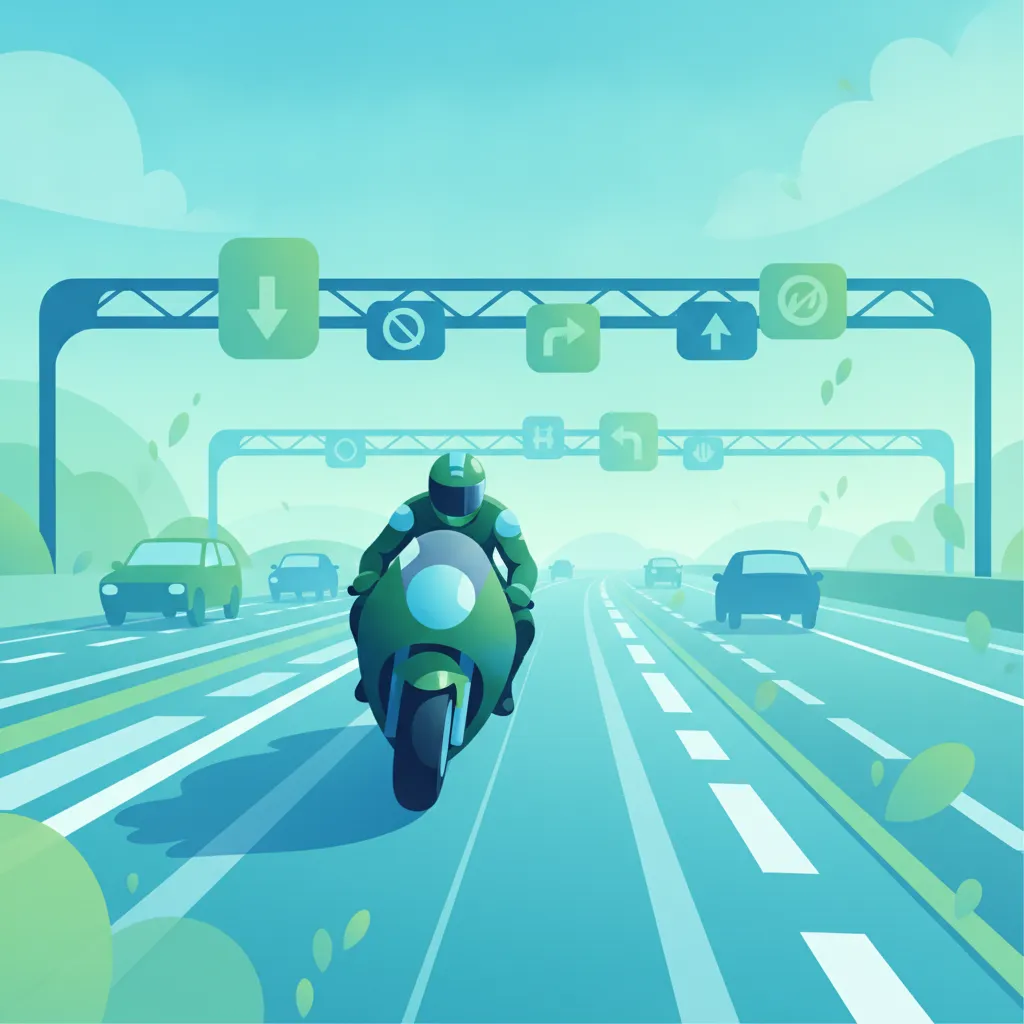
In this lesson, learners will focus on the specific considerations and safety practices required when riding motorcycles on high-speed roads and motorways. Topics covered include maintaining appropriate lane discipline, safe overtaking at high speeds, dealing with increased wind resistance, and the importance of accurate speed control and appropriate following distances on faster roadways.
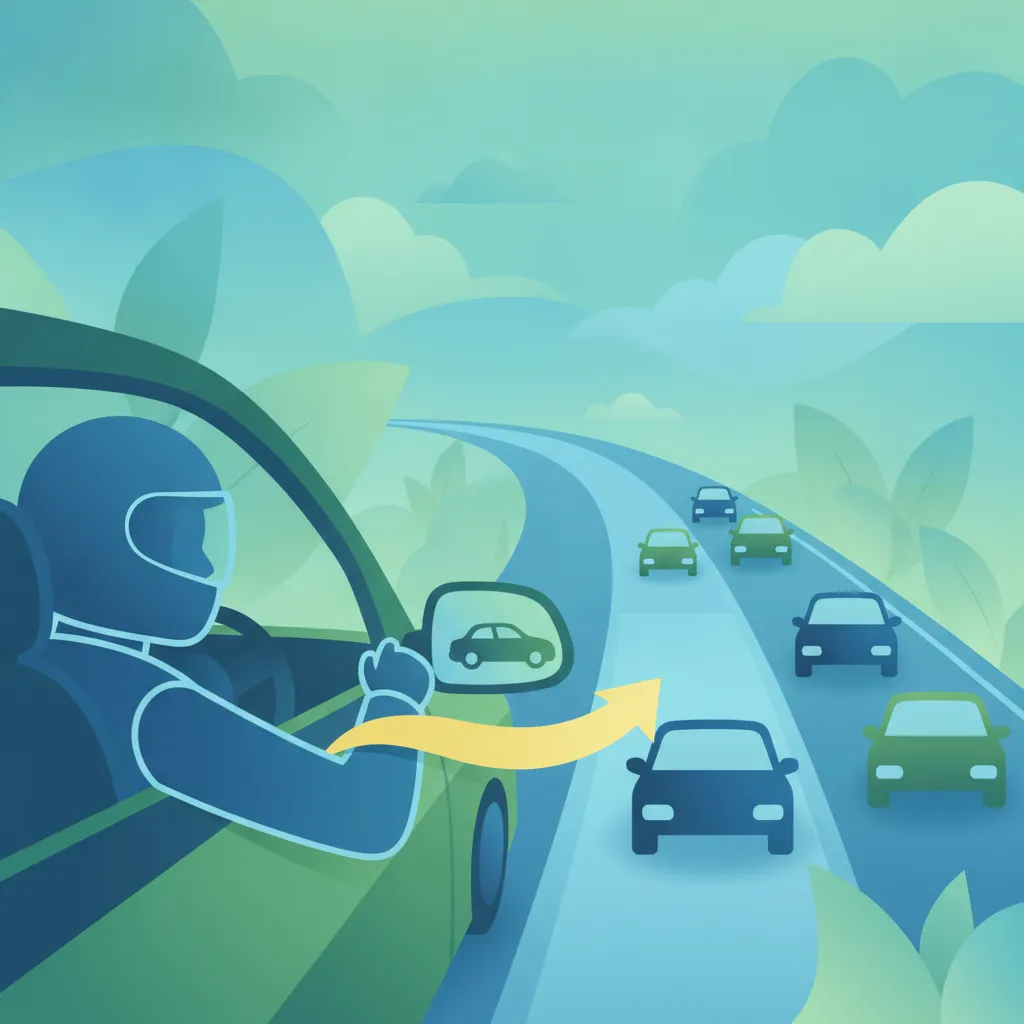
This lesson details the techniques for merging onto busy expressways and executing safe lane changes in urban traffic conditions. It explains how to match the speed of highway traffic in the acceleration lane and select safe gaps for merging. Drivers will learn how to eliminate blind spots and signal early to maintain smooth traffic flow.

This lesson focuses on the unique requirements and best practices for operating passenger vehicles on highways and expressways. Topics include maintaining appropriate speed, adhering to lane discipline, executing safe overtaking maneuvers, and managing merges and exits. Emphasis is placed on ensuring a smooth ride for passengers while integrating safely with faster-moving traffic.

This lesson examines lane division and proper lane usage on multi-lane roads and highways. Learners will understand the purpose of lane markings in guiding drivers to maintain appropriate lane discipline. Topics include correct lane selection for different vehicle types, overtaking procedures, and lane-changing techniques. Real-world examples illustrate the importance of respecting lane usage rules.
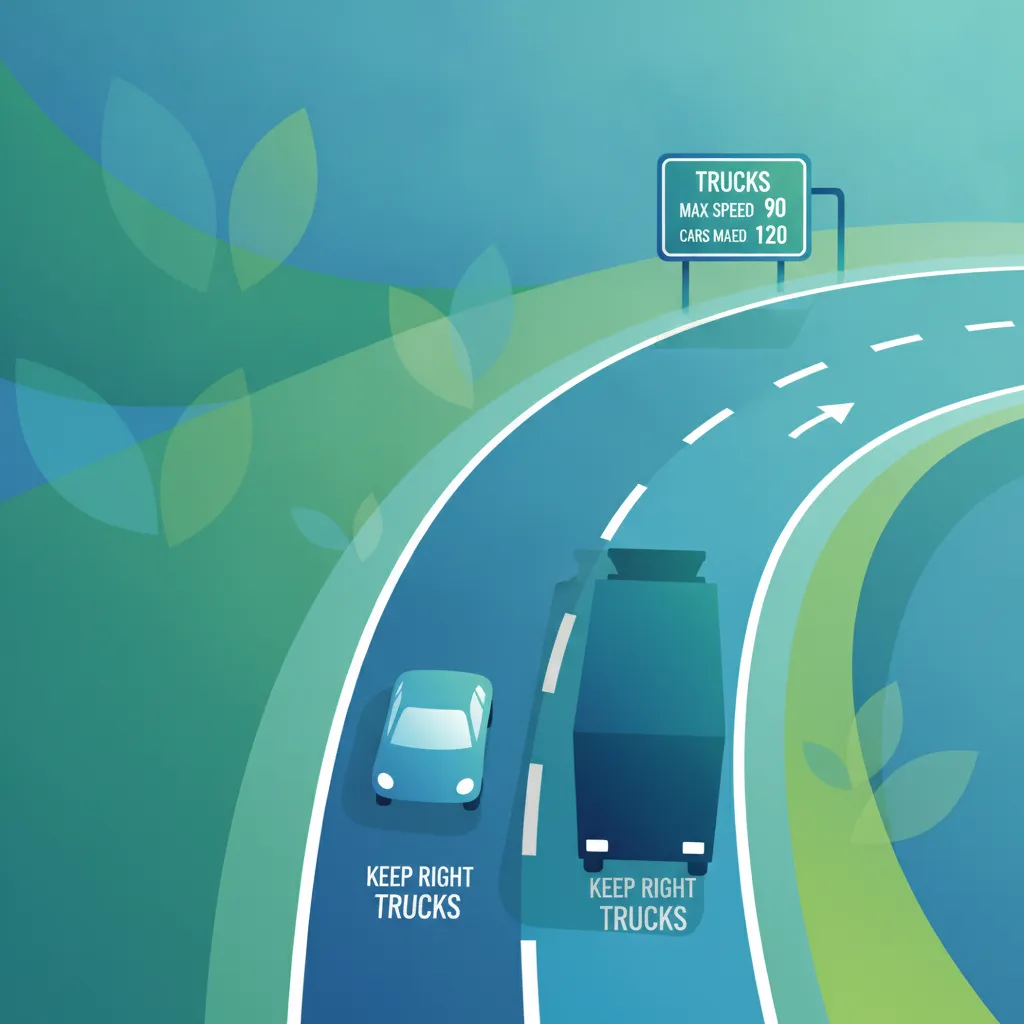
This lesson addresses the specific considerations for goods vehicle operation on highways and expressways, covering speed limits, lane discipline, safe merging, and overtaking. Learners will learn how to adapt to traffic flow, manage heavy vehicle dynamics at higher speeds, and ensure safe operation. The lesson emphasizes the importance of vigilance and proper lane usage to prevent accidents.
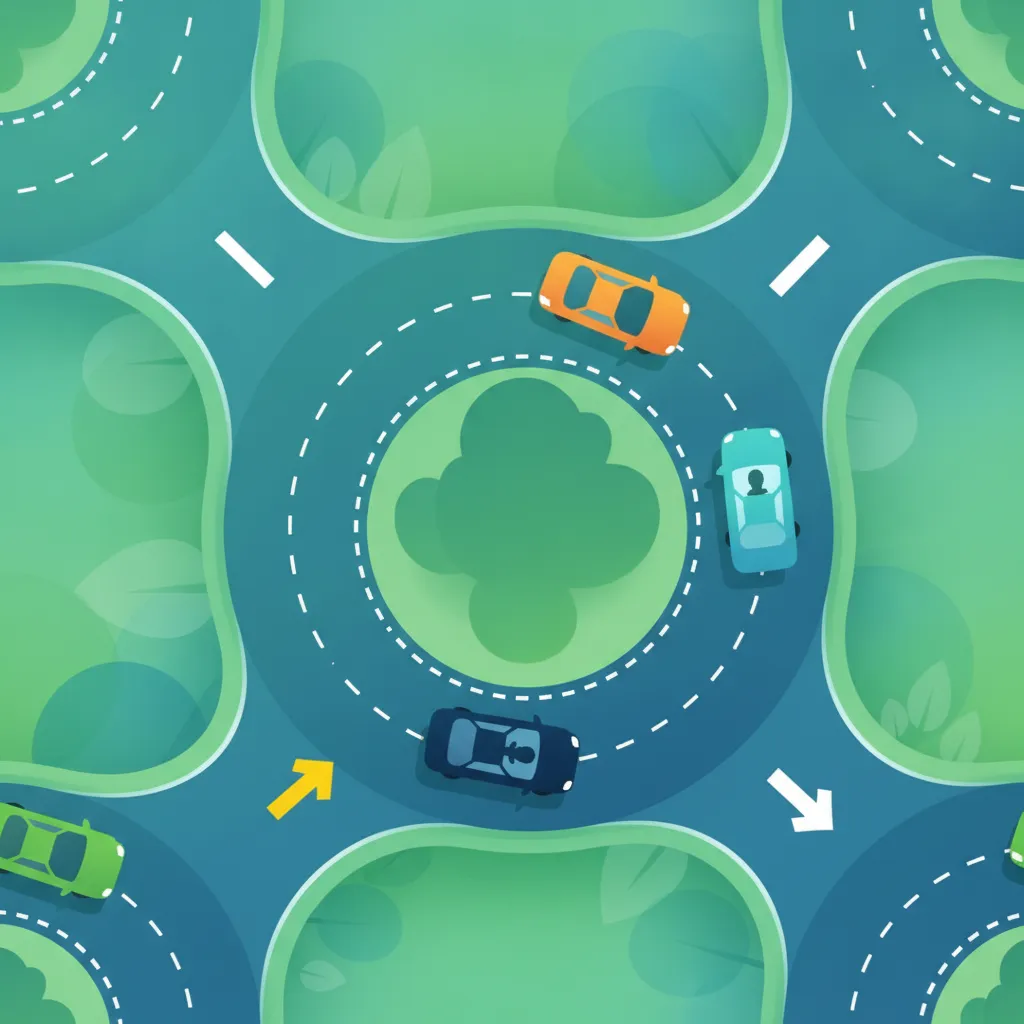
This lesson delves into the specific challenges and procedures associated with navigating roundabouts on a motorcycle. It outlines the importance of approaching at a safe speed, selecting the correct lane, and yielding to vehicles already within the roundabout. The content also covers the proper use of signals when exiting and emphasizes the need for heightened awareness of blind spots, especially when larger vehicles are present.
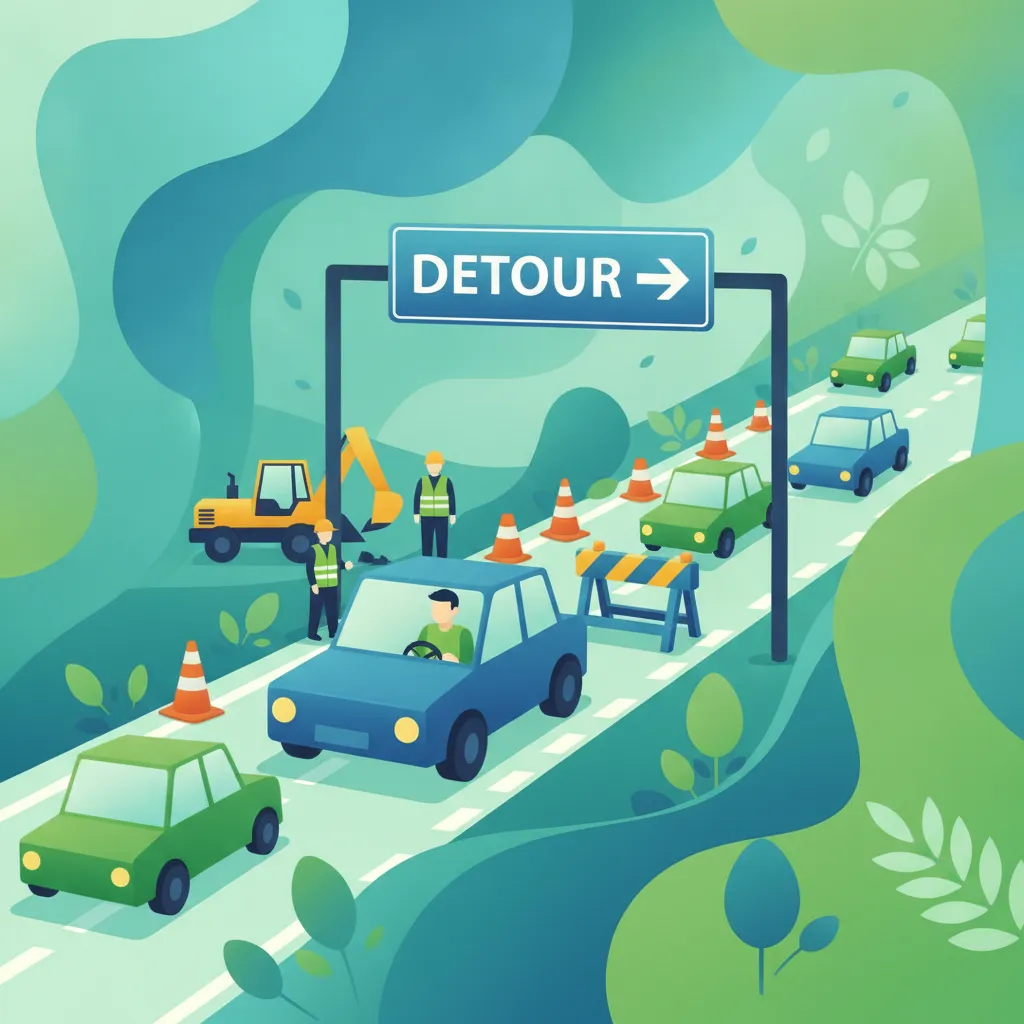
This lesson guides motorists on how to safely navigate active roadwork zones, detours, and temporary lane configurations. It details the meaning of construction signs, temporary speed reductions, and the legal requirement to protect highway workers. Drivers will learn to expect sudden stops and maintain slow, steady speeds through work areas.
Roundabouts require a clear understanding of yield regulations and precise signaling to avoid conflicts with larger vehicles. This lesson details the legal requirements under Turkish road rules, which demand that entering vehicles yield to traffic already circulating inside the roundabout. You will learn how to select the appropriate lane upon entry, maintain a steady speed, signal your exit intentions clearly with your indicators, and remain alert to drivers who cut across lanes.
Discover the essential safety steps for handling vehicle breakdowns on high-speed motorways. This guide explains how to properly utilize the emergency lane, deploy warning triangles at correct distances, and ensure passenger safety while waiting for assistance, ensuring compliance with road safety protocols required for the Turkish driving theory exam.

Learners will examine common vehicle emergencies that may occur while transporting passengers, such as fires, tire blowouts, or brake failures. The lesson emphasizes quick recognition of warning signs and outlines step-by-step emergency protocols to ensure the safety of passengers and other road users. Strategies for effective incident response and communication are also covered.
This lesson focuses on effectively managing road closures and detours that affect goods vehicle routes. Learners will explore strategies for obtaining real-time information, updating navigation systems, and planning alternate routes to maintain efficiency and compliance. Emphasis is placed on safety considerations, communication with dispatch centers, and adhering to traffic management.
Find clear answers to common questions learners have about Highway Etiquette and Safety. Learn how the lesson is structured, which driving theory objectives it supports, and how it fits into the overall learning path of units and curriculum progression in Turkey. These explanations help you understand key concepts, lesson flow, and exam focused study goals.
No, the emergency lane (hard shoulder) is strictly reserved for vehicle breakdowns or emergency service access. Using it to bypass traffic is a serious violation that carries heavy penalties and is a common trap question in the theory exam.
You must always overtake from the left lane. After completing the overtaking maneuver, you should return to the right lane when it is safe to do so, avoiding unnecessary 'lane hogging' in the fast lane.
On motorways, you must maintain a greater distance than in urban areas. A common rule of thumb is the 2-second rule, which should be increased in poor weather or heavy traffic conditions to allow for safe stopping distances.
Yes, motorways often have minimum speed requirements to ensure the safety of all road users. Vehicles that cannot reach these minimum speeds, such as certain slow-moving agricultural machinery, are prohibited from using motorways.
Use our comprehensive practice search to find exactly the Turkish driving theory questions you need to master. Whether reviewing specific road signs, traffic rules, or first aid scenarios, select your perfect practice set and boost your confidence for the official ehliyet sınavı.