
This lesson details the specific operational requirements for driving goods vehicles on Turkish highways and expressways. You will learn to manage heavy vehicle dynamics, lane discipline, and safe merging to ensure compliance with professional regulations and exam standards.
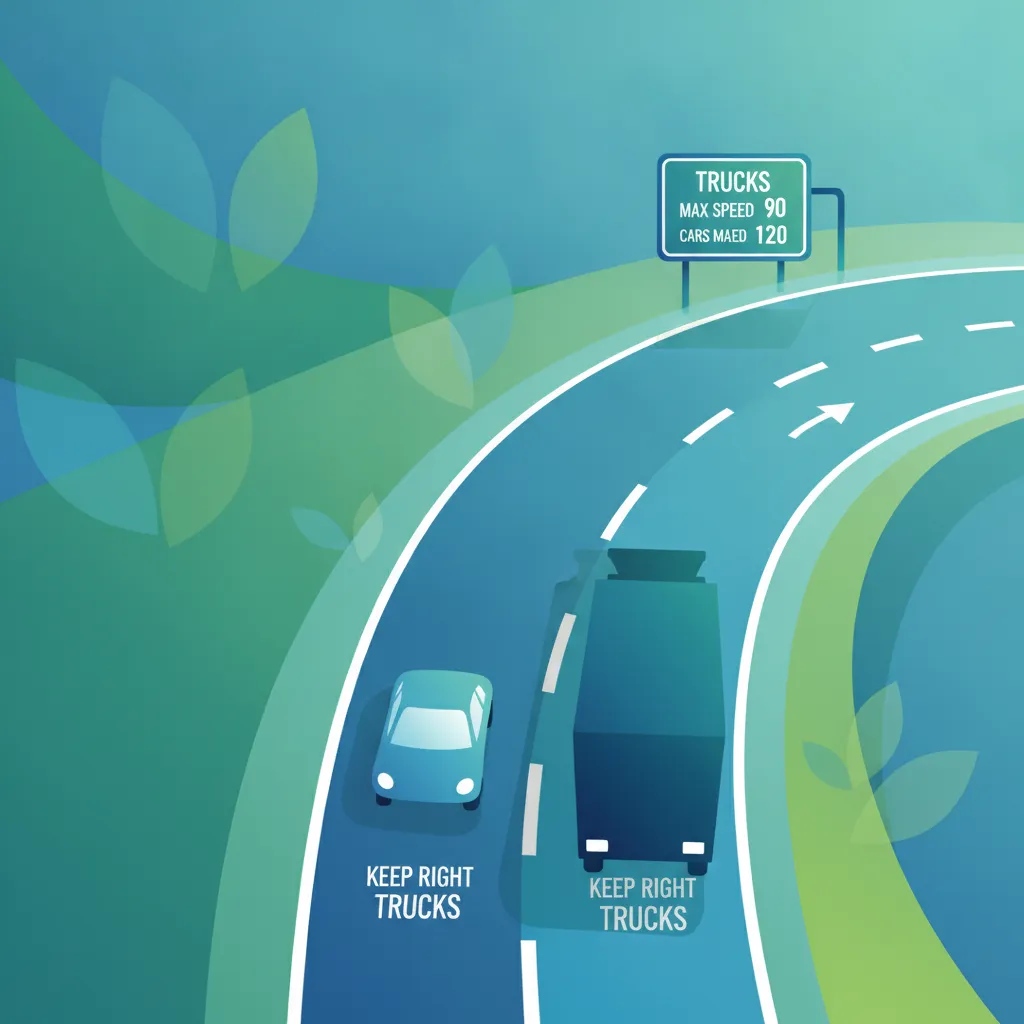
Lesson content overview
Operating a heavy goods vehicle on high-speed, controlled-access motorways (otoyol) and dual carriageways (bölünmüş yol) in Turkey requires advanced driving skills, deep knowledge of vehicle dynamics, and strict adherence to the Turkish Highway Traffic Regulation (Karayolları Trafik Yönetmeliği). High-speed environments leave zero margin for error. A fully loaded truck or tractor-trailer combination (Class C, C1, CE, or C1E) possesses immense kinetic energy, which drastically increases stopping distances and alters maneuverability.
This lesson details the safe operation of goods vehicles on highways and expressways. It covers speed limits, lane discipline, merging and exiting protocols, overtaking limitations, and handling environmental factors such as crosswinds and reduced visibility.
Speed management on highways is not just about avoiding penalties; it is a critical safety practice dictated by physics. The momentum of a vehicle is the product of its mass and velocity (). When speed increases, the kinetic energy () increases quadratically, meaning that doubling your speed quadruples the energy that must be dissipated during braking.
Under the Turkish Highway Traffic Regulation, speed limits are strictly differentiated by vehicle class, road type, and load.
Regardless of the legal limit, your speed must never exceed what is safe for your current gross vehicle weight (GVW), the stability of your cargo, and prevailing weather conditions.
Stopping distance consists of two parts: reaction distance (the distance traveled while the driver perceives a hazard and applies the brakes) and braking distance (the physical distance the vehicle travels after the brakes are engaged).
The distance a vehicle travels from the moment its brakes are fully applied until it comes to a complete stop. For heavy goods vehicles, this is heavily influenced by total mass, brake temperature, road gradient, and tyre grip.
At 80 km/h, a typical passenger car might stop within 50 to 60 metres on dry asphalt. A fully loaded C or CE class commercial vehicle combination can require up to 100 metres or more under the same conditions due to its high mass. If the road is wet or icy, this distance can easily double or triple.
Proper lane discipline prevents traffic congestion and minimizes the risk of side-swipe and rear-end collisions. Large goods vehicles occupy a substantial portion of the lane width, leaving less lateral safety clearance.
Before changing lanes on a motorway or dual carriageway, you must establish a safe gap.
Turkish highway regulations prohibit lane changes until a minimum gap of 3 seconds behind the preceding vehicle in your destination lane is established.
This 3-second gap ensures that if the vehicle ahead in the target lane brakes suddenly, you still have an adequate reaction zone.
Entering a high-speed motorway from an on-ramp is one of the most demanding maneuvers for a heavy goods vehicle. Because of their lower power-to-weight ratio, commercial vehicles accelerate slowly.
Utilise the Full Length of the Acceleration Lane (Katılım Şeridi): Do not merge immediately at the start of the ramp. Use the acceleration lane to build up as much speed as possible to match the flow of the highway traffic (aiming for the minimum speed of at least 50–60 km/h before merging, if traffic permits).
Continuous Mirror Monitoring: Monitor your left-side mirrors and blind-spot mirrors. Heavy vehicles have extensive blind spots (kör noktalar) along their left flank; check these continuously.
Identify a Safe Gap: Look for a large opening in the rightmost lane. Keep in mind that passenger cars approach rapidly from behind. Use a reference vehicle to judge the speed of the oncoming traffic flow.
Signal Early and Deliberately: Activate your left indicator early to alert drivers on the main carriage of your intention to merge. This gives them time to adjust their speed or change lanes to accommodate you.
Yield and Integrate Smoothly: Yield the right-of-way to vehicles already on the motorway. Merge smoothly once a safe gap is secured, avoiding sudden steering inputs that could destabilize your cargo.
Overtaking on a highway with a heavy goods vehicle must be executed with extreme caution. Due to their length, overtaking takes a long time and covers a significant distance.
Under the Turkish Highway Traffic Regulation, certain speed-differential conditions make overtaking illegal:
Because of their immense weight, heavy goods vehicles cannot slow down quickly without risking brake fade or shifting cargo. Planning your exit well in advance is critical.
A professional driver must understand how their vehicle’s physical presence and aerodynamics affect the surrounding traffic environment.
High-sided vehicles create significant aerodynamic disturbances at high speeds:
When crossing exposed viaducts in high winds, reduce your speed preemptively, keep both hands firmly on the steering wheel, and monitor the behavior of vehicles ahead of you.
High-speed roads become exceptionally hazardous in adverse weather. Professional goods vehicle drivers must adapt their speed and driving strategies immediately when conditions deteriorate.
Understanding and obeying highway signage is essential for legal compliance and route planning, helping to prevent bridge strikes or illegal entry into restricted zones.
Drivers must comply with all regulatory highway signs immediately. This includes variable speed limit signs in tunnel areas (such as the Selatin or Eurasia tunnels) and weight-checking station instructions (Kantar/Ulaştırma Denetim İstasyonu).
You are driving a Class CE articulated vehicle combination at 82 km/h on a two-lane dual carriageway. Ahead of you, another heavy truck is traveling at approximately 80 km/h. The road is clear, but you notice in your mirrors that several passenger cars are approaching rapidly in the left lane, traveling at approximately 120 km/h.
Analysis of Correct Action: Do not attempt to overtake. Given the tiny speed differential (2 km/h), completing the overtaking maneuver would take several minutes and cover over a kilometer. This would block the overtaking lane, forcing fast-approaching passenger vehicles to brake abruptly. This violates safe speed-differential principles and creates a high-risk traffic bottleneck. You should maintain your position in the right lane and preserve a safe following distance.
This lesson covers the critical regulations and techniques for operating heavy goods vehicles on Turkish highways and expressways, with particular focus on speed management (85 km/h maximum for vehicles over 3.5 tonnes), strict lane discipline requiring right-lane travel except for overtaking, and the physics-based rationale for extended stopping distances reaching 100 metres or more at highway speeds. Key procedures include a five-step merging process using the full acceleration lane, the 3-second gap requirement before lane changes, and proper use of deceleration lanes for safe exiting. The lesson also addresses overtaking restrictions where minimal speed differentials make maneuvers illegal, aerodynamic effects on surrounding traffic, and weather-specific hazards on high-altitude Turkish routes including fog, black ice, and crosswinds on viaducts. Drivers must recognize relevant road signs (B43 overtaking prohibition for goods vehicles, B44 motorway end) and maintain headlight use at all times on controlled-access roads.
A short set of high-value points that capture the most important learning from this lesson.
Heavy goods vehicles on Turkish motorways (Otoyol) and dual carriageways (Bölünmüş Yol) are legally limited to 85 km/h, regardless of posted higher limits.
Stopping distance for a fully loaded C or CE class vehicle at 80 km/h can exceed 100 metres on dry asphalt—quadrupling kinetic energy requires far greater braking than passenger cars.
Heavy vehicles must always travel in the rightmost lane; left-lane cruising on three-or-more-lane motorways is a severe violation that creates dangerous under-running risks.
The 3-second gap rule applies before any lane change on Turkish highways—insufficient gaps are a major cause of side-swipe collisions.
Never attempt to overtake when the speed differential is minimal (under 10 km/h), as this causes 'elephant racing' and creates rolling bottlenecks on the overtaking lane.
Explore all units and lessons included in this driving theory course.
Motorway minimum speed is 30 km/h when overtaking and 70 km/h when stationary on active lanes; dual carriageway minimums are 30 km/h and 60 km/h respectively.
Use the full acceleration lane (katılım şeridi) to reach at least 50-60 km/h before merging, and use the deceleration lane (ayrılma şeridi) to slow down when exiting—never brake on main carriageway lanes.
Auxiliary braking systems (Egzoz Freni/Rötar) preserve service brakes during deceleration and are essential for managing heavy vehicle weight on exit ramps.
Headlights must be on at all times on Turkish motorways and dual carriageways regardless of daylight conditions to increase visibility.
Crosswinds on viaducts (Bolu Mountain, Mediterranean routes) can destabilize high-sided box trailers; reduce speed preemptively and maintain firm steering control.
Assuming heavy vehicles can cruise in the left lane to maintain their speed—this violates lane discipline rules and increases rear-end collision risk from faster traffic.
Attempting to overtake on highways when the speed difference is only 2-10 km/h, which blocks the overtaking lane for minutes and forces high-speed passenger cars to brake abruptly.
Braking suddenly on the main carriageway to slow down for an exit instead of using the deceleration lane, which causes dangerous speed differentials with following traffic.
Underestimating stopping distance in wet or icy conditions, where a loaded truck's braking distance can double or triple compared to dry conditions.
Failing to account for extensive blind spots (kör noktalar) on the left flank when merging, leading to side-swipe incidents with passenger vehicles in adjacent lanes.
Lesson content overview
A short set of high-value points that capture the most important learning from this lesson.
Heavy goods vehicles on Turkish motorways (Otoyol) and dual carriageways (Bölünmüş Yol) are legally limited to 85 km/h, regardless of posted higher limits.
Stopping distance for a fully loaded C or CE class vehicle at 80 km/h can exceed 100 metres on dry asphalt—quadrupling kinetic energy requires far greater braking than passenger cars.
Heavy vehicles must always travel in the rightmost lane; left-lane cruising on three-or-more-lane motorways is a severe violation that creates dangerous under-running risks.
The 3-second gap rule applies before any lane change on Turkish highways—insufficient gaps are a major cause of side-swipe collisions.
Never attempt to overtake when the speed differential is minimal (under 10 km/h), as this causes 'elephant racing' and creates rolling bottlenecks on the overtaking lane.
Explore all units and lessons included in this driving theory course.
Motorway minimum speed is 30 km/h when overtaking and 70 km/h when stationary on active lanes; dual carriageway minimums are 30 km/h and 60 km/h respectively.
Use the full acceleration lane (katılım şeridi) to reach at least 50-60 km/h before merging, and use the deceleration lane (ayrılma şeridi) to slow down when exiting—never brake on main carriageway lanes.
Auxiliary braking systems (Egzoz Freni/Rötar) preserve service brakes during deceleration and are essential for managing heavy vehicle weight on exit ramps.
Headlights must be on at all times on Turkish motorways and dual carriageways regardless of daylight conditions to increase visibility.
Crosswinds on viaducts (Bolu Mountain, Mediterranean routes) can destabilize high-sided box trailers; reduce speed preemptively and maintain firm steering control.
Assuming heavy vehicles can cruise in the left lane to maintain their speed—this violates lane discipline rules and increases rear-end collision risk from faster traffic.
Attempting to overtake on highways when the speed difference is only 2-10 km/h, which blocks the overtaking lane for minutes and forces high-speed passenger cars to brake abruptly.
Braking suddenly on the main carriageway to slow down for an exit instead of using the deceleration lane, which causes dangerous speed differentials with following traffic.
Underestimating stopping distance in wet or icy conditions, where a loaded truck's braking distance can double or triple compared to dry conditions.
Failing to account for extensive blind spots (kör noktalar) on the left flank when merging, leading to side-swipe incidents with passenger vehicles in adjacent lanes.
Explore search topics learners often look for when studying Highway and Expressway Driving for Goods Vehicles. These topics reflect common questions about road rules, driving situations, safety guidance, and lesson level theory preparation for learners in Turkey.
Browse additional driving theory lessons that cover connected traffic rules, road signs, and common driving situations related to this topic. Improve your understanding of how different rules interact across everyday traffic scenarios.
Understand the regulations for motorway lane usage and safe merging techniques for heavy goods vehicles in Turkey. This lesson covers essential lane selection, the three-second rule, and the proper use of acceleration and deceleration lanes for professional drivers operating on high-speed Otoyol and dual carriageways.
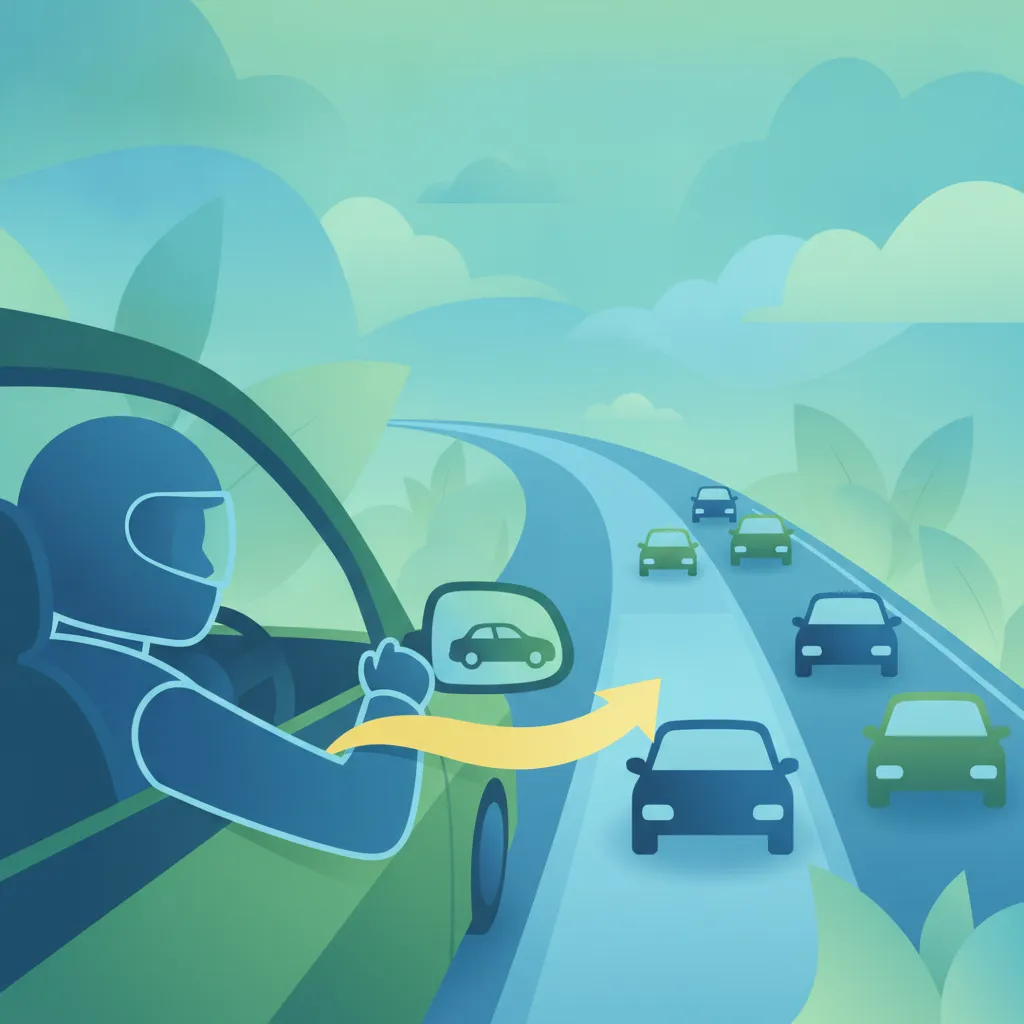
This lesson details the techniques for merging onto busy expressways and executing safe lane changes in urban traffic conditions. It explains how to match the speed of highway traffic in the acceleration lane and select safe gaps for merging. Drivers will learn how to eliminate blind spots and signal early to maintain smooth traffic flow.

This lesson focuses on the unique requirements and best practices for operating passenger vehicles on highways and expressways. Topics include maintaining appropriate speed, adhering to lane discipline, executing safe overtaking maneuvers, and managing merges and exits. Emphasis is placed on ensuring a smooth ride for passengers while integrating safely with faster-moving traffic.
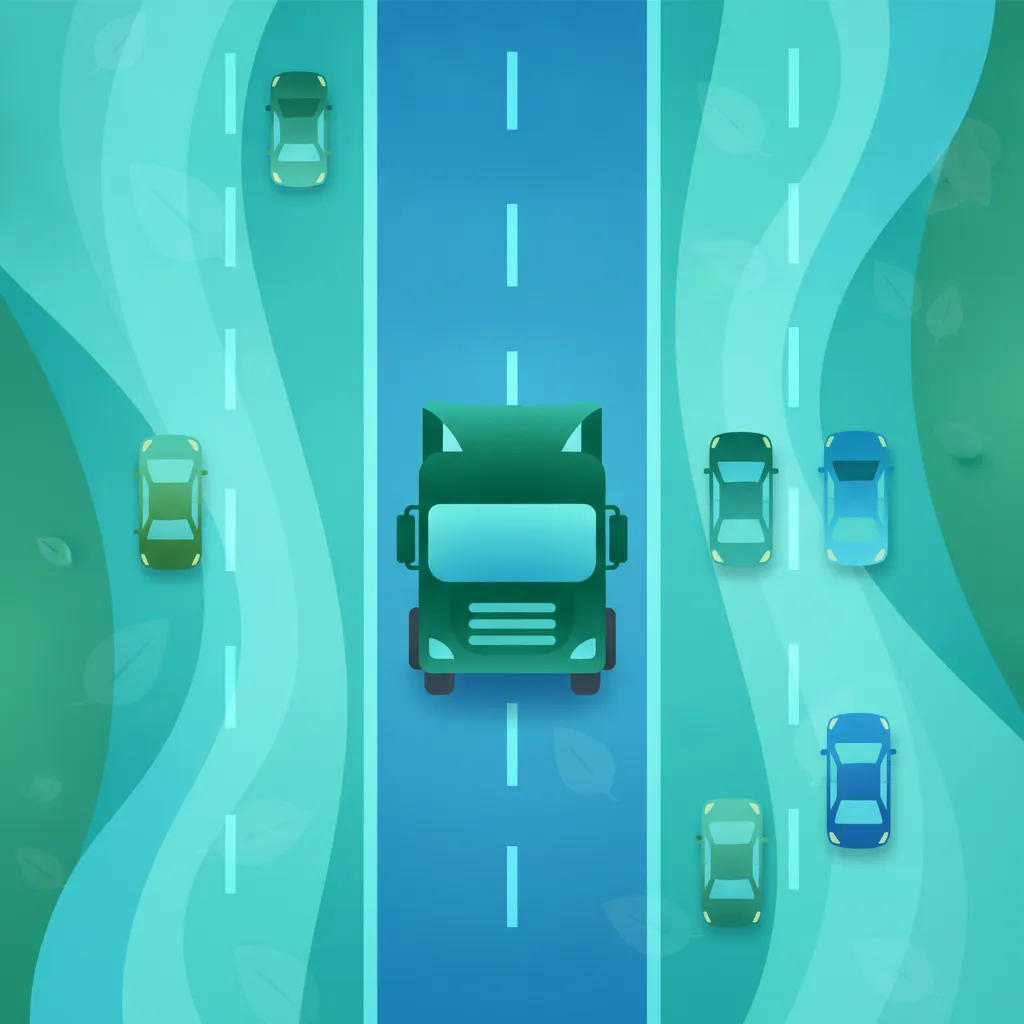
This lesson focuses on the critical importance of lane discipline and proper lane usage for large goods vehicles. Learners will understand the challenges posed by wider vehicle dimensions, the necessity of maintaining adequate lane occupancy, and the need for precise lane keeping. Emphasis is placed on selecting appropriate lanes, adhering to traffic flow, and ensuring general highway safety.

Learners will explore the fundamentals of maintaining correct lane discipline, focusing on appropriate lane positioning, understanding lane markings, and executing lane changes safely. Emphasis is placed on the unique considerations for large passenger vehicles within the lane, such as width and maneuverability. The lesson also addresses the impact of proper lane discipline on overall traffic flow and safety.

This lesson examines lane division and proper lane usage on multi-lane roads and highways. Learners will understand the purpose of lane markings in guiding drivers to maintain appropriate lane discipline. Topics include correct lane selection for different vehicle types, overtaking procedures, and lane-changing techniques. Real-world examples illustrate the importance of respecting lane usage rules.
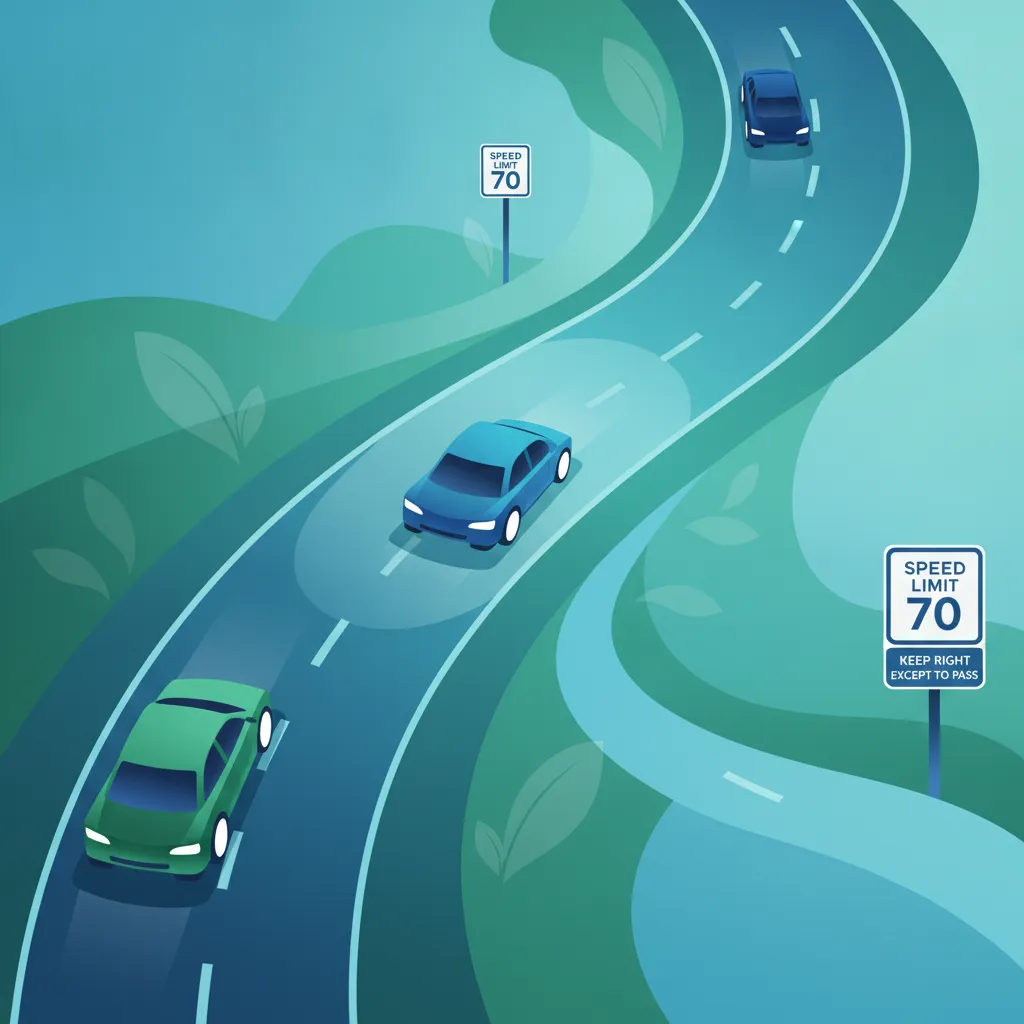
This lesson explains the specific rules, driving etiquette, and safety protocols for operating a vehicle on high-speed Turkish motorways. It covers correct lane usage, overtaking procedures, emergency lane restrictions, and how to maintain consistent high speeds safely. Drivers will learn to avoid dangerous tailgating and sudden lane changes.
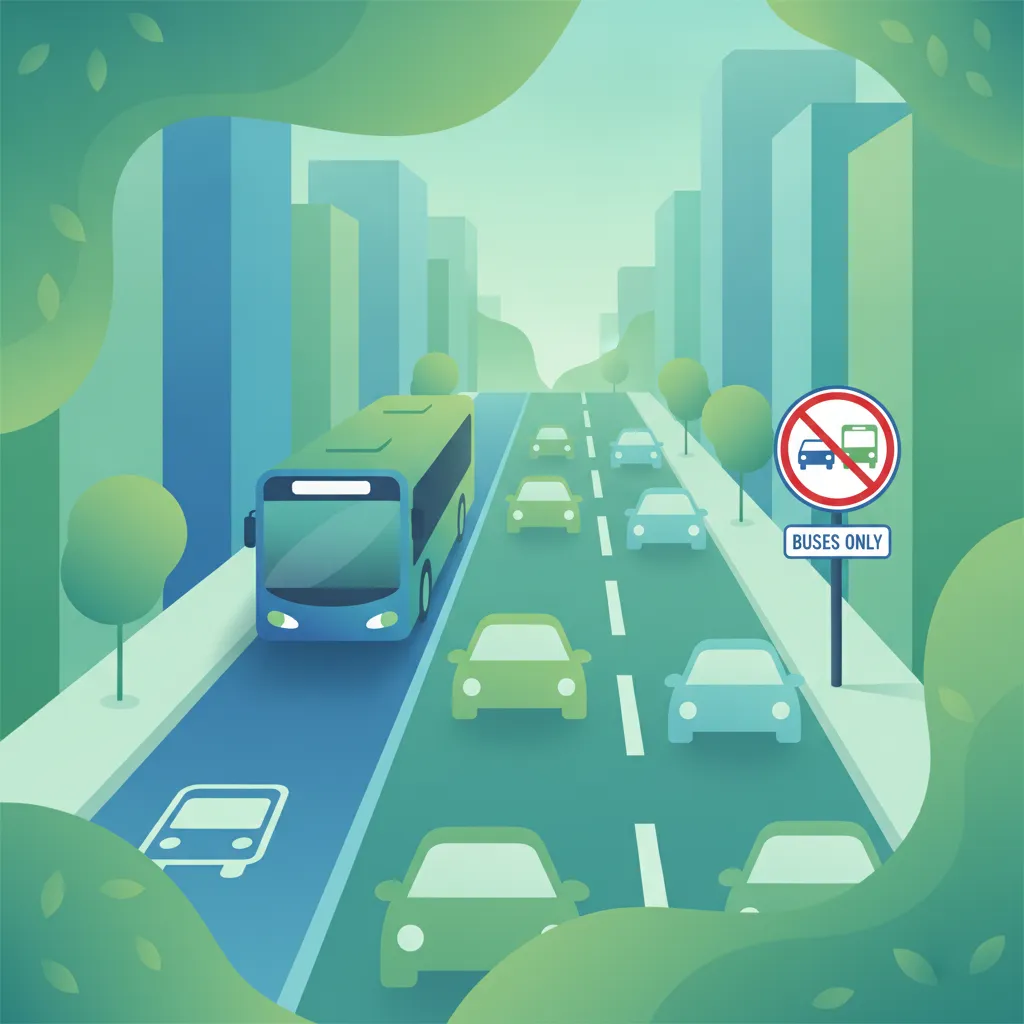
Learners will explore the specific regulations governing bus lanes, priority routes, and other legal restrictions applicable to passenger vehicles. The lesson covers the conditions under which buses may use dedicated lanes, how to navigate priority roadways, and the penalties associated with misuse. Understanding these rules is essential for efficient operation and avoiding violations in high-traffic areas.
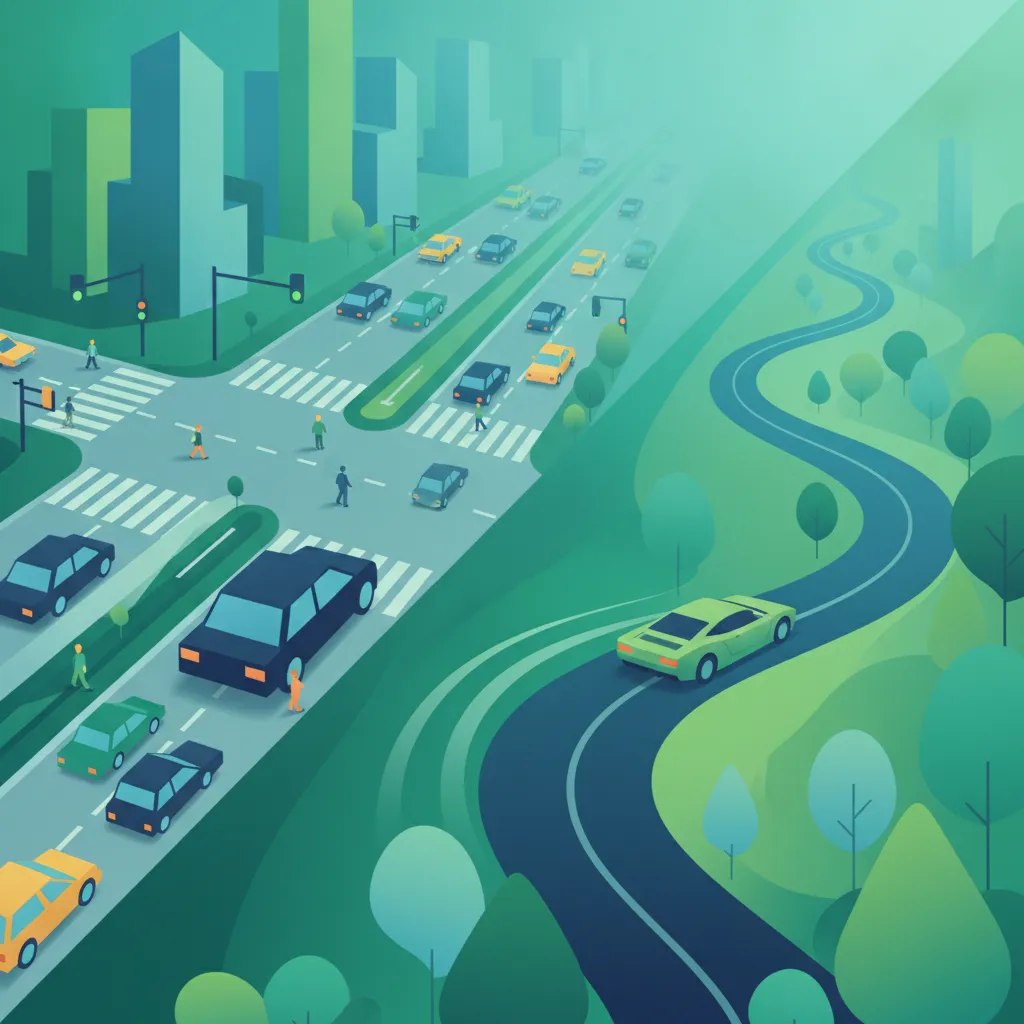
This lesson delves into specific manoeuvring strategies required when navigating both tight urban environments and open rural roads with large passenger vehicles. Learners will explore techniques for handling narrow streets, tight turns, and intersections, while maintaining safety and efficiency. The content emphasizes planning and execution of manoeuvres based on road conditions and vehicle dimensions.
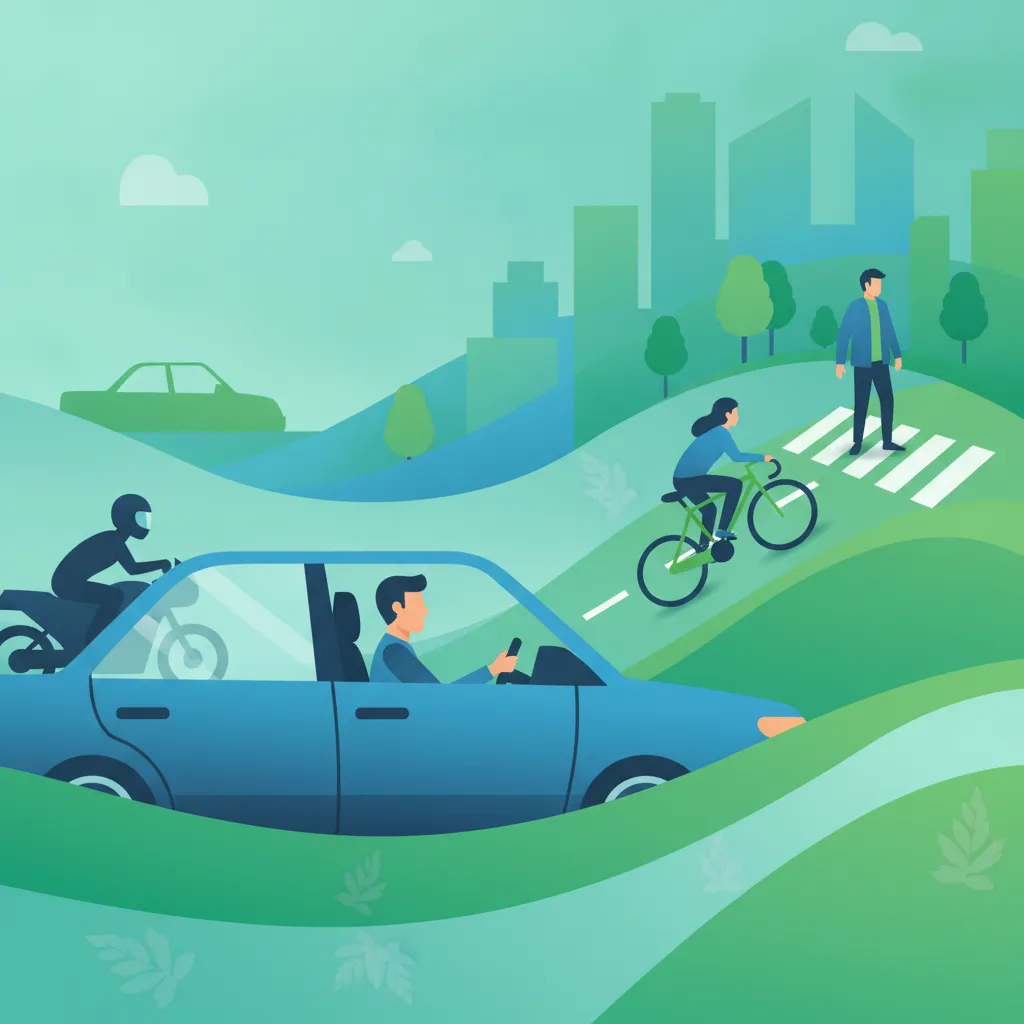
Learners will examine the complexities of operating in environments where various road users, including pedestrians, cyclists, and motorcyclists, coexist. The lesson emphasizes the need for heightened situational awareness, defensive driving techniques, and proactive hazard anticipation. Strategies for navigating mixed traffic safely, especially in congested urban areas, are highlighted.

This lesson focuses on protecting vulnerable road users, such as pedestrians, cyclists, and motorcyclists, in mixed traffic environments. Learners will examine specific strategies for increased vigilance, anticipatory driving, and properly yielding to these users. The lesson also covers high-risk zones, such as school areas and public transport stops, emphasizing the need for heightened safety.
Explore the relationship between mass, velocity, and braking distance for large commercial vehicles. Learn how professional drivers must adapt their speed and driving behavior to account for vehicle dynamics, cargo stability, and environmental conditions on Turkish motorways to ensure compliance with national highway traffic regulations.

This lesson focuses on the importance of maintaining safe following distances for goods vehicles, taking into account longer braking distances and increased load. Learners will learn how to calculate appropriate gaps based on speed, road conditions, and vehicle dynamics. The lesson emphasizes safe following practices to prevent rear-end collisions and improve overall traffic safety in Turkey.
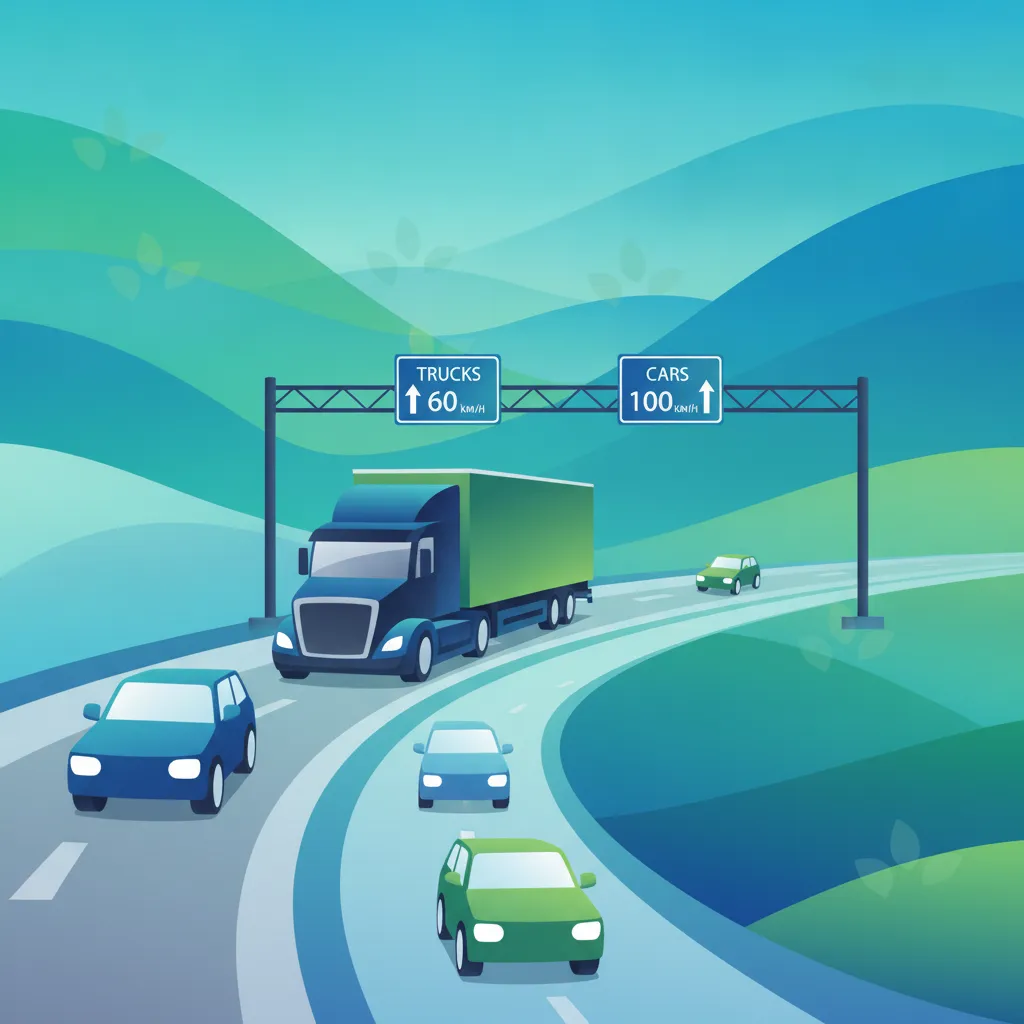
This lesson focuses on speed regulation for goods vehicles, highlighting how vehicle weight, load, and road conditions influence safe operating speeds. Learners will understand legal speed limits for various road types and the necessity of adapting speed to traffic flow and environmental conditions. The lesson also emphasizes the importance of maintaining appropriate speed to ensure vehicle control.
This lesson focuses on the unique requirements and best practices for operating passenger vehicles on highways and expressways. Topics include maintaining appropriate speed, adhering to lane discipline, executing safe overtaking maneuvers, and managing merges and exits. Emphasis is placed on ensuring a smooth ride for passengers while integrating safely with faster-moving traffic.
Learners will learn how to calculate and maintain safe following distances, accounting for the longer braking distances and reaction times inherent to larger passenger vehicles. The lesson emphasizes the importance of a sufficient time gap to allow for safe stopping and to prevent rear-end collisions, particularly in varying traffic conditions.
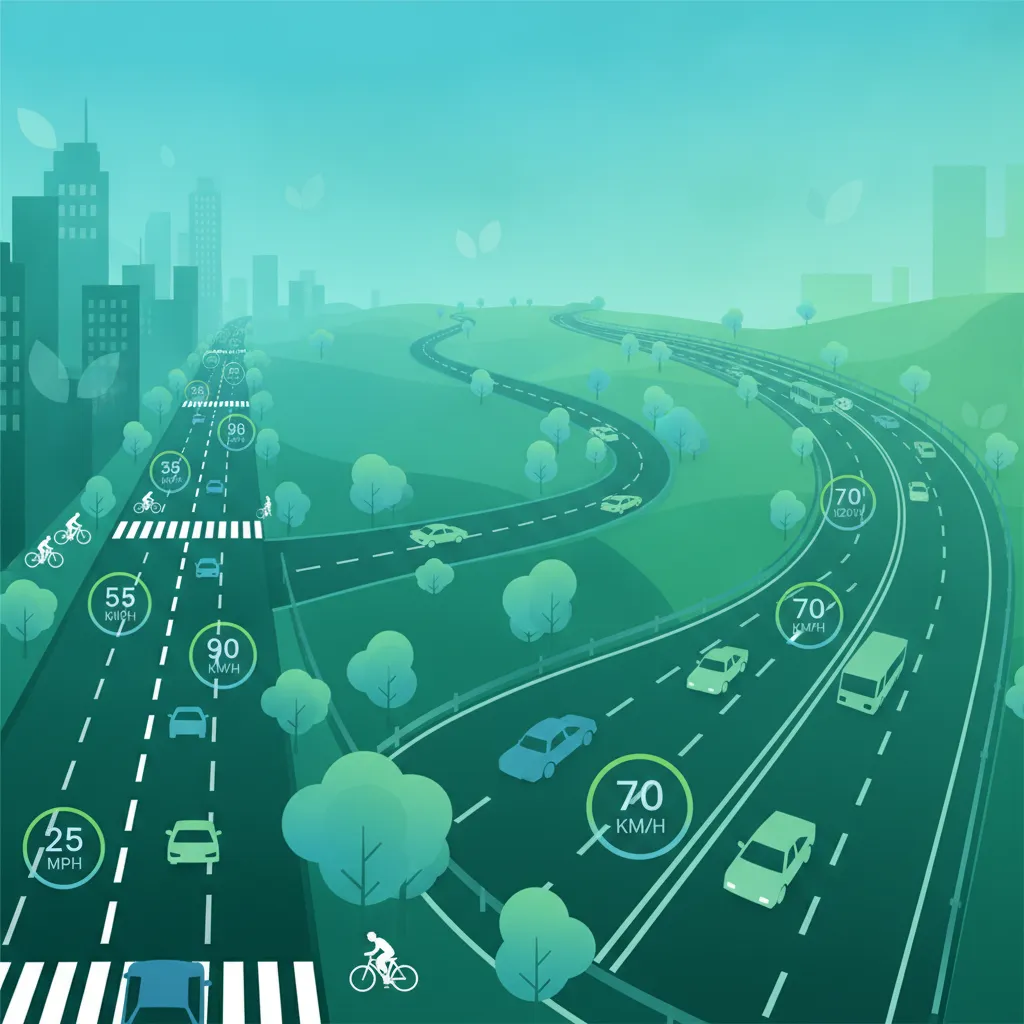
This lesson focuses on managing vehicle speed according to different road environments—urban, rural, and highways—while complying with legal speed limits and traffic flow. Learners will understand how to adjust speed for varying road conditions, traffic density, and safety considerations, ensuring a balance between efficiency and risk mitigation.
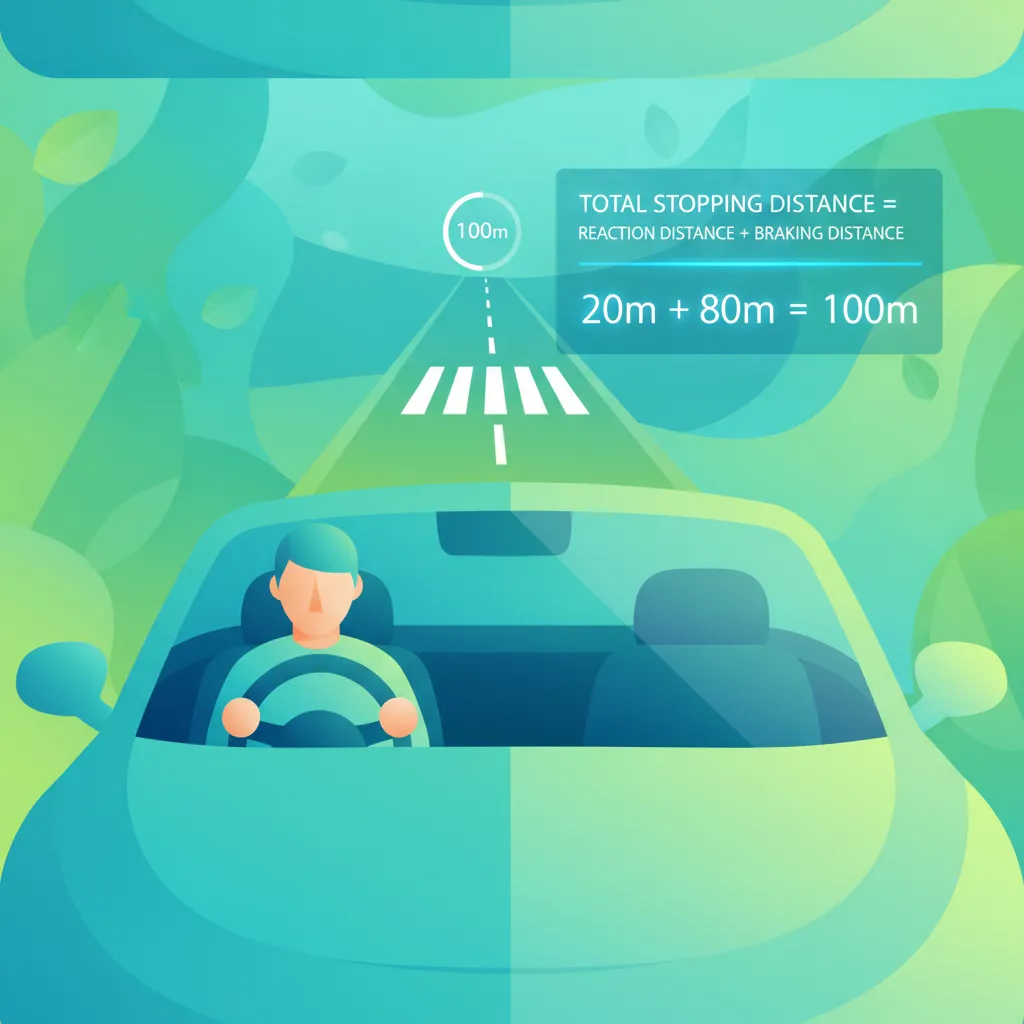
In this lesson, learners examine the components and calculation of stopping distances. Topics include reaction distance, braking distance, and total stopping distance. The lesson covers factors affecting stopping distances, such as vehicle speed, road conditions, and tire condition. Real-world examples illustrate how to estimate stopping distances.
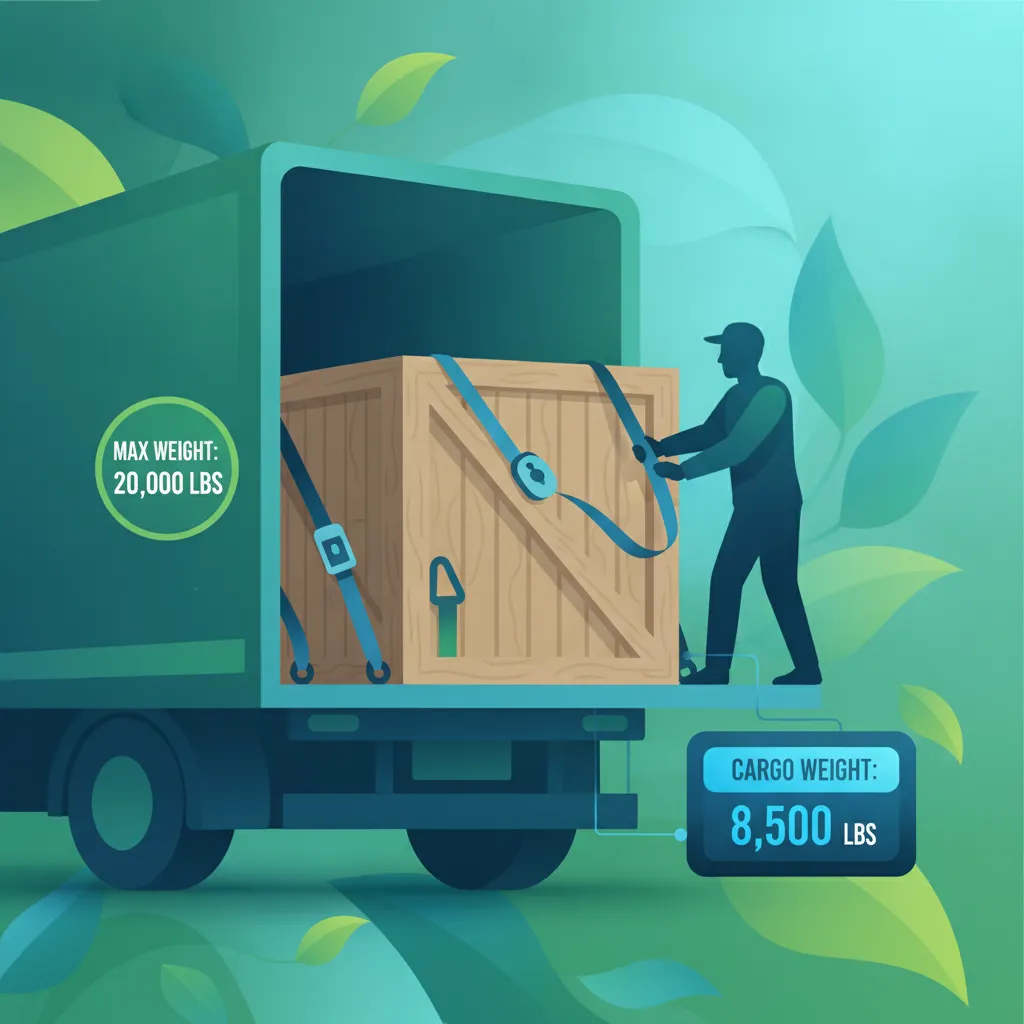
This lesson explains the legal guidelines and safety physics for carrying passengers and securing cargo inside or on top of a vehicle. It details how excess weight or poorly distributed cargo negatively affects vehicle handling, braking, and fuel efficiency. Drivers will learn the legal payload limits specified under Turkish Category B regulations.
This lesson examines the speed limit regulations applicable in different road environments in Turkey. Topics include understanding posted speed limits, speed zones, and maximum and minimum speed requirements for urban, rural, and highway settings. Learners will explore the significance of complying with speed limits and the potential consequences of exceeding them.
In this lesson, learners explore the factors influencing the determination of a safe driving speed. Topics include adjusting speed for road conditions, weather, traffic density, visibility, and vehicle performance. The lesson emphasizes the importance of dynamic speed management and how to assess appropriate speeds for varying situations.

This lesson examines the effects of load dynamics on vehicle stability during acceleration and deceleration. Learners will learn how cargo can shift and affect handling, particularly during sudden speed changes or emergency braking situations. The lesson emphasizes proper load securing, gradual acceleration, and controlled braking to maintain stability and prevent serious accidents.
Find clear answers to common questions learners have about Highway and Expressway Driving for Goods Vehicles. Learn how the lesson is structured, which driving theory objectives it supports, and how it fits into the overall learning path of units and curriculum progression in Turkey. These explanations help you understand key concepts, lesson flow, and exam focused study goals.
Yes, professional goods vehicles are subject to specific speed limits that are often lower than those for passenger cars. You must strictly follow the signage and the legal classification limits for your vehicle weight to avoid fines and ensure safety.
Typically, heavy goods vehicles are restricted from using the far-left lane on multi-lane highways, except for overtaking or emergency maneuvers where permitted by road markings. Always stay in the rightmost available lanes unless necessary for flow.
Increased weight significantly reduces your vehicle's acceleration capabilities. You must plan your merge earlier, monitor traffic flow from a distance, and ensure you have sufficient space to reach a safe matching speed before entering the highway.
Professional drivers must plan routes in advance using designated heavy vehicle maps. If you encounter a restricted sign on the highway, you must exit at the nearest junction to comply with height, weight, or access limitations.
Use our comprehensive practice search to find exactly the Turkish driving theory questions you need to master. Whether reviewing specific road signs, traffic rules, or first aid scenarios, select your perfect practice set and boost your confidence for the official ehliyet sınavı.