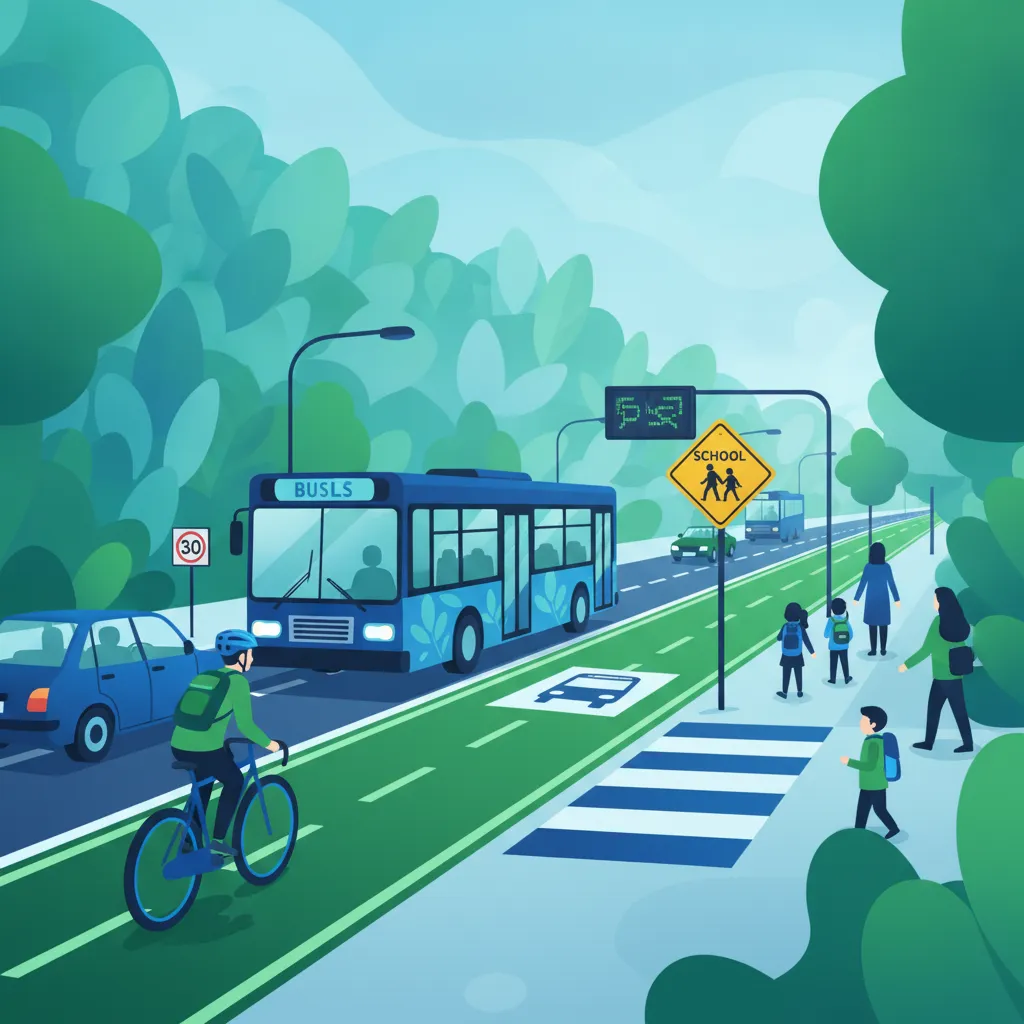
This lesson explores critical urban road regulations essential for motorcycle safety. You will learn to navigate school zones, understand motorcycle-specific access to bus lanes, and interact safely with cyclist infrastructure like advanced stop lines. This knowledge is vital for both your practical riding and passing the DVSA theory test.
Lesson content overview
As a motorcyclist in Great Britain, understanding and correctly navigating special road zones is crucial for your safety, the safety of vulnerable road users, and legal compliance. Urban environments frequently feature dedicated areas like school zones, bus lanes, and various forms of cyclist infrastructure, each with specific rules designed to manage traffic flow and protect those most at risk. This lesson provides a comprehensive guide to these regulations, preparing you for both your Great Britain Motorcycle Theory Course and real-world urban riding.
Special road zones are designated areas within the road network where specific rules apply, often modifying standard speed limits, right-of-way, or lane usage. These zones are typically found in dense urban settings, near schools, or along major public transport routes. Their primary purpose is to enhance safety for vulnerable road users, such as children and cyclists, and to improve the efficiency of public transport.
The legal framework for these zones balances the needs of different road users, aiming to reduce conflict points and promote orderly traffic flow. Compliance with these regulations is not just about avoiding penalties; it is about actively contributing to a safer road environment for everyone. Ignoring these rules can lead to serious accidents, especially involving those who are less protected.
School zones are areas around schools designed to protect children and other pedestrians by enforcing reduced speed limits and demanding heightened vigilance from all road users. These zones are critical environments where a moment's inattention can have severe consequences.
School zones are clearly identified by specific signage and often supplemented with road markings. The most common sign is a triangular warning sign with a depiction of two children or a 'School Crossing' sign. These may be accompanied by a speed limit sign, typically a 20 mph circular sign, or a rectangular sign indicating a "School Zone" with the reduced speed limit.
Often, these signs are accompanied by flashing amber beacons, which provide an additional visual alert, especially during school drop-off and pick-up times. These beacons signify that children may be present or are about to cross the road, and an immediate reduction in speed and increased awareness are necessary. Road markings, such as the word "SCHOOL" painted on the carriageway, also serve as a reminder.
The default speed limit in many school zones across England and Wales is 20 mph (approximately 30 km/h). This reduced speed limit is mandatory and applies to all vehicles, including motorcycles. The rationale is simple: lower speeds significantly reduce stopping distances and provide more time for riders to react to unpredictable movements from children, who may suddenly step into the road without looking.
It is essential to understand that this speed limit is active whenever the signs indicate, whether through permanent signage or time-restricted indicators. Even if you do not immediately see children, the potential for their presence demands strict adherence to the reduced speed. Section 23 of The Highway Code specifically addresses the importance of slowing down near schools.
Always anticipate the unexpected in school zones. Children can be impulsive and may not fully understand road dangers. Maintain a wide field of vision and be prepared to stop suddenly.
Some school zones operate with time-restricted speed limits, meaning the reduced speed limit is only enforced during specific hours, typically coinciding with school opening and closing times (e.g., 7:30–9:00 am and 2:30–4:00 pm on weekdays). These restrictions will be clearly indicated by supplementary plates below the main school zone sign.
Outside of these hours, the default speed limit for the road may apply, but vigilance is still advised, particularly if activities are taking place at the school. As a motorcyclist, you must carefully read these signs to ensure you are complying with the correct speed limit at any given time.
Bus lanes are a key component of urban transport infrastructure, designed to prioritise public transport and improve journey times for bus passengers. While primarily for buses, many local authorities in Great Britain allow motorcyclists to use certain bus lanes under specific conditions.
A bus lane is typically marked by a solid white line and the words "BUS LANE" painted on the road surface. Alongside these markings, regulatory signs at the start of the lane indicate who is permitted to use it. A standard bus lane sign will display a bus symbol.
Crucially for motorcyclists, some bus lanes will feature a supplementary plate below the main bus lane sign, explicitly stating "MOTORCYCLES MAY USE WHEN BUS LANE IS ACTIVE" or similar wording, often accompanied by a motorcycle symbol. This sign is your only indication that you are permitted to use the lane. Without this explicit permission, motorcyclists are prohibited from using bus lanes.
Just like school zones, bus lanes can be time-restricted. A supplementary plate will specify the hours and days when the bus lane is active (e.g., "MON-FRI 7:00–9:30 & 16:00–18:30"). If a bus lane is time-restricted and also permits motorcycles, you can only use it during the indicated hours. Outside of these hours, the lane typically reverts to general traffic use, or other restrictions may apply.
It is vital to be aware of these time windows. Using a bus lane when it is not active, or when motorcycles are not permitted, can result in a fine. Conversely, if you are allowed to use a bus lane during its active hours, remember to transition back to the general traffic lanes once the permitted time window ends or the bus lane itself concludes. The Highway Code Rule 110 states that motorcyclists may use a bus lane unless signs specifically prohibit it, but it's safer to assume prohibition unless explicitly permitted.
When permitted to use a bus lane, you must still adhere to all other traffic laws, including the posted speed limit for that section of road. While bus lanes can offer an advantage in congested traffic, they are not an invitation to speed or ride recklessly. Be mindful of buses pulling in and out of stops, and maintain a safe following distance.
Never assume you can use a bus lane. Always check for explicit signage permitting motorcycles. Riding in a prohibited bus lane is an offence and can lead to penalty points and fines.
Remember that other vehicles might also be permitted to use bus lanes (e.g., taxis or cycles); always be aware of your surroundings and the presence of other road users.
Cyclist infrastructure is designed to create safer and more efficient routes for bicycles, improving their visibility and separating them from faster or heavier motor traffic. As a motorcyclist, understanding and respecting these dedicated spaces is crucial for preventing collisions with cyclists, who are among the most vulnerable road users.
A marked area at traffic light junctions that allows cyclists to position themselves ahead of motor vehicles, improving their visibility and giving them a head start when the light turns green.
An Advanced Stop Line (ASL), also known as a cycle box, is a specific road marking found at signalised junctions. It consists of a solid white stop line for motor vehicles, a bicycle symbol, and a second, usually dotted, white line further forward, creating a box between the two lines. This box is reserved for cyclists.
When you approach a traffic light with an ASL and the light is red, you must stop behind the first, solid white line, even if there are no cyclists currently in the box. If a cyclist is already in the ASL box, or moves into it after you have stopped, you must give way to them. Rule 162 of The Highway Code makes this mandatory. Do not creep into the ASL box; it is reserved for cyclists and sometimes other permitted vehicles like pedestrian electric scooters. Allowing cyclists to position themselves ahead enhances their visibility and safety, especially when turning right across traffic.
A section of the carriageway specifically marked for cyclists, often delineated by a solid white line and a bicycle symbol.
A path physically separated from the main carriageway and often the footway, exclusively for cyclists.
Cycle lanes are dedicated sections of the road for cyclists, usually marked by a continuous or broken white line and a bicycle symbol. A continuous white line indicates a mandatory cycle lane that motor vehicles are prohibited from entering, even for brief periods. A broken white line indicates an advisory cycle lane, where motor vehicles should avoid entering but may do so if absolutely necessary (e.g., to pass a stationary obstruction), exercising extreme caution.
Cycle tracks, by contrast, are physically separated paths for cyclists, distinct from both the main road and the pavement. They offer a higher degree of segregation and protection for cyclists.
Motorcyclists are generally prohibited from riding in dedicated cycle lanes or on cycle tracks. These spaces are for cyclists' safety and dedicated flow. Encroaching on them creates a significant hazard and is an offence. Always keep clear of cycle lanes and tracks unless there is specific signage indicating otherwise, such as a "SHARED LANE" sign.
Some lanes, typically marked with a "SHARED LANE" sign and often a bicycle symbol alongside a motorcycle symbol, may permit both motorcyclists and cyclists to use them. These are relatively rare but do exist in certain urban areas.
If you encounter such a sign, motorcyclists may be permitted to filter (ride between lanes of stopped or slow-moving traffic) within this shared space, provided it is done safely and at a very low speed. Even in a shared lane, cyclists always have priority, and you must exercise extreme caution. Filtering in a shared lane should only be done if permitted by local regulations and if conditions allow for it to be executed safely, giving ample room to cyclists.
Filtering, also known as lane splitting in some countries, is a legal manoeuvre in Great Britain that allows motorcyclists to ride between lanes of slow-moving or stationary traffic. While it can save time and reduce congestion, it must be performed with extreme care and only under specific conditions.
General filtering is permitted on normal carriageways when traffic is slow or stationary, provided it is safe to do so. However, in the context of special urban zones, filtering rules become more specific:
When filtering, whether in a permitted bus lane or on a general carriageway, always:
Compliance with the rules governing school zones, bus lanes, and cyclist infrastructure is mandatory. Breaching these regulations can lead to fines, penalty points on your licence, and, most importantly, significantly increase the risk of a collision.
School Zones: Adhere strictly to the 20 mph (or posted) speed limit, especially when amber beacons are flashing or children are present.
Bus Lanes: Use only if clearly permitted by signage (e.g., "MOTORCYCLES MAY USE") and only during specified time restrictions. Never use if prohibited.
Advanced Stop Lines (ASLs): Always stop behind the first solid white line. Give way to cyclists in the box.
Cycle Lanes/Tracks: Do not enter dedicated cycle lanes (solid white line) or cycle tracks unless a "SHARED LANE" sign explicitly permits motorcycle use.
Filtering: Only filter where it is safe, explicitly permitted by signage, and always at a controlled, low speed.
Time Restrictions: Pay close attention to all time-restricted signs and adjust your behaviour accordingly.
These rules are not arbitrary; they are derived from legislation such as the Road Traffic Regulation Act 1984 and are reinforced by The Highway Code. Understanding the rationale behind each rule will help you apply them consistently and safely.
Many road users, including motorcyclists, sometimes misinterpret or ignore the rules in special zones, leading to common violations.
Common Violations to Avoid:
Each of these violations carries legal penalties and significantly increases the risk of accidents, especially with vulnerable road users. It is essential to be proactive in verifying signage and adhering to all restrictions.
Your approach to school zones, bus lanes, and cyclist infrastructure must adapt to prevailing conditions. External factors such as weather, light, and the type of road can significantly impact visibility and motorcycle handling.
The hierarchy of road users in Great Britain prioritises those who can do the greatest harm as having the greatest responsibility. This means motorcyclists (who are vulnerable themselves) hold greater responsibility towards pedestrians and cyclists.
Applying these rules in real-time requires quick observation and decision-making. Here are some scenarios to consider:
Scenario 1: Approaching a School Crossing at Peak Time You are riding your motorcycle towards a primary school at 3:15 pm on a weekday. You see a 20 mph speed limit sign with flashing amber beacons. Ahead, a school crossing patrol warden is preparing to step into the road.
Correct Action: Immediately reduce your speed to 20 mph or less, cover your brakes, and be prepared to stop. Look for children on both sides of the road. When the warden steps out, stop well before the crossing line and wait patiently until all children have crossed and the warden has returned to the pavement.
Scenario 2: Congestion with a Permitted Bus Lane You are in heavy traffic on a busy urban road. To your left, there is a bus lane with a sign indicating "BUS LANE MON-FRI 7:00-10:00 & 16:00-19:00 MOTORCYCLES MAY USE". It is currently 8:30 am on a Tuesday.
Correct Action: Since it's within the permitted hours, you may safely enter the bus lane. Maintain the posted speed limit for the road (e.g., 30 mph) and be aware of buses pulling in and out of stops. Filter carefully if traffic inside the bus lane is also slow, always prioritizing bus movements. Be ready to merge out of the bus lane once you pass the end of the restriction or the permitted time expires.
Scenario 3: Junction with an Advanced Stop Line You arrive at a set of traffic lights, which are currently red. Ahead, a cyclist is waiting in the Advanced Stop Line box.
Correct Action: Stop your motorcycle behind the first solid white line of the ASL, well clear of the cyclist. Wait patiently for the light to turn green, allowing the cyclist to proceed first into the junction. Only move forward once the cyclist has safely cleared your path.
Scenario 4: Encountering a Cycle Lane Without Shared Permission You are riding along a street with a cycle lane marked by a solid white line and bicycle symbols. There is no "SHARED LANE" sign present.
Correct Action: Remain in the general traffic lane and give the cycle lane ample space. Do not enter the cycle lane under any circumstances, as it is reserved for cyclists and doing so would be an offence and create a hazard.
Successfully navigating urban special zones is a core component of safe riding and a frequent topic on the Great Britain Motorcycle Theory Course. By thoroughly understanding the signs, markings, and rules detailed in this lesson, you will be well-prepared to answer questions related to school zones, bus lanes, and cyclist infrastructure. More importantly, you will develop the practical awareness and skills needed to ride safely and confidently in complex urban environments.
Remember to constantly observe signage, adapt your riding to conditions, and always prioritise the safety of vulnerable road users. This approach will not only help you pass your theory test but will also make you a more responsible and skilled motorcyclist.
Explore all units and lessons included in this driving theory course.
Lesson content overview
Explore all units and lessons included in this driving theory course.
Explore search topics learners often look for when studying School Zones, Bus Lanes and Cyclist Infrastructure. These topics reflect common questions about road rules, driving situations, safety guidance, and lesson level theory preparation for learners in Great Britain.
Browse additional driving theory lessons that cover connected traffic rules, road signs, and common driving situations related to this topic. Improve your understanding of how different rules interact across everyday traffic scenarios.
Understand the specific regulations for school zones, bus lanes, and cyclist infrastructure in Great Britain. Learn when motorcyclists can use these areas and the safety precautions required for urban riding.
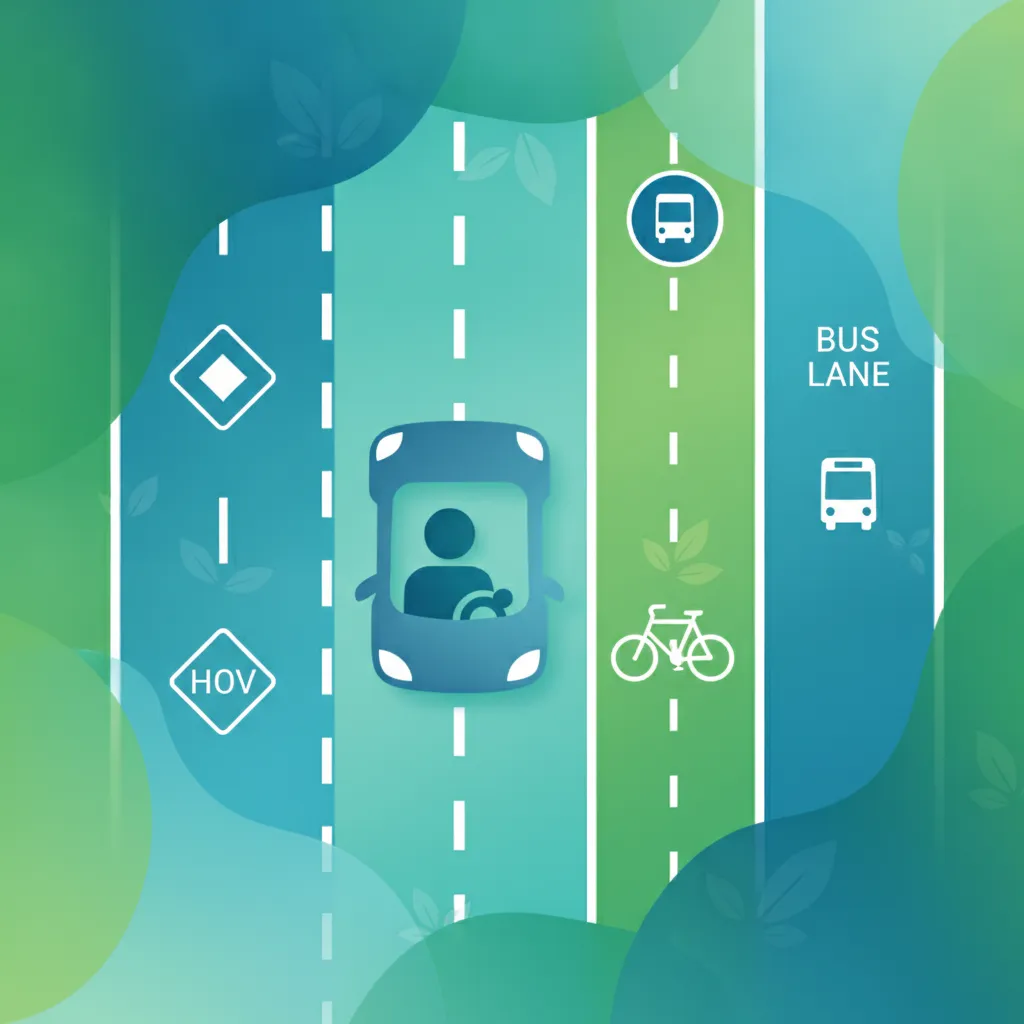
This lesson covers lanes designated for specific types of traffic to improve flow and safety. You will learn to identify mandatory and advisory cycle lanes, and understand the signs indicating the operational hours of bus lanes. The rules governing these lanes are critical for avoiding penalties and ensuring the safety of all road users.

This lesson addresses the critical importance of child safety in school transport zones and around school buses. It covers the specific regulations, such as 20 mph speed limits and stopping restrictions indicated by zigzag lines. Learners will focus on the unpredictable nature of children and the need for heightened vigilance and readiness to stop unexpectedly. The content also includes procedures for the safe transport of pupils, ensuring their security both inside and outside the vehicle.
This lesson examines the unique rules and restrictions governing buses and coaches, focusing on bus lane priority, time-based restrictions, and loading zone limitations. Learners will explore the criteria for using bus-only routes and understand the legal consequences of non-compliance. The content also reviews signage indicating bus gate operation and areas where passenger vehicles are prohibited from stopping or loading outside of designated zones, ensuring lawful and efficient urban navigation.
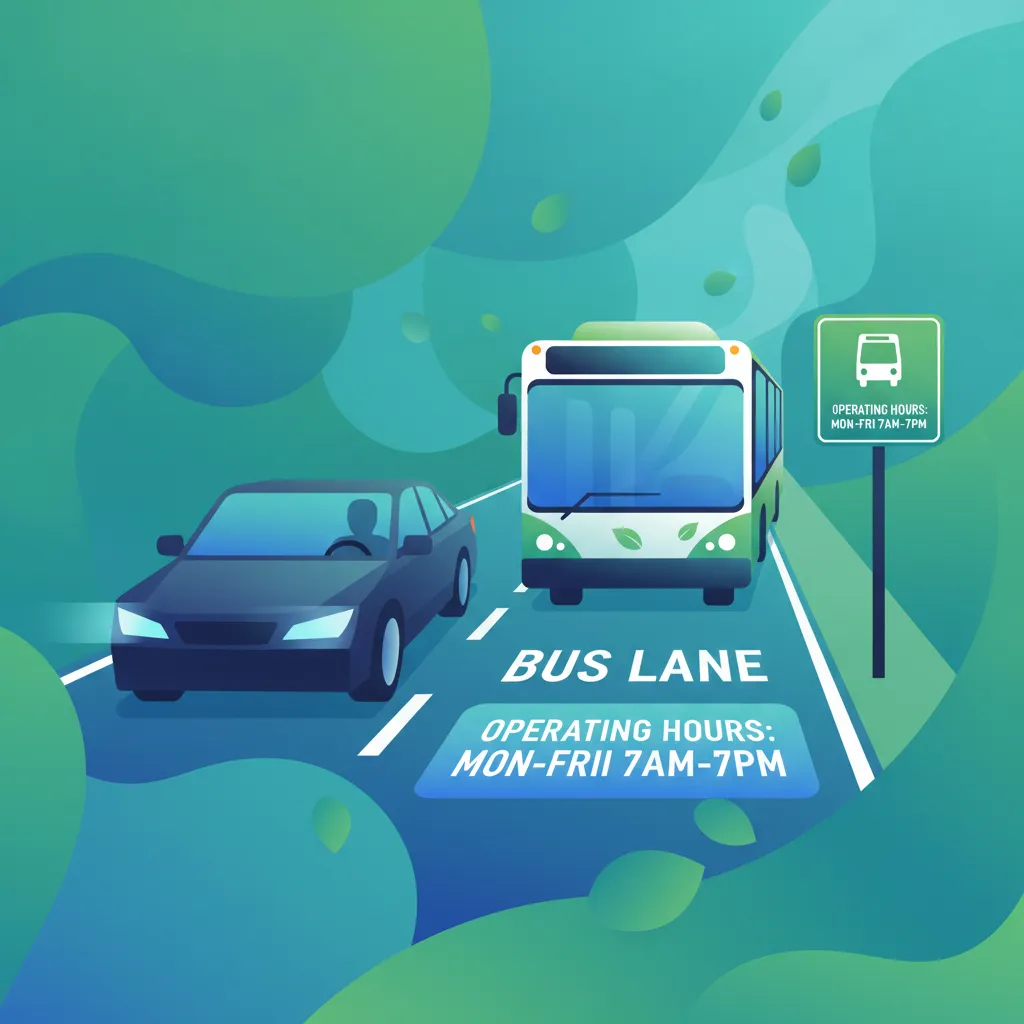
This lesson explores the specifics of bus lane markings, operating times, and priority situations where buses have precedence over other traffic. It emphasizes correct lane discipline, lawful entry and merging practices, and the exemptions granted to designated passenger vehicles. Learners will also understand how bus lane enforcement works and what penalties may be incurred for non-compliance, ensuring safe and efficient movement through urban traffic systems.

This lesson focuses on safe interaction with cyclists, a key aspect of urban driving for PCV operators. It details the rules for cycle lanes and advanced stop lines, and the correct procedure for overtaking cyclists, emphasizing the need to provide ample space. The content stresses the importance of frequent mirror checks to manage blind spots where cyclists can be hidden, especially when turning at junctions, to ensure their safety and comply with the Highway Code's road user hierarchy.
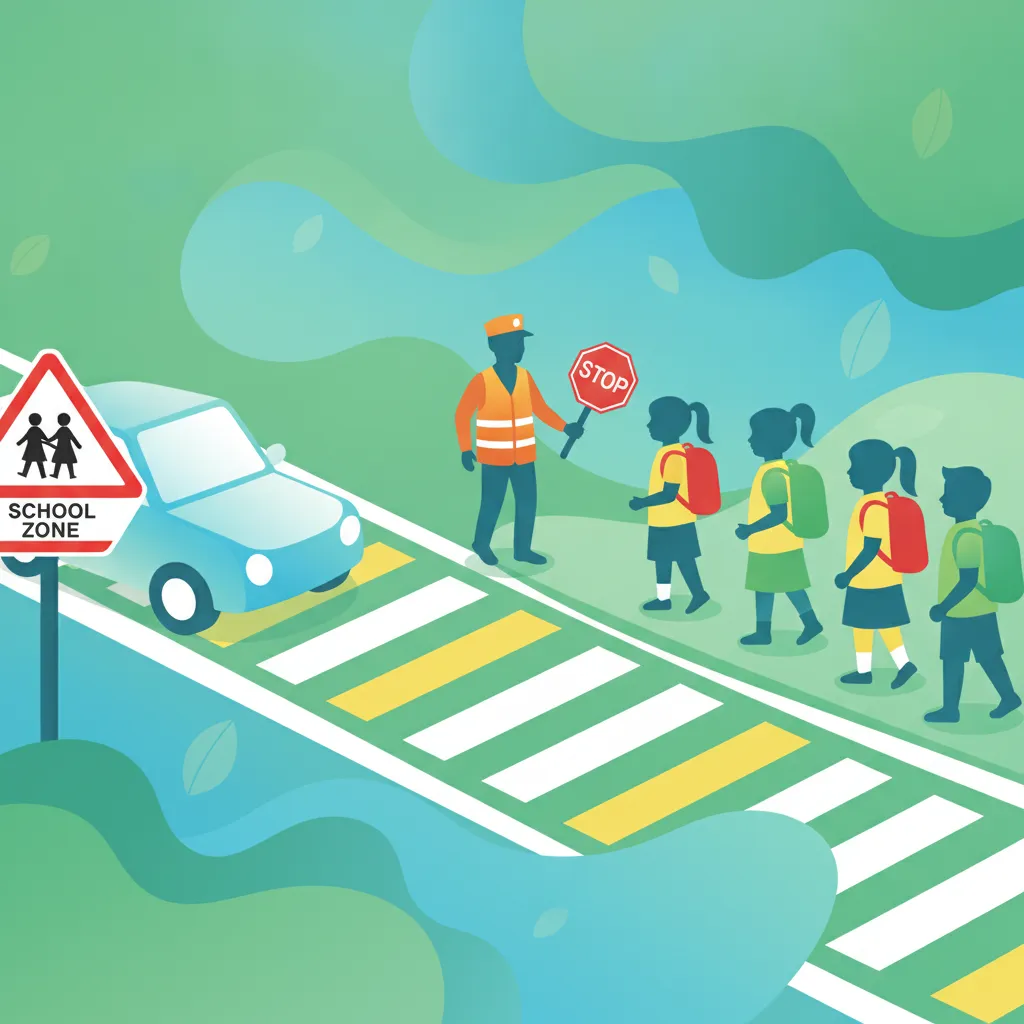
This lesson highlights the need for heightened awareness and reduced speed around schools, parks, and residential areas. Children can be unpredictable, so you must be prepared for them to step into the road without warning. The lesson covers specific signs for school zones and the legal requirement to stop for a school crossing patrol.

This lesson focuses on the safe interaction between cars and bicycles. It covers the importance of giving cyclists ample room when overtaking—at least 1.5 metres—and looking for them before turning or changing lanes. You will also learn about cyclist-specific infrastructure like cycle lanes and how to use the 'Dutch Reach' method to open your car door safely.
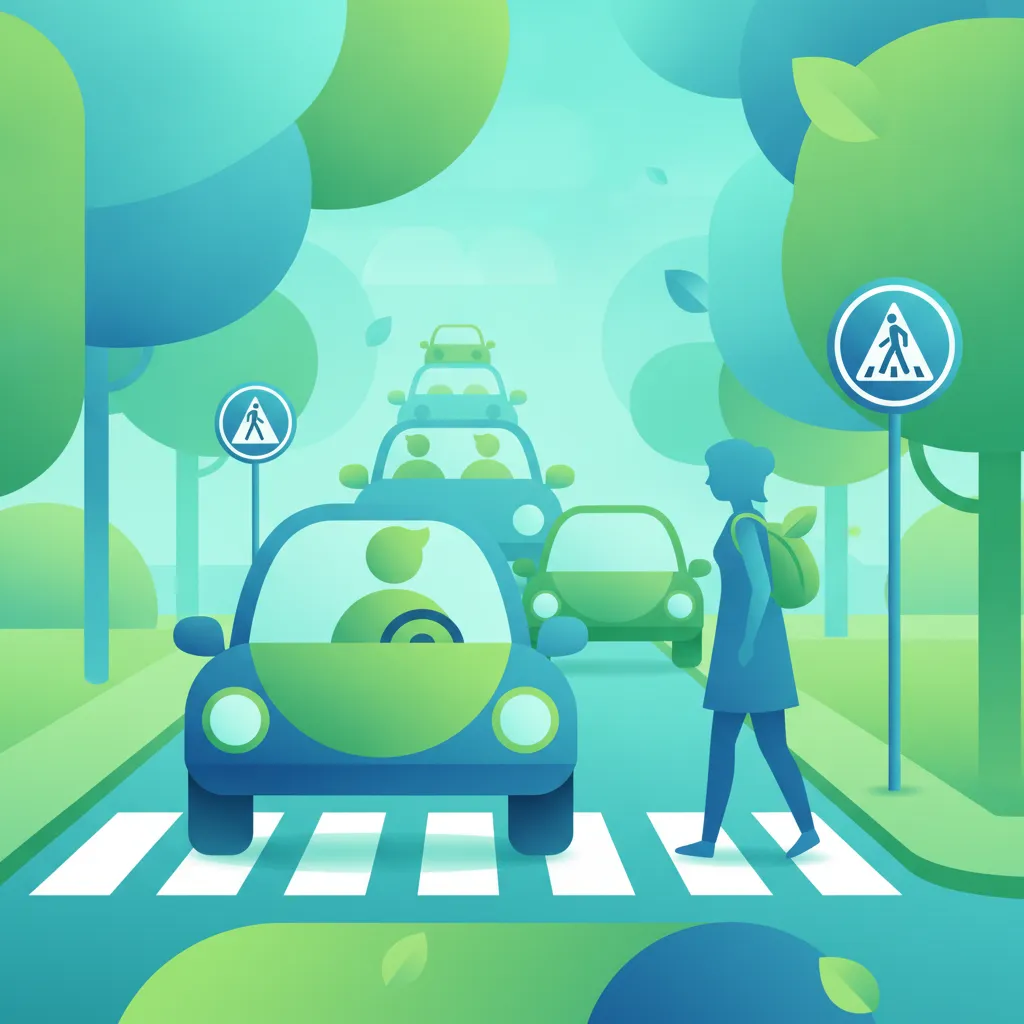
This lesson focuses on the dynamic and often unpredictable nature of urban traffic. It covers how to safely negotiate various pedestrian crossings, anticipate the movement of cyclists and pedestrians, and be aware of hazards like bus stops and car doors opening. You will also learn about the considerations for safe and legal filtering in slow-moving traffic.
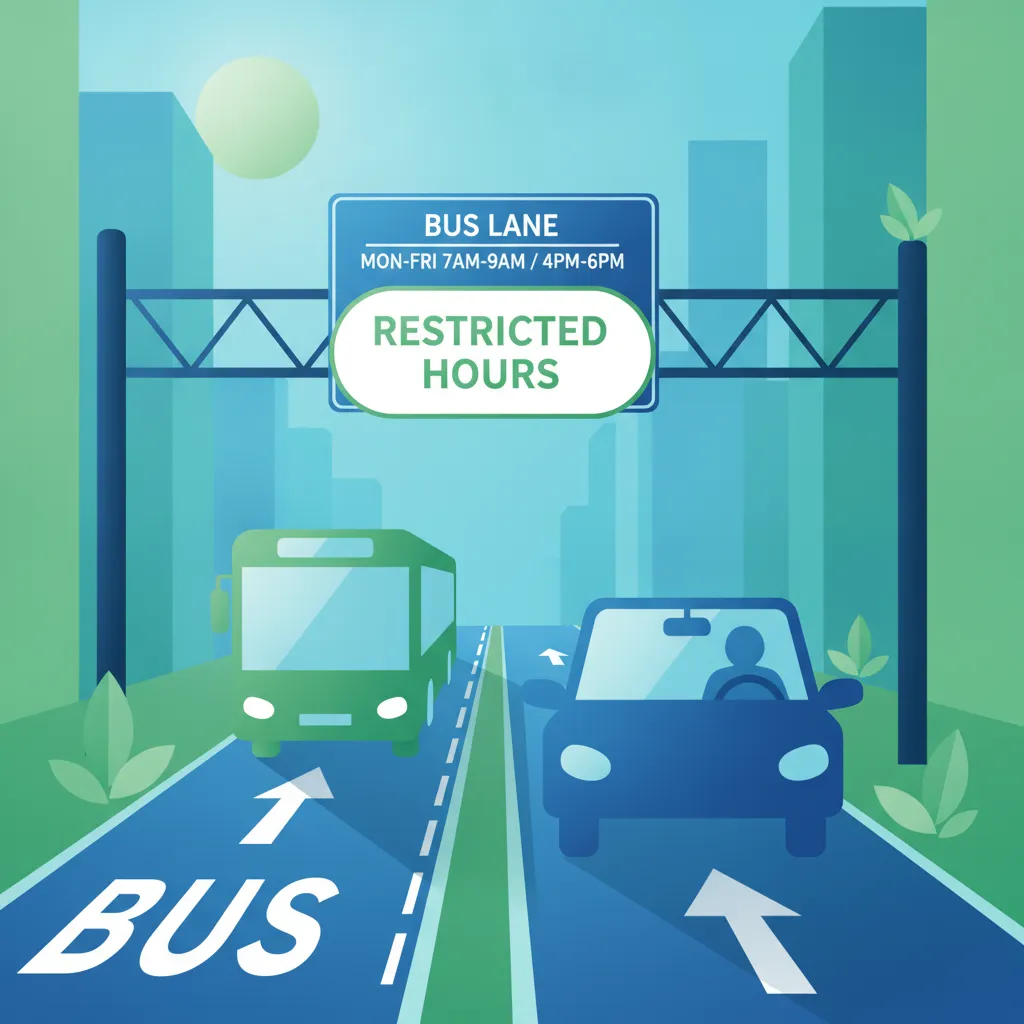
This lesson covers the importance of maintaining correct lane discipline when driving a large passenger vehicle. It details how to position your vehicle safely within a lane on various road types, including multi-lane carriageways and motorways. You will learn the specific rules governing bus lanes, including how to interpret markings, adhere to operating times, and understand the exemptions and penalties associated with their use to ensure legal and efficient driving.
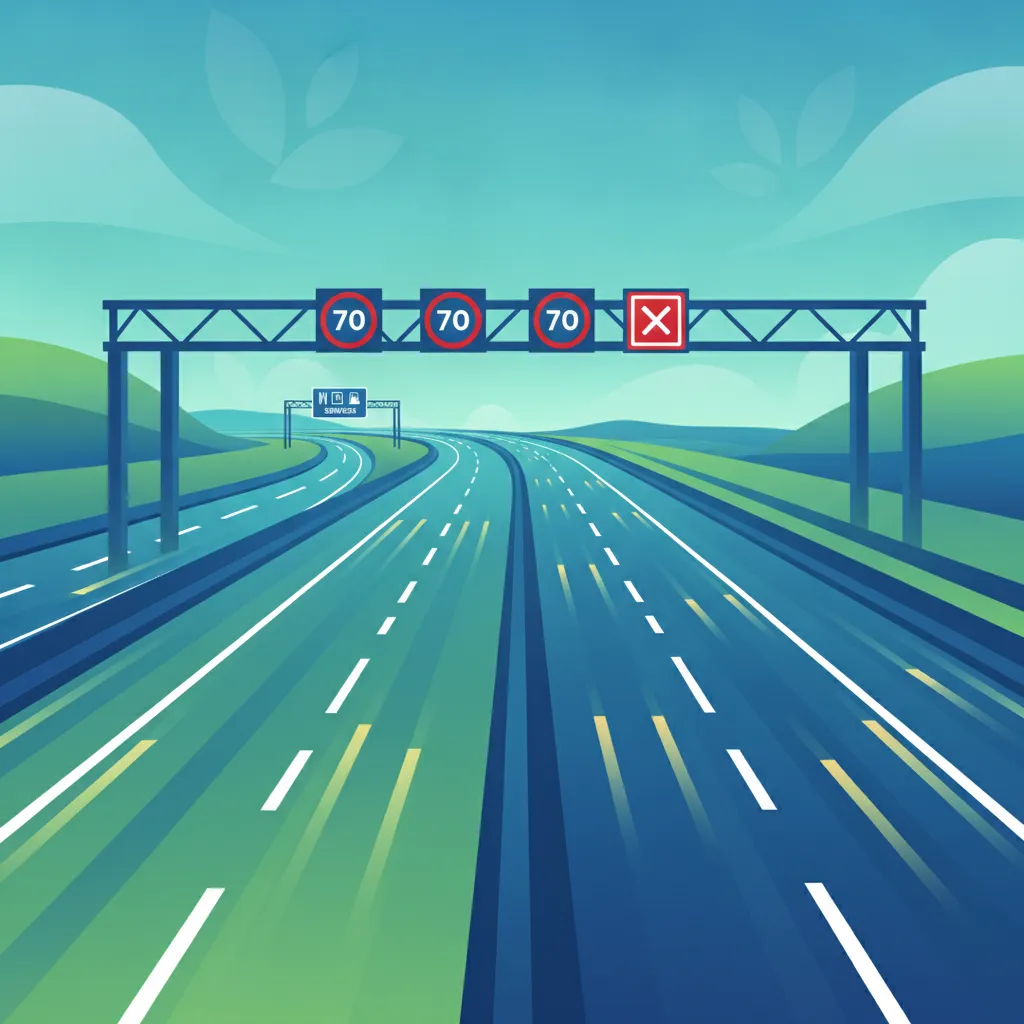
This lesson covers the unique aspects of motorway driving, from joining and leaving the carriageway to the strict lane discipline of keeping to the left unless overtaking. It explains the features of smart motorways, such as variable speed limits and the meaning of a Red X symbol above a lane. The safe procedure for handling a breakdown is also a key topic.
Learn about frequent errors and misunderstandings motorcyclists make regarding school zones, bus lanes, and cyclist infrastructure in Great Britain. Avoid penalties and improve safety by understanding these common pitfalls.
This lesson focuses on the dynamic and often unpredictable nature of urban traffic. It covers how to safely negotiate various pedestrian crossings, anticipate the movement of cyclists and pedestrians, and be aware of hazards like bus stops and car doors opening. You will also learn about the considerations for safe and legal filtering in slow-moving traffic.

This lesson covers the operation of traffic light signals and the rules for approaching them safely. It also provides a detailed explanation of different pedestrian crossings, such as zebra, pelican, and toucan crossings, clarifying the specific rules and priority for each. You will learn to anticipate the actions of pedestrians and other vulnerable road users at these locations.

This lesson decodes the language of road markings painted on the road surface. You will learn the rules associated with solid and broken white lines, double white lines that restrict overtaking, and yellow lines controlling parking. Proper understanding of these markings is crucial for maintaining correct lane discipline and riding legally.
This lesson examines the unique rules and restrictions governing buses and coaches, focusing on bus lane priority, time-based restrictions, and loading zone limitations. Learners will explore the criteria for using bus-only routes and understand the legal consequences of non-compliance. The content also reviews signage indicating bus gate operation and areas where passenger vehicles are prohibited from stopping or loading outside of designated zones, ensuring lawful and efficient urban navigation.
This lesson covers lanes designated for specific types of traffic to improve flow and safety. You will learn to identify mandatory and advisory cycle lanes, and understand the signs indicating the operational hours of bus lanes. The rules governing these lanes are critical for avoiding penalties and ensuring the safety of all road users.

This lesson focuses on regulatory signs, which are legally enforceable and typically circular in shape. You will learn the meaning of signs with red borders that prohibit actions and blue signs that give a mandatory instruction. Understanding these signs, such as speed limits and 'no entry', is essential for lawful and safe riding.

Filtering through traffic can be an efficient way to ride, but it carries risks. This lesson explains when it is appropriate to filter, the importance of maintaining a low speed differential, and how to watch out for potential hazards like changing lanes, opening doors, and pedestrians. Safe filtering requires heightened awareness and excellent machine control.
This lesson explains the legal consequences of committing traffic offences. It covers how the penalty points system works, the number of points for common offences like speeding, and how accumulating 12 points can lead to disqualification under the 'totting-up' procedure. You will also learn about the specific rules for new riders, who can have their licence revoked with just 6 points.
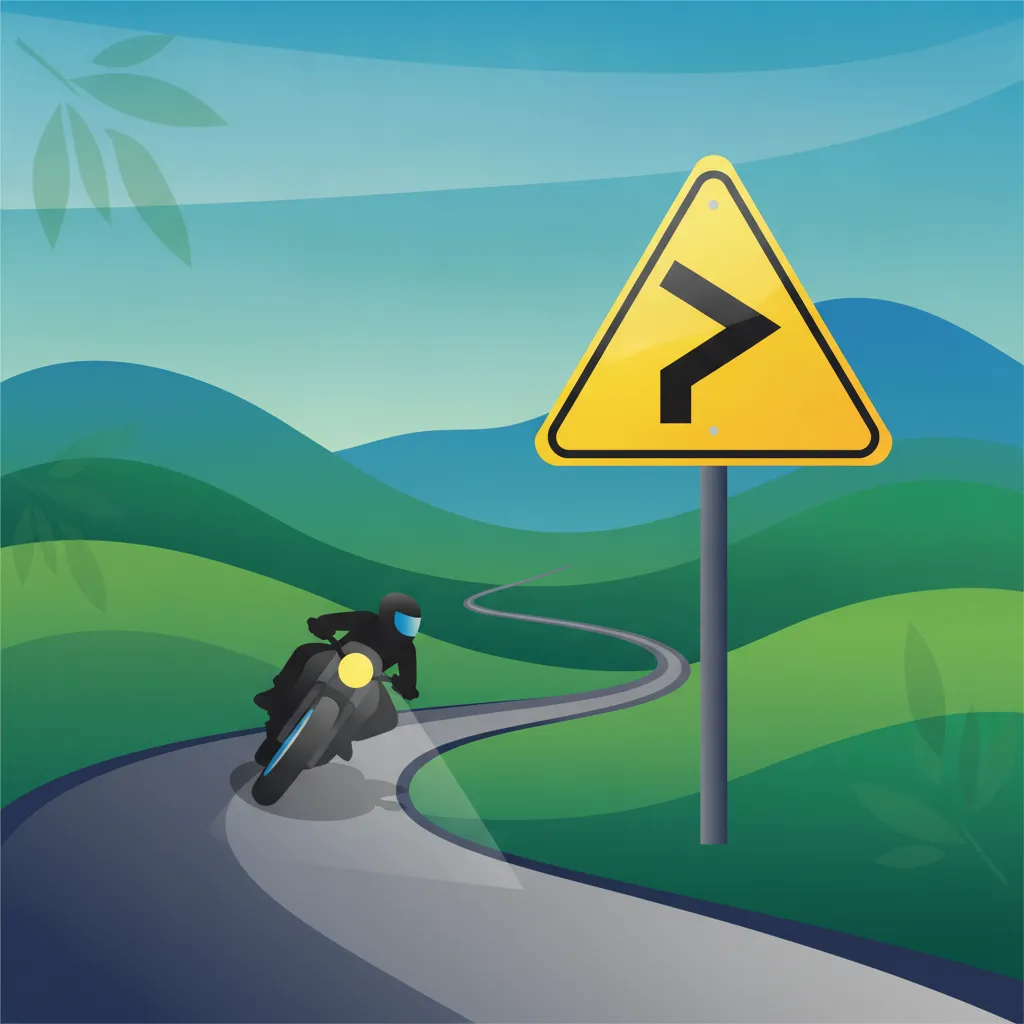
This lesson explains the function of warning signs, which are mostly triangular and alert road users to potential dangers ahead. You will learn to identify signs for bends, junctions, slippery surfaces, and other hazards particularly relevant to motorcyclists. Acting on these warnings allows a rider to adjust speed and position proactively, enhancing safety.

This lesson clarifies who has priority at junctions, whether they are marked with signs and lines or are unmarked. It covers the fundamental rule for roundabouts in the UK: give priority to traffic approaching from your right. You will learn the correct procedures for approaching, signalling, and choosing the appropriate lane on roundabouts and at other junctions.
Find clear answers to common questions learners have about School Zones, Bus Lanes and Cyclist Infrastructure. Learn how the lesson is structured, which driving theory objectives it supports, and how it fits into the overall learning path of units and curriculum progression in Great Britain. These explanations help you understand key concepts, lesson flow, and exam focused study goals.
No, access depends on local traffic regulation orders indicated by road signs. You must check the signs at the start of the bus lane; if a motorcycle symbol is present, you may use it, otherwise, you must stay in the main traffic flow.
An ASL is a marked area at a junction designed for cyclists. Motorcyclists should stop at the first line if the light is red, leaving the reservoir area clear for cyclists; you should only enter the reservoir if you cannot stop safely before the first line.
Where speed limit signs are displayed, such as 20mph zones near schools, they are mandatory legal limits. Always observe these signs carefully as they are enforced to protect vulnerable road users during school hours.
Even if permitted to use a bus lane, you must assess whether it is safe. If the lane is blocked by stationary buses or debris, it is often safer to remain in the main traffic lane rather than attempting to filter into a confined space.
Dive into our comprehensive question bank to find exactly what you need for your Great Britain theory test. Use our advanced filters to pinpoint specific subjects or test your knowledge on challenging areas, ensuring you're fully prepared for success.