
This lesson provides a comprehensive guide to the critical regulations regarding weight, width, and axle load restrictions for large goods vehicles in Great Britain. By mastering these rules, you will learn to navigate the road network safely, avoid bridge strikes, and comply with DVSA legal standards for Category C operations.

Lesson content overview
Operating a large goods vehicle (LGV) or heavy goods vehicle (HGV) under a Category C licence in Great Britain demands a thorough understanding of stringent regulations concerning vehicle dimensions and weight. These rules are not arbitrary; they are critical for maintaining road safety, protecting vital infrastructure like bridges and tunnels, and ensuring all road users have adequate space. Non-compliance can lead to severe penalties, vehicle damage, and pose significant risks to public safety.
This lesson provides a comprehensive guide to the specific regulations governing maximum permissible weight, width, and axle load for goods vehicles. It explains how to interpret the associated road signs, manage cargo effectively, and navigate the legal requirements enforced by agencies like the Driver and Vehicle Standards Agency (DVSA). Mastering these principles is fundamental for all professional goods vehicle drivers.
Adhering to weight, width, and axle restrictions is paramount for several reasons, impacting safety, infrastructure, and legal standing. Overloaded or excessively wide vehicles can become unstable, increase stopping distances, and make precise manoeuvres difficult, leading to a higher risk of accidents.
Beyond immediate safety, these regulations protect the extensive road network and its structures. Bridges, tunnels, and road surfaces are designed to withstand specific loads. Exceeding these limits can cause irreparable damage, leading to costly repairs, delays, and potential structural failure. Moreover, managing vehicle dimensions helps ensure that all road users have safe passage, particularly in narrower areas or during lane closures. For Category C drivers, compliance is not merely about avoiding fines; it is a professional responsibility to operate safely and legally.
Understanding your vehicle's weight capabilities is the first step in ensuring compliance. The total mass of your goods vehicle is assessed using specific terminology, with critical distinctions between actual and permitted weights.
Gross Vehicle Weight (GVW) refers to the total weight of the vehicle and everything it carries at any given moment. This includes the unladen weight of the vehicle itself, its load (cargo), fuel, passengers, and any additional equipment. The GVW is a dynamic measurement that changes with the vehicle's contents.
Maximum Gross Vehicle Weight (MGVW), also known as the "design gross weight" or "plated weight," is the absolute legal ceiling for the total weight of a specific vehicle as determined by its manufacturer and regulations. This limit is displayed on the vehicle's identification plate (often called the 'plate' or 'V.I.N. plate') and must never be exceeded under any circumstances on public roads in Great Britain. The MGVW is a fixed value for a particular vehicle type, whereas the GVW fluctuates based on loading.
As a goods vehicle driver, you are legally responsible for ensuring that your vehicle's GVW never exceeds its MGVW. This means carefully calculating the weight of your cargo, combined with the vehicle's unladen weight, fuel, and personnel. Exceeding the MGVW can lead to significant penalties, including fines, penalty points, and even vehicle impoundment.
Always check the vehicle's identification plate for its specific MGVW before loading. Factor in the weight of a full fuel tank and all occupants.
Common misunderstandings often arise from confusing the vehicle's unladen (or tare) weight with its fully laden weight, or by underestimating the weight of auxiliary equipment. Every item contributes to the overall GVW and must be considered.
Goods vehicles come in various configurations, each with specific MGVW considerations:
Adherence to DVSA Regulation 110 (Weight Limits) is mandatory, and vehicle plates must clearly display the MGVW.
While total vehicle weight (GVW/MGVW) is crucial, the distribution of that weight across the axles is equally, if not more, important. Axle load limits prevent concentrated stress on road surfaces and, most significantly, on bridges.
An axle load limit defines the maximum permissible weight that may rest on a single axle or group of axles (e.g., tandem or tridem axles) of a goods vehicle. These limits are expressed in tonnes and vary depending on the axle configuration and the vehicle's design. Exceeding an axle load limit, even if the overall GVW is within limits, is a serious offence.
Different axle configurations are designed to distribute weight effectively. Common types include:
These limits are general guidelines. Always consult your vehicle's specific documentation and identification plate for precise axle load capacities.
Axle load limits are fundamental for protecting bridges, tunnels, and road pavements. A concentrated heavy load on a single axle can cause disproportionate stress, leading to fatigue and structural damage. Bridges, in particular, are designed with specific load classifications, and exceeding these can compromise their integrity. The Heavy Goods Vehicle Roadworthiness Regulations underpin these requirements.
Drivers must meticulously plan cargo placement to ensure weight is evenly distributed across all axles. Improper distribution can lead to:
The key to preventing axle overloads is intelligent load distribution and understanding the centre of gravity (CoG). Cargo should be placed to ensure weight is balanced longitudinally (front-to-back) and laterally (side-to-side). Placing heavier items low down and centrally is generally recommended to lower the vehicle's CoG, enhancing stability.
Neglecting the potential for load shift during dynamic manoeuvres like braking or cornering is a common error. Loose cargo can move, temporarily transferring significant weight to one axle and potentially causing a momentary overload. Securing cargo properly is therefore critical for maintaining stable axle loads.
Beyond weight, the physical dimensions of a goods vehicle are tightly regulated to ensure safe passage, prevent collisions, and manage road space effectively, particularly in urban areas and on narrower routes.
For most Category C goods vehicles operating in Great Britain, the legal maximum width is 2.9 metres (2.90m). This measurement includes all fixed parts of the vehicle, such as side mirrors, safety rails, and any external equipment that is part of the vehicle structure.
Protruding cargo, even if temporary, can cause a vehicle to exceed its width limit. Always account for the widest point, including mirrors and any load overhang.
While 2.9 metres is the standard, some specific situations allow for greater width:
Driving a vehicle wider than the legal limit without the appropriate permit is illegal and highly dangerous. It risks collisions with other vehicles, street furniture, buildings, and can lead to severe penalties.
As a goods vehicle driver, you must always be aware of your vehicle's actual width and anticipate width restrictions. This involves:
Road signs are your primary real-time guidance system for navigating weight, width, and axle restrictions. Understanding and obeying these signs is mandatory for all goods vehicle drivers in Great Britain.
This sign, often seen at the entrance to weak bridges or on roads unsuitable for heavy traffic, dictates the maximum total laden weight allowed for a vehicle. For example, a sign showing "7 t" means your vehicle's GVW must not exceed 7 tonnes. You must know your vehicle's current GVW to comply.
This critical sign specifies the maximum load permitted on any single axle of a vehicle. A sign reading "9 t per axle" means that no single axle (or axle group, if specified) on your vehicle may exceed 9 tonnes, even if your overall GVW is within limits for a general weight restriction. This sign is particularly important for bridge protection. If your vehicle has a tandem axle with a combined limit of 12 tonnes, and an individual axle load exceeds 9 tonnes, you are in violation.
This sign indicates the maximum width allowed for vehicles, measured in metres. For example, a sign stating "2.7 m" means any vehicle wider than 2.7 metres (including mirrors or any protruding load) is prohibited from entering. These are frequently encountered in urban areas, narrow lanes, tunnels, or on specific structures.
All these signs are mandatory and must be obeyed without exception. Ignoring them can lead to dangerous situations, severe penalties, and infrastructure damage. The Traffic Signs Regulations and General Directions 2016 (TSRGD) governs the design and use of these signs, and Highway Code Rule 244 explicitly states the driver's duty to comply.
Always check your route for restrictions before departure. If you encounter an unexpected restriction, you must find an alternative route or a safe place to stop and replan.
Effective load management is about more than just keeping within total weight limits; it's about how that weight is positioned. Proper load distribution and understanding the centre of gravity (CoG) are crucial for vehicle stability, safe handling, and compliance with axle load limits.
Load distribution is the practice of strategically allocating cargo weight across a vehicle's loading area to ensure that each axle remains within its legal load limit. This involves balancing weight longitudinally (front-to-back) and laterally (side-to-side). The aim is to spread the load as evenly as possible or to concentrate it over the strongest parts of the chassis while respecting axle limits.
For example, placing all heavy items at the very rear of a rigid lorry could overload the rear axle, even if the overall GVW is legal. Conversely, placing too much weight forward could overload the front steering axle, affecting steering and braking.
The Centre of Gravity (CoG) is the imaginary point where the total weight of a vehicle (including its load) is considered to act. A lower CoG generally means greater stability.
Poor load distribution can have severe consequences:
Know Your Axle Limits: Always refer to the vehicle's plate for individual axle load capacities.
Distribute Weight Evenly: Spread cargo across the entire load area, prioritising evenness across axles.
Load Heaviest Items Low: Place heavy cargo at the bottom of the load space to keep the CoG as low as possible.
Centre the Load: Avoid concentrating heavy loads on one side of the vehicle.
Secure All Cargo: Use appropriate restraints (straps, nets, chocks) to prevent movement during transit, as per DVSA cargo securing guidelines.
Verify Load: If in doubt, use a weighbridge to check individual axle loads before departing, especially with unusual or heavy loads.
Compliance with weight, width, and axle restrictions is rigorously enforced in Great Britain. Professional goods vehicle drivers must be aware of the mechanisms used by the authorities to verify adherence to regulations.
A weighbridge is a calibrated platform used by enforcement agencies, primarily the DVSA, to accurately determine a vehicle's total weight and individual axle loads. These can be fixed installations at designated sites or portable units deployed during roadside inspections.
Drivers must always comply with instructions to stop for a weighbridge check. Attempting to evade a weighbridge is a serious offence and will lead to immediate penalties and further scrutiny. The DVSA's enforcement powers are robust under the Transport Act 2000 and related regulations.
A Portable Permission Notice (PPN) is a special permit issued under specific circumstances, allowing a goods vehicle to temporarily exceed standard weight or width limits for a particular load. PPNs are not a general exemption but are granted for unique, oversized, or overweight loads that cannot reasonably be broken down.
Key aspects of PPNs:
A PPN does not grant a blanket exemption. Any deviation from the specified route, time, or load details will render the PPN invalid, and the driver will be considered in violation of standard regulations.
Breaching weight, width, or axle restrictions for goods vehicles in Great Britain carries significant legal and financial consequences. These penalties are designed to deter non-compliance, protect infrastructure, and ensure road safety.
The penalties for non-compliance vary depending on the severity of the offence and whether it's a first or repeat offence. Common penalties include:
Penalties are enforced under various pieces of legislation, including:
DVSA roadside inspections and weighbridge checks are the primary mechanisms for detection and enforcement. Drivers must be prepared for random checks and have all relevant documentation readily available.
Even a minor overload can lead to a fine and penalty points. Ignorance of the law is not a defence. It is the driver's responsibility to ensure compliance before every journey.
The financial implications of non-compliance extend beyond fines; they can include the cost of offloading excess cargo, arranging alternative transport, vehicle recovery, and loss of earnings due to delays. For professional drivers, maintaining a clean driving record is essential for career longevity.
Goods vehicle drivers must understand that restrictions are not always static. Environmental conditions, road characteristics, and even the state of the vehicle can introduce variations that require heightened awareness and adaptation.
Adapting to these conditional variations requires continuous vigilance, careful route planning, and a proactive approach to risk assessment. A professional goods vehicle driver must always consider the current conditions and adjust their operations accordingly.
A comprehensive understanding of weight, width, and axle restrictions is built upon foundational knowledge and also serves as a prerequisite for more advanced driving skills. This lesson connects directly to several other critical areas within the Professional Goods Vehicle Theory for Great Britain - Category C Licence curriculum.
This lesson assumes familiarity with concepts from previous units:
The principles learned in this lesson directly influence future topics in your professional goods vehicle training:
By understanding these interdependencies, you can build a robust and integrated knowledge base for safe and compliant goods vehicle operation.
This lesson covers the critical regulations for Category C goods vehicles regarding weight, width, and axle load restrictions in Great Britain. It explains the difference between GVW (dynamic total weight) and MGVW (fixed legal maximum), the importance of axle load limits for protecting road infrastructure, and the standard width limit of 2.9 metres. Learners must understand how to interpret restriction signs (TSRGD 719 for weight, 719a for axle load, 722 for width), properly distribute loads to keep the centre of gravity low and axles balanced, and recognise that compliance is enforced through DVSA weighbridge checks and roadside inspections. Non-compliance can result in fixed penalties, points on licence, vehicle detention, and potentially prosecution under the Traffic Management Act 2000 and Road Vehicles (Construction and Use) Regulations 1986.
A short set of high-value points that capture the most important learning from this lesson.
Gross Vehicle Weight (GVW) is the dynamic total weight of vehicle and load at any moment, while Maximum Gross Vehicle Weight (MGVW) is the fixed legal ceiling shown on the vehicle's identification plate and must never be exceeded.
Axle load limits restrict weight on individual axles or axle groups; exceeding these is illegal even if total GVW is within limits.
The standard maximum width for most Category C goods vehicles in Great Britain is 2.9 metres, including all fixed parts and mirrors.
Load distribution must balance weight across all axles longitudinally and laterally, with heaviest items placed low and centrally to maintain stability.
All weight, width, and axle restriction signs are mandatory and must be obeyed without exception to prevent infrastructure damage and penalties.
Explore all units and lessons included in this driving theory course.
Single front axles typically limited to 8 tonnes; tandem axles around 12 tonnes; tridem axles up to 18 tonnes, but always check vehicle documentation for exact limits.
A Portable Permission Notice (PPN) is valid only for the specific load, route, and timeframe stated on the permit.
Width restriction signs (TSRGD 722) apply to total vehicle width including mirrors and any protruding load, not just the body.
Weighbridges (fixed or portable) are used by DVSA to verify both total vehicle weight and individual axle loads during roadside inspections.
Highway Code Rule 244 mandates that drivers must not exceed the maximum load on any axle or the total vehicle weight.
Confusing GVW with MGVW and assuming a vehicle is legal based only on the total weight without checking individual axle limits.
Failing to account for the weight of fuel, passengers, and auxiliary equipment when calculating whether the vehicle is within its MGVW.
Assuming width measurements refer only to the vehicle body and forgetting that mirrors, side guards, and protruding cargo contribute to the overall width.
Believing that as long as the total GVW is legal, axle load distribution does not matter separately.
Relying solely on manufacturer specifications for vehicle width without accounting for aftermarket additions or modifications.
Lesson content overview
A short set of high-value points that capture the most important learning from this lesson.
Gross Vehicle Weight (GVW) is the dynamic total weight of vehicle and load at any moment, while Maximum Gross Vehicle Weight (MGVW) is the fixed legal ceiling shown on the vehicle's identification plate and must never be exceeded.
Axle load limits restrict weight on individual axles or axle groups; exceeding these is illegal even if total GVW is within limits.
The standard maximum width for most Category C goods vehicles in Great Britain is 2.9 metres, including all fixed parts and mirrors.
Load distribution must balance weight across all axles longitudinally and laterally, with heaviest items placed low and centrally to maintain stability.
All weight, width, and axle restriction signs are mandatory and must be obeyed without exception to prevent infrastructure damage and penalties.
Explore all units and lessons included in this driving theory course.
Single front axles typically limited to 8 tonnes; tandem axles around 12 tonnes; tridem axles up to 18 tonnes, but always check vehicle documentation for exact limits.
A Portable Permission Notice (PPN) is valid only for the specific load, route, and timeframe stated on the permit.
Width restriction signs (TSRGD 722) apply to total vehicle width including mirrors and any protruding load, not just the body.
Weighbridges (fixed or portable) are used by DVSA to verify both total vehicle weight and individual axle loads during roadside inspections.
Highway Code Rule 244 mandates that drivers must not exceed the maximum load on any axle or the total vehicle weight.
Confusing GVW with MGVW and assuming a vehicle is legal based only on the total weight without checking individual axle limits.
Failing to account for the weight of fuel, passengers, and auxiliary equipment when calculating whether the vehicle is within its MGVW.
Assuming width measurements refer only to the vehicle body and forgetting that mirrors, side guards, and protruding cargo contribute to the overall width.
Believing that as long as the total GVW is legal, axle load distribution does not matter separately.
Relying solely on manufacturer specifications for vehicle width without accounting for aftermarket additions or modifications.
Explore search topics learners often look for when studying Weight, Width and Axle Restrictions. These topics reflect common questions about road rules, driving situations, safety guidance, and lesson level theory preparation for learners in Great Britain.
Browse additional driving theory lessons that cover connected traffic rules, road signs, and common driving situations related to this topic. Improve your understanding of how different rules interact across everyday traffic scenarios.
Explore the specific regulations and legal limits for gross vehicle weight, axle loads, and vehicle width for Category C drivers in Great Britain. Learn to interpret related road signs and understand DVSA enforcement procedures.
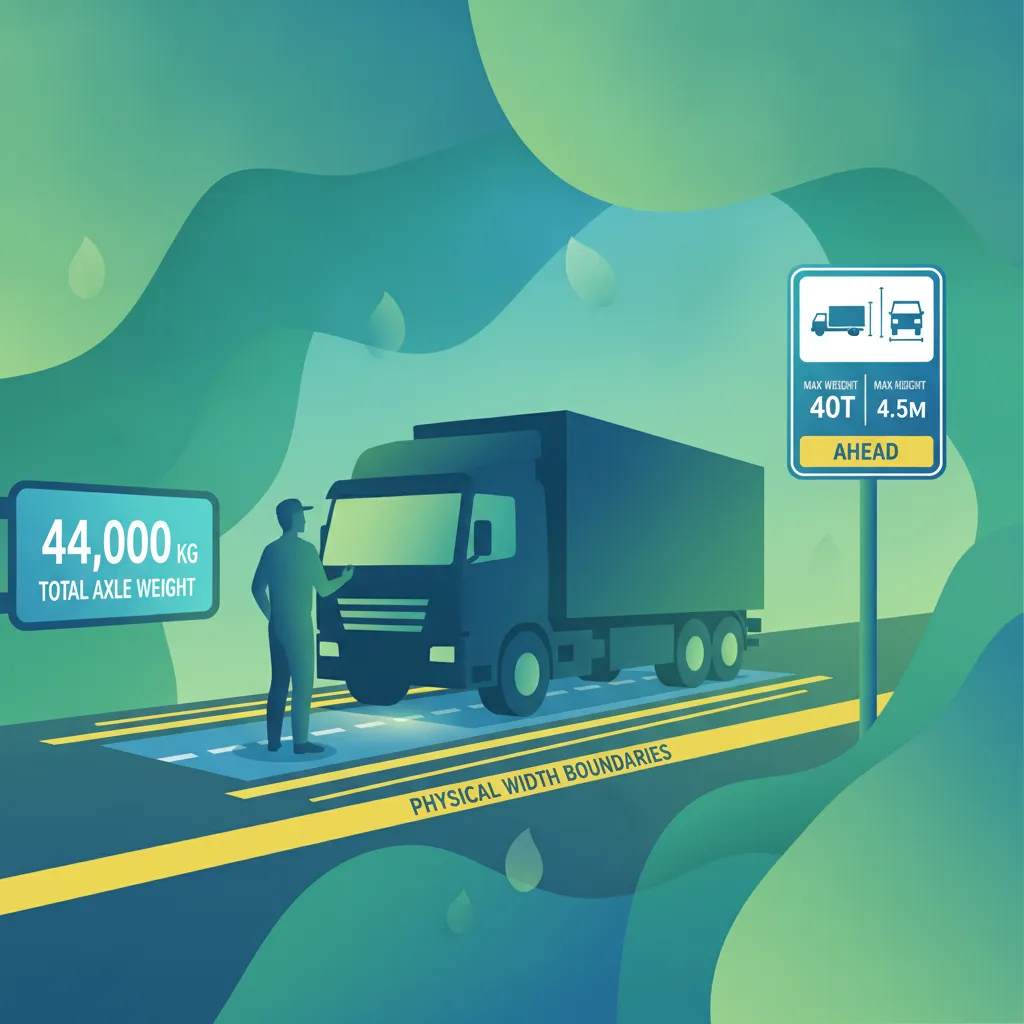
This lesson introduces the statutory limits governing the dimensions and mass of goods vehicles in Great Britain, including gross vehicle weight and individual axle loads. It explains how to calculate a vehicle's loaded weight to ensure it remains within legal parameters, preventing penalties and safety risks. Understanding these regulations is crucial for preventing damage to road infrastructure and ensuring the vehicle's stability and safe operation on every journey.
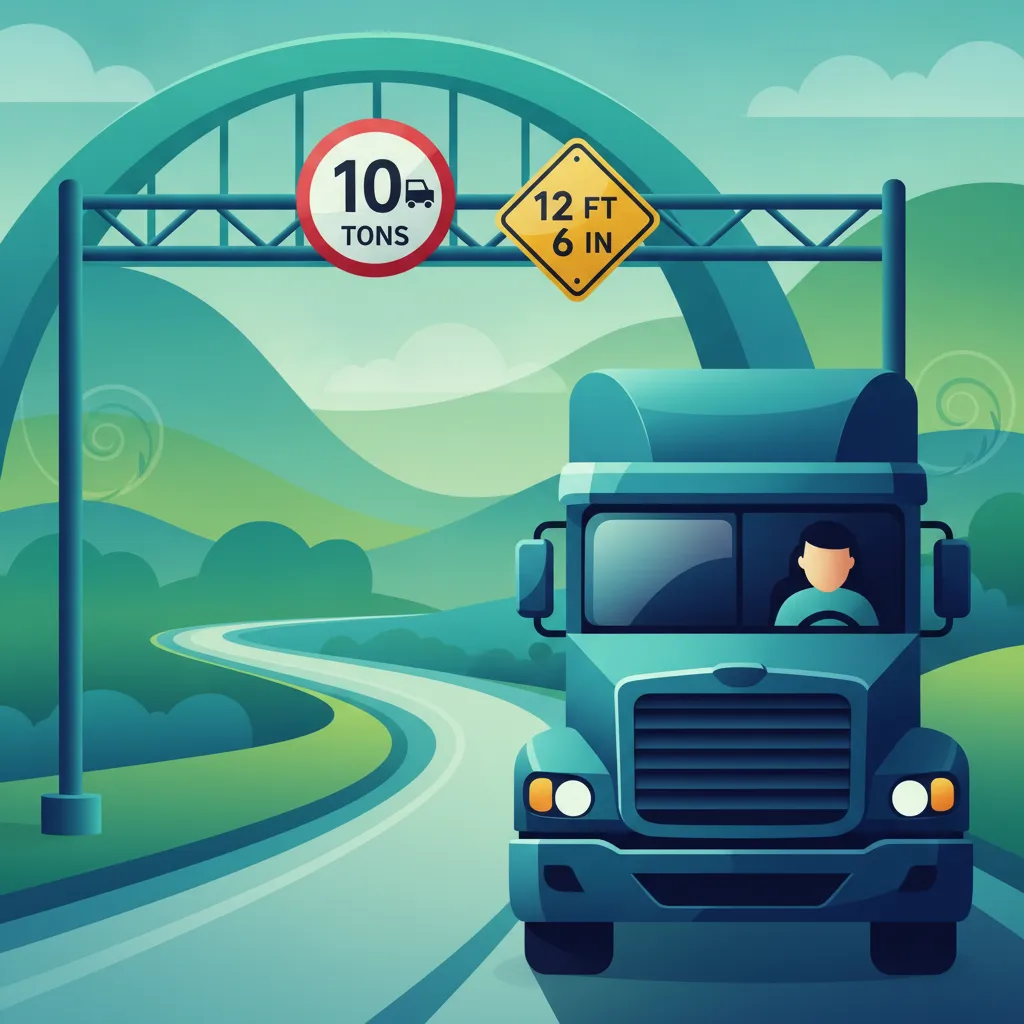
This lesson provides a detailed focus on the specific road signs that directly affect drivers of large goods vehicles. You will learn to accurately interpret mandatory signs for weight, height, and width restrictions, as well as signs indicating lane usage and prohibited routes. Understanding these signs is not optional; it is a legal requirement for avoiding fines, preventing accidents, and ensuring the safe passage of your vehicle through the road network.

This lesson provides a clear overview of the primary goods vehicle licence categories: C1, C, C1E, and CE. It explains the specific vehicle types, weight thresholds, and axle configurations permitted for each classification. You will learn about the DVSA's regulatory framework, including the essential age and medical fitness criteria for eligibility, as well as the steps for obtaining a full licence. Understanding these legal definitions is fundamental for ensuring compliance and safety.

This lesson focuses on the specific rules and best practices for driving HGVs on motorways in Great Britain. It covers mandatory speed limits for goods vehicles, lane discipline including restrictions on using the outside lane, and procedures for safely joining and leaving the motorway. The lesson also includes up-to-date information on driving on smart motorways, including understanding the signs and using emergency refuge areas correctly.
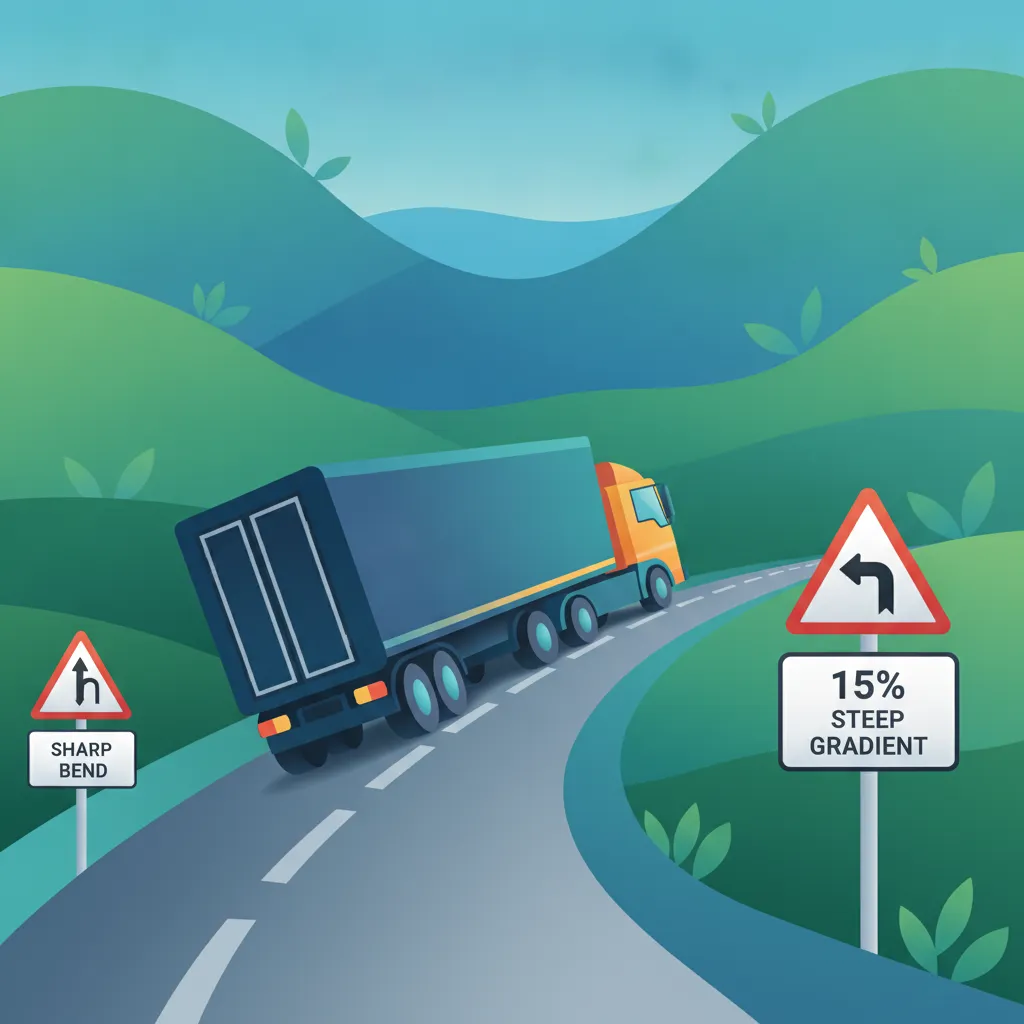
This lesson focuses on the principles of effective speed management for heavy goods vehicles, which extends beyond simply obeying the statutory speed limits. It covers how to adapt speed based on vehicle weight, load stability, road gradients, and prevailing traffic and weather conditions. You will also learn about the function of mandatory speed limiters and how intelligent use of speed and cruise control can significantly improve fuel efficiency and safety.

This lesson reinforces the vital safety rule of maintaining an adequate following distance from the vehicle ahead. It explains why the standard 'two-second rule' must be extended for heavy vehicles, especially in poor weather or when heavily laden, to account for longer stopping distances. You will learn practical methods for judging a safe gap in various traffic situations, creating a crucial safety buffer to react to unforeseen hazards.

This lesson addresses the serious danger of driver fatigue, a major cause of incidents involving commercial vehicles. It details the complex EU and GB domestic rules on drivers' hours, including driving limits and required rest periods. Learners will be taught to recognize the physical and mental signs of fatigue and understand the importance of taking quality rest to maintain alertness and ensure their own safety and that of others.

This lesson provides guidance on how to safely and compliantly navigate through roadworks, which are a common feature of the road network. It covers the interpretation of temporary signs, strict adherence to reduced speed limits, and how to maneuver through narrow lanes and contraflow systems. The paramount importance of protecting road workers by driving with extra care and attention is a central theme of this lesson.

This lesson delves into the core principles of correct weight distribution within a goods vehicle to ensure safety and stability. It explains how to balance a load evenly across the axles to prevent overloading and maintain optimal braking and steering performance. Learners will understand how incorrect load placement can dangerously affect vehicle dynamics, reinforcing the importance of careful planning before every journey to ensure stability on the road.

This lesson addresses the growing number of environmental access restrictions in urban areas, such as Low Emission Zones (LEZ), Ultra Low Emission Zones (ULEZ), and congestion charging. Learners will understand the vehicle emission standards (Euro standards) required for entry and how to check their vehicle's compliance. It covers the practicalities of planning routes that account for these zones to avoid significant financial penalties and support cleaner air initiatives.
Examine practical driving scenarios focusing on compliance with weight, width, and axle restrictions for goods vehicles. Understand how to apply regulations to real-world situations and avoid common pitfalls.
This lesson introduces the statutory limits governing the dimensions and mass of goods vehicles in Great Britain, including gross vehicle weight and individual axle loads. It explains how to calculate a vehicle's loaded weight to ensure it remains within legal parameters, preventing penalties and safety risks. Understanding these regulations is crucial for preventing damage to road infrastructure and ensuring the vehicle's stability and safe operation on every journey.
This lesson provides a clear overview of the primary goods vehicle licence categories: C1, C, C1E, and CE. It explains the specific vehicle types, weight thresholds, and axle configurations permitted for each classification. You will learn about the DVSA's regulatory framework, including the essential age and medical fitness criteria for eligibility, as well as the steps for obtaining a full licence. Understanding these legal definitions is fundamental for ensuring compliance and safety.
This lesson provides a detailed focus on the specific road signs that directly affect drivers of large goods vehicles. You will learn to accurately interpret mandatory signs for weight, height, and width restrictions, as well as signs indicating lane usage and prohibited routes. Understanding these signs is not optional; it is a legal requirement for avoiding fines, preventing accidents, and ensuring the safe passage of your vehicle through the road network.
This lesson addresses the serious danger of driver fatigue, a major cause of incidents involving commercial vehicles. It details the complex EU and GB domestic rules on drivers' hours, including driving limits and required rest periods. Learners will be taught to recognize the physical and mental signs of fatigue and understand the importance of taking quality rest to maintain alertness and ensure their own safety and that of others.
This lesson focuses on the specific rules and best practices for driving HGVs on motorways in Great Britain. It covers mandatory speed limits for goods vehicles, lane discipline including restrictions on using the outside lane, and procedures for safely joining and leaving the motorway. The lesson also includes up-to-date information on driving on smart motorways, including understanding the signs and using emergency refuge areas correctly.
This lesson focuses on the principles of effective speed management for heavy goods vehicles, which extends beyond simply obeying the statutory speed limits. It covers how to adapt speed based on vehicle weight, load stability, road gradients, and prevailing traffic and weather conditions. You will also learn about the function of mandatory speed limiters and how intelligent use of speed and cruise control can significantly improve fuel efficiency and safety.
This lesson provides guidance on how to safely and compliantly navigate through roadworks, which are a common feature of the road network. It covers the interpretation of temporary signs, strict adherence to reduced speed limits, and how to maneuver through narrow lanes and contraflow systems. The paramount importance of protecting road workers by driving with extra care and attention is a central theme of this lesson.

This lesson covers the critical legal requirement for accurate record-keeping in the transport industry. It provides detailed instruction on the correct use of both analogue and digital tachographs to record driving time, breaks, and other work. You will also learn about other essential documents that must be carried, such as load manifests and delivery notes, and the importance of keeping these records accurate and available for inspection by enforcement authorities.

Gain a comprehensive understanding of the legal repercussions for violating goods vehicle regulations, which can range from civil penalties to criminal prosecution. This lesson details the fines, penalty points, and potential vehicle seizure enforced by authorities like the DVSA and the police. It clarifies how serious offences are handled in court and how repeated infractions can lead to escalating sanctions, impacting both your licence and professional career.
This lesson addresses the growing number of environmental access restrictions in urban areas, such as Low Emission Zones (LEZ), Ultra Low Emission Zones (ULEZ), and congestion charging. Learners will understand the vehicle emission standards (Euro standards) required for entry and how to check their vehicle's compliance. It covers the practicalities of planning routes that account for these zones to avoid significant financial penalties and support cleaner air initiatives.
Find clear answers to common questions learners have about Weight, Width and Axle Restrictions. Learn how the lesson is structured, which driving theory objectives it supports, and how it fits into the overall learning path of units and curriculum progression in Great Britain. These explanations help you understand key concepts, lesson flow, and exam focused study goals.
Ignoring these signs often leads to bridge strikes, damaged road surfaces, or becoming stuck in narrow routes. Legally, it results in prosecution, penalty points, and potential disqualification from operating goods vehicles.
Yes, axle weight limits are crucial for infrastructure longevity. You must ensure that both your gross vehicle weight and your individual axle loads remain within legal limits to avoid fines during DVSA roadside enforcement.
You should use professional-grade HGV navigation systems that account for your vehicle's specific height, width, and weight. Always double-check digital data against physical road signage, as permanent signs take precedence over navigation software.
Yes. Width restrictions are usually displayed in metres with arrows on the side of the sign, while length restrictions often appear as a simplified lorry icon with a distance limit. Always pay attention to the specific units and icons used on the sign.
Dive into our comprehensive question bank to find exactly what you need for your Great Britain theory test. Use our advanced filters to pinpoint specific subjects or test your knowledge on challenging areas, ensuring you're fully prepared for success.