
This lesson guides you through the critical safety steps required if your motorcycle breaks down on Austrian roads. Understanding these protocols is vital for both your safety and for answering emergency scenario questions in your A, A1, or A2 theory exam. You will learn the correct legal and practical actions to take to protect yourself and other road users.
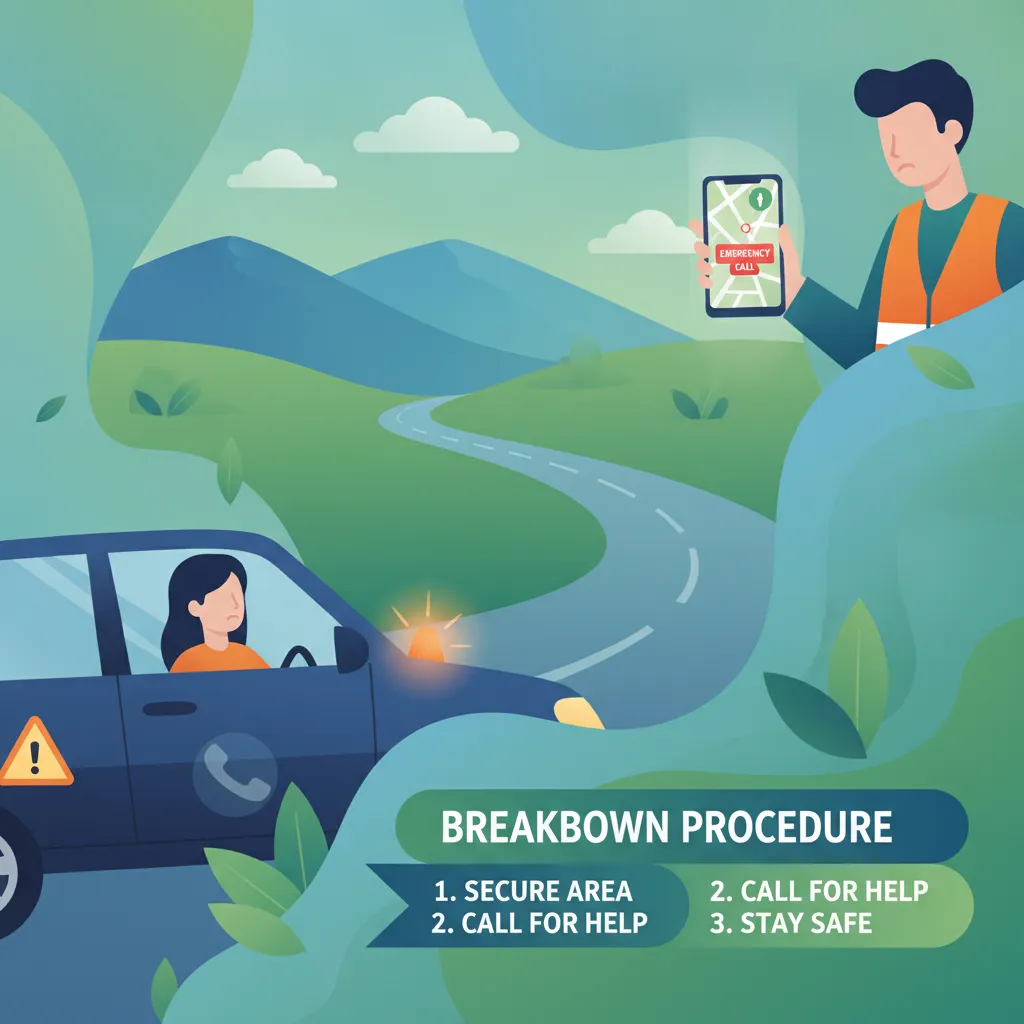
Lesson content overview
Motorcycle breakdowns are an unavoidable part of riding, but how a rider responds can significantly impact their safety and the safety of other road users. This lesson provides a comprehensive guide to breakdown procedures and emergency calls, ensuring you are prepared to handle such situations effectively and in accordance with Austrian traffic regulations. Understanding and applying these steps is crucial for minimizing risks, ensuring timely assistance, and complying with legal requirements on Austrian roads.
A vehicle breakdown, particularly on a motorcycle, presents immediate hazards. Unlike cars, motorcycles offer less physical protection and can be less visible to other drivers when stationary. Therefore, a proactive and structured approach is essential to manage the situation safely. The goal is to quickly transform a potentially dangerous roadside emergency into a controlled environment where help can be safely rendered.
Following a precise breakdown protocol is not merely a recommendation; it is a critical safety measure and a legal obligation in Austria. The primary objective is to prevent secondary accidents, which often occur when an unexpected obstruction (like a stalled motorcycle) is not adequately signposted or seen by approaching traffic. Proper procedures ensure you, your motorcycle, and other road users are protected, reducing the risk of collisions and severe injuries. It also facilitates faster and more efficient assistance from emergency services or roadside recovery.
The moments immediately following a breakdown are the most critical. Your rapid and correct actions can determine the outcome, affecting both your personal safety and the flow of traffic. The initial steps focus on assessing the situation and making your presence known to others.
As soon as your motorcycle begins to malfunction or stalls, your first priority is your personal safety. Before attempting any repairs or even dismounting, assess your immediate surroundings. Consider the speed of passing traffic, the available space, and the visibility for other drivers. Remain calm and inside your protective gear, especially your helmet, until you have moved to a safer location.
Never exit your motorcycle immediately in fast-moving traffic without first assessing the risk. Your safety is paramount.
The very first action you should take, if possible, is to activate your motorcycle's hazard warning lights (warning flashers). This is a legal requirement in Austria when your vehicle is immobilized on the road or creates a hazard, as per Austrian StVO § 19. Hazard lights flash all indicator lights simultaneously, providing an immediate visual warning to other road users that your motorcycle is an unexpected obstruction or experiencing difficulty. This early warning gives approaching drivers more time to react and adjust their speed or lane position.
Once your hazard lights are on and you have quickly assessed your immediate safety, the next crucial step is to move your motorcycle to the safest possible location. This minimizes obstruction to traffic and reduces the risk of further incidents.
The ideal place to relocate your motorcycle depends entirely on the road type and available space.
Assess the environment: Look for the nearest safe spot. This could be a hard shoulder on a motorway, a wide verge on a rural road, or a designated parking area.
Move off the road: If there's a hard shoulder, use it. On roads without a hard shoulder, try to move your motorcycle as far to the right edge of the road as possible, ensuring it does not obstruct traffic or pedestrian pathways.
Consider visibility: Position your motorcycle where it is most visible to approaching traffic, ideally on a straight section of road rather than a bend or crest, if feasible. Avoid stopping immediately after a curve or blind spot.
Engine off, keys out: Once safely stopped, turn off the engine and remove the key to prevent accidental starting.
If you are on a high-speed road, exercising extreme caution when moving your vehicle is vital. Do not attempt to push your motorcycle into a dangerous position or across multiple lanes of traffic. If movement is impossible without significant risk, focus on maximizing visibility from your current position.
Beyond hazard lights, Austrian law requires additional warning signals to further enhance visibility and protect yourself and other road users. These include wearing a high-visibility vest and placing a warning triangle.
When you exit your motorcycle on a public road in Austria, you are legally required to wear a high-visibility vest, as stipulated by Austrian StVO § 23. This vest, typically bright yellow or orange with reflective strips, significantly increases your visibility to other drivers, especially in low light conditions, at night, or during adverse weather. It helps distinguish you from your motorcycle and makes you noticeable from a greater distance, providing drivers more time to react. Always keep your high-visibility vest easily accessible on your motorcycle, perhaps under the seat or in a top case, so you can retrieve it quickly and safely.
A warning triangle (Warndreieck) is a mandatory piece of safety equipment in Austria, and its correct placement is crucial for warning approaching traffic. Austrian StVO § 115 dictates specific distances for its placement, ensuring drivers have adequate time to perceive the hazard and adjust.
The placement distance for your warning triangle varies depending on the type of road:
When placing the triangle, walk facing the oncoming traffic, remaining as close to the side of the road as safely possible, and ensure you are wearing your high-visibility vest. Place the triangle firmly on the road surface so it is stable and clearly visible.
Once your motorcycle is in the safest possible location and warning signals are in place, the next step is to call for assistance. Knowing who to call and what information to provide can significantly expedite help.
If your breakdown involves any risk to life or safety, such as an injury, your motorcycle being in a highly dangerous position, or if you feel unsafe due to traffic or environmental conditions, you must call the emergency services. In Austria, like in most of Europe, the single emergency number is 112. This number connects you to police, fire, or ambulance services as needed.
When calling 112:
Familiarize yourself with your motorcycle's registration number and your insurance details, as these may be required when contacting roadside assistance.
For non-emergency breakdowns (no immediate danger or injury), you should contact your roadside assistance provider. This could be your motorcycle insurance company's breakdown service, a motoring club (like ÖAMTC or ARBÖ in Austria), or an independent recovery service. Have their number readily available, perhaps stored in your phone or noted in your wallet.
When calling roadside assistance:
Adhering to the specific legal requirements outlined in the Austrian Road Traffic Act (Straßenverkehrsordnung – StVO) is not only about safety but also about legal compliance. Failure to follow these rules can result in fines or penalties.
Here's a summary of the key regulations pertaining to motorcycle breakdowns in Austria:
Understanding these regulations ensures you act responsibly and avoid potential legal repercussions.
Breakdown procedures are not one-size-fits-all. Environmental factors, road types, and light conditions necessitate adjustments to ensure optimal safety.
Being aware of common pitfalls can help you react more effectively during a breakdown.
Successfully navigating a motorcycle breakdown on Austrian roads requires quick thinking, adherence to safety protocols, and compliance with the law. By internalizing these key principles, you enhance your safety and the safety of everyone around you.
This lesson covers the complete safety protocol for handling motorcycle breakdowns on Austrian roads, emphasizing immediate hazard assessment, legal requirements under Austrian traffic law (StVO), and proper use of warning equipment. Key procedures include activating hazard lights, wearing a mandatory high-visibility vest, and placing a warning triangle at legally specified distances (100m on open roads, 30m in urban areas). The content also distinguishes between calling emergency services (112) for life-threatening situations and contacting roadside assistance (such as ÖAMTC or ARBÖ) for non-emergency breakdowns, while adapting procedures for motorways, adverse weather, and low-light conditions.
A short set of high-value points that capture the most important learning from this lesson.
Activate hazard lights immediately when your motorcycle becomes stationary on any public road in Austria, as required by StVO § 19.
A high-visibility vest is legally mandatory when exiting your motorcycle on a public road, per StVO § 23, regardless of the reason for stopping.
The warning triangle must be placed at least 100 meters behind your motorcycle on open roads and at least 30 meters in built-up areas.
Move your motorcycle to the safest available location (hard shoulder, roadside, or designated safe zone) before taking other protective actions.
Call emergency number 112 when the breakdown involves any risk to life, injury, or high-risk positioning; contact roadside assistance for non-emergency mechanical issues.
Explore all units and lessons included in this driving theory course.
StVO § 19 requires hazard lights when immobilized on the road; StVO § 23 requires high-visibility vest when exiting; StVO § 115 governs warning triangle placement.
On motorways (Autobahnen), place the warning triangle further than the standard 100 meters if conditions warrant it, and stay behind safety barriers.
When calling 112 or roadside assistance, always state your exact location including road name, direction of travel, and nearby landmarks.
Keep your high-visibility vest easily accessible on your motorcycle (under seat or top case) so you can retrieve it before exiting.
Never attempt dangerous repairs on a live road; wait for professional assistance unless the fix is trivial and safe.
Failing to activate hazard lights immediately, leaving the motorcycle as an invisible obstruction to oncoming traffic.
Placing the warning triangle too close to the vehicle or on the wrong side of the road, providing insufficient warning distance.
Exiting the motorcycle without wearing a high-visibility vest, significantly increasing the risk of being struck by other road users.
Calling roadside assistance instead of 112 when the breakdown involves injury or immediate danger to life, delaying emergency response.
Abandoning the motorcycle without proper warning signals or leaving it in an illegal position that creates additional hazards and potential fines.
Lesson content overview
A short set of high-value points that capture the most important learning from this lesson.
Activate hazard lights immediately when your motorcycle becomes stationary on any public road in Austria, as required by StVO § 19.
A high-visibility vest is legally mandatory when exiting your motorcycle on a public road, per StVO § 23, regardless of the reason for stopping.
The warning triangle must be placed at least 100 meters behind your motorcycle on open roads and at least 30 meters in built-up areas.
Move your motorcycle to the safest available location (hard shoulder, roadside, or designated safe zone) before taking other protective actions.
Call emergency number 112 when the breakdown involves any risk to life, injury, or high-risk positioning; contact roadside assistance for non-emergency mechanical issues.
Explore all units and lessons included in this driving theory course.
StVO § 19 requires hazard lights when immobilized on the road; StVO § 23 requires high-visibility vest when exiting; StVO § 115 governs warning triangle placement.
On motorways (Autobahnen), place the warning triangle further than the standard 100 meters if conditions warrant it, and stay behind safety barriers.
When calling 112 or roadside assistance, always state your exact location including road name, direction of travel, and nearby landmarks.
Keep your high-visibility vest easily accessible on your motorcycle (under seat or top case) so you can retrieve it before exiting.
Never attempt dangerous repairs on a live road; wait for professional assistance unless the fix is trivial and safe.
Failing to activate hazard lights immediately, leaving the motorcycle as an invisible obstruction to oncoming traffic.
Placing the warning triangle too close to the vehicle or on the wrong side of the road, providing insufficient warning distance.
Exiting the motorcycle without wearing a high-visibility vest, significantly increasing the risk of being struck by other road users.
Calling roadside assistance instead of 112 when the breakdown involves injury or immediate danger to life, delaying emergency response.
Abandoning the motorcycle without proper warning signals or leaving it in an illegal position that creates additional hazards and potential fines.
Explore search topics learners often look for when studying Breakdown Procedures and Emergency Calls. These topics reflect common questions about road rules, driving situations, safety guidance, and lesson level theory preparation for learners in Austria.
Browse additional driving theory lessons that cover connected traffic rules, road signs, and common driving situations related to this topic. Improve your understanding of how different rules interact across everyday traffic scenarios.
Learn the essential safety protocol for motorcycle breakdowns in Austria, including hazard lights, safe relocation, high-visibility vest usage, and correct warning triangle placement. Understand when and how to make emergency calls.
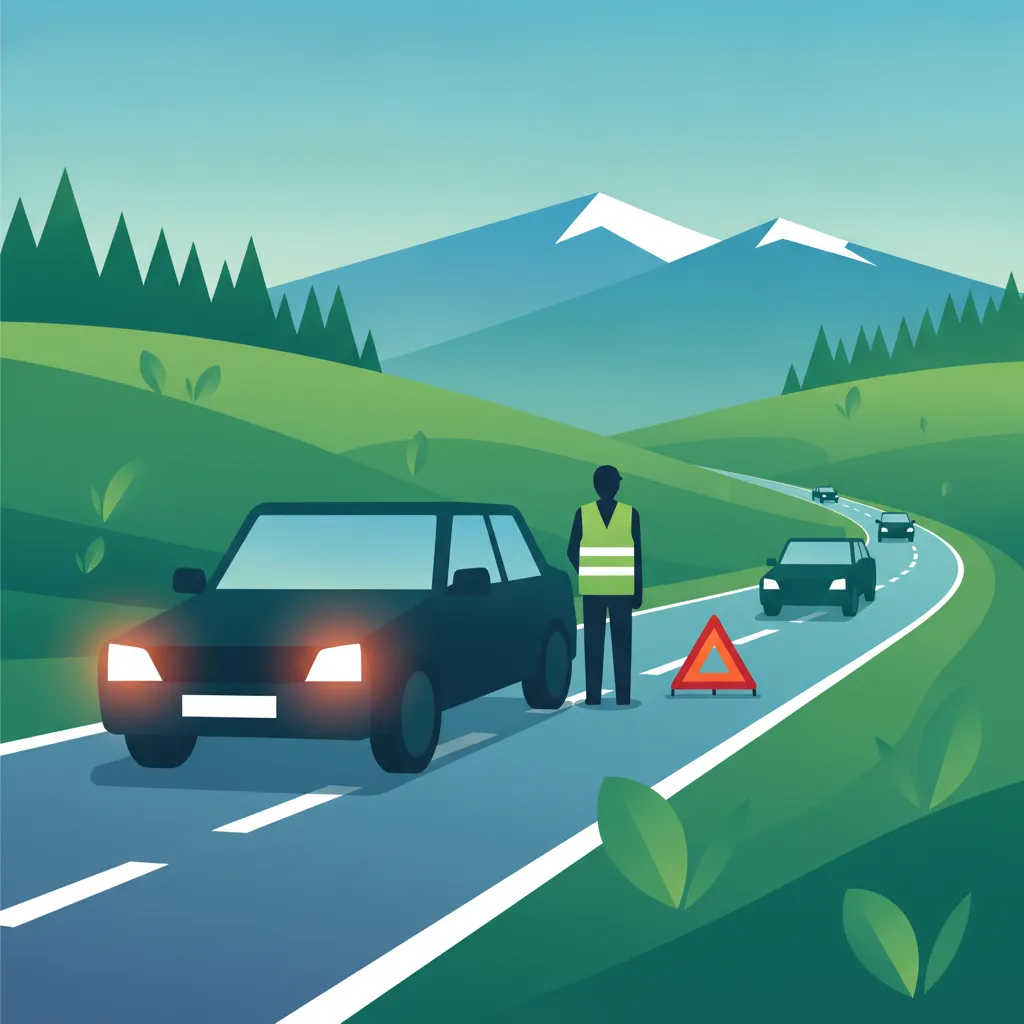
This lesson equips riders with the knowledge to manage an unexpected breakdown or accident. It outlines the steps for securing the vehicle and scene safely, including the use of hazard lights and a reflective vest. It also covers the procedure for contacting emergency services and providing essential information.

This lesson outlines the standardized procedure for handling a vehicle breakdown safely. It covers pulling over to a safe location, activating hazard lights, deploying the warning triangle, and wearing a high-visibility vest. It also explains when and how to contact roadside assistance or emergency services.

This lesson provides a step-by-step guide for safely managing a vehicle breakdown on the road. It covers the correct procedure for pulling over to a safe location, activating hazard lights, and wearing a high-visibility vest. Learners will understand the legal requirement and correct placement of the warning triangle to alert oncoming traffic, as well as the necessary information to provide when contacting roadside assistance services.

This lesson provides critical knowledge for being the first responder at an accident. It covers securing the scene to prevent further incidents, making an effective emergency call, and forming the 'Rettungsgasse' for approaching rescue vehicles. Basic but potentially life-saving first aid steps are reviewed, with a strong emphasis on not endangering oneself while providing assistance.
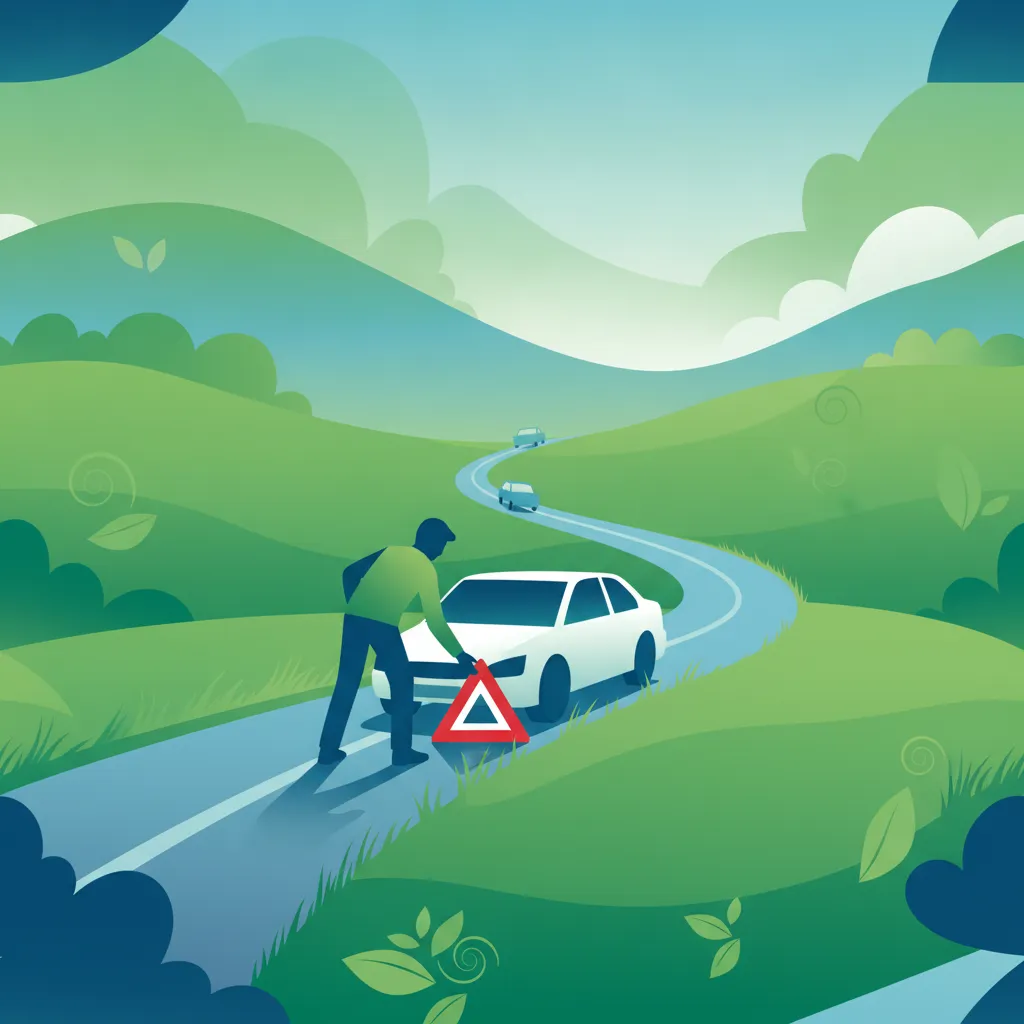
A breakdown requires a calm, systematic response to keep everyone safe. This lesson details the procedure: move to the safest possible location, activate hazard lights, secure the vehicle, and deploy warning triangles. It emphasizes the importance of moving passengers to a safe place away from the vehicle, especially on a motorway, before contacting your company or the breakdown services.
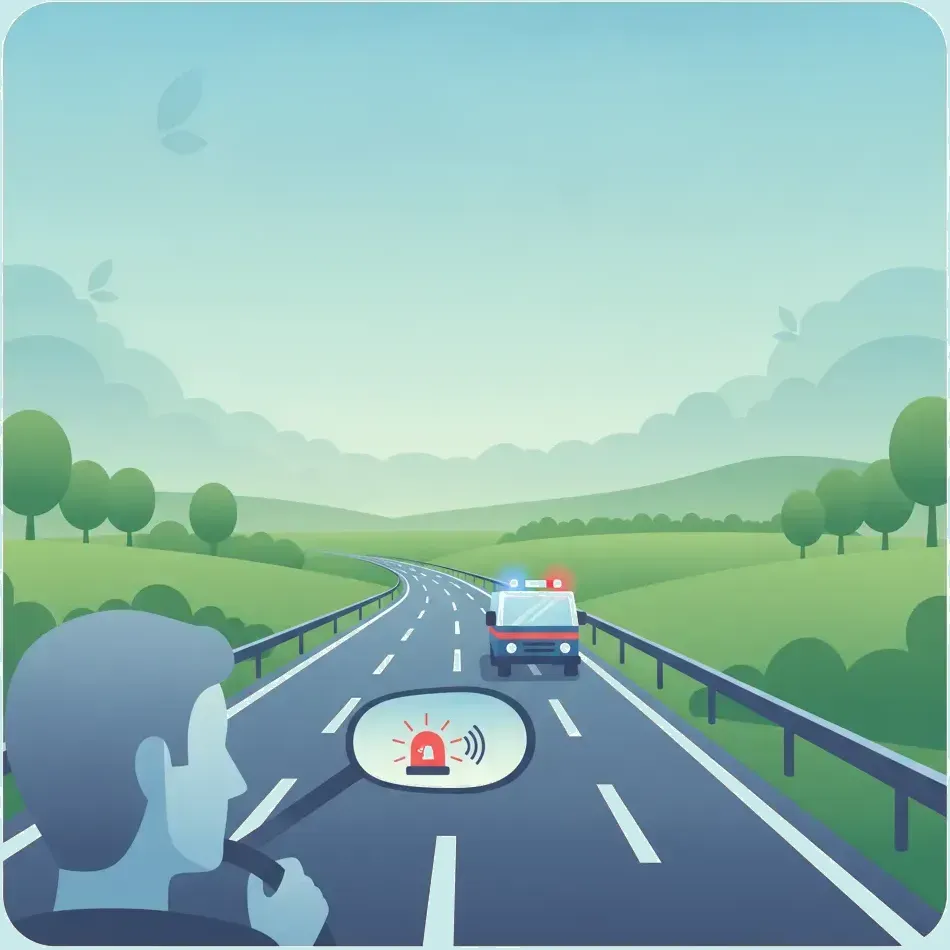
This lesson explains the correct protocol when encountering emergency vehicles with active sirens and lights. It details the legal requirement to yield the right-of-way and provides practical guidance on how to pull over safely and efficiently. Understanding these procedures helps ensure emergency services can reach their destination without delay.

This lesson provides essential knowledge for using Austria's high-speed road network. It covers the correct procedure for entering via acceleration lanes, maintaining strict lane discipline (keeping right, passing left), and understanding the digital or physical Vignette (toll sticker) requirement. The formation of the 'Rettungsgasse' (emergency corridor) during traffic jams is also a key topic.
This lesson addresses the unique environment of road tunnels, common in Austria's alpine regions. Key safety practices include removing sunglasses before entry, adhering to specific tunnel speed limits, and maintaining a safe following distance. It also covers emergency procedures, such as locating emergency exits and using designated call boxes in case of a breakdown or accident.

This lesson breaks down the overtaking maneuver into a safe, repeatable process: assess, signal, check, move, and return. It emphasizes the importance of ensuring a sufficient gap in oncoming traffic, checking mirrors and blind spots thoroughly, and maintaining a proper speed differential. Adherence to Austrian laws regarding where overtaking is prohibited is also covered in detail.
This lesson prepares riders for safely transiting through construction zones ('Baustellen'). It covers the interpretation of temporary signage, adherence to reduced speed limits, and awareness of hazards suchas altered lane markings, abrupt surface changes, and loose gravel. Respecting the safety of road workers and anticipating unpredictable traffic patterns are key themes.
Understand the legal requirements for motorcycle breakdowns in Austria, including StVO regulations for warning signals and emergency calls. Learn how to adapt breakdown procedures for different weather, light, and road conditions.
This lesson equips riders with the knowledge to manage an unexpected breakdown or accident. It outlines the steps for securing the vehicle and scene safely, including the use of hazard lights and a reflective vest. It also covers the procedure for contacting emergency services and providing essential information.
This lesson provides a step-by-step guide for safely managing a vehicle breakdown on the road. It covers the correct procedure for pulling over to a safe location, activating hazard lights, and wearing a high-visibility vest. Learners will understand the legal requirement and correct placement of the warning triangle to alert oncoming traffic, as well as the necessary information to provide when contacting roadside assistance services.
This lesson outlines the standardized procedure for handling a vehicle breakdown safely. It covers pulling over to a safe location, activating hazard lights, deploying the warning triangle, and wearing a high-visibility vest. It also explains when and how to contact roadside assistance or emergency services.
This lesson provides essential knowledge for using Austria's high-speed road network. It covers the correct procedure for entering via acceleration lanes, maintaining strict lane discipline (keeping right, passing left), and understanding the digital or physical Vignette (toll sticker) requirement. The formation of the 'Rettungsgasse' (emergency corridor) during traffic jams is also a key topic.
This lesson prepares riders for safely transiting through construction zones ('Baustellen'). It covers the interpretation of temporary signage, adherence to reduced speed limits, and awareness of hazards suchas altered lane markings, abrupt surface changes, and loose gravel. Respecting the safety of road workers and anticipating unpredictable traffic patterns are key themes.
This lesson provides critical knowledge for being the first responder at an accident. It covers securing the scene to prevent further incidents, making an effective emergency call, and forming the 'Rettungsgasse' for approaching rescue vehicles. Basic but potentially life-saving first aid steps are reviewed, with a strong emphasis on not endangering oneself while providing assistance.
This lesson explains the correct protocol when encountering emergency vehicles with active sirens and lights. It details the legal requirement to yield the right-of-way and provides practical guidance on how to pull over safely and efficiently. Understanding these procedures helps ensure emergency services can reach their destination without delay.

This lesson details the mandatory personal and vehicle documentation required for motorcyclists in Austria. It covers the necessity of carrying a valid licence card, vehicle registration papers, and proof of insurance at all times. Understanding these legal requirements ensures full compliance with Austrian traffic law and facilitates smooth interactions with law enforcement.

This lesson prepares riders for the specific conditions of Austria's mountain passes. It highlights hazards such as tight hairpin turns, potential for sudden weather changes, rockfall, and variable road surfaces. Awareness of these unique challenges allows riders to anticipate risks and adapt their technique for safe and enjoyable alpine touring.
This lesson details the essential legal and administrative requirements for operating an AM vehicle in Austria. It covers the processes for vehicle registration, the obligation for licence plates, and the necessity of third-party liability insurance. Furthermore, it explains the importance of regular technical inspections to ensure the vehicle remains roadworthy and compliant with national standards.
Find clear answers to common questions learners have about Breakdown Procedures and Emergency Calls. Learn how the lesson is structured, which driving theory objectives it supports, and how it fits into the overall learning path of units and curriculum progression in Austria. These explanations help you understand key concepts, lesson flow, and exam focused study goals.
On motorways, it must be placed at least 100 meters behind the vehicle. On secondary roads, the distance should be sufficient to give other drivers enough warning to react, generally around 50 meters, depending on visibility and speed limits.
While not always legally mandated for every situation, it is highly recommended and standard best practice for motorcycle riders in Austria to increase visibility to other motorists, especially in low-light conditions.
You must call 112 for any emergency involving injuries, danger to other road users, or immediate threats to traffic safety. If your motorcycle simply suffers a mechanical failure in a safe location, you should contact a private roadside assistance provider.
Motorcycles are small and often difficult for other drivers to spot, especially at high speeds. Moving to the hard shoulder or off the road entirely significantly reduces the risk of being struck by another vehicle, which is a major focus in the Austrian motorcycle theory exam.
Refine your study plan by searching for specific Austrian driving theory practice sets. Pinpoint questions related to particular road rules, signs, or challenge levels, and begin practicing immediately to reinforce your knowledge and excel in your official exam with confidence. Get started with focused revision today.