
This lesson guides you through the critical safety procedures required when a bus or coach breaks down. It builds upon your professional duty of care by providing a step-by-step approach to managing emergencies, protecting your passengers, and securing your vehicle according to Austrian traffic regulations.
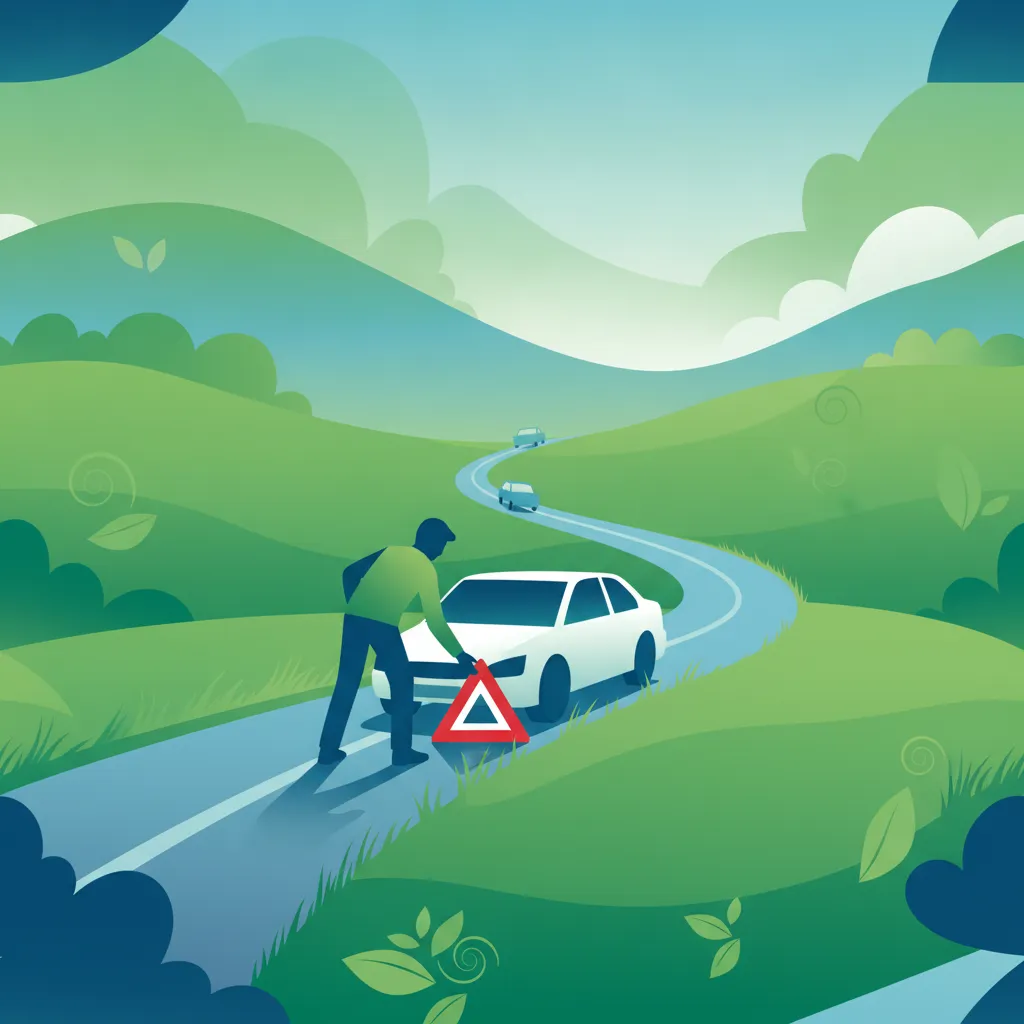
Lesson content overview
Navigating the roads of Austria as a professional bus or coach driver demands constant vigilance and readiness for any eventuality. Among the most critical scenarios is a vehicle breakdown. While disruptive, a breakdown does not have to be dangerous if handled correctly. This lesson, part of the Austrian Driving Theory Course for Bus & Coach Licence (Category D), outlines the systematic, calm, and legally compliant procedures to ensure the safety of your passengers, your vehicle, and other road users.
Improper handling of a breakdown can escalate into secondary accidents, endanger lives, and expose both the driver and the transport company to severe legal liabilities. Therefore, understanding and meticulously following these steps is not just good practice—it's a professional and legal imperative.
A vehicle breakdown is any unanticipated mechanical, electrical, or structural failure that renders your bus or coach unable to proceed safely under its own power. Such an event requires an immediate and structured response centered on preserving life and property. As a Category D driver, your primary focus must always be the safety and well-being of your passengers.
The legal and ethical responsibility of a driver to safeguard passengers during all phases of travel, especially in emergencies such as a vehicle breakdown.
When a breakdown occurs, your actions must follow a strict hierarchy of priorities to minimize risk. This principle guides every step you take:
This hierarchy ensures that immediate risks are addressed before less urgent matters, significantly reducing the chance of secondary incidents.
A stationary bus or coach can become a major obstacle and hazard, especially on high-speed roads or in conditions of poor visibility. Effective visibility management is crucial to alert approaching traffic to your presence. This involves using your vehicle's warning systems and deploying additional equipment as required by Austrian law.
Furthermore, as a professional driver, you have clear legal notification obligations. You must inform relevant authorities and your transport company promptly, enabling a coordinated response and ensuring compliance with all transport regulations.
The moment you realize your vehicle is experiencing a breakdown, a rapid assessment of the situation is paramount. This initial evaluation dictates your immediate actions.
Swiftly evaluate the circumstances of the breakdown:
A breakdown where the vehicle comes to a complete stop without any prior warning or ability to move.
A breakdown where the vehicle loses motive power or experiences a critical failure while in motion, but may still be maneuverable for a short distance.
Your assessment will determine whether you can safely relocate the vehicle or if it must remain stationary in its current position.
If your bus or coach suffers a dynamic breakdown or if you can still coast a short distance, your absolute priority is to move it to the safest possible location.
Signal Intention: If possible, use your indicators to signal your intention to move off the carriageway.
Hard Shoulder or Breakdown Lane: On motorways (Autobahnen) or expressways (Schnellstraßen), aim for the hard shoulder (Pannenstreifen) or a designated breakdown lane. Ensure the entire vehicle, including any mirrors or cargo, is completely clear of the traffic lane.
Side Roads/Lay-bys: On main roads (Bundesstraßen) or rural routes, look for lay-bys, bus stops, or the widest available shoulder.
Avoid Unsafe Spots: Never stop on a blind bend, crest of a hill, in a tunnel, or immediately after a junction where visibility is poor. If you cannot move to a safe spot, prioritize making the vehicle visible.
Austrian Road Traffic Regulations (Straßenverkehrsordnung, StVO) explicitly require a vehicle to be moved off the carriageway if it can be done safely (§ 127 Abs. 3). Failure to do so, if feasible, can create a significant hazard and result in legal penalties.
Immediately upon stopping due to a breakdown, or if forced to stop unexpectedly in a traffic lane, you must activate your vehicle's hazard warning lights (Alarmblinkanlage).
Built-in vehicle lights (all indicators flashing simultaneously) designed to warn other road users of a stationary or slow-moving vehicle that poses a potential hazard.
Hazard lights alone may not be sufficient, especially at night, in adverse weather, or on high-speed roads where drivers may not react in time. This is where warning triangles become critical.
Wear a High-Visibility Vest: Before exiting the vehicle, always put on your high-visibility warning vest (Warnweste). This is a legal requirement in Austria when leaving a broken-down vehicle on a road.
Carry the Triangle: Take at least one warning triangle (Pannendreieck) with you. Professional vehicles like buses and coaches may carry multiple.
Walk Against Traffic: Carefully walk along the hard shoulder or verge, facing oncoming traffic, to the appropriate deployment distance. This allows you to see approaching vehicles and react if necessary.
Placement Distances (Austrian StVO § 126):
Ensure Stability: Place the triangle securely so it will not be blown over by wind or passing vehicles.
Never place the warning triangle too close to your vehicle. This dramatically reduces its effectiveness by giving other drivers insufficient time to react. On motorways, a triangle placed just 5-10 meters behind a large coach is practically useless.
Before or immediately after deploying warning triangles and attending to passengers, you must ensure your bus or coach is fully secured to prevent any unintentional movement.
With the vehicle secured and marked, your absolute next priority is the safety of your passengers.
This is the most critical phase of breakdown management, especially for a bus or coach. Your duty of care dictates that passengers must be moved to a safe location away from the immediate hazard of passing traffic.
Calm Communication: Clearly and calmly inform passengers of the situation and the need to evacuate. Reassure them and provide precise instructions.
Open Doors: Open the main passenger doors. If necessary, use emergency door releases.
Supervise Exit: Supervise passengers as they exit the vehicle. Pay special attention to children, elderly passengers, and those with reduced mobility, offering assistance as needed.
Designate Safe Area:
Maintain Supervision: Keep all passengers together in the designated safe area until further instructions or assistance arrives. Conduct a quick headcount if possible.
Driver's Position: As the driver, you should remain with your passengers in the safe area, unless it is absolutely necessary to return to the vehicle for critical items (e.g., first aid kit, fire extinguisher) or to communicate with emergency services. Always prioritize your personal safety.
Austrian transport law (Verkehrsordnung § 187) places a strong emphasis on the driver's duty to ensure passenger safety during emergencies. Failing to evacuate passengers, particularly on high-speed roads, is a serious violation of this duty.
Once the vehicle is secured and your passengers are safely evacuated, your next step is to initiate communication.
Contact Your Dispatcher/Company: This is your primary point of contact. Provide them with:
Emergency Services (if needed): If there are injuries, fire, or the vehicle is in a dangerous position (e.g., blocking traffic, in a tunnel), immediately contact the emergency services (European emergency number 112 or Austrian roadside assistance ÖAMTC/ARBÖ if applicable). Provide the same detailed information as to your dispatcher.
Follow Instructions: Adhere to any instructions given by your company dispatcher or emergency services.
Prompt notification enables your company to dispatch assistance, arrange for a replacement vehicle or alternative transport for passengers, and manage the logistical impact of the breakdown.
Professional drivers operating in Austria must adhere to specific legal requirements concerning vehicle breakdowns.
Even experienced drivers can make mistakes in stressful situations. Awareness of common pitfalls and how conditions alter procedures is key.
Always carry a fully charged mobile phone. Familiarize yourself with emergency contact numbers for your company, roadside assistance (e.g., ÖAMTC, ARBÖ), and the pan-European emergency number 112.
Effectively managing a vehicle breakdown is a step-by-step process that prioritizes safety and compliance. Here is a summary of the essential actions:
Assess Immediately: Evaluate the vehicle's position, traffic, and surrounding environment.
Relocate (if possible): Move the vehicle to the safest possible location—hard shoulder, lay-by, or off the main carriageway.
Activate Hazard Lights: Turn on your hazard warning lights as soon as the vehicle stops unexpectedly.
Wear Hi-Vis Vest: Put on your high-visibility vest before exiting the vehicle.
Deploy Warning Triangles: Place warning triangles at legally mandated distances behind the vehicle (50m motorway, 30m main road, 15m urban).
Secure the Vehicle: Engage the handbrake, select a gear (or "Park"), and ensure the vehicle cannot roll.
Evacuate Passengers: Calmly instruct and assist passengers to evacuate to a safe area, ensuring they are well away from traffic, especially on motorways (minimum 50m).
Communicate: Contact your company dispatcher and, if necessary, emergency services (112), providing precise details of your location, the breakdown, and passenger status.
Supervise and Wait: Remain with your passengers in the safe area, maintaining situational awareness, until assistance arrives.
By mastering these procedures, you not only fulfill your professional duty but also ensure the maximum safety for everyone on board and around your vehicle, upholding the highest standards of the Austrian Driving Theory Course for Bus & Coach Licence (Category D).
This lesson covers the systematic breakdown response procedure required for Austrian Category D drivers, emphasizing a strict safety hierarchy of protecting passengers first, then securing the vehicle, then addressing mechanical issues. Key procedures include activating hazard lights, deploying warning triangles at legally mandated distances (50m motorway, 30m main road, 15m urban), evacuating passengers to safe areas at least 50 meters from traffic on motorways, and wearing high-visibility vests. The content also highlights critical mistakes such as leaving passengers in the vehicle on high-speed roads and incorrect triangle placement, which are common exam pitfalls and real-world safety hazards.
A short set of high-value points that capture the most important learning from this lesson.
Follow the safety hierarchy: protect life first, then property, then address mechanical issues
On motorways, passengers must be evacuated at least 50 meters away from traffic lanes behind a crash barrier
Warning triangles are mandatory at specific distances: 50m on Autobahnen, 30m on Bundesstraßen, 15m in Ortsgebiet
Always wear a high-visibility vest before exiting a broken-down vehicle on any road
Contact your dispatcher first with exact location, breakdown nature, and passenger status before calling emergency services
Explore all units and lessons included in this driving theory course.
Hazard lights must be activated immediately when stationary in any position that poses danger to other road users (StVO § 15 Abs. 2)
Secure the vehicle with handbrake engaged and a low gear or 'Park' selected to prevent rolling
Passengers cannot remain inside a bus on a motorway hard shoulder—it is extremely dangerous due to high-speed traffic proximity
In poor visibility conditions, increase warning triangle distances beyond the minimum legal requirements
Dynamic breakdowns allow limited maneuverability to reach a safer stopping position; static breakdowns require immediate securing in place
Leaving passengers inside the vehicle on a motorway hard shoulder instead of evacuating them to a safe distance
Placing warning triangles too close to the vehicle, giving approaching drivers insufficient reaction time, especially on high-speed roads
Exiting the vehicle without wearing a high-visibility vest, which is a legal requirement and critically endangers the driver
Failing to activate hazard lights immediately upon stopping, delaying vital warning to other road users
Not engaging the handbrake before exiting, risking vehicle roll on inclines or slopes
Lesson content overview
A short set of high-value points that capture the most important learning from this lesson.
Follow the safety hierarchy: protect life first, then property, then address mechanical issues
On motorways, passengers must be evacuated at least 50 meters away from traffic lanes behind a crash barrier
Warning triangles are mandatory at specific distances: 50m on Autobahnen, 30m on Bundesstraßen, 15m in Ortsgebiet
Always wear a high-visibility vest before exiting a broken-down vehicle on any road
Contact your dispatcher first with exact location, breakdown nature, and passenger status before calling emergency services
Explore all units and lessons included in this driving theory course.
Hazard lights must be activated immediately when stationary in any position that poses danger to other road users (StVO § 15 Abs. 2)
Secure the vehicle with handbrake engaged and a low gear or 'Park' selected to prevent rolling
Passengers cannot remain inside a bus on a motorway hard shoulder—it is extremely dangerous due to high-speed traffic proximity
In poor visibility conditions, increase warning triangle distances beyond the minimum legal requirements
Dynamic breakdowns allow limited maneuverability to reach a safer stopping position; static breakdowns require immediate securing in place
Leaving passengers inside the vehicle on a motorway hard shoulder instead of evacuating them to a safe distance
Placing warning triangles too close to the vehicle, giving approaching drivers insufficient reaction time, especially on high-speed roads
Exiting the vehicle without wearing a high-visibility vest, which is a legal requirement and critically endangers the driver
Failing to activate hazard lights immediately upon stopping, delaying vital warning to other road users
Not engaging the handbrake before exiting, risking vehicle roll on inclines or slopes
Explore search topics learners often look for when studying Responding to a Vehicle Breakdown. These topics reflect common questions about road rules, driving situations, safety guidance, and lesson level theory preparation for learners in Austria.
Browse additional driving theory lessons that cover connected traffic rules, road signs, and common driving situations related to this topic. Improve your understanding of how different rules interact across everyday traffic scenarios.
Learn critical procedures for ensuring passenger safety in Austria during a vehicle breakdown. This lesson covers safe evacuation from buses and coaches, communication strategies, and legal obligations to protect passengers in emergency situations on various road types.

In a serious incident, a swift and orderly evacuation can save lives. This lesson teaches the principles of taking command, giving clear and simple instructions, and directing passengers to the nearest safe exit. It covers the importance of assisting those with mobility issues and guiding everyone to a safe assembly point away from the vehicle and any traffic.
This lesson outlines the standardized procedure for handling a vehicle breakdown safely. It covers pulling over to a safe location, activating hazard lights, deploying the warning triangle, and wearing a high-visibility vest. It also explains when and how to contact roadside assistance or emergency services.

Rural Austrian roads present unique challenges, including lack of markings, tight spaces, and slow-moving agricultural vehicles. This lesson teaches how to read the road ahead, anticipate hazards around blind bends, and use passing places effectively when meeting other large vehicles. It emphasizes adjusting speed to suit the limited visibility and variable road conditions.

When a passenger becomes ill, the driver's role is to facilitate professional medical help as quickly as possible. This lesson covers how to safely stop the vehicle, make an emergency call to 112 with clear location and patient information, and provide basic comfort and reassurance. It clarifies that the driver's role is not to diagnose but to manage the scene and get help.
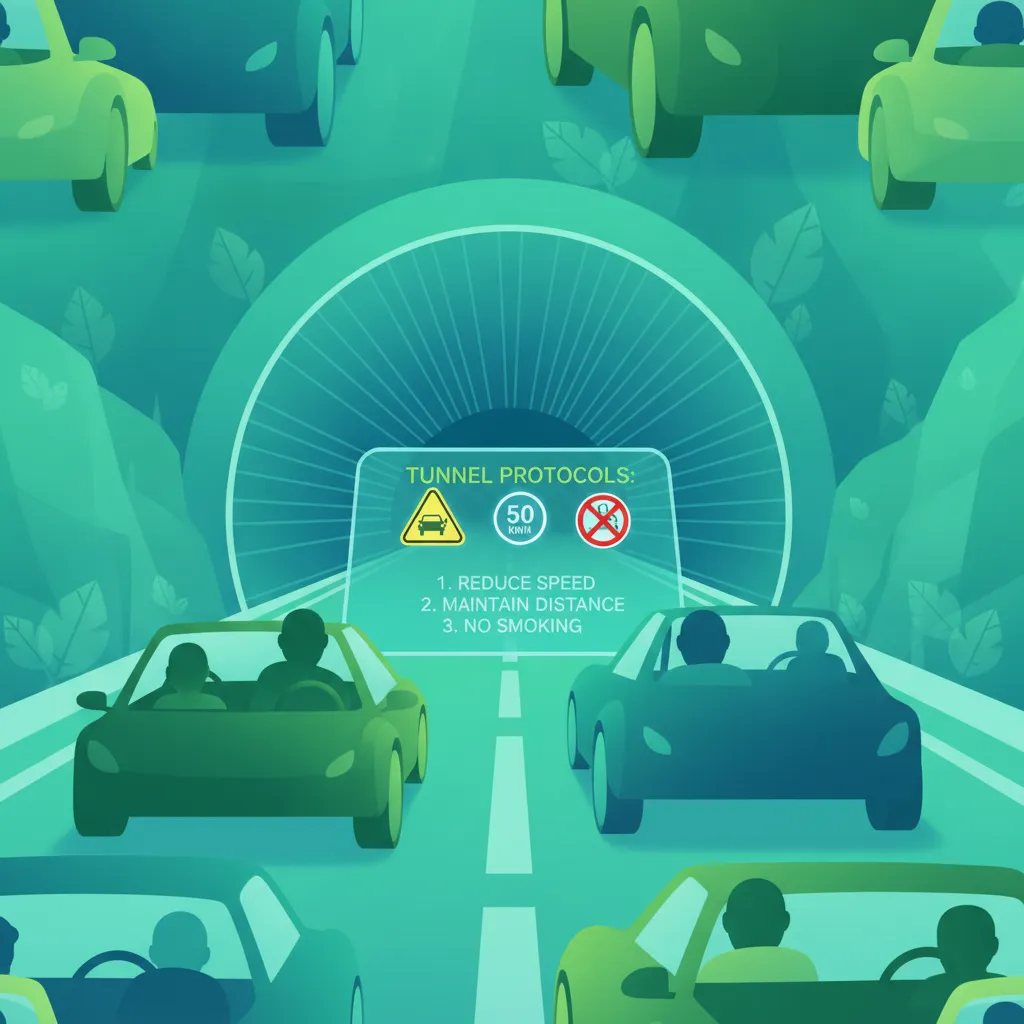
Austria's mountainous terrain means drivers will frequently encounter long tunnels. This lesson details the specific regulations, such as turning on lights and maintaining distance, as well as how to react to tunnel-specific warning signs and signals. Crucially, it covers the correct emergency procedures to follow in the event of a fire, accident, or breakdown inside a tunnel.

This lesson provides a step-by-step guide for safely managing a vehicle breakdown on the road. It covers the correct procedure for pulling over to a safe location, activating hazard lights, and wearing a high-visibility vest. Learners will understand the legal requirement and correct placement of the warning triangle to alert oncoming traffic, as well as the necessary information to provide when contacting roadside assistance services.

The driver is responsible for supervising the entire boarding process. This lesson covers techniques for encouraging orderly queues and ensuring passengers use handrails. It also details the driver's role in assisting passengers with mobility aids, prams, or heavy luggage, ensuring they are able to board without rushing and find a seat or safe standing position.

Carrying standing passengers significantly increases a driver's responsibility for smooth control. This lesson details the specific adjustments required, such as reducing speed before turns to minimize sideways forces and increasing following distances to avoid sudden braking. It emphasizes the importance of awareness and observation of passengers' stability before accelerating from a stop.
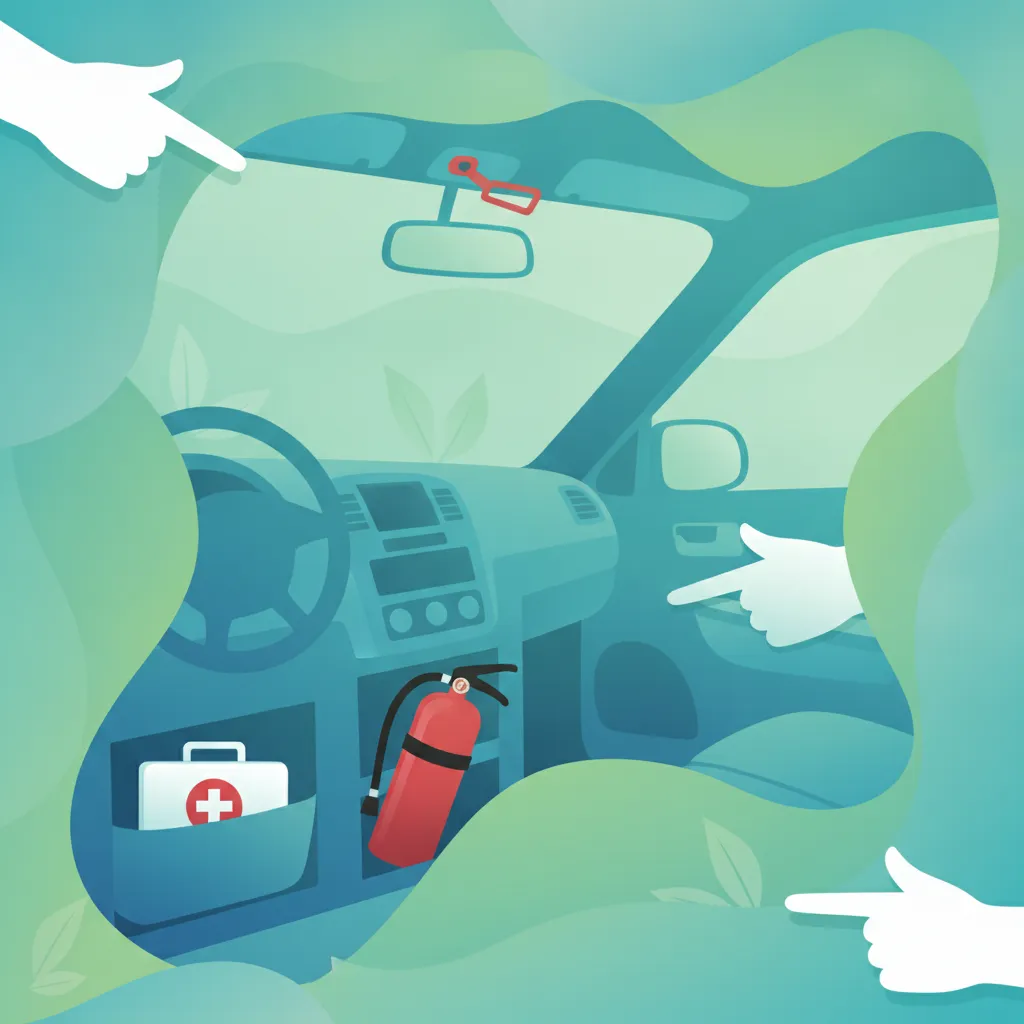
In an emergency, knowing the location and status of safety equipment is critical. This lesson details how to locate and inspect fire extinguishers, first aid kits, emergency hammers, and all designated emergency exits, including doors and roof hatches. It emphasizes the importance of ensuring these items are unobstructed and included in the daily pre-trip inspection.

Properly managed luggage is crucial for safety and passenger flow. This lesson covers procedures for stowing items in underfloor lockers on coaches and managing larger items like prams or winter sports equipment inside the vehicle. It emphasizes the legal requirement to keep gangways and emergency exits clear and provides guidance on assisting passengers with their belongings.
Understand the essential steps for responding to a vehicle breakdown in Austria as a Category D driver. This lesson details securing the vehicle, proper deployment of warning equipment, and efficient communication with dispatch and emergency services for professional drivers.
This lesson outlines the standardized procedure for handling a vehicle breakdown safely. It covers pulling over to a safe location, activating hazard lights, deploying the warning triangle, and wearing a high-visibility vest. It also explains when and how to contact roadside assistance or emergency services.
This lesson provides a step-by-step guide for safely managing a vehicle breakdown on the road. It covers the correct procedure for pulling over to a safe location, activating hazard lights, and wearing a high-visibility vest. Learners will understand the legal requirement and correct placement of the warning triangle to alert oncoming traffic, as well as the necessary information to provide when contacting roadside assistance services.
Rural Austrian roads present unique challenges, including lack of markings, tight spaces, and slow-moving agricultural vehicles. This lesson teaches how to read the road ahead, anticipate hazards around blind bends, and use passing places effectively when meeting other large vehicles. It emphasizes adjusting speed to suit the limited visibility and variable road conditions.
In a serious incident, a swift and orderly evacuation can save lives. This lesson teaches the principles of taking command, giving clear and simple instructions, and directing passengers to the nearest safe exit. It covers the importance of assisting those with mobility issues and guiding everyone to a safe assembly point away from the vehicle and any traffic.
In an emergency, knowing the location and status of safety equipment is critical. This lesson details how to locate and inspect fire extinguishers, first aid kits, emergency hammers, and all designated emergency exits, including doors and roof hatches. It emphasizes the importance of ensuring these items are unobstructed and included in the daily pre-trip inspection.
A safe stop begins with a planned approach. This lesson covers how to signal your intentions early, manage your speed, and scan for hazards like pedestrians and cyclists near the stop. It emphasizes the importance of aligning the bus parallel and close to the kerb to minimize the step for passengers, creating a safe platform for boarding and alighting.
Austria's mountainous terrain means drivers will frequently encounter long tunnels. This lesson details the specific regulations, such as turning on lights and maintaining distance, as well as how to react to tunnel-specific warning signs and signals. Crucially, it covers the correct emergency procedures to follow in the event of a fire, accident, or breakdown inside a tunnel.

Adverse weather demands a significant adjustment in driving technique. This lesson explains the dangers of aquaplaning in heavy rain, the need for drastically reduced speed in fog, and how to anticipate and correct for the effects of strong crosswinds on a high-sided vehicle. It reinforces the importance of increasing following distances and using appropriate lighting to see and be seen.

As the driver involved or first on the scene, you have specific duties. This lesson covers the initial steps: securing your own vehicle, warning approaching traffic, and making the emergency call. It reinforces the legal requirement in Austria for all drivers to form an emergency corridor ('Rettungsgasse') in standing traffic to allow clear access for emergency vehicles.
When a passenger becomes ill, the driver's role is to facilitate professional medical help as quickly as possible. This lesson covers how to safely stop the vehicle, make an emergency call to 112 with clear location and patient information, and provide basic comfort and reassurance. It clarifies that the driver's role is not to diagnose but to manage the scene and get help.
Find clear answers to common questions learners have about Responding to a Vehicle Breakdown. Learn how the lesson is structured, which driving theory objectives it supports, and how it fits into the overall learning path of units and curriculum progression in Austria. These explanations help you understand key concepts, lesson flow, and exam focused study goals.
You must immediately switch on your hazard lights, move the vehicle as far as possible to the side (ideally the hard shoulder or a breakdown bay), and ensure you do not create further danger by stopping abruptly in a traffic lane.
Passengers must be evacuated to a safe area away from the roadway, such as behind a crash barrier on a motorway. Never allow them to remain inside the bus or stand on the road surface.
Yes, you must deploy a warning triangle at a sufficient distance to warn approaching traffic, especially on fast roads. The distance depends on the road type and visibility conditions as per Austrian traffic rules.
The theory exam frequently presents multiple-choice scenarios about emergency responses. This lesson provides the exact legal sequence expected of a professional driver, ensuring you select the safest option in the event of an engine failure or tyre blowout.
Refine your study plan by searching for specific Austrian driving theory practice sets. Pinpoint questions related to particular road rules, signs, or challenge levels, and begin practicing immediately to reinforce your knowledge and excel in your official exam with confidence. Get started with focused revision today.