
This lesson explores the psychological factors that impact your riding, helping you identify and mitigate cognitive errors such as tunnel vision and risk compensation. By understanding how your mental state affects decision-making, you will be better prepared to handle complex traffic situations safely. This topic is essential for developing the mature, defensive mindset required for your A, A1, or A2 theory exam.

Lesson content overview
Riding a motorcycle on Austrian roads demands not only mastery of physical controls and adherence to traffic laws but also a profound understanding of the human mind. The decisions made by a rider are deeply influenced by psychological factors, which can either enhance safety or lead to critical errors. This lesson explores the fascinating yet often perilous realm of cognitive errors and risk perception, delving into how our mental states—such as stress, anger, or overconfidence—can inadvertently compromise safety and lead to poor judgment.
Understanding these inherent biases and mental shortcuts is a cornerstone of defensive riding. By recognizing common cognitive errors like tunnel vision and risk compensation, riders can develop heightened self-awareness, maintain a calm and focused mindset, and cultivate the critical defensive skills necessary to navigate the complexities of traffic safely and confidently across Austria's diverse road network, from bustling urban areas to challenging alpine passes.
Motorcycling is an inherently demanding activity, requiring constant attention and rapid decision-making. The human brain, while remarkably capable, operates under certain limitations, especially when processing vast amounts of information in dynamic environments like traffic. These limitations can manifest as systematic errors in perception, judgment, and decision-making, commonly known as cognitive errors.
For motorcyclists, who are among the most vulnerable road users, these mental shortcuts can have severe consequences. Unlike car drivers, riders have less protective shell, making accurate risk assessment and timely reactions paramount. Developing an understanding of how our minds work—and sometimes mislead us—is therefore an indispensable part of comprehensive Austrian motorcycle theory training.
Cognitive errors are systematic patterns of deviation from rationality in judgment. They are mental shortcuts, or heuristics, that our brains use to simplify complex information and make decisions quickly. While often efficient in everyday life, these shortcuts can distort our interpretation of reality and significantly affect our risk perception, especially in high-stakes environments like road traffic.
Recognizing these biases is the first step towards mitigating their negative impact. It allows riders to consciously challenge their initial perceptions and assumptions, leading to more deliberate and safer choices. As part of your Austrian A, A1, or A2 license preparation, mastering these psychological aspects is just as crucial as understanding vehicle dynamics or traffic legislation.
Selective attention is the cognitive process of focusing on specific stimuli or information in our environment while actively ignoring others. It's essential for managing the brain's limited processing capacity, allowing us to concentrate on immediate, critical tasks. However, this filtering mechanism can also lead to overlooking important peripheral hazards.
While riding a motorcycle, focused attention might mean concentrating intently on a traffic light or the road surface directly ahead. However, safe riding demands a broader scope of awareness, encompassing divided attention—the ability to manage multiple inputs simultaneously, such as steering, scanning mirrors, and monitoring surrounding traffic. A common misunderstanding is the belief that focusing solely on the path ahead is sufficient; in reality, continuous, systematic scanning is required to maintain comprehensive situational awareness.
For instance, a rider might be so focused on navigating a curve that they fail to notice a vehicle merging from a side road, despite the vehicle being within their general field of vision. Austrian traffic rules emphasize continuous observation; assuming that focusing straight ahead is adequate is a dangerous misconception that can lead to missed cyclists, pedestrians, or unexpected vehicle movements from the sides.
Tunnel vision, also known as focal narrowing, is a temporary reduction in peripheral awareness that often occurs under stress, high workload, or intense concentration. It allows a rider to focus intently on an immediate task or threat but sacrifices broader situational awareness. This narrowing can be physiological, triggered by adrenaline during a stressful event, or task-induced, resulting from intense concentration on a specific riding maneuver.
The practical meaning for motorcyclists is significant. During a high-speed corner on a challenging alpine road, a rider might concentrate exclusively on the apex of the bend, completely missing a vehicle approaching rapidly from behind or a potential hazard on the shoulder of the road. This can lead to collisions because crucial information outside the immediate focus is ignored.
To counteract tunnel vision, continuous scanning, including frequent mirror checks and head-checks, is vital, especially when entering or exiting turns, or when preparing to overtake. Assuming that focusing solely on the immediate path guarantees safety is a dangerous misconception. While overtaking, riders must ensure adequate rearward observation. This legal requirement directly counters the effects of tunnel vision by forcing a conscious broadening of visual attention.
Risk compensation describes a behavioral adjustment where individuals subconsciously increase their risky behavior in response to perceived increases in safety. When riders feel more protected, either by advanced gear, vehicle technology, or their own perceived skill, they might subconsciously take greater risks.
This phenomenon can manifest in several ways:
It's a critical misunderstanding to believe that protective gear fully protects against all types of accidents or negates the laws of physics. Austrian speed limits must be obeyed regardless of the protective equipment worn. Overconfidence stemming from protective gear can lead to unnecessary speeding, reducing critical reaction time and drastically increasing the severity of potential impacts.
Always remember that protective gear is designed to mitigate injury if an accident occurs, not to prevent the accident itself or justify increased risk-taking.
Overconfidence bias is the tendency to overestimate one's own abilities, performance, or control over outcomes. This bias can manifest as skill overconfidence (believing one's riding skills are superior) or knowledge overconfidence (believing one knows more about traffic situations than is truly the case).
For motorcyclists, overconfidence can be particularly dangerous, encouraging risk-taking based on an inflated perception of skill. This might lead a rider to attempt unsafe maneuvers, such as weaving through traffic at high speed without proper checks, assuming they possess superior capability to handle any situation. A successful risky maneuver in the past can reinforce this bias, leading a rider to mistakenly assume expertise. For example, a rider might believe they can safely pass a slow-moving truck on a narrow Austrian rural road, based on prior successful attempts, even when conditions are less than ideal.
Riders must adhere to positioning regulations and safe overtaking distances. Overconfidence often leads to neglecting these critical safety parameters. Cultivating humility and a realistic self-assessment of one's riding abilities, regardless of experience, is crucial for maintaining a safe riding mindset.
Confirmation bias is the tendency to interpret new information in a way that confirms one's existing preconceptions or beliefs, while simultaneously ignoring or downplaying contradictory evidence. This bias reinforces what we already think we know, potentially blinding us to emerging hazards or changing conditions.
In a riding context, a motorcyclist might assume a particular road segment is always clear because it has been clear during previous passes. This "positive confirmation" can lead to neglecting crucial checks when conditions might have changed, such as a new construction zone, a broken-down vehicle, or increased pedestrian activity. Similarly, "negative confirmation" could involve ignoring a subtle sign of a hazard because it contradicts a rider's belief of safety.
Austrian traffic regulations require continuous observation; assumptions based on past observations are prohibited. A rider who assumes an intersection is safe based on previous clear passes, neglecting to check for a newly crossing pedestrian or an approaching vehicle that wasn't there before, is falling victim to confirmation bias. Always treat every traffic situation as unique and dynamic, requiring fresh, unbiased observation.
Optimism bias is the belief that negative events are less likely to happen to oneself compared to others. It's a psychological trait that reduces perceived personal risk, which can unfortunately encourage lax safety practices. This personal optimism, a self-protective mechanism, can lead riders to underestimate their own accident risk.
This bias can manifest in concrete actions such as neglecting the use of protective equipment. For instance, a rider might decide not to wear gloves or protective trousers on a hot day, rationalizing that accidents only happen to "other" riders, or that they are skilled enough to avoid injury. This ignores the statistical reality and the unpredictable nature of road accidents.
Mandatory helmet use is legally required for motorcyclists in Austria under any circumstances. Optimism bias often contributes to the neglect of other critical protective gear, increasing injury risk.
The consequences of optimism bias are severe: by downplaying the likelihood of personal harm, riders may fail to take adequate preventative measures, leading to higher injury probability if an accident occurs. Always assume that risks apply to everyone, including yourself, and take every precaution.
The illusion of control is the tendency to overestimate one's personal influence over external events or outcomes, particularly in situations that are largely random or governed by external factors. This can manifest as a vehicle control illusion (overestimating one's ability to perfectly control the motorcycle in extreme situations) or a traffic predictability illusion (believing one can accurately predict and manipulate traffic flow).
This bias often leads to unnecessary aggression or a disregard for external safety measures and rules. A rider might believe they can brake later than legally required, trusting their superior reflexes and skill to stop safely. Or, they might disregard traffic signals, convinced they can "beat" them without danger.
Minimum stopping distances must be maintained irrespective of rider confidence. Trusting reflexes over meticulous observation and strict adherence to traffic rules is a dangerous gamble. Delaying braking at a yellow light, assuming one can safely beat the red light, is a classic example of the illusion of control, which often leads to dangerous situations or violations.
Recognizing cognitive errors is the first step; actively mitigating them is the path to safer riding. Riders can adopt several strategies to counteract these inherent biases and enhance their safety:
Austrian traffic law integrates principles that directly aim to counteract the effects of cognitive errors. These regulations are not arbitrary; they are designed to enforce safe practices that account for human limitations.
Applying the understanding of cognitive errors to real-world scenarios helps solidify defensive riding practices.
This lesson covers the psychological factors that affect rider decision-making, including cognitive errors such as tunnel vision, risk compensation, overconfidence, confirmation bias, optimism bias, and the illusion of control. It explains how these mental shortcuts can compromise safety and provides practical strategies to mitigate them through self-awareness, systematic observation, and adherence to traffic rules. Austrian traffic law requirements, including mandatory observation times before overtaking and helmet use regardless of circumstances, directly address these cognitive biases. Understanding these concepts is essential for developing the defensive riding mindset required for safe motorcycling on Austrian roads.
A short set of high-value points that capture the most important learning from this lesson.
Cognitive errors are mental shortcuts that can distort risk perception and lead to dangerous decisions on the road.
Tunnel vision and selective attention cause riders to miss critical hazards in their peripheral environment.
Risk compensation leads riders to take more chances when they feel protected by gear or technology.
Continuous, systematic scanning and mirror checks are essential to counteract inherent cognitive biases.
Protective gear mitigates injury severity but never justifies exceeding speed limits or taking unnecessary risks.
Explore all units and lessons included in this driving theory course.
The mandatory 3-second rearward observation (mirror check plus head-check) is required before any overtaking maneuver.
Tunnel vision narrows your visual field under stress; counter it by actively scanning mirrors and peripheral vision.
Optimism bias causes riders to underestimate personal accident risk; always assume hazards apply to you.
Confirmation bias leads riders to assume conditions are safe based on past experience; treat every situation as unique.
Illusion of control makes riders overestimate their ability to react; always maintain adequate stopping distances.
Believing that focused attention straight ahead is sufficient, neglecting peripheral scanning and mirror checks.
Assuming a road is clear because it was clear during previous rides, falling victim to confirmation bias.
Riding faster or more aggressively when wearing high-quality gear, compensating for perceived safety.
Attempting to 'beat' a yellow light because of overconfidence in reflexes and stopping ability.
Neglecting head-checks due to tunnel vision when entering curves or preparing to overtake.
Lesson content overview
A short set of high-value points that capture the most important learning from this lesson.
Cognitive errors are mental shortcuts that can distort risk perception and lead to dangerous decisions on the road.
Tunnel vision and selective attention cause riders to miss critical hazards in their peripheral environment.
Risk compensation leads riders to take more chances when they feel protected by gear or technology.
Continuous, systematic scanning and mirror checks are essential to counteract inherent cognitive biases.
Protective gear mitigates injury severity but never justifies exceeding speed limits or taking unnecessary risks.
Explore all units and lessons included in this driving theory course.
The mandatory 3-second rearward observation (mirror check plus head-check) is required before any overtaking maneuver.
Tunnel vision narrows your visual field under stress; counter it by actively scanning mirrors and peripheral vision.
Optimism bias causes riders to underestimate personal accident risk; always assume hazards apply to you.
Confirmation bias leads riders to assume conditions are safe based on past experience; treat every situation as unique.
Illusion of control makes riders overestimate their ability to react; always maintain adequate stopping distances.
Believing that focused attention straight ahead is sufficient, neglecting peripheral scanning and mirror checks.
Assuming a road is clear because it was clear during previous rides, falling victim to confirmation bias.
Riding faster or more aggressively when wearing high-quality gear, compensating for perceived safety.
Attempting to 'beat' a yellow light because of overconfidence in reflexes and stopping ability.
Neglecting head-checks due to tunnel vision when entering curves or preparing to overtake.
Explore search topics learners often look for when studying Cognitive Errors and Risk Perception. These topics reflect common questions about road rules, driving situations, safety guidance, and lesson level theory preparation for learners in Austria.
Browse additional driving theory lessons that cover connected traffic rules, road signs, and common driving situations related to this topic. Improve your understanding of how different rules interact across everyday traffic scenarios.
Learn practical strategies to counteract common cognitive biases like tunnel vision and risk compensation. This lesson focuses on developing self-awareness and defensive riding techniques to enhance situational awareness and decision-making on Austrian roads.

This lesson addresses the heightened vulnerability of motorcyclists and outlines essential strategies for personal safety and risk mitigation. It covers the importance of wearing certified protective gear, maintaining situational awareness, and adopting a defensive riding posture. By understanding and anticipating potential hazards in the Austrian traffic environment, riders can actively reduce their risk of accidents.

This lesson emphasizes the practical and ethical duties of motorcyclists on Austrian roads, focusing on proactive risk assessment and sound judgment. It teaches learners how to recognize potential hazards, anticipate the actions of other road users, and consistently adhere to traffic regulations. Cultivating this responsible mindset is crucial for personal safety and protecting others in traffic.

This lesson identifies and analyzes common risk-taking behaviors prevalent among young and inexperienced riders. It covers the dangers of distractions like mobile phone use, the influence of peer pressure, and the false sense of security from overconfidence. The goal is to foster a mature and responsible approach to riding.

This lesson provides advice for navigating popular scenic routes, which often feature heavy traffic, cyclists, and distracted drivers. It emphasizes maintaining focus on the road despite beautiful scenery and anticipating unpredictable actions from other tourists who may stop suddenly. Adopting a patient and defensive mindset is key to safely enjoying these remarkable roads.

This lesson highlights the specific hazards of riding on countryside roads in Austria. It teaches riders to be vigilant for wildlife crossing signs, especially at dawn and dusk, and how to safely approach and overtake slow-moving agricultural machinery. Awareness of potential surface hazards like mud, gravel, or manure from farm access points is also crucial for maintaining traction.

This lesson teaches the correct technique for setting and using motorcycle mirrors to maintain awareness of traffic behind and to the sides. It emphasizes that mirrors alone are not enough, detailing the necessity of the 'lifesaver' shoulder check to cover critical blind spots. A disciplined observation routine is crucial for safe lane changes, merging, and navigating dense traffic.

This lesson prepares riders for the specific conditions of Austria's mountain passes. It highlights hazards such as tight hairpin turns, potential for sudden weather changes, rockfall, and variable road surfaces. Awareness of these unique challenges allows riders to anticipate risks and adapt their technique for safe and enjoyable alpine touring.

This lesson explains how to use different positions within a lane to maximize visibility, create safety buffers, and plan escape routes. It introduces the concept of anticipative riding, which involves actively scanning for potential hazards and predicting the actions of other drivers. Strategic positioning is a dynamic skill that allows a rider to manage space and time effectively in changing traffic.

This lesson explains how fatigue, alcohol, and drugs dangerously impair a rider's judgment, coordination, and reaction time. It specifies the legal blood alcohol concentration (BAC) limit for vehicle operators in Austria and describes the severe penalties for driving under the influence (DUI). The importance of being well-rested and completely sober before every ride is strongly emphasized.
This lesson examines the specific risk factors that are statistically higher for novice drivers, including issues like inaccurate risk perception, overconfidence, and susceptibility to peer pressure and distractions. It aims to build self-awareness about these behavioural tendencies. By understanding these common pitfalls, new drivers can consciously adopt strategies to manage them, leading to safer driving habits from the very beginning of their driving career.
Explore the psychological influences on rider decisions and how Austrian traffic laws address cognitive errors. Understand mandatory observation times and speed limit adherence in the context of human factors for A, A1, and A2 license holders.
This lesson explains how fatigue, alcohol, and drugs dangerously impair a rider's judgment, coordination, and reaction time. It specifies the legal blood alcohol concentration (BAC) limit for vehicle operators in Austria and describes the severe penalties for driving under the influence (DUI). The importance of being well-rested and completely sober before every ride is strongly emphasized.
This lesson emphasizes the practical and ethical duties of motorcyclists on Austrian roads, focusing on proactive risk assessment and sound judgment. It teaches learners how to recognize potential hazards, anticipate the actions of other road users, and consistently adhere to traffic regulations. Cultivating this responsible mindset is crucial for personal safety and protecting others in traffic.
This lesson addresses the heightened vulnerability of motorcyclists and outlines essential strategies for personal safety and risk mitigation. It covers the importance of wearing certified protective gear, maintaining situational awareness, and adopting a defensive riding posture. By understanding and anticipating potential hazards in the Austrian traffic environment, riders can actively reduce their risk of accidents.

This lesson provides essential knowledge for using Austria's high-speed road network. It covers the correct procedure for entering via acceleration lanes, maintaining strict lane discipline (keeping right, passing left), and understanding the digital or physical Vignette (toll sticker) requirement. The formation of the 'Rettungsgasse' (emergency corridor) during traffic jams is also a key topic.
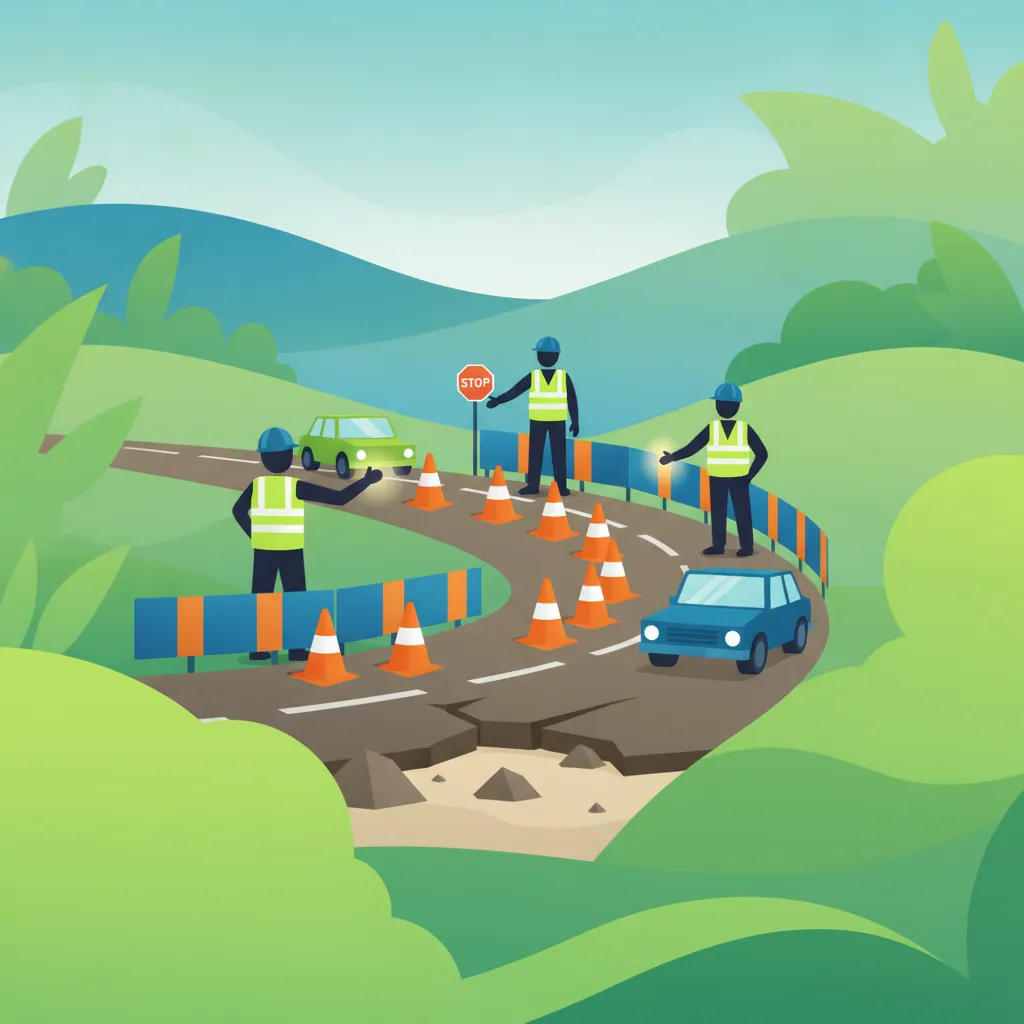
This lesson prepares riders for safely transiting through construction zones ('Baustellen'). It covers the interpretation of temporary signage, adherence to reduced speed limits, and awareness of hazards suchas altered lane markings, abrupt surface changes, and loose gravel. Respecting the safety of road workers and anticipating unpredictable traffic patterns are key themes.

This lesson covers the essential personal protective equipment (PPE) required for motorcycling in Austria. It details the safety standards for helmets, including fit and certification, and explains the benefits of armored jackets, gloves, and sturdy boots. The importance of high-visibility and weather-appropriate gear is also discussed to enhance rider protection in all conditions.

This lesson details the mandatory personal and vehicle documentation required for motorcyclists in Austria. It covers the necessity of carrying a valid licence card, vehicle registration papers, and proof of insurance at all times. Understanding these legal requirements ensures full compliance with Austrian traffic law and facilitates smooth interactions with law enforcement.

This lesson provides an overview of the legal framework for traffic enforcement in Austria. It explains the structure of fines for common offenses, the demerit point system that can lead to licence suspension, and the more severe consequences for major violations. Understanding these penalties reinforces the importance of consistent adherence to all traffic laws.

This lesson provides an in-depth look at motorcycle helmets, focusing on the legally required ECE safety standards in Austria. It explains the differences between full-face, modular, and open-face helmets and how to ensure a proper, secure fit. Learners will also understand the importance of the chin strap, visor maintenance, and the recommended five-year replacement cycle for helmets.

This lesson covers the foundational principles of making a motorcyclist conspicuous to other road users. It examines the role of brightly colored and reflective clothing, effective helmet colors, and the mandatory use of headlights during the day. Understanding how to create a strong visual presence in traffic is a key component of proactive accident prevention for any rider.
Find clear answers to common questions learners have about Cognitive Errors and Risk Perception. Learn how the lesson is structured, which driving theory objectives it supports, and how it fits into the overall learning path of units and curriculum progression in Austria. These explanations help you understand key concepts, lesson flow, and exam focused study goals.
Risk compensation is the tendency to increase risky behaviour when using safety equipment or technology, such as ABS. A riders must remain aware that while technology helps, it does not remove all hazards, and over-relying on it can lead to dangerous overconfidence.
Tunnel vision occurs when a rider focuses too intensely on one point, causing them to ignore peripheral hazards like pedestrians or side-road traffic. This is a common failure point in the theory exam and a major danger in real-world urban traffic.
The Austrian licensing system emphasizes the responsibility and personal risk awareness of the rider. The theory exam specifically tests your understanding of human factors because mental state is as crucial as technical skill for preventing accidents.
Yes. Much like on the road, fatigue impairs decision-making and reaction times. This lesson helps you recognize these physical and mental barriers so you can be fully prepared for the focus required during your official exam.
Refine your study plan by searching for specific Austrian driving theory practice sets. Pinpoint questions related to particular road rules, signs, or challenge levels, and begin practicing immediately to reinforce your knowledge and excel in your official exam with confidence. Get started with focused revision today.