
This lesson explores how physical and mental impairment affect your ability to ride a motorcycle safely on Austrian roads. Understanding these factors is critical for both your theory exam and your responsibility as a rider to maintain peak performance. By mastering these rules, you will gain the insight needed to make safe, legal decisions that protect yourself and other road users.

Lesson content overview
Motorcycle riding demands peak mental and physical performance. The dynamic and often unpredictable nature of Austrian roads, coupled with the inherent risks of two-wheeled travel, means that a rider’s judgment, coordination, and reaction time must always be optimal. This comprehensive guide explains why fatigue, alcohol, and drugs severely compromise these essential abilities, significantly increasing the risk of accidents and leading to severe legal consequences under Austrian traffic law.
Impairment refers to any reduction in physical or cognitive performance. For motorcycle riders, this includes a diminished ability to process information, react appropriately, maintain balance, and make sound decisions—all vital for safe operation. When a rider is impaired, their capacity to control the motorcycle, perceive hazards, and respond effectively is drastically reduced, endangering themselves, passengers, and other road users.
Understanding the physiological, psychological, and legal ramifications of impairment is paramount for every rider seeking an Austrian A, A1, or A2 licence. The combination of high speeds, limited protection, and complex traffic situations on Austrian roads means that even minor impairments can have catastrophic outcomes. Austrian traffic laws reflect this danger by imposing strict regulations and severe penalties for driving under the influence (DUI). These measures are not merely punitive but are designed to protect all road participants by deterring risky behavior.
Fatigue is a physiological state characterized by reduced mental and physical capacity. It results from prolonged activity, insufficient sleep, or chronic stress, often accumulating subtly until it poses a significant danger. Unlike alcohol or drugs, which have clear legal limits, fatigue is a subjective state, making its dangers harder to self-assess but no less perilous.
Fatigue can manifest in different forms, each with distinct origins and implications:
Riders must never operate a vehicle if they feel unfit due to fatigue. While there's no specific legal limit for fatigue, it can be considered evidence of negligence in the event of an accident.
The effects of fatigue on a motorcycle rider are profound and dangerous. They include:
Riders often underestimate the impact of fatigue, believing they can push through. A common misconception is, "I can ride for an hour more after a night shift." However, reaction time degrades gradually, and even short naps may not fully restore alertness, with residual fatigue persisting.
Example: A rider planning a long trip through the scenic but demanding Austrian Alpine roads after working a night shift might experience microsleeps, missing a crucial warning sign before a sharp, unexpected bend. This scenario highlights why planning for adequate rest is as vital as planning the route itself.
Plan Regular Breaks: Stop every 1.5-2 hours for at least 15-20 minutes to rest, stretch, and rehydrate.
Ensure Sufficient Sleep: Get 7-9 hours of quality sleep before any long ride.
Avoid Riding During Peak Fatigue Hours: For most people, this is between 2 AM and 6 AM, and often in the mid-afternoon.
Recognize Early Warning Signs: Yawning, blinking more frequently, difficulty focusing, drifting thoughts, or restlessness are all indicators of developing fatigue.
Stay Hydrated and Eat Light Meals: Heavy meals can induce drowsiness, while dehydration can exacerbate fatigue.
Alcohol, specifically ethanol, is a central nervous system depressant that significantly impairs a rider's ability to safely operate a motorcycle. Even small amounts can lead to a reduction in critical skills. Understanding the legal limits and the severe consequences of alcohol consumption is non-negotiable for all riders in Austria.
Blood Alcohol Concentration (BAC), often expressed in permille (‰) in Austria, measures the amount of ethanol in the blood. This value is a direct indicator of intoxication. Alcohol metabolism, the process by which the body eliminates ethanol, averages around 0.15‰ per hour, but this can vary based on factors like body weight, gender, and food intake.
Austria imposes strict and differentiated BAC limits to ensure road safety. These limits are critically important for all vehicle operators, especially motorcyclists.
This is the standard legal limit for most drivers and riders in Austria. If your BAC is at or above 0.5‰, you are considered to be driving under the influence (DUI), which carries significant penalties. This limit aligns with many other European Union standards, reducing accident risk.
A rider's BAC is measured at 0.3‰ after one small beer. If they are not a learner or professional rider, this is legally permissible. However, if their BAC rises to 0.6‰, they would be arrested for DUI.
For learner riders (including those pursuing categories A1, A2, and A) and professional drivers, a much stricter limit of 0.1‰ applies. This nearly zero-tolerance policy reflects the increased risk associated with inexperience and the high responsibility of professional transport.
This 0.1‰ limit means that even a single alcoholic drink could put a learner rider over the legal threshold, leading to severe penalties including heavy fines and potential license suspension.
Example: A learner rider consumes one beer, resulting in a BAC of 0.2‰. While this would be below the general 0.5‰ limit, it is illegal for a learner rider in Austria and would result in penalties.
Alcohol impacts the brain and body in ways that directly undermine safe riding:
Even at low BAC levels, a rider’s ability to handle complex maneuvers, adapt to changing road conditions, or react to emergencies is compromised. Overconfidence, often a psychological effect of alcohol, can lead riders to overestimate their capabilities and take undue risks.
Many riders hold dangerous misconceptions about alcohol consumption:
A device used by law enforcement to estimate Blood Alcohol Concentration (BAC) from a breath sample.
Beyond alcohol, a wide range of drugs can severely impair riding abilities, from illegal narcotics to seemingly innocuous over-the-counter medications. Austrian law addresses both categories with strict regulations, reflecting the unpredictable and dangerous effects these substances can have on a rider.
For illicit substances such as cannabis (THC), MDMA, cocaine, or heroin, Austria implements a zero-tolerance policy. This means that any detectable amount of these drugs in a rider’s system constitutes a violation, regardless of the perceived level of impairment or the specific concentration measured. The rationale is clear: these substances cause unpredictable impairments that cannot be reliably quantified, making any use before riding exceptionally dangerous.
A common misconception is that "Cannabis does not impair driving" or "low THC is safe." However, THC, the psychoactive component of cannabis, can impair judgment and reaction time, and any detectable amount is illegal for riders in Austria. Residues of these substances can remain detectable in the body for days or even weeks.
Example: A rider tests positive for THC after consuming a cannabis edible the night before. Even if they feel unimpaired, the detectable presence of THC constitutes a legal violation and triggers severe penalties.
While not illegal, many prescription and over-the-counter (OTC) medications can have significant side effects that impair riding ability. These include:
Riders using any medication that might affect their ability to operate a vehicle safely must:
An official document, issued by a physician, confirming that a rider can safely operate a vehicle while taking specific medication, mitigating risks associated with potential side effects.
Example: A rider takes an antihistamine for severe hay fever before commuting. Unaware of the sedative effects, they experience delayed reactions at an intersection, narrowly avoiding a collision. This highlights the importance of checking medication side effects and, if drowsiness is a possibility, either allowing the effects to pass or seeking alternative non-sedating medication.
Regardless of legality, the physiological effects of psychoactive drugs can include:
The danger of fatigue, alcohol, or drugs is not constant; it significantly intensifies when combined with challenging riding conditions. Impairment disproportionately affects complex maneuvers and magnifies risks associated with adverse environmental factors.
Motorcycle riding inherently demands high levels of motor coordination, visual perception, and rapid decision-making. Impairment compromises these core competencies, making specific maneuvers perilous:
The risks posed by impairment are further magnified by external conditions:
Interacting with vulnerable road users such as pedestrians, cyclists, or e-scooter riders demands extreme caution and heightened awareness. An impaired rider may:
The consequences of such failures, particularly on a motorcycle, are often devastating for both the rider and the vulnerable party.
Austrian traffic law imposes a stringent framework of penalties for impaired driving, reflecting the high risk it poses to public safety. These consequences escalate significantly with the severity of impairment or repeated offenses, serving as a powerful deterrent.
Driving Under the Influence (DUI) in Austria, whether due to alcohol or drugs, carries severe penalties that can include:
Austrian law enforcement officers are authorized to conduct checks for impairment:
The "Penalty Escalation Principle" means that penalties increase proportionally with the severity of impairment, the type of substance, or repeated offenses. For instance, a learner rider caught with a BAC of 0.2‰ will face more severe consequences than a general driver with the same BAC, and penalties for illicit drug use are often among the harshest.
The most effective way to prevent impaired riding is through proactive and responsible planning. Adhering to these strategies is crucial for ensuring safety and legal compliance.
Before every ride, conduct a honest self-assessment of your physical and mental fitness. Ask yourself:
If the answer to any of these questions raises doubt about your fitness to ride, do not get on your motorcycle.
Responsible riding begins long before you put on your helmet:
If you are prescribed medication or frequently use over-the-counter drugs:
The influence of fatigue, alcohol, and drugs represents one of the most significant and preventable risks in motorcycle riding. Understanding the physiological effects, adhering to Austria's strict legal limits (0.5‰ general, 0.1‰ for learner/professional riders), and recognizing the zero-tolerance policy for illicit drugs are fundamental aspects of responsible rider behavior. By prioritizing adequate rest, complete sobriety, and informed medication use, riders not only ensure their own safety but also contribute to the safety of everyone on Austrian roads. Always remember that riding a motorcycle requires your undivided attention and peak performance; never compromise on being fully fit to ride.
This lesson covers how fatigue, alcohol, and drugs severely impair the judgment, coordination, and reaction time essential for safe motorcycle riding. Austria applies strict differentiated BAC limits (0.1‰ for learner/professional riders, 0.5‰ for others) and zero tolerance for illicit drugs. Fatigue is equally dangerous, causing microsleeps and slowed reactions with no legal threshold but serious liability if involved in an accident. Riders must conduct honest pre-ride self-assessments, plan regular breaks, and consult doctors about medication effects to ensure they are always fully fit to operate their motorcycle.
A short set of high-value points that capture the most important learning from this lesson.
Austria enforces a stricter 0.1‰ BAC limit for learner and professional motorcycle riders compared to the general 0.5‰ limit.
Fatigue causes microsleeps—brief involuntary episodes of sleep that can be fatal at high speeds on Austrian roads.
Austria has zero tolerance for illicit drugs; any detectable amount constitutes a legal violation for riders.
Alcohol metabolism averages only 0.15‰ per hour, meaning waiting a short time after drinking does not make you safe to ride.
Impairment effects are magnified on challenging Austrian roads such as Alpine routes with steep gradients and sharp bends.
Explore all units and lessons included in this driving theory course.
Learner riders (A1, A2, A) must maintain near-zero BAC at all times—0.1‰ is the legal limit.
Fatigue peaks between 2 AM and 6 AM; take breaks every 1.5–2 hours on long rides.
Medications including sedatives, antihistamines, and muscle relaxants can impair riding even if legally prescribed.
Field sobriety tests evaluate coordination, balance, and cognitive function; refusal carries penalties.
Combined impairment with adverse conditions (night, rain, Alpine roads) exponentially increases accident risk.
Assuming one beer is harmless—learner riders can exceed the 0.1‰ limit with a single drink.
Believing coffee or cold showers speed up alcohol metabolism—only time lowers BAC.
Underestimating fatigue by thinking short naps fully restore alertness after sleep deprivation.
Riding after using cannabis the previous day—THC can remain detectable for days and any amount violates zero-tolerance policy.
Neglecting to check medication side effects before riding, especially with over-the-counter antihistamines.
Lesson content overview
A short set of high-value points that capture the most important learning from this lesson.
Austria enforces a stricter 0.1‰ BAC limit for learner and professional motorcycle riders compared to the general 0.5‰ limit.
Fatigue causes microsleeps—brief involuntary episodes of sleep that can be fatal at high speeds on Austrian roads.
Austria has zero tolerance for illicit drugs; any detectable amount constitutes a legal violation for riders.
Alcohol metabolism averages only 0.15‰ per hour, meaning waiting a short time after drinking does not make you safe to ride.
Impairment effects are magnified on challenging Austrian roads such as Alpine routes with steep gradients and sharp bends.
Explore all units and lessons included in this driving theory course.
Learner riders (A1, A2, A) must maintain near-zero BAC at all times—0.1‰ is the legal limit.
Fatigue peaks between 2 AM and 6 AM; take breaks every 1.5–2 hours on long rides.
Medications including sedatives, antihistamines, and muscle relaxants can impair riding even if legally prescribed.
Field sobriety tests evaluate coordination, balance, and cognitive function; refusal carries penalties.
Combined impairment with adverse conditions (night, rain, Alpine roads) exponentially increases accident risk.
Assuming one beer is harmless—learner riders can exceed the 0.1‰ limit with a single drink.
Believing coffee or cold showers speed up alcohol metabolism—only time lowers BAC.
Underestimating fatigue by thinking short naps fully restore alertness after sleep deprivation.
Riding after using cannabis the previous day—THC can remain detectable for days and any amount violates zero-tolerance policy.
Neglecting to check medication side effects before riding, especially with over-the-counter antihistamines.
Explore search topics learners often look for when studying Influence of Fatigue, Alcohol, and Drugs. These topics reflect common questions about road rules, driving situations, safety guidance, and lesson level theory preparation for learners in Austria.
Browse additional driving theory lessons that cover connected traffic rules, road signs, and common driving situations related to this topic. Improve your understanding of how different rules interact across everyday traffic scenarios.
Understand the severe legal penalties in Austria for driving a motorcycle under the influence of alcohol or drugs. This lesson covers fines, license suspension, and criminal charges related to DUI offenses.

This lesson provides an overview of the legal framework for traffic enforcement in Austria. It explains the structure of fines for common offenses, the demerit point system that can lead to licence suspension, and the more severe consequences for major violations. Understanding these penalties reinforces the importance of consistent adherence to all traffic laws.

This lesson provides a clear overview of the legal penalties for traffic violations in Austria. It details the system of fines, demerit points, and the conditions that can lead to license suspension or revocation. Understanding these consequences reinforces the importance of lawful and responsible riding.

This lesson details the mandatory personal and vehicle documentation required for motorcyclists in Austria. It covers the necessity of carrying a valid licence card, vehicle registration papers, and proof of insurance at all times. Understanding these legal requirements ensures full compliance with Austrian traffic law and facilitates smooth interactions with law enforcement.

This lesson provides essential knowledge for using Austria's high-speed road network. It covers the correct procedure for entering via acceleration lanes, maintaining strict lane discipline (keeping right, passing left), and understanding the digital or physical Vignette (toll sticker) requirement. The formation of the 'Rettungsgasse' (emergency corridor) during traffic jams is also a key topic.

This lesson prepares riders for the specific conditions of Austria's mountain passes. It highlights hazards such as tight hairpin turns, potential for sudden weather changes, rockfall, and variable road surfaces. Awareness of these unique challenges allows riders to anticipate risks and adapt their technique for safe and enjoyable alpine touring.

This lesson prepares riders for safely transiting through construction zones ('Baustellen'). It covers the interpretation of temporary signage, adherence to reduced speed limits, and awareness of hazards suchas altered lane markings, abrupt surface changes, and loose gravel. Respecting the safety of road workers and anticipating unpredictable traffic patterns are key themes.
This lesson details the essential legal and administrative requirements for operating an AM vehicle in Austria. It covers the processes for vehicle registration, the obligation for licence plates, and the necessity of third-party liability insurance. Furthermore, it explains the importance of regular technical inspections to ensure the vehicle remains roadworthy and compliant with national standards.

This lesson emphasizes the practical and ethical duties of motorcyclists on Austrian roads, focusing on proactive risk assessment and sound judgment. It teaches learners how to recognize potential hazards, anticipate the actions of other road users, and consistently adhere to traffic regulations. Cultivating this responsible mindset is crucial for personal safety and protecting others in traffic.
This lesson provides advice for navigating popular scenic routes, which often feature heavy traffic, cyclists, and distracted drivers. It emphasizes maintaining focus on the road despite beautiful scenery and anticipating unpredictable actions from other tourists who may stop suddenly. Adopting a patient and defensive mindset is key to safely enjoying these remarkable roads.
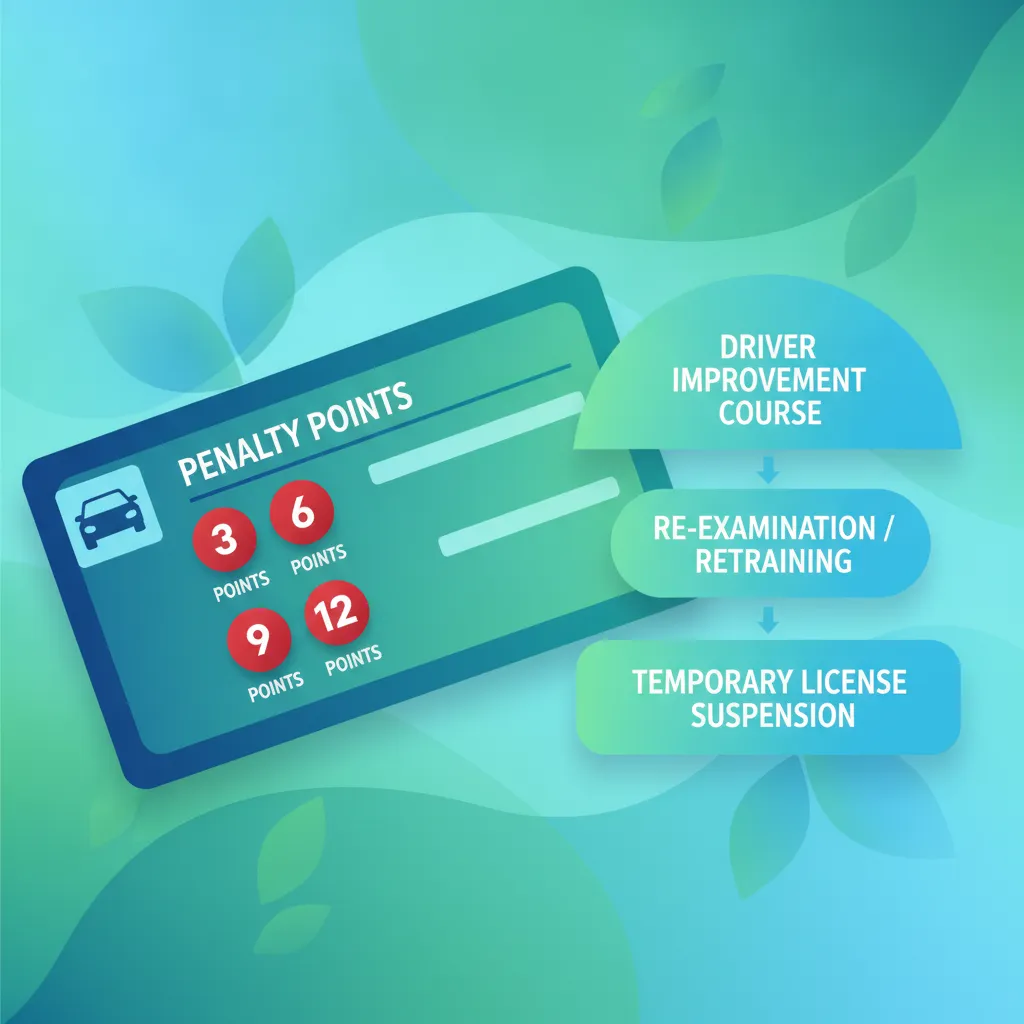
This lesson offers a clear explanation of the Austrian system of penalties for traffic offenses, including the demerit points system (Vormerksystem). It details which violations lead to points, the accumulation process, and the consequences at each stage, such as mandatory driver improvement courses and potential license suspension (Fahrverbot). Understanding this system provides a strong incentive for consistent compliance with all traffic regulations.
Find clear answers to common questions learners have about Influence of Fatigue, Alcohol, and Drugs. Learn how the lesson is structured, which driving theory objectives it supports, and how it fits into the overall learning path of units and curriculum progression in Austria. These explanations help you understand key concepts, lesson flow, and exam focused study goals.
In Austria, the general blood alcohol limit is 0.5 promille. However, for learner riders and those within the probationary period, stricter limits apply, often approaching 0.0 promille. Always check the current regulations for your specific licence status.
Yes. The theory exam treats fatigue similarly to substance impairment because it significantly reduces reaction time, peripheral vision, and decision-making capacity. It is a key topic in understanding hazard perception.
Penalties range from heavy fines and temporary licence suspension to permanent revocation of your motorcycle licence and potential criminal charges. The severity depends on the concentration of the substance and whether an accident occurred.
Exam questions often focus on the degradation of complex motor skills required for balance and countersteering. They test your understanding that even 'legal' medications can impair your ability to safely control a motorcycle.
Refine your study plan by searching for specific Austrian driving theory practice sets. Pinpoint questions related to particular road rules, signs, or challenge levels, and begin practicing immediately to reinforce your knowledge and excel in your official exam with confidence. Get started with focused revision today.