
This lesson guides you through the critical procedures for managing breakdowns and accidents on Austrian roads. Understanding these safety protocols is vital for your Category AM theory exam and your future as a responsible, safe rider.
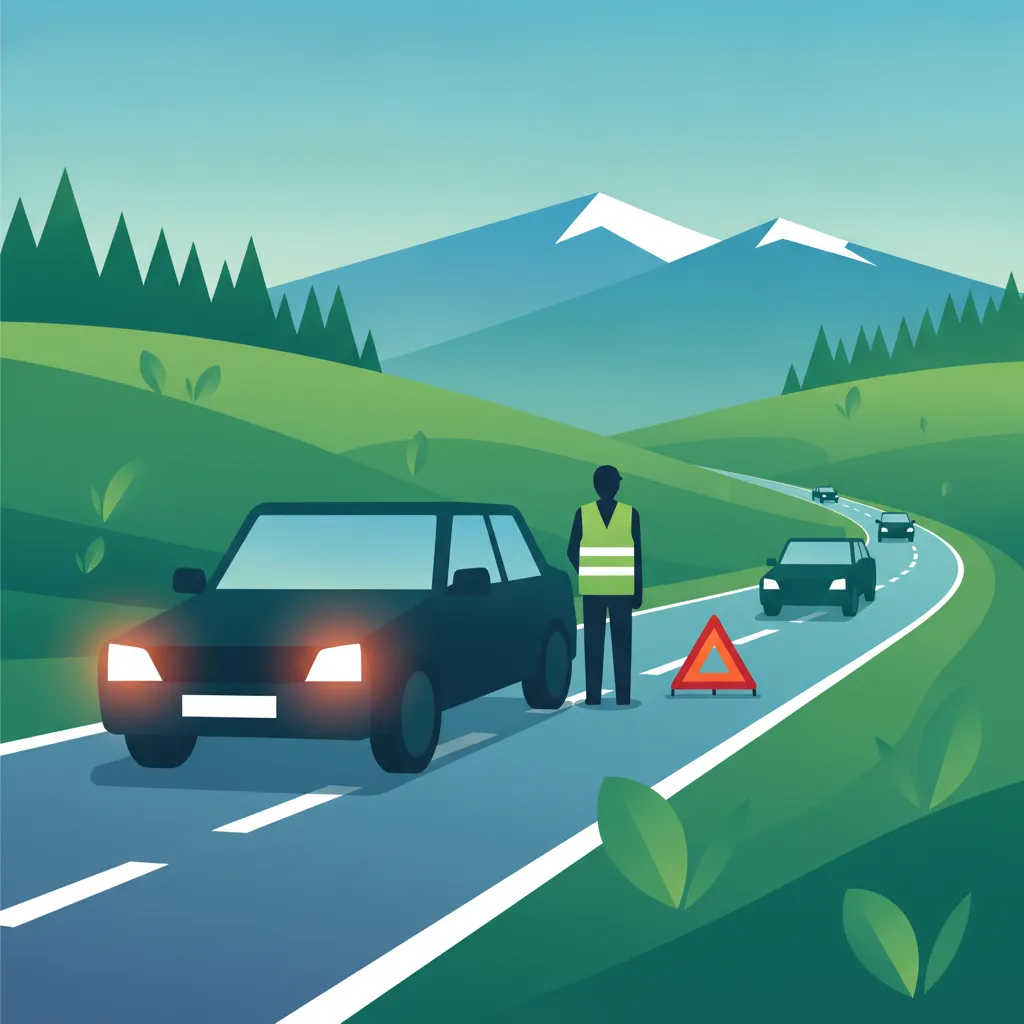
Lesson content overview
Navigating the roads safely is paramount for every rider, especially those operating mopeds, small scooters, and light quadricycles under an Austrian AM licence. However, unforeseen events such as mechanical breakdowns or traffic accidents can occur. Knowing how to react calmly and correctly in these situations is crucial, not only for your personal safety but also for the safety of other road users and for fulfilling your legal obligations under Austrian road traffic law (StVO).
This comprehensive guide will equip you with the essential knowledge and step-by-step procedures to manage an unexpected vehicle incident effectively. From immediate hazard assessment to contacting emergency services and preserving the accident scene, understanding these protocols will help you minimize risks and ensure prompt assistance.
The moments immediately following a vehicle breakdown or a collision are critical. Your first priority should always be to ensure personal safety and prevent further incidents. A rapid, systematic assessment of the situation will guide your next steps.
When your moped, scooter, or light quadricycle stops unexpectedly, or if you are involved in a crash, first determine the nature of the incident. Is it a mechanical breakdown, such as an engine stall or a flat tire, or has there been a collision with another vehicle or object? Simultaneously, check yourself and any passengers for injuries. Even minor bumps can mask more serious internal issues, so a quick personal health check is vital.
After ensuring immediate personal safety, quickly scan your surroundings for potential dangers. Are you on a busy road with fast-moving traffic? Is visibility poor due to weather or darkness? The environment dictates the urgency and type of subsequent safety measures you must take. Always keep your vehicle stationary initially, unless it poses an immediate and severe danger to traffic, before attempting any other actions.
Once you have assessed the immediate situation and confirmed personal safety, the next crucial step is to secure the incident scene. This involves making your stationary vehicle and yourself as visible as possible to approaching traffic, thereby significantly reducing the risk of secondary collisions. Austrian law mandates specific equipment and procedures for this purpose.
Your vehicle's hazard warning lights are a primary safety feature designed to signal a dangerous situation. These are flashing amber lights that activate simultaneously on all corners of your vehicle.
Hazard lights must be switched on immediately after your vehicle comes to a stop due to a breakdown or an accident. They serve to increase the conspicuity of your stationary vehicle, alerting other drivers that there is an obstruction or hazard ahead. It is illegal and can cause confusion to use hazard lights while your vehicle is still in motion.
Activating them should be one of your very first actions, even before you consider exiting the vehicle, especially if you are stopped on the roadway or in an unsafe location. The lights should remain on until the hazard is resolved or emergency services have taken control of the scene.
A reflective warning triangle is an indispensable safety device that provides an early visual warning to approaching traffic. Its correct placement is critical, as it allows drivers sufficient time to react, slow down, and adjust their course to avoid your stationary vehicle.
Urban Areas (Ortsgebiet): Place the warning triangle at least 5 metres behind your vehicle.
Secondary Roads (Freilandstraße): Place the warning triangle at least 15 metres behind your vehicle.
Highways/Motorways (Autobahn/Schnellstraße): Place the warning triangle at least 30 metres behind your vehicle.
These distances are minimum requirements. In conditions of poor visibility, such as heavy rain, fog, or darkness, or on roads with higher speed limits, it is advisable to increase these distances further to provide even more warning time. Always carry your warning triangle in an easily accessible location on your moped or scooter.
When you need to exit your vehicle after a breakdown or crash and step onto the roadway, wearing a reflective vest is a mandatory safety requirement in Austria. This high-visibility apparel significantly enhances your visibility to passing traffic, particularly in low-light conditions or at night.
Always put on your reflective vest before you exit your moped, scooter, or light quadricycle if you need to be on the roadway. Failure to do so not only increases your risk of being struck by another vehicle but can also lead to legal penalties under Austrian traffic law.
The vest should meet official Austrian (e.g., VT-VT 1) or equivalent European standards for high-visibility garments, ensuring it provides adequate luminescence and conspicuity. Keeping a reflective vest readily accessible, perhaps under your seat or in a top case, is a vital part of your vehicle readiness.
In any incident involving personal injury, significant vehicle damage, or an obstruction to traffic that you cannot immediately resolve, contacting emergency services is paramount. The pan-European emergency number 112 connects you directly to police, ambulance, and fire services.
Stay Calm: Take a deep breath to collect your thoughts. Panic can lead to miscommunication.
Dial 112: This number works throughout the EU and will connect you to the nearest emergency dispatch center.
State Your Exact Location: This is the most crucial piece of information. Provide the road name, nearest intersection, kilometer marker if on a highway, or any recognizable landmarks. The faster responders can find you, the quicker help will arrive.
Describe the Incident: Clearly state whether it is a breakdown, a collision, or another type of emergency.
Report Injuries: Indicate if there are any injured persons, how many, and what their apparent condition is (e.g., conscious, unconscious, bleeding).
Provide Vehicle Details: Mention the type of vehicle involved (moped, scooter, light quadricycle, car, etc.) and potentially your registration number.
Do Not Hang Up First: Wait for the emergency operator to tell you to hang up. They may need more information or to provide instructions.
Prompt and accurate communication is vital for ensuring that the appropriate emergency response teams are dispatched swiftly. Do not delay calling while attempting to move your vehicle or assess the full extent of damage; human safety and rapid medical attention take precedence.
Under Austrian law (§ 2 StVO), every driver has a legal and moral obligation to provide reasonable assistance to persons injured in a traffic accident. This "duty to assist" is a fundamental principle of road safety. While you are not expected to be a medical professional, basic first aid knowledge can be life-saving.
Your primary role is to stabilize the situation and provide immediate care until professional medical help arrives. This typically involves checking for responsiveness, controlling severe bleeding, and maintaining an open airway. Never attempt advanced medical procedures unless you are specifically trained to do so, as this could cause further harm.
Assess Responsiveness: Gently check if the injured person is conscious and responding. Ask if they are okay.
Call Emergency Services (112): As soon as you confirm injuries, make the emergency call providing all necessary details.
Control Bleeding: If there is visible bleeding, apply direct pressure to the wound, ideally with a clean cloth or sterile dressing. Elevating the injured limb if possible can also help.
Maintain Airway: If the person is unconscious, gently tilt their head back and lift their chin to ensure their airway is open. Check for breathing.
Minimize Movement: Unless the injured person is in immediate danger (e.g., fire, collapsing structure), do not move them. Moving someone with spinal injuries can cause irreparable damage.
Keep Warm: Cover the injured person with a blanket or coat to prevent hypothermia, especially in colder weather.
Remember, your main goal is to prevent further harm and keep the injured person as stable as possible until paramedics or other medical professionals arrive. Delaying assistance or neglecting this duty can have severe legal consequences.
After any collision, especially one involving injuries or significant damage, the accident scene becomes crucial for investigation by the police and insurance companies. Preserving the original positions of vehicles and other relevant items of evidence is essential for accurate accident reconstruction and determining liability.
Do not move your vehicle or any other vehicles involved in a crash unless it is absolutely necessary to prevent further danger to traffic. If movement is unavoidable, for example, to clear a heavily congested road, take photographs or make detailed sketches of the vehicles' original positions, tire marks, and any debris before moving anything.
Use your smartphone to capture multiple angles of the scene, including overall views, close-ups of damage, road markings, and anything else that might be relevant. Note the time, weather conditions, and any witnesses present. This documentation will be invaluable for police reports and insurance claims, helping to ensure a fair assessment of the incident.
Adhering to specific provisions of the Austrian Road Traffic Act (Straßenverkehrsordnung – StVO) is not merely about safety; it is a legal requirement carrying specific penalties for non-compliance. Riders of AM licence vehicles must be fully aware of these duties.
As highlighted, the StVO mandates the use of hazard warning lights, a warning triangle, and a reflective vest in specific breakdown or accident scenarios. For instance, failing to deploy a warning triangle at the prescribed distance or neglecting to wear a reflective vest when required can result in administrative fines (Verwaltungsstrafen). These rules are in place to ensure that stationary vehicles and their occupants are clearly visible, thereby protecting all road users.
The "duty to assist" (Hilfeleistungspflicht) for accident victims is a cornerstone of Austrian traffic law. This provision obliges anyone involved in an accident, or anyone witnessing one, to render reasonable assistance to injured persons. Failure to provide such assistance can lead to severe criminal charges, not just fines, emphasizing the seriousness with which this obligation is viewed.
While minor fender-benders without personal injury might sometimes be settled privately, any accident involving personal injury, regardless of severity, or significant property damage that cannot be immediately cleared, must be reported to the police. Delaying a call to emergency services when injuries are present or when the scene poses a continued hazard can also result in legal repercussions. Always err on the side of caution and involve the authorities if there is any doubt about injuries or responsibility.
The basic steps for handling breakdowns and crashes remain consistent, but their application requires adaptation based on the specific conditions of the incident. Environmental factors, road type, and the presence of vulnerable road users significantly influence your actions.
In conditions of low light (dusk, dawn, night) or adverse weather (heavy rain, fog, snow), visibility is drastically reduced. This necessitates an even greater emphasis on making yourself and your vehicle visible.
Always ensure your reflective vest is worn immediately and that hazard lights are active before exiting your vehicle. Consider increasing the placement distance for your warning triangle beyond the minimum legal requirements to give other drivers more time to react.
The speed of traffic is the main differentiator here. On high-speed roads like Autobahnen (motorways) or Schnellstraßen (expressways), the 30-metre minimum for the warning triangle is critical, but drivers may need even more warning. Try to position your vehicle as far to the right on the hard shoulder as possible. In dense urban areas, while speeds are lower, the presence of pedestrians, cyclists, and complex intersections means clear hand signals and caution are vital once you're safely out of your vehicle.
If your vehicle breaks down on a hill, it is essential to engage the handbrake or foot brake firmly before switching off the engine. If available, use any provided foot strap or a heavy object to prevent the moped or scooter from rolling unintentionally. This prevents uncontrolled movement that could lead to another accident.
If you, as the rider, are injured, your priority shifts to self-preservation and calling for help. If possible, move yourself to the safest possible location away from traffic. Use your mobile phone to call 112 immediately, providing as much detail as you can about your location and injuries. If you are unable to move, activate hazard lights if possible, and rely on passers-by to assist with scene security and emergency calls.
In the unfortunate event that you do not have a warning triangle or a reflective vest, you must compensate by prioritizing personal safety and maximizing visibility through other means. This might involve moving your vehicle further off the road, using other high-visibility clothing if available, and calling for assistance immediately. However, remember that not carrying or using the legally required equipment can still lead to penalties.
Every action you take (or fail to take) after a breakdown or crash has direct consequences, influencing safety, legal outcomes, and the severity of an incident.
By understanding these cause-and-effect relationships, riders can appreciate the underlying reasoning behind each safety procedure and make informed, responsible decisions during critical moments.
Explore all units and lessons included in this driving theory course.
Lesson content overview
Explore all units and lessons included in this driving theory course.
Explore search topics learners often look for when studying Handling Breakdowns and Crashes Safely. These topics reflect common questions about road rules, driving situations, safety guidance, and lesson level theory preparation for learners in Austria.
Browse additional driving theory lessons that cover connected traffic rules, road signs, and common driving situations related to this topic. Improve your understanding of how different rules interact across everyday traffic scenarios.
Understand the crucial steps for securing accident scenes in Austria, including legal requirements like the duty to assist and reporting procedures. Learn how to manage the aftermath of a vehicle breakdown or collision according to Austrian road law.
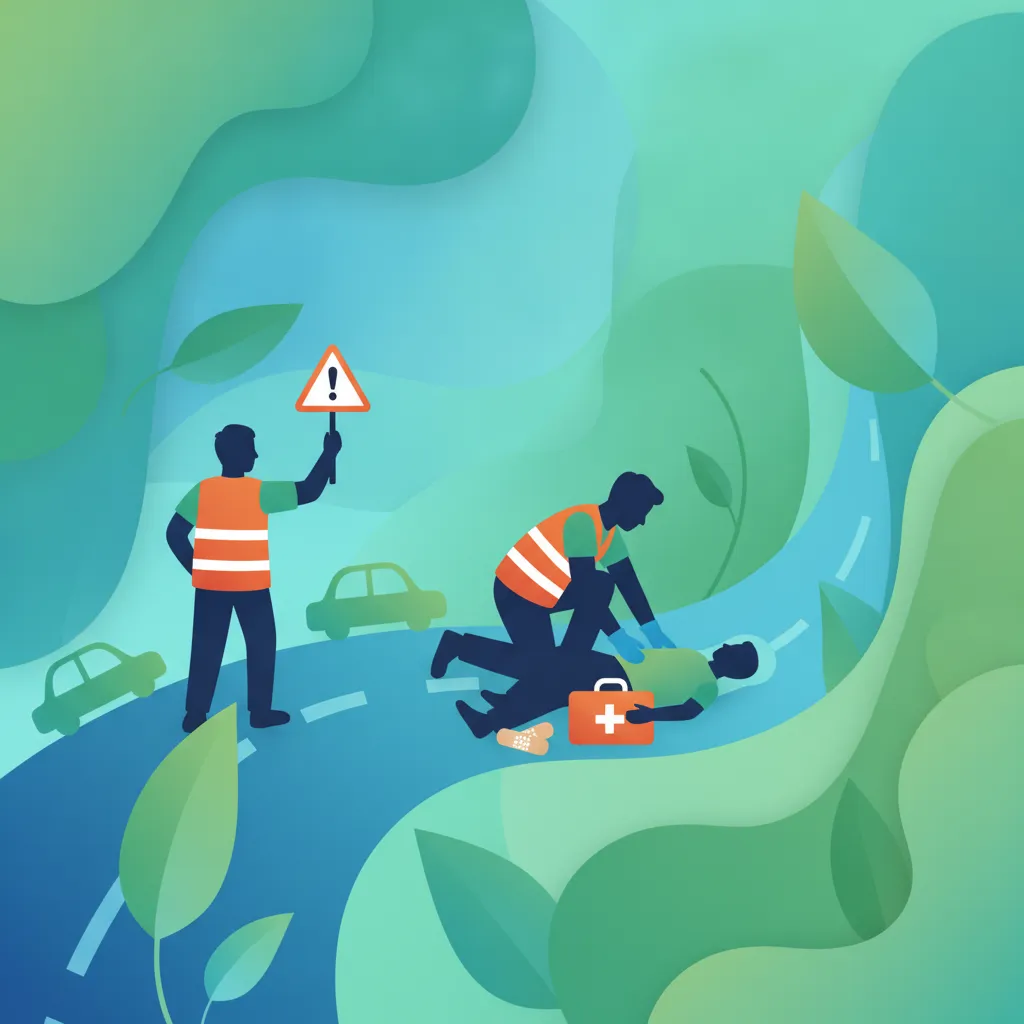
This lesson equips drivers with the essential knowledge for responding to a traffic accident. It outlines the critical first steps: securing the scene to prevent further incidents, assessing the situation, and contacting the correct emergency services (112). The content provides an overview of basic first aid principles applicable at an accident scene and explains the driver's legal obligations regarding incident reporting and cooperation with authorities.
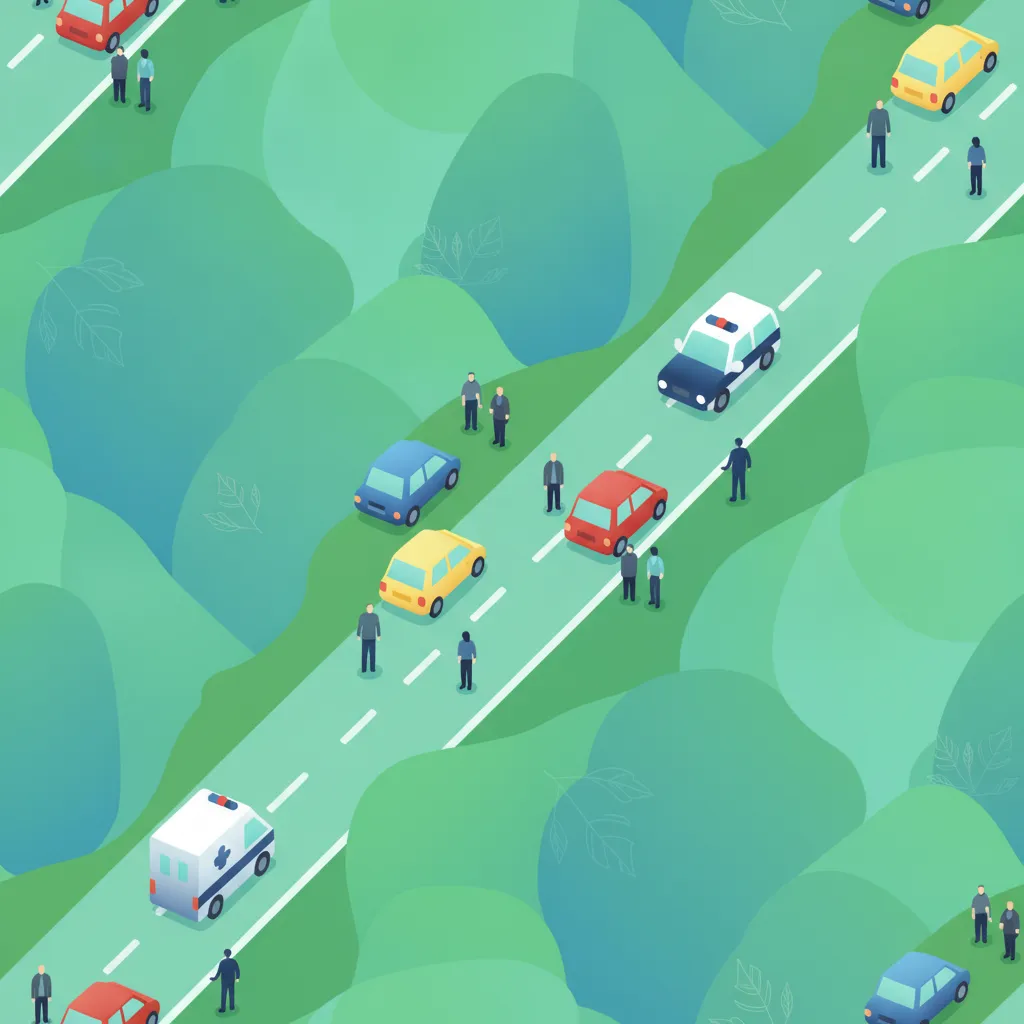
As the driver involved or first on the scene, you have specific duties. This lesson covers the initial steps: securing your own vehicle, warning approaching traffic, and making the emergency call. It reinforces the legal requirement in Austria for all drivers to form an emergency corridor ('Rettungsgasse') in standing traffic to allow clear access for emergency vehicles.
This lesson provides critical knowledge for being the first responder at an accident. It covers securing the scene to prevent further incidents, making an effective emergency call, and forming the 'Rettungsgasse' for approaching rescue vehicles. Basic but potentially life-saving first aid steps are reviewed, with a strong emphasis on not endangering oneself while providing assistance.
This lesson outlines the standardized procedure for handling a vehicle breakdown safely. It covers pulling over to a safe location, activating hazard lights, deploying the warning triangle, and wearing a high-visibility vest. It also explains when and how to contact roadside assistance or emergency services.
This lesson provides a step-by-step guide for safely managing a vehicle breakdown on the road. It covers the correct procedure for pulling over to a safe location, activating hazard lights, and wearing a high-visibility vest. Learners will understand the legal requirement and correct placement of the warning triangle to alert oncoming traffic, as well as the necessary information to provide when contacting roadside assistance services.
While not a substitute for a full first aid course, this lesson provides a critical overview of the immediate actions a driver can take to help an injured person. It covers assessing a casualty for danger, response, and breathing, and the basic principles of controlling severe bleeding and placing an unconscious person in the recovery position. The primary goal is to preserve life until professional help arrives.
This lesson introduces the proactive mindset of defensive driving, which focuses on anticipating potential hazards rather than just reacting to them. It teaches techniques for systematic risk assessment, including scanning the road ahead, checking mirrors frequently, and being aware of the potential actions of other road users. By adopting these safe habits, drivers can create a buffer of safety around their vehicle and significantly reduce the likelihood of being involved in an accident.
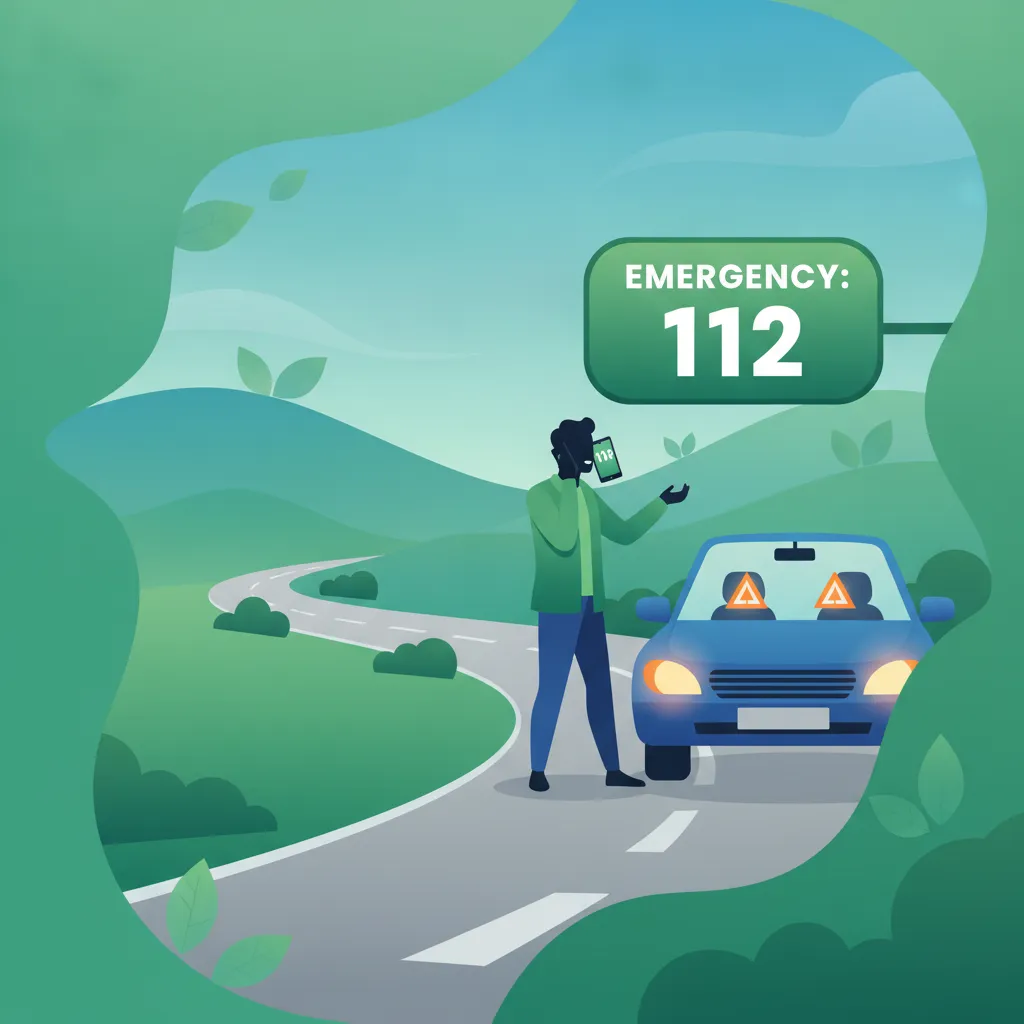
This final lesson summarizes the core principles of responding to any on-road emergency, from a breakdown to an accident. It reinforces the priorities of personal safety, securing the scene to protect others, and providing clear, concise information when calling the pan-European emergency number, 112. This knowledge is essential for managing any unforeseen incident effectively.
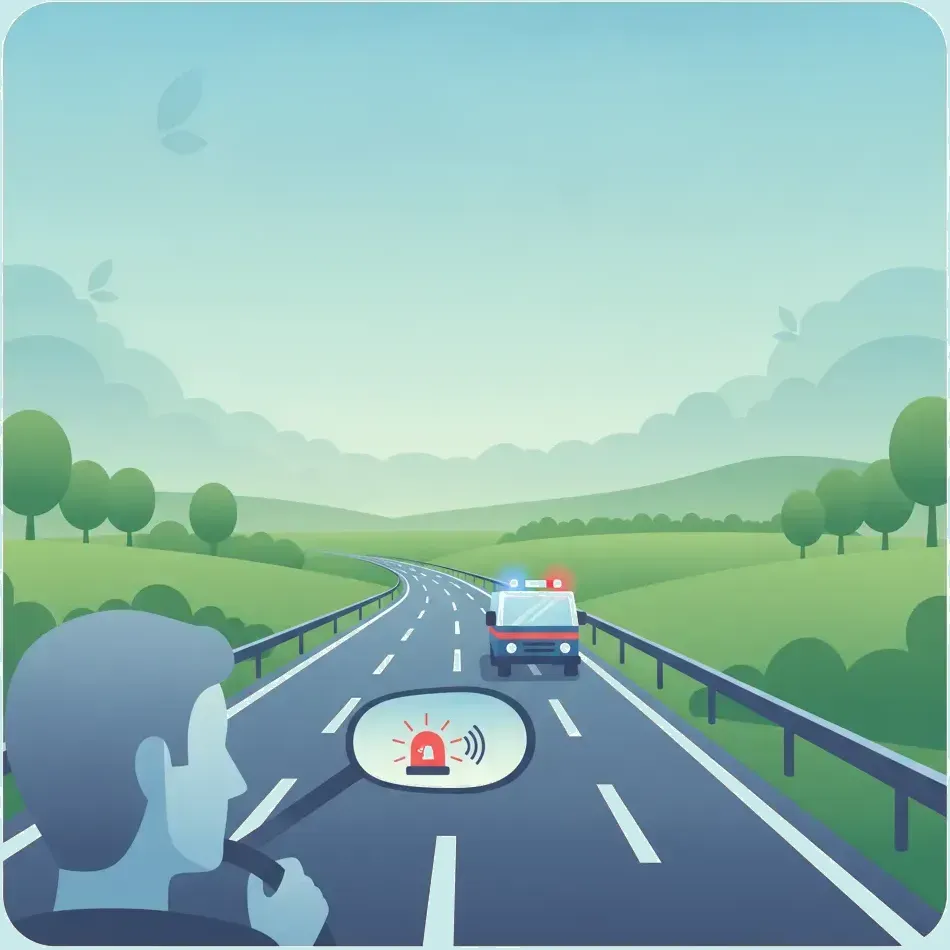
This lesson explains the correct protocol when encountering emergency vehicles with active sirens and lights. It details the legal requirement to yield the right-of-way and provides practical guidance on how to pull over safely and efficiently. Understanding these procedures helps ensure emergency services can reach their destination without delay.
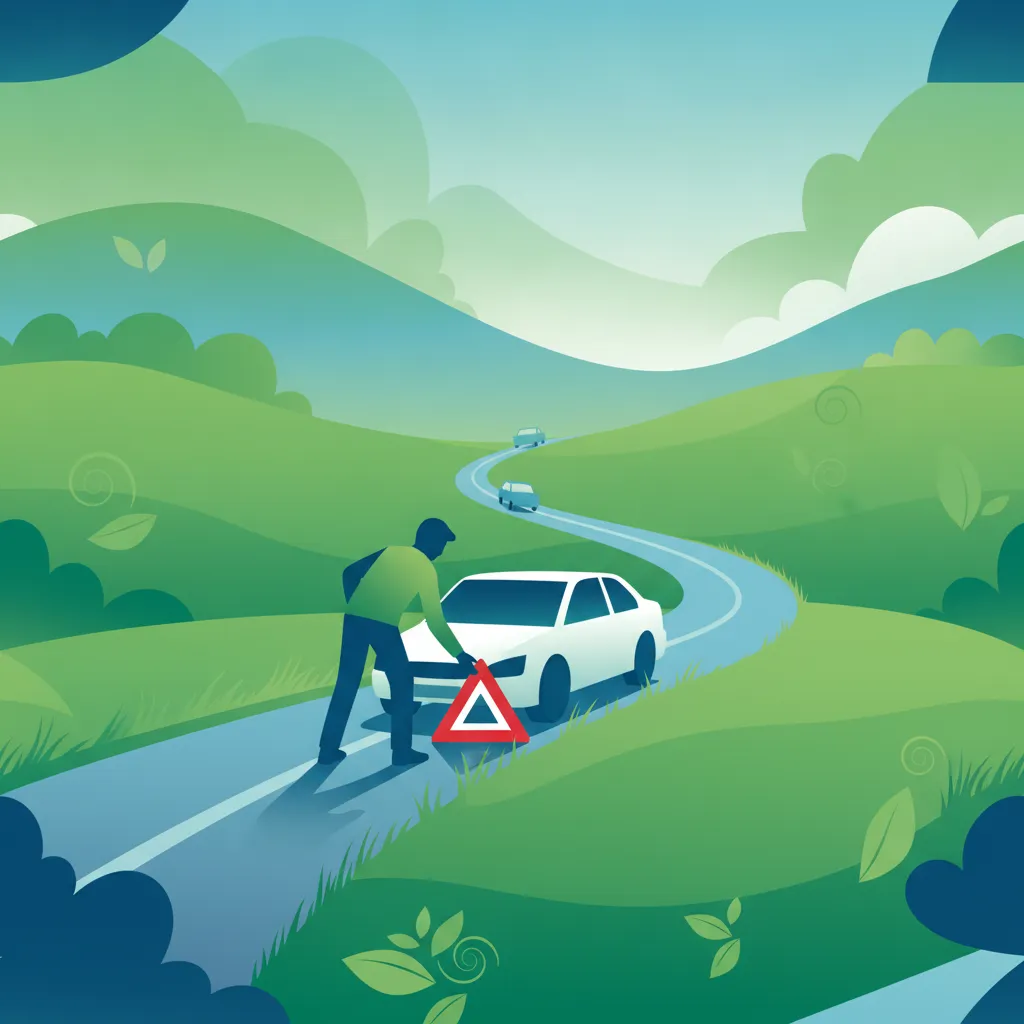
A breakdown requires a calm, systematic response to keep everyone safe. This lesson details the procedure: move to the safest possible location, activate hazard lights, secure the vehicle, and deploy warning triangles. It emphasizes the importance of moving passengers to a safe place away from the vehicle, especially on a motorway, before contacting your company or the breakdown services.
Learn the correct use and placement of hazard lights, warning triangles, and reflective vests as required by Austrian traffic law for AM license holders during breakdowns and accidents.

This lesson details the mandatory lighting and reflector requirements for Category AM vehicles in Austria. It explains the functions of different light settings, including daytime running lights, and their importance for being seen. Additionally, it covers the legal standards for protective helmets, a critical component of rider safety.
This lesson provides a step-by-step guide for safely managing a vehicle breakdown on the road. It covers the correct procedure for pulling over to a safe location, activating hazard lights, and wearing a high-visibility vest. Learners will understand the legal requirement and correct placement of the warning triangle to alert oncoming traffic, as well as the necessary information to provide when contacting roadside assistance services.
This lesson outlines the standardized procedure for handling a vehicle breakdown safely. It covers pulling over to a safe location, activating hazard lights, deploying the warning triangle, and wearing a high-visibility vest. It also explains when and how to contact roadside assistance or emergency services.
This lesson explains the correct protocol when encountering emergency vehicles with active sirens and lights. It details the legal requirement to yield the right-of-way and provides practical guidance on how to pull over safely and efficiently. Understanding these procedures helps ensure emergency services can reach their destination without delay.
This lesson covers the various lighting and reflector systems required on heavy goods vehicles in Austria. It explains the function and legal requirements for headlights, taillights, brake lights, indicators, and reflective markings. Ensuring all lighting systems are operational is essential for visibility and communicating intentions to other road users.

This lesson focuses on the interpretation of traffic lights and road surface markings that guide riders through intersections. It covers the meaning of each traffic light phase, the rules for amber lights, and the significance of various lane lines and stop lines. Properly understanding these signals is essential for maintaining traffic flow and ensuring safety at junctions.

This lesson covers the proper and legal use of a vehicle's entire lighting system to see and be seen. It explains the regulations for using headlights, including daytime running lights, and the specific conditions under which fog lights and high beams are permitted. Correct use of turn signals and brake lights is also emphasized as essential for communicating intentions to other drivers and ensuring safety in all visibility conditions.
This lesson focuses on warning signs, which are designed to alert drivers to potential hazards ahead. Learners will explore the meanings of signs indicating sharp curves, changes in road surface, potential animal crossings, and upcoming construction zones. The content explains how the characteristic triangular shape and symbols convey specific dangers, enabling drivers to anticipate conditions and adjust their speed and attention accordingly.
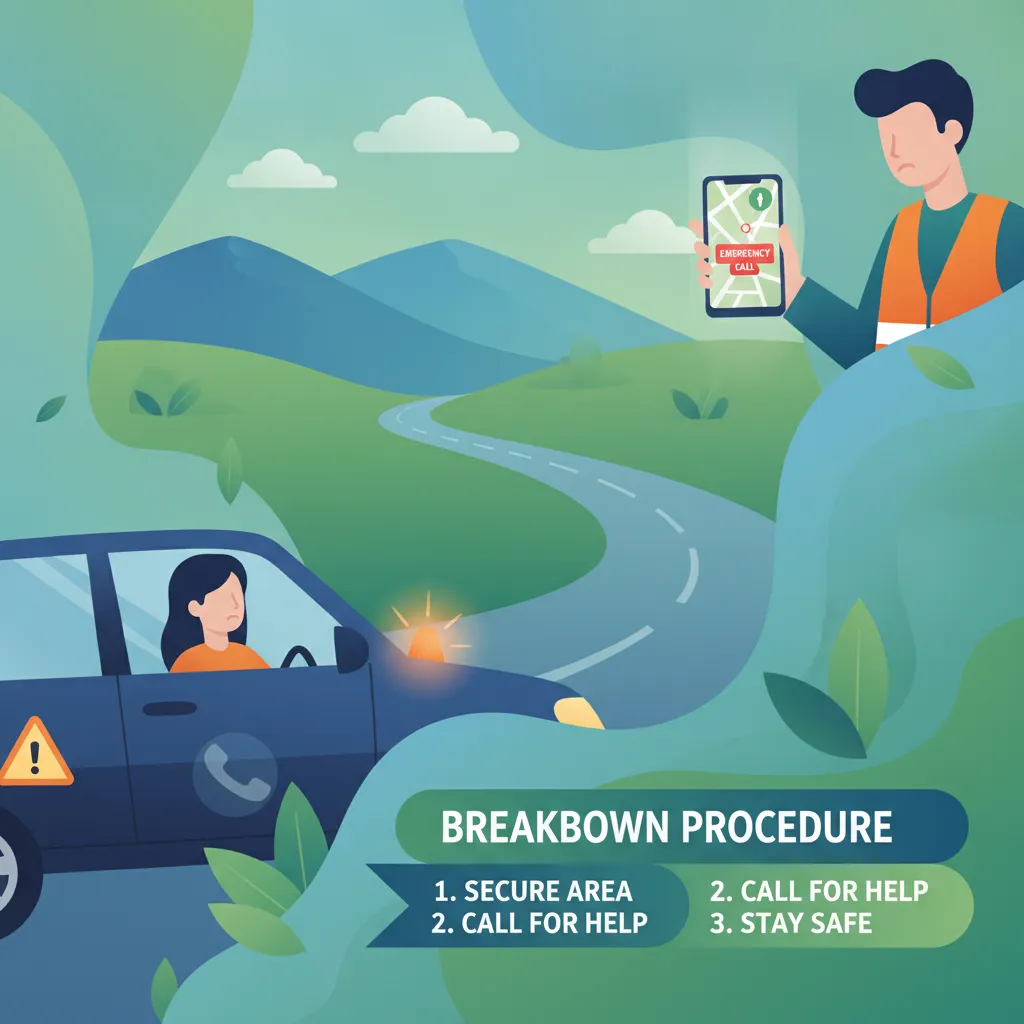
This lesson outlines the step-by-step safety protocol for a vehicle breakdown. It instructs the rider to move the motorcycle to the safest possible location, activate hazard lights, and put on a high-visibility vest. The proper placement of a warning triangle and the procedure for making an emergency call to 112 or a roadside assistance service are also detailed.
This lesson explains the operation and meaning of traffic light signals in Austria, including the standard red, yellow, and green phases, as well as flashing signals and arrows. It also covers other priority control devices, such as stop signs and yield signs, which are used to manage right-of-way at intersections. Understanding the hierarchy between these signals and signs is crucial for navigating junctions safely and in compliance with the law.
Find clear answers to common questions learners have about Handling Breakdowns and Crashes Safely. Learn how the lesson is structured, which driving theory objectives it supports, and how it fits into the overall learning path of units and curriculum progression in Austria. These explanations help you understand key concepts, lesson flow, and exam focused study goals.
Prioritize your safety by moving to the side of the road or a safe area if possible. Always ensure you are visible to other drivers, use your hazard lights, and wear your reflective vest before attempting to inspect your moped.
You must call emergency services immediately if anyone is injured, if there is a significant danger to other road users, or if you are involved in an accident involving other vehicles and damage is significant.
Yes, always stay off the main carriageway and behind a safety barrier if one is available. Never wait on the road or in a position that blocks traffic, as this significantly increases the risk of a secondary accident.
While having a reflective vest is not always mandatory to carry on the bike, it is highly recommended and considered best practice to wear one in any breakdown or emergency situation to ensure you remain visible to other drivers in all lighting conditions.
Refine your study plan by searching for specific Austrian driving theory practice sets. Pinpoint questions related to particular road rules, signs, or challenge levels, and begin practicing immediately to reinforce your knowledge and excel in your official exam with confidence. Get started with focused revision today.