
This lesson provides critical training for motorcyclists in Austria on how to act as a first responder at an accident scene. You will learn the legal and practical steps to secure an area, provide basic first aid, and effectively manage traffic flow to allow rescue services through.

Lesson content overview
Navigating the roads of Austria, especially as a motorcyclist, requires not only skill and vigilance but also the preparedness to act decisively in the event of an accident. While every rider hopes to avoid such incidents, being equipped with the knowledge of crash management and basic first aid is a fundamental responsibility. This lesson, part of your Austrian Motorcycle Theory preparation for A, A1, and A2 licences, outlines the critical steps you must take as a first responder to secure an accident scene, effectively call for help, facilitate rescue efforts, and provide potentially life-saving assistance.
Your immediate actions following an accident can significantly reduce further harm, improve the chances of survival for those injured, and ensure the swift arrival of professional emergency services. Understanding the legal obligations and practical measures involved is paramount for every road user.
The moments immediately following an accident are crucial. Your primary goal as a first responder is to prevent further incidents and ensure the safety of everyone involved, including yourself. This involves a series of rapid and deliberate actions to secure the accident site.
Before approaching any injured person or assessing damage, you must first ensure your own safety and the safety of other road users. This principle, often called "self-protection first," is critical. An unsecured accident scene poses a high risk of secondary collisions, which can injure rescuers or worsen the situation. Assess the environment for ongoing hazards such as oncoming traffic, spilled fuel, or downed power lines before taking further steps.
Never put yourself in danger to provide aid. Your safety is paramount, as you cannot help others if you become a casualty yourself.
If your vehicle or another involved vehicle is still movable and it is safe to do so, move it to the side of the road or an emergency lane to avoid obstructing traffic. This action helps to clear the roadway and reduces the risk of other vehicles colliding with the accident scene. Once stationary, regardless of whether the vehicle is moved or not, immediately activate your hazard warning lights. These flashing amber lights serve as an early warning to other drivers, signaling an unexpected stop or an obstruction ahead. They are vital for alerting approaching traffic, especially in poor visibility or at night.
Flashing amber lights on a vehicle used to signal a dangerous situation, an unexpected stop, or an obstruction, alerting other road users.
After activating hazard lights, the next essential step is to place a warning triangle at an appropriate distance behind the accident scene. This device provides a visual warning to oncoming traffic, giving drivers ample time to react and reduce speed. The placement distance is critical and varies based on the type of road.
For open roads (e.g., rural roads, country roads), the warning triangle must be placed at least 150 metres behind the vehicle or obstruction.
For motorways (Autobahnen) and expressways (Schnellstraßen), the distance is also 150 metres. Due to higher speeds, it's crucial to ensure this distance is maintained.
In urban areas (e.g., within city limits), where traffic speeds are lower, the warning triangle should be placed at approximately 50 metres behind the vehicle.
Always ensure the warning triangle is clearly visible to approaching traffic, especially when cresting hills or rounding bends. If an accident occurs on a bend, place the triangle before the bend to warn drivers adequately.
When placing the warning triangle, walk against the direction of traffic flow, facing oncoming vehicles. This allows you to monitor traffic and ensures your safety. If available, wear a high-visibility vest.
Failure to correctly place the warning triangle or activate hazard lights can lead to fines and, more importantly, increase the risk of secondary collisions. The Austrian Road Traffic Act (StVO) includes regulations regarding the use of warning triangles, specifically under § 59.
Once the scene is initially secured, the next vital step is to make an effective emergency call. In Austria and across the European Union, the unified emergency number is 112. This single number connects you to police, fire, and medical services, ensuring a coordinated response.
When you call 112, remain calm and speak clearly. The dispatcher needs precise information to send the appropriate resources to the correct location as quickly as possible. Be prepared to provide the following details:
Where is the accident? Provide the exact location. This might include:
What happened? Briefly describe the nature of the accident (e.g., "motorcycle vs. car," "motorcycle skidded off the road," "multiple vehicle collision").
How many people are injured? Give an estimate of the number of casualties.
What are their injuries and condition? Provide initial observations (e.g., "one person unconscious," "severe bleeding from the leg," "person trapped in vehicle").
Are there any special hazards? Mention anything that could endanger rescue personnel or worsen the situation (e.g., "fuel leak," "vehicle on fire," "power lines down," "hazardous materials involved").
What is your name and phone number? This allows the dispatcher to call you back if the connection is lost or if they need further information.
The dispatcher will guide you through the call and ask specific questions. Do not hang up until they tell you to, as they might have further instructions or need more details.
It's natural to feel stressed in an emergency, but maintaining composure is vital for effective communication. Listen carefully to the dispatcher's questions and instructions. They are trained professionals who can provide vital advice on what to do until help arrives, including basic first aid guidance. Your cooperation helps ensure a swift and appropriate response from emergency services.
The obligation to provide information in emergencies is also enshrined in Austrian law, for example, under § 45 of the Federal Police Act (BPolG).
On multi-lane roads, especially motorways and expressways where traffic can quickly come to a standstill after an incident, the timely arrival of emergency vehicles is often a matter of life and death. To ensure unimpeded access for police, ambulance, and fire services, drivers are legally required to form a Rettungsgasse (emergency lane or rescue corridor).
An emergency lane formed by drivers on multi-lane roads in Austria (and other Central European countries) to allow unimpeded passage for rescue vehicles during traffic jams or slow-moving traffic.
The method for forming the Rettungsgasse depends on the number of lanes available in one direction. This action must be taken as soon as traffic begins to slow or stop, even if no emergency vehicles are yet visible.
On a two-lane road (per direction):
On a three-lane road (per direction):
It is crucial to leave enough space so that emergency vehicles can pass quickly and safely. Do not drive onto the hard shoulder (emergency lane) unless specifically instructed by authorities or it's the only way to facilitate the Rettungsgasse safely without blocking other lanes. The legal requirement to form a Rettungsgasse is stipulated in the Austrian Road Traffic Regulation (StVO) § 38.
Failing to form the Rettungsgasse, or doing so incorrectly, is a serious offence that can result in significant fines and potentially endanger lives by delaying emergency response.
Every second counts in an emergency. Delays in reaching an accident scene can have severe consequences for injured individuals, worsening their condition or even leading to preventable fatalities. The Rettungsgasse ensures that ambulances, fire trucks, and police cars can reach the scene as quickly as possible, providing immediate medical attention, extinguishing fires, and managing traffic flow. Your active participation in forming this lane directly contributes to saving lives and reducing suffering.
After securing the scene and making an emergency call, your attention should turn to providing basic first aid to any injured persons. Even without formal medical training, knowing fundamental first aid steps can make a profound difference. Always remember to prioritize your safety first. The internationally recognized ABCDE approach provides a systematic framework for assessing and treating a casualty.
A systematic, sequential approach used in first aid and emergency medicine to assess and manage critical life threats: Airway, Breathing, Circulation, Disability, Exposure.
When dealing with a motorcyclist, it is generally recommended to leave their helmet on unless they are choking or you suspect airway obstruction, as removing it incorrectly could exacerbate a spinal injury. Only trained professionals should remove a helmet if a spinal injury is suspected.
The priority in any unconscious casualty is to ensure a clear airway. An obstructed airway (e.g., by the tongue, blood, or vomit) can quickly lead to suffocation.
Check for responsiveness: Gently tap the person and ask loudly, "Are you okay?" If there is no response, assume unconsciousness.
Open the airway: If the person is unconscious and not breathing normally, gently tilt their head back and lift their chin (head-tilt/chin-lift maneuver). This moves the tongue away from the back of the throat.
Look for obstructions: Visually check the mouth and throat for any foreign objects (e.g., loose teeth, debris). If visible, carefully remove them using your fingers, being cautious not to push them further down.
Once the airway is open, check for normal breathing.
Look, Listen, and Feel: Place your ear close to the casualty's mouth and nose.
Do this for up to 10 seconds.
Rescue Breaths (if trained): If the person is not breathing normally, and you are trained in CPR, begin rescue breaths as part of resuscitation protocols. However, if untrained, continuous chest compressions alone are preferable over ineffective rescue breaths.
Recovery Position: If the casualty is unconscious but breathing normally, place them in the recovery position. This helps to keep the airway open and prevents them from choking on vomit or fluids. Ensure they are stable and continuously monitor their breathing.
Severe bleeding can be life-threatening. Prompt control of significant blood loss is critical.
Direct Pressure: Apply firm, direct pressure to the wound using a clean cloth, bandage, or even your bare hand if nothing else is available. Maintain continuous pressure.
Pressure Bandage: If direct pressure alone isn't sufficient, apply a pressure bandage. Place a thick pad over the wound and wrap it tightly with a bandage.
Elevate the Limb: If the bleeding is from an arm or leg, elevate the injured limb above the level of the heart, if possible and if no spinal injury is suspected.
Tourniquet (Last Resort): In cases of catastrophic, life-threatening bleeding that cannot be controlled by direct pressure or pressure bandage, a tourniquet may be used as a last resort. This requires specific training and should only be applied if no other method works and limb loss or death is imminent.
This step involves a quick assessment of the casualty's neurological status using the AVPU scale.
A simple method to assess a casualty's level of consciousness: Alert, Voice, Pain, Unresponsive.
Alert (A): Is the person awake and aware of their surroundings?
Voice (V): Do they respond to verbal commands or questions?
Pain (P): Do they react to painful stimuli (e.g., a gentle pinch)?
Unresponsive (U): Do they show no response to voice or pain?
Any change in consciousness level is a serious sign and should be reported to emergency services. Avoid moving a casualty with suspected spinal injury unless absolutely necessary to save their life (e.g., from an immediate fire hazard).
Once primary life threats are addressed, you need to "expose" the casualty to properly assess injuries while simultaneously protecting them from the elements.
Examine for Injuries: Carefully and systematically check the casualty's body for any additional injuries that might have been missed, such as fractures, bruising, or lacerations.
Prevent Hypothermia: Even in mild weather, an injured person can quickly develop hypothermia (dangerously low body temperature) due to shock and reduced circulation.
A life-threatening medical condition resulting from insufficient blood flow throughout the body, leading to inadequate oxygen supply to tissues and organs.
If the casualty shows signs of shock (pale, cold, clammy skin; rapid, shallow breathing; weak pulse; confusion), keep them lying flat, elevate their legs (unless spinal injury is suspected), and keep them warm. The legal obligation to render aid is part of Austrian law, specifically outlined in the Austrian First Aid Act (Erste-Hilfe-Gesetz), § 2.
In Austria, being involved in or witnessing an accident carries significant legal duties. These obligations are in place to ensure public safety, facilitate rescue operations, and hold individuals accountable.
Austrian law mandates that anyone involved in or witnessing an accident must provide reasonable assistance if capable. This is known as the Legal Duty to Assist. This obligation includes:
This duty applies to everyone, regardless of whether they caused the accident or were merely a bystander. The law acknowledges that not everyone has advanced medical training, but everyone is expected to do what they reasonably can.
Consider taking a certified first aid course. Even a basic course can provide you with the confidence and skills to act effectively in an emergency, fulfilling your legal duty more comprehensively.
Failure to comply with the legal duty to assist, particularly leaving the scene of an accident without stopping or providing assistance, is a serious criminal offense known as Hit-and-Run (unerlaubtes Entfernen vom Unfallort or Fahrerflucht).
The criminal act of leaving the scene of an accident without stopping, providing identification, rendering aid, or contacting authorities, especially when injury or significant property damage has occurred.
This offense is punishable under Austrian law, specifically § 88 of the Strafgesetzbuch (StGB – Criminal Code), which addresses the omission to render aid (Unterlassung der Hilfeleistung) and also covers driving away from an accident. Penalties can range from significant fines to imprisonment, along with the revocation of your driving licence. The law is strict because leaving an accident scene compromises rescue efforts and shows a severe disregard for human life and legal responsibility.
Beyond criminal penalties, you could also face civil liabilities if your actions or inactions contribute to further harm. For instance, if you move a casualty with a suspected spinal injury unnecessarily and cause further damage, you might be held liable. This is why following established first aid protocols, prioritizing your safety, and not attempting procedures you are untrained for, are essential. Your duty is to provide reasonable assistance, not necessarily perfect medical intervention.
Effective crash management and first aid often require adapting your actions to the specific circumstances of the accident. Factors such as weather, light conditions, road type, and the presence of vulnerable road users significantly influence how you should respond.
Accidents involving vulnerable road users such as motorcyclists, cyclists, or pedestrians require particular sensitivity and specific considerations:
Being prepared also means knowing what common mistakes to avoid. These errors can worsen an already critical situation, delay rescue, or even cause further injury.
A frequent mistake is placing the warning triangle too close to the accident scene, especially on high-speed roads. A distance of 30-50 metres is insufficient on a motorway where vehicles travel at 100 km/h or more. This drastically reduces the reaction time for other drivers. Always adhere to the prescribed distances (150 m for open roads/motorways, 50 m for urban areas). Another error is failing to place the triangle before a blind spot or curve, effectively making it useless for warning approaching traffic.
Ignoring the requirement to form a Rettungsgasse, or forming it incorrectly, is a critical error. It directly impedes the ability of emergency services to reach the scene promptly. This delay can have fatal consequences for those awaiting medical attention. It's a mandatory legal requirement, and non-compliance carries penalties. Drivers sometimes mistakenly think they only need to form it when they see emergency vehicles, but it should be done as soon as traffic starts to slow or stop on multi-lane roads.
Effective crash management and first aid are fundamental skills for all road users, especially motorcyclists. This lesson, part of your Austrian Motorcycle Theory course, has highlighted key principles that can make a profound difference in the aftermath of an accident.
By internalizing these principles and practices, you fulfill your ethical and legal responsibilities as a road user and contribute to a safer environment for everyone in Austria.
This lesson covers the critical role of a motorcyclist as first responder at an accident scene in Austria, combining legal obligations with practical life-saving skills. Learners must master scene safety through hazard lights and warning triangle placement (150m on motorways, 50m in towns), forming the Rettungsgasse on multi-lane roads, and making an effective E112 call with precise location and casualty information. The ABCDE first aid framework (Airway, Breathing, Circulation, Disability, Exposure) provides a systematic approach to prioritising care, while Austrian law mandates rendering reasonable assistance—failure to do so, including leaving the scene, constitutes a criminal offence. Adapting procedures to weather, road type, and vulnerable road users (motorcyclists, cyclists, pedestrians) is essential for effective emergency response.
A short set of high-value points that capture the most important learning from this lesson.
Your first priority at any accident scene is your own safety; never endanger yourself attempting rescue
Warning triangles must be placed 150 metres behind on motorways/open roads and 50 metres in urban areas to give drivers adequate reaction time
The Rettungsgasse must be formed as soon as traffic slows, with vehicles on the left moving left and others moving right to create a central lane for emergency vehicles
The ABCDE approach (Airway, Breathing, Circulation, Disability, Exposure) provides a systematic life-saving priority sequence when assessing casualties
Leaving an accident scene without stopping or providing assistance constitutes hit-and-run (Fahrerflucht) under Austrian criminal law and carries severe penalties
Explore all units and lessons included in this driving theory course.
On motorways and open roads: 150 metres; in urban areas: 50 metres – and always place the triangle before any blind spot or bend
Rettungsgasse on two lanes: left moves left, right moves right; on three lanes: left moves left, middle moves slightly left, right moves right, creating the lane between left and middle
Leave a motorcyclist's helmet on unless they are choking or airway obstruction is suspected, as incorrect removal can worsen spinal injuries
The AVPU scale (Alert, Voice, Pain, Unresponsive) assesses consciousness level; any deterioration must be reported to emergency services
In Austria, the Legal Duty to Assist requires providing reasonable help according to your capabilities, including calling 112 and securing the scene
Placing the warning triangle too close (30-50m on a motorway) severely reduces reaction time for high-speed traffic and defeats its purpose
Forming the Rettungsgasse only when emergency vehicles are visible rather than as soon as traffic begins to slow, causing dangerous delays
Moving a casualty with suspected spinal injury unless they face immediate danger (e.g., fire), which can cause irreversible paralysis
Skipping airway and breathing checks to focus on minor wounds or helping someone sit up, bypassing the most time-critical life threats
Using a tourniquet without proper training or applying it incorrectly, which can cause severe tissue damage or limb loss
Lesson content overview
A short set of high-value points that capture the most important learning from this lesson.
Your first priority at any accident scene is your own safety; never endanger yourself attempting rescue
Warning triangles must be placed 150 metres behind on motorways/open roads and 50 metres in urban areas to give drivers adequate reaction time
The Rettungsgasse must be formed as soon as traffic slows, with vehicles on the left moving left and others moving right to create a central lane for emergency vehicles
The ABCDE approach (Airway, Breathing, Circulation, Disability, Exposure) provides a systematic life-saving priority sequence when assessing casualties
Leaving an accident scene without stopping or providing assistance constitutes hit-and-run (Fahrerflucht) under Austrian criminal law and carries severe penalties
Explore all units and lessons included in this driving theory course.
On motorways and open roads: 150 metres; in urban areas: 50 metres – and always place the triangle before any blind spot or bend
Rettungsgasse on two lanes: left moves left, right moves right; on three lanes: left moves left, middle moves slightly left, right moves right, creating the lane between left and middle
Leave a motorcyclist's helmet on unless they are choking or airway obstruction is suspected, as incorrect removal can worsen spinal injuries
The AVPU scale (Alert, Voice, Pain, Unresponsive) assesses consciousness level; any deterioration must be reported to emergency services
In Austria, the Legal Duty to Assist requires providing reasonable help according to your capabilities, including calling 112 and securing the scene
Placing the warning triangle too close (30-50m on a motorway) severely reduces reaction time for high-speed traffic and defeats its purpose
Forming the Rettungsgasse only when emergency vehicles are visible rather than as soon as traffic begins to slow, causing dangerous delays
Moving a casualty with suspected spinal injury unless they face immediate danger (e.g., fire), which can cause irreversible paralysis
Skipping airway and breathing checks to focus on minor wounds or helping someone sit up, bypassing the most time-critical life threats
Using a tourniquet without proper training or applying it incorrectly, which can cause severe tissue damage or limb loss
Explore search topics learners often look for when studying Crash Management and First Aid. These topics reflect common questions about road rules, driving situations, safety guidance, and lesson level theory preparation for learners in Austria.
Browse additional driving theory lessons that cover connected traffic rules, road signs, and common driving situations related to this topic. Improve your understanding of how different rules interact across everyday traffic scenarios.
Explore your legal responsibilities as a first responder at an accident scene in Austria. Understand immediate actions, emergency call protocols, and the critical importance of the Rettungsgasse for swift rescue operations.
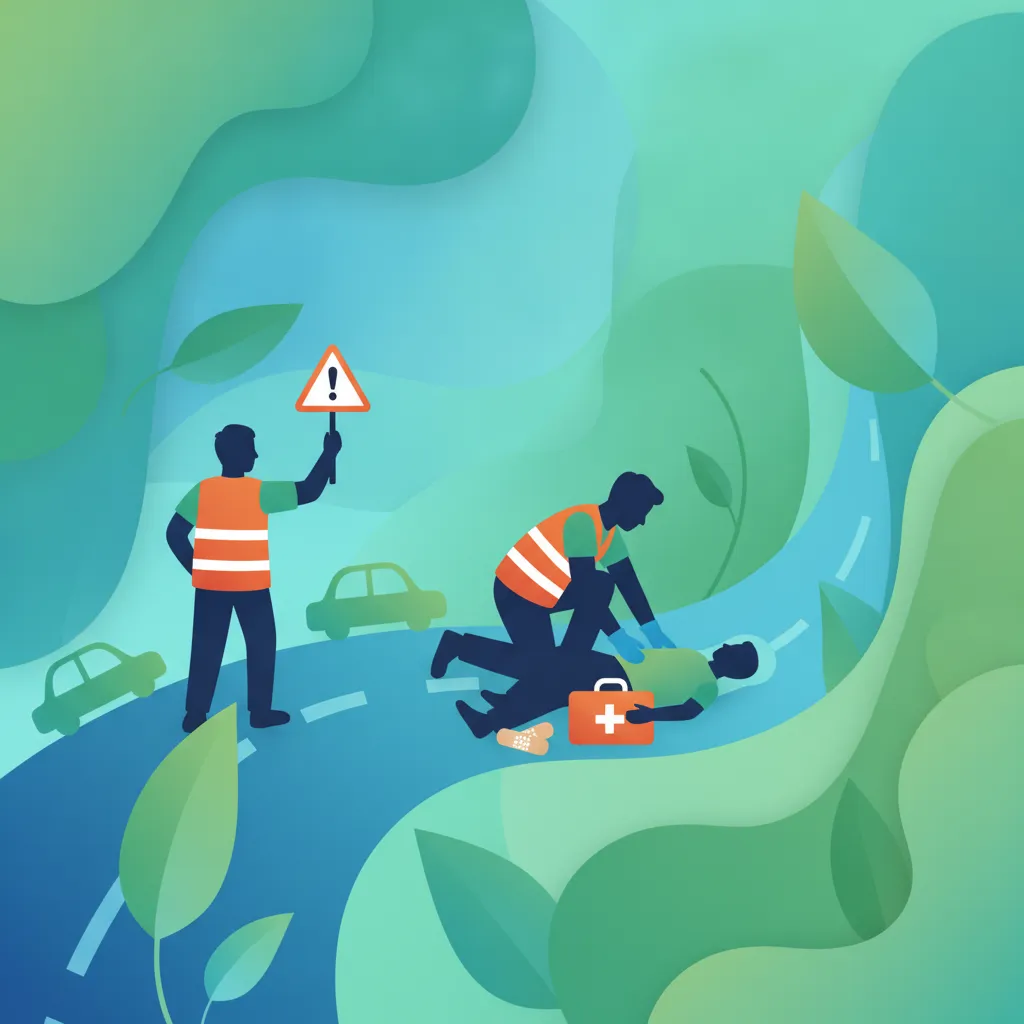
This lesson equips drivers with the essential knowledge for responding to a traffic accident. It outlines the critical first steps: securing the scene to prevent further incidents, assessing the situation, and contacting the correct emergency services (112). The content provides an overview of basic first aid principles applicable at an accident scene and explains the driver's legal obligations regarding incident reporting and cooperation with authorities.
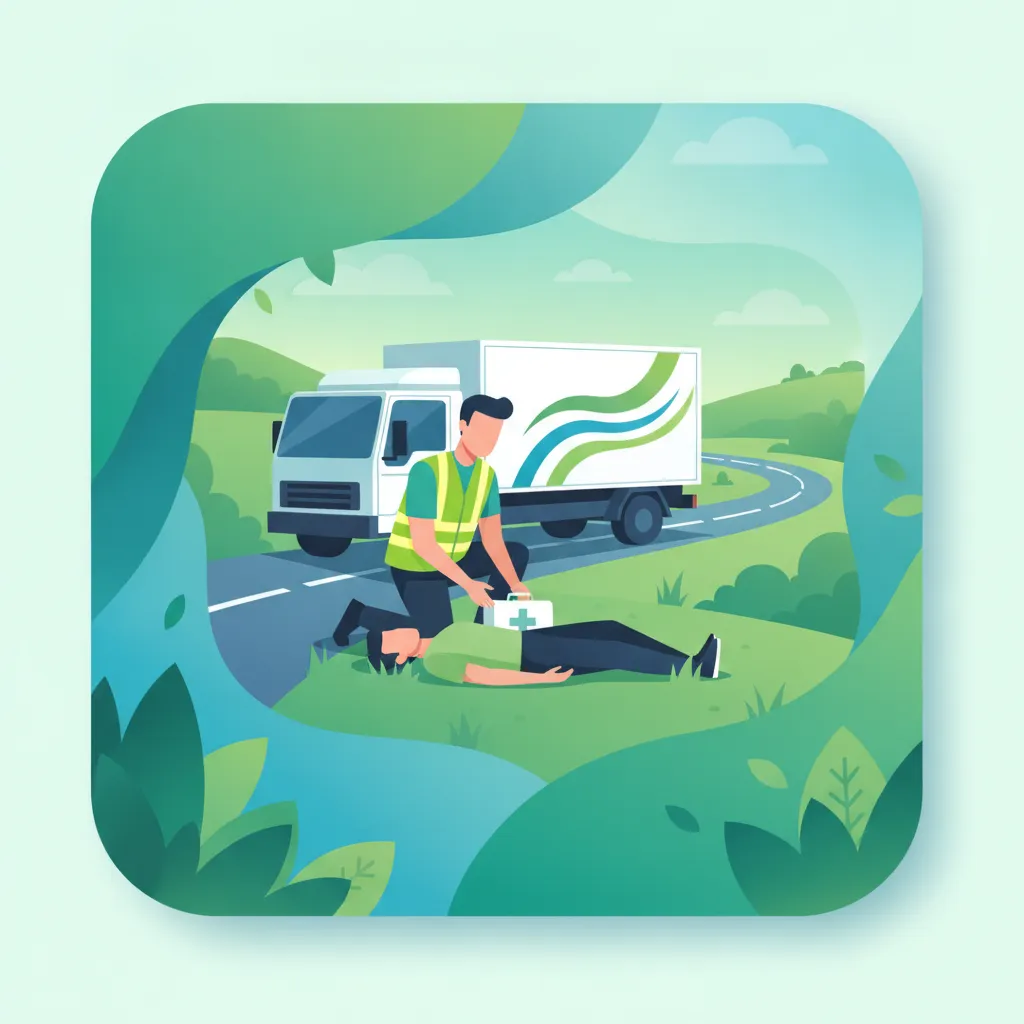
While not a substitute for a full first aid course, this lesson provides a critical overview of the immediate actions a driver can take to help an injured person. It covers assessing a casualty for danger, response, and breathing, and the basic principles of controlling severe bleeding and placing an unconscious person in the recovery position. The primary goal is to preserve life until professional help arrives.
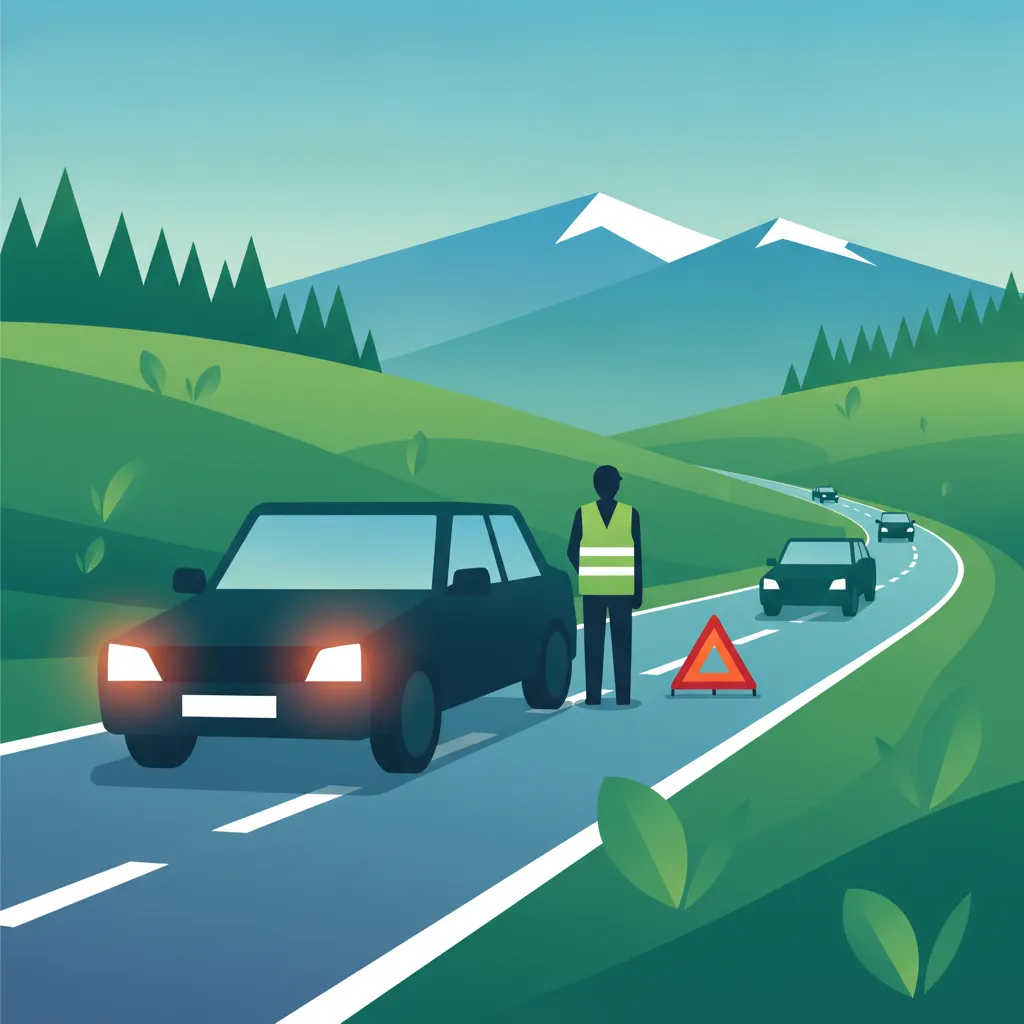
This lesson equips riders with the knowledge to manage an unexpected breakdown or accident. It outlines the steps for securing the vehicle and scene safely, including the use of hazard lights and a reflective vest. It also covers the procedure for contacting emergency services and providing essential information.
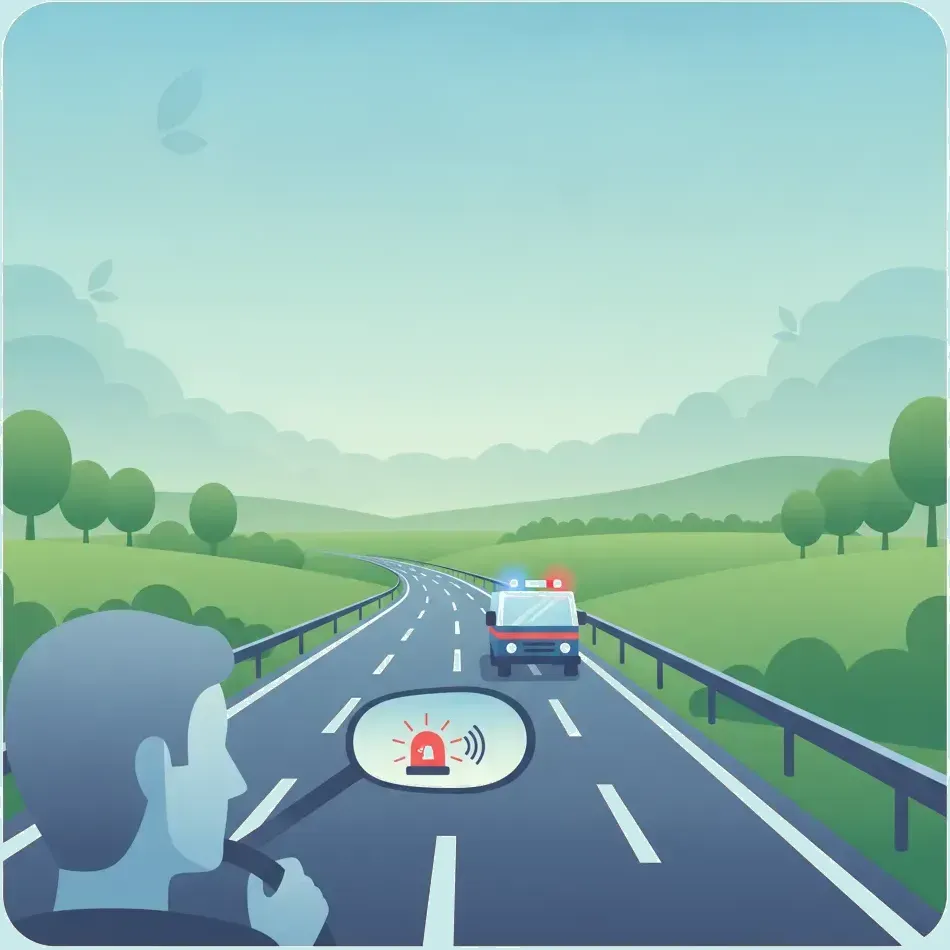
This lesson explains the correct protocol when encountering emergency vehicles with active sirens and lights. It details the legal requirement to yield the right-of-way and provides practical guidance on how to pull over safely and efficiently. Understanding these procedures helps ensure emergency services can reach their destination without delay.
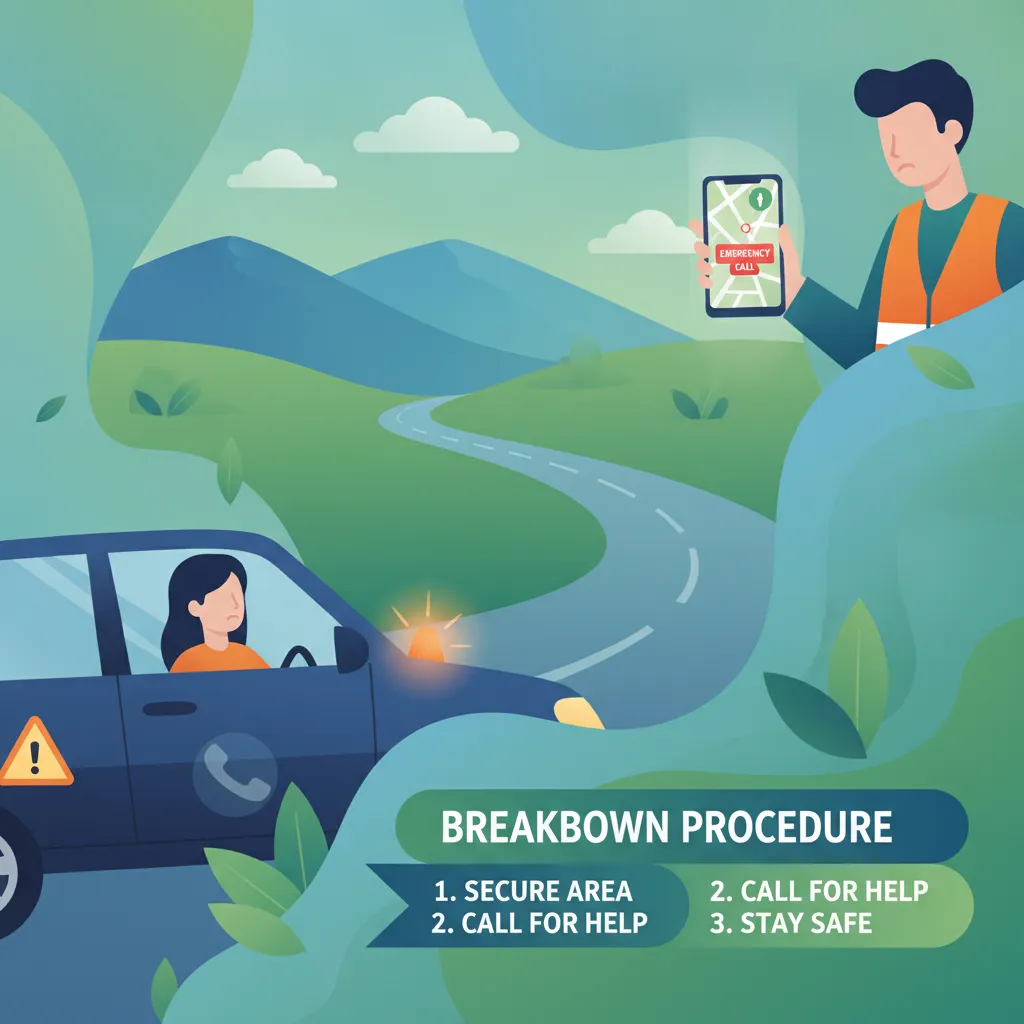
This lesson outlines the step-by-step safety protocol for a vehicle breakdown. It instructs the rider to move the motorcycle to the safest possible location, activate hazard lights, and put on a high-visibility vest. The proper placement of a warning triangle and the procedure for making an emergency call to 112 or a roadside assistance service are also detailed.

This lesson addresses the heightened vulnerability of motorcyclists and outlines essential strategies for personal safety and risk mitigation. It covers the importance of wearing certified protective gear, maintaining situational awareness, and adopting a defensive riding posture. By understanding and anticipating potential hazards in the Austrian traffic environment, riders can actively reduce their risk of accidents.

This lesson emphasizes the practical and ethical duties of motorcyclists on Austrian roads, focusing on proactive risk assessment and sound judgment. It teaches learners how to recognize potential hazards, anticipate the actions of other road users, and consistently adhere to traffic regulations. Cultivating this responsible mindset is crucial for personal safety and protecting others in traffic.

As the driver involved or first on the scene, you have specific duties. This lesson covers the initial steps: securing your own vehicle, warning approaching traffic, and making the emergency call. It reinforces the legal requirement in Austria for all drivers to form an emergency corridor ('Rettungsgasse') in standing traffic to allow clear access for emergency vehicles.

This lesson provides essential knowledge for using Austria's high-speed road network. It covers the correct procedure for entering via acceleration lanes, maintaining strict lane discipline (keeping right, passing left), and understanding the digital or physical Vignette (toll sticker) requirement. The formation of the 'Rettungsgasse' (emergency corridor) during traffic jams is also a key topic.

This lesson explains how fatigue, alcohol, and drugs dangerously impair a rider's judgment, coordination, and reaction time. It specifies the legal blood alcohol concentration (BAC) limit for vehicle operators in Austria and describes the severe penalties for driving under the influence (DUI). The importance of being well-rested and completely sober before every ride is strongly emphasized.
Learn essential techniques for securing an accident scene and providing crucial first aid until emergency services arrive. This lesson covers the ABCDE approach and self-protection measures for motorcyclists in Austria.
This lesson equips drivers with the essential knowledge for responding to a traffic accident. It outlines the critical first steps: securing the scene to prevent further incidents, assessing the situation, and contacting the correct emergency services (112). The content provides an overview of basic first aid principles applicable at an accident scene and explains the driver's legal obligations regarding incident reporting and cooperation with authorities.
This lesson equips riders with the knowledge to manage an unexpected breakdown or accident. It outlines the steps for securing the vehicle and scene safely, including the use of hazard lights and a reflective vest. It also covers the procedure for contacting emergency services and providing essential information.
This lesson addresses the heightened vulnerability of motorcyclists and outlines essential strategies for personal safety and risk mitigation. It covers the importance of wearing certified protective gear, maintaining situational awareness, and adopting a defensive riding posture. By understanding and anticipating potential hazards in the Austrian traffic environment, riders can actively reduce their risk of accidents.
This lesson outlines the step-by-step safety protocol for a vehicle breakdown. It instructs the rider to move the motorcycle to the safest possible location, activate hazard lights, and put on a high-visibility vest. The proper placement of a warning triangle and the procedure for making an emergency call to 112 or a roadside assistance service are also detailed.
While not a substitute for a full first aid course, this lesson provides a critical overview of the immediate actions a driver can take to help an injured person. It covers assessing a casualty for danger, response, and breathing, and the basic principles of controlling severe bleeding and placing an unconscious person in the recovery position. The primary goal is to preserve life until professional help arrives.

This lesson highlights the specific hazards of riding on countryside roads in Austria. It teaches riders to be vigilant for wildlife crossing signs, especially at dawn and dusk, and how to safely approach and overtake slow-moving agricultural machinery. Awareness of potential surface hazards like mud, gravel, or manure from farm access points is also crucial for maintaining traction.
This lesson provides advice for navigating popular scenic routes, which often feature heavy traffic, cyclists, and distracted drivers. It emphasizes maintaining focus on the road despite beautiful scenery and anticipating unpredictable actions from other tourists who may stop suddenly. Adopting a patient and defensive mindset is key to safely enjoying these remarkable roads.
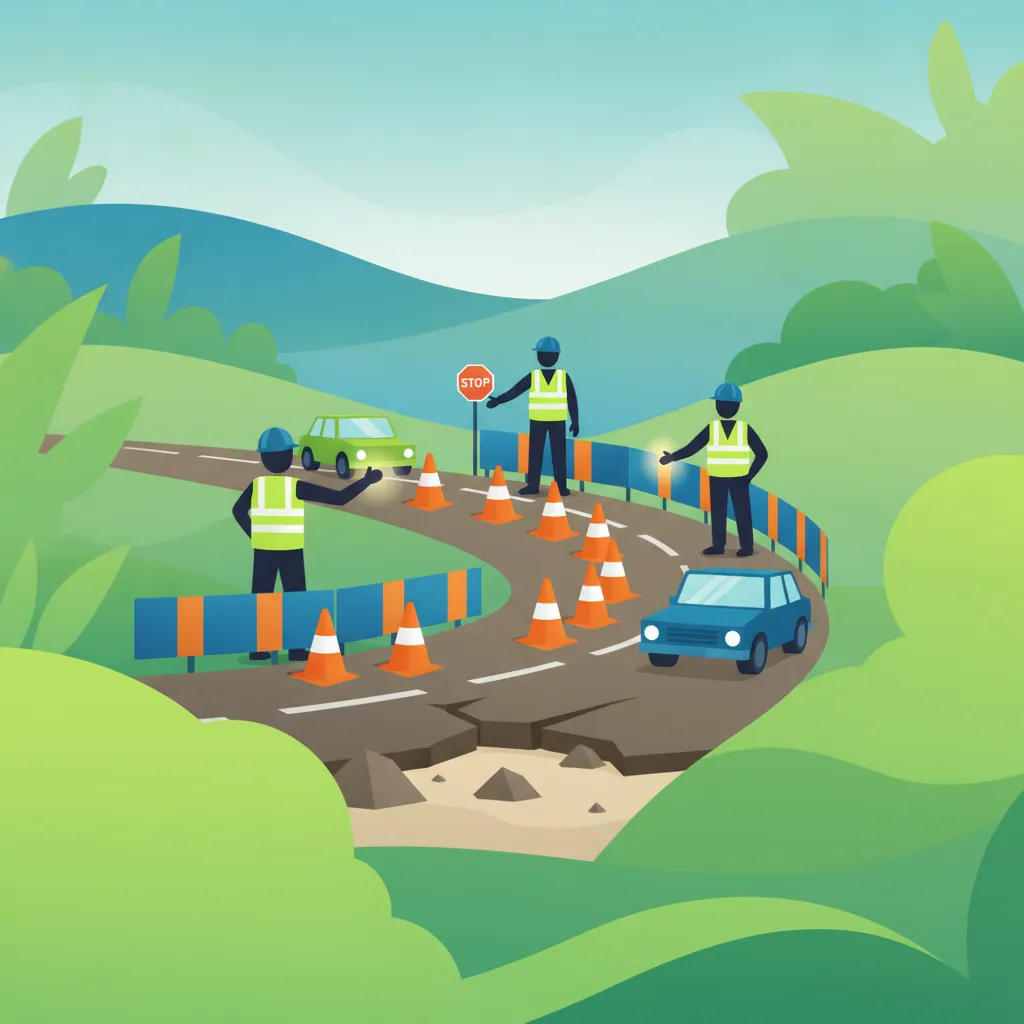
This lesson prepares riders for safely transiting through construction zones ('Baustellen'). It covers the interpretation of temporary signage, adherence to reduced speed limits, and awareness of hazards suchas altered lane markings, abrupt surface changes, and loose gravel. Respecting the safety of road workers and anticipating unpredictable traffic patterns are key themes.
This lesson emphasizes the practical and ethical duties of motorcyclists on Austrian roads, focusing on proactive risk assessment and sound judgment. It teaches learners how to recognize potential hazards, anticipate the actions of other road users, and consistently adhere to traffic regulations. Cultivating this responsible mindset is crucial for personal safety and protecting others in traffic.
As the driver involved or first on the scene, you have specific duties. This lesson covers the initial steps: securing your own vehicle, warning approaching traffic, and making the emergency call. It reinforces the legal requirement in Austria for all drivers to form an emergency corridor ('Rettungsgasse') in standing traffic to allow clear access for emergency vehicles.
Find clear answers to common questions learners have about Crash Management and First Aid. Learn how the lesson is structured, which driving theory objectives it supports, and how it fits into the overall learning path of units and curriculum progression in Austria. These explanations help you understand key concepts, lesson flow, and exam focused study goals.
The Rettungsgasse is an emergency corridor formed by drivers on motorways to allow rescue vehicles to reach the scene of an accident. As a motorcyclist, you must understand your position within this lane to ensure you are not blocking access for emergency responders.
Your absolute first priority is personal safety and securing the scene. Use your hazard lights, wear your high-visibility vest if available, and ensure no further traffic can collide with the vehicles involved before approaching to offer aid.
Yes, under Austrian law, you are required to provide reasonable assistance at the scene of an accident if it is safe to do so. This includes securing the area and calling the emergency services.
Call 112 or 144. Be prepared to provide your exact location, the type of accident, number of injured people, and a description of injuries. Stay on the line until the operator tells you to hang up.
Refine your study plan by searching for specific Austrian driving theory practice sets. Pinpoint questions related to particular road rules, signs, or challenge levels, and begin practicing immediately to reinforce your knowledge and excel in your official exam with confidence. Get started with focused revision today.