
This lesson covers the critical procedures for managing a road traffic accident, an essential competency for your Category B license. You will learn the legal steps for securing a site and providing appropriate first aid, ensuring you are prepared for both exam questions and real-world emergencies on Austrian roads.
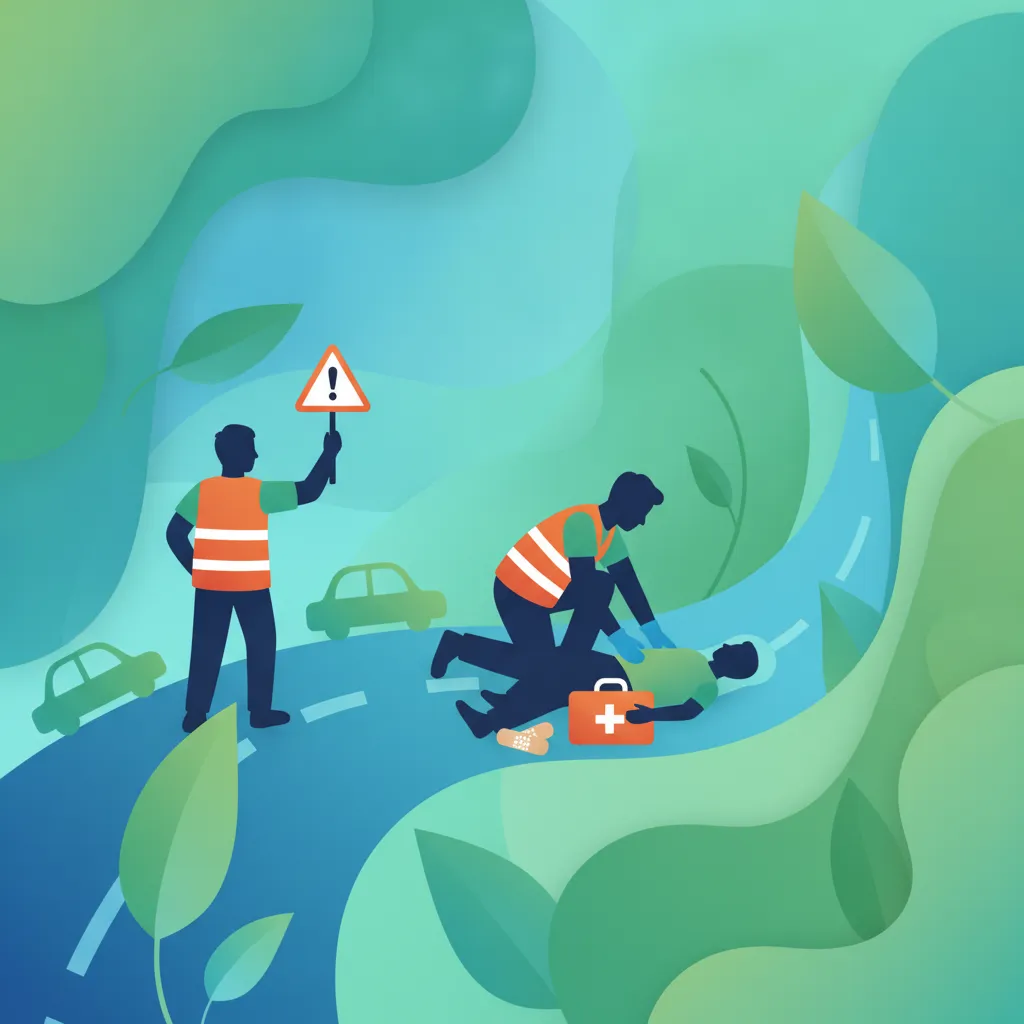
Lesson content overview
Responding effectively and safely to a traffic accident is a critical skill for every driver in Austria. This comprehensive guide equips you with the essential knowledge and practical steps needed to manage an accident scene, provide initial assistance, and fulfill your legal obligations. Understanding these procedures can significantly reduce the severity of injuries, prevent secondary collisions, and ensure smooth cooperation with emergency services and authorities.
This lesson builds upon your knowledge of hazard perception, vehicle breakdown management, and overall driver responsibility, preparing you for real-world emergency scenarios on Austria's roads.
The very first priority after being involved in or witnessing a traffic accident is to secure the scene. This crucial step prevents further incidents and protects everyone involved. Your primary goal is to make the accident site visible and safe for approaching traffic, as well as for yourself and any victims.
Immediately after stopping your vehicle, activate your hazard warning lights (often referred to as simply "hazard lights"). These are the flashing amber lights on all corners of your vehicle, designed to alert other road users to a stationary hazard. They significantly increase your vehicle's visibility, especially in poor light or adverse weather conditions, providing an early warning to approaching drivers.
This action should be instantaneous, even before you assess damage or injuries, as it is a fundamental measure to prevent a secondary collision.
After activating hazard lights, your next step is to place an emergency warning triangle. This reflective device is legally required to be carried in your vehicle in Austria and serves as a vital visual warning. Its placement distance varies significantly depending on the road type to account for different traffic speeds and reaction times.
On motorways (Autobahnen) and expressways (Schnellstraßen): Place the triangle at least 150 metres (approx. 165 yards) behind the accident scene. On these high-speed roads, drivers need ample warning time to react and slow down safely.
On rural roads (Landstraßen): Place the triangle at least 30 metres (approx. 33 yards) behind the accident scene. While speeds are lower than on motorways, rural roads can still have blind spots and curves, necessitating a clear warning.
In urban areas (Ortsgebiete): Place the triangle at least 30 metres (approx. 33 yards) behind the accident scene. In towns and cities, it should be positioned on the side of the road in a way that does not obstruct traffic but is clearly visible.
Always ensure the triangle is placed in a way that it is easily visible to oncoming traffic and does not create an additional hazard or obstruction. Avoid placing it directly behind your vehicle on high-speed roads, as this reduces the warning time for other drivers.
While securing the scene, always prioritize your own safety. If available, wear a high-visibility vest before leaving your vehicle, especially at night or in poor weather. This is legally required when exiting a vehicle on motorways and expressways in Austria. Move to a safe location, such as behind a barrier or well away from the flow of traffic, once the warning devices are set up.
If it is safe to do so and the vehicles involved do not pose an immediate danger (e.g., fire, fuel leak) and there are no injuries, you may move the vehicles off the road to prevent further obstruction. However, if there are injuries or significant damage, or if there is any doubt, it is generally best to leave the vehicles in place until police arrive.
Never put yourself in unnecessary danger to secure a scene or assist victims. Your safety is paramount to being able to help others.
Once the scene is initially secured, the next crucial step is to quickly assess the situation. This involves evaluating the presence of any immediate dangers and the condition of any injured persons. A rapid and accurate assessment will dictate your subsequent actions, such as whether to administer first aid or focus solely on further scene control.
When approaching victims, always do so cautiously and only if the scene is safe. A quick way to assess a person's level of consciousness is using the AVPU scale:
A rapid method to assess a person's level of consciousness.
This simple assessment helps you quickly identify potentially life-threatening conditions. Do not move injured persons unless they are in immediate danger (e.g., from fire, rapidly approaching traffic, or a collapsing structure). Moving someone with a spinal injury could cause further, irreversible harm.
Beyond personal injuries, you must also be alert to environmental hazards. These could include:
If any of these hazards are present, keep a safe distance and warn others to do the same. Inform emergency services immediately about these dangers when you make your call.
Your assessment will guide your decision on providing first aid. If there's an immediate, life-threatening situation (like severe bleeding or an unconscious person not breathing) and you are competent and it is safe to do so, basic first aid can be crucial. However, if the scene is unsafe (e.g., fire risk, unstable vehicles) or you are not confident in your abilities, prioritize calling for professional help and securing the scene. Remember the legal obligation to assist in an emergency, but always within your capabilities and without endangering yourself.
Once the scene is secured and an initial assessment is made, contacting emergency services is paramount. In Austria, the unified emergency number for police, ambulance, and fire services is 112. A timely and accurate call can significantly improve the outcome for victims and the efficiency of the response.
Dialing 112 as soon as possible after an accident, especially if there are injuries or significant damage, ensures that professional help is dispatched quickly. Providing clear and precise information allows dispatchers to understand the situation fully and send the most appropriate resources (e.g., medical teams, police, fire brigade, rescue helicopters).
When you call 112, remain calm and speak clearly. The dispatcher will guide you, but be prepared to provide the following crucial details:
Exact location: This is the most vital piece of information. Provide the road name, number, direction of travel, nearest town, motorway kilometre marker, or any recognizable landmarks. "On the A1 motorway, between Salzburg West and Bergheim junctions, kilometre marker 290.5, heading towards Vienna."
Nature of the incident: Briefly describe what happened (e.g., "Car vs. truck collision," "Motorcyclist fell," "Pedestrian hit by car").
Number of vehicles involved: State how many vehicles were part of the accident.
Number and condition of injured persons: Be specific. "Two people injured, one unconscious, one with severe leg bleeding." Use the AVPU scale if you've assessed them.
Current hazards: Report any immediate dangers like fire, fuel leaks, smoke, or blocked lanes.
Your contact details: Provide your name and the phone number you are calling from.
Do not hang up until the dispatcher tells you to. They may have further questions or provide you with instructions on how to assist victims or secure the scene until emergency personnel arrive. Follow their guidance carefully, as they are trained professionals. If the situation changes (e.g., a fire starts, more people are found injured), update the dispatcher immediately.
While professional medical personnel are on their way, basic first aid can be life-saving. As a driver in Austria, you are encouraged to have basic first aid knowledge. Remember, you should only provide aid if you are competent and if the scene is safe.
Reiterate: Before you even think about providing first aid, ensure the scene is secure and safe for you to approach. Hazard lights are on, warning triangle is placed, and there are no immediate dangers like fire or unstable vehicles.
If a person appears unresponsive:
Severe bleeding can be life-threatening.
Avoid using tourniquets unless you are specifically trained and it is a last resort for life-threatening limb bleeding that cannot be controlled otherwise. Improper use can cause severe damage.
Shock is a life-threatening condition where the body isn't getting enough blood flow.
For other injuries, provide comfort and support, and try to keep the person still. Do not attempt to reset fractures or remove impaled objects.
Consider enrolling in a certified first aid course, such as those offered by the Red Cross in Austria. This training provides invaluable practical skills and confidence for emergency situations. For the Austrian Category B driving license, completing a basic first aid course is often a mandatory requirement.
Beyond immediate safety and first aid, drivers involved in or witnessing an accident have clear legal obligations under Austrian law, particularly the Strassenverkehrsordnung (StVO - Road Traffic Regulations). Failing to meet these duties can result in significant penalties, fines, and even criminal charges.
In Austria, you are legally required to report certain accidents to the police. This is not just for major collisions; even seemingly minor incidents may fall under this obligation.
The legal requirement to report certain traffic accidents to the police in Austria.
You must report an accident to the police if:
If you are only involved in an accident with material damage and all parties involved agree on the circumstances and exchange details (e.g., driver's license, vehicle registration, insurance information), police notification might not be strictly mandatory if there are no public interest concerns (e.g., damage to public property). However, it is always safer to err on the side of caution and call if there's any ambiguity.
After reporting an accident, you are legally obliged to cooperate fully with the police and other authorities at the scene.
A truthful and factual account of an accident provided to the police during an investigation.
This includes:
Non-cooperation, providing false statements, or obstructing an investigation can lead to significant administrative fines, a reduction in your driving license points (Punkte), or even criminal prosecution.
Leaving the scene of an accident where injuries have occurred, or where significant damage makes reporting mandatory, is a serious offense in Austria, known as "Fahrerflucht" (hit-and-run). This can lead to:
Even in minor incidents where only material damage occurs, leaving the scene without exchanging details or ensuring the other party has your information can lead to legal issues.
The steps you take after an accident can vary based on external factors. Adapting your response to different conditions is key to effective accident management.
When an accident involves a pedestrian, cyclist, or motorcyclist, the risk of serious injury is significantly higher.
When involved in or witnessing a traffic accident in Austria, your first actions are to activate hazard lights and place the emergency warning triangle at the correct distance for the road type, prioritizing your own safety throughout. Use the AVPU scale to quickly assess victim consciousness and only administer first aid (such as controlling severe bleeding or managing shock) if the scene is safe and you are competent. Call 112 with precise location, incident details, and victim information, staying on the line until instructed otherwise. Austrian law requires police reporting for any injury, significant damage, or disputed fault, and leaving the scene without permission (Fahrerflucht) carries serious legal consequences including potential criminal charges and license suspension.
A short set of high-value points that capture the most important learning from this lesson.
Securing the scene takes priority: activate hazard lights first, then place the emergency warning triangle at 150m on motorways or 30m on other roads before doing anything else.
Use the AVPU scale (Alert, Voice, Pain, Unresponsive) to quickly assess a victim's level of consciousness and determine urgency.
When calling 112, provide exact location with road name or kilometre marker, nature of incident, number of vehicles and injured persons, current hazards, and your contact details.
Never move injured persons unless they face immediate danger (fire, traffic) as spinal injuries can be worsened by inappropriate movement.
Under Austrian law (StVO), you must report to police any accident involving injury, significant material damage, public property damage, or disagreement on fault.
Explore all units and lessons included in this driving theory course.
Hazard warning lights plus triangle placement (150m/30m depending on road type) are the first actions after stopping.
AVPU assesses consciousness: Alert means awake, Voice means responds to speech, Pain means only responds to pain, Unresponsive means no reaction.
Key 112 information: precise location, incident type, vehicle count, victim conditions using AVPU, hazards present, and your phone number.
Fahrerflucht (leaving the scene) can result in criminal charges, heavy fines, license suspension, and insurance denial.
Shock management: lay person down, elevate legs (if no spinal concern) about 30cm, maintain warmth, keep calm.
Placing the warning triangle too close on motorways, reducing the warning time for approaching drivers at high speed.
Moving accident victims who are not in immediate danger, potentially causing further spinal or neck injuries.
Providing vague location information when calling 112, such as only naming a town without road or direction details.
Leaving the accident scene prematurely after exchanging details with other parties, without police permission.
Neglecting to wear a high-visibility vest when exiting the vehicle, especially on motorways in poor conditions.
Lesson content overview
A short set of high-value points that capture the most important learning from this lesson.
Securing the scene takes priority: activate hazard lights first, then place the emergency warning triangle at 150m on motorways or 30m on other roads before doing anything else.
Use the AVPU scale (Alert, Voice, Pain, Unresponsive) to quickly assess a victim's level of consciousness and determine urgency.
When calling 112, provide exact location with road name or kilometre marker, nature of incident, number of vehicles and injured persons, current hazards, and your contact details.
Never move injured persons unless they face immediate danger (fire, traffic) as spinal injuries can be worsened by inappropriate movement.
Under Austrian law (StVO), you must report to police any accident involving injury, significant material damage, public property damage, or disagreement on fault.
Explore all units and lessons included in this driving theory course.
Hazard warning lights plus triangle placement (150m/30m depending on road type) are the first actions after stopping.
AVPU assesses consciousness: Alert means awake, Voice means responds to speech, Pain means only responds to pain, Unresponsive means no reaction.
Key 112 information: precise location, incident type, vehicle count, victim conditions using AVPU, hazards present, and your phone number.
Fahrerflucht (leaving the scene) can result in criminal charges, heavy fines, license suspension, and insurance denial.
Shock management: lay person down, elevate legs (if no spinal concern) about 30cm, maintain warmth, keep calm.
Placing the warning triangle too close on motorways, reducing the warning time for approaching drivers at high speed.
Moving accident victims who are not in immediate danger, potentially causing further spinal or neck injuries.
Providing vague location information when calling 112, such as only naming a town without road or direction details.
Leaving the accident scene prematurely after exchanging details with other parties, without police permission.
Neglecting to wear a high-visibility vest when exiting the vehicle, especially on motorways in poor conditions.
Explore search topics learners often look for when studying Emergency Response, First Aid, and Accident Scene Management. These topics reflect common questions about road rules, driving situations, safety guidance, and lesson level theory preparation for learners in Austria.
Browse additional driving theory lessons that cover connected traffic rules, road signs, and common driving situations related to this topic. Improve your understanding of how different rules interact across everyday traffic scenarios.
Understand your legal responsibilities following a traffic accident in Austria. This lesson details mandatory reporting, cooperation with authorities, and consequences of non-compliance with Austrian road traffic regulations.
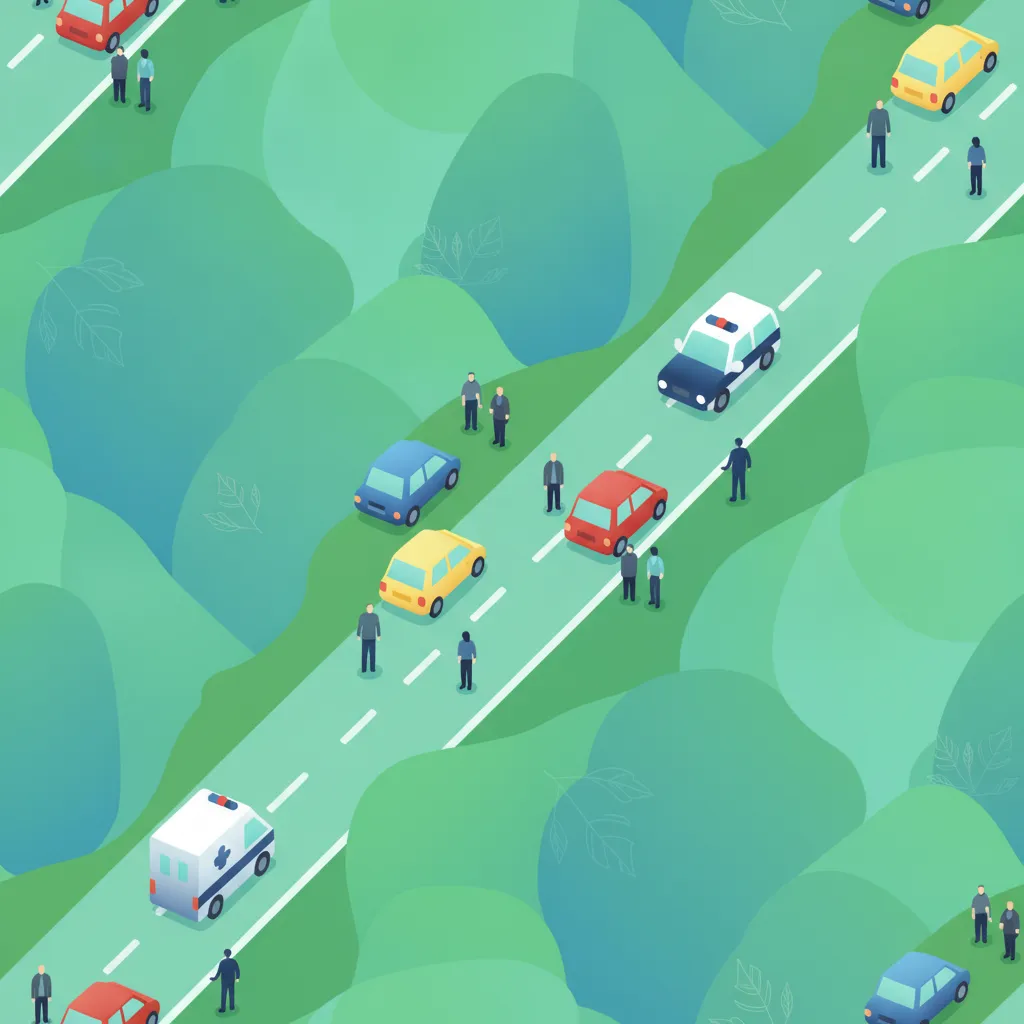
As the driver involved or first on the scene, you have specific duties. This lesson covers the initial steps: securing your own vehicle, warning approaching traffic, and making the emergency call. It reinforces the legal requirement in Austria for all drivers to form an emergency corridor ('Rettungsgasse') in standing traffic to allow clear access for emergency vehicles.
This lesson provides a clear overview of the legal penalties for traffic violations in Austria. It details the system of fines, demerit points, and the conditions that can lead to license suspension or revocation. Understanding these consequences reinforces the importance of lawful and responsible riding.

This lesson provides a comprehensive overview of a driver's legal responsibilities and the potential consequences of failing to adhere to traffic laws. Learners will explore the concept of liability in the event of an accident and the structure of the official penalty catalogue. The material covers the impact of fines, demerit points, and potential driving bans (Fahrverbot) on one's license, as well as the effects on insurance premiums.
This lesson provides critical knowledge for being the first responder at an accident. It covers securing the scene to prevent further incidents, making an effective emergency call, and forming the 'Rettungsgasse' for approaching rescue vehicles. Basic but potentially life-saving first aid steps are reviewed, with a strong emphasis on not endangering oneself while providing assistance.
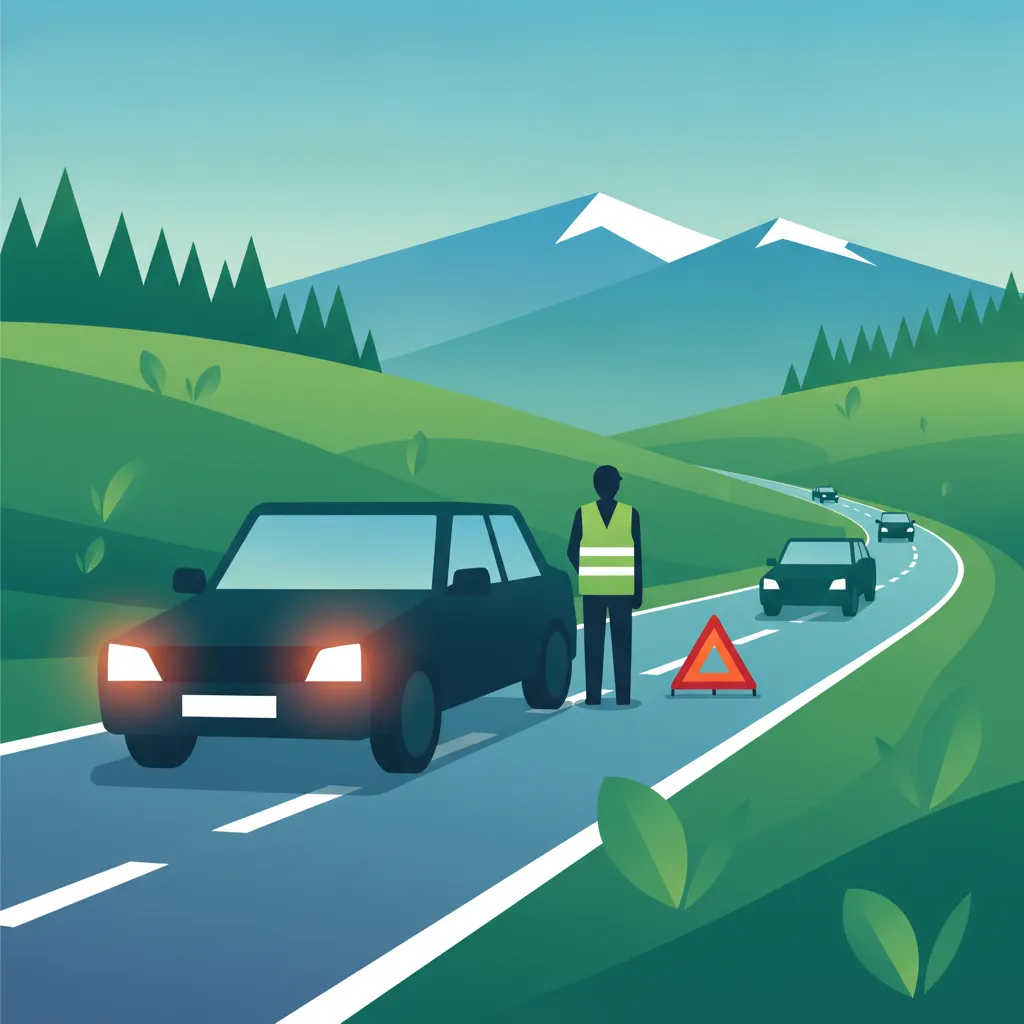
This lesson equips riders with the knowledge to manage an unexpected breakdown or accident. It outlines the steps for securing the vehicle and scene safely, including the use of hazard lights and a reflective vest. It also covers the procedure for contacting emergency services and providing essential information.

This lesson details the mandatory personal and vehicle documentation required for motorcyclists in Austria. It covers the necessity of carrying a valid licence card, vehicle registration papers, and proof of insurance at all times. Understanding these legal requirements ensures full compliance with Austrian traffic law and facilitates smooth interactions with law enforcement.

This lesson focuses on the driver's legal and ethical responsibility for the safety of all passengers. It details the mandatory use of seatbelts for all occupants and provides a thorough explanation of Austrian regulations concerning child restraints. Learners will understand how to choose and correctly install the appropriate child seat based on a child's age, weight, and height, ensuring maximum protection in the event of a collision.
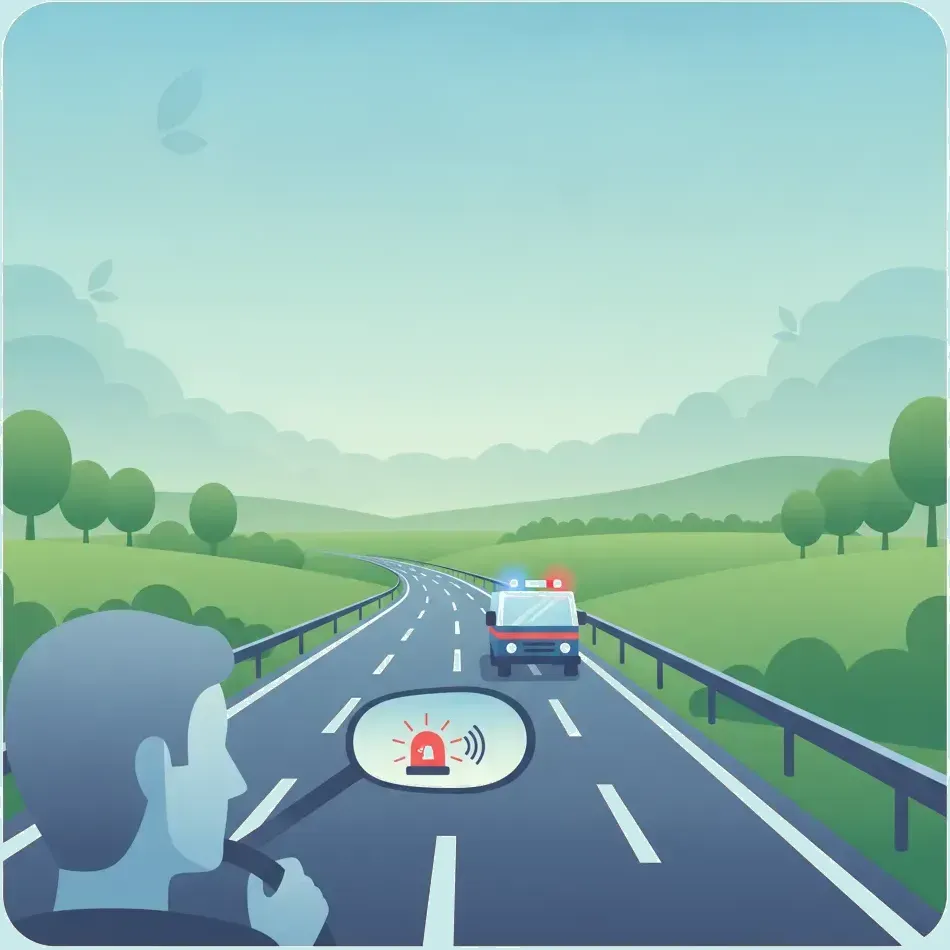
This lesson explains the correct protocol when encountering emergency vehicles with active sirens and lights. It details the legal requirement to yield the right-of-way and provides practical guidance on how to pull over safely and efficiently. Understanding these procedures helps ensure emergency services can reach their destination without delay.

This lesson delves into the specific Austrian laws and regulations that professional passenger drivers must adhere to. It provides an overview of rules concerning driving and rest times, the use of the digital tachograph, and the essential documents that must be carried at all times. Understanding these legal obligations is crucial for compliance and avoiding penalties during roadside checks.
Learn specific procedures for responding to accidents involving pedestrians, cyclists, and motorcyclists. Focuses on immediate safety, first aid considerations, and legal reporting requirements in Austria for these critical situations.
This lesson provides critical knowledge for being the first responder at an accident. It covers securing the scene to prevent further incidents, making an effective emergency call, and forming the 'Rettungsgasse' for approaching rescue vehicles. Basic but potentially life-saving first aid steps are reviewed, with a strong emphasis on not endangering oneself while providing assistance.
This lesson equips riders with the knowledge to manage an unexpected breakdown or accident. It outlines the steps for securing the vehicle and scene safely, including the use of hazard lights and a reflective vest. It also covers the procedure for contacting emergency services and providing essential information.
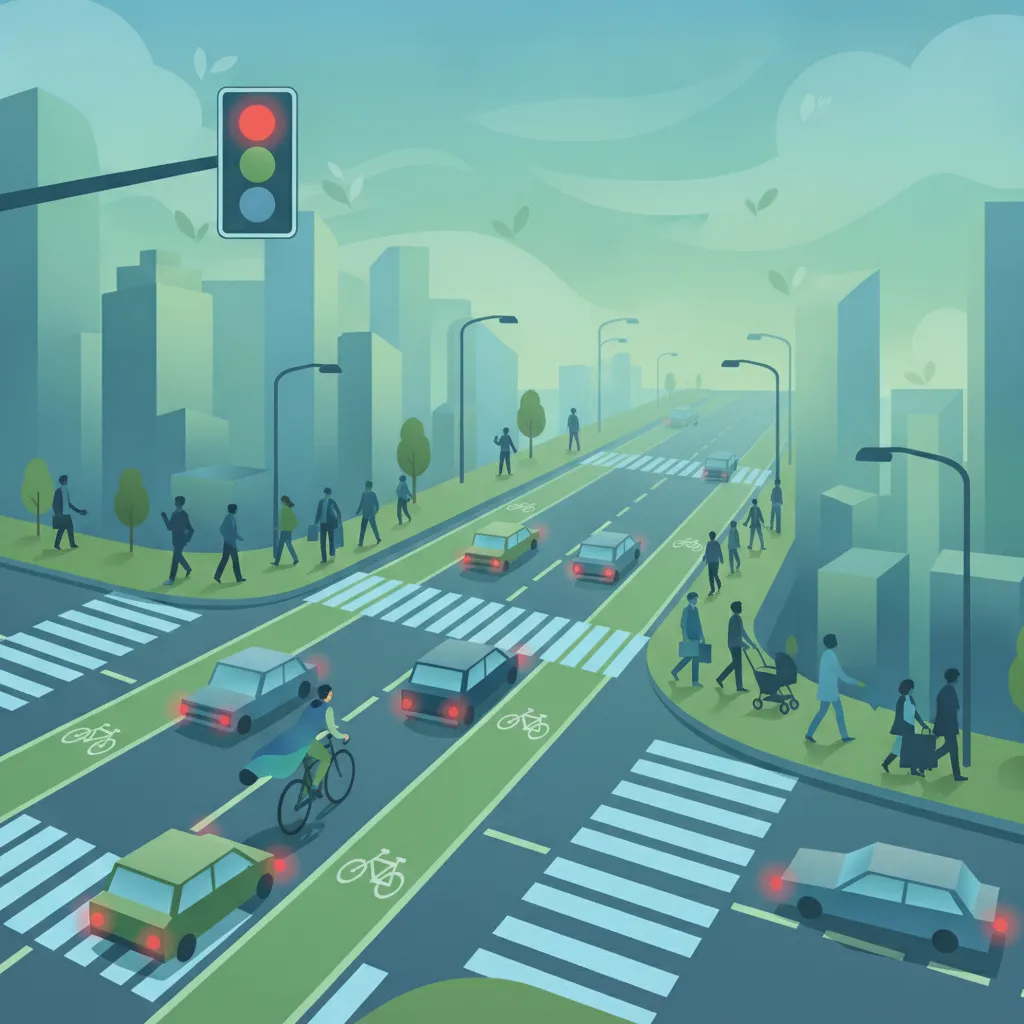
This lesson teaches drivers how to safely coexist with cyclists and pedestrians, who are prevalent in urban areas. It covers the rules for dedicated bike lanes (Radweg), the importance of yielding to pedestrians in designated zones, and the need for extra caution when turning or opening car doors. Maintaining safe overtaking distances and anticipating the movements of these vulnerable road users are key themes for preventing accidents.
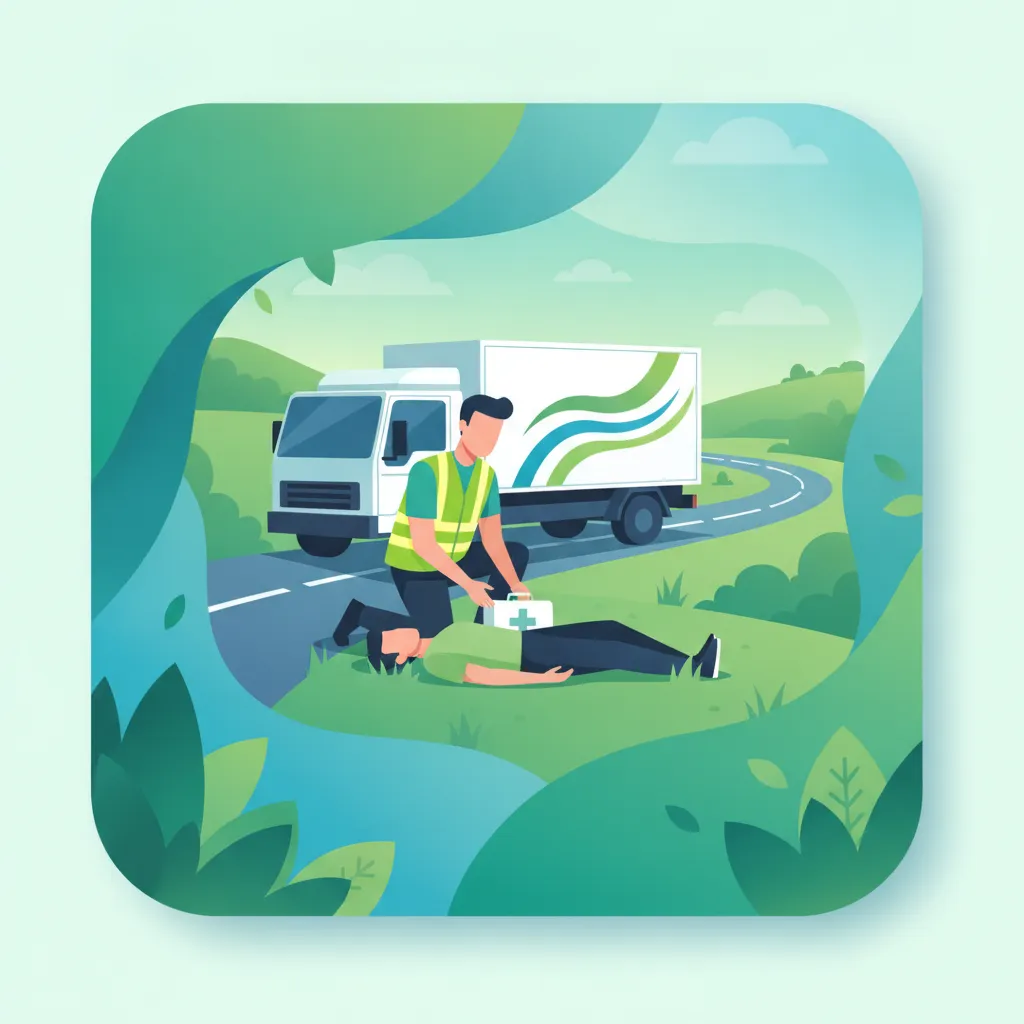
While not a substitute for a full first aid course, this lesson provides a critical overview of the immediate actions a driver can take to help an injured person. It covers assessing a casualty for danger, response, and breathing, and the basic principles of controlling severe bleeding and placing an unconscious person in the recovery position. The primary goal is to preserve life until professional help arrives.
This lesson explains the correct protocol when encountering emergency vehicles with active sirens and lights. It details the legal requirement to yield the right-of-way and provides practical guidance on how to pull over safely and efficiently. Understanding these procedures helps ensure emergency services can reach their destination without delay.
This lesson provides advanced strategies for proactively managing interactions with vulnerable road users to prevent conflicts before they arise. It teaches drivers to predict the likely behavior of pedestrians, cyclists, and e-scooter riders, especially at intersections and in congested areas. Key techniques include maintaining larger safety distances, covering the brake, and making eye contact to ensure mutual awareness and avoid accidents.
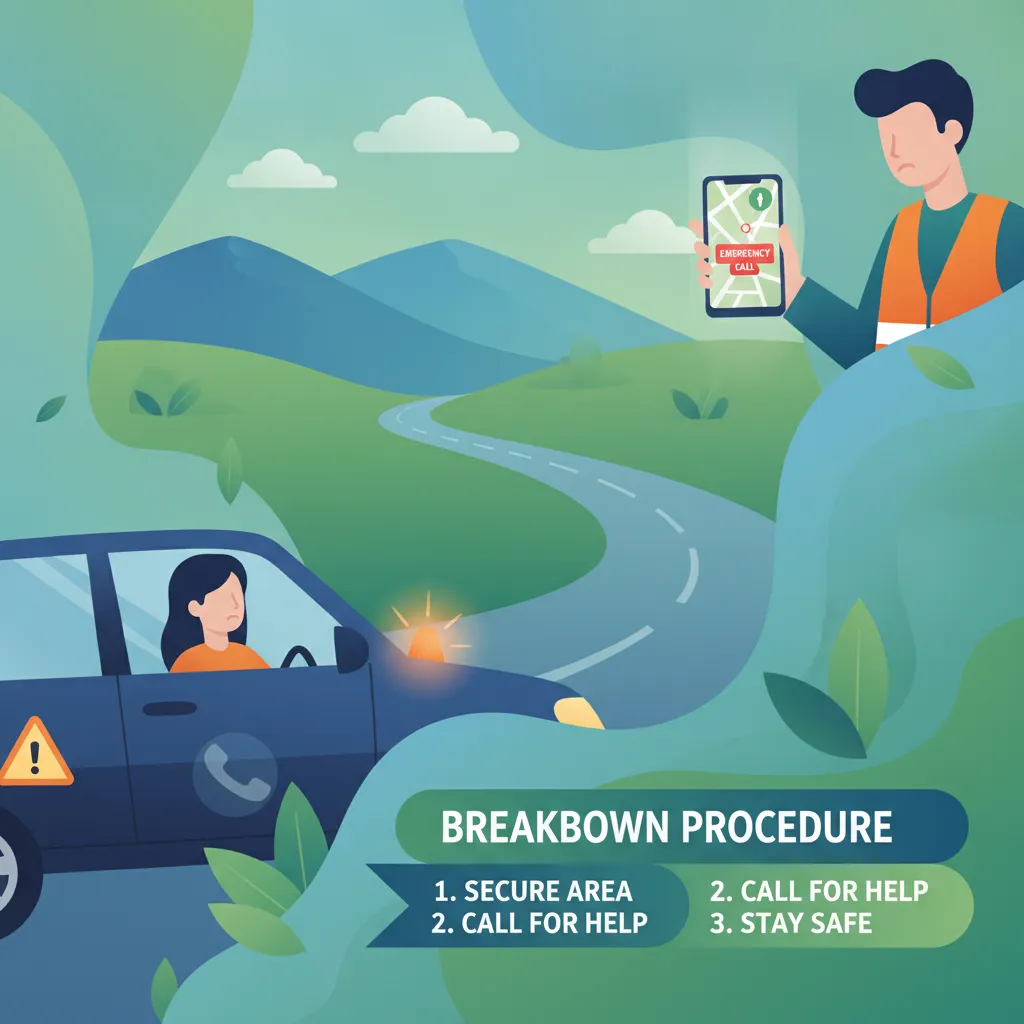
This lesson outlines the step-by-step safety protocol for a vehicle breakdown. It instructs the rider to move the motorcycle to the safest possible location, activate hazard lights, and put on a high-visibility vest. The proper placement of a warning triangle and the procedure for making an emergency call to 112 or a roadside assistance service are also detailed.
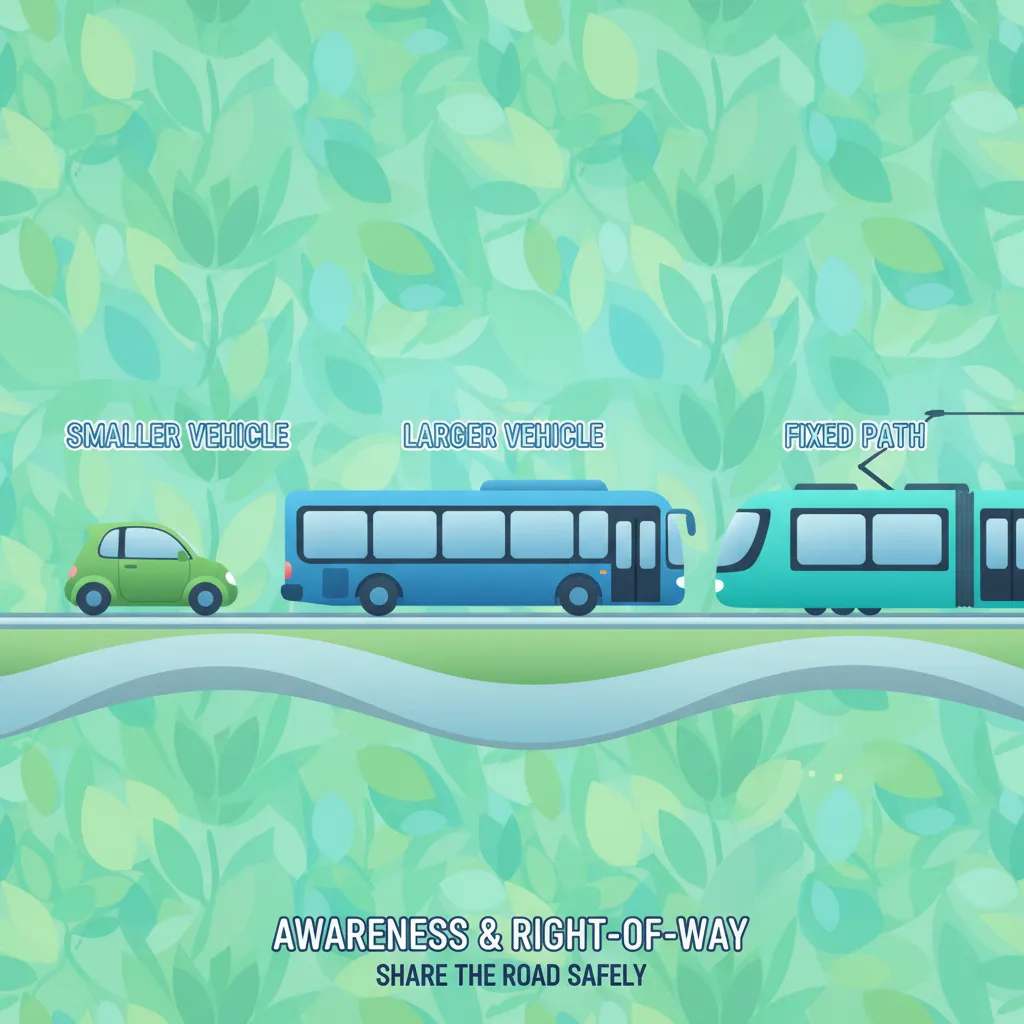
This lesson provides specific guidance for sharing the road with different types of vehicles in Austria. It covers the dangers of large vehicle blind spots, the rules for navigating near buses and dedicated tram tracks, and common conflict points at intersections. Understanding the behavior and limitations of other vehicles is key to safely navigating complex urban environments.

This lesson addresses the heightened vulnerability of motorcyclists and outlines essential strategies for personal safety and risk mitigation. It covers the importance of wearing certified protective gear, maintaining situational awareness, and adopting a defensive riding posture. By understanding and anticipating potential hazards in the Austrian traffic environment, riders can actively reduce their risk of accidents.
As the driver involved or first on the scene, you have specific duties. This lesson covers the initial steps: securing your own vehicle, warning approaching traffic, and making the emergency call. It reinforces the legal requirement in Austria for all drivers to form an emergency corridor ('Rettungsgasse') in standing traffic to allow clear access for emergency vehicles.
Find clear answers to common questions learners have about Emergency Response, First Aid, and Accident Scene Management. Learn how the lesson is structured, which driving theory objectives it supports, and how it fits into the overall learning path of units and curriculum progression in Austria. These explanations help you understand key concepts, lesson flow, and exam focused study goals.
Your immediate priority is to ensure your own safety and then secure the scene to prevent further accidents. This involves switching on your hazard warning lights, wearing your high-visibility vest before exiting the vehicle, and placing the warning triangle at an appropriate distance.
Yes, under the Austrian Penal Code, there is a legal requirement to provide 'reasonable assistance' (Hilfeleistungspflicht) if it does not place you in significant danger. Failing to assist or call for help can lead to serious legal penalties.
112 is the European emergency number and works across Austria. While specific numbers exist for ambulance (144) or police (133), calling 112 will connect you to a dispatcher who can coordinate all necessary emergency services for you.
No. You should generally not move an injured person unless there is an immediate threat, such as a fire, a risk of drowning, or if the victim is in the middle of a high-speed road where they cannot be protected. Incorrectly moving a victim can worsen spinal or internal injuries.
Refine your study plan by searching for specific Austrian driving theory practice sets. Pinpoint questions related to particular road rules, signs, or challenge levels, and begin practicing immediately to reinforce your knowledge and excel in your official exam with confidence. Get started with focused revision today.