
As a professional driver, your ability to respond to emergencies is critical for passenger safety. This lesson covers the fundamental first aid protocols and emergency procedures required for the Austrian Category D licence, focusing on how to act decisively until professional services arrive.
Lesson content overview
As a professional Category D driver in Austria, your responsibilities extend far beyond safely operating a vehicle. You hold a profound duty of care for your passengers and other road users. In unforeseen circumstances, such as an accident or a medical emergency, your immediate actions can be life-saving. While this lesson does not replace a full, certified first aid course, it equips you with critical foundational knowledge and systematic procedures to provide initial assistance until professional medical help arrives. Understanding these basics is essential for preserving life, mitigating the severity of injuries, and fulfilling your legal obligations.
The absolute first principle of first aid is to ensure the safety of yourself, your passengers, and the casualty. Rushing into an unsafe scene can lead to further injuries or even fatalities. Before you can help anyone, you must first secure the immediate environment, identifying and eliminating potential hazards. This crucial step is known as danger assessment.
A "danger zone" is any area around an incident where harm could occur. This includes hazards like oncoming traffic, fire, unstable vehicles, or environmental factors such as spilled fuel or dangerous weather conditions. Your personal protection, such as wearing reflective clothing, and ensuring the safety of your passengers are paramount.
When you encounter an incident, your initial actions as a professional driver are critical:
Stop Safely: Position your vehicle in a way that protects the scene and does not create further obstruction. If on a motorway, aim for the hard shoulder if possible.
Engage Hazard Lights: Immediately activate your vehicle’s hazard warning lights to alert other road users of the obstruction or emergency.
Assess the Scene: Take a moment to quickly scan for immediate dangers like fast-approaching traffic, smoke, or unstable structures before leaving your vehicle.
Place Warning Triangles: Deploy warning triangles at appropriate distances to provide advance warning to approaching traffic. These distances vary based on the road type.
Create a Rettungsgasse (Emergency Lane): If on a multi-lane highway, remember your obligation to help form an emergency lane for rescue vehicles. This allows ambulances, fire engines, and police to reach the scene quickly.
Never attempt to provide first aid if doing so places you or your passengers in imminent danger. Your own safety must always be the top priority.
Several Austrian regulations underscore your responsibilities in managing an incident scene:
For instance, on motorways, warning triangles must be placed further away than on urban roads. Understanding these distances ensures maximum effectiveness in warning other drivers. Neglecting scene safety, such as failing to use hazard lights or warning triangles, not only risks additional collisions but can also lead to legal liability.
Once the scene is safe, your focus shifts to the casualty. The ABC protocol is a systematic, stepwise approach to assess and support vital functions: Airway, Breathing, and Circulation. This protocol prioritizes life-saving interventions, ensuring no critical step is missed and that immediate threats to life are addressed first.
The airway is the path that air takes to reach the lungs. If it is obstructed, the casualty cannot breathe, leading to rapid oxygen deprivation. Your primary goal is to ensure the airway is open and clear.
Checking if the casualty’s airway is open and unobstructed, allowing air to pass freely to the lungs.
Always assume a potential spinal injury in an unconscious casualty from a fall or accident. Use the jaw thrust technique to open the airway to avoid exacerbating any spinal damage. Moving a casualty should generally be avoided unless absolutely necessary for their safety.
After ensuring an open airway, you must check if the casualty is breathing effectively. Breathing provides the body with oxygen and removes carbon dioxide.
Observing chest rise, listening for breath sounds, and feeling for air movement from the casualty’s mouth or nose.
To assess breathing:
Look: Observe the casualty's chest and abdomen for rise and fall.
Listen: Place your ear near their mouth and nose to listen for breath sounds.
Feel: Feel for air movement on your cheek.
Perform this check for no more than 10 seconds.
Circulation refers to the flow of blood throughout the body. A strong pulse indicates effective blood circulation. The most immediate threat to circulation in an accident scenario is severe bleeding, which can rapidly lead to life-threatening shock.
Assessing the casualty's pulse to check for effective blood flow and managing any life-threatening hemorrhage.
Apply Direct Pressure: The most effective initial step is to apply firm, continuous pressure directly onto the wound with a clean cloth, bandage, or even your bare hand. Maintain pressure until the bleeding stops or professional help arrives.
Elevate (if possible): If the injury is on a limb and there are no suspected fractures, elevate the injured part above the level of the heart to help reduce blood flow.
Apply a Pressure Dressing: Once initial bleeding is controlled, secure the pad with a tight bandage. Do not remove the first pad if it becomes soaked; simply add more padding over it.
Consider a Tourniquet (Last Resort): In cases of catastrophic, life-threatening limb bleeding that cannot be controlled by direct pressure, a tourniquet may be necessary. This is an advanced technique and should only be used if direct pressure has failed and the casualty's life is at immediate risk. Apply it proximal (closer to the body) to the wound and tighten it until bleeding stops. Note the time of application.
As a professional driver, you have a legal obligation under Austrian traffic law to provide assistance, which includes controlling severe bleeding (Regulation 10.3).
If a casualty is unconscious but breathing normally, they should be placed in the recovery position. This safe lateral position helps maintain an open airway and allows any fluids (like vomit or blood) to drain from the mouth, preventing aspiration into the lungs.
A safe lateral position that maintains airway patency and allows drainage of fluids, used for unconscious but breathing individuals.
Kneel beside the casualty. Ensure their legs are straight.
Place the arm nearest to you at a right angle to their body, with the hand palm-up.
Bring the arm furthest from you across their chest and hold the back of their hand against the cheek nearest to you.
With your other hand, grasp the far leg just above the knee and pull it up, keeping the foot flat on the ground.
Roll the casualty gently towards you, onto their side. Use their bent leg as a lever.
Adjust the upper leg so that both the hip and knee are bent at right angles. This stabilizes the position.
Tilt the head back slightly to ensure the airway remains open, and adjust the hand under the cheek to support the head.
Regularly check for breathing until professional help arrives.
If you suspect a spinal injury, perhaps due to the nature of the accident or if the casualty's neck is in an abnormal position, modifying the recovery position is crucial. In such cases, the casualty should only be moved if absolutely necessary for their safety (e.g., to escape immediate danger). If moving is essential, try to keep the head, neck, and torso in a straight line, stabilizing the head manually. Only trained personnel should perform extensive movements.
When placing a casualty in the recovery position, ensure their head is tilted back sufficiently to keep the airway open. Regularly check their breathing and stay with them.
As a Category D driver, your legal duty of care is particularly stringent due to your responsibility for passengers. Austrian traffic law (e.g., Regulation 10.3) explicitly requires professional drivers to provide assistance in accidents or medical incidents when able.
The legal obligation under Austrian traffic law for professional drivers to provide assistance to injured persons and manage an accident scene responsibly.
This duty encompasses immediate life-preserving measures, such as providing first aid, as well as reporting obligations. Failure to comply can result in significant fines, legal penalties, or even the loss of your driving licence. For instance, ignoring a passenger’s medical emergency or neglecting to render first aid could have severe legal consequences.
Beyond providing direct first aid, your duty of care also includes:
First aid is not a one-size-fits-all procedure. The environment, the casualty's characteristics, and the nature of the incident all influence your approach.
Even with good intentions, mistakes can happen. Being aware of common pitfalls can help you avoid them:
Regular refresher training in first aid is highly recommended for all professional drivers. These lessons provide a foundational overview, but hands-on practice is invaluable.
The knowledge of first aid basics is an indispensable skill for any professional Category D driver in Austria. Your ability to swiftly assess danger, implement the ABC protocol, control severe bleeding, and correctly position an unconscious person can make the difference between life and death. This lesson builds upon your understanding of vehicle breakdown procedures and accident scene management, integrating a vital human element into emergency response. By understanding your legal obligations and practicing these fundamental techniques, you embody the highest standards of care and professionalism, ensuring the safety and well-being of your passengers and fellow road users.
Explore all units and lessons included in this driving theory course.
Lesson content overview
Explore all units and lessons included in this driving theory course.
Explore search topics learners often look for when studying First Aid Basics for Professional Drivers. These topics reflect common questions about road rules, driving situations, safety guidance, and lesson level theory preparation for learners in Austria.
Browse additional driving theory lessons that cover connected traffic rules, road signs, and common driving situations related to this topic. Improve your understanding of how different rules interact across everyday traffic scenarios.
Learn essential procedures for securing accident sites and forming the Rettungsgasse in Austria. This lesson covers critical steps for professional drivers to ensure safety and facilitate emergency vehicle access according to traffic law.

As the driver involved or first on the scene, you have specific duties. This lesson covers the initial steps: securing your own vehicle, warning approaching traffic, and making the emergency call. It reinforces the legal requirement in Austria for all drivers to form an emergency corridor ('Rettungsgasse') in standing traffic to allow clear access for emergency vehicles.
This lesson equips drivers with the essential knowledge for responding to a traffic accident. It outlines the critical first steps: securing the scene to prevent further incidents, assessing the situation, and contacting the correct emergency services (112). The content provides an overview of basic first aid principles applicable at an accident scene and explains the driver's legal obligations regarding incident reporting and cooperation with authorities.

This lesson provides critical knowledge for being the first responder at an accident. It covers securing the scene to prevent further incidents, making an effective emergency call, and forming the 'Rettungsgasse' for approaching rescue vehicles. Basic but potentially life-saving first aid steps are reviewed, with a strong emphasis on not endangering oneself while providing assistance.

This lesson addresses advanced manoeuvres that require precise timing and judgment, such as merging onto a motorway from an acceleration lane. It explains the importance of matching the speed of the traffic flow and finding a safe gap before moving over. The content also covers procedures for navigating lane drops and the 'zipper merge' (Reißverschlusssystem) principle in congested situations, promoting efficient and cooperative driving.

This lesson provides a step-by-step guide for safely managing a vehicle breakdown on the road. It covers the correct procedure for pulling over to a safe location, activating hazard lights, and wearing a high-visibility vest. Learners will understand the legal requirement and correct placement of the warning triangle to alert oncoming traffic, as well as the necessary information to provide when contacting roadside assistance services.

This lesson introduces the proactive mindset of defensive driving, which focuses on anticipating potential hazards rather than just reacting to them. It teaches techniques for systematic risk assessment, including scanning the road ahead, checking mirrors frequently, and being aware of the potential actions of other road users. By adopting these safe habits, drivers can create a buffer of safety around their vehicle and significantly reduce the likelihood of being involved in an accident.
This final lesson summarizes the core principles of responding to any on-road emergency, from a breakdown to an accident. It reinforces the priorities of personal safety, securing the scene to protect others, and providing clear, concise information when calling the pan-European emergency number, 112. This knowledge is essential for managing any unforeseen incident effectively.
This lesson explains the correct protocol when encountering emergency vehicles with active sirens and lights. It details the legal requirement to yield the right-of-way and provides practical guidance on how to pull over safely and efficiently. Understanding these procedures helps ensure emergency services can reach their destination without delay.
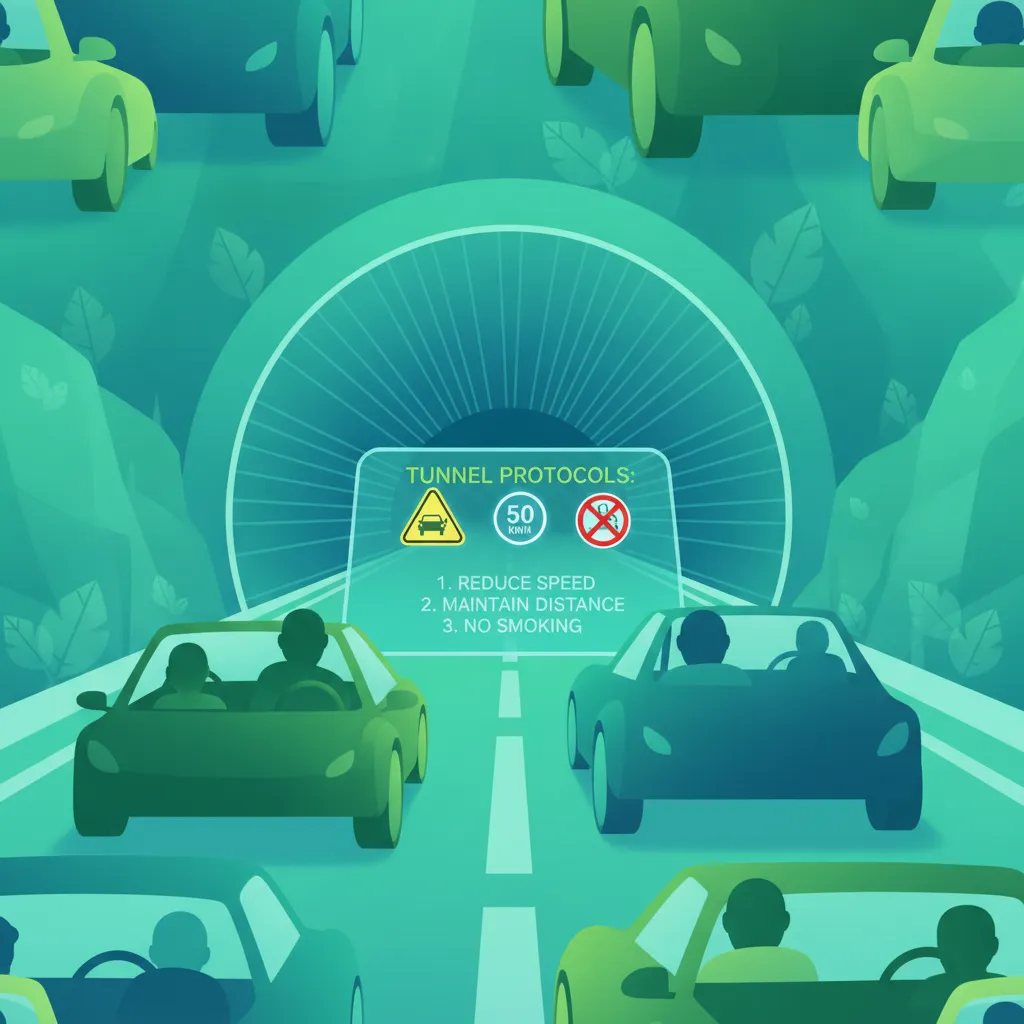
Austria's mountainous terrain means drivers will frequently encounter long tunnels. This lesson details the specific regulations, such as turning on lights and maintaining distance, as well as how to react to tunnel-specific warning signs and signals. Crucially, it covers the correct emergency procedures to follow in the event of a fire, accident, or breakdown inside a tunnel.

This lesson covers the principles of proper lane discipline, including maintaining a correct and steady position within a lane and adhering to the 'keep right' rule on multi-lane roads. It details the safe and systematic protocol for changing lanes, which involves checking mirrors, signaling intention, performing a blind spot check, and then smoothly executing the manoeuvre. Correct lane usage is essential for maintaining predictable and safe traffic flow.
Understand the specific legal responsibilities and duty of care for Category D drivers in Austria. This lesson details obligations in emergencies, including providing assistance and managing passenger incidents according to Austrian traffic regulations.

This lesson defines the role of a professional driver beyond simply operating a vehicle. It covers the expectations of public trust, professional image, and the responsibilities inherent in transporting people. Key topics include ethical conduct, communication with the public, and understanding your position as a representative of a transport service within the Austrian legal framework.

This lesson focuses on the core concept of duty of care, a driver's primary legal and moral obligation to protect passengers from harm. It examines what this means in practical terms, from driving smoothly to prevent falls to ensuring a safe environment on the vehicle. The content also touches upon legal liability in cases of negligence and the importance of anticipating risks to all passengers, including the vulnerable.

A driver's duty of care extends to passengers until they are safely away from the vehicle. This lesson stresses the importance of monitoring passengers as they step off, ensuring they have stable footing and are clear of the bus's path. It highlights the particular need for vigilance when children or elderly passengers are alighting, and the importance of checking mirrors before closing the doors.

When a passenger becomes ill, the driver's role is to facilitate professional medical help as quickly as possible. This lesson covers how to safely stop the vehicle, make an emergency call to 112 with clear location and patient information, and provide basic comfort and reassurance. It clarifies that the driver's role is not to diagnose but to manage the scene and get help.

This lesson delves into the specific Austrian laws and regulations that professional passenger drivers must adhere to. It provides an overview of rules concerning driving and rest times, the use of the digital tachograph, and the essential documents that must be carried at all times. Understanding these legal obligations is crucial for compliance and avoiding penalties during roadside checks.
As the driver involved or first on the scene, you have specific duties. This lesson covers the initial steps: securing your own vehicle, warning approaching traffic, and making the emergency call. It reinforces the legal requirement in Austria for all drivers to form an emergency corridor ('Rettungsgasse') in standing traffic to allow clear access for emergency vehicles.

The driver is responsible for supervising the entire boarding process. This lesson covers techniques for encouraging orderly queues and ensuring passengers use handrails. It also details the driver's role in assisting passengers with mobility aids, prams, or heavy luggage, ensuring they are able to board without rushing and find a seat or safe standing position.

Providing safe and respectful access for all passengers is a legal and professional duty. This lesson details the correct operation of accessibility features like ramps, lifts, and kneeling systems. It covers how to secure wheelchairs and mobility aids, and how to communicate effectively and respectfully with passengers who may require assistance with boarding or alighting.

Transporting children carries the highest level of responsibility. This lesson covers the specific Austrian rules for school buses, including the use of warning signs and lights. It focuses on developing a mindset of extreme caution, anticipating that children may run into the road unexpectedly, and managing the chaotic traffic environment often found around schools during drop-off and pick-up times.

In a serious incident, a swift and orderly evacuation can save lives. This lesson teaches the principles of taking command, giving clear and simple instructions, and directing passengers to the nearest safe exit. It covers the importance of assisting those with mobility issues and guiding everyone to a safe assembly point away from the vehicle and any traffic.
Find clear answers to common questions learners have about First Aid Basics for Professional Drivers. Learn how the lesson is structured, which driving theory objectives it supports, and how it fits into the overall learning path of units and curriculum progression in Austria. These explanations help you understand key concepts, lesson flow, and exam focused study goals.
The first step is always to ensure your own safety and the safety of the vehicle. After stopping the bus safely, assess the environment for dangers, then check the casualty for responsiveness and breathing before alerting professional emergency services.
No, you are not expected to be a medical professional. However, under Austrian law and professional driving standards, you are expected to provide basic life-saving measures and call for help, as outlined in your professional training.
You should place an unconscious casualty in the recovery position if they are breathing normally and have no suspected spinal injuries. This keeps their airway open and prevents them from choking on vomit or saliva.
For severe bleeding, the priority is to apply direct pressure to the wound using a clean dressing or cloth. Do not remove the first layer if it becomes soaked; instead, add more layers on top and maintain firm pressure until medical help arrives.
Refine your study plan by searching for specific Austrian driving theory practice sets. Pinpoint questions related to particular road rules, signs, or challenge levels, and begin practicing immediately to reinforce your knowledge and excel in your official exam with confidence. Get started with focused revision today.