
This lesson provides an essential breakdown of regulatory road signs within the Austrian traffic system. You will learn how to distinguish between mandatory commands and prohibitory restrictions, preparing you to interpret signs correctly during your Category B theory exam and on the road.

Lesson content overview
Understanding road signs is fundamental to safe driving and legal compliance, especially in countries like Austria, which has specific traffic regulations. Among the various categories of traffic signs, regulatory road signs are perhaps the most critical. These signs convey legally binding demands or prohibitions, ensuring order, safety, and predictability on the roads.
This lesson will delve into the world of regulatory road signs in the context of the Austrian driving license B theory course. We will explore the crucial distinction between mandatory signs, which require a specific action, and prohibitory signs, which forbid one. Mastering these signs is essential for navigating Austrian roads safely, legally, and confidently.
Regulatory road signs are the backbone of traffic law, visually communicating rules that all drivers must obey. These signs are rooted in the Austrian Road Traffic Act (StVO) and are designed to prevent conflicts, define traffic hierarchy, and protect all road users. They are easily distinguishable by their specific shapes and colours, which immediately indicate their nature.
Mandatory signs are those that instruct drivers to perform a specific action. Ignoring them is a legal violation and can lead to dangerous situations. In Austria, these signs are typically circular with a blue background and a white symbol or arrow. The white symbol clearly indicates the required action.
These signs ensure that traffic flows in an organized manner, guiding drivers through specific manoeuvres, directing them to use particular lanes, or enforcing minimum speeds. Their presence means compliance is not optional; it is a legal requirement designed for collective safety and efficiency.
Always pay close attention to mandatory signs, as they directly dictate your next action on the road. Misinterpreting or ignoring them can lead to immediate danger and legal penalties.
Prohibitory signs, as their name suggests, forbid certain actions. These are equally critical for maintaining safety and preventing illegal manoeuvres. In Austria, prohibitory signs are generally circular with a white background, a red border, and often a red diagonal slash over a black symbol. The symbol or number within the sign indicates what is forbidden.
These signs are crucial for preventing accidents, managing traffic flow, and protecting specific areas or road users. They cover a wide range of restrictions, from speed limits and overtaking bans to limitations on vehicle entry and parking.
A circular white sign with a red border and often a red diagonal slash, indicating that a specific action is forbidden.
Understanding the distinct visual cues of both mandatory and prohibitory signs is the first step towards mastering road sign interpretation for the Austrian Category B driver's license.
Regulatory signs govern almost every aspect of driving, from how fast you can go to where you can stop. Here, we'll examine some of the most common and vital categories.
Speed limits are a cornerstone of road safety, directly influencing stopping distances and accident severity. Regulatory speed limit signs define the maximum speed allowed on a specific stretch of road.
Exceeding the speed limit, even slightly, is a serious violation in Austria and can result in significant fines, points on your license, or even license suspension, depending on the severity. Always adjust your speed to the posted limit and current conditions.
Parking and stopping regulations are crucial for maintaining traffic flow, ensuring visibility, and protecting vulnerable road users. These signs tell drivers precisely where and when they can legally leave their vehicles.
No Parking (Haltverbot): This sign (a red circle with a blue background and a single red diagonal line) prohibits parking. You may stop briefly for picking up or dropping off passengers or for loading/unloading goods, provided you do not obstruct traffic and the driver remains with the vehicle.
No Stopping (Lade- und Halteverbot): This sign (a red circle with a blue background and two red diagonal lines forming an 'X') is more restrictive. It prohibits any stop, even a brief one, for any reason other than a direct traffic situation (e.g., waiting at a red light, in a traffic jam).
Limited Time Parking: Often, parking restriction signs are accompanied by supplementary plates indicating specific hours or durations when the restriction applies. For instance, a "No Parking" sign with a plate "08:00 - 18:00" means parking is forbidden only during these hours. Outside of these hours, parking may be permitted, often with specific rules (e.g., requiring a parking disc or payment).
Violating parking or stopping restrictions can result in fines and, in severe cases (e.g., obstructing emergency access), your vehicle may be towed.
These signs are critical for managing traffic direction, preventing head-on collisions, and ensuring smooth circulation.
No Entry: This sign (a red circular sign with a white horizontal bar) explicitly prohibits vehicles from entering a street or road section. It applies to all vehicles unless explicitly exempted (e.g., emergency services with specific authorization).
One-Way: Blue rectangular signs with white arrows indicate that traffic is permitted to flow in one direction only. These are commonly found in urban areas to optimize traffic movement and reduce conflict points.
Ignoring these signs can lead to dangerous situations, including head-on collisions, and severe penalties.
Priority signs are among the most important regulatory signs as they dictate the right-of-way at intersections, directly preventing collisions.
Yield (Give Way) Sign: This inverted triangular sign with a red border instructs drivers to slow down and be prepared to stop if necessary to give way to traffic on the intersecting road. You must only proceed when it is safe to do so without hindering or endangering traffic with priority.
Stop Sign: An octagonal red sign with white lettering "STOP" demands a complete halt before the stop line, or before the intersection if no line is present. You must stop fully, even if there appears to be no cross-traffic, and then proceed only when safe.
Priority Road Sign: A yellow diamond-shaped sign with a white border indicates that you are on a priority road. This means traffic on your road has the right of way at upcoming intersections, unless otherwise specified by other signs or traffic lights.
Always assume that other drivers may not adhere to priority rules. Even with the right of way, remain vigilant and prepared to react to unforeseen circumstances.
On multi-lane roads, particularly approaching intersections or complex junctions, mandatory signs are used to direct drivers into specific lanes for certain manoeuvres. These are typically blue circular signs with white arrows or symbols.
These signs are crucial for ensuring smooth traffic flow, preventing last-minute lane changes, and reducing the risk of collisions. Non-compliance can lead to confusion, dangerous manoeuvres, and fines.
Supplementary plates are rectangular signs placed below primary regulatory signs. They provide additional information, clarify, or modify the primary sign's meaning, condition, or applicability. These plates are an integral part of understanding the complete instruction.
Common types of supplementary plates include:
A rectangular sign placed below a primary traffic sign to provide additional information, clarify conditions, or modify its applicability.
It is a common misunderstanding to ignore supplementary plates. Always interpret the primary sign in conjunction with any accompanying supplementary plate to fully understand the legal requirement.
In Austria, all regulatory road signs are legally binding. Disregarding them constitutes a violation of the Road Traffic Act (StVO) and can lead to significant consequences. The severity of the penalty depends on the nature of the violation and its potential impact on safety.
Common violations and their implications include:
Compliance with regulatory signs is not just about avoiding penalties; it's about contributing to a safe, predictable, and efficient traffic environment for everyone.
The interpretation and application of regulatory signs can sometimes be influenced by environmental and situational factors. Drivers must be aware of these variations to ensure full compliance and safety.
Adverse weather conditions significantly impact driving safety.
The context of the road itself can influence regulatory sign prevalence and meaning.
Some regulatory signs, particularly those with supplementary plates, may apply differently based on the type of vehicle.
Drivers must always be aware of how their specific vehicle type, or any load/trailer they are carrying, might alter the applicability of regulatory signs.
The strict adherence to regulatory signs is paramount for road safety, forming a crucial part of the Austrian Category B driving theory.
Compliance with regulatory signs is not just a personal choice; it's a collective responsibility that contributes to the safety and efficiency of the entire road network.
Austrian regulatory road signs are divided into mandatory signs (blue circles with white symbols requiring specific actions) and prohibitory signs (white circles with red borders and diagonal slashes forbidding actions). Speed limits appear as permanent fixed signs or variable electronic signs, both equally enforceable. Parking restrictions include Haltverbot (allowing brief stops) and Lade- und Halteverbot (prohibiting all stops), with supplementary plates frequently modifying these rules by time, vehicle type, or direction. Priority signs including Yield, Stop, and Priority Road signs dictate right-of-way at intersections and must be interpreted together with their supplementary plates. All regulatory signs carry legal weight under Austrian StVO, making correct identification essential for both exam success and safe, compliant driving.
A short set of high-value points that capture the most important learning from this lesson.
Mandatory signs are circular with blue background and white symbols, requiring specific actions like turns or minimum speeds
Prohibitory signs are circular with white background, red border, and often a red diagonal slash, forbidding actions like speed limits or no entry
Speed limit signs can be permanent (fixed at zone entrances) or variable (electronic signs that change with conditions)
Parking restrictions differ: Haltverbot allows brief stops, while Lade- und Halteverbot prohibits any stop
Supplementary plates below signs modify applicability by specifying time, vehicle type, distance, or direction
Explore all units and lessons included in this driving theory course.
Blue circle = do this (mandatory); white circle with red border = do not do this (prohibitory)
Variable speed limits on electronic signs carry the same legal force as permanently posted limits
No Stopping (two red diagonal lines) is stricter than No Parking (one red diagonal line)
Yellow diamond priority road signs end when an End of Priority Road sign appears, reverting to default right-before-left rules
All regulatory signs are legally binding under the Austrian StVO and non-compliance results in fines and potential license penalties
Confusing No Parking (Haltverbot) with No Stopping (Lade- und Halteverbot) and incurring unnecessary fines for brief stops
Ignoring supplementary plates that modify the primary sign's meaning, especially time-based restrictions
Assuming variable electronic speed limits do not apply because they differ from static signs
Overlooking that priority road status ends when an End of Priority Road sign is encountered, applying default rules
Misidentifying warning signs (triangular yellow) as mandatory commands due to similar triangular shapes
Lesson content overview
A short set of high-value points that capture the most important learning from this lesson.
Mandatory signs are circular with blue background and white symbols, requiring specific actions like turns or minimum speeds
Prohibitory signs are circular with white background, red border, and often a red diagonal slash, forbidding actions like speed limits or no entry
Speed limit signs can be permanent (fixed at zone entrances) or variable (electronic signs that change with conditions)
Parking restrictions differ: Haltverbot allows brief stops, while Lade- und Halteverbot prohibits any stop
Supplementary plates below signs modify applicability by specifying time, vehicle type, distance, or direction
Explore all units and lessons included in this driving theory course.
Blue circle = do this (mandatory); white circle with red border = do not do this (prohibitory)
Variable speed limits on electronic signs carry the same legal force as permanently posted limits
No Stopping (two red diagonal lines) is stricter than No Parking (one red diagonal line)
Yellow diamond priority road signs end when an End of Priority Road sign appears, reverting to default right-before-left rules
All regulatory signs are legally binding under the Austrian StVO and non-compliance results in fines and potential license penalties
Confusing No Parking (Haltverbot) with No Stopping (Lade- und Halteverbot) and incurring unnecessary fines for brief stops
Ignoring supplementary plates that modify the primary sign's meaning, especially time-based restrictions
Assuming variable electronic speed limits do not apply because they differ from static signs
Overlooking that priority road status ends when an End of Priority Road sign is encountered, applying default rules
Misidentifying warning signs (triangular yellow) as mandatory commands due to similar triangular shapes
Explore search topics learners often look for when studying Regulatory Road Signs and Their Meanings. These topics reflect common questions about road rules, driving situations, safety guidance, and lesson level theory preparation for learners in Austria.
Browse additional driving theory lessons that cover connected traffic rules, road signs, and common driving situations related to this topic. Improve your understanding of how different rules interact across everyday traffic scenarios.
Explore further details on Austrian regulatory road signs, including their interaction with supplementary plates and variable conditions. Understand nuances in application for specific vehicle types and different road environments.
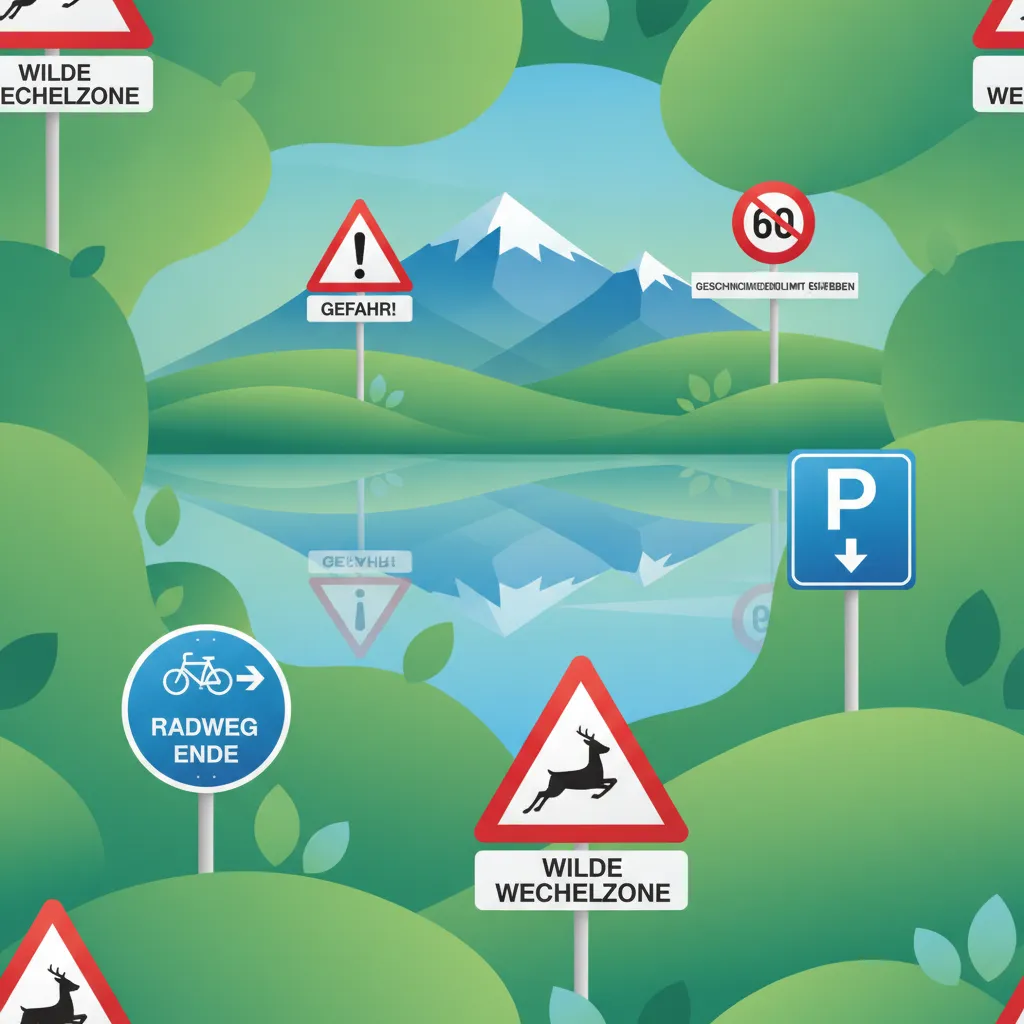
This lesson categorizes and explains the different types of Austrian road signs, including warning, regulatory, and informational signs. It details how the shape and color of a sign indicate its function, such as communicating speed limits, prohibitions, or mandatory actions. Understanding this visual system is fundamental for making correct and safe decisions while riding.
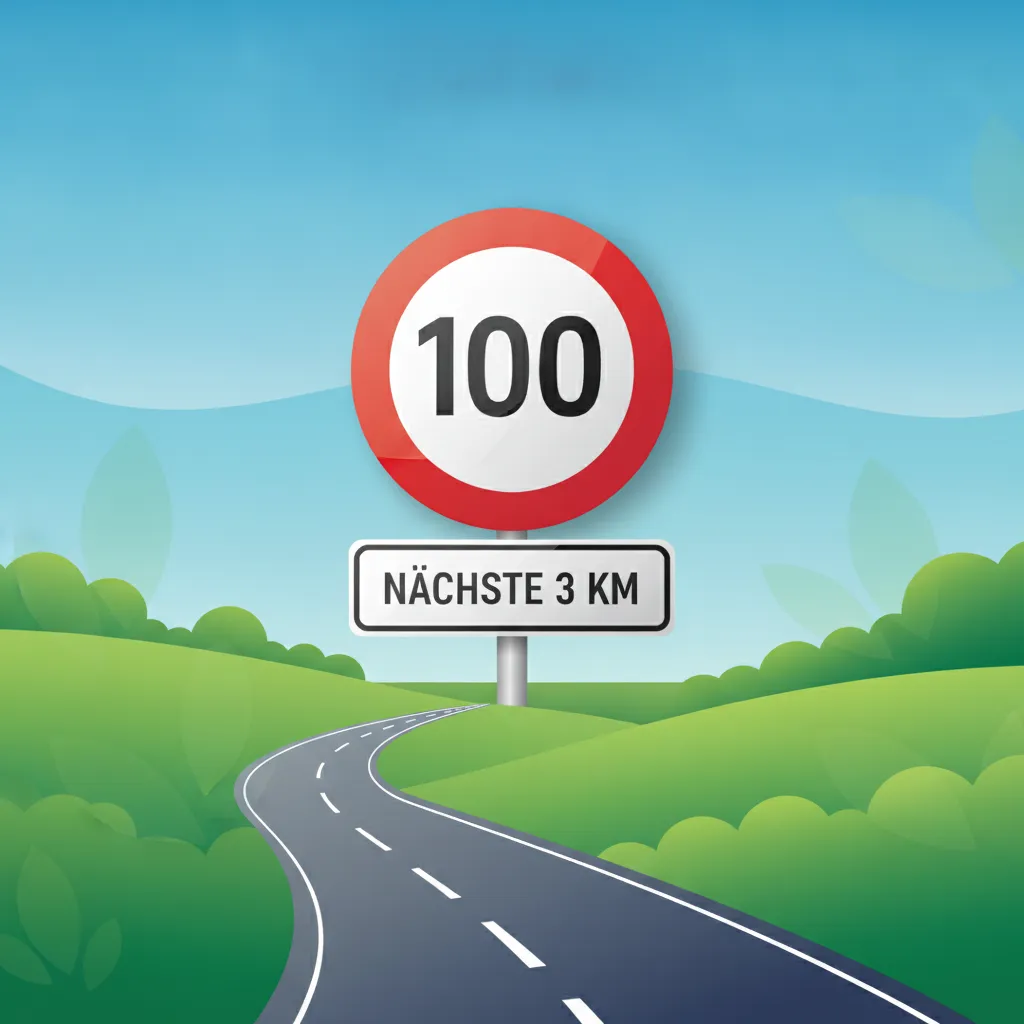
This lesson covers informational signs that provide guidance, directions, and distances to help with navigation. It also explains the critical role of supplementary plates (Zusatztafeln), which are placed below main signs to add conditions, exceptions, or clarifications. Learners will understand how to interpret these sign combinations correctly to make informed decisions about route planning, lane choice, and applicable rules.

This lesson details the various types of road markings and their significance for guiding traffic and ensuring safety. Learners will understand the rules associated with solid versus broken lane lines, the instructions provided by directional arrows painted on the road, and the purpose of stop lines and pedestrian crossing markings. The content emphasizes how these markings work in conjunction with signs to regulate traffic flow and define legal lane usage.
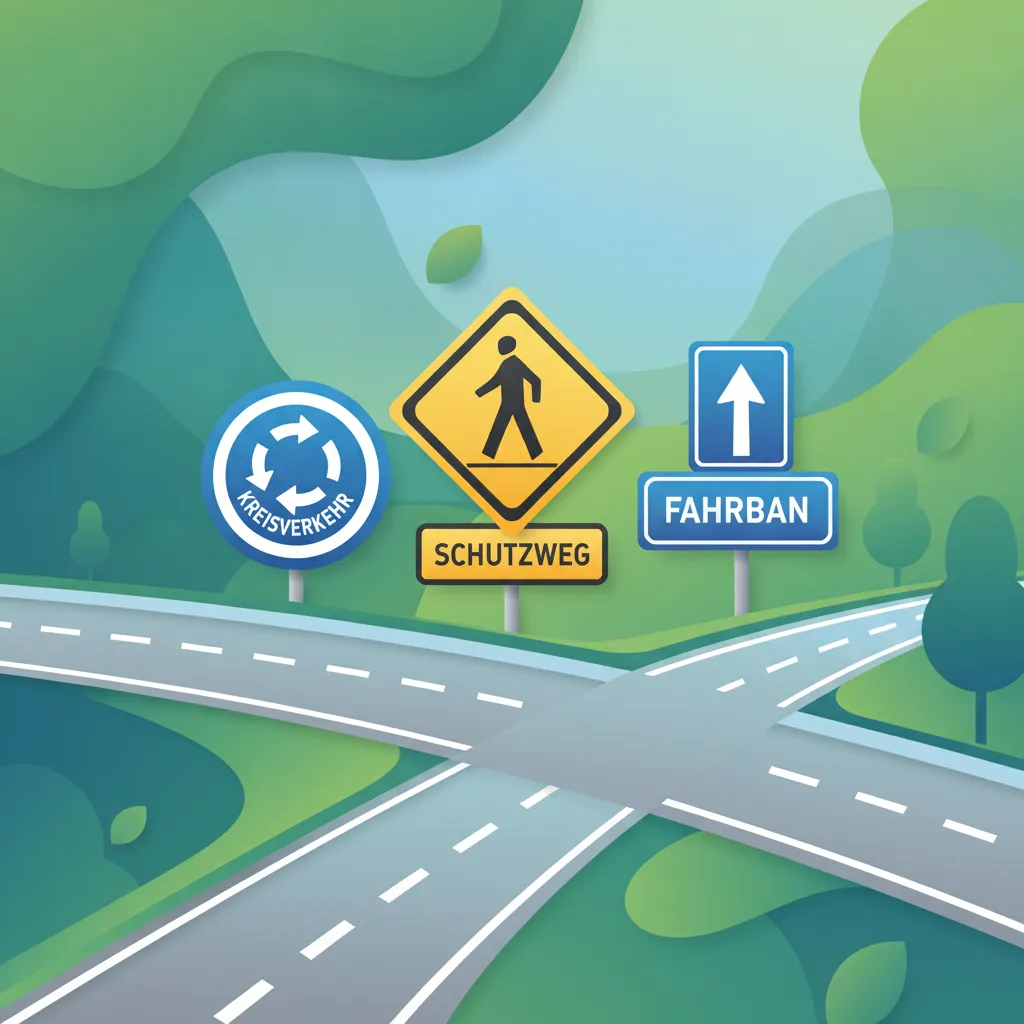
This lesson covers the specific regulations associated with special Austrian road signs and areas. It details the rules for 'Schutzweg' (protected pedestrian crossings), 'Kreisverkehr' (roundabouts), and the distinction between 'Fahrbahn' (road) and 'Fahrstreifen' (lane). Understanding these specific contexts is essential for safe navigation in urban and suburban environments.

This lesson focuses on the interpretation of traffic lights and road surface markings that guide riders through intersections. It covers the meaning of each traffic light phase, the rules for amber lights, and the significance of various lane lines and stop lines. Properly understanding these signals is essential for maintaining traffic flow and ensuring safety at junctions.

This lesson focuses on warning signs, which are designed to alert drivers to potential hazards ahead. Learners will explore the meanings of signs indicating sharp curves, changes in road surface, potential animal crossings, and upcoming construction zones. The content explains how the characteristic triangular shape and symbols convey specific dangers, enabling drivers to anticipate conditions and adjust their speed and attention accordingly.

This lesson explains the operation and meaning of traffic light signals in Austria, including the standard red, yellow, and green phases, as well as flashing signals and arrows. It also covers other priority control devices, such as stop signs and yield signs, which are used to manage right-of-way at intersections. Understanding the hierarchy between these signals and signs is crucial for navigating junctions safely and in compliance with the law.
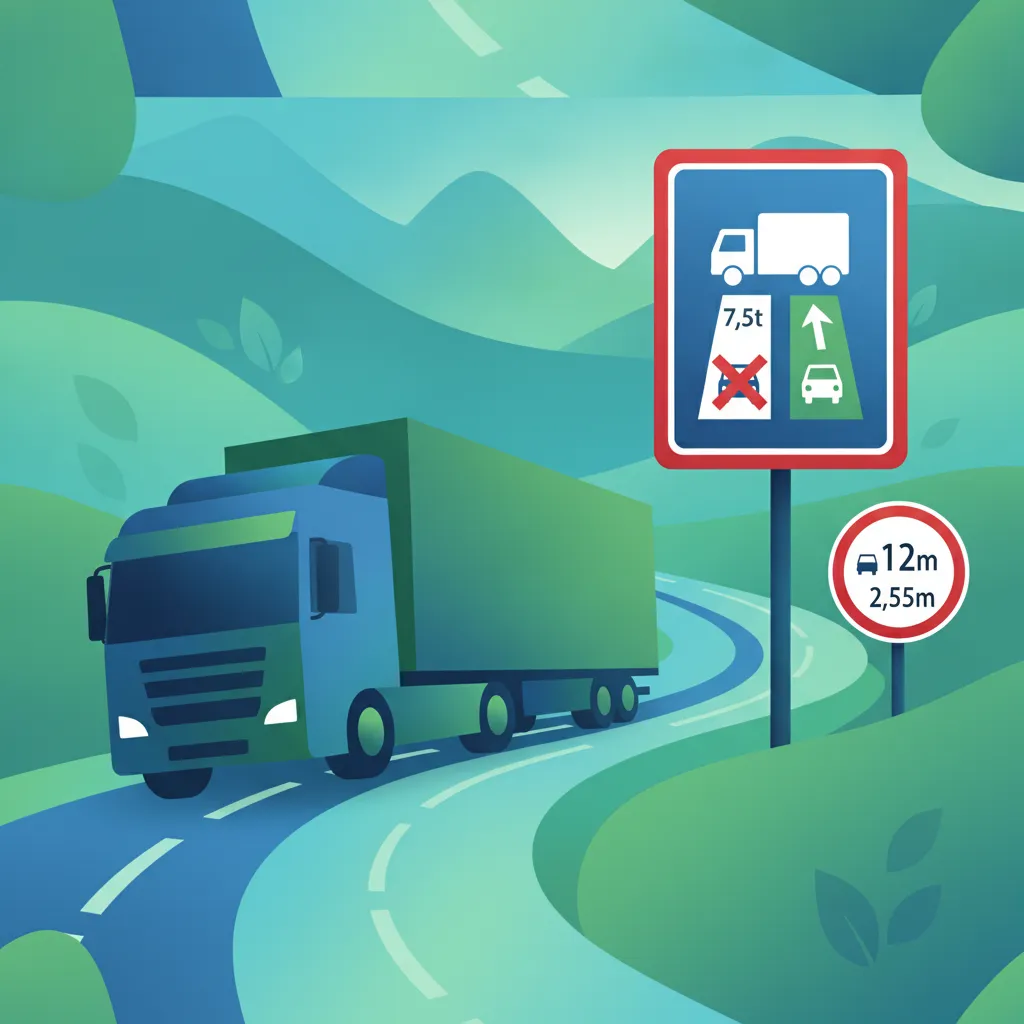
This lesson focuses on the specific Austrian road signs and supplemental plates that apply to heavy goods vehicles. It explains how to interpret signage indicating weight limits, height and width restrictions, lane usage rules, and other critical regulatory information. Correctly understanding these signs is essential for legal compliance and safe navigation on Austria's roads.
Find clear answers to common questions learners have about Regulatory Road Signs and Their Meanings. Learn how the lesson is structured, which driving theory objectives it supports, and how it fits into the overall learning path of units and curriculum progression in Austria. These explanations help you understand key concepts, lesson flow, and exam focused study goals.
In Austria, mandatory signs are typically blue circles with white symbols, indicating an action you must take. Prohibitory signs are generally circular with a red border, indicating an action you are forbidden to do.
Temporary regulatory signs, such as those with yellow backgrounds or those placed in construction areas, take precedence over permanent signs. You must always follow the instructions given by temporary signage until you clear the marked zone.
Yes, almost all circular signs in the Austrian system convey either a mandatory instruction or a prohibition. If you see a circle, look for the color: red border means prohibited, blue means mandatory.
While you should be familiar with the most common ones, focusing on the underlying principles—such as the meaning of shapes and colors—is more effective. Understanding the 'language' of the signs allows you to interpret new or rare signs correctly.
Refine your study plan by searching for specific Austrian driving theory practice sets. Pinpoint questions related to particular road rules, signs, or challenge levels, and begin practicing immediately to reinforce your knowledge and excel in your official exam with confidence. Get started with focused revision today.