
This lesson provides a detailed breakdown of the various road markings used across the Austrian network to direct traffic flow and ensure driver safety. You will learn how to interpret solid and broken lines, lane directional arrows, and specialized stop markings that are essential for successful navigation. Understanding these components is a vital step in preparing for your Category B theory exam and practicing responsible road usage.
Lesson content overview
Road markings are an indispensable part of the traffic control system in Austria, working in harmony with road signs and traffic lights to guide drivers, ensure safety, and maintain the smooth flow of vehicles. For anyone pursuing the Austrian Category B driver's license, a thorough understanding of these markings is not just helpful—it's mandatory. This lesson will delve into the various types of lines, arrows, and symbols painted on Austrian roads, explaining their meanings, legal implications, and how to interpret them correctly in diverse driving situations.
Road markings (often referred to as Fahrbahnmarkierungen in German) serve as a constant visual communication system between road authorities and drivers. Unlike static signs, markings provide immediate, real-time guidance directly on the driving surface. They define legal lane usage, indicate where and when certain maneuvers are permitted or prohibited, and highlight critical points such as intersections and pedestrian crossings. Understanding and obeying these markings is fundamental to safe and compliant driving across Austria's varied road network, from bustling city streets to winding alpine roads and high-speed motorways.
This system is designed to reduce potential conflicts, set clear expectations for vehicle movements, and account for crucial factors like stopping distances and human perception. Their consistent design and maintenance are paramount for driver reliability under various conditions, including adverse weather or low light.
Several core principles underpin the design and function of road markings. These principles ensure that markings are universally understood and contribute effectively to traffic safety and order.
Road markings primarily delineate traffic lanes, separating vehicles moving in the same or opposite directions. These lines guide drivers on where to position their vehicles and when it is permissible or prohibited to change lanes or overtake. They are crucial for preventing head-on collisions and maintaining ordered traffic flow.
Arrow markings painted on the road surface provide explicit instructions regarding permissible movements at intersections or when approaching lane changes. They indicate whether a lane is for going straight, turning left, turning right, or signals a lane ending and requiring a merge. Drivers must adhere strictly to these arrows to avoid dangerous last-minute maneuvers.
Specific markings, such as Stop-Linien (stop lines) and Zebrastreifen (pedestrian crossings), denote critical traffic control points where drivers must stop, yield, or exercise extreme caution. These markings are essential for managing priority and protecting vulnerable road users at junctions and crossing points.
Some lanes are designated for specific categories of vehicles, such as buses or bicycles, to prioritize public transport or non-motorized traffic. Special markings clearly identify these lanes, prohibiting unauthorized vehicles from using them, thus improving efficiency and safety for designated users.
For road markings to be effective, they must be consistently applied in terms of size, color (typically white or yellow), and reflective properties. Regular maintenance ensures their high visibility under various lighting and weather conditions, allowing drivers to interpret them reliably and make timely decisions.
The type of line separating lanes is perhaps the most fundamental aspect of road markings. Whether a line is solid (continuous) or broken (dashed) dictates a driver's ability to change lanes or overtake.
A solid white line on the road surface indicates a prohibition against crossing it. This means you must not change lanes, overtake, or turn across a solid line unless absolutely necessary to avoid an immediate danger.
A single solid line separates lanes travelling in the same direction, such as on a motorway or a multi-lane city road. Its presence signifies that changing lanes is prohibited. This restriction is often implemented in areas where lane changes would be particularly dangerous, such as tunnels, near intersections, or on curves with limited visibility. Drivers must maintain their current lane position.
Crossing a single solid line for overtaking or convenience is a traffic violation under Austrian law and can lead to fines.
A double solid line is a more restrictive marking, typically found on two-way roads separating opposing traffic. This marking means that no vehicle from either side is allowed to cross these lines for any reason, including overtaking or making turns, except in emergencies. This ensures a clear and safe separation between vehicles travelling in opposite directions, especially on roads without a physical barrier.
In contrast to solid lines, broken white lines indicate that lane changes and overtaking maneuvers are generally permitted, provided it is safe to do so and other traffic regulations are observed.
A single broken line is the most common lane marking. It allows drivers to change lanes, overtake, or make turns across it, provided they signal their intentions, ensure the maneuver is safe, and do not endanger other road users. This flexibility is common on many rural roads and multi-lane urban streets where traffic flow permits such movements.
While less common, a double broken line signifies that overtaking is allowed from both directions, assuming it's safe to do so. This is typically seen on roads where traffic volume or specific conditions might warrant caution but not a complete prohibition on overtaking.
Sometimes, you will encounter a combination of a solid and a broken line running parallel to each other. This specific marking provides different rules for drivers depending on which side of the line they are on.
This marking is often used on roads where visibility varies, or where it is safer for traffic in one direction to overtake than in the other. For instance, it might be used on a winding road where one direction has better sight lines for overtaking.
Lane arrow markings painted directly on the road surface provide clear, unambiguous instructions for drivers regarding permissible movements. These arrows become particularly important when approaching intersections or where a lane's function changes.
Drivers must pay close attention to the arrows in their lane and position themselves correctly well in advance. Ignoring these arrows can lead to dangerous last-minute lane changes or incorrect turns, potentially causing collisions or traffic violations.
Always select the correct lane based on your intended direction of travel well before reaching an intersection or lane-ending marking. This allows for smooth and safe maneuvers.
These markings are crucial for managing priority and ensuring safety at intersections, junctions, and wherever pedestrians cross the road.
Stop-Linien) and Give-Way Lines (Vorrang geben Linien)These thick white lines define the precise point where vehicles must stop or yield.
When a stop line is present, drivers are legally required to stop completely before the line. This applies when there is a stop sign (Verbotstafel Halt! Vorfahrt geben! - sign B2), a red traffic light, or when a police officer signals to stop. Crossing the stop line before stopping is a serious violation.
Also known as a yield line, this marking is typically a row of dashed triangles or a dashed white line. It instructs drivers to yield the right-of-way to traffic on the intersecting road or to pedestrians. Drivers must slow down and be prepared to stop if necessary, only proceeding when the way is clear and it is safe to do so without impeding other traffic.
Zebrastreifen)Zebrastreifen (zebra crossings) are highly visible markings consisting of broad, parallel white stripes. They designate a specific area for pedestrians to cross the road. Drivers approaching a Zebrastreifen must be prepared to stop and yield to any pedestrian who is on the crossing or clearly intending to step onto it. Failing to yield to pedestrians at a Zebrastreifen is a serious offense and poses a significant risk to vulnerable road users. Always reduce your speed when approaching these crossings, especially in urban areas.
Certain lanes are reserved for specific types of vehicles to improve efficiency or provide safety for particular road users. These lanes are clearly identified by unique markings.
Busspur)BUS lettering or a green surface, restricting access to other vehicles.Bus lanes, or Busspuren, are typically marked by BUS lettering on the road surface, sometimes accompanied by a green-colored road surface, and often indicated by specific signs. These lanes are reserved exclusively for authorized vehicles, primarily public buses, and sometimes taxis or trams, during specified operating hours. Unauthorized private vehicles are strictly prohibited from driving in or parking in bus lanes. This helps ensure public transport can operate efficiently, unhindered by general traffic.
Radfahrstreifen)Bicycle lanes, known as Radfahrstreifen, are designated areas for cyclists, usually marked with a bicycle symbol and often a solid white line or a distinct color. Drivers of motor vehicles must not drive in these lanes unless it is absolutely necessary for turning (and only for the shortest possible distance) or to allow emergency vehicles to pass. When overtaking cyclists, always ensure sufficient lateral distance and only do so when it is safe and permitted.
Solid white lines defining the outer edge of the carriageway are known as edge lines (Fahrbahnrandlinie). They indicate the boundary between the active driving surface and the shoulder or roadside. Drivers must stay within these lines, and crossing them is generally prohibited unless entering a driveway, turning off the road, or in an emergency. The shoulder (Pannenstreifen on motorways) is not for regular driving or stopping, except in cases of breakdown or emergency.
On multi-lane roads, lanes may end, or new lanes may be added. Specific markings guide drivers through these transitions to ensure smooth and safe merging.
These markings, often a series of diagonal stripes or a large arrow pointing towards an adjacent lane, indicate that a lane is about to terminate. Drivers in a lane nearing its end must prepare to merge into the adjacent lane safely and in a timely manner. The Reißverschlusssystem (zipper system) applies here, where vehicles from the ending lane and the continuing lane merge alternately at the point where the lane ends.
Arrows indicating an upcoming lane addition or merging point help drivers anticipate changes in road layout. When an additional lane is being introduced, drivers already on the main carriageway should be prepared to adjust their speed and position to accommodate merging traffic, typically from an acceleration lane. Similarly, merging arrows inform drivers that two lanes are about to become one.
StVOUnder the Austrian Straßenverkehrsordnung (StVO), road markings are legally binding instructions. Non-compliance is considered a traffic violation and can result in significant fines and, in some cases, penalty points or even license withdrawal. The rationale behind this strict enforcement is to ensure predictable behavior among road users, which is critical for preventing accidents and maintaining ordered traffic flow.
Violation of road marking rules, such as crossing a solid line or ignoring a stop line, can lead to severe penalties under Austrian traffic law. Always prioritize safety and legal compliance.
The specific enforcement thresholds for lane departures, precise definitions of "immediate danger," and current fine amounts are subject to change and should always be verified against the latest version of the Austrian StVO or official traffic regulations.
Understanding potential pitfalls is as important as knowing the rules. Several common violations and misunderstandings related to road markings often lead to dangerous situations or legal consequences:
Zebrastreifen: Not stopping for pedestrians is a severe safety violation that can cause serious injury or fatality.The effectiveness and interpretation of road markings can be influenced by various external factors. Drivers must adapt their behavior accordingly.
Zebrastreifen or bicycle lanes are present, drivers must exercise heightened caution, reduce speed, and be prepared to yield.Road markings are silent but vital instructors on Austrian roads. They provide continuous, unambiguous guidance that complements the information conveyed by road signs and traffic lights. From defining permissible lane changes and overtaking zones with solid and broken lines, to directing turns with lane arrows, to ensuring pedestrian safety with Zebrastreifen, these markings are integral to the StVO.
A thorough understanding of each type of marking, coupled with an awareness of how external conditions can affect their visibility and interpretation, is non-negotiable for safe and compliant driving. By consistently adhering to these visual cues, drivers contribute significantly to their own safety and the overall efficiency and security of the Austrian road network. Mastering road markings is a cornerstone of becoming a responsible and skilled driver, ready to navigate Austria's diverse driving environments with confidence.
Austrian road markings communicate legal requirements directly on the driving surface and are enforced under the Straßenverkehrsordnung (StVO). Solid lines prohibit all crossing, broken lines permit safe lane changes and overtaking, and combination lines create different rules for each direction of travel. Lane arrows dictate permissible movements at intersections, requiring early lane selection. Critical markings like stop lines and zebra crossings establish mandatory driver actions to protect safety and manage priority. Understanding these markings is essential for both passing the Category B theory exam and driving safely on Austrian roads.
A short set of high-value points that capture the most important learning from this lesson.
Solid white lines prohibit all crossing maneuvers; they indicate mandatory lane discipline with no exceptions except to avoid immediate danger.
Broken white lines permit lane changes and overtaking only when safe and without endangering other road users.
Combination lines apply different rules depending on which side of the line you are driving—broken line side may cross, solid line side may not.
Lane arrows painted on the road must be followed; drivers must position themselves in the correct lane well before reaching intersections.
Pedestrian crossings (Zebrastreifen) require drivers to stop and yield to pedestrians, and failing to do so is a serious safety violation.
Explore all units and lessons included in this driving theory course.
Double solid lines prohibit crossing from either direction and are typically found on two-way roads separating opposing traffic.
Stop lines (Stop-Linien) are thick continuous lines where drivers must come to a complete stop before proceeding.
Give-way lines consist of dashed triangles indicating where to yield without necessarily stopping if the way is clear.
Bus lanes (Busspuren) are reserved for public transport and taxis during operating hours; unauthorized vehicles face fines.
Lane termination uses the zipper system (Reißverschlusssystem) where vehicles from both lanes merge alternately at the point where the lane ends.
Crossing a solid line to overtake or change lanes, which is illegal and particularly dangerous in tunnels and on curves.
Failing to yield at pedestrian crossings (Zebrastreifen), treating them as optional rather than mandatory stopping points.
Making late lane changes after passing lane arrows, forcing dangerous last-minute maneuvers at intersections.
Driving in bus lanes without authorization, impeding public transport and incurring fines.
Ignoring reduced marking visibility in adverse weather or at night, leading to incorrect lane positioning decisions.
Lesson content overview
A short set of high-value points that capture the most important learning from this lesson.
Solid white lines prohibit all crossing maneuvers; they indicate mandatory lane discipline with no exceptions except to avoid immediate danger.
Broken white lines permit lane changes and overtaking only when safe and without endangering other road users.
Combination lines apply different rules depending on which side of the line you are driving—broken line side may cross, solid line side may not.
Lane arrows painted on the road must be followed; drivers must position themselves in the correct lane well before reaching intersections.
Pedestrian crossings (Zebrastreifen) require drivers to stop and yield to pedestrians, and failing to do so is a serious safety violation.
Explore all units and lessons included in this driving theory course.
Double solid lines prohibit crossing from either direction and are typically found on two-way roads separating opposing traffic.
Stop lines (Stop-Linien) are thick continuous lines where drivers must come to a complete stop before proceeding.
Give-way lines consist of dashed triangles indicating where to yield without necessarily stopping if the way is clear.
Bus lanes (Busspuren) are reserved for public transport and taxis during operating hours; unauthorized vehicles face fines.
Lane termination uses the zipper system (Reißverschlusssystem) where vehicles from both lanes merge alternately at the point where the lane ends.
Crossing a solid line to overtake or change lanes, which is illegal and particularly dangerous in tunnels and on curves.
Failing to yield at pedestrian crossings (Zebrastreifen), treating them as optional rather than mandatory stopping points.
Making late lane changes after passing lane arrows, forcing dangerous last-minute maneuvers at intersections.
Driving in bus lanes without authorization, impeding public transport and incurring fines.
Ignoring reduced marking visibility in adverse weather or at night, leading to incorrect lane positioning decisions.
Explore search topics learners often look for when studying Road Markings and Lane Guidance. These topics reflect common questions about road rules, driving situations, safety guidance, and lesson level theory preparation for learners in Austria.
Browse additional driving theory lessons that cover connected traffic rules, road signs, and common driving situations related to this topic. Improve your understanding of how different rules interact across everyday traffic scenarios.
Explore complex Austrian road markings beyond basic lines, including special lane designations, arrow interpretations at intersections, and markings for specific road types. Understand how these guide safe traffic flow and lane discipline.

This lesson focuses on the interpretation of traffic lights and road surface markings that guide riders through intersections. It covers the meaning of each traffic light phase, the rules for amber lights, and the significance of various lane lines and stop lines. Properly understanding these signals is essential for maintaining traffic flow and ensuring safety at junctions.
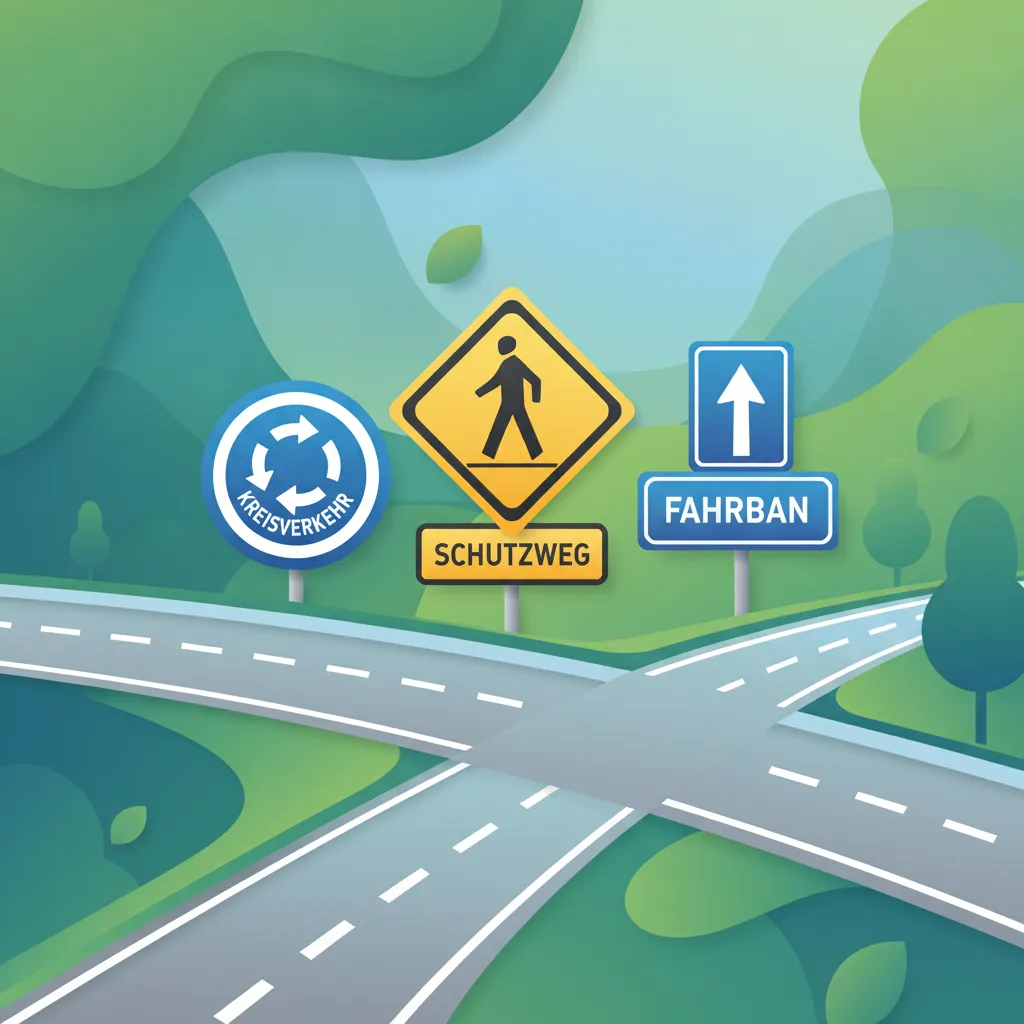
This lesson covers the specific regulations associated with special Austrian road signs and areas. It details the rules for 'Schutzweg' (protected pedestrian crossings), 'Kreisverkehr' (roundabouts), and the distinction between 'Fahrbahn' (road) and 'Fahrstreifen' (lane). Understanding these specific contexts is essential for safe navigation in urban and suburban environments.

This lesson covers the principles of proper lane discipline, including maintaining a correct and steady position within a lane and adhering to the 'keep right' rule on multi-lane roads. It details the safe and systematic protocol for changing lanes, which involves checking mirrors, signaling intention, performing a blind spot check, and then smoothly executing the manoeuvre. Correct lane usage is essential for maintaining predictable and safe traffic flow.

This lesson explains how to use different positions within a lane to maximize visibility, create safety buffers, and plan escape routes. It introduces the concept of anticipative riding, which involves actively scanning for potential hazards and predicting the actions of other drivers. Strategic positioning is a dynamic skill that allows a rider to manage space and time effectively in changing traffic.
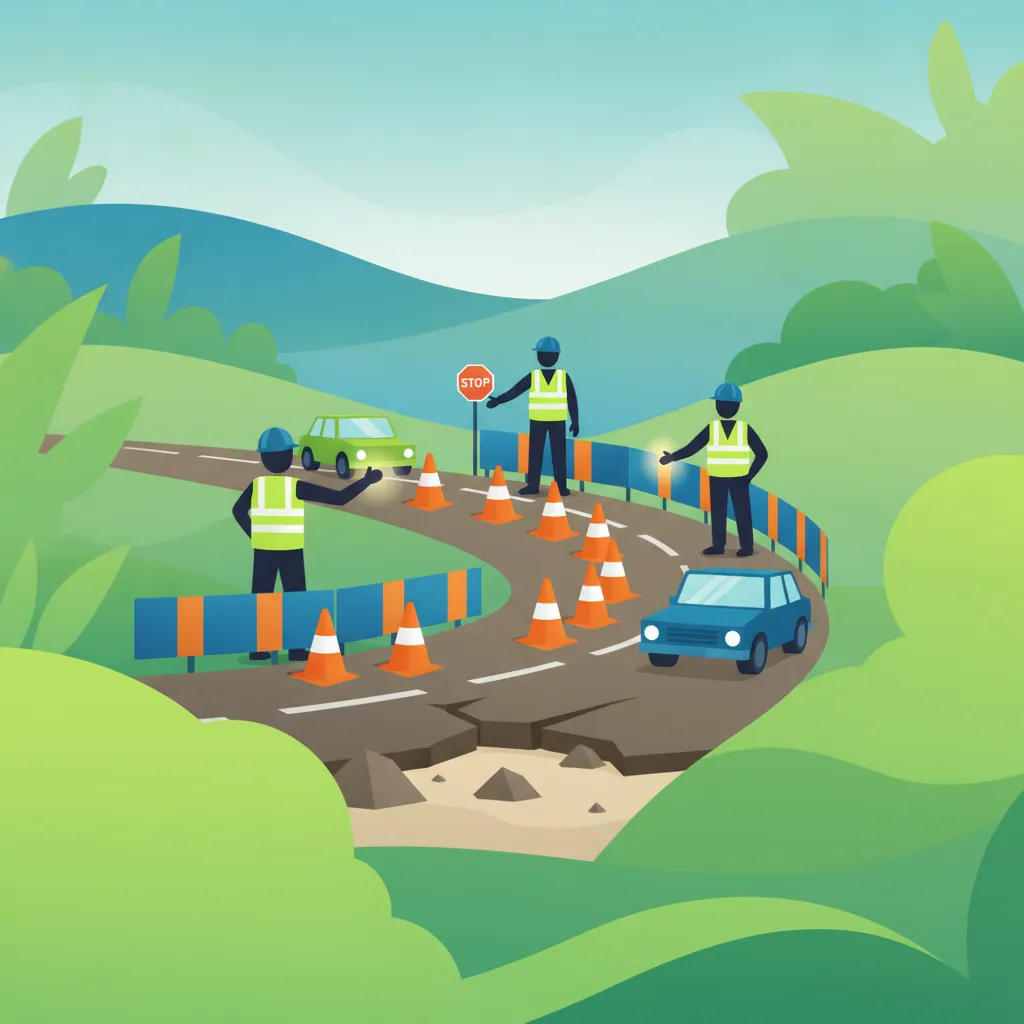
This lesson prepares riders for safely transiting through construction zones ('Baustellen'). It covers the interpretation of temporary signage, adherence to reduced speed limits, and awareness of hazards suchas altered lane markings, abrupt surface changes, and loose gravel. Respecting the safety of road workers and anticipating unpredictable traffic patterns are key themes.
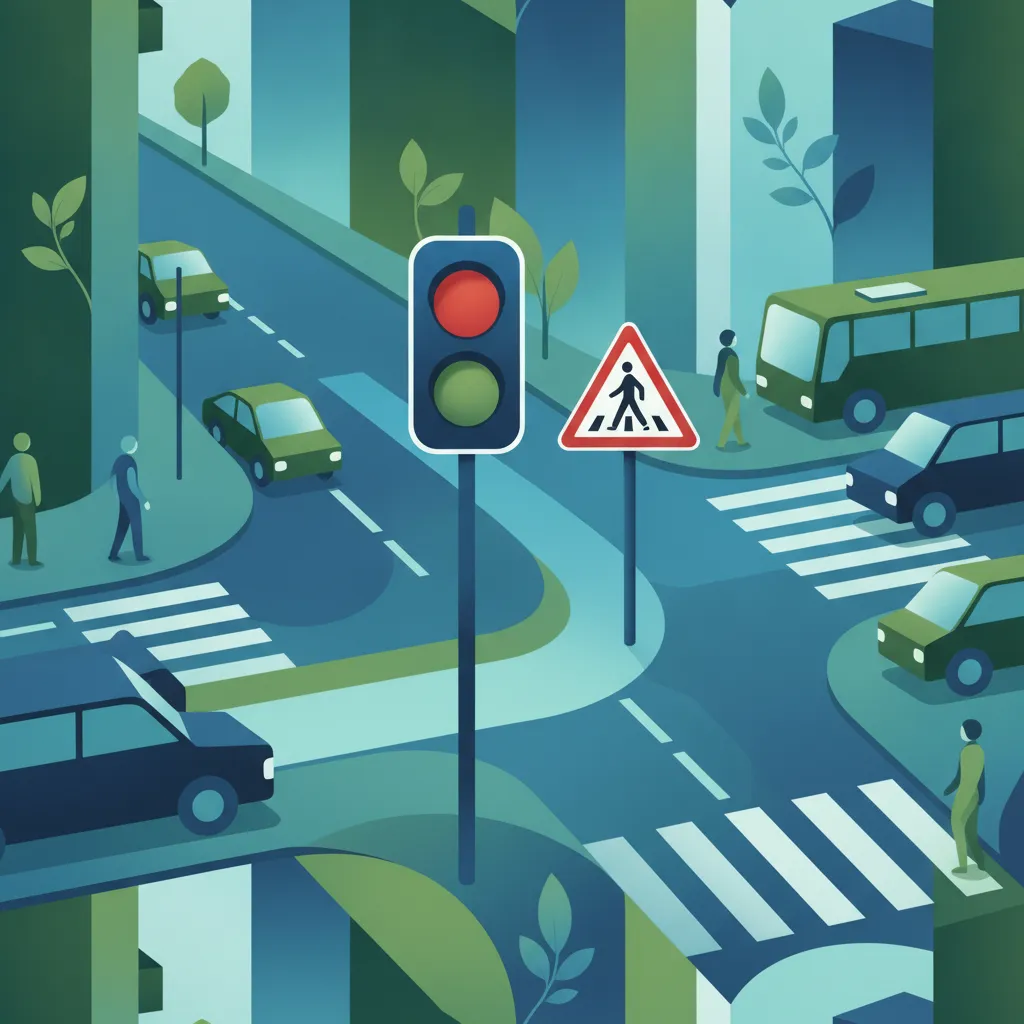
This lesson explains the operation and meaning of traffic light signals in Austria, including the standard red, yellow, and green phases, as well as flashing signals and arrows. It also covers other priority control devices, such as stop signs and yield signs, which are used to manage right-of-way at intersections. Understanding the hierarchy between these signals and signs is crucial for navigating junctions safely and in compliance with the law.
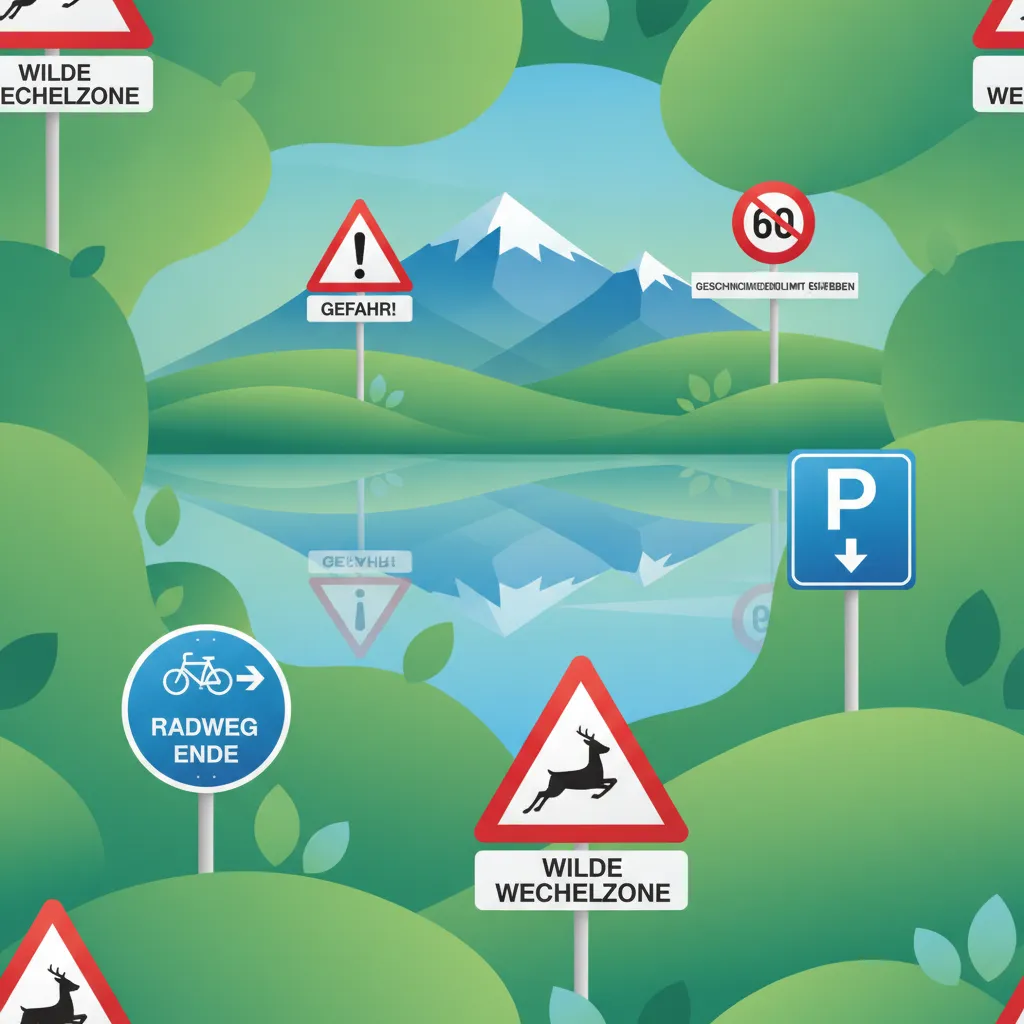
This lesson categorizes and explains the different types of Austrian road signs, including warning, regulatory, and informational signs. It details how the shape and color of a sign indicate its function, such as communicating speed limits, prohibitions, or mandatory actions. Understanding this visual system is fundamental for making correct and safe decisions while riding.
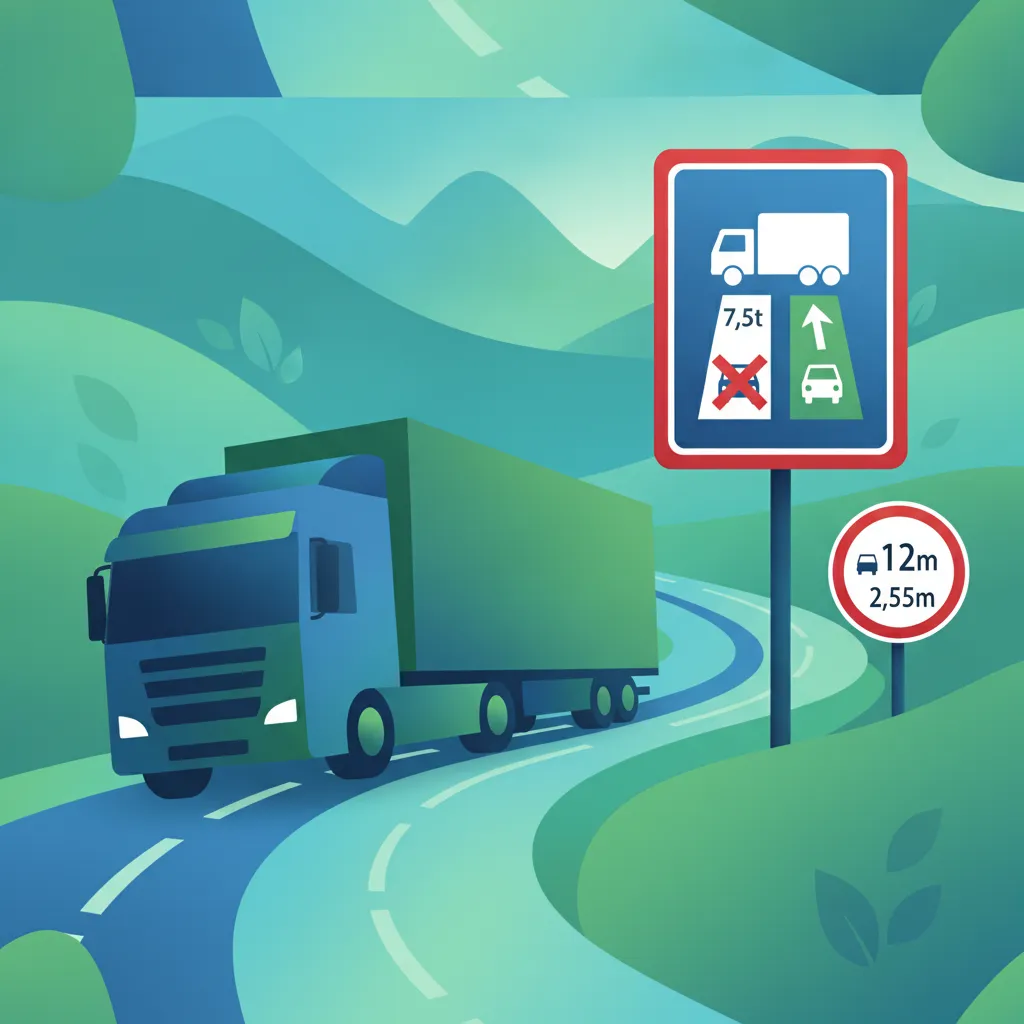
This lesson focuses on the specific Austrian road signs and supplemental plates that apply to heavy goods vehicles. It explains how to interpret signage indicating weight limits, height and width restrictions, lane usage rules, and other critical regulatory information. Correctly understanding these signs is essential for legal compliance and safe navigation on Austria's roads.

This lesson focuses on warning signs, which are designed to alert drivers to potential hazards ahead. Learners will explore the meanings of signs indicating sharp curves, changes in road surface, potential animal crossings, and upcoming construction zones. The content explains how the characteristic triangular shape and symbols convey specific dangers, enabling drivers to anticipate conditions and adjust their speed and attention accordingly.
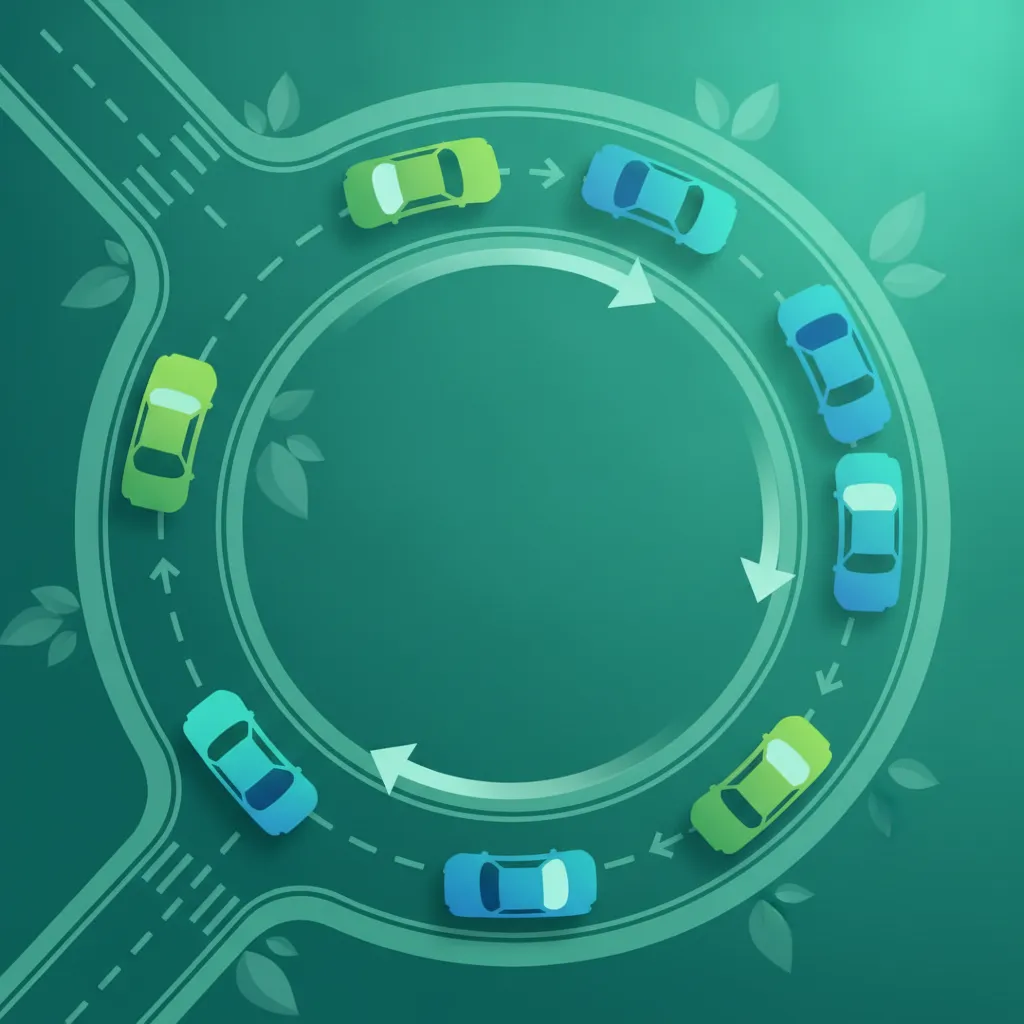
This lesson focuses on the rules for navigating roundabouts (Kreisverkehr) in Austria. It highlights the fundamental give-way rule, where traffic entering the roundabout must yield to traffic already circulating within it. Learners will understand the correct procedures for lane selection, signaling intent to exit, and maintaining safe traffic flow, supported by explanations of specific Austrian roundabout signage.
Focus on critical traffic control points marked on Austrian roads. Learn the precise rules for stop lines, yield lines, and pedestrian crossings (Zebrastreifen) to ensure compliance and safety.

This lesson explores the strict regulations governing pedestrian crossings in Austria, particularly marked zebra crossings known as Schutzweg. It emphasizes the absolute priority of pedestrians on these crossings and the driver's legal obligation to stop and allow them to cross safely. The content covers how to approach these areas with caution, the importance of visibility, and the rules at crossings controlled by traffic lights.

This lesson provides a comprehensive explanation of Austria's right-of-way laws, which are fundamental to intersection safety. It covers the meaning of different priority signs and clarifies the 'Rechts vor Links' (priority to the right) rule that applies at unmarked junctions. A clear understanding of these rules is essential to prevent conflicts and collisions in urban and rural settings.

Pedestrians have absolute priority on marked crossings in Austria, and a bus driver must always be ready to give way. This lesson covers the rules for approaching and stopping for pedestrians, and highlights the risk of pedestrians being hidden by the vehicle's structure. It also stresses the danger of passengers crossing the road after alighting from your bus.
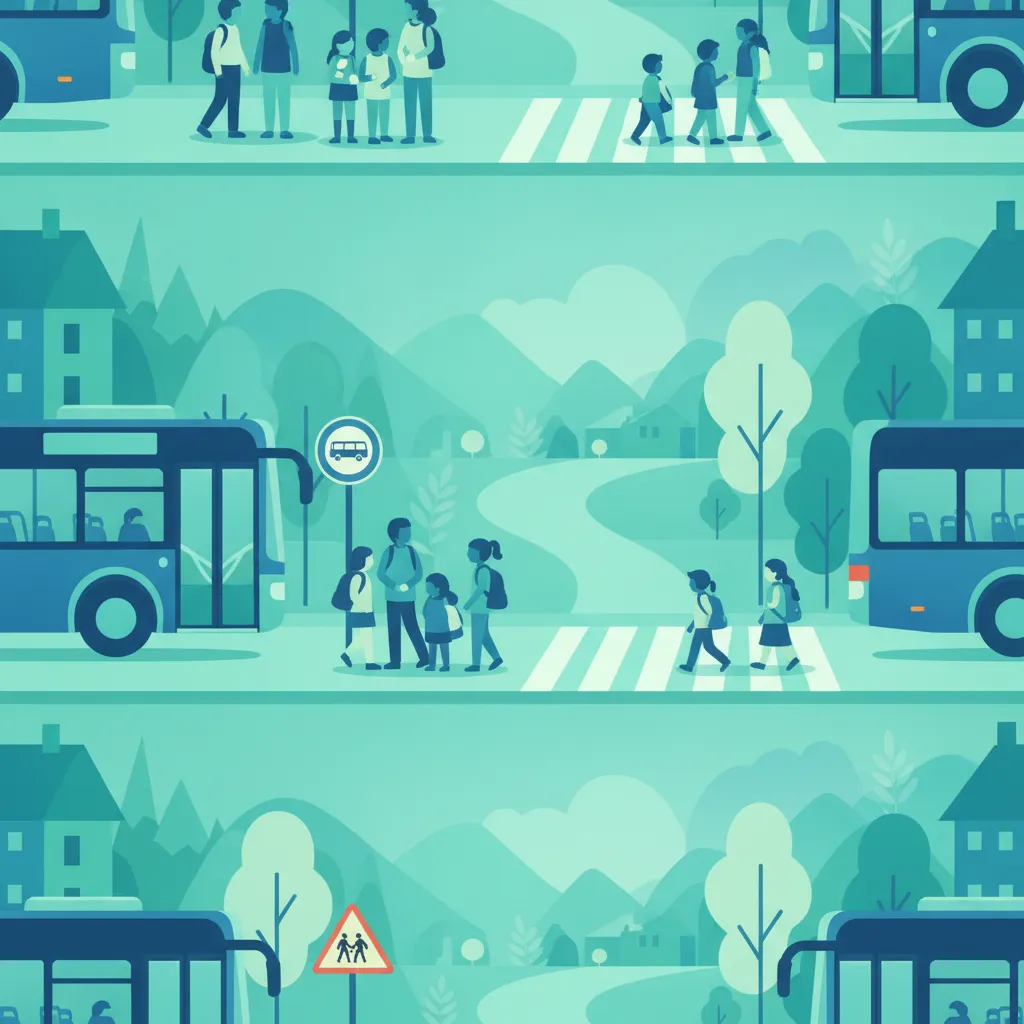
This lesson details the specific regulations and best practices for driving in areas with high pedestrian activity, such as bus stops and school zones. It explains the driver's obligation to stop for school buses with flashing lights and to yield to public buses pulling out from a stop. The content emphasizes the requirement to significantly reduce speed in marked school zones to ensure the safety of children.
This lesson covers the specific regulations associated with special Austrian road signs and areas. It details the rules for 'Schutzweg' (protected pedestrian crossings), 'Kreisverkehr' (roundabouts), and the distinction between 'Fahrbahn' (road) and 'Fahrstreifen' (lane). Understanding these specific contexts is essential for safe navigation in urban and suburban environments.
This lesson explains the operation and meaning of traffic light signals in Austria, including the standard red, yellow, and green phases, as well as flashing signals and arrows. It also covers other priority control devices, such as stop signs and yield signs, which are used to manage right-of-way at intersections. Understanding the hierarchy between these signals and signs is crucial for navigating junctions safely and in compliance with the law.
This lesson focuses on the interpretation of traffic lights and road surface markings that guide riders through intersections. It covers the meaning of each traffic light phase, the rules for amber lights, and the significance of various lane lines and stop lines. Properly understanding these signals is essential for maintaining traffic flow and ensuring safety at junctions.
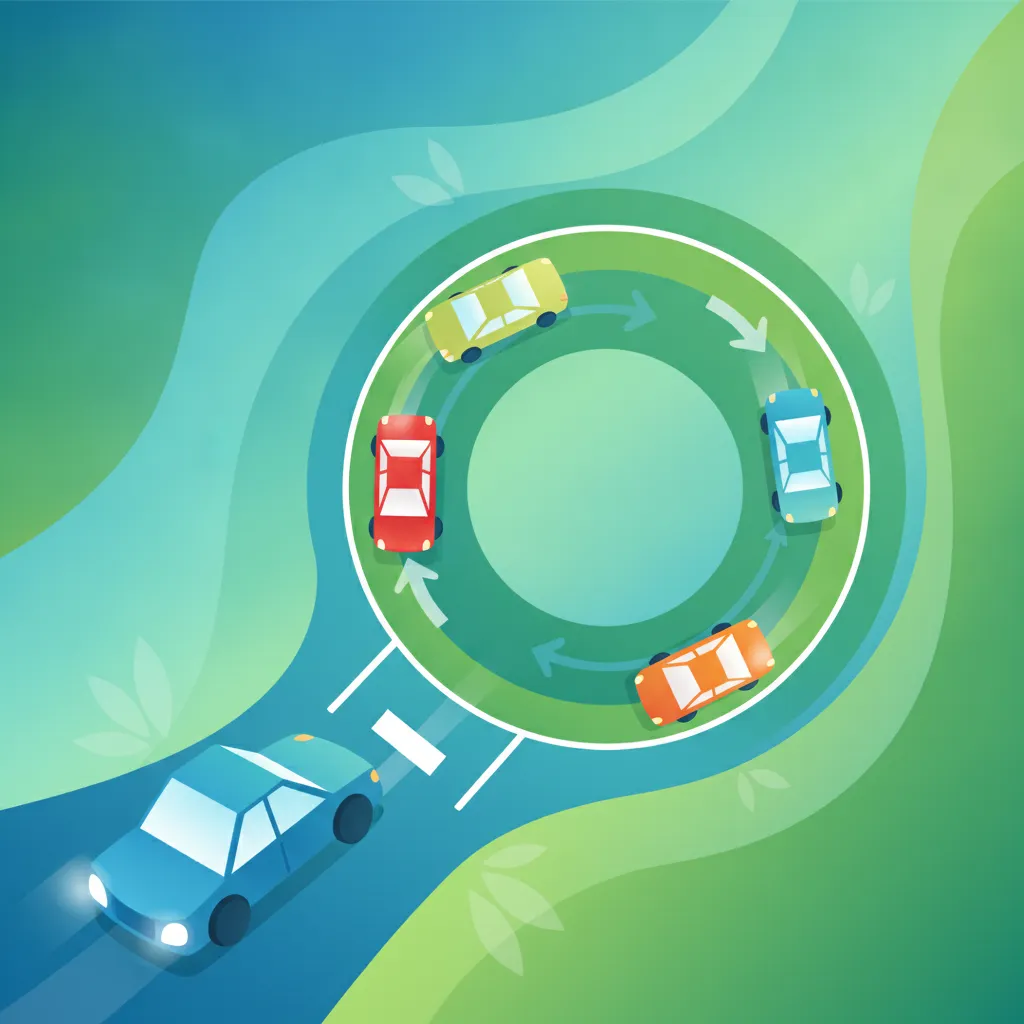
This lesson provides clear instructions on how to safely navigate roundabouts. It explains the critical rule of yielding to traffic already circulating and how to choose the correct lane based on the intended exit. The content also covers proper signaling procedures for entering and exiting the roundabout to communicate intentions clearly.
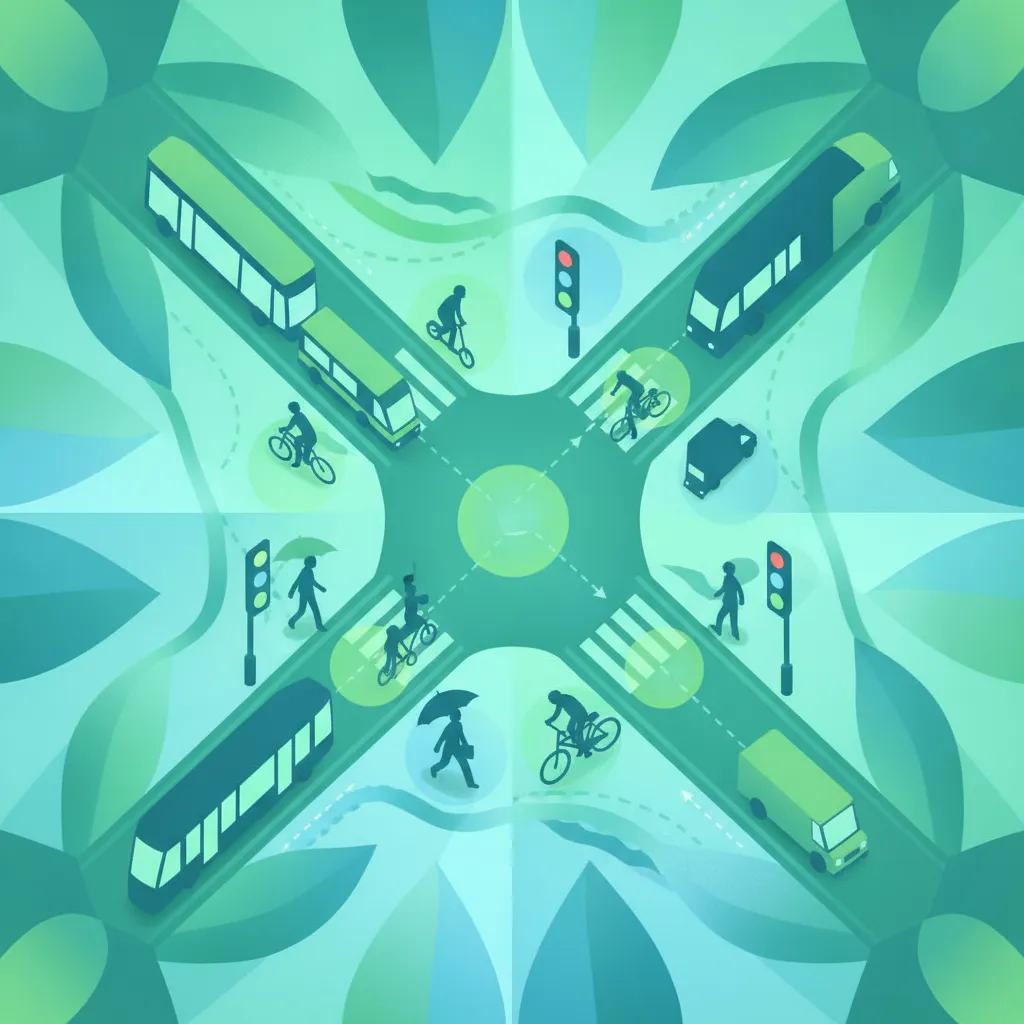
This lesson examines various common intersection layouts, including T-intersections, four-way junctions, and complex multi-lane crossings. It explains how right-of-way is determined in each scenario, whether through traffic signals, stop or yield signs, or the default right-hand rule. Understanding how to identify conflict points and apply the correct priority rule is essential for preventing collisions and ensuring smooth traffic movement.
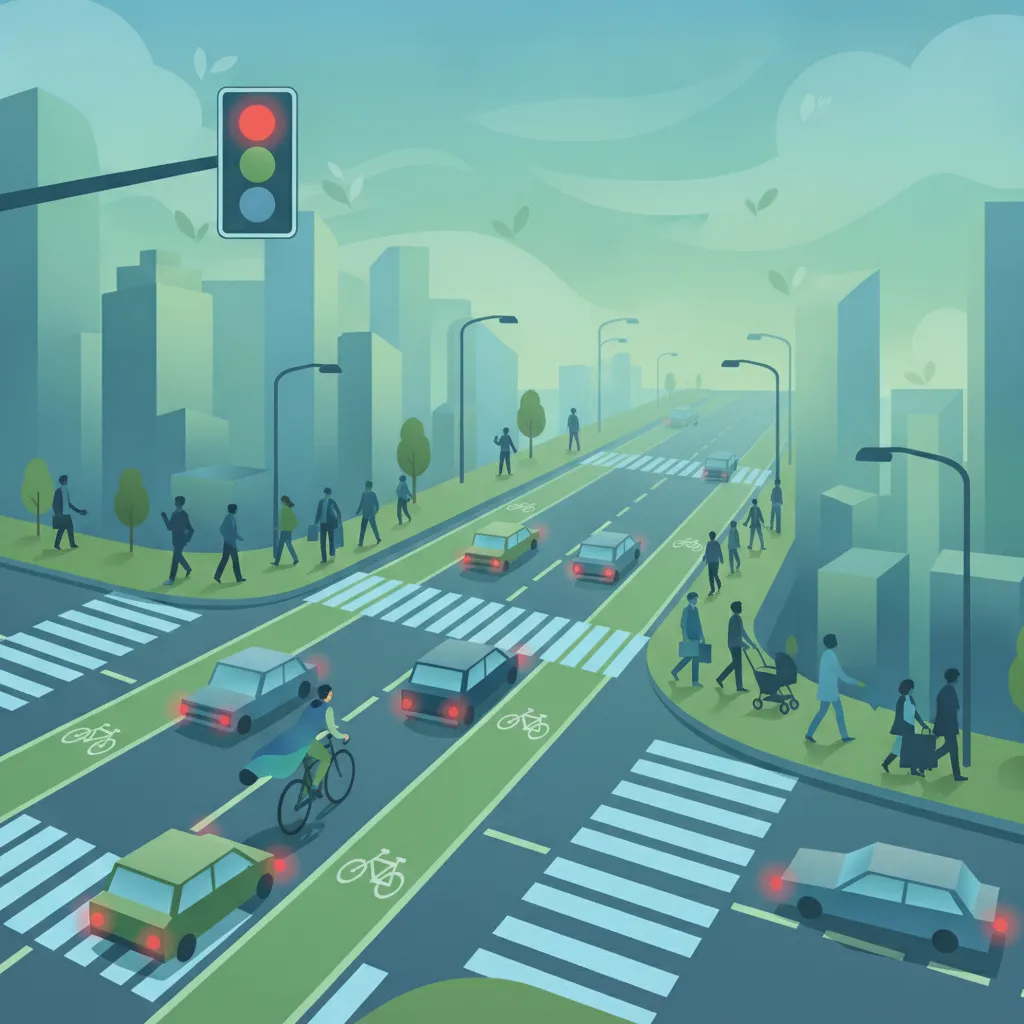
This lesson teaches drivers how to safely coexist with cyclists and pedestrians, who are prevalent in urban areas. It covers the rules for dedicated bike lanes (Radweg), the importance of yielding to pedestrians in designated zones, and the need for extra caution when turning or opening car doors. Maintaining safe overtaking distances and anticipating the movements of these vulnerable road users are key themes for preventing accidents.
Find clear answers to common questions learners have about Road Markings and Lane Guidance. Learn how the lesson is structured, which driving theory objectives it supports, and how it fits into the overall learning path of units and curriculum progression in Austria. These explanations help you understand key concepts, lesson flow, and exam focused study goals.
In Austrian traffic law, you are generally strictly prohibited from driving over or onto a solid white line. These markings are used to demarcate lanes or edges where crossing would present a safety risk, and ignoring them is a common cause for failure in driving assessments.
Directional arrows painted on the road indicate the mandatory direction you must follow if you occupy that specific lane. If you are in a lane marked with a left-turn arrow, you must turn left; continuing straight from that lane is a traffic violation.
You must stop at a stop line when it is associated with a stop sign or a red traffic light. The line marks the exact point where your vehicle must come to a complete standstill to ensure visibility and maintain legal compliance at the junction.
Road markings and traffic signs work as a system. If a sign and a marking seem to conflict, traffic signs and signals (including police instructions) generally take precedence. However, in most cases, markings serve to clarify or reinforce the instructions provided by the signs.
Refine your study plan by searching for specific Austrian driving theory practice sets. Pinpoint questions related to particular road rules, signs, or challenge levels, and begin practicing immediately to reinforce your knowledge and excel in your official exam with confidence. Get started with focused revision today.