
This lesson provides a comprehensive breakdown of the specific road signs and supplemental plates required for heavy goods vehicle operators in Austria. Understanding these markers is vital for legal compliance and safe navigation, helping you master the restrictions that apply to your specific licence category (C, C1, C1E, CE).
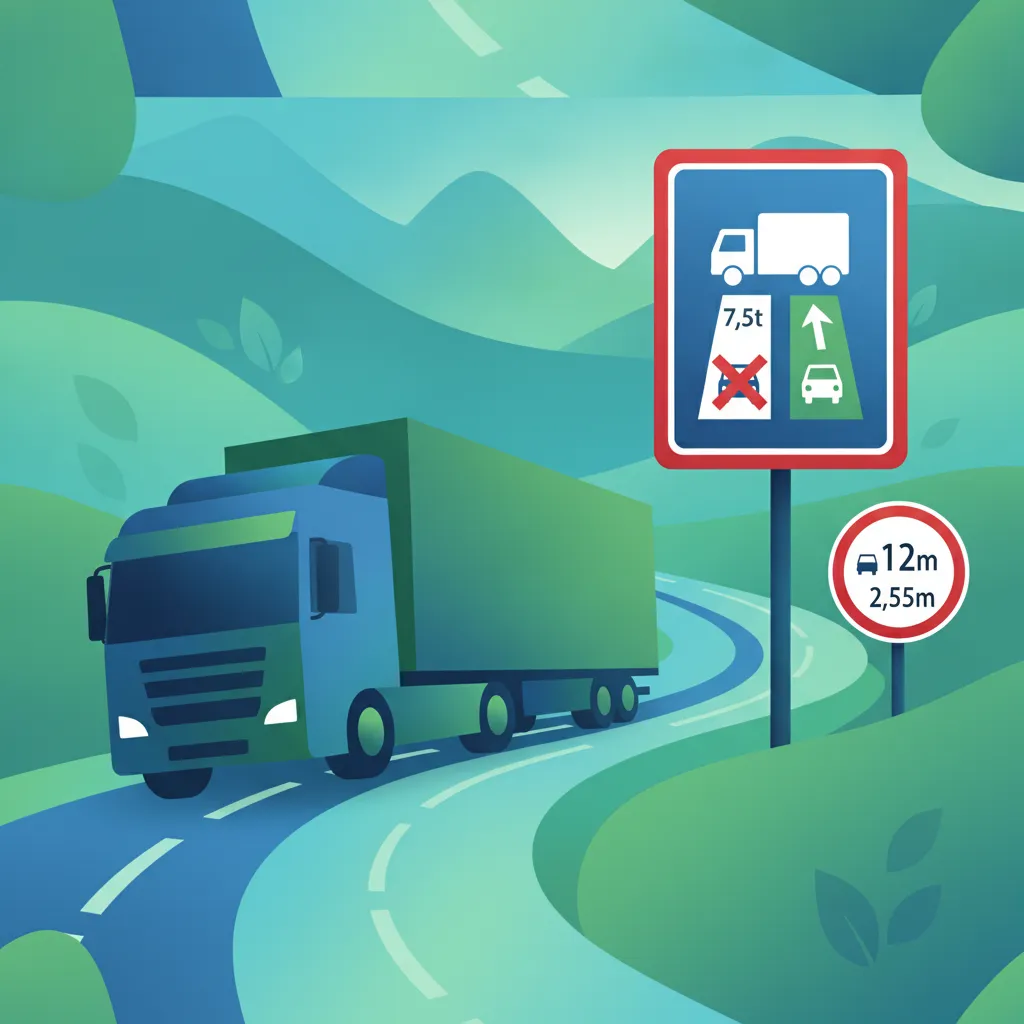
Lesson content overview
Driving a heavy goods vehicle (HGV) in Austria requires a precise understanding of road signage that goes beyond general traffic rules. Austrian roads, particularly in mountainous regions and urban centres, present unique challenges that are addressed through specialized signs and supplemental plates. This lesson provides an in-depth exploration of these critical signs, equipping you with the knowledge necessary for legal compliance, safe navigation, and efficient operation of heavy vehicles across Austria.
Correctly interpreting specific signage for heavy vehicles is not merely a matter of avoiding fines; it is fundamental to protecting infrastructure, preventing serious accidents, and ensuring the smooth flow of traffic for all road users. As a professional driver in the Austrian Driving License Theory Course for Heavy Goods Vehicles (C, C1, C1E, CE), mastering this aspect of traffic law is paramount.
Heavy goods vehicles, due to their substantial mass, dimensions, and operational characteristics, interact with road infrastructure and other traffic in a distinct manner. Consequently, a specific set of road signs and regulations applies to them. These signs are designed to protect sensitive infrastructure such as bridges and tunnels from excessive loads, manage traffic flow effectively on multi-lane roads, and mitigate risks associated with the larger stopping distances and limited manoeuvrability of HGVs.
Understanding these specialized signs is essential for every heavy vehicle driver. It ensures you select appropriate routes, avoid prohibited zones, maintain safe speeds and distances, and contribute to overall road safety. Failure to comply can lead to severe penalties, vehicle damage, and dangerous traffic situations.
Many road signs that apply to heavy vehicles are not standalone but are accompanied by supplemental plates (Zusatztafeln). These rectangular plates are positioned directly beneath or beside a main sign, providing crucial additional information or specifying the exact conditions under which the main sign applies. For heavy vehicle drivers, these plates are often the most important part of the signage, as they typically specify numeric limits based on vehicle characteristics like weight, height, or length.
A main sign might indicate a general prohibition, but the supplemental plate will clarify that this prohibition applies specifically to vehicles exceeding a certain total mass, height, or width. These supplemental plates are legally binding and carry the same authority as the main sign itself. Drivers must always read and interpret both the main sign and any accompanying supplemental plates before proceeding. Ignoring a supplemental plate can lead to violations and hazardous situations, as the restrictions they detail are precise and critical for safe passage.
One of the most frequent and critical types of signage for heavy vehicles relates to weight. Overweight vehicles can cause significant damage to road surfaces, bridges, and other infrastructure. Austrian regulations are strict in this regard, ensuring the longevity and safety of the transport network.
Signs indicating maximum permissible total vehicle weight (Gesamtgewicht) are circular, typically featuring a red border and a white background with a black number representing the maximum weight in tonnes (t). These signs mean that any vehicle, including its load, exceeding the specified total mass is prohibited from entering the road section or area.
It is imperative for heavy vehicle drivers to know their vehicle's current total weight, including fuel, cargo, and occupants. This often necessitates consulting a weighbridge or an onboard weighing system before embarking on a route where such signs are anticipated. Misinterpreting the sign or exceeding the limit can result in substantial fines and damage to critical infrastructure.
Always verify your vehicle's total weight before entering restricted zones. Onboard weighing systems or planned stops at public weighbridges can prevent costly violations and ensure safety.
Beyond total vehicle weight, Austria also employs signs that specify axle load limits (Achslast). These signs indicate the maximum load permissible on a single axle or group of axles, often depicted by an axle symbol and a numeric value in tonnes. The purpose of these restrictions is to distribute vehicle weight effectively, preventing concentrated stress on specific points of a road or bridge, which can lead to localized damage or structural failure.
Even if your total vehicle weight is within the permissible limit, an unevenly distributed load can cause one or more axles to exceed their individual limits. This is a common misunderstanding and a frequent cause of penalties. Proper load securing and distribution are therefore essential not only for stability but also for compliance with axle load regulations.
The portion of the total vehicle weight that is borne by one or more axles and transmitted to the road surface.
The sheer size of heavy vehicles makes dimension restrictions particularly critical. Signs indicating limits for height, width, and length are designed to prevent collisions with physical structures and ensure safe passage through constricted areas.
Height restriction signs (Höhenbeschränkung) display a maximum clear height, typically in metres (m), and are commonly found before bridges, tunnels, underpasses, or structures at construction sites. These signs feature two opposing vertical arrows with the height limit between them.
Drivers must ensure that their vehicle's total height, including any cargo, tarpaulins, or roof-mounted equipment, does not exceed the indicated limit. A miscalculation or oversight can lead to severe accidents, causing extensive damage to the vehicle and infrastructure, and potentially resulting in significant traffic disruption and liability.
Remember that your vehicle's overall height includes everything mounted on top, such as cargo, roof boxes, or specific vehicle attachments. Always account for potential changes in height due to load shifting or suspension dynamics.
Width restriction signs (Breitenbeschränkung) indicate the maximum permissible width for vehicles, usually in metres, and are identified by two opposing horizontal arrows with the width limit between them. These are crucial for navigating narrow urban streets, specific tunnels, mountain passes, or road sections with temporary lane reductions due to roadworks.
For heavy vehicles, it's vital to consider not just the vehicle body but also side mirrors, load extensions, and any equipment that projects outwards. Exceeding a width limit can lead to scraping against walls, other vehicles, or roadside barriers, causing damage and creating hazardous blockages.
Length restriction signs (Längenbeschränkung) specify the maximum allowable length for single vehicles or vehicle combinations, often depicted by a truck or vehicle combination symbol with the length limit in metres. These are particularly relevant for articulated vehicles or those towing long trailers, especially on winding roads, tight curves, or in urban areas where manoeuvring space is limited.
Such signs help prevent situations where long vehicles might cut corners, impede opposing traffic, or be unable to complete a turn safely. Route planning for long vehicles must account for these restrictions, often requiring the use of designated routes or special permits for oversized loads.
To ensure smooth traffic flow and minimize the risk of accidents, Austrian road rules include specific regulations for how heavy vehicles operate on multi-lane roads, particularly concerning lane usage and overtaking.
Lane usage signs (Fahrstreifenbenutzung) for heavy vehicles dictate which lane(s) trucks must occupy. These are often blue rectangular signs with white arrows and symbols, showing specific vehicle types (like a truck icon) in designated lanes. A common directive is "Heavy Vehicles Keep Right" (Lastkraftwagen rechts halten), especially on motorways and multi-lane highways.
The rationale behind these rules is to optimize traffic flow, allowing faster-moving vehicles to use the left lanes while minimizing disruption caused by the slower acceleration and longer overall length of HGVs. Failure to adhere to lane usage rules can result in fines and increase the risk of rear-end collisions or sudden, unsafe lane changes.
Overtaking restriction signs (Überholverbot für Lastkraftwagen) specifically prohibit heavy vehicles from overtaking other motor vehicles. These are typically circular signs with a red border, white background, and two vehicles (a car and a truck) side-by-side, with a diagonal red line crossing the truck. Supplemental plates may further specify the weight category to which the restriction applies (e.g., "over 3.5 t" or "over 7.5 t").
These restrictions are common on steep gradients, winding roads, or sections with limited visibility where overtaking by a heavy vehicle could be particularly dangerous due to reduced acceleration capabilities and extended overtaking distances. Compliance is crucial for safety and avoiding penalties.
While general speed limits apply to all vehicles, truck-specific speed limit signs (Geschwindigkeitsbeschränkung für Lastkraftwagen) often impose lower maximum speeds exclusively for heavy vehicles. These signs resemble standard circular speed limit signs (red border, white background, black number) but include a small truck symbol below the numeric limit or on an accompanying supplemental plate.
These lower limits account for the longer braking distances and reduced stability of heavy vehicles, especially in tunnels, on downhill gradients, or in adverse weather conditions. Adhering to these limits is vital for maintaining safe stopping distances and preventing loss of control.
On Austrian motorways (Autobahnen), the general speed limit for HGVs over 3.5 tonnes is typically 80 km/h, even if no specific sign is present. Always be aware of the default limits for your vehicle category.
Temporary signage (Temporäre Beschilderung) plays a crucial role in managing traffic during roadworks, special events, or emergency situations. These signs are often yellow or orange, distinct from permanent white-backed signs, and are usually mounted on portable stands.
During road construction or maintenance, temporary signs may introduce new speed limits, lane closures, detours, or even temporary dimension and weight restrictions that supersede permanent signage. Heavy vehicle drivers must give particular attention to these temporary measures, as ignoring them can lead to accidents, damage to construction equipment, and severe penalties. Temporary signs carry the same legal authority as permanent signs for the duration they are displayed.
The comprehensive system of Austrian road signage for heavy vehicles is not arbitrary; it is built upon sound engineering, safety principles, and legal frameworks derived from the Straßenverkehrsordnung (StVO). Each sign and regulation serves a specific purpose to protect lives, property, and public infrastructure.
Adherence to these signs reflects professional responsibility and directly contributes to a safer, more efficient, and sustainable road network for everyone in Austria.
Despite clear signage, heavy vehicle drivers sometimes make errors in interpretation or compliance, leading to common violations:
Understanding these common pitfalls allows drivers to be more vigilant and proactive in their compliance.
The interpretation and obedience of road signs for heavy vehicles are not always static. Several contextual factors can influence how drivers must react to posted signage:
Scan Actively: Look far ahead for upcoming signs, especially on unfamiliar routes.
Identify Main Sign: Understand the primary directive (e.g., prohibition, warning, regulation).
Read Supplemental Plates: Always check for additional rectangular plates. These are crucial for heavy vehicles.
Assess Vehicle Characteristics: Compare your vehicle's current weight, height, width, and length to the limits displayed.
Plan Your Action: Decide whether to proceed, reduce speed, change lanes, or seek an alternative route.
Comply Strictly: Adhere to all restrictions for safety and legal compliance.
Mastering Austrian road signage specific to heavy vehicles is a cornerstone of your preparation for the Austrian Driving License Theory Course for Heavy Goods Vehicles (C, C1, C1E, CE). This knowledge directly connects with other critical areas of your curriculum, including:
By thoroughly understanding these signs and their implications, you not only prepare for your exam but also lay the foundation for a safe and responsible career as a heavy vehicle driver in Austria.
This lesson covers Austrian road signage specific to heavy goods vehicles, focusing on how to interpret weight, axle load, height, width, and length restriction signs along with their accompanying supplemental plates. Key topics include the importance of understanding dimension limits beyond the vehicle body itself, the distinction between total weight and axle load compliance, and specific rules for lane usage, overtaking restrictions, and truck speed limits. The content identifies common misinterpretations such as overlooking supplemental plates and failing to account for external equipment, providing practical guidance for both theory exam preparation and safe real-world driving in Austria.
A short set of high-value points that capture the most important learning from this lesson.
Supplemental plates are legally binding additions to main signs and often contain the critical numeric limits for weight, height, and dimensions that heavy vehicle drivers must obey.
A vehicle can be within its total weight limit but still violate axle load limits if the load is unevenly distributed across axles.
Dimension restrictions (height, width, length) must account for all external equipment including mirrors, tarpaulins, roof-mounted items, and load extensions.
Lane usage signs and truck-specific speed limits apply separately from general traffic rules and often exist even when no specific sign is visible.
Temporary signage (yellow or orange backgrounds) carries the same legal authority as permanent signs and must be strictly obeyed during roadworks or emergencies.
Explore all units and lessons included in this driving theory course.
Weight limit signs are circular with red borders showing the maximum total mass in tonnes.
Height restrictions show two vertical arrows pointing toward each other with the clearance height between them.
Axle load limits prevent concentrated stress on road surfaces and bridges regardless of total vehicle weight.
On Austrian motorways, the default speed limit for HGVs over 3.5 tonnes is typically 80 km/h.
Overtaking restrictions for trucks are indicated by a car and truck side-by-side with a diagonal red line crossing the truck.
Ignoring supplemental plates that specify exact numeric limits, focusing only on the main prohibition or warning sign.
Failing to account for external vehicle components like mirrors, tarpaulins, or roof equipment when checking height and width limits.
Assuming total vehicle weight compliance means axle load compliance without verifying load distribution.
Disregarding temporary roadwork signs as less binding than permanent signage.
Using the wrong lane on multi-lane roads by not recognizing heavy vehicle mandatory lane signs.
Lesson content overview
A short set of high-value points that capture the most important learning from this lesson.
Supplemental plates are legally binding additions to main signs and often contain the critical numeric limits for weight, height, and dimensions that heavy vehicle drivers must obey.
A vehicle can be within its total weight limit but still violate axle load limits if the load is unevenly distributed across axles.
Dimension restrictions (height, width, length) must account for all external equipment including mirrors, tarpaulins, roof-mounted items, and load extensions.
Lane usage signs and truck-specific speed limits apply separately from general traffic rules and often exist even when no specific sign is visible.
Temporary signage (yellow or orange backgrounds) carries the same legal authority as permanent signs and must be strictly obeyed during roadworks or emergencies.
Explore all units and lessons included in this driving theory course.
Weight limit signs are circular with red borders showing the maximum total mass in tonnes.
Height restrictions show two vertical arrows pointing toward each other with the clearance height between them.
Axle load limits prevent concentrated stress on road surfaces and bridges regardless of total vehicle weight.
On Austrian motorways, the default speed limit for HGVs over 3.5 tonnes is typically 80 km/h.
Overtaking restrictions for trucks are indicated by a car and truck side-by-side with a diagonal red line crossing the truck.
Ignoring supplemental plates that specify exact numeric limits, focusing only on the main prohibition or warning sign.
Failing to account for external vehicle components like mirrors, tarpaulins, or roof equipment when checking height and width limits.
Assuming total vehicle weight compliance means axle load compliance without verifying load distribution.
Disregarding temporary roadwork signs as less binding than permanent signage.
Using the wrong lane on multi-lane roads by not recognizing heavy vehicle mandatory lane signs.
Explore search topics learners often look for when studying Austrian Road Signage Specific to Heavy Vehicles. These topics reflect common questions about road rules, driving situations, safety guidance, and lesson level theory preparation for learners in Austria.
Browse additional driving theory lessons that cover connected traffic rules, road signs, and common driving situations related to this topic. Improve your understanding of how different rules interact across everyday traffic scenarios.
Learn about Austrian road signs that regulate traffic flow for HGVs, including lane usage, overtaking prohibitions, and specific rules for urban deliveries and construction zones. Crucial theory for professional drivers.

This lesson details the general traffic rules applicable to heavy goods vehicles on Austrian roads, highlighting differences from passenger car regulations. It covers key topics such as right-of-way at intersections, specific rules for overtaking, maintaining proper lane discipline, and adhering to designated speed limits. Understanding these rules is critical for safe integration into mixed traffic.

This lesson details the regulations for heavy goods vehicles on Austria's high-speed road network. It covers the specific speed limits, rules on lane usage (e.g., when overtaking is permitted), and procedures for entering and exiting the motorway. Adherence to these rules is crucial for safety in a fast-paced environment.

This lesson explains the regulations governing the use of designated delivery and loading zones in urban areas. It covers topics such as time restrictions, the potential need for permits, and the correct way to position the vehicle to minimize traffic disruption. Adhering to these rules is essential for efficient and legal urban logistics.
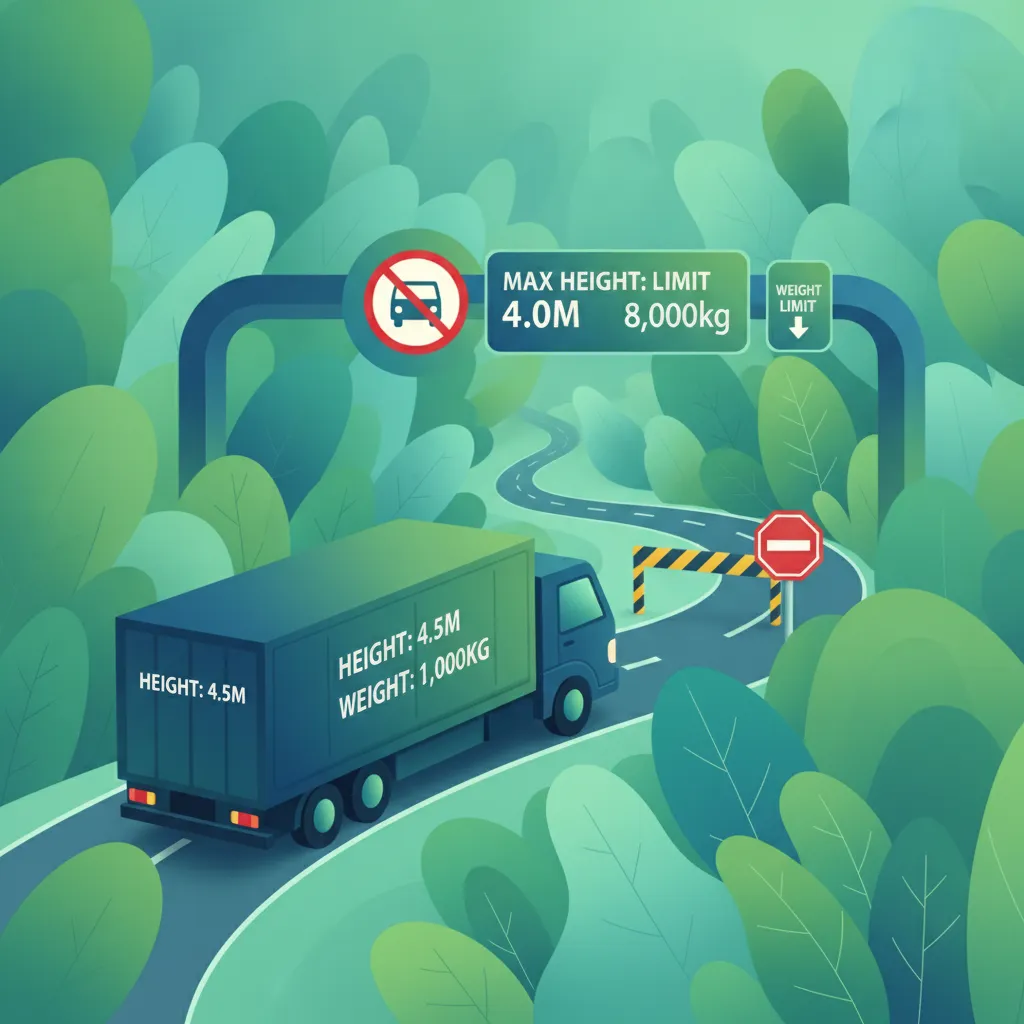
This lesson covers the practical aspects of planning a route for a heavy goods vehicle. It explains how to use maps and specialized GPS systems to identify and avoid roads with height, weight, or other restrictions. Proactive route planning is essential for ensuring an efficient, legal, and safe journey.

This lesson addresses the challenge of manoeuvring a large vehicle through streets not designed for its size. It covers how to assess vertical and horizontal clearances, plan the vehicle's path through tight turns, and heed all restrictive signage. Careful planning and slow, precise control are essential for success.

This lesson focuses on the legal restrictions concerning a heavy vehicle's dimensions, including maximum height, width, and length. It teaches drivers how to interpret road signs and supplemental plates that indicate these limits. This knowledge is crucial for route planning, especially when navigating under bridges, through tunnels, and on restricted roads.
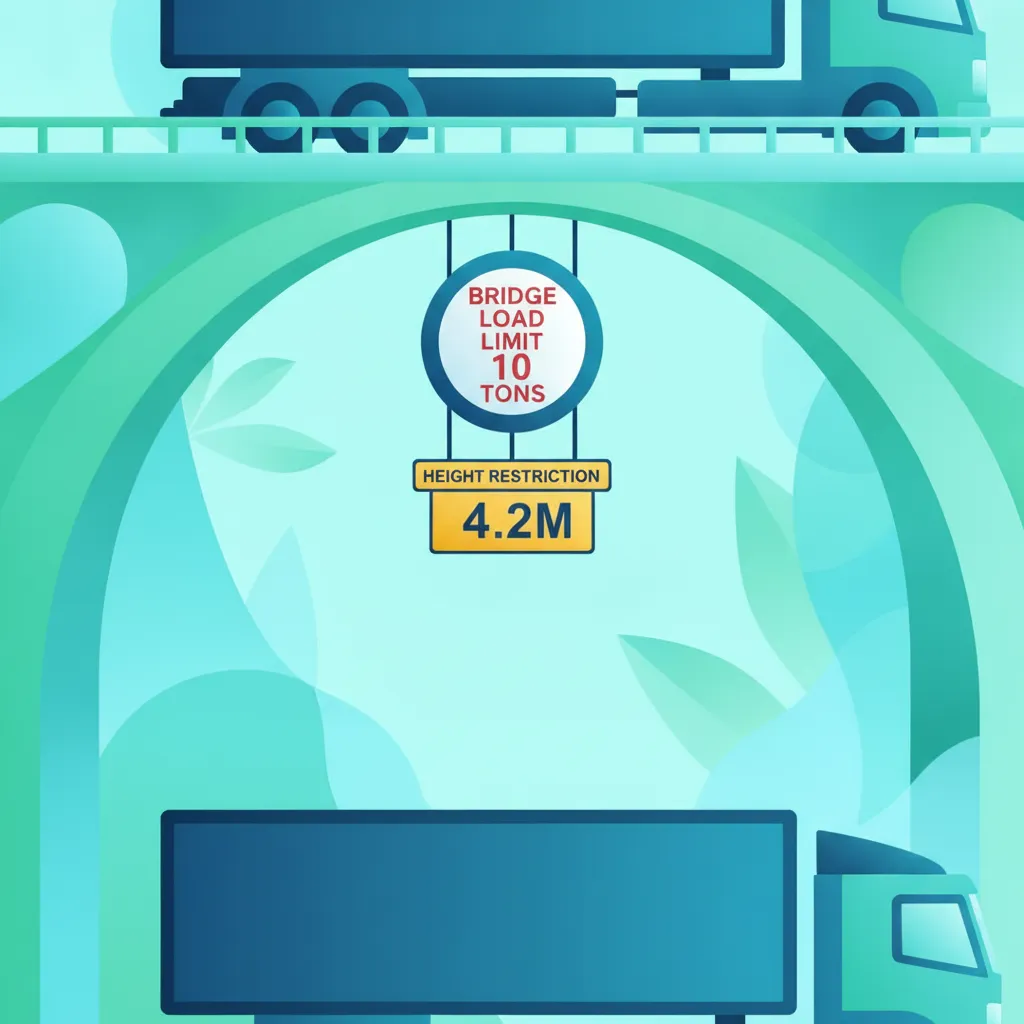
This lesson focuses on the critical importance of observing posted weight and height limits for bridges and other structures. It explains how to read the relevant signage and stresses the driver's responsibility to know their vehicle's exact height and weight. Ignoring these limits can lead to catastrophic structural failure and severe legal consequences.

This lesson details the legal ramifications of operating an overloaded heavy vehicle in Austria, which include significant fines and penalty points. It also emphasizes the severe safety risks, such as compromised braking performance and increased mechanical stress on the vehicle. Understanding these consequences reinforces the importance of strict adherence to weight limits.

This lesson covers the specific weight restrictions that apply to sensitive infrastructure like Alpine passes and bridges throughout Austria. It explains how to identify these limits through road signage and incorporate them into route planning. Adhering to these restrictions is vital for preventing structural damage and ensuring safety in challenging terrain.
This lesson explains the system of penalties and enforcement for heavy vehicle operations in Austria. It covers the fines and penalty points associated with common traffic violations, such as overloading or insecure loads. Learners will understand the role of authorities in conducting roadside checks and inspections to ensure regulatory compliance.
Understand crucial Austrian road signs for heavy goods vehicles concerning maximum total weight, axle loads, height, width, and length. Essential theory for safe and legal operation of HGVs in Austria.
This lesson focuses on the legal restrictions concerning a heavy vehicle's dimensions, including maximum height, width, and length. It teaches drivers how to interpret road signs and supplemental plates that indicate these limits. This knowledge is crucial for route planning, especially when navigating under bridges, through tunnels, and on restricted roads.
This lesson details the legal ramifications of operating an overloaded heavy vehicle in Austria, which include significant fines and penalty points. It also emphasizes the severe safety risks, such as compromised braking performance and increased mechanical stress on the vehicle. Understanding these consequences reinforces the importance of strict adherence to weight limits.

This lesson consolidates the legal restrictions on the maximum dimensions and weight for different vehicle combinations in Austria. It covers how to read signs indicating these limits and the importance of compliance for route planning. Adhering to these regulations is essential for legal operation and avoiding fines.
This lesson details the general traffic rules applicable to heavy goods vehicles on Austrian roads, highlighting differences from passenger car regulations. It covers key topics such as right-of-way at intersections, specific rules for overtaking, maintaining proper lane discipline, and adhering to designated speed limits. Understanding these rules is critical for safe integration into mixed traffic.
This lesson covers the specific weight restrictions that apply to sensitive infrastructure like Alpine passes and bridges throughout Austria. It explains how to identify these limits through road signage and incorporate them into route planning. Adhering to these restrictions is vital for preventing structural damage and ensuring safety in challenging terrain.
This lesson focuses on the critical importance of observing posted weight and height limits for bridges and other structures. It explains how to read the relevant signage and stresses the driver's responsibility to know their vehicle's exact height and weight. Ignoring these limits can lead to catastrophic structural failure and severe legal consequences.
This lesson explains the system of penalties and enforcement for heavy vehicle operations in Austria. It covers the fines and penalty points associated with common traffic violations, such as overloading or insecure loads. Learners will understand the role of authorities in conducting roadside checks and inspections to ensure regulatory compliance.

This lesson explains the specific definitions and limitations of the C1, C1E, C, and CE heavy-goods vehicle licence categories in Austria. It details the permissible vehicle mass, axle configurations, and rules for trailer combinations associated with each category. Understanding these distinctions is fundamental for ensuring legal compliance and selecting the correct licence for specific vehicle configurations.

This lesson provides an overview of the legal framework governing heavy vehicle drivers in Austria. It details the potential penalties for violations, including fines, penalty points, and the risk of licence suspension. A clear understanding of these consequences reinforces the importance of compliant and responsible driving.
This lesson covers the practical aspects of planning a route for a heavy goods vehicle. It explains how to use maps and specialized GPS systems to identify and avoid roads with height, weight, or other restrictions. Proactive route planning is essential for ensuring an efficient, legal, and safe journey.
Find clear answers to common questions learners have about Austrian Road Signage Specific to Heavy Vehicles. Learn how the lesson is structured, which driving theory objectives it supports, and how it fits into the overall learning path of units and curriculum progression in Austria. These explanations help you understand key concepts, lesson flow, and exam focused study goals.
Not always. Many signs have supplemental plates (Zusatztafeln) that specify if they apply to trucks (LKW). Always check for symbols indicating heavy goods vehicles before assuming a general rule applies to your vehicle category.
A weight limit sign (e.g., 3.5t) refers to the permissible total mass (zGG) of the vehicle, while an axle load sign specifically restricts the weight pressing down on a single axle. You must monitor both to avoid heavy fines and structural damage.
This is a mandatory prohibition sign (Fahrverbot für Kraftwagen über...), meaning vehicles of that specific weight or type are prohibited from entering that road. You must find an alternative route if you exceed the stated weight limit.
Yes, they represent the legal clearance. However, as a professional driver, you should always assume a small margin of error and be aware of your vehicle's exact height, including any roof-mounted equipment or load projections.
Refine your study plan by searching for specific Austrian driving theory practice sets. Pinpoint questions related to particular road rules, signs, or challenge levels, and begin practicing immediately to reinforce your knowledge and excel in your official exam with confidence. Get started with focused revision today.