
This lesson guides you through the essential system of warning signs in Austria to help you anticipate road hazards before they become critical. As part of our comprehensive unit on traffic control devices, you will learn to interpret the specific triangular symbols used to alert drivers to curves, slippery surfaces, and other dangers. Mastering these signs is vital for both your official theory exam and for maintaining a safe, proactive driving style on Austrian roads.
Lesson content overview
Welcome to this comprehensive lesson on warning signs and hazard indicators, a crucial component of the Austrian Driving License B Theory Course. These signs are designed to alert drivers to potential dangers ahead, enabling them to anticipate conditions and adjust their driving behavior proactively. Mastering the interpretation of these signs is fundamental for passing your theoretical driving exam and, more importantly, for ensuring safe travel on Austrian roads.
This lesson will delve into the characteristic triangular shape and symbols used in Austrian warning signs, exploring their specific meanings related to sharp curves, changes in road surface, potential animal crossings, and upcoming construction zones. Understanding these visual cues is the first step towards developing the anticipatory driving skills necessary to mitigate risks and prevent accidents.
Warning signs serve as early visual alerts, providing critical advance notice of potential hazards or unusual road conditions that might not be immediately obvious. Their primary purpose is to give drivers sufficient time to react, adjust their speed, alter their lane position, and increase their vigilance before encountering the actual danger. This proactive approach significantly reduces the likelihood of accidents by minimizing sudden, reactive maneuvers.
In the context of the Austrian Road Traffic Act (StVO), warning signs are a cornerstone of road safety legislation, which prioritizes prevention. They empower drivers to make informed decisions, transforming potentially dangerous situations into manageable ones. For any aspiring driver in Austria, recognizing and correctly interpreting these signs is not merely a legal requirement but a fundamental skill for safe and responsible driving.
Always consider warning signs as an invitation to think ahead. They are not just symbols; they are calls to action, prompting you to prepare for what lies beyond your immediate view.
Austrian warning signs are instantly recognizable by their distinct design: a white or yellow background, a red triangular border, and a black symbol depicting the specific hazard. This consistent symbolism ensures uniform understanding across all road users, regardless of language. The triangular shape universally signifies "caution" or "warning."
The symbols within these triangles are concise visual representations of diverse dangers. For example, a winding arrow indicates curves, while a silhouette of a deer warns of animal crossings. This standardized visual language is vital for effective communication on the road, allowing for quick comprehension at driving speeds.
Understanding these elements—the shape, border color, and internal symbol—is the foundation for interpreting any warning sign correctly.
Curves, or bends, in the road demand careful attention and appropriate speed adjustment. Warning signs for curves are among the most common hazard indicators, designed to prepare drivers for changes in the road's alignment.
These signs feature a curved arrow pointing either to the left or to the right. A single arrow indicates a solitary bend in that specific direction. Upon seeing such a sign, drivers must assess the curve's severity and reduce speed accordingly before entering it.
A double curve sign, also known as an S-bend, depicts an arrow that first curves in one direction, then immediately in the opposite direction. For example, an arrow pointing left then right signifies an initial left curve followed quickly by a right curve. These situations require particular caution as drivers must adjust their steering and speed twice in quick succession.
Often, warning signs for curves are accompanied by supplementary plates. These rectangular plates provide crucial additional information, such as the radius of curvature (how tight the curve is) or the length of the winding road section.
The radius of an imaginary circle that matches the curve of the road. A smaller radius indicates a tighter curve, which requires a lower speed.
A plate showing a number, for example, "150m," below a curve sign might indicate that the curve has a radius of 150 meters. Similarly, a plate with "3 km" might indicate that a series of curves extends for three kilometers. These details are vital for judging the appropriate entry speed and maintaining vehicle stability. Ignoring these plates is a common mistake that can lead to loss of control, especially on unfamiliar roads.
Changes in the road surface can significantly impact your vehicle's traction, affecting braking distance and steering control. Warning signs alert you to these transitions, prompting necessary adjustments to your driving.
A sign depicting a vehicle kicking up stones indicates a section of road with loose gravel or chippings. On such surfaces, your tires have less grip, increasing the risk of skidding, especially during braking or turning. Loose gravel can also be thrown up by other vehicles, potentially damaging your windscreen or paintwork.
When encountering this sign, you should reduce your speed, increase your following distance from other vehicles, and avoid sudden steering inputs or harsh braking.
The "slippery road" warning sign, often showing a car skidding or a snowflake, indicates that the road surface may have reduced friction due to conditions like rain, ice, snow, or even oil spills.
The grip between your vehicle's tires and the road surface, which allows for acceleration, braking, and steering. Reduced traction increases the risk of skidding.
In such conditions, braking distances increase dramatically, and the risk of skidding on curves or during sudden maneuvers rises. Drivers must significantly reduce their speed, increase following distance, and drive with extreme caution, anticipating potential loss of traction. Black ice, which is nearly invisible, is a particularly dangerous form of slippery road condition that warning signs like these help to forewarn.
Roads that pass through or alongside rural areas, forests, or farmlands often feature warning signs indicating the potential for animal crossings. These signs are crucial for preventing dangerous collisions with wildlife or domestic animals.
The most common animal crossing sign in Austria depicts a deer (Hirsch). Other signs may show a cow or sheep for livestock crossings, or a wild boar (Wildschwein). These signs are typically placed in areas where animals frequently cross, often at dawn, dusk, or during specific seasons when animal activity is higher.
Upon seeing an animal crossing sign, drivers should:
Remember that animals can be unpredictable. If one animal crosses, others may follow. Maintain caution even after the first animal has passed.
Construction zones, or "Baustellen," are areas where road maintenance or improvements are underway. These zones present unique hazards due to altered road layouts, temporary obstacles, and the presence of workers. Warning signs for construction zones are designed to guide drivers safely through these areas.
A common warning sign for road works depicts a person working with a shovel or a roadwork machine. This sign alerts you to the presence of workers, equipment, and potentially uneven surfaces or debris on the road. Other signs might indicate upcoming lane reductions or shifts, often using arrows to guide traffic into new configurations.
In these zones, lanes may be narrower, road markings might be temporary, and visibility can be reduced. It is crucial to stay alert, follow all temporary markings and signs, and be prepared for sudden changes in traffic flow.
Construction zones frequently have temporary speed limits, often lower than the standard limit for that road section. These limits are introduced to protect both road workers and drivers from the increased risks posed by the changed environment. These temporary limits are legally binding and must be strictly observed.
The use of signs, markings, and devices to guide drivers safely through areas where road conditions are temporarily altered, such as construction zones.
Ignoring temporary speed limits in construction zones not only carries penalties but also significantly increases the risk of accidents. Road workers' lives depend on drivers adhering to these regulations.
Beyond curves, surface changes, animals, and construction, several other warning signs alert drivers to specific, less common but equally important hazards.
A warning sign showing a fog or dust cloud indicates sections of road where visibility may be severely reduced.
When encountering this sign, especially in actual fog or heavy rain, drivers must:
Signs indicating a steep descent or ascent feature an arrow pointing either downwards or upwards, accompanied by a supplementary plate showing the percentage gradient (slope) of the incline or decline.
The slope of a road, expressed as a percentage, indicating the ratio of vertical change to horizontal distance. A higher percentage signifies a steeper incline or decline.
For steep descents, drivers should engage a lower gear to utilize engine braking. This helps control speed without over-relying on the vehicle's friction brakes, preventing them from overheating and losing effectiveness (brake fade). For steep ascents, drivers may need to select a lower gear to maintain power and avoid straining the engine.
Signs depicting a hump or a series of uneven bumps warn of features designed to slow traffic or indicate an irregular road surface.
Drivers must reduce their speed before encountering these, especially when carrying passengers or delicate cargo, to avoid discomfort, damage to the vehicle's suspension, or loss of control.
Less frequently seen but equally important, signs for hazards like crosswinds (a wind sock or a car being pushed sideways) warn of strong lateral gusts that can push vehicles unexpectedly, particularly high-sided vehicles or those towing trailers.
Other signs exist for rockfall, falling objects, or even tram crossings, each requiring a specific type of cautious response. The common thread for all these "other" hazards is the need for increased vigilance and a reduction in speed.
Supplementary plates (Zusatztafeln) are rectangular signs placed directly below a main traffic sign, providing additional information that clarifies or modifies the meaning of the primary sign. For warning signs, these plates are invaluable as they often quantify the hazard, helping drivers make more precise adjustments.
A supplementary plate might indicate the distance to the beginning of the hazard (e.g., "in 200m") or the length of the hazardous section (e.g., "for 5 km").
ImagePlaceholder alt="Warning sign with a supplementary plate showing '200m' below it, indicating the hazard starts 200 meters ahead."ImagePlaceholder alt="Warning sign with a supplementary plate showing '5 km' with arrows pointing left and right, indicating the hazard extends for 5 kilometers."This information helps drivers prepare over a specific duration or distance, rather than just reacting to an immediate, undefined danger.
As discussed, plates accompanying steep descent/ascent signs specify the gradient percentage (e.g., "10%"), and those with curve signs may indicate the radius of curvature (e.g., "R 150m"). These numerical values transform a general warning into a specific directive for speed and vehicle control.
Some supplementary plates provide time-specific information (e.g., "7-18h" meaning 7 AM to 6 PM) or condition-specific details (e.g., "Bei Nässe" meaning "in wet conditions"). These plates fine-tune the warning, indicating when and under what circumstances the hazard is most relevant. While not always legally binding as speed limits, they are strong recommendations for safe driving.
Always treat supplementary plates as an integral part of the warning sign. They provide crucial context and should never be ignored.
In Austria, the Road Traffic Act (StVO) mandates specific driver behaviors in response to warning signs. These regulations reinforce the principle of anticipatory and safe driving.
Drivers must reduce speed when approaching a warning sign that indicates an upcoming hazard, to allow sufficient time for appropriate reaction.
This general rule applies to all warning signs. It emphasizes the mandatory nature of slowing down in anticipation of danger, ensuring that drivers have adequate time to perceive, decide, and execute necessary maneuvers. Failing to reduce speed can significantly shorten reaction time, making it difficult to avoid an accident.
Before entering a curve, a driver's speed must be adapted to the curvature's radius to maintain vehicle stability and control.
This regulation specifically addresses curves, highlighting the physics involved in navigating bends. A tighter curve (smaller radius) requires a greater reduction in speed to prevent excessive lateral acceleration, which can lead to loss of tire grip and skidding. Supplementary plates indicating the radius provide precise guidance for this adaptation.
Drivers are required to adapt their speed and driving style to the prevailing road surface conditions, especially when warning signs indicate changes such as gravel, wetness, or ice.
This rule is critical for maintaining traction and control. Different road surfaces offer varying levels of friction. On slippery or loose surfaces, the maximum safe speed is considerably lower than on dry, paved roads. Ignoring this can lead to loss of control, skidding, and extended braking distances.
Drivers must always adapt their speed to prevailing conditions, including visibility, traffic density, and the state of the road.
While a general rule, StVO § 19 works in conjunction with specific warning signs. For example, if a "slippery road" warning sign is present, but it's also foggy, a driver must consider both factors and reduce speed even further than for a slippery road in clear conditions. This principle underlines the need for constant situational awareness.
Temporary speed limits or other regulations indicated by signs, particularly in construction zones, must be strictly observed.
In construction zones, temporary regulatory signs (like speed limits) often accompany warning signs. These temporary rules are legally binding and supersede standard regulations for the duration of the roadworks. Non-compliance can lead to serious accidents and legal penalties.
Mistakes in interpreting and reacting to warning signs can have serious consequences.
| Violation | Why It's Wrong | Correct Behavior | Consequence |
|---|---|---|---|
| Ignoring a sharp curve warning and maintaining speed | Insufficient reaction time; risk of losing control due to excessive speed. | Reduce speed significantly before entering the curve; maintain lane position. | Increased accident risk, potential fines, vehicle damage. |
| Failing to adjust speed on a gravel surface warning | Reduced traction means longer braking distances and higher skidding risk. | Slow down well in advance; avoid sudden steering or braking. | Loss of control, skidding, rear-end collisions. |
| Not slowing down for animal crossing signs at dawn/dusk | Reduced visibility of animals, high collision risk with unpredictable wildlife. | Reduce speed, scan road sides vigilantly, be prepared to brake. | Severe collisions, injury to occupants and animals, vehicle damage. |
| Disregarding temporary speed limits in construction zones | Endangers road workers and other drivers; changes in road layout are unexpected. | Observe all temporary speed limits and lane guidance; yield to workers. | Penalties, endangering workers and self, higher accident risk. |
| Misinterpreting supplementary plates | Overlooking critical quantitative information (radius, length, gradient). | Always integrate supplementary plate info into your driving decision. | Incorrect speed, loss of control, particularly on curves or descents. |
The effectiveness of warning signs is maximized when drivers integrate their meaning with the prevailing environmental and vehicle-specific conditions.
In adverse weather such as rain, snow, fog, or icy conditions, the recommended safe speed indicated by a warning sign (or implied by the hazard) must be reduced even further. Wet roads drastically increase braking distances, while ice or snow can reduce traction to near zero. Fog severely limits visibility, reducing the effective advanced warning distance. Always consult StVO § 19 and err on the side of caution.
At night, warning signs are generally reflective, but the ability to perceive the hazard itself is significantly reduced. Drivers must anticipate hazards earlier, based on the sign, and be prepared to reduce speed before the actual danger becomes fully visible. Poor lighting conditions also affect the visibility of animals and road workers.
The context of the road type influences how you interpret a warning sign. On motorways, warning signs for curves are rare and typically indicate design speeds lower than the motorway standard. On rural roads, curves can be tighter and less forgiving, requiring more significant speed reductions. Urban areas with construction zones demand heightened awareness due to increased traffic and pedestrian activity.
Drivers of heavy vehicles, trucks, or those towing loaded trailers must account for increased stopping distances, higher susceptibility to crosswinds, and different handling characteristics on curves and gradients. Speed reduction before curves or descents must be greater than for light passenger vehicles. Understanding your vehicle's limitations is paramount.
When warning signs indicate animal crossings or construction zones, drivers should also be particularly aware of vulnerable road users like cyclists, pedestrians, or even other motorbikes. These individuals are harder to spot and more susceptible to injury in an accident.
Austrian warning signs form a standardized visual system using triangular red-bordered designs to alert drivers to curves, surface conditions, animals, construction, and other hazards. Successful interpretation requires recognizing not only the main sign but also integrating supplementary plate information about distances, radii, gradients, and conditional factors. StVO regulations (§ 19, § 44-48) establish legal obligations to adapt speed based on these warnings, with specific requirements for curves, slippery surfaces, and construction zones. The primary driver response is proactive speed reduction before reaching the hazard, allowing adequate perception-reaction time. Understanding this anticipatory framework is essential for both theory exam success and real-world hazard management on Austrian roads.
A short set of high-value points that capture the most important learning from this lesson.
Austrian warning signs use a white/yellow background with a red triangular border and black symbol to convey specific hazards ahead.
Curve warning signs require speed reduction proportional to the curve's radius—smaller radius means lower speed—and S-bend signs indicate two direction changes in quick succession.
Animal crossing signs require reduced speed, heightened vigilance, and braking in a straight line rather than swerving to avoid unpredictable wildlife.
Supplementary plates below warning signs provide critical quantitative details (distance, length, radius, gradient) that must be integrated into driving decisions.
Construction zone warning signs are always paired with legally binding temporary regulations, including mandatory speed limits under StVO § 44.
Explore all units and lessons included in this driving theory course.
StVO § 45 mandates reducing speed before any warning sign hazard, not just reacting upon encountering it.
On slippery or gravel surfaces (A15, A18), braking distances increase dramatically—reduce speed well in advance and avoid sudden inputs.
Steep descent signs indicate gradient percentage; use engine braking in a lower gear to prevent brake fade, not just the footbrake.
Warning signs indicate potential hazards requiring proactive speed adjustment; unlike regulatory signs, they don't impose direct legal speed limits themselves.
Supplementary plates with time or condition details (e.g., 'Bei Nässe' for wet conditions) refine when and how the warning applies.
Entering curves at normal speed and braking mid-bend, risking loss of control—speed must be reduced before entering.
Assuming all warning sign speed reductions are merely advisory; temporary limits in construction zones are legally enforceable.
Ignoring supplementary plates that specify radius, length, or gradient, resulting in inappropriate speed selection.
Swerving violently to avoid animals—controlled straight-line braking is safer than high-speed evasive maneuvers.
Failing to reduce speed further in adverse weather; warning sign speeds assume normal conditions under StVO § 19.
Lesson content overview
A short set of high-value points that capture the most important learning from this lesson.
Austrian warning signs use a white/yellow background with a red triangular border and black symbol to convey specific hazards ahead.
Curve warning signs require speed reduction proportional to the curve's radius—smaller radius means lower speed—and S-bend signs indicate two direction changes in quick succession.
Animal crossing signs require reduced speed, heightened vigilance, and braking in a straight line rather than swerving to avoid unpredictable wildlife.
Supplementary plates below warning signs provide critical quantitative details (distance, length, radius, gradient) that must be integrated into driving decisions.
Construction zone warning signs are always paired with legally binding temporary regulations, including mandatory speed limits under StVO § 44.
Explore all units and lessons included in this driving theory course.
StVO § 45 mandates reducing speed before any warning sign hazard, not just reacting upon encountering it.
On slippery or gravel surfaces (A15, A18), braking distances increase dramatically—reduce speed well in advance and avoid sudden inputs.
Steep descent signs indicate gradient percentage; use engine braking in a lower gear to prevent brake fade, not just the footbrake.
Warning signs indicate potential hazards requiring proactive speed adjustment; unlike regulatory signs, they don't impose direct legal speed limits themselves.
Supplementary plates with time or condition details (e.g., 'Bei Nässe' for wet conditions) refine when and how the warning applies.
Entering curves at normal speed and braking mid-bend, risking loss of control—speed must be reduced before entering.
Assuming all warning sign speed reductions are merely advisory; temporary limits in construction zones are legally enforceable.
Ignoring supplementary plates that specify radius, length, or gradient, resulting in inappropriate speed selection.
Swerving violently to avoid animals—controlled straight-line braking is safer than high-speed evasive maneuvers.
Failing to reduce speed further in adverse weather; warning sign speeds assume normal conditions under StVO § 19.
Explore search topics learners often look for when studying Warning Signs and Hazard Indicators. These topics reflect common questions about road rules, driving situations, safety guidance, and lesson level theory preparation for learners in Austria.
Browse additional driving theory lessons that cover connected traffic rules, road signs, and common driving situations related to this topic. Improve your understanding of how different rules interact across everyday traffic scenarios.
Understand the meaning of Austrian triangular warning signs. This lesson covers symbols for curves, road surfaces, animals, construction, and how supplementary plates provide crucial context for hazard perception.
This lesson categorizes and explains the different types of Austrian road signs, including warning, regulatory, and informational signs. It details how the shape and color of a sign indicate its function, such as communicating speed limits, prohibitions, or mandatory actions. Understanding this visual system is fundamental for making correct and safe decisions while riding.
This lesson covers informational signs that provide guidance, directions, and distances to help with navigation. It also explains the critical role of supplementary plates (Zusatztafeln), which are placed below main signs to add conditions, exceptions, or clarifications. Learners will understand how to interpret these sign combinations correctly to make informed decisions about route planning, lane choice, and applicable rules.
This lesson details the various types of road markings and their significance for guiding traffic and ensuring safety. Learners will understand the rules associated with solid versus broken lane lines, the instructions provided by directional arrows painted on the road, and the purpose of stop lines and pedestrian crossing markings. The content emphasizes how these markings work in conjunction with signs to regulate traffic flow and define legal lane usage.
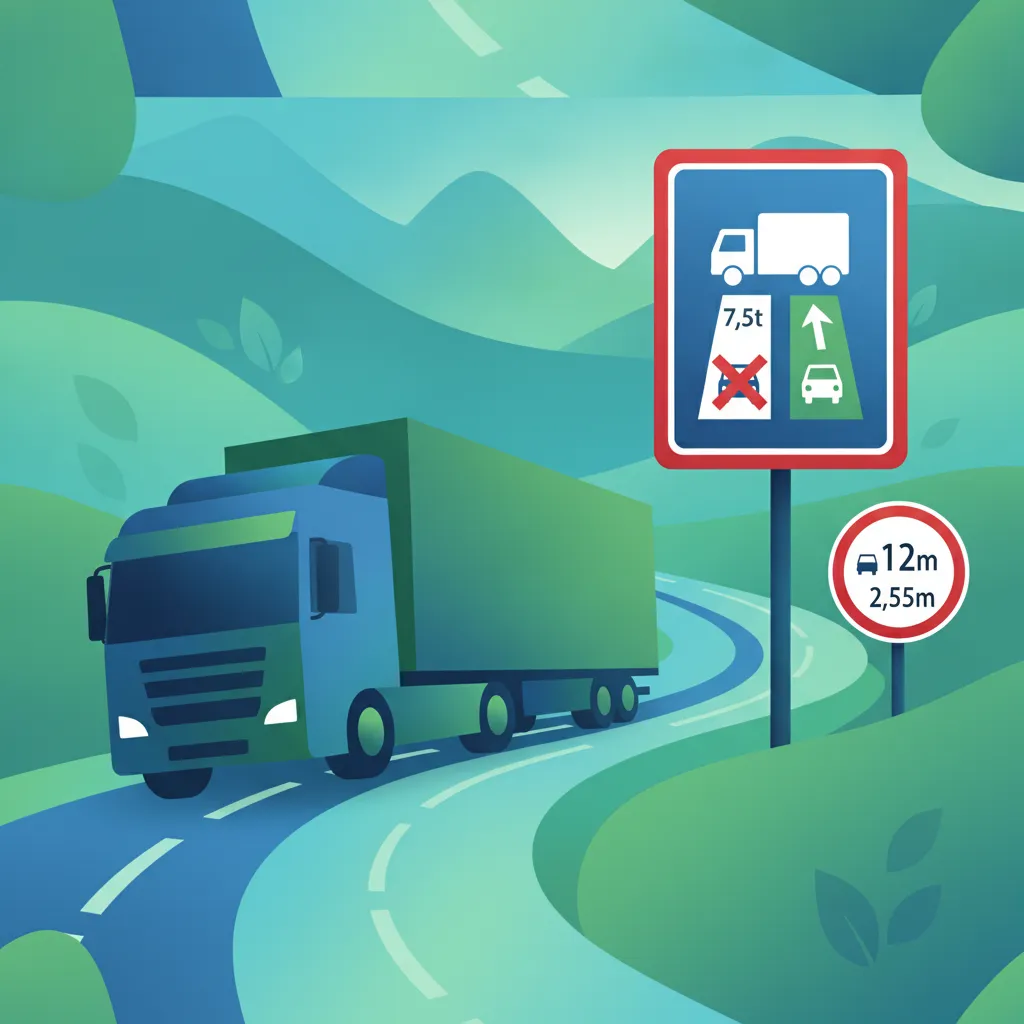
This lesson focuses on the specific Austrian road signs and supplemental plates that apply to heavy goods vehicles. It explains how to interpret signage indicating weight limits, height and width restrictions, lane usage rules, and other critical regulatory information. Correctly understanding these signs is essential for legal compliance and safe navigation on Austria's roads.

This lesson focuses on the interpretation of traffic lights and road surface markings that guide riders through intersections. It covers the meaning of each traffic light phase, the rules for amber lights, and the significance of various lane lines and stop lines. Properly understanding these signals is essential for maintaining traffic flow and ensuring safety at junctions.
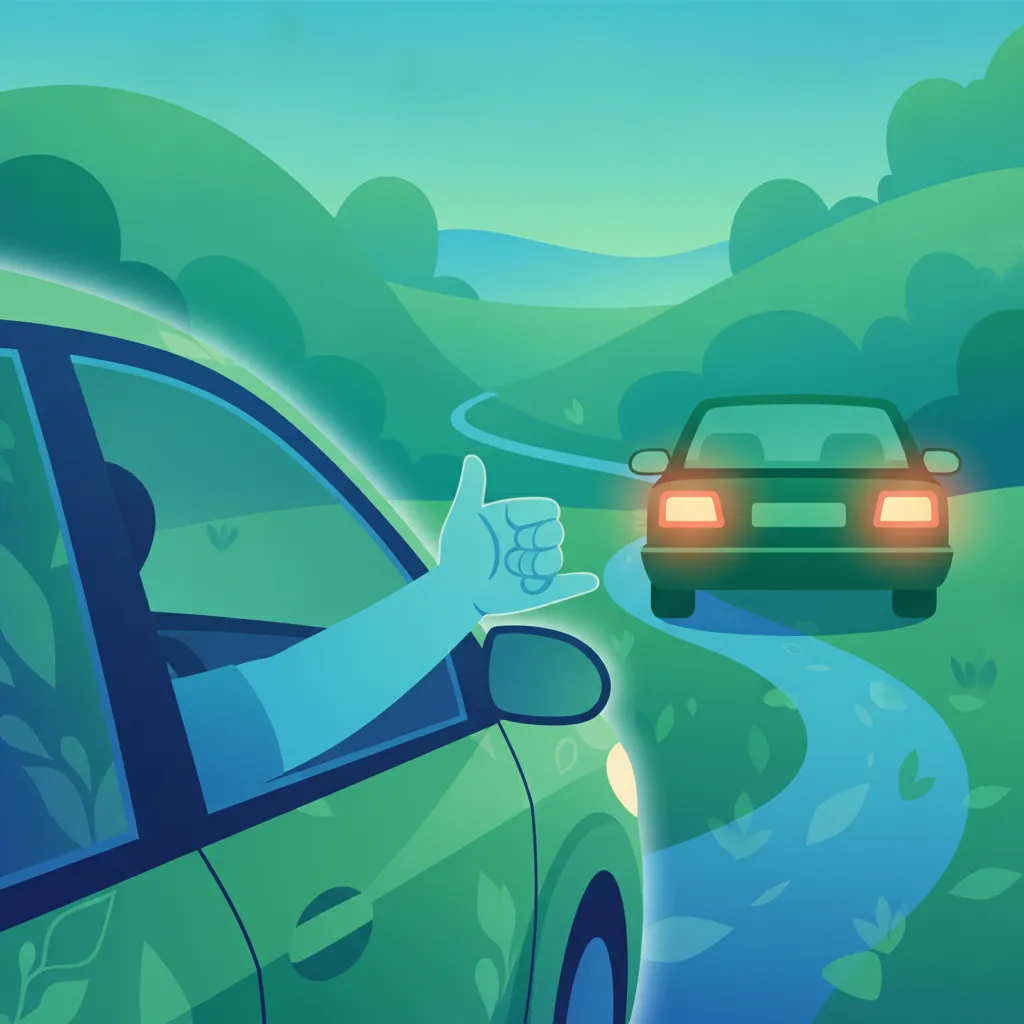
This lesson focuses on clear communication with other road users through the correct use of signals. It covers the proper operation of turn indicators, including the importance of cancelling them after a maneuver, and the use of brake lights. Additionally, it reviews standard hand signals for turning and stopping, which serve as a vital backup or supplementary communication tool.
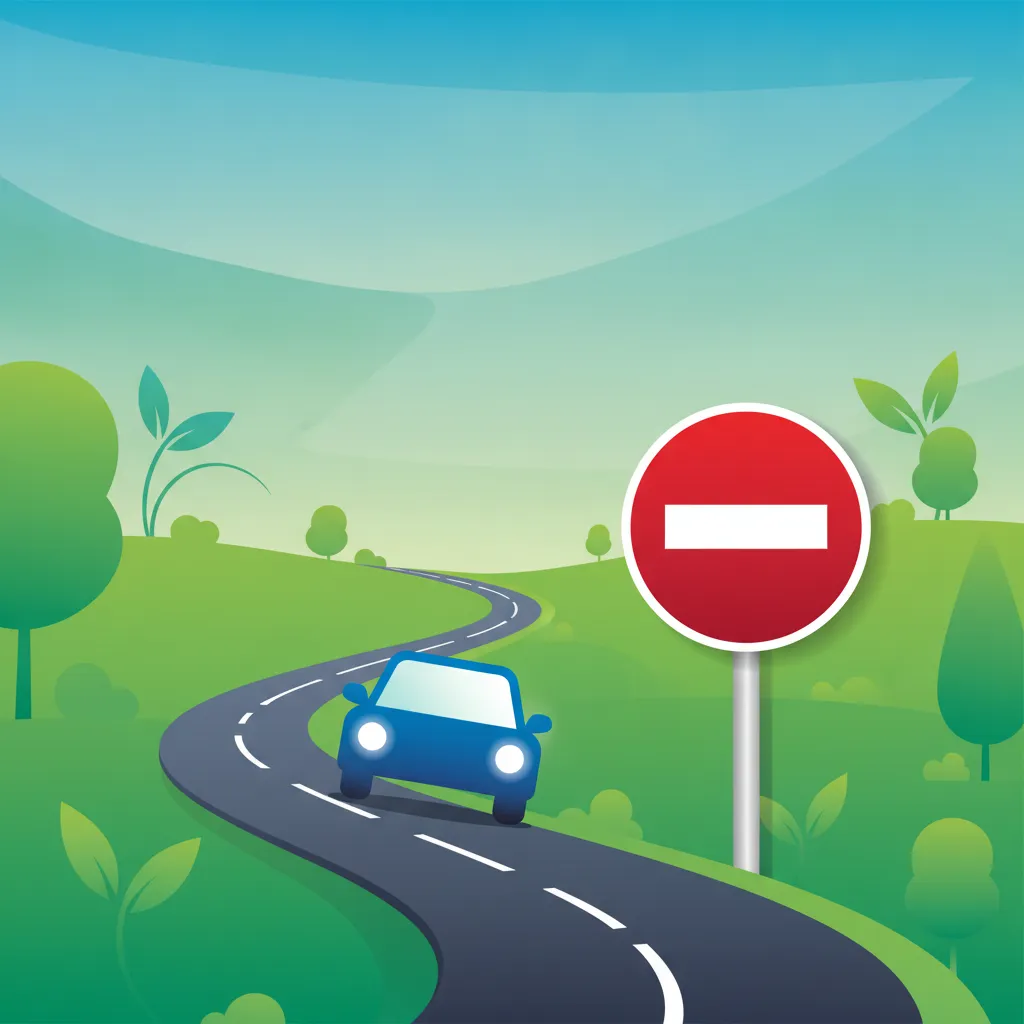
This lesson introduces the category of regulatory road signs, explaining the crucial difference between mandatory signs that require a specific action and prohibitory signs that forbid one. Learners will learn to interpret common signs such as speed limits, parking restrictions, no-entry signs, and those that establish priority at intersections. Understanding the distinct shapes and colours associated with these signs is essential for legal compliance and safe driving in Austria.
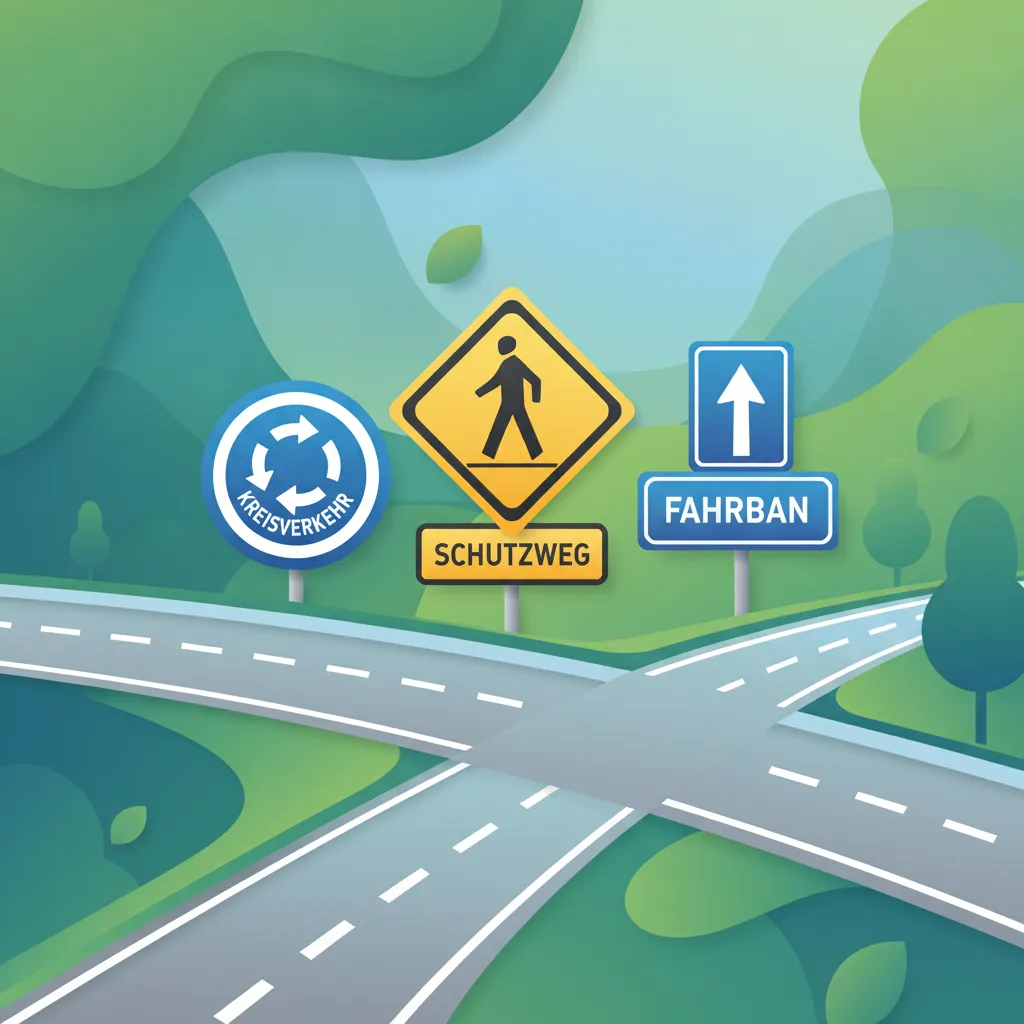
This lesson covers the specific regulations associated with special Austrian road signs and areas. It details the rules for 'Schutzweg' (protected pedestrian crossings), 'Kreisverkehr' (roundabouts), and the distinction between 'Fahrbahn' (road) and 'Fahrstreifen' (lane). Understanding these specific contexts is essential for safe navigation in urban and suburban environments.
This lesson explains the operation and meaning of traffic light signals in Austria, including the standard red, yellow, and green phases, as well as flashing signals and arrows. It also covers other priority control devices, such as stop signs and yield signs, which are used to manage right-of-way at intersections. Understanding the hierarchy between these signals and signs is crucial for navigating junctions safely and in compliance with the law.
This lesson introduces the proactive mindset of defensive driving, which focuses on anticipating potential hazards rather than just reacting to them. It teaches techniques for systematic risk assessment, including scanning the road ahead, checking mirrors frequently, and being aware of the potential actions of other road users. By adopting these safe habits, drivers can create a buffer of safety around their vehicle and significantly reduce the likelihood of being involved in an accident.
Learn how to adjust your driving for Austrian hazards like slippery roads, steep gradients, animal crossings, and construction zones. This lesson focuses on reacting safely to warning signs and adverse conditions.

Driving in tourist hotspots in cities like Salzburg or alpine resorts requires extra patience and vigilance. This lesson explores common unpredictable behaviours, such as pedestrians stepping into the road to take photos or groups of tourists being unaware of traffic. It teaches drivers to slow down, be prepared for anything, and use communication tools like the horn sparingly and appropriately.

This lesson equips drivers with the knowledge to handle a range of adverse weather conditions safely. It explains the risks of hydroplaning in heavy rain, reduced visibility in fog, and loss of traction on snow and ice, including the hidden danger of black ice. The content provides practical strategies for speed adaptation, correct use of lighting, and maintaining vehicle control, as well as specific considerations for night driving.
This lesson explores the specific characteristics and hazards of rural roads (Landstraßen). It emphasizes the need for careful speed adjustment due to factors like narrow lanes, poor road surfaces, and hidden entrances. Learners will understand how to safely navigate blind curves, use passing places, and anticipate the presence of slow-moving agricultural vehicles or livestock on the road.
Rural Austrian roads present unique challenges, including lack of markings, tight spaces, and slow-moving agricultural vehicles. This lesson teaches how to read the road ahead, anticipate hazards around blind bends, and use passing places effectively when meeting other large vehicles. It emphasizes adjusting speed to suit the limited visibility and variable road conditions.
This lesson introduces the proactive mindset of defensive driving, which focuses on anticipating potential hazards rather than just reacting to them. It teaches techniques for systematic risk assessment, including scanning the road ahead, checking mirrors frequently, and being aware of the potential actions of other road users. By adopting these safe habits, drivers can create a buffer of safety around their vehicle and significantly reduce the likelihood of being involved in an accident.
This lesson categorizes and explains the different types of Austrian road signs, including warning, regulatory, and informational signs. It details how the shape and color of a sign indicate its function, such as communicating speed limits, prohibitions, or mandatory actions. Understanding this visual system is fundamental for making correct and safe decisions while riding.
This lesson covers the specific regulations associated with special Austrian road signs and areas. It details the rules for 'Schutzweg' (protected pedestrian crossings), 'Kreisverkehr' (roundabouts), and the distinction between 'Fahrbahn' (road) and 'Fahrstreifen' (lane). Understanding these specific contexts is essential for safe navigation in urban and suburban environments.

This lesson provides advanced strategies for proactively managing interactions with vulnerable road users to prevent conflicts before they arise. It teaches drivers to predict the likely behavior of pedestrians, cyclists, and e-scooter riders, especially at intersections and in congested areas. Key techniques include maintaining larger safety distances, covering the brake, and making eye contact to ensure mutual awareness and avoid accidents.

This lesson brings together many concepts by focusing on the mindset of an adaptive rider. It teaches how to constantly scan the environment and adjust speed, position, and control inputs in response to changing conditions like road surface, weather, or traffic density. The goal is to develop a proactive, flexible riding style that prioritizes safety and control in any situation.
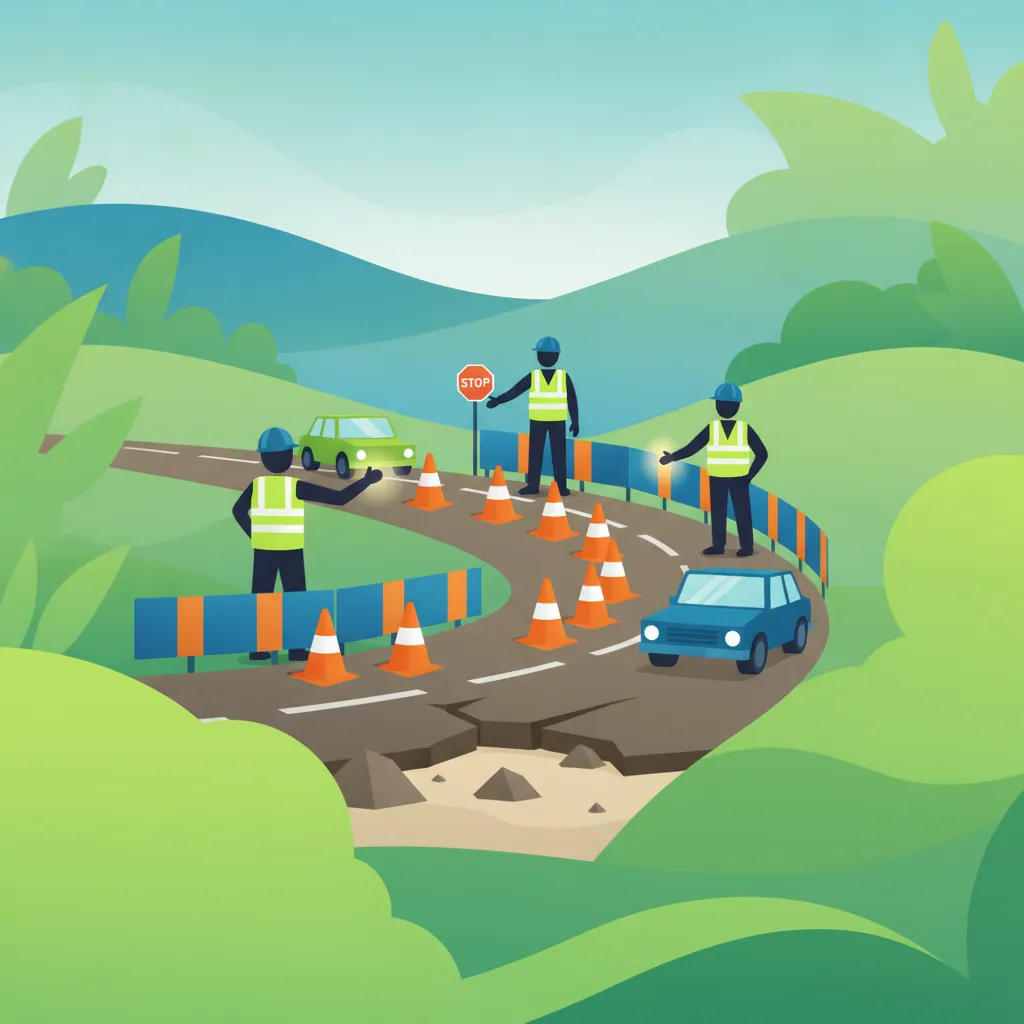
This lesson prepares riders for safely transiting through construction zones ('Baustellen'). It covers the interpretation of temporary signage, adherence to reduced speed limits, and awareness of hazards suchas altered lane markings, abrupt surface changes, and loose gravel. Respecting the safety of road workers and anticipating unpredictable traffic patterns are key themes.
Find clear answers to common questions learners have about Warning Signs and Hazard Indicators. Learn how the lesson is structured, which driving theory objectives it supports, and how it fits into the overall learning path of units and curriculum progression in Austria. These explanations help you understand key concepts, lesson flow, and exam focused study goals.
The triangular shape is a standardized design used across Europe, including Austria, to instantly grab the driver's attention. The white background with a red border signals that a hazard lies ahead, requiring the driver to slow down and exercise increased vigilance.
No. Unlike regulatory stop signs, warning signs serve to alert you to a hazard, not to command a full stop. You must adjust your speed and driving behavior to match the potential danger, such as slowing down for a sharp curve or checking your blind spot for construction workers.
Often, warning signs are placed at a specific distance from the hazard. If the distance is not standard, you will see a supplementary plate (Zusatztafel) below the sign, which provides exact information on the distance to the start of the danger zone.
The basic meaning remains the same, but the placement and expected reaction may differ. In urban settings, warning signs often highlight pedestrian or tram-related hazards, while in rural or alpine areas, they frequently focus on road geometry or animal activity.
Refine your study plan by searching for specific Austrian driving theory practice sets. Pinpoint questions related to particular road rules, signs, or challenge levels, and begin practicing immediately to reinforce your knowledge and excel in your official exam with confidence. Get started with focused revision today.