
This lesson provides a comprehensive overview of the Austrian road sign system, a critical skill for every AM licence holder. By mastering these symbols, you will improve your ability to recognize regulatory, warning, and information signs, which is essential for both the theoretical exam and safe riding on Austrian roads.
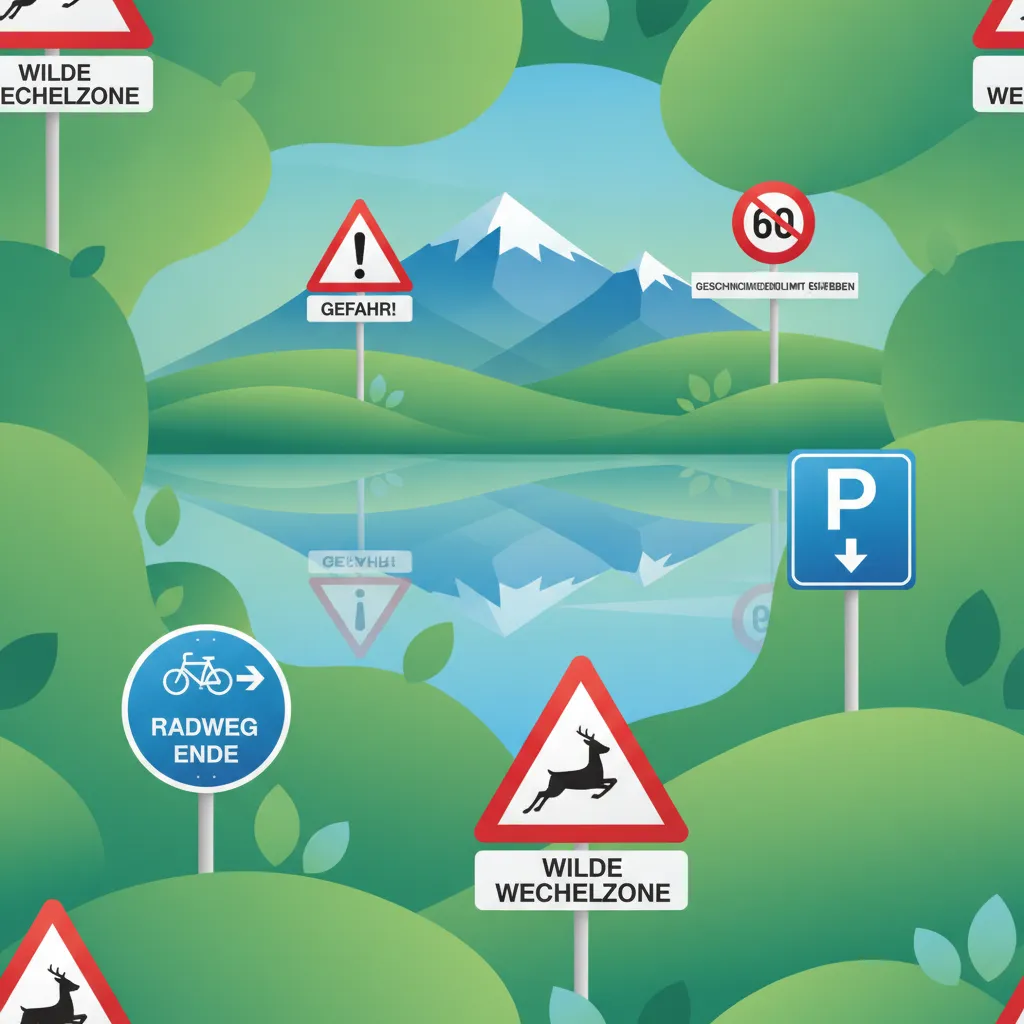
Lesson content overview
Mastering Austrian road signs is a fundamental skill for every rider undertaking the Austrian AM Driving Theory course. These signs form a standardized visual language, essential for safe and legal participation in road traffic, especially for riders of mopeds, small scooters, and light quadricycles. Understanding the unique characteristics of Austrian road signs – their shapes, colors, and symbols – allows you to anticipate hazards, comply with regulations, and navigate effectively, thereby significantly reducing the risk of accidents.
The Austrian road sign system, codified by the Straßenverkehrsordnung (StVO), is meticulously designed to convey critical information quickly and unambiguously. This visual language relies on a logical structure where specific shapes, colors, and symbols consistently represent distinct categories of information. For AM vehicle riders, recognizing these visual cues instantly is vital for making timely and correct decisions, given the limited protection and higher vulnerability inherent to your vehicle type.
The geometric shape of a road sign is the first and most immediate indicator of its general meaning. This standardization allows riders to categorize a sign’s purpose even from a distance, long before the specific symbol or text becomes clear. For instance, triangular signs consistently warn of potential dangers, while circular signs enforce mandatory actions or prohibitions. Recognizing these shapes is a crucial first step in anticipating the information the sign will convey and preparing for the appropriate response.
A geometric rule dictating the shape used for a specific informational purpose, enabling instant identification of a sign's general category.
Color plays a vital role in further clarifying a sign's message and its level of urgency. Beyond mere aesthetics, the colors used on Austrian road signs are strategically chosen to enhance visibility and convey regulatory importance. Red borders, for example, universally signify prohibition or danger, demanding immediate attention and compliance. Blue backgrounds often indicate mandatory actions, while green backgrounds are typically used for informational signs related to built-up areas or major routes. Associating these colors with their respective categories helps riders prioritize information and react appropriately.
The assignment of specific colors to different types of road signs to enhance visibility and convey regulatory urgency or informational context.
Within the standardized shapes and colors, symbols provide the specific details of the message. These visual icons are designed to be universally understood, transcending language barriers. A silhouette of a bicycle, a pedestrian, or a truck consistently indicates the type of road user or activity affected by the sign. For AM riders, it is particularly important to recognize symbols that apply specifically to mopeds, scooters, or light quadricycles, as these might impose unique restrictions or allowances. Awareness of these symbols ensures that you understand who the sign is for and what action is required.
The use of consistent visual icons within signs to specify the targeted traffic participants, activities, or restrictions without relying on text.
The Austrian road sign system is built upon a hierarchy that dictates the order in which a rider should process and respond to different types of information. Warning signs serve to alert you to potential dangers ahead, prompting you to prepare for a change in road conditions or traffic flow. Regulatory signs, on the other hand, enforce immediate obedience to specific traffic laws, such as speed limits or mandatory turns. Informational signs provide helpful guidance for navigation or services but do not typically require immediate action. Understanding this hierarchy ensures that critical safety instructions are given precedence over guidance, helping prevent delayed reactions and accidents.
The established order in which a rider should respond to different sign types, ensuring critical safety instructions are prioritized over general guidance.
Warning signs are crucial for proactive safety, alerting riders to potential dangers or changes in road conditions ahead. In Austria, these signs are almost always triangular with a red border and a white background, featuring a black symbol. Upon seeing a warning sign, riders should reduce speed, increase situational awareness, and prepare to adjust their riding behavior to safely navigate the upcoming hazard.
A triangular sign with a red border and white background, indicating a potential danger or significant change in road conditions ahead.
Curve warning signs alert you to upcoming bends in the road, providing critical information about their direction and severity. A sign showing an arrow curving to the left or right indicates a single curve, while a symbol depicting two consecutive curves warns of a double bend. Recognizing these signs early allows you to adjust your speed, choose an appropriate riding line, and maintain balance, which is especially important for two-wheeled AM vehicles.
These warning signs alert you to various types of intersections ahead, such as crossroads, T-junctions, or roundabouts. A triangular sign with a black 'X' symbol indicates a general intersection where right-of-way rules will apply. Other symbols show specific junction layouts, helping you anticipate potential conflicts with other vehicles. Preparing for an intersection involves reducing speed, scanning for cross-traffic, and being ready to yield or proceed safely.
Signs warning of changing road conditions are vital for preventing loss of control. These include signs for slippery surfaces, uneven roads, road humps, or falling rocks. For example, a triangular sign showing a car skidding indicates a slippery road surface, requiring riders to significantly reduce speed and avoid sudden braking or acceleration. Environmental warnings might include signs for strong crosswinds or low-flying aircraft.
Beyond general road conditions, some warning signs indicate specific, less common hazards. A triangular sign featuring a deer or other animal silhouette warns of potential animal crossings, especially prevalent in rural areas or near forests. Other specific warnings might include signs for children playing, road works ahead (which often use temporary orange signs, covered later), or unregulated level crossings. When encountering these, riders must exercise heightened caution and be prepared for sudden obstacles.
Regulatory signs are legally binding and enforce specific traffic laws. These signs demand immediate and exact compliance from all road users, including AM vehicle riders. In Austria, regulatory signs are predominantly circular. They are categorized into prohibitory signs, which forbid certain actions, and mandatory signs, which require specific actions. Disregarding these signs constitutes a traffic violation and can lead to serious safety consequences.
A circular sign that enforces specific traffic laws, either prohibiting certain actions (red border) or mandating others (blue background).
Prohibitory signs are identifiable by their circular shape with a red border and a white background, often with a black symbol or number, and sometimes a red diagonal line. These signs indicate actions that are strictly forbidden. Failure to comply can result in fines, penalties, and dangerous situations.
Speed limit signs are among the most common prohibitory signs. They are circular with a red border and a white background, displaying a black number indicating the maximum speed allowed in kilometers per hour (km/h). This limit applies to all vehicles unless a supplemental panel specifies otherwise. Riders must adjust their speed immediately upon passing the sign and maintain the new limit until another sign indicates a different speed or a "end of speed limit" sign is encountered.
Signs prohibiting overtaking are circular with a red border, a white background, and depict two cars, one black and one red, with the red car overtaking. For mopeds and scooters, this means you must not overtake any motorized vehicle. Other prohibitory signs may restrict turning movements (e.g., no left turn), prohibit entry for certain vehicle types (e.g., no entry for mopeds), or indicate a general prohibition on stopping or parking.
These signs restrict access to certain roads or areas. A classic "No Entry" sign is a red circle with a white horizontal bar, prohibiting entry for all vehicles from that direction. Other signs might specifically prohibit entry for certain categories, such as "No Entry for Mopeds." It is crucial for AM riders to pay close attention to these, as entering a restricted zone can lead to immediate danger, especially if it's a one-way street against your direction of travel.
Mandatory signs are circular with a blue background and a white symbol or arrow. These signs indicate actions that must be taken by road users. They are designed to guide traffic flow, ensure safety, and sometimes to provide minimum speed requirements for certain lanes or roads.
These signs feature white arrows on a blue background, indicating a mandatory direction of travel, such as "Turn Left Ahead" or "Keep Right." Riders must follow the direction indicated by these signs, particularly at intersections or when approaching obstacles. Failing to follow a mandatory direction sign can lead to head-on collisions, side-swipes, or other dangerous traffic conflicts.
While less common for AM vehicles due to their speed limitations, some mandatory signs might indicate a minimum speed requirement or a mandatory lane usage. For instance, a blue circular sign with a white number specifies the minimum speed allowed. If a lane is marked with a mandatory sign for a specific vehicle type, only those vehicles may use it. Riders of AM vehicles should be aware that if they cannot meet a minimum speed requirement for a specific road or lane, they must choose an alternative route or lane where applicable.
Informational signs provide helpful guidance, details about destinations, services, and changes in road conditions or regulations. Unlike warning or regulatory signs, they typically do not demand immediate action but assist riders in navigation, planning, and understanding their surroundings. These signs are generally rectangular or square and come in various colors depending on their specific function.
A rectangular or square sign providing useful guidance about directions, distances, services, or road layouts without enforcing immediate action.
Direction signs, often with white text on a blue or green background (green for major routes and motorways, blue for national roads), show destinations, distances, and road numbers. They are essential for navigation, allowing riders to plan their route and make timely decisions about which exits or turns to take. For AM riders, these signs help in understanding whether a specific route is suitable for their vehicle type (e.g., motorways are generally prohibited for mopeds).
These signs provide information about nearby services and facilities, such as rest areas, fuel stations, hospitals, or tourist attractions. They typically feature white symbols on a blue background. While not critical for immediate safety, they are invaluable for planning longer journeys, knowing where to take a break, or finding emergency services if needed.
One of the most important informational signs for AM riders is the "Built-up Area" sign (Ortsgebiet). This is a rectangular green sign with a white border, displaying the name of a town or village. Upon passing this sign, the general speed limit within that built-up area automatically becomes 50 km/h for all vehicles, unless a different speed limit is specifically posted. A similar sign with a diagonal red line indicates the end of the built-up area, where the default speed limit typically reverts to 100 km/h on rural roads (for vehicles allowed to go that fast, which does not include mopeds).
Supplemental panels are rectangular or square additions placed directly beneath a main road sign. Their purpose is to provide additional context, specific conditions, or exemptions that modify the meaning of the primary sign. These panels can specify time periods, vehicle categories, distances, or other crucial details. Ignoring a supplemental panel can lead to a misunderstanding of the main sign's applicability, resulting in violations or unsafe situations.
An additional rectangular panel placed beneath a main sign, providing supplementary information like time limits, vehicle restrictions, or distances.
Many regulatory signs are only active during specific hours or days, and this information is conveyed via a supplemental time panel. For example, a "No Parking" sign might have a panel beneath it stating "08:00 – 18:00," meaning parking is prohibited only during these hours. Outside these times, the restriction does not apply. Riders must pay close attention to these time frames to avoid fines or towing.
Supplemental panels can also specify which vehicle categories are affected by or exempt from the main sign. A "No Entry" sign, for instance, might be accompanied by a panel reading "Except for Mopeds," indicating that AM vehicles are permitted to enter despite the general prohibition. Conversely, a speed limit sign might have a panel showing a truck, meaning the limit applies only to trucks over a certain weight. It is essential for AM riders to identify panels that specifically include or exclude their vehicle type.
Some supplemental panels indicate the distance over which a warning or regulation applies. A panel reading "200 m" below a "Slippery Road" warning sign means the slippery conditions can be expected for the next 200 meters. Another type indicates the length of the restricted zone, for example, a "No Parking" sign with a panel showing a double-headed arrow and "100 m" means parking is prohibited for a 100-meter stretch in both directions from the sign.
Temporary signs are crucial for guiding traffic safely through road works, special events, or emergencies. In Austria, these signs are usually characterized by their orange background with black symbols or text, though some might retain the standard shapes and colors with an orange border or additional orange elements. It is extremely important for riders to treat temporary signs as legally binding, even if they contradict permanent signage. They always take precedence over permanent signs for the duration of their display.
A sign with an orange background used for road works, special events, or emergencies, which takes precedence over permanent signage.
Road work signs often indicate lane closures, reduced speed limits, detours, or the presence of workers and machinery. Event signs might mark altered routes for parades, festivals, or detours due to an accident. Riders must obey all instructions on temporary signs, reduce speed, and exercise extreme caution when navigating these areas to ensure their safety and the safety of others.
Understanding the visual language of Austrian road signs is just one part of safe riding; applying the associated legal rules and regulations is paramount. The Straßenverkehrsordnung (StVO) dictates strict compliance with all road signs.
Misinterpreting or deliberately disregarding road signs can lead to severe consequences. These include:
To truly master Austrian road signs, it's not enough to memorize their meanings; you must integrate this knowledge into your riding practice and develop keen situational awareness.
Always prioritize warning and regulatory signs over informational signs. A warning sign means 'prepare for danger,' a regulatory sign means 'you MUST do this,' and an informational sign means 'this is useful to know.'
Austrian road signs follow a systematic visual language where shape indicates category (triangles for warnings, circles for regulations, rectangles for information) and color conveys urgency (red for prohibitions/danger, blue for mandatory actions, green for navigation and built-up areas). Warning signs with red borders alert riders to curves, junctions, and hazards requiring reduced speed and heightened attention, while regulatory signs demand strict compliance with speed limits, prohibitions, and mandatory directions under penalty of fines or liability. Supplemental panels modify sign meaning by specifying time windows, vehicle exemptions, or application distances, making them essential to read alongside every sign. For AM riders operating mopeds and light quadricycles, recognizing vehicle-specific symbols and exemptions is critical, as is treating temporary orange construction signs as legally binding overrides of permanent signage.
A short set of high-value points that capture the most important learning from this lesson.
Austrian road signs use standardized shapes as their primary indicator: triangles signal warnings, circles indicate regulations, and rectangles convey information.
Regulatory signs divide into prohibitory (red border, white background) and mandatory (blue background) types, both requiring immediate compliance.
Warning signs always feature a red border and white background with a black symbol, alerting riders to curves, intersections, road conditions, and specific hazards.
Supplemental panels beneath signs provide critical context by specifying time restrictions, vehicle exemptions, or distances over which a sign applies.
Temporary orange signs for road works or events are legally binding and override permanent signage for their displayed duration.
Explore all units and lessons included in this driving theory course.
Triangular signs with red border = warning (prepare for danger ahead)
Circular signs with red border = prohibition (you must not do this)
Circular signs with blue background = mandatory action (you must do this)
The Ortsgebiet sign (green rectangle with town name) automatically imposes a 50 km/h speed limit within built-up areas
Always check for supplemental panels below any sign—they can modify applicability by time, vehicle type, or distance
Assuming all circular signs prohibit actions; blue circular signs actually require mandatory actions.
Ignoring supplemental time panels, leading to violations outside posted hours when restrictions don't apply.
Confusing informational signs (guidance only) with regulatory signs (mandatory compliance required).
Failing to recognize that temporary orange signs take legal precedence over conflicting permanent signs.
Not checking for vehicle-specific exemptions on signs—mopeds may be excepted from prohibitions that apply to other vehicles.
Lesson content overview
A short set of high-value points that capture the most important learning from this lesson.
Austrian road signs use standardized shapes as their primary indicator: triangles signal warnings, circles indicate regulations, and rectangles convey information.
Regulatory signs divide into prohibitory (red border, white background) and mandatory (blue background) types, both requiring immediate compliance.
Warning signs always feature a red border and white background with a black symbol, alerting riders to curves, intersections, road conditions, and specific hazards.
Supplemental panels beneath signs provide critical context by specifying time restrictions, vehicle exemptions, or distances over which a sign applies.
Temporary orange signs for road works or events are legally binding and override permanent signage for their displayed duration.
Explore all units and lessons included in this driving theory course.
Triangular signs with red border = warning (prepare for danger ahead)
Circular signs with red border = prohibition (you must not do this)
Circular signs with blue background = mandatory action (you must do this)
The Ortsgebiet sign (green rectangle with town name) automatically imposes a 50 km/h speed limit within built-up areas
Always check for supplemental panels below any sign—they can modify applicability by time, vehicle type, or distance
Assuming all circular signs prohibit actions; blue circular signs actually require mandatory actions.
Ignoring supplemental time panels, leading to violations outside posted hours when restrictions don't apply.
Confusing informational signs (guidance only) with regulatory signs (mandatory compliance required).
Failing to recognize that temporary orange signs take legal precedence over conflicting permanent signs.
Not checking for vehicle-specific exemptions on signs—mopeds may be excepted from prohibitions that apply to other vehicles.
Explore search topics learners often look for when studying Austrian Road Signs and Their Meaning. These topics reflect common questions about road rules, driving situations, safety guidance, and lesson level theory preparation for learners in Austria.
Browse additional driving theory lessons that cover connected traffic rules, road signs, and common driving situations related to this topic. Improve your understanding of how different rules interact across everyday traffic scenarios.
Understand the specific meanings and legal requirements of Austrian regulatory signs (prohibitory and mandatory) and informational signs. Learn how these guide traffic flow and provide essential navigation cues for AM riders.
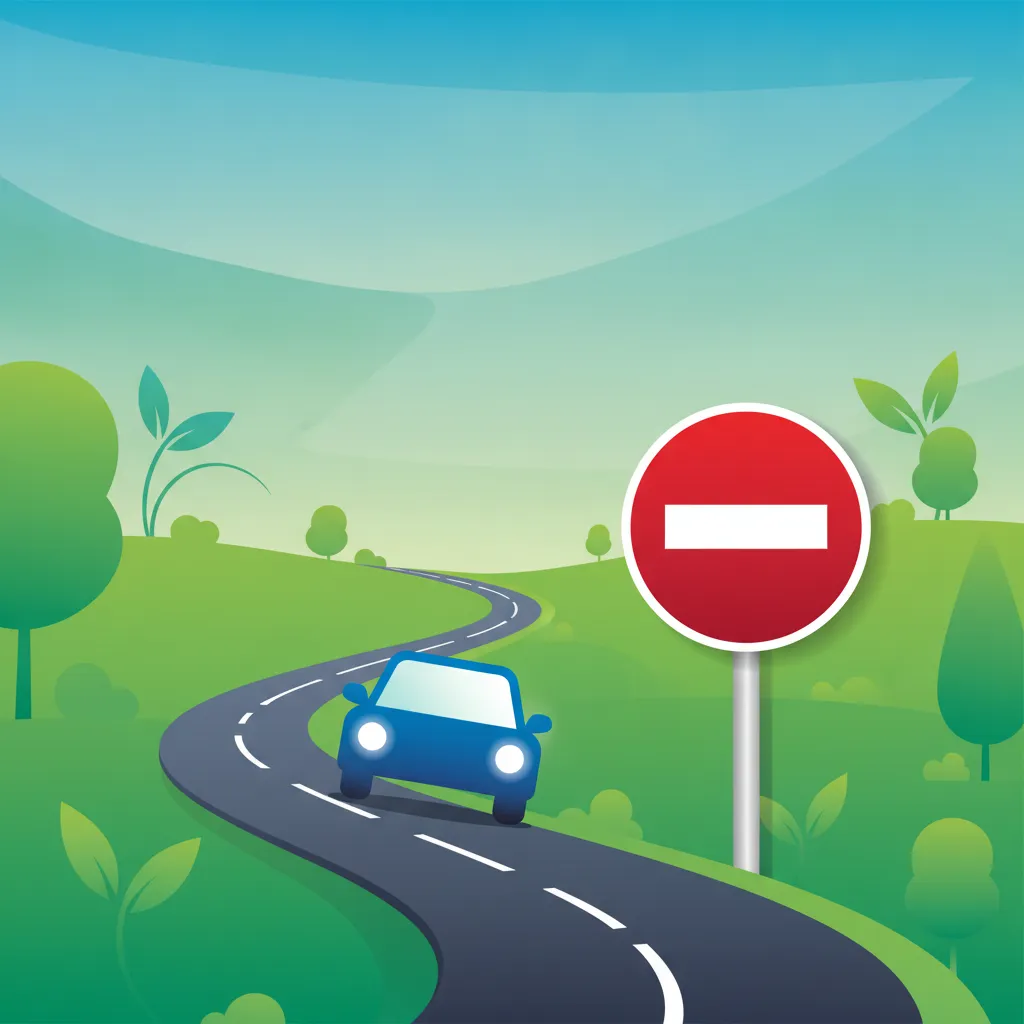
This lesson introduces the category of regulatory road signs, explaining the crucial difference between mandatory signs that require a specific action and prohibitory signs that forbid one. Learners will learn to interpret common signs such as speed limits, parking restrictions, no-entry signs, and those that establish priority at intersections. Understanding the distinct shapes and colours associated with these signs is essential for legal compliance and safe driving in Austria.
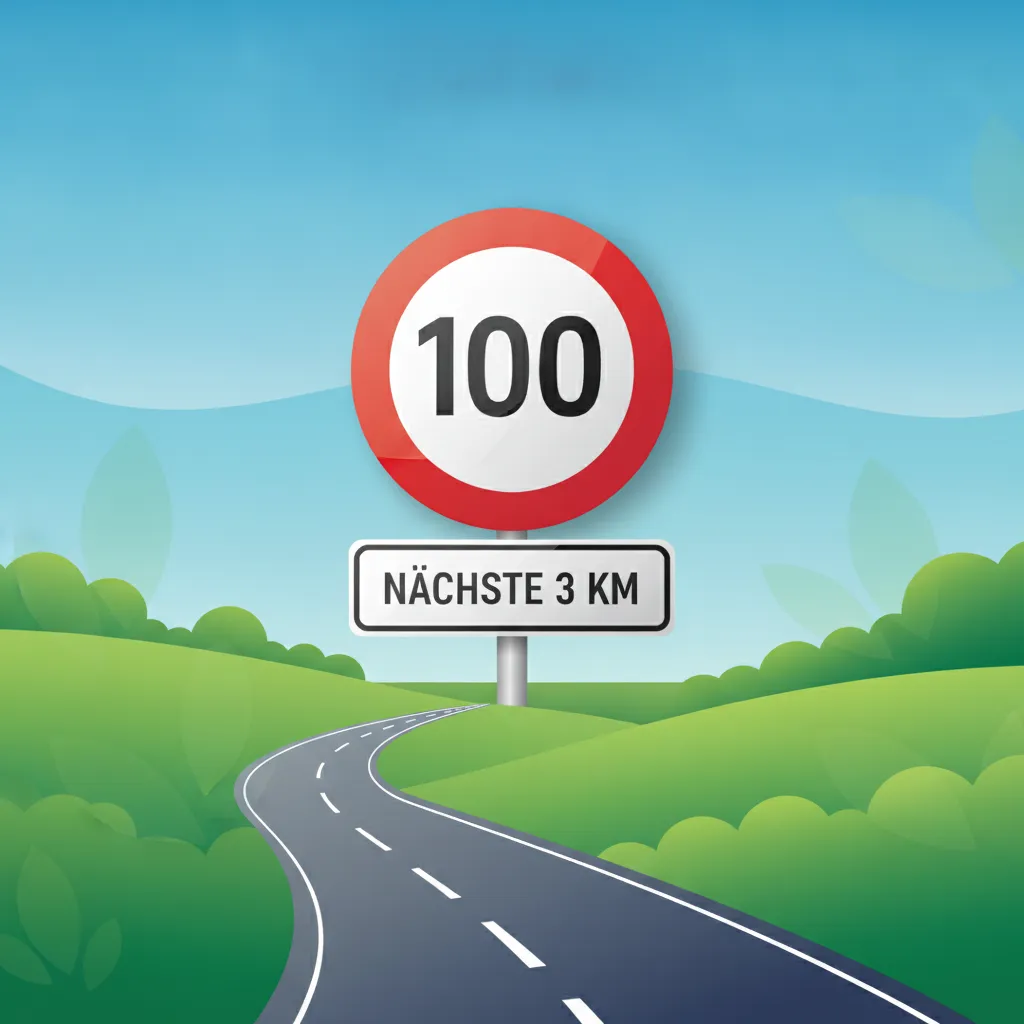
This lesson covers informational signs that provide guidance, directions, and distances to help with navigation. It also explains the critical role of supplementary plates (Zusatztafeln), which are placed below main signs to add conditions, exceptions, or clarifications. Learners will understand how to interpret these sign combinations correctly to make informed decisions about route planning, lane choice, and applicable rules.

This lesson details the various types of road markings and their significance for guiding traffic and ensuring safety. Learners will understand the rules associated with solid versus broken lane lines, the instructions provided by directional arrows painted on the road, and the purpose of stop lines and pedestrian crossing markings. The content emphasizes how these markings work in conjunction with signs to regulate traffic flow and define legal lane usage.
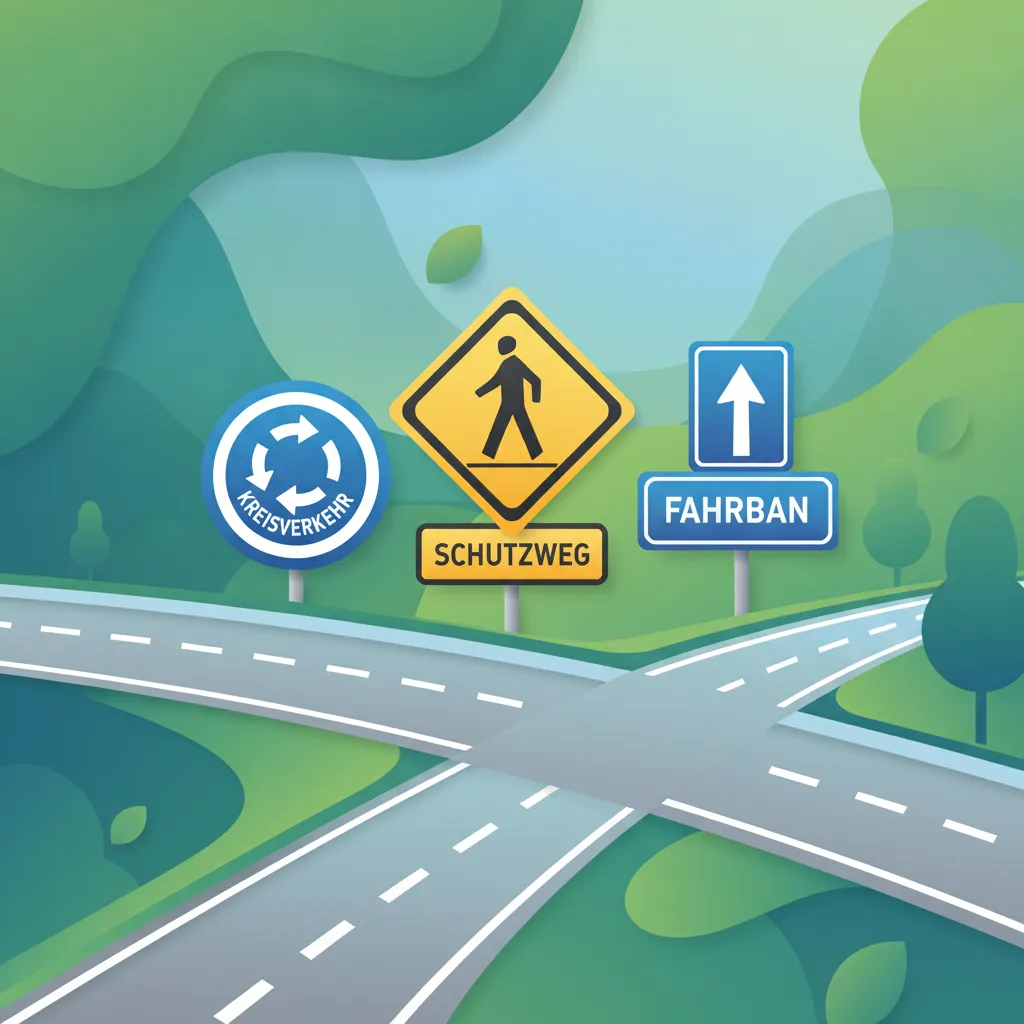
This lesson covers the specific regulations associated with special Austrian road signs and areas. It details the rules for 'Schutzweg' (protected pedestrian crossings), 'Kreisverkehr' (roundabouts), and the distinction between 'Fahrbahn' (road) and 'Fahrstreifen' (lane). Understanding these specific contexts is essential for safe navigation in urban and suburban environments.

This lesson focuses on warning signs, which are designed to alert drivers to potential hazards ahead. Learners will explore the meanings of signs indicating sharp curves, changes in road surface, potential animal crossings, and upcoming construction zones. The content explains how the characteristic triangular shape and symbols convey specific dangers, enabling drivers to anticipate conditions and adjust their speed and attention accordingly.

This lesson focuses on the interpretation of traffic lights and road surface markings that guide riders through intersections. It covers the meaning of each traffic light phase, the rules for amber lights, and the significance of various lane lines and stop lines. Properly understanding these signals is essential for maintaining traffic flow and ensuring safety at junctions.
This lesson prepares riders for safely transiting through construction zones ('Baustellen'). It covers the interpretation of temporary signage, adherence to reduced speed limits, and awareness of hazards suchas altered lane markings, abrupt surface changes, and loose gravel. Respecting the safety of road workers and anticipating unpredictable traffic patterns are key themes.
This lesson explains the operation and meaning of traffic light signals in Austria, including the standard red, yellow, and green phases, as well as flashing signals and arrows. It also covers other priority control devices, such as stop signs and yield signs, which are used to manage right-of-way at intersections. Understanding the hierarchy between these signals and signs is crucial for navigating junctions safely and in compliance with the law.
This lesson focuses on the specific Austrian road signs and supplemental plates that apply to heavy goods vehicles. It explains how to interpret signage indicating weight limits, height and width restrictions, lane usage rules, and other critical regulatory information. Correctly understanding these signs is essential for legal compliance and safe navigation on Austria's roads.
This lesson details the legally prescribed speed limits across Austria's road network, including the specific limits for urban areas (Ortsgebiet), rural roads (Landstraßen), motorways (Autobahnen), and expressways (Schnellstraßen). Learners will understand how to interpret speed limit signs, including those with supplementary conditions. Adherence to these legal requirements is a fundamental aspect of road safety and compliance with the Austrian road traffic act (StVO).
Learn to interpret Austrian warning signs that alert to hazards and supplemental panels that modify sign meanings. Essential for anticipating road conditions and understanding specific restrictions for safe AM riding.
This lesson focuses on warning signs, which are designed to alert drivers to potential hazards ahead. Learners will explore the meanings of signs indicating sharp curves, changes in road surface, potential animal crossings, and upcoming construction zones. The content explains how the characteristic triangular shape and symbols convey specific dangers, enabling drivers to anticipate conditions and adjust their speed and attention accordingly.
This lesson covers informational signs that provide guidance, directions, and distances to help with navigation. It also explains the critical role of supplementary plates (Zusatztafeln), which are placed below main signs to add conditions, exceptions, or clarifications. Learners will understand how to interpret these sign combinations correctly to make informed decisions about route planning, lane choice, and applicable rules.
This lesson covers the specific regulations associated with special Austrian road signs and areas. It details the rules for 'Schutzweg' (protected pedestrian crossings), 'Kreisverkehr' (roundabouts), and the distinction between 'Fahrbahn' (road) and 'Fahrstreifen' (lane). Understanding these specific contexts is essential for safe navigation in urban and suburban environments.
This lesson prepares riders for safely transiting through construction zones ('Baustellen'). It covers the interpretation of temporary signage, adherence to reduced speed limits, and awareness of hazards suchas altered lane markings, abrupt surface changes, and loose gravel. Respecting the safety of road workers and anticipating unpredictable traffic patterns are key themes.
This lesson details the various types of road markings and their significance for guiding traffic and ensuring safety. Learners will understand the rules associated with solid versus broken lane lines, the instructions provided by directional arrows painted on the road, and the purpose of stop lines and pedestrian crossing markings. The content emphasizes how these markings work in conjunction with signs to regulate traffic flow and define legal lane usage.
This lesson focuses on the interpretation of traffic lights and road surface markings that guide riders through intersections. It covers the meaning of each traffic light phase, the rules for amber lights, and the significance of various lane lines and stop lines. Properly understanding these signals is essential for maintaining traffic flow and ensuring safety at junctions.
This lesson introduces the proactive mindset of defensive driving, which focuses on anticipating potential hazards rather than just reacting to them. It teaches techniques for systematic risk assessment, including scanning the road ahead, checking mirrors frequently, and being aware of the potential actions of other road users. By adopting these safe habits, drivers can create a buffer of safety around their vehicle and significantly reduce the likelihood of being involved in an accident.
This lesson introduces the category of regulatory road signs, explaining the crucial difference between mandatory signs that require a specific action and prohibitory signs that forbid one. Learners will learn to interpret common signs such as speed limits, parking restrictions, no-entry signs, and those that establish priority at intersections. Understanding the distinct shapes and colours associated with these signs is essential for legal compliance and safe driving in Austria.

This lesson provides a step-by-step guide for safely managing a vehicle breakdown on the road. It covers the correct procedure for pulling over to a safe location, activating hazard lights, and wearing a high-visibility vest. Learners will understand the legal requirement and correct placement of the warning triangle to alert oncoming traffic, as well as the necessary information to provide when contacting roadside assistance services.

Rural Austrian roads present unique challenges, including lack of markings, tight spaces, and slow-moving agricultural vehicles. This lesson teaches how to read the road ahead, anticipate hazards around blind bends, and use passing places effectively when meeting other large vehicles. It emphasizes adjusting speed to suit the limited visibility and variable road conditions.
Find clear answers to common questions learners have about Austrian Road Signs and Their Meaning. Learn how the lesson is structured, which driving theory objectives it supports, and how it fits into the overall learning path of units and curriculum progression in Austria. These explanations help you understand key concepts, lesson flow, and exam focused study goals.
In Austria, most warning signs are triangular with a red border and a white background. Regulatory signs, such as prohibitions, are typically circular with a red border, while mandatory actions are usually circular with a blue background.
You need to be familiar with the most common and critical signs. Focus on understanding the system of shapes and colors, as this logic applies even if you encounter a less common sign during the exam.
As an AM rider, you have less time to process information than a car driver. Recognizing a sign from a distance allows you to adjust your speed or position early, which is essential for safety in mixed traffic.
Yes, some signs restrict access for specific vehicle classes. Always look for signs that indicate 'Mopeds prohibited' or 'Only for bicycles and mopeds' to ensure you are legally permitted on that road segment.
Refine your study plan by searching for specific Austrian driving theory practice sets. Pinpoint questions related to particular road rules, signs, or challenge levels, and begin practicing immediately to reinforce your knowledge and excel in your official exam with confidence. Get started with focused revision today.