
This lesson covers the principles of ethical and environmentally conscious driving within the Austrian transport framework. You will learn how your driving style impacts fuel consumption, emissions, and noise, helping you meet both your legal requirements and social responsibilities as a new driver.
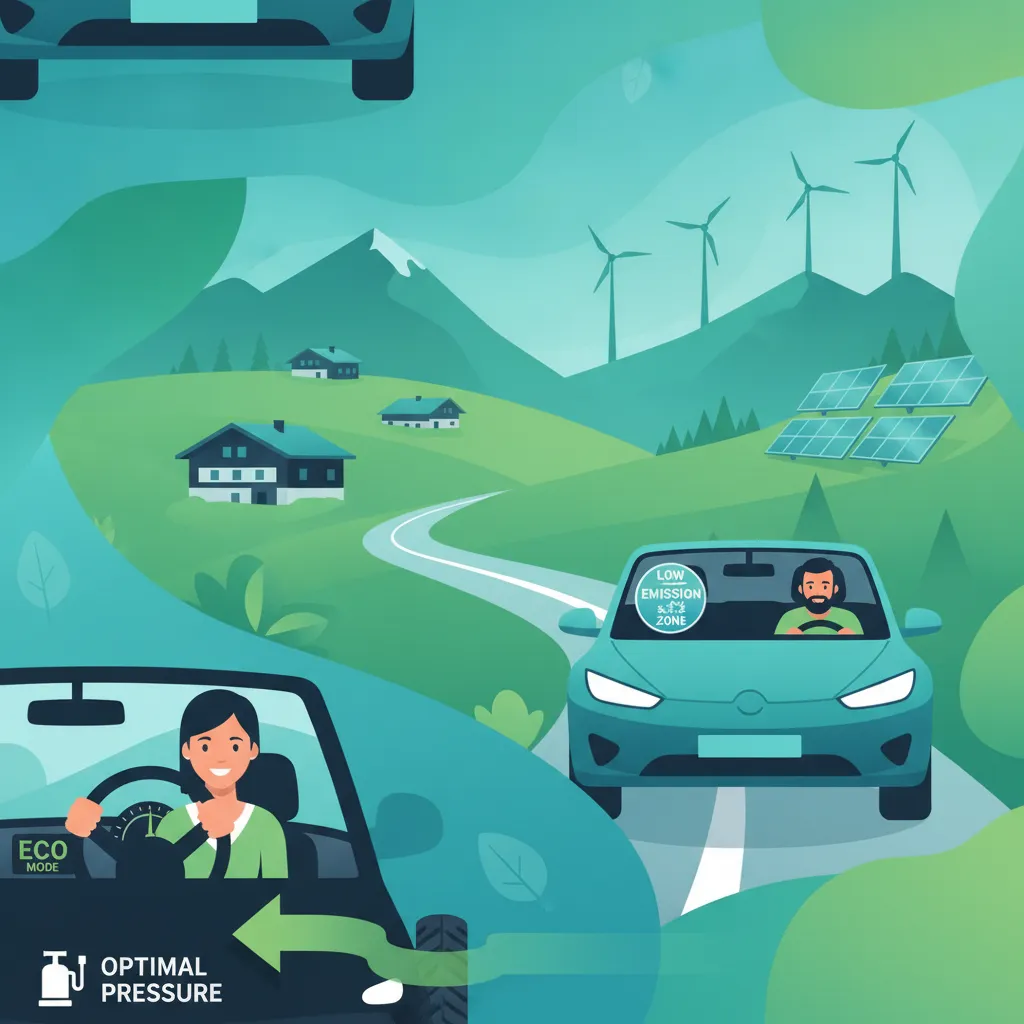
Lesson content overview
Driving a vehicle is a privilege that comes with significant responsibilities, extending beyond mere adherence to traffic laws. As participants in the Austrian road network, drivers hold a crucial role in fostering safety, showing respect, and protecting the environment. This lesson, part of the Austrian Driving License B Theory Course, explores the vital principles of ethical and environmentally conscious driving. It delves into practical techniques that not only reduce your vehicle's ecological footprint but also contribute to a safer, quieter, and more cooperative road environment for everyone. Understanding these principles and applying them daily is essential for fulfilling both legal obligations and social duties as a responsible driver.
Ethical driving is about more than just avoiding fines; it's about making conscious choices that reflect respect for other road users, adherence to societal norms, and a strong sense of civic duty. It's the bedrock upon which a safe and efficient traffic system is built, ensuring that driving is not merely a personal activity but one that considers its wider community and environmental impact.
At the heart of ethical driving lies the principle of mutual respect. This means drivers must actively consider the safety, comfort, and rights of all individuals on the road, whether they are behind the wheel, on a bicycle, or walking. Practicing mutual respect helps to reduce aggressive interactions, prevents unnecessary conflict, and promotes a cooperative and predictable traffic flow.
Implications: Always adjust your speed to conditions, maintain adequate space around your vehicle, and avoid unnecessary or aggressive honking. Consider how your actions affect others, especially vulnerable road users.
Every time you drive, your vehicle interacts with the environment. The principle of minimal environmental impact dictates that your driving behavior should aim to minimize fuel consumption, reduce harmful emissions, and lessen noise pollution. Adopting this principle contributes directly to Austria's climate commitments and public health goals, supporting sustainable mobility for future generations.
Energy efficiency in driving means utilizing techniques that conserve kinetic energy and reduce unnecessary power output from your vehicle's engine. This approach directly translates into lower operating costs for you and significantly reduced emissions for the environment. It involves a systematic way of thinking about how your vehicle moves and uses fuel.
The energy an object possesses due to its motion. In driving, conserving kinetic energy means avoiding unnecessary acceleration and braking, which converts this energy into heat (through braking) or wastes fuel (through acceleration).
Modern vehicles are equipped with numerous systems beyond just propulsion. The responsible use of lighting, heating, ventilation, and other auxiliary loads is crucial. Overusing or improperly operating these systems can prevent excessive energy consumption, ensuring both efficiency and safety. For instance, using air conditioning excessively puts a greater load on the engine, increasing fuel use.
Eco-driving, or fuel-efficient driving, refers to a set of strategies designed to reduce fuel consumption and emissions without compromising safety. These techniques are scientifically proven to make a significant difference in your vehicle's performance and environmental impact.
One of the most effective eco-driving techniques involves how you accelerate and decelerate.
Maintaining the right speed and using appropriate gears are critical for efficiency.
Allowing the vehicle to roll without throttle input, typically by lifting your foot off the accelerator or shifting into neutral (though engine braking is generally safer and more controlled), often used when approaching a stop or downhill.
Coasting is a powerful technique to save fuel. When you see a red light, a slow-moving queue, or a downhill stretch, lift your foot off the accelerator. Modern vehicles with fuel injection systems often cut off fuel supply entirely when the engine is rotating at speed without throttle input, effectively using zero fuel while decelerating. This also saves wear on your brakes.
Beyond driving techniques, understanding the direct impact of your vehicle on the environment helps reinforce the importance of eco-conscious behavior.
Fuel Consumption refers to the amount of fuel your vehicle uses over a given distance, typically measured in litres per 100 kilometres (L/100 km). This figure is a direct indicator of your driving efficiency.
Vehicle Emissions are the exhaust gases released into the atmosphere, including carbon dioxide (CO₂), nitrogen oxides (NOₓ), and particulate matter. These pollutants contribute to global warming, acid rain, and respiratory issues.
Common Misunderstanding: Many drivers believe that driving faster significantly reduces travel time, offsetting higher fuel consumption. In reality, increasing your speed from 100 km/h to 120 km/h on a motorway can increase fuel consumption by approximately 30% with only a marginal reduction in travel time. The environmental and economic costs far outweigh any perceived benefit.
Your driving style, vehicle load, and maintenance directly influence both fuel consumption and emission levels. A well-maintained vehicle with appropriate tyre pressure will always be more efficient.
Noise pollution, defined as unwanted or excessive sound generated by vehicle operation, is an often-overlooked environmental concern. Engine noise, exhaust systems, and even tyre noise contribute to a louder environment that can disturb residents, wildlife, and other road users. In Austria, specific regulations (StVO § 55) prohibit unnecessary noise.
Practical Action: Use your horn only in situations of immediate danger, as mandated by StVO § 55. Avoid aggressive acceleration or engine revving, especially in residential areas, to keep noise levels to a minimum. Regular vehicle maintenance, including a properly functioning exhaust system, also helps reduce noise.
Several other factors contribute to sustainable driving, ranging from how you load your vehicle to the use of its internal systems.
The weight your vehicle carries, including passengers, luggage, and fuel, significantly impacts its performance and efficiency.
The maximum legal total weight that a vehicle may carry, including its own weight, passengers, cargo, and fuel, as specified by the manufacturer and legal regulations. Exceeding this limit is illegal and unsafe.
Practical Meaning: Overloading your vehicle increases fuel consumption, accelerates wear on components like brakes and tyres, and most critically, significantly increases braking distances and compromises handling. Always ensure your vehicle's load is within the permissible limits and properly secured according to StVZO § 31.
Your vehicle's heating, air conditioning (A/C), and electrical accessories demand power from the engine. This additional load increases fuel consumption.
Idling means running the engine while the vehicle is stationary. Many drivers idle unnecessarily, believing it warms up the engine or is less hassle than restarting.
The practice of turning off the engine when the vehicle is stationary for longer than a brief period, typically more than 30-60 seconds.
Practical Meaning: Prolonged idling wastes fuel, generates unnecessary emissions, and creates noise pollution. Modern engines do not require extensive warm-up periods; driving gently immediately after starting is sufficient. In Austria, unnecessary idling is specifically prohibited by StVO § 55. Turn off your engine if you anticipate waiting for more than a minute, such as at railway crossings or when briefly parked.
A cornerstone of ethical driving is demonstrating heightened care and respect for vulnerable road users (VRUs). These include pedestrians, cyclists, motorcyclists, and users of public transport, who are at a higher risk in traffic due to their lack of protection.
Practical Meaning: Always yield where required, anticipate the needs and movements of VRUs, and maintain a safe distance. In Austria, specific rules govern interactions:
Ethical interactions mean treating VRUs with patience and understanding, recognizing that they may have slower reaction times or less visibility.
Austrian traffic law, primarily the Straßenverkehrsordnung (StVO) and Kraftfahrgesetz (KFG) along with its implementing regulations (StVZO), provides the legal framework for ethical and environmentally responsible conduct.
Local Emission Zones: Be aware that some Austrian municipalities may implement local ordinances establishing "emission zones" or "Umweltzonen" where access is restricted for high-emission vehicles. Always check local regulations if traveling to urban centres.
Understanding common violations helps drivers actively avoid practices that undermine safety and environmental goals.
Ethical and eco-conscious driving requires constant adaptation to changing road conditions and environments.
| Condition | Principle/Rule Adaptation | Reasoning |
|---|---|---|
| Heavy Rain | Reduce speed significantly, increase following distance, activate wipers and defogger, avoid sudden acceleration or braking. | Wet surfaces drastically increase stopping distances; visibility is reduced. |
| Night Driving | Use dipped beam headlights; avoid high beams toward oncoming traffic; reduce speed in poorly lit areas, especially on rural roads. | Reduced visibility necessitates cautious driving; high beams can blind other drivers. |
| Urban Areas | Anticipate frequent stops and starts; maximize coasting; turn off engine if waiting at a light for over a minute; keep speeds lower for safety and to reduce emissions. | Dense traffic, frequent signals, and the presence of many pedestrians and cyclists demand a more cautious and anticipatory driving style. |
| Motorways | Maintain a steady speed, use cruise control for consistency, avoid unnecessary lane changes, and utilize coasting when approaching off-ramps. | Higher speeds require aerodynamic efficiency; cruise control optimizes fuel use by maintaining constant velocity. |
| Mountain Roads | Use lower gears for engine braking when descending steep grades; maintain a safe speed on curves; avoid over-revving the engine when climbing. | Gravitational forces heavily impact vehicle speed; engine braking prevents brake overheating and wear; proper gear selection manages engine load efficiently. |
| Loaded Vehicle | Adjust speed and braking distances; select lower gears when necessary; ensure proper load distribution; avoid rapid acceleration. | Extra mass increases inertia, directly affecting fuel consumption, stopping distance, and vehicle stability. |
| Interaction with Vulnerable Users | Yield early and clearly; allow extra time for pedestrians or cyclists to pass; maintain a safe lateral distance from cyclists. | VRUs have less protection and may be less predictable; giving ample space prevents accidents and shows respect. |
| Traffic Jam | Turn off the engine if stopped for more than a minute; avoid unnecessary honking; maintain a safe following distance even when stationary. | Minimizes idling emissions and noise pollution; prevents rear-end collisions in stop-and-go traffic. |
| Cold Weather | Allow the engine to warm up briefly (no longer than one minute) before driving gently; use heating efficiently; be aware of increased fuel consumption in cold engines. | Cold engines are less efficient initially; prolonged idling for warm-up is wasteful. |
The adoption of ethical and eco-driving practices has far-reaching positive consequences:
Ethical Driving and Environmental Considerations are integral components of safe and responsible participation in the Austrian road network. They move beyond mere legal compliance to encompass a proactive approach to road safety, environmental stewardship, and community well-being. By internalizing the principles of mutual respect, minimal environmental impact, and energy efficiency, and by consistently applying eco-driving techniques, you contribute to a better, safer, and more sustainable future for everyone. This lesson provides the foundational knowledge; its practical application on the road is your ongoing responsibility as a Category B driver.
Ethical driving in Austria extends beyond legal compliance to encompass environmental responsibility and mutual respect among all road users. Key eco-driving techniques include smooth acceleration, anticipative braking, coasting, optimal gear selection, and maintaining steady speeds. Austrian traffic law (StVO § 23, § 41, § 55, § 73, § 71 and StVZO § 29, § 31) mandates specific behaviors regarding pedestrian right-of-way, horn use, idling restrictions, load limits, and safe following distances. These practices reduce fuel consumption, emissions, and noise while enhancing road safety and lowering operating costs.
A short set of high-value points that capture the most important learning from this lesson.
Eco-driving reduces fuel consumption, emissions, and noise through smooth acceleration, anticipative braking, and proper gear selection.
Mutual respect on Austrian roads means actively considering the safety and rights of all users, especially vulnerable road users like pedestrians and cyclists.
Coasting and engine braking preserve kinetic energy and are more fuel-efficient than aggressive braking.
Unnecessary idling violates StVO § 55 in Austria and wastes fuel while generating emissions and noise.
Driving at steady speeds slightly below motorway limits (90–100 km/h) optimizes fuel economy significantly compared to higher speeds.
Explore all units and lessons included in this driving theory course.
StVO § 23 and § 41 require drivers to yield to pedestrians at zebra crossings and crosswalks at intersections.
StVO § 55 prohibits unnecessary horn use (immediate danger only) and unnecessary engine idling.
Maximum Permissible Total Weight (MPTW) must not be exceeded; overloaded vehicles have longer braking distances and degraded handling.
Early upshifting in manual vehicles and using economy/overdrive modes in automatics reduces engine RPM and fuel use.
Tyre pressure maintenance directly affects fuel efficiency, tyre wear, and vehicle safety as per EU Regulation 168/2013.
Believing speeding significantly reduces travel time; increasing from 100 to 120 km/h can increase fuel consumption by ~30% with minimal time gain.
Leaving the engine idling while stationary for extended periods instead of turning it off after about 60 seconds.
Aggressive acceleration and relying solely on brakes instead of using engine braking or coasting to conserve kinetic energy.
Overloading the vehicle or improperly securing loads, which increases fuel consumption, braking distance, and violates StVZO § 31.
Using air conditioning at full power in mild weather when ventilation or partial A/C would suffice, unnecessarily increasing engine load.
Lesson content overview
A short set of high-value points that capture the most important learning from this lesson.
Eco-driving reduces fuel consumption, emissions, and noise through smooth acceleration, anticipative braking, and proper gear selection.
Mutual respect on Austrian roads means actively considering the safety and rights of all users, especially vulnerable road users like pedestrians and cyclists.
Coasting and engine braking preserve kinetic energy and are more fuel-efficient than aggressive braking.
Unnecessary idling violates StVO § 55 in Austria and wastes fuel while generating emissions and noise.
Driving at steady speeds slightly below motorway limits (90–100 km/h) optimizes fuel economy significantly compared to higher speeds.
Explore all units and lessons included in this driving theory course.
StVO § 23 and § 41 require drivers to yield to pedestrians at zebra crossings and crosswalks at intersections.
StVO § 55 prohibits unnecessary horn use (immediate danger only) and unnecessary engine idling.
Maximum Permissible Total Weight (MPTW) must not be exceeded; overloaded vehicles have longer braking distances and degraded handling.
Early upshifting in manual vehicles and using economy/overdrive modes in automatics reduces engine RPM and fuel use.
Tyre pressure maintenance directly affects fuel efficiency, tyre wear, and vehicle safety as per EU Regulation 168/2013.
Believing speeding significantly reduces travel time; increasing from 100 to 120 km/h can increase fuel consumption by ~30% with minimal time gain.
Leaving the engine idling while stationary for extended periods instead of turning it off after about 60 seconds.
Aggressive acceleration and relying solely on brakes instead of using engine braking or coasting to conserve kinetic energy.
Overloading the vehicle or improperly securing loads, which increases fuel consumption, braking distance, and violates StVZO § 31.
Using air conditioning at full power in mild weather when ventilation or partial A/C would suffice, unnecessarily increasing engine load.
Explore search topics learners often look for when studying Ethical Driving and Environmental Considerations. These topics reflect common questions about road rules, driving situations, safety guidance, and lesson level theory preparation for learners in Austria.
Browse additional driving theory lessons that cover connected traffic rules, road signs, and common driving situations related to this topic. Improve your understanding of how different rules interact across everyday traffic scenarios.
Understand Austrian regulations on noise pollution, idling, and emissions. Learn about legal obligations for drivers to minimize environmental impact and ensure responsible vehicle operation according to StVO and KFG.
This lesson provides an overview of the legal framework governing heavy vehicle drivers in Austria. It details the potential penalties for violations, including fines, penalty points, and the risk of licence suspension. A clear understanding of these consequences reinforces the importance of compliant and responsible driving.
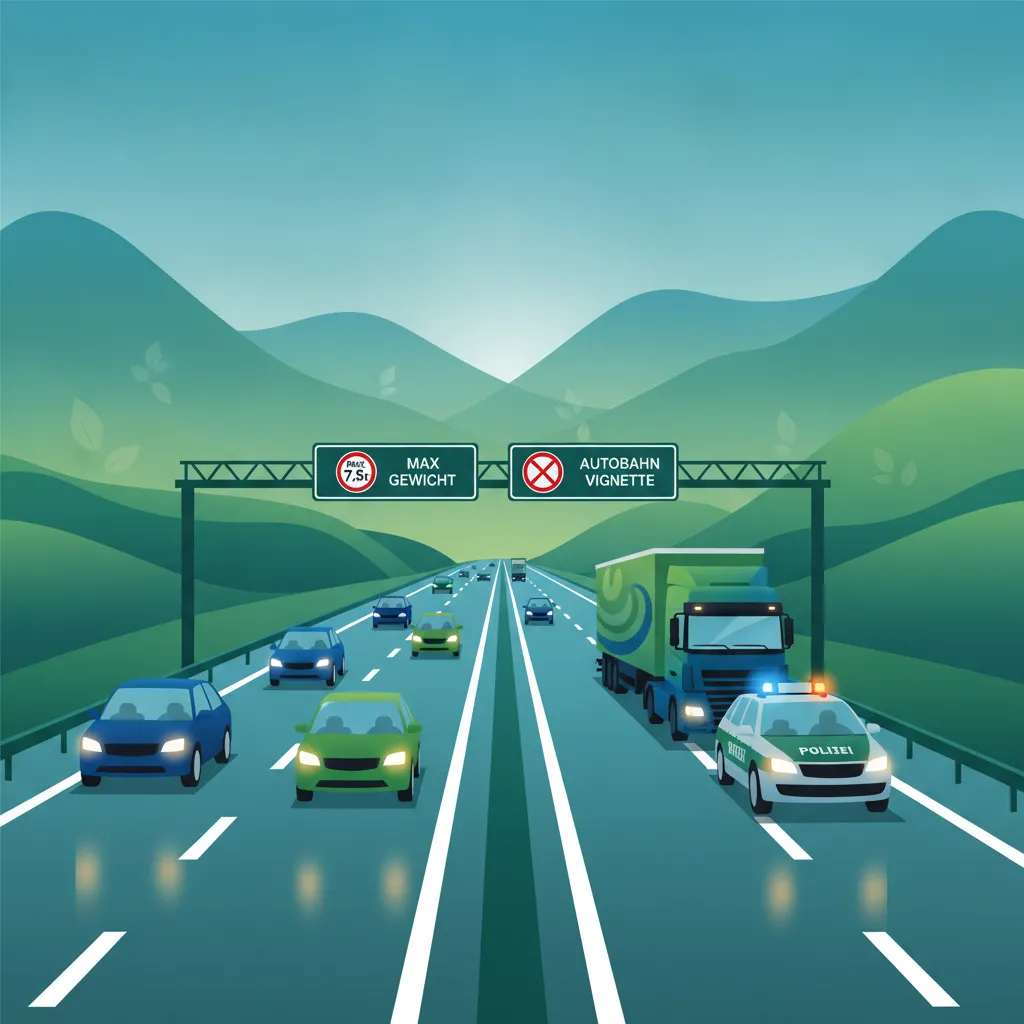
This lesson explains the system of penalties and enforcement for heavy vehicle operations in Austria. It covers the fines and penalty points associated with common traffic violations, such as overloading or insecure loads. Learners will understand the role of authorities in conducting roadside checks and inspections to ensure regulatory compliance.

This lesson provides a comprehensive overview of a driver's legal responsibilities and the potential consequences of failing to adhere to traffic laws. Learners will explore the concept of liability in the event of an accident and the structure of the official penalty catalogue. The material covers the impact of fines, demerit points, and potential driving bans (Fahrverbot) on one's license, as well as the effects on insurance premiums.
This lesson provides a clear overview of the legal penalties for traffic violations in Austria. It details the system of fines, demerit points, and the conditions that can lead to license suspension or revocation. Understanding these consequences reinforces the importance of lawful and responsible riding.
This lesson details the essential legal and administrative requirements for operating an AM vehicle in Austria. It covers the processes for vehicle registration, the obligation for licence plates, and the necessity of third-party liability insurance. Furthermore, it explains the importance of regular technical inspections to ensure the vehicle remains roadworthy and compliant with national standards.

This lesson outlines the significant legal responsibilities placed on heavy-vehicle drivers under Austrian law, emphasizing a strong duty of care and professional conduct. It covers the obligation to perform thorough pre-trip inspections, comply with all load and weight regulations, and uphold safety standards to protect all road users. Adherence to these principles is crucial for professional and safe operation.

This lesson delves into the specific Austrian laws and regulations that professional passenger drivers must adhere to. It provides an overview of rules concerning driving and rest times, the use of the digital tachograph, and the essential documents that must be carried at all times. Understanding these legal obligations is crucial for compliance and avoiding penalties during roadside checks.
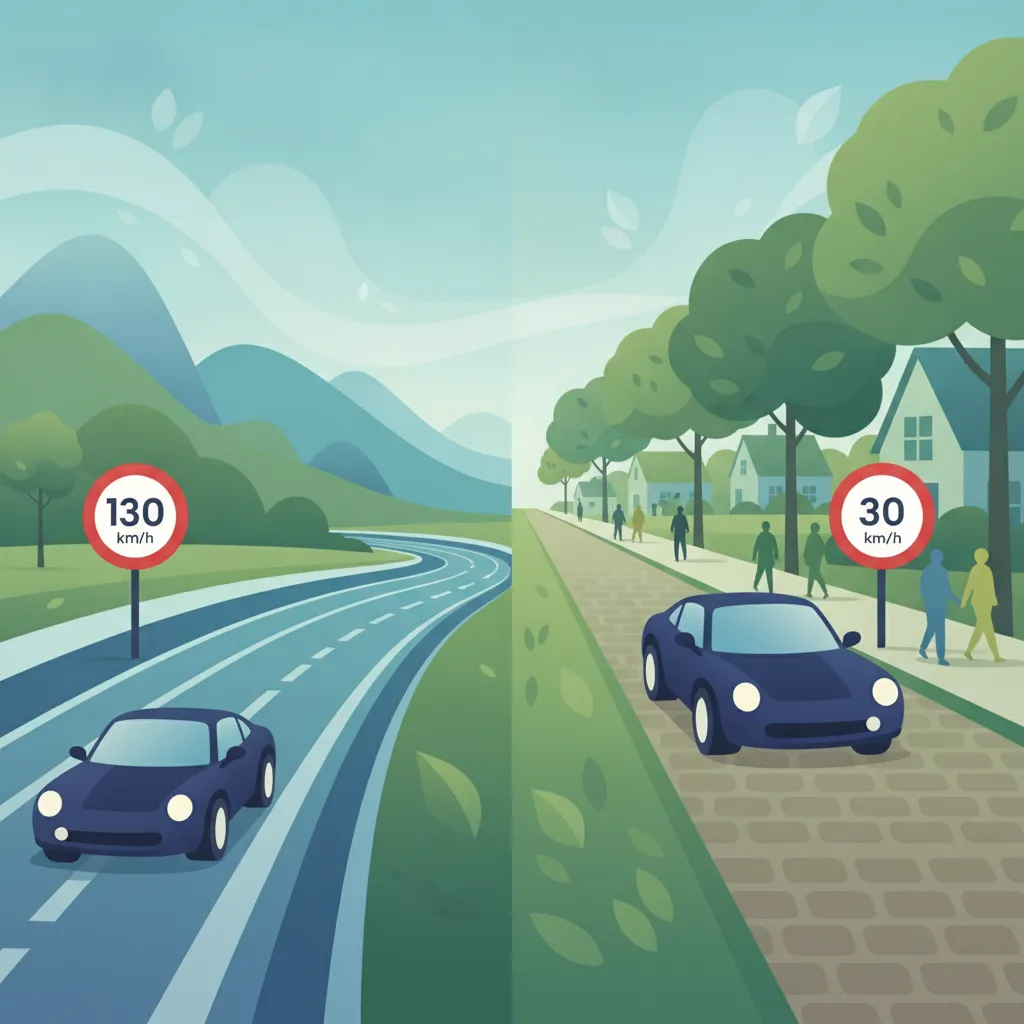
This lesson details the legally prescribed speed limits across Austria's road network, including the specific limits for urban areas (Ortsgebiet), rural roads (Landstraßen), motorways (Autobahnen), and expressways (Schnellstraßen). Learners will understand how to interpret speed limit signs, including those with supplementary conditions. Adherence to these legal requirements is a fundamental aspect of road safety and compliance with the Austrian road traffic act (StVO).

This lesson details the general traffic rules applicable to heavy goods vehicles on Austrian roads, highlighting differences from passenger car regulations. It covers key topics such as right-of-way at intersections, specific rules for overtaking, maintaining proper lane discipline, and adhering to designated speed limits. Understanding these rules is critical for safe integration into mixed traffic.

This lesson covers the proper and legal use of a vehicle's entire lighting system to see and be seen. It explains the regulations for using headlights, including daytime running lights, and the specific conditions under which fog lights and high beams are permitted. Correct use of turn signals and brake lights is also emphasized as essential for communicating intentions to other drivers and ensuring safety in all visibility conditions.
Explore the principles of ethical driving and learn how to safely interact with pedestrians, cyclists, and other vulnerable road users in Austria. Understand your responsibilities on crossings and in urban traffic.

This lesson focuses on the critical skill of sharing the road safely with vulnerable users, such as pedestrians, cyclists, and e-scooter riders. It details the legally required distance buffers for overtaking and emphasizes heightened awareness in sensitive areas like school zones and designated pedestrian crossings. The content provides guidelines for interacting with bicycle lanes and shared spaces to foster a protective and respectful driving attitude towards those most at risk.
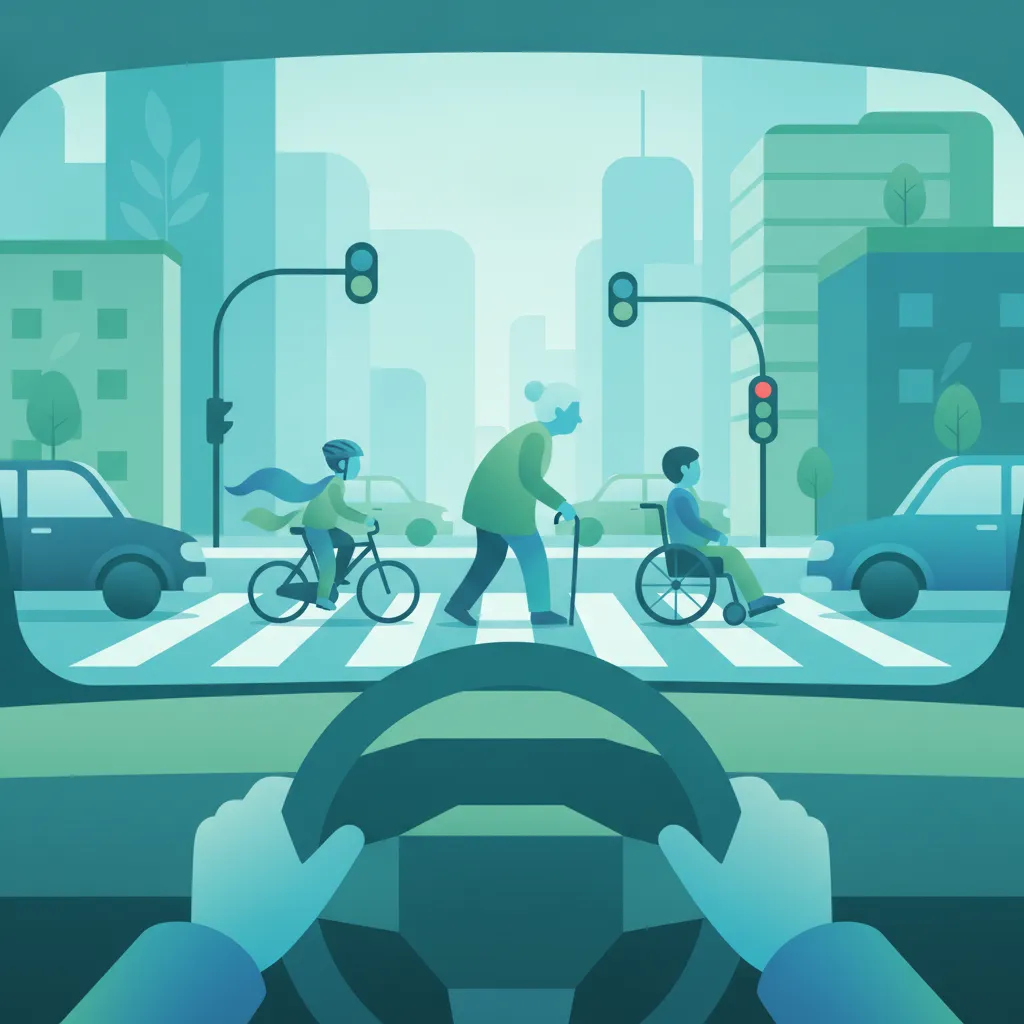
This lesson provides advanced strategies for proactively managing interactions with vulnerable road users to prevent conflicts before they arise. It teaches drivers to predict the likely behavior of pedestrians, cyclists, and e-scooter riders, especially at intersections and in congested areas. Key techniques include maintaining larger safety distances, covering the brake, and making eye contact to ensure mutual awareness and avoid accidents.
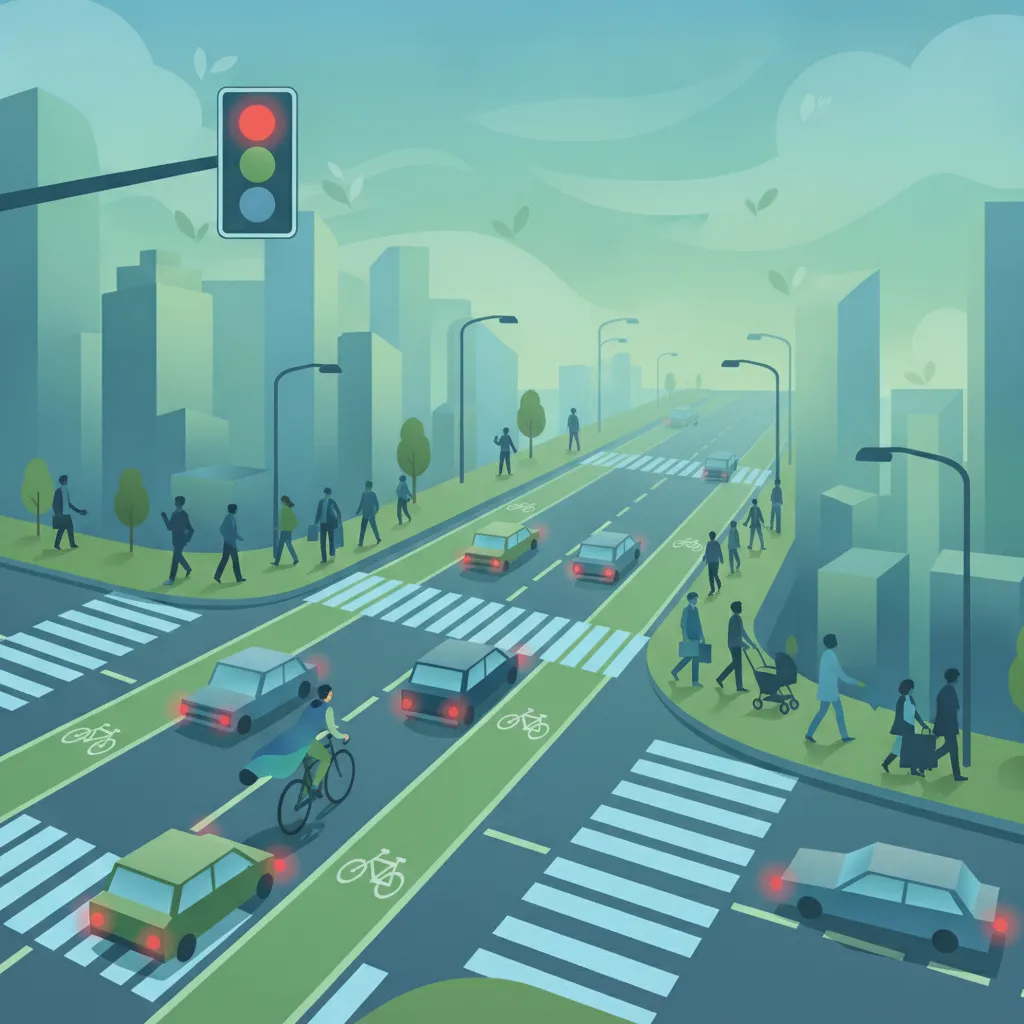
This lesson teaches drivers how to safely coexist with cyclists and pedestrians, who are prevalent in urban areas. It covers the rules for dedicated bike lanes (Radweg), the importance of yielding to pedestrians in designated zones, and the need for extra caution when turning or opening car doors. Maintaining safe overtaking distances and anticipating the movements of these vulnerable road users are key themes for preventing accidents.
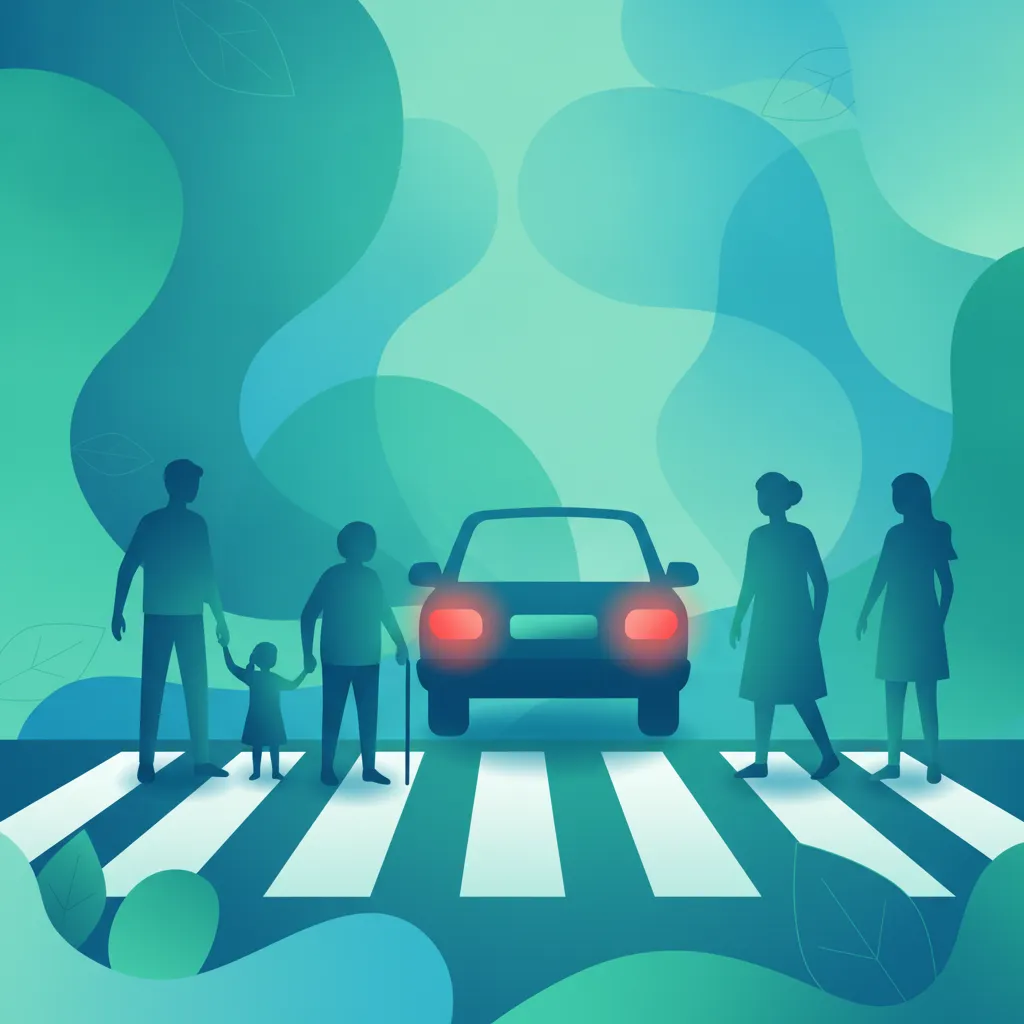
Pedestrians have absolute priority on marked crossings in Austria, and a bus driver must always be ready to give way. This lesson covers the rules for approaching and stopping for pedestrians, and highlights the risk of pedestrians being hidden by the vehicle's structure. It also stresses the danger of passengers crossing the road after alighting from your bus.
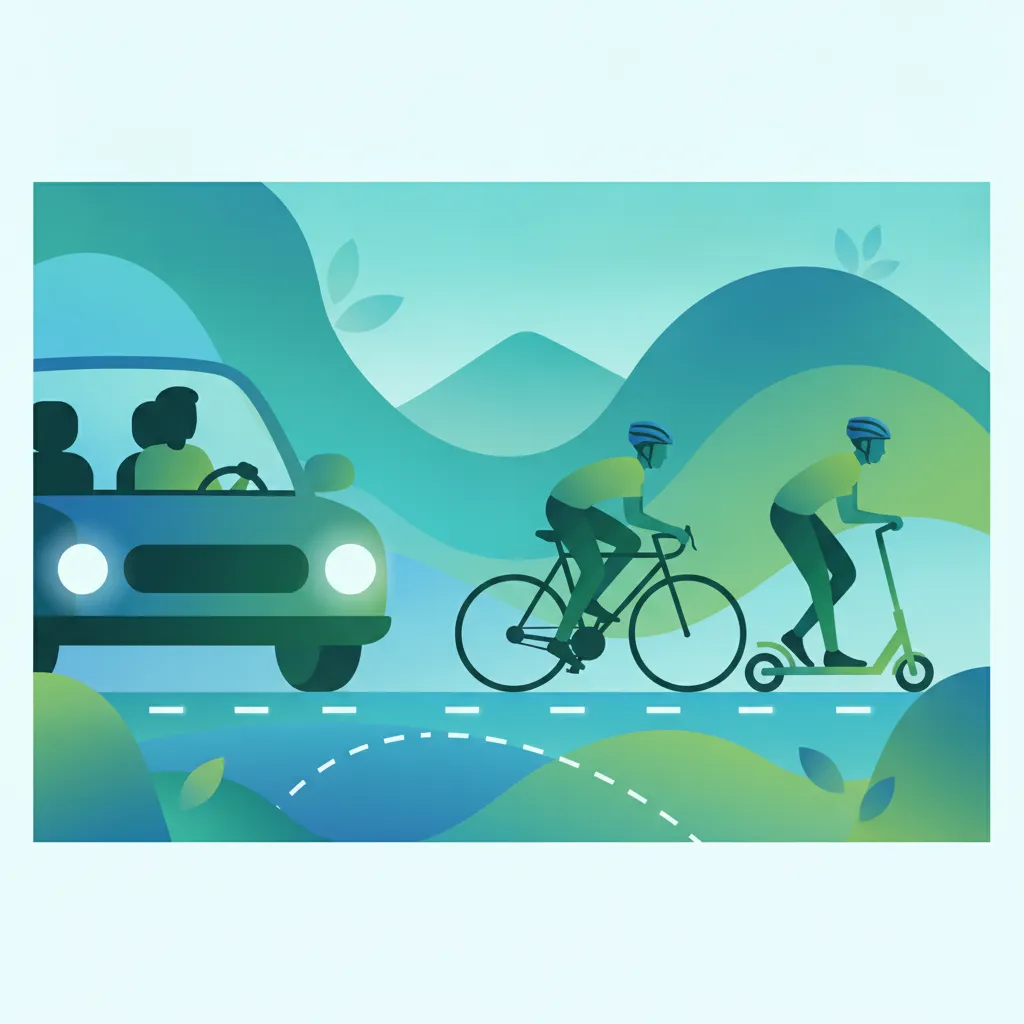
Cyclists and e-scooter riders are highly vulnerable and can be hard to see from a high driving position. This lesson focuses on the critical danger points, such as making right turns across cycle lanes and checking blind spots before pulling away from a stop. It teaches the importance of giving ample space when overtaking and anticipating their movements in busy city traffic.
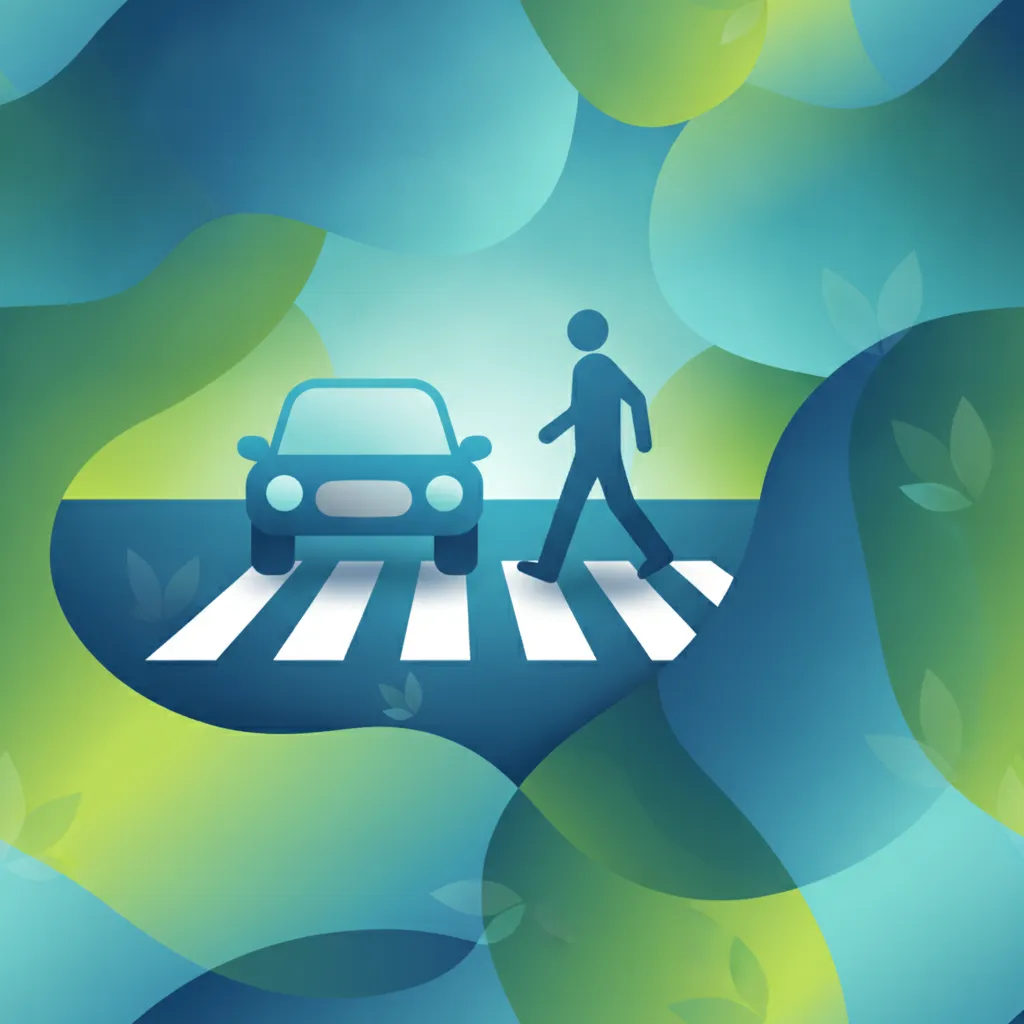
This lesson explores the strict regulations governing pedestrian crossings in Austria, particularly marked zebra crossings known as Schutzweg. It emphasizes the absolute priority of pedestrians on these crossings and the driver's legal obligation to stop and allow them to cross safely. The content covers how to approach these areas with caution, the importance of visibility, and the rules at crossings controlled by traffic lights.

This lesson reinforces the critical importance of protecting vulnerable road users in dense urban settings. It teaches drivers to be hyper-aware of pedestrians and cyclists, especially near intersections and crosswalks. Key techniques include reducing speed, making eye contact to confirm intentions, and giving ample space.
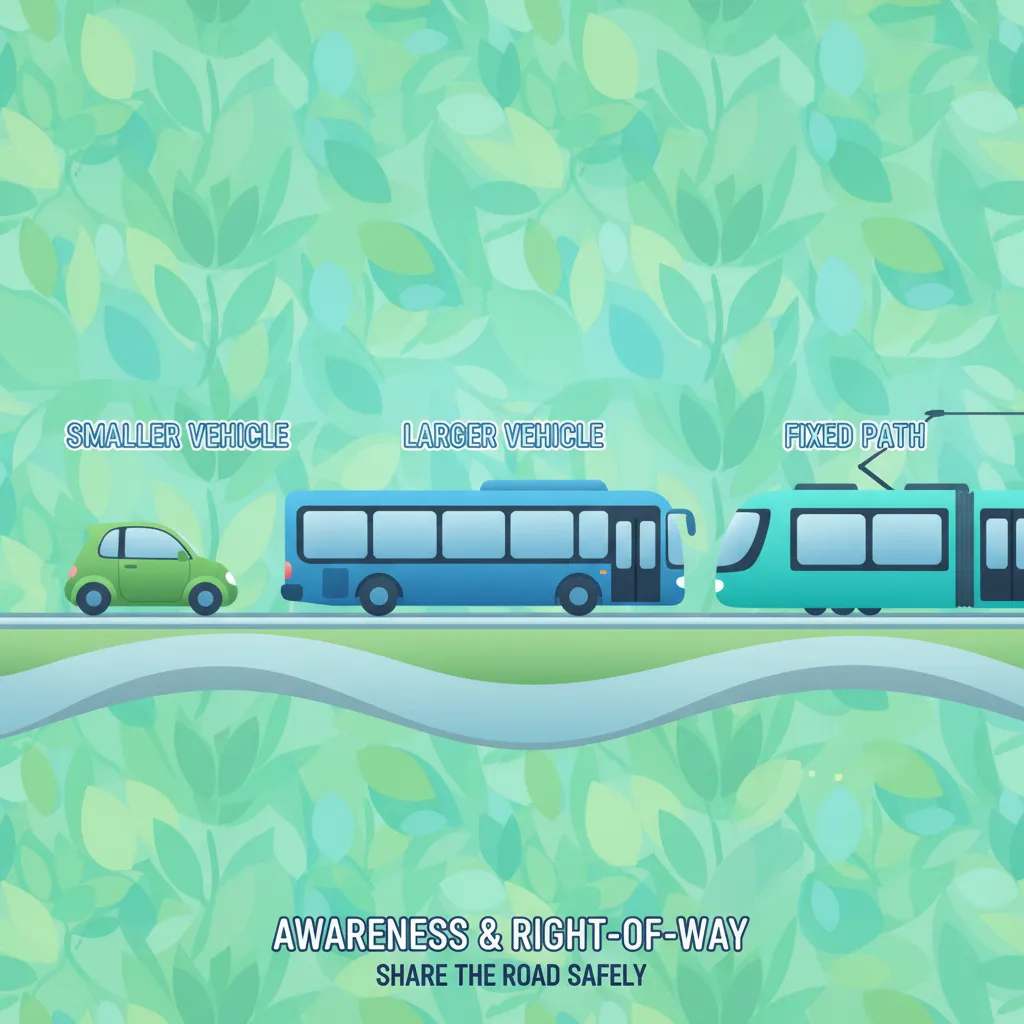
This lesson provides specific guidance for sharing the road with different types of vehicles in Austria. It covers the dangers of large vehicle blind spots, the rules for navigating near buses and dedicated tram tracks, and common conflict points at intersections. Understanding the behavior and limitations of other vehicles is key to safely navigating complex urban environments.
This lesson delves into the specific Austrian laws and regulations that professional passenger drivers must adhere to. It provides an overview of rules concerning driving and rest times, the use of the digital tachograph, and the essential documents that must be carried at all times. Understanding these legal obligations is crucial for compliance and avoiding penalties during roadside checks.

This lesson introduces the foundational elements of Austrian traffic culture, placing a strong emphasis on cooperation, courtesy, and effective non-verbal communication between road users. It delves into the societal expectations for driver behavior, highlighting how mutual respect and clear signaling enhance safety for everyone. By understanding and applying these norms, drivers can contribute to a more harmonious and predictable traffic environment, reducing conflicts and potential accidents.
Find clear answers to common questions learners have about Ethical Driving and Environmental Considerations. Learn how the lesson is structured, which driving theory objectives it supports, and how it fits into the overall learning path of units and curriculum progression in Austria. These explanations help you understand key concepts, lesson flow, and exam focused study goals.
Eco-driving is a key component of modern driver education in Austria. Exam questions may focus on how your driving style affects fuel efficiency, noise pollution, and environmental impact, reflecting the importance of sustainable transport in Austrian road law.
No, generally driving at lower engine speeds and shifting up early reduces fuel consumption and noise. Consistent, smooth driving is more efficient than aggressive acceleration and braking.
Yes, drivers are expected to maintain their vehicles in a condition that prevents excessive exhaust emissions and noise. Neglecting proper vehicle maintenance can lead to fines and is a common topic in theory assessments.
Eco-driving encourages anticipation and smooth transitions, which naturally results in safer traffic participation. By observing further ahead and avoiding unnecessary braking, you reduce risks for yourself and other road users.
Refine your study plan by searching for specific Austrian driving theory practice sets. Pinpoint questions related to particular road rules, signs, or challenge levels, and begin practicing immediately to reinforce your knowledge and excel in your official exam with confidence. Get started with focused revision today.