
This lesson focuses on mastering specific Austrian road signs and terminology essential for your Category AM exam. You will learn to navigate protected pedestrian crossings (Schutzweg), roundabouts (Kreisverkehr), and understand the legal distinctions between road surfaces and traffic lanes.
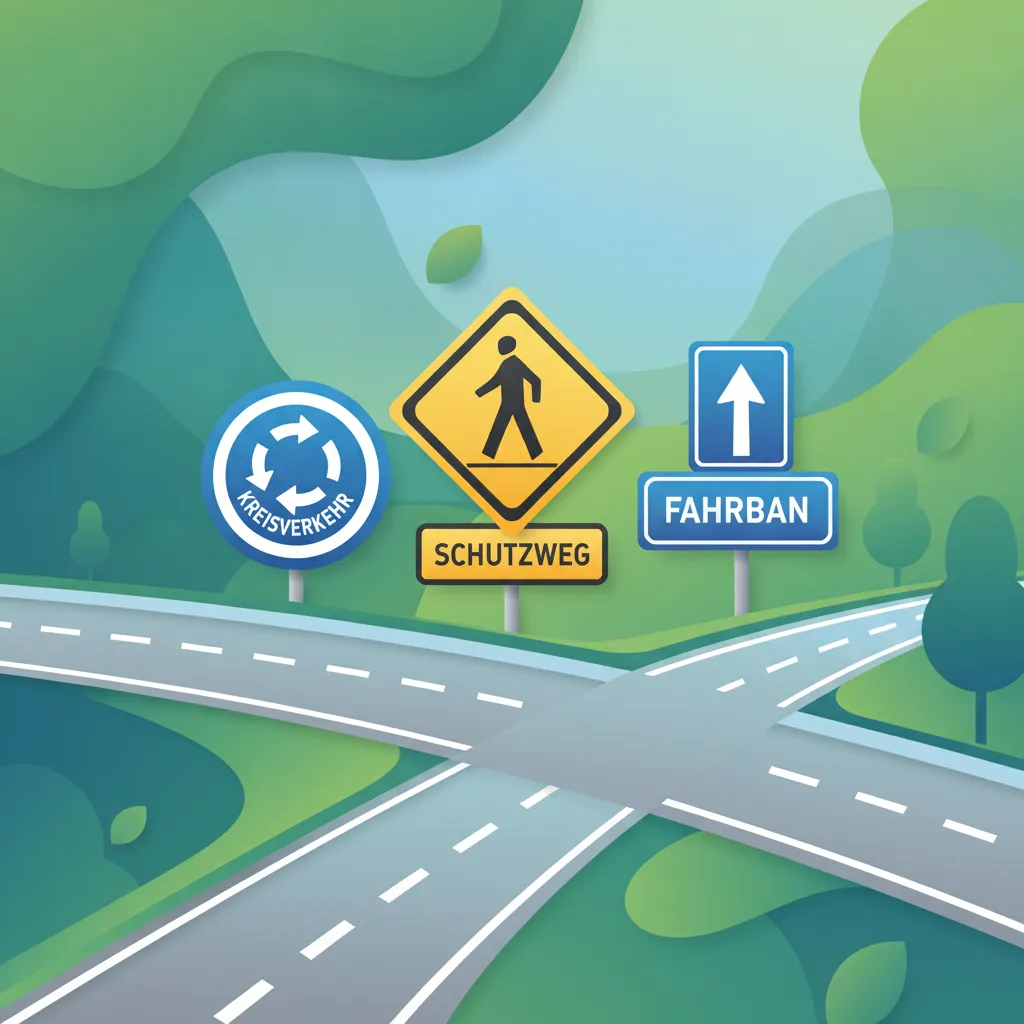
Lesson content overview
Navigating Austrian roads safely requires a precise understanding of specific signs and traffic situations. This lesson delves into three crucial concepts: the Schutzweg (protected pedestrian crossing), the Kreisverkehr (roundabout), and the distinction between Fahrbahn (carriageway) and Fahrstreifen (lane). Mastering these elements is not just about following rules; it's about ensuring the safety of all road users, especially vulnerable pedestrians, and maintaining efficient traffic flow in urban and suburban environments. As part of your Austrian AM Driving Theory, this knowledge builds upon foundational lessons in basic traffic signs and priority rules, preparing you for more complex road scenarios.
The Schutzweg is a designated area on the road where pedestrians have absolute priority. It is designed to maximize pedestrian safety, particularly in busy areas, and requires specific actions from all drivers, including those operating mopeds and small scooters.
A Schutzweg is typically indicated by a specific traffic sign. This sign features a white background, a red border, and a black pictogram of a walking pedestrian. This visual cue immediately alerts drivers to the presence of a protected crossing.
In addition to the sign, Schutzwege are often accompanied by distinct road surface markings. The most common type is the "zebra crossing," characterized by alternating white and black stripes painted across the Fahrbahn. In some specific situations, you might encounter a Schutzweg marked by a series of white bulleted lines or dots, often seen where a full zebra pattern might be impractical or less visible. Regardless of the specific markings, the presence of the sign means pedestrians have priority.
The core rule of a Schutzweg is that pedestrians have absolute priority. This means that if a pedestrian intends to step onto a Schutzweg, or is already on it, all approaching vehicles must stop and yield until the crossing is completely clear. This rule applies even if there are no traffic lights, or if traffic lights indicate a green signal for vehicles but a pedestrian is present on the crossing. The intent of this regulation (StVO § 63 Abs. 1) is to prioritize vulnerable road users and prevent accidents.
When approaching a Schutzweg, drivers should reduce their speed, be prepared to stop, and actively scan for pedestrians. This anticipatory driving is crucial, especially in areas frequented by children or the elderly, who may act less predictably or cross more slowly. Stopping distance should always be considered, particularly for mopeds and scooters which might have different braking characteristics than cars.
Failure to stop for a pedestrian on a Schutzweg is a serious traffic violation in Austria, carrying significant penalties and increasing the risk of severe accidents.
A frequent misunderstanding is believing that you only need to stop if a pedestrian is already fully on the crossing. In reality, if a pedestrian intends to cross and is approaching the Schutzweg, you must be prepared to stop. For instance, if a child is waiting at the curb and looks as though they are about to step onto the crossing, you should slow down and be ready to stop your vehicle. Another mistake is to proceed after only the first pedestrian has crossed, neglecting others who might be following. Always ensure the entire crossing is clear before continuing.
When stopping at a Schutzweg, make sure your vehicle comes to a complete halt before the crossing area, allowing ample space for pedestrians to cross safely. Never obstruct the crossing or attempt to wave pedestrians across if it means risking their safety or creating confusion for other drivers.
A Kreisverkehr, or roundabout, is a circular intersection designed to improve traffic flow and enhance safety by eliminating head-on collisions and reducing the need for complete stops. In Austria, traffic inside a roundabout moves in a counter-clockwise direction.
The presence of a Kreisverkehr is indicated by a distinctive blue circular sign featuring three white arrows forming a circle. This sign immediately signals that you are approaching a roundabout and must adhere to its specific priority rules.
Unlike traditional intersections where right-hand priority (Rechtsregel) might apply, roundabouts have their own specific set of rules. The primary rule is that vehicles entering the Kreisverkehr must yield to traffic already circulating within the roundabout.
Upon approaching a Kreisverkehr, you will usually encounter a "Yield" sign (Vorfahrt gewähren) in conjunction with the Kreisverkehr sign. This reinforces the rule that you must give way to any vehicle already travelling within the circular flow. This is a critical point of difference from some other countries and from general Austrian priority rules, where an un-signed intersection would imply right-hand priority.
According to StVO § 170 Abs. 5, vehicles entering a roundabout must allow vehicles already in the roundabout to pass. This ensures continuous flow for circulating traffic and prevents gridlock at the entry points. Before entering, observe traffic to your left (as you will be turning right to enter the counter-clockwise flow). Only enter when there is a safe gap, without forcing circulating vehicles to brake or change course.
Approach the roundabout at a reduced, safe speed.
Observe the Kreisverkehr sign and any accompanying 'Yield' signs.
Look to your left for circulating traffic.
Yield to all vehicles already within the roundabout.
Enter the roundabout only when there is a clear and safe gap.
Once inside the Kreisverkehr, you generally have priority over vehicles trying to enter. You must continue to travel in a counter-clockwise direction around the central island. According to StVO § 170 Abs. 6, drivers inside a roundabout must follow its circular path and use the appropriate exit lanes.
Signalling is crucial when exiting a roundabout. You should indicate your intention to exit with your right-turn signal after passing the exit immediately preceding your intended one, or as you approach your exit if it's the first one. This informs other drivers and pedestrians of your planned movement. Avoid signalling too early, as it can confuse other drivers, especially those waiting to enter, who might mistakenly assume you are exiting earlier than you intend.
Do not overtake other vehicles while circulating inside a Kreisverkehr. Maintain a steady speed and your position.
While most Kreisverkehrs feature a raised central island, you might encounter "mini-roundabouts" or small Kreisverkehrs, especially in residential or lower-speed areas. These often lack a physical raised island and might only be indicated by painted road markings (a white circle) on the road surface. Even without a raised island, the rules remain the same: you must still yield to traffic already circulating and follow the counter-clockwise direction. The smaller size typically implies lower speeds and requires even greater caution.
A common misunderstanding is assuming right-hand priority within a roundabout, especially for drivers coming from countries with different rules. Always remember that traffic already inside the roundabout has priority over entering traffic. Another mistake is incorrect lane usage; always ensure you are in the correct lane for your intended exit, if multiple lanes are present (though mopeds and scooters generally use the outermost lane unless turning left). Exiting incorrectly or making sudden lane changes can lead to collisions.
Precise terminology is vital for understanding road rules. In Austria, the terms Fahrbahn and Fahrstreifen refer to distinct aspects of the road and have specific implications for how you should drive.
The Fahrbahn refers to the entire part of the road that is intended for vehicular traffic. This includes all individual lanes (Fahrstreifen), shoulders, and any other usable road surface designed for vehicles. Essentially, it's the full width of the road for moving vehicles.
A Fahrstreifen, on the other hand, is an individual lane within the Fahrbahn, typically defined and separated by road markings such as painted lines. These markings guide drivers, indicating where they should position their vehicle and how traffic should flow. Understanding this distinction is fundamental for maintaining proper lane discipline and executing maneuvers safely.
Drivers are expected to stay within their designated Fahrstreifen unless a lane change (Spurwechsel) is permitted and safe. Lane markings are your primary guide:
Proper lane discipline (StVO § 84) ensures predictable traffic flow and reduces the risk of collisions. Remaining in your lane unless actively performing a safe and legal lane change is a key aspect of defensive driving. StVO § 100 also covers specific rules for using lanes, especially in relation to driving on the rightmost available lane.
Overtaking (Überholen) is a maneuver that requires careful consideration of road markings and conditions. According to StVO § 44 Abs. 1, overtaking is strictly prohibited where road markings indicate a "no-overtaking zone." This is typically shown by a continuous solid line, often accompanied by a "No Overtaking" sign.
While the general "No Overtaking" sign (C14) may exempt single-track vehicles like mopeds and scooters from overtaking other motor vehicles, the presence of a solid line on the road surface is an absolute prohibition for all vehicles against crossing it, regardless of the sign. Therefore, you must never overtake by crossing a solid line, especially not near:
Overtaking in these zones, or across a solid line, significantly increases the risk of head-on collisions and endangers vulnerable road users.
Lane markings are not merely decorative; they are integral to traffic management and safety. They communicate critical information about lane usage, turns, and permitted maneuvers. Misinterpreting or ignoring these markings can lead to confusion, unexpected vehicle movements, and a heightened risk of accidents. Always pay close attention to the colour, pattern, and continuity of road markings to ensure you are driving legally and safely.
The rules surrounding Schutzwege, Kreisverkehrs, and Fahrbahn/Fahrstreifen discipline remain constant, but their application requires heightened caution under certain conditions:
Understanding these special signs and road elements is paramount for safe riding with an AM license in Austria.
By internalizing these principles, you contribute not only to your own safety but also to the safety and smooth flow of traffic for everyone on Austrian roads.
This lesson covers three essential Austrian road concepts for AM licence holders: the Schutzweg (protected pedestrian crossing) where pedestrians have absolute priority even over green traffic signals, the Kreisverkehr (roundabout) where you must yield to circulating traffic before entering and signal clearly when exiting counter-clockwise, and the distinction between Fahrbahn (entire carriageway) and Fahrstreifen (individual lane) governed by road markings that legally prohibit crossing solid lines. Understanding these rules with their specific StVO references helps ensure safe navigation of urban environments and prevents common errors in both the theory exam and real-world driving.
A short set of high-value points that capture the most important learning from this lesson.
Pedestrians on a Schutzweg have absolute priority; you must stop even if a pedestrian is only intending to cross, not just when they are already on it
At roundabouts, always yield to traffic already circulating inside before entering; this overrides standard right-hand priority rules
Lane markings are legally binding: broken lines permit lane changes, solid lines absolutely prohibit them regardless of signs
The Fahrbahn is the entire carriageway while a Fahrstreifen is a single marked lane within it; understanding this distinction is essential for proper lane discipline
Signal your exit from a roundabout with a right-turn signal only after passing the exit immediately before your intended one to avoid confusing other drivers
Explore all units and lessons included in this driving theory course.
Schutzweg priority applies even when vehicle traffic signals show green; pedestrians always have precedence at marked crossings
Roundabout traffic flows counter-clockwise in Austria and vehicles inside have priority over those entering
Solid lines on the road surface prohibit all vehicles from crossing, including mopeds, regardless of any 'No Overtaking' sign exemptions for single-track vehicles
Lane discipline requires staying in your designated Fahrstreifen unless markings explicitly permit a safe lane change
Overtaking is prohibited near pedestrian crossings, intersections, railway crossings, blind curves, and hillcrests regardless of visibility conditions
Assuming the right-hand priority rule applies inside a roundabout, when in fact circulating traffic always has priority over entering vehicles
Believing you only need to stop at a Schutzweg if a pedestrian is fully on the crossing, ignoring those who are clearly about to step onto it
Crossing a solid line to overtake or change lanes near a Schutzweg because the C14 sign exempts mopeds from the overtaking prohibition
Indicating your exit from a roundabout too early, which can mislead drivers waiting to enter
Proceeding after only the first pedestrian has crossed a Schutzweg, without checking for additional pedestrians following behind
Lesson content overview
A short set of high-value points that capture the most important learning from this lesson.
Pedestrians on a Schutzweg have absolute priority; you must stop even if a pedestrian is only intending to cross, not just when they are already on it
At roundabouts, always yield to traffic already circulating inside before entering; this overrides standard right-hand priority rules
Lane markings are legally binding: broken lines permit lane changes, solid lines absolutely prohibit them regardless of signs
The Fahrbahn is the entire carriageway while a Fahrstreifen is a single marked lane within it; understanding this distinction is essential for proper lane discipline
Signal your exit from a roundabout with a right-turn signal only after passing the exit immediately before your intended one to avoid confusing other drivers
Explore all units and lessons included in this driving theory course.
Schutzweg priority applies even when vehicle traffic signals show green; pedestrians always have precedence at marked crossings
Roundabout traffic flows counter-clockwise in Austria and vehicles inside have priority over those entering
Solid lines on the road surface prohibit all vehicles from crossing, including mopeds, regardless of any 'No Overtaking' sign exemptions for single-track vehicles
Lane discipline requires staying in your designated Fahrstreifen unless markings explicitly permit a safe lane change
Overtaking is prohibited near pedestrian crossings, intersections, railway crossings, blind curves, and hillcrests regardless of visibility conditions
Assuming the right-hand priority rule applies inside a roundabout, when in fact circulating traffic always has priority over entering vehicles
Believing you only need to stop at a Schutzweg if a pedestrian is fully on the crossing, ignoring those who are clearly about to step onto it
Crossing a solid line to overtake or change lanes near a Schutzweg because the C14 sign exempts mopeds from the overtaking prohibition
Indicating your exit from a roundabout too early, which can mislead drivers waiting to enter
Proceeding after only the first pedestrian has crossed a Schutzweg, without checking for additional pedestrians following behind
Explore search topics learners often look for when studying Special Signs: Schutzweg, Kreisverkehr, Fahrbahn. These topics reflect common questions about road rules, driving situations, safety guidance, and lesson level theory preparation for learners in Austria.
Browse additional driving theory lessons that cover connected traffic rules, road signs, and common driving situations related to this topic. Improve your understanding of how different rules interact across everyday traffic scenarios.
Understand the specific regulations for Austrian roundabouts (Kreisverkehr) and protected pedestrian crossings (Schutzweg). Learn about yielding, priority, and correct navigation to ensure safety and compliance with traffic laws for your AM license theory.
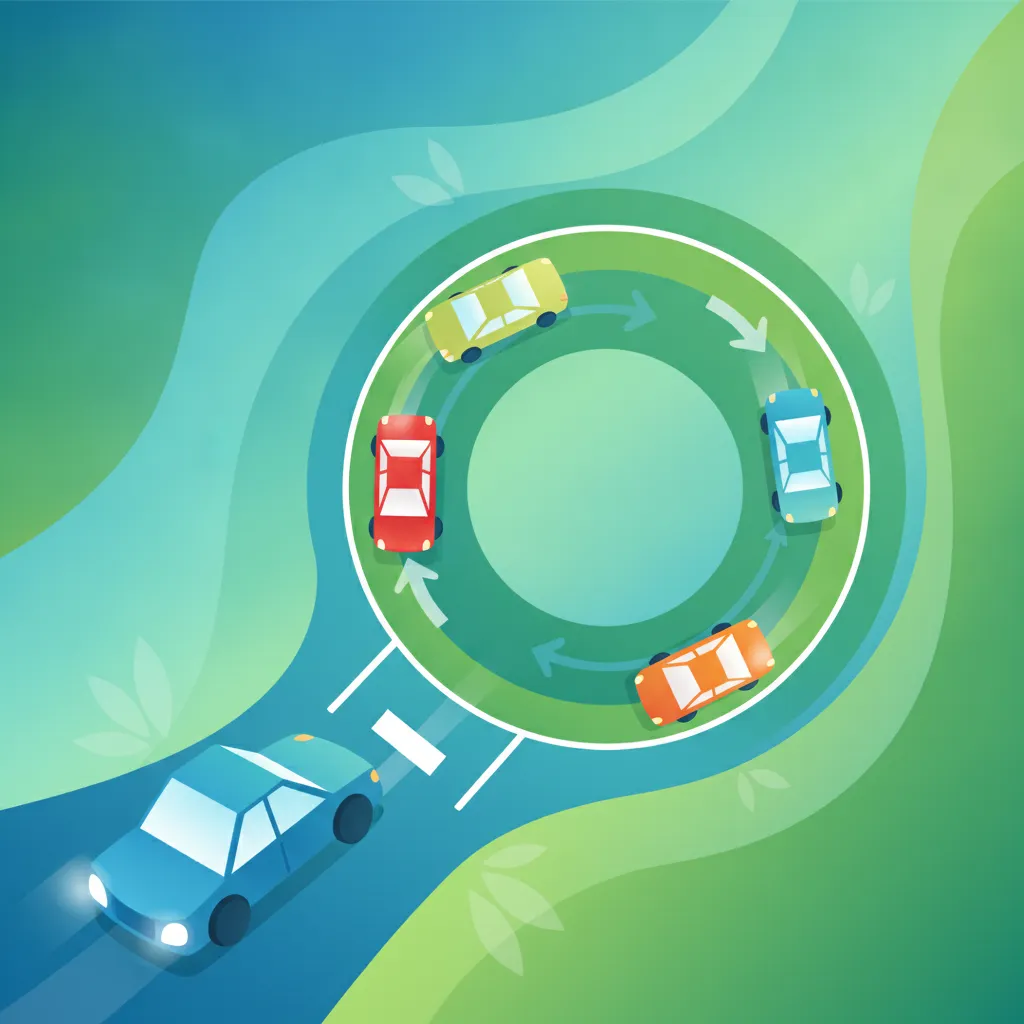
This lesson provides clear instructions on how to safely navigate roundabouts. It explains the critical rule of yielding to traffic already circulating and how to choose the correct lane based on the intended exit. The content also covers proper signaling procedures for entering and exiting the roundabout to communicate intentions clearly.
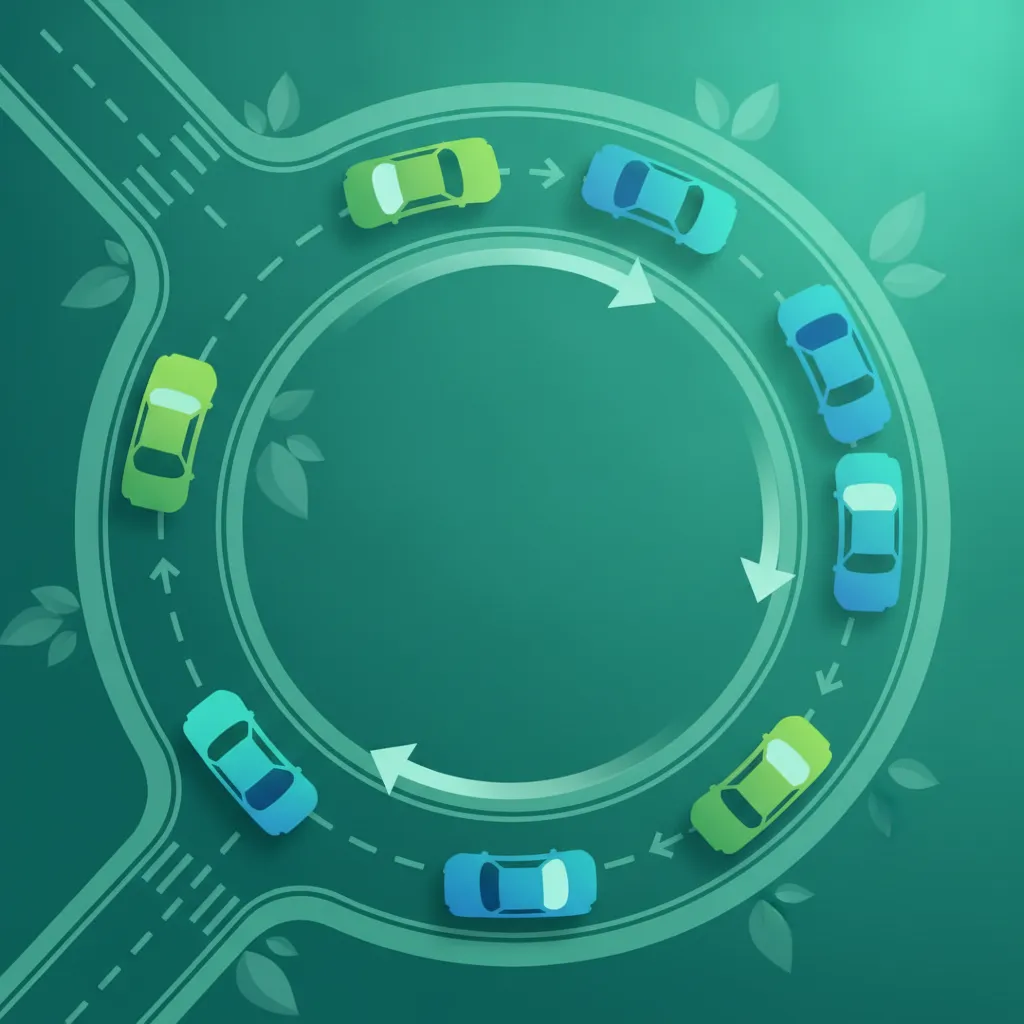
This lesson focuses on the rules for navigating roundabouts (Kreisverkehr) in Austria. It highlights the fundamental give-way rule, where traffic entering the roundabout must yield to traffic already circulating within it. Learners will understand the correct procedures for lane selection, signaling intent to exit, and maintaining safe traffic flow, supported by explanations of specific Austrian roundabout signage.

This lesson provides a comprehensive explanation of Austria's right-of-way laws, which are fundamental to intersection safety. It covers the meaning of different priority signs and clarifies the 'Rechts vor Links' (priority to the right) rule that applies at unmarked junctions. A clear understanding of these rules is essential to prevent conflicts and collisions in urban and rural settings.
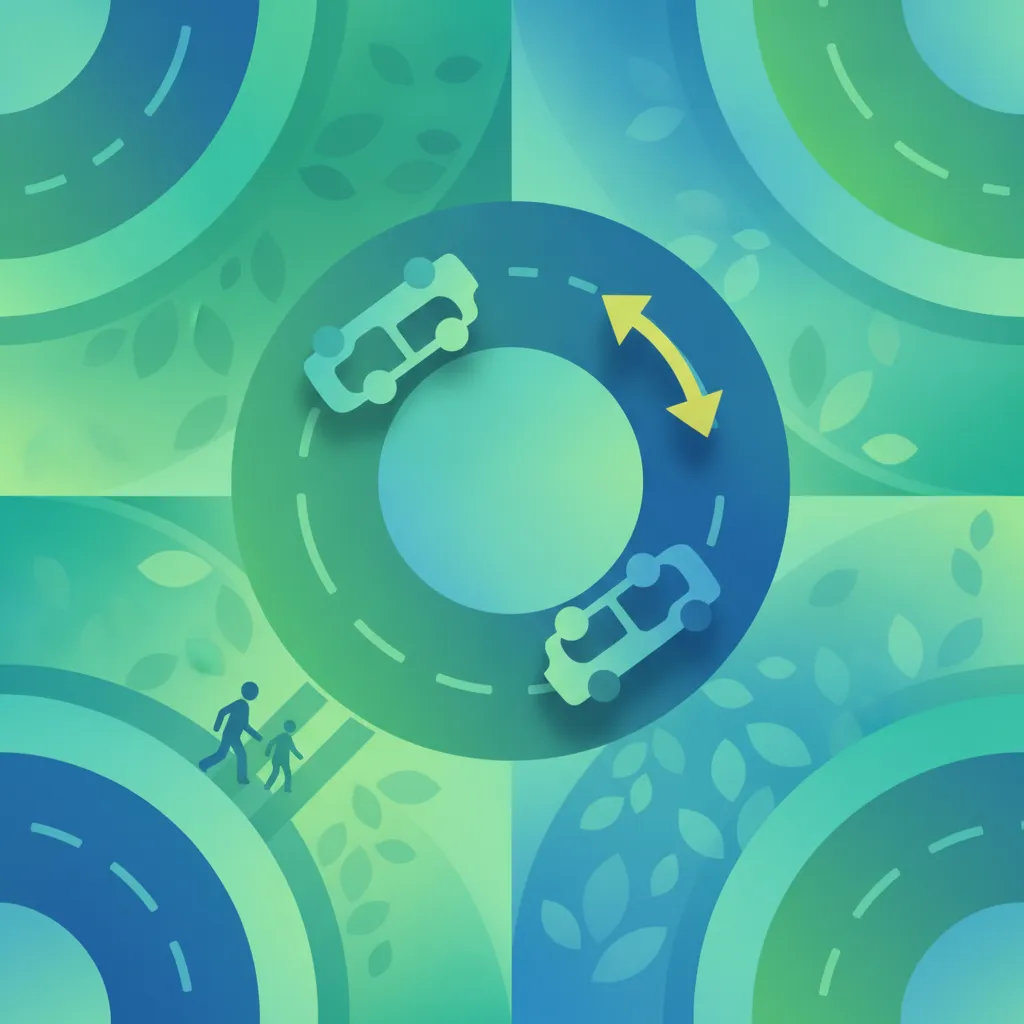
This lesson provides clear instructions for maneuvering through single and multi-lane roundabouts. It covers the critical rule of giving way to traffic already in the circle, proper lane selection based on the intended exit, and the correct use of indicators when entering and exiting. Mastering roundabouts is key to efficient and safe travel in modern Austrian traffic systems.
This lesson explains the fundamental concepts of priority that govern traffic at Austrian junctions. It differentiates between having priority ('Vorfahrt') and the duty to yield ('Nachrang'), detailing the signs that establish these rules. Correct application of these principles is critical for preventing collisions at intersections and roundabouts.
This lesson categorizes and explains the different types of Austrian road signs, including warning, regulatory, and informational signs. It details how the shape and color of a sign indicate its function, such as communicating speed limits, prohibitions, or mandatory actions. Understanding this visual system is fundamental for making correct and safe decisions while riding.

This lesson explores the strict regulations governing pedestrian crossings in Austria, particularly marked zebra crossings known as Schutzweg. It emphasizes the absolute priority of pedestrians on these crossings and the driver's legal obligation to stop and allow them to cross safely. The content covers how to approach these areas with caution, the importance of visibility, and the rules at crossings controlled by traffic lights.

This lesson focuses on the interpretation of traffic lights and road surface markings that guide riders through intersections. It covers the meaning of each traffic light phase, the rules for amber lights, and the significance of various lane lines and stop lines. Properly understanding these signals is essential for maintaining traffic flow and ensuring safety at junctions.

This lesson explains the operation and meaning of traffic light signals in Austria, including the standard red, yellow, and green phases, as well as flashing signals and arrows. It also covers other priority control devices, such as stop signs and yield signs, which are used to manage right-of-way at intersections. Understanding the hierarchy between these signals and signs is crucial for navigating junctions safely and in compliance with the law.

This lesson provides a detailed guide to executing turning manoeuvres safely and correctly at both intersections and roundabouts. It explains the importance of proper lane positioning well in advance of the turn, the correct timing for signaling, and the necessity of checking for pedestrians and cyclists. The content also reinforces priority rules that apply when turning, particularly when crossing the path of oncoming traffic during a left turn.
Clarify the distinction between Fahrbahn (carriageway) and Fahrstreifen (lane) in Austrian traffic law. Learn about correct lane usage, overtaking prohibitions, and the importance of road markings for safe driving and theory exam preparation.

This lesson details the various types of road markings and their significance for guiding traffic and ensuring safety. Learners will understand the rules associated with solid versus broken lane lines, the instructions provided by directional arrows painted on the road, and the purpose of stop lines and pedestrian crossing markings. The content emphasizes how these markings work in conjunction with signs to regulate traffic flow and define legal lane usage.

This lesson covers the principles of proper lane discipline, including maintaining a correct and steady position within a lane and adhering to the 'keep right' rule on multi-lane roads. It details the safe and systematic protocol for changing lanes, which involves checking mirrors, signaling intention, performing a blind spot check, and then smoothly executing the manoeuvre. Correct lane usage is essential for maintaining predictable and safe traffic flow.
This lesson focuses on the interpretation of traffic lights and road surface markings that guide riders through intersections. It covers the meaning of each traffic light phase, the rules for amber lights, and the significance of various lane lines and stop lines. Properly understanding these signals is essential for maintaining traffic flow and ensuring safety at junctions.

This lesson provides essential knowledge for using Austria's high-speed road network. It covers the correct procedure for entering via acceleration lanes, maintaining strict lane discipline (keeping right, passing left), and understanding the digital or physical Vignette (toll sticker) requirement. The formation of the 'Rettungsgasse' (emergency corridor) during traffic jams is also a key topic.

This lesson provides a comprehensive guide to driving on high-speed motorways (Autobahnen) and expressways (Schnellstraßen). It details the correct procedure for using the acceleration lane to merge safely, the principles of strict lane discipline, and strategies for choosing a safe speed relative to traffic flow and conditions. The lesson also explains the rules for using exit ramps and the purpose of the hard shoulder (Pannenstreifen).
This lesson provides a comprehensive explanation of Austria's right-of-way laws, which are fundamental to intersection safety. It covers the meaning of different priority signs and clarifies the 'Rechts vor Links' (priority to the right) rule that applies at unmarked junctions. A clear understanding of these rules is essential to prevent conflicts and collisions in urban and rural settings.

This lesson focuses on the high-risk manoeuvre of overtaking, outlining the strict rules and safety considerations involved. It covers how to assess if an overtaking manoeuvre is necessary, safe, and legal, emphasizing the need for a sufficiently long clear view of the road ahead. Learners will understand the correct procedure, from signaling and accelerating to safely returning to the lane, and will be able to identify signs and markings where overtaking is prohibited.
This lesson explains the fundamental concepts of priority that govern traffic at Austrian junctions. It differentiates between having priority ('Vorfahrt') and the duty to yield ('Nachrang'), detailing the signs that establish these rules. Correct application of these principles is critical for preventing collisions at intersections and roundabouts.

Bus lanes are a key tool for public transport efficiency, but they have specific rules. This lesson explains how to identify Austrian bus lanes through road markings and signs, including their hours of operation. It clarifies the regulations for entering or leaving a lane to make turns and identifies other authorized users, such as taxis or cyclists, where permitted.

This lesson addresses advanced manoeuvres that require precise timing and judgment, such as merging onto a motorway from an acceleration lane. It explains the importance of matching the speed of the traffic flow and finding a safe gap before moving over. The content also covers procedures for navigating lane drops and the 'zipper merge' (Reißverschlusssystem) principle in congested situations, promoting efficient and cooperative driving.
Find clear answers to common questions learners have about Special Signs: Schutzweg, Kreisverkehr, Fahrbahn. Learn how the lesson is structured, which driving theory objectives it supports, and how it fits into the overall learning path of units and curriculum progression in Austria. These explanations help you understand key concepts, lesson flow, and exam focused study goals.
At a marked Schutzweg, you must allow pedestrians who are waiting or stepping onto the crossing to pass safely. You must reduce your speed and, if necessary, stop to ensure they can cross without hesitation or danger.
Yes, in Austria, you must use your indicator to signal that you are leaving the roundabout. This communicates your intent to other drivers and is a critical safety practice required for the theory exam.
The Fahrbahn is the entire road surface intended for vehicular traffic, while the Fahrstreifen is a specific lane marked within that road surface for a single line of vehicles. Knowing this distinction helps in following lane-specific rules and road signs.
Usually, yes. In Austria, the 'Give Way' sign is typically posted at the entry of a roundabout, meaning traffic inside the roundabout has priority. Always watch for the specific signs, as local variations can occasionally occur.
Refine your study plan by searching for specific Austrian driving theory practice sets. Pinpoint questions related to particular road rules, signs, or challenge levels, and begin practicing immediately to reinforce your knowledge and excel in your official exam with confidence. Get started with focused revision today.