
This lesson provides critical training on responding to vehicle fire emergencies while operating a bus or coach. It covers the hierarchy of safety, starting with passenger evacuation, and moves into the proper, safe use of onboard fire extinguishing equipment as required for your Category D qualification.
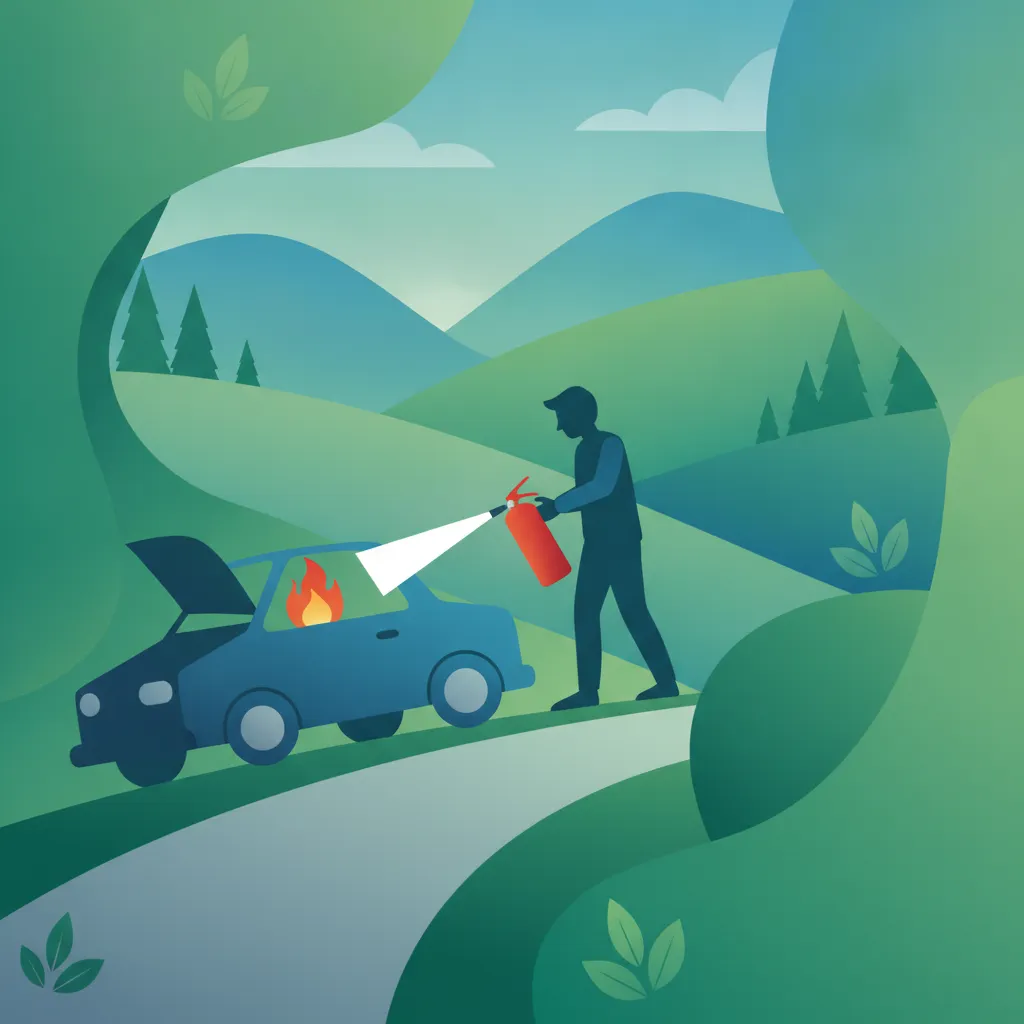
Lesson content overview
A vehicle fire, particularly in a bus or coach, is one of the most serious emergencies a professional driver can face. The immediate and effective response to such an incident is paramount, directly influencing the safety and lives of all onboard passengers. For drivers holding a Category D licence in Austria, understanding and mastering vehicle fire procedures is not merely a recommendation but a critical aspect of their duty of care. This comprehensive guide will equip you with the knowledge and techniques required to manage a vehicle fire, from rapid evacuation to the safe use of fire extinguishers, always prioritizing human safety above all else.
The moment you detect a fire in your bus or coach, whether through an indicator light, an alarm, or direct observation of smoke or flames, immediate and decisive action is required. Delay can lead to rapid escalation of the fire and endanger lives.
The very first step is to bring the vehicle to a complete and safe stop. Under Austrian Road Traffic Act § 81, drivers have a clear obligation to stop the vehicle immediately in an emergency. This means:
Stop the Vehicle Safely: Find the safest possible location to stop, ideally off the main flow of traffic, such as a hard shoulder on a motorway or a lay-by on a rural road. If in urban traffic, try to avoid stopping under bridges or in tunnels where evacuation might be hampered. Engage the parking brake.
Turn Off the Engine: Switch off the engine and remove the key if possible. This action can cut off the fuel supply and electrical power, potentially slowing the fire's spread, especially if the fire originates in the engine compartment.
Activate Hazard Warning Lights: Make your stationary, potentially dangerous vehicle visible to other road users to prevent further accidents.
Activate the Emergency Alarm: Every bus and coach is equipped with an emergency alarm. This audible signal alerts all passengers to the danger and signals the start of the evacuation process. Clear and loud activation is crucial for passenger awareness and orderly response.
Open All Doors and Emergency Exits: Manually or automatically open all available doors and emergency exits (including hatches if applicable). This provides multiple escape routes, preventing bottlenecks and accelerating evacuation.
Failing to perform these initial steps promptly can create severe complications, including passengers being trapped, exacerbated fire spread due to continued fuel supply, or secondary accidents with other vehicles.
Once the vehicle is safely stopped and the alarm sounded, the paramount concern is the rapid and orderly evacuation of all passengers. Professional bus and coach drivers carry a significant duty of care for their passengers, making efficient evacuation a core responsibility.
Upon opening all doors and emergency exits, your primary role shifts to guiding passengers. Clearly communicate the need to evacuate and direct them towards the nearest safe exit. Passengers may be disoriented or panicked, so clear, calm instructions are vital. Ensure that emergency exit signage and floor lighting are clearly visible, especially in low-light conditions.
Regularly familiarize yourself with all emergency exits on your specific vehicle, including their operation, as different bus models may have variations.
A crucial aspect of safe evacuation, often overlooked, is positioning passengers upwind of the vehicle fire.
The direction from which the wind is blowing. When evacuating upwind, you move away from the path of smoke and flames.
Smoke from a vehicle fire is not just an irritant; it contains toxic gases that can cause severe respiratory damage or even be fatal within minutes. Always assess the wind direction immediately after stopping the vehicle:
Once the wind direction is determined, direct passengers to evacuate to the side of the vehicle that is opposite the direction the smoke is drifting. If smoke is blowing towards the left side of the bus, evacuate everyone to the right side. This minimizes their exposure to harmful smoke and radiant heat.
Common mistakes during evacuation include delaying the process, failing to open all exits, or, critically, evacuating passengers downwind into the path of smoke and flames. Remember, personal belongings are secondary; human lives are the absolute priority. Do not allow passengers to re-enter the vehicle to retrieve items.
After ensuring all passengers are safely evacuated and positioned upwind, and only if it is safe to do so, you can proceed to assess the fire itself. This assessment is crucial for deciding whether attempting to extinguish the fire is feasible and safe, or if you should solely rely on emergency services. This aligns with the principle of proportional response, as stated in Austrian law § 55, which obliges drivers to avoid endangering life.
Never attempt to extinguish a fire if it compromises your personal safety. If the fire is large, inaccessible, or spreading rapidly, your priority shifts to ensuring your own safety and awaiting professional responders.
Not all fires are the same, and neither are all fire extinguishers. Using the wrong type of extinguisher can be ineffective or even dangerous. Vehicle fires typically involve different materials, necessitating a multi-purpose approach.
In Europe, fire classes are standardized by EN 2. For vehicles, especially buses and coaches, the most relevant classes are A, B, and fires involving electrical equipment (often referred to as 'Electrical Fire' or 'Class E' though not a formal EN 2 class).
Austrian regulations, often referencing ÖNORM EN 3-7, specify the type, size, placement, and maintenance requirements for fire extinguishers in commercial vehicles. Buses and coaches are typically equipped with at least one ABC powder extinguisher, and sometimes an additional CO₂ extinguisher. Always check the pressure gauge on your extinguisher during your pre-trip vehicle checks (Lesson 2) to ensure it is in operational condition.
If, after assessing the fire, you determine it is small, accessible, and safe to attempt extinguishment, you must use the fire extinguisher correctly. The internationally recognized method for operating a portable fire extinguisher is the PASS technique.
P - Pull the Pin: The pin is located at the top of the extinguisher and prevents accidental discharge. Break the tamper seal and pull the pin out.
A - Aim at the Base of the Fire: Do not aim at the flames themselves. The extinguishing agent needs to hit the fuel source. Direct the nozzle or hose at the very bottom of the fire.
S - Squeeze the Handle: Squeeze the operating handle slowly and evenly to discharge the extinguishing agent.
S - Sweep from Side to Side: While continuing to squeeze the handle and discharge the agent, sweep the nozzle from side to side, covering the entire base of the fire until it is completely extinguished. Continue to watch the area for re-ignition.
Always ensure you maintain a safe distance from the fire and have a clear exit path. If the fire re-ignites or begins to spread, retreat immediately and prioritize your personal safety.
The principle of "personal safety priority" is fundamental in any emergency. While professional drivers are expected to act decisively, there are clear limits to what you should attempt. Your life and the lives of your passengers are always the foremost consideration.
In any of these situations, your role shifts from fire suppression to ensuring all people are safe and summoning professional help.
After ensuring all passengers are safely evacuated and you are also at a safe distance, immediately call the emergency services. In Austria and across the EU, the emergency number for the fire brigade, ambulance, and police is 112.
Provide the dispatcher with clear and concise information:
Stay on the line until the dispatcher tells you it's okay to hang up. Be prepared to assist emergency responders upon their arrival, providing them with any relevant information about the incident.
Professional drivers operating in Austria must adhere to specific legal frameworks and best practices concerning vehicle fire procedures. These regulations are designed to ensure maximum safety for passengers and effective incident management.
Compliance with these regulations is not just a legal necessity but a moral imperative, reinforcing the driver's critical role in passenger safety.
Understanding common pitfalls can help reinforce correct procedures and prevent dangerous errors during a vehicle fire emergency.
While core procedures remain constant, a professional driver must adapt their response to various situational factors.
A vehicle fire is an intense and potentially life-threatening emergency. Your training and adherence to strict protocols are the most effective tools to ensure the safety of everyone onboard.
To summarize the essential steps:
By mastering these procedures, Category D drivers fulfill their duty of care and play a heroic role in protecting lives during a critical emergency.
This lesson covers the critical emergency response procedures for vehicle fires that Category D bus and coach drivers in Austria must master. The primary principle is that human life takes absolute priority—passengers must be evacuated rapidly to an upwind location before any attempt to fight the fire. Drivers must first safely stop the vehicle, activate the emergency alarm, and open all exits, then assess wind direction to guide passengers away from smoke. If the fire is small and accessible, drivers may use the PASS technique with an appropriate extinguisher (ABC Powder for most fires, CO₂ for electrical fires), but must retreat immediately if the fire grows or becomes unsafe to approach. Austrian regulations under §81 StVO and §55 StVO establish the legal duty to stop and protect life, while ÖNORM EN 3-7 governs fire extinguisher standards for commercial vehicles.
A short set of high-value points that capture the most important learning from this lesson.
Passenger evacuation takes absolute priority over all other actions, including fighting the fire or retrieving belongings.
Always determine wind direction immediately and evacuate all passengers upwind—opposite to the direction smoke is drifting.
Only attempt to extinguish a fire if it is small, contained, accessible, and poses no immediate threat to your personal safety.
Use the PASS technique (Pull, Aim, Squeeze, Sweep) with the appropriate extinguisher type—ABC Powder for most vehicle fires, CO₂ for electrical fires.
Austrian law (§81 StVO) obliges drivers to stop immediately in emergencies, while §55 StVO mandates protecting life above all else.
Explore all units and lessons included in this driving theory course.
Fire Classes A, B, and Electrical are most relevant for vehicles—Class A covers solid combustibles, Class B covers flammable liquids, and electrical fires require non-water-based extinguishers.
ABC Powder extinguishers are the standard for buses; CO₂ extinguishers leave no residue but are less effective on solid combustibles.
Smoke from vehicle fires contains toxic gases that can be fatal within minutes—never direct passengers into the smoke path.
Emergency number in Austria and across the EU is 112; provide exact location, vehicle type, passenger count, and confirmation of evacuation when calling.
If the fire is large, spreading, involves fuel tanks, or blocks safe access, abandon suppression attempts and wait for professional responders.
Driving further to find a better stopping place when a fire is detected—this allows the fire to grow and worsens control.
Using water on electrical or liquid fires, which can cause electrocution or spread flammable liquids.
Opening only one door or exit, creating bottlenecks that delay evacuation and increase danger.
Aiming the extinguisher at the flames rather than the base of the fire, which fails to address the fuel source.
Forgetting to assess wind direction, causing passengers to evacuate downwind into toxic smoke.
Lesson content overview
A short set of high-value points that capture the most important learning from this lesson.
Passenger evacuation takes absolute priority over all other actions, including fighting the fire or retrieving belongings.
Always determine wind direction immediately and evacuate all passengers upwind—opposite to the direction smoke is drifting.
Only attempt to extinguish a fire if it is small, contained, accessible, and poses no immediate threat to your personal safety.
Use the PASS technique (Pull, Aim, Squeeze, Sweep) with the appropriate extinguisher type—ABC Powder for most vehicle fires, CO₂ for electrical fires.
Austrian law (§81 StVO) obliges drivers to stop immediately in emergencies, while §55 StVO mandates protecting life above all else.
Explore all units and lessons included in this driving theory course.
Fire Classes A, B, and Electrical are most relevant for vehicles—Class A covers solid combustibles, Class B covers flammable liquids, and electrical fires require non-water-based extinguishers.
ABC Powder extinguishers are the standard for buses; CO₂ extinguishers leave no residue but are less effective on solid combustibles.
Smoke from vehicle fires contains toxic gases that can be fatal within minutes—never direct passengers into the smoke path.
Emergency number in Austria and across the EU is 112; provide exact location, vehicle type, passenger count, and confirmation of evacuation when calling.
If the fire is large, spreading, involves fuel tanks, or blocks safe access, abandon suppression attempts and wait for professional responders.
Driving further to find a better stopping place when a fire is detected—this allows the fire to grow and worsens control.
Using water on electrical or liquid fires, which can cause electrocution or spread flammable liquids.
Opening only one door or exit, creating bottlenecks that delay evacuation and increase danger.
Aiming the extinguisher at the flames rather than the base of the fire, which fails to address the fuel source.
Forgetting to assess wind direction, causing passengers to evacuate downwind into toxic smoke.
Explore search topics learners often look for when studying Vehicle Fire Procedures and Use of Extinguishers. These topics reflect common questions about road rules, driving situations, safety guidance, and lesson level theory preparation for learners in Austria.
Browse additional driving theory lessons that cover connected traffic rules, road signs, and common driving situations related to this topic. Improve your understanding of how different rules interact across everyday traffic scenarios.
Understand critical actions for bus and coach fires in Austria. Learn immediate response steps, safe passenger evacuation strategies, and how to safely use fire extinguishers when possible. Essential knowledge for Category D drivers.

In a serious incident, a swift and orderly evacuation can save lives. This lesson teaches the principles of taking command, giving clear and simple instructions, and directing passengers to the nearest safe exit. It covers the importance of assisting those with mobility issues and guiding everyone to a safe assembly point away from the vehicle and any traffic.
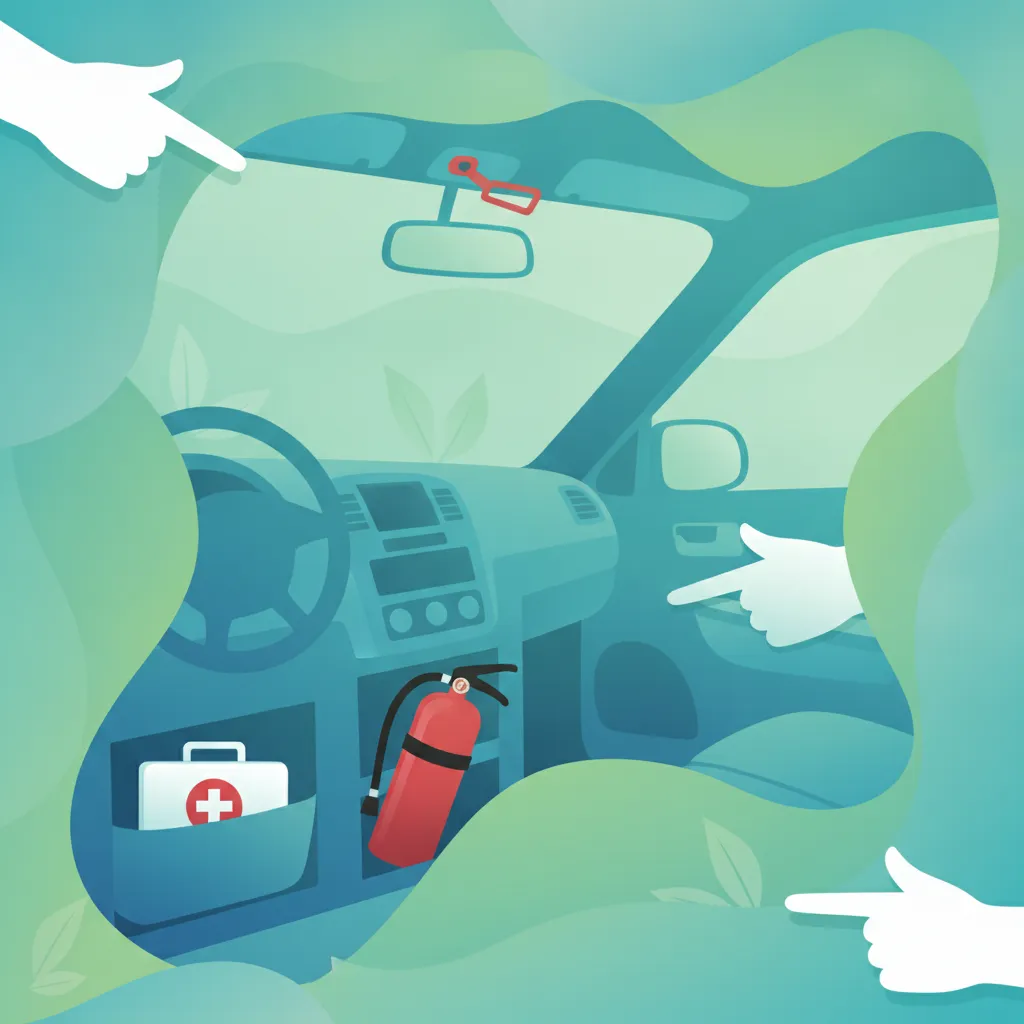
In an emergency, knowing the location and status of safety equipment is critical. This lesson details how to locate and inspect fire extinguishers, first aid kits, emergency hammers, and all designated emergency exits, including doors and roof hatches. It emphasizes the importance of ensuring these items are unobstructed and included in the daily pre-trip inspection.
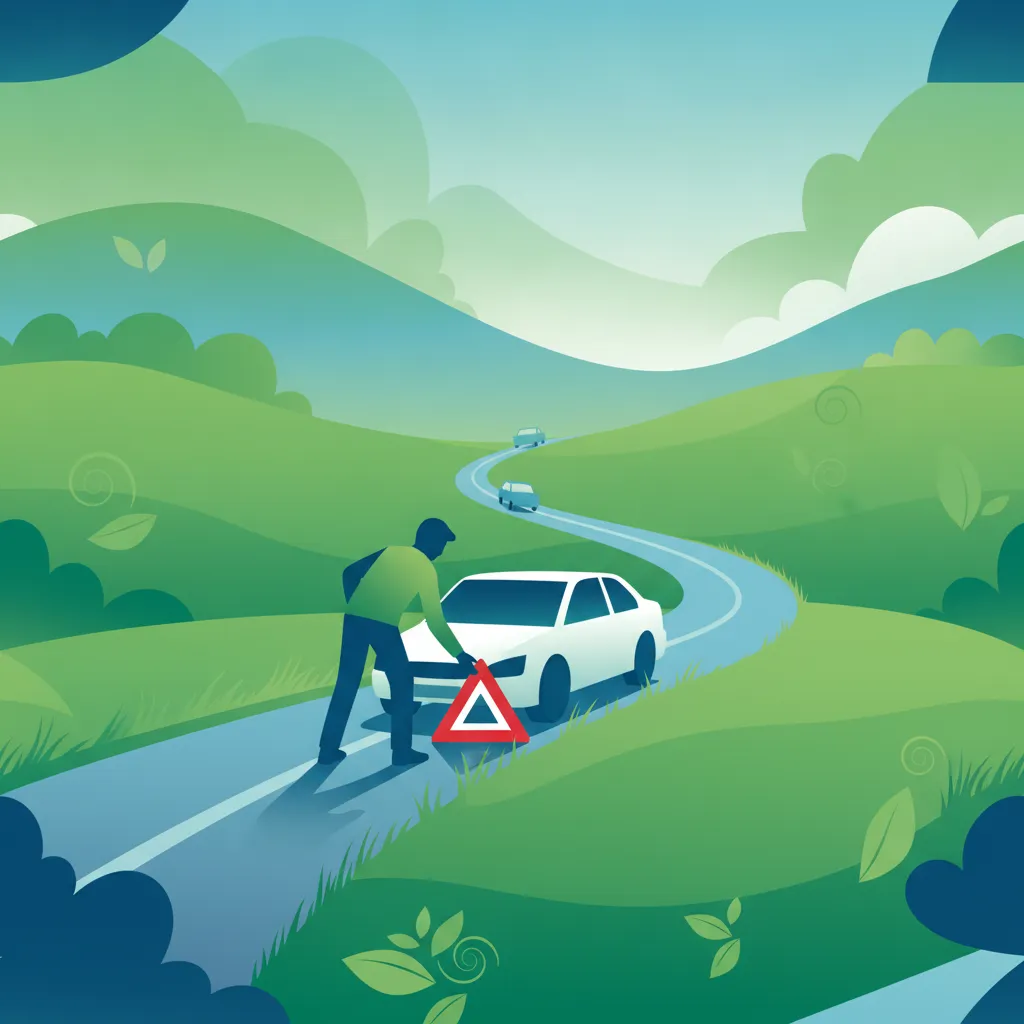
A breakdown requires a calm, systematic response to keep everyone safe. This lesson details the procedure: move to the safest possible location, activate hazard lights, secure the vehicle, and deploy warning triangles. It emphasizes the importance of moving passengers to a safe place away from the vehicle, especially on a motorway, before contacting your company or the breakdown services.
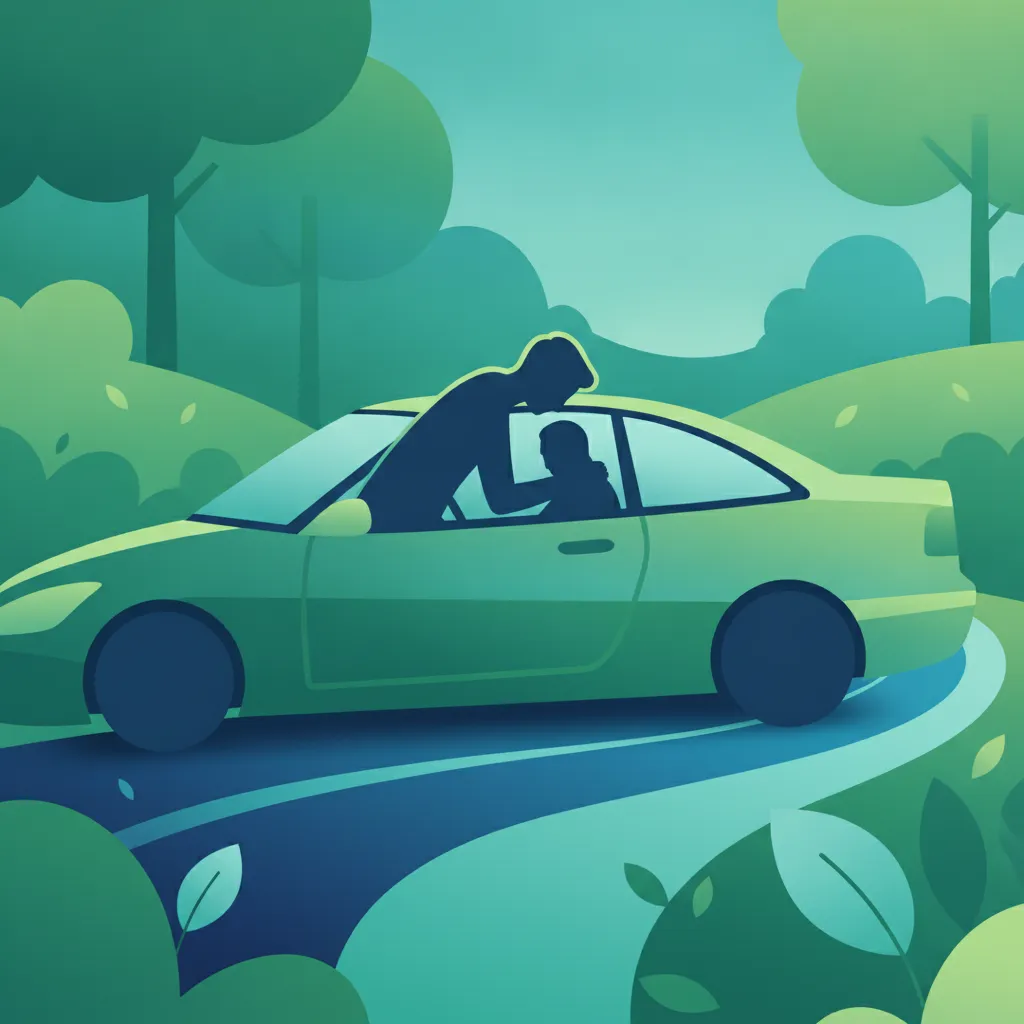
When a passenger becomes ill, the driver's role is to facilitate professional medical help as quickly as possible. This lesson covers how to safely stop the vehicle, make an emergency call to 112 with clear location and patient information, and provide basic comfort and reassurance. It clarifies that the driver's role is not to diagnose but to manage the scene and get help.

The driver is responsible for supervising the entire boarding process. This lesson covers techniques for encouraging orderly queues and ensuring passengers use handrails. It also details the driver's role in assisting passengers with mobility aids, prams, or heavy luggage, ensuring they are able to board without rushing and find a seat or safe standing position.

Properly managed luggage is crucial for safety and passenger flow. This lesson covers procedures for stowing items in underfloor lockers on coaches and managing larger items like prams or winter sports equipment inside the vehicle. It emphasizes the legal requirement to keep gangways and emergency exits clear and provides guidance on assisting passengers with their belongings.
A driver's duty of care extends to passengers until they are safely away from the vehicle. This lesson stresses the importance of monitoring passengers as they step off, ensuring they have stable footing and are clear of the bus's path. It highlights the particular need for vigilance when children or elderly passengers are alighting, and the importance of checking mirrors before closing the doors.

Providing safe and respectful access for all passengers is a legal and professional duty. This lesson details the correct operation of accessibility features like ramps, lifts, and kneeling systems. It covers how to secure wheelchairs and mobility aids, and how to communicate effectively and respectfully with passengers who may require assistance with boarding or alighting.
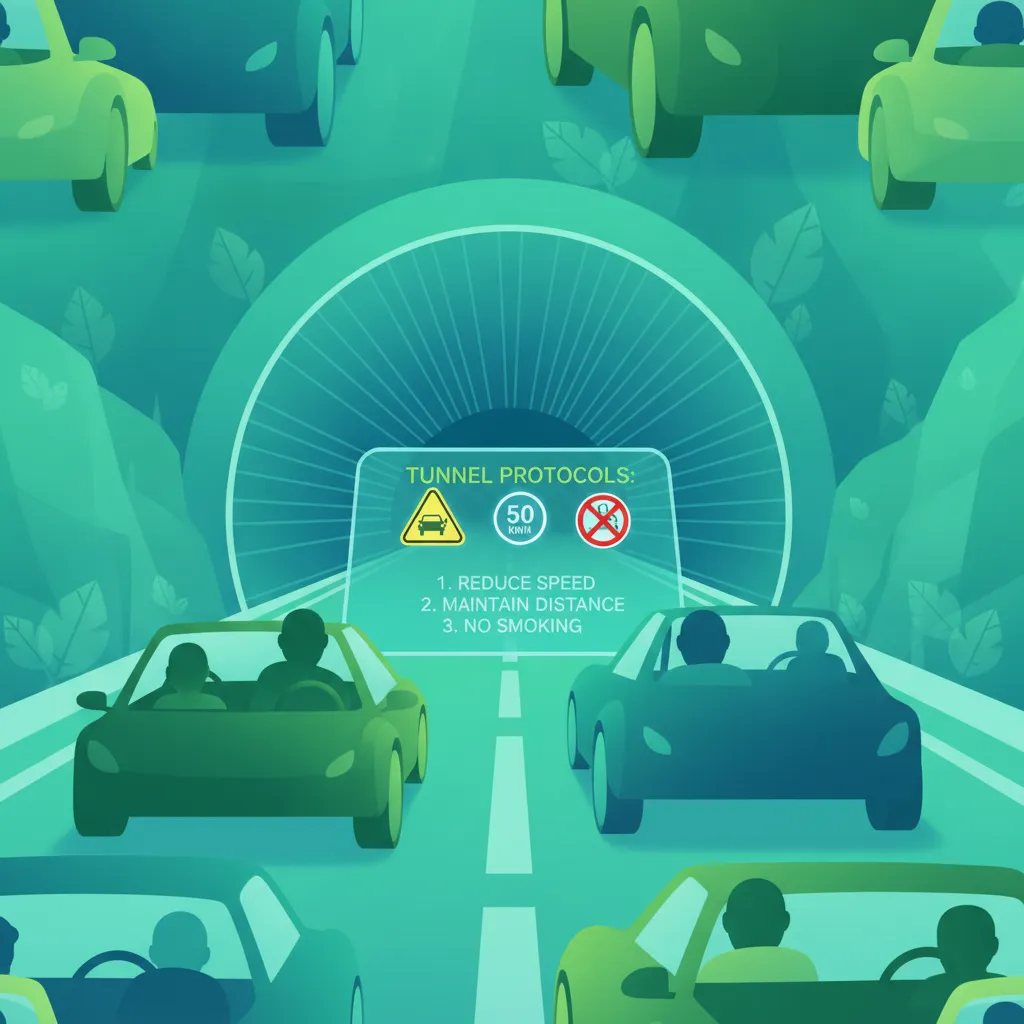
Austria's mountainous terrain means drivers will frequently encounter long tunnels. This lesson details the specific regulations, such as turning on lights and maintaining distance, as well as how to react to tunnel-specific warning signs and signals. Crucially, it covers the correct emergency procedures to follow in the event of a fire, accident, or breakdown inside a tunnel.
Learn the principles of different fire extinguisher types (ABC, CO₂) and how to operate them safely using the PASS technique. Understand when it is safe to attempt to fight a vehicle fire as part of Austrian driving theory.
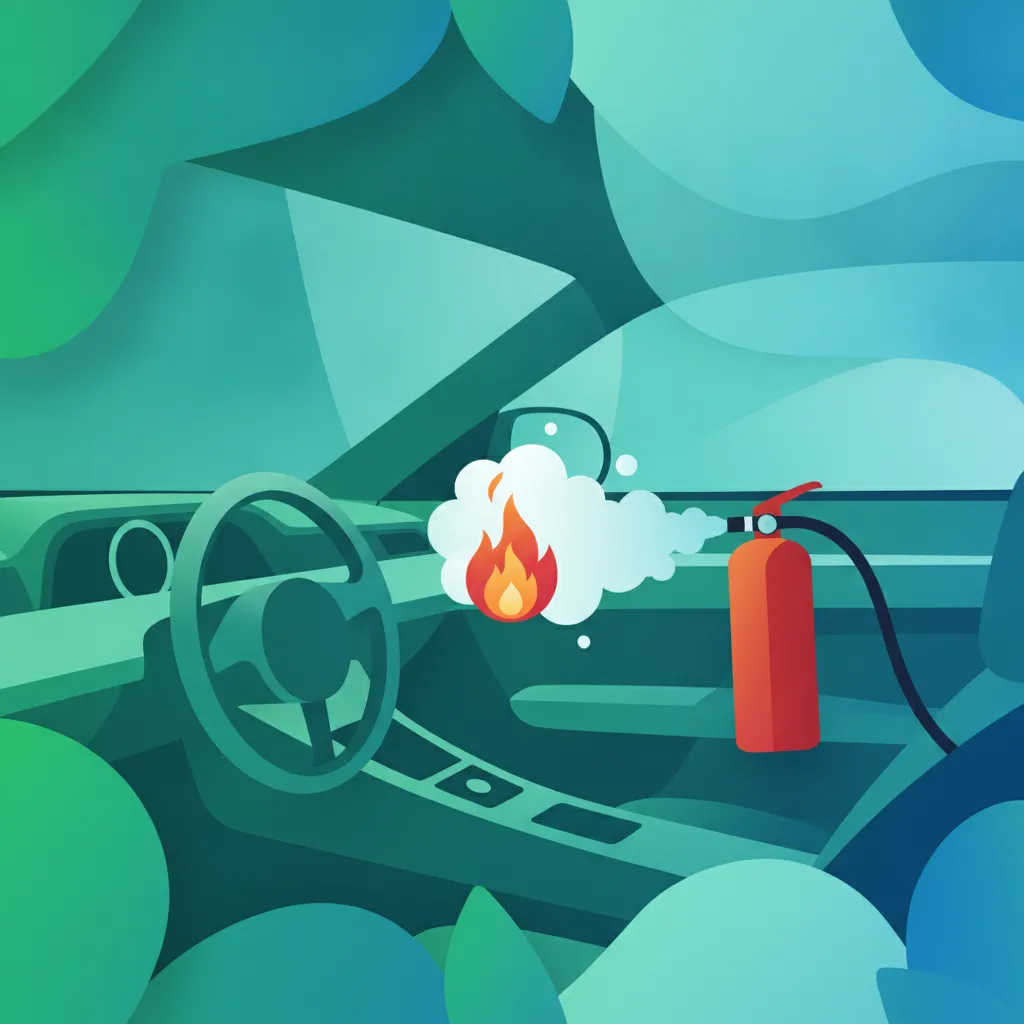
This lesson covers essential fire safety knowledge for heavy vehicle drivers. It explains common causes of vehicle fires, preventative checks, and the legal requirement to carry a fire extinguisher. The lesson also provides basic instructions on how to assess a fire and, if safe to do so, use an extinguisher effectively.
Find clear answers to common questions learners have about Vehicle Fire Procedures and Use of Extinguishers. Learn how the lesson is structured, which driving theory objectives it supports, and how it fits into the overall learning path of units and curriculum progression in Austria. These explanations help you understand key concepts, lesson flow, and exam focused study goals.
The absolute priority is the safe and rapid evacuation of all passengers. You must never prioritize the vehicle or property over the lives of your passengers; move them to a safe, upwind location immediately.
Only attempt to use an extinguisher if the fire is small, you have already ensured passengers are evacuating or safe, and you have a clear exit path. Never put yourself in danger if the fire is spreading rapidly.
No, your first move after ensuring passenger safety is to alert emergency services. Use the fire extinguisher only if the situation is manageable and safe to do so while help is on the way.
Always stand upwind of the fire. This prevents smoke and toxic fumes from blowing into your face and allows you to see the base of the fire clearly for effective application.
Refine your study plan by searching for specific Austrian driving theory practice sets. Pinpoint questions related to particular road rules, signs, or challenge levels, and begin practicing immediately to reinforce your knowledge and excel in your official exam with confidence. Get started with focused revision today.