
This lesson details the critical fire safety protocols and the legal requirements for carrying and using fire extinguishers in heavy goods vehicles within Austria. It is an essential component of the C category curriculum, helping you manage emergency situations and ensure roadworthiness as a professional driver.
Lesson content overview
Driving heavy goods vehicles across Austria comes with significant responsibilities, not least of which is ensuring stringent fire safety. Vehicle fires pose severe threats, risking lives, causing extensive property damage to cargo and infrastructure, and leading to considerable operational delays. This comprehensive lesson is designed for drivers undertaking the Austrian Driving License Theory Course for Heavy Goods Vehicles (C, C1, C1E, CE), providing essential knowledge on fire prevention, legal obligations regarding fire extinguishers, and the correct procedures for fire assessment and suppression in an emergency.
Understanding and adhering to fire safety protocols is not merely a best practice; it is a legal requirement critical for the safety of the driver, other road users, and the environment. This module will integrate knowledge from various aspects of heavy vehicle operation, emphasizing the professional mindset required to mitigate fire risks effectively.
Heavy goods vehicles operate with complex mechanical, electrical, and fuel systems, often under high stress and carrying diverse loads. These factors contribute to a heightened risk of fire compared to passenger vehicles. Recognizing the most common ignition sources is the first step in effective fire prevention.
Fuel system leaks are among the leading causes of vehicle fires. Diesel, gasoline, and other flammable liquids can escape from damaged fuel lines, tanks, or connections. Even a small leak, particularly in proximity to hot engine components, exhaust systems, or electrical wiring, can quickly escalate into a dangerous fire. Drivers should be vigilant for fuel odors, visible drips, or stained areas around the fuel tank and engine compartment during pre-trip inspections.
Modern heavy vehicles are equipped with extensive electrical systems, from engine management to lighting, infotainment, and auxiliary equipment. Faults such as short circuits, frayed wiring, loose connections, or overloaded circuits can generate intense heat, melting insulation and igniting surrounding materials. Battery issues, including improper charging or damaged terminals, can also lead to arcing and sparks. Any unexplained burning smell, flickering lights, or intermittent electrical failures warrant immediate investigation.
The exhaust system, by its nature, operates at extremely high temperatures. If the exhaust pipe or catalytic converter comes into contact with flammable materials such as dry grass, spilled oil, cargo packaging, or even road debris, it can easily ignite a fire. Ensuring adequate clearance between the exhaust system and all other components, especially cargo, is crucial. Regular checks for physical damage or loose mounts can prevent this hazard.
Engine overheating, often due to coolant system failure, can lead to more than just mechanical breakdown. Extreme temperatures within the engine compartment can cause oil, fuel, or hydraulic fluid to auto-ignite if they come into contact with superheated components. Leaking fluids, combined with an overheated engine, create a highly volatile situation. Monitoring engine temperature gauges and checking coolant levels are vital preventive measures.
The cargo itself can be a fire risk. Flammable goods, hazardous materials, or even seemingly innocuous items like textiles or paper can ignite under certain conditions. Improper load securing can lead to cargo shifting and friction, generating heat that could ignite the load or other vehicle components. Spilled hazardous materials can also present a significant fire hazard. Proper load distribution and securing are paramount to preventing such incidents.
Preventive checks and diligent maintenance are the cornerstones of fire safety for heavy goods vehicles. Drivers play a critical role in identifying potential fire hazards before they escalate into dangerous situations. Regular inspections are not just about roadworthiness; they are about safeguarding lives and assets.
Before each journey, drivers must perform a thorough walk-around inspection, paying close attention to specific areas known for fire risk:
Always be alert to your senses. Strange smells (burning plastic, fuel, oil), unusual sounds (hissing, arcing), or visible smoke or fluid drips are critical warning signs that demand immediate attention.
Beyond daily checks, adhering to the vehicle manufacturer's scheduled maintenance intervals is crucial. Professional technicians can identify and rectify underlying issues that a driver might miss, such as worn electrical components, failing fuel pumps, or deteriorating brake systems, all of which can be precursors to fire.
In Austria, the carriage of fire extinguishers in heavy goods vehicles is not merely a recommendation; it is a strict legal requirement. This regulation ensures that drivers have the immediate means to combat a fire, potentially preventing catastrophic losses and ensuring road safety.
Under Austrian road traffic regulations, specifically the Straßenverkehrsordnung (StVO) § 79 and vehicle inspection guidelines (TTG), all heavy goods vehicles with a maximum permissible mass exceeding 3,500 kg (vehicles in categories C, C1, C1E, CE) are legally obligated to carry an appropriate fire extinguisher.
The extinguisher must be of a type suitable for the most common vehicle fire classes, typically requiring a minimum of a 2 kg ABC powder or foam extinguisher. These types are versatile, capable of extinguishing fires involving solid combustibles (Class A), flammable liquids (Class B), and energized electrical equipment (Class C), which are the most likely scenarios in a heavy vehicle.
The legal obligation extends beyond merely carrying an extinguisher; it must be kept in full working order and be readily accessible. Before each journey, drivers must:
Failure to comply with these regulations can lead to significant legal penalties, including fines and potentially the temporary impoundment of the vehicle. More importantly, it leaves the driver and vehicle vulnerable in a fire emergency.
An expired or improperly serviced fire extinguisher is as dangerous as having none at all. It may fail to operate when needed most.
Effective fire suppression begins with understanding different types of fires and selecting the correct extinguishing agent. Using the wrong type of extinguisher can be ineffective, waste valuable time, and even exacerbate the situation or endanger the operator.
Fires are categorized into classes based on the type of fuel involved:
A categorization system for fires based on the type of fuel involved, which dictates the most effective extinguishing agent.
The labels on fire extinguishers clearly indicate the fire classes they are suitable for (e.g., ABC, BC).
For a heavy goods vehicle, an ABC powder extinguisher is generally the most practical choice due to its broad effectiveness against the most common types of vehicle fires.
Once a fire has been safely assessed and the appropriate extinguisher selected, knowing how to operate it correctly is crucial. The PASS technique is a universally recognized, simple, and effective method for using a portable fire extinguisher.
P - Pull the Pin: First, remove the safety pin or tamper seal. This unlocks the operating lever, allowing you to discharge the extinguishing agent.
A - Aim at the Base of the Fire: Point the nozzle or hose at the very base of the flames, not at the flames themselves. Targeting the base is critical because this is where the fuel source is, and extinguishing the fuel will put out the fire.
S - Squeeze the Handle: Depress the operating lever (or handles) to release the extinguishing agent. Maintain a firm grip on the extinguisher.
S - Sweep Side-to-Side: While aiming at the base, sweep the nozzle from side to side across the fire until the flames are completely extinguished. Continue to discharge and sweep until the fire appears to be out. Keep an eye on the area for any reignition.
Stand a safe distance from the fire (usually 2-3 meters) and position yourself upwind if possible, to avoid smoke and heat. Remember that most portable extinguishers discharge their contents in a short time (typically 8-20 seconds), so make every second count.
A fire emergency demands a calm, systematic, and safety-first approach. The immediate actions taken by a heavy vehicle driver are crucial for minimizing harm, protecting occupants, and preventing the situation from worsening.
Upon detecting a fire, your first priority is always safety.
Regardless of whether you successfully extinguish a small fire, or if the fire is too large to tackle, you must contact emergency services immediately.
The European emergency telephone number that connects callers to police, fire, and ambulance services.
Never put yourself in undue danger. Your life and the lives of others are paramount. If the fire is too large, spreading too quickly, or if you feel unsafe, evacuate and wait for professional help.
Even after a fire is extinguished, whether by the driver or emergency services, the incident is not over. There are critical post-fire reporting and documentation requirements that heavy vehicle drivers must fulfill under Austrian law. These steps are vital for legal compliance, insurance claims, and preventing future occurrences.
Fire safety protocols for heavy goods vehicles are not static; they must adapt to various environmental conditions, road types, and vehicle specifics. Understanding these contextual variations enhances a driver's ability to respond effectively to an emergency.
Fatigue, stress, and panic can severely impair a driver's decision-making and reaction time during a fire incident. This underscores the importance of not only knowing the procedures but also practicing them mentally, maintaining vigilance, and managing driver fatigue to ensure optimal response capability in an emergency.
Fire safety for heavy goods vehicles is a critical aspect of professional driving within the Austrian transport system. It demands a proactive approach, adherence to legal mandates, and a clear understanding of emergency response protocols.
This lesson covers essential fire safety knowledge for Austrian heavy goods vehicle drivers, addressing both legal requirements and practical emergency response. Key topics include common fire ignition sources (fuel leaks, electrical faults, exhaust and engine overheating, cargo issues) and the critical pre-trip inspection points to identify hazards early. Learners must understand the mandatory Austrian requirement to carry at least a 2 kg ABC powder extinguisher in vehicles exceeding 3,500 kg, verified through pressure gauge, tamper seal, and service stamp checks. The universally recognized PASS technique provides a four-step framework for effective extinguisher use, while clear safety protocols emphasize immediate vehicle positioning, hazard activation, passenger evacuation, and calling 112. Post-incident procedures require reporting to authorities and professional vehicle inspection before returning to service, ensuring legal compliance and preventing future occurrences.
A short set of high-value points that capture the most important learning from this lesson.
Vehicle fires in heavy goods vehicles are most commonly caused by fuel system leaks, electrical faults, exhaust overheating, engine overheating, and improper cargo handling
Austrian law (StVO § 79) mandates that all heavy vehicles over 3,500 kg carry at least a 2 kg ABC powder extinguisher, which must be in working order and within its service period
Fire extinguishers must be checked before each journey: verify the pressure gauge is in the green zone, the tamper seal is intact, and the service stamp is current
The PASS technique (Pull the pin, Aim at the base, Squeeze the handle, Sweep side-to-side) is the standard four-step procedure for operating any portable fire extinguisher
If a fire cannot be safely contained with available equipment, evacuate immediately and call 112 without delay—never risk personal safety
Explore all units and lessons included in this driving theory course.
Class A fires involve ordinary combustibles (wood, paper); Class B fires involve flammable liquids (diesel, oil); Class C fires involve energized electrical equipment
ABC powder extinguishers are the most practical choice for heavy vehicles because they handle Class A, B, and C fires, while foam extinguishers are NOT suitable for electrical fires
Stand 2–3 meters from the fire, position yourself upwind, and remember that most portable extinguishers discharge completely within 8–20 seconds
Always aim at the base of the fire, not the flames, and continue sweeping until the fire is completely out—watch for reignition for several minutes after
After any fire incident, report to authorities, document extinguisher usage, and arrange a professional vehicle inspection before returning to service
Aiming at the flames instead of the base of the fire wastes extinguishing agent and fails to address the fuel source
Using water or foam extinguishers on electrical (Class C) fires risks electrocution or spreading the fire due to water conductivity
Failing to check the extinguisher's pressure gauge and service stamp, leading to discovering it is expired or depressurized during an emergency
Leaving the scene or failing to report to authorities after successfully extinguishing a small fire, which is a legal requirement in Austria
Attempting to fight a fire that is large, spreading rapidly, or involves hazardous materials instead of evacuating and calling professional help
Lesson content overview
A short set of high-value points that capture the most important learning from this lesson.
Vehicle fires in heavy goods vehicles are most commonly caused by fuel system leaks, electrical faults, exhaust overheating, engine overheating, and improper cargo handling
Austrian law (StVO § 79) mandates that all heavy vehicles over 3,500 kg carry at least a 2 kg ABC powder extinguisher, which must be in working order and within its service period
Fire extinguishers must be checked before each journey: verify the pressure gauge is in the green zone, the tamper seal is intact, and the service stamp is current
The PASS technique (Pull the pin, Aim at the base, Squeeze the handle, Sweep side-to-side) is the standard four-step procedure for operating any portable fire extinguisher
If a fire cannot be safely contained with available equipment, evacuate immediately and call 112 without delay—never risk personal safety
Explore all units and lessons included in this driving theory course.
Class A fires involve ordinary combustibles (wood, paper); Class B fires involve flammable liquids (diesel, oil); Class C fires involve energized electrical equipment
ABC powder extinguishers are the most practical choice for heavy vehicles because they handle Class A, B, and C fires, while foam extinguishers are NOT suitable for electrical fires
Stand 2–3 meters from the fire, position yourself upwind, and remember that most portable extinguishers discharge completely within 8–20 seconds
Always aim at the base of the fire, not the flames, and continue sweeping until the fire is completely out—watch for reignition for several minutes after
After any fire incident, report to authorities, document extinguisher usage, and arrange a professional vehicle inspection before returning to service
Aiming at the flames instead of the base of the fire wastes extinguishing agent and fails to address the fuel source
Using water or foam extinguishers on electrical (Class C) fires risks electrocution or spreading the fire due to water conductivity
Failing to check the extinguisher's pressure gauge and service stamp, leading to discovering it is expired or depressurized during an emergency
Leaving the scene or failing to report to authorities after successfully extinguishing a small fire, which is a legal requirement in Austria
Attempting to fight a fire that is large, spreading rapidly, or involves hazardous materials instead of evacuating and calling professional help
Explore search topics learners often look for when studying Fire Safety and Use of Extinguishers in Vehicles. These topics reflect common questions about road rules, driving situations, safety guidance, and lesson level theory preparation for learners in Austria.
Browse additional driving theory lessons that cover connected traffic rules, road signs, and common driving situations related to this topic. Improve your understanding of how different rules interact across everyday traffic scenarios.
Understand the legal obligations for carrying fire extinguishers in Austria. Learn about required types, sizes, and regular maintenance for heavy goods vehicles (C, C1, C1E, CE) to ensure compliance and readiness for emergencies.

This lesson covers the various lighting and reflector systems required on heavy goods vehicles in Austria. It explains the function and legal requirements for headlights, taillights, brake lights, indicators, and reflective markings. Ensuring all lighting systems are operational is essential for visibility and communicating intentions to other road users.
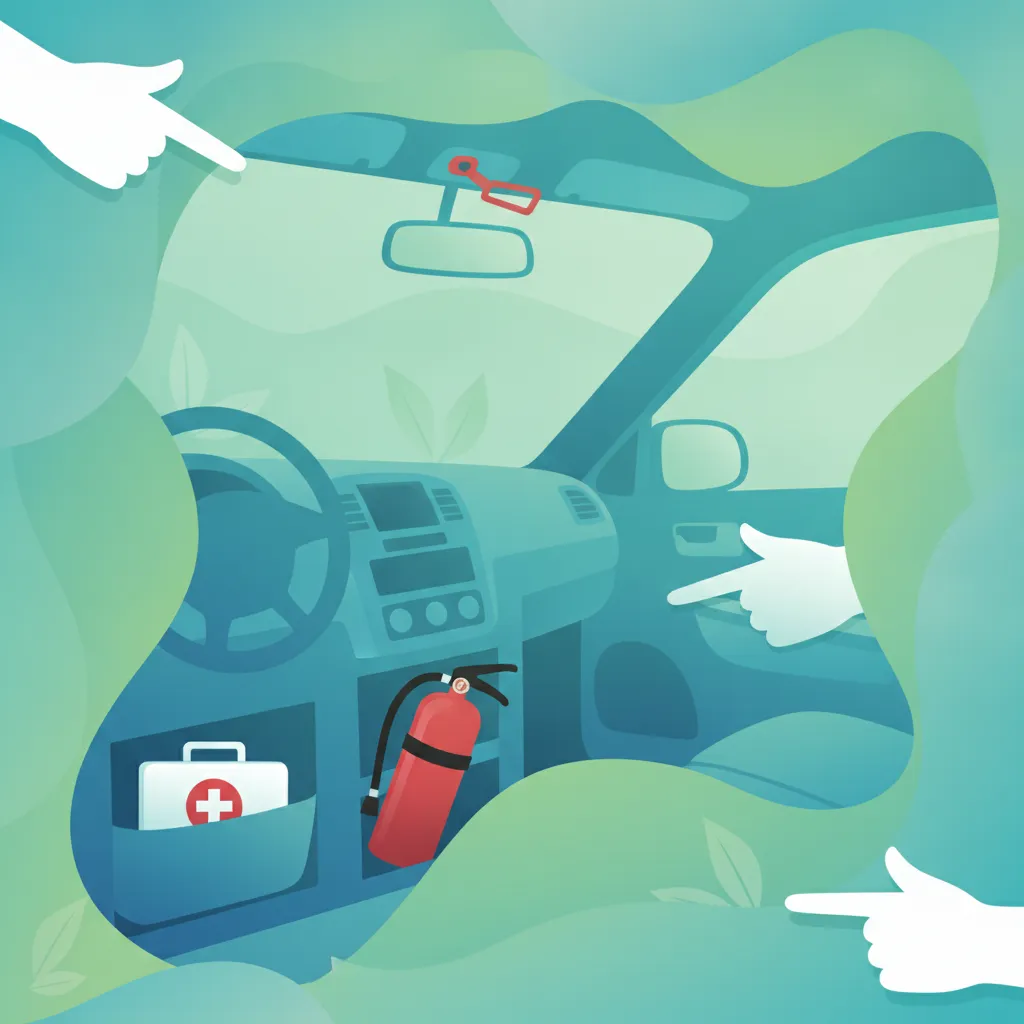
In an emergency, knowing the location and status of safety equipment is critical. This lesson details how to locate and inspect fire extinguishers, first aid kits, emergency hammers, and all designated emergency exits, including doors and roof hatches. It emphasizes the importance of ensuring these items are unobstructed and included in the daily pre-trip inspection.

A vehicle fire is a critical emergency requiring immediate and decisive action. This lesson prioritizes the rapid and safe evacuation of all passengers to an upwind location. It then covers a basic assessment of the fire and the correct technique for using a fire extinguisher on a small, accessible fire if it is safe to do so, while stressing that personal safety comes first.
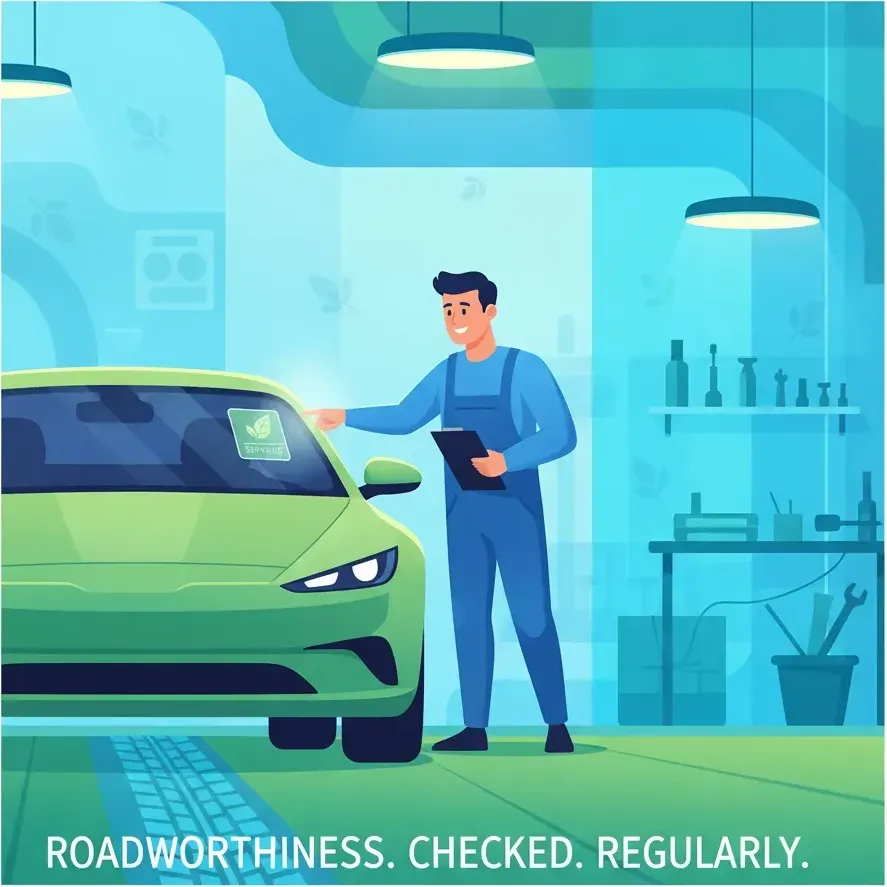
This lesson covers the legal requirements for regular maintenance and periodic roadworthiness certification (known as the 'Pickerl' or TÜV inspection) in Austria. It explains the importance of adhering to manufacturer-recommended service intervals. Maintaining a certified, roadworthy vehicle is a core legal responsibility for any operator or driver.
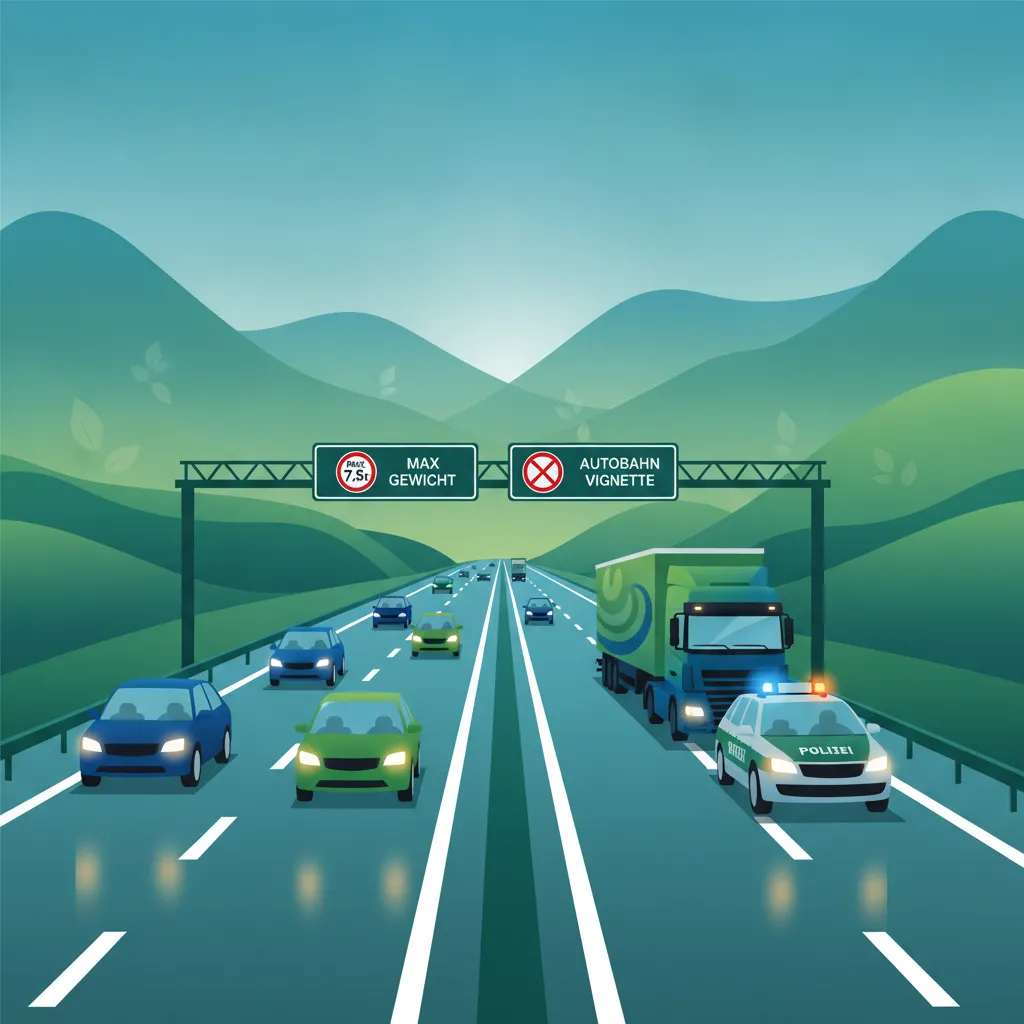
This lesson explains the system of penalties and enforcement for heavy vehicle operations in Austria. It covers the fines and penalty points associated with common traffic violations, such as overloading or insecure loads. Learners will understand the role of authorities in conducting roadside checks and inspections to ensure regulatory compliance.

This lesson focuses on the legal restrictions concerning a heavy vehicle's dimensions, including maximum height, width, and length. It teaches drivers how to interpret road signs and supplemental plates that indicate these limits. This knowledge is crucial for route planning, especially when navigating under bridges, through tunnels, and on restricted roads.

This lesson consolidates the legal restrictions on the maximum dimensions and weight for different vehicle combinations in Austria. It covers how to read signs indicating these limits and the importance of compliance for route planning. Adhering to these regulations is essential for legal operation and avoiding fines.
This lesson provides an overview of the legal framework governing heavy vehicle drivers in Austria. It details the potential penalties for violations, including fines, penalty points, and the risk of licence suspension. A clear understanding of these consequences reinforces the importance of compliant and responsible driving.
This lesson teaches the systematic procedure for conducting a thorough pre-trip walk-around inspection. It provides a checklist of critical components to examine, including tyres, lights, braking systems, and load security. Performing this daily check is a legal requirement and a fundamental practice for preventing mechanical failures and ensuring safety.
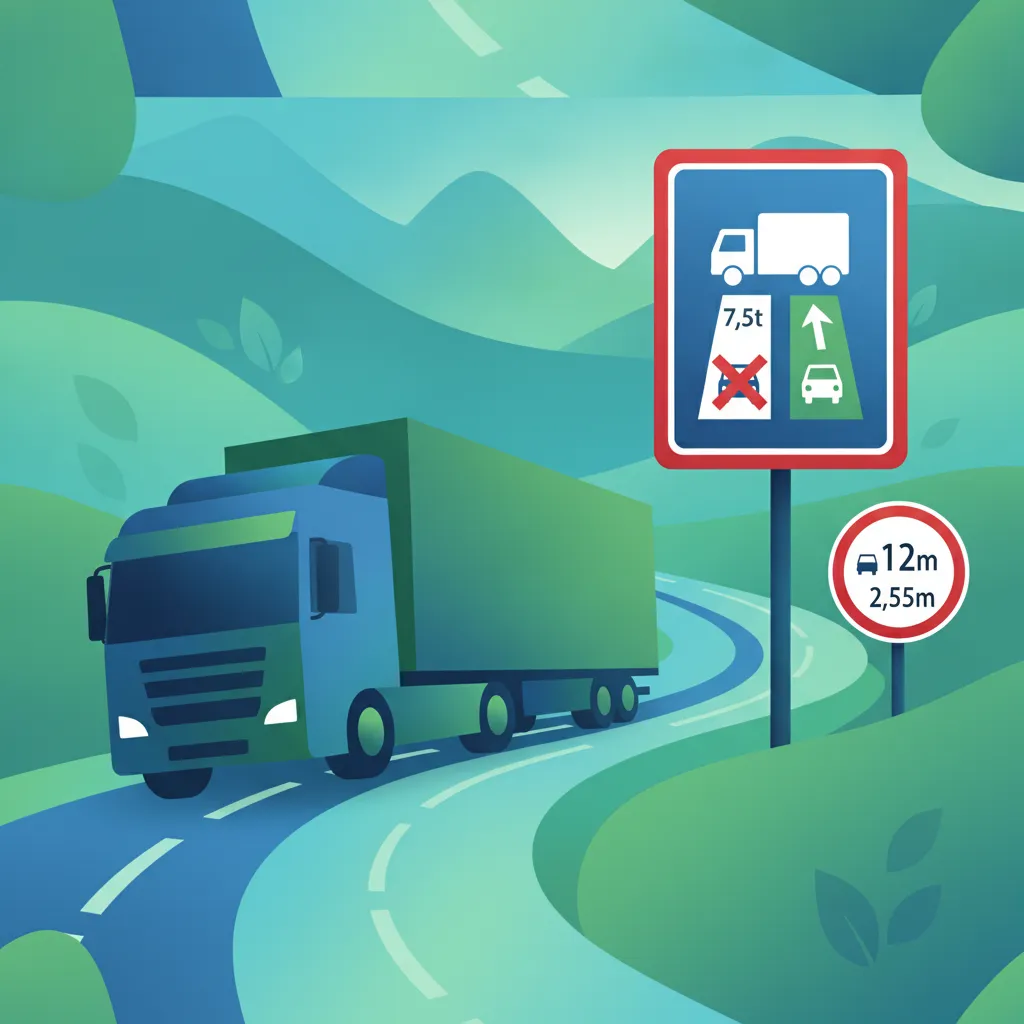
This lesson focuses on the specific Austrian road signs and supplemental plates that apply to heavy goods vehicles. It explains how to interpret signage indicating weight limits, height and width restrictions, lane usage rules, and other critical regulatory information. Correctly understanding these signs is essential for legal compliance and safe navigation on Austria's roads.
Explore realistic scenarios and learn critical response steps for vehicle fires. This lesson covers immediate safety positioning, passenger evacuation, effective use of extinguishers, and contacting emergency services.
A vehicle fire is a critical emergency requiring immediate and decisive action. This lesson prioritizes the rapid and safe evacuation of all passengers to an upwind location. It then covers a basic assessment of the fire and the correct technique for using a fire extinguisher on a small, accessible fire if it is safe to do so, while stressing that personal safety comes first.
Find clear answers to common questions learners have about Fire Safety and Use of Extinguishers in Vehicles. Learn how the lesson is structured, which driving theory objectives it supports, and how it fits into the overall learning path of units and curriculum progression in Austria. These explanations help you understand key concepts, lesson flow, and exam focused study goals.
Yes, heavy goods vehicles operating in Austria must carry appropriate fire extinguishing equipment. The exact specifications often depend on the type of load being carried, particularly regarding dangerous goods (ADR).
First, stop the vehicle in a safe location, turn off the engine to cut fuel flow, and ensure your own safety. If it is safe to do so, attempt to suppress the fire with an extinguisher, but never open the hood fully if a fire is intense, as the sudden oxygen surge can cause an explosion.
Yes. While powder extinguishers are common for general vehicle use, they can cause damage to sensitive electronic components. Professional drivers should know which type of extinguisher is equipped in their vehicle and its specific limitations.
You should check the pressure gauge and the physical integrity of the extinguisher during every pre-trip inspection. Ensure the seal is intact, the pin is secured, and the inspection date is current.
Refine your study plan by searching for specific Austrian driving theory practice sets. Pinpoint questions related to particular road rules, signs, or challenge levels, and begin practicing immediately to reinforce your knowledge and excel in your official exam with confidence. Get started with focused revision today.