
In this lesson, you will learn the critical procedures for managing a safe and orderly emergency evacuation of a bus or coach. As a Category D driver, your command during a crisis is vital to protecting your passengers and ensuring a controlled response in high-pressure situations.

Lesson content overview
As a professional driver holding an Austrian Category D licence, your primary responsibility extends far beyond simply operating the vehicle. In unforeseen emergencies, your ability to manage a crisis and ensure the safe evacuation of passengers is paramount. This lesson delves into the critical principles and procedures for effective emergency evacuation from a bus or coach, covering everything from taking command to guiding passengers to a safe assembly point.
Emergency evacuation is a systematic process designed to safely and quickly remove passengers from a vehicle that has become hazardous. This could be due to incidents such as a vehicle fire, a serious collision, a major mechanical breakdown in a dangerous location, or a hazardous material spill. For Category D licence holders in Austria, mastering these procedures is not just a best practice; it is a fundamental aspect of your passenger duty of care and a legal obligation.
The importance of a well-executed evacuation cannot be overstated. In high-stress situations, human factors like panic and confusion can quickly escalate a minor incident into a catastrophe. A structured, calm, and decisive approach by the driver is crucial to establishing order, minimizing exposure to danger, and ultimately saving lives. This lesson builds upon your existing knowledge of passenger duty of care, vehicle safety systems, door operation, and effective communication techniques.
Effective emergency evacuation is built upon a set of core principles that guide a driver's actions from the moment an incident occurs. These principles are designed to address the inherent challenges of managing a group of people in a stressful environment and ensure a coherent, safe, and efficient response.
Command Presence refers to the driver's immediate assumption of authority and control over the emergency situation. This is achieved through assertive, yet calm and confident, communication and demeanor. Passengers, especially in a crisis, naturally look to the driver for guidance. Your ability to project composure and capability helps to reduce panic and encourages passengers to follow instructions.
Without clear leadership, passengers may act chaotically, potentially hindering evacuation efforts or exposing themselves to greater danger. As a professional Category D driver, Austrian regulations mandate this duty to take command, ensuring a coordinated response. Your communication should be clear, direct, and focused on immediate safety.
Once command is established, the next critical step is to provide clear, simple instructions. In an emergency, passengers may be disoriented, frightened, or have limited understanding of complex directions, especially across language barriers or for those with hearing impairments. Instructions must be concise, easy to understand, and actionable.
Always use plain language. Avoid technical jargon or lengthy explanations about the cause of the emergency. Focus solely on what passengers need to do, where they need to go, and what dangers to avoid.
Repetition of key actions, such as "Exit through the right doors," or "Move to the sidewalk," helps to reinforce the message and ensures comprehension. Verbal instructions must always precede passenger movement to ensure they understand the safest route and method of egress.
A fundamental rule of emergency evacuation is to guide passengers to the nearest safe exit. This means identifying the closest functional exit that is not compromised by the incident (e.g., not blocked by debris, fire, or the collision point). Rapid assessment of the situation is vital to determine which exits are usable.
For instance, if a front-end collision has jammed the main entrance/exit, passengers must be directed to the rear doors, side emergency exits, or even roof hatches. Knowledge of all available exits on your specific vehicle and their operational status is therefore essential. Austrian regulations require all exits to be operable and free from obstacles.
As a professional bus driver, you have a legal duty of care to all passengers, which includes providing additional support to those with mobility impairments or other special needs. This category includes wheelchair users, the elderly, young children, and individuals with visual or hearing impairments. Ignoring these needs to speed up an evacuation is a serious breach of duty and can have severe consequences.
Assistance may involve providing physical support, allocating extra time for their egress, or ensuring that designated accessibility features like ramps or lifts (if operational) are utilized. Pre-planned assistance protocols and awareness of your passengers' needs are crucial for an equitable and safe evacuation for everyone.
After exiting the vehicle, passengers are not immediately safe. You must quickly establish a reach and retreat path, which is a safe route away from the immediate vicinity of the vehicle, avoiding traffic, fire, smoke, hazardous spills, or other dangers. This path leads to a designated assembly point.
Drivers must rapidly assess the surrounding environment—be it a busy intersection, a motorway hard shoulder, or a rural road—and choose the safest direction for passengers to move. The goal is to prevent passengers from re-entering danger zones or being exposed to secondary hazards. Austrian regulations specifically require passengers to be moved to a safe distance, typically at least 10 meters, from the vehicle.
An assembly point is a designated, protected area where all passengers gather after evacuation. This location must be at a suitable distance from the vehicle and any active traffic or hazards. Its purpose is twofold: to enable a complete headcount and to provide a secure location for coordination with emergency services.
The assembly point must be communicated clearly and consistently throughout the evacuation process. It prevents passengers from lingering near the dangerous vehicle, attempting to re-board, or wandering into unsafe areas. For example, on an urban route, a sidewalk 20 meters from the bus might serve as an assembly point, while on a rural road, it could be a grassy median strip or a field far from the roadway.
The final critical step in an evacuation procedure is conducting a passenger headcount and ensuring accountability. This means verifying that all passengers have safely evacuated and are accounted for at the assembly point. This is a legal requirement for Category D drivers in Austria.
This can involve a visual confirmation, or a more formal roll call if passenger manifests are available and the situation allows. Your duty as a driver is to remain at the scene and ensure all passengers are safe before you consider leaving or taking further action beyond immediate rescue and notification of authorities.
Beyond the core principles, professional drivers must understand the practical application of these concepts and be proficient in using emergency equipment.
Effective command starts the moment an incident occurs.
Stop Safely: Bring the vehicle to a controlled stop, if possible, in the safest location, activate hazard lights, switch off the engine, and engage the parking brake.
Assess: Quickly assess the nature of the emergency and identify which exits are safe to use.
Take Charge: Announce clearly and calmly, e.g., "Attention all passengers, this is an emergency. Please remain calm."
Give Instructions: Provide precise instructions on which exits to use and where to go. For example, "Open the front doors, exit to the left, and move quickly to the sidewalk." Repeat instructions if necessary.
Non-Verbal Cues: Supplement verbal commands with clear hand gestures, pointing towards the designated exits and assembly point.
Modern buses and coaches are equipped with various safety features designed to facilitate emergency egress. Drivers must be intimately familiar with these:
Always prioritize passenger evacuation over attempting to salvage belongings or fight a fire, unless the fire is minor and immediately extinguishable without risk.
Professional drivers operating Category D vehicles in Austria are bound by specific laws and regulations concerning emergency procedures and passenger safety. Adherence to these is mandatory and forms a cornerstone of your professional responsibility.
The Bundes-Verkehrsgesetz (BVB), Austria's federal traffic law, clearly stipulates the driver's obligation to assume authority in an emergency. This includes giving clear, unambiguous instructions verbally to passengers before any movement for evacuation commences. This prevents chaos and directs passengers efficiently towards the safest route. Failure to do so can lead to legal penalties.
Austrian standards, such as those within ÖNORM S 6138, mandate that all emergency exits must be kept free from obstructions and be fully operable at all times. Furthermore, specific accessibility standards apply to ensure that passengers with reduced mobility can also evacuate safely and equitably. This reinforces the need for drivers to assist mobility-impaired passengers and to be familiar with any accessible ramps or lifts on their vehicle.
After passengers have exited the vehicle, Austrian law (e.g., BVB § 54 and BVB § 56) requires them to be moved to a safe distance from the immediate danger zone. This distance is generally specified as at least 10 meters, to protect against fire, fumes, traffic hazards, or potential vehicle instability. An assembly point must be designated and managed to facilitate headcount and coordination with emergency services, keeping passengers clear of traffic.
The driver's responsibility extends to confirming that all passengers are accounted for after evacuation. The BVB (§ 58) mandates that a driver must not abandon the vehicle or scene until all passengers are confirmed safe. Additionally, standards like ÖNORM S 3551 dictate the requirements for emergency equipment, such as the accessibility and maintenance of fire extinguishers and emergency hammers in Category D vehicles. Drivers must be familiar with their location and proper use.
Emergency situations are rarely textbook scenarios. Drivers must adapt their evacuation strategy based on various environmental, vehicle, and incident-specific factors.
Real-world situations demand quick thinking and precise execution of evacuation principles.
Setting: Your bus is stopped at a traffic light in Vienna, and you notice smoke and flames emanating from the rear engine compartment. The street is busy with traffic.
Correct Action:
Incorrect Action: Continuing to drive to find a "better" spot, delaying evacuation; panicking and failing to give clear instructions; directing passengers to the rear doors near the fire source; or allowing passengers to stand near the burning vehicle.
Setting: Your bus is involved in a severe head-on collision, rendering the front doors inoperable and the front of the vehicle structurally compromised.
Correct Action:
Incorrect Action: Trying repeatedly to force open the damaged front doors; not communicating the change in exit strategy; or failing to use emergency equipment to create alternative exits.
Understanding the "why" behind evacuation procedures enhances a driver's ability to react effectively and ensures compliance with best practices and legal requirements.
By internalizing these principles and understanding their underlying rationale, you are better prepared to fulfill your critical role in protecting passenger lives during an emergency.
This lesson covers the critical principles for managing emergency evacuations as an Austrian Category D driver, emphasizing the driver's legal duty to take command, deliver clear instructions, and coordinate passenger movement to safety. Core procedures include assessing usable exits, assisting vulnerable passengers, establishing a safe assembly point at least 10 meters from the vehicle, and conducting a mandatory headcount. Drivers must be proficient with all emergency equipment including manual door releases and emergency hammers, and adapt procedures based on road type, weather, and incident conditions. Austrian law (BVB) mandates these protocols, and failure to comply carries legal penalties.
A short set of high-value points that capture the most important learning from this lesson.
Command presence through calm, assertive authority reduces passenger panic and enables orderly evacuation
Always identify and direct passengers to the nearest safe exit that is not compromised by fire, smoke, or structural damage
Legal duty of care requires assisting mobility-impaired passengers, including wheelchair users, elderly, and those with sensory impairments
Passengers must be moved to a designated assembly point at least 10 meters from the vehicle before emergency services arrive
A complete passenger headcount at the assembly point is a legal requirement before leaving the scene
Explore all units and lessons included in this driving theory course.
Standard doors, emergency exit doors, emergency windows with hammers, and roof hatches are all available exits—know their locations and manual overrides
In power failure, use the manual door release mechanism; doors can be opened mechanically even without electricity
Verbal instructions must precede passenger movement to prevent chaos—use plain language, repeat key directions, and supplement with hand gestures
On motorways/Autobahn, evacuate to the hard shoulder or beyond safety barriers, always facing oncoming traffic
During fire, prioritize exits furthest from the fire source and instruct passengers to cover their mouths against smoke inhalation
Delaying evacuation by trying to move the vehicle to a better location instead of stopping and acting immediately
Failing to assist mobility-impaired passengers, prioritizing speed over duty of care for vulnerable individuals
Not maintaining safe distance from the vehicle—remaining too close risks exposure to fire, fumes, or secondary collisions
Neglecting to conduct a headcount or leaving the scene before confirming all passengers are accounted for
Directing passengers to exits on the same side as the hazard (fire, spilled fuel, or collision point) rather than identifying clear exits on the opposite side
Lesson content overview
A short set of high-value points that capture the most important learning from this lesson.
Command presence through calm, assertive authority reduces passenger panic and enables orderly evacuation
Always identify and direct passengers to the nearest safe exit that is not compromised by fire, smoke, or structural damage
Legal duty of care requires assisting mobility-impaired passengers, including wheelchair users, elderly, and those with sensory impairments
Passengers must be moved to a designated assembly point at least 10 meters from the vehicle before emergency services arrive
A complete passenger headcount at the assembly point is a legal requirement before leaving the scene
Explore all units and lessons included in this driving theory course.
Standard doors, emergency exit doors, emergency windows with hammers, and roof hatches are all available exits—know their locations and manual overrides
In power failure, use the manual door release mechanism; doors can be opened mechanically even without electricity
Verbal instructions must precede passenger movement to prevent chaos—use plain language, repeat key directions, and supplement with hand gestures
On motorways/Autobahn, evacuate to the hard shoulder or beyond safety barriers, always facing oncoming traffic
During fire, prioritize exits furthest from the fire source and instruct passengers to cover their mouths against smoke inhalation
Delaying evacuation by trying to move the vehicle to a better location instead of stopping and acting immediately
Failing to assist mobility-impaired passengers, prioritizing speed over duty of care for vulnerable individuals
Not maintaining safe distance from the vehicle—remaining too close risks exposure to fire, fumes, or secondary collisions
Neglecting to conduct a headcount or leaving the scene before confirming all passengers are accounted for
Directing passengers to exits on the same side as the hazard (fire, spilled fuel, or collision point) rather than identifying clear exits on the opposite side
Explore search topics learners often look for when studying Principles of Emergency Evacuation. These topics reflect common questions about road rules, driving situations, safety guidance, and lesson level theory preparation for learners in Austria.
Browse additional driving theory lessons that cover connected traffic rules, road signs, and common driving situations related to this topic. Improve your understanding of how different rules interact across everyday traffic scenarios.
Understand Austrian Category D bus driver responsibilities for emergency evacuations. Learn about establishing command, using exits, assisting passengers, and ensuring safety during critical incidents.

A vehicle fire is a critical emergency requiring immediate and decisive action. This lesson prioritizes the rapid and safe evacuation of all passengers to an upwind location. It then covers a basic assessment of the fire and the correct technique for using a fire extinguisher on a small, accessible fire if it is safe to do so, while stressing that personal safety comes first.
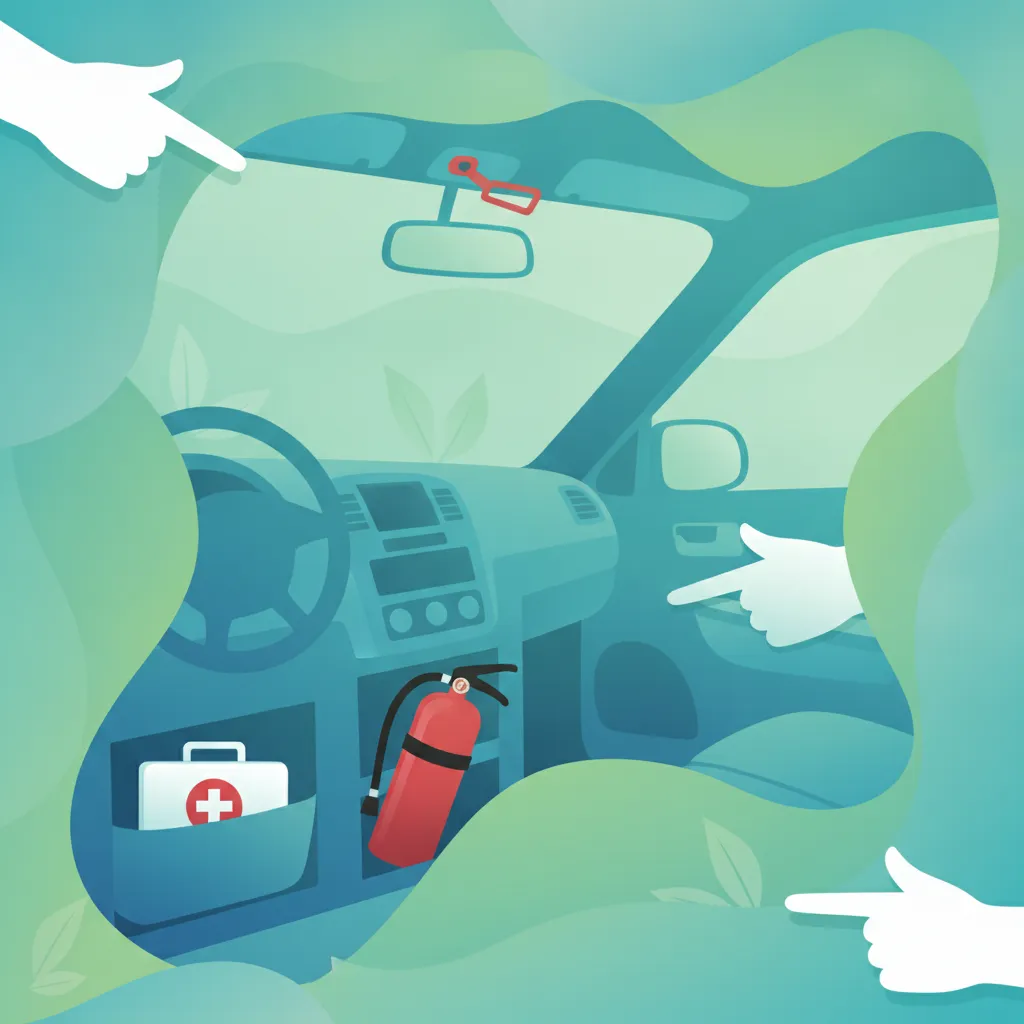
In an emergency, knowing the location and status of safety equipment is critical. This lesson details how to locate and inspect fire extinguishers, first aid kits, emergency hammers, and all designated emergency exits, including doors and roof hatches. It emphasizes the importance of ensuring these items are unobstructed and included in the daily pre-trip inspection.

The driver is responsible for supervising the entire boarding process. This lesson covers techniques for encouraging orderly queues and ensuring passengers use handrails. It also details the driver's role in assisting passengers with mobility aids, prams, or heavy luggage, ensuring they are able to board without rushing and find a seat or safe standing position.

When a passenger becomes ill, the driver's role is to facilitate professional medical help as quickly as possible. This lesson covers how to safely stop the vehicle, make an emergency call to 112 with clear location and patient information, and provide basic comfort and reassurance. It clarifies that the driver's role is not to diagnose but to manage the scene and get help.

A breakdown requires a calm, systematic response to keep everyone safe. This lesson details the procedure: move to the safest possible location, activate hazard lights, secure the vehicle, and deploy warning triangles. It emphasizes the importance of moving passengers to a safe place away from the vehicle, especially on a motorway, before contacting your company or the breakdown services.
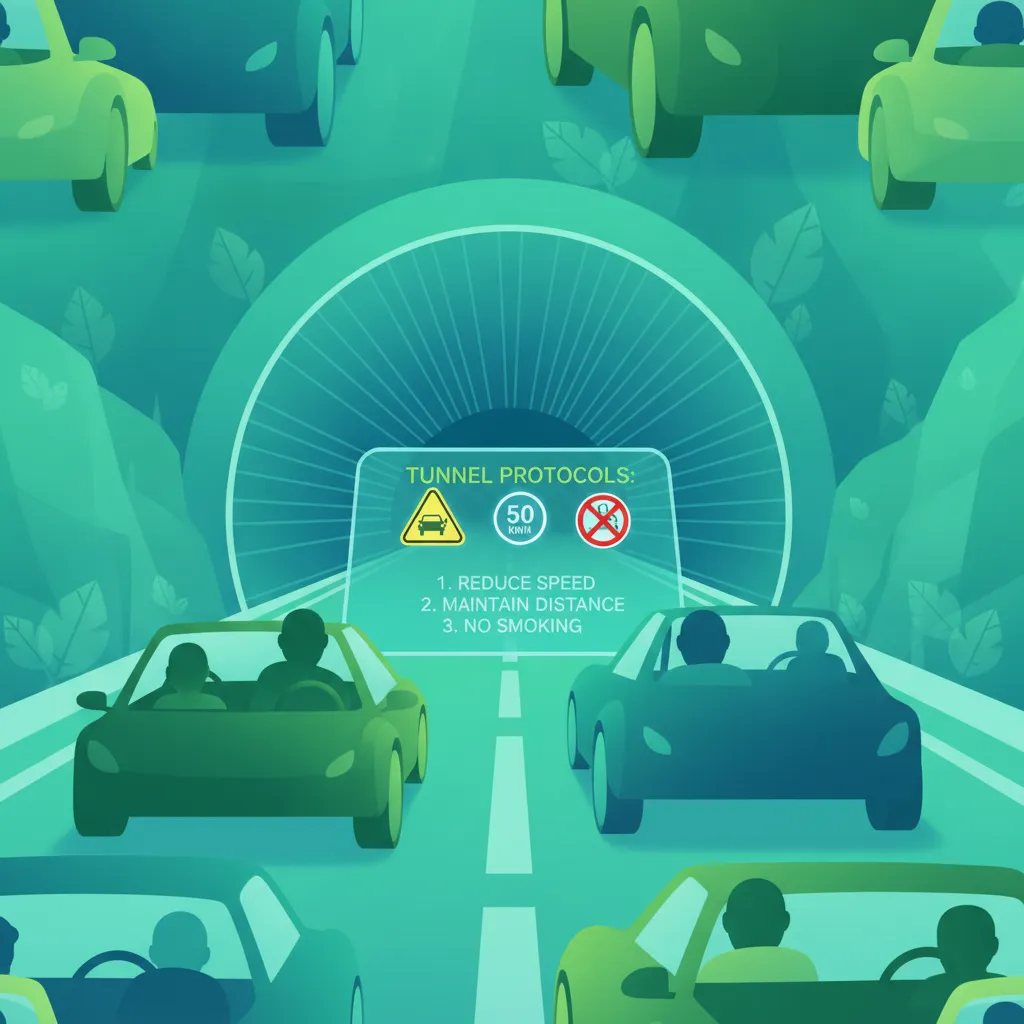
Austria's mountainous terrain means drivers will frequently encounter long tunnels. This lesson details the specific regulations, such as turning on lights and maintaining distance, as well as how to react to tunnel-specific warning signs and signals. Crucially, it covers the correct emergency procedures to follow in the event of a fire, accident, or breakdown inside a tunnel.

A driver's duty of care extends to passengers until they are safely away from the vehicle. This lesson stresses the importance of monitoring passengers as they step off, ensuring they have stable footing and are clear of the bus's path. It highlights the particular need for vigilance when children or elderly passengers are alighting, and the importance of checking mirrors before closing the doors.

Transporting children carries the highest level of responsibility. This lesson covers the specific Austrian rules for school buses, including the use of warning signs and lights. It focuses on developing a mindset of extreme caution, anticipating that children may run into the road unexpectedly, and managing the chaotic traffic environment often found around schools during drop-off and pick-up times.

Carrying standing passengers significantly increases a driver's responsibility for smooth control. This lesson details the specific adjustments required, such as reducing speed before turns to minimize sideways forces and increasing following distances to avoid sudden braking. It emphasizes the importance of awareness and observation of passengers' stability before accelerating from a stop.

Properly managed luggage is crucial for safety and passenger flow. This lesson covers procedures for stowing items in underfloor lockers on coaches and managing larger items like prams or winter sports equipment inside the vehicle. It emphasizes the legal requirement to keep gangways and emergency exits clear and provides guidance on assisting passengers with their belongings.
Explore specific scenarios for bus emergency evacuations in Austria, including adverse weather, different road types, and assisting passengers with special needs, as per Category D theory.
When a passenger becomes ill, the driver's role is to facilitate professional medical help as quickly as possible. This lesson covers how to safely stop the vehicle, make an emergency call to 112 with clear location and patient information, and provide basic comfort and reassurance. It clarifies that the driver's role is not to diagnose but to manage the scene and get help.
A vehicle fire is a critical emergency requiring immediate and decisive action. This lesson prioritizes the rapid and safe evacuation of all passengers to an upwind location. It then covers a basic assessment of the fire and the correct technique for using a fire extinguisher on a small, accessible fire if it is safe to do so, while stressing that personal safety comes first.
The driver is responsible for supervising the entire boarding process. This lesson covers techniques for encouraging orderly queues and ensuring passengers use handrails. It also details the driver's role in assisting passengers with mobility aids, prams, or heavy luggage, ensuring they are able to board without rushing and find a seat or safe standing position.
In an emergency, knowing the location and status of safety equipment is critical. This lesson details how to locate and inspect fire extinguishers, first aid kits, emergency hammers, and all designated emergency exits, including doors and roof hatches. It emphasizes the importance of ensuring these items are unobstructed and included in the daily pre-trip inspection.
A driver's duty of care extends to passengers until they are safely away from the vehicle. This lesson stresses the importance of monitoring passengers as they step off, ensuring they have stable footing and are clear of the bus's path. It highlights the particular need for vigilance when children or elderly passengers are alighting, and the importance of checking mirrors before closing the doors.

As the driver involved or first on the scene, you have specific duties. This lesson covers the initial steps: securing your own vehicle, warning approaching traffic, and making the emergency call. It reinforces the legal requirement in Austria for all drivers to form an emergency corridor ('Rettungsgasse') in standing traffic to allow clear access for emergency vehicles.

Providing safe and respectful access for all passengers is a legal and professional duty. This lesson details the correct operation of accessibility features like ramps, lifts, and kneeling systems. It covers how to secure wheelchairs and mobility aids, and how to communicate effectively and respectfully with passengers who may require assistance with boarding or alighting.
A breakdown requires a calm, systematic response to keep everyone safe. This lesson details the procedure: move to the safest possible location, activate hazard lights, secure the vehicle, and deploy warning triangles. It emphasizes the importance of moving passengers to a safe place away from the vehicle, especially on a motorway, before contacting your company or the breakdown services.

Effective communication is a key skill for any professional driver responsible for passengers. This lesson covers best practices for making clear announcements, assisting passengers with inquiries, and providing support to those with accessibility needs. It also introduces basic techniques for de-escalating tense situations and maintaining a calm, professional atmosphere on board the vehicle.
Find clear answers to common questions learners have about Principles of Emergency Evacuation. Learn how the lesson is structured, which driving theory objectives it supports, and how it fits into the overall learning path of units and curriculum progression in Austria. These explanations help you understand key concepts, lesson flow, and exam focused study goals.
Your primary responsibility is to remain in command, maintain order, and ensure that all passengers exit the vehicle safely through the most appropriate available route, while preventing panic.
Always prioritize the evacuation of passengers with mobility impairments, children, or elderly individuals. Delegate assistance to able-bodied passengers if necessary, but keep the overall coordination under your control.
Passengers must be directed to a safe assembly point away from the vehicle and the traffic flow. On motorways, ensure they are positioned behind safety barriers if possible.
Yes, the theory exam tests your knowledge of safety protocols, including how to operate emergency doors, when to initiate an evacuation, and the hierarchy of actions to ensure the safety of all passengers.
Refine your study plan by searching for specific Austrian driving theory practice sets. Pinpoint questions related to particular road rules, signs, or challenge levels, and begin practicing immediately to reinforce your knowledge and excel in your official exam with confidence. Get started with focused revision today.