Master the unique driving environment of Copenhagen with this comprehensive guide. Learn how to safely interact with dense cycling infrastructure, understand bus lane regulations and enforcement, and drive through specific tunnels. This knowledge is vital for both passing your Danish driving theory test and ensuring safe, confident driving in Denmark's capital.
Article content overview
Copenhagen, Denmark's vibrant capital, presents a unique and demanding driving environment, particularly for those preparing for the Danish driving theory test. The sheer density of cyclists, sophisticated public transport, and specific local regulations require drivers to be exceptionally attentive and well-informed. Successfully navigating these urban challenges is not only crucial for passing your theory exam but also for ensuring safety and efficiency when driving in this dynamic city. This guide will delve into the specific rules and considerations you need to master for driving in Copenhagen, from understanding its extensive cycle path network and strict bus lane enforcement to managing tunnel passages and environmental zones.
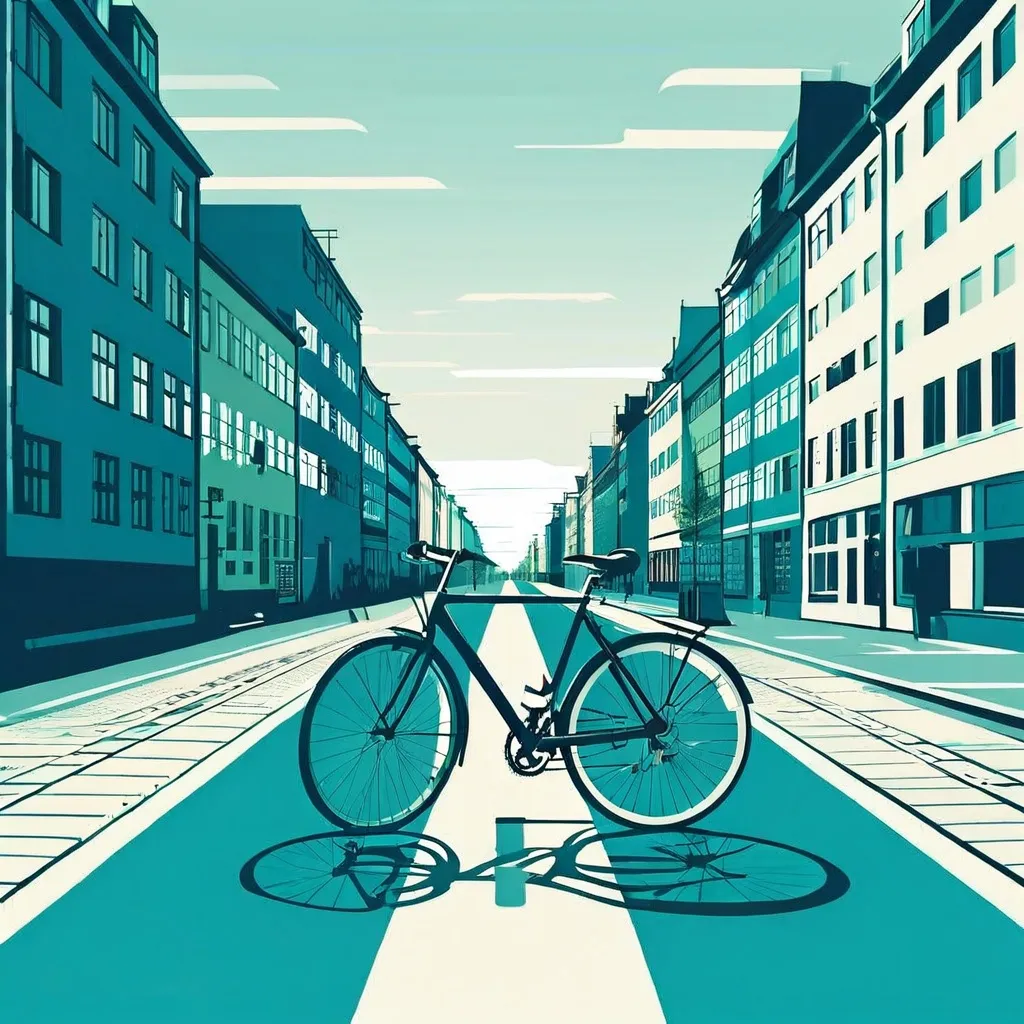
Copenhagen is renowned for its world-class cycling infrastructure, and this reality profoundly shapes the driving experience. Cycle paths, often separated from vehicular traffic, are a ubiquitous feature on almost every major road. For drivers, this means constant vigilance for cyclists, especially during turning manoeuvres. Danish traffic law, and specifically the practice in Copenhagen, often gives cyclists priority, even when they may not appear to have it by a simple glance.
When turning right, for example, drivers must frequently cross designated cycle paths. It is imperative to check for approaching cyclists on these paths and yield to them, even if they are not yet at the intersection. Similarly, when cyclists have their own signal phases at traffic lights, their priority is absolute. Failing to yield to cyclists is a common cause of accidents and a frequent point of emphasis in the Danish driving theory exam. You must always anticipate their presence and be prepared to stop, even if it means a slight delay to your journey.
Central Copenhagen employs a robust system of bus lanes, often marked and actively enforced with automatic cameras (ATK). These lanes are critical for the efficient operation of public transport, and unauthorized use by private vehicles carries significant penalties. Typically, these bus lanes are active during specific hours, most commonly weekdays from morning to late afternoon or early evening, and are clearly indicated by road markings and signage.
It is essential to understand the operating hours of these bus lanes, which are usually displayed on supplementary signs to the main bus lane marking. Drivers who enter a bus lane during its active period without a valid reason (e.g., approaching a required right or left turn that necessitates crossing the lane just before the intersection) risk a hefty fine. The consistent enforcement means that even brief incursions can result in a penalty. Always plan your route to avoid these restricted lanes unless your exit strategy is immediate and well before the restriction ends.
Copenhagen features several important road tunnels, notably the Nordhavn Tunnel (Lyngbyvejsafgreningerne), which connects key arterial roads to the city's northern harbour areas. Driving in tunnels presents unique challenges due to altered light conditions, potential for reduced visibility, and specific emergency procedures. Drivers must adjust their behaviour accordingly to ensure safety for themselves and others.
Upon entering a tunnel, the transition from daylight to artificial lighting can temporarily impair vision. It takes a few moments for your eyes to adjust, so it's vital to reduce speed slightly as you approach and enter. Similarly, exiting a tunnel requires a similar adjustment for your eyes to adapt back to daylight. Maintain a safe following distance, as braking can be abrupt due to unforeseen circumstances or changes in road surface. Be aware of any specific lane usage rules within the tunnel, such as restrictions on lane changes or prohibitions for certain vehicle types, which will be indicated by signs.
The Nordhavn Tunnel, in particular, is a modern infrastructure element that drivers may encounter. Understanding its purpose and the routes it connects is part of grasping Copenhagen's evolving road network. Always be attentive to navigation systems and road signs, as construction and new road layouts are common in developing urban areas like Nordhavn.
Copenhagen has implemented an environmental zone (Miljøzone) to improve air quality, which affects vehicle emissions standards within a defined area, primarily covering the inner city. As of recent regulations, vehicles over 3.5 tonnes must meet specific emission standards, such as Euro 6 for diesel lorries and Euro 5 for petrol vehicles. While the current regulations primarily target heavy vehicles, there are ongoing considerations for expanding these requirements to passenger cars and vans.
Drivers should be aware of the zone's boundaries and the applicable emission standards. Information regarding these zones is usually communicated through clear signage at the entry points. Vehicles that do not meet the required emission standards are prohibited from entering the zone during its operational periods. Staying informed about potential expansions or changes to these regulations is advisable for any driver frequently operating within Copenhagen's urban core.
Parking in Copenhagen, especially in the city centre, is subject to a zone system with varying prices and rules, a concept also relevant to the broader Danish parking regulations. Parking is often restricted to marked parking bays, and specific rules apply to loading and unloading. In areas like the Medieval City (Middelalderbyen), parking is strictly confined to marked bays, while loading and unloading are permitted outside these bays as long as they do not obstruct traffic or violate other rules. Understanding these local parking nuances is vital, as incorrect parking can lead to significant fines or towing.
Mastering the specific traffic rules and urban driving conventions of Copenhagen is a significant step towards passing your Danish driving theory exam. The exam often includes scenario-based questions that test your understanding of how to interact with dense traffic, prioritize different road users, and adhere to specific local regulations. Familiarity with terms like "Miljøzone," "cykelsti," and the nuances of "vigepligt" (duty to give way) in complex urban settings is essential.
Remember that the theory test aims to assess not just your knowledge of the basic traffic laws but also your ability to apply them safely and sensibly in real-world situations. Copenhagen's challenges, from its cyclist-centric design to its strict enforcement of bus lanes and specific tunnel rules, are designed to prepare you for the realities of modern urban driving. By studying these aspects diligently, you will be well-equipped to handle the exam and, more importantly, to drive confidently and responsibly in Denmark's capital.
Copenhagen presents unique urban driving challenges centered on its extensive cycling infrastructure, strict bus lane enforcement with cameras, and specific tunnel navigation requirements. Drivers must always yield to cyclists, especially when turning across cycle paths, and must understand that bus lanes operate during specific weekday hours and are actively monitored. Tunnel driving requires adjusting speed and vision for lighting transitions, while environmental zones impose emission-based restrictions primarily on heavy vehicles. These Copenhagen-specific rules, combined with Danish terminology such as Miljøzone and vigepligt, are essential for both passing the Danish theory exam and driving safely in Denmark's capital.
A short set of high-value points that capture the most important ideas from this article.
Cyclists in Copenhagen have priority in many situations, requiring constant vigilance especially when turning right across cycle paths (cykelstier)
Bus lanes in central Copenhagen are actively enforced with automatic cameras (ATK) during specific hours on weekdays, and unauthorized use results in significant fines
When entering tunnels like the Nordhavn Tunnel, reduce speed slightly to allow your eyes to adjust from daylight to artificial lighting
Environmental zones (Miljøzone) in Copenhagen restrict vehicles over 3.5 tonnes based on emission standards such as Euro 6 for diesel lorries
Parking in Copenhagen uses a zone system with varying prices and strict confinement to marked parking bays in areas like the Medieval City
Always yield to cyclists on designated cycle paths even when your traffic signal is green and theirs appears to be a separate phase
Check supplementary signs on bus lanes for specific operating hours as they are not always open outside rush hours
Lane control signals (E52) in tunnels use red 'X' for closed lanes, green arrows for open lanes, and yellow flashing arrows for lanes closing ahead
Environmental zone requirements (E68) primarily affect heavy vehicles but can be expanded, so stay informed about regulatory changes
The Danish term 'vigepligt' refers to the legal obligation to yield, which is particularly important at complex urban intersections with multiple road users
Assuming bus lanes are always accessible outside typical rush hour times without checking the specific signage for operating hours
Failing to check for cyclists when turning right across a cycle path, which is a common cause of accidents in Copenhagen
Not adjusting speed when entering tunnels, leading to temporary vision impairment from the lighting transition
Confusing general parking rules with specific urban zone restrictions in Copenhagen's city centre
Underestimating the enforcement intensity of traffic rules in Copenhagen, thinking minor violations will go unpenalized
Article content overview
A short set of high-value points that capture the most important ideas from this article.
Cyclists in Copenhagen have priority in many situations, requiring constant vigilance especially when turning right across cycle paths (cykelstier)
Bus lanes in central Copenhagen are actively enforced with automatic cameras (ATK) during specific hours on weekdays, and unauthorized use results in significant fines
When entering tunnels like the Nordhavn Tunnel, reduce speed slightly to allow your eyes to adjust from daylight to artificial lighting
Environmental zones (Miljøzone) in Copenhagen restrict vehicles over 3.5 tonnes based on emission standards such as Euro 6 for diesel lorries
Parking in Copenhagen uses a zone system with varying prices and strict confinement to marked parking bays in areas like the Medieval City
Always yield to cyclists on designated cycle paths even when your traffic signal is green and theirs appears to be a separate phase
Check supplementary signs on bus lanes for specific operating hours as they are not always open outside rush hours
Lane control signals (E52) in tunnels use red 'X' for closed lanes, green arrows for open lanes, and yellow flashing arrows for lanes closing ahead
Environmental zone requirements (E68) primarily affect heavy vehicles but can be expanded, so stay informed about regulatory changes
The Danish term 'vigepligt' refers to the legal obligation to yield, which is particularly important at complex urban intersections with multiple road users
Assuming bus lanes are always accessible outside typical rush hour times without checking the specific signage for operating hours
Failing to check for cyclists when turning right across a cycle path, which is a common cause of accidents in Copenhagen
Not adjusting speed when entering tunnels, leading to temporary vision impairment from the lighting transition
Confusing general parking rules with specific urban zone restrictions in Copenhagen's city centre
Underestimating the enforcement intensity of traffic rules in Copenhagen, thinking minor violations will go unpenalized
Explore related topics, search based questions, and concepts that learners often look up when studying Copenhagen Urban Driving. These themes reflect real search intent and help you understand how this topic connects to wider driving theory knowledge in Denmark.
Find clear and practical answers to common questions learners often have about Copenhagen Urban Driving. This section helps explain difficult points, remove confusion, and reinforce the key driving theory concepts that matter for learners in Denmark.
Copenhagen has a very dense network of cycle paths, and drivers must always be aware of cyclists, especially when turning right, as these movements often require crossing active cycle paths.
Bus lanes in central Copenhagen are actively enforced, often using cameras (ATK), particularly during daytime hours on weekdays. Drivers must not use these lanes unless permitted.
Drivers should be mindful of sudden changes in light conditions upon entering and exiting tunnels, adjust speed accordingly, and be aware of any height restrictions.
The Copenhagen Miljøzone primarily affects larger vehicles, requiring them to meet emission standards (e.g., Euro 6 for diesel lorries). Expansion to passenger cars is under consideration.
Ongoing metro construction can lead to frequent road realignments and temporary closures. Drivers should always check current navigation and traffic information as GPS maps may not reflect immediate changes.
Continue your learning journey by searching for additional articles or browsing our comprehensive topic categories. Deepen your knowledge of Danish road law, vehicle mechanics, and hazard perception to ensure complete preparation for your official theory exam.