
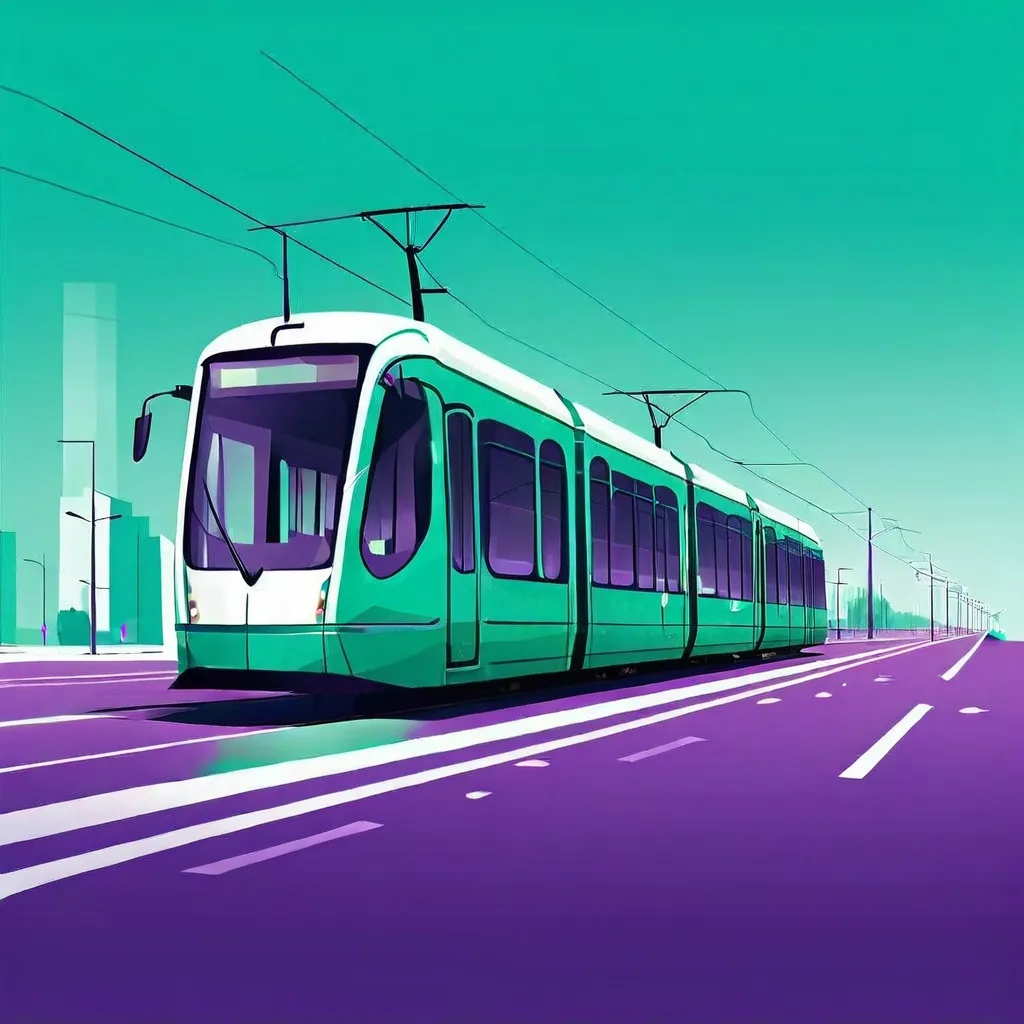
When driving in Denmark, encountering trams and light rail systems like the Aarhus Letbane requires specific knowledge of traffic laws. This article covers how to correctly yield to trams, why parking on tracks is forbidden, and the unique safety considerations for crossing them, all essential for passing your Danish driving theory test.
Article content overview
Driving in Denmark often involves sharing the road with various modes of transport, and understanding the specific rules for interacting with trams and light rail systems is crucial for both road safety and success in your driving theory examination. As urban areas grow and public transport infrastructure develops, encountering the Aarhus Letbane, Denmark’s operational light rail, is becoming increasingly common. Future developments, such as the planned tram line in Copenhagen, mean this knowledge will only become more vital. This comprehensive guide will delve into the essential Danish traffic laws governing these encounters, focusing on priority rules, parking restrictions, and crucial safety considerations, ensuring you are well-prepared for the Danish theory test.
A fundamental principle when driving in Denmark is that trams and light rail vehicles, often referred to as "sporvogn" or "letbane," generally have priority over other road users on shared track sections. This rule is not a suggestion but a legal requirement designed to ensure the smooth and safe operation of these public transport systems. Drivers must be acutely aware of their surroundings and be prepared to yield, especially when trams are approaching or are about to enter an intersection or a shared road space. This priority applies even if there are no specific signs or signals, though such indicators often reinforce the tram's right-of-way.
In Denmark, trams and light rail vehicles operating on shared road surfaces are legally granted priority over other vehicular traffic. Drivers must always yield to these public transport vehicles when they are on or entering the tracks, particularly at junctions or when the tram indicates its intention to proceed.
At junctions, trams may be subject to specific traffic signals. These "tram signals" or "tramantret" are designed to manage their movement and may differ from standard traffic lights. It is imperative for drivers to observe these signals diligently, as they will dictate when it is safe to proceed and when to yield to the tram's designated path. Failing to understand and adhere to these priority rules is a common pitfall in theory tests and a significant hazard on the road.
Parking or stopping on tram tracks in Denmark is strictly prohibited. This is a critical rule rooted in the physical limitations of tram operations and the safety of all road users. Unlike cars, trams operate on fixed tracks and cannot deviate from their path to manoeuvre around an obstruction. Even a momentarily parked vehicle can cause significant disruption and create dangerous situations. The Aarhus Letbane, for instance, has sections where it shares the road surface directly with vehicular traffic, and it is in these areas that the prohibition is most relevant.
Parking or stopping on tram or light rail tracks is illegal and dangerous. Trams cannot steer to avoid obstacles, and your vehicle can cause severe disruption and pose a serious risk to the tram, its passengers, and other road users. Always find a designated parking spot away from the tracks.
The reasoning behind this strict prohibition is straightforward: an obstruction on the tracks can lead to significant delays, damage to the tram or other vehicles, and potentially serious accidents. Drivers are expected to understand that these tracks are exclusively for the operation of the tram and are not part of the regular road surface where parking is permitted. This rule is frequently tested in driving theory exams, so ensure you have a firm grasp of its importance.
Crossing tram tracks, whether on foot, by bicycle, motorcycle, or car, requires a heightened awareness of potential hazards. The grooves that house the tram tracks can pose a significant risk, particularly to narrower tyres such as those found on bicycles and motorcycles. When a tyre encounters these grooves at certain angles, it can become lodged, leading to a loss of balance and a potential fall. This is a primary safety concern for cyclists and motorcyclists, but drivers of cars should also be mindful.
For car drivers, crossing tram tracks, especially at shallow angles or when the tracks are wet, can affect steering response and traction. While a car's tyres are wider and less likely to get stuck, a sudden loss of grip or an unexpected steering correction can still lead to a loss of control. Therefore, it is advisable to cross tram tracks at as close to a right angle as possible, and to do so smoothly and deliberately. Avoid sharp turns or sudden braking while actively on the tracks.
When crossing tram tracks in a car, aim for a perpendicular crossing angle if possible. Reduce speed slightly and maintain a steady course. Be particularly cautious on wet surfaces, as traction can be reduced around the tracks.
Furthermore, when a tram is turning, drivers following behind should never attempt to overtake. Trams have a predefined path, and attempting to pass a turning tram can lead to a collision or put you in the path of oncoming traffic. Patience and observation are key when interacting with these large, powerful public transport vehicles.
Understanding the specific regulations surrounding trams and light rail in Denmark is essential for passing your driving theory exam. The Danish Road Traffic Act (Færdselsloven) and associated regulations provide the framework for these rules, and the Aarhus Letbane serves as the primary example for practical application. When preparing for your test, focus on these core areas:
The Aarhus Kommune website, for instance, provides information on local traffic regulations, and while specific pricing for parking may be detailed, the fundamental rules of road use, including those for trams, are nationally standardized. Future infrastructure projects, like the planned Copenhagen tram line, will reinforce the importance of these regulations across the country.
To effectively navigate Danish traffic laws and prepare for your theory exam, familiarizing yourself with key terms is important. These terms are commonly used in official materials and by driving instructors.
Mastering these rules regarding trams and light rail is a direct requirement for your Danish driving license theory test. Expect questions that assess your understanding of priority situations, prohibitions on tracks, and safe practices. Common exam questions might present scenarios involving intersections with trams, asking you to identify the correct action, or describe the risks associated with parking near tracks.
When answering theory test questions involving trams or light rail, always prioritize the safety and priority of the tram. Remember the strict prohibition on obstructing their path and the specific hazards of the tracks themselves.
By thoroughly understanding and internalising these Danish tram and light rail rules, you will not only enhance your safety on the road but also build a strong foundation for passing your driving theory examination with confidence. These regulations are designed to create a harmonious coexistence between various transport modes, ensuring that public transport can operate efficiently and safely, benefiting all road users in Denmark.
Danish traffic law grants trams and light rail vehicles unconditional priority on shared road sections, requiring all drivers to yield to them at all times. Parking or stopping on tram tracks is strictly forbidden because these vehicles operate on fixed rails and cannot manoeuvre around obstructions. When crossing tracks, drivers should aim for a perpendicular angle and reduce speed, especially in wet conditions where traction is reduced. Cyclists and motorcyclists face particular danger from track grooves, and overtaking a turning tram is prohibited. These rules are directly tested in the Danish driving theory examination and are based on the Færdselsloven (Danish Road Traffic Act).
A short set of high-value points that capture the most important ideas from this article.
Trams and light rail vehicles always have legal priority over other traffic on shared track sections, even without specific signs or signals
Parking, stopping, or obstructing tram tracks is strictly prohibited because trams cannot deviate from their fixed paths
Cross tram tracks at as close to a 90-degree angle as possible to avoid tyre grooves and maintain traction
Never attempt to overtake a tram that is turning, as it follows a predefined rigid path
Be especially cautious on wet surfaces where track grooves reduce traction and increase control loss risk
Sporvogn = tram; Letbane = light rail (e.g., Aarhus Letbane)
The prohibition on parking near tracks applies everywhere, even briefly, and even when no tram is visible
Narrow tyres (bicycles, motorcycles) are particularly vulnerable to getting lodged in track grooves (hjulspor)
Tram-specific signals (tramantræt) may differ from regular traffic lights and must be observed carefully
Trams operate on fixed tracks and cannot steer around obstacles, making any obstruction a serious safety hazard
Believing a brief stop on tracks is acceptable if no tram is immediately visible
Crossing tram tracks at shallow angles, which increases the chance of tyre grooves catching and causing loss of control
Attempting to overtake a tram at an intersection or while it is turning
Treating tram signals the same as regular traffic lights without learning their specific meaning
Assuming that because a car has wider tyres than a bicycle, track hazards are not a concern
Article content overview
A short set of high-value points that capture the most important ideas from this article.
Trams and light rail vehicles always have legal priority over other traffic on shared track sections, even without specific signs or signals
Parking, stopping, or obstructing tram tracks is strictly prohibited because trams cannot deviate from their fixed paths
Cross tram tracks at as close to a 90-degree angle as possible to avoid tyre grooves and maintain traction
Never attempt to overtake a tram that is turning, as it follows a predefined rigid path
Be especially cautious on wet surfaces where track grooves reduce traction and increase control loss risk
Sporvogn = tram; Letbane = light rail (e.g., Aarhus Letbane)
The prohibition on parking near tracks applies everywhere, even briefly, and even when no tram is visible
Narrow tyres (bicycles, motorcycles) are particularly vulnerable to getting lodged in track grooves (hjulspor)
Tram-specific signals (tramantræt) may differ from regular traffic lights and must be observed carefully
Trams operate on fixed tracks and cannot steer around obstacles, making any obstruction a serious safety hazard
Believing a brief stop on tracks is acceptable if no tram is immediately visible
Crossing tram tracks at shallow angles, which increases the chance of tyre grooves catching and causing loss of control
Attempting to overtake a tram at an intersection or while it is turning
Treating tram signals the same as regular traffic lights without learning their specific meaning
Assuming that because a car has wider tyres than a bicycle, track hazards are not a concern
Explore related topics, search based questions, and concepts that learners often look up when studying Danish Tram & Light Rail Rules. These themes reflect real search intent and help you understand how this topic connects to wider driving theory knowledge in Denmark.
Find clear and practical answers to common questions learners often have about Danish Tram & Light Rail Rules. This section helps explain difficult points, remove confusion, and reinforce the key driving theory concepts that matter for learners in Denmark.
Yes, trams and light rail vehicles have priority over other road traffic on shared tracks in Denmark. Drivers must always yield to trams.
No, it is strictly prohibited to stop or park on tram tracks or in a position that obstructs a tram or light rail vehicle. Trams cannot deviate from their path.
Tram tracks can pose a hazard as wheels can catch in the groove, especially when crossing at an angle. They can also affect traction, particularly in wet conditions, and influence steering response.
These rules apply to operational light rail systems like the Aarhus Letbane. While Copenhagen currently has a planned tram project, understanding these general principles is crucial for future driving in the city.
No, never attempt to overtake a tram or light rail vehicle when it is turning into a side street or across an intersection. Wait for it to complete its manoeuvre.
Continue your learning journey by searching for additional articles or browsing our comprehensive topic categories. Deepen your knowledge of Danish road law, vehicle mechanics, and hazard perception to ensure complete preparation for your official theory exam.