
Prepare for your Danish driving theory test by understanding the specifics of driving across the Øresund Bridge. This guide explains the toll system, including currency acceptance and discount options, outlines the speed limits and essential rules for the bridge, and clarifies border control procedures between Denmark and Sweden. Gaining this knowledge ensures you are well-equipped for this unique international route.
Article content overview
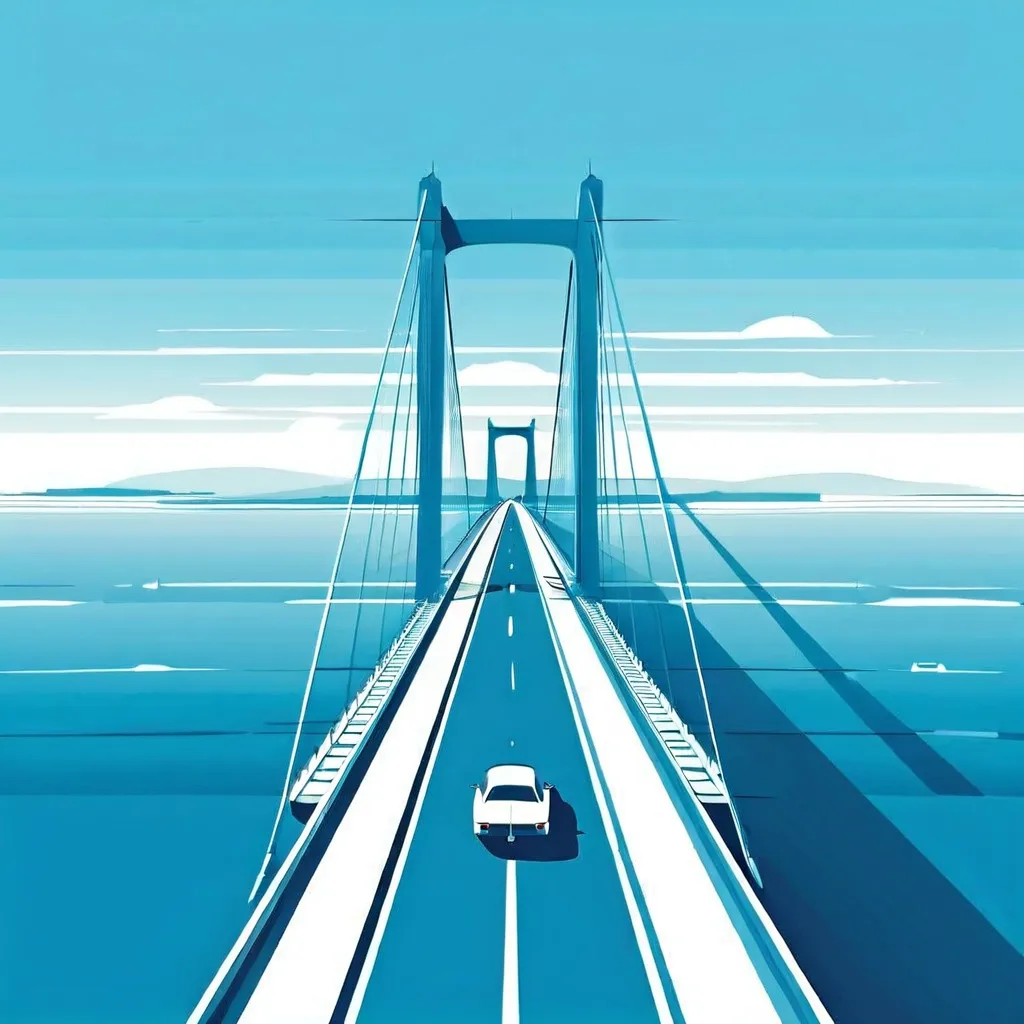
Driving across the Øresund Bridge (Øresundsbron) is a unique experience that connects Denmark and Sweden, and understanding its specific rules and requirements is a vital part of preparing for your Danish driving licence theory test. This impressive 16-kilometre structure, a marvel of engineering, comprises a bridge and an immersed tunnel, carrying the E20 motorway between Copenhagen and Malmö. While it offers a direct route, it also presents specific considerations for drivers, including toll payments, border formalities, and traffic regulations that differ slightly from standard Danish roads. Mastering these aspects ensures you are not only a safe driver but also well-prepared for the practicalities of international driving within the Nordic region, a knowledge often tested in the Danish theory examination.
Crossing the Øresund Bridge involves a significant toll, a crucial detail for any driver planning this route. Unlike many other crossings, the Øresund Bridge does not accept cash payments at the toll booths. This means drivers must have a payment method pre-arranged to avoid delays and potential issues. The primary methods for payment are electronic transponders like BroBizz, or through the Øresund BroPas discount scheme, which is particularly beneficial for frequent travellers. It's important to note that the toll rates are subject to change, and drivers should always consult the official Øresundsbron website for the most current pricing.
The BroBizz transponder offers a convenient and often more cost-effective way to pay the Øresund Bridge toll. By attaching this small device to your windscreen, your passage is automatically registered, and the toll is debited from your linked account. This system is designed for ease of use and significantly speeds up the crossing process. For those who regularly commute or frequently travel between Denmark and Sweden via the bridge, the Øresund BroPas offers even greater benefits. This subscription service provides substantial discounts on tolls, making it an attractive option for regular users. Understanding how these schemes work is essential, as the theory test may include questions about payment methods and the implications of using such systems for international travel.
A unique aspect of the Øresund Bridge toll system is the acceptance of both Danish Kroner (DKK) and Swedish Kroner (SEK) at face value for the toll payment. This means that if you are paying directly at a toll booth (though electronic payment is preferred and often mandatory), you can use either currency interchangeably for the exact toll amount. For instance, a toll of DKK 410 is equivalent to SEK 410. This dual currency acceptance simplifies transactions for travellers moving between the two countries, eliminating the need for immediate currency exchange specifically for the bridge toll.
When you are on the Øresund Bridge, you are driving on a section of the E20 motorway, and therefore, general motorway rules apply, with some specific adaptations for this unique structure. Safety is paramount on such a large-scale infrastructure project, and adherence to speed limits and other regulations is strictly enforced. The theory test aims to ensure you are aware of these specific requirements for the bridge.
The general speed limit on the Øresund Bridge is 90 km/h. This reduced speed, compared to the typical Danish motorway limit of 110 km/h or 130 km/h in certain sections, is due to the nature of the bridge, potential weather conditions, and the importance of maintaining traffic flow and safety across the long span. Furthermore, it is mandatory to drive with dipped headlights on at all times while on the Øresund Bridge, regardless of the time of day or weather conditions. This ensures better visibility for all road users and enhances overall traffic safety.
The Øresund Bridge can be exposed to significant weather challenges, particularly strong winds. In periods of very high winds, authorities may implement restrictions for certain types of vehicles, such as high-sided vehicles (like lorries or caravans), to prevent accidents. These restrictions are put in place to ensure the safety of all travellers. Information regarding such restrictions will be communicated, and drivers are expected to comply immediately. The bridge is monitored continuously by trained personnel using cameras and sensors to ensure immediate response to any developing issues, reinforcing the importance of being attentive to traffic updates.
Like any major infrastructure, the Øresund Bridge may undergo periods of road works or maintenance. During these times, traffic lanes may be narrowed, and speed limits can be further reduced, often to 80 km/h, as seen in some sections of the E20 during maintenance. Traffic can become denser, and queues may form, especially when combined with traffic entering from other routes. It's also important to be aware that during extensive road works, certain sections of the bridge might temporarily lack emergency lanes, making the traffic flow more vulnerable to disruptions in case of an incident. Staying informed about current traffic situations through official channels is therefore highly recommended.
Both Denmark and Sweden are members of the Schengen Area, which generally means there are no routine passport checks when travelling between them. However, this does not mean there are no checks whatsoever. Danish and Swedish police conduct random identity checks at various points, including the Danish side of the Øresund Bridge. Drivers should always be prepared to present valid identification, such as a passport or national ID card, if requested.
While not a formal border crossing in the traditional sense, being prepared with identification is crucial. For UK citizens or those from outside the Schengen area, a valid passport is essential. For EU citizens, a national identity card is generally sufficient. It is also advisable to have your vehicle registration documents and proof of insurance readily accessible. These are standard requirements for driving abroad and are good practice to have on hand, even if formal checks are infrequent.
While the physical infrastructure of the Øresund Bridge is a shared responsibility, it is important to remember that once you cross into Sweden, Swedish traffic laws apply. Sweden has slightly different default speed limits on motorways (often 110 km/h as a standard, compared to Denmark's 110/130 km/h). There can also be differences in parking regulations and specific requirements for winter tyres, which are mandatory during certain periods and under specific conditions in Sweden. Drivers preparing to cross into Sweden should familiarise themselves with these differences to ensure compliance and safety.
It is a key point for drivers to understand that when travelling by road between Denmark and Sweden in this region, there are essentially two primary options: the Øresund Bridge or the ferry crossing between Helsingør (Denmark) and Helsingborg (Sweden). There is no "petrol ferry" alternative that directly serves the Øresund crossing for private vehicles. Drivers must choose between the bridge, which requires a toll payment, or the ferry, which also has its own associated costs and travel time. This distinction is important for planning and can be a topic in theory tests concerning route options and associated practicalities.
The Danish driving theory test aims to assess your comprehensive understanding of traffic rules and safe driving practices. Questions related to the Øresund Bridge will likely focus on practical aspects that you, as a driver, need to be aware of. This includes understanding the speed limits, the mandatory use of dipped headlights, and the implications of weather conditions on driving safety. You may also encounter questions about the payment methods for tolls, particularly the fact that cash is not accepted and the use of electronic payment systems like BroBizz or BroPas is common. Furthermore, awareness of border control procedures, even within the Schengen Area, and the need to carry identification are important aspects that could be tested. Finally, questions might probe your knowledge of alternative routes and the specific nature of the bridge and ferry crossings.
The Øresund Bridge is a 16-kilometre infrastructure linking Denmark and Sweden via the E20 motorway, requiring specific knowledge for the Danish theory test. The bridge operates a cashless toll system using BroBizz transponders or the BroPas discount scheme, with both Danish and Swedish Kroner accepted at equal value. Key regulations include a mandatory speed limit of 90 km/h and the requirement to use dipped headlights at all times. Although Denmark and Sweden are both in the Schengen Area allowing generally free movement, random identity checks can occur at the bridge, so drivers must carry valid identification. High-sided vehicles may face wind restrictions, and once across the bridge, Swedish traffic laws take effect with their own speed limits and winter tyre rules.
A short set of high-value points that capture the most important ideas from this article.
The Øresund Bridge is a 16-kilometre combined bridge and tunnel structure carrying the E20 motorway between Copenhagen and Malmö.
Cash is not accepted at the Øresund Bridge toll; payment must be made electronically via BroBizz or similar transponder systems.
The speed limit on the Øresund Bridge is 90 km/h, lower than standard Danish motorway limits due to safety considerations.
Dipped headlights are mandatory at all times on the Øresund Bridge, regardless of weather or time of day.
Both Danish Kroner (DKK) and Swedish Kroner (SEK) are accepted at face value for toll payments, meaning DKK 410 equals SEK 410.
No cash payments at toll booths—always use an electronic transponder like BroBizz or pay through the Øresund BroPas scheme.
Speed limit is 90 km/h (not the usual 110 or 130 km/h motorway limit) and dipped headlights are mandatory on the bridge.
Denmark and Sweden are in the Schengen Area, but random identity checks can occur at the Danish side of the bridge.
High-sided vehicles may face restrictions during high winds; monitor official traffic updates for weather-related advisories.
Once in Sweden, Swedish traffic laws apply, including potentially different speed limits and mandatory winter tyre requirements.
Assuming cash is accepted at the bridge toll booths, leading to payment issues or delays.
Forgetting to use dipped headlights on the bridge, which is a mandatory requirement at all times.
Not carrying valid identification, as random checks can occur despite the Schengen agreement.
Confusing the Øresund Bridge with the Helsingør–Helsingborg ferry route—there is no petrol ferry alternative for this crossing.
Assuming the same motorway speed limits apply on the bridge without accounting for the reduced 90 km/h limit.
Article content overview
A short set of high-value points that capture the most important ideas from this article.
The Øresund Bridge is a 16-kilometre combined bridge and tunnel structure carrying the E20 motorway between Copenhagen and Malmö.
Cash is not accepted at the Øresund Bridge toll; payment must be made electronically via BroBizz or similar transponder systems.
The speed limit on the Øresund Bridge is 90 km/h, lower than standard Danish motorway limits due to safety considerations.
Dipped headlights are mandatory at all times on the Øresund Bridge, regardless of weather or time of day.
Both Danish Kroner (DKK) and Swedish Kroner (SEK) are accepted at face value for toll payments, meaning DKK 410 equals SEK 410.
No cash payments at toll booths—always use an electronic transponder like BroBizz or pay through the Øresund BroPas scheme.
Speed limit is 90 km/h (not the usual 110 or 130 km/h motorway limit) and dipped headlights are mandatory on the bridge.
Denmark and Sweden are in the Schengen Area, but random identity checks can occur at the Danish side of the bridge.
High-sided vehicles may face restrictions during high winds; monitor official traffic updates for weather-related advisories.
Once in Sweden, Swedish traffic laws apply, including potentially different speed limits and mandatory winter tyre requirements.
Assuming cash is accepted at the bridge toll booths, leading to payment issues or delays.
Forgetting to use dipped headlights on the bridge, which is a mandatory requirement at all times.
Not carrying valid identification, as random checks can occur despite the Schengen agreement.
Confusing the Øresund Bridge with the Helsingør–Helsingborg ferry route—there is no petrol ferry alternative for this crossing.
Assuming the same motorway speed limits apply on the bridge without accounting for the reduced 90 km/h limit.
Explore related topics, search based questions, and concepts that learners often look up when studying Øresund Bridge Driving Guide. These themes reflect real search intent and help you understand how this topic connects to wider driving theory knowledge in Denmark.
Find clear and practical answers to common questions learners often have about Øresund Bridge Driving Guide. This section helps explain difficult points, remove confusion, and reinforce the key driving theory concepts that matter for learners in Denmark.
The Øresund Bridge toll accepts both Danish Kroner (DKK) and Swedish Kronor (SEK) at face value for payments at the toll booths. Non-cash payment methods like BroBizz are also available.
The speed limit on the Øresund Bridge is generally 90 km/h. Always be aware of any temporary changes due to roadworks or weather conditions.
While Denmark and Sweden are part of the Schengen Area, Swedish police may conduct random identification checks, particularly when travelling from Sweden into Denmark. It's advisable to carry valid identification.
Yes, discount schemes like BroBizz (a transponder) and Øresund BroPas are available for frequent travellers, offering reduced tolls for regular crossings.
No, there is no petrol ferry alternative directly connecting Denmark and Sweden across the Øresund. The primary road crossing options are the Øresund Bridge or the Helsingør-Helsingborg ferry.
Continue your learning journey by searching for additional articles or browsing our comprehensive topic categories. Deepen your knowledge of Danish road law, vehicle mechanics, and hazard perception to ensure complete preparation for your official theory exam.