
This lesson guides you through the critical steps for executing safe turns and lane changes as required by the French Code de la route. You will learn the systematic visual and physical procedures necessary to navigate urban and highway environments safely, ensuring you are prepared for both the theory exam and real-world driving.
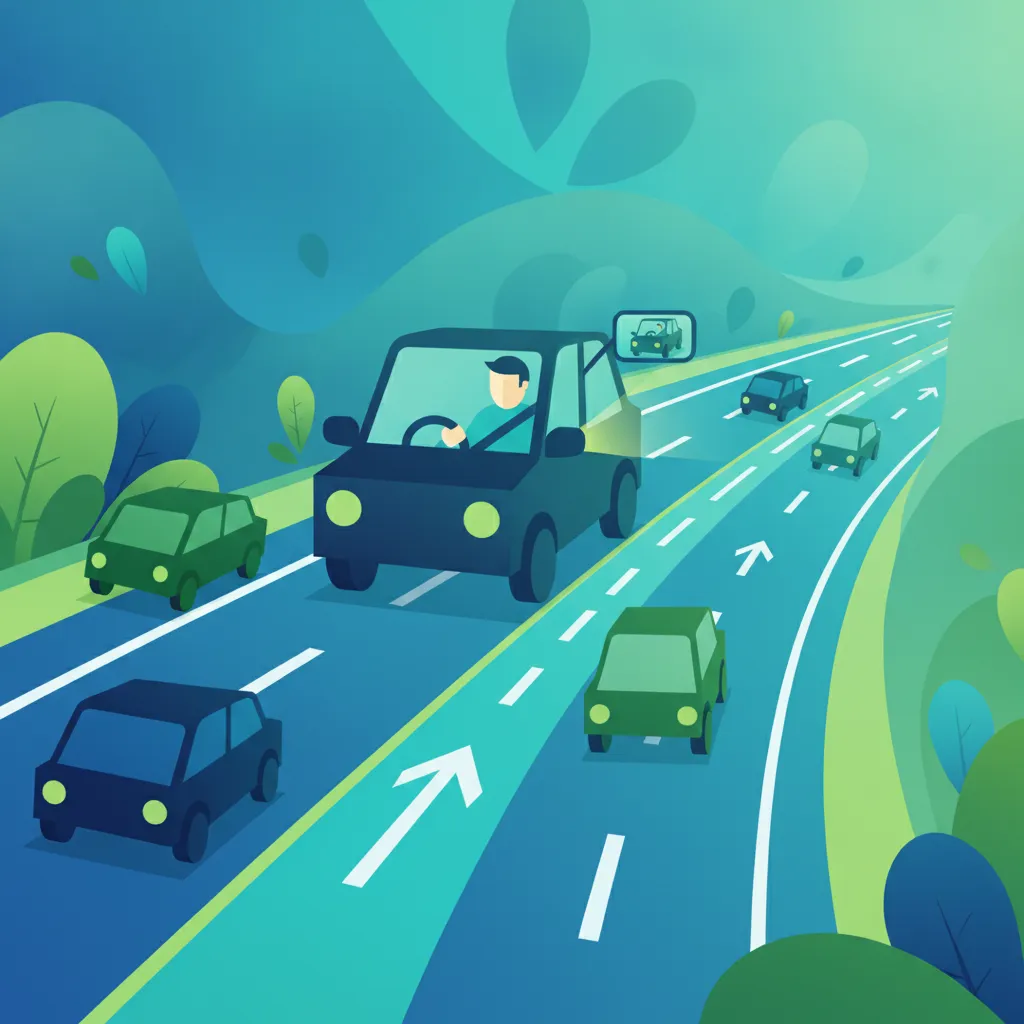
Lesson content overview
Executing turns and changing lanes are among the most frequent maneuvers you will perform on French roads. Under the French highway code (Code de la route), these actions are highly regulated to ensure predictability and protect all road users, particularly vulnerable ones like cyclists and pedestrians.
For the French Category B driving theory exam (the Examen de l'Éthique Générale or ETG), mastering the precise sequence of observations, signals, and positioning is critical. This lesson breaks down these fundamental maneuvers, explaining not just the how, but the physiological and physical why behind every step.
Every single lateral movement of your vehicle—whether turning at an intersection, changing lanes on an autoroute, or moving around a parked car—must be preceded by a strict sequence of visual checks. Relying on your mirrors alone is a critical error that can lead to severe accidents and exam failure.
The systematic check sequence is commonly taught as a three-step flow: Interior Mirror -> Exterior Mirror -> Blind Spot Check.
Your interior rear-view mirror (rétroviseur intérieur) is your first window to the traffic behind you. It allows you to assess the speed and proximity of vehicles directly in your lane.
Once the rear path is assessed, you must check the exterior side mirror (rétroviseur extérieur) on the side of your intended movement (the left mirror if moving left, the right mirror if moving right).
The blind spot is an area projecting roughly 1.5 metres to the side and 1.5 metres behind a standard passenger car that cannot be seen through any mirror. To check it, you must perform a brief, decisive head turn (shoulder check) in the direction of the maneuver.
The zone around a vehicle that is invisible to the driver using only the rear-view and side mirrors. To view this zone, the driver must physically rotate their head to look out the side windows.
Once you have confirmed that a maneuver is safe and possible, you must immediately communicate your intention to other road users using your direction indicators (clignotants).
According to the Code de la route, indicators must be activated before you modify your vehicle's speed or trajectory.
Once your vehicle has fully entered the new lane or completed the turn, you must deactivate the indicator immediately.
Positioning your vehicle correctly within the roadway (placement sur la chaussée) is a non-verbal signal to other drivers. It clears traffic flow and ensures you do not block those behind you who wish to continue straight.
Left turns are naturally more complex because they involve crossing oncoming traffic lanes.
Right turns do not cross oncoming traffic lanes, but they require extreme vigilance regarding the right-hand edge of the road.
Do Not Cut Corners (Ne pas couper le virage): When turning, you must follow a clean geometric path. Do not let your wheels cross the solid or broken lane markings of the road you are exiting or entering. Cutting a corner puts you directly in the path of oncoming traffic waiting at the intersection.
Changing lanes (changement de file) is a voluntary lateral movement that requires you to adapt to the speed of the lane you wish to enter.
Check the rear: Look at your central rear-view mirror to check the distance of the vehicle behind you.
Check the side: Check the side mirror matching the direction you want to move.
Signal early: Turn on your indicator at least 5 seconds before moving to alert other drivers of your intention.
Check the blind spot: Perform a rapid, direct shoulder check to ensure no motorcycle or small car is hidden next to you.
Match speed and merge: Smoothly adjust your speed to match the traffic flow in the target lane, and steer in a gradual diagonal line. Never make sudden, sharp steering inputs at high speeds.
The left-hand lanes on French motorways are strictly reserved for overtaking. Under normal conditions, you must drive in the right-most lane.
Your approach to turns is directly governed by French intersection priority rules. Before turning, you must identify the intersection type.
At intersections where no traffic signs, road markings, or traffic lights are present, the rule of priorité à droite (priority to the right) applies.
Unlike some countries, turning right on a red light is strictly forbidden in France under standard circumstances. You must remain stopped.
Turning maneuvers put you in direct contact with vulnerable road users (usagers vulnérables). Because of their smaller profile, they are easily missed during standard observations.
When turning into a new street, you will often cross a pedestrian path.
If you are driving a larger vehicle (such as a van or a car towing a trailer), your turning circle is significantly wider.
Failing to follow correct turning and lane-changing procedures is a major source of accidents and traffic tickets in France.
| Common Mistake | Safety Risk | Legal/Practical Consequence |
|---|---|---|
| Failing to signal (Oubli du clignotant) | Following traffic cannot anticipate your deceleration or lateral movement. | Fine, points deducted from driving licence, instant fail on practical exam. |
| Omitting the blind spot check | Side-swiping a cyclist or motorcyclist in an adjacent lane. | High risk of severe physical injury collision; prosecution for involuntary injury. |
| Cutting corners on left turns | Encroaching on the lane of oncoming traffic. | Direct head-on or side-impact collision. |
| Turning right without checking bike lanes | Striking a cyclist traveling straight next to you. | Criminal liability; cyclists have absolute priority in this scenario. |
This lesson teaches the mandatory three-step visual check procedure for all lateral vehicle movements, emphasizing that mirrors alone are insufficient due to blind spots. Proper signaling timing differs by environment: 5 seconds on open roads versus 30-50 metres at intersections. Correct lane positioning is essential for left turns (near centre line) and right turns (hugging the curb), and corner-cutting must be avoided. The lesson also covers French-specific rules including priorité à droite at uncontrolled intersections, absolute cyclist priority in bike lanes, and the prohibition of right turns on red, all critical for ETG exam success and safe driving in France.
A short set of high-value points that capture the most important learning from this lesson.
Always perform the three-step observation sequence: interior mirror, then side mirror, then blind spot check before any lateral movement.
Direction indicators must be activated at least 5 seconds before lane changes on open roads, or 30-50 metres before turns at intersections.
Left turns on two-way roads require positioning close to the centre line without crossing it; right turns require hugging the right-hand curb.
Blind spot checks must occur immediately before turning the steering wheel to avoid fast-moving motorcycles entering the zone during delays.
Never cut corners when turning; maintain a clean geometric path to avoid encroaching on oncoming traffic lanes.
Explore all units and lessons included in this driving theory course.
Turning right on red is strictly forbidden in France unless a specific flashing yellow arrow or M12 sign permits it.
At uncontrolled intersections, priorité à droite applies: yield to traffic from your right before turning.
Cyclists in designated bike lanes (bandes cyclables) have absolute priority over turning vehicles.
Leaving your indicator on after completing a turn misleads other drivers and is a dangerous mistake.
Heavier vehicles experience off-tracking: rear wheels follow a tighter path than front wheels, requiring you to drive further into intersections before turning.
Relying solely on mirrors without performing the physical blind spot head check, risking side-swipe collisions with motorcycles.
Activating indicators too late or forgetting to deactivate them after completing a maneuver (oubli du clignotant).
Positioning incorrectly for left turns by staying too far right, blocking traffic behind and forcing an unsafe turn across lanes.
Cutting corners on left turns, which places your vehicle directly in the path of oncoming traffic waiting at the intersection.
Turning right without checking for cyclists in adjacent bike lanes, who have priority and cannot be easily seen in standard mirrors.
Lesson content overview
A short set of high-value points that capture the most important learning from this lesson.
Always perform the three-step observation sequence: interior mirror, then side mirror, then blind spot check before any lateral movement.
Direction indicators must be activated at least 5 seconds before lane changes on open roads, or 30-50 metres before turns at intersections.
Left turns on two-way roads require positioning close to the centre line without crossing it; right turns require hugging the right-hand curb.
Blind spot checks must occur immediately before turning the steering wheel to avoid fast-moving motorcycles entering the zone during delays.
Never cut corners when turning; maintain a clean geometric path to avoid encroaching on oncoming traffic lanes.
Explore all units and lessons included in this driving theory course.
Turning right on red is strictly forbidden in France unless a specific flashing yellow arrow or M12 sign permits it.
At uncontrolled intersections, priorité à droite applies: yield to traffic from your right before turning.
Cyclists in designated bike lanes (bandes cyclables) have absolute priority over turning vehicles.
Leaving your indicator on after completing a turn misleads other drivers and is a dangerous mistake.
Heavier vehicles experience off-tracking: rear wheels follow a tighter path than front wheels, requiring you to drive further into intersections before turning.
Relying solely on mirrors without performing the physical blind spot head check, risking side-swipe collisions with motorcycles.
Activating indicators too late or forgetting to deactivate them after completing a maneuver (oubli du clignotant).
Positioning incorrectly for left turns by staying too far right, blocking traffic behind and forcing an unsafe turn across lanes.
Cutting corners on left turns, which places your vehicle directly in the path of oncoming traffic waiting at the intersection.
Turning right without checking for cyclists in adjacent bike lanes, who have priority and cannot be easily seen in standard mirrors.
Explore search topics learners often look for when studying Fundamental Manoeuvres: Turning and Lane Changes. These topics reflect common questions about road rules, driving situations, safety guidance, and lesson level theory preparation for learners in France.
Browse additional driving theory lessons that cover connected traffic rules, road signs, and common driving situations related to this topic. Improve your understanding of how different rules interact across everyday traffic scenarios.
Understand the legal principles of priority at uncontrolled junctions, the correct procedure for navigating roundabouts, and how to yield to oncoming traffic during left turns. This guide covers the essential French traffic laws required for safe intersection navigation in urban and rural settings.

In France, the default rule at any intersection without clear priority signage is priority-to-the-right (priorite a droite). This lesson explains how to identify unsignaled junctions in urban and rural environments and when you must yield to incoming vehicles. You will learn to spot the standard yellow diamond priority signs and triangular warning signs that indicate whether you hold the priority.

Negotiating crossroads that lack active traffic light signals requires a clear reading of signs and painted stop or yield lines. This lesson details the obligations of stopping completely at stop signs and slowing down to yield at 'cedez le passage' markings. You will learn to assess cross-traffic speeds, determine priorities when multiple vehicles arrive, and execute turns safely.

Controlled intersections use traffic lights and accompanying signs to manage busy crossings systematically. This lesson covers how to safely proceed on a green light, negotiate left turns when yielding to oncoming traffic, and obey flashing amber lights. You will also learn the hierarchy of traffic control, where police officer gestures overrule both traffic lights and priority signs.

Learners will study the fundamental priority rules that dictate right-of-way at intersections, focusing on the 'priorité à droite' principle prevalent in French road design. The lesson explains how to identify priority roads, interpret yield signs, and apply these rules safely when operating an AM vehicle. Understanding priority ensures orderly movement and reduces conflict points in mixed traffic scenarios.

France features a vast network of roundabouts (carrefours a sens giratoire) governed by specific entry and lane-use regulations. This lesson explains that vehicles entering a roundabout must yield to traffic already circulating inside. You will learn how to select the correct lane depending on your exit, use direction indicators properly, and yield to pedestrians and cyclists near roundabout exits.
This lesson provides a comprehensive breakdown of priority rules under French law, with special focus on the default rule of priorité à droite. You will learn to recognize when this rule applies, even in the absence of explicit signage, and how to verify that entering vehicles see you. It also explains how to read priority road indicators, stop signs, and yield signs, helping you manage right-of-way safely and confidently.

Some crossroads feature complex layouts or specific signs that modify standard priority rules, such as schematic diagrams (panonceaux schematiques). This lesson teaches you how to read these auxiliary signs, which depict the thick line of the priority road and thin lines of secondary roads. You will learn how to maintain priority when the main road curves and how to navigate non-standard intersection layouts.

In France, pedestrians have clear legal priority when stepping onto or indicating an intent to use a crossing (passage pieton). This lesson details standard zebra crossings, refuge islands, and pedestrian crossings managed by synchronized traffic light systems. You will learn to scan crossings ahead, anticipate pedestrian movements, and safely come to a stop whenever a pedestrian attempts to cross.
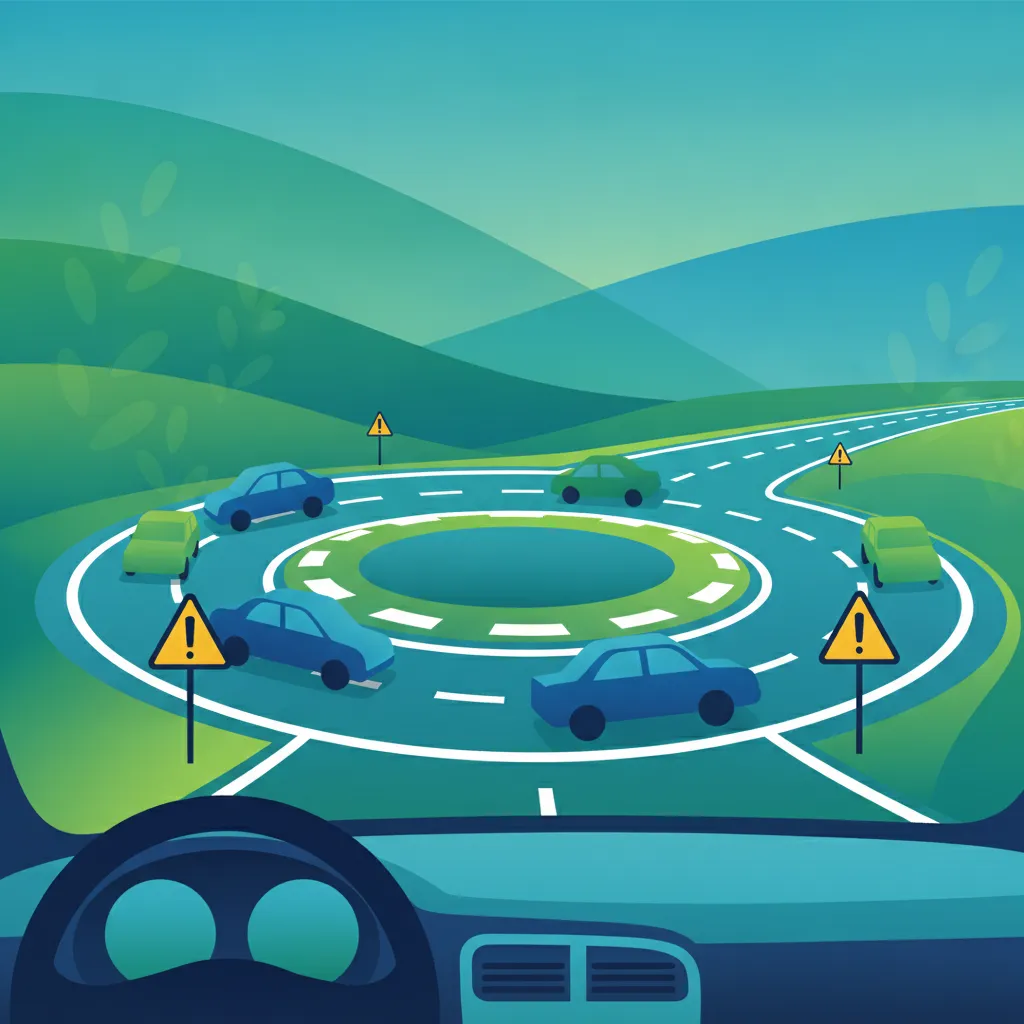
This lesson focuses on the skills required to safely enter, navigate, and exit roundabouts, a common feature in French urban environments. Learners will understand the need to yield to circulating traffic, select the appropriate lane upon entry, and signal intentions when exiting. By mastering these techniques, AM riders can safely integrate into roundabout traffic flow and reduce conflicts with other road users.

Traffic signals control flow and priority at busy intersections using precise color sequences. This lesson explains standard red, amber, and green cycles, as well as complex signals like flashing amber lights that indicate caution or a priority-to-the-right situation. You will learn the legal rules for turning on arrow signals and how to coordinate with dedicated pedestrian and cyclist light displays.
Learn the specific rules for interacting with cyclists, pedestrians, and public transport in the French highway code. Discover how to identify and protect vulnerable road users during common maneuvers and turns, ensuring compliance with legal standards and promoting safe, defensive driving practices on public roads.
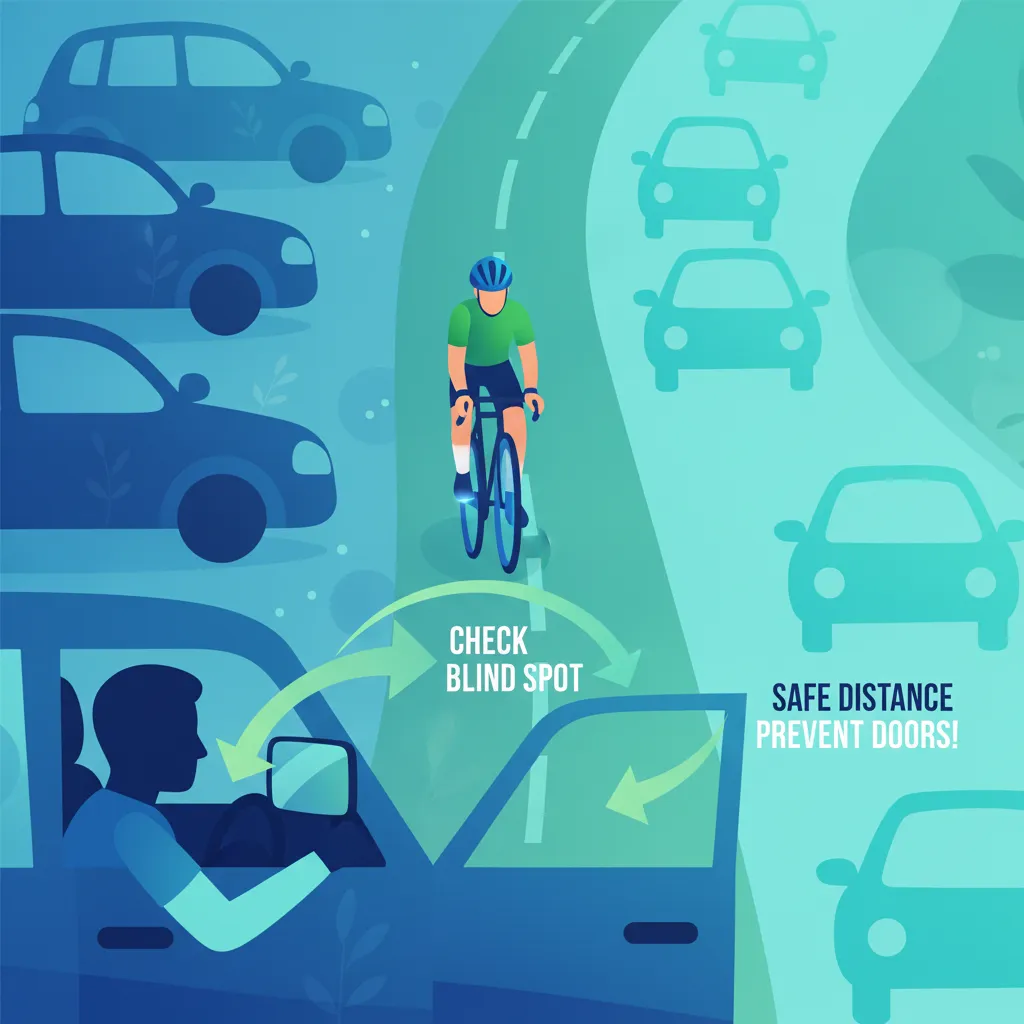
This lesson explains how to share the road safely with cyclists in both urban and rural environments. Drivers will study the legal minimum passing distances when overtaking cyclists, which is one meter in cities and one and a half meters outside urban areas. It also covers recognizing specialized cycling infrastructure, bike boxes at intersections, and preventing blind-spot collisions during right turns.
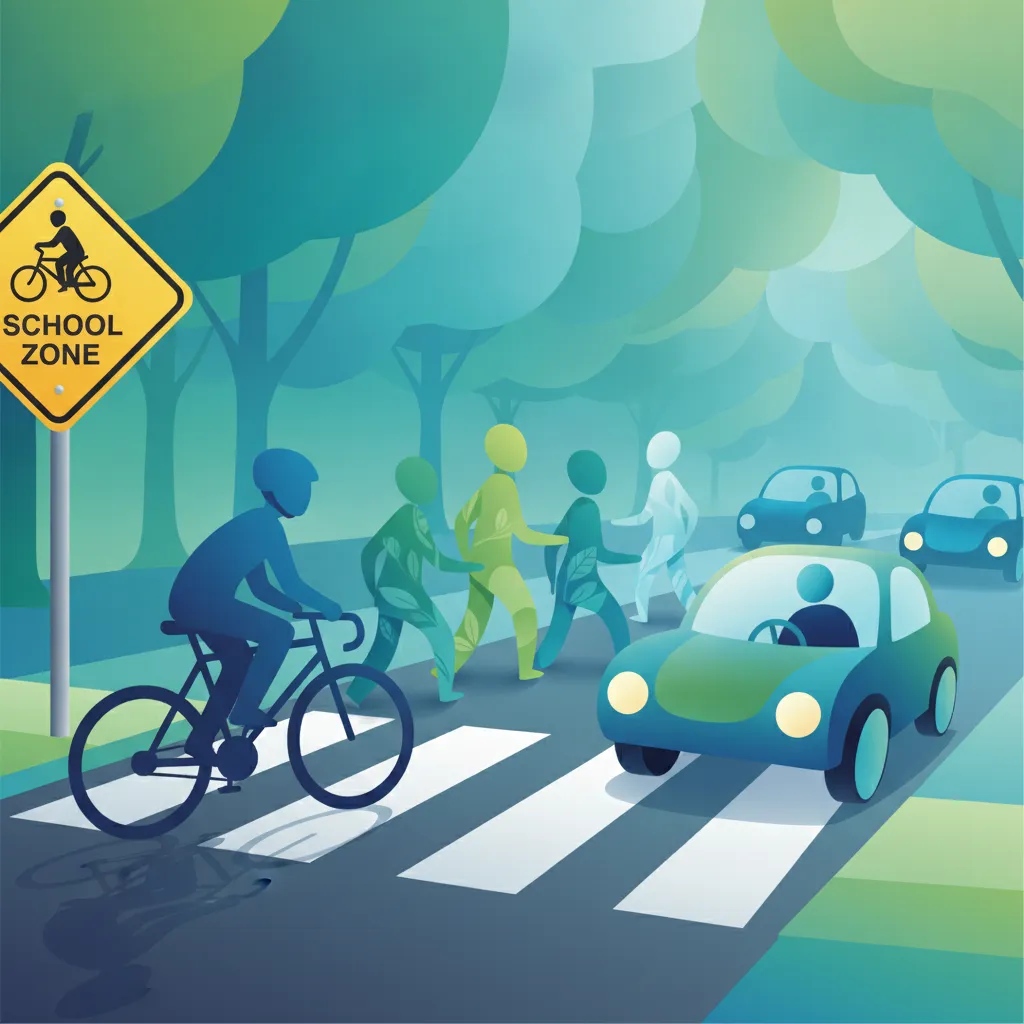
This lesson focuses on the legal requirement to yield to pedestrians on or about to step onto zebra crossings, a major focus of French road safety. You will learn how to approach school zones and pedestrian islands with heightened vigilance and reduced speed. Additionally, the lesson explores shared urban spaces, explaining how to maintain safe lateral distances when overtaking cyclists or personal electric scooters.
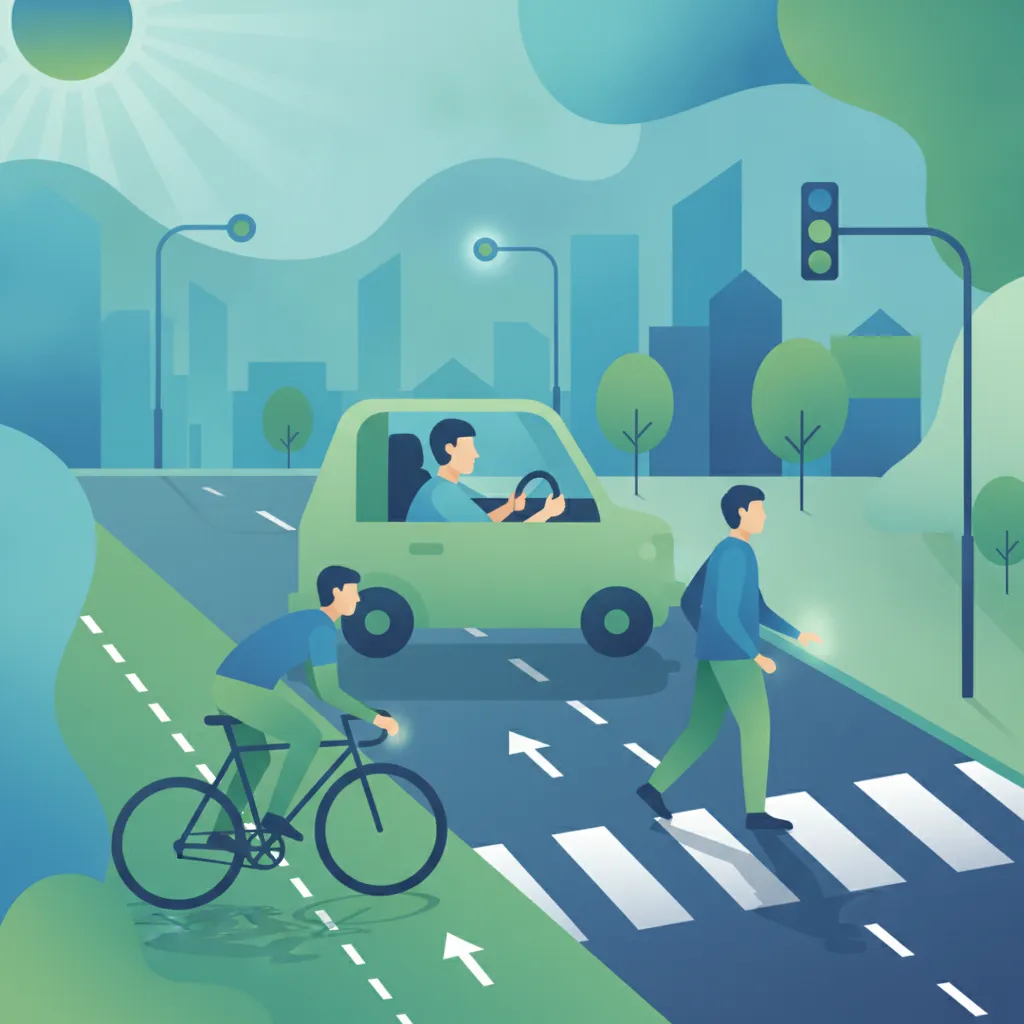
This lesson examines the specific challenges and responsibilities goods vehicle drivers face when interacting with pedestrians and cyclists in urban environments. Learners will understand right-of-way rules, the importance of yielding at pedestrian crossings, and safe turning practices that protect cyclists. The content emphasizes heightened driver vigilance, especially when navigating bike lanes and crowded sidewalks.
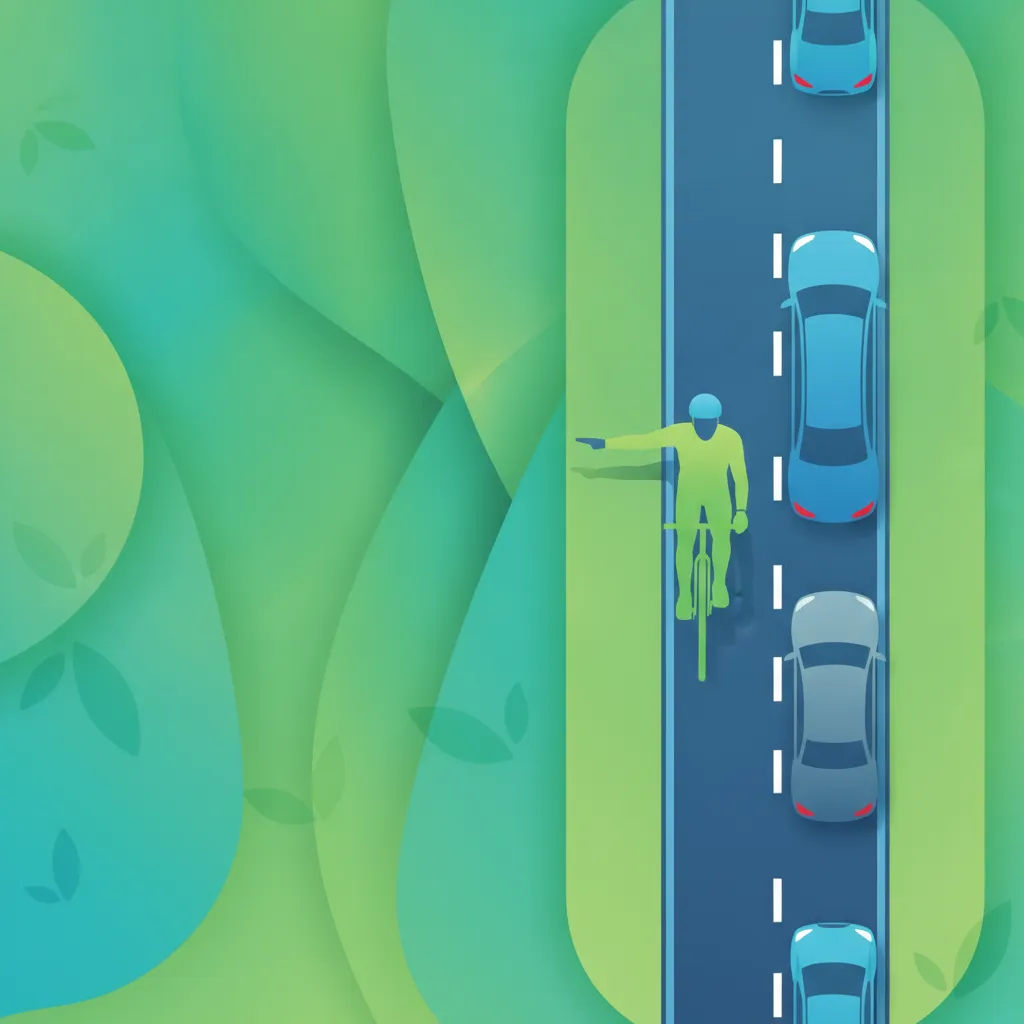
Bicycles represent an eco-friendly transport method with specific rights on French public roadways. This lesson teaches you how to identify dedicated cycle paths, respect bike lanes, and understand cyclist turning privileges at intersections. You will learn the legal minimum safety distance required when overtaking a cyclist: 1 meter in urban areas and 1.5 meters outside city limits.

Learners will focus on the best practices for interacting safely with cyclists and pedestrians in mixed traffic environments. The lesson covers proper lane usage, overtaking protocols, maintaining adequate safety gaps, and non-verbal communication techniques in the French urban landscape. By applying these principles, AM riders can coexist harmoniously with vulnerable road users, reducing the likelihood of accidents.

Learners will explore the rules related to pedestrian crossings, focusing on the obligation to yield to pedestrians at zebra crossings and flashing pedestrian signals. The lesson highlights the importance of stopping before the stop line, reducing speed, and maintaining vigilance for pedestrian movement. Mastery of these practices ensures the safety of both pedestrians and AM riders at crossing points.

Certain groups of road users require heightened defensive attention from drivers due to physical limitations or unpredictable behaviors. This lesson covers how to recognize signs of visual impairment (white canes), mobility challenges, and the unpredictability of young children. You will learn to reduce your speed, extend yielding patience, and proactively secure extra space to protect these vulnerable users.
In France, pedestrians have clear legal priority when stepping onto or indicating an intent to use a crossing (passage pieton). This lesson details standard zebra crossings, refuge islands, and pedestrian crossings managed by synchronized traffic light systems. You will learn to scan crossings ahead, anticipate pedestrian movements, and safely come to a stop whenever a pedestrian attempts to cross.

This lesson examines French Code de la route laws regarding pedestrian right-of-way, emphasizing the driver's legal duty to yield to any pedestrian engaged in crossing. It outlines proper approach speeds when approaching zebra crossings with obstructed views. Candidates will learn to maintain a safe physical buffer zone and verify that crosswalks are entirely clear of pedestrians before accelerating.

This lesson details how to manage high-risk interactions with pedestrians who may step off curbs or cross the road near bus stops. Learners will study French Code de la route laws regarding pedestrian priority at crosswalks and near stopping transit vehicles. Developing heightened spatial awareness around blind zones near the front of the bus is emphasized to prevent tragic pedestrian collisions.
Find clear answers to common questions learners have about Fundamental Manoeuvres: Turning and Lane Changes. Learn how the lesson is structured, which driving theory objectives it supports, and how it fits into the overall learning path of units and curriculum progression in France. These explanations help you understand key concepts, lesson flow, and exam focused study goals.
The blind spot check is crucial because it accounts for vehicles or cyclists that your mirrors cannot see. In the French theory exam, failing to acknowledge this check in a scenario involving a lane change is a major safety oversight.
Signaling is a legal requirement under the Code de la route. Failing to signal misleads other drivers, creates confusion, and is a guaranteed way to lose points on your exam or risk a collision in real traffic.
You must position your vehicle towards the center of the road or in the designated left-turn lane, ensuring you do not cross into the lane of oncoming traffic or cut the corner into the opposing lane of the side street you are entering.
Yes, the ETG exam includes scenarios on motorways where lane changing and merging at speed are critical. You will be tested on your ability to anticipate traffic flow and maintain proper following distances while signaling your intentions.
Ready to focus your study? Use the practice search to find exactly the French driving theory questions you need for the Code de la route and permis de conduire ETG. Refine your knowledge on specific topics or challenging rules to boost your confidence and exam readiness.