
This lesson guides you through the environmental responsibilities of riding a motorcycle in France. You will learn how to navigate Low Emission Zones (ZFE), correctly display your Crit'Air vignette, and implement eco-driving habits that reduce emissions and noise levels.
Lesson content overview
As France actively works to improve air quality and reduce greenhouse gas emissions in urban centers, environmental regulations have become a core pillar of the French Highway Code (Code de la route). For motorcyclists, these rules are not merely guidelines; they carry strict legal obligations, direct financial penalties, and a direct impact on where and when you can ride.
Whether you are preparing for your Category A, A1, or A2 motorcycle theory exam (Épreuve Théorique Moto - ETM), understanding these environmental standards is essential. This lesson covers the Euro emissions classifications, the Crit'Air vignette system, Low-Emission Zones (Zones à Faibles Émissions or ZFE), eco-driving practices, and the legal limits governing exhaust noise levels.
The European Union established the Euro emission standards to regulate the output of harmful pollutants from internal combustion engines. These standards set strict limits on exhaust gases, specifically targeting:
While passenger cars saw emissions regulations implemented much earlier, motorcycles and scooters (categorized under "L-category" vehicles) have followed their own progressive timeline.
The regulatory tiers (Euro 1 through Euro 5) defined by the European Union that specify the maximum permissible emissions of carbon monoxide, hydrocarbons, nitrogen oxides, and particulate matter for two- and three-wheeled motor vehicles.
For the ETM exam, it is useful to understand how these standards correspond to the production years of motorcycles, as this directly dictates their access to modern urban environments:
A common pitfall for candidates is assuming a motorcycle's registration date perfectly correlates with its Euro standard. Manufacturers are occasionally granted extensions to sell remaining non-compliant stock. To verify your motorcycle's exact Euro standard, refer to field V.9 on your registration certificate (Carte Grise).
To enforce air quality standards on a daily basis, the French government introduced the Crit'Air vignette system (Certificat qualité de l'air). This is a secure, color-coded circular sticker that must be displayed on your vehicle. It classifies your motorcycle based on its environmental impact, which is determined by its fuel type and Euro emission standard.
Because motorcycles have a different regulatory history than cars, their Crit'Air categories are structured differently. Two-wheelers are categorized from Class 0 (cleanest) to Class 5 (most polluting), though pre-2000 motorcycles are completely unclassified.
| Crit'Air Class | Color | Motorcycle Eligibility Criteria |
|---|---|---|
| Class 0 | Green | 100% Electric and Hydrogen vehicles (zero tailpipe emissions). |
| Class 1 | Purple | All Euro 5 motorcycles and scooters (registered from Jan 1, 2017, onward). |
| Class 2 | Yellow | Euro 4 motorcycles (registered between Jan 1, 2017, and Dec 31, 2020). |
| Class 3 | Orange | Euro 3 motorcycles (registered between Jan 1, 2007, and Dec 31, 2016). |
| Class 4 | Burgundy | Euro 2 motorcycles (registered between June 1, 2000, and Dec 31, 2006). |
| Unclassified | No Sticker | Motorcycles registered before June 1, 2000 (generally Euro 1 or pre-Euro). |
Crucial Exam Note: Motorcycles do not have a Crit'Air Class 5 sticker category. Any motorcycle registered before June 1, 2000, is considered "Unclassified" (Non Classé). These older machines are subject to the strictest bans in urban areas.
The Crit'Air vignette is linked to your motorcycle's registration number and remains valid for the entire lifespan of the vehicle.
Order Online: Purchase the sticker exclusively from the official French government website. Avoid third-party reseller sites, which charge highly inflated prices.
Use the Provisional Receipt: Once ordered, you will receive a digital invoice and a provisional certificate via email within 24 hours. Keep this printed receipt with you; it serves as legal proof of compliance while your physical sticker is in transit.
Prepare the Surface: Clean the application area thoroughly to remove road grime, grease, and moisture.
Affix to the Front: For motorcycles, the vignette must be affixed to a prominent, forward-facing surface. The ideal location is the lower-left corner of the windshield (viewed from the seat). If your motorcycle does not have a windshield (such as a naked roadster), you must affix it securely to the front forks, fairing, or mudguard.
Failing to display the vignette, displaying an incorrect class, or positioning it where it cannot be easily read by automated cameras or police officers constitutes a traffic violation.
A Low-Emission Zone, officially known as a Zone à Faibles Émissions mobilité (ZFE-m), is a designated urban area where access is restricted for the most polluting vehicles. The goal of a ZFE is to reduce ambient concentrations of nitrogen dioxide and fine particles, safeguarding public health in highly populated areas.
As a rider, you must distinguish between two types of environmental zone activations:
ZFE rules are not identical across France. Each metropolitan area (such as Paris, Lyon, Marseille, Toulouse, or Nice) is legally empowered to define its own geographical boundaries, restricted Crit'Air classes, and operating hours.
For instance, the Greater Paris area (Métropole du Grand Paris) enforces restrictions that cover a vast territory within the A86 super-highway loop. In contrast, smaller cities may limit their ZFEs strictly to downtown commercial centers. Prior to planning any journey into a major French city, you must check local prefecture websites for up-to-date restrictions.
Eco-driving is a proactive riding philosophy designed to reduce fuel consumption, greenhouse gas emissions, and mechanical wear, while simultaneously improving rider safety. Because motorcycles are highly responsive to throttle and body inputs, implementing eco-driving techniques can reduce your fuel usage by up to 15%.
Air pollution is not the only environmental concern in France; noise pollution is increasingly treated as a critical public health hazard. Extreme exhaust noise is proven to cause sleep disturbance, elevated stress hormones, and cardiovascular issues for residents living near major transit routes.
Every motorcycle type-approval includes a maximum noise limit measured in decibels (dB) at a specific engine RPM. This official threshold is printed directly on your registration certificate in field U.1 (decibel level) and field U.2 (the associated RPM).
The Trap of Aftermarket Exhausts: Many riders install aftermarket exhaust systems to enhance performance or aesthetics. If the exhaust system does not carry an official, legible European approval mark (e.g., an "e" mark followed by a country code in a rectangle) and its removable noise baffle (dB-killer) is modified or removed, the motorcycle is illegal for public road use.
To combat illegal noise levels, French authorities have deployed automated sound-measuring devices known as noise radars (radars méduse). These devices feature 360-degree cameras coupled with an acoustic antenna array that can isolate and measure the exact decibel output of a passing vehicle. If the system records a decibel level exceeding the legal allowance for that road segment, a fine is automatically mailed to the registered owner.
Understanding the legal consequences of non-compliance is vital for any prospective rider. The French Highway Code enforces strict, non-negotiable penalties for environmental infractions.
Riding in a designated ZFE during restricted hours without a valid vignette, or displaying a vignette of a category that is currently banned, is classified as a class 3 contravention. This carries a flat fine of €68 (which can be increased to €135 if not paid promptly), and the vehicle can be subjected to immediate impoundment (immobilisation).
If you have recently purchased a motorcycle or ordered a new sticker, you cannot ride inside a active ZFE without physical proof. You must print the provisional receipt (facture provisoire) showing your official vignette assignment and display it on your motorcycle or keep it in your immediate possession.
Operating a motorcycle with a modified, unapproved, or missing exhaust baffle can result in multiple fines. Police officers can issue a class 3 contravention for excessive noise emission, accompanied by an order to present the vehicle at a police station within a specified timeframe with an approved, quiet exhaust system installed.
While you cannot be fined directly for low tire pressure, neglecting your tires compromises your safety (by reducing cornering grip) and significantly increases your tire wear rate and tailpipe emissions. It serves as a reminder that environmental responsibility and rider safety are deeply interconnected.
Many riders ask: Why are motorcycles targeted when they are smaller than cars and spend less time in traffic?
While motorcycles do ease congestion by filtering through slow-moving traffic, older two-wheelers actually emit significantly more toxic compounds (especially and unburnt hydrocarbons) per kilometer than a modern passenger car. This is because passenger cars have benefited from complex, multi-stage catalytic converters and diesel particulate filters for decades, while early motorcycle designs faced fewer space-saving emissions controls.
By adhering to ZFE regulations, maintaining your motorcycle's exhaust system, and practicing eco-driving, you help protect vulnerable road users (such as pedestrians and cyclists) who breathe in road-level emissions. Furthermore, practicing eco-driving directly fosters a defensive, calm, and highly observant riding style—vastly lowering your risk of being involved in an accident.
To ensure you are fully prepared for any environmental questions on your French ETM exam, explore the following resources:
This lesson covers the environmental regulations motorcyclists must understand for the French ETM exam and urban riding. The Euro emission standards (Euro 1 through Euro 5, introduced from 1999 to 2021) determine which Crit'Air classification a motorcycle receives, with Classes 0-4 plus Unclassified mapping to specific registration date ranges. Low-Emission Zones (ZFE) enforce access restrictions based on Crit'Air class, operating either permanently during weekday hours or temporarily during pollution emergencies. The Crit'Air vignette must be properly affixed to a visible forward-facing surface and can be verified through the Carte Grise fields V.9 (Euro standard), U.1 (noise level), and U.2 (measurement RPM). Beyond regulatory compliance, eco-driving techniques like smooth acceleration, early gear changes, and proper maintenance can reduce fuel consumption by up to 15% while also lowering emissions and noise.
A short set of high-value points that capture the most important learning from this lesson.
Motorcycles are classified into Crit'Air Classes 0 through 4 plus 'Unclassified' based on their Euro emission standard and registration date, with Class 0 being electric/hydrogen and Unclassified covering pre-2000 vehicles
Low-Emission Zones (ZFE) operate in two modes: permanent restrictions during weekday hours and temporary 'circulation différenciée' measures triggered by pollution spikes
The Crit'Air vignette must be affixed to a forward-facing surface on the motorcycle (lower-left of windshield or front forks/fairing for bikes without windshields)
Noise enforcement uses 'radar méduse' devices that can isolate and measure decibel output, with legal limits recorded in fields U.1 and U.2 of the registration certificate
Explore all units and lessons included in this driving theory course.
Crit'Air Class 1 corresponds to Euro 5 motorcycles registered from January 1, 2017; Class 2 is Euro 4 (2017-2020); Class 3 is Euro 3 (2007-2016); Class 4 is Euro 2 (2000-2006); pre-2000 motorcycles are Unclassified
Check field V.9 on your Carte Grise to verify your motorcycle's exact Euro standard, as manufacturer stock extensions can cause registration dates to not perfectly align with Euro classifications
A printed provisional receipt serves as temporary legal proof while waiting for the physical sticker to arrive by post
Eco-driving techniques—smooth throttle control, early gear shifting, anticipatory braking, proper tire pressure, and chain maintenance—can reduce fuel consumption by up to 15%
Aftermarket exhausts are illegal if they lack a European approval mark ('e' mark in rectangle) or if the dB-killer has been modified or removed
Believing a motorcycle's registration date perfectly predicts its Euro standard—manufacturers sometimes receive extensions to sell non-compliant stock remaining in inventory
Thinking motorcycles have a Crit'Air Class 5 sticker—they do not; any motorcycle registered before June 1, 2000 is simply classified as 'Unclassified' with no sticker
Displaying the Crit'Air vignette in a position where it cannot be read by automated cameras or police officers, such as obscured behind the instrument cluster
Riding into an active ZFE with only the digital invoice on a phone, without printing and displaying the provisional certificate
Assuming all French ZFEs have identical rules—each metropolitan area defines its own boundaries, restricted Crit'Air classes, and operating schedules
Lesson content overview
A short set of high-value points that capture the most important learning from this lesson.
Motorcycles are classified into Crit'Air Classes 0 through 4 plus 'Unclassified' based on their Euro emission standard and registration date, with Class 0 being electric/hydrogen and Unclassified covering pre-2000 vehicles
Low-Emission Zones (ZFE) operate in two modes: permanent restrictions during weekday hours and temporary 'circulation différenciée' measures triggered by pollution spikes
The Crit'Air vignette must be affixed to a forward-facing surface on the motorcycle (lower-left of windshield or front forks/fairing for bikes without windshields)
Noise enforcement uses 'radar méduse' devices that can isolate and measure decibel output, with legal limits recorded in fields U.1 and U.2 of the registration certificate
Explore all units and lessons included in this driving theory course.
Crit'Air Class 1 corresponds to Euro 5 motorcycles registered from January 1, 2017; Class 2 is Euro 4 (2017-2020); Class 3 is Euro 3 (2007-2016); Class 4 is Euro 2 (2000-2006); pre-2000 motorcycles are Unclassified
Check field V.9 on your Carte Grise to verify your motorcycle's exact Euro standard, as manufacturer stock extensions can cause registration dates to not perfectly align with Euro classifications
A printed provisional receipt serves as temporary legal proof while waiting for the physical sticker to arrive by post
Eco-driving techniques—smooth throttle control, early gear shifting, anticipatory braking, proper tire pressure, and chain maintenance—can reduce fuel consumption by up to 15%
Aftermarket exhausts are illegal if they lack a European approval mark ('e' mark in rectangle) or if the dB-killer has been modified or removed
Believing a motorcycle's registration date perfectly predicts its Euro standard—manufacturers sometimes receive extensions to sell non-compliant stock remaining in inventory
Thinking motorcycles have a Crit'Air Class 5 sticker—they do not; any motorcycle registered before June 1, 2000 is simply classified as 'Unclassified' with no sticker
Displaying the Crit'Air vignette in a position where it cannot be read by automated cameras or police officers, such as obscured behind the instrument cluster
Riding into an active ZFE with only the digital invoice on a phone, without printing and displaying the provisional certificate
Assuming all French ZFEs have identical rules—each metropolitan area defines its own boundaries, restricted Crit'Air classes, and operating schedules
Explore search topics learners often look for when studying Environmental Regulations and Emissions. These topics reflect common questions about road rules, driving situations, safety guidance, and lesson level theory preparation for learners in France.
Browse additional driving theory lessons that cover connected traffic rules, road signs, and common driving situations related to this topic. Improve your understanding of how different rules interact across everyday traffic scenarios.
Understand how the ZFE-m system functions in urban areas across France. Learn the legal framework for vehicle access restrictions, the role of local prefecture decisions in defining emission zones, and the operational differences between permanent restrictions and temporary pollution-based traffic measures for motorcyclists on the road.
This lesson examines the regulatory limits and environmental controls applied to large passenger vehicles operating in dense French urban centers. Drivers will study the Crit'Air clean air sticker system and low-emission zones (ZFE) that restrict access for older, high-polluting vehicles. It also addresses navigating physical constraints, such as narrow streets, tight turning radii, and strict municipal weight limits.
In this lesson, the focus is on French environmental zones (ZFE) and low emission requirements that affect goods vehicle access to certain urban areas. Learners will explore how emissions criteria determine vehicle eligibility, the process for obtaining permits, and the consequences of non-compliance. The content also covers strategies for route planning that consider environmental restrictions while maintaining operational efficiency.
French municipalities utilize distinct low-speed configurations to foster pedestrian safety in residential and educational neighborhoods. This lesson details speed restrictions in 'zone 30', pedestrian-only districts, and shared 'zones de rencontre' where speed is capped at 20 km/h. You will learn how priority hierarchies shift in these zones, giving pedestrians legal priority to use the entire roadway.
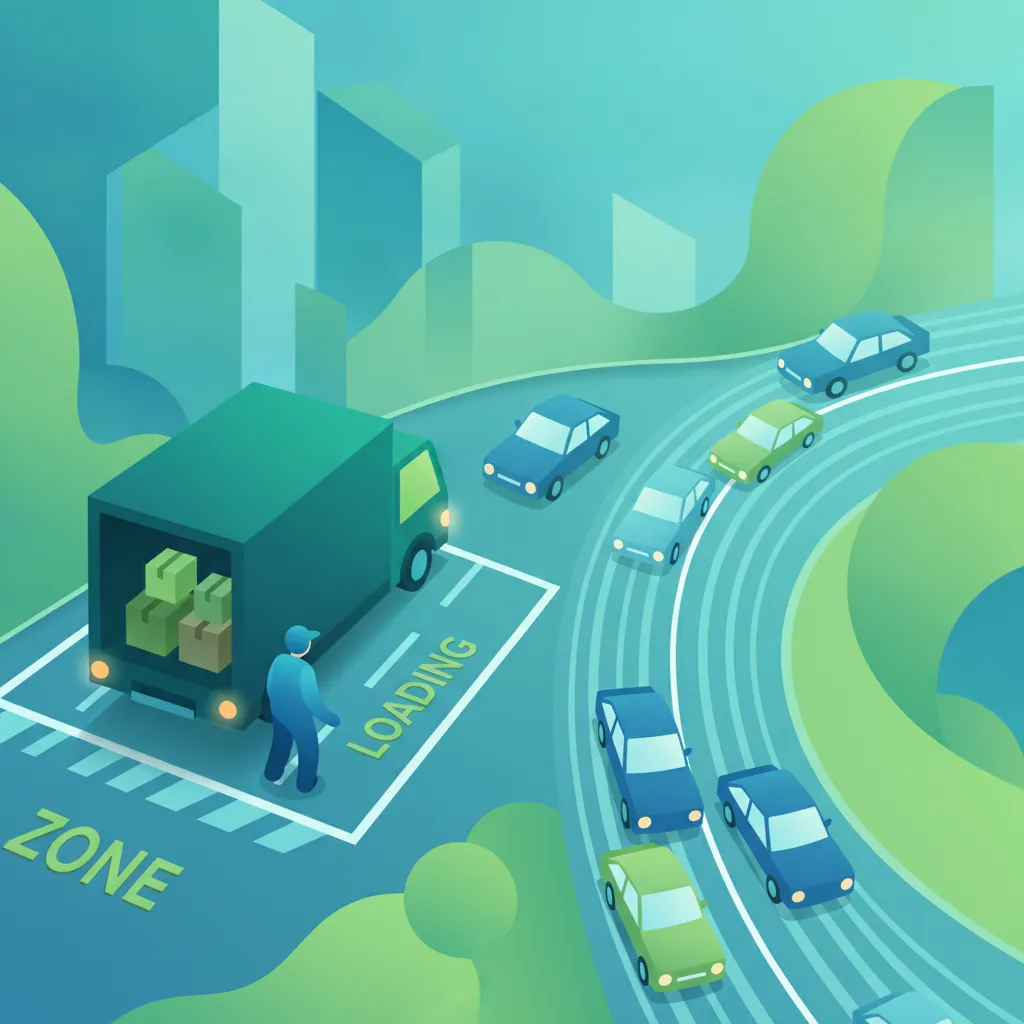
In this lesson, drivers will learn how to navigate urban delivery zones, understanding the rules surrounding loading bays, time windows, and restricted access areas. The content includes the process for obtaining delivery permits, strategies for safe maneuvering in congested city streets, and best practices for minimizing impact on pedestrian traffic. Learners will also be introduced to French city-specific regulations that govern goods vehicle deliveries.
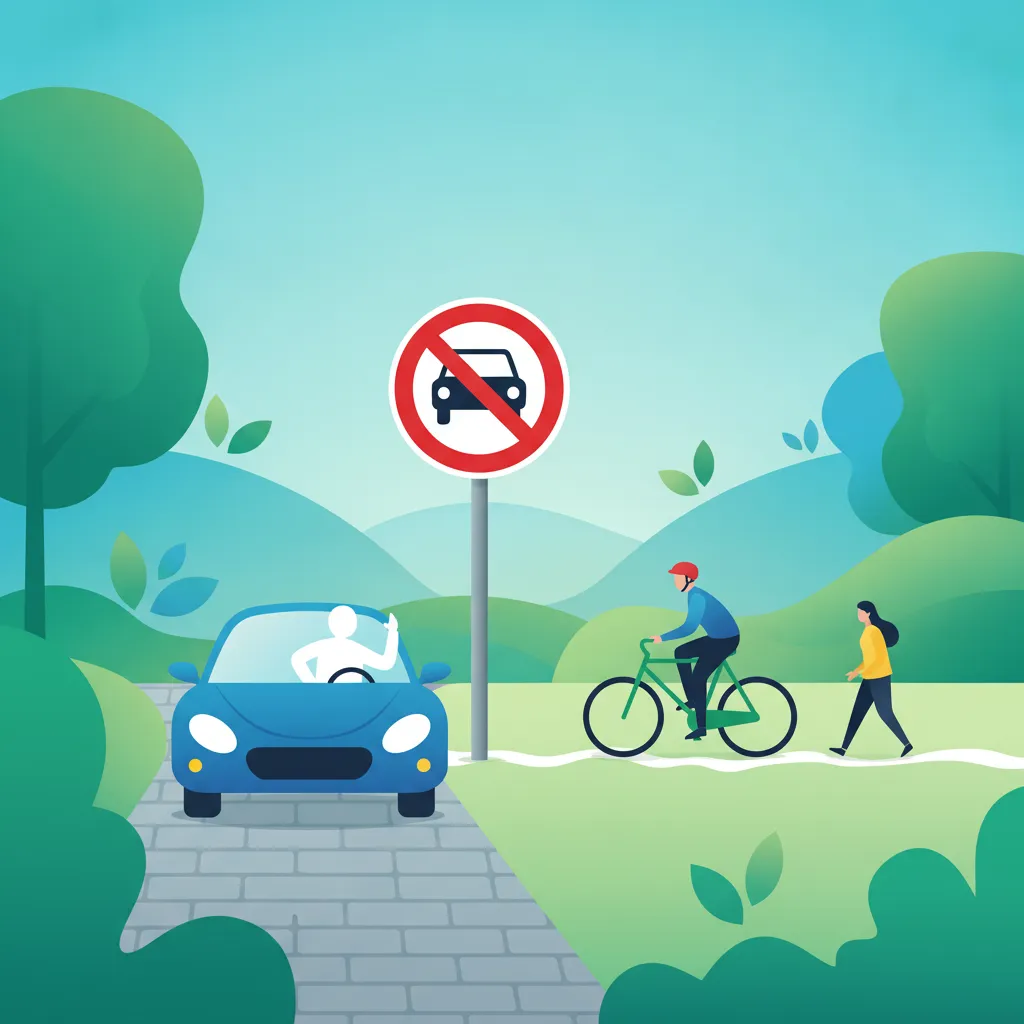
In this lesson, learners will explore the various access restrictions that apply to goods vehicles in France, such as low emission zones and weight-restricted areas. The focus is on understanding the process to obtain necessary access permits and authorisations, and how these restrictions influence route planning and operational decisions. Learners will also be introduced to specific regulations governing vehicle entry into city centres and environmentally sensitive zones.
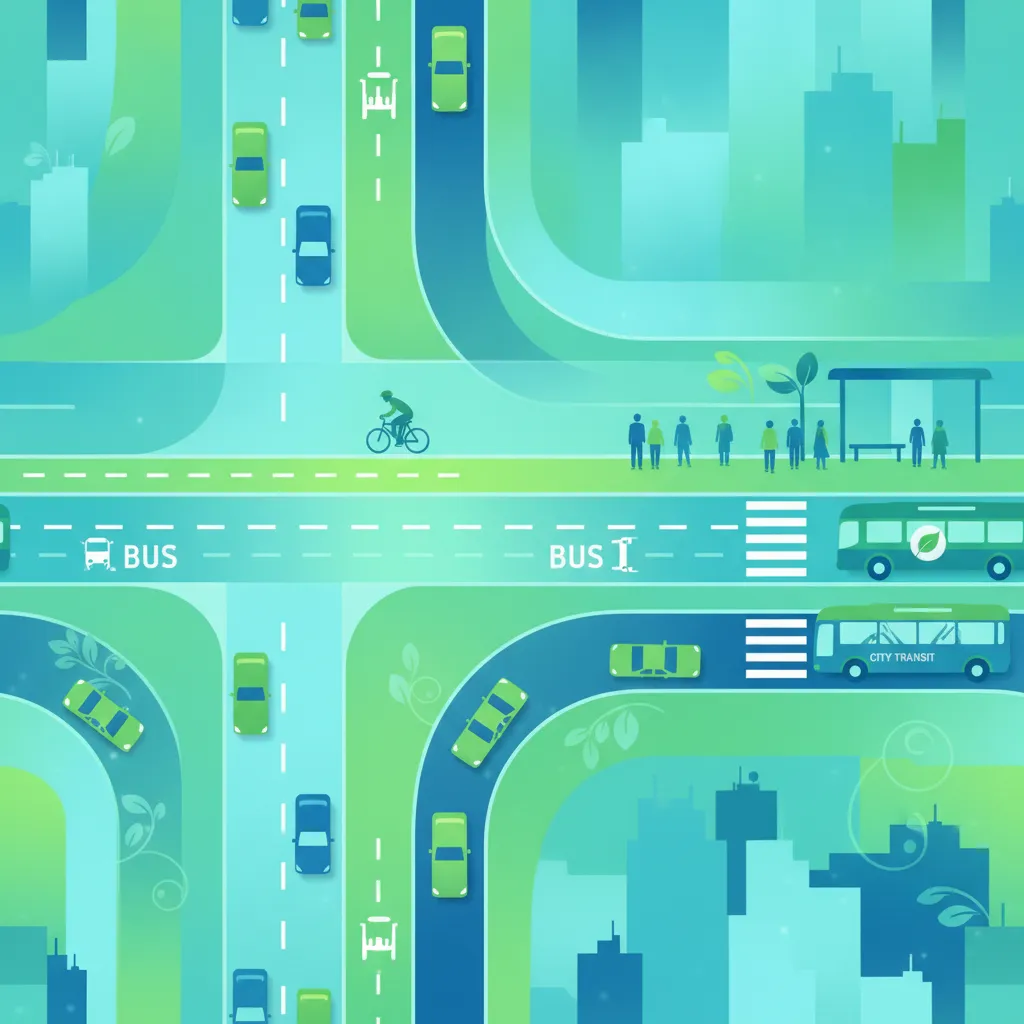
This lesson clarifies the legal boundaries of urban infrastructure, highlighting the strict ban on riding motorcycles within bus lanes or cycle paths. You will study French regulations concerning traffic flow, including where and when experimental lane filtering is permitted between lines of stationary cars. Understanding these boundaries ensures you can keep moving through congested areas without risking heavy fines or dangerous collisions.
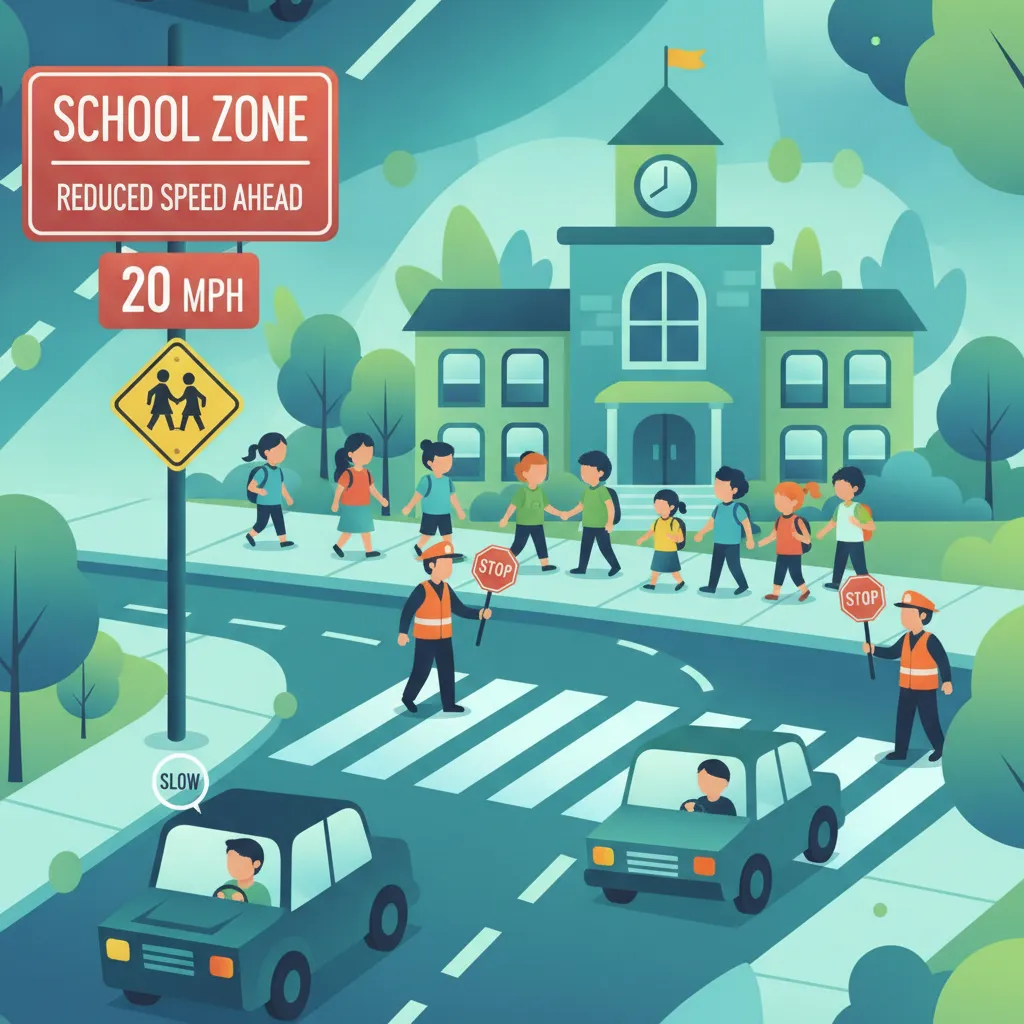
This lesson focuses on the legal rules and safety procedures required within school zones and during school transport (transport scolaire) services in France. Drivers will study strict speed limits, school bus warning sign applications, and mandatory stopping rules when children are boarding. It also details how to respond to official crossing guard signals and ensure students are safely clear before moving.
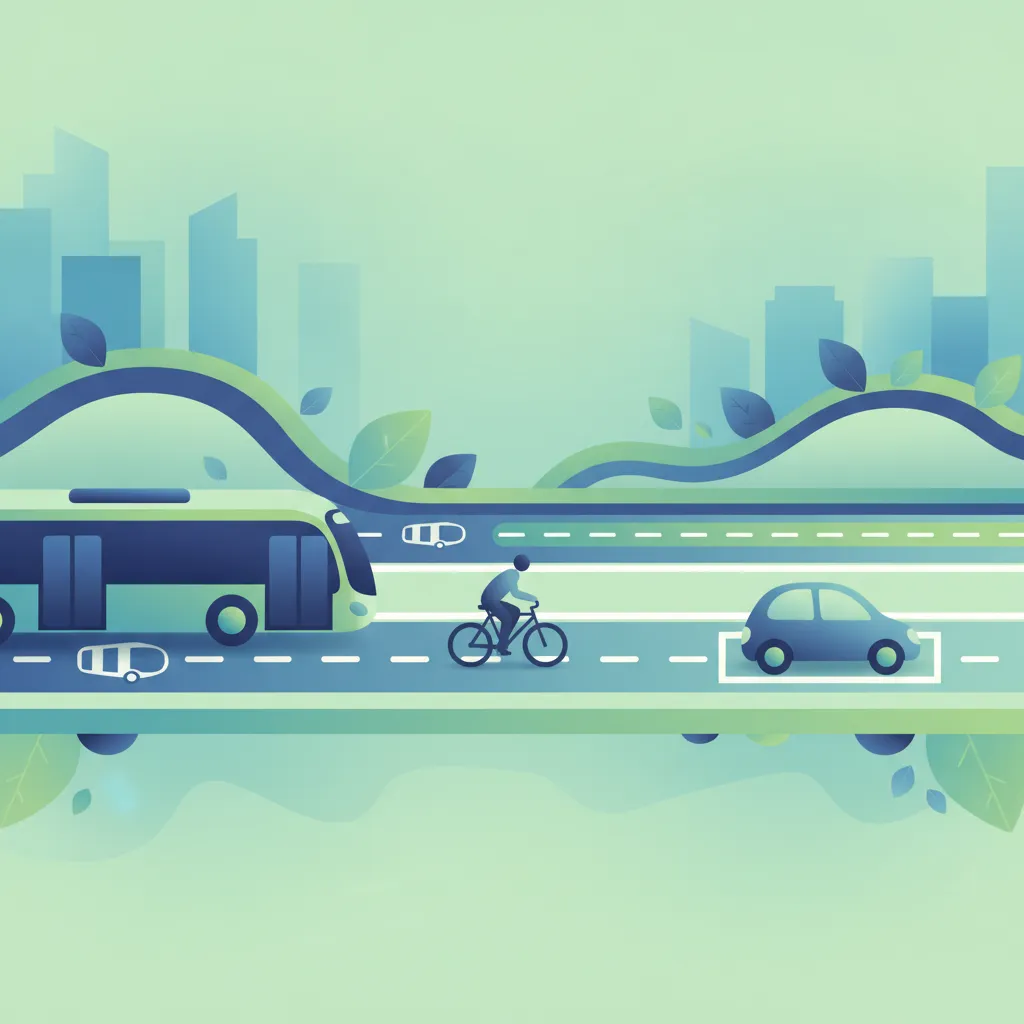
Urban roads in France feature specialized lanes reserved for public transit, micro-mobility, and distinct parking options. This lesson covers how to recognize bus lanes, cycling lanes, and the specific rules that prohibit general traffic from blocking them. You will also learn to interpret parking bay outlines, loading zones, and spots reserved for electric charging or drivers with disabilities.

This lesson detail the exact laws governing the use of reserved bus lanes, detailing who may enter them and during what hours of operation. Drivers will study the penalties for unauthorized passenger cars occupying these lanes and the safety protocols for lane sharing with taxi cabs or cyclists. The lesson also highlights safe lane-merging practices when exiting reserved spaces to merge back into general urban traffic.

This lesson focuses on the legal requirement to yield to pedestrians on or about to step onto zebra crossings, a major focus of French road safety. You will learn how to approach school zones and pedestrian islands with heightened vigilance and reduced speed. Additionally, the lesson explores shared urban spaces, explaining how to maintain safe lateral distances when overtaking cyclists or personal electric scooters.
Improve your knowledge of fuel efficiency and mechanical longevity through standardized eco-driving practices. Learn how smooth throttle application, correct gear selection, and diligent chain or tire maintenance contribute to reduced emissions, quieter engine performance, and better adherence to modern vehicle noise regulations within the French Highway Code.

This lesson provides practical strategies for managing the physical demands of slow, heavily congested city traffic. You will learn how to maintain excellent low-speed balance through correct body posture, rear brake modulation, and smooth clutch control. It also emphasizes the importance of preserving an adequate safety buffer when stopping behind other vehicles, allowing an immediate escape route if you face a rear-end threat.
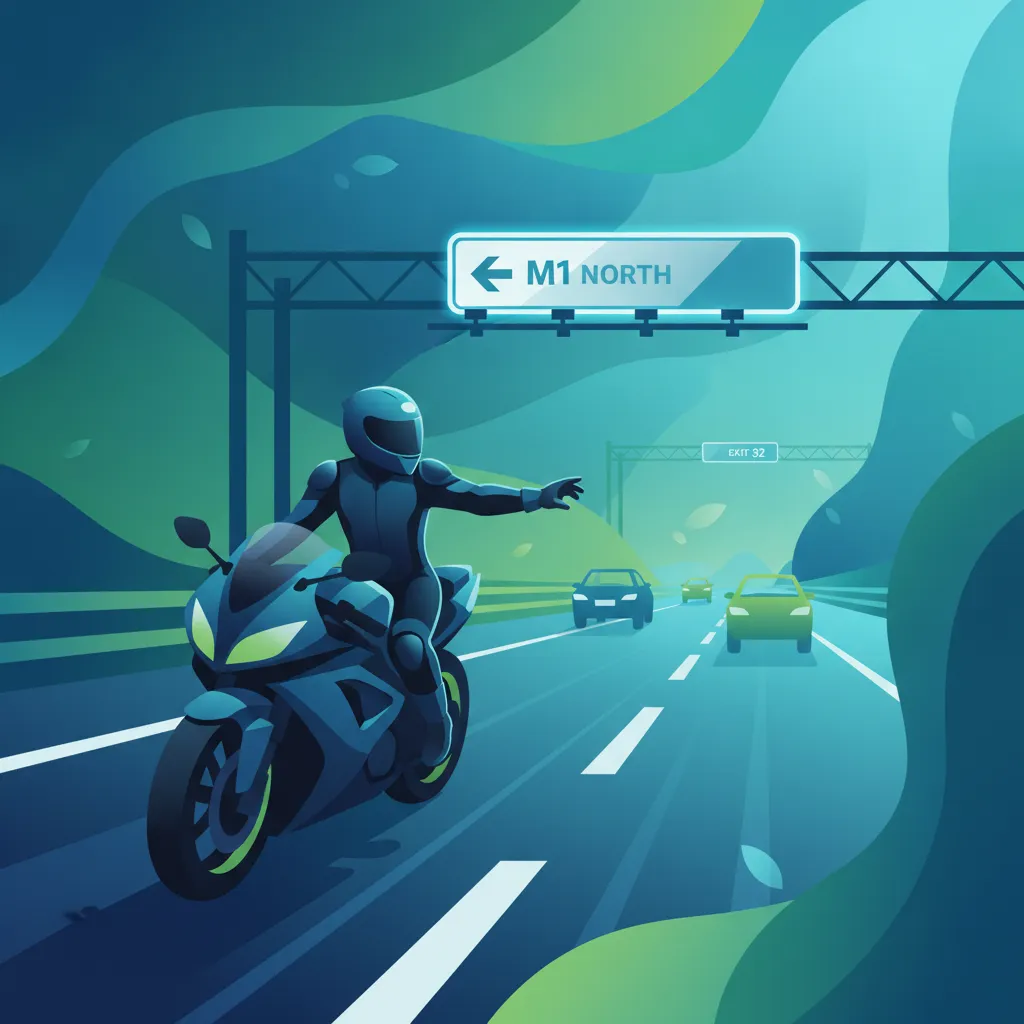
This lesson details how to safely enter, cruise on, and exit French motorways, known as autoroutes, which feature high-speed traffic flows. You will master the process of matching highway speeds in the acceleration lane and performing blind spot checks before merging. The lesson also explains correct lane positioning to avoid aerodynamic turbulences from large semi-trucks, and how to safely prepare for decelerating at exit ramps.

This lesson covers the physical mechanics of cornering, highlighting the technique of countersteering to initiate and control lean angles. You will learn to divide bends into distinct entry, apex, and exit phases, choosing the safest path that maximizes your visibility and grip reserves. Finally, the lesson explains the concept of the traction circle, helping you manage the division of tire grip between lateral cornering forces and acceleration.

This lesson teaches you how to establish and preserve a dynamic cushion of safety on all sides of your motorcycle. You will study how to apply the 'two-second rule' to keep a safe following distance, extending it to three or more seconds in adverse weather. Additionally, you will discover how to manage tailgating motorists safely without resorting to dangerous speed increases, ensuring you always maintain a clear escape route.

This lesson teaches riders how to negotiate loose surfaces such as gravel, sand, and poorly maintained urban asphalt without dropping the motorcycle. You will study correct body positioning, focusing on keeping your weight centered and your grip relaxed on the handlebars. The lesson also highlights why smooth, constant throttle delivery and avoiding abrupt front braking are essential to prevent the front wheel from washing out.

This lesson emphasizes that driving a motorcycle in France involves unique moral and social responsibilities towards vulnerable road users like cyclists and pedestrians. You will examine the importance of defensive riding habits, civil road etiquette, and the prioritizing of shared road safety. Understanding these principles helps to prevent dangerous situations, respect local communities, and lower overall accident statistics.

Learners will be introduced to effective braking techniques tailored for AM vehicles, emphasizing progressive pressure application and the importance of maintaining grip. The lesson covers how to estimate stopping distances, execute emergency stops safely, and understand the limitations of light vehicle braking systems in France. Mastery of these techniques ensures riders can stop promptly and maintain control in various traffic scenarios.
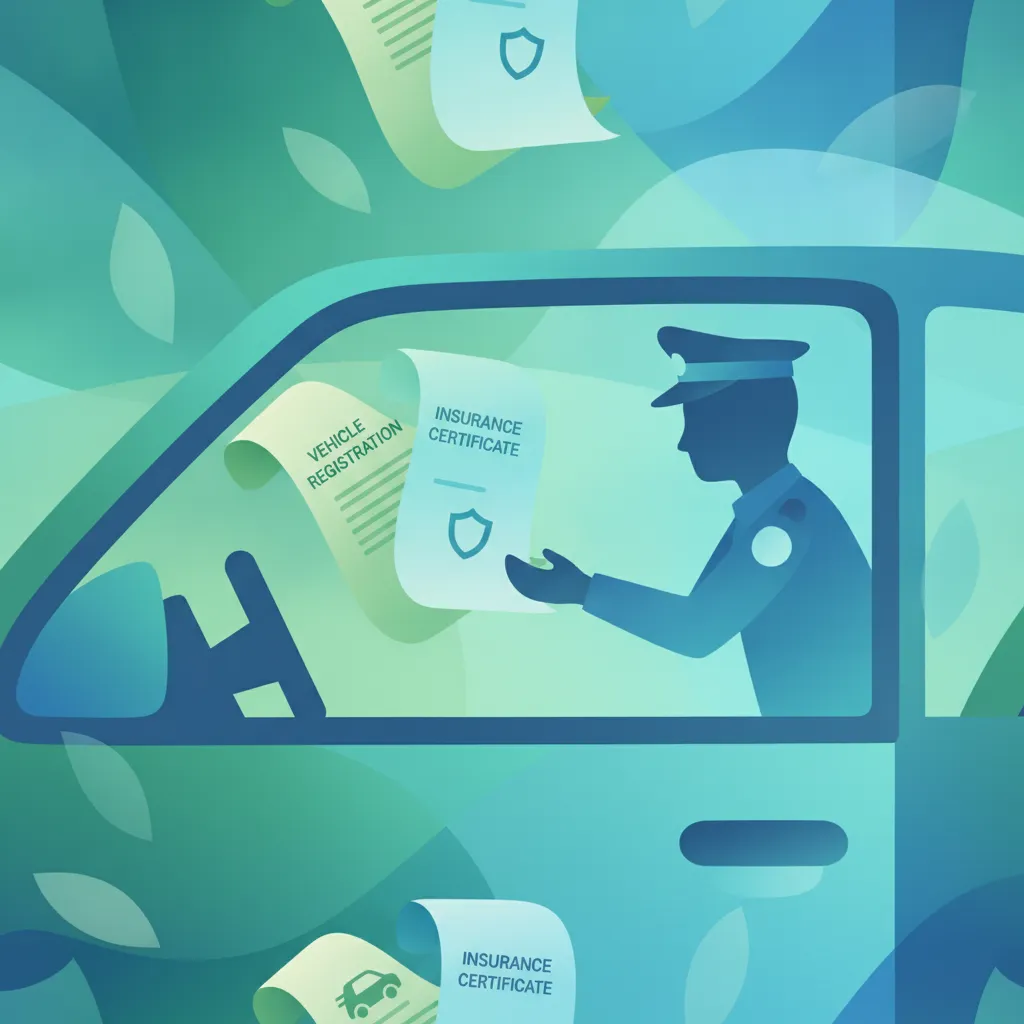
This lesson provides a comprehensive breakdown of the mandatory paperwork required to legally operate a motorcycle in France. It covers the exact details of obtaining the vehicle registration document, known as the carte grise, and securing the mandatory civil liability insurance. Additionally, you will learn how to properly display the green insurance certificate and understand the serious penalties for driving without proper coverage.
This lesson focuses on identifying and managing the wide range of road surface grip levels encountered on French highways. You will learn to recognize hazardous low-traction situations, such as tar strips ('tar snakes'), wet manhole covers, gravel patches, and diesel spills at roundabouts. The lesson provides strategies for adjusting your throttle and lean angle in advance to prevent sudden, dangerous slides on compromised pavement.

This lesson provides guidance on safe riding practices during nighttime, emphasizing proper headlamp usage, reflective clothing, and strategies to manage glare from oncoming traffic. Learners will learn to compensate for reduced peripheral vision and increased fatigue, as well as to identify common night road hazards in France. By applying these techniques, riders can enhance their visibility and safety after dark.
Find clear answers to common questions learners have about Environmental Regulations and Emissions. Learn how the lesson is structured, which driving theory objectives it supports, and how it fits into the overall learning path of units and curriculum progression in France. These explanations help you understand key concepts, lesson flow, and exam focused study goals.
Yes, if you plan to ride in cities with Low Emission Zones (ZFE), it is mandatory to display your Crit'Air vignette on your motorcycle. The sticker identifies your vehicle's emission level and determines your access rights during pollution peaks.
Certain French urban areas restrict access to vehicles with high-pollution stickers during specific hours or pollution alerts. Knowing your motorcycle's category is vital to avoiding prohibited zones and potential fines.
Eco-driving involves smooth acceleration, maintaining steady speeds, avoiding unnecessary idling, and keeping your motorcycle well-maintained. These practices reduce fuel consumption and decrease noise pollution, which is a common focus in recent theory exam updates.
The exam tests your knowledge of the administrative process for obtaining the vignette and your understanding of the legal implications of ZFE zones. You should know how to identify your vehicle's eligibility based on its Euro standard.
Ready to focus your study? Use the practice search to find exactly the French driving theory questions you need for the Code de la route and permis de conduire ETG. Refine your knowledge on specific topics or challenging rules to boost your confidence and exam readiness.