
This lesson guides you through the specialized road markings used on French urban roads to organize traffic and protect vulnerable road users. By mastering these horizontal signs, you will understand how to correctly identify lanes reserved for public transit, micro-mobility, and various parking regulations. This knowledge is essential for navigating city traffic legally and correctly answering questions on the official ETG exam.
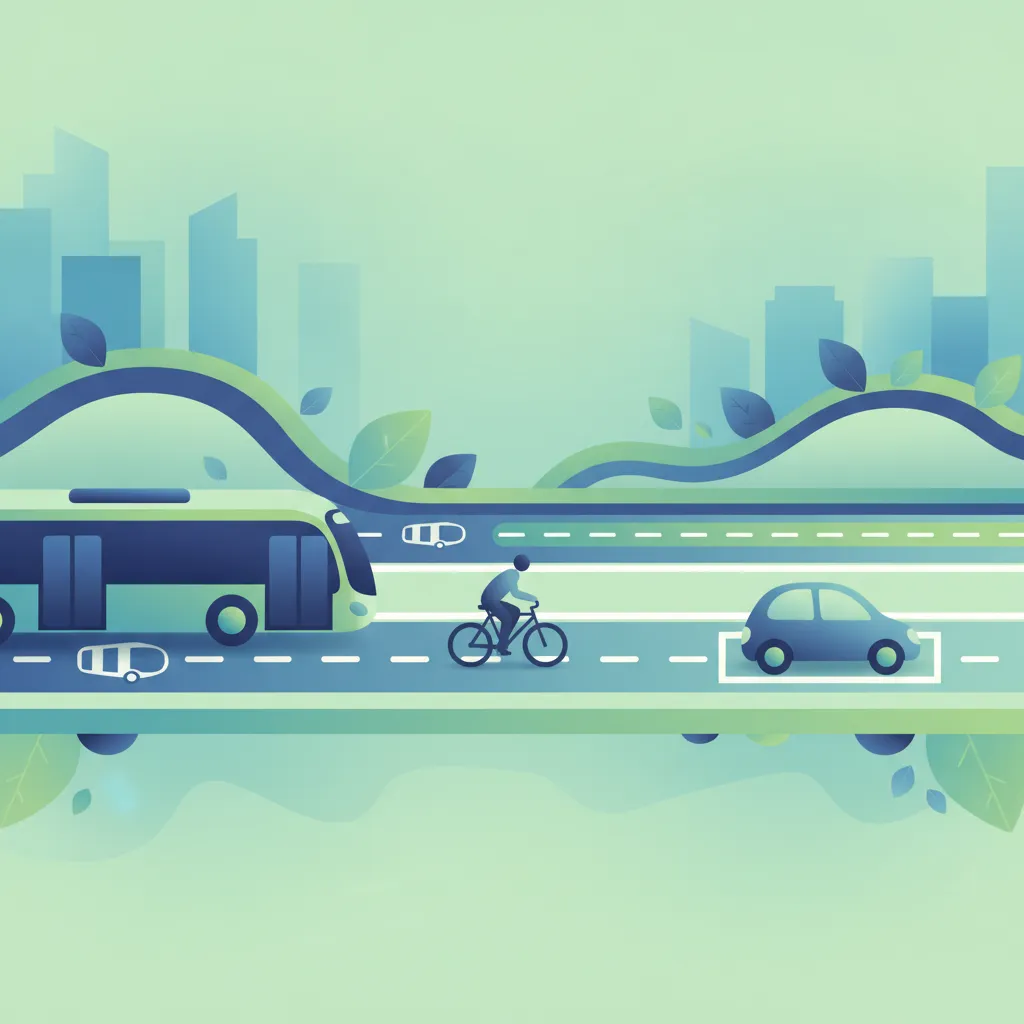
Lesson content overview
Navigating urban environments in France requires an advanced understanding of how road space is allocated. Modern French cities—such as Paris, Lyon, Marseille, and Bordeaux—rely heavily on segregated road space to manage high traffic density, protect vulnerable road users, and promote sustainable public transit.
As a candidate preparing for the French Category B driving theory exam (the Épreuve Théorique Générale or ETG), you must master the specialized lane markings, symbols, and parking restrictions defined by the Code de la route. Failing to recognize these markings not only compromises urban traffic flow and safety but also carries severe penalties, including heavy fines and vehicle impoundment (mise en fourrière).
Urban traffic management in France is built around the principle of space segregation. By reserving specific portions of the roadway for designated users—such as public transport, bicycles, delivery personnel, and drivers with disabilities—the Code de la route seeks to minimize conflict points, reduce congestion, and protect vulnerable users.
For Category B drivers, understanding these markings is not just about avoiding fines; it is about recognizing the functional hierarchy of the street. When you operate a passenger car, you are navigating a shared space where your access is restricted in favor of higher-capacity, more vulnerable, or highly specific transport modes.
Bus lanes in France are designed to guarantee public transport vehicles a reliable flow of travel, especially during peak traffic hours.
Bus lanes are demarcated by distinct longitudinal markings on the road surface and accompanied by specific vertical signs:
As a Category B driver, the general rule is absolute: you must never drive, idle, stop, or park in a bus lane.
However, there is a crucial exception for turning movements. When you need to turn right at an upcoming intersection or enter a side street or private property, the thick solid white line will transition into a broken/dashed line (ligne discontinue).
Anticipate the turn: Look ahead for the transition of the solid white line into a dashed white line. Do not cross the solid line.
Check mirrors and blind spots: Look specifically for buses, taxis, or cyclists who may be approaching quickly from behind in the reserved lane.
Signal your intent: Activate your right indicator early to warn vehicles behind you and those in the bus lane.
Yield right-of-way: You must yield to any vehicle legally occupying the bus lane (buses, taxis, and in many municipalities, authorized cyclists).
Execute the maneuver: Merge into the dashed section of the bus lane safely and complete your turn immediately. Do not use this section to travel along the road.
Taxis and Cyclists in Bus Lanes: Under French municipal rules (arrêtés municipaux), taxis and sometimes cyclists are permitted to use bus lanes. Always double-check your blind spots, as these vehicles may travel at different speeds than large transit buses.
Using a bus lane to bypass traffic congestion is a Class 4 infraction (contravention de 4ème classe). This carries a flat fine of €135 and can result in your vehicle being immediately towed to the impound lot if you park or stop in it.
Protecting vulnerable road users is a core pillar of the Code de la route. Cyclists and micro-mobility users (like electric scooter riders) are highly exposed, which is why French roads feature heavily regulated cycling infrastructure.
It is critical to distinguish between these two types of infrastructure, as their physical layout differs:
As a driver of a passenger car:
At intersections controlled by traffic lights, you will often find a marked space between the first stop line for motor vehicles and the pedestrian crosswalk. This is known as a sas vélo (bike box).
In French urban centers, roadside parking is highly regulated through surface markings, colors, and symbols. Understanding these outlines is vital for parking legally and avoiding costly citations.
Standard parking spaces are outlined in white paint.
Some areas feature parking bays outlined in blue paint. These denote a zone bleue, which allows free, time-limited parking.
To park in a blue zone, you must display a regulated European parking disc (disque de stationnement) behind your windshield, set to your exact arrival time. Failing to display the disc, exceeding the allowed duration (typically 1.5 to 2 hours), or using an non-compliant disc carries a Class 2 fine (€35).
Delivery zones are marked with yellow paint outlines and the word "LIVRAISON" painted on the asphalt. Under the Code de la route, these zones are classified into two distinct types based on their line markings:
| Marking Type | Visual Representation | Usage Rules for Private Vehicles |
|---|---|---|
| Fully Reserved (Strict) | Solid Yellow Line (or double solid yellow lines) | Strictly Prohibited at all times. No stopping or parking is allowed for private passenger cars 24/7. |
| Shared / Time-Shared | Dashed Yellow Line (or single dashed yellow line) | Shared Use Allowed. General motorists may park here during specific off-peak windows (typically from 8:00 PM to 8:00 AM, on Sundays, and on public holidays). Outside of these times, it is strictly for deliveries. |
Always check local municipal signage nearby, as specific hours can vary from city to city.
Stopping vs. Parking in Shared Delivery Zones: "Stopping" (l'arrêt) is defined as a brief halt to load/unload items or let a passenger in/out, while remaining at the wheel or close enough to move the vehicle immediately. "Parking" (le stationnement) means leaving the vehicle unattended. You can briefly stop in a shared delivery zone to drop off a passenger, but you must not park there during active delivery hours.
Spaces reserved for drivers or passengers with reduced mobility are marked with blue paint boundaries, a painted wheelchair symbol, and often the word "GIG-GIC" or "RÉSERVÉ".
To legally park in these spaces, you must display a valid Carte Mobilité Inclusion (CMI) mention Stationnement (or a valid European disabled parking card) clearly visible behind the windshield.
Marked with an electric plug symbol or the letters "EV" / "VE" on the road surface.
The lines painted along the curb or the outermost edge of the road tell you whether you are permitted to stop or park. In France, these lines are highly standardized:
Special markings exist to make road behavior predictable. When space is properly segregated, conflict points are minimized:
To succeed in your French driving theory exam, keep these absolute rules in mind when answering questions about special markings:
To solidify your understanding of road markings and prepare for the ETG, explore these highly related subtopics and practice with official-style test questions.
This lesson covers France's specialized urban road markings for bus lanes, cycle infrastructure, and parking bays, each distinguished by specific colors, line styles, and symbols defined in the Code de la route. Bus lanes are strictly separated by thick white lines with painted 'BUS' text and may only be crossed via dashed sections to turn, while taxis and cyclists may legally use them depending on municipal rules. Cycle lanes and tracks are protected spaces where even brief unauthorized stopping carries €135 fines and immediate impoundment, with bike boxes at intersections reserved exclusively for cyclists at red lights. Parking bays use color coding: white for standard bays (free or paid), blue for time-limited disc parking, yellow for delivery zones with solid lines prohibiting all use and dashed lines permitting off-peak sharing. Special bays for disabled drivers (wheelchair symbol, CMI card required) and electric vehicles (plug symbol, active charging required) carry Class 4 penalties including €135 fines and immediate vehicle removal for unauthorized use.
A short set of high-value points that capture the most important learning from this lesson.
Bus lanes are identified by thick white lines and painted 'BUS' text; they are strictly off-limits to Category B drivers except when crossing via dashed sections to complete a turn
Cycle lanes (bande cyclable) use painted lines and symbols, while physically separated tracks (piste cyclable) use curbs or barriers—motorists must never enter either
Yellow parking bays indicate delivery zones: solid yellow means absolute prohibition 24/7, while dashed yellow allows shared use during specified off-peak hours
Blue parking bays are free short-stay zones requiring a parking disc; white bays may be free or paid depending on adjacent signage
Disabled (GIG-GIC) and EV charging bays carry severe penalties including immediate towing for any unauthorized use
Explore all units and lessons included in this driving theory course.
Solid yellow curb lines prohibit both stopping and parking; dashed yellow lines prohibit parking but allow brief stopping
The sas vélo (bike box) at traffic lights is exclusively for cyclists—motorists must stop behind the first solid white line at red light
Taxis and sometimes cyclists may legally use bus lanes depending on municipal rules—always check blind spots
Electric vehicle bays require the vehicle to be actively connected and charging; parking without charging is a violation
Bus lane violations incur €135 fines and potential immediate towing to the impound lot (mise en fourrière)
Assuming bus lanes become available to general traffic outside peak hours unless a supplementary time-restriction sign is present
Believing hazard lights or a quick stop justifies parking on a cycle lane, even momentarily—this is classified as highly disruptive stopping
Encroaching into the sas vélo at a red light, which results in a €135 fine and loss of 4 license points
Parking an electric vehicle in a charging bay without being actively connected to the charging station
Confusing the two yellow line styles for delivery zones—solid means absolute prohibition while dashed allows off-peak shared parking
Lesson content overview
A short set of high-value points that capture the most important learning from this lesson.
Bus lanes are identified by thick white lines and painted 'BUS' text; they are strictly off-limits to Category B drivers except when crossing via dashed sections to complete a turn
Cycle lanes (bande cyclable) use painted lines and symbols, while physically separated tracks (piste cyclable) use curbs or barriers—motorists must never enter either
Yellow parking bays indicate delivery zones: solid yellow means absolute prohibition 24/7, while dashed yellow allows shared use during specified off-peak hours
Blue parking bays are free short-stay zones requiring a parking disc; white bays may be free or paid depending on adjacent signage
Disabled (GIG-GIC) and EV charging bays carry severe penalties including immediate towing for any unauthorized use
Explore all units and lessons included in this driving theory course.
Solid yellow curb lines prohibit both stopping and parking; dashed yellow lines prohibit parking but allow brief stopping
The sas vélo (bike box) at traffic lights is exclusively for cyclists—motorists must stop behind the first solid white line at red light
Taxis and sometimes cyclists may legally use bus lanes depending on municipal rules—always check blind spots
Electric vehicle bays require the vehicle to be actively connected and charging; parking without charging is a violation
Bus lane violations incur €135 fines and potential immediate towing to the impound lot (mise en fourrière)
Assuming bus lanes become available to general traffic outside peak hours unless a supplementary time-restriction sign is present
Believing hazard lights or a quick stop justifies parking on a cycle lane, even momentarily—this is classified as highly disruptive stopping
Encroaching into the sas vélo at a red light, which results in a €135 fine and loss of 4 license points
Parking an electric vehicle in a charging bay without being actively connected to the charging station
Confusing the two yellow line styles for delivery zones—solid means absolute prohibition while dashed allows off-peak shared parking
Explore search topics learners often look for when studying Special Markings: Bus Lanes, Cycle Lanes, and Parking Bays. These topics reflect common questions about road rules, driving situations, safety guidance, and lesson level theory preparation for learners in France.
Browse additional driving theory lessons that cover connected traffic rules, road signs, and common driving situations related to this topic. Improve your understanding of how different rules interact across everyday traffic scenarios.
Understand the general principles of right-of-way and priority at controlled and uncontrolled intersections in French cities. Learn how to navigate crossroads and traffic light sequences while respecting the rules for shared road space and vulnerable road users in accordance with the Code de la route.

In France, the default rule at any intersection without clear priority signage is priority-to-the-right (priorite a droite). This lesson explains how to identify unsignaled junctions in urban and rural environments and when you must yield to incoming vehicles. You will learn to spot the standard yellow diamond priority signs and triangular warning signs that indicate whether you hold the priority.

Negotiating crossroads that lack active traffic light signals requires a clear reading of signs and painted stop or yield lines. This lesson details the obligations of stopping completely at stop signs and slowing down to yield at 'cedez le passage' markings. You will learn to assess cross-traffic speeds, determine priorities when multiple vehicles arrive, and execute turns safely.

Learners will study the fundamental priority rules that dictate right-of-way at intersections, focusing on the 'priorité à droite' principle prevalent in French road design. The lesson explains how to identify priority roads, interpret yield signs, and apply these rules safely when operating an AM vehicle. Understanding priority ensures orderly movement and reduces conflict points in mixed traffic scenarios.
This lesson provides a comprehensive breakdown of priority rules under French law, with special focus on the default rule of priorité à droite. You will learn to recognize when this rule applies, even in the absence of explicit signage, and how to verify that entering vehicles see you. It also explains how to read priority road indicators, stop signs, and yield signs, helping you manage right-of-way safely and confidently.

Controlled intersections use traffic lights and accompanying signs to manage busy crossings systematically. This lesson covers how to safely proceed on a green light, negotiate left turns when yielding to oncoming traffic, and obey flashing amber lights. You will also learn the hierarchy of traffic control, where police officer gestures overrule both traffic lights and priority signs.

This lesson examines French Code de la route laws regarding pedestrian right-of-way, emphasizing the driver's legal duty to yield to any pedestrian engaged in crossing. It outlines proper approach speeds when approaching zebra crossings with obstructed views. Candidates will learn to maintain a safe physical buffer zone and verify that crosswalks are entirely clear of pedestrians before accelerating.

Learners will explore the rules related to pedestrian crossings, focusing on the obligation to yield to pedestrians at zebra crossings and flashing pedestrian signals. The lesson highlights the importance of stopping before the stop line, reducing speed, and maintaining vigilance for pedestrian movement. Mastery of these practices ensures the safety of both pedestrians and AM riders at crossing points.

In France, pedestrians have clear legal priority when stepping onto or indicating an intent to use a crossing (passage pieton). This lesson details standard zebra crossings, refuge islands, and pedestrian crossings managed by synchronized traffic light systems. You will learn to scan crossings ahead, anticipate pedestrian movements, and safely come to a stop whenever a pedestrian attempts to cross.
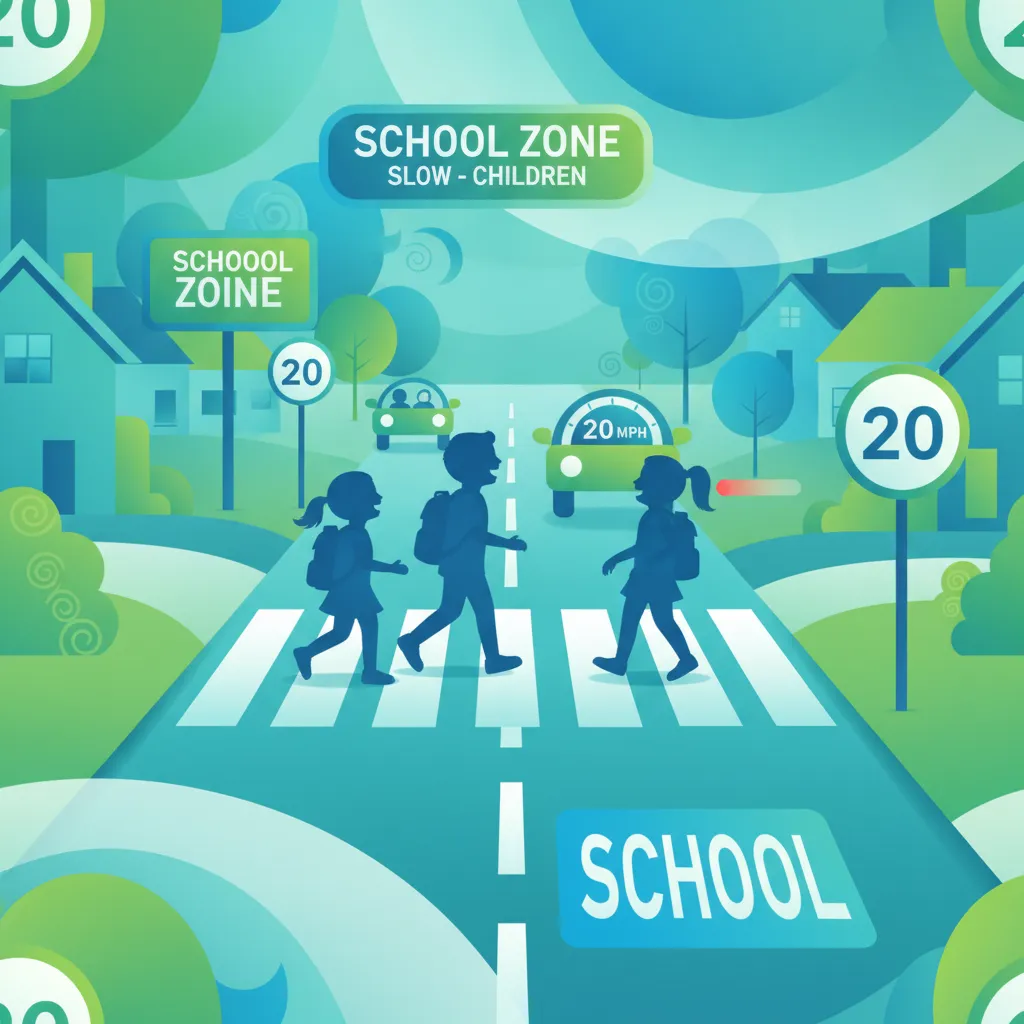
French municipalities utilize distinct low-speed configurations to foster pedestrian safety in residential and educational neighborhoods. This lesson details speed restrictions in 'zone 30', pedestrian-only districts, and shared 'zones de rencontre' where speed is capped at 20 km/h. You will learn how priority hierarchies shift in these zones, giving pedestrians legal priority to use the entire roadway.

Some crossroads feature complex layouts or specific signs that modify standard priority rules, such as schematic diagrams (panonceaux schematiques). This lesson teaches you how to read these auxiliary signs, which depict the thick line of the priority road and thin lines of secondary roads. You will learn how to maintain priority when the main road curves and how to navigate non-standard intersection layouts.
Master effective hazard perception and anticipation techniques for busy French city streets. This guide covers how to identify potential risks from cyclists, pedestrians, and public transit, helping you make safe driving decisions while navigating complex urban infrastructure and dense traffic patterns.

Proactive drivers scan the road constantly, detecting potential dangers before they turn into real-world emergency situations. This lesson teaches scanning techniques, the use of rear-view mirrors, and the interpretation of visual cues from other road users. You will learn to anticipate hazards like child play near roads, merging vehicles, and sudden lane changes, helping you drive defensively.

Learners will develop the ability to anticipate potential hazards on the road, enhancing reaction times and defensive riding strategies. The lesson emphasizes constant scanning, early identification of threats such as sudden stops, pedestrian crossings, or unexpected lane changes, and appropriate response measures. By cultivating proactive risk assessment, AM riders can significantly reduce accident likelihood.
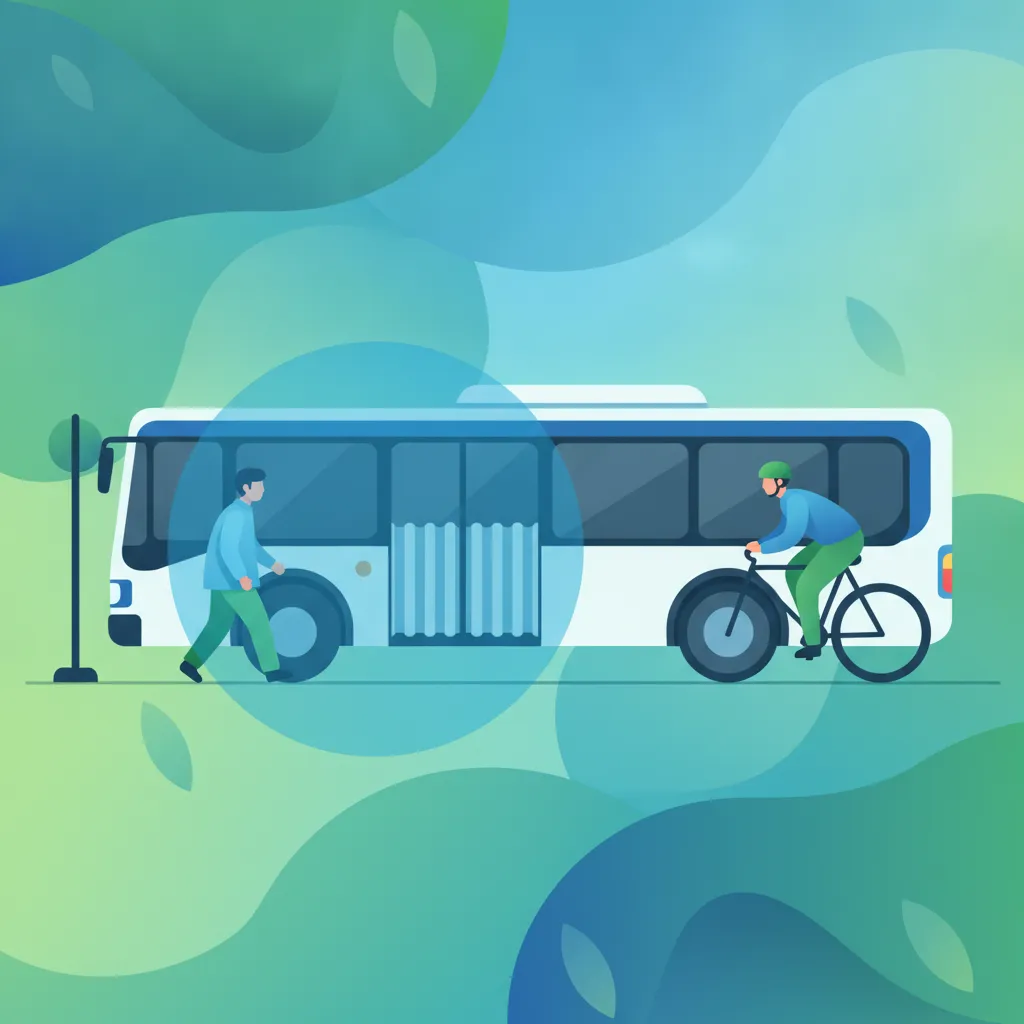
This lesson teaches specific visual scanning methods to detect vulnerable road users, such as children, elderly individuals, and cyclists near stops. Drivers will learn to anticipate sudden movements, like a passenger running to catch a bus or stepping off a sidewalk unexpectedly. Managing the massive blind spots around the front and right-hand sides of passenger vehicles is highlighted as a critical safety duty.

Certain groups of road users require heightened defensive attention from drivers due to physical limitations or unpredictable behaviors. This lesson covers how to recognize signs of visual impairment (white canes), mobility challenges, and the unpredictability of young children. You will learn to reduce your speed, extend yielding patience, and proactively secure extra space to protect these vulnerable users.

This lesson provides global defensive driving strategies to minimize collision risks for all non-motorized and vulnerable road users. Drivers will learn to systematically lower vehicle speed in dense pedestrian zones, even when no active hazards are visible. By cultivating an anticipatory mindset and maintaining generous safety margins, professional drivers establish a protective safety envelope around their vehicle.

This lesson focuses on the inherent vulnerability of AM vehicles due to their limited mass, exposure, and visibility within mixed traffic flows on French roads. Learners will examine how blind spots, sudden lane changes by larger vehicles, and higher impact severity affect small vehicle safety. The content underscores the necessity for riders to adopt proactive safety measures, maintain safe distances, and be constantly aware of surrounding traffic dynamics.
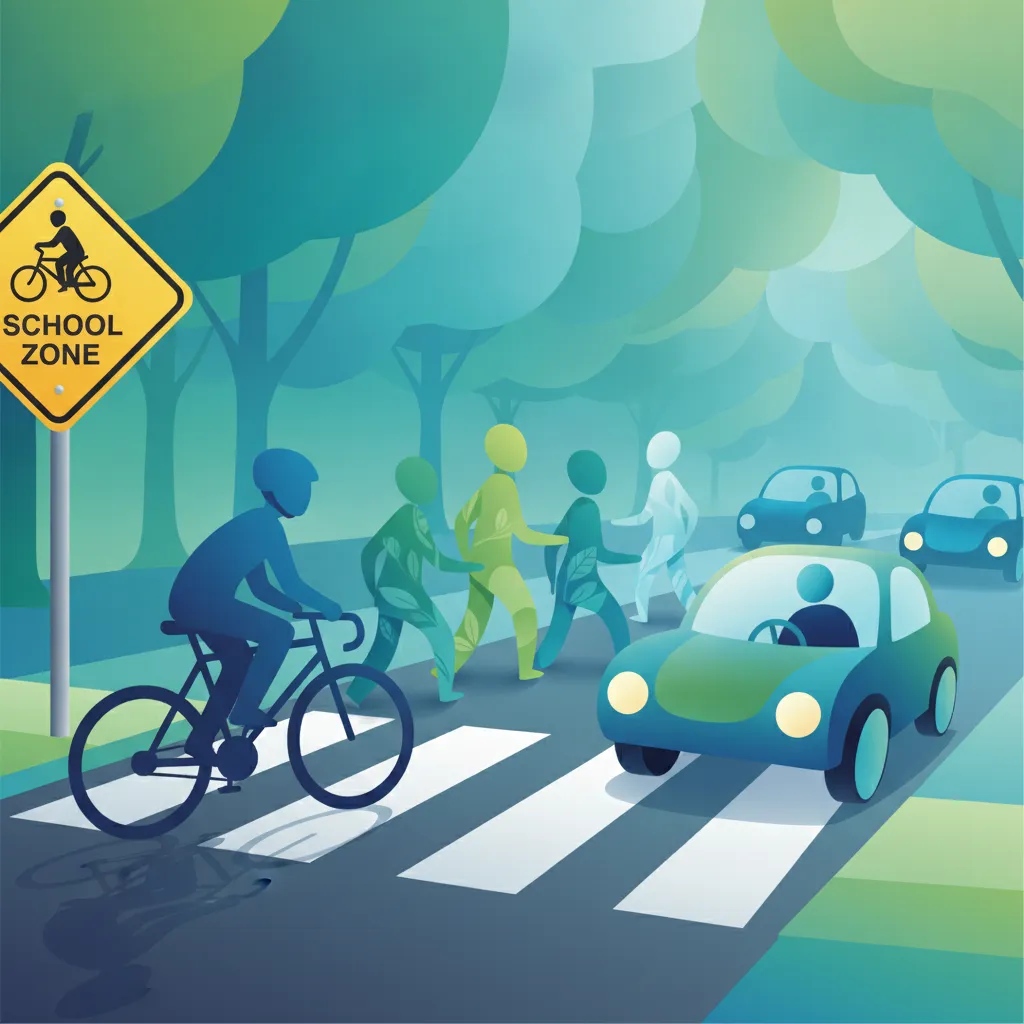
This lesson focuses on the legal requirement to yield to pedestrians on or about to step onto zebra crossings, a major focus of French road safety. You will learn how to approach school zones and pedestrian islands with heightened vigilance and reduced speed. Additionally, the lesson explores shared urban spaces, explaining how to maintain safe lateral distances when overtaking cyclists or personal electric scooters.

This lesson focuses on French warning signs that alert drivers to potential hazards ahead, such as curves, animal crossings, or slippery surfaces, with particular attention to signs relevant to AM riders. Learners will examine how to interpret these signs, understand the associated risks, and adapt riding behavior accordingly. By mastering warning sign recognition, riders can proactively manage safety risks in diverse road conditions.

In this lesson, drivers will learn strategies to avoid conflicts with smaller vehicles, such as cars and vans, which may not be as visible in large vehicle blind spots. The content emphasizes maintaining adequate spacing, using proper lane discipline, and being aware of small vehicles' behavior during lane changes and turns. Learners will also be introduced to communication techniques, such as signalling and eye contact.
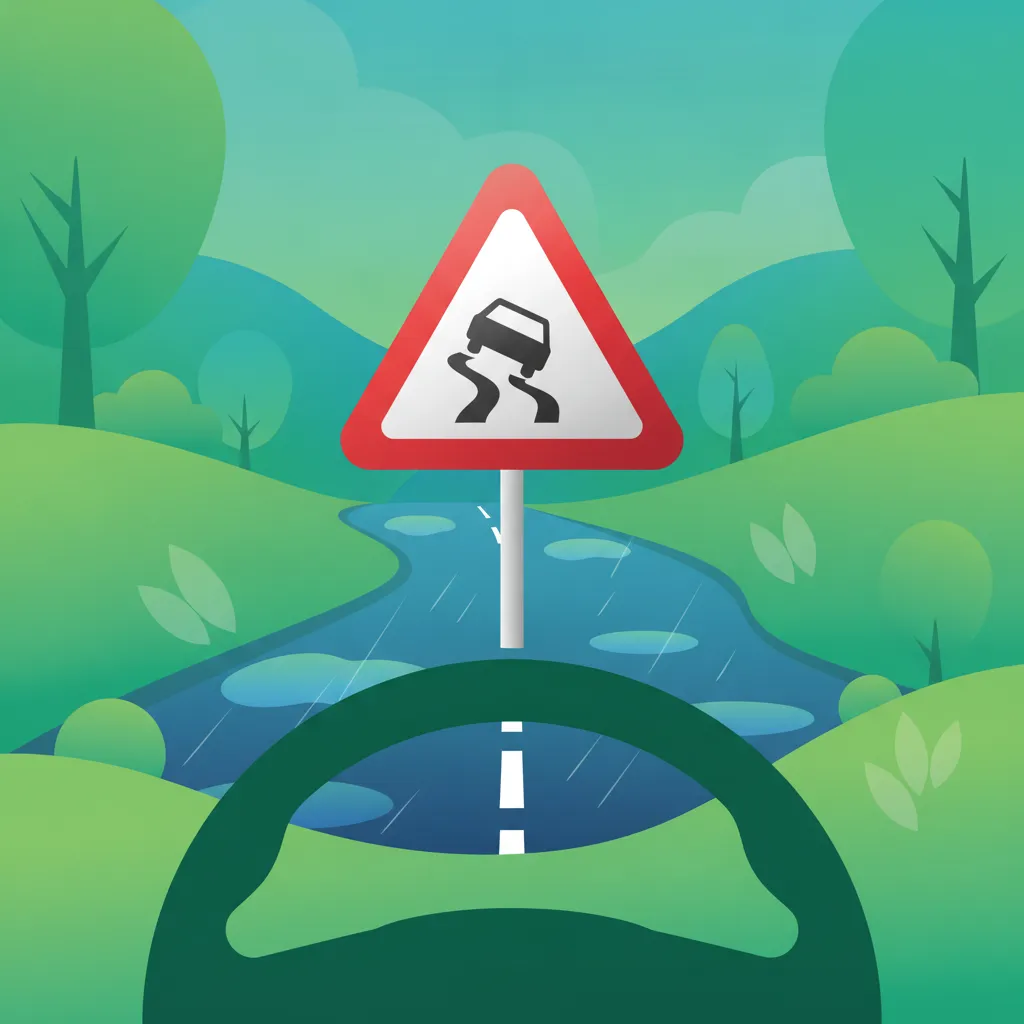
Warning signs on French roads are triangular with a red border, designed to alert drivers to upcoming dangers. This lesson teaches you how to interpret warnings for sharp curves, slippery surfaces, narrowing lanes, and wildlife or animal crossing hazards. You will understand the safety adjustments needed when approaching school zones, active roadworks, or crossings where vulnerable pedestrians are present.
Find clear answers to common questions learners have about Special Markings: Bus Lanes, Cycle Lanes, and Parking Bays. Learn how the lesson is structured, which driving theory objectives it supports, and how it fits into the overall learning path of units and curriculum progression in France. These explanations help you understand key concepts, lesson flow, and exam focused study goals.
Yes, if the solid line of the bus lane becomes a broken line near the intersection, you may enter it briefly solely to make a right-hand turn. You must always check for buses or cycles before doing so.
A simple parking bay is marked with white lines and is for general use. A loading zone, often marked with yellow zigzag lines or signs stating 'Livraison', is reserved exclusively for the loading and unloading of goods; parking there is strictly prohibited.
No, parking spaces designated for electric vehicle charging are reserved exclusively for electric vehicles that are actively charging. Parking in these spots without charging is considered an obstruction and is subject to fines.
Yes, you must yield to cyclists if they have priority. Always scan for bikes when entering or leaving a junction, as they are vulnerable road users frequently found in these specialized lanes.
Ready to focus your study? Use the practice search to find exactly the French driving theory questions you need for the Code de la route and permis de conduire ETG. Refine your knowledge on specific topics or challenging rules to boost your confidence and exam readiness.