
This lesson breaks down the administrative responsibilities of a driver in France, focusing on the points-based licence system and traffic violation management. It serves as a vital component of your Category B theory preparation, ensuring you understand the consequences of infractions and the legal procedures required to maintain your permit.

Lesson content overview
In France, driving is not just a practical skill but a strictly regulated legal responsibility. The French traffic code, known as the Code de la route, enforces road safety through a rigorous framework of financial penalties, administrative sanctions, and a dynamic points-based licensing system.
For anyone preparing for the French Category B driving theory exam (the Examen de l'Éthique Générale or ETG), mastering these administrative procedures is essential. This lesson covers how the penalty points system operates, how traffic violations are categorized, the payment and appeal processes for fines, and the protocols for recovering lost points.
The French driving licence operates on a credit-based system called the permis à points. Its primary goal is to encourage continuous safe driving by linking traffic violations directly to the validity of your driving privileges.
A fully unrestricted French driving licence contains a maximum allowance of 12 points. When a driver commits a traffic violation, a specific number of points is deducted from this total, depending on the severity of the offence.
While experienced drivers have a 12-point capital, newly qualified drivers under the probationary period (permis probatoire) start with an initial capital of 6 points. This capital increases gradually over a three-year period (or two years if the driver completed the supervised driving program, conduite accompagnée), provided they commit no traffic violations.
If you commit an infraction that leads to a points deduction, this progressive increase is frozen. Keeping track of your point balance is done digitally through the official government portal, Télépoints.
Points are not reset automatically at the end of each calendar year. Instead, point restoration depends on remaining free of further infractions for a legally defined period, or by proactively attending an approved training course.
Traffic offences under French law are categorized based on their risk to public safety. This classification directly dictates the severity of the fine and the number of points deducted from your licence.
These are minor breaches of road rules that do not directly endanger other road users but represent administrative or minor operational failures.
These infractions represent a direct disregard for traffic laws and compromise general road safety.
These violations involve severe endangerment of life, deliberate neglect of traffic signals, or driving under the influence of restricted substances.
The most serious category of traffic violations under French law. Unlike simple contraventions, a délit (such as driving under the influence of drugs or refusing to comply with law enforcement) involves a mandatory court appearance, heavy criminal fines, vehicle confiscation, and potential prison sentences.
French traffic fines are structured under a fixed-rate system known as the amende forfaitaire. This system divides fines into four main payment levels based on the classification of the violation.
| Fine Category | Base Amount | General Applicability |
|---|---|---|
| Forfait 1 | €68 | Minor infractions, such as non-compliant parking or failure to present documents. |
| Forfait 2 | €135 | Major safety infractions, such as speeding between 20 and 30 km/h over the limit. |
| Forfait 3 | €135 | Risk-escalated violations, including driving without required vehicle safety inspections. |
| Forfait 4 | Up to €7,500 | Very major violations, reckless endangerment, or criminal road offences (délits). |
Once a citation is issued, the driver is legally required to settle the fine within 45 days using the official government online portal (amendes.gouv.fr).
Paying online is highly streamlined, tracking the payment transaction instantly. If a driver fails to settle the fine online within this 45-day window, the ticket is formally mailed to the vehicle owner's registered home address with an escalated rate (known as an amende majorée).
Ignoring or delaying payment past the legal deadlines can result in administrative enforcement measures. This includes the automatic immobilization of your vehicle (immobilisation du véhicule) by authorities or the direct recovery of funds from your bank account.
Every driver has the legal right to challenge a traffic citation if they believe it was issued in error or if their vehicle was driven by someone else at the time of the offence. However, this process must follow strict administrative protocols.
Check the Deadline: A formal contestation (recours) must be submitted within 15 days of receiving the ticket. Missing this deadline forfeits your legal right to appeal, and the fine and points deduction will become final.
Gather Supporting Evidence: You must compile comprehensive, credible proof to support your claim. This may include calibrated GPS logs, certified dashcam footage, repair bills proving your vehicle was inoperative, or official documentation showing you sold the vehicle prior to the infraction.
Submit the Appeal: The appeal must be submitted in writing. It should be sent via registered post with acknowledgment of receipt (Lettre recommandée avec avis de réception) to the designated judicial officer—either the Officier de Public Ministère (OMP), the Tribunal de Police, or the Tribunal Correctionnel. Alternatively, appeals can be filed digitally via the ANTAI portal.
Await the Decision: While the contestation is being processed, the point deduction is suspended. However, depending on the case, you may be required to pay a consignment fee (consignation) equivalent to the fine amount, which is refunded if your appeal succeeds.
When points are deducted from your licence, your legal authorization to drive is placed at risk. The Code de la route defines clear thresholds where driving privileges are suspended or permanently revoked.
If a driver's total point balance drops below 6 points, the driving licence is placed in a critical state. Under French law, dropping below this threshold triggers a mandatory 3-month suspension period.
During this suspension, the driver is legally prohibited from operating any vehicle requiring a Category B licence. To restore their driving rights, they must wait out the suspension period and complete mandatory administrative procedures, which may include medical and psychotechnical exams.
When a driver's point balance reaches 0 points, the licence is declared invalid due to lack of points (invalidation pour solde de points nul). This is officially communicated via a registered letter known as Lettre 48SI.
Once revoked, the driving licence is permanently canceled. The driver must surrender their physical card to the prefecture within 10 days.
To drive legally again, the individual must:
To prevent drivers from losing their driving privileges, the French government allows licence holders to rebuild their point balance through targeted road safety education courses.
Drivers can proactively sign up for a certified two-day road safety course (stage de sensibilisation à la sécurité routière).
In specific situations, attending a points recovery course is not optional:
Understanding the rules on paper is different from navigating them in real life. Drivers frequently find themselves facing escalated penalties due to simple administrative errors.
Maintaining a clean driving record in France relies on understanding how your choices directly affect your legal standing:
[Safe Driving Practice] ──> Full Point Balance (12/12) ──> Unrestricted Driving Privileges
                                                                │
[Minor Infraction] ───────> €68/€135 Fine & 1-2 Points Lost ───> Eligible for Voluntary Recovery Course (Max 1/year)
                                                                │
[Major Infraction] ───────> €135+ Fine & 3-6 Points Lost ──────> Mandatory Course Required (if 6 pts lost)
                                                                │
[Points Drop < 6] ────────> Mandatory 3-Month Licence Suspension
                                                                │
[Points Drop to 0] ───────> Permanent Revocation (Lettre 48SI) ──> 6-Month Ban & Mandatory Retesting
By adhering to speed limits, respecting traffic signals, and maintaining a sober state behind the wheel, you preserve your point balance, protect your financial resources, and contribute to the safety of all road users in France.
The French permis à points system allocates 12 points to a full licence and 6 points to probationary drivers, with points deducted according to violation severity ranging from 0-1 for minor infractions to 4-6 for very major offences. Fixed-rate fines (amendes forfaitaires) from €68 to €7,500 must be paid within 45 days or contested within 15 days using verifiable evidence submitted to the ANTAI portal. Falling below 6 points triggers a 3-month suspension, while reaching 0 points results in permanent invalidation communicated via Lettre 48SI, requiring drivers to surrender their licence and retake both theory and practical exams. Drivers can voluntarily recover up to 4 points per year by completing an approved two-day road safety course, though a mandatory course applies when 6 points are deducted in a single infraction or when probationary drivers lose 3+ points at once.
A short set of high-value points that capture the most important learning from this lesson.
A full French driving licence carries 12 points; new drivers in the probationary period start with 6 points that increase over 2-3 years if violation-free.
Traffic violations are classified from minor (Class 1, 0-1 point) to very major/criminal (Class 4-5, délit, 4-6 points), with fine categories ranging from Forfait 1 at €68 to Forfait 4 at up to €7,500.
Fines must be paid within 45 days via amendes.gouv.fr; missing this deadline results in automatic fine escalation (amende majorée) and potential vehicle immobilisation.
Drivers may voluntarily recover up to 4 points by completing an approved two-day road safety course, but only once per 12-month period.
A 6-point deduction from a single infraction or losing 3+ points as a probationary driver triggers mandatory attendance at a points recovery course.
Explore all units and lessons included in this driving theory course.
Dropping below 6 points triggers a 3-month mandatory licence suspension; reaching 0 points results in permanent invalidation (Lettre 48SI) requiring surrender of the licence within 10 days.
A contestation (recours) must be submitted within 15 days of receiving a ticket, with credible evidence such as GPS logs, dashcam footage, or proof the vehicle was inoperative or sold.
After revocation, drivers must wait 6 months (or 1 year if repeat), pass medical and psychotechnical exams, and retake both the ETG theory and practical tests.
The Télépoints portal provides official digital access to your current point balance at any time.
Drivers must update their vehicle registration (carte grise) within 1 month of moving to avoid tickets being sent to the wrong address.
Failing to update your address after moving, causing tickets to miss the 15-day contestation window and leading to automatic fine escalation and vehicle immobilisation.
Booking multiple voluntary points recovery courses within the same year, only to discover the second course yields no point restoration.
Submitting a contestation without attaching verifiable evidence (GPS logs, dashcam footage, repair bills), resulting in automatic rejection by the Officier du Ministère Public.
Ignoring a mandatory course notification (Lettre 48N) and continuing to drive, which constitutes a separate offence leading to immediate suspension and possible criminal prosecution.
Driving while suspended (point balance below 6) is a criminal offence carrying up to 2 years imprisonment, a €4,500 fine, and vehicle confiscation.
Lesson content overview
A short set of high-value points that capture the most important learning from this lesson.
A full French driving licence carries 12 points; new drivers in the probationary period start with 6 points that increase over 2-3 years if violation-free.
Traffic violations are classified from minor (Class 1, 0-1 point) to very major/criminal (Class 4-5, délit, 4-6 points), with fine categories ranging from Forfait 1 at €68 to Forfait 4 at up to €7,500.
Fines must be paid within 45 days via amendes.gouv.fr; missing this deadline results in automatic fine escalation (amende majorée) and potential vehicle immobilisation.
Drivers may voluntarily recover up to 4 points by completing an approved two-day road safety course, but only once per 12-month period.
A 6-point deduction from a single infraction or losing 3+ points as a probationary driver triggers mandatory attendance at a points recovery course.
Explore all units and lessons included in this driving theory course.
Dropping below 6 points triggers a 3-month mandatory licence suspension; reaching 0 points results in permanent invalidation (Lettre 48SI) requiring surrender of the licence within 10 days.
A contestation (recours) must be submitted within 15 days of receiving a ticket, with credible evidence such as GPS logs, dashcam footage, or proof the vehicle was inoperative or sold.
After revocation, drivers must wait 6 months (or 1 year if repeat), pass medical and psychotechnical exams, and retake both the ETG theory and practical tests.
The Télépoints portal provides official digital access to your current point balance at any time.
Drivers must update their vehicle registration (carte grise) within 1 month of moving to avoid tickets being sent to the wrong address.
Failing to update your address after moving, causing tickets to miss the 15-day contestation window and leading to automatic fine escalation and vehicle immobilisation.
Booking multiple voluntary points recovery courses within the same year, only to discover the second course yields no point restoration.
Submitting a contestation without attaching verifiable evidence (GPS logs, dashcam footage, repair bills), resulting in automatic rejection by the Officier du Ministère Public.
Ignoring a mandatory course notification (Lettre 48N) and continuing to drive, which constitutes a separate offence leading to immediate suspension and possible criminal prosecution.
Driving while suspended (point balance below 6) is a criminal offence carrying up to 2 years imprisonment, a €4,500 fine, and vehicle confiscation.
Explore search topics learners often look for when studying Penalties, Points, and Administrative Procedures. These topics reflect common questions about road rules, driving situations, safety guidance, and lesson level theory preparation for learners in France.
Browse additional driving theory lessons that cover connected traffic rules, road signs, and common driving situations related to this topic. Improve your understanding of how different rules interact across everyday traffic scenarios.
Examine how French traffic enforcement functions beyond the points-based system, including the role of criminal road offences and safety protocols. Learn about the impact of severe violations on driving privileges and the official processes for managing administrative penalties to ensure your conduct aligns with French traffic safety standards.

Violating traffic regulations in France triggers strict administrative penalties, including point deductions and financial fines. This lesson examines the structure of the French point-based licence, specifically noting how probationary licences start with fewer points. It outlines the differences between fine categories, vehicle impoundment procedures, and options for recovering points through voluntary safety awareness courses.

This lesson examines the legal consequences, heavy monetary fines, and driver's licence point deductions resulting from traffic and transport safety violations. Learners will study specific infractions such as driving over legal hours, vehicle overloading, and ignoring passenger seatbelt laws. Understanding the strict enforcement systems in France ensures drivers actively avoid risky habits that could end their careers.

This lesson details the structure of the French points-based licensing system, explaining how points are deducted for specific traffic violations. You will learn about the special probation rules for novice licenses and the process of recovering lost points through safety courses. It also covers the fine structures, warning that ignoring basic safety laws like speed limits can lead to immediate vehicle impoundment and license suspension.
This lesson delves into the dual aspects of civil and criminal liability that professional goods vehicle drivers face in the event of traffic violations or accidents. Learners will explore the range of penalties, including fines, licence suspension, vehicle seizure, and potential imprisonment for severe offenses under French law. The discussion also covers the impact of negligence on insurance coverage, the accrual of penalty points, and the broader consequences for both the driver and their employer.

This lesson outlines the range of penalties that can be imposed for violations of traffic laws and administrative requirements specific to goods vehicles. Learners will understand the financial implications of fines, the potential for licence suspension or revocation, and the circumstances under which a vehicle may be seized. The content also addresses demerit points accumulation, administrative sanctions, and the importance of compliance.

This lesson addresses the procedures and expectations when professional drivers encounter law enforcement or customs officials in France. Topics include the types of checks that may be performed, required documentation, rights and obligations of drivers, and the consequences of non-compliance. Learners will be guided on best practices for interacting with authorities, emphasizing cooperation, transparency, and the importance of maintaining valid and up-to-date documents for both the vehicle and driver.

This lesson provides a clear, step-by-step procedure to follow if you witness or are involved in a traffic accident in France. You will learn how to secure the scene using your mandatory hazard triangle and yellow vest to prevent secondary collisions. Crucially, it explains how to contact emergency services via 112 and covers basic first-aid rules, including the absolute ban on removing an injured rider's helmet unless necessary.
Understand the core legal requirements for Category B drivers in France, including vehicle registration, essential documentation, and administrative obligations. This overview clarifies the broader legal framework that governs driver status and helps you ensure full compliance with the French Code de la route procedures.

Operating a passenger vehicle in France requires strict compliance with dynamic safety laws and maintenance rules. This lesson explains your duty of care toward other road users, mandatory child restraint and seatbelt laws, and strict prohibitions on phone use while driving. You will also learn about the required periodic technical vehicle inspections (controle technique) and third-party insurance mandates.
This lesson addresses the procedures and expectations when professional drivers encounter law enforcement or customs officials in France. Topics include the types of checks that may be performed, required documentation, rights and obligations of drivers, and the consequences of non-compliance. Learners will be guided on best practices for interacting with authorities, emphasizing cooperation, transparency, and the importance of maintaining valid and up-to-date documents for both the vehicle and driver.
This lesson delves into the dual aspects of civil and criminal liability that professional goods vehicle drivers face in the event of traffic violations or accidents. Learners will explore the range of penalties, including fines, licence suspension, vehicle seizure, and potential imprisonment for severe offenses under French law. The discussion also covers the impact of negligence on insurance coverage, the accrual of penalty points, and the broader consequences for both the driver and their employer.

This lesson outlines the core operational roles that drivers must perform, from ensuring safe passenger boarding to maintaining precise vehicle control throughout the journey. It details the active risk assessments required to identify hazards on the road and handle unexpected delays safely. Additionally, candidates will understand the specific procedures for reporting accidents and communicating effectively with both passengers and operations hubs.
This lesson examines the legal consequences, heavy monetary fines, and driver's licence point deductions resulting from traffic and transport safety violations. Learners will study specific infractions such as driving over legal hours, vehicle overloading, and ignoring passenger seatbelt laws. Understanding the strict enforcement systems in France ensures drivers actively avoid risky habits that could end their careers.
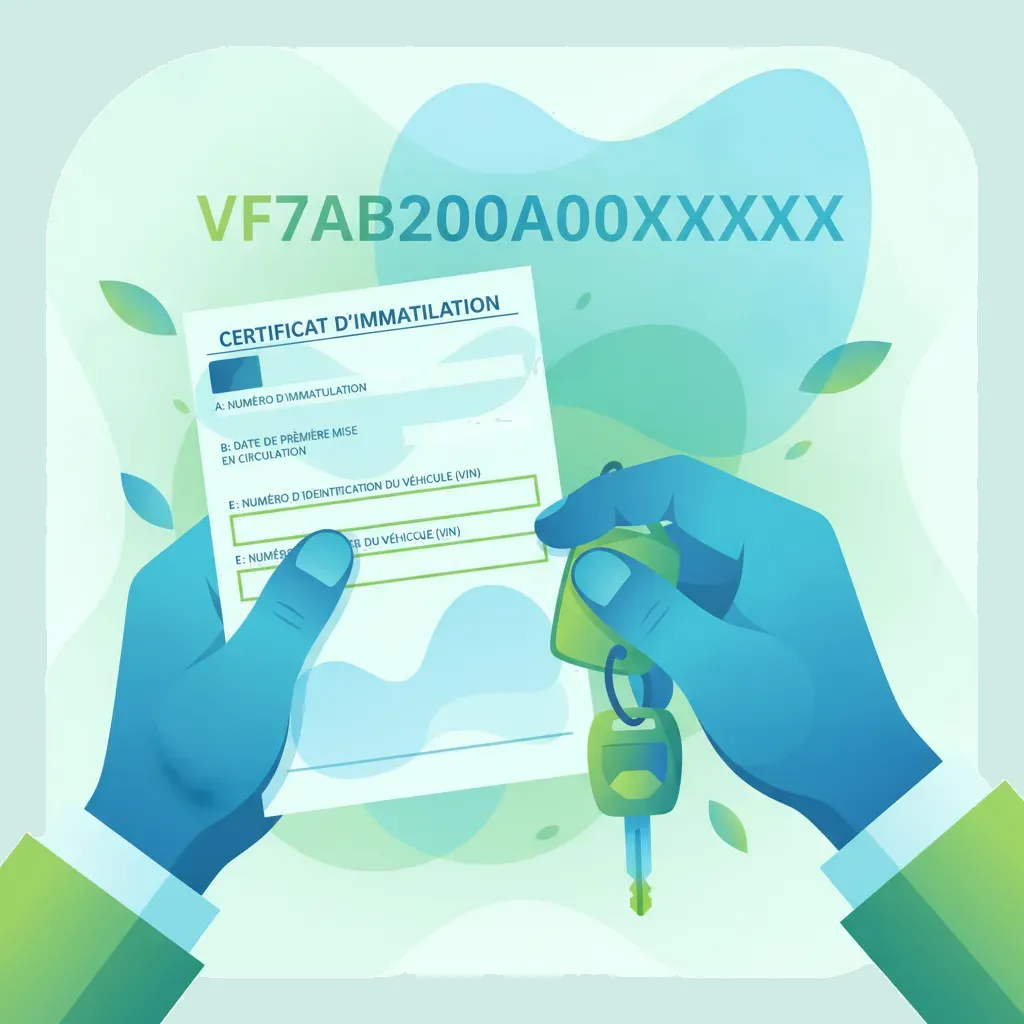
Every driver in France must be able to present official, up-to-date documentation during routine roadside police checks. This lesson details the certificat d'immatriculation (commonly known as the carte grise), valid insurance documents, and the Crit'Air environmental vignette required in low-emission zones. It explains how to complete transfers of ownership and update addresses using the official ANTS digital portal.

This lesson breaks down the exact steps required to obtain your Category B licence in France, including registering for your unique NEPH identification number. It explains the differences between traditional driving school enrollment and registering as a free candidate (candidat libre) for the ETG theory test. Learners will understand the physical, age, and administrative prerequisites necessary to progress from learning to your final practical exam.

This lesson examines the rigorous legal duties imposed on passenger vehicle operators by the French Code de la route and professional transport guidelines. Drivers must balance tight scheduling demands with the absolute priority of passenger safety and general public security. By studying real-world legal scenarios, candidates will learn how to maintain professional conduct, resolve on-board issues, and protect public trust during transit.

In this lesson, drivers will learn the essential steps to take following an accident involving a goods vehicle. The content covers contacting emergency services via 112, providing first aid, and safely positioning the vehicle to protect other road users. Learners will be instructed on documenting the incident, notifying insurance providers, and fulfilling legal obligations for accident reporting, including gathering witness statements.
Find clear answers to common questions learners have about Penalties, Points, and Administrative Procedures. Learn how the lesson is structured, which driving theory objectives it supports, and how it fits into the overall learning path of units and curriculum progression in France. These explanations help you understand key concepts, lesson flow, and exam focused study goals.
A new driver typically starts with a probationary licence of 6 points. Over the following years, if no traffic violations occur, this total increases until it reaches the maximum of 12 points.
While some serious offenses result in a heavy point deduction, losing your entire allowance depends on the severity of the specific infraction. Multiple serious violations in a short period can lead to licence invalidation.
You can recover points automatically after a set period of time without further offenses, or voluntarily by attending an approved road safety training course (stage de récupération de points).
The ANTS portal is the official French administrative website where you manage your driving licence, view your point balance, and handle vehicle registration procedures electronically.
Ready to focus your study? Use the practice search to find exactly the French driving theory questions you need for the Code de la route and permis de conduire ETG. Refine your knowledge on specific topics or challenging rules to boost your confidence and exam readiness.