
This lesson covers the life-saving skills of recognizing driver fatigue and eliminating dangerous distractions while behind the wheel. As part of our Category B course, it prepares you to handle questions about safety and legal compliance on the official French ETG theory exam.

Lesson content overview
Operating a motor vehicle demands continuous visual, manual, and cognitive engagement. In the French driving education system and the official driving theory exam—the Examen de l'Éthique Générale or Épreuve Théorique Générale (ETG)—understanding the human factors that compromise safety is a core requirement.
Among these factors, fatigue and distraction stand out as primary contributors to severe road accidents, particularly on high-speed networks like the French motorway system (l'autoroute). This lesson covers the physiological processes of fatigue, the cognitive impact of distractions, the strict legal frameworks established by the French Code de la route, and the severe penalties designed to deter dangerous behaviors.
Fatigue and drowsiness (la fatigue et la somnolence) are often conflated, but they represent distinct physiological states that both dangerously compromise your ability to drive a Category B vehicle safely.
Fatigue is the progressive difficulty of maintaining a high level of physical or cognitive performance, characterized by weariness, slower reflexes, and diminished focus.
Drowsiness (or somnolence) is the intermediate state between wakefulness and sleep, where the driver experiences an active struggle to remain awake, leading to a high risk of falling asleep at the wheel.
In France, physiological impairment due to fatigue is a primary safety hazard. Statistics from the French Road Safety Observatory (Sécurité Routière) show that drowsiness is the leading cause of death on French motorways, accounting for approximately one-third of all fatal accidents.
A responsible driver must actively monitor themselves for early warning signs of physical and mental exhaustion. These symptoms include:
Many drivers mistakenly believe that they can override severe fatigue through temporary coping mechanisms. Relying on "tricks" like drinking strong coffee, opening the window for fresh cold air, turning up the volume of the car audio system, or talking loudly to passengers does not restore cognitive function or reaction speeds.
These actions only mask the symptoms of drowsiness for a few minutes. The biological need for sleep is absolute; the only effective remedy for fatigue is stopping in a safe area to sleep or rest.
Plan frequent rest stops: Follow the official French road safety rule: "Toutes les deux heures, la pause s'impose" (every two hours, a break is mandatory).
Take a biological rest break: If you feel signs of drowsiness, pull over immediately at the next service station or rest area.
Take a short sleep/power nap: A short nap of 15 to 20 minutes is highly effective in restoring alertness for the short term.
Avoid heavy meals before driving: Digesting high-fat or high-carbohydrate meals promotes drowsiness (postprandial somnolence), especially during afternoon driving hours (13:00 to 16:00).
A driver's physical state directly alters the mathematical safety equations of driving. Your total stopping distance (distance d'arrêt) consists of two main parts: the reaction distance (distance de réaction) and the braking distance (distance de freinage).
Under normal physical conditions, the average reaction time of an alert driver is 1 second. During this second, the vehicle continues forward at its current speed before the driver begins to apply the brakes.
When a driver is fatigued or drowsy:
Distraction occurs whenever a driver's attention is diverted away from the primary task of operating the vehicle safely. The Code de la route categorizes distractions into four primary modalities:
| Modality of Distraction | Explanation | Practical Driving Examples | Impact on Control |
|---|---|---|---|
| Visual | Taking eyes off the road ahead, road signs, or mirrors. | Looking down at a phone screen, reading a GPS navigator, looking at passengers in the rear seat. | The driver fails to perceive sudden brake lights, changing traffic lights, or merging vehicles. |
| Manual | Taking one or both hands off the steering wheel. | Typing a text, eating or drinking, adjusting physical climate controls, searching for items in the glove box. | Reduced physical ability to execute emergency maneuvers or maintain steering precision. |
| Cognitive | Diverting mental focus, analytical thought, and processing capacity away from the road. | Engaging in deep or emotional phone conversations, daydreaming, planning schedules. | "Inattentional blindness": the driver looks at a hazard but fails to process it mentally. |
| Auditory | Masking the sounds of the surrounding traffic environment. | Wearing earphones, playing extremely loud music, or listening to loud telephone calls. | Missing safety-critical sounds such as sirens of emergency vehicles, horns, or mechanical warnings. |
Sending a text message or checking social media while driving combines all four forms of distraction simultaneously.
Research indicates that reading or writing a text message requires a driver to take their eyes off the road for an average of 5 seconds.
To combat the growing safety risks of digital distraction, French traffic law has established strict prohibitions under the Code de la route.
It is strictly illegal to hold a mobile phone or any other screen-based device in your hand or rest it on your lap while driving. This prohibition applies whenever the vehicle is in traffic, even if the vehicle is temporarily stopped at a red light, in a traffic jam, or pulled over on the shoulder of a road where stopping is not explicitly authorized.
The French "Phone + Infraction" Suspension Rule: Since 2020, if a driver is caught holding a phone while committing another moving traffic infraction (such as failing to use a turn signal, crossing a solid white line, speeding, or failing to yield to a pedestrian), law enforcement officers can immediately confiscate and suspend the driver's license on the spot (rétention du permis).
Since July 2015, the Code de la route bans the use of any device worn in or on the ears that emits sound while driving. This applies to Category B drivers, as well as cyclists and motorcyclists.
The French penalty point system uses direct administrative sanctions to discourage dangerous device use. Both hand-held phone use and wearing earphones carry identical severe penalties.
Deduction of Points: A mandatory loss of 3 points from your driving license.
Fixed Fine: A class 4 fine (amende forfaitaire de 4ème classe) of €135 (which can be reduced to €90 for prompt payment or increased up to €375 for late payment).
Additional Court Penalties: In serious cases or court referrals, a judge can impose an additional suspension of your driving license for up to 3 years.
The severity of fatigue and distraction risks varies depending on your driving environment, speed, and visibility.
This lesson covers the critical human factors of driver fatigue and distraction as tested on the French ETG theory exam. Drowsiness is the leading cause of fatal accidents on French motorways, accounting for about one-third of deaths, and fatigue can triple reaction time, adding dangerous meters before braking begins. The French Code de la route imposes strict penalties for distracted driving: holding a phone or wearing earphones results in an automatic 3-point deduction and €135 fine, with immediate license suspension possible if phone use accompanies another infraction. Effective countermeasures include planning rest stops every two hours and taking 15-20 minute power naps rather than relying on temporary stimulants. Understanding the four types of distraction—visual, manual, cognitive, and auditory—helps learners recognize that texting combines all four, creating compound risk.
A short set of high-value points that capture the most important learning from this lesson.
Drowsiness causes approximately one-third of all fatal accidents on French motorways, making it the leading cause of death on autoroutes
Only stopping to rest or sleep effectively counters driver fatigue; coffee, fresh air, and loud music only temporarily mask symptoms
Fatigued drivers' reaction times can double or triple, adding significant distance before braking begins
Hand-held phone use is prohibited at all times while driving in France, including at red lights or in traffic jams
Since 2020, using a phone while committing any additional traffic offense can result in immediate license suspension on the spot
Explore all units and lessons included in this driving theory course.
Article R412-6-1 prohibits all hand-held phone use while driving; resting the phone on your lap is also illegal
Article R412-6 bans ALL earphones, earbuds, and headsets (including Bluetooth) while driving—only built-in car hands-free systems are permitted
A reaction time of 1 second at 130 km/h means the vehicle travels 36 meters before braking begins
The two-hour rule ('toutes les deux heures, la pause s'impose') is the official French road safety guideline for rest stops
A 15-20 minute power nap is proven to effectively restore short-term alertness after fatigue sets in
Believing that coffee, fresh air, or turning up music can make up for severe fatigue—these do not restore cognitive function or reaction speed
Assuming it is safe to hold a phone at a red light or in a traffic jam, but this remains illegal under French law
Thinking wireless Bluetooth earbuds are permitted because they are hands-free, but they are banned under Article R412-6
Underestimating stopping distances by not calculating how reaction time increases with fatigue or distraction
Not recognizing early fatigue signs until severe drowsiness sets in, which significantly reduces the margin for safe decision-making
Lesson content overview
A short set of high-value points that capture the most important learning from this lesson.
Drowsiness causes approximately one-third of all fatal accidents on French motorways, making it the leading cause of death on autoroutes
Only stopping to rest or sleep effectively counters driver fatigue; coffee, fresh air, and loud music only temporarily mask symptoms
Fatigued drivers' reaction times can double or triple, adding significant distance before braking begins
Hand-held phone use is prohibited at all times while driving in France, including at red lights or in traffic jams
Since 2020, using a phone while committing any additional traffic offense can result in immediate license suspension on the spot
Explore all units and lessons included in this driving theory course.
Article R412-6-1 prohibits all hand-held phone use while driving; resting the phone on your lap is also illegal
Article R412-6 bans ALL earphones, earbuds, and headsets (including Bluetooth) while driving—only built-in car hands-free systems are permitted
A reaction time of 1 second at 130 km/h means the vehicle travels 36 meters before braking begins
The two-hour rule ('toutes les deux heures, la pause s'impose') is the official French road safety guideline for rest stops
A 15-20 minute power nap is proven to effectively restore short-term alertness after fatigue sets in
Believing that coffee, fresh air, or turning up music can make up for severe fatigue—these do not restore cognitive function or reaction speed
Assuming it is safe to hold a phone at a red light or in a traffic jam, but this remains illegal under French law
Thinking wireless Bluetooth earbuds are permitted because they are hands-free, but they are banned under Article R412-6
Underestimating stopping distances by not calculating how reaction time increases with fatigue or distraction
Not recognizing early fatigue signs until severe drowsiness sets in, which significantly reduces the margin for safe decision-making
Explore search topics learners often look for when studying Fatigue, Distraction, and Their Consequences. These topics reflect common questions about road rules, driving situations, safety guidance, and lesson level theory preparation for learners in France.
Browse additional driving theory lessons that cover connected traffic rules, road signs, and common driving situations related to this topic. Improve your understanding of how different rules interact across everyday traffic scenarios.
Explore practical examples of how fatigue and digital distractions manifest on French roads. This lesson analyzes common driving situations and the cognitive impact of inattentional blindness, helping you apply Code de la route principles to real-world driving environments and passenger safety management.

This lesson focuses on identifying the signs of driver fatigue and understanding its impact on reaction times, decision-making, and overall safety. Learners will be introduced to legal limits on continuous driving and required rest periods as stipulated by French regulations. The content also provides practical strategies for managing fatigue, such as scheduling regular breaks, employing alertness techniques, and recognizing when to cease driving.
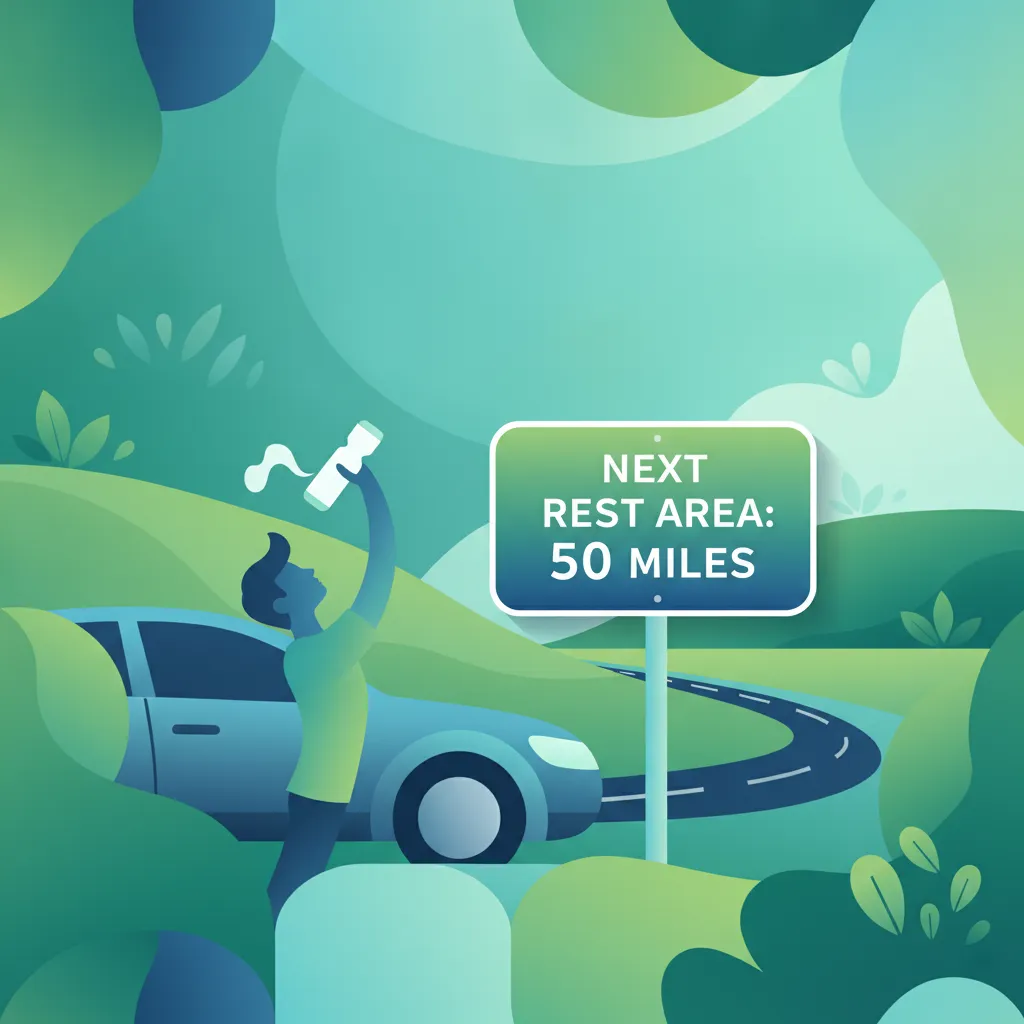
This lesson addresses the physiological dangers of driver fatigue, a leading cause of severe commercial vehicle crashes. Drivers will learn to spot early physical warning signs of drowsiness, such as micro-sleeps, heavy eyelids, and slow reaction times. The lesson provides practical wellness tips, sleep hygiene guidelines, and structured rest-break strategies to maintain peak alertness throughout a shift.
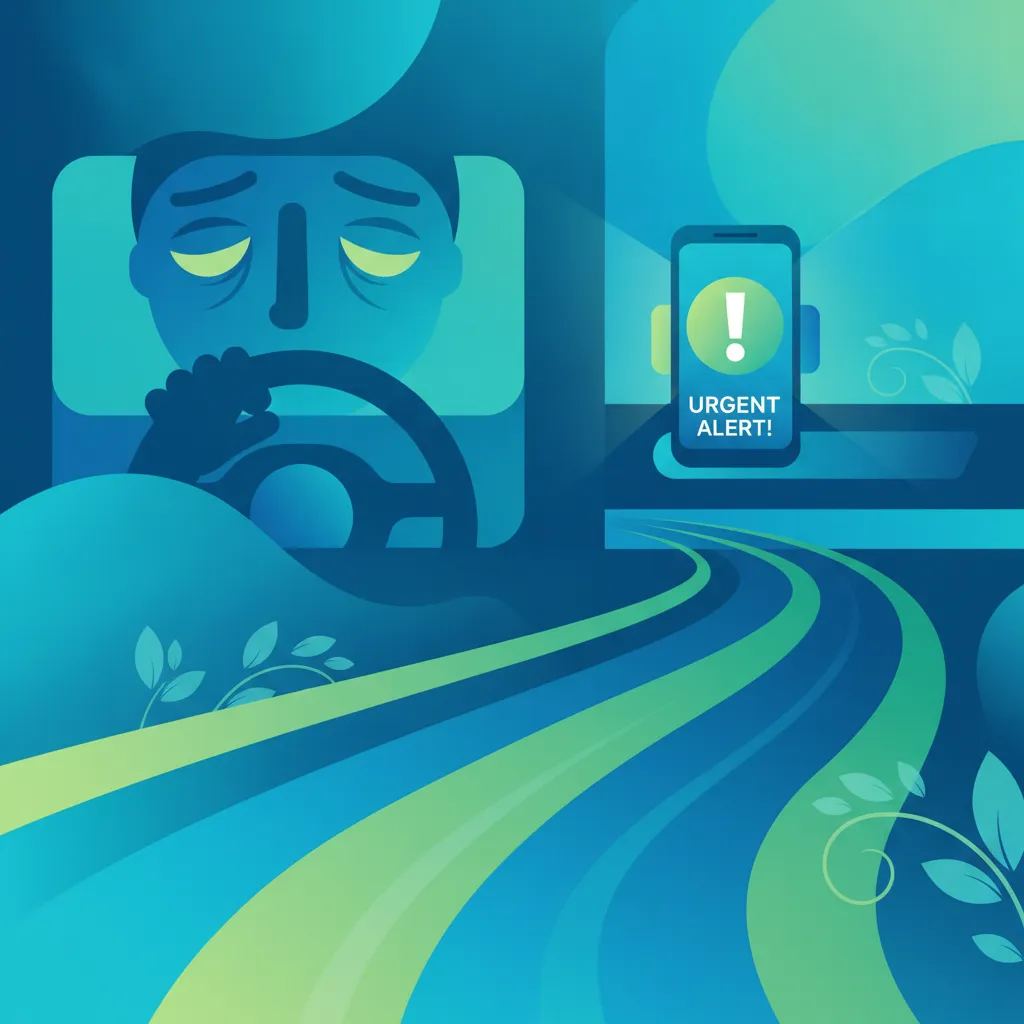
This lesson equips riders with the skills to identify the early warning signs of physical and mental exhaustion, such as drifting attention or slow reflexes. You will study effective scheduling strategies for long-distance journeys, emphasizing the rule of taking active rests at least every two hours. Finally, the lesson explains the extreme dangers of cognitive and auditory distractions, focusing on French laws regarding Bluetooth intercoms.

Illegal narcotics and certain over-the-counter or prescription medications severely affect a driver's focus and neurological coordination. This lesson details drug screen procedures (saliva tests) and the zero-tolerance policy for driving under the influence of narcotics. You will also learn to read the standardized warning triangles on French pharmaceutical boxes, which classify medications from level one to three.

This lesson teaches the fundamental rules of ergonomics to preserve the driver's health and ensure a smooth ride for passengers. Drivers will learn to adjust their seats and steering wheels to prevent physical strain during long shifts, directly reducing fatigue. It also explains how to manage heating, ventilation, and air conditioning systems to maintain an ideal temperature and dynamic stability throughout the cabin space.

Driving at night introduces serious safety challenges, such as reduced visual range, headlight glare, and fatigue. This lesson explains how to correctly transition from high beams to low beams to avoid blinding oncoming traffic. You will learn to look toward the right-side edge line to minimize headlight glare and recognize signs of visual tiredness that necessitate immediate rest breaks.

This lesson examines the legal consequences, heavy monetary fines, and driver's licence point deductions resulting from traffic and transport safety violations. Learners will study specific infractions such as driving over legal hours, vehicle overloading, and ignoring passenger seatbelt laws. Understanding the strict enforcement systems in France ensures drivers actively avoid risky habits that could end their careers.

This lesson addresses the social pressures and distractions that can compromise safe riding, such as peer pressure to speed or use mobile devices while riding under French road law. Learners will learn strategies to maintain focus, resist negative influences, and prioritize safety over social conformity. By developing self-awareness, riders can make responsible decisions even in challenging social contexts.
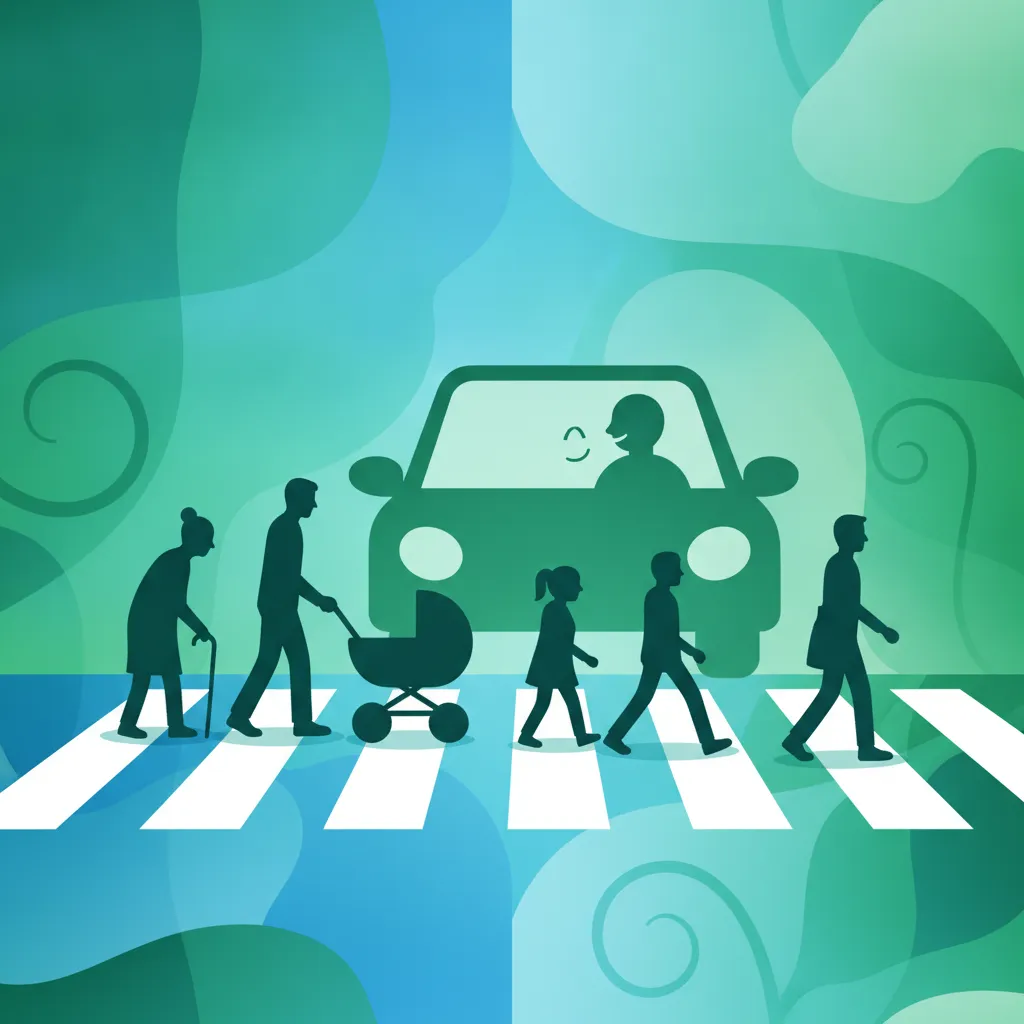
Driving safely involves a mutual social contract based on courtesy, safety awareness, and active risk mitigation. This lesson discusses the principles of defensive driving, prioritizing vulnerable road users like cyclists and pedestrians, and managing driver stress. It also highlights eco-driving strategies that help reduce fuel consumption and environmental emissions, fostering safer and cleaner shared roads.

Rural roads account for a high percentage of severe accidents due to narrow widths, winding geometries, and sudden hazards. This lesson teaches strategies for negotiating sharp bends, handling agricultural machinery, and reacting to wildlife warning signs. You will learn to manage your vehicle's lane placement on roads with soft shoulders and understand speed limits on rural networks.
Learn the official framework for administrative procedures and penalty enforcement under French traffic law. This guide explains how points are deducted for various driving infractions, the legal consequences of prohibited behavior, and the administrative steps involved in managing a Category B driver status in France.

Traffic violations in France entail direct points deductions, financial fines, and administrative actions managed online. This lesson explains how traffic offenses are classified and how points are deducted from your total allowance of twelve. You will learn the process for paying fines, how to formally contest a citation via official channels, and the rules for attending points-recovery training.
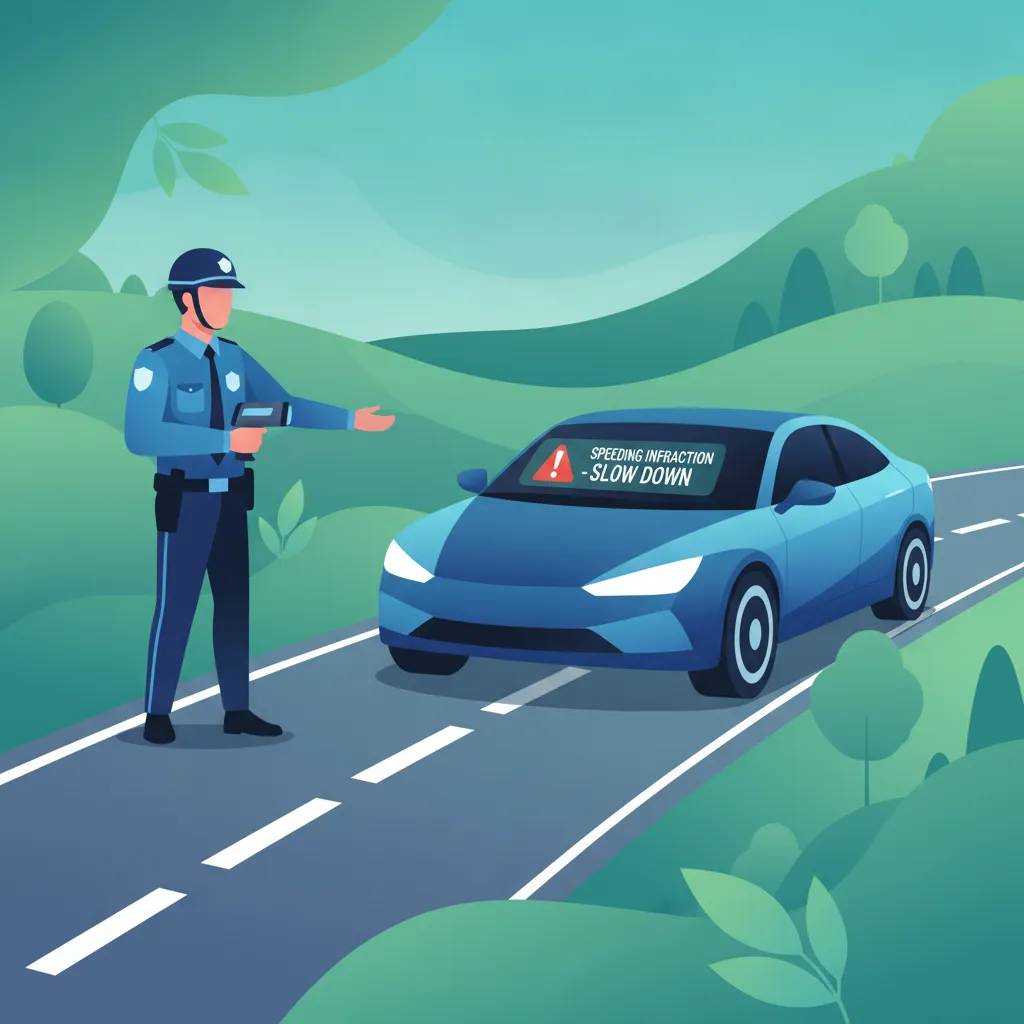
Violating traffic regulations in France triggers strict administrative penalties, including point deductions and financial fines. This lesson examines the structure of the French point-based licence, specifically noting how probationary licences start with fewer points. It outlines the differences between fine categories, vehicle impoundment procedures, and options for recovering points through voluntary safety awareness courses.
This lesson details the structure of the French points-based licensing system, explaining how points are deducted for specific traffic violations. You will learn about the special probation rules for novice licenses and the process of recovering lost points through safety courses. It also covers the fine structures, warning that ignoring basic safety laws like speed limits can lead to immediate vehicle impoundment and license suspension.
This lesson examines the legal consequences, heavy monetary fines, and driver's licence point deductions resulting from traffic and transport safety violations. Learners will study specific infractions such as driving over legal hours, vehicle overloading, and ignoring passenger seatbelt laws. Understanding the strict enforcement systems in France ensures drivers actively avoid risky habits that could end their careers.

This lesson outlines the range of penalties that can be imposed for violations of traffic laws and administrative requirements specific to goods vehicles. Learners will understand the financial implications of fines, the potential for licence suspension or revocation, and the circumstances under which a vehicle may be seized. The content also addresses demerit points accumulation, administrative sanctions, and the importance of compliance.

This lesson delves into the dual aspects of civil and criminal liability that professional goods vehicle drivers face in the event of traffic violations or accidents. Learners will explore the range of penalties, including fines, licence suspension, vehicle seizure, and potential imprisonment for severe offenses under French law. The discussion also covers the impact of negligence on insurance coverage, the accrual of penalty points, and the broader consequences for both the driver and their employer.

This lesson breaks down the exact steps required to obtain your Category B licence in France, including registering for your unique NEPH identification number. It explains the differences between traditional driving school enrollment and registering as a free candidate (candidat libre) for the ETG theory test. Learners will understand the physical, age, and administrative prerequisites necessary to progress from learning to your final practical exam.
Find clear answers to common questions learners have about Fatigue, Distraction, and Their Consequences. Learn how the lesson is structured, which driving theory objectives it supports, and how it fits into the overall learning path of units and curriculum progression in France. These explanations help you understand key concepts, lesson flow, and exam focused study goals.
The use of any device that requires the driver to wear an object in the ear, such as earphones or headsets, is strictly prohibited by the French Code de la route. While some built-in vehicle systems may be permitted, it is safest to avoid any distraction that diverts your attention from the road.
It is officially recommended to take a break of at least 15 to 20 minutes every two hours of driving. Early signs like heavy eyelids or frequent blinking are critical warnings that you must stop immediately.
Yes, questions regarding the use of phones, navigation systems, and driver fatigue are common in the ETG. You must know both the safety risks and the specific point-penalty system associated with these infractions.
You must be in a designated parking area or a safe, authorized place before using your phone. Using a phone while stopped on the hard shoulder or in a traffic lane is illegal and extremely dangerous.
Ready to focus your study? Use the practice search to find exactly the French driving theory questions you need for the Code de la route and permis de conduire ETG. Refine your knowledge on specific topics or challenging rules to boost your confidence and exam readiness.