This lesson explores the critical impact of narcotics and medications on your ability to drive safely in France. You will learn the legal consequences of driving under the influence and how to interpret pharmaceutical warning labels for road safety. This knowledge is essential for both your ETG exam and your future as a responsible driver.

Lesson content overview
Driving a motor vehicle requires full cognitive capacity, rapid reflexes, precise motor coordination, and continuous hazard perception. Under the French Code de la route (Traffic Code), driving under the influence of illicit drugs or certain medications is treated as a major safety hazard and a severe criminal offense.
Whether you are preparing for the French Driving Licence Category B Theory Course (the Examen de l'Éthique Générale or ETG) or seeking to understand road safety regulations, mastering the rules surrounding drug use and pharmaceuticals is essential. This lesson details how various substances impair driving performance, how French law enforces a zero-tolerance policy, how to interpret standardized pharmaceutical warning labels, and the procedures for roadside drug testing.
Any substance that alters the normal functioning of the central nervous system (CNS) is classified as psychoactive. When a psychoactive substance enters the bloodstream, it crosses the blood-brain barrier and interferes with neurotransmitters. This directly degrades the primary cognitive and physical faculties required for driving.
In France, the legal framework regarding illicit drugs and driving is simple: there is a strict zero-tolerance policy. Unlike alcohol, which has a defined legal limit for experienced and novice drivers, any detectable trace of an illegal narcotic in a driver's system constitutes a severe criminal infraction.
Chemical substances whose production, distribution, and consumption are prohibited by law due to their high potential for addiction, physical harm, and cognitive impairment. In France, this includes cannabis, cocaine, ecstasy (MDMA), amphetamines, and non-prescribed opiates.
Tetrahydrocannabinol (THC) is the primary active compound in cannabis. It acts as a central nervous system depressant and hallucinogen.
Stimulants temporarily accelerate brain activity and mask symptoms of fatigue.
These substances act as powerful pain relievers and central nervous system depressants.
The Cumulative Risk of Poly-Consumption: Combining drugs, or mixing any narcotic with alcohol, does not merely add the risks together—it multiplies them exponentially. For example, combining cannabis and alcohol increases the risk of being involved in a fatal accident by approximately 15 times compared to driving sober.
Many drivers do not realize that legal, everyday medications can impair driving just as severely as illegal narcotics or alcohol. To protect road users, French law requires all pharmaceutical packaging for medications that present a driving risk to display a standardized, color-coded warning triangle.
These pictograms are managed under the authority of the Agence nationale de sécurité du médicament et des produits de santé (ANSM). They classify medications into three distinct risk levels.
Many medications available without a prescription carry Level 2 or Level 3 warnings. Drivers must remain vigilant when self-medicating for common ailments:
To enforce the zero-tolerance policy, French law enforcement officers (Police and Gendarmerie) are authorized to perform rapid, non-invasive drug screening tests on roadsides.
The Initial Saliva Screen (Le Test Salivaire): The officer collects a sample of oral fluid using a rapid test swab. Within a few minutes, the test indicates the presence or absence of THC, cocaine, amphetamines, and opiates.
Action upon a Negative Result: If the test is negative and no other signs of impairment are present, the driver is allowed to proceed.
Action upon a Positive Result: If the screen is positive, the driver's license is immediately retained by the police, and driving is prohibited. The officer must then secure a confirmatory sample.
The Confirmatory Sample: A second saliva sample (or a blood sample, at the driver's request or in specific medical circumstances) is collected and sent to an accredited forensic laboratory. This step chemically quantifies the drug concentration to validate the roadside test for court proceedings.
Refusing to undergo a roadside saliva or blood test is a severe mistake. Under the French Code de la route, refusal is treated as a criminal offense carrying the exact same penalties as a positive drug test. It results in immediate license retention and prosecution.
The dangers of drug and medication consumption are not static; they scale rapidly depending on external environmental factors and driving scenarios:
Understanding these critical links ensures safety and success on the theory exam:
To solidify your preparation for the French Category B driving theory exam (ETG), explore these related resources and practice question pools:
This lesson covers France's zero-tolerance approach to drug driving under the Code de la route, explaining how illegal narcotics and common medications impair cognitive and physical driving abilities. It details the three-tier French pharmaceutical warning triangle system (Green minimal risk, Orange moderate risk requiring medical consultation, Red prohibiting all driving), the specific effects of major drug classes including cannabis THC detection windows and stimulant crash phases, and the two-step saliva test procedure with its legal consequences. The content also addresses how environmental factors like nighttime driving and motorways amplify impairment risks, providing essential knowledge for ETG exam preparation and responsible road conduct.
A short set of high-value points that capture the most important learning from this lesson.
France enforces a strict zero-tolerance policy for illegal narcotics while driving; any detectable trace constitutes a criminal offense, unlike alcohol which has a defined limit.
The three-level pharmaceutical warning triangle system (Green/Level 1, Orange/Level 2, Red/Level 3) indicates medication risk levels and required actions before driving.
Psychoactive substances impair core driving faculties including reaction time, peripheral vision, coordination, and risk assessment, regardless of whether they are illicit or prescribed.
The saliva drug test procedure involves an immediate roadside screen followed by a confirmatory laboratory analysis if positive, and refusal carries identical penalties to a positive result.
THC is fat-soluble and remains detectable long after the subjective high has worn off, making morning-after driving risky even when feeling normal.
Explore all units and lessons included in this driving theory course.
Level 1 (Green) requires reading the leaflet; Level 2 (Orange) requires consulting a healthcare professional; Level 3 (Red) strictly prohibits driving with no exceptions.
Cannabis impairs time-space perception and slows reflexes; stimulants cause overconfidence and dangerous crashes during the 'crash' phase as effects wear off.
Poly-consumption of drugs and alcohol multiplies crash risk exponentially, not additively.
Saliva tests detect THC, cocaine, amphetamines, and opiates at roadside; a confirmatory blood or saliva sample is required for court proceedings.
Refusing a drug test carries the exact same penalties as testing positive, including immediate license retention and criminal prosecution.
Assuming that prescription or over-the-counter medications are automatically safe to drive with, ignoring that common OTC products like antihistamines and cough syrups carry Level 2 or 3 warnings.
Believing that cannabis impairment ends once the 'high' wears off, when THC remains fat-soluble and detectable in saliva for days or weeks after use.
Confusing the zero-tolerance drug policy with alcohol's graduated limits, thinking there is a 'permitted trace' level for narcotics.
Failing to check medication packaging before driving, particularly after starting a new prescription or using unfamiliar OTC remedies.
Underestimating how environmental factors (night driving, motorways, poor weather) compound medication-induced impairment.
Lesson content overview
A short set of high-value points that capture the most important learning from this lesson.
France enforces a strict zero-tolerance policy for illegal narcotics while driving; any detectable trace constitutes a criminal offense, unlike alcohol which has a defined limit.
The three-level pharmaceutical warning triangle system (Green/Level 1, Orange/Level 2, Red/Level 3) indicates medication risk levels and required actions before driving.
Psychoactive substances impair core driving faculties including reaction time, peripheral vision, coordination, and risk assessment, regardless of whether they are illicit or prescribed.
The saliva drug test procedure involves an immediate roadside screen followed by a confirmatory laboratory analysis if positive, and refusal carries identical penalties to a positive result.
THC is fat-soluble and remains detectable long after the subjective high has worn off, making morning-after driving risky even when feeling normal.
Explore all units and lessons included in this driving theory course.
Level 1 (Green) requires reading the leaflet; Level 2 (Orange) requires consulting a healthcare professional; Level 3 (Red) strictly prohibits driving with no exceptions.
Cannabis impairs time-space perception and slows reflexes; stimulants cause overconfidence and dangerous crashes during the 'crash' phase as effects wear off.
Poly-consumption of drugs and alcohol multiplies crash risk exponentially, not additively.
Saliva tests detect THC, cocaine, amphetamines, and opiates at roadside; a confirmatory blood or saliva sample is required for court proceedings.
Refusing a drug test carries the exact same penalties as testing positive, including immediate license retention and criminal prosecution.
Assuming that prescription or over-the-counter medications are automatically safe to drive with, ignoring that common OTC products like antihistamines and cough syrups carry Level 2 or 3 warnings.
Believing that cannabis impairment ends once the 'high' wears off, when THC remains fat-soluble and detectable in saliva for days or weeks after use.
Confusing the zero-tolerance drug policy with alcohol's graduated limits, thinking there is a 'permitted trace' level for narcotics.
Failing to check medication packaging before driving, particularly after starting a new prescription or using unfamiliar OTC remedies.
Underestimating how environmental factors (night driving, motorways, poor weather) compound medication-induced impairment.
Explore search topics learners often look for when studying Impact of Drugs and Medications on Driving. These topics reflect common questions about road rules, driving situations, safety guidance, and lesson level theory preparation for learners in France.
Browse additional driving theory lessons that cover connected traffic rules, road signs, and common driving situations related to this topic. Improve your understanding of how different rules interact across everyday traffic scenarios.
Understand how physical tiredness, mental distraction, and inattention degrade driving performance. This lesson details the physiological signs of fatigue and provides strategies to maintain focus and situational awareness while operating a vehicle according to French road safety standards and the Code de la route.
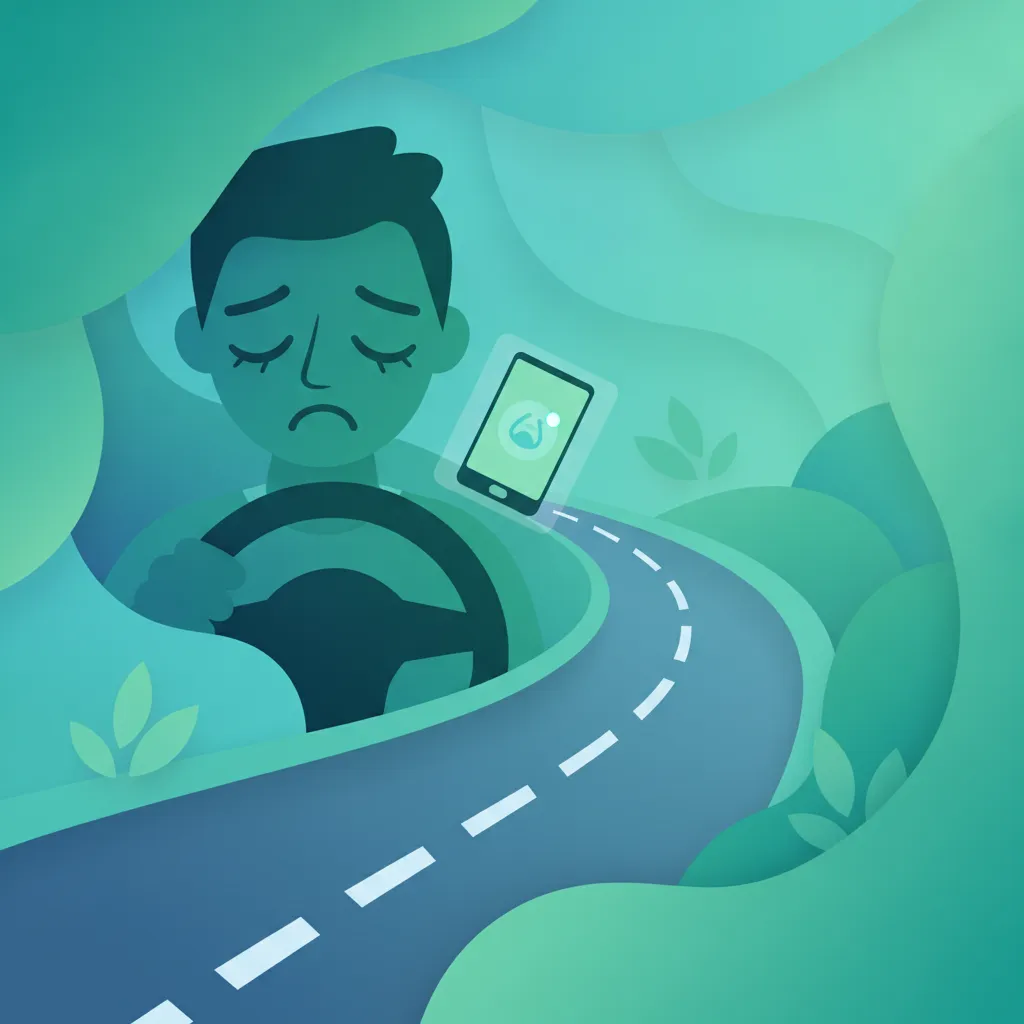
Fatigue and digital distractions are primary causes of motorway collisions, leading to severe lack of reaction time. This lesson teaches you to recognize early signs of drowsiness, such as heavy eyelids, frequent yawning, and wandering thoughts. It also highlights the strict bans on hand-held phone use or earphone kits, explaining the points penalties and safety risks associated with distracted driving.
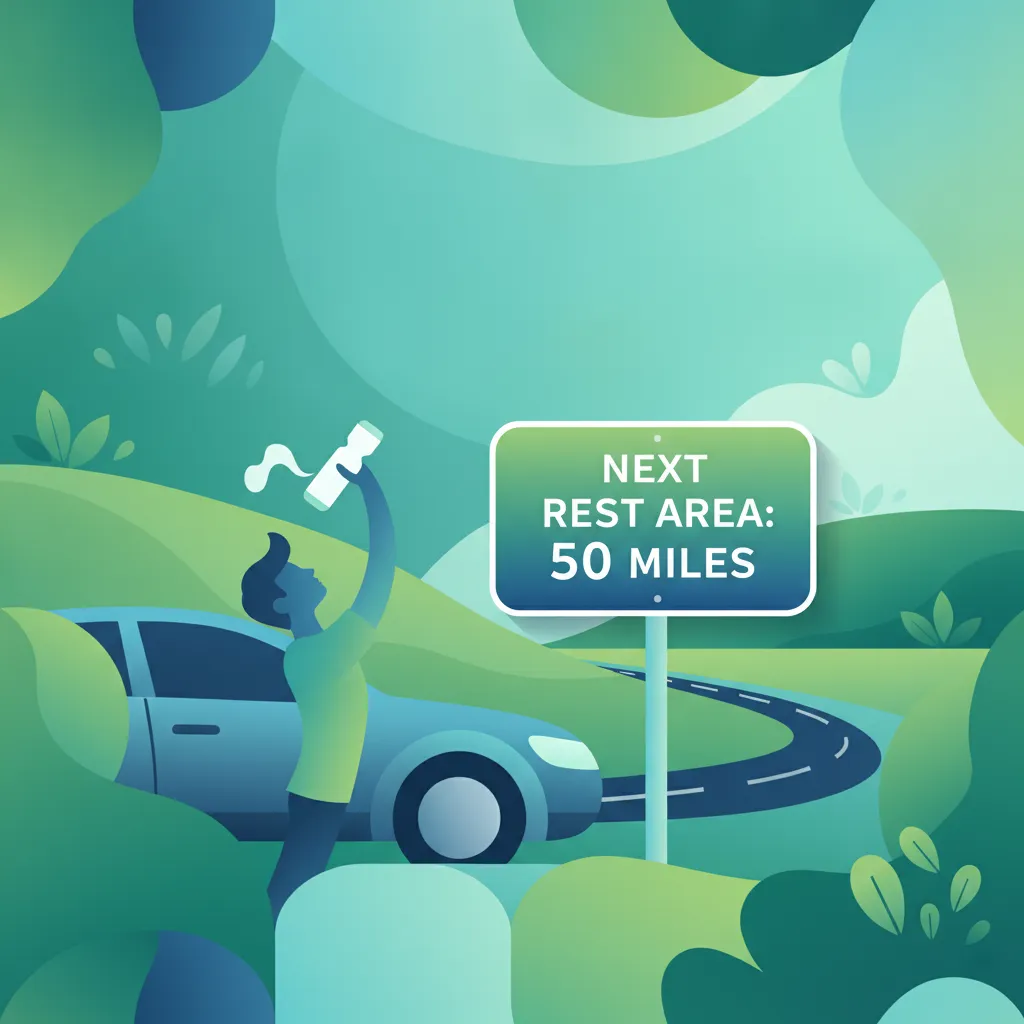
This lesson addresses the physiological dangers of driver fatigue, a leading cause of severe commercial vehicle crashes. Drivers will learn to spot early physical warning signs of drowsiness, such as micro-sleeps, heavy eyelids, and slow reaction times. The lesson provides practical wellness tips, sleep hygiene guidelines, and structured rest-break strategies to maintain peak alertness throughout a shift.
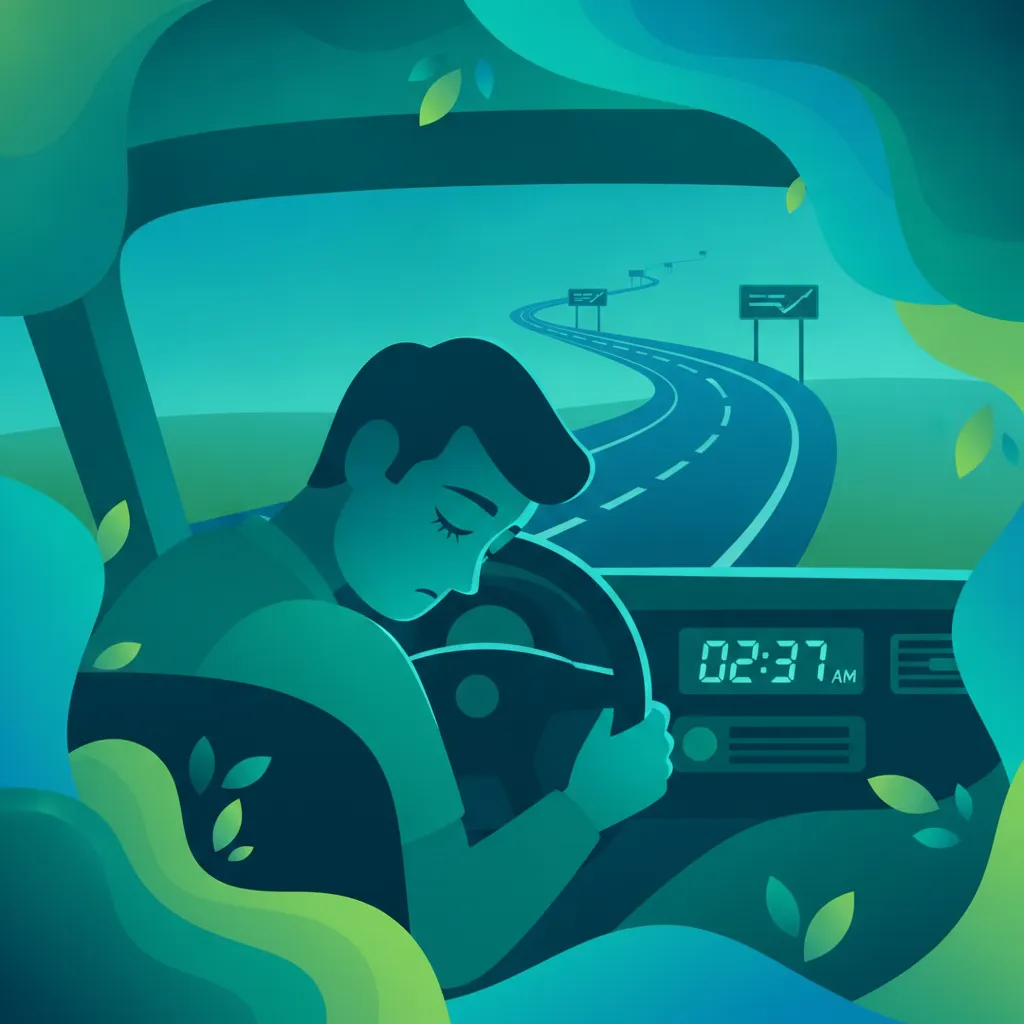
This lesson focuses on identifying the signs of driver fatigue and understanding its impact on reaction times, decision-making, and overall safety. Learners will be introduced to legal limits on continuous driving and required rest periods as stipulated by French regulations. The content also provides practical strategies for managing fatigue, such as scheduling regular breaks, employing alertness techniques, and recognizing when to cease driving.
Driving at night introduces serious safety challenges, such as reduced visual range, headlight glare, and fatigue. This lesson explains how to correctly transition from high beams to low beams to avoid blinding oncoming traffic. You will learn to look toward the right-side edge line to minimize headlight glare and recognize signs of visual tiredness that necessitate immediate rest breaks.

Proactive drivers scan the road constantly, detecting potential dangers before they turn into real-world emergency situations. This lesson teaches scanning techniques, the use of rear-view mirrors, and the interpretation of visual cues from other road users. You will learn to anticipate hazards like child play near roads, merging vehicles, and sudden lane changes, helping you drive defensively.
This lesson equips riders with the skills to identify the early warning signs of physical and mental exhaustion, such as drifting attention or slow reflexes. You will study effective scheduling strategies for long-distance journeys, emphasizing the rule of taking active rests at least every two hours. Finally, the lesson explains the extreme dangers of cognitive and auditory distractions, focusing on French laws regarding Bluetooth intercoms.
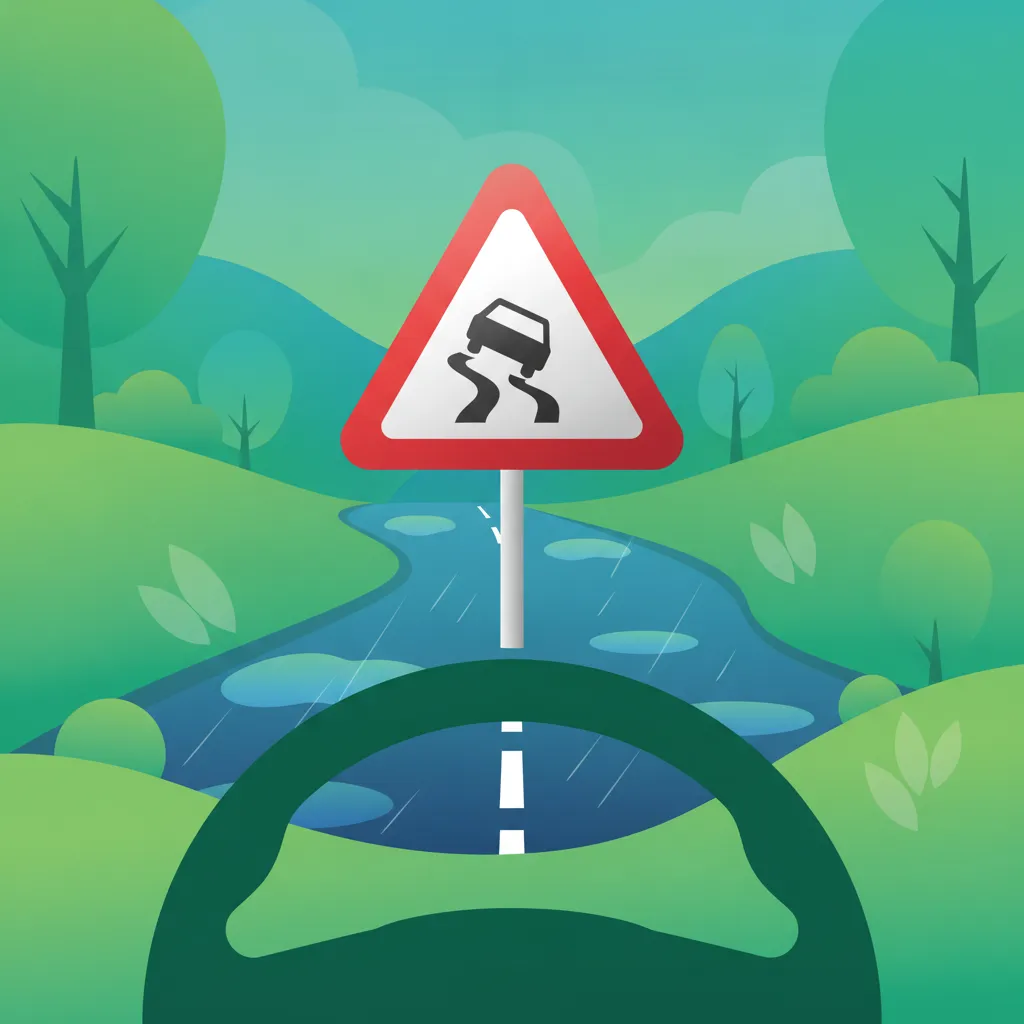
Warning signs on French roads are triangular with a red border, designed to alert drivers to upcoming dangers. This lesson teaches you how to interpret warnings for sharp curves, slippery surfaces, narrowing lanes, and wildlife or animal crossing hazards. You will understand the safety adjustments needed when approaching school zones, active roadworks, or crossings where vulnerable pedestrians are present.

This lesson teaches the fundamental rules of ergonomics to preserve the driver's health and ensure a smooth ride for passengers. Drivers will learn to adjust their seats and steering wheels to prevent physical strain during long shifts, directly reducing fatigue. It also explains how to manage heating, ventilation, and air conditioning systems to maintain an ideal temperature and dynamic stability throughout the cabin space.

In this lesson, drivers will learn strategies to avoid conflicts with smaller vehicles, such as cars and vans, which may not be as visible in large vehicle blind spots. The content emphasizes maintaining adequate spacing, using proper lane discipline, and being aware of small vehicles' behavior during lane changes and turns. Learners will also be introduced to communication techniques, such as signalling and eye contact.
Learn the administrative and criminal consequences of traffic law violations in France. This guide explains how the French points-based license system operates, the severity of fines for various infractions, and the legal procedures following license suspension for driving under the influence or other serious road traffic offences.
Violating traffic regulations in France triggers strict administrative penalties, including point deductions and financial fines. This lesson examines the structure of the French point-based licence, specifically noting how probationary licences start with fewer points. It outlines the differences between fine categories, vehicle impoundment procedures, and options for recovering points through voluntary safety awareness courses.
Traffic violations in France entail direct points deductions, financial fines, and administrative actions managed online. This lesson explains how traffic offenses are classified and how points are deducted from your total allowance of twelve. You will learn the process for paying fines, how to formally contest a citation via official channels, and the rules for attending points-recovery training.
This lesson details the structure of the French points-based licensing system, explaining how points are deducted for specific traffic violations. You will learn about the special probation rules for novice licenses and the process of recovering lost points through safety courses. It also covers the fine structures, warning that ignoring basic safety laws like speed limits can lead to immediate vehicle impoundment and license suspension.
This lesson examines the legal consequences, heavy monetary fines, and driver's licence point deductions resulting from traffic and transport safety violations. Learners will study specific infractions such as driving over legal hours, vehicle overloading, and ignoring passenger seatbelt laws. Understanding the strict enforcement systems in France ensures drivers actively avoid risky habits that could end their careers.
This lesson outlines the range of penalties that can be imposed for violations of traffic laws and administrative requirements specific to goods vehicles. Learners will understand the financial implications of fines, the potential for licence suspension or revocation, and the circumstances under which a vehicle may be seized. The content also addresses demerit points accumulation, administrative sanctions, and the importance of compliance.
This lesson delves into the dual aspects of civil and criminal liability that professional goods vehicle drivers face in the event of traffic violations or accidents. Learners will explore the range of penalties, including fines, licence suspension, vehicle seizure, and potential imprisonment for severe offenses under French law. The discussion also covers the impact of negligence on insurance coverage, the accrual of penalty points, and the broader consequences for both the driver and their employer.
Find clear answers to common questions learners have about Impact of Drugs and Medications on Driving. Learn how the lesson is structured, which driving theory objectives it supports, and how it fits into the overall learning path of units and curriculum progression in France. These explanations help you understand key concepts, lesson flow, and exam focused study goals.
They indicate the level of impact on your driving ability. Level 1 (yellow) means be careful, Level 2 (orange) suggests asking a doctor, and Level 3 (red) strictly advises against driving. Always check your packaging before operating your vehicle.
No, France maintains a zero-tolerance policy. It is illegal to drive if you have consumed any quantity of illegal drugs, regardless of the level of impairment detected in your system.
French authorities frequently use quick saliva screening tests. If the preliminary test is positive, it is followed by a secondary sample analysis to confirm the presence of prohibited substances, which leads to severe legal penalties.
Yes, provided the medication does not impair your driving skills. Always check for the pharmaceutical warning sign on the box and consult your pharmacist or doctor if you are unsure about the potential side effects like drowsiness.
Ready to focus your study? Use the practice search to find exactly the French driving theory questions you need for the Code de la route and permis de conduire ETG. Refine your knowledge on specific topics or challenging rules to boost your confidence and exam readiness.