
This lesson explores the essential safety protocols and legal requirements for operating school transport services within the French road network. You will master the specific regulations for school zones, including speed restrictions and the correct use of signaling when children are boarding or alighting, to ensure passenger safety and regulatory compliance for your D-category licence.
Lesson content overview
Operating a passenger vehicle, particularly a bus or coach under French categories D1, D, D1E, or DE, places an exceptional level of responsibility on the driver. Among the most high-risk environments a professional driver will encounter are school zones (zones scolaires) and areas adjacent to school transport services (transport scolaire). Children are highly vulnerable road users; they lack the fully developed peripheral vision, spatial awareness, and hazard-perception skills of adults.
For professional drivers, mastering the regulations of the French Code de la Route regarding school zones is not just a requirement for passing the theory exam—it is a daily operational imperative. This lesson details speed restrictions, warning signs, school bus signaling, right-of-way rules, and the legal authority of crossing guards.
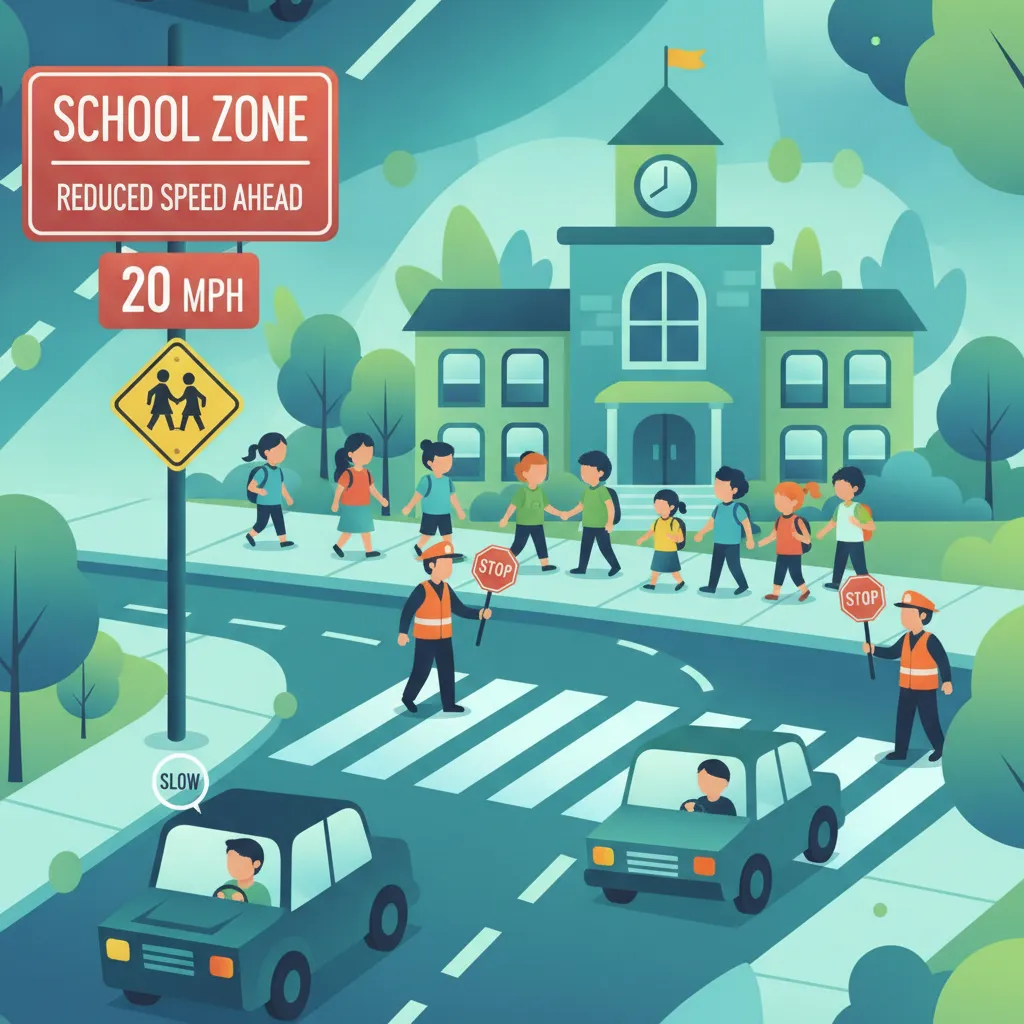
A school zone is a designated urban or residential area surrounding a school, nursery, or recreational facility where high pedestrian traffic of children is expected. Under French traffic law, these zones are subject to strict, localized speed limits and enhanced signage to protect young pedestrians.
French municipalities implement two primary configurations for school zones depending on local traffic flow and infrastructure:
The Code de la Route utilizes distinct danger and regulatory signs to warn drivers that they are approaching an area frequented by children.
When approaching these signs, professional drivers must immediately adjust their foot placement, hovering over the brake pedal (the "covering the brake" technique) to reduce reaction time in the event of a sudden hazard.
Vehicles dedicated to the transportation of schoolchildren (transport scolaire) are subject to unique signaling requirements. Because children frequently cross the street immediately after boarding or alighting from a bus, other road users must treat these stopped transport vehicles with extreme caution.
A mandatory square yellow sign displaying the black silhouette of two children, affixed to the front and rear of any bus or coach transporting children in France. It must be illuminated or retroreflective when children are on board.
In France, school transport buses are equipped with specific warning lights to alert surrounding traffic when they are stationary and handling passengers:
Crucial Stopping Rule: When a school bus is stopped with its hazard lights or flashing amber beacon active, you must significantly slow down and prepare to bring your vehicle to a complete stop. If children are crossing or showing intent to cross the street to or from the bus, you must stop completely.
One of the most dangerous maneuvers a driver can make is overtaking a stopped school bus. In France, overtaking is strictly regulated when passengers are actively boarding or alighting:
The legal framework of the Code de la Route prioritizes vulnerable road users above all vehicular traffic. When driving a heavy passenger vehicle, your stopping distance is significantly longer, making early compliance with right-of-way rules vital.
Under French law, pedestrians—particularly children—have absolute priority when crossing the street or showing an obvious intention to do so.
Scan the Environment: Look far ahead for high-visibility clothing, school signs, or groups of children on the sidewalks.
Reduce Speed Early: Transition down to a lower gear to use engine braking, signaling your intention to slow down to vehicles behind you.
Check Your Mirrors: Monitor tailgating vehicles. Heavy passenger vehicles require longer to stop; early, gentle braking alerts drivers behind you.
Verify Clearance: Before proceeding after a stop, ensure that the children have fully stepped onto the opposite sidewalk and that no stragglers are running to catch up.
In French school zones, traffic is frequently directed by authorized crossing guards (agents de la circulation or agents municipaux). These officials are typically dressed in high-visibility uniforms and utilize handheld red "Stop" paddles (piquets d'arrêt).
Legal Hierarchy: The hand signals and directives of an authorized crossing guard override all standard traffic signs, road markings, and even traffic light signals.
If a traffic light is green, but a crossing guard signals you to stop to allow children to cross, you must obey the guard immediately. Failing to comply with a crossing guard’s signal is treated with the same severity as running a red light or disobeying a police officer.
Operating category D vehicles requires professional safety margins that account for vehicle dynamics, passenger load, and environmental changes.
Bad weather dramatically increases the risks within school zones. Children wearing hoods or carrying umbrellas have severely restricted peripheral vision and may not see or hear an approaching bus.
Disregarding school zone regulations carries severe legal and professional consequences in France.
| Violation | Legal Consequence (Code de la Route) | Safety Risk |
|---|---|---|
| Speeding in a School Zone | Heavy class fines, loss of driver's license points, possible suspension. | High-speed impact; dramatically reduced reaction window. |
| Overtaking a Stopped School Bus | Heavy fines, points deduction, professional license review. | Striking a child emerging from the front of the bus. |
| Failing to Yield at a Crossing | Up to 6 points deducted from the driver's license, steep fines. | Direct pedestrian collision. |
| Ignoring a Crossing Guard | Equivalent to running a red light; automatic points loss and heavy fines. | Striking pedestrians under active guard escort. |
Protecting children is the highest priority of professional road safety. When navigating school zones:
This lesson covers the specific French regulations governing school zones and school transport services, essential for D-category licence candidates. Permanent school zones sit within Zone 30 (30 km/h) or Zone de rencontre (20 km/h), while temporary zones activate only during school hours via variable message signs. School buses must display the yellow Signal de Transport d'Enfants and activate hazard lights when passengers board or alight, requiring all nearby drivers to slow and stop if children are crossing. Crossing guards hold legal authority that supersedes traffic lights and road signs. Professional drivers must account for longer stopping distances in heavy vehicles and adapt speed for weather conditions, particularly given children's limited hazard perception.
A short set of high-value points that capture the most important learning from this lesson.
School zones in France are either permanent (within Zone 30 or Zone de rencontre) or temporary with variable speed limits during school hours.
School buses must display the yellow Signal de Transport d'Enfants sign and activate Feux de détresse when children are boarding or alighting.
You must stop completely when a school bus has its hazard lights active and children are crossing, regardless of traffic direction.
Authorized crossing guards hold authority that overrides all traffic signs and traffic lights.
Heavy buses require significantly longer stopping distances, especially when fully loaded or in wet conditions.
Explore all units and lessons included in this driving theory course.
Zone 30 limits apply at 30 km/h permanently; temporary school zones use flashing orange VMS signs during arrival, lunch, and dismissal.
Overtaking is prohibited when children are crossing from a stopped school bus, whether you are behind or approaching from the opposite direction.
Stop lines at pedestrian crossings must be respected fully; stopping over the line blocks children's paths and reduces your visibility.
Dipped-beam headlights (feux de croisement) are essential in poor visibility to make your vehicle visible to children.
Disobeying a crossing guard carries the same legal consequences as running a red light.
Assuming temporary school zone speed limits do not apply outside school hours—permanent Zone 30 limits remain enforceable at all times.
Attempting to overtake a stopped school bus on a two-lane road because you cannot see children hidden behind the bus's bulk.
Stopping past the painted stop line at a pedestrian crossing, which blocks the crossing path and creates a blind spot.
Failing to reduce speed sufficiently in wet weather, forgetting that braking distance doubles on wet roads.
Not covering the brake when approaching school zones, causing delayed reaction if a child suddenly enters the roadway.
Lesson content overview
A short set of high-value points that capture the most important learning from this lesson.
School zones in France are either permanent (within Zone 30 or Zone de rencontre) or temporary with variable speed limits during school hours.
School buses must display the yellow Signal de Transport d'Enfants sign and activate Feux de détresse when children are boarding or alighting.
You must stop completely when a school bus has its hazard lights active and children are crossing, regardless of traffic direction.
Authorized crossing guards hold authority that overrides all traffic signs and traffic lights.
Heavy buses require significantly longer stopping distances, especially when fully loaded or in wet conditions.
Explore all units and lessons included in this driving theory course.
Zone 30 limits apply at 30 km/h permanently; temporary school zones use flashing orange VMS signs during arrival, lunch, and dismissal.
Overtaking is prohibited when children are crossing from a stopped school bus, whether you are behind or approaching from the opposite direction.
Stop lines at pedestrian crossings must be respected fully; stopping over the line blocks children's paths and reduces your visibility.
Dipped-beam headlights (feux de croisement) are essential in poor visibility to make your vehicle visible to children.
Disobeying a crossing guard carries the same legal consequences as running a red light.
Assuming temporary school zone speed limits do not apply outside school hours—permanent Zone 30 limits remain enforceable at all times.
Attempting to overtake a stopped school bus on a two-lane road because you cannot see children hidden behind the bus's bulk.
Stopping past the painted stop line at a pedestrian crossing, which blocks the crossing path and creates a blind spot.
Failing to reduce speed sufficiently in wet weather, forgetting that braking distance doubles on wet roads.
Not covering the brake when approaching school zones, causing delayed reaction if a child suddenly enters the roadway.
Explore search topics learners often look for when studying School Zone Regulations and Safety Protocols. These topics reflect common questions about road rules, driving situations, safety guidance, and lesson level theory preparation for learners in France.
Browse additional driving theory lessons that cover connected traffic rules, road signs, and common driving situations related to this topic. Improve your understanding of how different rules interact across everyday traffic scenarios.
Learn the legal requirements for yielding to pedestrians, cyclists, and other vulnerable road users in various traffic conditions. This explanation covers the priority hierarchy defined by the Code de la route and the professional responsibility of category D license holders to anticipate and mitigate risks in mixed traffic environments.

Certain groups of road users require heightened defensive attention from drivers due to physical limitations or unpredictable behaviors. This lesson covers how to recognize signs of visual impairment (white canes), mobility challenges, and the unpredictability of young children. You will learn to reduce your speed, extend yielding patience, and proactively secure extra space to protect these vulnerable users.
This lesson focuses on the legal requirement to yield to pedestrians on or about to step onto zebra crossings, a major focus of French road safety. You will learn how to approach school zones and pedestrian islands with heightened vigilance and reduced speed. Additionally, the lesson explores shared urban spaces, explaining how to maintain safe lateral distances when overtaking cyclists or personal electric scooters.

Learners will explore the rules related to pedestrian crossings, focusing on the obligation to yield to pedestrians at zebra crossings and flashing pedestrian signals. The lesson highlights the importance of stopping before the stop line, reducing speed, and maintaining vigilance for pedestrian movement. Mastery of these practices ensures the safety of both pedestrians and AM riders at crossing points.
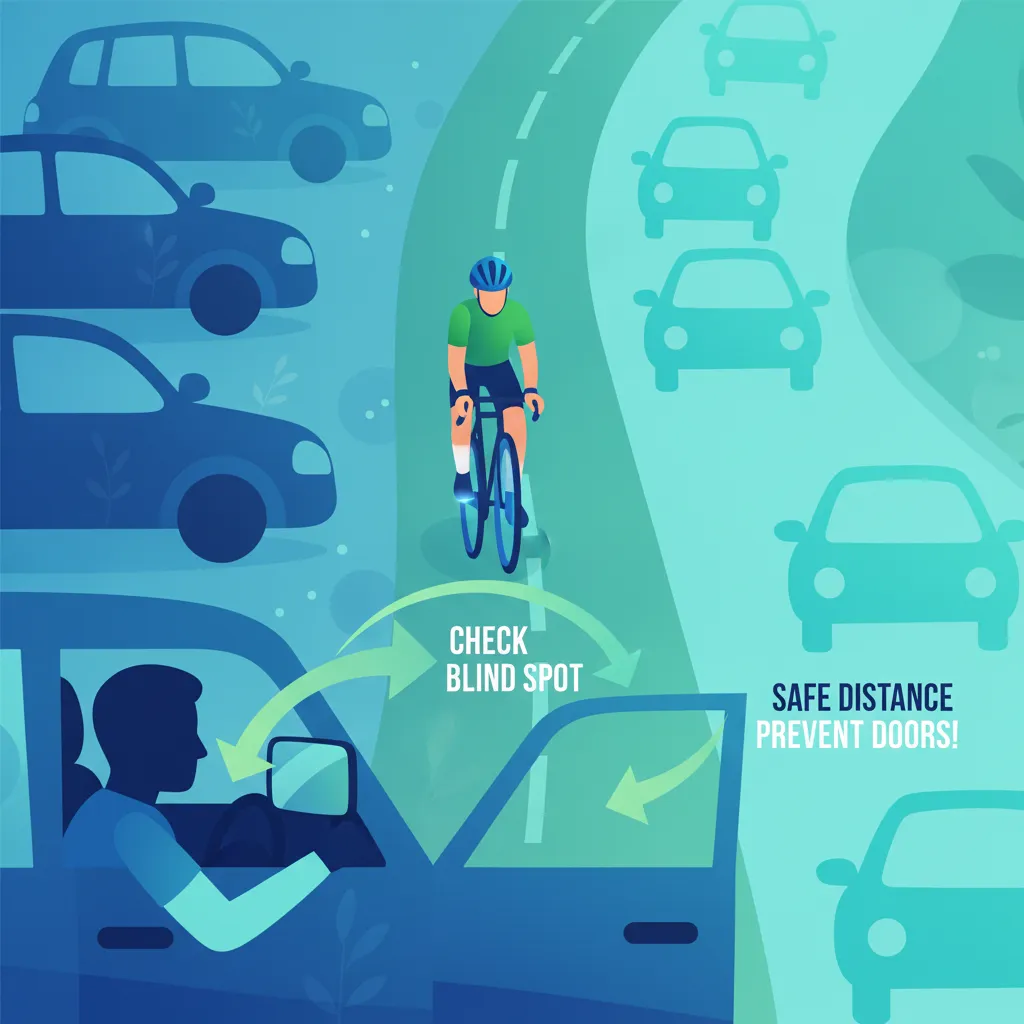
This lesson explains how to share the road safely with cyclists in both urban and rural environments. Drivers will study the legal minimum passing distances when overtaking cyclists, which is one meter in cities and one and a half meters outside urban areas. It also covers recognizing specialized cycling infrastructure, bike boxes at intersections, and preventing blind-spot collisions during right turns.

In France, pedestrians have clear legal priority when stepping onto or indicating an intent to use a crossing (passage pieton). This lesson details standard zebra crossings, refuge islands, and pedestrian crossings managed by synchronized traffic light systems. You will learn to scan crossings ahead, anticipate pedestrian movements, and safely come to a stop whenever a pedestrian attempts to cross.
This lesson examines the specific challenges and responsibilities goods vehicle drivers face when interacting with pedestrians and cyclists in urban environments. Learners will understand right-of-way rules, the importance of yielding at pedestrian crossings, and safe turning practices that protect cyclists. The content emphasizes heightened driver vigilance, especially when navigating bike lanes and crowded sidewalks.
This lesson examines French Code de la route laws regarding pedestrian right-of-way, emphasizing the driver's legal duty to yield to any pedestrian engaged in crossing. It outlines proper approach speeds when approaching zebra crossings with obstructed views. Candidates will learn to maintain a safe physical buffer zone and verify that crosswalks are entirely clear of pedestrians before accelerating.

This lesson details how to manage high-risk interactions with pedestrians who may step off curbs or cross the road near bus stops. Learners will study French Code de la route laws regarding pedestrian priority at crosswalks and near stopping transit vehicles. Developing heightened spatial awareness around blind zones near the front of the bus is emphasized to prevent tragic pedestrian collisions.

Learners will focus on the best practices for interacting safely with cyclists and pedestrians in mixed traffic environments. The lesson covers proper lane usage, overtaking protocols, maintaining adequate safety gaps, and non-verbal communication techniques in the French urban landscape. By applying these principles, AM riders can coexist harmoniously with vulnerable road users, reducing the likelihood of accidents.

This lesson provides global defensive driving strategies to minimize collision risks for all non-motorized and vulnerable road users. Drivers will learn to systematically lower vehicle speed in dense pedestrian zones, even when no active hazards are visible. By cultivating an anticipatory mindset and maintaining generous safety margins, professional drivers establish a protective safety envelope around their vehicle.
Understand the specific challenges professional drivers face in urban environments, including lane discipline, bus stop positioning, and interaction with other road users in high-density areas. This lesson focuses on the application of traffic rules and maneuvering techniques necessary for maintaining safety and efficiency in busy French city streets.
This lesson analyzes the various traffic challenges unique to operating large passenger vehicles in historic and modern French urban areas. Drivers will learn to manage narrow street layouts, double-parked delivery trucks, and high-density multi-lane roundabouts safely. The lesson emphasizes defensive driving strategies, route adjustments, and maintaining mental focus under severe schedule and time pressures.
This lesson focuses on maneuvering in extremely crowded areas, passenger terminals, or narrow streets blocked by parked vehicles and obstacles. Drivers will learn to assess clearance distances precisely before committing to narrow pathways. The content teaches steering techniques that maintain stability, optimize space usage, and prioritize public safety during slow-speed, high-difficulty maneuvers.

This lesson provides practical strategies for managing the physical demands of slow, heavily congested city traffic. You will learn how to maintain excellent low-speed balance through correct body posture, rear brake modulation, and smooth clutch control. It also emphasizes the importance of preserving an adequate safety buffer when stopping behind other vehicles, allowing an immediate escape route if you face a rear-end threat.
This lesson examines the regulatory limits and environmental controls applied to large passenger vehicles operating in dense French urban centers. Drivers will study the Crit'Air clean air sticker system and low-emission zones (ZFE) that restrict access for older, high-polluting vehicles. It also addresses navigating physical constraints, such as narrow streets, tight turning radii, and strict municipal weight limits.
This lesson examines the specific challenges and responsibilities goods vehicle drivers face when interacting with pedestrians and cyclists in urban environments. Learners will understand right-of-way rules, the importance of yielding at pedestrian crossings, and safe turning practices that protect cyclists. The content emphasizes heightened driver vigilance, especially when navigating bike lanes and crowded sidewalks.
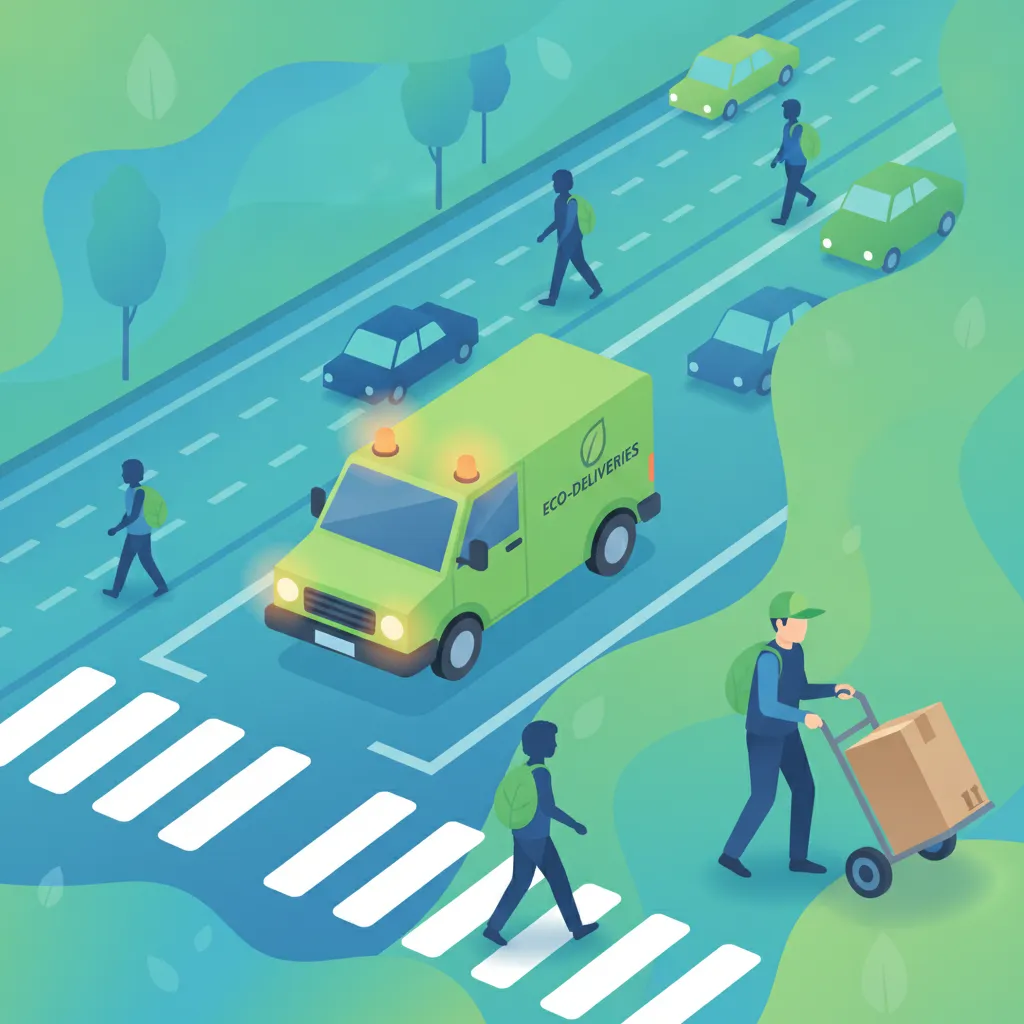
This lesson focuses on the unique challenges of performing deliveries in dense urban areas. Learners will explore best practices for loading and unloading safely, navigating traffic congestion, and minimizing risks to pedestrians and cyclists. The content also covers compliance with city regulations for delivery zones, scheduling considerations, and the importance of careful maneuvering to avoid accidents.
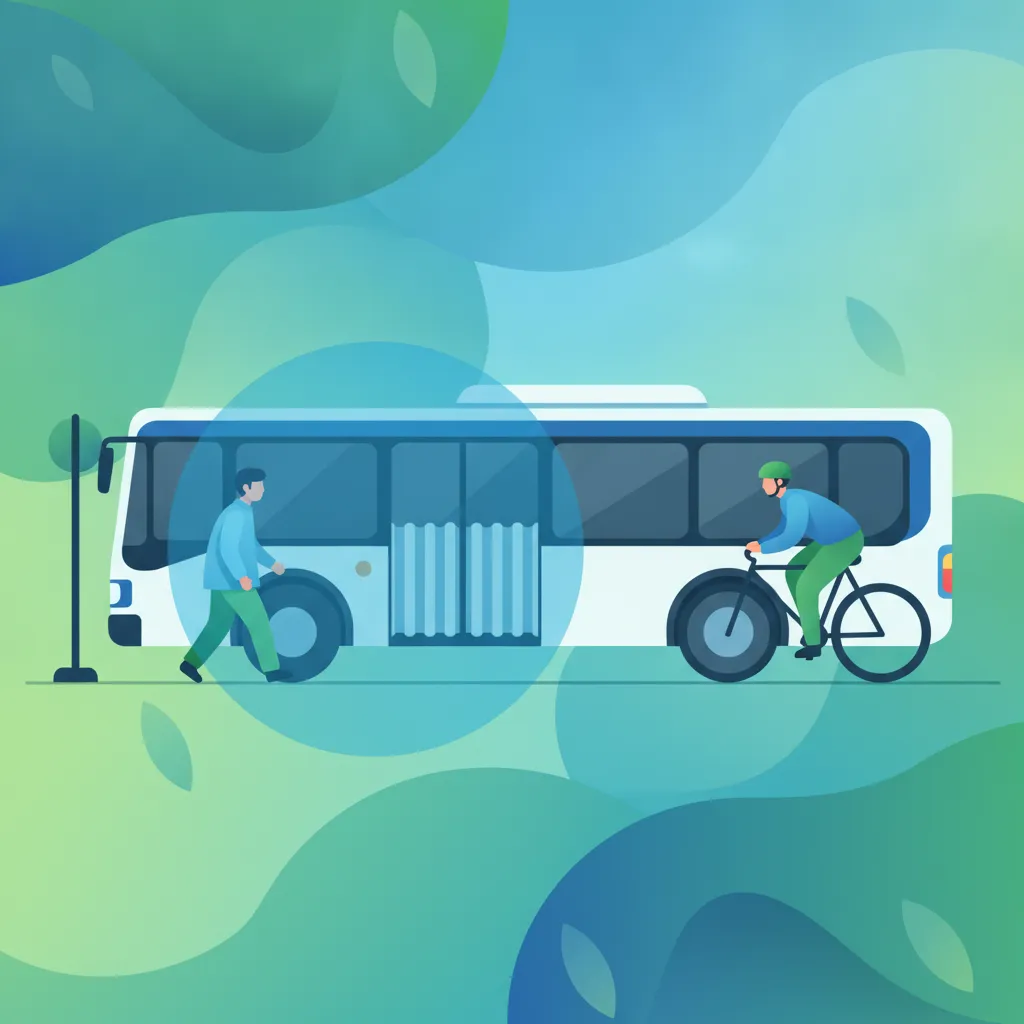
This lesson teaches specific visual scanning methods to detect vulnerable road users, such as children, elderly individuals, and cyclists near stops. Drivers will learn to anticipate sudden movements, like a passenger running to catch a bus or stepping off a sidewalk unexpectedly. Managing the massive blind spots around the front and right-hand sides of passenger vehicles is highlighted as a critical safety duty.
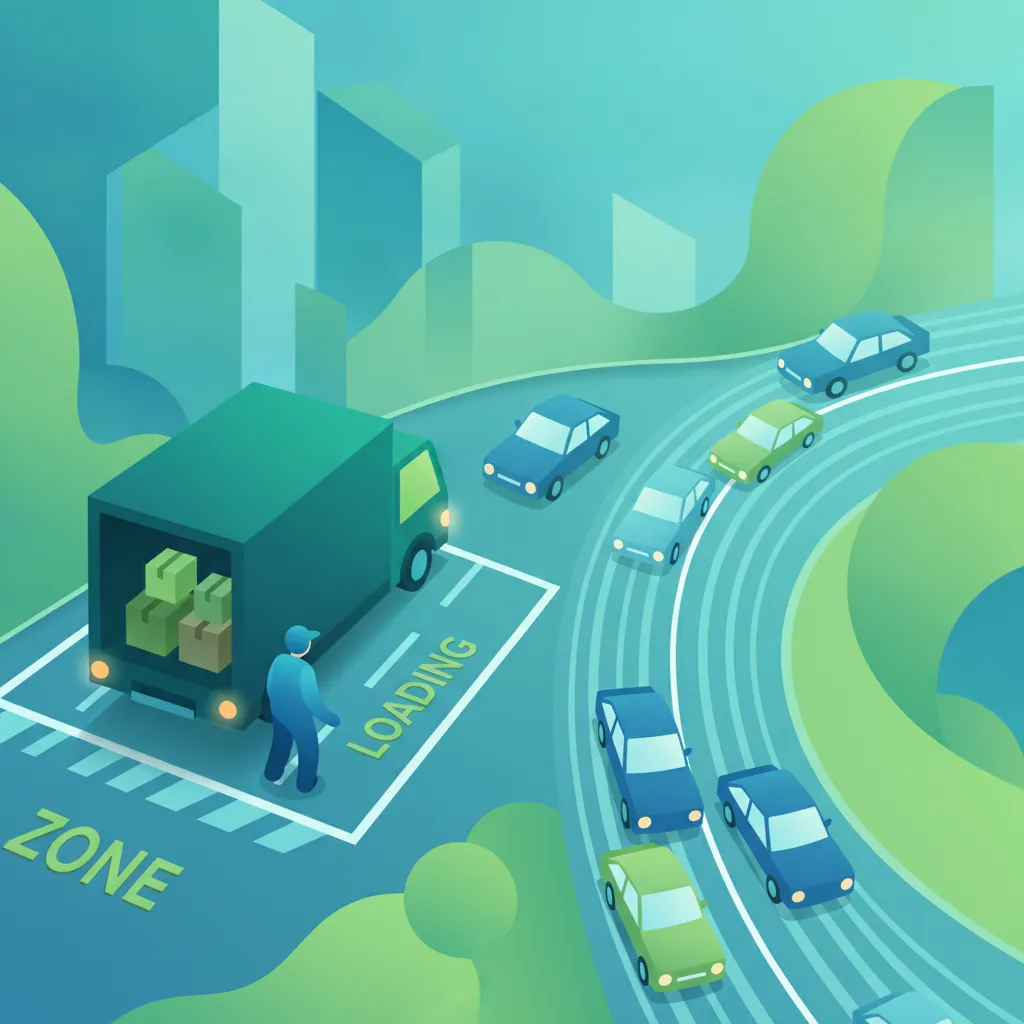
In this lesson, drivers will learn how to navigate urban delivery zones, understanding the rules surrounding loading bays, time windows, and restricted access areas. The content includes the process for obtaining delivery permits, strategies for safe maneuvering in congested city streets, and best practices for minimizing impact on pedestrian traffic. Learners will also be introduced to French city-specific regulations that govern goods vehicle deliveries.
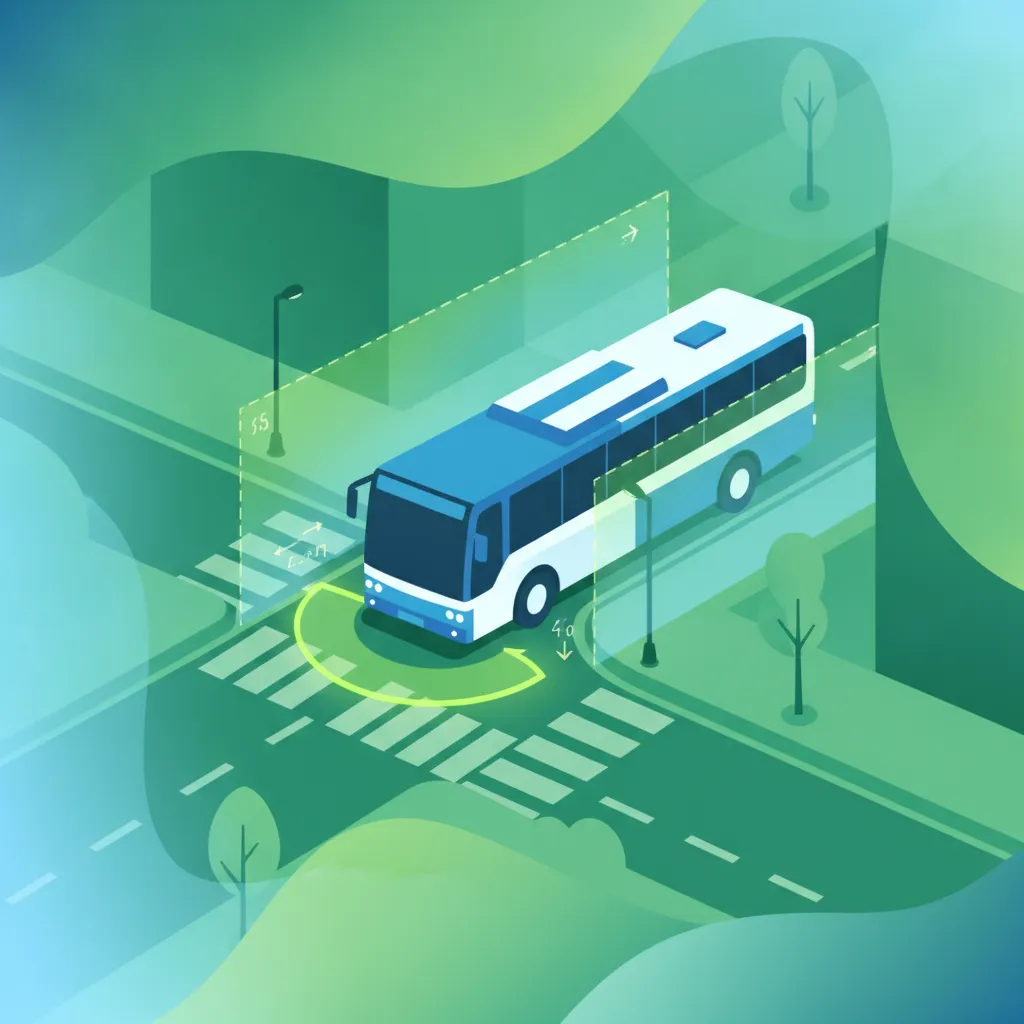
This lesson covers the physical dimensions of passenger vehicles and how their high profile, length, and width alter spatial awareness on the road. Learners will study tail-swing mechanics and track the path of the rear wheels during sharp turns to avoid hitting roadside obstacles. Accurate measurement of overhead structures, bridges, and underpass clearances is taught to prevent catastrophic structural collisions.
Public transit vehicles like city buses and streetcars (trams) have clear legal priorities and dedicated infrastructure in urban areas. This lesson teaches you to recognize reserved transit lanes and your legal obligation to yield to buses exiting their designated stops. You will also learn safe driving strategies near tram tracks, ensuring you never block public transit lines or risk passenger boarding areas.
Find clear answers to common questions learners have about School Zone Regulations and Safety Protocols. Learn how the lesson is structured, which driving theory objectives it supports, and how it fits into the overall learning path of units and curriculum progression in France. These explanations help you understand key concepts, lesson flow, and exam focused study goals.
You must exercise extreme caution and be prepared to stop if children are crossing or moving near the vehicle. Always respect the specific warning signs displayed by the bus and ensure you do not overtake or pass the bus if it is in an active boarding sequence where prohibited.
Yes, drivers must comply with local speed restrictions often marked by specific signage. In the absence of a specific limit, professional drivers are expected to reduce speed significantly to allow for immediate braking and to accommodate the high-risk nature of areas where children are present.
The exam often uses situational images to test if you can identify a school-specific warning sign and determine the correct speed and defensive driving reaction. You may be asked about the legal necessity of stopping or yielding to crossing guards or children in these zones.
You must treat the signals of a school crossing guard with the same priority as official traffic signs or signals. If the guard indicates that you must stop to allow children to cross, you are legally required to do so immediately and remain stopped until the path is entirely clear.
Ready to focus your study? Use the practice search to find exactly the French driving theory questions you need for the Code de la route and permis de conduire ETG. Refine your knowledge on specific topics or challenging rules to boost your confidence and exam readiness.