
This lesson explores the essential French legal requirements for yielding to pedestrians as a professional driver. It builds upon your understanding of urban traffic safety to ensure you can confidently navigate stops and crossings in your bus or coach.
Lesson content overview
As a professional driver operating category D1, D, D1E, or DE passenger vehicles in France, navigating dense urban areas requires a sophisticated understanding of pedestrian dynamics and the strict legal framework protecting them. Because buses and coaches carry significant mass and have longer stopping distances, the Code de la route places a high level of responsibility on professional drivers to ensure the safety of vulnerable road users (usagers vulnérables).
This lesson explores the legal obligations, physical constraints, and defensive driving techniques required to manage pedestrian right-of-way, particularly at zebra crossings (passages piétons), near bus stops, and around school zones.
In France, the protection of pedestrians is an absolute priority under the law. Pedestrians are the most exposed users of the public road network, and any collision involving a heavy passenger vehicle can be catastrophic.
Under Article R415-11 of the French road code, all drivers must yield to any pedestrian who has regularly entered, or who clearly shows the intention to enter, a designated crossing. This priority is absolute. It applies regardless of whether the crossing is controlled by traffic lights or signs.
The clear physical indication by a pedestrian that they intend to cross the street. This includes walking directly toward the crossing, standing at the curb edge facing the road, or making eye contact with approaching drivers. Drivers must stop if this intention is visible, even if the pedestrian has not yet stepped onto the roadway.
Professional drivers must realize that yielding is not optional, nor is it dependent on the speed of the pedestrian. If a pedestrian is standing near the edge of a zebra crossing looking across the street, you are legally required to prepare to stop.
The zebra crossing is marked by wide, parallel white bands painted across the roadway. It establishes a dedicated safety corridor where pedestrians have complete legal right-of-way over all vehicles.
While some crossings are controlled by pedestrian signals (feux de signalisation pour piétons), many in urban and suburban sectors rely entirely on the default priority rule. Even at signalized crossings, if a pedestrian enters the crossing against a red light, you must still yield to prevent a collision. The safety of human life always overrides technical right-of-way.
Operating a bus or coach requires a different cognitive and physical approach than driving a light passenger car. Heavy vehicles have unique mechanical characteristics that complicate stopping maneuvers.
A standard two-axle transit bus can weigh upwards of 19 tonnes when fully loaded. The stopping distance of such a vehicle is dramatically larger than that of a personal car due to:
Emergency braking should always be a last resort. If you are forced to perform an emergency stop because you did not anticipate a pedestrian crossing, you have failed to manage your approach speed correctly.
A safe approach speed is not a fixed number; it is the maximum speed at which you can bring your vehicle to a comfortable, controlled stop before the crossing line if a pedestrian suddenly appears.
Scan from Distance: Begin scanning the sidewalk on both sides of the road at least 50 to 100 metres before the crossing. Look for pedestrians walking toward the crossing, children playing, or groups near bus stops.
Decelerate Early: Take your foot off the accelerator and cover the brake pedal (préparation au freinage). This reduces your reaction time to zero and signals your intention to vehicles behind you.
Check Mirrors: Monitor your rearview and side mirrors to assess the proximity of following traffic before initiating braking.
Establish Eye Contact: Try to make eye contact with pedestrians waiting to cross, confirming they see your large vehicle.
Stop Smoothly: Bring the bus to a gentle stop before the stop line, ensuring onboard passenger stability.
Urban environments are filled with physical objects that block your line of sight. Professional drivers must learn to treat any visual obstruction near a pedestrian crossing as an active hazard.
Static obstructions, such as parked delivery vans, municipal bins, foliage, and bus shelters, can completely hide a pedestrian—particularly a child or a person using a wheelchair—until they are directly on the crossing.
When your view of a pedestrian crossing is obstructed:
To prevent heavy vehicles from crowding or intimidating pedestrians, French road design and traffic laws utilize specific physical boundaries.
Many modern crossings in France feature a dotted stop line painted on the road surface several metres ahead of the zebra stripes. This line is known as the ligne d'effet du passage piéton.
A dotted line painted across the lane, located between 2 and 5 metres before a zebra crossing. Its purpose is to define a protective buffer zone, keeping vehicles far enough back to give pedestrians a clear view of all traffic lanes and preventing vehicle overhangs from encroaching on the crossing.
When stopping for a pedestrian, you must bring your bus to a complete halt before this line. Do not allow the front bumper of your bus to overhang the line, as this narrows the pedestrian's safety corridor and blocks their view of oncoming vehicles in adjacent lanes.
If no painted stop line is present, you must maintain a physical buffer zone of at least one full vehicle length (or roughly 5 metres) from the edge of the zebra crossing when stopping to yield. This buffer zone:
The interactions between buses, school transport vehicles, and pedestrian crossings are governed by strict safety protocols designed to manage high-risk transfer zones.
Bus stops (arrêts de bus) are high-risk zones for pedestrian incidents. Passengers exiting a bus often make impulsive decisions, such as crossing the street directly in front of or behind the stationary bus, where they are completely hidden from passing traffic.
A dangerous traffic scenario where a stationary bus blocks the field of vision for both the passengers who have just alighted and other motorists passing the bus. This frequently leads to pedestrians stepping directly into the path of passing vehicles.
As a professional driver, you must be hyper-aware of this effect:
Under Article R417-14 and related provisions of the Code de la route, drivers must exercise extreme caution when approaching a school transport vehicle (transport d'enfants) that is stationary and has its hazard warning lights or special warning signs flashing.
Children are highly vulnerable because they lack a fully developed sense of speed and distance. When a school bus is picking up or dropping off children near a zebra crossing:
Failing to respect pedestrian right-of-way is one of the most heavily penalized offenses under French traffic law, especially for professional drivers who are held to a higher standard of public safety.
Environmental factors dramatically alter stopping distances and visibility, requiring immediate adjustments to your driving strategy.
| Environmental Factor | Physical Impact | Driver Action Required |
|---|---|---|
| Rain / Wet Roads | Stopping distance increases by up to 50% due to reduced tire friction. | Reduce your approach speed to all crossings by at least 10–15 km/h below normal dry-weather speeds. |
| Fog / Heavy Snow | Extreme reduction in visibility; pedestrians are invisible until very close. | Activate fog lights, use windshield wipers/defrosters, and reduce speed to a level where stopping distance matches visible distance. |
| Nighttime / Poor Lighting | Headlight beam patterns may not illuminate the sidewalks; dark clothing blends into backgrounds. | Use low-beam headlights (feux de croisement) to avoid glaring others, scan the dark edges of the sidewalk, and rely on silhouettes. |
At night, urban streetlights can create confusing shadows. Pedestrians wearing dark clothing are often invisible until they are directly in your headlight path. Never assume a crossing is empty simply because you do not see a bright figure at first glance.
This lesson covers the absolute legal duty to yield to pedestrians under Article R415-11 of the French Code de la route, emphasizing that heavy buses have unique braking constraints requiring anticipatory driving and early deceleration. Professional drivers must recognize the manifestation of pedestrian intention to cross and maintain proper buffer zones at zebra crossings, stopping before the ligne d'effet line. Bus-specific hazards include the masking effect at stops and heightened caution near school transport vehicles. Environmental conditions such as rain, fog, and darkness dramatically alter stopping distances and visibility, requiring constant speed adaptation. Understanding these protocols is essential for passing the ETG exam and ensuring the safety of vulnerable road users in urban environments.
A short set of high-value points that capture the most important learning from this lesson.
Article R415-11 grants pedestrians absolute priority at crossings, requiring drivers to stop completely regardless of traffic light status or pedestrian behavior
Heavy buses weighing up to 19 tonnes have significantly longer stopping distances due to pneumatic brake lag and kinetic energy, making early deceleration essential
You must yield whenever a pedestrian shows clear intention to cross—stepping toward the curb, making eye contact, or walking toward the crossing—even before they step onto the roadway
The masking effect at bus stops creates dangerous blind spots where alighting passengers may step into traffic without seeing approaching vehicles
Never overtake a vehicle that has stopped or slowed at a zebra crossing; it is likely yielding to a pedestrian you cannot see
Explore all units and lessons included in this driving theory course.
A complete stationary stop is mandatory—slow-rolling at 5 km/h while pedestrians cross is illegal and intimidating
Scan sidewalks 50–100 metres ahead of crossings for pedestrians approaching or waiting, not just those already on the crossing
When stopping for pedestrians, halt before the ligne d'effet (2–5 metres before zebra stripes) to maintain a protective buffer zone
Wet road conditions increase stopping distance by approximately 50%, requiring speed reductions of 10–15 km/h below normal approach speeds
The crossing must be entirely clear of the pedestrian's full path before you accelerate—not just your own lane
Accelerating prematurely when a pedestrian clears your lane, even though they are still walking across adjacent lanes
Failing to compensate for distracted pedestrians using smartphones or headphones; they retain full priority regardless of attentiveness
Attempting to overtake another vehicle near a zebra crossing because you cannot see the pedestrian that vehicle is yielding to
Allowing the bus bumper to overhang the ligne d'effet stop line, which narrows the pedestrian's safety corridor and blocks their view of other traffic
Not repositioning the vehicle to improve viewing angles around obstructions like parked vans or bus shelters near crossings
Lesson content overview
A short set of high-value points that capture the most important learning from this lesson.
Article R415-11 grants pedestrians absolute priority at crossings, requiring drivers to stop completely regardless of traffic light status or pedestrian behavior
Heavy buses weighing up to 19 tonnes have significantly longer stopping distances due to pneumatic brake lag and kinetic energy, making early deceleration essential
You must yield whenever a pedestrian shows clear intention to cross—stepping toward the curb, making eye contact, or walking toward the crossing—even before they step onto the roadway
The masking effect at bus stops creates dangerous blind spots where alighting passengers may step into traffic without seeing approaching vehicles
Never overtake a vehicle that has stopped or slowed at a zebra crossing; it is likely yielding to a pedestrian you cannot see
Explore all units and lessons included in this driving theory course.
A complete stationary stop is mandatory—slow-rolling at 5 km/h while pedestrians cross is illegal and intimidating
Scan sidewalks 50–100 metres ahead of crossings for pedestrians approaching or waiting, not just those already on the crossing
When stopping for pedestrians, halt before the ligne d'effet (2–5 metres before zebra stripes) to maintain a protective buffer zone
Wet road conditions increase stopping distance by approximately 50%, requiring speed reductions of 10–15 km/h below normal approach speeds
The crossing must be entirely clear of the pedestrian's full path before you accelerate—not just your own lane
Accelerating prematurely when a pedestrian clears your lane, even though they are still walking across adjacent lanes
Failing to compensate for distracted pedestrians using smartphones or headphones; they retain full priority regardless of attentiveness
Attempting to overtake another vehicle near a zebra crossing because you cannot see the pedestrian that vehicle is yielding to
Allowing the bus bumper to overhang the ligne d'effet stop line, which narrows the pedestrian's safety corridor and blocks their view of other traffic
Not repositioning the vehicle to improve viewing angles around obstructions like parked vans or bus shelters near crossings
Explore search topics learners often look for when studying Pedestrian Right-of-Way and Bus Operations. These topics reflect common questions about road rules, driving situations, safety guidance, and lesson level theory preparation for learners in France.
Browse additional driving theory lessons that cover connected traffic rules, road signs, and common driving situations related to this topic. Improve your understanding of how different rules interact across everyday traffic scenarios.
Understand the legal framework for interacting with pedestrians and cyclists in dense city environments. This guide explains the responsibilities of heavy vehicle drivers when encountering vulnerable road users near school zones and intersections according to the French Code de la route traffic regulations.

Certain groups of road users require heightened defensive attention from drivers due to physical limitations or unpredictable behaviors. This lesson covers how to recognize signs of visual impairment (white canes), mobility challenges, and the unpredictability of young children. You will learn to reduce your speed, extend yielding patience, and proactively secure extra space to protect these vulnerable users.
This lesson focuses on the legal requirement to yield to pedestrians on or about to step onto zebra crossings, a major focus of French road safety. You will learn how to approach school zones and pedestrian islands with heightened vigilance and reduced speed. Additionally, the lesson explores shared urban spaces, explaining how to maintain safe lateral distances when overtaking cyclists or personal electric scooters.
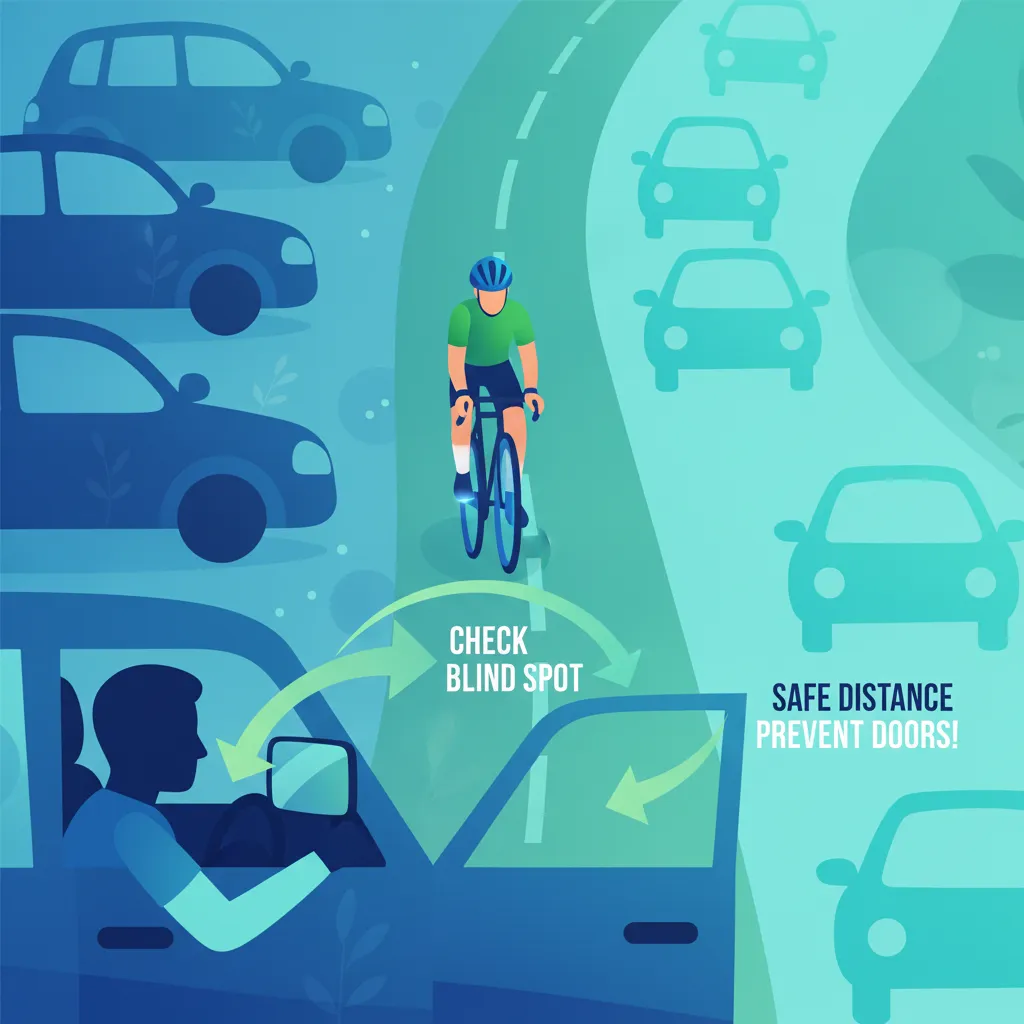
This lesson explains how to share the road safely with cyclists in both urban and rural environments. Drivers will study the legal minimum passing distances when overtaking cyclists, which is one meter in cities and one and a half meters outside urban areas. It also covers recognizing specialized cycling infrastructure, bike boxes at intersections, and preventing blind-spot collisions during right turns.

This lesson provides global defensive driving strategies to minimize collision risks for all non-motorized and vulnerable road users. Drivers will learn to systematically lower vehicle speed in dense pedestrian zones, even when no active hazards are visible. By cultivating an anticipatory mindset and maintaining generous safety margins, professional drivers establish a protective safety envelope around their vehicle.
Learners will explore the rules related to pedestrian crossings, focusing on the obligation to yield to pedestrians at zebra crossings and flashing pedestrian signals. The lesson highlights the importance of stopping before the stop line, reducing speed, and maintaining vigilance for pedestrian movement. Mastery of these practices ensures the safety of both pedestrians and AM riders at crossing points.
This lesson focuses on the inherent vulnerability of AM vehicles due to their limited mass, exposure, and visibility within mixed traffic flows on French roads. Learners will examine how blind spots, sudden lane changes by larger vehicles, and higher impact severity affect small vehicle safety. The content underscores the necessity for riders to adopt proactive safety measures, maintain safe distances, and be constantly aware of surrounding traffic dynamics.
This lesson examines the specific challenges and responsibilities goods vehicle drivers face when interacting with pedestrians and cyclists in urban environments. Learners will understand right-of-way rules, the importance of yielding at pedestrian crossings, and safe turning practices that protect cyclists. The content emphasizes heightened driver vigilance, especially when navigating bike lanes and crowded sidewalks.
This lesson analyzes the various traffic challenges unique to operating large passenger vehicles in historic and modern French urban areas. Drivers will learn to manage narrow street layouts, double-parked delivery trucks, and high-density multi-lane roundabouts safely. The lesson emphasizes defensive driving strategies, route adjustments, and maintaining mental focus under severe schedule and time pressures.
French municipalities utilize distinct low-speed configurations to foster pedestrian safety in residential and educational neighborhoods. This lesson details speed restrictions in 'zone 30', pedestrian-only districts, and shared 'zones de rencontre' where speed is capped at 20 km/h. You will learn how priority hierarchies shift in these zones, giving pedestrians legal priority to use the entire roadway.
Learners will focus on the best practices for interacting safely with cyclists and pedestrians in mixed traffic environments. The lesson covers proper lane usage, overtaking protocols, maintaining adequate safety gaps, and non-verbal communication techniques in the French urban landscape. By applying these principles, AM riders can coexist harmoniously with vulnerable road users, reducing the likelihood of accidents.
Learn how the mass and air brake systems of category D vehicles impact stopping distances and passenger safety. This theory lesson covers technical dynamics, anticipation strategies, and the importance of smooth driving techniques to prevent hazards in various road conditions across France.

This lesson emphasizes the critical importance of maintaining a safe following distance when carrying dozens of passengers. Learners will study how vehicle weight and passenger load dynamically extend braking and total stopping distances compared to standard passenger cars. The lesson provides concrete spacing rules, such as adjusted safety gaps for highway driving and increased distances on slippery roads.
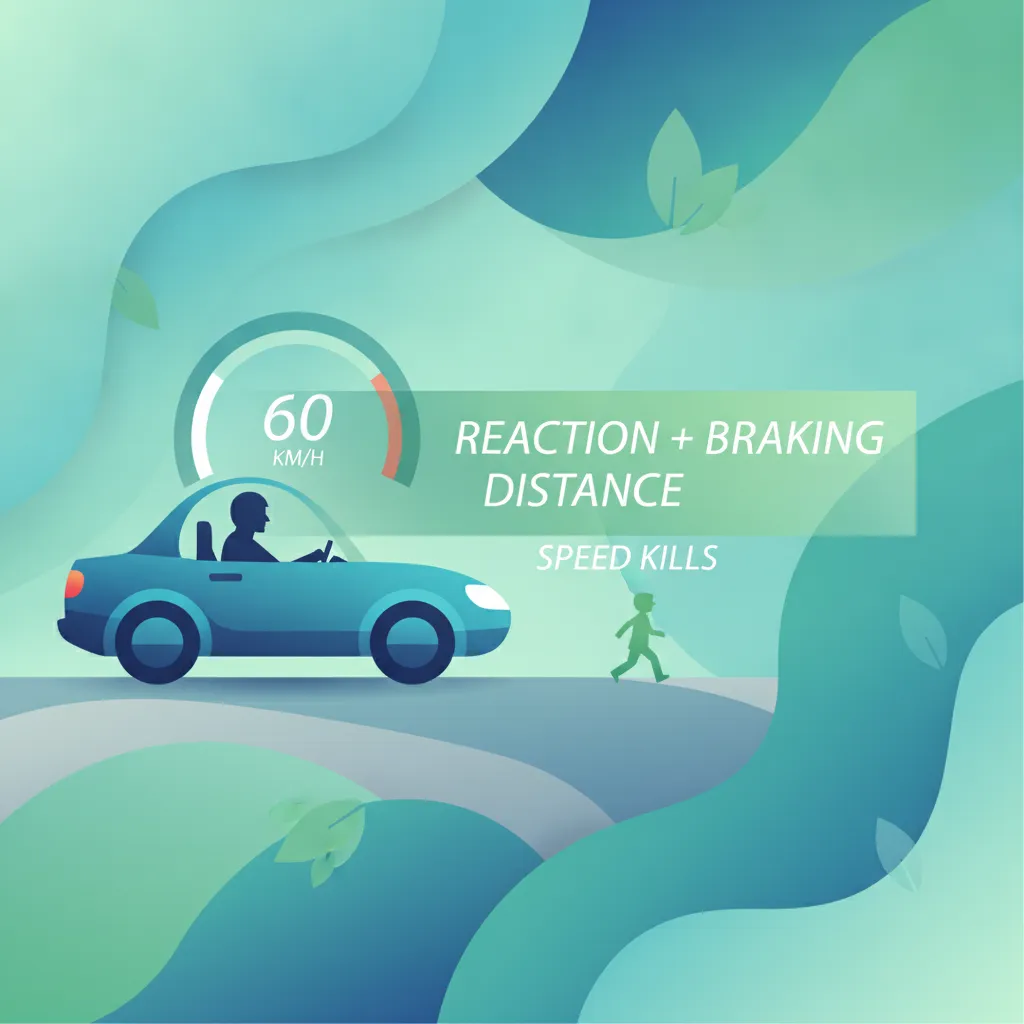
Total stopping distance is calculated as the sum of your reaction distance and the physical braking distance of the car. This lesson explains how reaction time is affected by driver focus and how speed exponentially increases the braking distance. You will learn how tire condition and slippery road surfaces degrade braking adhesion, requiring drivers to recognize and counteract these physical limits.
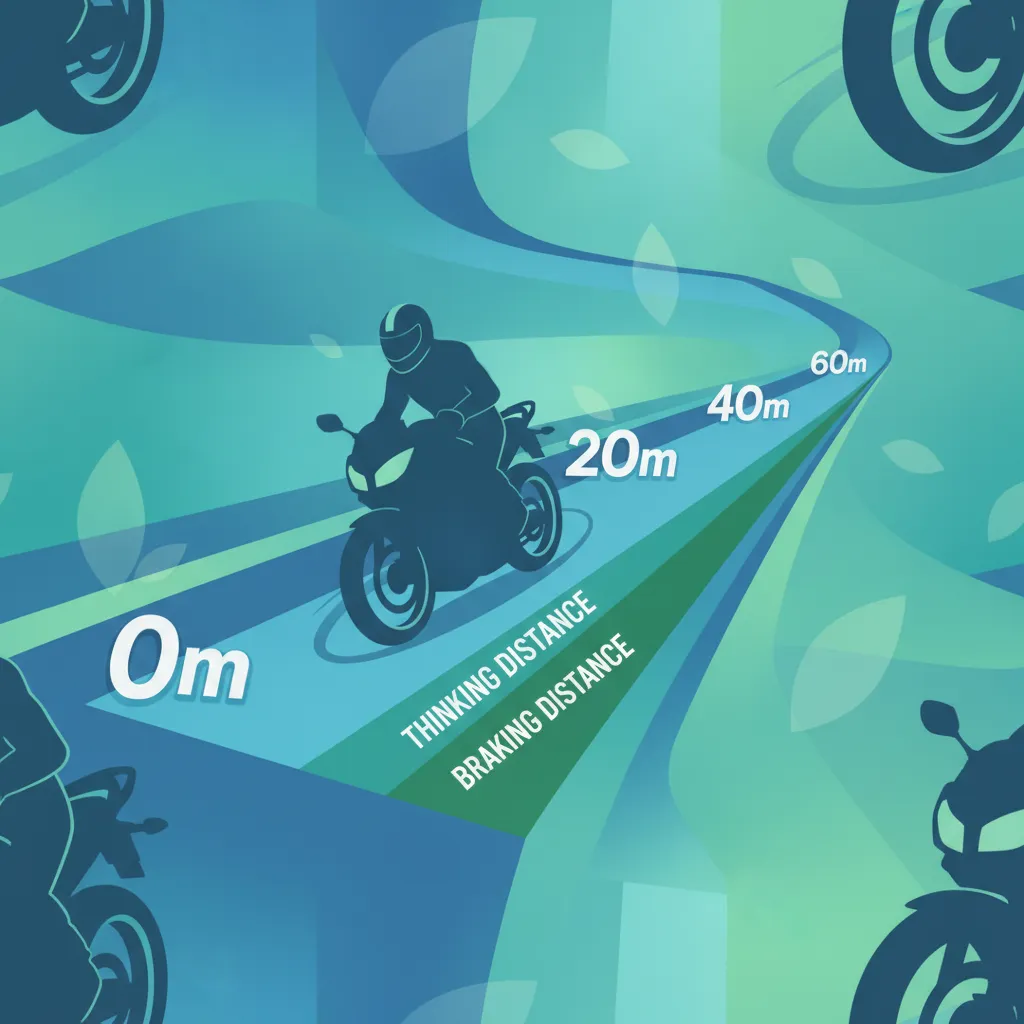
This lesson breaks down the physics of stopping a motorcycle, exploring how kinetic energy varies with the square of your speed. You will learn the mathematical components of total stopping distance, which includes both perception-reaction distance and physical braking distance. The lesson also explains how forward weight transfer during heavy braking increases traction on the front tire while reducing rear-wheel load.
This lesson focuses on the various braking systems used in goods vehicles, including air brakes, hydraulic brakes, and advanced safety systems such as ABS and ESP. Learners will understand how these systems function, their impact on braking performance, and the importance of regular brake inspection and maintenance. The content also addresses brake wear, brake fade, and how these factors affect stopping distances, especially under heavy load conditions.
In this lesson, drivers will learn how to calculate safe following distances based on vehicle speed, load, road conditions, and traffic density. The content explains the components of total stopping distance, including reaction time and braking distance, and how these are affected by factors such as wet road surfaces and heavy loads. Learners will also be introduced to French road safety guidelines for maintaining appropriate gaps to ensure sufficient time to react.

This lesson teaches advanced braking strategies, highlighting the correct application of progressive friction braking and auxiliary retardation systems like electric or hydraulic retarders. Drivers will learn to avoid abrupt braking inputs that could compromise passenger balance, particularly for standing passengers. It also covers emergency stop procedures, showing how to balance maximum deceleration with vehicle stability.
This lesson covers the physical dimensions of passenger vehicles and how their high profile, length, and width alter spatial awareness on the road. Learners will study tail-swing mechanics and track the path of the rear wheels during sharp turns to avoid hitting roadside obstacles. Accurate measurement of overhead structures, bridges, and underpass clearances is taught to prevent catastrophic structural collisions.

This lesson focuses on passenger comfort and safety by teaching drivers how to control load transfers during acceleration and gear shifts. Smooth throttle control and progressive gear engagement reduce sudden cabin shifts, preventing standing passengers from falling. Candidates will also explore eco-driving techniques that reduce fuel consumption and wear on mechanical parts without compromising route timetables.

Learners will be introduced to effective braking techniques tailored for AM vehicles, emphasizing progressive pressure application and the importance of maintaining grip. The lesson covers how to estimate stopping distances, execute emergency stops safely, and understand the limitations of light vehicle braking systems in France. Mastery of these techniques ensures riders can stop promptly and maintain control in various traffic scenarios.

Carrying heavy loads or pulling trailers significantly alters a passenger vehicle's braking distances and stability characteristics. This lesson covers how to read weight limits (like gross vehicle weight ratings), distribute cargo weight evenly, and secure items inside the boot or on roof racks. You will learn to use specialized cargo straps and understand the risks of overloading your suspension and tyres.
Find clear answers to common questions learners have about Pedestrian Right-of-Way and Bus Operations. Learn how the lesson is structured, which driving theory objectives it supports, and how it fits into the overall learning path of units and curriculum progression in France. These explanations help you understand key concepts, lesson flow, and exam focused study goals.
Under the French Code de la route, if a pedestrian clearly shows an intention to cross, you must stop to let them pass. As a professional bus driver, you are expected to be extra vigilant and anticipate these movements to avoid abrupt braking.
Because buses and coaches have significant blind spots and longer stopping distances, the law requires you to adjust your speed well in advance. You must ensure you have a clear view of the entire crossing before proceeding, even if it requires extra patience.
Yes, the ETG exam frequently uses images of bus stops with poor visibility. You will be tested on your ability to reduce speed and scan the area effectively, ensuring you do not pull away until you are certain no pedestrians are obscured.
Yes, failing to yield to a pedestrian is considered a major traffic infraction in France. For professional drivers, this can lead to points on your license and negative repercussions on your professional driving record, potentially affecting your career.
Ready to focus your study? Use the practice search to find exactly the French driving theory questions you need for the Code de la route and permis de conduire ETG. Refine your knowledge on specific topics or challenging rules to boost your confidence and exam readiness.