
This lesson establishes the fundamental operational and professional standards required for operating passenger vehicles under French law. You will explore your duties regarding passenger safety, effective communication, and regulatory compliance, which are essential for your success in the Category D and D1 licence exams.

Lesson content overview
Operating a passenger transport vehicle under licensing categories D1, D, D1E, or DE in France carries immense professional, legal, and ethical weight. Unlike a private driver, a professional bus or coach operator is legally responsible not only for the safe movement of a heavy vehicle but also for the lives, comfort, and accessibility of dozens of passengers.
In the French regulatory framework, a driver acts as the central safety manager on board. This role demands a continuous synthesis of complex physical skills, real-time risk evaluation, strict adherence to passenger-care protocols, and crisp, effective communication during disruptions.
The cornerstone of a professional driver's duty is maintaining absolute, uninterrupted control over the physical forces acting on the vehicle. Under Article R413-17 of the French Code de la route, a driver must remain the master of their speed and vehicle trajectory under all circumstances.
Continuous control involves four fundamental operational dimensions:
A common misconception among candidate drivers is that modern automatic transmissions relieve them of the responsibility of gear management. In heavy passenger transport, automatic gearboxes require active driver intervention. For instance, on steep downhill gradients, a driver must manually lock the transmission into a lower gear range. Relying solely on the automatic system can cause premature gear hunting or over-reliance on service brakes, leading to brake fade and a catastrophic loss of control.
Sudden changes in momentum are the primary cause of non-collision injuries inside passenger vehicles. When a bus travels at 50 km/h, any sudden braking generates significant kinetic energy. Standees and passengers moving to their seats do not have seatbelts to secure them.
Therefore, a professional driver must employ "defensive passenger driving," executing every steering input, deceleration, and stop with enough gradual transition to allow passengers to retain their balance easily.
Active risk assessment is a continuous cognitive cycle of searching the environment for hazards, predicting how those hazards might develop, deciding on a preventive course of action, and executing that action smoothly.
[Scan Environment] ➔ [Identify Hazard] ➔ [Assess Risk & Path] ➔ [Execute Smooth Action]
        ▲                                                                │
        └────────────────────────────────────────────────────────────────┘
In French transport law, the driver is expected to apply the principe de précaution (precautionary principle) by modifying their driving style before a hazard becomes critical. This proactive stance ensures that emergency maneuvers—which carry a high risk of passenger injury—are avoided.
The systematic, ongoing process of scanning the driving environment to identify, evaluate, and mitigate potential hazards before they escalate into critical safety threats.
Braking Physics on Wet Surfaces: On a wet road, the coefficient of friction drops by approximately 50%. A fully loaded heavy bus requiring 30 metres to stop at 50 km/h on dry asphalt will require at least 45 to 60 metres on a wet surface. Speed must be adjusted downwards immediately when rain begins.
The safety of passengers is not limited to the period when the vehicle is in motion. The processes of boarding (montée) and alighting (descente) present high risks for slips, trips, falls, and conflicts with external traffic.
To manage passenger flow safely, drivers must follow a strict, unvarying sequence at every stop:
Approach and Alignment: Approach the stop slowly, checking mirrors for cyclists. Align the vehicle parallel to the curb, maintaining a distance of 20 to 30 cm to prevent passengers from having to step over a wide gap.
Securing the Vehicle: Once completely stationary, apply the parking brake or activate the stop brake (frein d'arrêt / frein de halte).
Door Activation: Visually verify that the area directly outside the doors is clear of obstacles or waiting pedestrians before opening them.
Passenger Observation: Monitor the doors using internal and external wide-angle mirrors. Pay close attention to children, elderly passengers, and those carrying heavy luggage.
Securing Passenger Seating: Under French transport regulations, the driver must ensure that all passengers are either safely seated or securely holding onto handrails before releasing the brakes and pulling away from the stop.
Under the French Accessibility Law (Loi n° 2005-102 du 11 février 2005 pour l'égalité des droits et des chances), public transport operators must guarantee access to passengers with reduced mobility (PMR - Personnes à Mobilité Réduite). This imposes specific legal and operational mandates on the driver:
A professional driver must be a skilled communicator. They must be able to manage the expectations of their passengers while keeping their operational dispatch center updated with accurate, timely information.
       ┌────────────────────────┐
       │   Operational Hub /    │
       │   Dispatch Center      │
       └───────────▲────────────┘
                   │ Radio / GSM
                   │ (Protocols)
                   ▼
       ┌────────────────────────┐
       │      Bus Driver        │
       └───────────▲────────────┘
                   │
                   │ PA System / Verbal
                   ▼
       ┌────────────────────────┐
       │       Passengers       │
       └────────────────────────┘
Passengers who are kept informed are less anxious, more cooperative, and far safer. Drivers are required to use the vehicle’s public address (PA) system or make clear verbal announcements under the following conditions:
All communication with the company's operational control center (Poste de Contrôle Exploitation - PCE) must follow clear, professional protocols. Drivers use two-way radio systems or integrated corporate data terminals.
Distraction Mitigation: Under French law, using a handheld mobile phone while driving is strictly prohibited and carries heavy fines and license points. Drivers must only communicate with operational centers using the vehicle's integrated hands-free communication systems when stationary, or during transit only if it is absolutely necessary for safety and can be done via steering-wheel-mounted controls.
When an incident or traffic collision occurs, the driver's role transitions immediately from vehicle operator to safety coordinator and legal representative of the transport company.
If the vehicle is involved in a collision or if a passenger is injured inside the vehicle, the driver must execute the following sequence:
For minor material damage collisions, the driver must complete the European Joint Accident Report form (Constat Amiable d'Accident Automobile).
Because a heavy passenger vehicle represents a significant commercial asset and carries complex liability implications, the driver must complete this form with extreme precision:
Professional drivers face strict scrutiny from enforcement authorities, including the Gendarmerie, Police Nationale, and labor inspectors (inspecteurs du travail). Violations of safety or operational rules carry severe personal and corporate consequences.
| Violation / Negligence | Legal & Operational Consequence (under French Law) | Proper Professional Practice |
|---|---|---|
| Departing with open doors | Immediate safety hazard; severe fine; classification as a criminal safety violation (mise en danger d'autrui). | Ensure door indicator lights on the dashboard are off and doors are physically locked before moving. |
| Failing to assist PMR / wheelchair passengers | Fine for non-compliance with accessibility regulations; corporate disciplinary action; discrimination claims. | Always deploy the ramp and assist passengers with reduced mobility whenever requested and safe. |
| Improper or missing Pre-Departure Checks | Fines during roadside inspections; civil liability if a mechanical failure (e.g., worn tires) causes a crash. | Perform a full daily walkaround inspection (vérifications intérieures et extérieures) before starting your shift. |
| Failure to report a passenger fall | Breach of professional contract; loss of insurance protection; legal liability if injuries worsen. | Report every fall immediately to dispatch, even if the passenger initially claims they are uninjured. |
| Using unauthorized phone/device | €135 fine, deduction of 3 points from driver’s license; immediate suspension of professional card in serious cases. | Keep personal mobile devices switched off or silent in the cabin; use only secure, integrated company radios. |
Setting: An urban bus stop during heavy rain. A passenger in a manual wheelchair is waiting to board.
Correct Action: The driver approaches the stop slowly to avoid splashing waiting passengers. They align the bus closely to the curb to minimize the ramp slope. They apply the parking brake, activate the kneeling system, and deploy the ramp.
Before the passenger rolls onto the ramp, the driver verbally advises them that the surface may be slippery. Once inside, the driver ensures the wheelchair is positioned backward against the padded backrest, the wheelchair brake is applied, and the safety belt is buckled. Only then does the driver retract the ramp, raise the suspension, check their mirrors, and pull out.
Incorrect Action: The driver stops far from the curb, deploying the ramp at a steep, hazardous angle. They allow the passenger to board without using the kneeling function and pull away while the wheelchair passenger is still trying to position themselves in the aisle.
Setting: An urban bus route. A passenger loses their balance and falls in the aisle when the bus decelerates to yield to a vehicle turning without a signal.
Correct Action: The driver immediately brings the bus to a safe stop at the side of the road, applies the parking brake, and activates the hazard warning lights. They walk back to check on the fallen passenger, asking if they require medical assistance.
Even if the passenger states they are fine, the driver takes their name and contact details, notes down any witness statements, and immediately reports the event to the PCE. The driver documents the incident on an internal company report form at the end of their shift.
Incorrect Action: The driver apologizes verbally but continues driving without stopping or checking on the passenger's condition, failing to report the incident because "the passenger said they were fine."
This lesson covers the five core operational roles of professional Category D drivers in France: continuous vehicle control using advanced braking systems and strategic gear selection; active risk assessment applying the precautionary principle to identify hazards before they escalate; passenger management including strict boarding/alighting protocols and legal accessibility obligations under French law; professional communication with passengers via PA systems and with operational control centers using structured radio protocols; and formal incident reporting procedures including emergency response sequences and Constat Amiable documentation requirements. The content emphasizes that drivers are legally responsible for passenger safety, vehicle control, and regulatory compliance throughout every phase of operation.
A short set of high-value points that capture the most important learning from this lesson.
Professional Category D drivers are legally required to maintain continuous vehicle control under Article R413-17 of the French Code de la route, managing speed and trajectory at all times.
Active risk assessment follows a continuous cognitive cycle of scanning, identifying hazards, assessing risk, and executing preventive actions before emergencies occur.
Passenger safety protocols require drivers to ensure all passengers are seated or holding handrails before departing from any stop.
Drivers must deploy accessibility equipment (ramps, kneeling systems) and assist PMR passengers as a legal duty under French Accessibility Law.
All communication with passengers and operational control centers must follow structured protocols, and incidents must be reported within specific legal timelines.
Explore all units and lessons included in this driving theory course.
Curbside alignment must be 20-30 cm from the curb to facilitate safe boarding and minimize gap hazards.
On wet surfaces, braking distance increases by approximately 50%, requiring drivers to immediately reduce speed and double following distance.
The Constat Amiable accident report must be submitted within 5 working days, or 48 hours for theft or severe malicious damage.
European emergency number is 112, with SAMU at 15 and fire services at 18 for French transport incidents.
Handheld mobile phone use while driving carries a €135 fine and 3 license points under French law.
Assuming automatic transmissions eliminate gear management responsibility; drivers must manually lock into lower gears on steep descents to prevent brake fade.
Allowing passengers to board or alight before the vehicle is fully secured with parking brake or stop brake applied.
Failing to report passenger falls or minor incidents because the passenger claims to be uninjured.
Skipping the kneeling function when deploying the wheelchair ramp, creating a steep and hazardous ramp angle.
Using personal mobile phones instead of integrated hands-free company communication systems when stationary or in transit.
Lesson content overview
A short set of high-value points that capture the most important learning from this lesson.
Professional Category D drivers are legally required to maintain continuous vehicle control under Article R413-17 of the French Code de la route, managing speed and trajectory at all times.
Active risk assessment follows a continuous cognitive cycle of scanning, identifying hazards, assessing risk, and executing preventive actions before emergencies occur.
Passenger safety protocols require drivers to ensure all passengers are seated or holding handrails before departing from any stop.
Drivers must deploy accessibility equipment (ramps, kneeling systems) and assist PMR passengers as a legal duty under French Accessibility Law.
All communication with passengers and operational control centers must follow structured protocols, and incidents must be reported within specific legal timelines.
Explore all units and lessons included in this driving theory course.
Curbside alignment must be 20-30 cm from the curb to facilitate safe boarding and minimize gap hazards.
On wet surfaces, braking distance increases by approximately 50%, requiring drivers to immediately reduce speed and double following distance.
The Constat Amiable accident report must be submitted within 5 working days, or 48 hours for theft or severe malicious damage.
European emergency number is 112, with SAMU at 15 and fire services at 18 for French transport incidents.
Handheld mobile phone use while driving carries a €135 fine and 3 license points under French law.
Assuming automatic transmissions eliminate gear management responsibility; drivers must manually lock into lower gears on steep descents to prevent brake fade.
Allowing passengers to board or alight before the vehicle is fully secured with parking brake or stop brake applied.
Failing to report passenger falls or minor incidents because the passenger claims to be uninjured.
Skipping the kneeling function when deploying the wheelchair ramp, creating a steep and hazardous ramp angle.
Using personal mobile phones instead of integrated hands-free company communication systems when stationary or in transit.
Explore search topics learners often look for when studying Roles and Responsibilities of the Driver. These topics reflect common questions about road rules, driving situations, safety guidance, and lesson level theory preparation for learners in France.
Browse additional driving theory lessons that cover connected traffic rules, road signs, and common driving situations related to this topic. Improve your understanding of how different rules interact across everyday traffic scenarios.
Learn about the legal mandates for assisting passengers with reduced mobility in France. This lesson covers the proper use of accessibility equipment and safety protocols required to comply with French transport laws and ensure inclusive service for all passengers within the Code de la route framework.

This lesson provides step-by-step instructions for utilizing vehicle accessibility systems, including wheelchair ramps, lifts, and specialized tie-down restraints. Drivers will study French regulatory frameworks mandating equal access to public transport services for all individuals. Crucially, the lesson covers respectful, safe, and efficient communication methods for guiding passengers with sensory, physical, or cognitive impairments.
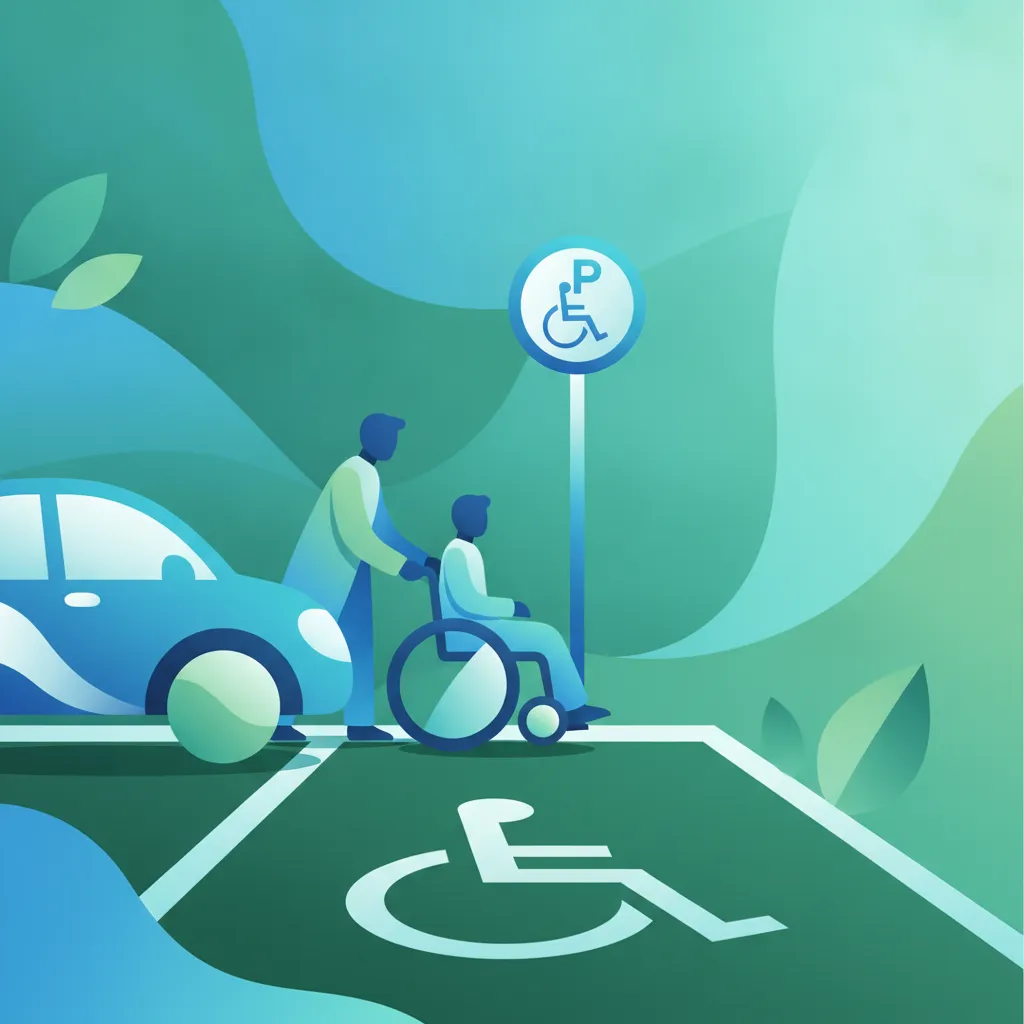
This lesson introduces the standard interior signage required in passenger vehicles to communicate critical safety and accessibility information clearly. Learners will learn to verify the visibility of handicap symbols, emergency exit markers, and priority seating notifications. Proper maintenance of these visual and auditory warning systems ensures that all passenger groups can navigate the vehicle confidently and safely under any conditions.

This lesson highlights the critical ethical framework governing public and private passenger transport services within the French Republic. Drivers are trained to provide equitable, non-discriminatory assistance to all travelers while fully respecting passenger privacy and dignity. Understanding these moral obligations helps prevent conflicts, enhances service accessibility, and reinforces the high standard of social responsibility expected of professional coach operators.
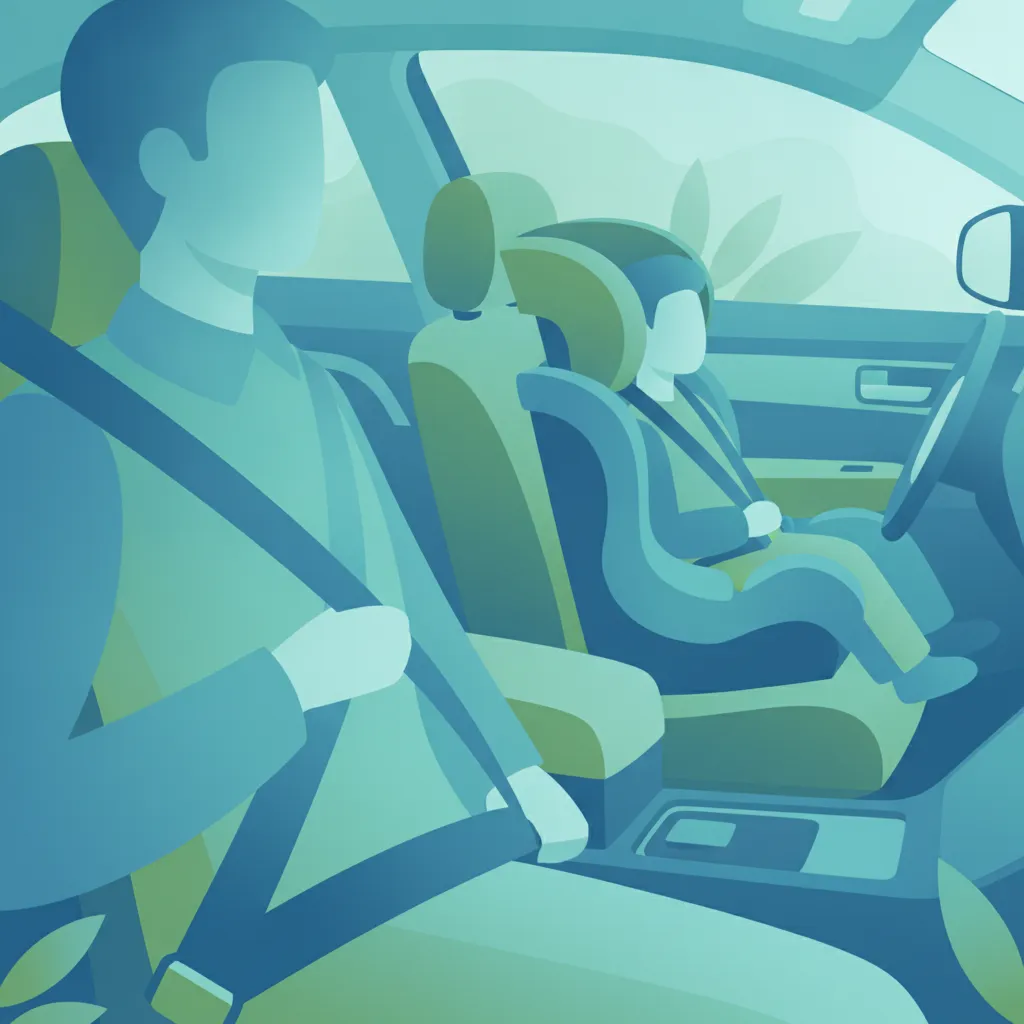
The driver of a vehicle is legally responsible for ensuring that all passengers, particularly minors, are safely restrained. This lesson explains seatbelt enforcement laws and the mandatory child safety seat requirements based on height, weight, and age. You will learn to use the standardized ISOFIX system and understand when and how to safely deactivate passenger airbags for rear-facing infant seats.

This lesson examines the rigorous legal duties imposed on passenger vehicle operators by the French Code de la route and professional transport guidelines. Drivers must balance tight scheduling demands with the absolute priority of passenger safety and general public security. By studying real-world legal scenarios, candidates will learn how to maintain professional conduct, resolve on-board issues, and protect public trust during transit.

This lesson details the emergency protocols for handling mechanical breakdowns or tire blowouts on public highways and motorways. Drivers will learn how to park the vehicle in the safest possible location, activate hazard warning lights, and deploy the reflective warning triangle. It teaches precise commands and steps for evacuating passengers quickly through safety exits, positioning them behind protective guardrails.

Operating a passenger vehicle in France requires strict compliance with dynamic safety laws and maintenance rules. This lesson explains your duty of care toward other road users, mandatory child restraint and seatbelt laws, and strict prohibitions on phone use while driving. You will also learn about the required periodic technical vehicle inspections (controle technique) and third-party insurance mandates.
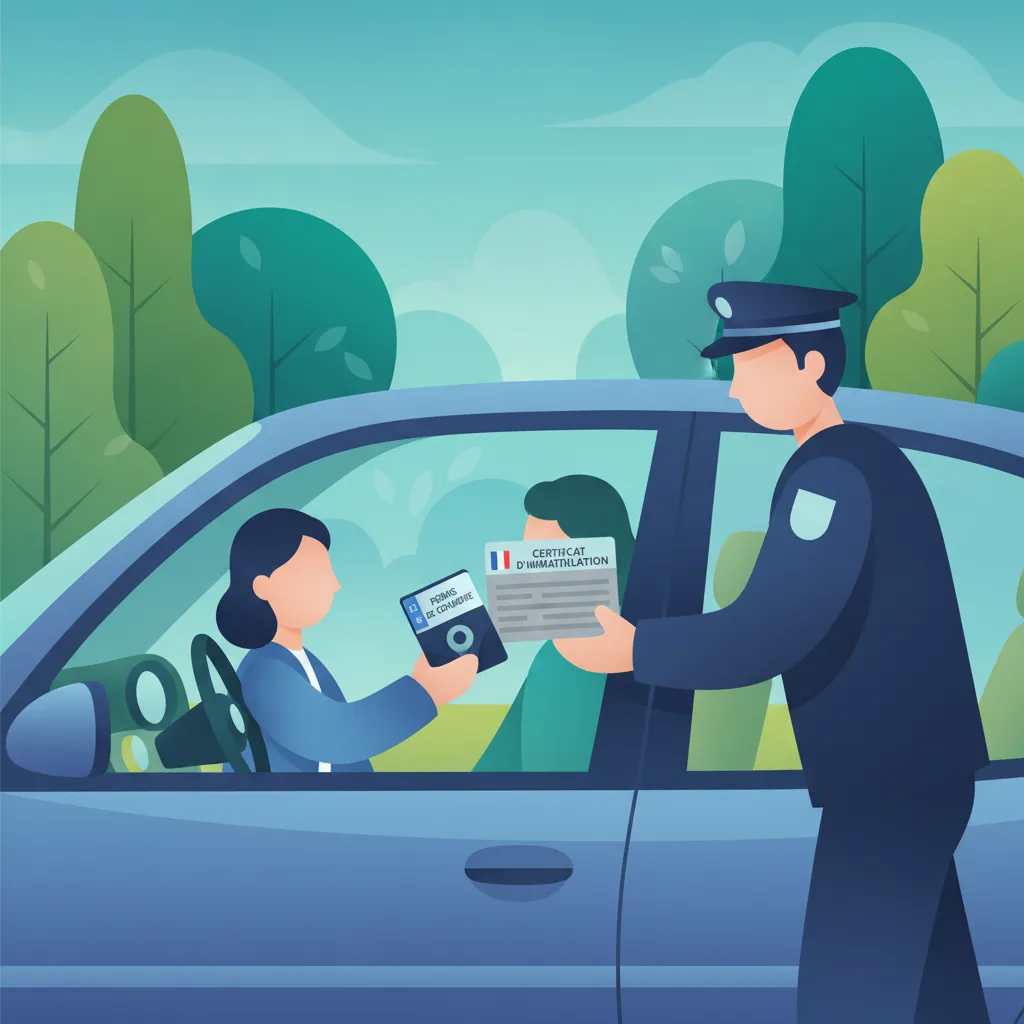
This lesson explains the critical documentation required to be kept onboard every passenger vehicle under French and European transport regulations. Learners will explore requirements for passenger manifests, insurance policies, valid transport permits, and official logbooks like the chronotachygraphe. Crucially, the lesson covers proper procedures for presenting these documents during routine roadside inspections by French law enforcement agencies.

This lesson emphasizes the critical importance of maintaining a safe following distance when carrying dozens of passengers. Learners will study how vehicle weight and passenger load dynamically extend braking and total stopping distances compared to standard passenger cars. The lesson provides concrete spacing rules, such as adjusted safety gaps for highway driving and increased distances on slippery roads.

This lesson examines the regulatory limits and environmental controls applied to large passenger vehicles operating in dense French urban centers. Drivers will study the Crit'Air clean air sticker system and low-emission zones (ZFE) that restrict access for older, high-polluting vehicles. It also addresses navigating physical constraints, such as narrow streets, tight turning radii, and strict municipal weight limits.
Explore the proactive hazard perception techniques necessary for operating heavy passenger vehicles in busy urban environments. This guide explains how to identify risks from vulnerable road users and adapt your driving style to maintain passenger safety according to professional French driving standards and local road traffic regulations.

This lesson provides global defensive driving strategies to minimize collision risks for all non-motorized and vulnerable road users. Drivers will learn to systematically lower vehicle speed in dense pedestrian zones, even when no active hazards are visible. By cultivating an anticipatory mindset and maintaining generous safety margins, professional drivers establish a protective safety envelope around their vehicle.

This lesson teaches specific visual scanning methods to detect vulnerable road users, such as children, elderly individuals, and cyclists near stops. Drivers will learn to anticipate sudden movements, like a passenger running to catch a bus or stepping off a sidewalk unexpectedly. Managing the massive blind spots around the front and right-hand sides of passenger vehicles is highlighted as a critical safety duty.

This lesson details how to manage high-risk interactions with pedestrians who may step off curbs or cross the road near bus stops. Learners will study French Code de la route laws regarding pedestrian priority at crosswalks and near stopping transit vehicles. Developing heightened spatial awareness around blind zones near the front of the bus is emphasized to prevent tragic pedestrian collisions.

This lesson analyzes the various traffic challenges unique to operating large passenger vehicles in historic and modern French urban areas. Drivers will learn to manage narrow street layouts, double-parked delivery trucks, and high-density multi-lane roundabouts safely. The lesson emphasizes defensive driving strategies, route adjustments, and maintaining mental focus under severe schedule and time pressures.

In this lesson, drivers will learn strategies to avoid conflicts with smaller vehicles, such as cars and vans, which may not be as visible in large vehicle blind spots. The content emphasizes maintaining adequate spacing, using proper lane discipline, and being aware of small vehicles' behavior during lane changes and turns. Learners will also be introduced to communication techniques, such as signalling and eye contact.

Public transit vehicles like city buses and streetcars (trams) have clear legal priorities and dedicated infrastructure in urban areas. This lesson teaches you to recognize reserved transit lanes and your legal obligation to yield to buses exiting their designated stops. You will also learn safe driving strategies near tram tracks, ensuring you never block public transit lines or risk passenger boarding areas.
Find clear answers to common questions learners have about Roles and Responsibilities of the Driver. Learn how the lesson is structured, which driving theory objectives it supports, and how it fits into the overall learning path of units and curriculum progression in France. These explanations help you understand key concepts, lesson flow, and exam focused study goals.
The driver's primary duty is ensuring the safety of all passengers, both during the journey and during boarding or alighting. This involves constant vigilance, following Code de la route regulations, and ensuring the vehicle remains in a safe, operational state.
You must immediately ensure passenger safety, follow your company's emergency protocols, and report the event to your operations hub. In the theory exam, remember that accurate, timely documentation and clear communication with your employer are critical legal requirements.
Yes, while the vehicle sizes differ, the core legal and professional responsibilities regarding safety, documentation, and the duty of care remain consistent across all passenger vehicle categories in the French licensing system.
Many candidates fail by underestimating the driver's legal responsibility for the vehicle's interior safety and passenger accessibility. Always prioritize the protocol that emphasizes safety and regulatory compliance over schedule speed.
Ready to focus your study? Use the practice search to find exactly the French driving theory questions you need for the Code de la route and permis de conduire ETG. Refine your knowledge on specific topics or challenging rules to boost your confidence and exam readiness.