
This lesson guides you through the complex world of traffic signs specifically designed for heavy goods vehicles in France. Mastering these signs is vital for ensuring your vehicle's physical dimensions comply with road infrastructure and for passing the category C and CE theory exam sections.
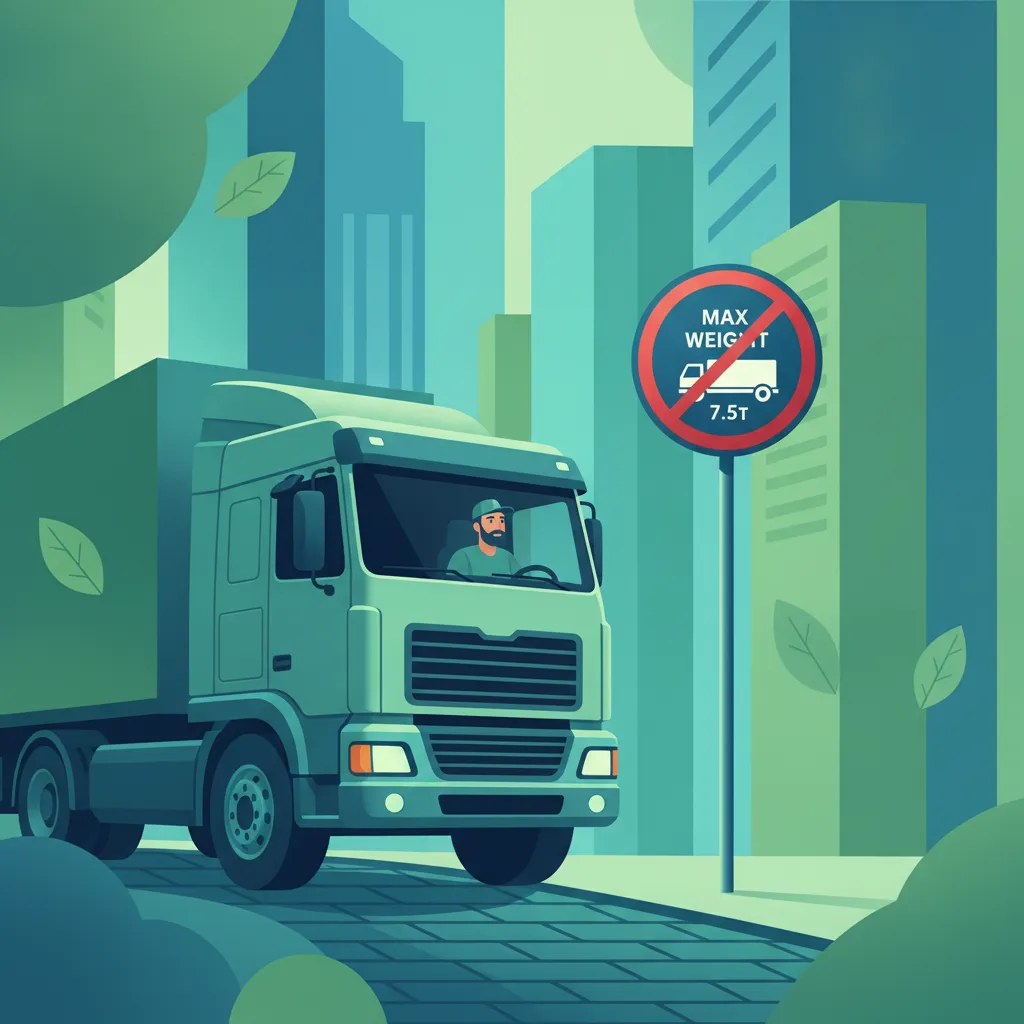
Lesson content overview
Navigating French roads with a heavy goods vehicle (poids lourd) requires precise knowledge of dedicated traffic signage. As part of your preparation for the French Goods Vehicle Licence Theory Course (Category C & CE), mastering these specialized signs is essential for safety, environmental compliance, and avoiding severe penalties under the French Code de la route.
This lesson covers the specific traffic signs that apply to goods vehicles, detailing how to interpret weight, height, width, and load restrictions, as well as the legal and physical principles that govern them.
Specialized signs exist to mitigate the risks associated with the size, weight, and reduced maneuverability of Category C and CE vehicles. They protect infrastructure (such as bridges, historical archways, and road surfaces) and ensure that large vehicles do not become trapped in narrow urban lanes or on roads with low-bearing capacities.
Road surfaces and civil engineering structures are designed to withstand specific maximum loads. Overweight vehicles cause exponentially higher damage to asphalt and structural supports. Similarly, low-hanging bridges, power lines, and historical city gates present immediate physical hazards to tall vehicles. Signage serves as the primary preventative measure to ensure that heavy vehicles are routed away from these hazards.
Under the French Code de la route, a clear hierarchy dictates which traffic control instruction takes precedence when multiple rules overlap or conflict:
Temporary yellow signage indicating a weight or dimension restriction must be obeyed immediately. These often reflect active roadworks where the temporary lanes or bridges cannot support standard heavy vehicle dimensions.
The French highway code requires specific placement and reflective standards to ensure that commercial drivers can react in time. Signs on motorways and national roads are typically larger and use high-performance retroreflective sheeting (Class 2 or Class 3) to remain visible under low-beam headlights in adverse weather.
These signs are placed far enough ahead of a hazard or restriction to allow a heavy vehicle to safely decelerate, turn around, or divert to an alternative route.
To safely plan routes and avoid structural collisions, drivers must understand the exact meaning of every restriction sign, including their visual patterns and how they are modified by supplementary plates (panonceaux).
The B13 sign is a red-bordered circle containing a number followed by "t" (tonnes). This indicates the maximum permissible weight of a vehicle or combination of vehicles allowed on that road segment.
This restriction is based on the vehicle's registered Maximum Authorized Mass (PTAC - Poids Total Autorisé en Charge) or Gross Combination Weight Rating (PTRA - Poids Total Roulant Autorisé), not its actual instant weight. If your truck’s registered PTAC is 19 tonnes, you cannot enter a road marked with a "12t" B13 sign, even if you are currently running empty and weigh only 10 tonnes.
Unlike the total weight limit, the axle load restriction sign regulates the localized force exerted on the road surface. It depicts an axle with wheels and a weight limit (e.g., "5.5 t").
This sign is critical for preventing road surface deformation and bridge fatigue. It requires drivers to understand how their cargo is distributed. A vehicle may be well under its total weight limit, but if the cargo is loaded too far forward or backward, a single axle might exceed the localized axle load limit, making entry illegal and unsafe.
The height restriction sign features a red border with black arrows pointing vertically toward a measurement (e.g., "4,1 m").
This limit is absolute and applies to the actual physical height of the vehicle at that moment. Unlike weight signs, this is based on real-time dimensions. If your vehicle's structural height is 4.0 metres, but you are carrying a load of hay or heavy machinery that extends to 4.2 metres, you are legally and physically prohibited from passing a 4.1-metre sign.
The width restriction sign has a red border with black arrows pointing horizontally toward a measurement (e.g., "2,5 m").
When calculating width, drivers must account for the widest points of their vehicle. Side mirrors and any protruding load straps or cargo must be included in this calculation. On extremely narrow routes, drivers may be required to temporarily fold their mirrors, but they must never enter a zone where the physical vehicle chassis exceeds the signposted limit.
The length restriction sign is a red-bordered circle featuring a truck silhouette with a length measurement below or inside it (e.g., "10 m").
This sign is frequently installed at the entrance to tight mountain passes, winding rural roads, or historic village centers. The restriction ensures that vehicles do not get stuck on hairpin turns or tight intersections where the turning radius of a long articulated vehicle (such as a CE category tractor-trailer combination) is insufficient.
The B8 sign is a red-bordered circle containing a black silhouette of a goods vehicle.
By default, the B8 sign applies to all vehicles designed for transporting goods with a maximum authorized mass (PTAC) exceeding 3.5 tonnes. If the prohibition only applies to vehicles exceeding a specific weight threshold higher than 3.5 tonnes, a supplementary panel (panonceau M4f) will be placed beneath it indicating the exact threshold (e.g., "7,5 t").
Mandatory signs are blue circles that dictate a compulsory action or route for specific road users.
When a heavy vehicle driver encounters this sign, they must use the designated lane or road. It is designed to segregate heavy traffic from lighter passenger vehicles, often directing trucks to specialized bypasses, logistics corridors, or dedicated climbing lanes on steep gradients.
These signs use supplementary panels to limit access to certain roads based on operational parameters. They may restrict access to local deliveries only ("Sauf desserte locale" or "Livraison uniquement"), or define specific operational windows (e.g., "7:00 - 19:00"). Drivers must carry official loading and delivery documents (lettre de voiture) to prove they are authorized to enter these restricted zones.
While less common, some mountain routes and low-traction areas feature signs indicating a mandatory minimum weight on the drive axle (typically expressed as a percentage of the total vehicle weight, such as "Min. 25% sur l'essieu moteur"). This ensures that heavy vehicles maintain sufficient traction to climb steep gradients without slipping or blocking the road.
Low Emission Zones (Zones à Faibles Émissions mobilité) are increasingly common in French urban areas. Entry is regulated by signs showing a red border with "Zone à Faibles Émissions" and indicating which class of Crit'Air windscreen vignette is required to enter.
Heavy vehicles (Category C and CE) are subject to much stricter Crit'Air requirements than passenger cars. Often, older trucks (e.g., Euro 4 or Euro 5 standards) are completely banned from entering these zones during peak business hours, requiring drivers to operate only Euro 6 compliant vehicles or utilize designated ring roads.
Failure to comply with goods vehicle signage is treated as a serious offense under the French Code de la route. Because of the massive potential damage to public infrastructure and the high risk of severe accidents, traffic police (Gendarmerie and Police Nationale) actively enforce these regulations.
Heavy vehicles are subject to random diversions to stationary or mobile weigh stations (stations de pesage). Enforcement officers use specialized scales to measure both the gross vehicle weight and the individual axle loads.
If a driver ignores a height (B12) or width (B11) sign and collides with an overhead bridge or a narrow historic gate, they face immediate license suspension, heavy personal fines, and criminal charges for reckless endangerment. Furthermore, the transport company and the driver can be held civilly liable for the millions of Euros required to repair damaged infrastructure.
To help connect these signs to actual on-the-road decisions, let us examine five distinct driving scenarios.
Understanding the nuances of signage helps prevent common driving errors, particularly in complex or stressful driving environments.
Heavy vehicles are strictly prohibited from entering lanes reserved for other specific vehicles (such as buses or taxis), even if traffic is heavily congested. Conversely, using a lane designated mandatory for trucks to make an illegal turn or exit is also a major infraction.
Drivers often fail to account for how a load affects their overall height.
It is a common misconception that if a vehicle’s gross weight is within legal limits, the axle loads are also automatically legal. If heavy cargo is loaded entirely at the rear of a trailer, the rear axle group may easily exceed the axle weight limit specified on local B13a signs, while the front axle remains underloaded. This not only damages the road but also drastically reduces the steering traction on the front wheels.
Drivers sometimes ignore yellow temporary signs that appear outdated or inactive. Under the Code de la route, as long as a temporary sign is uncovered and visible, it is legally binding, regardless of whether active construction is visible.
Many European cities restrict heavy vehicle deliveries to early morning hours (e.g., 06:00 to 10:00). Drivers must carefully read the text plates (panonceaux) underneath prohibition signs. Entering a restricted street outside of the allowed hours carries the same legal weight as ignoring a permanent ban.
A vehicle's physical width is not just the width of the cargo box. Many drivers fail to account for side mirrors, which extend up to 20–30 centimeters on each side of the cabin. On narrow roads regulated by a B11 sign, these mirrors can strike oncoming vehicles, road signs, or tunnel walls.
To truly master the theory behind heavy vehicle signage, drivers must understand the underlying physics and infrastructure considerations that dictate these regulations.
       [Vehicle Weight & Axle Loads] ──> Exerts Road Wear & Stress
                     │
                     ├─> Exceeds B13 Limit  ──> Structural Bridge Damage
                     └─> Exceeds B13a Limit ──> Road Surface Rutting
The damage caused to a road roadbed by a vehicle axle is proportional to the fourth power of its axle load. This means that a single heavy truck axle of 13 tonnes causes thousands of times more wear and tear to the road surface than a standard passenger car. Axle load signs are highly localized precisely to prevent the rapid destruction of weaker rural roads or historical structures.
When negotiating routes with tight curves (often preceded by length or weight restrictions), drivers must manage the vehicle's center of gravity. Articulated vehicles (Category CE) are prone to rollovers if they attempt to navigate tight curves at inappropriate speeds. Length restrictions are calculated to ensure that long vehicles have enough physical space to negotiate turns without their trailers clipping oncoming traffic or jumping curbs.
Below are the key terms that every commercial candidate must master for the French driving theory exam.
By mastering these specific goods vehicle signs, you protect yourself from severe legal penalties, secure your vehicle and cargo from devastating physical damage, and ensure the safety of all road users. This knowledge forms the foundation for advanced trip planning and urban delivery logistics.
In the next sections of this unit, we will explore advanced route planning, managing low-emission requirements, and navigating complex urban delivery zones.
This lesson covers the specialized traffic signs regulating heavy goods vehicles on French roads, including weight, height, width, and length restrictions. It clarifies that these restrictions are based on registered vehicle specifications rather than actual load, explains the legal hierarchy where temporary yellow signs override permanent white ones, and introduces environmental zone regulations tied to Crit'Air vignettes. The content provides practical scenarios including low bridge navigation, ZFE-m zone entry, and temporary roadworks, while emphasizing critical enforcement mechanisms such as weigh stations and the independent penalization of overloaded axles.
A short set of high-value points that capture the most important learning from this lesson.
Weight restriction signs (B13) apply to the vehicle's registered PTAC or PTRA, not its actual current load
Temporary yellow signs always override permanent white signs in the French road hierarchy
Width measurements (B11) must include side mirrors, which can extend 20-30 cm on each side
Axle load restrictions (B13a) can be violated even when total vehicle weight is within legal limits
Environmental zones (ZFE-m) restrict heavy vehicle access based on Crit'Air vignette classifications
Explore all units and lessons included in this driving theory course.
B13 = total weight limit, B13a = axle load limit, B12 = height, B11 = width, B14 = length
Heavy goods vehicles (poids lourds) are vehicles with PTAC exceeding 3.5 tonnes
Yellow temporary signs are legally binding whenever they are displayed and visible, regardless of construction activity
The B8 sign prohibits all goods vehicles unless a supplementary panel specifies a higher weight threshold
Crit'Air 1 is the cleanest category; higher numbers indicate older, more polluting vehicles banned from ZFE-m zones
Assuming a B13 restriction is based on current weight rather than registered PTAC or PTRA
Forgetting to account for side mirrors when checking width clearance against a B11 sign
Believing that legal total weight automatically means legal individual axle loads
Disregarding temporary yellow signs that appear outdated or inactive
Overlooking time-based restrictions displayed on supplementary plates beneath prohibition signs
Lesson content overview
A short set of high-value points that capture the most important learning from this lesson.
Weight restriction signs (B13) apply to the vehicle's registered PTAC or PTRA, not its actual current load
Temporary yellow signs always override permanent white signs in the French road hierarchy
Width measurements (B11) must include side mirrors, which can extend 20-30 cm on each side
Axle load restrictions (B13a) can be violated even when total vehicle weight is within legal limits
Environmental zones (ZFE-m) restrict heavy vehicle access based on Crit'Air vignette classifications
Explore all units and lessons included in this driving theory course.
B13 = total weight limit, B13a = axle load limit, B12 = height, B11 = width, B14 = length
Heavy goods vehicles (poids lourds) are vehicles with PTAC exceeding 3.5 tonnes
Yellow temporary signs are legally binding whenever they are displayed and visible, regardless of construction activity
The B8 sign prohibits all goods vehicles unless a supplementary panel specifies a higher weight threshold
Crit'Air 1 is the cleanest category; higher numbers indicate older, more polluting vehicles banned from ZFE-m zones
Assuming a B13 restriction is based on current weight rather than registered PTAC or PTRA
Forgetting to account for side mirrors when checking width clearance against a B11 sign
Believing that legal total weight automatically means legal individual axle loads
Disregarding temporary yellow signs that appear outdated or inactive
Overlooking time-based restrictions displayed on supplementary plates beneath prohibition signs
Explore search topics learners often look for when studying Specific Signage for Goods Vehicles. These topics reflect common questions about road rules, driving situations, safety guidance, and lesson level theory preparation for learners in France.
Browse additional driving theory lessons that cover connected traffic rules, road signs, and common driving situations related to this topic. Improve your understanding of how different rules interact across everyday traffic scenarios.
Learn the theory behind selecting compliant routes for goods vehicles in France. This guide explains how to integrate weight, height, and environmental zone restrictions into your logistical planning to ensure legal and efficient transit through urban and regional road networks.
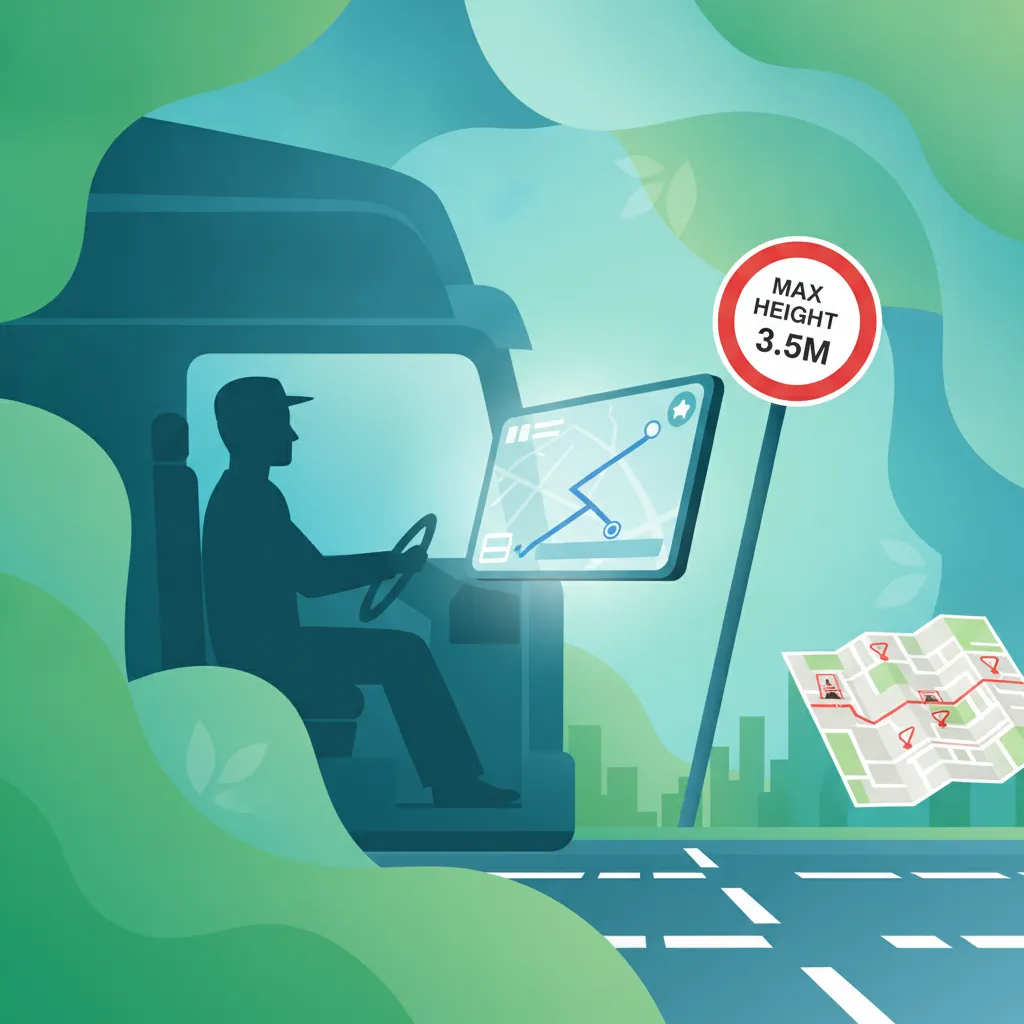
This lesson provides guidance on selecting preferred routes for heavy vehicles, taking into account freight corridors, toll roads, and restricted zones. Learners will be introduced to practical tools for route optimization, including GPS systems tailored for goods vehicles, and strategies for minimizing travel time while adhering to legal constraints. Emphasis is placed on balancing delivery efficiency with compliance to French transport policies.
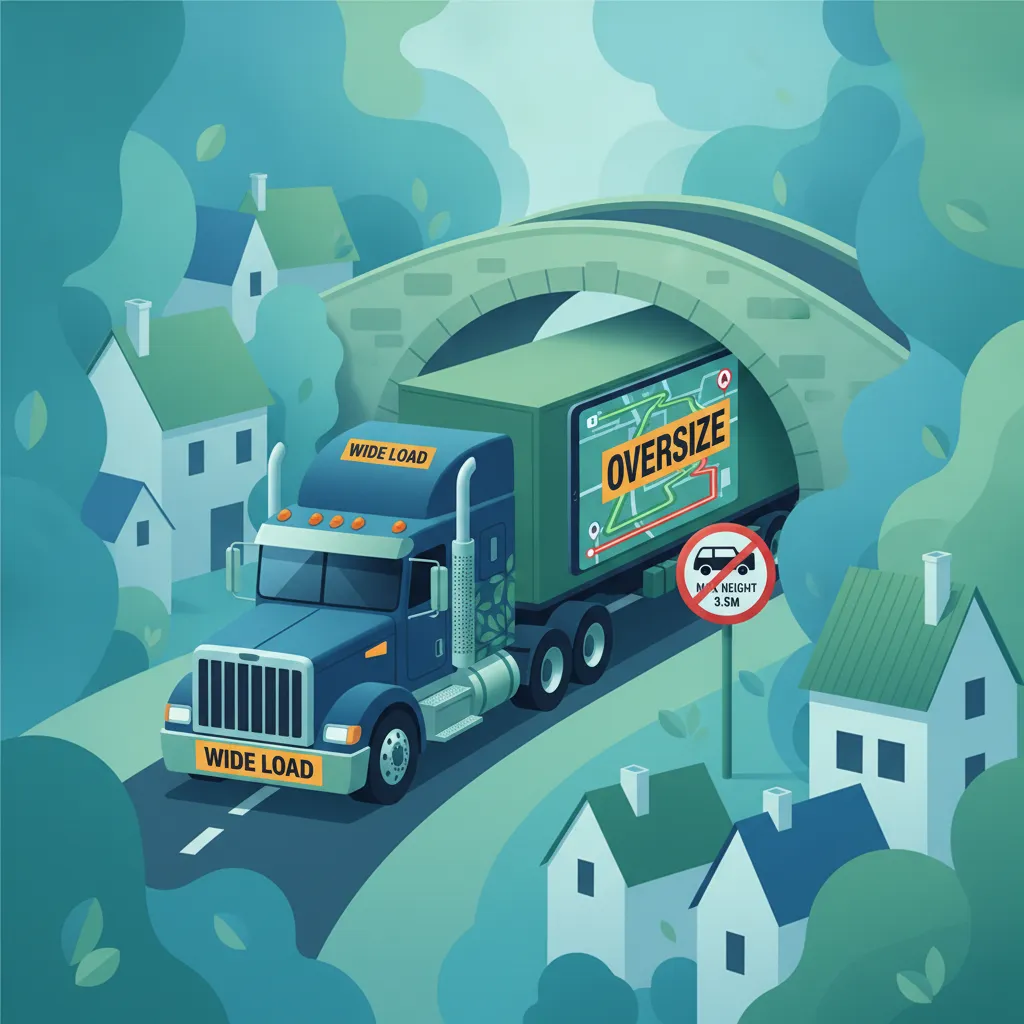
This lesson provides strategies for planning routes that accommodate oversized goods vehicles while complying with French road restrictions. Learners will learn how to identify prohibited routes, evaluate bridge and tunnel limitations, and obtain necessary access permits. The content also addresses the use of specialised GPS systems for heavy vehicle routing and the importance of contingency planning for detours, ensuring safe and efficient transport operations.
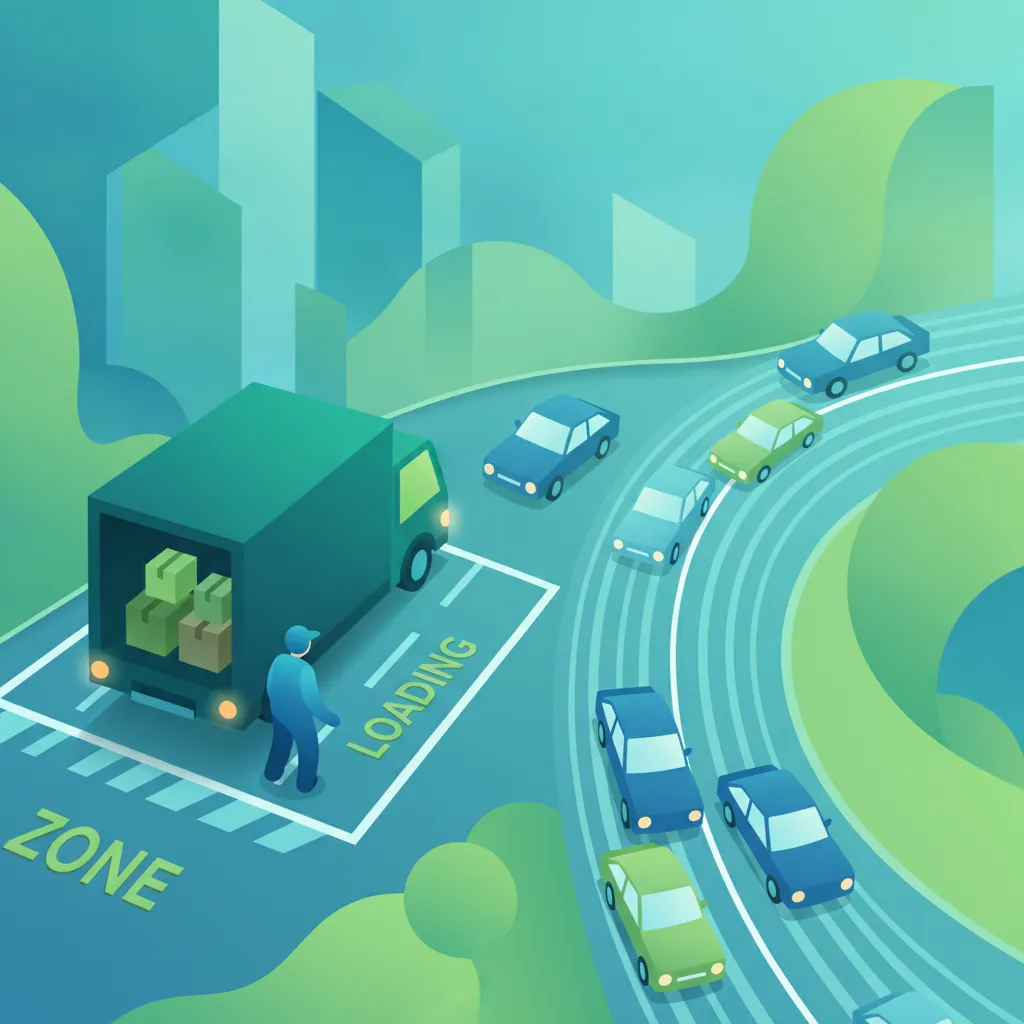
In this lesson, drivers will learn how to navigate urban delivery zones, understanding the rules surrounding loading bays, time windows, and restricted access areas. The content includes the process for obtaining delivery permits, strategies for safe maneuvering in congested city streets, and best practices for minimizing impact on pedestrian traffic. Learners will also be introduced to French city-specific regulations that govern goods vehicle deliveries.

This lesson focuses on the unique challenges of performing deliveries in dense urban areas. Learners will explore best practices for loading and unloading safely, navigating traffic congestion, and minimizing risks to pedestrians and cyclists. The content also covers compliance with city regulations for delivery zones, scheduling considerations, and the importance of careful maneuvering to avoid accidents.
In this lesson, learners will explore the various access restrictions that apply to goods vehicles in France, such as low emission zones and weight-restricted areas. The focus is on understanding the process to obtain necessary access permits and authorisations, and how these restrictions influence route planning and operational decisions. Learners will also be introduced to specific regulations governing vehicle entry into city centres and environmentally sensitive zones.

This lesson analyzes the various traffic challenges unique to operating large passenger vehicles in historic and modern French urban areas. Drivers will learn to manage narrow street layouts, double-parked delivery trucks, and high-density multi-lane roundabouts safely. The lesson emphasizes defensive driving strategies, route adjustments, and maintaining mental focus under severe schedule and time pressures.
This lesson examines the regulatory limits and environmental controls applied to large passenger vehicles operating in dense French urban centers. Drivers will study the Crit'Air clean air sticker system and low-emission zones (ZFE) that restrict access for older, high-polluting vehicles. It also addresses navigating physical constraints, such as narrow streets, tight turning radii, and strict municipal weight limits.

This lesson examines the specific challenges and responsibilities goods vehicle drivers face when interacting with pedestrians and cyclists in urban environments. Learners will understand right-of-way rules, the importance of yielding at pedestrian crossings, and safe turning practices that protect cyclists. The content emphasizes heightened driver vigilance, especially when navigating bike lanes and crowded sidewalks.
Understand the legal requirements for accessing French low emission zones (ZFE-m) with heavy goods vehicles. This lesson provides an overview of the Crit'Air classification system, how emission standards affect operational access, and the regulatory framework for heavy vehicle compliance in urban centers.

In this lesson, the focus is on French environmental zones (ZFE) and low emission requirements that affect goods vehicle access to certain urban areas. Learners will explore how emissions criteria determine vehicle eligibility, the process for obtaining permits, and the consequences of non-compliance. The content also covers strategies for route planning that consider environmental restrictions while maintaining operational efficiency.
This lesson examines the regulatory limits and environmental controls applied to large passenger vehicles operating in dense French urban centers. Drivers will study the Crit'Air clean air sticker system and low-emission zones (ZFE) that restrict access for older, high-polluting vehicles. It also addresses navigating physical constraints, such as narrow streets, tight turning radii, and strict municipal weight limits.

This lesson covers the environmental legalities that motorcyclists must follow in French urban areas, including low-emission zones designated as ZFE. You will understand how Euro emissions classifications affect your motorcycle and learn the process for acquiring and placing a Crit'Air vignette. The lesson also explores eco-driving techniques that help reduce fuel consumption, greenhouse gas emissions, and exhaust noise levels.
In this lesson, drivers will learn how to navigate urban delivery zones, understanding the rules surrounding loading bays, time windows, and restricted access areas. The content includes the process for obtaining delivery permits, strategies for safe maneuvering in congested city streets, and best practices for minimizing impact on pedestrian traffic. Learners will also be introduced to French city-specific regulations that govern goods vehicle deliveries.
Find clear answers to common questions learners have about Specific Signage for Goods Vehicles. Learn how the lesson is structured, which driving theory objectives it supports, and how it fits into the overall learning path of units and curriculum progression in France. These explanations help you understand key concepts, lesson flow, and exam focused study goals.
General weight limit signs apply to all vehicles, whereas goods vehicle-specific signs will include a pictogram of a lorry. You must always watch for this specific icon to know if the restriction is directed at your category of vehicle.
Yes. While some signs have exceptions for local deliveries, many environmental zones or weight-restricted streets are absolute. Always check if your specific delivery authorization is documented, as ignorance of signage is not a valid defense against fines.
Yes, there are distinct signs for axle load limits and total GVW limits. Failing to distinguish between these in the theory exam can lead to incorrect answers, so always look closely at the weight indicator on the sign's pictogram.
These signs (often Crit'Air related) restrict access based on your vehicle's pollution class. You must identify these signs early to avoid entering urban areas where your vehicle is legally barred, which is a common focus in professional theory assessments.
Ready to focus your study? Use the practice search to find exactly the French driving theory questions you need for the Code de la route and permis de conduire ETG. Refine your knowledge on specific topics or challenging rules to boost your confidence and exam readiness.