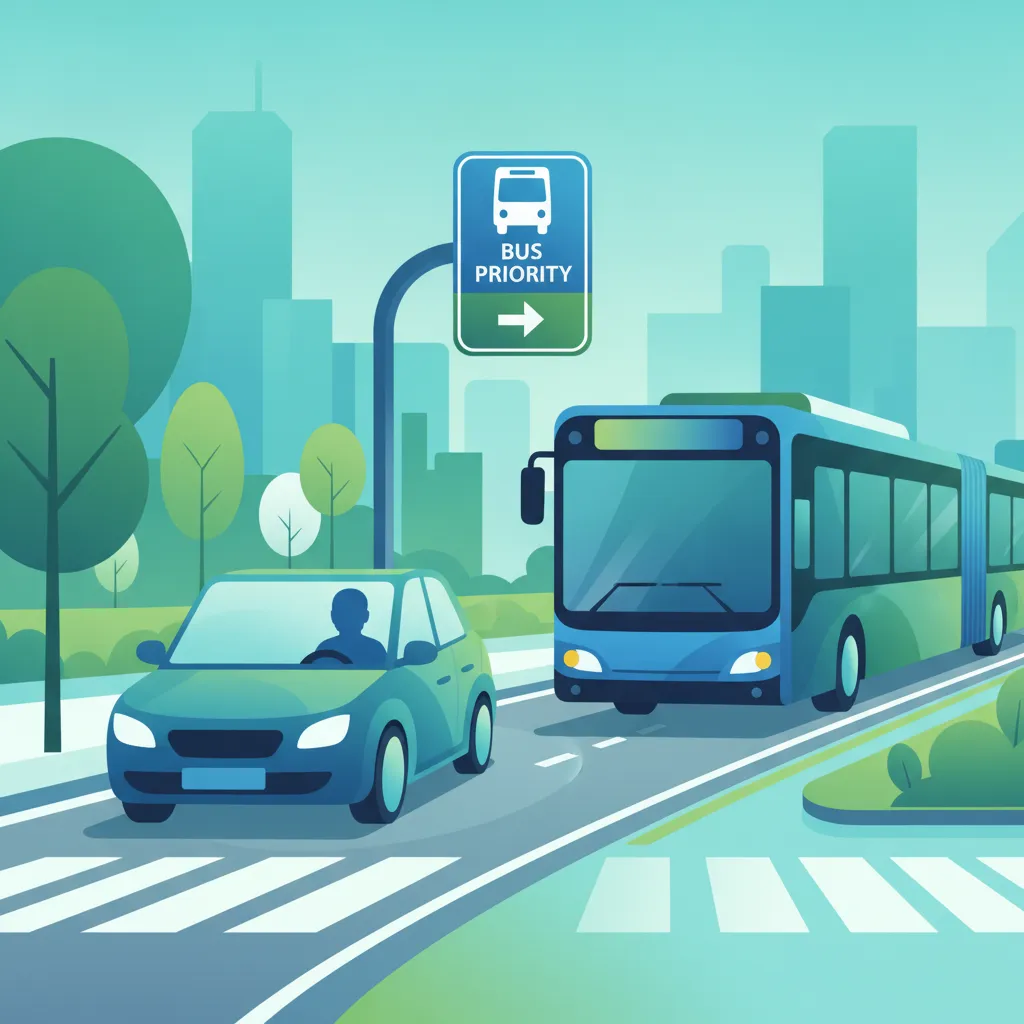
This lesson explores the essential skills for managing professional passenger vehicle routes and interacting with urban transport priority systems. By understanding how public transport pre-emption works within the French road network, you will gain the knowledge required to maintain service schedules safely. This topic is a critical component of your preparation for the D-category passenger vehicle theory exam.
Lesson content overview
In professional passenger transport, route planning is far more than choosing a path from point A to point B on a map. For drivers operating under a Category D or D1 license (Permis D/D1), route planning represents a highly regulated, dynamic coordination of scheduling, real-time communication, and specialized traffic priority systems.
Maintaining a reliable public transport network requires drivers to understand how transit priority systems interface with urban traffic infrastructure, how to coordinate seamlessly with central dispatch, and how to safely manage unexpected detours without compromising vehicle safety or passenger comfort.
To optimize public transit efficiency and reduce urban congestion, French traffic networks rely heavily on dedicated infrastructure and signaling systems. As a professional passenger vehicle driver, understanding these priority systems is essential for maintaining your schedule while ensuring absolute safety.
Public transport pre-emption (priorité aux feux pour transports en commun) is an active system that allows scheduled buses and tramways to interact directly with urban traffic signal controllers. Using loop detectors in the road surface, radio transmitters (such as Selective Detection systems), or GPS tracking, the approaching bus sends a signal to the traffic light controller.
The system responds by altering the normal light phase in one of two ways:
This pre-emption reduces time lost at red lights, minimizes fuel consumption from constant stop-and-start maneuvers, and significantly lowers emissions in highly populated urban zones.
In French urban areas, intersections with dedicated bus lanes (voies réservées) or tramway crossings frequently employ specialized light signals instead of standard three-color round lights. These are known as R17 signals (feux de signalisation pour services réguliers de transport en commun).
These signals consist of white symbols displayed on a circular black background:
Regular motorists are strictly prohibited from proceeding on these white public transport signals. Attempting to follow a bus through an intersection during its dedicated phase is a severe violation that carries heavy fines and license points under the French Highway Code (Code de la Route).
Beyond light signals, French traffic regulations grant explicit priority to public transport vehicles in specific urban maneuvers. Under Article R415-8 of the Code de la Route, drivers of regular vehicles must yield to buses and coaches signaling their intention to leave a designated bus stop within built-up areas (agglomérations).
Furthermore, when approaching an intersection where a bus lane runs alongside regular lanes, regular drivers must yield to a bus that is executing a turning maneuver or proceeding straight from its dedicated lane.
A public transport network is only as good as its reliability. Professional drivers must balance safety with strict adherence to scheduled timetables.
Timetables are calculated using extensive historical traffic data, passenger boarding averages, and route conditions. They are generally split into two primary structures:
To safely maintain these schedules, drivers must manage dwell time (temps d'arrêt en station) and utilize recovery time (temps de régulation or temps tampon).
The exact duration a bus remains stationary at a stop to allow passengers to safely board and alight. Efficient boarding procedures and clear passenger communication help keep dwell times within the planned window.
A buffer period built into the end of a line or at specific major timing points along a route. This time is designed to absorb minor delays accumulated during the journey, allowing the driver to start the next run on time without having to speed or drive aggressively to make up time.
Both running late and running early disrupt the network's efficiency:
Modern public transport systems rely on a continuous, data-driven partnership between the driver and a central operating center, often referred to as the PCC (Poste de Contrôle Commande) or dispatch center.
Most modern buses are equipped with an onboard SAEIV (Système d'Aide à l'Exploitation et d'Information Voyageurs). This integrated system combines GPS positioning, timetable data, and communication links to provide real-time support.
+------------------------------------------------------------+
|                       SAEIV SYSTEM                         |
+-----------------------------+------------------------------+
                              |
       +----------------------+----------------------+
       |                                             |
       v                                             v
+--------------+                              +--------------+
| Driver Info  |                              | Dispatcher   |
| - Headway    | <--- Real-Time GPS Tracking --->| - Delay Alert|
| - Timetable  |                              | - Detours    |
+--------------+                              +--------------+
The system continuously compares the vehicle's actual location with the scheduled timetable. It alerts the driver if they are running ahead of or behind schedule, and automatically updates the passenger information screens inside the vehicle and at upcoming bus stops.
For safety reasons, communication with the dispatch center must be highly structured. Professional drivers must use hands-free integrated communication systems and keep messages brief and objective.
Assess and Secure: Bring the vehicle to a safe stop, apply the parking brake, and assess the nature of the delay or incident.
Establish Contact: Initiate communication using the standard radio console button, stating your line number, vehicle number, and precise location.
Transmit Key Information: Use the "3 Ws" format: Where you are, What the issue is (e.g., severe traffic accident blocking the road), and What support or route adjustment you require.
Acknowledge and Execute: Listen carefully to dispatch instructions, confirm receipt by repeating key details, and execute the authorized changes safely.
Even the most meticulously planned routes can be disrupted by sudden road closures, utility failures, accidents, or municipal construction. When a planned route becomes inaccessible, drivers must implement strict detour management protocols.
When dispatch authorizes an alternative route, or when following emergency municipal detour signs, the driver must maintain absolute situational awareness of the vehicle's physical profile.
You must constantly monitor:
Operating a massive vehicle loaded with passengers within tight urban corridors requires a deep understanding of vehicle physics and human psychology.
Understanding the consequences of driving decisions helps build strong professional habits on the road:
To prepare for your professional theory exam, review these critical operational rules:
To deepen your understanding of urban transit priority structures and prepare for the French passenger transport license exams, explore the following topics:
This lesson covers the essentials of professional passenger transport route planning for French D-category drivers, focusing on public transport priority systems and urban traffic signal interaction. Learners must master R17 signal recognition, understanding that white symbols on a black background control bus movement at specialized intersections. The lesson also addresses timetable management principles including dwell time and recovery time, while emphasizing that safety always overrides schedule adherence. Dispatch coordination protocols using the SAEIV system and structured 3 Ws communication provide practical operational skills, and drivers must never deviate from routes without proper authorization due to the significant physical constraints of large passenger vehicles.
A short set of high-value points that capture the most important learning from this lesson.
R17 signals use white symbols on a black background: horizontal bar (—) means stop, white disc (o) means prepare to stop, vertical/diagonal bar (|) means proceed.
Public transport pre-emption systems grant buses extended green phases or early green by communicating with traffic signals via loop detectors, radio transmitters, or GPS.
Dwell time is the planned stationary duration at a stop for passenger boarding and alighting; recovery time is a schedule buffer to absorb minor delays.
Running early from a timing point is a serious operational infraction that leaves waiting passengers stranded and disrupts network headway.
Never deviate from your route without explicit dispatch authorization; a Category D vehicle's size and weight make unauthorized detours dangerous.
Explore all units and lessons included in this driving theory course.
Under Article R415-8 of the Code de la Route, regular vehicle drivers must yield to buses and coaches signaling departure from a designated stop within built-up areas.
R17 signals are exclusive to scheduled public transport vehicles; regular motorists following a bus through these signals face fines and license points.
Report incidents to dispatch using the 3 Ws format: Where you are, What the issue is, and What support you require.
Physical constraints of Category D vehicles include vertical clearance limits, weight restrictions on bridges, and wide turning radius requirements for articulated buses.
Safety must always take precedence over timetable adherence; arriving late is preferable to causing an accident.
Confusing R17 signal meanings, particularly treating the white disc (prepare to stop) as an unconditional proceed signal.
Attempting an unauthorized ad-hoc detour when encountering an obstruction, risking vehicle entrapment in low-clearance areas or narrow streets.
Departing early from a scheduled timing point because the driver believes they are ahead of schedule.
Neglecting to scan for vulnerable road users at bus priority intersections, as pedestrians and cyclists may not understand white public transport signals.
Driving aggressively to make up lost time rather than utilizing recovery time buffers or coordinating with dispatch.
Lesson content overview
A short set of high-value points that capture the most important learning from this lesson.
R17 signals use white symbols on a black background: horizontal bar (—) means stop, white disc (o) means prepare to stop, vertical/diagonal bar (|) means proceed.
Public transport pre-emption systems grant buses extended green phases or early green by communicating with traffic signals via loop detectors, radio transmitters, or GPS.
Dwell time is the planned stationary duration at a stop for passenger boarding and alighting; recovery time is a schedule buffer to absorb minor delays.
Running early from a timing point is a serious operational infraction that leaves waiting passengers stranded and disrupts network headway.
Never deviate from your route without explicit dispatch authorization; a Category D vehicle's size and weight make unauthorized detours dangerous.
Explore all units and lessons included in this driving theory course.
Under Article R415-8 of the Code de la Route, regular vehicle drivers must yield to buses and coaches signaling departure from a designated stop within built-up areas.
R17 signals are exclusive to scheduled public transport vehicles; regular motorists following a bus through these signals face fines and license points.
Report incidents to dispatch using the 3 Ws format: Where you are, What the issue is, and What support you require.
Physical constraints of Category D vehicles include vertical clearance limits, weight restrictions on bridges, and wide turning radius requirements for articulated buses.
Safety must always take precedence over timetable adherence; arriving late is preferable to causing an accident.
Confusing R17 signal meanings, particularly treating the white disc (prepare to stop) as an unconditional proceed signal.
Attempting an unauthorized ad-hoc detour when encountering an obstruction, risking vehicle entrapment in low-clearance areas or narrow streets.
Departing early from a scheduled timing point because the driver believes they are ahead of schedule.
Neglecting to scan for vulnerable road users at bus priority intersections, as pedestrians and cyclists may not understand white public transport signals.
Driving aggressively to make up lost time rather than utilizing recovery time buffers or coordinating with dispatch.
Explore search topics learners often look for when studying Route Planning and Public Transport Priorities. These topics reflect common questions about road rules, driving situations, safety guidance, and lesson level theory preparation for learners in France.
Browse additional driving theory lessons that cover connected traffic rules, road signs, and common driving situations related to this topic. Improve your understanding of how different rules interact across everyday traffic scenarios.
Learn to identify and navigate common urban traffic hazards for D and D1 license holders. This theory guide covers pedestrian interactions, narrow street maneuvering, and risk mitigation strategies required for operating large passenger vehicles within built-up areas according to French traffic regulations.

This lesson analyzes the various traffic challenges unique to operating large passenger vehicles in historic and modern French urban areas. Drivers will learn to manage narrow street layouts, double-parked delivery trucks, and high-density multi-lane roundabouts safely. The lesson emphasizes defensive driving strategies, route adjustments, and maintaining mental focus under severe schedule and time pressures.
This lesson examines the regulatory limits and environmental controls applied to large passenger vehicles operating in dense French urban centers. Drivers will study the Crit'Air clean air sticker system and low-emission zones (ZFE) that restrict access for older, high-polluting vehicles. It also addresses navigating physical constraints, such as narrow streets, tight turning radii, and strict municipal weight limits.
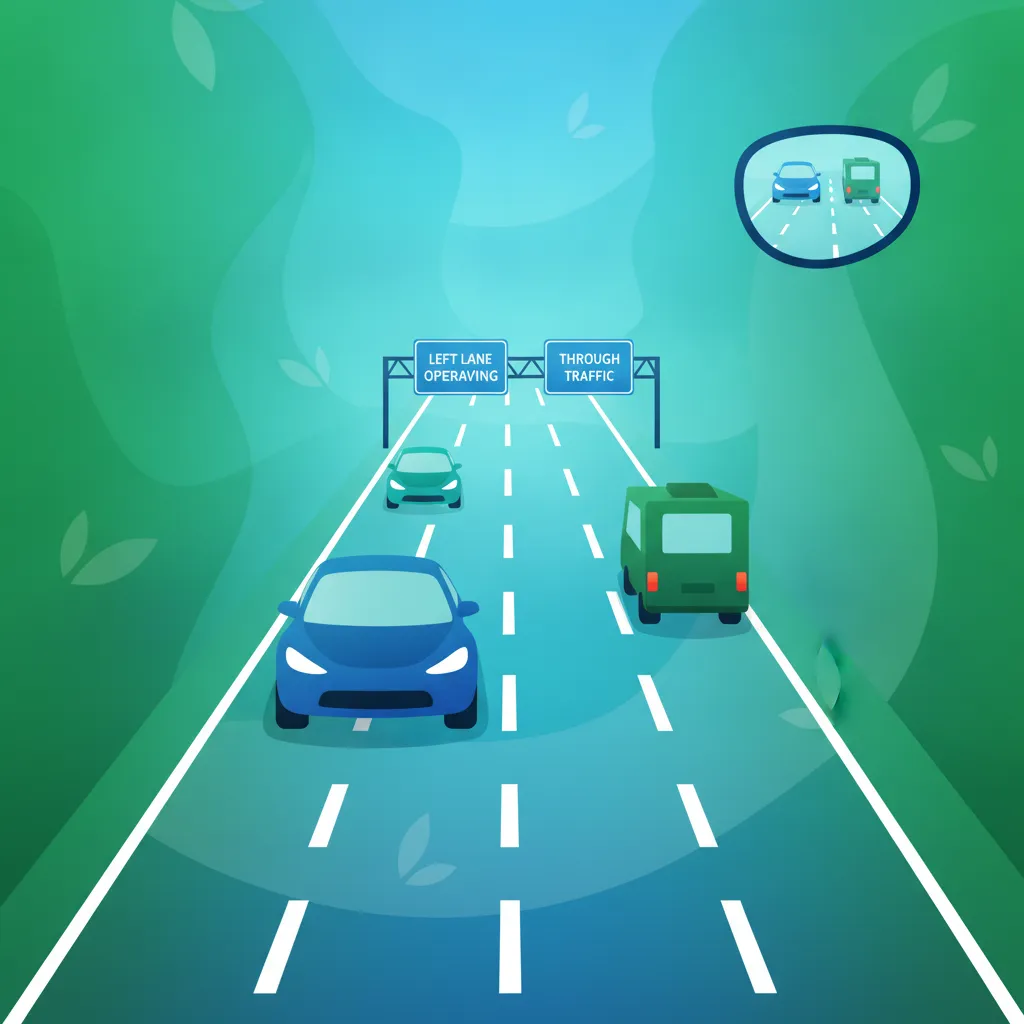
This lesson covers the rules of driving passenger vehicles on high-speed French motorways (autoroutes). Learners will study entry-ramp merging protocols, lane restrictions for vehicles over 3.5 tonnes, and motorway-specific speed limits. The lesson also highlights the correct use of toll booths (péages), emergency hard-shoulder safety procedures, and accessing dedicated coach rest areas.
This lesson clarifies the legal boundaries of urban infrastructure, highlighting the strict ban on riding motorcycles within bus lanes or cycle paths. You will study French regulations concerning traffic flow, including where and when experimental lane filtering is permitted between lines of stationary cars. Understanding these boundaries ensures you can keep moving through congested areas without risking heavy fines or dangerous collisions.

This lesson details the specific legal speed limits for passenger transport vehicles on motorways, rural trunk roads, and urban streets under French law. Drivers will learn how speed limits shift depending on overall vehicle weight, towing arrangements, and poor weather conditions like heavy rain. Developing a proactive approach to speed management helps maintain stable vehicle control and ensures full regulatory compliance.
Public transit vehicles like city buses and streetcars (trams) have clear legal priorities and dedicated infrastructure in urban areas. This lesson teaches you to recognize reserved transit lanes and your legal obligation to yield to buses exiting their designated stops. You will also learn safe driving strategies near tram tracks, ensuring you never block public transit lines or risk passenger boarding areas.

This lesson examines French Code de la route laws regarding pedestrian right-of-way, emphasizing the driver's legal duty to yield to any pedestrian engaged in crossing. It outlines proper approach speeds when approaching zebra crossings with obstructed views. Candidates will learn to maintain a safe physical buffer zone and verify that crosswalks are entirely clear of pedestrians before accelerating.
This lesson focuses on the legal requirement to yield to pedestrians on or about to step onto zebra crossings, a major focus of French road safety. You will learn how to approach school zones and pedestrian islands with heightened vigilance and reduced speed. Additionally, the lesson explores shared urban spaces, explaining how to maintain safe lateral distances when overtaking cyclists or personal electric scooters.

This lesson details the legal restrictions and appropriate use of acoustic horns and visual turn signals under the French Code de la route. Drivers will understand that in urban zones, the horn may only be used to warn of immediate, unavoidable danger to prevent accidents. It covers the correct timing of indicators and hazard lights to communicate intent clearly to surrounding traffic and pedestrians.
This lesson analyzes the complex driving conditions found on French secondary and rural road networks (routes départementales). Drivers will learn steering and braking techniques to descend steep gradients safely using engine retarding systems without overheating the service brakes. Anticipating agricultural machinery, domestic livestock, unlit intersections, and narrow bridges is also taught in depth.
Understand the critical safety procedures for handling large vehicle blind spots and performing safe turns at intersections. This theory lesson explains the physical constraints of articulated and standard passenger vehicles and the necessary mirror check protocols required for safe operation on French roads.

This lesson details the dangerous blind spots (angles morts) that surround heavy passenger vehicles and explains how to mitigate them. Drivers will master the systematic mirror check sequence (retro-information) before executing any turns or lane changes. It also covers the mandatory French "Angles Morts" warning stickers displayed on the vehicle exterior to alert vulnerable road users of danger zones.

This lesson focuses on the importance of recognizing and mitigating blind spots in goods vehicles, especially when towing trailers. Learners will explore techniques such as proper mirror adjustment, the use of blind spot mirrors, and visual checks to ensure that obstacles and vulnerable road users are detected before executing maneuvers. The content also discusses the limitations of blind spot monitoring systems and the need for supplementary visual checks.

This lesson addresses the challenges of positioning near larger vehicles such as cars, vans, buses, and lorries on French roads. Learners will learn to identify blind spots (angles morts), maintain a safe distance, and position themselves to maximize visibility and predictability. Understanding these dynamics is crucial for AM riders to avoid dangerous situations and ensure safe overtaking and lane sharing.
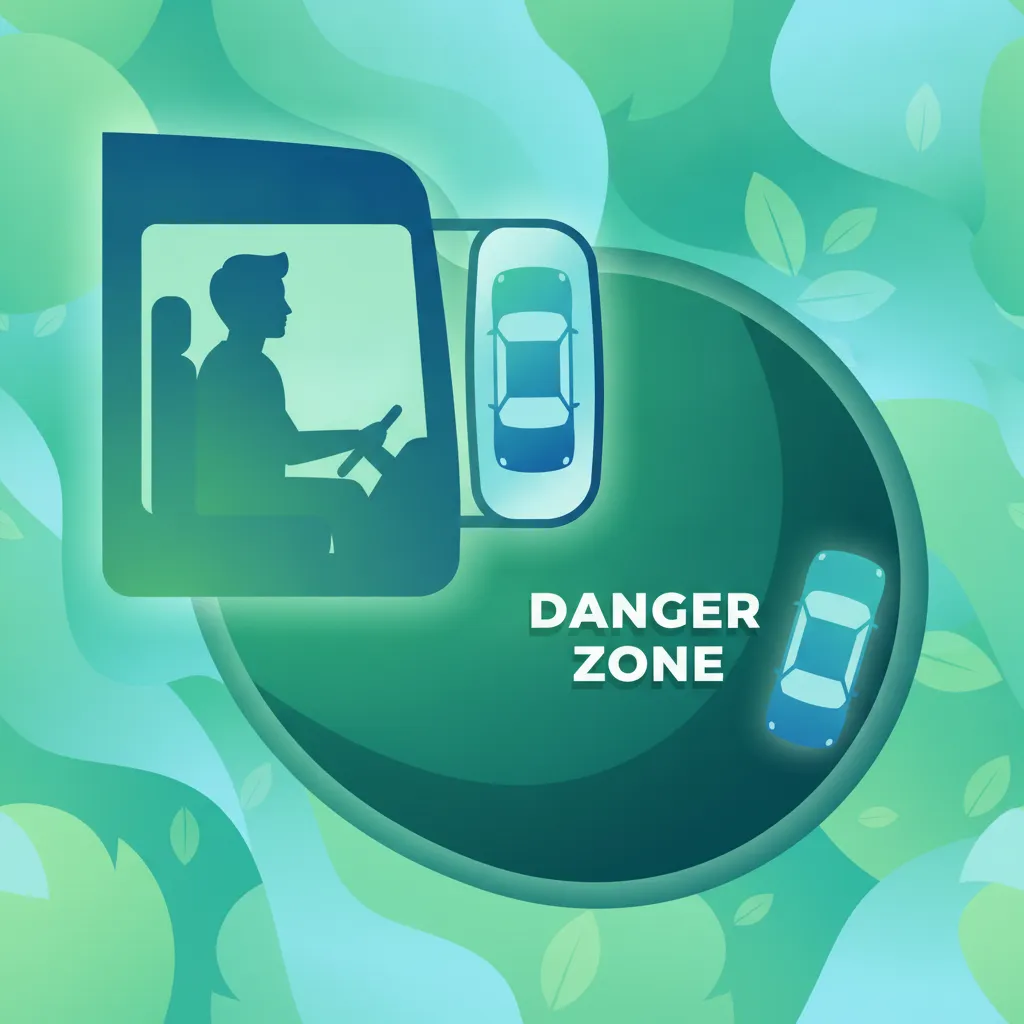
This lesson details the location and scale of blind spots around passenger cars and heavy goods vehicles, often referred to as the 'no-zone' or 'angles morts'. You will learn why truck drivers cannot see you directly behind or immediately adjacent to their cab doors. The lesson provides actionable strategies to minimize the time you spend in these dangerous zones, ensuring you always pass quickly and safely.

In this lesson, drivers will learn strategies to avoid conflicts with smaller vehicles, such as cars and vans, which may not be as visible in large vehicle blind spots. The content emphasizes maintaining adequate spacing, using proper lane discipline, and being aware of small vehicles' behavior during lane changes and turns. Learners will also be introduced to communication techniques, such as signalling and eye contact.

This lesson outlines the step-by-step safety checks and physical controls required to reverse a bus or coach in confined areas. Learners will study the use of rear-view cameras, mirror angles, and acoustic backing alarms to detect obstacles. It highlights the mandatory use of a trained ground guide (guide de manoeuvre) to assist in blind zones, ensuring zero contact with structures or people.
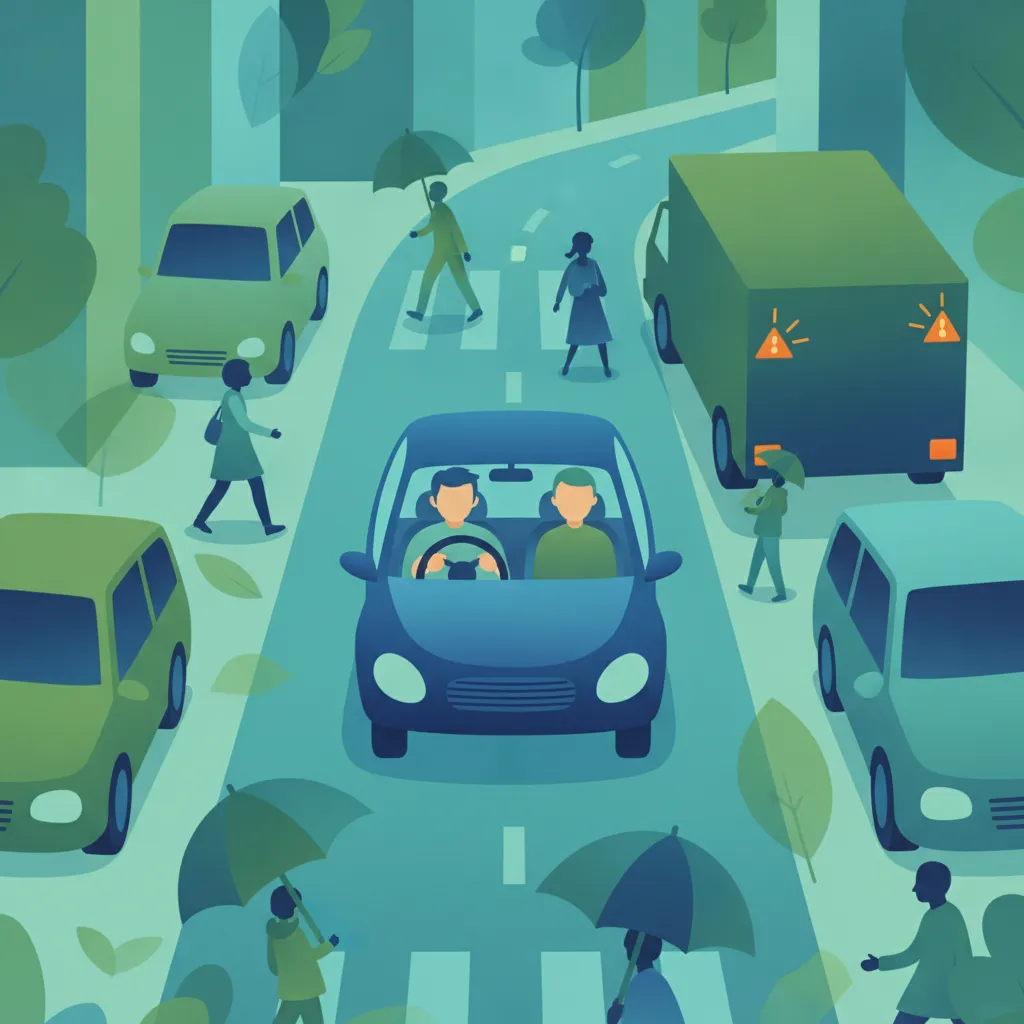
This lesson focuses on maneuvering in extremely crowded areas, passenger terminals, or narrow streets blocked by parked vehicles and obstacles. Drivers will learn to assess clearance distances precisely before committing to narrow pathways. The content teaches steering techniques that maintain stability, optimize space usage, and prioritize public safety during slow-speed, high-difficulty maneuvers.

This lesson teaches specific visual scanning methods to detect vulnerable road users, such as children, elderly individuals, and cyclists near stops. Drivers will learn to anticipate sudden movements, like a passenger running to catch a bus or stepping off a sidewalk unexpectedly. Managing the massive blind spots around the front and right-hand sides of passenger vehicles is highlighted as a critical safety duty.

Reversing (marche arriere) is a slow-speed maneuver that presents significant visibility challenges due to rear vehicle blind spots. This lesson covers proper driver posture, direct over-the-shoulder viewing, and the effective use of mirrors while backing up. You will learn how to reverse safely out of driveways or parking bays and how to yield to pedestrians who might cross your path.

This lesson analyzes the technical path a long wheelbase vehicle must take when turning at intersections and navigating roundabouts. Drivers will learn to calculate tail swing and rear-wheel tracking, intentionally swinging wide to clear roadside curbs and poles safely. The lesson emphasizes yielding protocols for pedestrians and cyclists who may be crossing the target street during the turn.
Find clear answers to common questions learners have about Route Planning and Public Transport Priorities. Learn how the lesson is structured, which driving theory objectives it supports, and how it fits into the overall learning path of units and curriculum progression in France. These explanations help you understand key concepts, lesson flow, and exam focused study goals.
It is a specialized traffic signal designed to give buses or trams priority at intersections, usually by extending a green light or triggering one early to allow the vehicle to clear the area safely.
Yes, unless the specific priority signal indicates otherwise, you must adhere to standard road regulations while remaining vigilant for signal changes that facilitate public transport movement.
Effective planning reduces driver stress and the likelihood of making last-minute, unsafe maneuvers, which is a major focus for examiners evaluating professional driver competency.
Yes, urban route planning must account for environmental restrictions and zone access permits required for heavy passenger vehicles under French traffic legislation.
Ready to focus your study? Use the practice search to find exactly the French driving theory questions you need for the Code de la route and permis de conduire ETG. Refine your knowledge on specific topics or challenging rules to boost your confidence and exam readiness.