
This lesson guides you through the complex rules regarding access restrictions and required authorisations for heavy goods vehicles in France. Understanding these regulations is vital for effective route planning and ensuring compliance with local ordinances in both urban and restricted zones.
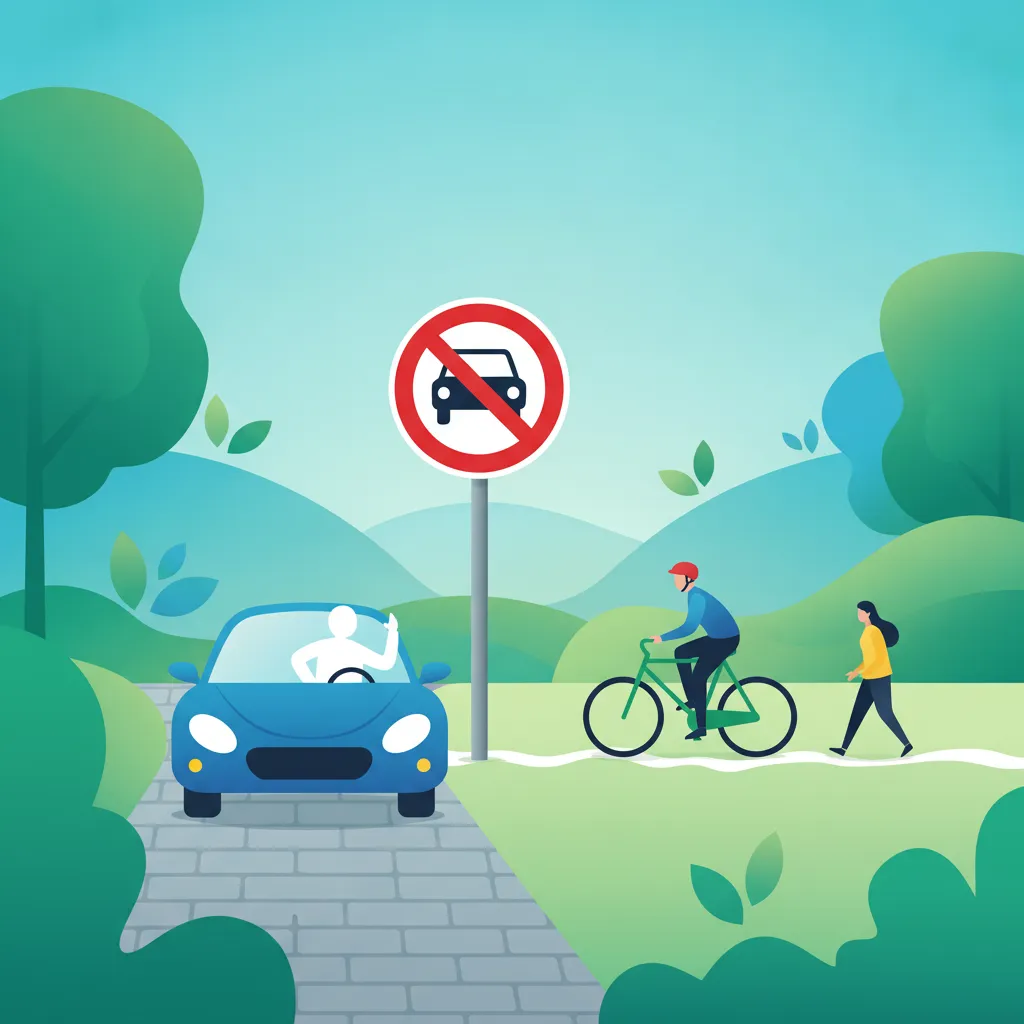
Lesson content overview
Operating heavy goods vehicles (Poids Lourds) in France requires a deep understanding of local, regional, and national access restrictions. The French Code de la route (Highway Code) and municipal decrees (arrêtés municipaux) regulate where, when, and how large vehicles can travel. These rules protect fragile infrastructure, safeguard vulnerable road users, and mitigate environmental pollution in urban centres.
As a professional driver holding a Category C or CE licence, you are legally responsible for verifying that your vehicle is authorised to enter specific zones. Failing to do so can result in substantial fines, vehicle impoundment, and damage to transport infrastructure.
Access restrictions in France are legally binding measures designed to balance economic activity with public safety and environmental health. These regulations are not static; they evolve based on air quality indices, infrastructure wear, and urban development policies.
Professional drivers must navigate three main types of regulatory frameworks:
Before planning any route, a professional driver must consider how these intersecting frameworks apply to their specific vehicle classification, Gross Vehicle Weight (GVW / Poids Total Autorisé en Charge - PTAC), and emissions standard.
Low Emission Zones, known in France as Zones à Faibles Émissions - Mobilité (ZFE-m), are rapidly expanding across French urban areas. Within these zones, access is restricted or prohibited for vehicles that do not meet strict environmental standards.
To enter a ZFE-m, every vehicle must display a valid Crit'Air vignette (environmental sticker) on the lower right-hand corner of the windshield. The vignette classifies vehicles into six color-coded categories based on their engine type, fuel type, and European emission standard (Euro 1 to Euro 6).
For heavy goods vehicles (vehicles over 3.5 tonnes under Category C or CE), the rules are significantly more stringent than for passenger cars. For example, in the Greater Paris ZFE-m, diesel heavy goods vehicles must typically meet Euro 6 standards (requiring a Crit'Air 2 vignette) to enter during designated daytime hours.
Some highly sensitive municipal areas are designated as Zero Emission Zones (ZEZ), where only electric, hydrogen, or non-motorised transport is permitted. Other zones permit Euro 5 or Euro 6 compliant vehicles but exclude older, higher-emitting commercial transport.
Crucial Rule: Never assume a diesel Category C vehicle is permitted in an urban zone just because passenger diesel cars are entering. Heavy goods vehicles face different, often much earlier, ban timelines under municipal environmental schedules.
Bridges, historic arches, rural roads, and residential streets are highly vulnerable to the immense weight and axle loads of Category C and CE vehicles. Structural failure can occur if vehicle weight exceeds the engineering design limits of the road infrastructure.
Even if your vehicle's total weight is under the legal limit indicated on a bridge entry sign, you must ensure that your weight distribution complies with specific axle load limits (charge à l'essieu). French infrastructure often features specific axle-weight limits on historic bridges or rural routes.
If your cargo shifts during transport or was loaded incorrectly, a single axle might exceed the legal local limit (for instance, a 10-tonne axle limit on a sensitive bridge), even if the truck's overall weight is perfectly legal. Always verify axle load distribution before starting a journey.
French municipalities frequently regulate the presence of heavy commercial vehicles to reduce congestion and improve safety in historic city centres (centres-villes).
Many French cities enforce time-based bans for vehicles over 3.5 tonnes or 7.5 tonnes. These regulations typically restrict entry to specific off-peak windows, such as late evening or early morning (e.g., 22:00 to 06:00), to prevent conflicts with commuter traffic and pedestrian shoppers.
Identify the Destination Zone: Review the destination address and cross-reference it with local municipal decrees (arrêtés municipaux) to identify active entry bans.
Check Time Windows: Ensure your arrival time falls strictly within the permitted delivery hours (créneaux de livraison).
Locate Approved Loading Docks: Plan your route directly to designated loading zones (zones de livraison). Double-parking a Category C vehicle on a standard traffic lane is strictly prohibited.
Keep Local Documentation in the Cab: Always carry transport documents, such as the consignment note (lettre de voiture), to prove the necessity of your entry into a restricted urban zone if stopped by law enforcement.
Heavy goods vehicles must only use designated loading zones. Parking or stopping a Category C or CE vehicle on sidewalks, bicycle lanes, or standard bus stops to complete a delivery is a severe traffic violation that poses immediate risks to vulnerable road users.
When a delivery must be made to an address located within a restricted weight zone or an active ZFE-m, and the vehicle does not meet the baseline entry criteria, transport operators must secure official authorisation.
To obtain these permits, transport companies must submit applications to the local town hall (mairie) or the prefecture (préfecture). The application must justify why a smaller or cleaner vehicle cannot be used and specify the exact route and timeframe of the transit.
Certain vehicle classes are legally exempt from standard environmental and weight restrictions without requiring individual application:
Note on Essential Goods: Vehicles carrying highly perishable goods (such as refrigerated food transport or medical supplies) are occasionally granted priority access or exempted from weekend driving bans, but they must still strictly adhere to physical weight limits and Crit'Air standards unless specific municipal waivers are held.
To operate safely and legally in France, professional drivers must execute the following rules flawlessly:
All goods vehicles entering an active ZFE-m must display a valid Crit'Air vignette. The sticker must be applied permanently to the lower right corner of the front windshield, facing outward. Using a photocopy, an expired vignette, or displaying a vignette belonging to another vehicle is a serious offence.
Drivers must verify their vehicle's actual weight (including payload) against all B13 and B13a signs before entering any bridge or restricted road segment. If the vehicle is close to the limit, alternative bypass routes (itinéraires de déviation) must be mapped in advance.
Commercial deliveries in restricted city centres must be scheduled strictly within permitted hours. If a driver is delayed due to traffic or loading errors, they must park safely outside the restricted zone until the next permitted window opens, unless they hold an official waiver.
Any driver operating a vehicle under an exemption or temporary permit must carry the physical or digital document issued by the prefecture or municipality. This must be presented immediately upon request during any roadside inspection by the police or contrôleurs des transports terrestres.
Professional drivers often face complex scenarios where compliance is tested. Understanding these common pitfalls helps prevent severe operational disruptions and legal penalties.
Violating access restrictions in France carries severe penalties under the Code de la route:
A professional driver's approach to access restrictions must adapt based on several critical operational variables:
This lesson covers the regulatory framework governing access restrictions for heavy goods vehicles in France, focusing on Low Emission Zones (ZFE-m) regulated through the Crit'Air vignette system, physical weight and axle load limits indicated by B13 and B13a road signs, and municipal delivery window restrictions in urban centres. Professional drivers must independently verify total weight, axle distribution, emission classification, and current permit validity before entering restricted areas. Violations result in significant fines starting at €135, potential vehicle impoundment, and possible licence consequences for dangerous weight limit breaches.
A short set of high-value points that capture the most important learning from this lesson.
Low Emission Zones (ZFE-m) restrict heavy goods vehicles based on Crit'Air emission classifications, with Euro 6 diesel typically required for entry during daytime hours in major urban areas.
Weight restrictions come in static forms (permanent signs on bridges and sensitive infrastructure) and dynamic forms (temporary thaw barriers that activate seasonally or during extreme weather).
Axle load limits apply independently of total vehicle weight; incorrect cargo distribution can violate a local axle limit even when the overall PTAC is compliant.
City centre deliveries require strict adherence to municipal time windows, typically off-peak hours such as 22:00 to 06:00, and must use designated loading zones only.
Heavy goods vehicles face earlier ban timelines in ZFE-m zones than passenger vehicles, so assumptions based on car access rules do not apply.
Explore all units and lessons included in this driving theory course.
Crit'Air vignettes range from green (electric/hydrogen, Crit'Air 0) to grey (Euro 3 diesel, Crit'Air 5); heavy diesel vehicles generally need Crit'Air 2 (Euro 6) for urban access.
B13 signs indicate total weight limits (PTAC); B13a signs indicate specific axle load limits and must be checked independently.
Temporary permits are obtained from the prefecture or mairie and must specify exact routes and timeframes; permanent permits are reserved for essential service vehicles.
During spring thaw (*barrières de dégel*), dynamic weight limits activate on secondary roads to protect softened roadbeds from heavy axle loads.
Transport documents including the *lettre de voiture* must be carried in the cab to justify entry into restricted zones if stopped by law enforcement.
Assuming a diesel Category C vehicle can enter an urban zone because passenger diesel cars are permitted; HGVs face stricter and earlier ban timelines.
Relying on standard GPS navigation without commercial vehicle settings, which may not account for bridge weight limits or low emission zone requirements.
Verifying total vehicle weight but failing to check individual axle load distribution, risking violation of localized B13a axle restrictions.
Entering a ZFE-m with a Crit'Air vignette that does not match the vehicle's actual Euro emission standard, constituting a documentation offence.
Using a temporary permit issued for one municipality in a different zone, as permits are route-specific and not transferable between jurisdictions.
Lesson content overview
A short set of high-value points that capture the most important learning from this lesson.
Low Emission Zones (ZFE-m) restrict heavy goods vehicles based on Crit'Air emission classifications, with Euro 6 diesel typically required for entry during daytime hours in major urban areas.
Weight restrictions come in static forms (permanent signs on bridges and sensitive infrastructure) and dynamic forms (temporary thaw barriers that activate seasonally or during extreme weather).
Axle load limits apply independently of total vehicle weight; incorrect cargo distribution can violate a local axle limit even when the overall PTAC is compliant.
City centre deliveries require strict adherence to municipal time windows, typically off-peak hours such as 22:00 to 06:00, and must use designated loading zones only.
Heavy goods vehicles face earlier ban timelines in ZFE-m zones than passenger vehicles, so assumptions based on car access rules do not apply.
Explore all units and lessons included in this driving theory course.
Crit'Air vignettes range from green (electric/hydrogen, Crit'Air 0) to grey (Euro 3 diesel, Crit'Air 5); heavy diesel vehicles generally need Crit'Air 2 (Euro 6) for urban access.
B13 signs indicate total weight limits (PTAC); B13a signs indicate specific axle load limits and must be checked independently.
Temporary permits are obtained from the prefecture or mairie and must specify exact routes and timeframes; permanent permits are reserved for essential service vehicles.
During spring thaw (*barrières de dégel*), dynamic weight limits activate on secondary roads to protect softened roadbeds from heavy axle loads.
Transport documents including the *lettre de voiture* must be carried in the cab to justify entry into restricted zones if stopped by law enforcement.
Assuming a diesel Category C vehicle can enter an urban zone because passenger diesel cars are permitted; HGVs face stricter and earlier ban timelines.
Relying on standard GPS navigation without commercial vehicle settings, which may not account for bridge weight limits or low emission zone requirements.
Verifying total vehicle weight but failing to check individual axle load distribution, risking violation of localized B13a axle restrictions.
Entering a ZFE-m with a Crit'Air vignette that does not match the vehicle's actual Euro emission standard, constituting a documentation offence.
Using a temporary permit issued for one municipality in a different zone, as permits are route-specific and not transferable between jurisdictions.
Explore search topics learners often look for when studying Access Restrictions and Authorisations. These topics reflect common questions about road rules, driving situations, safety guidance, and lesson level theory preparation for learners in France.
Browse additional driving theory lessons that cover connected traffic rules, road signs, and common driving situations related to this topic. Improve your understanding of how different rules interact across everyday traffic scenarios.
Learn the essential techniques for planning secure routes for Category C and CE vehicles. This guide covers how to account for physical bridge clearances, weight limits, and urban delivery constraints while maintaining compliance with the French Highway Code to ensure efficient and safe transit through restricted areas.
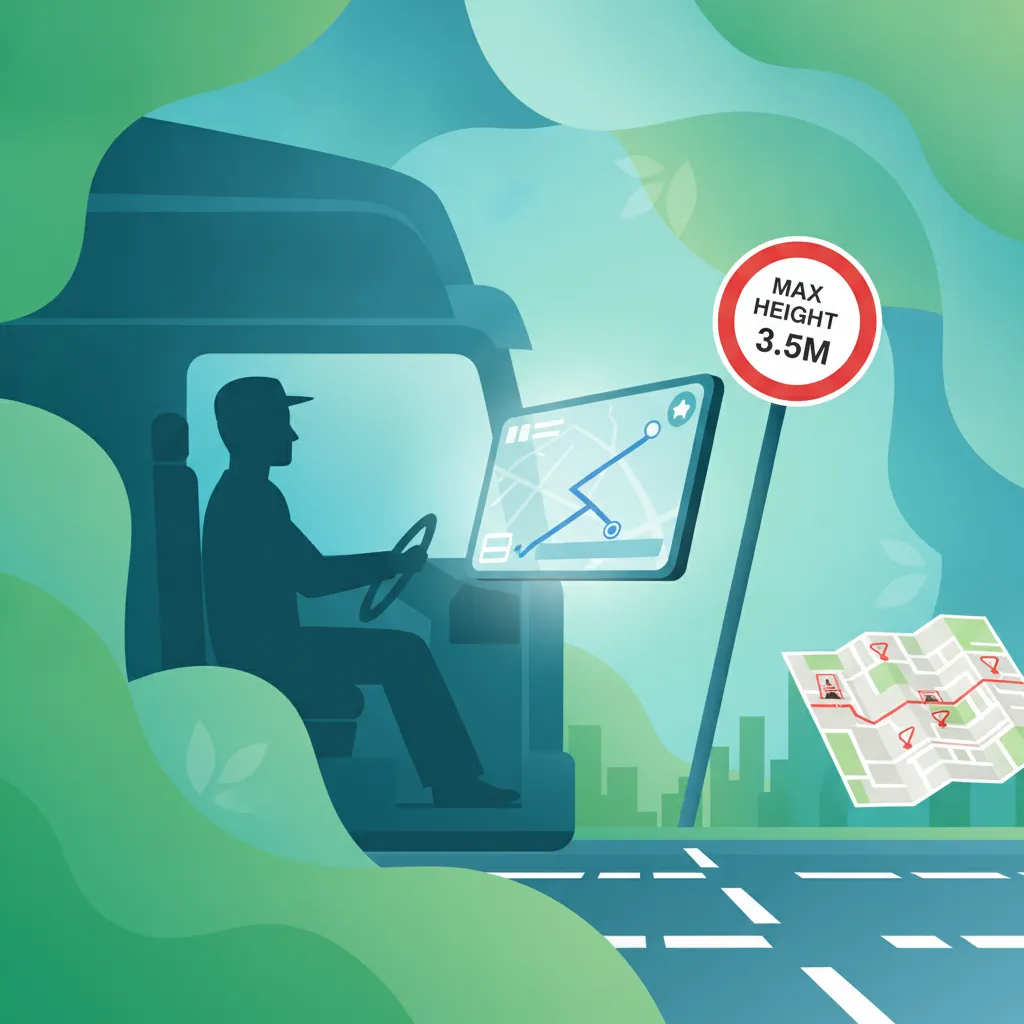
This lesson provides guidance on selecting preferred routes for heavy vehicles, taking into account freight corridors, toll roads, and restricted zones. Learners will be introduced to practical tools for route optimization, including GPS systems tailored for goods vehicles, and strategies for minimizing travel time while adhering to legal constraints. Emphasis is placed on balancing delivery efficiency with compliance to French transport policies.
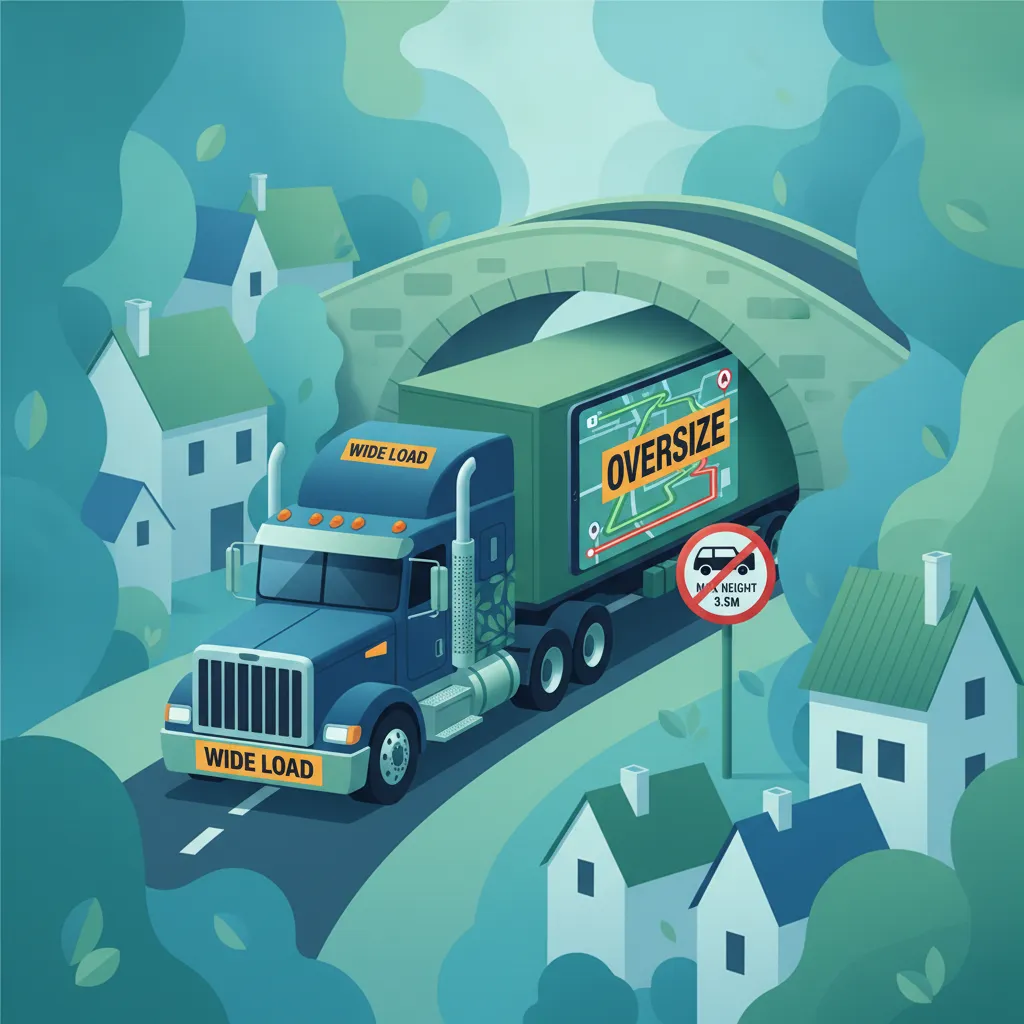
This lesson provides strategies for planning routes that accommodate oversized goods vehicles while complying with French road restrictions. Learners will learn how to identify prohibited routes, evaluate bridge and tunnel limitations, and obtain necessary access permits. The content also addresses the use of specialised GPS systems for heavy vehicle routing and the importance of contingency planning for detours, ensuring safe and efficient transport operations.
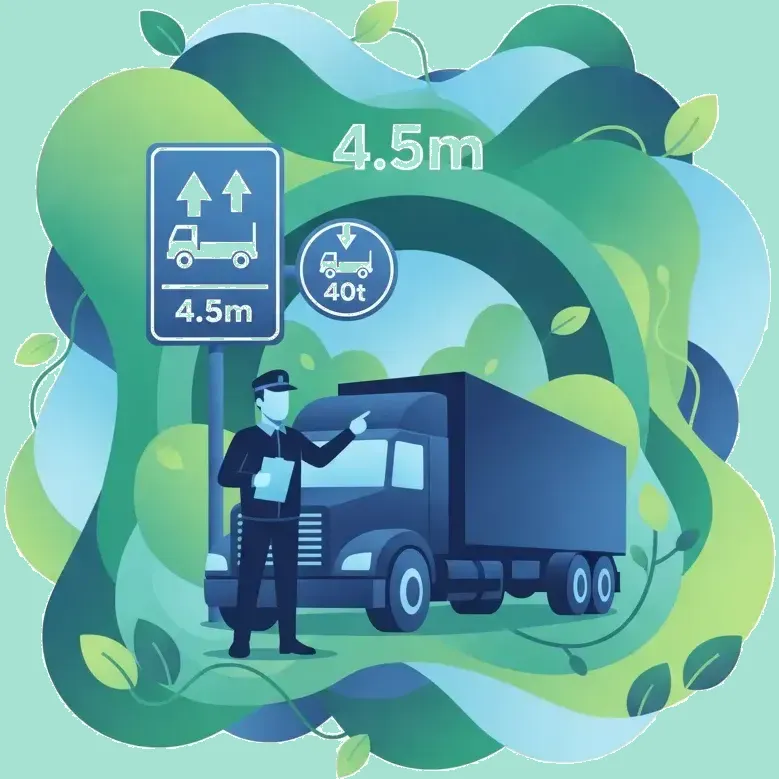
This lesson focuses on the weight and dimension restrictions that goods vehicles must adhere to while traveling on French roads. Learners will understand bridge caps, tunnel clearances, and other physical limitations imposed by infrastructure, and how these restrictions impact route planning and vehicle loading. The content also highlights legal load limits and the importance of compliance checks to avoid fines and roadblocks.
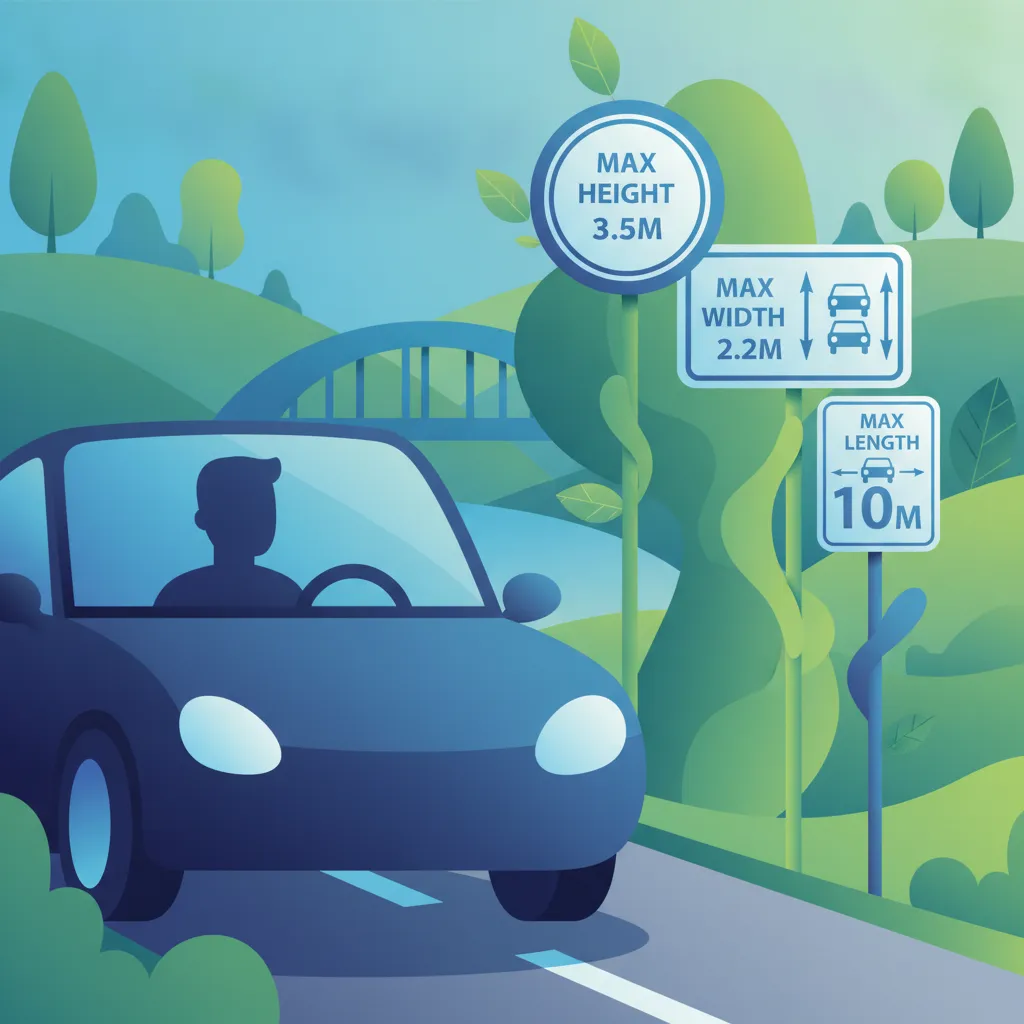
This lesson provides an in-depth analysis of how goods vehicles are classified according to their overall dimensions, such as length, width, height, and wheelbase. Learners will understand the legal limits imposed by French regulations for each vehicle class, and how these dimensions affect the vehicle’s classification and permissible routes. The material also explains the impact of cab size versus cargo space on maneuverability and route planning, highlighting the importance of accurate dimension assessment.
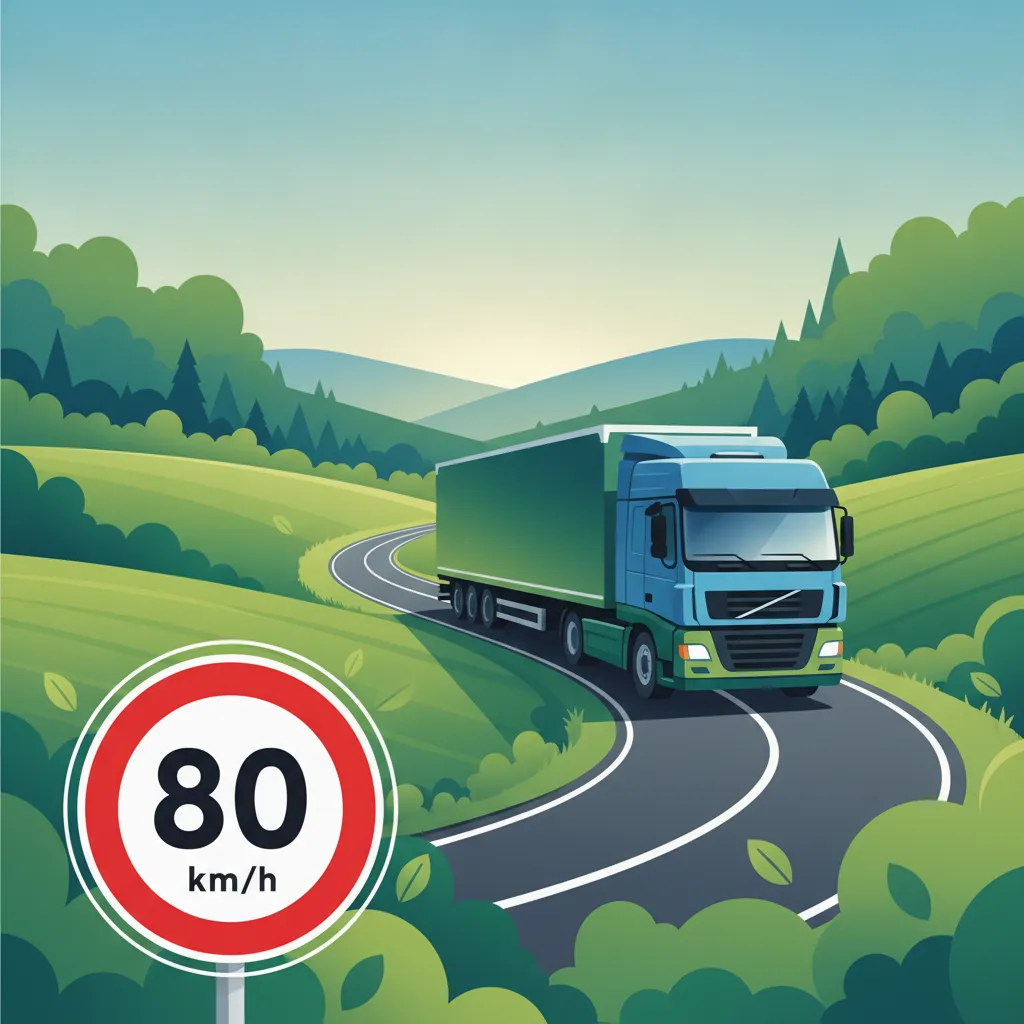
In this lesson, drivers will learn the specific speed limits that apply to goods vehicles across different road types in France, including urban areas, rural roads, and motorways. The content covers the differences between speed limit signs for heavy vehicles and standard passenger cars, the legal basis for these limits, and the importance of speed adaptation based on vehicle category and load. Learners will also be introduced to speed enforcement methods used in France, such as radar and speed cameras.

This lesson examines how goods vehicle drivers should approach and navigate roadworks zones and temporary traffic restrictions. Learners will be taught to recognize temporary speed limit signs, follow detour routes safely, and respect lane closures. The content also highlights the importance of maintaining safe distances from workers, adjusting for reduced lane width, and ensuring compliance with temporary regulations to avoid penalties.
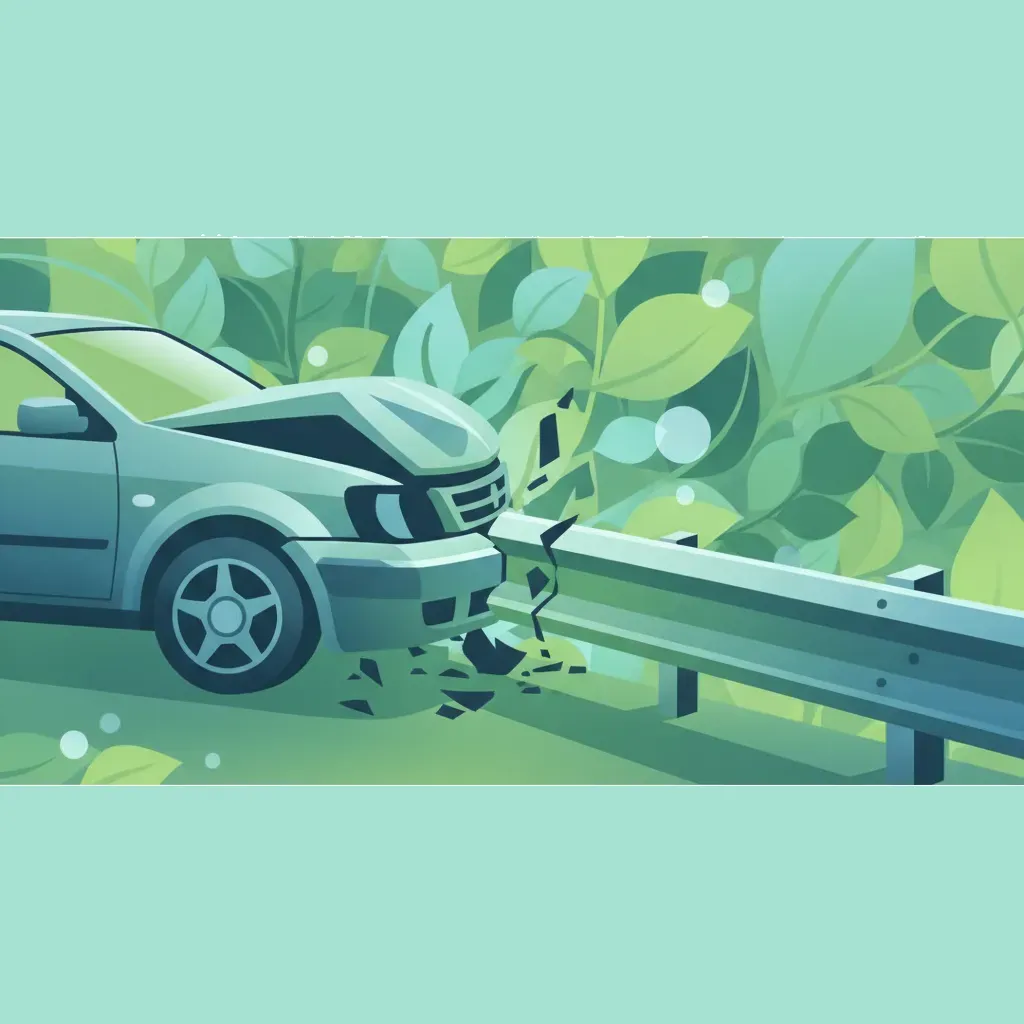
This lesson examines the effects that heavy goods vehicles have on road infrastructure, including pavement wear, bridge stress, and tunnel clearance issues. Learners will understand how increased weight and dimensions contribute to accelerated road degradation, leading to higher maintenance costs and potential restrictions on vehicle access. The material also highlights the importance of infrastructure capacity assessments and the role of weight restrictions in protecting road assets.
Understand the specific challenges of operating heavy goods vehicles in dense urban environments. This lesson examines the risks associated with narrow street maneuvering, interactions with vulnerable road users, and compliance with municipal delivery windows, helping drivers navigate city centers safely without violating local traffic and environmental regulations.
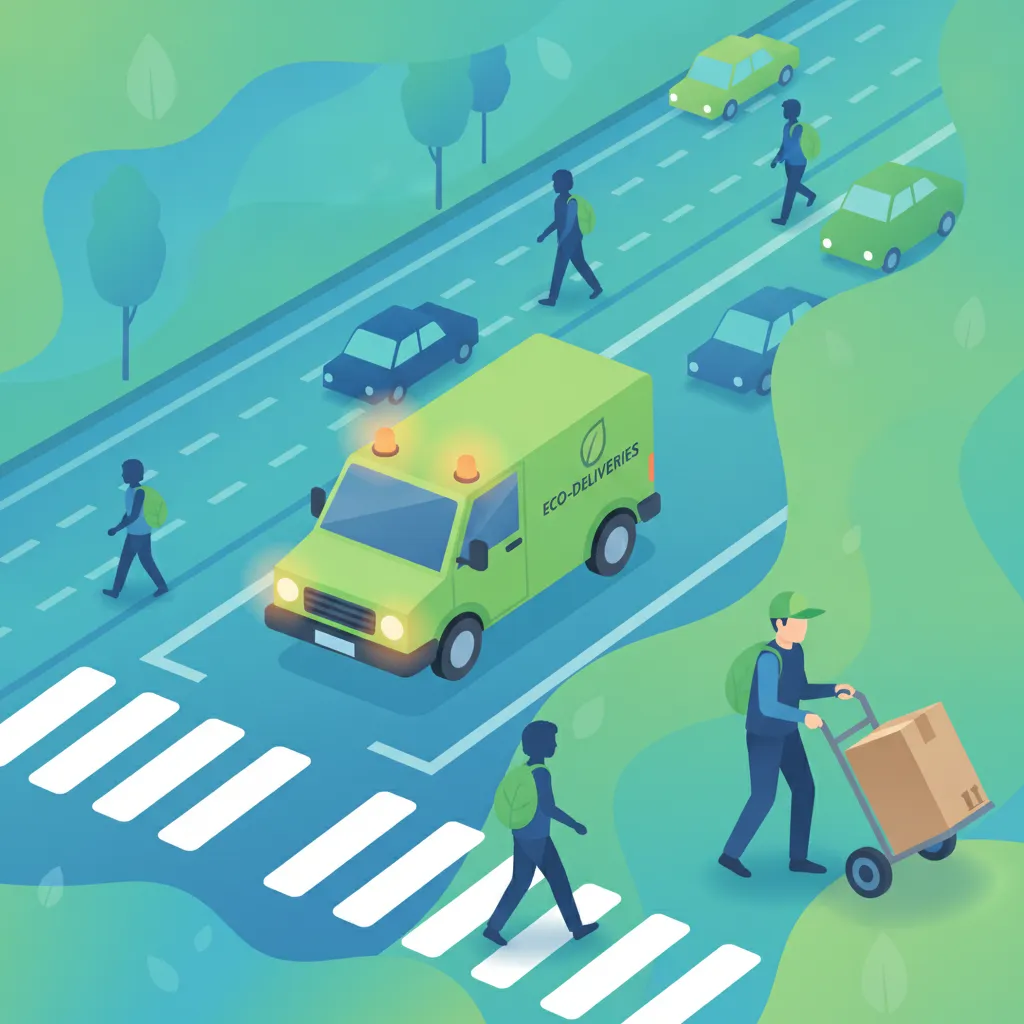
This lesson focuses on the unique challenges of performing deliveries in dense urban areas. Learners will explore best practices for loading and unloading safely, navigating traffic congestion, and minimizing risks to pedestrians and cyclists. The content also covers compliance with city regulations for delivery zones, scheduling considerations, and the importance of careful maneuvering to avoid accidents.
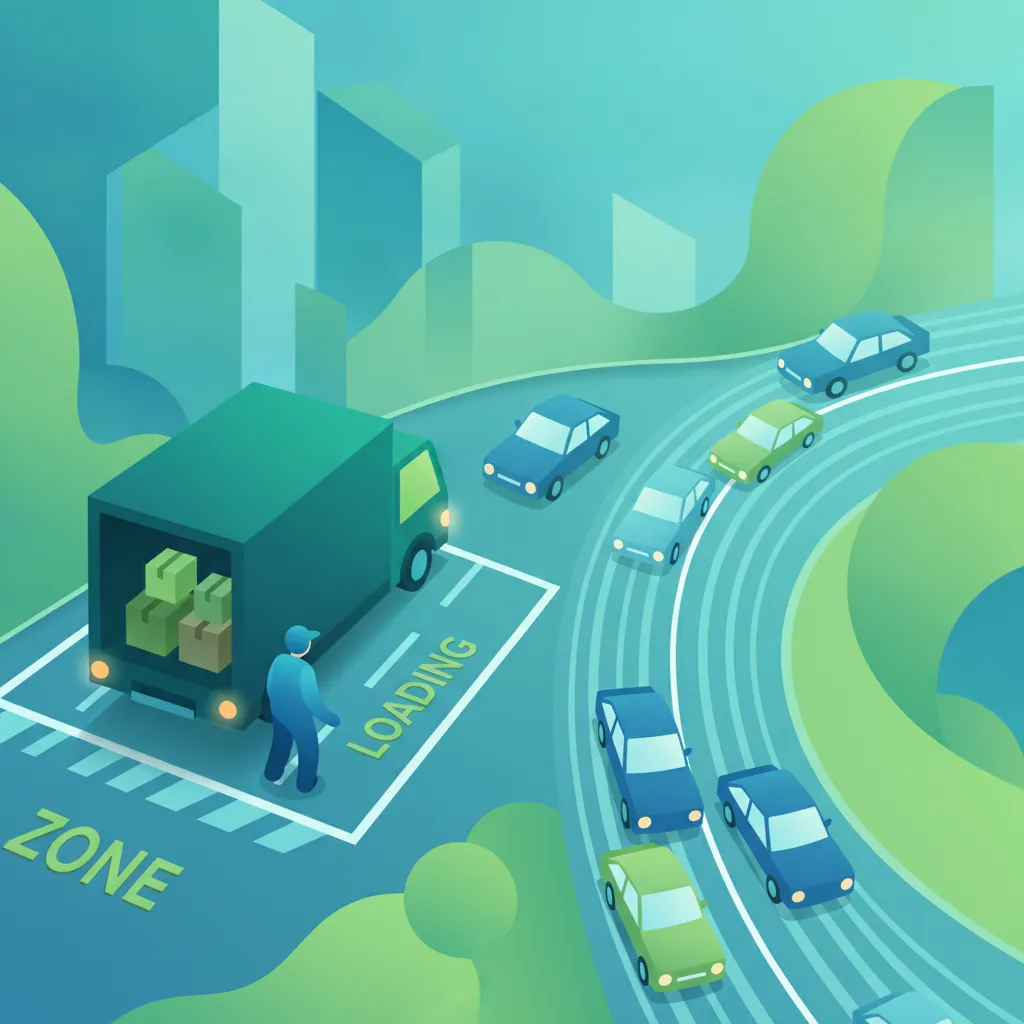
In this lesson, drivers will learn how to navigate urban delivery zones, understanding the rules surrounding loading bays, time windows, and restricted access areas. The content includes the process for obtaining delivery permits, strategies for safe maneuvering in congested city streets, and best practices for minimizing impact on pedestrian traffic. Learners will also be introduced to French city-specific regulations that govern goods vehicle deliveries.

This lesson analyzes the various traffic challenges unique to operating large passenger vehicles in historic and modern French urban areas. Drivers will learn to manage narrow street layouts, double-parked delivery trucks, and high-density multi-lane roundabouts safely. The lesson emphasizes defensive driving strategies, route adjustments, and maintaining mental focus under severe schedule and time pressures.
Find clear answers to common questions learners have about Access Restrictions and Authorisations. Learn how the lesson is structured, which driving theory objectives it supports, and how it fits into the overall learning path of units and curriculum progression in France. These explanations help you understand key concepts, lesson flow, and exam focused study goals.
You must check the Crit'Air vignette classification of your vehicle against the specific ZFE regulations of the municipality. The lesson covers how to interpret the signage associated with these zones to ensure you hold the correct authorization for transit.
A weight limit sign strictly concerns the mass of the vehicle and its load, whereas access restriction signs may be based on vehicle dimensions, environmental impact, or specific delivery window permits. Both require careful planning to avoid illegal maneuvers.
Exemptions usually require specific administrative documentation or local municipality authorization. You must always verify if you fall under a professional delivery exemption before entering a restricted area.
Always prioritize the most restrictive limit that applies to your vehicle’s current configuration. If your vehicle exceeds either the weight or the dimension threshold shown on the sign, you must find an alternative route as per the regulations.
Ready to focus your study? Use the practice search to find exactly the French driving theory questions you need for the Code de la route and permis de conduire ETG. Refine your knowledge on specific topics or challenging rules to boost your confidence and exam readiness.