
This lesson guides you through the complex process of planning routes for heavy and oversized vehicles across the French road network. You will learn how to interpret specific weight and dimension signs, navigate infrastructure constraints, and apply professional planning techniques to ensure safety and legal compliance.
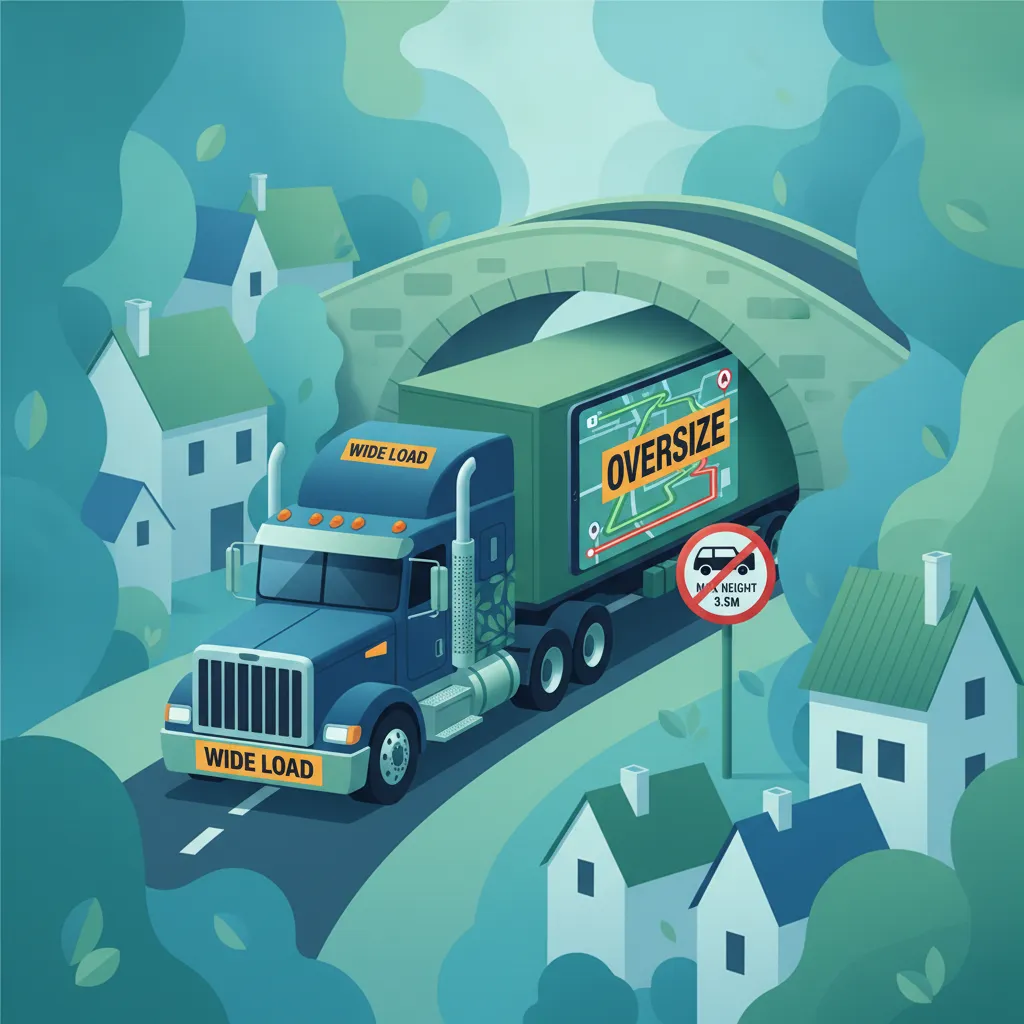
Lesson content overview
Operating a heavy goods vehicle (HGV) under Category C or CE in France requires more than excellent hands-on driving skills. It demands rigorous administrative, physical, and cognitive preparation before the wheels even begin to turn. Route planning for oversized vehicles is a core competency within the French goods vehicle licence framework. This process aligns your vehicle’s physical characteristics with the dynamic and static constraints of the French road network, ensuring safety, legal compliance, and operational efficiency.
When a vehicle or its cargo exceeds standard regulatory dimensions, it transitions from a standard heavy vehicle to a specialized category, often requiring exceptional transport authorizations (transports exceptionnels). This lesson details the techniques, regulations, and technologies necessary to plan safe routes, navigate infrastructure limitations, and maintain compliance with the French Code de la Route.
Professional logistics and route planning rely on five foundational pillars. These principles are designed to safeguard public infrastructure, maintain traffic flow, and protect the driver and cargo from catastrophic collisions or legal liabilities.
The safety margin is a mandatory buffer added to a vehicle’s physical dimensions when assessing route suitability. For vertical clearance, French national guidelines suggest a safety buffer of at least 0.20 to 0.30 metres to account for road resurfacing, bridge deflection, vehicle suspension bounce, or cargo shifting.
The preventive physical buffer calculated between the absolute maximum dimensions of the loaded vehicle (including any load overhang or antenna height) and the physical boundaries of the road infrastructure.
Failing to maintain a safety margin can lead to direct impacts with overhead structures, even if the vehicle’s nominal height matches the posted limit on a bridge sign.
Heavy goods vehicles must distribute their gross weight evenly across all axles. In France, overloading a single axle (surcharge à l'essieu) degrades road surfaces rapidly and severely compromises steering and braking performance. Proper load distribution ensures that the vehicle adheres to maximum legal axle load limits while navigating weight-restricted bridges.
When a vehicle's dimensions or weight exceed standard statutory limits, the operator must obtain an official authorization (autorisation de transport exceptionnel) from the French regional prefecture or transport authorities. Drivers must carry physical or digital copies of these permits and adhere strictly to the designated routes, schedules, and escort requirements specified within them.
Standard consumer GPS applications do not account for heavy vehicle height restrictions, weight limits, or local environmental bans. Professional HGV operators must utilize specialized heavy-vehicle navigation systems programmed with the truck’s exact dimensions, axle count, and total gross weight to prevent accidental entry into restricted zones.
Unforeseen road closures, traffic accidents, or sudden weather-related restrictions can compromise a primary route. Drivers must have predefined, pre-authorized alternative routes (detours) that accommodate the vehicle’s weight and size profiles, preventing panic-driven detours down unsuitable narrow streets or under low clearances.
Before planning a route, you must know the exact maximum legal limits for standard vehicles under the French Code de la Route. Any vehicle exceeding these standard dimensions must be operated under the convoi exceptionnel framework.
| Dimension / Metric | Standard Maximum Limit (France) | Regulatory Notes |
|---|---|---|
| Standard Width | 2.55 metres | Extended to 2.60 metres for isothermal/refrigerated bodywork. |
| Rigid Truck Length (Category C) | 12.00 metres | Single rigid vehicle without trailer. |
| Articulated Vehicle Length (CE) | 16.50 metres | Tractor unit coupled with a semi-trailer. |
| Road Train Length (CE) | 18.75 metres | Rigid truck coupled with a drawbar trailer. |
| Height | No absolute national legal limit | Standard bridge clearance clearance is 4.00 metres on secondary routes. Heights over 4.00 m require special routing. |
| Max Standard Weight (2 Axles) | 19 tonnes | Standard rigid vehicle. |
| Max Standard Weight (3 Axles) | 26 tonnes | Standard rigid vehicle. |
| Max Standard Weight (4+ Axles) | 32 tonnes | Standard rigid vehicle. |
| Max Standard Combination Weight | 40 or 44 tonnes | Dependent on axle count and configuration for combined transport. |
Any load that projects beyond the rear of the vehicle by more than 1 metre must be equipped with a reflective sign and light system (visible from at least 150 metres at night) and must not exceed a maximum overhang (saillie) of 3 metres.
Infrastructure restrictions are indicated by regulatory signage along the French road network. Understanding these signs is a critical component of your driving theory exam.
Bridges, overpasses, and low tunnels present a structural risk to overheight vehicles. In France, bridges with clearances of less than 4.30 metres are signed with specific height restriction indicators.
When encountering a B11 height restriction sign, you must evaluate the vehicle’s height plus your pre-calculated safety margin. If the sign indicates 3.8m and your vehicle measures exactly 3.8m to the highest point of its cargo, you must not attempt to pass under the bridge.
Structural wear on bridges is determined by both the gross vehicle weight (GVW) and the concentrated force of individual axles. You must recognize and obey weight restriction signage:
Additionally, secondary or historical bridges often carry axle weight limits to protect their structural foundations.
Overloading Axles: Even if your total combination weight is within the limits of a B12 sign, if your rear axle load exceeds the limit indicated on a B13 sign due to poor cargo distribution, you are committing a severe violation and risking structural bridge failure.
French urban centers frequently feature access restrictions designed to protect vulnerable road users, historical buildings, and air quality.
ZTL zones restrict through-traffic in historic urban cores. Oversized vehicles are strictly prohibited unless they hold special local delivery permits issued by the municipal town hall (Mairie).
Zones à Faibles Émissions mobilité (ZFE-m) limit access for vehicles based on their emission classifications (Crit'Air vignettes). Heavy commercial vehicles (Category C/CE) are subject to stricter entry windows and classification requirements than passenger cars.
Many local departments in France impose seasonal, holiday, or weekend bans on heavy goods vehicles over 7.5 tonnes (e.g., the general weekend ban from Saturday 22:00 to Sunday 22:00). When planning a route, you must factor in these temporal restrictions, which may force a planned route to close temporarily for heavy vehicle traffic.
If your vehicle or load exceeds the standard dimensions or weight limits outlined in the Code de la Route, it is legally classified as an exceptional transport (convoi exceptionnel). You must apply for a specific permit through the official state portal (under the supervision of the DREAL - Direction Régionale de l’Environnement, de l’Aménagement et du Logement).
Establish Vehicle Specifications: Determine the precise total length, width, height, gross weight, and individual axle weights of the loaded vehicle.
Determine Transport Category: Classify the load into Category 1, 2, or 3 based on dimensions and weight thresholds.
Select and Verify the Route: Plot a route using designated national heavy-transport corridors (itinéraires de transports exceptionnels) that can handle your load profile.
Submit the Application (DREAL): File the technical dossier detailing the cargo, vehicle specifications, requested route, and any necessary escort details.
Obtain and Review the Authorization: Once approved, review the conditional requirements, which may dictate travel times (e.g., night driving only), mandatory escorts (voiture de guidage), or police coordination.
A critical error for many entry-level Category C and CE drivers is using standard consumer GPS applications. These systems do not account for physical or legal commercial vehicle restrictions, which can lead to bridge strikes, gridlocked trucks on narrow historic streets, and substantial fines.
A professional HGV navigation system requires you to enter the following parameters before departing:
The Driver's Ultimate Responsibility: While specialized GPS units are highly effective risk mitigation tools, they do not replace physical road signage. If a GPS instructs you to turn down a street containing a B11 height restriction sign or a B12 weight sign that prohibits your vehicle, you must obey the physical sign. In French traffic law, the driver is always solely responsible for a bridge strike or restricted road infraction.
A well-prepared route plan must contain a contingency strategy. If a planned highway exit is blocked due to an accident, or if a bridge on your primary route is closed for emergency maintenance, you must execute a calculated detour.
To pass the French Category C/CE driving theory exam and operate safely as a professional driver, you must recognize the consequences of violating route restrictions.
Understanding the physical dynamics of an oversized vehicle is critical when navigating French infrastructure:
Planning routes for oversized vehicles in France requires aligning your vehicle's exact dimensions—height, width, length, and axle weights—with posted infrastructure limits and legal permit requirements. French road signs B11 (height), B12 (total weight), and B13 (axle weight) provide regulatory limits that must always be evaluated against your vehicle plus a mandatory safety margin of 0.20–0.30 metres for vertical clearance. Vehicles exceeding standard dimensions enter the convoi exceptionnel framework, requiring permits from the DREAL that specify approved routes, times, and escort requirements. Specialized HGV navigation systems are essential tools, but they do not replace the driver's obligation to obey physical road signage. Drivers must also prepare contingency plans using pre-authorized detour routes because standard passenger detours frequently lead through areas unsuitable for heavy goods vehicles.
A short set of high-value points that capture the most important learning from this lesson.
Route planning for oversized vehicles aligns your vehicle's physical dimensions with static and dynamic constraints of the French road network to ensure safety and legal compliance.
The safety margin principle requires adding a buffer of 0.20 to 0.30 metres to vertical clearances to account for road resurfacing, bridge deflection, suspension bounce, and cargo shifting.
Exceptional transport permits (convoi exceptionnel) classify oversized loads into three categories based on specific width, length, and weight thresholds that determine authorization requirements.
Specialized heavy vehicle GPS systems must be programmed with exact dimensions, axle weights, and GCW—standard consumer GPS does not account for commercial vehicle restrictions.
Contingency planning is mandatory; drivers must have pre-authorized alternative routes because standard passenger-car detour signs often route vehicles through areas unsuitable for heavy goods.
Explore all units and lessons included in this driving theory course.
B11 sign = height limitation, B12 sign = total weight limitation, B13 sign = individual axle weight limitation; always add your safety margin before proceeding.
Heights over 4.00 metres require special routing in France; standard bridge clearance on secondary routes is 4.00 metres.
Load overhang exceeding 1 metre requires reflective signs and lights visible from at least 150 metres at night, with a maximum overhang of 3 metres.
Weekend heavy vehicle bans (over 7.5 tonnes) typically run from Saturday 22:00 to Sunday 22:00 in many French departments.
The driver bears sole legal responsibility for bridge strikes or restricted road infractions—even if a GPS instructs otherwise, physical signage must be obeyed.
Assuming the warehouse height measurement is correct without physically verifying with a measuring pole; load heights vary due to tire pressure, suspension settings, or shifting cargo.
Relying on standard consumer GPS applications that do not account for height restrictions, weight limits, or environmental zone bans.
Following general passenger-car detour signs (déviation) without checking for HGV symbols, leading vehicles into narrow streets with low clearances.
Deviating from an approved convoi exceptionnel route without emergency authorization from police or DREAL, which constitutes a serious transport law violation.
Neglecting to account for time-based restrictions such as weekend bans or ZFE-m emission windows when planning the primary route timeline.
Lesson content overview
A short set of high-value points that capture the most important learning from this lesson.
Route planning for oversized vehicles aligns your vehicle's physical dimensions with static and dynamic constraints of the French road network to ensure safety and legal compliance.
The safety margin principle requires adding a buffer of 0.20 to 0.30 metres to vertical clearances to account for road resurfacing, bridge deflection, suspension bounce, and cargo shifting.
Exceptional transport permits (convoi exceptionnel) classify oversized loads into three categories based on specific width, length, and weight thresholds that determine authorization requirements.
Specialized heavy vehicle GPS systems must be programmed with exact dimensions, axle weights, and GCW—standard consumer GPS does not account for commercial vehicle restrictions.
Contingency planning is mandatory; drivers must have pre-authorized alternative routes because standard passenger-car detour signs often route vehicles through areas unsuitable for heavy goods.
Explore all units and lessons included in this driving theory course.
B11 sign = height limitation, B12 sign = total weight limitation, B13 sign = individual axle weight limitation; always add your safety margin before proceeding.
Heights over 4.00 metres require special routing in France; standard bridge clearance on secondary routes is 4.00 metres.
Load overhang exceeding 1 metre requires reflective signs and lights visible from at least 150 metres at night, with a maximum overhang of 3 metres.
Weekend heavy vehicle bans (over 7.5 tonnes) typically run from Saturday 22:00 to Sunday 22:00 in many French departments.
The driver bears sole legal responsibility for bridge strikes or restricted road infractions—even if a GPS instructs otherwise, physical signage must be obeyed.
Assuming the warehouse height measurement is correct without physically verifying with a measuring pole; load heights vary due to tire pressure, suspension settings, or shifting cargo.
Relying on standard consumer GPS applications that do not account for height restrictions, weight limits, or environmental zone bans.
Following general passenger-car detour signs (déviation) without checking for HGV symbols, leading vehicles into narrow streets with low clearances.
Deviating from an approved convoi exceptionnel route without emergency authorization from police or DREAL, which constitutes a serious transport law violation.
Neglecting to account for time-based restrictions such as weekend bans or ZFE-m emission windows when planning the primary route timeline.
Explore search topics learners often look for when studying Route Planning for Oversized Vehicles. These topics reflect common questions about road rules, driving situations, safety guidance, and lesson level theory preparation for learners in France.
Browse additional driving theory lessons that cover connected traffic rules, road signs, and common driving situations related to this topic. Improve your understanding of how different rules interact across everyday traffic scenarios.
Learn how to distribute cargo weight evenly across axles to maintain vehicle stability and comply with French road safety regulations. Understand the relationship between centre of gravity, rollover risks, and tyre load ratings for safer professional driving operations.

In this lesson, learners explore the fundamental principles governing load distribution in goods vehicles, focusing on how cargo placement affects the centre of gravity and overall vehicle stability. The content emphasizes the importance of achieving longitudinal and lateral balance to prevent adverse vehicle dynamics such as excessive sway or unintended pivoting. By understanding weight transfer phenomena and the impact of cargo positioning on the vehicle’s pivot point, drivers can make informed decisions to ensure safe loading.

Carrying heavy loads or pulling trailers significantly alters a passenger vehicle's braking distances and stability characteristics. This lesson covers how to read weight limits (like gross vehicle weight ratings), distribute cargo weight evenly, and secure items inside the boot or on roof racks. You will learn to use specialized cargo straps and understand the risks of overloading your suspension and tyres.

In this lesson, the focus is on understanding weight limits for goods vehicles, including total gross vehicle weight and individual axle load restrictions. Learners will explore how French weight regulations define permissible loads and the consequences of exceeding these limits, such as increased wear on road surfaces and safety hazards. The lesson also discusses load balancing techniques to ensure optimal axle distribution, enhancing vehicle stability and compliance with legal standards.

In this lesson, drivers will learn about the relationship between a vehicle’s centre of gravity and its susceptibility to rollover incidents. The content covers how high-center-of-gravity loads, load shifts, and overloading can compromise lateral stability, especially during cornering or evasive maneuvers. Learners will gain insight into calculating safety margins and understanding the impact of cargo weight distribution on the overall stability of the vehicle.

This lesson covers the secure loading, distribution, and stowage of passenger luggage inside designated holding areas and overhead storage bins. Candidates will analyze how physical load distribution directly influences vehicle stability, braking distances, and center of gravity during maneuvers. By learning to secure loose cargo effectively, drivers prevent unexpected load shifts that could endanger passengers or degrade vehicle control.

In this lesson, drivers will learn how to calculate safe following distances based on vehicle speed, load, road conditions, and traffic density. The content explains the components of total stopping distance, including reaction time and braking distance, and how these are affected by factors such as wet road surfaces and heavy loads. Learners will also be introduced to French road safety guidelines for maintaining appropriate gaps to ensure sufficient time to react.

In this lesson, drivers will learn how to adjust their driving techniques in response to adverse weather conditions such as rain, fog, snow, ice, and strong winds. The content covers strategies for maintaining visibility, managing reduced traction on wet or icy surfaces, and adjusting speed and braking distances accordingly. Learners will also be introduced to the use of anti-skid and stability control systems under challenging weather.

This lesson focuses on methods to secure cargo effectively against shifts during transport, covering a range of anti-shift devices and techniques. Learners will be introduced to tie-down straps, chains, cargo nets, and other securing equipment, and will understand the criteria for selecting appropriate devices based on cargo weight and type. The material also discusses the legal requirements for cargo restraint in France and best practices for ensuring load stability throughout the journey.
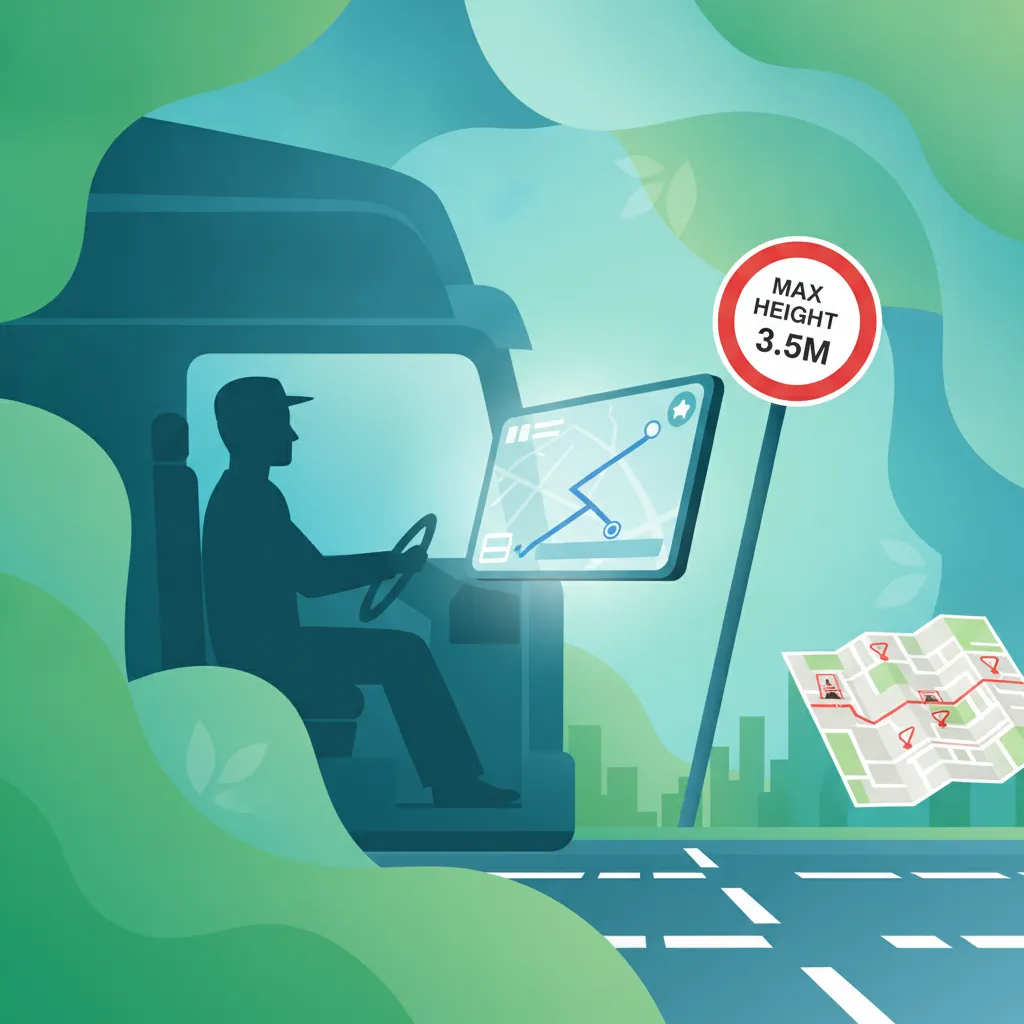
This lesson provides guidance on selecting preferred routes for heavy vehicles, taking into account freight corridors, toll roads, and restricted zones. Learners will be introduced to practical tools for route optimization, including GPS systems tailored for goods vehicles, and strategies for minimizing travel time while adhering to legal constraints. Emphasis is placed on balancing delivery efficiency with compliance to French transport policies.
Explore the regulations governing access to French low emission zones and urban traffic limited areas for professional transport. Gain a clear understanding of time-based access restrictions and the requirements for compliant route planning in dense city environments.

In this lesson, the focus is on French environmental zones (ZFE) and low emission requirements that affect goods vehicle access to certain urban areas. Learners will explore how emissions criteria determine vehicle eligibility, the process for obtaining permits, and the consequences of non-compliance. The content also covers strategies for route planning that consider environmental restrictions while maintaining operational efficiency.
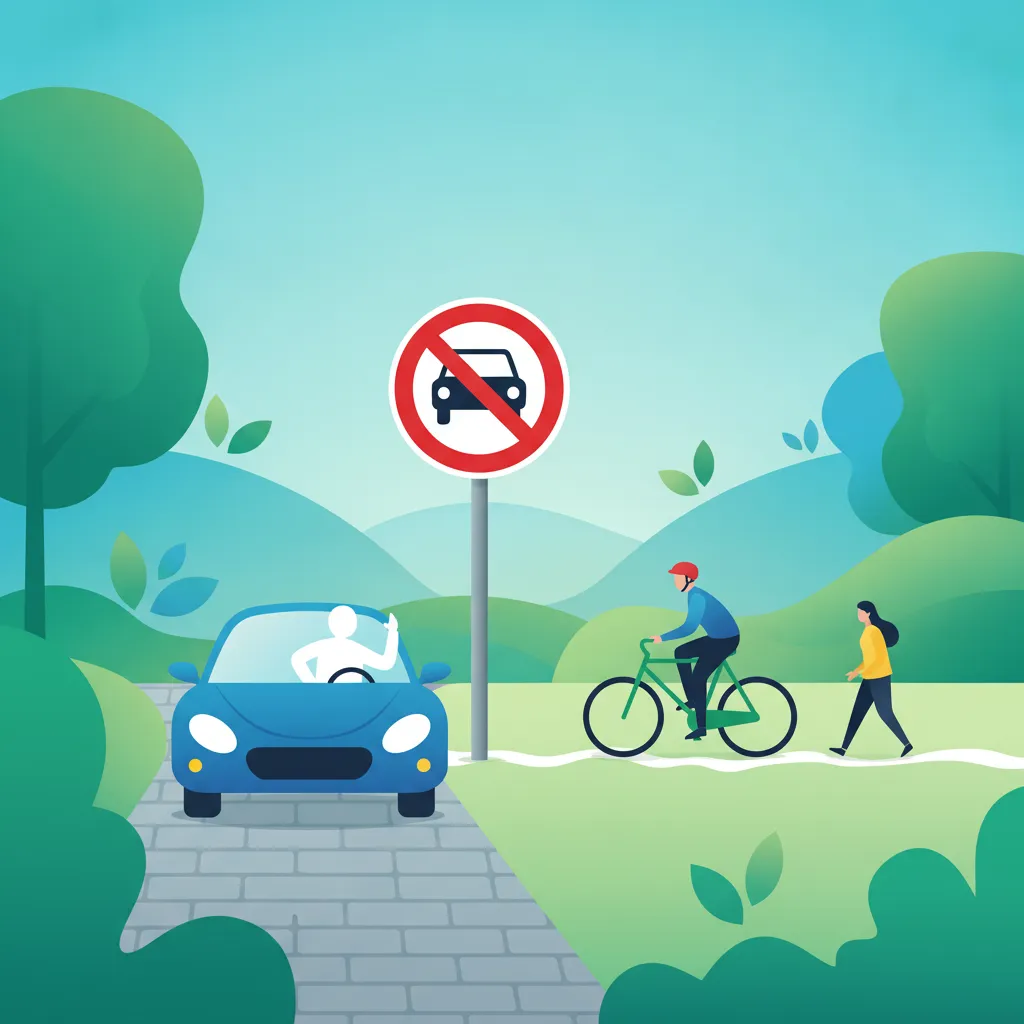
In this lesson, learners will explore the various access restrictions that apply to goods vehicles in France, such as low emission zones and weight-restricted areas. The focus is on understanding the process to obtain necessary access permits and authorisations, and how these restrictions influence route planning and operational decisions. Learners will also be introduced to specific regulations governing vehicle entry into city centres and environmentally sensitive zones.

This lesson examines the regulatory limits and environmental controls applied to large passenger vehicles operating in dense French urban centers. Drivers will study the Crit'Air clean air sticker system and low-emission zones (ZFE) that restrict access for older, high-polluting vehicles. It also addresses navigating physical constraints, such as narrow streets, tight turning radii, and strict municipal weight limits.
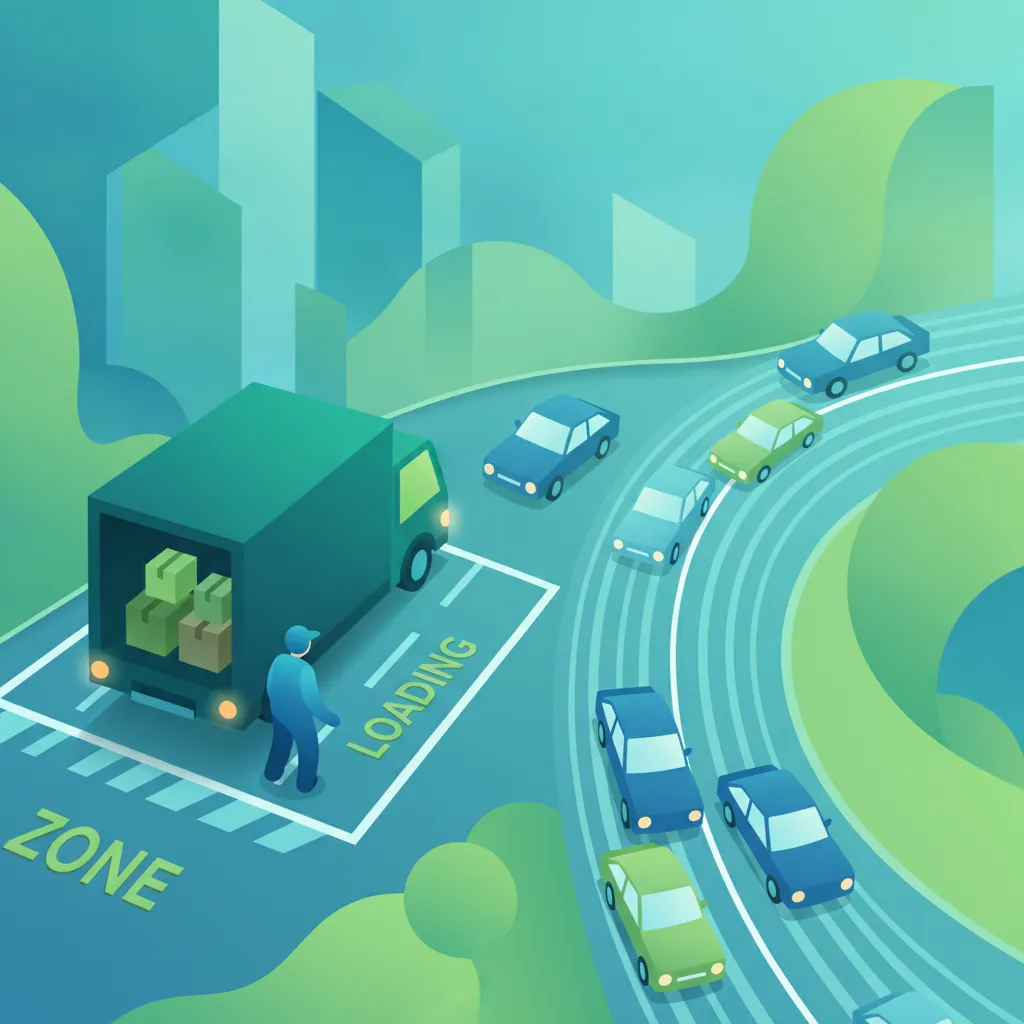
In this lesson, drivers will learn how to navigate urban delivery zones, understanding the rules surrounding loading bays, time windows, and restricted access areas. The content includes the process for obtaining delivery permits, strategies for safe maneuvering in congested city streets, and best practices for minimizing impact on pedestrian traffic. Learners will also be introduced to French city-specific regulations that govern goods vehicle deliveries.
This lesson provides guidance on selecting preferred routes for heavy vehicles, taking into account freight corridors, toll roads, and restricted zones. Learners will be introduced to practical tools for route optimization, including GPS systems tailored for goods vehicles, and strategies for minimizing travel time while adhering to legal constraints. Emphasis is placed on balancing delivery efficiency with compliance to French transport policies.

This lesson focuses on the unique challenges of performing deliveries in dense urban areas. Learners will explore best practices for loading and unloading safely, navigating traffic congestion, and minimizing risks to pedestrians and cyclists. The content also covers compliance with city regulations for delivery zones, scheduling considerations, and the importance of careful maneuvering to avoid accidents.
French municipalities utilize distinct low-speed configurations to foster pedestrian safety in residential and educational neighborhoods. This lesson details speed restrictions in 'zone 30', pedestrian-only districts, and shared 'zones de rencontre' where speed is capped at 20 km/h. You will learn how priority hierarchies shift in these zones, giving pedestrians legal priority to use the entire roadway.
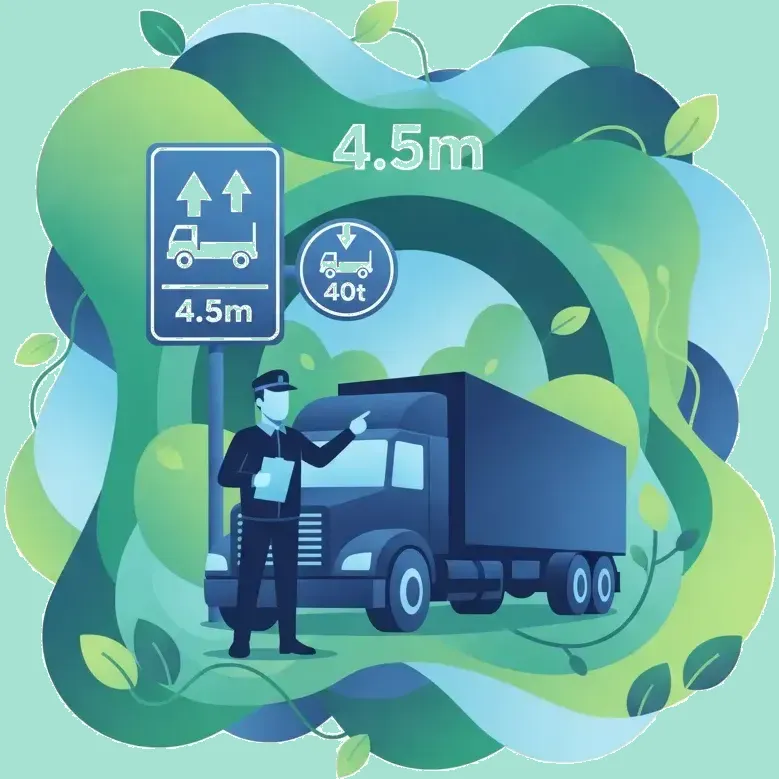
This lesson focuses on the weight and dimension restrictions that goods vehicles must adhere to while traveling on French roads. Learners will understand bridge caps, tunnel clearances, and other physical limitations imposed by infrastructure, and how these restrictions impact route planning and vehicle loading. The content also highlights legal load limits and the importance of compliance checks to avoid fines and roadblocks.
Find clear answers to common questions learners have about Route Planning for Oversized Vehicles. Learn how the lesson is structured, which driving theory objectives it supports, and how it fits into the overall learning path of units and curriculum progression in France. These explanations help you understand key concepts, lesson flow, and exam focused study goals.
Standard GPS units are designed for passenger vehicles and do not account for height, width, or weight restrictions. For C or CE vehicles, you must use a specialized professional GPS that allows you to input vehicle dimensions to prevent being routed onto restricted or dangerous roads.
You should check official government resources, prefectural orders, and local road information services. Understanding how to read traffic signs for weight and height limits is the primary skill tested in the theory exam for this topic.
You must prioritize safety by pulling over in a legal area to re-evaluate your route. Attempting to pass through restricted areas can lead to significant penalties, infrastructure damage, and vehicle accidents, which are critical points covered in the professional conduct section of your exam.
No, many rural and urban roads have specific weight or dimension restrictions. You must always cross-reference your route against local signage and infrastructure limits to ensure compliance with the French Code de la route.
Ready to focus your study? Use the practice search to find exactly the French driving theory questions you need for the Code de la route and permis de conduire ETG. Refine your knowledge on specific topics or challenging rules to boost your confidence and exam readiness.