
This lesson explores the critical aspects of tyre maintenance for heavy goods vehicles, including pressure requirements, condition assessment, and matching load ratings to your payload. As part of the Vehicle Size, Weight, and Stability unit, this knowledge is vital for preventing technical failures and ensuring road safety under the French Code de la route.

Lesson content overview
Commercial tyres are the sole interface between a loaded vehicle—which can weigh up to 44 tonnes in France under standard Category CE operations—and the road surface. This small area of contact, known as the contact patch (aire de contact), is responsible for transmitting all accelerating, braking, and cornering forces. For drivers of heavy goods vehicles (HGVs), tyre maintenance is not merely a matter of vehicle longevity; it is a critical component of active road safety and legal compliance under the French Code de la route.
An incorrectly maintained tyre compromises the vehicle’s handling characteristics, directly increases stopping distances, and substantially elevates fuel consumption due to heightened rolling resistance (résistance au roulement). Furthermore, tyre-related failures on motorways or departmental roads often result in catastrophic blowouts, potentially causing the driver to lose control of an articulated vehicle. Understanding how to manage pressure, verify structural integrity, and match tyres with vehicle payloads is an essential skill tested thoroughly in the French Category C and CE professional driving theory exams.
Tyre pressure represents the volume of compressed air contained within the tyre cavity, measured in kilopascals (kPa) or bars (commonly used in France). This internal pressure supports the heavy physical load of the vehicle and maintains the intended profile of the tyre tread. For heavy vehicles, correct pressure is highly dynamic and must be calibrated according to the vehicle's load status and manufacturer specifications.
A fundamental rule of tyre maintenance is that tyre pressure must always be measured when the tyres are "cold" (à froid). A tyre is considered cold if the vehicle has been stationary for at least three hours, or has driven less than three kilometres at low speed.
The air pressure measured within a tyre before heat generated by rolling friction causes the internal air to expand. It is the only reliable metric for setting tyre inflation to manufacturer-specified levels.
As a vehicle travels, the constant flexing of the rubber generates friction, which heats the internal air and raises the pressure. This is referred to as "hot pressure" (à chaud). Drivers must never bleed or release air from a hot tyre to match the recommended cold pressure specification, as doing so will leave the tyre severely under-inflated once it cools down. If pressure must be checked when tyres are hot, the reading should typically be approximately 0.5 to 0.8 bar higher than the recommended cold limit.
Improper inflation leads to dramatic changes in vehicle dynamics, safety margins, and operating costs. Both under-inflation and over-inflation carry distinct, severe risks:
Do not rely on visual checks: A heavy vehicle tyre may appear fully inflated even when it is dangerously under-inflated by 20% or more, due to the stiff sidewall construction of commercial tyres. Always use a calibrated tyre pressure gauge (manomètre) to verify the actual pressure.
The physical condition of a tyre determines its structural stability and its ability to channel water away on wet surfaces. Heavy vehicle operators in France must perform comprehensive pre-trip visual inspections to detect structural anomalies, wear patterns, and damage before embarking on any journey.
In France, the minimum legal tread depth (profondeur des rainures) for heavy goods vehicles is strictly regulated. The primary function of the tread grooves is to disperse water on wet roads, preventing the tyre from lifting off the asphalt—a dangerous phenomenon known as hydroplaning or aquaplaning.
The absolute minimum legal tread depth for commercial vehicles over 3.5 tonnes (Category C and CE) is 1.6 mm across the entire circumference of the tyre and across the central three-quarters of the tread width. However, driving safety advocates and manufacturers recommend replacing heavy vehicle tyres well before they reach this legal limit, especially on steering axles, to maintain adequate grip in adverse weather.
To assist drivers in monitoring tread wear, manufacturers mold wear indicators (témoins d'usure) into the main tread grooves. These are small raised rubber blocks measuring exactly 1.6 mm in height. When the surrounding tread wears down to be level with these indicators, the tyre is legally bald and must be replaced immediately.
During the pre-trip inspection (contrôle avant départ), drivers must look for physical defects that compromise the structural carcass of the tyre. The most critical defects include:
Every commercial tyre is engineered to operate safely within specific weight and speed limits. These parameters are encoded directly onto the tyre's sidewall and must be carefully matched to the vehicle's Maximum Authorized Mass (MAM) or Gross Vehicle Weight (GVW)—referred to in France as the Poids Total Autorisé en Charge (PTAC)—as well as the individual axle load limits.
A typical heavy vehicle tyre marking looks like this: 315/80 R 22.5 156/150 L. Each component of this code provides vital technical data:
The load index is a numerical code that corresponds to a maximum weight capacity. It is illegal to load a vehicle such that any single tyre is subjected to a load exceeding its rated capacity.
| Load Index | Maximum Load per Tyre (Single Configuration) |
|---|---|
| 140 | 2,500 kg |
| 146 | 3,000 kg |
| 150 | 3,350 kg |
| 152 | 3,550 kg |
| 156 | 4,000 kg |
Using tyres with an inadequate load index is a severe safety violation. If a vehicle is fully loaded to its legal payload capacity, undersized or under-rated tyres will experience extreme stress, leading to overheating, carcass deformation, and immediate failure.
Under the French Code de la route, the driver is legally responsible for the roadworthiness of the vehicle they are operating. This means that if a police inspection or a road safety control (contrôle routier) reveals defective, worn, or under-inflated tyres, the driver—not just the transport company—can face immediate administrative and financial penalties.
Manufacturer Specification Adherence: Tyres fitted to any axle must be of the same type, size, structure, and category of use. The load index and speed rating must meet or exceed the vehicle manufacturer’s specifications.
Tread Integrity: Tread depth must not fall below 1.6 mm. Additionally, there must be no deep cuts exposing the internal structure, and no visible deformation or bulging.
Axle Uniformity: On the same axle, the difference in tread wear between the two tyres (or pairs) must not exceed 5 mm. This ensures balanced braking force and prevents the vehicle from pulling to one side under heavy braking.
Winter Equipment (Loi Montagne II): In designated mountainous zones during the winter period (November 1st to March 31st), heavy vehicles must be equipped with specific winter tyres marked with the 3PMSF symbol (Three-Peak Mountain Snowflake) or carry removable non-skid devices (snow chains).
Operating a heavy vehicle with defective tyres in France can lead to severe penalties, including:
Understanding the relationship between tyre maintenance and physical forces is critical to avoiding hazardous driving situations.
When a Category C vehicle carrying a heavy payload approaches a wet curve on a highway, the water on the road must be cleared from the tyre contact path. If the tyres have a tread depth close to the 1.6 mm limit, their ability to disperse water is severely diminished.
If the vehicle’s speed is too high, a wedge of water builds up under the tyre tread, lifting the steering axle off the road surface. Because the front wheels lose traction, steering inputs become completely ineffective. This is hydroplaning. For heavy vehicles, this risk is magnified on the rear driving axles if they are unladen, as there is less downward force to cut through the water film.
A front-wheel blowout on a heavy vehicle is one of the most critical emergencies a driver can experience. It is typically caused by a tyre that was driven under-inflated, causing it to overheat and rupture, or by an ignored sidewall bulge.
In dual-tyre assemblies common on the drive and trailer axles of heavy vehicles, it is critical that both tyres have the exact same pressure and diameter.
If one tyre is under-inflated or significantly more worn than its partner, the other tyre is forced to carry a disproportionate share of the load. This causes the properly inflated tyre to exceed its load index capacity, leading to rapid overheating and potential failure. It also leads to uneven traction and unpredictable braking behavior.
To ensure safe, legal, and efficient fleet operations, professional drivers should incorporate these best practices into their daily routines:
This lesson covers the critical maintenance requirements for heavy goods vehicle tyres under French regulations, including the importance of measuring pressure when cold, understanding the 1.6 mm legal minimum tread depth with wear indicators, and interpreting load index codes on tyre sidewalls. It explains the severe consequences of improper inflation—under-inflation causes dangerous heat buildup and blowouts while over-inflation reduces traction and causes uneven wear. The content also emphasises driver legal responsibility for vehicle roadworthiness and provides practical safety scenarios including hydroplaning risk on wet roads and correct responses to front tyre blowouts. For C and CE licence candidates, mastering these technical requirements is essential for both theory exam success and safe professional driving practice.
A short set of high-value points that capture the most important learning from this lesson.
Tyre pressure must always be measured when tyres are cold (vehicle stationary for at least 3 hours or driven less than 3 km at low speed)
Under-inflation is the most dangerous tyre fault, causing excessive sidewall flexing, heat buildup, and potential blowout
The legal minimum tread depth for heavy vehicles in France is 1.6 mm across the central three-quarters of the tread width
Load index codes on tyre sidewalls indicate maximum weight capacities and must be matched to the vehicle's PTAC
Drivers are legally responsible for the roadworthiness of their vehicle's tyres under the French Code de la route
Explore all units and lessons included in this driving theory course.
Tyres lose pressure in cold conditions; never bleed hot tyres to match cold specifications
A tyre may appear properly inflated visually while being dangerously under-inflated by 20% or more due to stiff commercial sidewalls
Tyre age matters: oxidised rubber develops fine cracks (dry rot); tyres over 6 years require close scrutiny regardless of tread depth
On dual tyre assemblies, both tyres must have matching pressure and diameter to prevent load transfer to the good tyre
Winter equipment requirements under Loi Montagne II apply from November 1st to March 31st in designated mountainous zones
Relying on visual inspection alone to check tyre pressure without using a calibrated gauge
Releasing air from a hot tyre to match the recommended cold pressure specification, leaving it under-inflated when cool
Assuming a tyre with adequate tread depth is safe without checking for sidewall bulges, cuts, or age deterioration
Confusing single and dual load index numbers when fitting tyres, leading to inadequate load capacity
Believing that a slowly leaking tyre can be ignored if it appears partially inflated
Lesson content overview
A short set of high-value points that capture the most important learning from this lesson.
Tyre pressure must always be measured when tyres are cold (vehicle stationary for at least 3 hours or driven less than 3 km at low speed)
Under-inflation is the most dangerous tyre fault, causing excessive sidewall flexing, heat buildup, and potential blowout
The legal minimum tread depth for heavy vehicles in France is 1.6 mm across the central three-quarters of the tread width
Load index codes on tyre sidewalls indicate maximum weight capacities and must be matched to the vehicle's PTAC
Drivers are legally responsible for the roadworthiness of their vehicle's tyres under the French Code de la route
Explore all units and lessons included in this driving theory course.
Tyres lose pressure in cold conditions; never bleed hot tyres to match cold specifications
A tyre may appear properly inflated visually while being dangerously under-inflated by 20% or more due to stiff commercial sidewalls
Tyre age matters: oxidised rubber develops fine cracks (dry rot); tyres over 6 years require close scrutiny regardless of tread depth
On dual tyre assemblies, both tyres must have matching pressure and diameter to prevent load transfer to the good tyre
Winter equipment requirements under Loi Montagne II apply from November 1st to March 31st in designated mountainous zones
Relying on visual inspection alone to check tyre pressure without using a calibrated gauge
Releasing air from a hot tyre to match the recommended cold pressure specification, leaving it under-inflated when cool
Assuming a tyre with adequate tread depth is safe without checking for sidewall bulges, cuts, or age deterioration
Confusing single and dual load index numbers when fitting tyres, leading to inadequate load capacity
Believing that a slowly leaking tyre can be ignored if it appears partially inflated
Explore search topics learners often look for when studying Tyre Pressure, Condition, and Load Rating. These topics reflect common questions about road rules, driving situations, safety guidance, and lesson level theory preparation for learners in France.
Browse additional driving theory lessons that cover connected traffic rules, road signs, and common driving situations related to this topic. Improve your understanding of how different rules interact across everyday traffic scenarios.
Understand the legal and technical requirements for conducting pre-trip inspections on heavy goods vehicles. This guide details essential safety checks for braking systems, lights, and steering components to ensure full compliance with French traffic regulations and roadworthiness standards required for professional drivers operating vehicles over 3.5 tonnes.

This lesson outlines the essential components of a comprehensive pre-trip vehicle inspection for goods vehicles, emphasizing safety checks for brakes, tyres, lights, mirrors, coupling devices, and cargo. Learners will understand the importance of verifying that all safety equipment is functional and that cargo is properly secured before commencing a journey. The content also details the necessary documentation checks to ensure compliance with French road regulations.

This lesson provides strategies for planning routes that accommodate oversized goods vehicles while complying with French road restrictions. Learners will learn how to identify prohibited routes, evaluate bridge and tunnel limitations, and obtain necessary access permits. The content also addresses the use of specialised GPS systems for heavy vehicle routing and the importance of contingency planning for detours, ensuring safe and efficient transport operations.

In this lesson, drivers will learn about the mandatory documentation required for operating a goods vehicle in France. The content covers the NEPH number needed for licence applications, vehicle registration certificates (carte grise), and proof of insurance. Learners will also explore the technical inspection process, load and customs documentation for cross-border transport, and the importance of maintaining an up-to-date driver logbook.
This lesson provides guidance on selecting preferred routes for heavy vehicles, taking into account freight corridors, toll roads, and restricted zones. Learners will be introduced to practical tools for route optimization, including GPS systems tailored for goods vehicles, and strategies for minimizing travel time while adhering to legal constraints. Emphasis is placed on balancing delivery efficiency with compliance to French transport policies.

This lesson focuses on methods to secure cargo effectively against shifts during transport, covering a range of anti-shift devices and techniques. Learners will be introduced to tie-down straps, chains, cargo nets, and other securing equipment, and will understand the criteria for selecting appropriate devices based on cargo weight and type. The material also discusses the legal requirements for cargo restraint in France and best practices for ensuring load stability throughout the journey.

This lesson addresses the procedures and expectations when professional drivers encounter law enforcement or customs officials in France. Topics include the types of checks that may be performed, required documentation, rights and obligations of drivers, and the consequences of non-compliance. Learners will be guided on best practices for interacting with authorities, emphasizing cooperation, transparency, and the importance of maintaining valid and up-to-date documents for both the vehicle and driver.
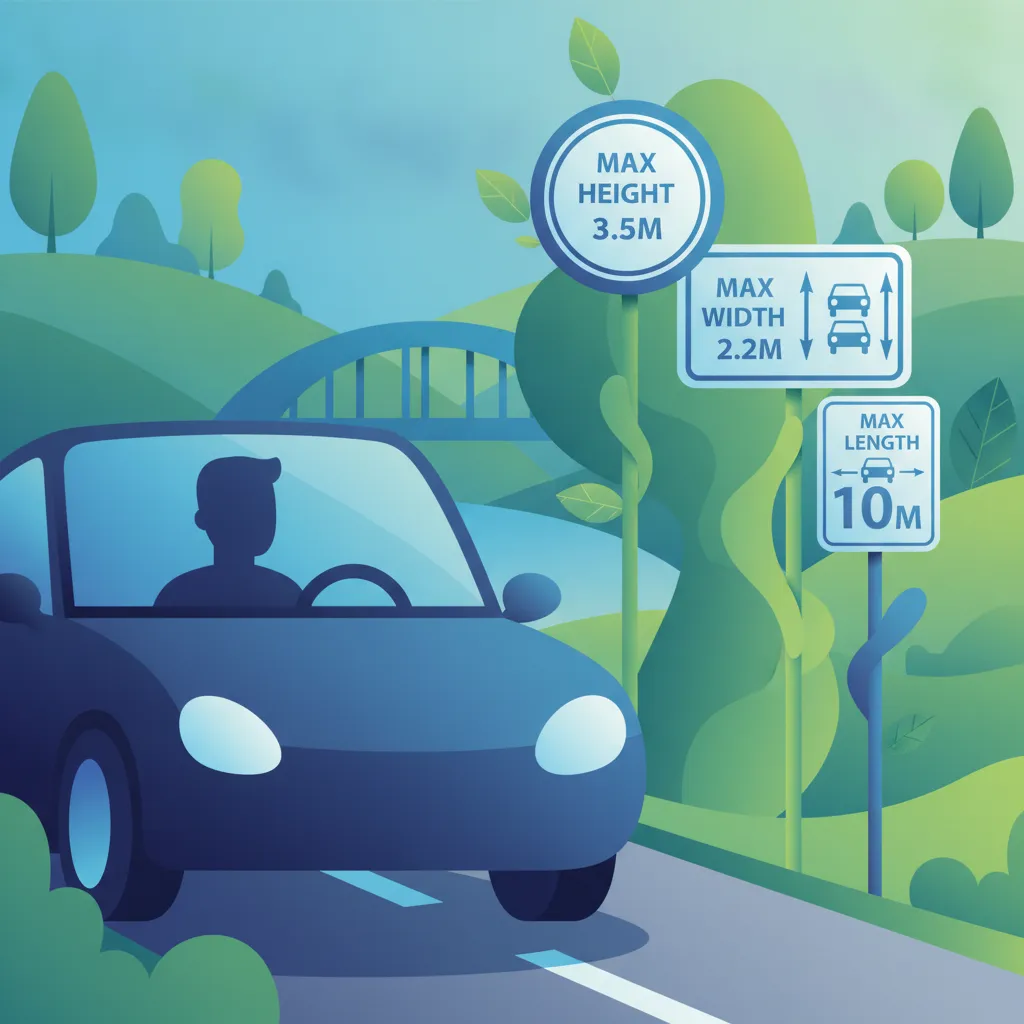
This lesson provides an in-depth analysis of how goods vehicles are classified according to their overall dimensions, such as length, width, height, and wheelbase. Learners will understand the legal limits imposed by French regulations for each vehicle class, and how these dimensions affect the vehicle’s classification and permissible routes. The material also explains the impact of cab size versus cargo space on maneuverability and route planning, highlighting the importance of accurate dimension assessment.

In this lesson, drivers will learn the essential steps to take following an accident involving a goods vehicle. The content covers contacting emergency services via 112, providing first aid, and safely positioning the vehicle to protect other road users. Learners will be instructed on documenting the incident, notifying insurance providers, and fulfilling legal obligations for accident reporting, including gathering witness statements.
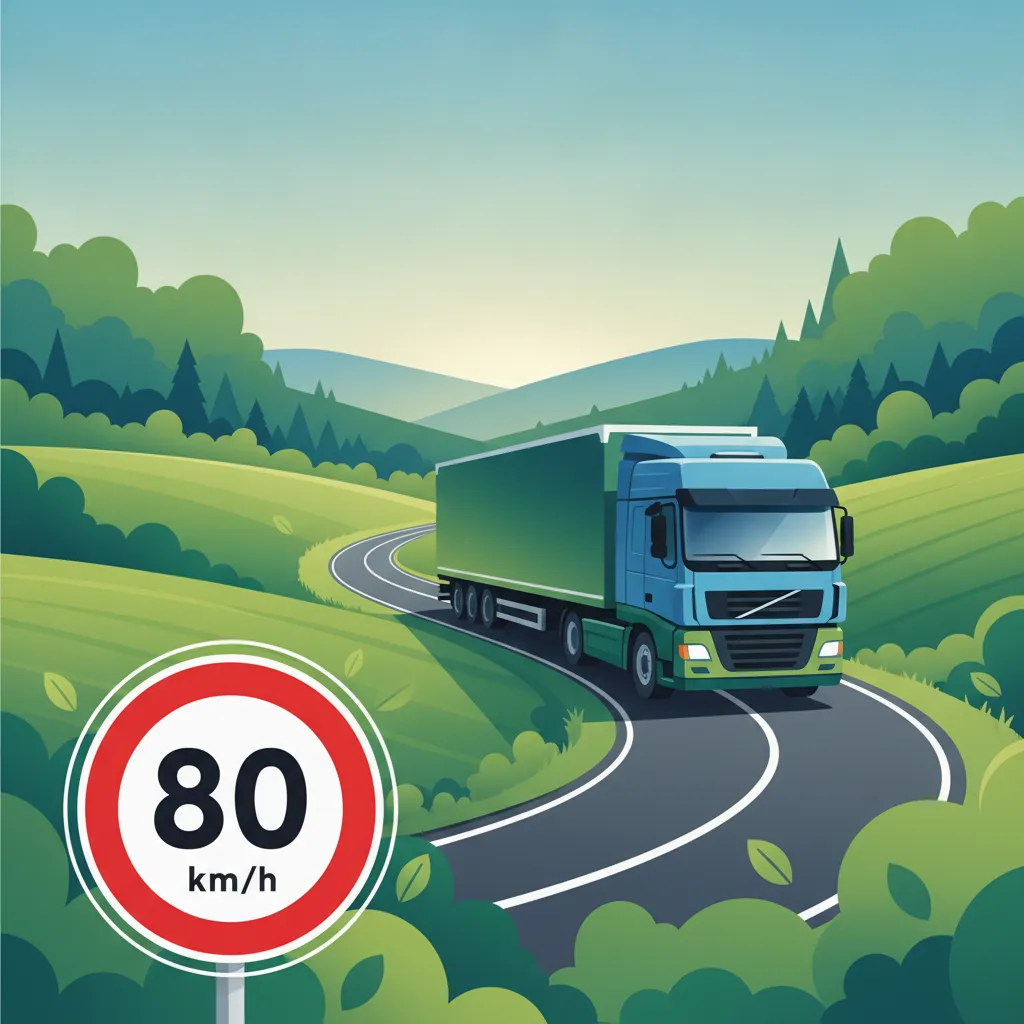
In this lesson, drivers will learn the specific speed limits that apply to goods vehicles across different road types in France, including urban areas, rural roads, and motorways. The content covers the differences between speed limit signs for heavy vehicles and standard passenger cars, the legal basis for these limits, and the importance of speed adaptation based on vehicle category and load. Learners will also be introduced to speed enforcement methods used in France, such as radar and speed cameras.
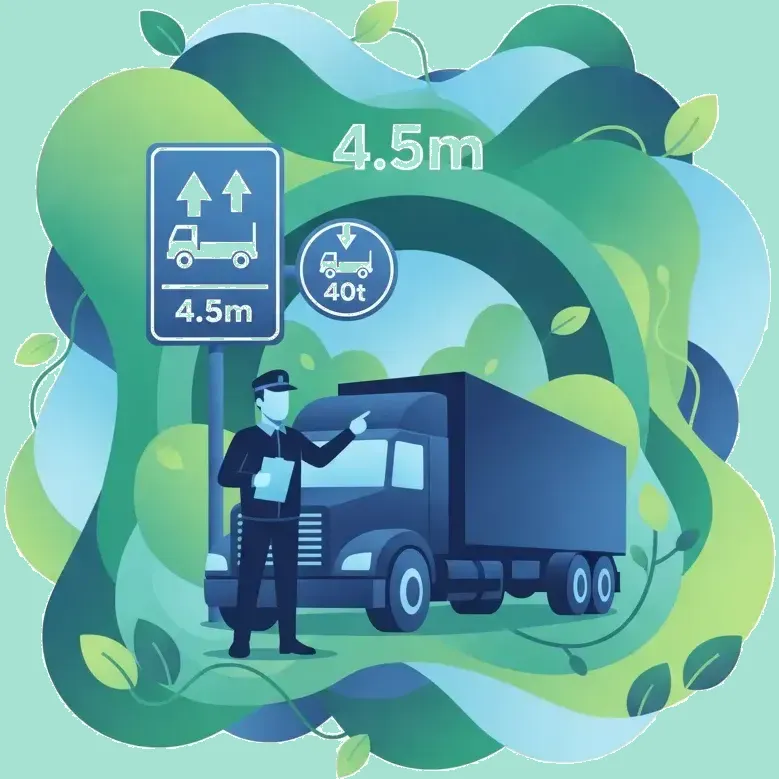
This lesson focuses on the weight and dimension restrictions that goods vehicles must adhere to while traveling on French roads. Learners will understand bridge caps, tunnel clearances, and other physical limitations imposed by infrastructure, and how these restrictions impact route planning and vehicle loading. The content also highlights legal load limits and the importance of compliance checks to avoid fines and roadblocks.
Explore the mechanics of commercial braking systems including air brakes, ABS, and ESP functionality. Learn how proper maintenance and load distribution directly influence braking distance and vehicle control on motorways and rural roads, ensuring you meet the safety requirements for operating heavy vehicles in compliance with French driving theory.

This lesson focuses on the various braking systems used in goods vehicles, including air brakes, hydraulic brakes, and advanced safety systems such as ABS and ESP. Learners will understand how these systems function, their impact on braking performance, and the importance of regular brake inspection and maintenance. The content also addresses brake wear, brake fade, and how these factors affect stopping distances, especially under heavy load conditions.
In this lesson, learners will explore the functions and benefits of ABS and ESP systems in goods vehicles, including how they enhance braking stability and prevent skids. The content explains the technology behind these systems, their activation conditions, and their role in emergency braking scenarios. Learners will also be introduced to the maintenance requirements and limitations of ABS and ESP in heavy vehicle operation.

Learners will be introduced to effective braking techniques tailored for AM vehicles, emphasizing progressive pressure application and the importance of maintaining grip. The lesson covers how to estimate stopping distances, execute emergency stops safely, and understand the limitations of light vehicle braking systems in France. Mastery of these techniques ensures riders can stop promptly and maintain control in various traffic scenarios.

This lesson covers techniques for managing gradients while driving goods vehicles, focusing on downhill control, engine braking, and appropriate gear selection. Learners will understand how load distribution and vehicle dynamics affect descending performance and the importance of avoiding brake overheating. The content includes practical advice on using hill start assistance systems and maintaining safe speeds on steep slopes.

In this lesson, drivers will learn how to calculate safe following distances based on vehicle speed, load, road conditions, and traffic density. The content explains the components of total stopping distance, including reaction time and braking distance, and how these are affected by factors such as wet road surfaces and heavy loads. Learners will also be introduced to French road safety guidelines for maintaining appropriate gaps to ensure sufficient time to react.

This lesson teaches advanced braking strategies, highlighting the correct application of progressive friction braking and auxiliary retardation systems like electric or hydraulic retarders. Drivers will learn to avoid abrupt braking inputs that could compromise passenger balance, particularly for standing passengers. It also covers emergency stop procedures, showing how to balance maximum deceleration with vehicle stability.

In this lesson, drivers will learn how to adjust their driving techniques in response to adverse weather conditions such as rain, fog, snow, ice, and strong winds. The content covers strategies for maintaining visibility, managing reduced traction on wet or icy surfaces, and adjusting speed and braking distances accordingly. Learners will also be introduced to the use of anti-skid and stability control systems under challenging weather.
This lesson provides a comprehensive overview of the four primary goods vehicle licence categories in France, distinguishing them by vehicle gross mass, length, and combination weight. Learners will understand the specific thresholds that define each category, such as C1 for vehicles up to 7.5 tonnes and C for vehicles over 3.5 tonnes, as well as CE for articulated combinations. The discussion includes the necessity of specific training, medical examinations, and professional driver status associated with each licence type under the Code de la route.
This lesson focuses on techniques for reversing safely with a trailer attached, including the use of spotters, mirrors, and backup cameras to mitigate blind spots. Learners will understand the steps for proper trailer coupling before reversing, how to control trailer sway, and the importance of using reverse gear properly. The content also covers safety checks to perform before reversing, such as ensuring the area is clear.

This lesson explains how to coordinate your front and rear brake controls to achieve maximum stopping power without compromising your lateral stability. You will study how to progressively squeeze the front brake lever to prevent sudden wheel lockup, while using the rear brake for stabilization. The lesson also highlights the function of Anti-Lock Braking Systems (ABS) and how they help you maintain steering control during emergency stops.
Find clear answers to common questions learners have about Tyre Pressure, Condition, and Load Rating. Learn how the lesson is structured, which driving theory objectives it supports, and how it fits into the overall learning path of units and curriculum progression in France. These explanations help you understand key concepts, lesson flow, and exam focused study goals.
A fully loaded heavy vehicle exerts significantly more pressure on the road surface. Maintaining the correct, manufacturer-recommended pressure for the specific load ensures even tread wear, prevents overheating, and keeps the braking performance within the expected safety margins of your C or CE category vehicle.
Using a tyre with an insufficient load rating is a major safety violation and an automatic fail in practical driving situations. It creates a high risk of tyre blowout, which is especially dangerous at motorway speeds, and makes the driver liable for technical non-compliance in the event of an inspection.
Professional drivers are required to perform a thorough pre-trip inspection before every journey. This includes checking for deep cuts, sidewall bulges, embedded objects, and ensuring the tread depth meets the legal minimum requirements stipulated in the French Code de la route.
Yes, long-distance driving causes tyres to heat up, which increases internal pressure. While you should check pressure when tyres are cold, knowing how your load affects this temperature increase is part of the professional maintenance responsibility required for heavy goods drivers.
Ready to focus your study? Use the practice search to find exactly the French driving theory questions you need for the Code de la route and permis de conduire ETG. Refine your knowledge on specific topics or challenging rules to boost your confidence and exam readiness.