
This lesson guides you through the complex task of reversing articulated vehicles safely, a critical skill for professional drivers in France. You will learn to integrate mirror usage, technological aids, and external spotters to minimize blind-spot risks. This training builds on your knowledge of vehicle dimensions to prepare you for both the official theory exam and real-world loading dock operations.

Lesson content overview
Reversing a heavy goods vehicle (HGV) with an attached trailer is widely recognized as one of the most demanding tasks a professional driver will perform. Under the French Code de la route and the standards required for the French Goods Vehicle Licence (Category C and CE), mastering this maneuver is not merely a practical test requirement—it is a critical daily operational safety standard.
When a trailer is attached, the vehicle’s overall length, weight distribution, and turning dynamics change dramatically. This lesson covers the essential principles, physical dynamics, safety protocols, and French legal regulations required to reverse a trailer safely and prevent collisions, structural damage, or jackknifing.
To safely reverse an articulated vehicle (véhicule articulé) or a road train (ensemble de véhicules), you must first understand the physics of articulation. Unlike a rigid vehicle, where the rear wheels follow the steering input of the front axle directly, a trailer reacts to steering inputs in reverse with opposite directional movement.
When you turn the steering wheel of the tractive unit (tracteur) to the right, the rear of the towing vehicle moves to the right. Because of the pivot point at the fifth wheel (sellette) or drawbar coupling, this pushes the front of the trailer to the right, which forces the rear of the trailer to swing to the left.
Therefore, to steer the trailer in a specific direction in reverse, you must initially steer the tractive unit in the opposite direction. Once the trailer has begun to angle in the desired direction, you must then "follow" the trailer by turning the steering wheel back in the direction of the turn to maintain a controlled arc or to straighten the combination.
The hazardous situation where the angle between the tractive unit and the trailer becomes too acute (typically exceeding 90 degrees), causing the tractive unit to push the trailer sideways. This can cause severe damage to the cab, the trailer landing gear, and the braking lines.
There is a noticeable delay between the steering input of the tractive unit and the physical response of the trailer. This delay is directly proportional to the trailer’s length:
The sheer physical size of Category C and CE vehicle combinations creates massive blind spots (angles morts), particularly to the rear and sides during a turning maneuver. As the trailer angles, the driver’s direct line of sight through the side mirrors is cut off on one side, creating a temporary "blind side" where the trailer body blocks the view of its own rear axle.
Before initiating any reversing maneuver, you must optimize your mirrors (rétroviseurs). Standard mirrors must be supplemented by wide-angle (convex) mirrors to cover the maximum area possible.
Modern heavy vehicles are increasingly equipped with rear-view cameras (caméras de recul) and ultrasonic proximity sensors. While these tools are excellent for identifying low-lying obstacles directly behind the trailer bumper, they must never replace active mirror scanning and physical checks.
Electronic backup aids can fail, get coated in road grime, or have calibrated lenses that distort distances. Never rely solely on a backup camera. If your camera system fails, you must rely entirely on mirrors and a physical spotter.
When reversing in tight urban environments, narrow delivery bays, or areas with high pedestrian activity, using a spotter (guide de manœuvre) is highly recommended—and often mandatory under company safety protocols and local site rules.
A spotter’s primary role is to act as the driver's eyes in areas that are physically impossible to see from the cab. For a spotter to be effective, both the driver and the spotter must follow these strict rules:
Directional Guides: Pointing clearly in the direction the rear of the trailer needs to go.
Distance Indicators: Holding hands apart to show the remaining distance to an obstacle (e.g., a loading dock wall), closing the distance between the hands as the vehicle approaches.
Emergency Stop: Crossing both arms overhead in an "X" shape or waving arms vigorously. This signal requires an immediate, firm application of the vehicle's brakes.
Before engaging reverse gear, a professional driver must ensure the vehicle and cargo are in a safe, legal state to maneuver. Reversing places unique lateral and torsional stresses on the vehicle coupling and cargo restraints.
You must confirm that the coupling system is fully locked and secure. Reversing a trailer that is improperly coupled can cause the trailer to detach, slip off the fifth wheel, or damage the kingpin.
Reversing on uneven ground or at tight angles causes the trailer to lean. If the cargo is not secured correctly, this lateral force can cause the load to shift.
Executing a safe reverse maneuver requires a systematic approach. The "Get Out and Look" (G.O.A.L.) rule is the foundation of professional driving.
Perform a Physical Walkaround (G.O.A.L.): Before shifting into reverse, secure the vehicle, pull the parking brake, step out of the cab, and physically inspect the entire area behind and around your trailer. Look for low-hanging branches, overhead cables, soft ground, trash bins, or hidden posts.
Plan the Maneuver Path: Decide whether a driver-side (left) or passenger-side (right) reverse is best. Always choose a driver-side reverse if possible, as it keeps the trailer in your direct line of sight for longer.
Activate Warning Signals: Turn on your vehicle's reverse lights and, if maneuvering in a hazardous or congested area, activate your hazard warning lights (feux de détresse) to warn pedestrians and other motorists.
Select the Correct Gear: Engage the lowest available reverse gear. For heavy, loaded combinations, use the crawler reverse gear (if equipped) to maintain absolute control without needing to ride or slip the clutch.
Reverse at a Crawl Speed: Move at a very slow pace, ideally no faster than walking speed (3 to 5 km/h). This minimizes kinetic energy, gives you more time to correct steering errors, and allows for an instant stop if an obstacle appears.
Correct Early and Often: Make small, progressive steering adjustments. If the trailer begins to angle too sharply, do not try to force it. Pull forward (redresser) to straighten the combination and start the backward movement again.
Operating a heavy vehicle in France requires strict compliance with the Code de la route. Reversing is legally treated as a "special maneuver," meaning the reversing vehicle does not have the right of way and bears the primary legal responsibility for preventing accidents.
This article outlines general lane discipline and maneuvering. Under French traffic law, reversing on public roads is permitted only when absolutely necessary (e.g., when entering a delivery yard or clearing an obstructed path) and must be executed without creating a hazard or obstruction to other road users.
Reversing on motorways (autoroutes), including on slip roads, emergency lanes (bandes d'arrêt d'urgence), or toll booth plazas, is strictly prohibited and carries severe penalties, including heavy fines, vehicle impoundment, and license suspension.
Under Article R313-15 of the Code de la route, vehicles must be equipped with functioning reverse lights (feux de marche arrière).
While hazard lights are primarily intended to signal a broken-down or stationary hazard, French road safety guidelines permit and recommend their use during complex reversing maneuvers on or near public roadways. They provide an extra level of high-visibility warning to oncoming drivers who may not immediately notice a long trailer swinging across lanes of traffic.
The environment in which you reverse plays a massive role in how the trailer behaves. You must constantly adjust your driving technique to match road, weather, and traffic conditions.
When reversing down a gradient:
Narrow French streets often require heavy vehicle drivers to negotiate tight corners and blind alleys.
When confronted with a dead end or narrow street:
| Mistake | Physical/Legal Consequence | Preventive Action |
|---|---|---|
| Over-steering in reverse | The trailer angles too quickly, leading to a jackknife (mise en portefeuille). | Make small steering adjustments; "follow" the trailer early. |
| Reversing too fast | Drastically reduces your reaction time, increases stopping distance, and risks severe structural impact. | Maintain a slow crawl speed (vitesse au pas); use low/crawler reverse gear. |
| Failing to check the blind side | Colliding with stationary objects, pedestrians, or smaller vehicles hidden by the trailer body. | Use a spotter, maximize mirror adjustments, and use the G.O.A.L. method. |
| Neglecting cargo distribution | An unevenly loaded trailer can slide sideways or tip over on uneven ground. | Ensure proper weight distribution and tie-down security before moving. |
| Reversing on a motorway carriageway | Extreme hazard; high probability of a high-speed collision; severe criminal penalties. | Never reverse on a motorway; continue to the next exit or service area. |
Reversing heavy goods vehicles with trailers requires understanding the opposite steering principle—turn the tractive unit opposite to the desired trailer direction, then follow to maintain control. Safe reversing demands a systematic approach using the G.O.A.L. method, optimal mirror setup with wide-angle supplements, and a spotter when visibility is limited. Short drawbar trailers react sharply and risk jackknifing quickly, while longer semi-trailers respond more slowly but need more correction space. Under French law (Article R412-9), reversing vehicles bear primary responsibility for accidents and must never obstruct traffic; motorway reversing is strictly prohibited.
A short set of high-value points that capture the most important learning from this lesson.
When reversing a trailer, steer the tractive unit in the opposite direction to where you want the trailer rear to go, then 'follow' the trailer by turning back to maintain a controlled arc
Jackknifing (mise en portefeuille) occurs when the angle between truck and trailer exceeds approximately 90 degrees, causing loss of control and potential severe damage
A spotter (guide de manœuvre) is essential in tight spaces and must maintain visual contact with the driver; if you cannot see the spotter, you must stop immediately
The G.O.A.L. method—Get Out And Look—is the foundation of safe reversing, requiring a physical walkaround before engaging reverse gear
Under Article R412-9 of the French Code de la route, the reversing vehicle bears primary legal responsibility for preventing accidents and must not obstruct traffic
Explore all units and lessons included in this driving theory course.
Short drawbar trailers react quickly and sharply to steering, making them easier to jackknife, while long semi-trailers react more slowly but require more space to correct bad angles
Always prefer a driver-side (left) reverse when possible, as the passenger-side blind spot becomes severely restricted during right turns
Electronic backup aids such as cameras and sensors can fail or become obscured; they supplement but never replace mirrors and physical spotters
Cargo weight distribution affects reversing stability—rear-heavy loads reduce tongue weight and traction, while high centers of gravity increase rollover risk on uneven terrain
Reverse lights (feux de marche arrière) must function on both the tractive unit and trailer, activating automatically when reverse gear is engaged
Over-steering during reverse causes the trailer to angle too quickly, leading to jackknifing; always make small, progressive adjustments instead
Reversing at excessive speed drastically reduces reaction time and stopping ability; maintain crawl speed (3-5 km/h) comparable to walking pace
Failing to check the blind side before and during reverse can cause collisions with pedestrians, vehicles, or objects hidden by the trailer body
Neglecting cargo distribution checks can result in trailer instability, load shifting, or loss of traction on slippery or uneven surfaces
Attempting to reverse on a motorway or autoroute is strictly prohibited and carries severe criminal penalties including fines and license suspension
Lesson content overview
A short set of high-value points that capture the most important learning from this lesson.
When reversing a trailer, steer the tractive unit in the opposite direction to where you want the trailer rear to go, then 'follow' the trailer by turning back to maintain a controlled arc
Jackknifing (mise en portefeuille) occurs when the angle between truck and trailer exceeds approximately 90 degrees, causing loss of control and potential severe damage
A spotter (guide de manœuvre) is essential in tight spaces and must maintain visual contact with the driver; if you cannot see the spotter, you must stop immediately
The G.O.A.L. method—Get Out And Look—is the foundation of safe reversing, requiring a physical walkaround before engaging reverse gear
Under Article R412-9 of the French Code de la route, the reversing vehicle bears primary legal responsibility for preventing accidents and must not obstruct traffic
Explore all units and lessons included in this driving theory course.
Short drawbar trailers react quickly and sharply to steering, making them easier to jackknife, while long semi-trailers react more slowly but require more space to correct bad angles
Always prefer a driver-side (left) reverse when possible, as the passenger-side blind spot becomes severely restricted during right turns
Electronic backup aids such as cameras and sensors can fail or become obscured; they supplement but never replace mirrors and physical spotters
Cargo weight distribution affects reversing stability—rear-heavy loads reduce tongue weight and traction, while high centers of gravity increase rollover risk on uneven terrain
Reverse lights (feux de marche arrière) must function on both the tractive unit and trailer, activating automatically when reverse gear is engaged
Over-steering during reverse causes the trailer to angle too quickly, leading to jackknifing; always make small, progressive adjustments instead
Reversing at excessive speed drastically reduces reaction time and stopping ability; maintain crawl speed (3-5 km/h) comparable to walking pace
Failing to check the blind side before and during reverse can cause collisions with pedestrians, vehicles, or objects hidden by the trailer body
Neglecting cargo distribution checks can result in trailer instability, load shifting, or loss of traction on slippery or uneven surfaces
Attempting to reverse on a motorway or autoroute is strictly prohibited and carries severe criminal penalties including fines and license suspension
Explore search topics learners often look for when studying Safe Reversing Practices with Trailers. These topics reflect common questions about road rules, driving situations, safety guidance, and lesson level theory preparation for learners in France.
Browse additional driving theory lessons that cover connected traffic rules, road signs, and common driving situations related to this topic. Improve your understanding of how different rules interact across everyday traffic scenarios.
Understand the specific challenges of navigating narrow French urban streets and loading areas. This lesson covers spatial awareness, urban traffic rule compliance, and professional techniques for managing heavy vehicle dimensions in restricted delivery environments according to the Code de la route requirements.
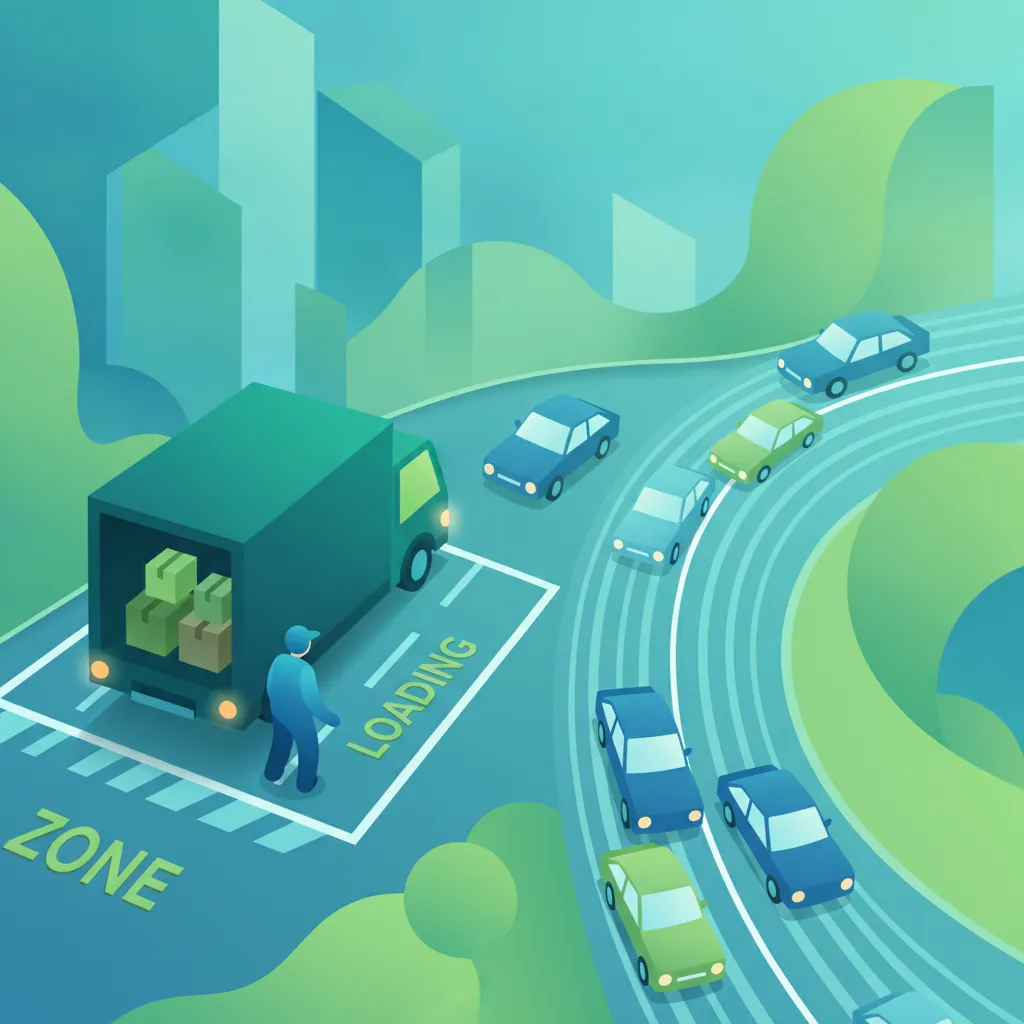
In this lesson, drivers will learn how to navigate urban delivery zones, understanding the rules surrounding loading bays, time windows, and restricted access areas. The content includes the process for obtaining delivery permits, strategies for safe maneuvering in congested city streets, and best practices for minimizing impact on pedestrian traffic. Learners will also be introduced to French city-specific regulations that govern goods vehicle deliveries.

This lesson focuses on the unique challenges of performing deliveries in dense urban areas. Learners will explore best practices for loading and unloading safely, navigating traffic congestion, and minimizing risks to pedestrians and cyclists. The content also covers compliance with city regulations for delivery zones, scheduling considerations, and the importance of careful maneuvering to avoid accidents.

This lesson analyzes the various traffic challenges unique to operating large passenger vehicles in historic and modern French urban areas. Drivers will learn to manage narrow street layouts, double-parked delivery trucks, and high-density multi-lane roundabouts safely. The lesson emphasizes defensive driving strategies, route adjustments, and maintaining mental focus under severe schedule and time pressures.

In this lesson, drivers will learn best practices for manoeuvring goods vehicles into loading docks and other confined spaces. The content covers the use of spotting aids, guidance markings, and reverse assistance technologies. Learners will understand how to align the vehicle and trailer correctly with dock doors, maintain situational awareness, and use proper signaling for safety. The lesson also emphasizes the importance of communication with dock personnel.
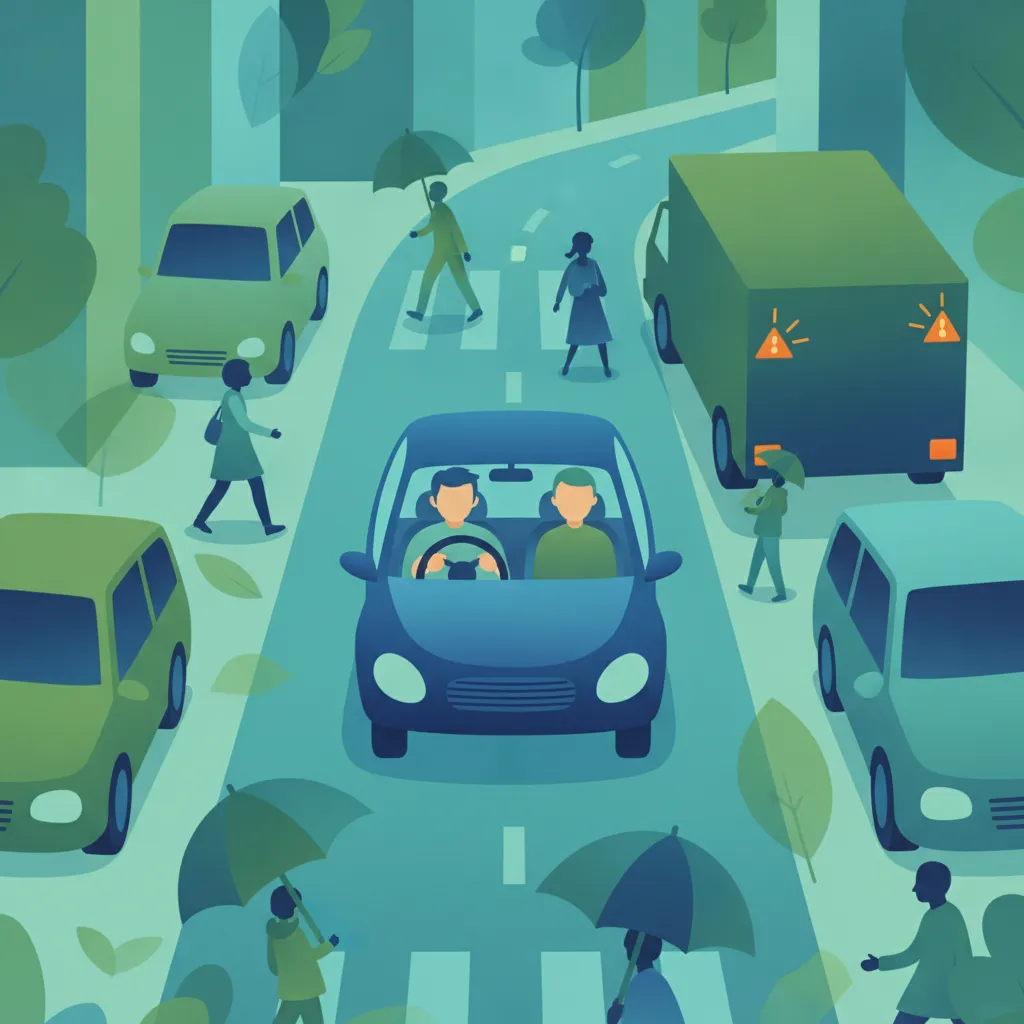
This lesson focuses on maneuvering in extremely crowded areas, passenger terminals, or narrow streets blocked by parked vehicles and obstacles. Drivers will learn to assess clearance distances precisely before committing to narrow pathways. The content teaches steering techniques that maintain stability, optimize space usage, and prioritize public safety during slow-speed, high-difficulty maneuvers.

This lesson examines the regulatory limits and environmental controls applied to large passenger vehicles operating in dense French urban centers. Drivers will study the Crit'Air clean air sticker system and low-emission zones (ZFE) that restrict access for older, high-polluting vehicles. It also addresses navigating physical constraints, such as narrow streets, tight turning radii, and strict municipal weight limits.

This lesson covers the physical dimensions of passenger vehicles and how their high profile, length, and width alter spatial awareness on the road. Learners will study tail-swing mechanics and track the path of the rear wheels during sharp turns to avoid hitting roadside obstacles. Accurate measurement of overhead structures, bridges, and underpass clearances is taught to prevent catastrophic structural collisions.

This lesson examines the specific challenges and responsibilities goods vehicle drivers face when interacting with pedestrians and cyclists in urban environments. Learners will understand right-of-way rules, the importance of yielding at pedestrian crossings, and safe turning practices that protect cyclists. The content emphasizes heightened driver vigilance, especially when navigating bike lanes and crowded sidewalks.

In this lesson, drivers will learn how to plan and execute wide turns with goods vehicles, taking into account turning radius, pivot points, and articulation angles. The content emphasizes the necessity of using the full width of the lane, correctly aligning the vehicle through the turn, and anticipating the movement of the trailer. Learners will also explore road marking guidelines for turning and the importance of giving clear signals to surrounding traffic.
Explore the critical theory behind identifying and managing blind spots in Category C and CE vehicles. This lesson explains how to effectively use mirrors, electronic aids, and safety protocols to detect and protect pedestrians, cyclists, and small vehicles when operating large goods vehicles in varied traffic conditions.

This lesson focuses on the importance of recognizing and mitigating blind spots in goods vehicles, especially when towing trailers. Learners will explore techniques such as proper mirror adjustment, the use of blind spot mirrors, and visual checks to ensure that obstacles and vulnerable road users are detected before executing maneuvers. The content also discusses the limitations of blind spot monitoring systems and the need for supplementary visual checks.
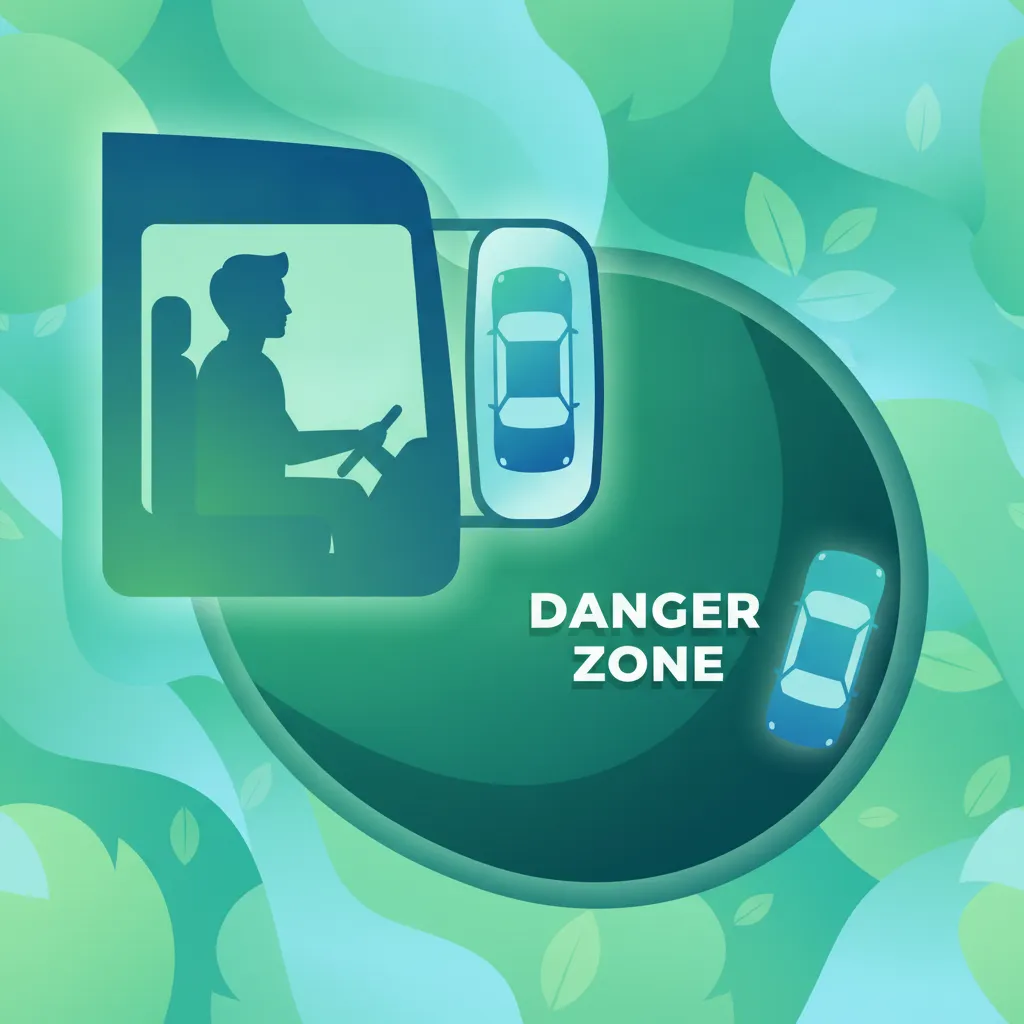
This lesson details the location and scale of blind spots around passenger cars and heavy goods vehicles, often referred to as the 'no-zone' or 'angles morts'. You will learn why truck drivers cannot see you directly behind or immediately adjacent to their cab doors. The lesson provides actionable strategies to minimize the time you spend in these dangerous zones, ensuring you always pass quickly and safely.

In this lesson, drivers will learn strategies to avoid conflicts with smaller vehicles, such as cars and vans, which may not be as visible in large vehicle blind spots. The content emphasizes maintaining adequate spacing, using proper lane discipline, and being aware of small vehicles' behavior during lane changes and turns. Learners will also be introduced to communication techniques, such as signalling and eye contact.

This lesson teaches specific visual scanning methods to detect vulnerable road users, such as children, elderly individuals, and cyclists near stops. Drivers will learn to anticipate sudden movements, like a passenger running to catch a bus or stepping off a sidewalk unexpectedly. Managing the massive blind spots around the front and right-hand sides of passenger vehicles is highlighted as a critical safety duty.

This lesson details the dangerous blind spots (angles morts) that surround heavy passenger vehicles and explains how to mitigate them. Drivers will master the systematic mirror check sequence (retro-information) before executing any turns or lane changes. It also covers the mandatory French "Angles Morts" warning stickers displayed on the vehicle exterior to alert vulnerable road users of danger zones.

This lesson addresses the challenges of positioning near larger vehicles such as cars, vans, buses, and lorries on French roads. Learners will learn to identify blind spots (angles morts), maintain a safe distance, and position themselves to maximize visibility and predictability. Understanding these dynamics is crucial for AM riders to avoid dangerous situations and ensure safe overtaking and lane sharing.

This lesson provides global defensive driving strategies to minimize collision risks for all non-motorized and vulnerable road users. Drivers will learn to systematically lower vehicle speed in dense pedestrian zones, even when no active hazards are visible. By cultivating an anticipatory mindset and maintaining generous safety margins, professional drivers establish a protective safety envelope around their vehicle.

In this lesson, drivers will learn how to safely share the road with motorcycles and scooters, focusing on the specific blind spots and speed differentials that create risk. The content highlights proper lane positioning, caution when overtaking, and strategies for predicting motorcycle trajectories. Learners will also be introduced to the importance of being aware of scooter movements, especially in narrow streets.

This lesson focuses on the inherent vulnerability of AM vehicles due to their limited mass, exposure, and visibility within mixed traffic flows on French roads. Learners will examine how blind spots, sudden lane changes by larger vehicles, and higher impact severity affect small vehicle safety. The content underscores the necessity for riders to adopt proactive safety measures, maintain safe distances, and be constantly aware of surrounding traffic dynamics.

Certain groups of road users require heightened defensive attention from drivers due to physical limitations or unpredictable behaviors. This lesson covers how to recognize signs of visual impairment (white canes), mobility challenges, and the unpredictability of young children. You will learn to reduce your speed, extend yielding patience, and proactively secure extra space to protect these vulnerable users.
Find clear answers to common questions learners have about Safe Reversing Practices with Trailers. Learn how the lesson is structured, which driving theory objectives it supports, and how it fits into the overall learning path of units and curriculum progression in France. These explanations help you understand key concepts, lesson flow, and exam focused study goals.
Even with modern mirrors and cameras, heavy goods vehicles have significant blind spots where pedestrians or small obstacles can be hidden. A spotter provides a crucial external perspective, ensuring the area behind the vehicle remains clear throughout the entire manoeuvre.
The primary danger is the jackknife effect or uncontrolled trailer sway. Improper steering inputs while reversing an articulated vehicle can cause the trailer to swing unexpectedly, making it difficult to maintain the intended path and increasing the risk of collision.
Increased length significantly increases the swept path of the vehicle during a turn. When reversing, you must account for the off-tracking of the trailer, ensuring that both the tractor and the trailer have sufficient clearance at every stage of the manoeuvre.
Always perform a 360-degree walkaround to check for obstacles, pedestrians, and ground conditions. Verify that your mirrors are clean and adjusted for the specific manoeuvre, and ensure all electronic backup aids are functional.
Ready to focus your study? Use the practice search to find exactly the French driving theory questions you need for the Code de la route and permis de conduire ETG. Refine your knowledge on specific topics or challenging rules to boost your confidence and exam readiness.