
This lesson explores the essential physics of driving large passenger vehicles, focusing on how length, width, and height impact your control. You will master the mechanics of tail-swing and safe clearance management, which are critical skills for safely operating vehicles under categories D and D1 within the French transport network.
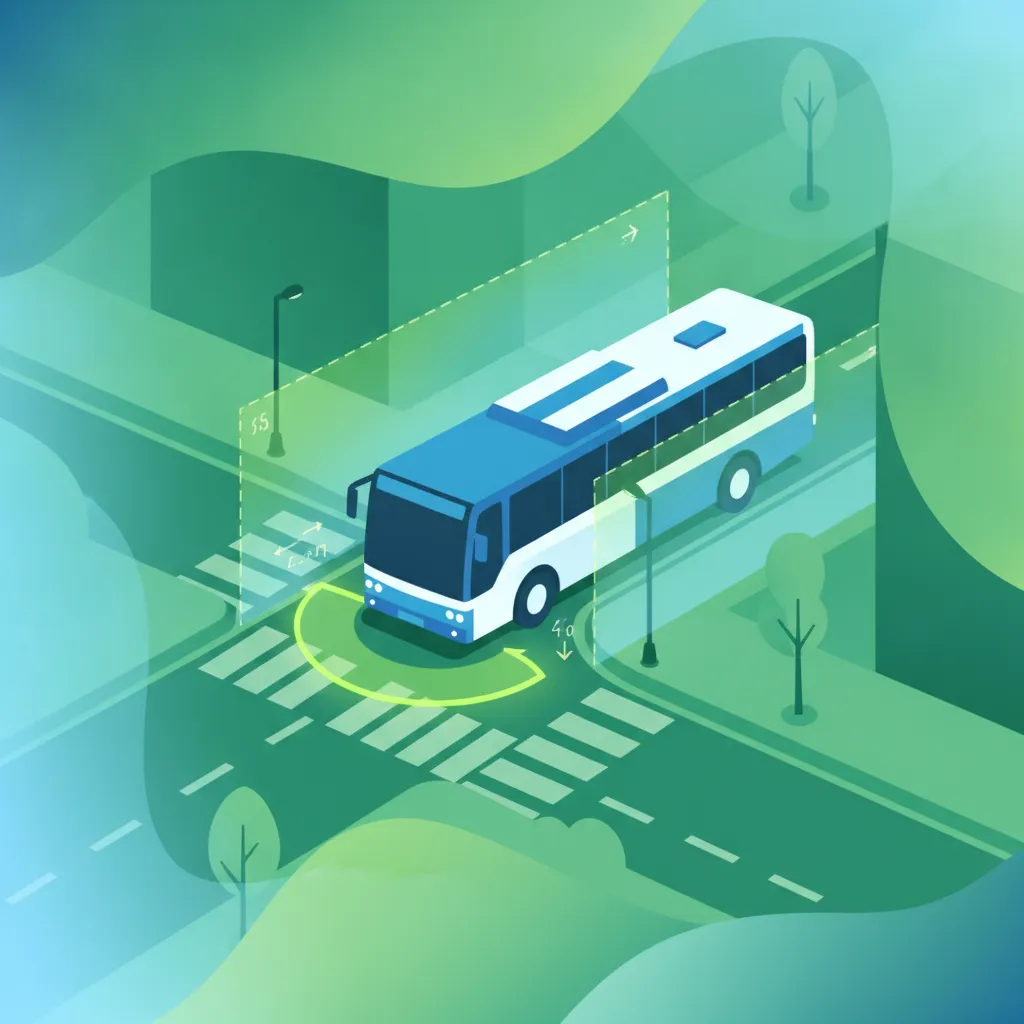
Lesson content overview
Navigating a large passenger vehicle on public roads requires a fundamental shift in a driver’s spatial awareness. When transitioning from a standard passenger car to a vehicle in category D1, D, D1E, or DE, you are no longer managing a compact, highly maneuverable machine. Instead, you are piloting a vehicle that can extend up to 15 metres for a single-unit coach, or even 18.75 metres for an articulated city bus.
Safely operating these large vehicles requires an intimate understanding of physical dimensions (gabarit), turning dynamics, rear-wheel tracking, and vertical and horizontal clearances. This guide covers the physical principles, French regulatory requirements, and real-world defensive driving techniques necessary to avoid devastating collisions with structural infrastructure, other vehicles, and vulnerable road users.
The physical envelope of a vehicle is referred to as its outer dimensions or gabarit. This refers to the total space the vehicle occupies, both when stationary and when in motion.
The maximum external length, width, and height of a vehicle, including all permanent fixtures, mirrors, air conditioning units, and any cargo or passenger luggage attachments.
Under the French Code de la route, the standard maximum width for heavy passenger vehicles (coaches and buses) is 2.55 metres. This limit is designed to align with European Union infrastructure standards, ensuring that vehicles can stay within standard lane markings.
However, drivers often make the mistake of measuring width solely by the vehicle's body panels. In reality, you must account for retroreflectors and side mirrors (rétroviseurs), which project significantly outward.
The length of a passenger vehicle varies widely depending on its specific class:
This extended length drastically increases the vehicle’s blind spots and alters the time required to complete overtaking maneuvers, clear intersections, or merge safely into traffic.
While there is no strict regulatory maximum height limit explicitly written into the general French Code de la route for all vehicles, practical infrastructure constraints create an effective limit. Most modern double-decker coaches (autocars à double étage) are built to heights between 4.0 and 4.3 metres.
Any height exceeding 4.0 metres requires extreme vigilance, as older European tunnels, rural underpasses, and historic arched bridges often present clearances far below this threshold.
Because of their long wheelbases (the distance between the front and rear axles), passenger vehicles cannot follow the same tight path as standard passenger cars. Drivers must master two critical spatial paths when negotiating curves and intersections: the turning circle and the turning radius.
The turning circle is the total diameter of the circular path traced by the outermost front corner of the vehicle when the steering wheel is turned to its lock limit.
The smallest circular path that a vehicle can drive while turning, measured from the farthest outermost point of the vehicle to the opposite outer edge.
This metric is essential for understanding whether a vehicle can legally and physically perform a U-turn or negotiate a roundabout without mounting the curb or striking roadside barriers.
In France, heavy passenger vehicles must comply with the standard "out-of-round" maneuverability test (l’épreuve de maniabilité de la couronne). Under EU and French regulations, a bus or coach must be able to maneuver within a circular ring defined by an outer radius of 12.5 metres and an inner radius of 5.3 metres.
While the front steering wheels guide the direction of the vehicle, the rear wheels do not follow the exact same track. Instead, they cut inward, tracing a tighter, smaller radius. This phenomenon is known as "off-tracking" or "rear-wheel cheat."
As a professional driver, you must compensate for this inward path by executing a "delayed steering" technique. You must drive deeper into the intersection before turning the steering wheel, allowing the front of the vehicle to clear the turn while ensuring the rear wheels do not climb the curb, damage infrastructure, or strike pedestrians waiting at a crossing.
One of the most dangerous and frequently misunderstood physical characteristics of large buses and coaches is tail-swing (often referred to in French as le balayage arrière or déport arrière).
The lateral outward movement of the rear corners of a vehicle when the front steering wheels are turned sharply in the opposite direction.
This effect occurs because a substantial portion of the vehicle's body extends behind the rear drive axle (the rear overhang or porte-à-faux arrière). When you turn the front wheels sharply to the right, the pivot point (the rear axle) causes the rear overhang to swing out aggressively to the left.
Pedestrian Hazard: Pedestrians standing right on the edge of a sidewalk curb are in direct danger of being struck by a bus's rear tail-swing, even if the front of the bus cleared them safely. Always scan your mirrors throughout the entire turning process.
To prevent catastrophic structural damage and preserve passenger safety, drivers must continually match their vehicle's physical dimensions against the spatial realities of the road network.
Vertical clearance is the safe distance between the absolute highest point of your vehicle and overhead structures such as railway bridges, motorway toll canopies, tunnels, and low-hanging utility lines.
Under French road safety guidelines, you must maintain a mandatory safety margin to account for dynamic physical changes:
Horizontal clearance refers to the lateral space required to prevent side-scrapes and lateral impacts.
The French road network utilizes standardized signage to warn drivers of low clearances. These signs are regulatory, and ignoring them is a severe traffic violation that carries heavy fines, points deduction, and potential criminal prosecution.
The most common warning is the regulatory prohibition sign for height limits.
When you see the B12 sign, you must immediately know your vehicle's exact current height. If your coach is 4.0 metres tall and the sign displays "3.8 m", you are legally prohibited from passing. Even if the sign displays "4.1 m", you should not proceed, as this violates the 0.5-metre vertical safety margin.
Similarly, narrow passages, bridges, and historic city gates are marked with lateral limits.
In modern French tunnels and major metropolitan arterials, you may encounter dynamic message signs (panneaux à messages variables). These electronic signs utilize overhead laser or radar sensors positioned upstream of a low-clearance obstacle.
Professional passenger transport operates under strict legal structures within the French Code de la route. Compliance with dimensions and clearances is not optional.
Under French law, transport operators and drivers share a joint legal duty to perform pre-trip route planning.
Establish Vehicle Dimensions: Verify the vehicle’s exact loaded height, length, and width from the vehicle logbook (carte grise) before departure.
Check for Physical Constraints: Plan the route using professional GPS mapping tools designed for heavy vehicles (gabarit poids lourds) rather than standard passenger car navigation.
Identify Restrictions: Cross-reference the route against regional prefectural decrees (arrêtés préfectoraux) that restrict heavy vehicles or buses from certain municipal centers or historic routes.
Confirm Alternative Routes: Establish designated bypass routes in case unexpected detours or construction zones present low overhead obstacles.
Colliding with a bridge or entering a prohibited narrow zone due to negligence carries severe legal consequences in France:
To help connect these physical rules with actual road scenarios, examine how these principles operate in typical high-stress environments.
Operating large vehicles requires constant adaptation to shifting weather, road conditions, and vehicle states.
When navigating urban environments, cyclists and pedestrians often fail to comprehend the physical space a bus requires to turn.
To ensure success on your French passenger vehicle theory exam and safety in your professional career, memorize these essential dimensions and safety margins:
Adhering strictly to these safety calculations ensures that you protect your passengers, preserve public infrastructure, and maintain the high standard of professionalism expected of category D license holders on the French road network.
This lesson covers the critical spatial awareness skills needed to operate large passenger vehicles in France, focusing on how vehicle dimensions (up to 18.75m length, 2.55m width, 4.0-4.3m height) impact driving technique. Key concepts include tail-swing mechanics, where rear corners swing outward during turns, and off-tracking, where rear wheels cut closer to the curb than front wheels. Learners must master the mandatory 0.5-metre vertical safety margin for overhead clearances and 0.5-metre lateral clearance during turns. The lesson also covers French regulatory signage (B12 height limits, B11 width limits), route planning duties, and realistic scenarios demonstrating correct positioning and dangerous errors that could cause infrastructure damage or pedestrian injury.
A short set of high-value points that capture the most important learning from this lesson.
Large passenger vehicles (category D/D1) can extend up to 15 metres for coaches and 18.75 metres for articulated buses, fundamentally changing spatial awareness requirements.
Tail-swing (balayage arrière) causes the rear corners of a bus to swing outward by 0.5 to 1.5 metres during sharp turns, creating danger for pedestrians at curbside waiting areas.
Rear wheels follow a tighter path than front wheels during turns (off-tracking), meaning the inner rear tire cuts closer to the curb than the front bumper.
Vertical safety clearance of at least 0.5 metres must always be maintained between the vehicle roof and any overhead structure.
Mirrors add 20 to 30 centimetres of width on each side, so total vehicle width exceeds the 2.55-metre body measurement.
Explore all units and lessons included in this driving theory course.
Always add a mandatory 0.5-metre vertical safety margin to your vehicle's height before comparing against posted bridge or tunnel clearances.
When turning tightly, delay your steering input and drive deeper into the intersection before turning to allow rear wheels to clear the curb safely.
The B12 sign indicates a height prohibition—never proceed if your vehicle height (plus 0.5m margin) exceeds the posted limit.
Maintain 0.5 metres lateral clearance from curbs and obstacles when turning, and 0.2 metres on each side when driving straight in a lane.
Loaded vehicles may sit lower but bounce more; empty vehicles sit higher—always measure height in the actual vehicle state before a journey.
Measuring vehicle width only by body panels without accounting for mirror protrusion, which can add 40-60 centimetres of total width.
Assuming a coach can pass under a bridge if its static height is below the posted limit, ignoring the mandatory 0.5-metre safety margin.
Starting to turn too early at intersections, causing the rear wheels to climb the curb or the tail-swing to encroach on pedestrian areas.
Failing to check mirrors throughout the entire turning manoeuvre—tail-swing danger persists even after the front of the bus has cleared the intersection.
Attempting to squeeze through a low clearance by driving slowly, risking catastrophic structural damage if the vehicle bounces upward.
Lesson content overview
A short set of high-value points that capture the most important learning from this lesson.
Large passenger vehicles (category D/D1) can extend up to 15 metres for coaches and 18.75 metres for articulated buses, fundamentally changing spatial awareness requirements.
Tail-swing (balayage arrière) causes the rear corners of a bus to swing outward by 0.5 to 1.5 metres during sharp turns, creating danger for pedestrians at curbside waiting areas.
Rear wheels follow a tighter path than front wheels during turns (off-tracking), meaning the inner rear tire cuts closer to the curb than the front bumper.
Vertical safety clearance of at least 0.5 metres must always be maintained between the vehicle roof and any overhead structure.
Mirrors add 20 to 30 centimetres of width on each side, so total vehicle width exceeds the 2.55-metre body measurement.
Explore all units and lessons included in this driving theory course.
Always add a mandatory 0.5-metre vertical safety margin to your vehicle's height before comparing against posted bridge or tunnel clearances.
When turning tightly, delay your steering input and drive deeper into the intersection before turning to allow rear wheels to clear the curb safely.
The B12 sign indicates a height prohibition—never proceed if your vehicle height (plus 0.5m margin) exceeds the posted limit.
Maintain 0.5 metres lateral clearance from curbs and obstacles when turning, and 0.2 metres on each side when driving straight in a lane.
Loaded vehicles may sit lower but bounce more; empty vehicles sit higher—always measure height in the actual vehicle state before a journey.
Measuring vehicle width only by body panels without accounting for mirror protrusion, which can add 40-60 centimetres of total width.
Assuming a coach can pass under a bridge if its static height is below the posted limit, ignoring the mandatory 0.5-metre safety margin.
Starting to turn too early at intersections, causing the rear wheels to climb the curb or the tail-swing to encroach on pedestrian areas.
Failing to check mirrors throughout the entire turning manoeuvre—tail-swing danger persists even after the front of the bus has cleared the intersection.
Attempting to squeeze through a low clearance by driving slowly, risking catastrophic structural damage if the vehicle bounces upward.
Explore search topics learners often look for when studying Dimensions, Turning Radius and Clearance Requirements. These topics reflect common questions about road rules, driving situations, safety guidance, and lesson level theory preparation for learners in France.
Browse additional driving theory lessons that cover connected traffic rules, road signs, and common driving situations related to this topic. Improve your understanding of how different rules interact across everyday traffic scenarios.
Learn how to apply spatial awareness and vehicle dimension knowledge in dense urban settings. This guide covers navigating narrow streets, managing bus-specific lane restrictions, and interacting safely with urban infrastructure while driving large passenger vehicles in France.
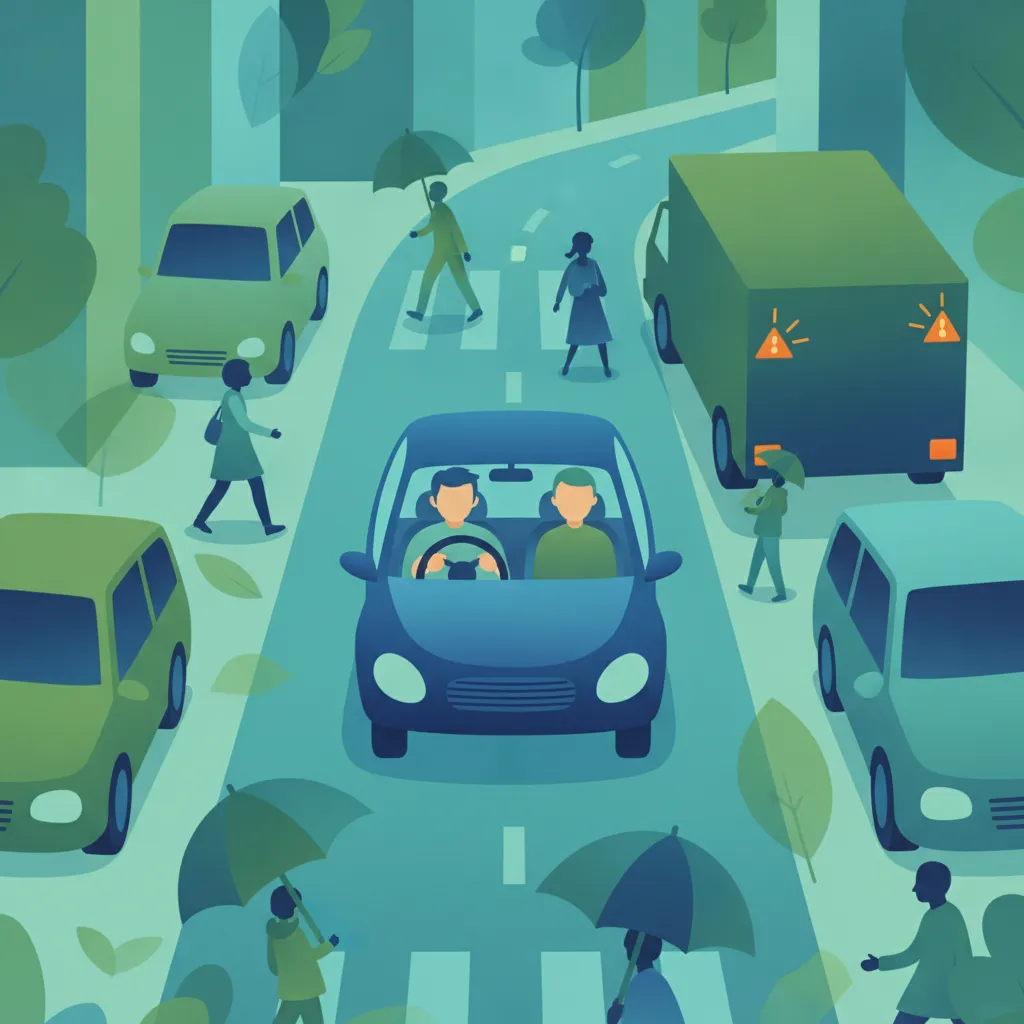
This lesson focuses on maneuvering in extremely crowded areas, passenger terminals, or narrow streets blocked by parked vehicles and obstacles. Drivers will learn to assess clearance distances precisely before committing to narrow pathways. The content teaches steering techniques that maintain stability, optimize space usage, and prioritize public safety during slow-speed, high-difficulty maneuvers.
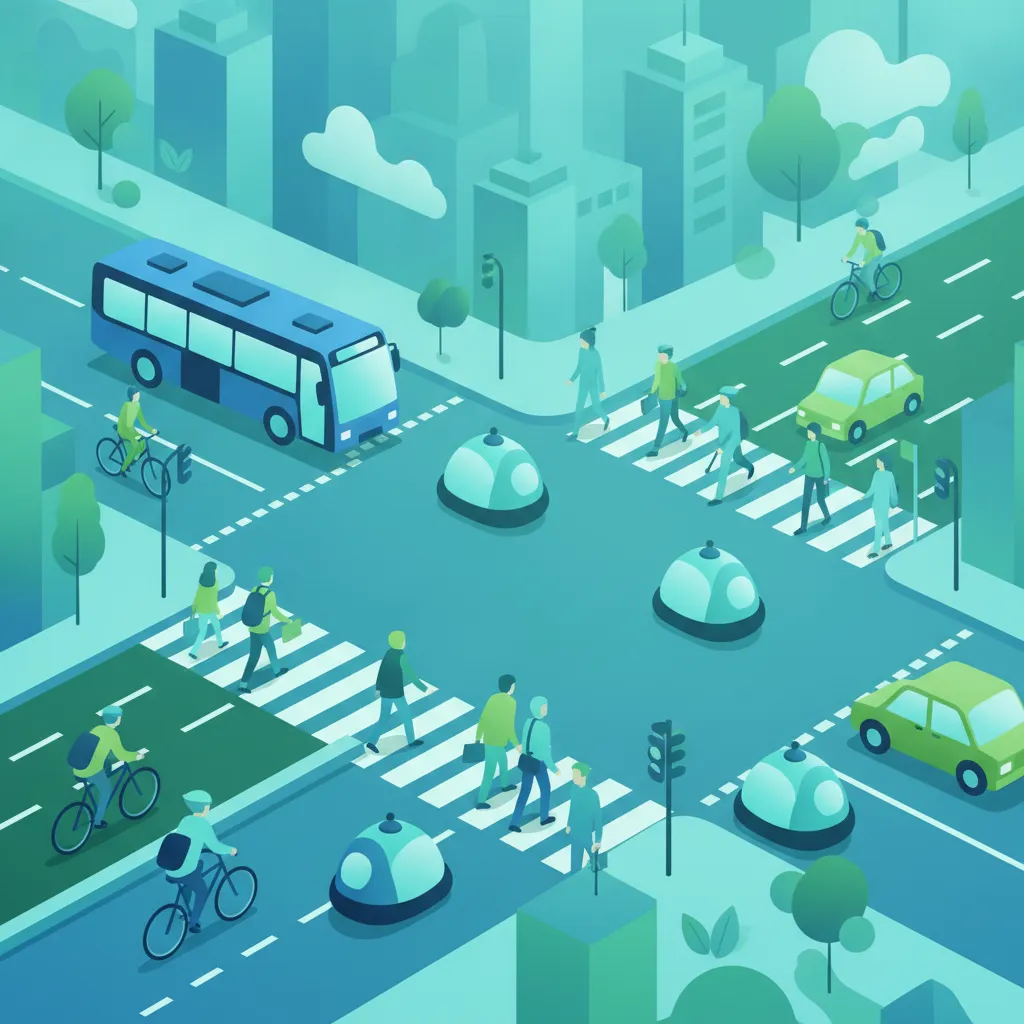
This lesson analyzes the various traffic challenges unique to operating large passenger vehicles in historic and modern French urban areas. Drivers will learn to manage narrow street layouts, double-parked delivery trucks, and high-density multi-lane roundabouts safely. The lesson emphasizes defensive driving strategies, route adjustments, and maintaining mental focus under severe schedule and time pressures.
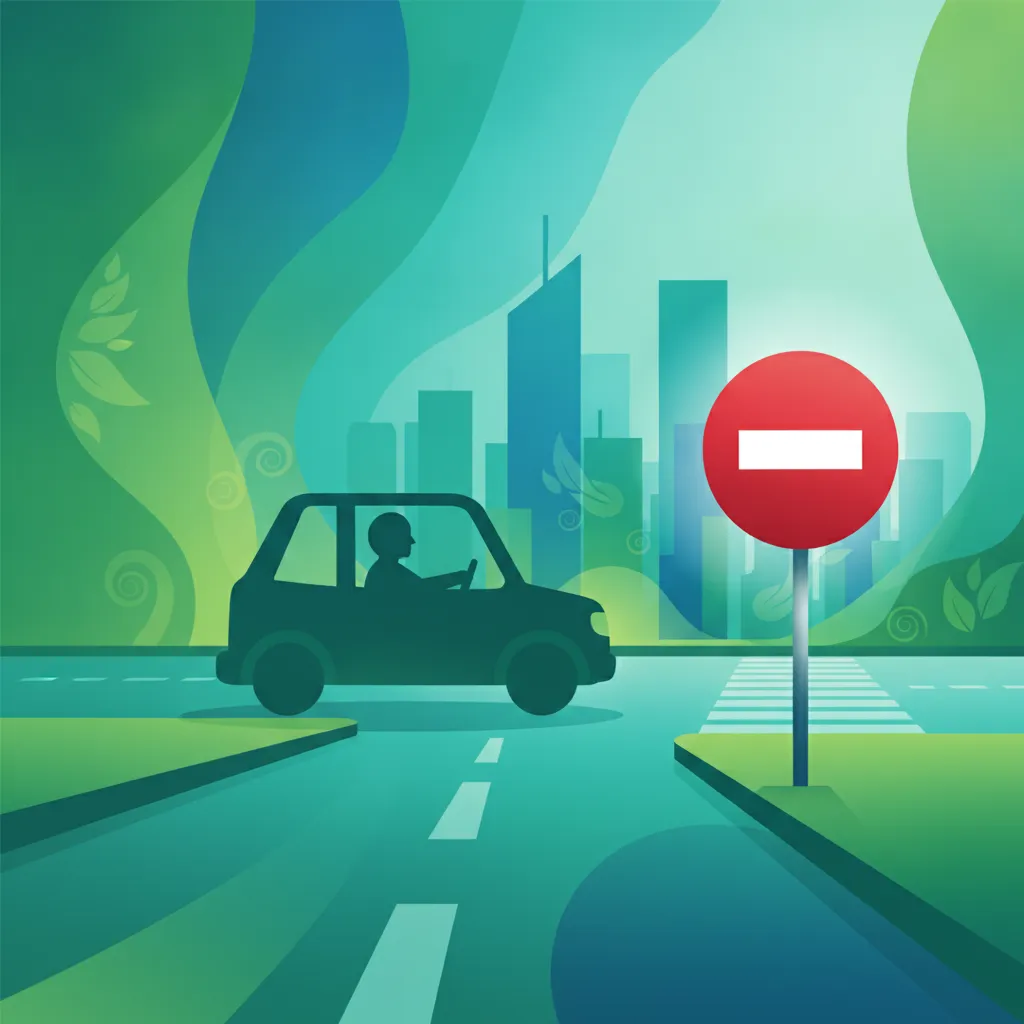
This lesson examines the regulatory limits and environmental controls applied to large passenger vehicles operating in dense French urban centers. Drivers will study the Crit'Air clean air sticker system and low-emission zones (ZFE) that restrict access for older, high-polluting vehicles. It also addresses navigating physical constraints, such as narrow streets, tight turning radii, and strict municipal weight limits.
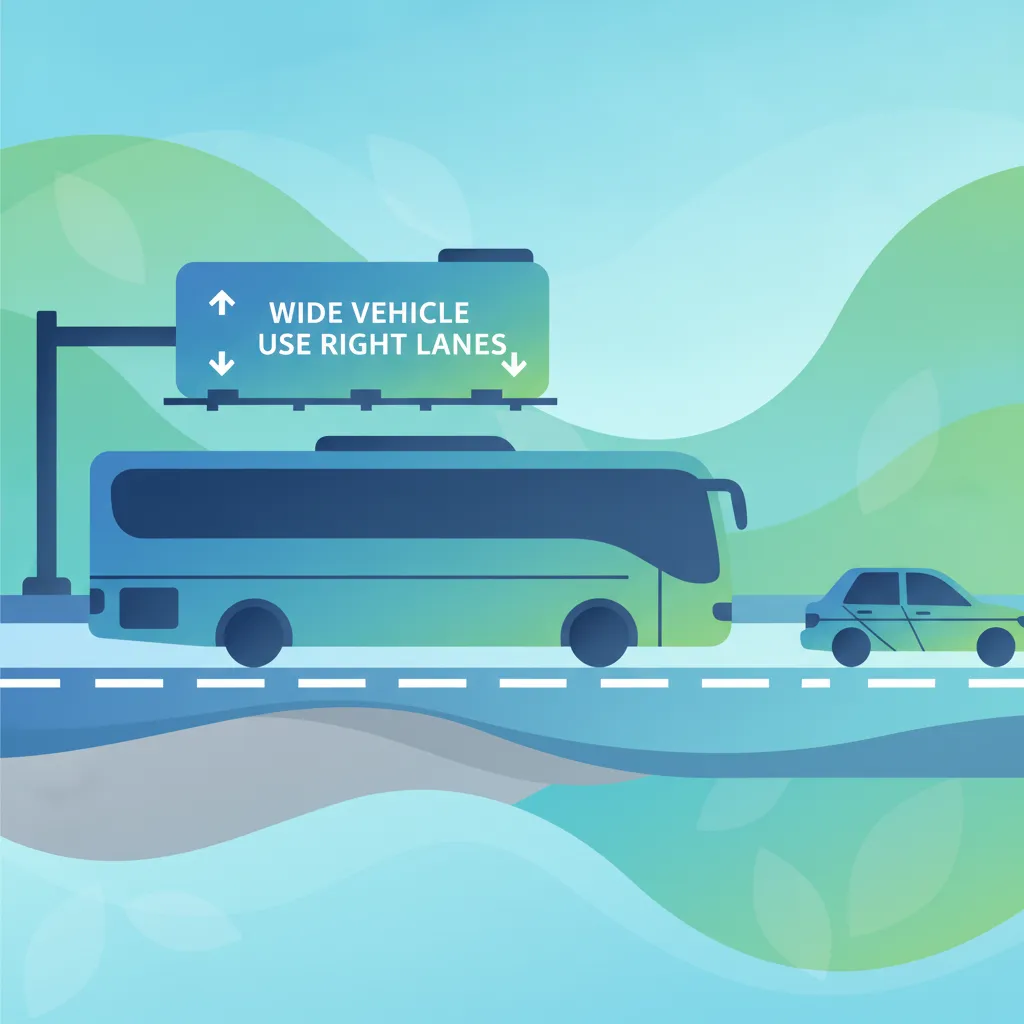
This lesson details the rules of lane discipline for operating wider and longer passenger transport vehicles on highway and city networks. Learners will explore proper lane positioning to prevent encroachment on adjacent lanes or sidewalks. It also covers the step-by-step visual and signaling sequence required to perform safe lane changes, avoiding sudden movements that could startle other drivers.
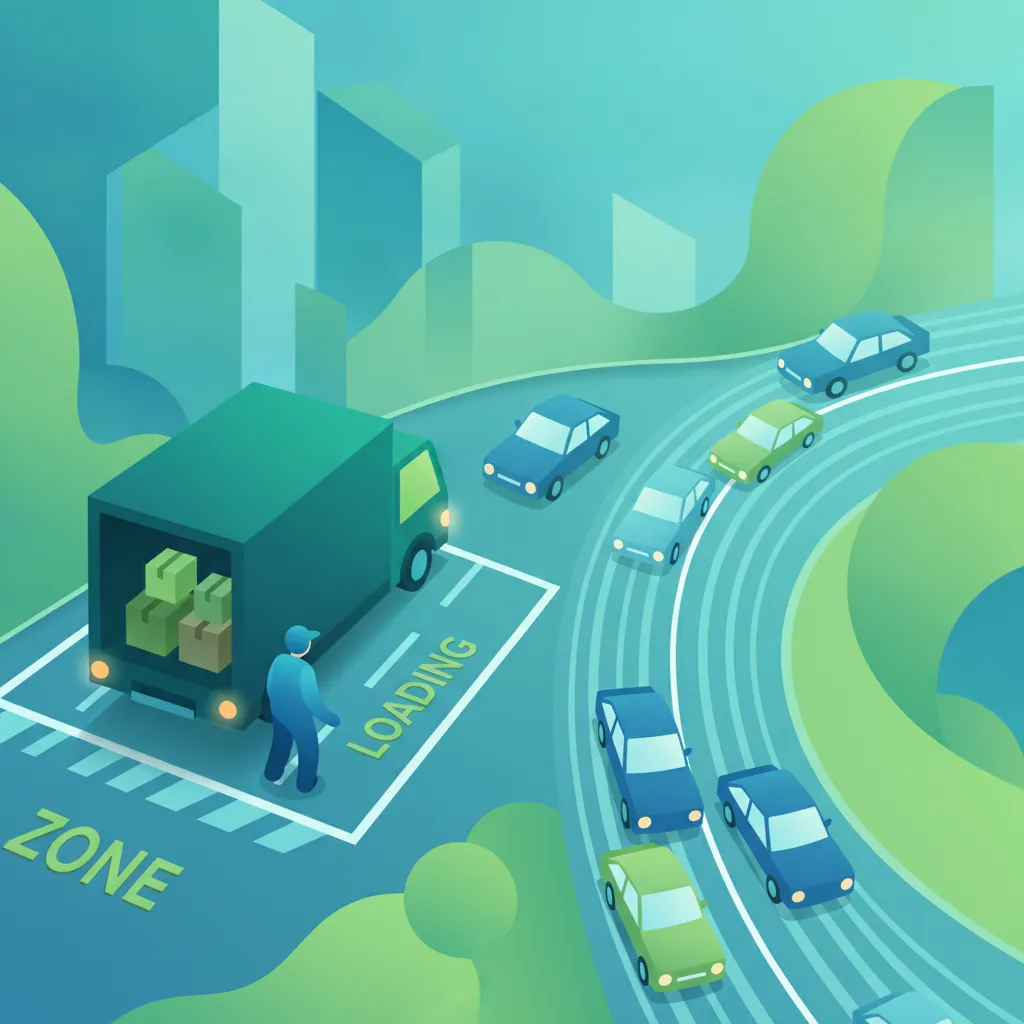
In this lesson, drivers will learn how to navigate urban delivery zones, understanding the rules surrounding loading bays, time windows, and restricted access areas. The content includes the process for obtaining delivery permits, strategies for safe maneuvering in congested city streets, and best practices for minimizing impact on pedestrian traffic. Learners will also be introduced to French city-specific regulations that govern goods vehicle deliveries.
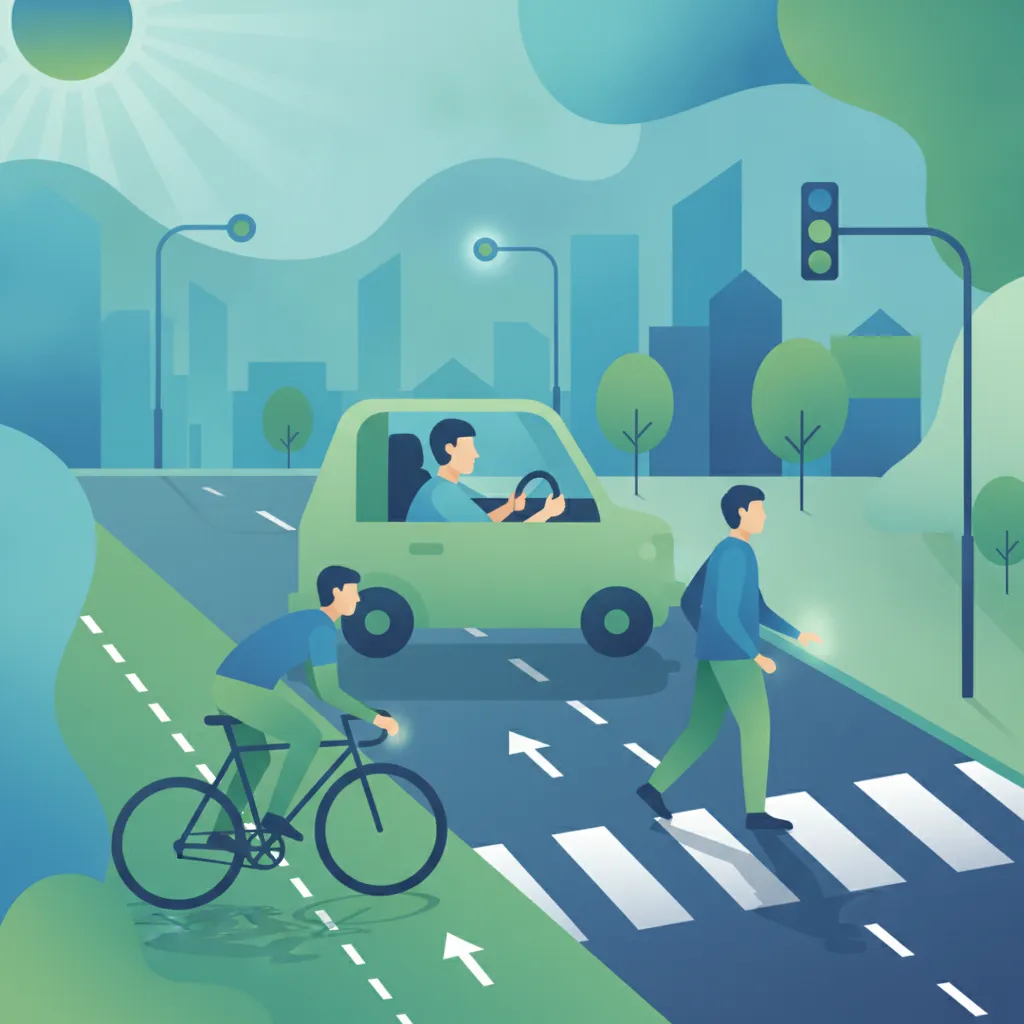
This lesson examines the specific challenges and responsibilities goods vehicle drivers face when interacting with pedestrians and cyclists in urban environments. Learners will understand right-of-way rules, the importance of yielding at pedestrian crossings, and safe turning practices that protect cyclists. The content emphasizes heightened driver vigilance, especially when navigating bike lanes and crowded sidewalks.

In this lesson, drivers will learn strategies to avoid conflicts with smaller vehicles, such as cars and vans, which may not be as visible in large vehicle blind spots. The content emphasizes maintaining adequate spacing, using proper lane discipline, and being aware of small vehicles' behavior during lane changes and turns. Learners will also be introduced to communication techniques, such as signalling and eye contact.
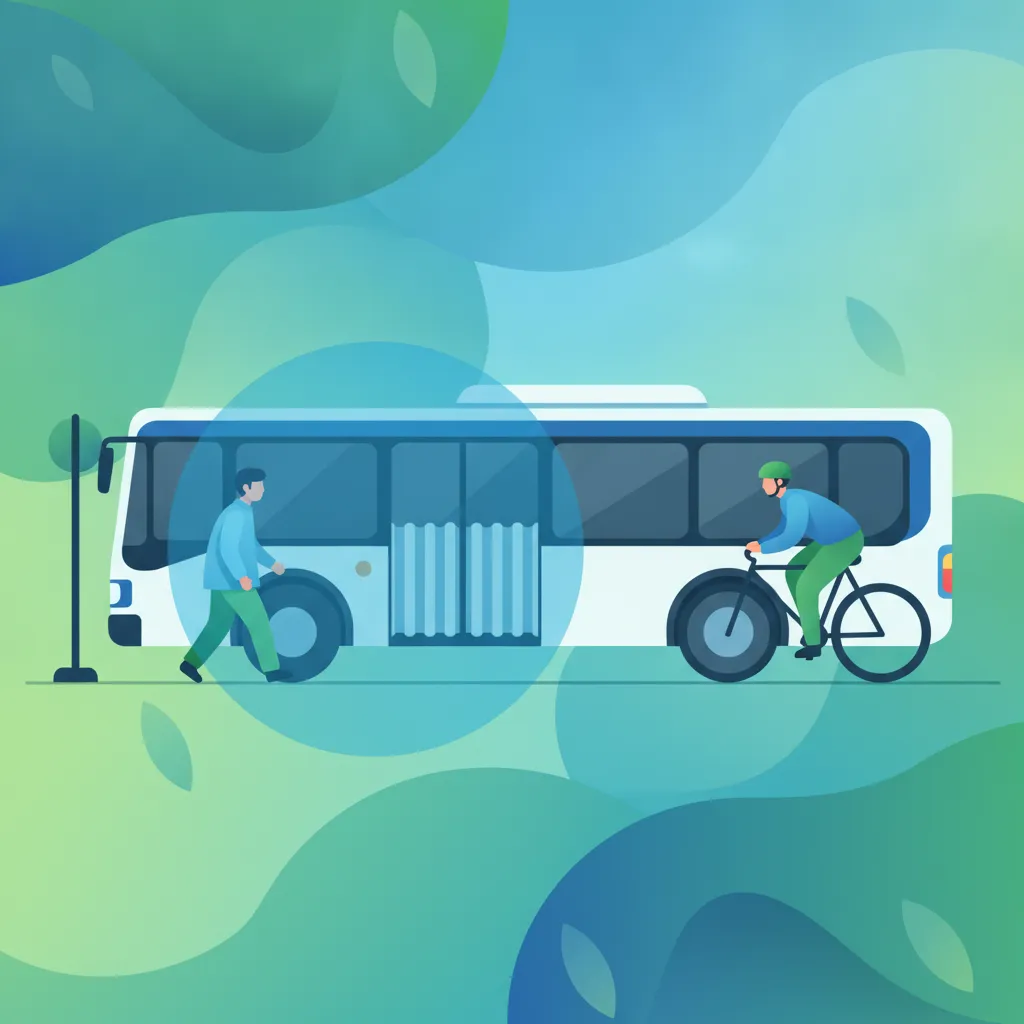
This lesson teaches specific visual scanning methods to detect vulnerable road users, such as children, elderly individuals, and cyclists near stops. Drivers will learn to anticipate sudden movements, like a passenger running to catch a bus or stepping off a sidewalk unexpectedly. Managing the massive blind spots around the front and right-hand sides of passenger vehicles is highlighted as a critical safety duty.
Understand the mechanics of tail-swing and off-tracking when performing complex turns and reversing in confined spaces. This lesson provides a theoretical overview of safe steering strategies to avoid collisions with infrastructure and pedestrians while operating buses or coaches on French roads.
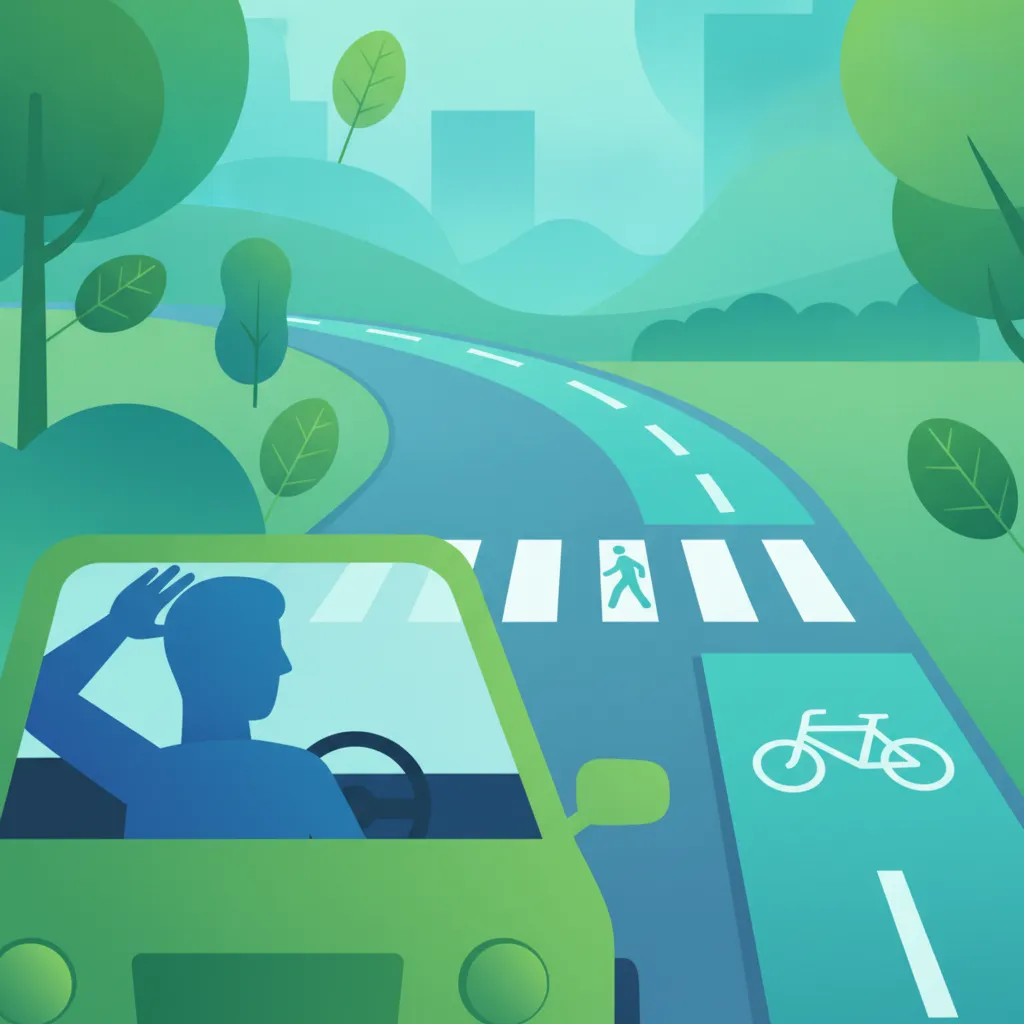
This lesson analyzes the technical path a long wheelbase vehicle must take when turning at intersections and navigating roundabouts. Drivers will learn to calculate tail swing and rear-wheel tracking, intentionally swinging wide to clear roadside curbs and poles safely. The lesson emphasizes yielding protocols for pedestrians and cyclists who may be crossing the target street during the turn.
This lesson outlines the step-by-step safety checks and physical controls required to reverse a bus or coach in confined areas. Learners will study the use of rear-view cameras, mirror angles, and acoustic backing alarms to detect obstacles. It highlights the mandatory use of a trained ground guide (guide de manoeuvre) to assist in blind zones, ensuring zero contact with structures or people.
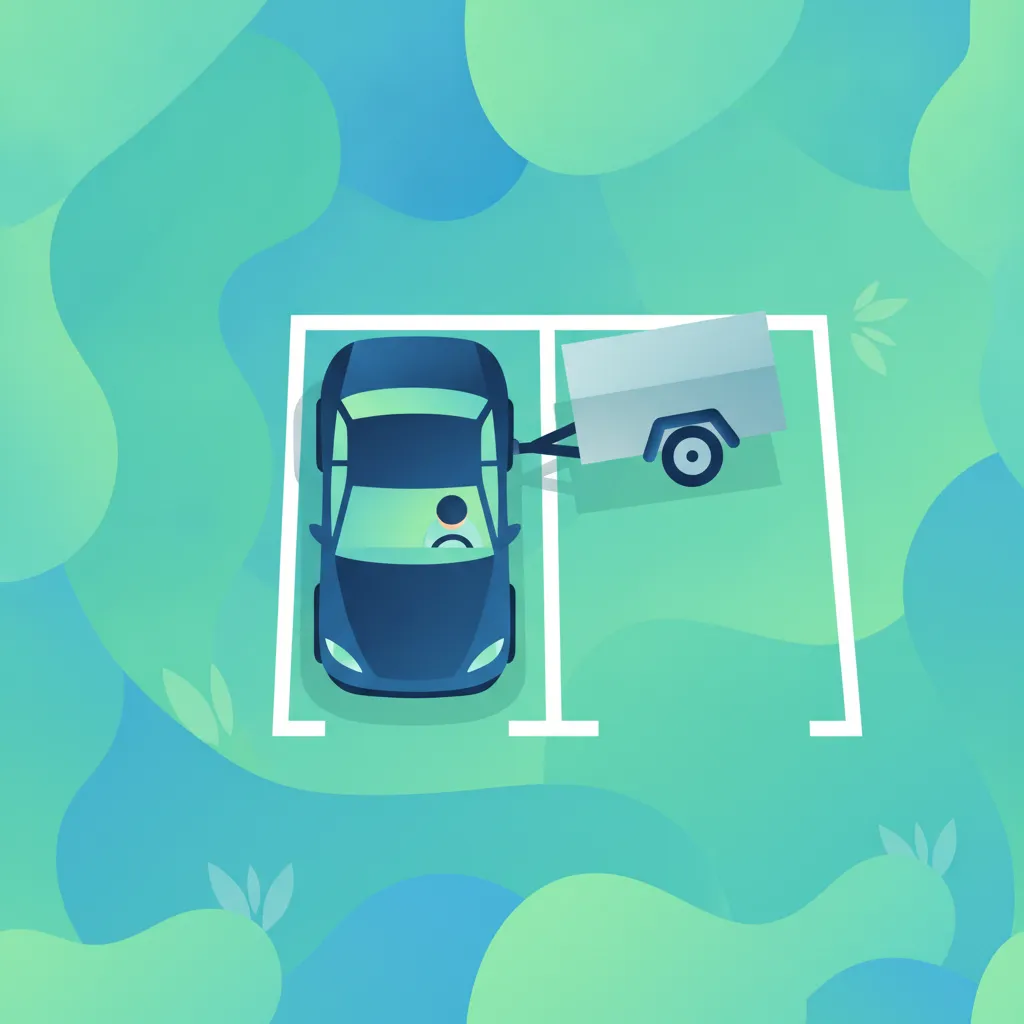
This lesson focuses on techniques for reversing safely with a trailer attached, including the use of spotters, mirrors, and backup cameras to mitigate blind spots. Learners will understand the steps for proper trailer coupling before reversing, how to control trailer sway, and the importance of using reverse gear properly. The content also covers safety checks to perform before reversing, such as ensuring the area is clear.

In this lesson, drivers will learn how to plan and execute wide turns with goods vehicles, taking into account turning radius, pivot points, and articulation angles. The content emphasizes the necessity of using the full width of the lane, correctly aligning the vehicle through the turn, and anticipating the movement of the trailer. Learners will also explore road marking guidelines for turning and the importance of giving clear signals to surrounding traffic.

Reversing (marche arriere) is a slow-speed maneuver that presents significant visibility challenges due to rear vehicle blind spots. This lesson covers proper driver posture, direct over-the-shoulder viewing, and the effective use of mirrors while backing up. You will learn how to reverse safely out of driveways or parking bays and how to yield to pedestrians who might cross your path.
This lesson focuses on maneuvering in extremely crowded areas, passenger terminals, or narrow streets blocked by parked vehicles and obstacles. Drivers will learn to assess clearance distances precisely before committing to narrow pathways. The content teaches steering techniques that maintain stability, optimize space usage, and prioritize public safety during slow-speed, high-difficulty maneuvers.
In this lesson, drivers will learn best practices for manoeuvring goods vehicles into loading docks and other confined spaces. The content covers the use of spotting aids, guidance markings, and reverse assistance technologies. Learners will understand how to align the vehicle and trailer correctly with dock doors, maintain situational awareness, and use proper signaling for safety. The lesson also emphasizes the importance of communication with dock personnel.
Find clear answers to common questions learners have about Dimensions, Turning Radius and Clearance Requirements. Learn how the lesson is structured, which driving theory objectives it supports, and how it fits into the overall learning path of units and curriculum progression in France. These explanations help you understand key concepts, lesson flow, and exam focused study goals.
Tail-swing occurs when the rear of the bus moves outward during a turn. If you don't account for this, the rear of your vehicle can hit pedestrians, street furniture, or other vehicles, leading to failed exam maneuvers or accidents.
Always look for height limit signs (usually a circular red-bordered sign with a height figure in meters). You must know your vehicle's total height, including all roof-mounted equipment, and add a safety margin to this measurement.
Yes. A wider vehicle requires you to stay more centered in your lane and often necessitates taking wider approaches for turns. Misjudging your width can lead to clipping mirrors or curbs, which is a major fault in driving assessments.
Many candidates underestimate the vertical clearance required for overhanging objects or incorrectly judge the space needed for a full turn, leading to collisions with stationary objects. Practice visualizing the rear-axle pivot point to improve accuracy.
Ready to focus your study? Use the practice search to find exactly the French driving theory questions you need for the Code de la route and permis de conduire ETG. Refine your knowledge on specific topics or challenging rules to boost your confidence and exam readiness.