
This lesson focuses on the critical safety protocols required to reverse heavy passenger vehicles in confined spaces. You will explore how to manage blind spots and coordinate with ground guides to ensure the safety of passengers and pedestrians, providing the expertise needed for your professional D/D1 license exam.

Lesson content overview
Reversing a large passenger vehicle, such as a bus or coach (Category D, D1, DE, or D1E), is one of the most high-risk maneuvers a professional driver can perform. The sheer physical dimensions of these vehicles—often exceeding 12 meters in length for standard coaches and up to 18 meters for articulated buses—create massive blind spots (angles morts) and structural pivot dynamics that demand absolute precision.
In French passenger transit, reversing is not a routine action; it is a highly regulated maneuver. It is frequently required in confined environments such as urban depots (dépôts d’autobus), narrow historic city centers, bus terminals (gares routières), and restricted parking areas. To pass the French public transport passenger license theory exam, drivers must master the integration of physical controls, electronic safety aids, and human guidance.
The Code de la route (French Traffic Law) sets strict rules to govern reversing maneuvers, placing a heavy legal responsibility on the driver to ensure the safety of all road users and passengers.
Legal Responsibility: Reversing does not grant you any right of way. Under French traffic law, a driver reversing a vehicle is almost always held fully liable in the event of a collision, as the maneuver must only be executed when it is certain not to endanger other road users.
To execute a safe reverse maneuver, you must achieve what is legally and practically defined as Full Rear Visibility. This is a state where you have an unobstructed visual or technological representation of the area directly behind the vehicle, extending at least 5 meters into the path of travel in confined spaces.
Professional passenger vehicles utilize a combination of direct vision, indirect mirror systems, and electronic camera feeds to cover these zones:
Modern buses are equipped with a complex array of mirrors:
Rear-view cameras (caméras de recul) project a live, wide-angle feed onto the driver’s dashboard console or integrated mirror screen when reverse gear is engaged.
The Limitations of Technology: While highly effective, cameras have dynamic range limitations. Raindrops, mud, glare from the sun, or headlight reflections at night can severely distort or block the camera feed. You must never rely solely on a screen; it must be used in a continuous loop check with your physical mirrors.
When reversing in confined spaces—such as a tight bus bay, an alleyway, or a crowded depot—technology alone is insufficient. The Code de la route emphasizes the use of a Ground Guide (guide de manoeuvre).
A designated, trained individual positioned outside the vehicle who coordinates with the driver using standardized physical or vocal signals to guide the bus safely through blind zones, ensuring zero contact with structures, vehicles, or people.
To prevent accidents, the driver and the ground guide must establish clear communication rules before the maneuver begins:
The guide must use clear, exaggerated hand signals. In low-visibility or nighttime conditions, the guide must wear high-visibility clothing and use glowing batons or a flashlight to make signals clear.
Acoustic backing alarms serve as the primary line of defense for pedestrians, cyclists, and depot workers who may not be looking at the reversing vehicle. Under French vehicle standards, these alarms must be wired to activate automatically the moment the reverse gear is engaged.
Reversing a heavy vehicle in a confined space requires deliberate, slow control.
The maximum speed when reversing in confined spaces must never exceed walking pace (approximately 5 km/h).
Maintaining this extremely low speed provides several advantages:
Because buses have long rear overhangs (the distance from the rear axle to the very end of the bumper), steering inputs cause the rear of the vehicle to swing in the opposite direction of the turn. This is known as tail-swing (le balayage).
The outward lateral sweep of the vehicle's rear bodywork when turning. If a driver steers sharply to the left while reversing, the right rear corner of the bus will swing outwards, risking a collision with walls or parked vehicles.
When reversing into a confined curve:
To ensure safety and systematic execution, drivers should follow this strict operational procedure:
Secure the Cabin and Passengers: Before initiating any reverse movement, ensure all passengers are safely seated. If you are operating a school bus (transport scolaire), instruct the supervisor to keep all children calm and seated. Ensure all exit doors are securely closed.
Establish Ground Guide Protocol: Exit the cab if necessary to brief your ground guide. Agree on the path of travel, identify specific static hazards (low-hanging branches, pillars, gutters), and confirm the hand signals to be used.
Position the Vehicle: Align the bus as straight as possible with the intended reversing path to minimize the need for extreme steering angles and reduce tail-swing risks.
Perform the 360-degree Visual Check: Look forward, to both sides, and check all mirrors. Look directly out of the driver's side window to assess the immediate physical space. Verify that the rear-view camera display is active and clear of obstructions.
Engage Reverse Gear: Depress the clutch or select reverse on the automatic transmission. Listen for the activation of the acoustic backing alarm.
Begin the Maneuver at Walking Pace: Release the brakes slowly. Keep your speed under 5 km/h. Keep your eyes in a continuous scanning loop: Left Mirror -> Ground Guide -> Rear-View Camera -> Right Mirror -> Front Windshield (to monitor front-swing).
Execute Stop-and-Check Cycles: If the view becomes obscured by dust, sun glare, or condensation, stop the vehicle. If you lose sight of your ground guide for even a single second, apply the brakes immediately.
Complete and Secure: Once the vehicle is in its final position, shift to neutral, apply the parking brake (frein de stationnement), and switch off the ignition before allowing any passenger activity or unloading.
Environmental conditions significantly alter the safety profile of a reversing maneuver:
| Scenario / Condition | Operational Impact | Mitigation Strategies |
|---|---|---|
| Heavy Rain or Fog | Water droplets or condensation obscure mirror glass and camera lenses. Fog dampens sound waves, making the acoustic alarm less effective. | Clean all lenses before the maneuver. The ground guide must stand closer to the vehicle (while remaining safe) and use high-lumen lighting. Speed should be reduced to a absolute crawl (2-3 km/h). |
| Nighttime / Low Light | Standard reversing lights provide limited illumination. Deep shadows mask low-lying obstacles. | Activate rear working lamps (projecteurs de zone) if equipped. The ground guide must wear reflective Class 3 high-visibility clothing and use active light batons. |
| Articulated Buses / Trailers (DE/D1E) | The presence of a pivot joint creates a "jackknife" risk. Steering inputs have delayed and opposite effects on the rear unit. | Reversing should be minimized. If unavoidable, steering must be exceptionally smooth. The ground guide must monitor the articulation joint as well as the rear bumper. |
| Urban Pedestrian Zones | High risk of distracted pedestrians walking behind the bus, assuming it will stop. | The acoustic alarm must be fully functional. The ground guide must actively manage pedestrian flow, physically blocking foot traffic from entering the reversing path of the bus. |
Reversing large passenger vehicles in confined spaces is one of the highest-risk maneuvers for Category D drivers and is heavily regulated by the French Code de la route. Drivers must achieve full rear visibility extending 5 meters, use mirrors systematically (Class II, IV, V, VI), and never rely solely on cameras which can fail in adverse conditions. A trained ground guide is legally mandatory when rear visibility is restricted, and constant mirror contact must be maintained throughout. The driver bears full legal liability for collisions, acoustic alarms must produce at least 70 dB at 7 meters, and maximum reversing speed must not exceed walking pace to ensure reaction time and steering precision, particularly accounting for dangerous tail-swing dynamics.
A short set of high-value points that capture the most important learning from this lesson.
Reversing drivers bear almost full legal liability under French law; the maneuver must only proceed when certain it will not endanger others.
A trained ground guide (guide de manoeuvre) is legally mandatory whenever rear visibility is obstructed, and the driver must stop immediately if visual contact with the guide is lost.
Full rear visibility must extend at least 5 meters behind the vehicle, using a combination of mirrors, cameras, and direct observation.
Acoustic backing alarms must automatically activate at not less than 70 dB measured at 7 meters from the rear of the vehicle.
Tail-swing (balayage) means the rear of the bus swings opposite to the steering direction, requiring drivers to monitor both inside and outside of turns.
Explore all units and lessons included in this driving theory course.
The 70-7 rule: acoustic backing alarms must reach 70 dB at 7 meters distance.
Walking pace (approximately 5 km/h) is the maximum safe reversing speed in confined spaces.
Five-mirror system: Class II (main), Class IV (wide-angle), Class V (close-proximity), Class VI (front) must all be checked.
The guide must always remain visible in the driver's left-side mirrors and never stand directly behind the reversing path.
Disabling or muffling an acoustic backing alarm is a regulatory offense in France.
Over-relying on the rear-view camera screen while neglecting side mirrors, leading to side-swipe collisions due to the camera's distorted depth perception.
Focusing only on the rear while ignoring front-swing, where the front nose swings wide opposite to the turn direction and strikes obstacles.
Using untrained personnel or bystanders as ground guides who do not understand blind spots, tail-swing dynamics, or safe positioning.
Assuming technology is fail-safe; rain, mud, glare, or condensation can blind cameras, requiring continuous mirror verification.
Reversing faster than walking pace, which eliminates reaction time for hazard detection and precise steering control.
Lesson content overview
A short set of high-value points that capture the most important learning from this lesson.
Reversing drivers bear almost full legal liability under French law; the maneuver must only proceed when certain it will not endanger others.
A trained ground guide (guide de manoeuvre) is legally mandatory whenever rear visibility is obstructed, and the driver must stop immediately if visual contact with the guide is lost.
Full rear visibility must extend at least 5 meters behind the vehicle, using a combination of mirrors, cameras, and direct observation.
Acoustic backing alarms must automatically activate at not less than 70 dB measured at 7 meters from the rear of the vehicle.
Tail-swing (balayage) means the rear of the bus swings opposite to the steering direction, requiring drivers to monitor both inside and outside of turns.
Explore all units and lessons included in this driving theory course.
The 70-7 rule: acoustic backing alarms must reach 70 dB at 7 meters distance.
Walking pace (approximately 5 km/h) is the maximum safe reversing speed in confined spaces.
Five-mirror system: Class II (main), Class IV (wide-angle), Class V (close-proximity), Class VI (front) must all be checked.
The guide must always remain visible in the driver's left-side mirrors and never stand directly behind the reversing path.
Disabling or muffling an acoustic backing alarm is a regulatory offense in France.
Over-relying on the rear-view camera screen while neglecting side mirrors, leading to side-swipe collisions due to the camera's distorted depth perception.
Focusing only on the rear while ignoring front-swing, where the front nose swings wide opposite to the turn direction and strikes obstacles.
Using untrained personnel or bystanders as ground guides who do not understand blind spots, tail-swing dynamics, or safe positioning.
Assuming technology is fail-safe; rain, mud, glare, or condensation can blind cameras, requiring continuous mirror verification.
Reversing faster than walking pace, which eliminates reaction time for hazard detection and precise steering control.
Explore search topics learners often look for when studying Reversing Techniques in Confined Spaces. These topics reflect common questions about road rules, driving situations, safety guidance, and lesson level theory preparation for learners in France.
Browse additional driving theory lessons that cover connected traffic rules, road signs, and common driving situations related to this topic. Improve your understanding of how different rules interact across everyday traffic scenarios.
Understand the specific lane positioning requirements and turning mechanics for buses and coaches on French roads. This guide covers how to manage large vehicle dimensions, maintain lane discipline in urban traffic, and safely navigate complex intersections to avoid common hazards associated with heavy passenger transport.
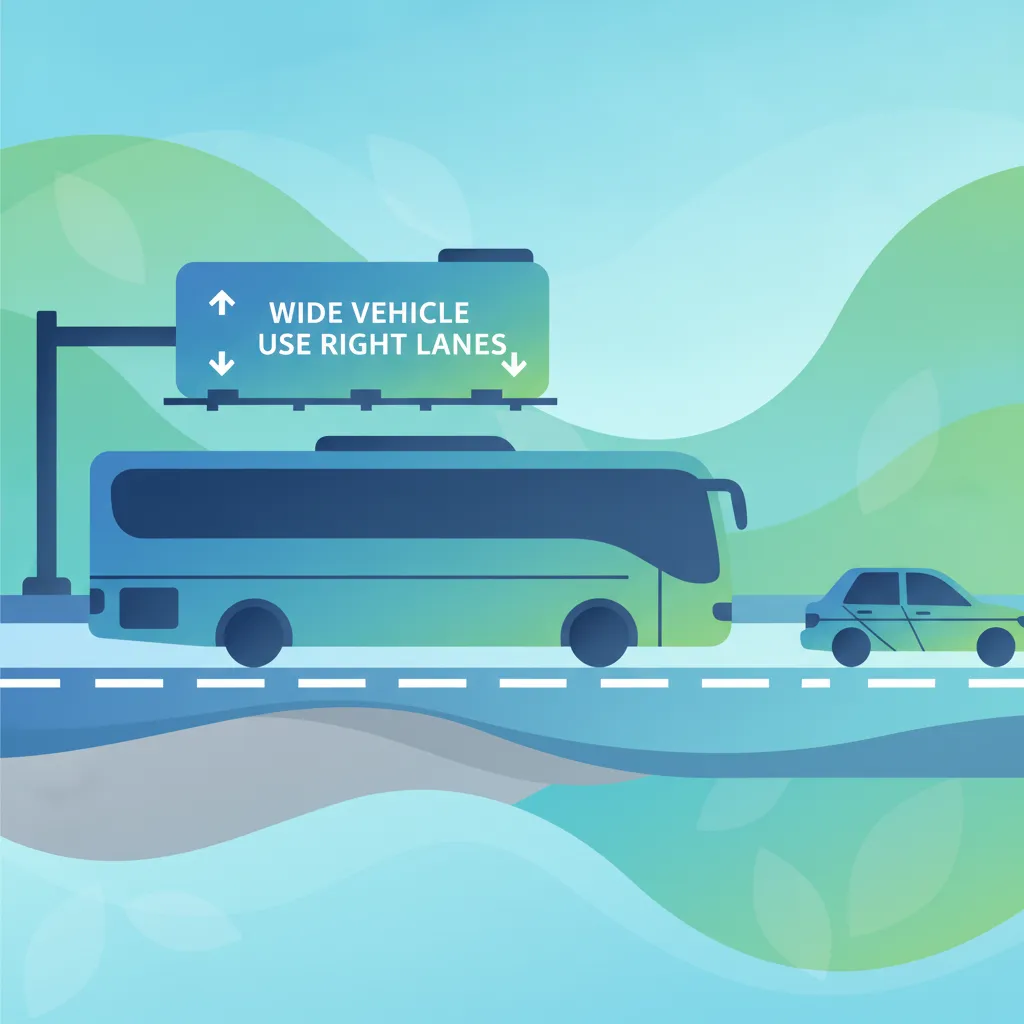
This lesson details the rules of lane discipline for operating wider and longer passenger transport vehicles on highway and city networks. Learners will explore proper lane positioning to prevent encroachment on adjacent lanes or sidewalks. It also covers the step-by-step visual and signaling sequence required to perform safe lane changes, avoiding sudden movements that could startle other drivers.

This lesson examines the regulatory limits and environmental controls applied to large passenger vehicles operating in dense French urban centers. Drivers will study the Crit'Air clean air sticker system and low-emission zones (ZFE) that restrict access for older, high-polluting vehicles. It also addresses navigating physical constraints, such as narrow streets, tight turning radii, and strict municipal weight limits.

This lesson covers the specific lane usage rules and best practices for articulated goods vehicles, emphasizing the correct positioning within lane markings and the impact of vehicle length on lane width. Learners will understand how to navigate lane changes safely, the importance of maintaining appropriate gaps with other road users, and the challenges posed by narrow lanes in urban environments. The content also addresses the French road markings standard.
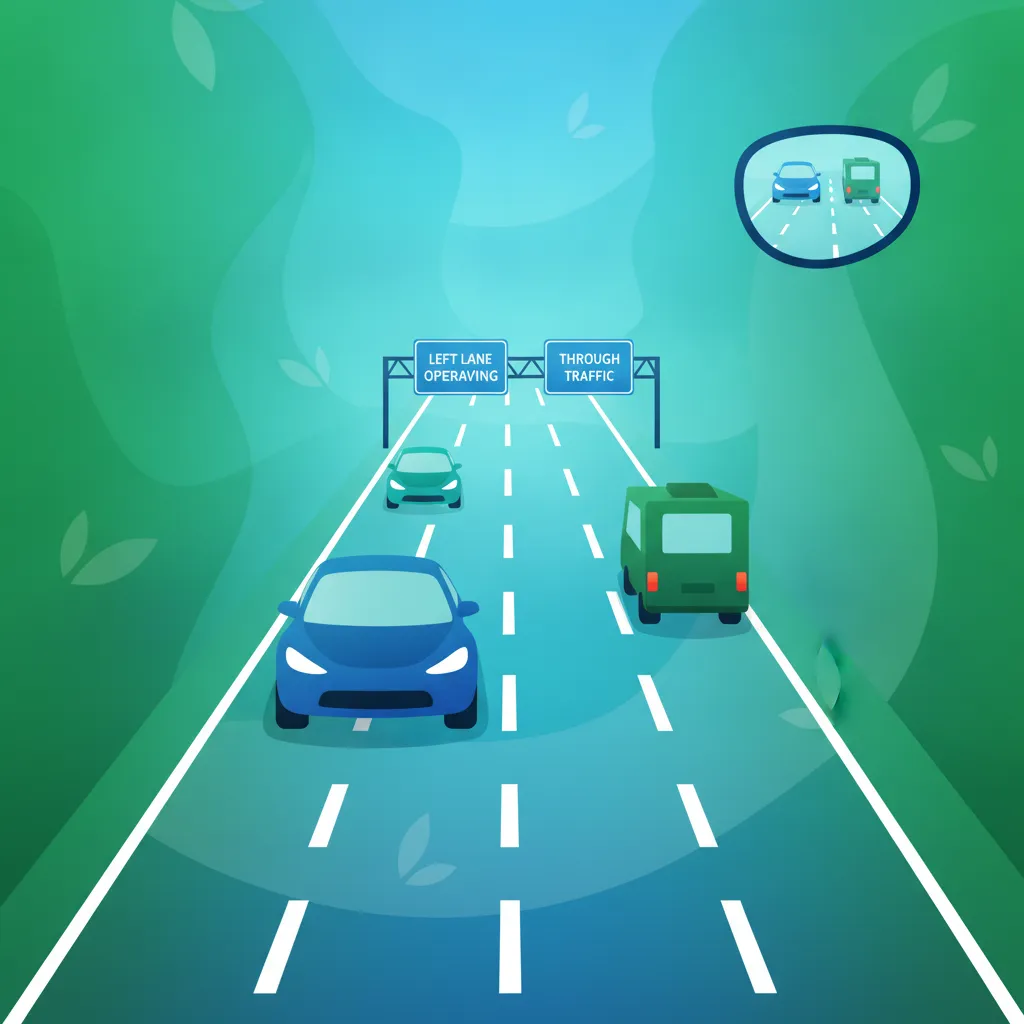
This lesson covers the rules of driving passenger vehicles on high-speed French motorways (autoroutes). Learners will study entry-ramp merging protocols, lane restrictions for vehicles over 3.5 tonnes, and motorway-specific speed limits. The lesson also highlights the correct use of toll booths (péages), emergency hard-shoulder safety procedures, and accessing dedicated coach rest areas.

This lesson addresses the challenges of positioning near larger vehicles such as cars, vans, buses, and lorries on French roads. Learners will learn to identify blind spots (angles morts), maintain a safe distance, and position themselves to maximize visibility and predictability. Understanding these dynamics is crucial for AM riders to avoid dangerous situations and ensure safe overtaking and lane sharing.

This lesson focuses on the technical skills required to position a large bus or coach parallel to the boarding curb. Drivers will learn to minimize the gap between the vehicle steps and the sidewalk, preventing tripping hazards for boarding passengers. The lesson also covers safe approach angles, mirror alignment, and positioning rules that avoid contact with curbside objects or waiting pedestrians.

This lesson covers the physical dimensions of passenger vehicles and how their high profile, length, and width alter spatial awareness on the road. Learners will study tail-swing mechanics and track the path of the rear wheels during sharp turns to avoid hitting roadside obstacles. Accurate measurement of overhead structures, bridges, and underpass clearances is taught to prevent catastrophic structural collisions.

Carrying heavy loads or pulling trailers significantly alters a passenger vehicle's braking distances and stability characteristics. This lesson covers how to read weight limits (like gross vehicle weight ratings), distribute cargo weight evenly, and secure items inside the boot or on roof racks. You will learn to use specialized cargo straps and understand the risks of overloading your suspension and tyres.

This lesson analyzes the various traffic challenges unique to operating large passenger vehicles in historic and modern French urban areas. Drivers will learn to manage narrow street layouts, double-parked delivery trucks, and high-density multi-lane roundabouts safely. The lesson emphasizes defensive driving strategies, route adjustments, and maintaining mental focus under severe schedule and time pressures.

Longitudinal road markings are painted along the length of the road to divide lanes and regulate overtaking maneuvers. This lesson teaches the strict legal prohibition of crossing solid white lines and the specific spacing of broken lines that permit lane changes. You will also learn how to interpret dual lines, warning arrows, and how to maintain proper lane discipline in heavy traffic.
Learn the theory behind mirror configurations and blind spot detection in large passenger vehicles. This lesson details the legal standards for indirect vision systems and practical strategies for monitoring surroundings to ensure the safety of vulnerable road users during routine bus operations and maneuvers.

This lesson details the dangerous blind spots (angles morts) that surround heavy passenger vehicles and explains how to mitigate them. Drivers will master the systematic mirror check sequence (retro-information) before executing any turns or lane changes. It also covers the mandatory French "Angles Morts" warning stickers displayed on the vehicle exterior to alert vulnerable road users of danger zones.

This lesson teaches specific visual scanning methods to detect vulnerable road users, such as children, elderly individuals, and cyclists near stops. Drivers will learn to anticipate sudden movements, like a passenger running to catch a bus or stepping off a sidewalk unexpectedly. Managing the massive blind spots around the front and right-hand sides of passenger vehicles is highlighted as a critical safety duty.
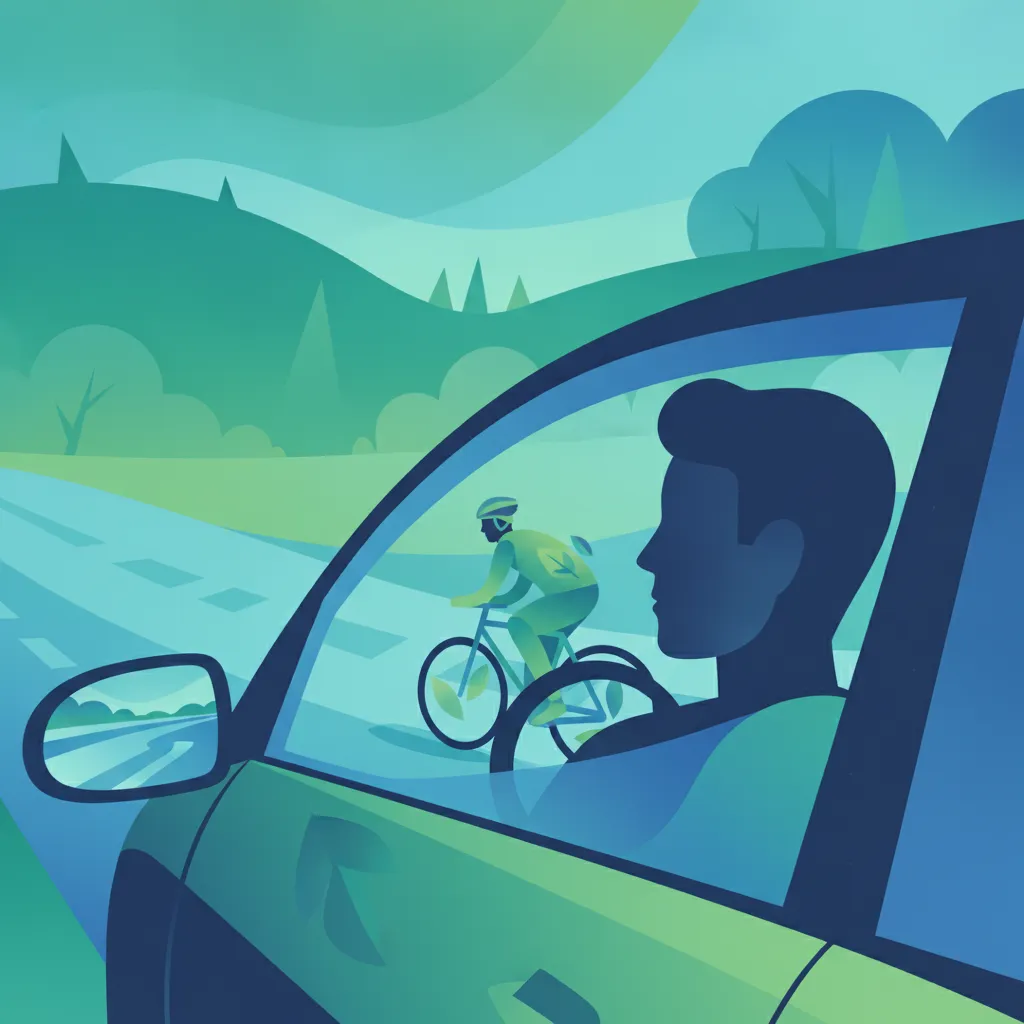
This lesson focuses on the importance of recognizing and mitigating blind spots in goods vehicles, especially when towing trailers. Learners will explore techniques such as proper mirror adjustment, the use of blind spot mirrors, and visual checks to ensure that obstacles and vulnerable road users are detected before executing maneuvers. The content also discusses the limitations of blind spot monitoring systems and the need for supplementary visual checks.

This lesson details how to manage high-risk interactions with pedestrians who may step off curbs or cross the road near bus stops. Learners will study French Code de la route laws regarding pedestrian priority at crosswalks and near stopping transit vehicles. Developing heightened spatial awareness around blind zones near the front of the bus is emphasized to prevent tragic pedestrian collisions.
This lesson addresses the challenges of positioning near larger vehicles such as cars, vans, buses, and lorries on French roads. Learners will learn to identify blind spots (angles morts), maintain a safe distance, and position themselves to maximize visibility and predictability. Understanding these dynamics is crucial for AM riders to avoid dangerous situations and ensure safe overtaking and lane sharing.
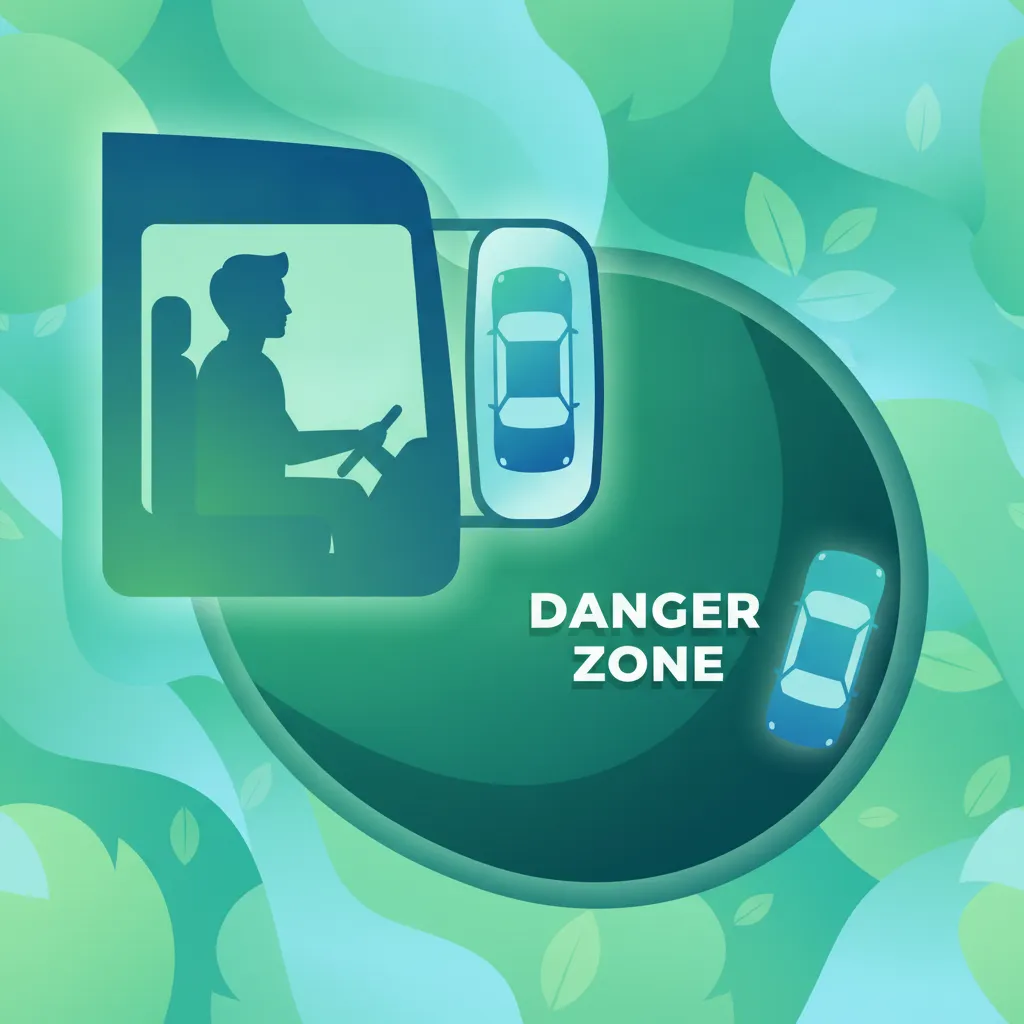
This lesson details the location and scale of blind spots around passenger cars and heavy goods vehicles, often referred to as the 'no-zone' or 'angles morts'. You will learn why truck drivers cannot see you directly behind or immediately adjacent to their cab doors. The lesson provides actionable strategies to minimize the time you spend in these dangerous zones, ensuring you always pass quickly and safely.

In this lesson, drivers will learn strategies to avoid conflicts with smaller vehicles, such as cars and vans, which may not be as visible in large vehicle blind spots. The content emphasizes maintaining adequate spacing, using proper lane discipline, and being aware of small vehicles' behavior during lane changes and turns. Learners will also be introduced to communication techniques, such as signalling and eye contact.
This lesson focuses on the technical skills required to position a large bus or coach parallel to the boarding curb. Drivers will learn to minimize the gap between the vehicle steps and the sidewalk, preventing tripping hazards for boarding passengers. The lesson also covers safe approach angles, mirror alignment, and positioning rules that avoid contact with curbside objects or waiting pedestrians.
This lesson addresses the physiological dangers of driver fatigue, a leading cause of severe commercial vehicle crashes. Drivers will learn to spot early physical warning signs of drowsiness, such as micro-sleeps, heavy eyelids, and slow reaction times. The lesson provides practical wellness tips, sleep hygiene guidelines, and structured rest-break strategies to maintain peak alertness throughout a shift.

This lesson analyzes the technical path a long wheelbase vehicle must take when turning at intersections and navigating roundabouts. Drivers will learn to calculate tail swing and rear-wheel tracking, intentionally swinging wide to clear roadside curbs and poles safely. The lesson emphasizes yielding protocols for pedestrians and cyclists who may be crossing the target street during the turn.
Find clear answers to common questions learners have about Reversing Techniques in Confined Spaces. Learn how the lesson is structured, which driving theory objectives it supports, and how it fits into the overall learning path of units and curriculum progression in France. These explanations help you understand key concepts, lesson flow, and exam focused study goals.
While not always legally mandated for every situation, it is considered best practice and a standard safety requirement for reversing in confined, crowded, or restricted spaces. In the exam, you should prioritize the use of a ground guide whenever visibility is limited to ensure zero contact.
Cameras and sensors are driver aids, not replacements for direct vision and mirror checks. You should always answer based on the principle that the driver remains fully responsible for the maneuver, utilizing all available visual aids to confirm the area is clear.
The most common error is failing to compensate for the wide turning radius of the rear overhang. Candidates often focus too much on the front of the vehicle, forgetting that the tail can swing out significantly, creating collision hazards.
Acoustic backing alarms serve as a vital warning to pedestrians and other road users who may be unaware of the vehicle's movement. They are essential tools for proactive hazard management in busy terminal or depot environments.
Ready to focus your study? Use the practice search to find exactly the French driving theory questions you need for the Code de la route and permis de conduire ETG. Refine your knowledge on specific topics or challenging rules to boost your confidence and exam readiness.